

The moderating role of food cue sensitivity in the behavioral response of children to their neighborhood food environment: a cross-sectional study
Open accessThe DOI matches its Crossref record; 80 of the 81 references it cites were found in a registry or an index.
Abstract
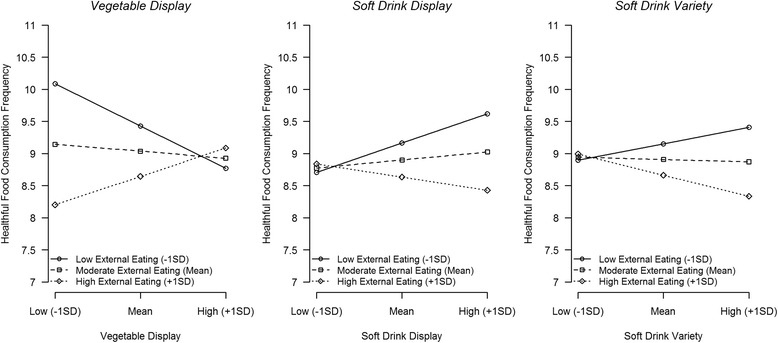
BACKGROUND: Neighborhood food cues have been inconsistently related to residents' health, possibly due to variations in residents' sensitivity to such cues. This study sought to investigate the degree to which children's predisposition to eat upon exposure to food environment and food cues (external eating), could explain differences in strength of associations between their food consumption and the type of food outlets and marketing strategies present in their neighborhood. METHODS: Data were obtained from 616 6-12 y.o. children recruited into a population-based cross-sectional study in which food consumption was measured through a 24-h food recall and responsiveness to food cues measured using the external eating scale. The proportion of food retailers within 3 km of residence considered as "healthful" was calculated using a Geographical Information System. Neighborhood exposure to food marketing strategies (displays, discount frequency, variety, and price) for vegetables and soft drinks were derived from a geocoded digital marketing database. Adjusted mixed models with spatial covariance tested interaction effects of food environment indicators and external eating on food consumption. RESULTS: In children with higher external eating scores, healthful food consumption was more positively related to vegetable displays, and more negatively to the display and variety of soft drinks. No interactions were observed for unhealthful food consumption and no main effects of food environment indicators were found on food consumption. CONCLUSIONS: Children differ in their responsiveness to marketing-related visual food cues on the basis of their external eating phenotype. Strategies aiming to increase the promotion of healthful relative to unhealthful food products in stores may be particularly beneficial for children identified as being more responsive to food cues.
Overview
The claims and statistics of this paper haven’t been checked yet.
Free: it reads the open-access text and checks the first 5 claims that cite a source we can check. Create a free account to check every claim.
Integrity signals
Registry
Cites
Statistics
Figures
Verification
Claims the paper makes
The claims and statistics of this paper haven’t been checked yet.
Free: it reads the open-access text and checks the first 5 claims that cite a source we can check. Create a free account to check every claim.
Claims other papers make about this one
Each is checked against this paper’s own text: does it say what the citing paper says it does?
The source backs part of the claim, not all of it — or backs it for a different population, condition or comparison.
In the citing paper
“Constant factors such as certain appetitive traits (e.g., those assessed by the Adult and Children Eating Behavior Questionnaires) [42,43], a person’s genetic makeup, usual food preferences, and weight status are all associated with different levels of reactivity to food cues [44,45,46,47,48,49].”
From What Is Food Noise? A Conceptual Model of Food Cue Reactivity (2023) · cites this paper as [46]
Experimental — accuracy not yet measuredThe source backs part of the claim, not all of it — or backs it for a different population, condition or comparison.
In the citing paper
“Similarly, transient factors and states, such as the time of day, surrounding environment, sleep duration, level of psychological stress, emotional state, physical activity, and levels of appetite-regulating hormones (e.g., circulating levels of leptin, ghrelin, PYY, endogenous GLP-1, and GLP-1RAs), have been associated with varying levels of food cue reactivity [46,51,52,53,54,55,56,57,58,59,60,”
From What Is Food Noise? A Conceptual Model of Food Cue Reactivity (2023) · cites this paper as [46]
Experimental — accuracy not yet measured
Self-check
Percentages, sums and reported differences re-computed from the paper’s own numbers.
The self-check needs the paper’s full text.
Citations
Cites
Genetics of Food Intake Self-Regulation in Childhood: Literature Review and Research Opportunities
Faith, M. S., Carnell, S., & Kral, T. V. E. (2013) · Human Heredity · doi:10.1159/000353879 · Cited by 7,601
Carver, C. S., & White, T. L. (1994) · Journal of Personality and Social Psychology · doi:10.1037/0022-3514.67.2.319 · Cited by 7,306 · cited 1×
“Finally, a populationbased observational study reported that a positive association between fast food consumption and neighborhood exposure to fast-food restaurants was only observed in adult participants with a high behavioral approach response [39], as measured by the behavioral approach system scale (BAS; [40]), a…”
BackgroundThe global obesity pandemic: shaped by global drivers and local environments
Swinburn, B. A., Sacks, G., Hall, K. D., McPherson, K., Finegood, D. T., Moodie, M. L., & Gortmaker, S. L. (2011) · The Lancet · doi:10.1016/s0140-6736(11)60813-1 · Cited by 4,888 · cited 1×
“cues in urban environments, be it in the absolute or in relation to healthier options, has been repeatedly blamed for the rising trends in overconsumption and associated obesity over the last few decades [1, 2].”
BackgroundStatistical difficulties of detecting interactions and moderator effects.
McClelland, G. H., & Judd, C. M. (1993) · Psychological Bulletin · doi:10.1037/0033-2909.114.2.376 · Cited by 3,270 · cited 1×
“10 are also discussed considering the recognized lower statistical power of interaction testing [64], especially in non-experimental research [65].”
BackgroundIntake of sugar-sweetened beverages and weight gain: a systematic review
Malik, V. S., Schulze, M. B., & Hu, F. B. (2006) · The American Journal of Clinical Nutrition · doi:10.1093/ajcn/84.2.274 · Cited by 2,100
Effects of soft drink consumption on nutrition and health: a systematic review and meta-analysis
Vartanian, L. R., Schwartz, M. B., & Brownell, K. D. (2007) · American Journal of Public Health · doi:10.2105/ajph.2005.083782 · Cited by 1,863
Popkin, B. M. (2006) · The American Journal of Clinical Nutrition · doi:10.1093/ajcn/84.2.289 · Cited by 1,522
The local food environment and diet: a systematic review
Caspi, C. E., Sorensen, G., Subramanian, S. V., & Kawachi, I. (2012) · Health & Place · doi:10.1016/j.healthplace.2012.05.006 · Cited by 1,404
Healthy Nutrition Environments: Concepts and Measures
Glanz, K., Sallis, J. F., Saelens, B. E., & Frank, L. D. (2005) · American Journal of Health Promotion · doi:10.4278/0890-1171-19.5.330 · Cited by 1,299 · cited 1×
“, supermarket, fresh food outlets) [13].”
Dauchet, L., Amouyel, P., Hercberg, S., & Dallongeville, J. (2006) · The Journal of Nutrition · doi:10.1093/jn/136.10.2588 · Cited by 1,204
Gadermann, A., Guhn, M., & Zumbo, B. D. (2020) · PubMed · doi:10.7275/n560-j767 · Cited by 1,200 · cited 1×
“ing the approach recommended by Gadermann and colleagues [52] for estimating reliability coefficients for”
BackgroundThe Contribution of Expanding Portion Sizes to the US Obesity Epidemic
Young, L. R., & Nestle, M. (2002) · American Journal of Public Health · doi:10.2105/ajph.92.2.246 · Cited by 1,141
Monteiro, C. A., Levy, R. B., Claro, R. M., de Castro, I. R. R., & Cannon, G. (2010) · Public Health Nutrition · doi:10.1017/s1368980010003241 · Cited by 1,060
Sugar-sweetened beverages and risk of obesity and type 2 diabetes: epidemiologic evidence
Hu, F. B., & Malik, V. S. (2010) · Physiology & Behavior · doi:10.1016/j.physbeh.2010.01.036 · Cited by 909
Fast-food consumption among US adults and children: Dietary and nutrient intake profile
Paeratakul, S., Ferdinand, D. P., Champagne, C. M., Ryan, D. H., & Bray, G. A. (2003) · Journal of the American Dietetic Association · doi:10.1016/s0002-8223(03)01086-1 · Cited by 760 · cited 1×
“cues in urban environments, be it in the absolute or in relation to healthier options, has been repeatedly blamed for the rising trends in overconsumption and associated obesity over the last few decades [1, 2].”
BackgroundECONOMIC CAUSES AND CONSEQUENCES OF OBESITY
Finkelstein, E. A., Ruhm, C. J., & Kosa, K. M. (2005) · Annual Review of Public Health · doi:10.1146/annurev.publhealth.26.021304.144628 · Cited by 750 · cited 1×
“prices [9], to an obesogenic shift in consumption patterns.”
BackgroundCarter, P., Gray, L. J., Troughton, J., Khunti, K., & Davies, M. J. (2010) · BMJ · doi:10.1136/bmj.c4229 · Cited by 728
van der Laan, L. N., de Ridder, D. T. D., Viergever, M. A., & Smeets, P. A. M. (2011) · NeuroImage · doi:10.1016/j.neuroimage.2010.11.055 · Cited by 601
Individual Differences in Reward Drive Predict Neural Responses to Images of Food
Beaver, J. D., Lawrence, A. D., van Ditzhuijzen, J., Davis, M. H., Woods, A., & Calder, A. J. (2006) · The Journal of Neuroscience · doi:10.1523/jneurosci.0350-06.2006 · Cited by 594 · cited 1×
“Finally, a populationbased observational study reported that a positive association between fast food consumption and neighborhood exposure to fast-food restaurants was only observed in adult participants with a high behavioral approach response [39], as measured by the behavioral approach system scale (BAS; [40]), a…”
BackgroundNeighborhoods and obesity: Nutrition Reviews©, Vol. 66, No. 1
Black, J. L., & Macinko, J. (2008) · Nutrition Reviews · doi:10.1111/j.1753-4887.2007.00001.x · Cited by 551
Harris, J. L., Pomeranz, J. L., Lobstein, T., & Brownell, K. D. (2009) · Annual Review of Public Health · doi:10.1146/annurev.publhealth.031308.100304 · Cited by 549 · cited 2×
“[25], including sales promotions of energy-dense nutrition poor foods [26].”
BackgroundThe Category-Demand Effects of Price Promotions
Nijs, V. R., Dekimpe, M. G., Steenkamps, J.-B. E. M., & Hanssens, D. M. (2001) · Marketing Science · doi:10.1287/mksc.20.1.1.10197 · Cited by 533 · cited 1×
“two standard deviations below its average price [63].”
BackgroundCobb, L. K., Appel, L. J., Franco, M., Jones-Smith, J. C., Nur, A., & Anderson, C. A. M. (2015) · Obesity · doi:10.1002/oby.21118 · Cited by 519 · cited 2×
“However, a recent review comparing food environment associations across different expressions of neighborhood suggested that more immediate food environment may not be as important as food environment defined for larger surroundings [15].”
BackgroundConsumption of ultra-processed foods and likely impact on human health. Evidence from Canada
Moubarac, J.-C., Martins, A. P. B., Claro, R. M., Levy, R. B., Cannon, G., & Monteiro, C. A. (2013) · Public Health Nutrition · doi:10.1017/s1368980012005009 · Cited by 493
Neuroimaging and obesity: current knowledge and future directions
Carnell, S., Gibson, C., Benson, L., Ochner, C. N., & Geliebter, A. (2012) · Obesity Reviews · doi:10.1111/j.1467-789x.2011.00927.x · Cited by 441 · cited 1×
“For instance, when comparing obese to lean adults or children, research demonstrated heightened response to food cues in “hedonic” regions receiving strong dopaminergic projections, such as the striatum, insula, amygdala, hippocampus and the orbitofrontal cortex, as well as altered response (often heightened) in prefr…”
BackgroundA systematic review of fast food access studies
Fleischhacker, S. E., Evenson, K. R., Rodriguez, D. A., & Ammerman, A. S. (2011) · Obesity Reviews · doi:10.1111/j.1467-789x.2010.00715.x · Cited by 421
Designing, testing, and interpreting interactions and moderator effects in family research
Whisman, M. A., & McClelland, G. H. (2005) · Journal of Family Psychology · doi:10.1037/0893-3200.19.1.111 · Cited by 421 · cited 1×
“10 are also discussed considering the recognized lower statistical power of interaction testing [64], especially in non-experimental research [65].”
BackgroundCairns, G., Angus, K., & Hastings, G. (2009) · Stirling Online Research Repository (University of Stirling) · Cited by 418
Demos, K. E., Heatherton, T. F., & Kelley, W. M. (2012) · The Journal of Neuroscience · doi:10.1523/jneurosci.5958-11.2012 · Cited by 410 · cited 1×
“Weight gains have been associated with hyper-responsivity to food intake [34], food images [35], and food commercials [36].”
Backgroundvan Strien, T., & Oosterveld, P. (2008) · International Journal of Eating Disorders · doi:10.1002/eat.20424 · Cited by 378 · cited 1×
“changed from five to three consistent with previous adaptations of the scale for children [51].”
BackgroundDietary inequalities: What is the evidence for the effect of the neighbourhood food environment?
Black, C., Moon, G., & Baird, J. (2014) · Health & Place · doi:10.1016/j.healthplace.2013.09.015 · Cited by 365
Youth at Risk for Obesity Show Greater Activation of Striatal and Somatosensory Regions to Food
Stice, E., Yokum, S., Burger, K. S., Epstein, L. H., & Small, D. M. (2011) · The Journal of Neuroscience · doi:10.1523/jneurosci.6604-10.2011 · Cited by 345 · cited 1×
“Lean youth at risk for future obesity by virtue of parental obesity have shown hyper-responsivity of reward regions to palatable food receipts [33].”
BackgroundHollands, G. J., Shemilt, I., Marteau, T. M., Jebb, S. A., Lewis, H. B., Wei, Y., Higgins, J. P. T., & Ogilvie, D. (2015) · Cochrane Database of Systematic Reviews · doi:10.1002/14651858.cd011045.pub2 · Cited by 327
van Strien, T., Herman, C. P., & Verheijden, M. W. (2009) · Appetite · doi:10.1016/j.appet.2008.11.010 · Cited by 284
Bruce, A. S., Holsen, L. M., Chambers, R. J., Martin, L. E., Brooks, W. M., Zarcone, J. R., Butler, M. G., & Savage, C. R. (2010) · International Journal of Obesity · doi:10.1038/ijo.2010.84 · Cited by 282 · cited 1×
“For instance, when comparing obese to lean adults or children, research demonstrated heightened response to food cues in “hedonic” regions receiving strong dopaminergic projections, such as the striatum, insula, amygdala, hippocampus and the orbitofrontal cortex, as well as altered response (often heightened) in prefr…”
BackgroundNeural Mechanisms Associated With Food Motivation in Obese and Healthy Weight Adults
Martin, L. E., Holsen, L. M., Chambers, R. J., Bruce, A. S., Brooks, W. M., Zarcone, J. R., Butler, M. G., & Savage, C. R. (2010) · Obesity · doi:10.1038/oby.2009.220 · Cited by 278 · cited 1×
“For instance, when comparing obese to lean adults or children, research demonstrated heightened response to food cues in “hedonic” regions receiving strong dopaminergic projections, such as the striatum, insula, amygdala, hippocampus and the orbitofrontal cortex, as well as altered response (often heightened) in prefr…”
BackgroundCurrent status of the internal-external hypothesis for obesity: What went wrong?
Rodin, J. (1981) · American Psychologist · doi:10.1037//0003-066x.36.4.361 · Cited by 274 · cited 1×
“The fact that external eating is associated with better diets in children when exposed to healthful food environment is consistent with the proposition that external eating might be adaptive in children [66, 67] and potentially explain negative or null correlation found between external eating and body mass index [66,…”
BackgroundObesity and Supermarket Access: Proximity or Price?
Drewnowski, A., Aggarwal, A., Hurvitz, P. M., Monsivais, P., & Moudon, A. V. (2012) · American Journal of Public Health · doi:10.2105/ajph.2012.300660 · Cited by 270
Scott, M. L., Nowlis, S. M., Mandel, N., & Morales, A. C. (2008) · Journal of Consumer Research · doi:10.1086/591103 · Cited by 263
The influence of restrained and external eating patterns on overeating
Burton, P., J. Smit, H., & J. Lightowler, H. (2007) · Appetite · doi:10.1016/j.appet.2007.01.007 · Cited by 241 · cited 1×
“cues [45], food cravings [46], and greater food consumption in response to food (vs neutral) commercials [47].”
BackgroundNeurobehavioural correlates of body mass index and eating behaviours in adults: A systematic review
Vainik, U., Dagher, A., Dubé, L., & Fellows, L. K. (2013) · Neuroscience & Biobehavioral Reviews · doi:10.1016/j.neubiorev.2012.11.008 · Cited by 227 · cited 1×
“A number of self-reported food-related trait measures have been developed over the years (for a review see [42]), many of which reflect the concept of uncontrolled eating [43].”
BackgroundSelf-citationMeasures of the Consumer Food Store Environment: A Systematic Review of the Evidence 2000–2011
Gustafson, A., Hankins, S., & Jilcott, S. (2012) · Journal of Community Health · doi:10.1007/s10900-011-9524-x · Cited by 226
Fast-Food Consumption and the Ban on Advertising Targeting Children: The Quebec Experience
Dhar, T., & Baylis, K. (2011) · Journal of Marketing Research · doi:10.1509/jmkr.48.5.799 · Cited by 224
The community and consumer food environment and children’s diet: a systematic review
Engler-Stringer, R., Le, H., Gerrard, A., & Muhajarine, N. (2014) · BMC Public Health · doi:10.1186/1471-2458-14-522 · Cited by 214
Attentional and approach biases for pictorial food cues. Influence of external eating
Brignell, C., Griffiths, T., Bradley, B. P., & Mogg, K. (2009) · Appetite · doi:10.1016/j.appet.2008.10.007 · Cited by 196 · cited 1×
“cues [45], food cravings [46], and greater food consumption in response to food (vs neutral) commercials [47].”
BackgroundEating traits questionnaires as a continuum of a single concept. Uncontrolled eating
Vainik, U., Neseliler, S., Konstabel, K., Fellows, L. K., & Dagher, A. (2015) · Appetite · doi:10.1016/j.appet.2015.03.004 · Cited by 182
The Effect of Price Promotions on Variability in Product Category Sales
Raju, J. S. (1992) · Marketing Science · doi:10.1287/mksc.11.3.207 · Cited by 180 · cited 1×
“Regular price per serving was derived from the weighted average of the highest price of each UPC within the category over a three-month moving window [62].”
MethodBuijzen, M., Schuurman, J., & Bomhof, E. (2008) · Appetite · doi:10.1016/j.appet.2007.07.006 · Cited by 171
Is Food Marketing Making us Fat? A Multi-Disciplinary Review
Chandon, P., & Wansink, B. C. (2011) · Foundations and Trends® in Marketing · doi:10.1561/1700000016 · Cited by 168 · cited 1×
“(for a review [56]) that business practices grouped under the umbrella of the four “P’s” of marketing (Product/ Place/Price/Promotion) impact behavior in general, including food consumption.”
BackgroundRose, D. D., Bodor, J. N., Hutchinson, P., & Swalm, C. M. (2010) · Journal of Nutrition · doi:10.3945/jn.109.113159 · Cited by 167 · cited 1×
“In order to provide a more comprehensive assessment of neighborhood food cues and consistent with calls for multi-dimensional measures of the neighborhood food environment that not only include access but also instore food measures [53], two types of food environment measures were used in this study: the type of food…”
MethodSales promotions and food consumption
Hawkes, C. (2009) · Nutrition Reviews · doi:10.1111/j.1753-4887.2009.00206.x · Cited by 163 · cited 1×
“[25], including sales promotions of energy-dense nutrition poor foods [26].”
BackgroundRelation of obesity to neural activation in response to food commercials
Gearhardt, A. N., Yokum, S., Stice, E., Harris, J. L., & Brownell, K. D. (2014) · Social Cognitive and Affective Neuroscience · doi:10.1093/scan/nst059 · Cited by 151 · cited 1×
“Some evidence for individual differences in food responsiveness can be found in the neuroscience literature, especially from studies related to the dopamine pathways, which are thought to be key in guiding eating and other motivated behaviors in response to prevailing internal states and external cues, such as food pi…”
BackgroundThe influence of children on parental purchases during supermarket shopping
Wilson, G., & Wood, K. (2004) · International Journal of Consumer Studies · doi:10.1111/j.1470-6431.2004.00393.x · Cited by 150 · cited 1×
“However, evidence exists that children play an important role in supermarket product purchases [73, 74], and that younger children may be more likely to ask for advertised food products compared to adolescents [75].”
Backgroundvan Strien, T., & Bazelier, F. G. (2007) · Appetite · doi:10.1016/j.appet.2007.03.227 · Cited by 148
Individual differences in striatum activity to food commercials predict weight gain in adolescents
Yokum, S., Gearhardt, A. N., Harris, J. L., Brownell, K. D., & Stice, E. (2014) · Obesity · doi:10.1002/oby.20882 · Cited by 148 · cited 1×
“Weight gains have been associated with hyper-responsivity to food intake [34], food images [35], and food commercials [36].”
BackgroundMcGuire, S. (2013) · Advances in Nutrition · doi:10.3945/an.113.004598 · Cited by 140
Australian parents' views on their 5-6-year-old children's food choices
Campbell, K. J., Crawford, D. A., & Hesketh, K. D. (2006) · Health Promotion International · doi:10.1093/heapro/dal035 · Cited by 132 · cited 1×
“Food marketing is seen as a predictor of food preference and attitude in children [25, 76], even in children as young as 5–6 years old [77].”
BackgroundNakamura, R., Pechey, R., Suhrcke, M., Jebb, S. A., & Marteau, T. M. (2014) · Social Science & Medicine · doi:10.1016/j.socscimed.2014.02.032 · Cited by 127
A Quasi-Experiment Assessing the Effectiveness of TV Advertising Directed to Children
Goldberg, M. E. (1990) · Journal of Marketing Research · doi:10.1177/002224379002700406 · Cited by 123
The Differential Susceptibility Hypothesis: Sensitivity to the Environment for Better and for Worse
Belsky, J. (2016) · Archives of Pediatrics and Adolescent Medicine · doi:10.1001/jamapediatrics.2015.4263 · Cited by 101 · cited 1×
“the same carriers who were, in contrast, coming from a more advantaged socio-economic background consumed less fat than the average [71, 72].”
BackgroundFamilial Transmission of Eating Behaviors in Preschool‐aged Children
Jahnke, D. L., & Warschburger, P. A. (2008) · Obesity · doi:10.1038/oby.2008.255 · Cited by 92 · cited 1×
“This is supported by evidence that maternal external eating is related to external eating of daughters and sons [78] and external eating in children is positively associated with perceived parental pressure to eat in boys and negatively associated with perceived parental restriction to eat in boys and girls [79].”
BackgroundPaquet, C., Daniel, M., Knaüper, B., Gauvin, L. I., Kestens, Y., & Dubé, L. (2010) · American Journal of Clinical Nutrition · doi:10.3945/ajcn.2009.28648 · Cited by 89 · cited 1×
“Finally, a populationbased observational study reported that a positive association between fast food consumption and neighborhood exposure to fast-food restaurants was only observed in adult participants with a high behavioral approach response [39], as measured by the behavioral approach system scale (BAS; [40]), a…”
BackgroundSelf-citationAltered hypothalamic response to food in smokers
Geha, P., Aschenbrenner, K., Felsted, J. A., O’Malley, S. S., & Small, D. M. (2012) · American Journal of Clinical Nutrition · doi:10.3945/ajcn.112.043307 · Cited by 84 · cited 1×
“Weight gains have been associated with hyper-responsivity to food intake [34], food images [35], and food commercials [36].”
Backgroundvan Strien, T., Peter Herman, C., & Anschutz, D. (2012) · International Journal of Eating Disorders · doi:10.1002/eat.20940 · Cited by 84 · cited 2×
“These results are consistent with a laboratory-based study conducted with adults showing that the impact of viewing a food commercial (compared to a neutral commercial) while watching television was only observed in high, but not low, external eaters [47].”
BackgroundResultSilveira, P. P., Gaudreau, H., Atkinson, L., Fleming, A. S., Sokolowski, M. B., Steiner, M., Kennedy, J. L., Meaney, M. J., Levitan, R. D., & Dubé, L. (2016) · JAMA Pediatrics · doi:10.1001/jamapediatrics.2015.4253 · Cited by 79 · cited 1×
“the same carriers who were, in contrast, coming from a more advantaged socio-economic background consumed less fat than the average [71, 72].”
BackgroundSelf-citationNakamura, R., Suhrcke, M., Jebb, S. A., Pechey, R., Almiron‐Roig, E., & Marteau, T. M. (2015) · American Journal of Clinical Nutrition · doi:10.3945/ajcn.114.094227 · Cited by 78 · cited 1×
“Discount frequency results also contrast with findings from a recent study showing that the increase in sales associated with frequency of price discounts was largest for less healthy compared to healthier food categories [70].”
ResultLevitan, R. D., Rivera, J. C. A., Silveira, P. P., Steiner, M. S., Gaudreau, H., Hamilton, J. K., Kennedy, J. L., Davis, C. A., Dubé, L., Fellows, L. K., et al. (2014) · International Journal of Obesity · doi:10.1038/ijo.2014.207 · Cited by 76 · cited 1×
“Laboratory studies examining eating behavior in children in response to controlled food environments (snack test) have also found similar results using either genetic markers or neurocognitive tasks related to differential dopamine signaling [37, 38].”
ResultSelf-citationA Quasi-Experiment Assessing the Effectiveness of TV Advertising Directed to Children
Goldberg, M. E. (1990) · Journal of Marketing Research · doi:10.2307/3172629 · Cited by 71
A mixed-method examination of food marketing directed towards children in Australian supermarkets
Campbell, S., James, E. L., Stacey, F. G., Bowman, J., Chapman, K., & Kelly, B. (2014) · Health Promotion International · doi:10.1093/heapro/das060 · Cited by 67 · cited 1×
“However, evidence exists that children play an important role in supermarket product purchases [73, 74], and that younger children may be more likely to ask for advertised food products compared to adolescents [75].”
BackgroundBurger, K. S., & Stice, E. (2014) · Obesity · doi:10.1002/oby.20563 · Cited by 57
Dubé, L., Labban, A., Moubarac, J., Heslop, G., Ma, Y., & Paquet, C. (2014) · Annals of the New York Academy of Sciences · doi:10.1111/nyas.12595 · Cited by 51 · cited 1×
“The lack of main effect of marketing indicators on either food consumption measures contrasts with earlier work analyzing store sales data [69] showing that the same reinforcing marketing practices that increase sales of unhealthful food (namely soft drinks), when applied to healthful food (namely vegetables), were al…”
ResultSelf-citationClary, C. M., & Kestens, Y. (2013) · International Journal of Behavioral Nutrition and Physical Activity · doi:10.1186/1479-5868-10-77 · Cited by 50 · cited 1×
“Field validation of this database has shown acceptable “representativity” of food outlets in the same city as the present study [55].”
ResultPrimary Food Sources of NutrientsIn the Diet of Canadian Adults
Johnson‐Down, L., Ritter, H., Starkey, L. J., & Gray‐Donald, K. (2006) · Canadian Journal of Dietetic Practice and Research · doi:10.3148/67.1.2006.7 · Cited by 47
Le, H., Engler‐Stringer, R., & Muhajarine, N. (2016) · Canadian Journal of Public Health · doi:10.17269/cjph.107.5347 · Cited by 47
Kelly, B., Chapman, K. L., Hardy, L. L., King, L. A., & Farrell, L. (2009) · Journal of Paediatrics and Child Health · doi:10.1111/j.1440-1754.2009.01548.x · Cited by 39 · cited 1×
“However, evidence exists that children play an important role in supermarket product purchases [73, 74], and that younger children may be more likely to ask for advertised food products compared to adolescents [75].”
BackgroundLee, S. W. (2014) · BMC Public Health · doi:10.1186/1471-2458-14-s1-o8 · Cited by 27
Problematic eating behaviors and nutritional status in 7 to 12 year-old Chilean children
Silva, J. R., Capurro, G., Saumann, M. P., & Slachevsky, A. (2013) · International Journal of Clinical and Health Psychology · doi:10.1016/s1697-2600(13)70005-x · Cited by 25 · cited 1×
“The fact that external eating is associated with better diets in children when exposed to healthful food environment is consistent with the proposition that external eating might be adaptive in children [66, 67] and potentially explain negative or null correlation found between external eating and body mass index [66,…”
BackgroundMa, Y., Labban, A., Cherian, M. M., Shaban‐Nejad, A., Buckeridge, D. L., & Dubé, L. (2013) · Springer eBooks · doi:10.1007/978-1-4614-7315-2_27 · Cited by 5 · cited 2×
“These studies have mostly relied on store audits, with few capitalizing on the rich information available from digital marketing databases, which can provide a thorough, dynamic and comprehensive assessment of local food environment cues [22].”
BackgroundMethodSelf-citationGenetic and Developmental Origins of Food Preferences and Obesity Risk: The Role of Dopamine
Silveira, P. P., Kennedy, J. L., Sokolowski, M. B., Levitan, R. D., & Meaney, M. J. (2014) · Research and perspectives in endocrine interactions · doi:10.1007/978-3-319-02591-9_11 · Cited by 4 · cited 1×
“Laboratory studies examining eating behavior in children in response to controlled food environments (snack test) have also found similar results using either genetic markers or neurocognitive tasks related to differential dopamine signaling [37, 38].”
Resultvan Strien (1986) · doi:10.1002/1098-108x(198602)5:2<295::aid-eat2260050209>3.0.co;2-t · cited 2×
“External eating was assessed using items from the Dutch Eating Behavior Questionnaire [44] as reported by parents.”
BackgroundMethod
Research works printed but not linked: 2
- Preedy RV, Hunter L-A, Patel BV, editors. Diet quality: an evidence-based approach, volume 2. New York, NY: Springer New York; 2013:383-396.
- Garriguet D. Plus de fruits, moins de gras: Les habitudes alimentaires des canadiens. Transition. 2007;37:7-10.
Cited by
What Is Food Noise? A Conceptual Model of Food Cue Reactivity
Hayashi, D., Edwards, C., Emond, J. A., Gilbert-Diamond, D., Butt, M., Rigby, A., & Masterson, T. D. (2023) · Nutrients · doi:10.3390/nu15224809 · Cited by 80
“…environment, sleep duration, level of psychological stress, emotional state, physical activity, and levels of appetite-regulating hormones (e.g., circulating levels of leptin, ghrelin, PYY, endogenous GLP-1, and GLP-1RAs), have been associated with varying levels of food cue reactivity [46,51–61].”
BackgroundUnderstanding children’s neighbourhood destinations: presenting the Kids-PoND framework
Egli, V., Villanueva, K., Donnellan, N., Mackay, L. M., Forsyth, E., Zinn, C., Kyttä, M., & Smith, M. (2019) · Children s Geographies · doi:10.1080/14733285.2019.1646889 · Cited by 76
“…tracks, landscaping) of destinations such as parks and sports fields have been shown to positively impact physical activity (Smith et al. 2017) and the presence of fast food outlets and convenience stores has been linked to increased consumption of unhealthy food and drinks (Paquet et al. 2017).”
BackgroundSocial-Cultural Processes and Urban Affordances for Healthy and Sustainable Food Consumption
Carrus, G., Pirchio, S., & Mastandrea, S. (2018) · Frontiers in Psychology · doi:10.3389/fpsyg.2018.02407 · Cited by 57
Weight Status and Attentional Biases Toward Foods: Impact of Implicit Olfactory Priming
Mas, M., Brindisi, M., Chabanet, C., Nicklaus, S., & Chambaron, S. (2019) · Frontiers in Psychology · doi:10.3389/fpsyg.2019.01789 · Cited by 36
Brand, J., Masterson, T. D., Emond, J. A., Lansigan, R. K., & Gilbert‐Diamond, D. (2020) · Appetite · doi:10.1016/j.appet.2020.104610 · Cited by 27
Metadata
- Authors
- Paquet, C., de Montigny, L., Labban, A., Buckeridge, D., Ma, Y., Arora, N., & Dubé, L.
- Affiliations
- University of South Australia (AU)
- Pepperdine University (US)
- McGill University (CA)
- INCLEN Trust International (IN)
- Corresponding author
- Paquet, Catherine
- Venue
- International Journal of Behavioral Nutrition and Physical Activity
- Published
- 2017-07-05
- Volume
- 14
- Issue
- 1
- Pages
- 86-86
- ISSN
- 1479-5868 (ISSN-L)
- PMC
- PMC5499022
- OpenAlex
- W2729688182
- Cited by
- 22
- References
- 81
- Citations by year
- 2026: 1 · 2025: 1 · 2023: 5 · 2021: 3 · 2020: 4 · 2019: 7 · 2018: 1
- FWCI
- 2.73
- Type
- journal article
- Language
- en
- Open access
- gold
- doi.org
- Licence
- cc-by
- Locations
- International Journal of Behavioral Nutrition and Physical Activity (publishedVersion, cc-by)
- Europe PMC (PubMed Central) (publishedVersion, cc-by)
- PubMed Central (publishedVersion, cc-by)
- PubMed (publishedVersion)
- Pepperdine Digital Commons (Pepperdine University) (submittedVersion)
- DOAJ (DOAJ: Directory of Open Access Journals) (submittedVersion, cc-by-sa)
- UniSA Research Outputs Repository (University of South Australia) (submittedVersion)
- Funders
- Canadian Institutes of Health Research (#85512)
- National Health and Medical Research Council (0631947)
- Topics
- Health Sciences › Nursing › Nutrition and Dietetics › Nutrition, Health and Food Behavior
- Health Sciences › Medicine › Public Health, Environmental and Occupational Health › Obesity, Physical Activity, Diet
- Health Sciences › Medicine › Public Health, Environmental and Occupational Health › Food Security and Health in Diverse Populations
- Keywords
- external eating, neighborhood food environment, food marketing, children's food consumption, food retailers, moderating effect
- MeSH terms
- Carbonated Beverages, Child, Commerce, Cross-Sectional Studies, Cues, Diet, Eating, Environment, Feeding Behavior, Female, Humans, Individuality, Male, Residence Characteristics, Social Environment, Vegetables, Food Industry, Marketing
About these checks
Registry, retraction, Cites and statistics results are computed, not judged, with one exception: a printed reference that no index lists is read once by a model before it counts as a citation error. Claims are extracted by a model and kept only when their quote appears verbatim in the text; each cited source is then checked, with a model’s help, for whether it says what the claim relies on. Those verdicts can be wrong — read the claim’s quote and the cited source before relying on one.
Statistics and arithmetic are recomputed, not judged.
Confidence bands are shown only for fields calibrated on our annotated test set. None is calibrated yet, so no band is shown.
What counts as a claim ›How we measure confidence ›How we check this ›
Are you an author, or do you see a problem with this page? Request a review
Data sources
Bibliographic data: Semantic Scholar, OpenAlex, Crossref.
Contains information from the Semantic Scholar Academic Graph Datasets, made available under the ODC Attribution License (ODC-BY 1.0).
Semantic Scholar’s data is described in: Kinney, R., et al. (2023). The Semantic Scholar Open Data Platform. arXiv:2301.10140.
