

School-based gardening, cooking and nutrition intervention increased vegetable intake but did not reduce BMI: Texas sprouts - a cluster randomized controlled trial
Open accessThe DOI matches its Crossref record; 81 of the 81 references it cites were found in a registry or an index.
Abstract
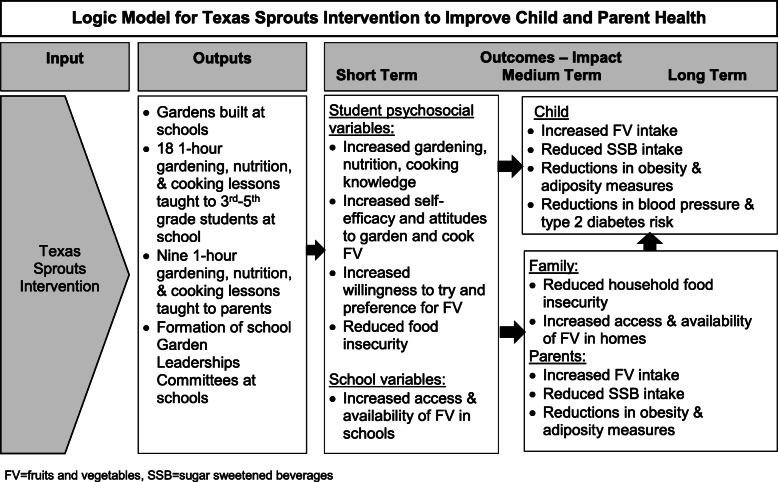
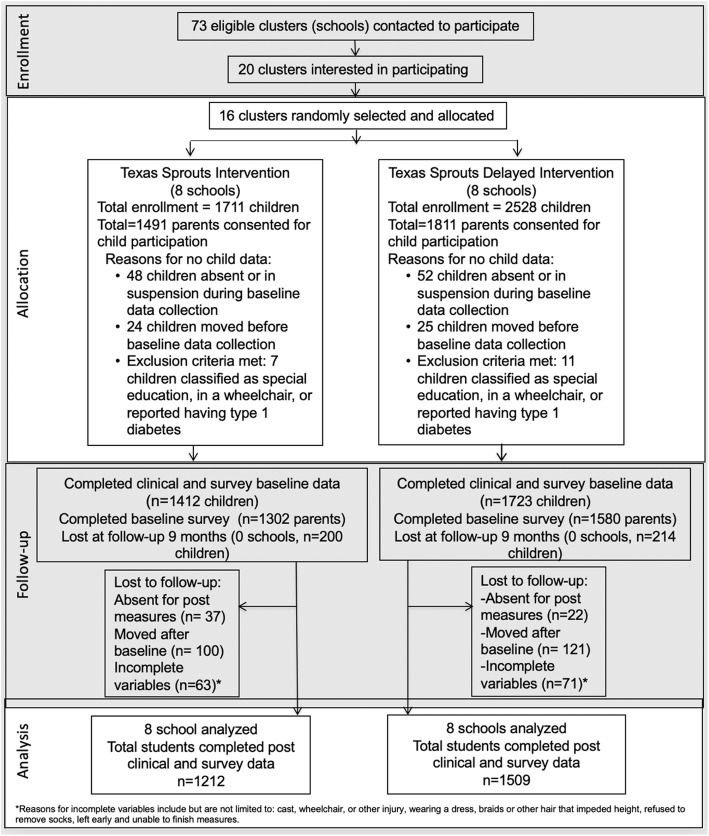
Background: Although school garden programs have been shown to improve dietary behaviors, there has not been a cluster-randomized controlled trial (RCT) conducted to examine the effects of school garden programs on obesity or other health outcomes. The goal of this study was to evaluate the effects of a one-year school-based gardening, nutrition, and cooking intervention (called Texas Sprouts) on dietary intake, obesity outcomes, and blood pressure in elementary school children. Methods: This study was a school-based cluster RCT with 16 elementary schools that were randomly assigned to either the Texas Sprouts intervention (n = 8 schools) or to control (delayed intervention, n = 8 schools). The intervention was one school year long (9 months) and consisted of: a) Garden Leadership Committee formation; b) a 0.25-acre outdoor teaching garden; c) 18 student gardening, nutrition, and cooking lessons taught by trained educators throughout the school-year; and d) nine monthly parent lessons. The delayed intervention was implemented the following academic year and received the same protocol as the intervention arm. Child outcomes measured were anthropometrics (i.e., BMI parameters, waist circumference, and body fat percentage via bioelectrical impedance), blood pressure, and dietary intake (i.e., vegetable, fruit, and sugar sweetened beverages) via survey. Data were analyzed with complete cases and with imputations at random. Generalized weighted linear mixed models were used to test the intervention effects and to account for clustering effect of sampling by school. Results: A total of 3135 children were enrolled in the study (intervention n = 1412, 45%). Average age was 9.2 years, 64% Hispanic, 47% male, and 69% eligible for free and reduced lunch. The intervention compared to control resulted in increased vegetable intake (+ 0.48 vs. + 0.04 frequency/day,p = 0.02). There were no effects of the intervention compared to control on fruit intake, sugar sweetened beverages, any of the obesity measures or blood pressure. Conclusion: While this school-based gardening, nutrition, and cooking program did not reduce obesity markers or blood pressure, it did result in increased vegetable intake. It is possible that a longer and more sustained effect of increased vegetable intake is needed to lead to reductions in obesity markers and blood pressure. Clinical trials number: NCT02668744.
Overview
The claims and statistics of this paper haven’t been checked yet.
Free: it reads the open-access text and checks the first 5 claims that cite a source we can check. Create a free account to check every claim.
Integrity signals
Registry
Cites
Statistics
Figures
Verification
Claims the paper makes
The claims and statistics of this paper haven’t been checked yet.
Free: it reads the open-access text and checks the first 5 claims that cite a source we can check. Create a free account to check every claim.
Claims other papers make about this one
Each is checked against this paper’s own text: does it say what the citing paper says it does?
The source backs part of the claim, not all of it — or backs it for a different population, condition or comparison.
In the citing paper
“increased water intake without significant changes in juice or soft drink intake [60]”
From Effects of school-based nutrition literacy Intervention on obesity prevention in school-age students: a systematic review and meta-analysis (2026) · cites this paper as [60]
Experimental — accuracy not yet measuredThe source backs part of the claim, not all of it — or backs it for a different population, condition or comparison.
In the citing paper
“Lessons covered choosing healthier snacks, reducing sugary drink intake, increasing fruit and vegetable consumption, and making appropriate choices across common settings, such as school, home, and when eating out [43, 53–56, 64].”
From Effects of school-based nutrition literacy Intervention on obesity prevention in school-age students: a systematic review and meta-analysis (2026) · cites this paper as [64]
Experimental — accuracy not yet measuredThe source backs part of the claim, not all of it — or backs it for a different population, condition or comparison.
In the citing paper
“Several curricula place individual eating habits within a broader food-systems context by showing how food moves “from farm to table,” how processing changes foods, and how packaging and energy use create environmental impacts [44, 48, 64].”
From Effects of school-based nutrition literacy Intervention on obesity prevention in school-age students: a systematic review and meta-analysis (2026) · cites this paper as [64]
Experimental — accuracy not yet measuredThe source backs part of the claim, not all of it — or backs it for a different population, condition or comparison.
In the citing paper
“Many programs supported self-management by fostering goal-setting, healthy eating behaviors, and the exploration of new foods [53, 64].”
From Effects of school-based nutrition literacy Intervention on obesity prevention in school-age students: a systematic review and meta-analysis (2026) · cites this paper as [64]
Experimental — accuracy not yet measuredThe cited source says what the claim attributes to it.
In the citing paper
“A substantial proportion of interventions incorporated experiential and skill-based learning, particularly cooking, food preparation, tasting, and sensory activities [45–48, 50, 52, 56, 59–61, 63].”
From Effects of school-based nutrition literacy Intervention on obesity prevention in school-age students: a systematic review and meta-analysis (2026) · cites this paper as [60]
1 more claim about this paper
Create a free account to see every claim other papers make about this one.
Self-check
Percentages, sums and reported differences re-computed from the paper’s own numbers.
The self-check needs the paper’s full text.
Citations
Cites
Harris, P. A., Taylor, R., Thielke, R., Payne, J., Gonzalez, N., & Conde, J. G. (2009) · Journal of Biomedical Informatics · doi:10.1016/j.jbi.2008.08.010 · Cited by 51,384 · cited 1×
“Study data were collected and managed using REDCap (Research Electronic Data Capture) [48].”
MethodThe Ecology of Human Development: Experiments by Nature and Design
Bronfenbrenner, U. (1979) · Harvard University Press eBooks · doi:10.4159/9780674028845 · Cited by 26,084
Interrater reliability: The kappa statistic
McHugh, M. L. (2012) · Biochemia Medica · doi:10.11613/bm.2012.031 · Cited by 19,877 · cited 1×
“71 with percentage agreements ranging from 57 to 87%, which suggested moderate to strong agreement [40].”
BackgroundThe ecology of human development : experiments by nature and design
Bronfenbrenner, U. (1979) · Cited by 12,580
Foundations of Clinical Research: Applications to Practice,
(2002) · Survey of Ophthalmology · doi:10.1016/s0039-6257(02)00362-4 · Cited by 9,489 · cited 1×
“Test-retest percent agreement was between 71 and 84% for all seven items, which is considered to be moderately reproducible [41].”
BackgroundThe prevention and treatment of missing data in clinical trials
Little, R. J., D'Agostino, R., Cohen, M. L., Dickersin, K., Emerson, S. S., Farrar, J. T., Frangakis, C., Hogan, J. W., Molenberghs, G., Murphy, S. A., et al. (2012) · New England Journal of Medicine · doi:10.1056/nejmsr1203730 · Cited by 1,884
Wang, X., Ouyang, Y., Liu, J., Zhu, M., Zhao, G., Bao, W., & Hu, F. B. (2014) · BMJ · doi:10.1136/bmj.g4490 · Cited by 1,596
Design and Analysis of Cluster Randomization Trials in Health Research
DONNER, A. P., & Klar, N. S. (2000) · Cited by 1,236
Cicchetti, D., & Lynch, M. (1993) · Psychiatry · doi:10.1080/00332747.1993.11024624 · Cited by 1,152 · cited 1×
“, school, family, community) that reciprocally interact with each other and the child over time to shape development and behaviors [31, 32].”
BackgroundFoundations of clinical research application to practice
Portney, L. (1993) · Medical Entomology and Zoology · Cited by 1,135
Research works printed but not linked: 3
- 34. Extension TAMA. Learn, grow, eat & Grow! 2014.
- 36. Centers for Disease Control and Prevention: CDC growth Charts. Atlanta, GA, U. S. Department of Health and Human Services, Centers for Disease Control and Prevention, National Center for Health Statistics, 2000 (U.S. Publ. no. 314).
- 74. Whole School WC, Whole Child. Association for Supervision and Curriculum Development (ASCD).http://www.ascd.org/programs/learning-and-health/ wscc-model.aspx. last assess on March 3rd, 2020.
Cited by
Nature and Children’s Health: A Systematic Review
Fyfe-Johnson, A. L., Hazlehurst, M. F., Perrins, S. P., Bratman, G. N., Thomas, R., Garrett, K. A., Hafferty, K. R., Cullaz, T. M., Marcuse, E. K., & Tandon, P. S. (2021) · Pediatrics · doi:10.1542/peds.2020-049155 · Cited by 181
Chan, C. L., Tan, P. Y., & Gong, Y. Y. (2022) · BMC Public Health · doi:10.1186/s12889-022-13587-x · Cited by 127
Interventions to prevent obesity in children aged 5 to 11 years old
Spiga, F., Davies, A. L., Tomlinson, E., Moore, T. H., Dawson, S., Breheny, K., Savović, J., Gao, Y., Phillips, S. M., Hillier-Brown, F. C., et al. (2024) · Cochrane Database of Systematic Reviews · doi:10.1002/14651858.cd015328.pub2 · Cited by 130
Hodder, R. K., O’Brien, K. M., Lorien, S. J., Wolfenden, L., Moore, T. H., Hall, A. E., Yoong, S. L., & Summerbell, C. (2022) · EClinicalMedicine · doi:10.1016/j.eclinm.2022.101635 · Cited by 107
School Gardening and Health and Well-Being of School-Aged Children: A Realist Synthesis
Holloway, T. P., Dalton, L., Hughes, R., Jayasinghe, S. U., Patterson, K. A. E., Murray, S. L., Soward, R., Byrne, N. M., Hills, A. P., & Ahuja, K. (2023) · Nutrients · doi:10.3390/nu15051190 · Cited by 85
“Context (Materials/Activities) Mechanism Outcomes (Health/Well-Being) LA Sprouts [44–48] 12-week programs with Grade 3–5 students • Adaptive curriculum with culturally relevant focus, taught by an educator with a nutrition or gardening background • Interactive, hands-on gardening activities plus cooking and nutrition…”
BackgroundMethodInfluentialObita, G., & AlKhatib, A. H. (2023) · Nutrients · doi:10.3390/nu15112524 · Cited by 73
“Most of the effective interventions had multiple components with PA as the prominent part, whereas those that were not effective were mostly counselling and telephone follow-up interventions [52,72,87].”
BackgroundVaughan, K. L., Cade, J. E., Hetherington, M. M., Webster, J., & Evans, C. (2024) · Appetite · doi:10.1016/j.appet.2024.107238 · Cited by 62
“Two of the studies, Waves intervention and Texas Sprouts intervention, showed low risk of bias (Adab et al., 2018; Davis et al., 2021).”
BackgroundResultBarriers, Strategies, and Resources to Thriving School Gardens
Hoover, A., Vandyousefi, S., Martin, B., Nikah, K., Cooper, M. H., Müller, A., Marty, E., Duswalt-Epstein, M., Burgermaster, M., Waugh, L., et al. (2021) · Journal of Nutrition Education and Behavior · doi:10.1016/j.jneb.2021.02.011 · Cited by 55
Self-citationLandry, M. J., van den Berg, A. E., Hoelscher, D. M., Asigbee, F. M., Vandyousefi, S., Ghaddar, R., Jeans, M., Waugh, L., Nikah, K., Sharma, S. V., et al. (2021) · Nutrients · doi:10.3390/nu13093081 · Cited by 55
“A dietary screener [42] was used to assess fruit and vegetable and sugar sweetened beverage consumption in all children in the study as part of the child survey, and those results are reported elsewhere [25].”
BackgroundMethodResultInfluentialSelf-citationNury, E., Stadelmaier, J., Morze, J., Nagavci, B., Grummich, K., Schwarzer, G., HOFFMANN, G. E., Angele, C. M., Steinacker, J. M., Wendt, J., et al. (2022) · BMJ Medicine · doi:10.1136/bmjmed-2022-000346 · Cited by 45
Karpouzis, F., Anastasiou, K., Lindberg, R., Walsh, A. D., Shah, S., & Ball, K. (2025) · Journal of Nutrition Education and Behavior · doi:10.1016/j.jneb.2025.02.008 · Cited by 45
Alaimo, K., Beavers, A. W., Coringrato, E., Lacy, K., Ma, W., Hurley, T. G., & Hébert, J. R. (2023) · Current Developments in Nutrition · doi:10.1016/j.cdnut.2023.100077 · Cited by 40
Taniguchi, T. E., Haslam, A., Sun, W., Sisk, M., Hayman, J., & Jernigan, V. B. B. (2022) · Nutrients · doi:10.3390/nu14132601 · Cited by 35
A Review of Experiential School-Based Culinary Interventions for 5–12-Year-Old Children
Bennett, A. E., Mockler, D., Cunningham, C., Slattery, C. G., & Molloy, C. J. (2021) · Children · doi:10.3390/children8121080 · Cited by 35
“Parents were actively included in two of the five interventions [24,26] (Table 1).”
InfluentialQi, Y., Hamzah, S. H., Gu, E., Wang, H., Xi, Y., Sun, M., Rong, S., & Lin, Q. (2021) · Nutrients · doi:10.3390/nu13082605 · Cited by 31
“Among them, Christian’s [23] and Davis’ [53] studies had the most significant effects and showed an increase in the children’s FVs by about 1.”
BackgroundMethodInfluentialImpact of School-Based Interventions on Pediatric Obesity: A Systematic Review
Klein, D., Mohamoud, I., Olanisa, O. O., Parab, P. T., Chaudhary, P., Mukhtar, S., Moradi, A., Kodali, A., Okoye, C., & Franchini, A. P. A. (2023) · Cureus · doi:10.7759/cureus.43153 · Cited by 31
Olsen, N. J., Østergaard, J. N., Bjerregaard, L. G., Høy, T. V., Kierkegaard, L., Michaelsen, K. F., Sørensen, T. I. A., Grønbæk, M. K., Bruun, J. M., & Heitmann, B. L. (2024) · Obesity Reviews · doi:10.1111/obr.13641 · Cited by 30
“95 However, only few studies conducted in school-aged children have found intervention effects (for example, other works 94 – 96 ), and the majority of studies have shown no effects of the intervention (for example, previous studies 93,97 – 103 ).”
BackgroundHenning, L., Dreiskämper, D., & Tietjens, M. (2021) · Psychology of sport and exercise · doi:10.1016/j.psychsport.2021.102055 · Cited by 30
Shi, H., Ren, Y., & Jia, Y. (2023) · Translational Pediatrics · doi:10.21037/tp-23-205 · Cited by 29
Davis, J. N., Nikah, K., Landry, M. J., Vandyousefi, S., Ghaddar, R., Jeans, M., Cooper, M. H., Martin, B., Waugh, L., Sharma, S. V., et al. (2022) · Journal of the Academy of Nutrition and Dietetics · doi:10.1016/j.jand.2022.08.125 · Cited by 26
“Results showed clinically and statistically significant improvements in vegetable intake, added sugar intake, and glucose control in the TX Sprouts intervention group compared with the control group.(15,16) School-based gardening programs can enhance student academic performance in addition to health.”
BackgroundMethodSelf-citationPrimordial Prevention of Atherosclerotic Cardiovascular Disease: A REVIEW OF THE LITERATURE
Morton, K. F., Heindl, B. F., Clarkson, S. A., & Bittner, V. (2022) · Journal of Cardiopulmonary Rehabilitation and Prevention · doi:10.1097/hcr.0000000000000748 · Cited by 26
Jeans, M. R., Landry, M. J., Vandyousefi, S., Hudson, E. A., Burgermaster, M., Bray, M. S., Chandra, J., & Davis, J. N. (2023) · The Journal of Nutrition · doi:10.1016/j.tjnut.2023.04.013 · Cited by 25
Self-citationLabbé, C., Ward, S. A., Dupuis, J. B., & Johnson, C. (2023) · Nutrients · doi:10.3390/nu15061520 · Cited by 25
“, providing free vegetables and fruits at snack time), offering universal breakfast programmes, and engaging students in school gardens [26,62,73,77].”
BackgroundResultPierre, C. S., Sokalsky, A., & Sacheck, J. M. (2024) · Journal of Nutrition Education and Behavior · doi:10.1016/j.jneb.2023.10.012 · Cited by 25
Titis, E. (2022) · Foods · doi:10.3390/foods11182851 · Cited by 24
“This included involving children in gardening [32,33], which may encourage taste testing and an increased fruit and vegetable intake in children [105].”
BackgroundMalhotra, S., Aggarwal, D., Purohit, B. M., Morankar, R., Chawla, A., Duggal, R., Nilima, N., Bhadauria, U. S., Barma, M. D., & Priya, H. (2025) · Evidence-Based Dentistry · doi:10.1038/s41432-024-01103-6 · Cited by 23
Chiang, W. L., Azlan, A., & Yusof, B. N. M. (2022) · Expert Review of Endocrinology & Metabolism · doi:10.1080/17446651.2022.2060818 · Cited by 19
“All studies showed a significant or non-significant reduction in SSBs consumption in children of the intervention group compared to the control group, except two studies [50,55].”
BackgroundResultCooking and Its Impact on Childhood Obesity: A Systematic Review
Dimple, D., & Ramesh, G. (2023) · Journal of Nutrition Education and Behavior · doi:10.1016/j.jneb.2023.06.004 · Cited by 19
Davis, J. N., Landry, M. J., Vandyousefi, S., Jeans, M., Hudson, E. A., Hoelscher, D. M., van den Berg, A. E., & Pérez, A. (2023) · JAMA Network Open · doi:10.1001/jamanetworkopen.2022.50375 · Cited by 19
Self-citationHill, E. B., Chen, L., Bailey, M. T., Khalsa, A. S., Maltz, R. M., Kelleher, K. J., Spees, C., Zhu, J., & Loman, B. R. (2022) · Gut Microbes · doi:10.1080/19490976.2022.2150502 · Cited by 18
Karpouzis, F., Lindberg, R., Walsh, A., Shah, S., Abbott, G., & Ball, K. (2024) · BMC Public Health · doi:10.1186/s12889-024-18079-8 · Cited by 15
“…multi-component interventions including nutrition education and cooking activities, in addition to environmental sustainability education/activities (such as gardening, composting and procuring locally sourced produce) resulted in significantly increased fruit and/or vegetable consumption [54–61].”
BackgroundNg, C. M., Kaur, S., Koo, H. C., & Mukhtar, F. (2024) · Human Nutrition & Metabolism · doi:10.1016/j.hnm.2024.200266 · Cited by 14
Koyratty, N., Azupogo, F., Smith, T. J., Hinnouho, G., Tharaney, M., Bliznashka, L., Olney, D. K., & Hess, S. Y. (2025) · Food and Nutrition Bulletin · doi:10.1177/03795721251350208 · Cited by 13
“The majority of these studies were conducted in LMICs, with 6 in Africa 86 – 90 and 5 in Asia, 91 – 95 while 4 were conducted in the US 96 – 99 and 1 in the UK.”
Jeans, M., Vandyousefi, S., Landry, M. J., Leidy, H. J., Gray, M. J., Bray, M. S., Widen, E. M., & Davis, J. N. (2022) · Nutrients · doi:10.3390/nu14112320 · Cited by 13
“The intervention increased vegetable intake [26,27], but the present study showed no impact on breakfast consumption.”
BackgroundMethodSelf-citationThapliyal, N., Bassi, S., Bahl, D., Chauhan, K., Backholer, K., Bhatia, N., Ghosh‐Jerath, S., Tripathy, L., Mishra, P., Chandra, S., et al. (2024) · F1000Research · doi:10.12688/f1000research.149857.2 · Cited by 12
Camp‐Spivey, L. J., Newman, S. D., Stevens, R. N., & Nichols, M. G. (2021) · Childhood Obesity · doi:10.1089/chi.2021.0037 · Cited by 12
Muzaffar, H., Guenther, E., Bosse, O., & Nii-Aponsah, H. (2023) · Nutrients · doi:10.3390/nu15133008 · Cited by 12
“Out of these eight studies, six (75%) produced at least one significant result [19,25,26,43,44,47].”
BackgroundMethodInfluentialScoping Review: Pengaruh Garden-Based Intervention Terhadap Konsumsi Sayur Siswa Sekolah Dasar
Siregar, M. H. (2023) · Muhammadiyah Journal of Nutrition and Food Science (MJNF) · doi:10.24853/mjnf.4.1.28-36 · Cited by 11
Czarniecka‐Skubina, E., Hamułka, J., & Gutkowska, K. (2023) · Nutrients · doi:10.3390/nu16010129 · Cited by 12
“A review of studies on educational programmes addressed to school-age children confirms that learning through cooking (children preparing dishes themselves) may have a beneficial effect on improving psychosocial factors, including eating preferences, habits and behaviours [45–47].”
BackgroundStage, A., Vermund, M. C., Bølling, M., Otte, C. R., Müllertz, A. L. O., Bentsen, P., Nielsen, G., & Elsborg, P. (2025) · PLoS ONE · doi:10.1371/journal.pone.0320574 · Cited by 10
de Souza, E. R., BinMowyna, M. N., Alfheeaid, H. A., Raposo, A., da Fonseca, P. G., Lima, M. J., Albaridi, N. A., Alslamah, T., Alqarawi, N., & Guimarães, N. S. (2025) · Nutrients · doi:10.3390/nu17111829 · Cited by 9
“Waste in General = Food Groups That Were Worked On, Specific Foods Serebrennikov,2020[19] Evaluate the effectiveness of a diet in the classroom.”
InfluentialPradana, F. J. P., Kaizar, H. A., & Kaizar, H. A. (2024) · Journal of Water Sanitation and Hygiene for Development · doi:10.2166/washdev.2024.203 · Cited by 10
Knowing your audience: A narrative review of culturally tailored health programs for youth
Strieter, L., Meyer, D., & Kim, S. (2025) · Progress in Cardiovascular Diseases · doi:10.1016/j.pcad.2025.02.002 · Cited by 9
Response to school‐based interventions for overweight and obesity: A systematic scoping review
Arlinghaus, K. R., Cepni, A. B., Helbing, R. R., Goodman, L. P., Ledoux, T. A., & Johnston, C. A. (2022) · Clinical Obesity · doi:10.1111/cob.12557 · Cited by 9
“Intervention duration ranged from 5 weeks(37) to 3 years,(36) with the majority (11/25) of studies lasting 6 months to an academic year ( 8–10 months).(25,30,31,42,43,45) Improved weight-based outcomes among the intervention group compared to the control group were reported in 16/26 articles.”
BackgroundInfluentialKoh, L. M., Durkin, A. C., Fiske, S., & Hingorani, U. (2025) · Preventive Medicine Reports · doi:10.1016/j.pmedr.2025.103024 · Cited by 8
“School gardens, nutrition education, and increased access to vegetables and fruits can alleviate food and nutrition insecurity can also help to improve children ’ s health (Landry et al., 2019; Davis et al., 2021).”
Elsahoryi, N. A., Alhaj, O. A., Musharbash, R., Milhem, F., Al-Farah, T., & Al‐Jawaldeh, A. (2025) · Nutrients · doi:10.3390/nu17193133 · Cited by 9
“Eating behaviors in childhood and adolescence, including low fruit and vegetable consumption and high consumption of processed foods and sugar-sweetened beverages [10,11], are both a foundation of the pathophysiology of obesity and its persistence [1,12].”
InfluentialBorrego-Ruiz, A., & Borrego, J. J. (2025) · Future · doi:10.3390/future3040022 · Cited by 8
EBEVEYN BESLENME EĞİTİMİNİN OKUL ÇAĞI ÇOCUKLARINDA VERİLEN BESLENME EĞİTİMİNE ETKİSİ
Zakkour, H. K., & Yıldıran, H. (2022) · Gazi Sağlık Bilimleri Dergisi · doi:10.52881/gsbdergi.1140710 · Cited by 8
Bento, I. C., & Nobre, L. N. (2023) · Nutrivisa Revista de Nutrição e Vigilância em Saúde · doi:10.59171/nutrivisa-2023v10e10511 · Cited by 8
Gillies, N. A., Lovell, A. L., Waldie, K. E., & Wall, C. R. (2024) · Nutrition · doi:10.1016/j.nut.2024.112615 · Cited by 8
Kenney, E. L., Poole, M. K., McCulloch, S. M., Barrett, J. L., Tucker, K., Ward, Z. J., & Gortmaker, S. L. (2024) · American Journal of Clinical Nutrition · doi:10.1016/j.ajcnut.2024.11.006 · Cited by 8
Grimes, A. R., Lightner, J. S., Eighmy, K. E., Wray, B., Valleroy, E., & Baughn, M. (2022) · JMIR Research Protocols · doi:10.2196/37126 · Cited by 8
“A review of school-based nutrition interventions on behavior suggested that the average intervention has a small effect (0.33, 95% CI 0.55-1.10) on adolescent BMI [31].”
BackgroundMethodInfluentialEthnicity/race, parent educational attainment, and obesity associated with prediabetes in children
Ghaddar, R., Hudson, E. A., Jeans, M., Vandyousefi, S., Landry, M. J., & Davis, J. N. (2023) · Nutrition and Diabetes · doi:10.1038/s41387-023-00244-4 · Cited by 7
“Children with type 1 or type 2 diabetes ( n = 7), hypoglycemic FPG ( n = 1) [17], or missing demographic data ( n = 127) were excluded.”
BackgroundMethodSelf-citationThe effect of place-based nature interventions on human health: A systematic review
Fry, D., Antoine, J., Simpson, K., Steed, A.-C., Branas, C. C., Nieuwenhuijsen, M. J., Mmari, K., & Kondo, M. C. (2025) · Environmental Research · doi:10.1016/j.envres.2025.123157 · Cited by 7
A Scoping Review of Tailoring in Pediatric Obesity Interventions
Fu, E. S., Berkel, C., Merle, J. L., George, S. M. S., Graham, A. K., & Smith, J. D. (2025) · Childhood Obesity · doi:10.1089/chi.2024.0214 · Cited by 6
Interventions designed to promote the consumption of locally produced foods: a scoping review
Haynes, E., Brown, C. R., Halliday, C., Alcantara, L. B., Cayetano, C. B., Creencia, L. A., Gajardo, L. J., Goodwin, A., Guell, C., Howitt, C., et al. (2025) · Frontiers in Sustainable Food Systems · doi:10.3389/fsufs.2025.1544092 · Cited by 6
Jeans, M., Ghaddar, R., Vandyousefi, S., Landry, M. J., Gray, M. J., Leidy, H. J., Whittaker, T. A., Bray, M. S., & Davis, J. N. (2022) · Pediatric Obesity · doi:10.1111/ijpo.12925 · Cited by 6
“The study design for the TX Sprout intervention has been outlined in detail elsewhere.(18,19) TX Sprouts recruited 3rd–5th-grade students (7–13 years) and their parents from 16 elementary schools in the Austin, TX, area from August 2016 to May 2019.”
MethodSelf-citationCunningham-Sabo, L. D., Lohse, B., Nigg, C. R., & Parody, R. J. (2023) · Journal of Nutrition Education and Behavior · doi:10.1016/j.jneb.2022.10.008 · Cited by 6
Laviolette, C., Johnson, C., Butler, J., Biediger‐Friedman, L., & Sharkey, J. R. (2023) · Nutrients · doi:10.3390/nu15071600 · Cited by 6
Hartson, K. R., King, K. M., O'Neal, C. S., Brown, A. A., Olajuyigbe, T., Elmore, S., & Perez, A. (2021) · The Journal of School Nursing · doi:10.1177/10598405211036892 · Cited by 6
“While this may appear to be a signi fi - cant time commitment, the duration of this program was shorter than other well-known programs, such as the 12-week after school LA Sprouts program (Davis et al., 2016).”
BackgroundInfluentialSchool-based intervention impacts availability of vegetables and beverages in participants’ homes
Hudson, E. A., Burgermaster, M., Isis, S. M., Jeans, M., Vandyousefi, S., Landry, M. J., Seguin‐Fowler, R. A., Chandra, J., & Davis, J. N. (2023) · Frontiers in Nutrition · doi:10.3389/fnut.2023.1278125 · Cited by 5
Self-citationVilela, L. A., Duarte, C. K., Rocha, L. L., Carvalho, B. D. C., do Carmo, A. S., Gratão, L. H. A., da Silva, T. P. R., Pessoa, M. C., & Mendes, L. L. (2025) · Cadernos de Saúde Pública · doi:10.1590/0102-311xen152824 · Cited by 5
“32,33,34,35,36, 38,39,40,41,42,43,44,48,50,51,54,56,57,58,60,63,64,66,69,70,72,73,74,77,78,79,80,81 .”
InfluentialHaushalter, K., Burgermaster, M., Hudson, E. A., Landry, M. J., Sharma, S. V., & Davis, J. N. (2023) · Journal of Nutrition · doi:10.1016/j.tjnut.2023.12.024 · Cited by 5
“However, whereas TX Sprouts included monthly parent nutrition and gardening education lessons, there was low parental engagement (7.1% of participating parents attended 1 of the 9 offered parent lessons) [18].”
BackgroundMethodInfluentialSelf-citationBeresford, S. A. A., Ornelas, I. J., Bauer, M. C., Garrity, G. A., Bishop, S. K., Francis, B., Rillamas‐Sun, E., Garcia, L. V., Vecenti, F. S. A., & Lombard, K. A. (2022) · AJPM Focus · doi:10.1016/j.focus.2022.100033 · Cited by 5
“These results are consistent with those of other school-based interventions in indigenous and underserved communities.(23,27,28,30) Other healthy eating intervention studies in American Indian schools include Feast for the Future, Pathways, and Tribal Turning Point.”
BackgroundResultMok, K. T., Tung, S. E. H., Kaur, S., Chin, Y. S., Martini, M. Y., & Ulaganathan, V. (2022) · Nutrition and Health · doi:10.1177/02601060221134997 · Cited by 5
“The modules are developed based on previous gardening programmes (Gatto et al., 2016; Kim and Park, 2020; Davis et al., 2021), which demonstrated significant positive findings on vegetable consumption.”
BackgroundKarpouzis, F., Walsh, A., Shah, S., Ball, K., & Lindberg, R. (2024) · BMC Pediatrics · doi:10.1186/s12887-024-04643-z · Cited by 6
“Consistent with findings from other qualitative studies [76–82], and systematic reviews [19, 70–72, The flow-on benefits and positive effects that go beyond the school and into the home have been reported from primary-school-based programs such as the Steph-anie Alexander Kitchen Garden program in…”
BackgroundResultJeans, M., Landry, M. J., Asigbee, F. M., Vandyousefi, S., Ghaddar, R., Bray, M. S., Leidy, H. J., & Davis, J. N. (2021) · Journal of the Academy of Nutrition and Dietetics · doi:10.1016/j.jand.2021.10.014 · Cited by 6
“The study design and main outcomes for the TX Sprouts intervention has been described in detail elsewhere.(54,55) TX Sprouts recruited third through fifth grade students and their parents from 16 elementary schools in five school districts in the Greater Austin, TX, area and took place during 2016 to 2019.”
MethodSelf-citationCunningham-Sabo, L. D., Lohse, B., Clifford, J., Burg, A., & Nigg, C. R. (2023) · Journal of Nutrition Education and Behavior · doi:10.1016/j.jneb.2022.08.001 · Cited by 5
“Other school-based interventions have also experienced schools dropping out of participation because of school and districtlevel policy changes.(5,63) Sustaining evidence-based community interventions remains a challenge once program support and resources end.”
BackgroundInfluentialMonsur, M., Hefner, T., Allen, J. V., Trina, N. A., Andalib, S. Y., & Cosco, N. (2024) · International Journal of Environmental Research and Public Health · doi:10.3390/ijerph21050548 · Cited by 5
“Hands-on gardening, which is found to be associated with higher levels of PA for adults [6,7] and school-agers [8,9] can also be an effective intervention-based obesity prevention technique during early childhood.”
BackgroundKaradoğan, S. R., & Çakiroğlu, F. P. (2025) · Genel Tıp Dergisi · doi:10.54005/geneltip.1691046 · Cited by 4
Lifestyle Interventions Addressing Blood Pressure in Children: A Systematic Review
Tiplady, C. H., Mynard, J. P., Vandeleur, M., Ainkaran, G., Li, S. X., Climie, R. E., Burgner, D. P., Dwyer, T., Quinlan, C., & Longmore, D. K. (2025) · Archives of Pediatrics and Adolescent Medicine · doi:10.1001/jamapediatrics.2025.4943 · Cited by 4
Management of Childhood Obesity
Gad, H., Dauleh, H., Mohammed, I., Malik, R. A., & Hussain, K. (2026) · International Journal of Molecular Sciences · doi:10.3390/ijms27083528 · Cited by 5
Impact of School Gardens on Nutrition Education Among Limited‐Income Communities in Alabama
Sanchez, S. O., Funderburk, K., Reznicek, E., Parmer, S., & Hinnant, J. B. (2024) · Journal of School Health · doi:10.1111/josh.13513 · Cited by 4
Sofiatun, S., & Deviantony, F. (2024) · Nursing and Health Sciences Journal (NHSJ) · doi:10.53713/nhsj.v4i3.409 · Cited by 4
“Some studies show a significant relationship, while others found no relationship at all (Davis et al., 2021).”
BackgroundGardening initiatives as an approach to cancer prevention for children and youth
Gillies, C., & Baay, C. (2025) · Public Health · doi:10.1016/j.puhe.2025.03.015 · Cited by 4
KNOWLEDGE, ATTITUDE AND PRACTICES RELATED TO DIETARY SUPPLEMENTS IN UNDERGRADUATE STUDENTS
Kalhoro, A., Hanif, S., Khuwaja, T., Zardari, M., Zardari, A. A., Soomro, M. N., & Nohri, A. R. (2025) · Insights-Journal of Life and Social Sciences · doi:10.71000/rvn9e513 · Cited by 4
Puastiningsih, S., & Sahlan, S. (2025) · Journal of Health Innovation and Environmental Education. · doi:10.37251/jhiee.v2i1.2004 · Cited by 4
Acceptability and Feasibility of a Hospital-Based Herb and Vegetable Garden for Health Care Workers
Carroll, C., McCray, S. J., & Utter, J. (2023) · Journal of Nutrition Education and Behavior · doi:10.1016/j.jneb.2023.10.008 · Cited by 4
“6,7 There are several plausible explanations for these effects.”
BackgroundCamp‐Spivey, L. J., Newman, S. D., Stevens, R. N., & Nichols, M. (2022) · Journal of School Health · doi:10.1111/josh.13164 · Cited by 3
Kearney, M. D., Maheu, A. R., Booth, M., Newberg, A. B., Cronholm, P. F., & Ayubcha, S. (2024) · Journal of Nutritional Science · doi:10.1017/jns.2024.31 · Cited by 3
“(7,15) Research shows that healthy eating leads to healthier weights and better long-term health outcomes.”
Ríos-Reyna, C., Alemán-Castillo, S. E., González-Pérez, A. L., Bezares-Sarmiento, V. D. R., Jasso-Hernández, A., Rodríguez-Castillejos, G., & Castillo-Ruíz, O. (2025) · Journal of Health Population and Nutrition · doi:10.1186/s41043-025-01087-8 · Cited by 3
“The results of this study are consistent with those of studies carried out in Panama [49], Mexico [7], the USA [50], China [18] and Norway [51].”
Mundle, R. S., Loecher, N., Cook, J., Grishman, E. K., Jones, A., Browne, E. K., Barnwell, E. A., Jones, S. C., Dixon, S. B., Ness, K. K., et al. (2026) · Journal of Cancer Survivorship · doi:10.1007/s11764-026-02013-5 · Cited by 3
Vandyousefi, S., Ranjit, N., Landry, M. J., Jeans, M., Ghaddar, R., & Davis, J. N. (2023) · Journal of the Academy of Nutrition and Dietetics · doi:10.1016/j.jand.2023.03.015 · Cited by 3
Self-citationMuzaffar, H., Valinskas, A., Werner, A., Collins, N., & Regan, M. (2024) · Nutrients · doi:10.3390/nu16193283 · Cited by 3
“Our results are similar to the study conducted by Davis et al., in that the study participants increased their vegetable intake but did not decrease weight measures after participating in nutrition education and cooking and gardening lessons [39].”
BackgroundResultTang, T. S., Gill, S., & Basra, I. (2025) · Nutrients · doi:10.3390/nu17030541 · Cited by 3
“Several studies have demonstrated that schools are optimal locations to adopt and promote healthy dietary habits among children [30–33].”
Sahye‐Pudaruth, S., David, W. L., Prashad, M., Haines, J., & Study, G. F. H. (2024) · Applied Physiology, Nutrition, and Metabolism · doi:10.1139/apnm-2023-0497 · Cited by 3
Uldemolins, P., & de‐Magistris, T. (2021) · Sustainability · doi:10.3390/su132312970 · Cited by 3
Rights of the child as imperatives for transforming food systems
Lahteenmäki‐Uutela, A., Sormunen, M., Marimuthu, S. B., Grmelová, N., Ituarte‐Lima, C., & Lonkila, A. (2024) · Ecology and Society · doi:10.5751/es-15398-290329 · Cited by 3
Systematic review of parental influences on Hispanic children's nutritional and physical health
Gatus, L. A., Robertson, M. C., Rara, A., Wilkinson, A. V., Bartholomew, L. K., Krause, K. J., & Sharma, S. V. (2022) · Journal of Public Health · doi:10.1007/s10389-022-01713-3 · Cited by 3
“Six of the ten randomized controlled trials measured child BMI (Barkin et al. 2012; Crespo et al. 2012; Davis et al. 2021; Grummon et al. 2019; Haines et al. 2013; Natale et al. 2017).”
BackgroundInfluentialJústiz, A. M., Landry, M. J., & Davis, J. N. (2025) · Pediatric Obesity · doi:10.1111/ijpo.70018 · Cited by 2
Self-citationVegetable Cultivation as A Solution to The Problem of Poverty in Indonesia
Sabrina, R., & Nurhayati, N. (2024) · Revista de Gestão Social e Ambiental · doi:10.24857/rgsa.v18n8-046 · Cited by 2
Camp‐Spivey, L. J., Newman, S. D., Stevens, R. N., & Nichols, M. G. (2022) · Journal of School Health · doi:10.1111/josh.13228 · Cited by 1
Beresford, S. A. A., Ornelas, I. J., Garrity, G. A., Bauer, M. C., Bishop, S. K., Vreeke, A., Garcia, L. V., Francis, B., Rillamas‐Sun, E., & Lombard, K. A. (2024) · Preventive Medicine Reports · doi:10.1016/j.pmedr.2024.102858 · Cited by 1
“Studies show school-based interventions incorporating nutrition education and gardening increase healthy eating behaviors (Beresford et al., 2022; Black et al., 2017; Davis et al., 2021; Gortmaker et al., 1999; Himes et al., 2003).”
BackgroundDeal, A. C., Dudick, M., Aboutanos, M. B., Minner, N. G., Steinmetz, C. Z., Redden, D. T., & Stoner, A. M. (2024) · Cureus · doi:10.7759/cureus.67802 · Cited by 1
“Prior studies focused on either exercise or nutrition educational programs to decrease modifiable risk factors for cardiovascular disease [8-9 , 11].”
BackgroundNutrition and Sustainable Development Goal 10: Reduced Inequalities
Cohen, E. (2025) · Frontiers research topics · doi:10.3389/978-2-8325-5884-3 · Cited by 1
Tahap Pengetahuan, Sikap dan Tingkah Laku Pelajar terhadap Pertanian Bandar
Jothy, P., & Osman, K. (2025) · Malaysian Journal of Social Sciences and Humanities (MJSSH) · doi:10.47405/mjssh.v10i1.3201 · Cited by 1
Byczkovski, L. M., da Costa, J. L. M. N., & Novello, D. (2025) · Caderno Pedagógico · doi:10.54033/cadpedv22n12-129 · Cited by 1
Cooking skills in relation to diet quality in children: a cross-sectional analysis
Sahye‐Pudaruth, S., David, W. L., Prashad, M., Laila, A., Duncan, A. M., & Haines, J. (2025) · Applied Physiology, Nutrition, and Metabolism · doi:10.1139/apnm-2025-0076 · Cited by 1
Coffie, B., Davis, K. E., Warren, C. A., Keller, J., Wang, W., & Zhang, T. (2025) · Early Childhood Education Journal · doi:10.1007/s10643-025-02103-6 · Cited by 1
School food environment and dietary patterns among brazilian adolescents: a cross-sectional study
Passos, H. G. S., Vieira, T. D. S., Moreira, V. F., Sena, A. B. E., dos Santos, A. G., & de Abreu, L. C. (2026) · Journal of Human Growth and Development · doi:10.36311/jhgd.v36.19375 · Cited by 1
“One study reported a significant increase in vegetable intake among participants in the intervention group 37 .”
Metadata
- Authors
- Davis, J. N., Pérez, A., Asigbee, F. M., Landry, M. J., Vandyousefi, S., Ghaddar, R., Hoover, A., Jeans, M., Nikah, K., Fischer, B., Pont, S. J., Richards, D., Hoelscher, D. M., & Van Den Berg, A. E.
- Affiliations
- The University of Texas at Austin (US)
- Michael & Susan Dell Center for Healthy Living (US)
- Corresponding author
- Davis, Jaimie N.
- ORCID
- Venue
- International Journal of Behavioral Nutrition and Physical Activity
- Published
- 2021-01-23
- Volume
- 18
- Issue
- 1
- Pages
- 18-18
- ISSN
- 1479-5868 (ISSN-L)
- PMC
- PMC7825209
- OpenAlex
- W3124920108
- Cited by
- 136
- References
- 81
- Citations by year
- 2026: 17 · 2025: 27 · 2024: 37 · 2023: 23 · 2022: 22 · 2021: 10
- FWCI
- 19.90
- Type
- journal article
- Language
- en
- Open access
- gold
- doi.org
- Licence
- cc-by
- creativecommons.org/licenses/by/4.0 (tdm)
- creativecommons.org/licenses/by/4.0 (vor)
- Locations
- International Journal of Behavioral Nutrition and Physical Activity (publishedVersion, cc-by)
- PubMed Central (publishedVersion, cc-by)
- PubMed (publishedVersion)
- DOAJ (DOAJ: Directory of Open Access Journals) (submittedVersion, cc-by-sa)
- eScholarship (California Digital Library) (submittedVersion, cc-by)
- Funders
- National Institutes of Health (1R01HL123865)
- Whole Kids Foundation
- Sprouts Healthy Communities Foundation
- Topics
- Health Sciences › Medicine › Public Health, Environmental and Occupational Health › Obesity, Physical Activity, Diet
- Life Sciences › Agricultural and Biological Sciences › General Agricultural and Biological Sciences › Diverse Educational Innovations Studies
- Health Sciences › Nursing › Nutrition and Dietetics › Nutrition, Health and Food Behavior
- Keywords
- school gardens, school-based intervention, vegetable consumption, childhood obesity, body mass index, blood pressure, culinary education, nutrition education, elementary school students, sugar-sweetened beverages, fruit consumption
- MeSH terms
- Blood Pressure, Body Composition, Child, Cooking, Diet, Female, Hispanic or Latino, Humans, Male, School Health Services, Schools, Students, Texas, Vegetables, Body Mass Index, Gardening, Nutritional Sciences, Waist Circumference, Pediatric Obesity
About these checks
Registry, retraction, Cites and statistics results are computed, not judged, with one exception: a printed reference that no index lists is read once by a model before it counts as a citation error. Claims are extracted by a model and kept only when their quote appears verbatim in the text; each cited source is then checked, with a model’s help, for whether it says what the claim relies on. Those verdicts can be wrong — read the claim’s quote and the cited source before relying on one.
Statistics and arithmetic are recomputed, not judged.
Confidence bands are shown only for fields calibrated on our annotated test set. None is calibrated yet, so no band is shown.
What counts as a claim ›How we measure confidence ›How we check this ›
Are you an author, or do you see a problem with this page? Request a review
Data sources
Bibliographic data: Semantic Scholar, OpenAlex, Crossref.
Contains information from the Semantic Scholar Academic Graph Datasets, made available under the ODC Attribution License (ODC-BY 1.0).
Semantic Scholar’s data is described in: Kinney, R., et al. (2023). The Semantic Scholar Open Data Platform. arXiv:2301.10140.
