

School-based gardening, cooking and nutrition intervention increased vegetable intake but did not reduce BMI: Texas sprouts - a cluster randomized controlled trial
Open accessThe DOI matches its Crossref record; 81 of the 81 references it cites were found in a registry or an index.
Abstract
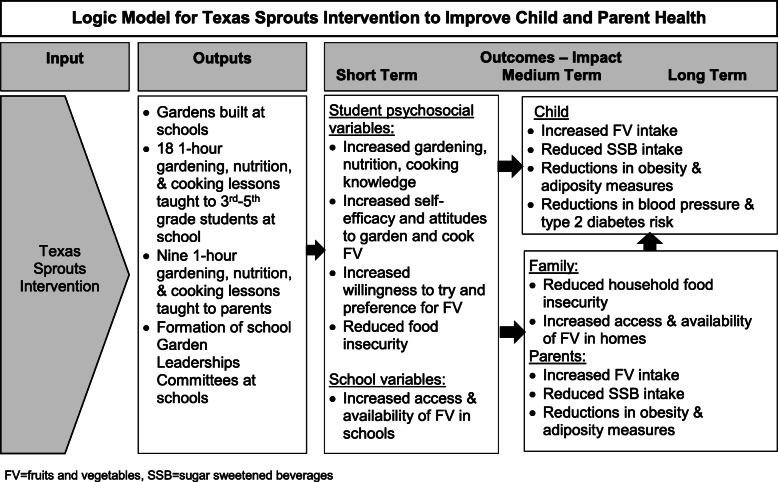
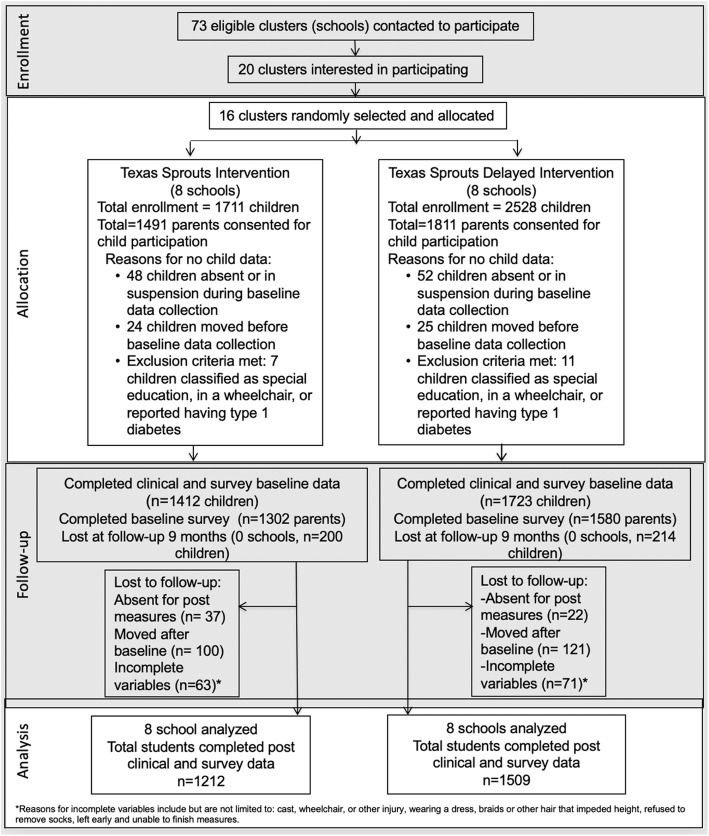
Background: Although school garden programs have been shown to improve dietary behaviors, there has not been a cluster-randomized controlled trial (RCT) conducted to examine the effects of school garden programs on obesity or other health outcomes. The goal of this study was to evaluate the effects of a one-year school-based gardening, nutrition, and cooking intervention (called Texas Sprouts) on dietary intake, obesity outcomes, and blood pressure in elementary school children. Methods: This study was a school-based cluster RCT with 16 elementary schools that were randomly assigned to either the Texas Sprouts intervention (n = 8 schools) or to control (delayed intervention, n = 8 schools). The intervention was one school year long (9 months) and consisted of: a) Garden Leadership Committee formation; b) a 0.25-acre outdoor teaching garden; c) 18 student gardening, nutrition, and cooking lessons taught by trained educators throughout the school-year; and d) nine monthly parent lessons. The delayed intervention was implemented the following academic year and received the same protocol as the intervention arm. Child outcomes measured were anthropometrics (i.e., BMI parameters, waist circumference, and body fat percentage via bioelectrical impedance), blood pressure, and dietary intake (i.e., vegetable, fruit, and sugar sweetened beverages) via survey. Data were analyzed with complete cases and with imputations at random. Generalized weighted linear mixed models were used to test the intervention effects and to account for clustering effect of sampling by school. Results: A total of 3135 children were enrolled in the study (intervention n = 1412, 45%). Average age was 9.2 years, 64% Hispanic, 47% male, and 69% eligible for free and reduced lunch. The intervention compared to control resulted in increased vegetable intake (+ 0.48 vs. + 0.04 frequency/day,p = 0.02). There were no effects of the intervention compared to control on fruit intake, sugar sweetened beverages, any of the obesity measures or blood pressure. Conclusion: While this school-based gardening, nutrition, and cooking program did not reduce obesity markers or blood pressure, it did result in increased vegetable intake. It is possible that a longer and more sustained effect of increased vegetable intake is needed to lead to reductions in obesity markers and blood pressure. Clinical trials number: NCT02668744.
Overview
The claims and statistics of this paper haven’t been checked yet.
Free: it reads the open-access text and checks the first 5 claims that cite a source we can check. Create a free account to check every claim.
Integrity signals
Registry
Cites
Statistics
Figures
Verification
Claims the paper makes
The claims and statistics of this paper haven’t been checked yet.
Free: it reads the open-access text and checks the first 5 claims that cite a source we can check. Create a free account to check every claim.
Claims other papers make about this one
Each is checked against this paper’s own text: does it say what the citing paper says it does?
The source backs part of the claim, not all of it — or backs it for a different population, condition or comparison.
In the citing paper
“increased water intake without significant changes in juice or soft drink intake [60]”
From Effects of school-based nutrition literacy Intervention on obesity prevention in school-age students: a systematic review and meta-analysis (2026) · cites this paper as [60]
Experimental — accuracy not yet measuredThe source backs part of the claim, not all of it — or backs it for a different population, condition or comparison.
In the citing paper
“Lessons covered choosing healthier snacks, reducing sugary drink intake, increasing fruit and vegetable consumption, and making appropriate choices across common settings, such as school, home, and when eating out [43, 53–56, 64].”
From Effects of school-based nutrition literacy Intervention on obesity prevention in school-age students: a systematic review and meta-analysis (2026) · cites this paper as [64]
Experimental — accuracy not yet measuredThe source backs part of the claim, not all of it — or backs it for a different population, condition or comparison.
In the citing paper
“Several curricula place individual eating habits within a broader food-systems context by showing how food moves “from farm to table,” how processing changes foods, and how packaging and energy use create environmental impacts [44, 48, 64].”
From Effects of school-based nutrition literacy Intervention on obesity prevention in school-age students: a systematic review and meta-analysis (2026) · cites this paper as [64]
Experimental — accuracy not yet measuredThe source backs part of the claim, not all of it — or backs it for a different population, condition or comparison.
In the citing paper
“Many programs supported self-management by fostering goal-setting, healthy eating behaviors, and the exploration of new foods [53, 64].”
From Effects of school-based nutrition literacy Intervention on obesity prevention in school-age students: a systematic review and meta-analysis (2026) · cites this paper as [64]
Experimental — accuracy not yet measuredThe cited source says what the claim attributes to it.
In the citing paper
“A substantial proportion of interventions incorporated experiential and skill-based learning, particularly cooking, food preparation, tasting, and sensory activities [45–48, 50, 52, 56, 59–61, 63].”
From Effects of school-based nutrition literacy Intervention on obesity prevention in school-age students: a systematic review and meta-analysis (2026) · cites this paper as [60]
1 more claim about this paper
Create a free account to see every claim other papers make about this one.
Self-check
Percentages, sums and reported differences re-computed from the paper’s own numbers.
The self-check needs the paper’s full text.
Citations
Cites
Harris, P. A., Taylor, R., Thielke, R., Payne, J., Gonzalez, N., & Conde, J. G. (2009) · Journal of Biomedical Informatics · doi:10.1016/j.jbi.2008.08.010 · Cited by 51,384 · cited 1×
“Study data were collected and managed using REDCap (Research Electronic Data Capture) [48].”
MethodThe Ecology of Human Development: Experiments by Nature and Design
Bronfenbrenner, U. (1979) · Harvard University Press eBooks · doi:10.4159/9780674028845 · Cited by 26,084
Interrater reliability: The kappa statistic
McHugh, M. L. (2012) · Biochemia Medica · doi:10.11613/bm.2012.031 · Cited by 19,877 · cited 1×
“71 with percentage agreements ranging from 57 to 87%, which suggested moderate to strong agreement [40].”
BackgroundThe ecology of human development : experiments by nature and design
Bronfenbrenner, U. (1979) · Cited by 12,580
Foundations of Clinical Research: Applications to Practice,
(2002) · Survey of Ophthalmology · doi:10.1016/s0039-6257(02)00362-4 · Cited by 9,489 · cited 1×
“Test-retest percent agreement was between 71 and 84% for all seven items, which is considered to be moderately reproducible [41].”
BackgroundThe prevention and treatment of missing data in clinical trials
Little, R. J., D'Agostino, R., Cohen, M. L., Dickersin, K., Emerson, S. S., Farrar, J. T., Frangakis, C., Hogan, J. W., Molenberghs, G., Murphy, S. A., et al. (2012) · New England Journal of Medicine · doi:10.1056/nejmsr1203730 · Cited by 1,884
Wang, X., Ouyang, Y., Liu, J., Zhu, M., Zhao, G., Bao, W., & Hu, F. B. (2014) · BMJ · doi:10.1136/bmj.g4490 · Cited by 1,596
Design and Analysis of Cluster Randomization Trials in Health Research
DONNER, A. P., & Klar, N. S. (2000) · Cited by 1,236
Cicchetti, D., & Lynch, M. (1993) · Psychiatry · doi:10.1080/00332747.1993.11024624 · Cited by 1,152 · cited 1×
“, school, family, community) that reciprocally interact with each other and the child over time to shape development and behaviors [31, 32].”
BackgroundFoundations of clinical research application to practice
Portney, L. (1993) · Medical Entomology and Zoology · Cited by 1,135
Design and Analysis of Group-Randomized Trials
Murray, D. M. (2007) · doi:10.1093/oso/9780195120363.001.0001 · Cited by 1,116
Folate, I. P. O., & Vitamins, O. B. (1998) · Cited by 965
The economics of obesity: dietary energy density and energy cost
Drewnowski, A., & Darmon, N. (2005) · The American Journal of Clinical Nutrition · doi:10.1093/ajcn/82.1.265s · Cited by 950 · cited 1×
“Low-income Hispanic families are more likely to live in communities with limited access to healthy foods, often referred to as “food deserts” or “food swamps”, and have less access to quality FV, and increased access to less healthful foods [10, 11].”
BackgroundTen-year outcomes of behavioral family-based treatment for childhood obesity.
Epstein, L. H., Valoski, A. M., Wing, R. R., & McCurley, J. (1994) · Health Psychology · doi:10.1037//0278-6133.13.5.373 · Cited by 874 · cited 1×
“While there is evidence that parent participation can reduce obesity among children who are overweight or obese in home or clinical settings [70, 71], the evidence is unclear on how parental participation in school based interventions plays a role in obesity prevention in children.”
BackgroundPearson, N., Biddle, S. J., & Gorely, T. (2009) · Public Health Nutrition · doi:10.1017/s1368980008002589 · Cited by 801 · cited 1×
“Parent modeling and intake of FV has been consistently shown in the literature to be linked to increased FV intake in the child [64, 65].”
BackgroundEpstein, L. H., Gordy, C. C., Raynor, H. A., Beddome, M., Kilanowski, C. K., & Paluch, R. (2001) · Obesity Research · doi:10.1038/oby.2001.18 · Cited by 656 · cited 3×
“interventions that increase FV intake have been shown to reduce obesity parameters in adults [6], the results from experimental studies with children have yielded mixed results [52, 53].”
BackgroundResultNeighborhood Disparities in Access to Healthy Foods and Their Effects on Environmental Justice
Hilmers, A., Hilmers, D. C., & Dave, J. (2012) · American Journal of Public Health · doi:10.2105/ajph.2012.300865 · Cited by 577 · cited 1×
“Low-income Hispanic families are more likely to live in communities with limited access to healthy foods, often referred to as “food deserts” or “food swamps”, and have less access to quality FV, and increased access to less healthful foods [10, 11].”
BackgroundA rapid food screener to assess fat and fruit and vegetable intake
Block, G., Gillespie, C., Rosenbaum, E. H., & Jenson, C. (2000) · American Journal of Preventive Medicine · doi:10.1016/s0749-3797(00)00119-7 · Cited by 565 · cited 1×
“However, the parent questionnaire packet included questions on family eating activities [45], household food insecurity, parental dietary intake [47], and home availability of FV [45].”
BackgroundAccelerating Progress in Obesity Prevention: Solving the Weight of the Nation
Jelalian, E., & McCullough, M. B. (2012) · American Journal of Lifestyle Medicine · doi:10.1177/1559827612458633 · Cited by 547
Relationship of fruit and vegetable intake with adiposity: a systematic review
Ledoux, T. A., Hingle, M. D., & Baranowski, T. (2011) · Obesity Reviews · doi:10.1111/j.1467-789x.2010.00786.x · Cited by 453 · cited 2×
“interventions that increase FV intake have been shown to reduce obesity parameters in adults [6], the results from experimental studies with children have yielded mixed results [52, 53].”
BackgroundResultA Community Intervention Reduces BMI z‐score in Children: Shape Up Somerville First Year Results
Economos, C. D., Hyatt, R. R., Goldberg, J. P., Must, A., Naumova, E. N., Collins, J. J., & Nelson, M. E. (2007) · Obesity · doi:10.1038/oby.2007.155 · Cited by 444 · cited 1×
“Research does consistently show that school programs when implemented with complementary community and parent programs can significantly prevent and treat childhood obesity [59, 60].”
BackgroundThe Prevention and Treatment of Missing Data in Clinical Trials
(2010) · National Academies Press eBooks · doi:10.17226/12955 · Cited by 438
He, K., Hu, F. B., Colditz, G. A., Manson, J. E., Willett, W. C., & Liu, S. (2004) · International Journal of Obesity · doi:10.1038/sj.ijo.0802795 · Cited by 422
Vital signs: fruit and vegetable intake among children - United States, 2003-2010.
Kim, S. A., Moore, L. V., Galuska, D. A., Wright, A. P., Harris, D., Grummer‐Strawn, L. M., Merlo, C. L., Nihiser, A. J., & Rhodes, D. G. (2014) · PubMed Central · Cited by 405
An Improved Sequentially Rejective Bonferroni Test Procedure
Holland, B. S., & Copenhaver, M. D. (1987) · Biometrics · doi:10.2307/2531823 · Cited by 372
Katz, D. L., O'Connell, M., Njike, V. Y., Yeh, M.-C., & Nawaz, H. (2008) · International Journal of Obesity · doi:10.1038/ijo.2008.158 · Cited by 371 · cited 1×
“In contrast, another meta-analyses with eight studies showed that school-based nutrition and physical activity intervention did result in reductions in body weight compared to control groups [58].”
ResultA review of the effectiveness of agriculture interventions in improving nutrition outcomes
Berti, P. R., Krasevec, J., & FitzGerald, S. (2004) · Public Health Nutrition · doi:10.1079/phn2003595 · Cited by 364
School-Based Interventions on Childhood Obesity
Gonzalez-Suarez, C., Worley, A., Grimmer-Somers, K., & Dones, V. (2009) · American Journal of Preventive Medicine · doi:10.1016/j.amepre.2009.07.012 · Cited by 361 · cited 1×
“A meta-analysis of 19 schoolbased RCTs, found that school-based nutrition and/or physical activity interventions were not effective at decreasing BMI compared to control groups [57].”
Gimme 5 Fruit, Juice, and Vegetables for Fun and Health: Outcome Evaluation
Baranowski, T., Davis, M., Resnicow, K., Baranowski, J., Doyle, C., Lin, L. S., Smith, M., & Wang, D. T. (2000) · Health Education & Behavior · doi:10.1177/109019810002700109 · Cited by 356 · cited 2×
“The final questionnaire packet also included questions on food and meal choice behaviors [42], self-efficacy to cook and/or prepare FV and gardening [33, 43], willingness to try and preferences for FV [44, 45], cooking and gardening attitudes [33], nutrition and gardening knowledge [33], and child food security [46].”
BackgroundHandbook of Missing Data Methodology
(2014) · Chapman & Hall/CRC eBooks · doi:10.1201/b17622 · Cited by 352
Neuhouser, M. L., Thompson, B., Coronado, G. D., & Solomon, C. C. (2004) · Journal of the American Dietetic Association · doi:10.1016/j.jada.2003.10.015 · Cited by 344 · cited 1×
“culture might also explain their decreased FV consumption, and increased consumption of unhealthy foods [12, 13].”
BackgroundBradbury, K. E., Appleby, P. N., & Key, T. J. (2014) · The American Journal of Clinical Nutrition · doi:10.3945/ajcn.113.071357 · Cited by 328
Hoelscher, D. M., Kirk, S., Ritchie, L., & Cunningham-Sabo, L. (2013) · Journal of the Academy of Nutrition and Dietetics · doi:10.1016/j.jand.2013.08.004 · Cited by 298 · cited 1×
“The available evidence does suggest that no single intervention, in school or elsewhere, is likely to be sufficient to reverse childhood obesity, and that a combined multicomponent approach targeting children, parents, the school and the community environment are needed to treat and prevent childhood obesity [61, 62].”
BackgroundSelf-citationRepeated exposure and associative conditioning promote preschool children’s liking of vegetables
Anzman-Frasca, S., Savage, J. S., Marini, M. E., Fisher, J. O., & Birch, L. L. (2012) · Appetite · doi:10.1016/j.appet.2011.11.012 · Cited by 283
Crowe, F. L., Roddam, A. W., Key, T. J., Appleby, P. N., Overvad, K., Jakobsen, M. U., Tjonneland, A., Hansen, L., Boeing, H., Weikert, C., et al. (2011) · European Heart Journal · doi:10.1093/eurheartj/ehq465 · Cited by 263
Coleman, K. J., Tiller, C. L., Sanchez, J., Heath, E. M., Sy, O., Milliken, G., & Dzewaltowski, D. A. (2005) · Archives of Pediatrics & Adolescent Medicine · doi:10.1001/archpedi.159.3.217 · Cited by 241
Field, A. E., Gillman, M. W., Rosner, B., Rockett, H. R., & Colditz, G. A. (2003) · International Journal of Obesity · doi:10.1038/sj.ijo.0802297 · Cited by 213 · cited 1×
“Increased FV may play a role in reduced obesity in adults [5, 6], but the literature supporting this claim in children is unclear [7, 8].”
BackgroundHarvesting more than vegetables: the potential weight control benefits of community gardening
Zick, C. D., Smith, K. R., Kowaleski-Jones, L., Uno, C., & Merrill, B. J. (2013) · American Journal of Public Health · doi:10.2105/ajph.2012.301009 · Cited by 184 · cited 1×
“Several experimental studies [25, 26] have shown that gardening is linked to lower obesity levels in adults, however few studies have reported on the effects of gardening on obesity and related health measures in children [27].”
BackgroundHoelscher, D. M., Springer, A. E., Ranjit, N., Perry, C. L., Evans, A. E., Stigler, M., & Kelder, S. H. (2010) · Obesity · doi:10.1038/oby.2009.430 · Cited by 182 · cited 1×
“Research does consistently show that school programs when implemented with complementary community and parent programs can significantly prevent and treat childhood obesity [59, 60].”
BackgroundSelf-citationFamily-Based Interventions Targeting Childhood Obesity: A Meta-Analysis
Berge, J. M., & Everts, J. C. (2011) · Childhood Obesity · doi:10.1089/chi.2011.07.02.1004.berge · Cited by 171 · cited 1×
“While there is evidence that parent participation can reduce obesity among children who are overweight or obese in home or clinical settings [70, 71], the evidence is unclear on how parental participation in school based interventions plays a role in obesity prevention in children.”
BackgroundEffects of Vegetables on Cardiovascular Diseases and Related Mechanisms
Tang, G.-Y., Meng, X., Li, Y., Zhao, C.-N., Liu, Q., & Li, H.-B. (2017) · Nutrients · doi:10.3390/nu9080857 · Cited by 169
Savoie-Roskos, M. R., Wengreen, H., & Durward, C. (2017) · Journal of the Academy of Nutrition and Dietetics · doi:10.1016/j.jand.2016.10.014 · Cited by 163 · cited 1×
“In 2017, a review of gardening interventions found that ten of the 14 studies included showed significant improvements in FV intake [23].”
BackgroundChild Experience of Food Insecurity Is Associated with Child Diet and Physical Activity ,
Fram, M. S., Ritchie, L. D., Rosen, N., & Frongillo, E. A. (2015) · The Journal of Nutrition · doi:10.3945/jn.114.194365 · Cited by 162 · cited 1×
“The final questionnaire packet also included questions on food and meal choice behaviors [42], self-efficacy to cook and/or prepare FV and gardening [33, 43], willingness to try and preferences for FV [44, 45], cooking and gardening attitudes [33], nutrition and gardening knowledge [33], and child food security [46].”
BackgroundZarnowiecki, D. M., Mauch, C. E., Middleton, G., Matwiejczyk, L., Watson, W. L., Dibbs, J., Dessaix, A., & Golley, R. K. (2020) · International Journal of Behavioral Nutrition and Physical Activity · doi:10.1186/s12966-020-0915-1 · Cited by 158 · cited 1×
“[67], websites [68], family-fun nights [69], or newsletters/home assignments [43].”
BackgroundMeasuring Fruit and Vegetable Preferences Among 4th- and 5th-Grade Students
Domel, S. B., Baranowski, T., Davis, H., Leonard, S. B., Riley, P. L., & Baranowski, J. C. (1993) · Preventive Medicine · doi:10.1006/pmed.1993.1078 · Cited by 153 · cited 1×
“The final questionnaire packet also included questions on food and meal choice behaviors [42], self-efficacy to cook and/or prepare FV and gardening [33, 43], willingness to try and preferences for FV [44, 45], cooking and gardening attitudes [33], nutrition and gardening knowledge [33], and child food security [46].”
BackgroundDave, J. M., Evans, A. E., Saunders, R. P., Watkins, K. W., & Pfeiffer, K. A. (2009) · Journal of the American Dietetic Association · doi:10.1016/j.jada.2008.12.017 · Cited by 144 · cited 1×
“culture might also explain their decreased FV consumption, and increased consumption of unhealthy foods [12, 13].”
BackgroundGatto, N. M., Ventura, E. E., Cook, L. T., Gyllenhammer, L. E., & Davis, J. N. (2012) · Journal of the Academy of Nutrition and Dietetics · doi:10.1016/j.jand.2012.01.014 · Cited by 137 · cited 1×
“This curriculum was designed with input from Hispanic families and tested in several pilot studies to ensure that the lessons were culturally sensitive and appropriate [27, 33, 35].”
MethodSelf-citationExposure to a Comprehensive School Intervention Increases Vegetable Consumption
Wang, M. C., Rauzon, S., Studer, N., Martin, A., Craig, L., Merlo, C. L., Fung, K., Kursunoglu, D., Shannguan, M., & Crawford, P. B. (2010) · Journal of Adolescent Health · doi:10.1016/j.jadohealth.2009.12.014 · Cited by 136
Penkilo, M., George, G. C., & Hoelscher, D. M. (2008) · Journal of Nutrition Education and Behavior · doi:10.1016/j.jneb.2007.04.375 · Cited by 135 · cited 1×
“An adapted version of the 2015 School Physical Activity and Nutrition (SPAN) dietary screener was used to assess FV and sugar sweetened beverage consumption in the children [38].”
MethodSelf-citationFirst-grade gardeners more likely to taste vegetables
Morris, J. L., Neustadter, A., & Zidenberg-Cherr, S. (2001) · California Agriculture · doi:10.3733/ca.v055n01p43 · Cited by 131
Treviño, R. P., Yin, Z., Hernandez, A., Hale, D. E., Garcia, O. A., & Mobley, C. (2004) · Archives of Pediatrics & Adolescent Medicine · doi:10.1001/archpedi.158.9.911 · Cited by 124 · cited 1×
“[67], websites [68], family-fun nights [69], or newsletters/home assignments [43].”
BackgroundValidating the food behavior questions from the elementary school SPAN questionnaire
Thiagarajah, K., Fly, A. D., Hoelscher, D. M., Bai, Y., Lo, K., Leone, A., & Shertzer, J. A. (2008) · Journal of Nutrition Education and Behavior · doi:10.1016/j.jneb.2007.07.004 · Cited by 117 · cited 1×
“The final questionnaire packet also included questions on food and meal choice behaviors [42], self-efficacy to cook and/or prepare FV and gardening [33, 43], willingness to try and preferences for FV [44, 45], cooking and gardening attitudes [33], nutrition and gardening knowledge [33], and child food security [46].”
BackgroundSelf-citationPaineau, D. L., Beaufils, F., Boulier, A., Cassuto, D.-A., Chwalow, J., Combris, P., Couet, C., Jouret, B., Lafay, L., Laville, M., et al. (2008) · Archives of Pediatrics & Adolescent Medicine · doi:10.1001/archpediatrics.2007.2 · Cited by 115 · cited 1×
“Other school-based interventions have shown success with delivering parental nutrition education through telephone counseling [66], text messaging Table 3 Effects of the Texas Sprouts intervention compared to Control on clinical and dietary outcomes”
MethodGatto, N. M., Martinez, L. C., Spruijt‐Metz, D., & Davis, J. N. (2017) · Pediatric Obesity · doi:10.1111/ijpo.12102 · Cited by 95 · cited 7×
“We completed a pilot study in 2014 in which four schools (~ 400 3rd-5th grade students) were randomly assigned to either a 12-week after-school gardening, nutrition, and cooking intervention (LA Sprouts) or to a control group [27].”
BackgroundMethodInfluentialSelf-citationWang, L. Y., Denniston, M. M., Lee, S. J., Galuska, D. A., & Lowry, R. (2010) · Journal of Adolescent Health · doi:10.1016/j.jadohealth.2009.11.204 · Cited by 95
Fruits and vegetables moderate lipid cardiovascular risk factor in hypertensive patients.
Adebawo, O. O., Salau, B. A., Ezima, E. N., Oyefuga, O., Ajani, E. O., Idowu, G. O., Famodu, A. A., & Osilesi, O. (2006) · Lipids in Health and Disease · doi:10.1186/1476-511x-5-14 · Cited by 91
Robinson-O'Brien, R., Burgess-Champoux, T., Haines, J., Hannan, P. J., & Neumark-Sztainer, D. (2010) · Journal of School Health · doi:10.1111/j.1746-1561.2010.00532.x · Cited by 84 · cited 1×
“While over the past decade, important policy revisions have been made to the NSLP and SBP, which have resulted in increases FV consumption [77, 78] and increases in healthy eating index scores [79] in school meals, there is still much”
BackgroundGearan, E. C., & Fox, M. K. (2020) · Journal of the Academy of Nutrition and Dietetics · doi:10.1016/j.jand.2019.10.022 · Cited by 74 · cited 1×
“While over the past decade, important policy revisions have been made to the NSLP and SBP, which have resulted in increases FV consumption [77, 78] and increases in healthy eating index scores [79] in school meals, there is still much”
BackgroundPark, S.-A., Lee, A.-Y., Son, K.-C., Lee, W.-L., & Kim, D.-S. (2016) · HortTechnology · doi:10.21273/horttech.26.4.474 · Cited by 71
Why do some overweight children remain overweight, whereas others do not?
Wang, Y., Ge, K., & Popkin, B. M. (2003) · Public Health Nutrition · doi:10.1079/phn2003470 · Cited by 59
Bacardí‐Gascón, M., Morales, M. A. E. P., & Jiménez–Cruz, A. (2013) · PubMed · doi:10.3305/nh.2012.27.3.5756 · Cited by 56 · cited 3×
“interventions that increase FV intake have been shown to reduce obesity parameters in adults [6], the results from experimental studies with children have yielded mixed results [52, 53].”
BackgroundResultCook, L. T., O'Reilly, G. A., Goran, M. I., Weigensberg, M. J., Spruijt-Metz, D., & Davis, J. N. (2014) · Journal of the Academy of Nutrition and Dietetics · doi:10.1016/j.jand.2014.01.017 · Cited by 56
Self-citationEvans, A., Ranjit, N., Hoelscher, D. M., Jovanovic, C. E. S., López, M., McIntosh, A., Ory, M. G., Whittlesey, L., McKyer, L. E., Kirk, A., et al. (2016) · BMC Public Health · doi:10.1186/s12889-016-3453-7 · Cited by 55 · cited 2×
“However, the parent questionnaire packet included questions on family eating activities [45], household food insecurity, parental dietary intake [47], and home availability of FV [45].”
BackgroundSelf-citationCullen, K. W., Chen, T.-A., & Dave, J. M. (2015) · Preventive Medicine Reports · doi:10.1016/j.pmedr.2015.05.007 · Cited by 51 · cited 1×
“While over the past decade, important policy revisions have been made to the NSLP and SBP, which have resulted in increases FV consumption [77, 78] and increases in healthy eating index scores [79] in school meals, there is still much”
BackgroundYuan, S., Yu, H., Liu, M., Huang, Y., Yang, X., Tang, B. W., Song, Y., Cao, Z. K., Wu, H., He, Q., et al. (2018) · Public Health · doi:10.1016/j.puhe.2018.01.027 · Cited by 42 · cited 1×
“Increased FV may play a role in reduced obesity in adults [5, 6], but the literature supporting this claim in children is unclear [7, 8].”
BackgroundViola, A. (2006) · Health Promotion Journal of Australia · doi:10.1071/he06233 · Cited by 41
Lam, V., Romses, K., & Renwick, K. (2019) · Nutrients · doi:10.3390/nu11061354 · Cited by 39
Elementary School–Based Obesity Intervention Using an Educational Curriculum
Lynch, B. A., Gentile, N. E., Maxson, J. A., Quigg, S. M., Swenson, L., & Kaufman, T. K. (2016) · Journal of Primary Care & Community Health · doi:10.1177/2150131916644888 · Cited by 34 · cited 1×
“Other interventions have targeted both the increase in FV along with the decrease in high fat and sugary foods and beverages [52, 63].”
BackgroundChung, L. M. Y., & Fong, S. S. M. (2018) · Health Psychology Open · doi:10.1177/2055102918802679 · Cited by 32
Adolescent Motor Vehicle Crash Risk: What's Needed to Understand and Reduce the Risk?
Shope, J. T. (2009) · Journal of Adolescent Health · doi:10.1016/j.jadohealth.2009.10.003 · Cited by 30
Amuta, A. O., Jacobs, W., Idoko, E. E., Barry, A. E., & McKyer, E. L. J. (2015) · Health Promotion Practice · doi:10.1177/1524839915589733 · Cited by 30 · cited 1×
“Parent modeling and intake of FV has been consistently shown in the literature to be linked to increased FV intake in the child [64, 65].”
BackgroundMartinez, L. C., Gatto, N. M., Spruijt-Metz, D., & Davis, J. N. (2015) · Contemporary Clinical Trials · doi:10.1016/j.cct.2015.04.008 · Cited by 28 · cited 4×
“This curriculum was designed with input from Hispanic families and tested in several pilot studies to ensure that the lessons were culturally sensitive and appropriate [27, 33, 35].”
BackgroundMethodInfluentialSelf-citationDavis, J. N., Nikah, K., Asigbee, F. M., Landry, M. J., Vandyousefi, S., Ghaddar, R., Hoover, A., Jeans, M., Pont, S. J., Richards, D., et al. (2019) · Contemporary Clinical Trials · doi:10.1016/j.cct.2019.105834 · Cited by 28 · cited 1×
“The complete design and methodology of this study has been previously published [28].”
MethodSelf-citationEarly patterns of food intake in an adolescent weight loss trial as predictors of BMI change
Hart, C. N., Jelalian, E., Raynor, H. A., Mehlenbeck, R., Lloyd‐Richardson, E. E., Kaplan, J., Flynn‐O’Brien, K. T., & Wing, R. R. (2010) · Eating Behaviors · doi:10.1016/j.eatbeh.2010.05.001 · Cited by 26 · cited 15×
“BMI (kg/m2) and BMI percentiles were determined using CDC age- and gender-specific values [37].”
BackgroundInfluentialAsigbee, F. M., Davis, J. N., Markowitz, A., Landry, M., Vandyousefi, S., Ghaddar, R., Ranjit, N., Warren, J. L., & van den Berg, A. E. (2020) · Current Developments in Nutrition · doi:10.1093/cdn/nzaa028 · Cited by 22
Self-citationSchool-based obesity treatment and prevention programs: all in all, just another brick in the wall?
Durant, N. H., Baskin, M. L., Thomas, O., & Allison, D. B. (2008) · International Journal of Obesity · doi:10.1038/ijo.2008.165 · Cited by 19
COMMITTEE ON ACCELERATING PROGRESS IN OBESITY PREVENTION
Nutrition Board, Glickman, D., Parker, L., Sim, L. J., Cook, H. D. V., & Miller, E. (2012) · Cited by 18
Lotrean, L. M., & Tutui, I. (2014) · Health & Social Care in the Community · doi:10.1111/hsc.12166 · Cited by 17
Funderburk, K., Struempler, B., Parmer, S., & Griffin, J. B. (2018) · Journal of Nutrition Education and Behavior · doi:10.1016/j.jneb.2018.01.007 · Cited by 10 · cited 1×
“[67], websites [68], family-fun nights [69], or newsletters/home assignments [43].”
BackgroundValidity and Reliability of an Expanded Vegetable Questionnaire Among Elementary School Children
Landry, M. J., Ranjit, N., Hoelscher, D. M., Asigbee, F. M., Vandyousefi, S., Ghaddar, R., & Davis, J. N. (2019) · Current Developments in Nutrition · doi:10.1093/cdn/nzz080 · Cited by 6 · cited 1×
“We assessed the validity of the expanded SPAN questionnaire with a two independent samples (n = 70) of children (9–11 y) [39], where vegetable intake reported via questionnaire was compared to that reported via 24-h dietary recalls.”
MethodSelf-citationDavis, J. N., Nikah, K., Asigbee, F. M., Landry, M. J., Vandyousefi, S., Ghaddar, R., Hoover, A., Jeans, M., Pont, S. J., Richards, D., et al. (2019) · Contemporary Clinical Trials · doi:10.1016/j.cct.2019.105906 · Cited by 1
Self-citation
Research works printed but not linked: 3
- 34. Extension TAMA. Learn, grow, eat & Grow! 2014.
- 36. Centers for Disease Control and Prevention: CDC growth Charts. Atlanta, GA, U. S. Department of Health and Human Services, Centers for Disease Control and Prevention, National Center for Health Statistics, 2000 (U.S. Publ. no. 314).
- 74. Whole School WC, Whole Child. Association for Supervision and Curriculum Development (ASCD).http://www.ascd.org/programs/learning-and-health/ wscc-model.aspx. last assess on March 3rd, 2020.
Cited by
Nature and Children’s Health: A Systematic Review
Fyfe-Johnson, A. L., Hazlehurst, M. F., Perrins, S. P., Bratman, G. N., Thomas, R., Garrett, K. A., Hafferty, K. R., Cullaz, T. M., Marcuse, E. K., & Tandon, P. S. (2021) · Pediatrics · doi:10.1542/peds.2020-049155 · Cited by 181
Chan, C. L., Tan, P. Y., & Gong, Y. Y. (2022) · BMC Public Health · doi:10.1186/s12889-022-13587-x · Cited by 127
Interventions to prevent obesity in children aged 5 to 11 years old
Spiga, F., Davies, A. L., Tomlinson, E., Moore, T. H., Dawson, S., Breheny, K., Savović, J., Gao, Y., Phillips, S. M., Hillier-Brown, F. C., et al. (2024) · Cochrane Database of Systematic Reviews · doi:10.1002/14651858.cd015328.pub2 · Cited by 130
Hodder, R. K., O’Brien, K. M., Lorien, S. J., Wolfenden, L., Moore, T. H., Hall, A. E., Yoong, S. L., & Summerbell, C. (2022) · EClinicalMedicine · doi:10.1016/j.eclinm.2022.101635 · Cited by 107
School Gardening and Health and Well-Being of School-Aged Children: A Realist Synthesis
Holloway, T. P., Dalton, L., Hughes, R., Jayasinghe, S. U., Patterson, K. A. E., Murray, S. L., Soward, R., Byrne, N. M., Hills, A. P., & Ahuja, K. (2023) · Nutrients · doi:10.3390/nu15051190 · Cited by 85
“Context (Materials/Activities) Mechanism Outcomes (Health/Well-Being) LA Sprouts [44–48] 12-week programs with Grade 3–5 students • Adaptive curriculum with culturally relevant focus, taught by an educator with a nutrition or gardening background • Interactive, hands-on gardening activities plus cooking and nutrition…”
BackgroundMethodInfluential
Metadata
- Authors
- Davis, J. N., Pérez, A., Asigbee, F. M., Landry, M. J., Vandyousefi, S., Ghaddar, R., Hoover, A., Jeans, M., Nikah, K., Fischer, B., Pont, S. J., Richards, D., Hoelscher, D. M., & Van Den Berg, A. E.
- Affiliations
- The University of Texas at Austin (US)
- Michael & Susan Dell Center for Healthy Living (US)
- Corresponding author
- Davis, Jaimie N.
- ORCID
- Venue
- International Journal of Behavioral Nutrition and Physical Activity
- Published
- 2021-01-23
- Volume
- 18
- Issue
- 1
- Pages
- 18-18
- ISSN
- 1479-5868 (ISSN-L)
- PMC
- PMC7825209
- OpenAlex
- W3124920108
- Cited by
- 136
- References
- 81
- Citations by year
- 2026: 17 · 2025: 27 · 2024: 37 · 2023: 23 · 2022: 22 · 2021: 10
- FWCI
- 19.90
- Type
- journal article
- Language
- en
- Open access
- gold
- doi.org
- Licence
- cc-by
- creativecommons.org/licenses/by/4.0 (tdm)
- creativecommons.org/licenses/by/4.0 (vor)
- Locations
- International Journal of Behavioral Nutrition and Physical Activity (publishedVersion, cc-by)
- PubMed Central (publishedVersion, cc-by)
- PubMed (publishedVersion)
- DOAJ (DOAJ: Directory of Open Access Journals) (submittedVersion, cc-by-sa)
- eScholarship (California Digital Library) (submittedVersion, cc-by)
- Funders
- National Institutes of Health (1R01HL123865)
- Whole Kids Foundation
- Sprouts Healthy Communities Foundation
- Topics
- Health Sciences › Medicine › Public Health, Environmental and Occupational Health › Obesity, Physical Activity, Diet
- Life Sciences › Agricultural and Biological Sciences › General Agricultural and Biological Sciences › Diverse Educational Innovations Studies
- Health Sciences › Nursing › Nutrition and Dietetics › Nutrition, Health and Food Behavior
- Keywords
- school gardens, school-based intervention, vegetable consumption, childhood obesity, body mass index, blood pressure, culinary education, nutrition education, elementary school students, sugar-sweetened beverages, fruit consumption
- MeSH terms
- Blood Pressure, Body Composition, Child, Cooking, Diet, Female, Hispanic or Latino, Humans, Male, School Health Services, Schools, Students, Texas, Vegetables, Body Mass Index, Gardening, Nutritional Sciences, Waist Circumference, Pediatric Obesity
About these checks
Registry, retraction, Cites and statistics results are computed, not judged, with one exception: a printed reference that no index lists is read once by a model before it counts as a citation error. Claims are extracted by a model and kept only when their quote appears verbatim in the text; each cited source is then checked, with a model’s help, for whether it says what the claim relies on. Those verdicts can be wrong — read the claim’s quote and the cited source before relying on one.
Statistics and arithmetic are recomputed, not judged.
Confidence bands are shown only for fields calibrated on our annotated test set. None is calibrated yet, so no band is shown.
What counts as a claim ›How we measure confidence ›How we check this ›
Are you an author, or do you see a problem with this page? Request a review
Data sources
Bibliographic data: Semantic Scholar, OpenAlex, Crossref.
Contains information from the Semantic Scholar Academic Graph Datasets, made available under the ODC Attribution License (ODC-BY 1.0).
Semantic Scholar’s data is described in: Kinney, R., et al. (2023). The Semantic Scholar Open Data Platform. arXiv:2301.10140.
