

Precision medicine in the era of artificial intelligence: implications in chronic disease management
Open accessThe DOI matches its Crossref record; 154 of the 157 references it cites were found in a registry or an index.
Abstract
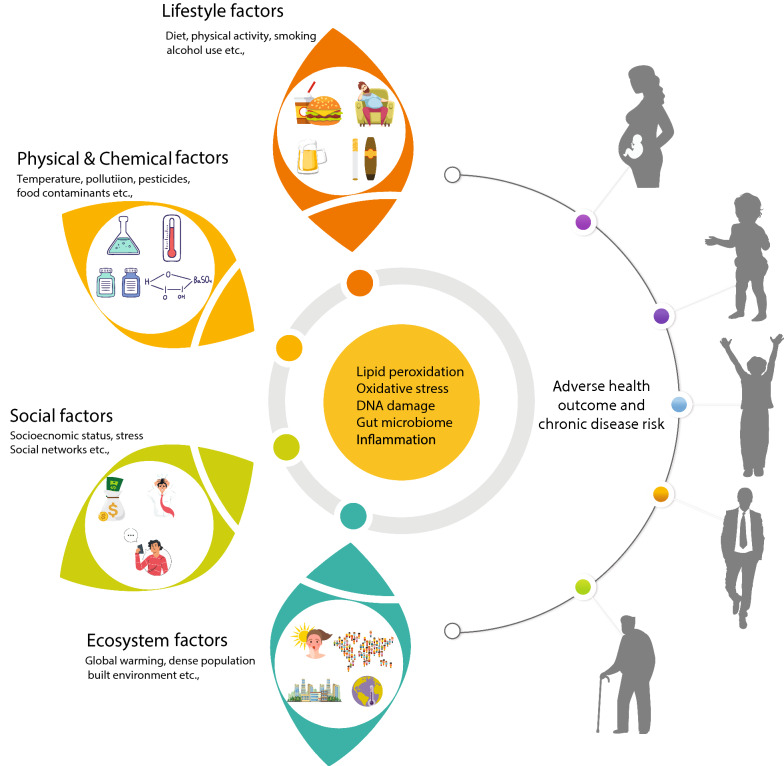
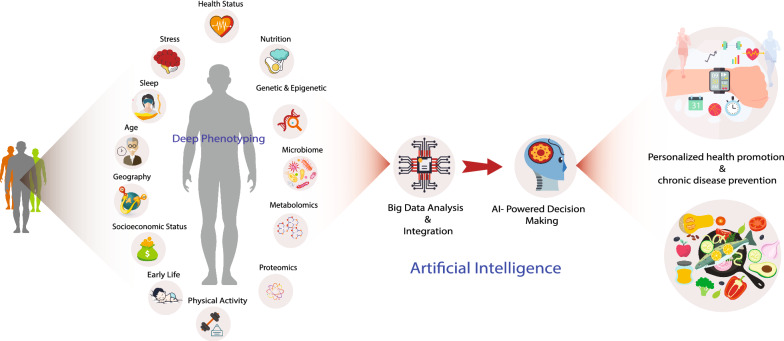
Aberrant metabolism is the root cause of several serious health issues, creating a huge burden to health and leading to diminished life expectancy. A dysregulated metabolism induces the secretion of several molecules which in turn trigger the inflammatory pathway. Inflammation is the natural reaction of the immune system to a variety of stimuli, such as pathogens, damaged cells, and harmful substances. Metabolically triggered inflammation, also called metaflammation or low-grade chronic inflammation, is the consequence of a synergic interaction between the host and the exposome—a combination of environmental drivers, including diet, lifestyle, pollutants and other factors throughout the life span of an individual. Various levels of chronic inflammation are associated with several lifestyle-related diseases such as diabetes, obesity, metabolic associated fatty liver disease (MAFLD), cancers, cardiovascular disorders (CVDs), autoimmune diseases, and chronic lung diseases. Chronic diseases are a growing concern worldwide, placing a heavy burden on individuals, families, governments, and health-care systems. New strategies are needed to empower communities worldwide to prevent and treat these diseases. Precision medicine provides a model for the next generation of lifestyle modification. This will capitalize on the dynamic interaction between an individual’s biology, lifestyle, behavior, and environment. The aim of precision medicine is to design and improve diagnosis, therapeutics and prognostication through the use of large complex datasets that incorporate individual gene, function, and environmental variations. The implementation of high-performance computing (HPC) and artificial intelligence (AI) can predict risks with greater accuracy based on available multidimensional clinical and biological datasets. AI-powered precision medicine provides clinicians with an opportunity to specifically tailor early interventions to each individual. In this article, we discuss the strengths and limitations of existing and evolving recent, data-driven technologies, such as AI, in preventing, treating and reversing lifestyle-related diseases.
Overview
The claims and statistics of this paper haven’t been checked yet.
Free: it reads the open-access text and checks the first 5 claims that cite a source we can check. Create a free account to check every claim.
Integrity signals
Registry
Cites
Statistics
Figures
Verification
Claims the paper makes
The claims and statistics of this paper haven’t been checked yet.
Free: it reads the open-access text and checks the first 5 claims that cite a source we can check. Create a free account to check every claim.
Claims other papers make about this one
Each is checked against this paper’s own text: does it say what the citing paper says it does?
The source backs part of the claim, not all of it — or backs it for a different population, condition or comparison.
In the citing paper
“In particular, edge AI with distributed and secure DL has been demonstrated to be able to significantly improve the reliability, accuracy, scalability, privacy and security for precision medicine and Internet of Medical Things [313], including medical imaging, drug development, and chronic disease management [314].”
From Edge artificial intelligence for 6g: vision, enabling technologies, and applications (2022) · cites this paper as [314]
Experimental — accuracy not yet measured
Self-check
Percentages, sums and reported differences re-computed from the paper’s own numbers.
The self-check needs the paper’s full text.
Citations
Cites
Dermatologist-level classification of skin cancer with deep neural networks
Esteva, A., Kuprel, B., Novoa, R. A., Ko, J., Swetter, S. M., Blau, H. M., & Thrun, S. (2017) · Nature · doi:10.1038/nature21056 · Cited by 14,362
James, S. L., Abate, D., Abate, K. H., Abay, S. M., Abbafati, C., Abbasi, N., Abbastabar, H., Abd-Allah, F., Abdela, J., Abdelalim, A., et al. (2018) · The Lancet · doi:10.1016/s0140-6736(18)32279-7 · Cited by 13,867
Vos, T., Abajobir, A. A., Abate, K. H., Abbafati, C., Abbas, K. M., Abd-Allah, F., Abdulkader, R. S., Abdulle, A. M., Abebo, T. A., Abera, S. F., et al. (2017) · The Lancet · doi:10.1016/s0140-6736(17)32154-2 · Cited by 13,220
Sudlow, C., Gallacher, J., Allen, N., Beral, V., Burton, P., Danesh, J., Downey, P., Elliott, P., Green, J., Landray, M., et al. (2015) · PLOS Medicine · doi:10.1371/journal.pmed.1001779 · Cited by 12,728
High-performance medicine: the convergence of human and artificial intelligence
Topol, E. J. (2019) · Nature Medicine · doi:10.1038/s41591-018-0300-7 · Cited by 10,450
Diet rapidly and reproducibly alters the human gut microbiome
David, L. A., Maurice, C. F., Carmody, R. N., Gootenberg, D. B., Button, J. E., Wolfe, B. E., Ling, A. V., Devlin, A. S., Varma, Y., Fischbach, M. A., et al. (2014) · Nature · doi:10.1038/nature12820 · Cited by 10,100
Obesity is associated with macrophage accumulation in adipose tissue
Weisberg, S. P., McCann, D., Desai, M., Rosenbaum, M., Leibel, R. L., & Ferrante, A. W. (2003) · Journal of Clinical Investigation · doi:10.1172/jci200319246 · Cited by 10,041 · cited 1×
“Such systemic inflammation characterized as ‘low-grade’ was associated with elevated levels of inflammatory mediators and increased immune cell infiltration in peripheral tissues without altering the primary function of the tissue [16, 17].”
BackgroundGenome-wide association study of 14,000 cases of seven common diseases and 3,000 shared controls
The Wellcome Trust Case Control Consortium, Management Committee, Burton, P. R., Clayton, D. G., Cardon, L. R., Craddock, N., Deloukas, P., Duncanson, A., Kwiatkowski, D. P., McCarthy, M. I., et al. (2007) · Nature · doi:10.1038/nature05911 · Cited by 9,442
The UK Biobank resource with deep phenotyping and genomic data
Bycroft, C., Freeman, C., Petkova, D., Band, G., Elliott, L. T., Sharp, K., Motyer, A., Vukcevic, D., Delaneau, O., O’Connell, J., et al. (2018) · Nature · doi:10.1038/s41586-018-0579-z · Cited by 8,876
Forouzanfar, M. H., Afshin, A., Alexander, L. T., Anderson, H. R., Bhutta, Z. A., Biryukov, S., Brauer, M., Burnett, R., Cercy, K., Charlson, F. J., et al. (2016) · The Lancet · doi:10.1016/s0140-6736(16)31679-8 · Cited by 7,698
Cited by
Items 201–300 of 408
Park, J., Hamanaka, A., Park, I., & Abdelhady, H. G. (2025) · Biomolecules · doi:10.3390/biom15121653 · Cited by 3
Yu, C. (2026) · Frontiers in Public Health · doi:10.3389/fpubh.2026.1756755 · Cited by 5
“Meanwhile, AI-based diabetes prediction models can efficiently handle large volumes of disease data from detailed patient information and diagnostic reports (17).”
Bjørklund, G., Bhat, R. S., & El-Ansary, A. K. (2024) · International journal for autism challenges & solution. · doi:10.54878/bgxvwf58 · Cited by 4
Zhang, Q., Yang, C., & Hu, X. (2024) · Technology and Health Care · doi:10.1177/09287329241291361 · Cited by 3
AI in Healthcare – Precision Medicine and Diagnosis
Patel, S. U., & Jirvankar, P. (2024) · DMIHER International Conference on Artificial Intelligence in Healthcare, Education and Industry (IDICAIHEI) · doi:10.1109/idicaiei61867.2024.10842772 · Cited by 5
The Influence of Artificial Intelligence on the Healthcare Industry in Relation to Sustainability
Shaikh, M. I., Dsilva, J., & Usmani, F. Z. A. (2024) · Approaches to global sustainability, markets, and governance · doi:10.1007/978-981-97-9555-0_5 · Cited by 4
Approaches in Post‐Experimental Science. The Case of Precision Medicine**
Meunier, R. (2022) · Berichte zur Wissenschaftsgeschichte · doi:10.1002/bewi.202200020 · Cited by 3
“28 Subramanian et al. 2020.”
Bertoni, A. P. S., Rodrigues, V., Zeiser, F. A., Mello, B., da Costa, C. A., Donida, B., Rigo, S. J., & Righi, R. D. R. (2022) · doi:10.5753/sbc.10508.0.1 · Cited by 7
Improving Health Care Services via Personalized Medicine
Rhatassi, F. E. E., Ghali, B. E., & Daoudi, N. (2023) · Lecture notes in networks and systems · doi:10.1007/978-3-031-28387-1_37 · Cited by 3
Artificial intelligence and rehabilitation: what’s new and promising
Marks, R. (2023) · International Physical Medicine & Rehabilitation Journal · doi:10.15406/ipmrj.2023.08.00348 · Cited by 4
Baldo, P., Re, V. D., & Garutti, M. (2023) · Expert Opinion on Therapeutic Targets · doi:10.1080/14728222.2023.2295493 · Cited by 3
“Additionally, the rapid development of artificial intelligence may help aggregate the outputs of these innovative methods by making the delivery of health care more efficient, improving the quality of life during illness [32].”
BackgroundJaved, A., Tariq, M., Hussain, G., Ali, S., Fatima, A., Batool, A., Khalid, D., Noor, Z., & Rasul, S. (2024) · Developmental medico-life-sciences · doi:10.69750/dmls.01.06.058 · Cited by 4
“A decrease in the level of complications such as hypoglycemia and cardiovascular events also proves the effectiveness of the approach to individualized therapy[21, 22].”
BackgroundJiménez, N. G., Satué-Gracia, E. M., Contel, J. C., Gallisà, J. B., & Amblàs-Novellas, J. (2024) · Atención Primaria · doi:10.1016/j.aprim.2024.103108 · Cited by 3
Esfandiari, E., Kalroozi, F., Mehrabi, N., & Hosseini, Y. (2024) · Jundishapur Journal of Chronic Disease Care · doi:10.5812/jjcdc-143796 · Cited by 5
The Role of Blockchain, IoT and AR in Future Healthcare: A Review
-, R. A., -, E. A., -, B. A. A., -, K. O. A., -, N. A. K. D., & -, G. D. (2024) · International Journal For Multidisciplinary Research · doi:10.36948/ijfmr.2024.v06i06.33535 · Cited by 2
Yin, H., Yu, S., Li, H., Shi, C., Wang, W., Men, L., & Jia, L. L. (2025) · Frontiers in Endocrinology · doi:10.3389/fendo.2025.1490131 · Cited by 2
TRANSFORMATIVE APPLICATIONS OF AI IN HEALTHCARE AND PHARMACEUTICAL INNOVATION
JASMINE, P., IBRAHIM, A., Siddiq, S., DHANURSHRA, A., NIRMALA, M., & BASHA, S. S. (2025) · International Journal of Applied Pharmaceutics · doi:10.22159/ijap.2025v17i3.52719 · Cited by 3
“Personalized medicine will become widespread, with AI analyzing genetics, lifestyle, and environmental factors to tailor therapies, improving efficacy and minimizing side effects [215, 216].”
Mishra, R., Mohapatra, S. K., Satpathy, R., & Pati, B. (2024) · International Conference on Signal Processing, Communication, Power and Embedded System (SCOPES) · doi:10.1109/scopes64467.2024.10991178 · Cited by 2
Technology, Artificial Intelligence, and the Era of Information in Healthcare and Allied Sciences
Choudhury, S. R., Singh, K., Koner, S., & Ghosh, J. (2025) · IGI Global eBooks · doi:10.4018/979-8-3693-9755-8.ch016 · Cited by 2
Deepthi, K. N., & Bhargavi, P. (2025) · International Journal of Environmental Sciences · doi:10.64252/5t3k2d05 · Cited by 2
Psoas Muscle Index, Systemic Inflammation, and Liver Fibrosis in MAFLD: A Case-Control Study
Yu, L., Jiang, N., Wu, H., Li, J., & Xu, S. (2025) · Diabetes Metabolic Syndrome and Obesity · doi:10.2147/dmso.s521829 · Cited by 2
“39 Although machine learning technology was not directly used in this study, the existing literature suggests that ML has significant advantages in accurate typing, dynamic monitoring and mechanism resolution of MAFLD.”
Ahmad, M. M., & Hani, S. B. (2026) · International Journal of Health Care Quality Assurance · doi:10.1108/ijhcqa-08-2025-0102 · Cited by 2
Toward personalized iodine-131 therapy: A review of dosimetric strategies
Jalilifar, M., Geramifar, P., & Sadeghi, M. (2026) · Applied Radiation and Isotopes · doi:10.1016/j.apradiso.2026.112565 · Cited by 2
Deep Learning Technology in Genomics, Radiotherapy, and Ophthalmology for Precision Medicine
Pratap, A., Huang, Y.-J., Chiang, C.-K., Liu, W., Lin, W.-Y., Hsu, H.-C., & Hsiung, P. (2026) · Journal of physiological investigation. · doi:10.4103/ejpi.ejpi-d-25-00069 · Cited by 3
苗书英, Zhang, Z., & Bao, C. (2026) · Journal of Nursing Management · doi:10.1155/jonm/5288231 · Cited by 3
Artificial Intelligence Driving Diabetes Care
Sadagopan, A. (2023) · Journal For International Medical Graduates · doi:10.56570/jimgs.v2i1.92 · Cited by 5
Artificial Intelligence in the Genomics Era: A Blessing or a Curse?
Reddy, S. S. P. (2023) · Journal of Regenerative Biology and Medicine · doi:10.37191/mapsci-2582-385x-5(3)-134 · Cited by 3
“Image analysis in AI methodology is commonly used in medical imaging to analyse microarray and sequencing data, as well as identify genetic markers associated with disease [11].”
MethodBennett, L., Mostafa, M., Hammersley, R., Purssell, H., Patel, M. R., Street, O., Athwal, V. S., Hanley, K. P., Hanley, N. A., Morling, J. R., et al. (2023) · Journal of Medical Artificial Intelligence · doi:10.21037/jmai-23-35 · Cited by 2
Nasti, A., Okumura, M., Takeshita, Y., Ho, T. T. B., Sakai, Y., Sato, T., Nomura, C., Goto, H., Nakano, Y., Urabe, T., et al. (2024) · Diabetes Research and Clinical Practice · doi:10.1016/j.diabres.2024.111090 · Cited by 2
METHODOLOGY FOR CREATING AN INDIVIDUAL HUMAN HEALTH MODEL USING ARTIFICIAL INTELLIGENCE
Stepanenko, D. A., Pavlov, V. I., & Kozlova, N. M. (2024) · Baikal Medical Journal · doi:10.57256/2949-0715-2024-1-28-37 · Cited by 4
Production and development of novel drug targets through AI
Mahmoud, G. A., Riad, O. K. M., & Badawy, M. S. E. M. (2024) · Methods in microbiology · doi:10.1016/bs.mim.2024.05.002 · Cited by 2
Bhuvaneswari, R., Prabu, M., Diviya, M., Subramanian, M., & Natarajan, A. K. (2024) · Advances in medical technologies and clinical practice book series · doi:10.4018/979-8-3693-7462-7.ch015 · Cited by 7
Self-citationKhatri, P., Sharma, A., & Payal (2024) · International Conference on Data Science and Network Security (ICDSNS) · doi:10.1109/icdsns62112.2024.10690944 · Cited by 2
“Our ultimate driving force is the search for concrete remedies that might significantly improve patient outcomes and lessen the toll that strokes have on both people and society at large [15].”
BackgroundFuture Direction of Laboratory Testing for Autoimmune Diseases
Keppeke, G. D., Agustinelli, R. D. A., Landoni, D., Cruvinel, W. M., Chan, E. K. L., & Andrade, L. E. C. (2024) · Wiley eBooks · doi:10.1002/9781683674023.ch88 · Cited by 2
Managing Dyslipidemia in Children: Current Approaches and the Potential of Artificial Intelligence
Abdullah, Zaheer, A., Saeed, H., Arshad, M. K., Zabeehullah, Iftikhar, U., Abid, A., Khan, M. H., Khan, A. S., & Akbar, A. (2024) · Cardiology in Review · doi:10.1097/crd.0000000000000816 · Cited by 2
Artificial Intelligence for Cardiovascular Diseases
Lari, M. Q., Kumar, D., Kumar, A., Murti, Y., Yadav, P. K., & Kumar, D. (2024) · Recent Advances in Computer Science and Communications · doi:10.2174/0126662558348090241210063629 · Cited by 3
AI in the Detection of Breast Cancer and Related Ethical and Legal Issues
Mukhopadhyay, K. D., Guha, T., & Basu, A. (2025) · Lecture notes in networks and systems · doi:10.1007/978-981-97-8457-8_9 · Cited by 2
Microbial Infection disease Diagnosis and treatment by Artificial Intelligence
Al-Huseini, L. M. A., Kadhim, N. J., Mahdi, M. S., Ogaili, R. H., & Al-Hammood, O. (2025) · Wiadomości Lekarskie · doi:10.36740/wlek/200511 · Cited by 3
“At the extremely least, machine learning-based alert systems have been created that detect deviations in disease rates or the ways infectious diseases are spread, alerting health authorities to potential outbreaks [18].”
The Role of AI in Chronic Disease Management: A Literature Review
Falah, F. F., & Arbangi, N. (2025) · International Journal Of Scientific Advances · doi:10.51542/ijscia.v6i2.9 · Cited by 2
Trends in the applications of artificial intelligence in fatty liver diseases
Xie, T., Liufu, L.-L., Chen, H., Chen, H., Hou, X.-T., Wang, X.-R., Han, M.-Y., Shan, Y.-K., Shen, R.-J., Wu, Z.-Y., et al. (2025) · Hepatology International · doi:10.1007/s12072-025-10827-1 · Cited by 2
Rayle, J., Hamilton, T., Poosapati, P., Doğan, G., & Mendes, M. (2022) · International Workshop on Artificial Intelligence and Education (WAIE) · doi:10.1109/waie57417.2022.00016 · Cited by 2
“Applications can be seen in diagnosing or managing diseases, in the analysis of large volumes of genetic data, or one of many other applications in the health care environment [6].”
BackgroundMethodMetabolomics of Infectious Disease
Bueno, J. (2021) · Elsevier eBooks · doi:10.1016/b978-0-12-818731-9.00095-1 · Cited by 2
Molecular World Today and Tomorrow: Recent Trends in Biological Sciences 2.0
Zaman, W. (2024) · International Journal of Molecular Sciences · doi:10.3390/ijms25053070 · Cited by 2
Phenotypic Screening: A Cornerstone Engine for Discovering Original Anti-Infective Drugs
Xu, S., Wang, M., Shi, D., Lindsley, C. W., Kim, M., Sun, Y., & Zhan, P. (2025) · Journal of Medicinal Chemistry · doi:10.1021/acs.jmedchem.5c03538 · Cited by 2
Britto, M. J., Pulugu, D., Maragatham, R. S., Pandey, V., Shanthini, K. S., & Sapkal, N. P. (2024) · International Conference on Electronics, Computing, Communication and Control Technology (ICECCC) · doi:10.1109/iceccc61767.2024.10593870 · Cited by 1
“[ 21]This web of interconnected digital devices will realize their full potential thanks to the complementary nature of these technologies.”
BackgroundAdvances in Developing Small Molecule Drugs for Alzheimer's Disease
Zhang, W., Zhang, L., Lv, M., Fu, Y., Meng, X., Wang, M., & Wang, H. (2024) · Current Alzheimer Research · doi:10.2174/0115672050329828240805074938 · Cited by 1
How artificial intelligence affects the future of pharmacy practice?
Alajlan, S. A., & Lytras, M. D. (2024) · Elsevier eBooks · doi:10.1016/b978-0-443-13619-1.00013-1 · Cited by 4
Hui, Z., & Xiao, M. (2024) · Gastroenterology and Hepatology Research · doi:10.53388/ghr2024013 · Cited by 1
Artificial Intelligence in Immunology: Predictive Models for Immune System Disorders
Basha, S. K. A., & Hanirex, D. K. (2024) · Global Conference on Communications and Information Technologies (GCCIT) · doi:10.1109/gccit63234.2024.10862665 · Cited by 1
“In the next section, the developers go over the benefits and drawbacks of modern, data-driven technologies like AI in the prevention, diagnosis, and treatment of diseases linked to certain ways of life [12].”
Karri, R. L., Reddy, C. P., Yerra, S., Shaik, J. V., Grandhi, S., & Gavidi, T. (2025) · Indian Journal of Dental Sciences · doi:10.4103/ijds.ijds_102_24 · Cited by 1
ARTIFICIAL INTELLIGENCE: IN PRECISION MEDICINE
Mukherjee, S., Khatun, R., Sengupta, S., & Bhattacharya, M. (2025) · INTERNATIONAL JOURNAL OF ADVANCED RESEARCH IN ENGINEERING & TECHNOLOGY · doi:10.34218/ijaret_16_02_022 · Cited by 2
AI-Assisted Vaccine Design and Development in Immunological Disorders
Tavare, N., Singh, R., & Barage, S. H. (2025) · Advances in computational intelligence and robotics book series · doi:10.4018/979-8-3693-9725-1.ch006 · Cited by 2
Genetically Modified Viral Vectors for Vaccine Delivery
Arora, D., Taneja, Y., Gulati, D., Kumar, M., Pareek, A., & Gautam, R. K. (2025) · Wiley eBooks · doi:10.1002/9781394271566.ch6 · Cited by 1
Human-Centric Requirements Engineering for Digital Health Software for Ageing People
Xiao, Y. (2025) · ACM/IEEE International Conference on Software Engineering: Companion Proceedings (ICSE-Companion) · doi:10.1109/icse-companion66252.2025.00050 · Cited by 1
“A growing body of literature recognizes the importance of software solutions for age-related healthcare problems, including cancer support [5], intensive care monitoring [6], and chronic disease tracking [7].”
Precision nutrition for the improvement of health outcomes: An overview
Wichansawakun, S., & Nunthanawanich, P. (2025) · Elsevier eBooks · doi:10.1016/b978-0-443-22300-6.00053-x · Cited by 1
Alshahrani, S. M., & Shukri, A. K. (2025) · Journal of Research in Pharmacy Practice · doi:10.4103/jrpp.jrpp_43_25 · Cited by 1
Wang, C., Mardan, M., Huang, J., Cai, J., Ding, F., Zhang, L., Li, M., Fu, C., Mei, J., & Jiang, Z. (2025) · Frontiers in Cardiovascular Medicine · doi:10.3389/fcvm.2025.1614979 · Cited by 1
“Additionally, machine learning (ML) techniques like random forest (RF) and least absolute shrinkage and selection operator (LASSO) regression, have been widely applied in gene selection and disease prediction (7, 8).”
Dong, L., Fang, L., Peng, W., & Yang, X. (2025) · Letters in Drug Design & Discovery · doi:10.1016/j.lddd.2025.100235 · Cited by 1
Effects of Axivity 3.0-based management model on pregnant women with gestational diabetes mellitus
Cai, F., Wu, Y., Liu, B., & Xu, M. (2026) · Frontiers in Endocrinology · doi:10.3389/fendo.2026.1722822 · Cited by 1
Yang, H., Wang, X., Zhang, T., Zhao, S., Cai, R., & Wang, D. (2026) · Frontiers in Public Health · doi:10.3389/fpubh.2026.1729450 · Cited by 1
Anemia in young women: determinants and artificial intelligence-based management approaches
Sireesha, G., Madhavi, D., Beulah, A. M., Niharika, M., & Pradeepthi, C. (2026) · Frontiers in Artificial Intelligence · doi:10.3389/frai.2026.1747611 · Cited by 2
Internet of Things and precision medicine: tailoring treatments to individual patients
Vinchurkar, K., Polshettiwar, S. A., & Dargude, S. (2026) · Elsevier eBooks · doi:10.1016/b978-0-443-38299-4.00012-6 · Cited by 1
Empowering Patients Through AI Technologies: Contextualize and Personalize Patient Care
Sasmal, B., Saha, R., Dhal, K. G., Pandit, D., Saif, S., & Khan, G. (2026) · Springer optimization and its applications · doi:10.1007/978-3-032-15092-9_19 · Cited by 1
Pattnaik, P. P., Prusty, S. K., Pati, S., Jew, K. A., Bora, A. K., Sahoo, J., & Sahu, P. K. (2026) · Gene · doi:10.1016/j.gene.2026.150318 · Cited by 1
Yu, F. (2022) · Springer eBooks · doi:10.1007/978-3-030-93765-2_26 · Cited by 1
A Neural Network Model of Smart Aging Combining Family Structure Change Factors
Jin, Y.-S. (2022) · Computational Intelligence and Neuroscience · doi:10.1155/2022/6726475 · Cited by 1
“identify patterns in sensor data based on activity discovery algorithms that can divide undefined classes and provide insights about behavioral patterns while learning these discovered patterns as additional classes also improves online activity recognition algorithms accuracy [14].”
BackgroundPrioritizing Suggestive Candidate Genes in Migraine: An Opinion
Frederiksen, S. (2022) · Frontiers in Neurology · doi:10.3389/fneur.2022.910366 · Cited by 1
“As we know, many common conditions are multifactorial in nature and the genetic architecture and regulatory networks differ between individual patients (9, 10).”
BackgroundSekolah Tinggi Ilmu Kesehatan Cirebon, W. J., Sadli, M., Huda, S., & Sekolah Tinggi Ilmu Kesehatan Cirebon, W. J. (2022) · International Journal of Social Science and Human Research · doi:10.47191/ijsshr/v5-i11-43 · Cited by 1
Kurek, A. A., Langholz, D. E., & Ahmed, A. (2022) · Telehealth and Medicine Today · doi:10.30953/thmt.v7.370 · Cited by 1
Künstliche Intelligenz (KI) in der Diabetologie – jetzt und in der Zukunft
Kulzer, B. (2023) · Die Diabetologie · doi:10.1007/s11428-022-00996-0 · Cited by 1
“E-Mails, Social Media) lässt die Menge der Daten im Kontext des Diabetes exponentiell ansteigen [1].”
BackgroundInfluentialFrantsiyants, E. M., Bandovkina, V. A., Kaplieva, I. V., Shikhlyarova, A. I., Surikova, E. I., Neskubina, I. V., Pogorelova, Y. A., Trepitaki, L. K., & Cheryarina, N. D. (2023) · South Russian Journal of Cancer · doi:10.37748/2686-9039-2023-4-1-2 · Cited by 1
Artificial intelligence in pregnancy prediction
Buyanova, S. N., Shchukina, N. A., Temlyakov, A. Y., & Glebov, T. A. (2023) · Russian Bulletin of Obstetrician-Gynecologist · doi:10.17116/rosakush20232302183 · Cited by 1
Artificial Intelligence in Microbiology
Juhas, M. (2023) · Springer eBooks · doi:10.1007/978-3-031-29544-7_8 · Cited by 3
Yang, K. (2024) · Optical and Quantum Electronics · doi:10.1007/s11082-023-06183-9 · Cited by 1
“R Research on artificial intelligence has been going on for a while now; in fact, the phrase "artificial intelligence" was coined in academia in the 1950s (Subramanian et al. 2020).”
RetractedGenomic technology advances and the promise for precision medicine
Verga, J. U., Lloyd, A., Sarron, A., & Hardiman, G. (2024) · Elsevier eBooks · doi:10.1016/b978-0-443-18649-3.00007-0 · Cited by 1
Large-Scale Traffic-Sign Detection and Recognition Using Deep Learning
Reddy, P. E. M., Muramalla, P., Srividhya, S. R., & Antony, J. C. (2024) · International Conference on Communications and Signal Processing (ICCSP) · doi:10.1109/iccsp60870.2024.10543452 · Cited by 1
Precision Medicine in View of Genomic Biomarker Discovery
Kohli, A., Verma, S., Agarwal, N., Kushwaha, A., Gupta, A., & Kumar, A. (2024) · Advances in medical technologies and clinical practice book series · doi:10.4018/979-8-3693-6597-7.ch007 · Cited by 2
Khetan, S. P., & Suvarna, S. S. (2024) · Global Cardiology Science and Practice · doi:10.21542/gcsp.2024.56 · Cited by 1
“Organizations like Onduo utilize technology for virtual coaching, offering tailored advice through mobile applications based on inputs like food intake, glucose levels, and activity tracking 4 .”
Sarkar, S., Das, S., Chanda, A., & Biswas, S. (2025) · Wiley eBooks · doi:10.1002/9781394302444.ch12 · Cited by 1
AI-Driven personalized medicine: Leveraging machine learning for precision treatment plans
Zartashea, Z. (2024) · Global Journal of Engineering and Technology Advances · doi:10.30574/gjeta.2024.20.2.0141 · Cited by 1
Reepu, R., Kaur, G., & Sharma, S. (2025) · Advances in computational intelligence and robotics book series · doi:10.4018/979-8-3373-3476-9.ch018 · Cited by 1
Friedecky, B. (2022) · Klinická biochemie a metabolismus · doi:10.61568/kbm.2022.018 · Cited by 1
An Artificial Intelligence-Based Approach to Predict Mental Health and Disabilities
Sekar, P. K. C., & Veerabathiran, R. (2025) · Springer eBooks · doi:10.1007/978-3-031-40858-8_509-1 · Cited by 1
A scoping review of artificial intelligence-enabled wearables for medication adherence
Chen, Y., Zhao, H., Xu, R., Li, Y., Cai, S., & Hu, Y. (2026) · npj Digital Medicine · doi:10.1038/s41746-026-03246-5
Rajagopalan, V., & Cao, H. (2021) · Advances in computational intelligence and robotics book series · doi:10.4018/978-1-7998-8455-2.ch004
Biomarkers in migraine beyond diagnosis
(2023) · Frontiers research topics · doi:10.3389/978-2-83251-149-7
Artificial Intelligence: AMD position and strategies
Musacchio, N. (2022) · The Journal of AMD · doi:10.36171/jamd22.25.4.7
Future Trends of Using Artificial Intelligence in Oral and Maxillofacial Surgery
Motie, P., Rokhshad, R., Gharehdaghi, N., Mohammad‐Rahimi, H., Soltani, P., & Motamedian, S. R. (2023) · Springer eBooks · doi:10.1007/978-981-19-8602-4_16 · Cited by 1
Editorial: Molecular innate immunity and AI data analysis in hepatic diseases
Wang, L., Liu, Q., & Yao, M. (2023) · Frontiers in Immunology · doi:10.3389/fimmu.2023.1276111
Revolutionizing Diabetes Care: The Pivotal Role of Artificial Intelligence (Preprint)Preprint
Dey, A. K., & Grover, A. (2023) · doi:10.2196/preprints.54056
Artificial Intelligence and Machine Learning in Cross-Sectional Imaging
van de Venter, R. (2023) · Springer eBooks · doi:10.1007/978-3-031-30866-6_25
Outlook for AI in Oral Surgery and Periodontics
Bayrakdar, S. K., Orhan, K., & Jagtap, R. (2023) · Springer eBooks · doi:10.1007/978-3-031-43827-1_7
Cascading defenses: A multifaceted narrative of immune responses in head and neck physiology
Shoufy, M. A., Danaf, N., Jebawi, K. A., Aboudaher, S. S., Ayash, A., Kadi, A. A., Shokor, B., Zeidan, F., Kanso, N., Salha, R., et al. (2024) · Magna Scientia Advanced Research and Reviews · doi:10.30574/msarr.2024.10.1.0018
“Personalized medicine seeks to customize healthcare approaches for individualized efficacy by combining large datasets with individual genetic, functional, and environmental variables [199].”
BackgroundPitel, E., Leaşu, F., & Rogozea, L. M. (2024) · Jurnal Medical Brasovean · doi:10.31926/jmb.2023.2.7
Siddiqui, M. F., Alam, A., Калматович, К. Р., Mouna, A., Villela, R., Nurmamatovna, M. A., Mrad, Y. N., Rahat, S. A. A., Magarde, B. K., Muhammad, W., et al. (2024) · Springer eBooks · doi:10.1007/978-981-99-7808-3_2
Sheikh, K., Sayeed, S., Asif, A., Siddiqui, M. F., Rafeeq, M. M., Sahu, A., & Ahmad, S. (2024) · Springer eBooks · doi:10.1007/978-981-99-7808-3_13
Vyas, S., & Kumari, A. (2024) · Lecture notes in electrical engineering · doi:10.1007/978-981-99-9554-7_6 · Cited by 1
Artificial intelligence-based smart devices for biomedical applications
Sahu, D., Neelapu, B. C., Sivaraman, J., Ray, S. S., & Pal, K. (2024) · Elsevier eBooks · doi:10.1016/b978-0-443-19073-5.00016-1
Dajani, S. A., & Laquai, F. (2024) · bioRxiv (Cold Spring Harbor Laboratory) · doi:10.1101/2024.07.15.603651
Facing stress and inflammation: From the cell to the planet
Cavaillon, J., & Chaudry, I. H. (2024) · World Journal of Experimental Medicine · doi:10.5493/wjem.v14.i4.96422
“Genetic, epigenetic, metabolomic, microbiotic and proteomic analyses are generating a huge amount of information that AI will consider for further individual stratification[349].”
Metadata
- Authors
- Subramanian, M., Wojtusciszyn, A., Favre, L., Boughorbel, S., Shan, J., Letaief, K. B., Pitteloud, N., & Chouchane, L.
- Affiliations
- Weill Cornell Medicine (US)
- Centre Hospitalier Universitaire Vaudois (CH)
- Sidra Medical and Research Center (QA)
- Hong Kong University of Science and Technology (HK)
- Cornell University (US)
- Corresponding author
- Pitteloud, Nelly
- Chouchane, Lotfi
- ORCID
- Venue
- Journal of Translational Medicine
- Published
- 2020-12
- Volume
- 18
- Issue
- 1
- Pages
- 472-472
- ISSN
- 1479-5876 (ISSN-L)
- PMC
- PMC7725219
- OpenAlex
- W3112526052
- Semantic Scholar
- 3e3ac5bc42cac45f2a00101f031469e577d7337f
- Cited by
- 362
- References
- 157
- Citations by year
- 2026: 62 · 2025: 115 · 2024: 86 · 2023: 52 · 2022: 33 · 2021: 14
- FWCI
- 1.88
- Type
- journal article
- Language
- en
- Open access
- gold
- doi.org
- Licence
- cc-by
- creativecommons.org/licenses/by/4.0/ (tdm)
- creativecommons.org/licenses/by/4.0/ (vor, 8 d)
- Locations
- Journal of Translational Medicine (publishedVersion, cc-by)
- PubMed Central (publishedVersion, cc-by)
- PubMed (publishedVersion)
- SERVAL (Université de Lausanne) (publishedVersion, cc-by)
- IRIS (submittedVersion, cc-by)
- DOAJ (DOAJ: Directory of Open Access Journals) (submittedVersion, cc-by-sa)
- Rare & Special e-Zone (The Hong Kong University of Science and Technology) (submittedVersion)
- Funders
- Weill Cornell Medicine-Qatar (BMRP)
- Topics
- Health Sciences › Medicine › Health Informatics › Artificial Intelligence in Healthcare and Education
- Health Sciences › Health Professions › Health Information Management › Artificial Intelligence in Healthcare
- Health Sciences › Medicine › Public Health, Environmental and Occupational Health › Technology and Human Factors in Education and Health
- Keywords
- precision medicine, artificial intelligence, chronic disease management, metabolic inflammation, low-grade inflammation, exposome, lifestyle-related diseases, metabolic dysfunction, diabetes mellitus, obesity, non-alcoholic fatty liver disease, cardiovascular disease, autoimmune disease, chronic lung disease, risk prediction, high-performance computing, personalized medicine
- MeSH terms
- Artificial Intelligence, Chronic Disease, Diabetes Mellitus, Humans, Disease Management, Precision Medicine
About these checks
Registry, retraction, Cites and statistics results are computed, not judged, with one exception: a printed reference that no index lists is read once by a model before it counts as a citation error. Claims are extracted by a model and kept only when their quote appears verbatim in the text; each cited source is then checked, with a model’s help, for whether it says what the claim relies on. Those verdicts can be wrong — read the claim’s quote and the cited source before relying on one.
Statistics and arithmetic are recomputed, not judged.
Confidence bands are shown only for fields calibrated on our annotated test set. None is calibrated yet, so no band is shown.
What counts as a claim ›How we measure confidence ›How we check this ›
Are you an author, or do you see a problem with this page? Request a review
Data sources
Bibliographic data: Semantic Scholar, OpenAlex, Crossref.
Contains information from the Semantic Scholar Academic Graph Datasets, made available under the ODC Attribution License (ODC-BY 1.0).
Semantic Scholar’s data is described in: Kinney, R., et al. (2023). The Semantic Scholar Open Data Platform. arXiv:2301.10140.
