

Precision medicine in the era of artificial intelligence: implications in chronic disease management
Open accessThe DOI matches its Crossref record; 154 of the 157 references it cites were found in a registry or an index.
Abstract
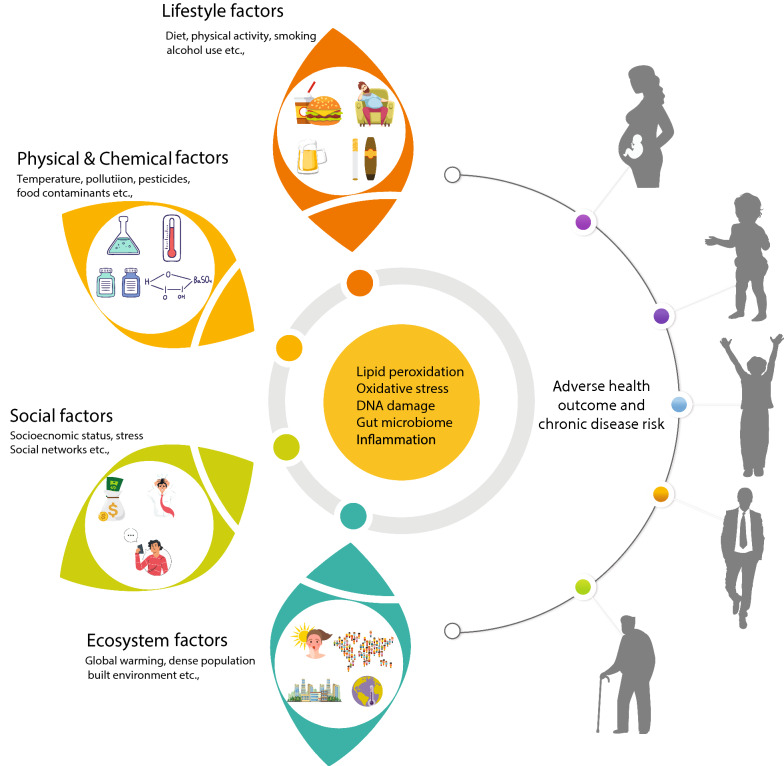
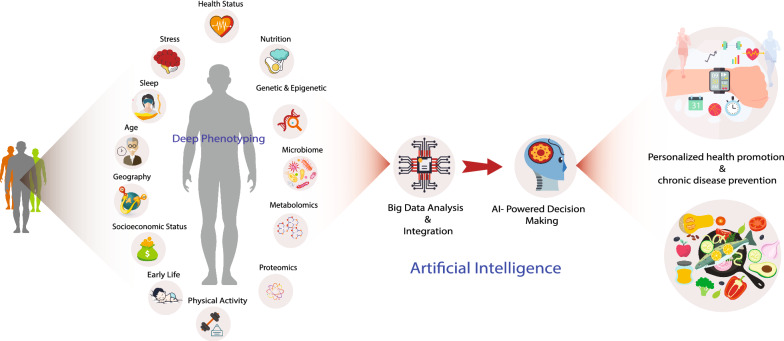
Aberrant metabolism is the root cause of several serious health issues, creating a huge burden to health and leading to diminished life expectancy. A dysregulated metabolism induces the secretion of several molecules which in turn trigger the inflammatory pathway. Inflammation is the natural reaction of the immune system to a variety of stimuli, such as pathogens, damaged cells, and harmful substances. Metabolically triggered inflammation, also called metaflammation or low-grade chronic inflammation, is the consequence of a synergic interaction between the host and the exposome—a combination of environmental drivers, including diet, lifestyle, pollutants and other factors throughout the life span of an individual. Various levels of chronic inflammation are associated with several lifestyle-related diseases such as diabetes, obesity, metabolic associated fatty liver disease (MAFLD), cancers, cardiovascular disorders (CVDs), autoimmune diseases, and chronic lung diseases. Chronic diseases are a growing concern worldwide, placing a heavy burden on individuals, families, governments, and health-care systems. New strategies are needed to empower communities worldwide to prevent and treat these diseases. Precision medicine provides a model for the next generation of lifestyle modification. This will capitalize on the dynamic interaction between an individual’s biology, lifestyle, behavior, and environment. The aim of precision medicine is to design and improve diagnosis, therapeutics and prognostication through the use of large complex datasets that incorporate individual gene, function, and environmental variations. The implementation of high-performance computing (HPC) and artificial intelligence (AI) can predict risks with greater accuracy based on available multidimensional clinical and biological datasets. AI-powered precision medicine provides clinicians with an opportunity to specifically tailor early interventions to each individual. In this article, we discuss the strengths and limitations of existing and evolving recent, data-driven technologies, such as AI, in preventing, treating and reversing lifestyle-related diseases.
Overview
The claims and statistics of this paper haven’t been checked yet.
Free: it reads the open-access text and checks the first 5 claims that cite a source we can check. Create a free account to check every claim.
Integrity signals
Registry
Cites
Statistics
Figures
Verification
Claims the paper makes
The claims and statistics of this paper haven’t been checked yet.
Free: it reads the open-access text and checks the first 5 claims that cite a source we can check. Create a free account to check every claim.
Claims other papers make about this one
Each is checked against this paper’s own text: does it say what the citing paper says it does?
The source backs part of the claim, not all of it — or backs it for a different population, condition or comparison.
In the citing paper
“In particular, edge AI with distributed and secure DL has been demonstrated to be able to significantly improve the reliability, accuracy, scalability, privacy and security for precision medicine and Internet of Medical Things [313], including medical imaging, drug development, and chronic disease management [314].”
From Edge artificial intelligence for 6g: vision, enabling technologies, and applications (2022) · cites this paper as [314]
Experimental — accuracy not yet measured
Self-check
Percentages, sums and reported differences re-computed from the paper’s own numbers.
The self-check needs the paper’s full text.
Citations
Cites
Dermatologist-level classification of skin cancer with deep neural networks
Esteva, A., Kuprel, B., Novoa, R. A., Ko, J., Swetter, S. M., Blau, H. M., & Thrun, S. (2017) · Nature · doi:10.1038/nature21056 · Cited by 14,362
James, S. L., Abate, D., Abate, K. H., Abay, S. M., Abbafati, C., Abbasi, N., Abbastabar, H., Abd-Allah, F., Abdela, J., Abdelalim, A., et al. (2018) · The Lancet · doi:10.1016/s0140-6736(18)32279-7 · Cited by 13,867
Vos, T., Abajobir, A. A., Abate, K. H., Abbafati, C., Abbas, K. M., Abd-Allah, F., Abdulkader, R. S., Abdulle, A. M., Abebo, T. A., Abera, S. F., et al. (2017) · The Lancet · doi:10.1016/s0140-6736(17)32154-2 · Cited by 13,220
Sudlow, C., Gallacher, J., Allen, N., Beral, V., Burton, P., Danesh, J., Downey, P., Elliott, P., Green, J., Landray, M., et al. (2015) · PLOS Medicine · doi:10.1371/journal.pmed.1001779 · Cited by 12,728
High-performance medicine: the convergence of human and artificial intelligence
Topol, E. J. (2019) · Nature Medicine · doi:10.1038/s41591-018-0300-7 · Cited by 10,450
Diet rapidly and reproducibly alters the human gut microbiome
David, L. A., Maurice, C. F., Carmody, R. N., Gootenberg, D. B., Button, J. E., Wolfe, B. E., Ling, A. V., Devlin, A. S., Varma, Y., Fischbach, M. A., et al. (2014) · Nature · doi:10.1038/nature12820 · Cited by 10,100
Obesity is associated with macrophage accumulation in adipose tissue
Weisberg, S. P., McCann, D., Desai, M., Rosenbaum, M., Leibel, R. L., & Ferrante, A. W. (2003) · Journal of Clinical Investigation · doi:10.1172/jci200319246 · Cited by 10,041 · cited 1×
“Such systemic inflammation characterized as ‘low-grade’ was associated with elevated levels of inflammatory mediators and increased immune cell infiltration in peripheral tissues without altering the primary function of the tissue [16, 17].”
BackgroundGenome-wide association study of 14,000 cases of seven common diseases and 3,000 shared controls
The Wellcome Trust Case Control Consortium, Management Committee, Burton, P. R., Clayton, D. G., Cardon, L. R., Craddock, N., Deloukas, P., Duncanson, A., Kwiatkowski, D. P., McCarthy, M. I., et al. (2007) · Nature · doi:10.1038/nature05911 · Cited by 9,442
The UK Biobank resource with deep phenotyping and genomic data
Bycroft, C., Freeman, C., Petkova, D., Band, G., Elliott, L. T., Sharp, K., Motyer, A., Vukcevic, D., Delaneau, O., O’Connell, J., et al. (2018) · Nature · doi:10.1038/s41586-018-0579-z · Cited by 8,876
Forouzanfar, M. H., Afshin, A., Alexander, L. T., Anderson, H. R., Bhutta, Z. A., Biryukov, S., Brauer, M., Burnett, R., Cercy, K., Charlson, F. J., et al. (2016) · The Lancet · doi:10.1016/s0140-6736(16)31679-8 · Cited by 7,698
Cited by
Items 301–400 of 408
Kelly, U. A., Evans, D., Carpenter, J., Kim, S., & Woodard, J. (2024) · Frontiers research topics · doi:10.3389/978-2-8325-5358-9
Sağlıkla İlgili Fiziksel Uygunlukta Nike Training Club Deneyimleri
KARADAĞ, Ö., & ÇELEBİ, B. (2024) · Bidge Yayınları eBooks · doi:10.70269/10.70269/5439626612
Transforming Rheumatoid Arthritis Care with ChatGPT: A New Digital Companion
Suvarna, S. S., & Khetan, S. P. (2025) · Turkish Journal of Internal Medicine · doi:10.46310/tjim.1600138
Rayi, S., Polaswamygari, V., Payani, T., Pamuru, P., & Chilukoti, U. (2025) · AIP conference proceedings · doi:10.1063/5.0261438
Personalized Medical Diet Recommendations for Disease Management and Improved Patient Outcomes
Kemothi, S., Singh, S., & Varma, P. (2023) · Seminars in Medical Writing and Education · doi:10.56294/mw2023127 · Cited by 1
Rani, A., Garg, S., Sharma, A., Kumar, A., & Niranjan, V. (2025) · International Conference on Computational Intelligence, Communication Technology and Networking (CICTN) · doi:10.1109/cictn64563.2025.10932581
Penovski, R., Srčič, S., & Scherer, R. (2025) · doi:10.2196/preprints.75491
Heptocellular Carcinoma (HCC) Detection using Machine Learning
Pavani, B. S., Sameena, S., Kalyani, K. B. S., Barath, E. B., & Rajesh, P. (2025) · International Journal of Advanced Research in Science Communication and Technology · doi:10.48175/ijarsct-25242
The Lifestyle Medicine Eco-System: Deriving an Infrastructure to Defragment Healthcare
Mechanick, J. I. (2025) · Springer eBooks · doi:10.1007/978-3-031-82888-1_37
Naumova, E. N., Zhou, B., Monahan, K., Nadel, P., Marshak, A., & Chui, K. K. H. (2025) · doi:10.2196/preprints.76654
Explainable computational intelligence in bio and clinical medicine
Sundari, M. S., & Penthala, H. R. (2025) · Elsevier eBooks · doi:10.1016/b978-0-443-23979-3.00003-8 · Cited by 1
Guarnaccia, A. D., Sandoval, W. N., & Lill, J. R. (2025) · Wiley eBooks · doi:10.1002/9781394236145.ch1
Gray Wolf Optimizer with Machine Learning Enabled Diabetes Mellitus Recognition Model
Gupta, I. K., Mishra, A. K., Patil, S., Mishra, R., & Rodrigues, J. J. P. C. (2025) · Lecture notes in networks and systems · doi:10.1007/978-981-96-3244-2_41
MODERN TECHNOLOGIES IN MONITORING AND TREATING TYPE 2 DIABETES IN THE ELDERLY
Stec-Sawina, E., Sawina, A., Rakotoarison, S., Fiegler-Rudol, J., Lau, K., & Kasperczyk, J. (2025) · Health Problems of Civilization · doi:10.5114/hpc.2025.152237
Zhang, R. (2025) · Highlights in Science Engineering and Technology · doi:10.54097/6y8zk455
Anjali, M., Ajay, M., Saiteja, M., & Yadav, B. O. (2025) · International Conference on Self Sustainable Artificial Intelligence Systems (ICSSAS) · doi:10.1109/icssas66150.2025.11080890
Lavanya, M., & Harshini, V. S. (2025) · International Journal of Computer Communication and Informatics · doi:10.34256/ijcci2513
Toxicogenomic Insights into Environmental Toxicant Exposures: The TaRGET II ResourcePreprint
Zhang, B., Miao, B., Fu, S., Coarfa, C., Kumar1, R., Kuntala, P. K., Park, B., Grimm, S. L., Jangid, R. K., Colacino, J. A., et al. (2025) · Research Square · doi:10.21203/rs.3.rs-7285514/v1 · Cited by 1
“Thus, it is critical to understand at the molecular level the response to toxic environmental exposures, which eventually facilitates precision environmental health solutions to improve health and lessen the burden of environmental disease 17-20 .”
Nanomedicine and artificial intelligence: cutting-edge solutions for brain tumors
Luvhengo, T. E., Marutha, T., Lin, Z., & Dlamini, Z. (2025) · Elsevier eBooks · doi:10.1016/b978-0-443-45495-0.00005-x
23Chapter 2 Digital twins in medical education and training: evaluation of metaverse technologies
Khatri, R., & Aryan, P. (2025) · De Gruyter eBooks · doi:10.1515/9783111646893-002
Precision medicine: Tailoring therapeutics through advanced modeling strategies
Singh, S., Singh, P., & Singh, T. (2025) · Elsevier eBooks · doi:10.1016/b978-0-443-33877-9.00018-5
O USO DA INTELIGÊNCIA ARTIFICIAL NO AUXÍLIO DA TRIAGEM DE ADULTOS EM SERVIÇOS DE EMERGÊNCIA
Júnior, L. D. G. M., de Lima, G. M., Tavares, J. O., Mendonça, L. R. A., & Narciso, T. S. (2025) · RECIMA21 - Revista Científica Multidisciplinar · doi:10.47820/recima21.v6i10.6821 · Cited by 1
The AI-Assisted Healthy Food Production
Selvakumar, P., Vidyalakshmi, H., Josphineleela, R., Vaissnave, V., Ragupathi, T., Kumar, R., & Manjunath, T. C. (2025) · IGI Global eBooks · doi:10.4018/979-8-3373-4827-8.ch003
Addissouky, T. A. (2025) · Karnataka Medical Journal · doi:10.25259/kmj_50_2024
Rosabal, M. A. J., Jaramillo, M. E. A., Urgiles, J. F. U., & Cando, E. M. M. (2025) · RECIMUNDO · doi:10.26820/recimundo/9.(2).abril.2025.1014-1022
Generative-AI Based Health Management System for CKD Patients
Chuang, Y., Cheng, Y., Yu, T., Chang, R.-C., Chin, H.-H., & Deng, D. (2025) · IEEE International Conference on Wireless and Mobile Computing, Networking and Communications (WiMob) · doi:10.1109/wimob66857.2025.11257545
“In recent years, numerous studies have highlighted the importance of precision medicine and data-driven decision making in the prevention of chronic diseases [1].”
Dwivedi, A., Yusufi, R., Derashri, A., Sharma, D., Vinchurkar, K., Patel, D., & Suryawanshi, M. V. (2025) · Elsevier eBooks · doi:10.1016/b978-0-443-43823-3.00012-1
Antel, R., Whitelaw, S., Gore, G. C., & Ingelmo, P. M. (2025) · Ból · doi:10.5604/01.3001.0055.4494
Hosseiniravandi, M., Sheykhotayefeh, M., & Khodaveisi, T. (2025) · مجله دانشگاه علوم پزشکی تربت حیدریه · doi:10.61882/jmsthums.13.3.78
Ma, J., & Li, S. (2025) · Symmetry · doi:10.3390/sym17122138
“It provides a scientific basis for auxiliary diagnosis [62–64].”
Xiang, R., Jiang, M., Xu, H., & Shen, Y. (2025) · Mutation Research/Reviews in Mutation Research · doi:10.1016/j.mrrev.2025.108579
Dimmick, H. L. (2024) · doi:10.11575/prism/42766 · Cited by 2
Ai-powered screening for psoriatic arthritis: a comparative study withexisting tools
Bakay, Ö. S. K., Bakay, U., Duran, T. İ., & Ök, Z. D. (2025) · The Annals of Clinical and Analytical Medicine · doi:10.4328/acam.22563
Aplicaciones de la inteligencia artificial en medicina personalizada de precisión
Maojo García, V. M., Blázquez, J. D., Pastor Durán, X., & Sierra, A. P. (2023) · Archivo Digital UPM (Universidad Politécnica de Madrid)
Topf, V. (2023) · Qucosa (Saxon State and University Library Dresden)
Placebo effect and contextual factors in precision medicine
Sandra, D. (2022) · eScholarship@McGill (McGill) · doi:10.82308/17347
The Influence of Health Technologies in Managing Chronic Illness: Systematic Review
Almutairi, A. M. S., Alyousef, H. A., Alarafah, F. M., Alnasser, M. N., Aldohaiman, S. A., Almutairi, A. M., Alameri, R. A., Lopez, R. D., ALHUSSAIN, G. F., Aldalbahi, A. A., et al. (2024) · Journal of Posthumanism · doi:10.63332/joph.v4i3.3349
Ploug, T., & Holm, S. (2025) · Research Explorer (The University of Manchester) · doi:10.14943/jaep.16.8 · Cited by 1
Perillo, M. (2025) · AMS Dottorato Institutional Doctoral Theses Repository (University of Bologna) · doi:10.48676/unibo/amsdottorato/12346
Apeloig, A. (2023) · Hogskolan Ihalmstad (Halmstad University)
Artificial Intelligence in Disease Modeling
Mohan, C. G., Menon, K. N., Pavithran, K., & Viswanathan, A. (2025) · Springer handbooks · doi:10.1007/978-3-031-81728-1_49
Sumner, J., Motani, M., Ali, J. M., Lee, S. H., Ho, D., Tan, D. H. T., Ling, L. H., Tan, A. T. H., Teng, G. G., Seetharaman, S. K., et al. (2026) · JAMIA Open · doi:10.1093/jamiaopen/ooaf153
Scientific report: MicroRNome analysis generates a blood-based signature for endometriosis
Bendifallah, S., Dabi, Y., Suisse, S., Jornéa, L., Bouteiller, D., Touboul, C., Puchar, A., & Daraï, É. (2022) · Les Dossiers de l obstétrique · doi:10.54695/dosf.522.0021
The Role of Artificial Intelligence in Revolutionizing Scientific Research and Healthcare
B.Hariharan, D.Bharathraj, I.Balaji, Anbazhagan, S., & S.A.Vadivel (2025) · Asian Journal of Pharmaceutical Research and Development · doi:10.22270/ajprd.v13i2.1540
Development of Continuous Glucose Monitoring Systems for Better Diabetes Management
Sharma, S., Mohite, R., Keyravan, P. J., Jha, A., Deshmukh, K., Ansari, D., Valikarimwala, H., Khatavkar, A., Purohit, B., & Srivastava, R. (2026) · Springer eBooks · doi:10.1007/978-981-95-5519-2_9
Multi-Disease Prediction with Transformers: A Self-Attention Approach
Balakrishnan, D., Mariappan, U., Rajkumar, T. D., Murugeswari, R., Bala Subramanian, C., & Tripathi, A. (2025) · IEEE Global Conference for Advancement in Technology (GCAT) · doi:10.1109/gcat66372.2025.11368373
“Subramanian et al [16] extensively explored both the merits and drawbacks associated with contemporary data-driven technologies, particularly the evolving landscape of artificial intelligence (AI), in addressing lifestyle-related diseases.”
李, 志. (2026) · Advances in Clinical Medicine · doi:10.12677/acm.2026.162527
Development of a Virtual Diagnostic Assistant for Early Detection of Chronic Diseases
Suman, A., Dubey, K., Saurabh, P., Boghey, R. K., & Yadav, R. K. (2025) · International Conference on Artificial Intelligence for Innovations in Healthcare Industries (ICAIIHI) · doi:10.1109/icaiihi67124.2025.11403493
“AI embedding in telemedicine [14], personalized medicine [15], and wearable-based continuous monitoring [18][19] illustrates how technology can enhance accessibility, efficiency, and patient safety.”
Kong, D., Pan, H., Wu, H. Y., & Chen, J. (2026) · Frontiers in Pediatrics · doi:10.3389/fped.2026.1659176
Clinically Interpretable Deep Learning for Genomic-Based Glioma Subtyping Using SHAP
Hossain, F. S., Akter, S., Aich, E., Akter, R. M., & Datta, A. (2026) · International Conference on Electrical, Computer & Telecommunication Engineering (ICECTE) · doi:10.1109/icecte69292.2026.11429296
“The second, and possibly most serious, barrier to the ubiquitous application to clinical translation is the endemic inability to create mechanistic interpretability, also frequently referred to as the so-called black box phenomenon [22], [10].”
George, E. B., Durai, S. G., Roseline, J., George, T. K., Rajesh, G., Al-Wahaibi, S., Vargese, A., Ramadoss, G., & Al-Junaibi, F. (2025) · International Conference on Computer and Applications (ICCA) · doi:10.1109/icca66035.2025.11430734 · Cited by 1
“…diseases [6] These models are widely used to analyze the retinal images for the early detection of diabetic retinopathy and to detect cardiovascular abnormalities by assessing the severity of artery blockages from coronary angiography scans to predict the risk of heart attack or stroke [7].”
Personalized medicine in gastroenterology
Khan, H. R., Junaid, K., Muhammad, N., Tariq, A., Slahuddin, & Yasmeen, H. (2026) · Elsevier eBooks · doi:10.1016/b978-0-443-40483-2.00035-2
Shahidabegum, N., & Vibha, M. B. (2025) · International Conference on Transformative Computing Technologies (ICTCT) · doi:10.1109/ictct69201.2025.00032 · Cited by 1
“Limited high-quality datasets; sequencing errors; fragmented health records; poor interoperability; little lifestyle data [5], [7], [16], [19] Algorithmic Limits Weak generalization; poor interpretability; limited real hospital testing [2], [3], [12], [14]”
InfluentialSun, Z., Mu, A., Qian, Y., Hao, F., Wang, Y., & Wang, W. (2026) · Sensor Review · doi:10.1108/sr-09-2025-0722
Precision Medicine: Market and Its Potential in the Healthcare Industry
Kulkarni, M., & Sharma, M. (2025) · Emerald Group Publishing Limited eBooks · doi:10.1108/978-1-83662-314-420251013
Analyse des micro-ARN dans le cadre de l'endométriose : apport clinico-biologique
Dabi, Y. (2023) · theses.fr (ABES) · doi:10.70675/ee221eccza824z4ddezbeb8z04286230c430
Musio, F. M. (2026) · The Linacre Quarterly · doi:10.1177/00243639261435860
Artificial intelligence and antiaging research
Arumugam, S., Muthuvel, R., Antony, B. S., Chandrasekaran, K., & Subbaraj, G. K. (2026) · Elsevier eBooks · doi:10.1016/b978-0-443-33159-6.00009-6
Pioneers & Pathfinders: 10 Years of Frontiers in Medicine
(2026) · Frontiers research topics · doi:10.3389/978-2-8325-7221-4
Meddeb, K., Boussarsar, M., Ennouri, E., & Toumi, R. (2026) · Elsevier eBooks · doi:10.1016/b978-0-443-36554-6.00017-9
Artificial intelligence-driven personalized medicine
Meddeb, K., Boussarsar, M., Ennouri, E., & Toumi, R. (2026) · Elsevier eBooks · doi:10.1016/b978-0-443-36554-6.00008-8
Sharma, A., & Sharma, R. (2025) · Tanzania journal of health research/Tanzania Journal of Health Research · doi:10.4314/thrb.v26i5.23s
Suhito, H. P., Azam, M., Ningrum, D. N. A., & Iqbal, U. (2026) · Unnes Journal of Public Health · doi:10.15294/ujph.v15i1.26451
Mohamed, N. A., Ali, S. O., Ramadan, O. M. E., Farghaly, S. M., Elkhider, E. E., & Zaky, M. E. (2026) · BMC Nursing · doi:10.1186/s12912-026-04706-9
“Although 45.4% agreed with the item concerning ethical issues and AI, more than half also viewed AI as a threat to patient data confidentiality [28, 29].”
InfluentialChronic Inflammation (A Silent Killer) - Molecular Mechanisms and Emerging Therapeutic Approaches
Singh, R., Monika, Mazumder, R., Mazumder, A., Singh, M., Majee, C., Padhi, S., & Das, S. (2026) · Current Drug Targets · doi:10.2174/0113894501450885260409050432
Nutrient-driven immunometabolism in metabolic disease
Kousar, S., Arshad, T., & Waseem, M. (2026) · Exploration of Endocrine and Metabolic Diseases · doi:10.37349/eemd.2026.101472
Building the next frontier: Artificial intelligence in 3D-printed medicines.
Kurien, R. A., Kannan, G., Thanawut, K., Suttiruengwong, S., & Sriamornsak, P. (2026) · PubMed Central · doi:10.12336/bmt.25.00043 · Cited by 6
Elobeid, T., Muhaid, H., & Hamad, A. (2026) · Elsevier eBooks · doi:10.1016/b978-0-443-40501-3.00003-0
Artificial intelligence, ethics, and sustainability: crafting responsible healthcare solutions
Agarwal, N., Kumar, P., & Ye, M. (2026) · Elsevier eBooks · doi:10.1016/b978-0-443-33700-0.00010-8
Zhang, R., Xie, Q., & Li, B. (2026) · Journal of Health Communication · doi:10.1080/10810730.2026.2682493 · Cited by 1
“Furthermore, existing literature has predominantly focused on algorithmic trust in high-stakes, clinical scenarios—such as melanoma classification (Esteva et al., 2017) or radiology triage (Subramanian et al., 2020)—where the cost of error is life-threatening.”
DAHOU, Y., Idrissi, Y. E. B. E., & Khaddar, M. A. E. (2026) · doi:10.2196/preprints.103963
IMMUNIA: A Reasoning-Centered Framework for Immunoregulatory Surfaceome Discovery
Park, N., & Lee, J. H. (2026) · ACS Pharmacology & Translational Science · doi:10.1021/acsptsci.5c00756
Probiotic, synbiotic effects on the gut–liver axis: omics-enabled mechanisms and therapeutic windows
Oriquat, G., El‐Sehrawy, A. A. M. A., Abdulsahib, W. K., Mustafa, W. W., Jyothi, S. R., Nayak, P. P., Janney, J. B., Singh, G., Sinha, A., & Yazdi, F. (2026) · Future Microbiology · doi:10.1080/17460913.2026.2684877
Overview of artificial intelligence-based smart healthcare systems
Taherdoost, H. (2026) · Elsevier eBooks · doi:10.1016/b978-0-443-27692-7.00002-2
Hsu, C., & Tain, Y. (2026) · Antioxidants · doi:10.3390/antiox15060769 · Cited by 1
“Management of CKM syndrome is evolving from phenotype-led staging models towards precision medicine driven by biological knowledge pertinent to the brain–kidney axis [148,149].”
Wang, H., Cheng, A.-R., Li, Y., Zhang, H.-N., Fan, S., Shen, R., Zhang, W., Li, H., & Wang, J. (2026) · JMIR mhealth and uhealth · doi:10.2196/84506
Zhou, N. (2026) · Exploring Science Academic Conference Series · doi:10.70267/ic-aimees.20260414420
Machine Learning and Deep Learning Approaches for Breast Cancer Prediction: A Review
Teliti, D., Shehu, O., Kevrić, J., & Karlik, B. (2026) · International Convention on Information and Communication Technology, Electronics and Microelectronics · doi:10.1109/mipro70003.2026.11591689
“Such diversity of the disease — covering several molecular subtypes with distinct responses to treatment — calls for patient-based guidelines that would take clinical, pathological, and molecular information into account for individual approaches [3].”
Explainable Machine Learning for Vitamin D-Related Chronic Disease Risk Prediction Using MIMIC-III
Chebbawi, S., Tabaa, M., & Badir, H. (2026) · Applied Sciences · doi:10.3390/app16146917 · Cited by 1
Lazem, M., & Aslani, N. (2026) · Journal of Clinical Research in Paramedical Sciences · doi:10.5812/jcrps-169448
Precision nutrition in autoimmune diseases
la Cruz-Mosso, U. D., Macias, G. A., Campos-López, B., García, P. E. M., Alvarez-Chavez, Y. A., Muro-Dávalos, P. F., Cortes-Baltazar, J. A., Pesqueda-Cendejas, K., & Ramos-López, O. (2026) · Advances in food and nutrition research · doi:10.1016/bs.afnr.2026.07.002
The Power of Pan-Omics: Redefining Diagnosis and Therapeutic Targeting in Complex Disorders
Ranjan, P., Devi, C., & Das, P. (2026) · Genetics. · doi:10.5772/intechopen.1013693
Reinforcement learning for optimizing cardiovascular treatment strategies: A narrative review
Rahman, M. M., Mustafa, N., Rony, M. K. K., Shohag, M., Akhter, M. A., Saima, S. M., Sultana, J., & Akter, F. (2026) · Journal of Medicine Surgery and Public Health · doi:10.1016/j.glmedi.2026.100246
Applying Artificial Intelligence to Childhood Obesity: T2DM and MASLD Risk Predictive Models
Amitrano, M., Mondillo, G., Emiliano, M., & Santoro, U. P. (2026) · Diagnostics · doi:10.3390/diagnostics16162533
“This process of integrating the patient’s global characteristics is called “deep phenotyping” and allows for the creation of a risk profile for each patient and the individualization of treatment strategies [10].”
InfluentialWang, Y.-T., & Liu, C. T. (2026) · Journal of Medical Internet Research · doi:10.2196/105514
AI readiness for molecular precision medicine supply chains: evidence from Saudi Arabia
El-Nakib, I., & Soliman, K. M. (2026) · Frontiers in Digital Health · doi:10.3389/fdgth.2026.1910051 · Cited by 1
“AI readiness reflects the extent to which organizations possess the technological infrastructure, organizational capabilities, human resources, regulatory support, and data management capabilities required to implement AI technologies effectively (18).”
Bakhsh, M. M., Hossain, E., Rony, M. K. K., Roy, T., Momotaj, P. A., Haque, R. M., Nazmussakib, M., & Manik, M. M. T. G. (2026) · Personalized Medicine · doi:10.1080/17410541.2026.2715349
Ahmed, S., Ashrafi, D. M., Alqasmi, I., Shahid, T. S., & Dhar, B. K. (2026) · Journal of Science and Technology Policy Management · doi:10.1108/jstpm-08-2024-0320
Singh, M., Khanna, N. N., Nicolaides, A. N., Sharma, A., Gupta, S., Kitas, G. D., Singh, I. M., Isenović, E. R., Saba, L., & Suri, J. S. (2026) · Exploration of Cardiology · doi:10.37349/ec.2026.1012122
Etinosa, P. O., Waidi, Y. O., Osafo, S. A., Danyuo, Y., Eluu, S. C., & Ezeala, C. C. (2026) · Pharmaceuticals · doi:10.3390/ph19091498
Martínez-Martínez, H., Alfonso, J. M., Sánchez-Rojo-Huertas, B., Visier‐Alfonso, M. E., Sebastián‐Valles, F., Díez‐Fernández, A., Perez-Moreno, A., & Martínez‐Vizcaíno, V. (2026) · Journal of Medical Internet Research · doi:10.2196/105329 · Cited by 1
“Although its application has historically focused on image-centric fields such as radiology and dermatology [3,4], AI is increasingly permeating the management of chronic conditions that require continuous data analysis and complex decision-making processes [5].”
AI-Driven Precision Medicine: Future Trends in Personalized Disease Diagnosis and Risk Prediction
Kaur, R., Kavita, Kushwaha, S., Singh, J. S. P., & Sharma, R. (2026) · Technology and Innovation Conference (TIC) · doi:10.1109/tic68483.2026.11702918
“2) Radiology with AI and medical imaging Deep learning systems driven by AI have completely changed how radiologists handle medical imaging data [21].”
Motivational Interviewing in Patients with Chronic Conditions
Alfarisi, N. R., Lestari, D. P., & Sujianto, U. (2025) · Indonesian Journal of Global Health Research · doi:10.37287/ijghr.v7i3.4482 · Cited by 1
Huang, C.-S., Hsieh, D.-L., Lin, J.-Y., Sreesawat, M., Yeh, T., & Lin, C. (2026) · International Journal of Molecular Sciences · doi:10.3390/ijms27198812
“Table 2 summarizes the common classification frameworks of CRS. Clinical management of CRS has faced multiple challenges due to its marked disease heterogeneity, complicated classification frameworks, diverse treatment modalities, and varied patient profiles [9,36].”
Artificial intelligence enabled assistance support for Alzheimer's patients
Srivastava, S., Islam, M. M., Kumar, M., & Maurya, U. S. (2026) · Elsevier eBooks · doi:10.1016/b978-0-443-27722-1.00016-x
Hayat, A. M. (2025) · Journal of chemical health risks
Abimbola, O. G., Agoi, M. A., & Adeyemi, O. J. (2026) · Journal of Science and Information Technology
Abdullah, M. (2024) · Medical and Life Sciences · Cited by 10
Metadata
- Authors
- Subramanian, M., Wojtusciszyn, A., Favre, L., Boughorbel, S., Shan, J., Letaief, K. B., Pitteloud, N., & Chouchane, L.
- Affiliations
- Weill Cornell Medicine (US)
- Centre Hospitalier Universitaire Vaudois (CH)
- Sidra Medical and Research Center (QA)
- Hong Kong University of Science and Technology (HK)
- Cornell University (US)
- Corresponding author
- Pitteloud, Nelly
- Chouchane, Lotfi
- ORCID
- Venue
- Journal of Translational Medicine
- Published
- 2020-12
- Volume
- 18
- Issue
- 1
- Pages
- 472-472
- ISSN
- 1479-5876 (ISSN-L)
- PMC
- PMC7725219
- OpenAlex
- W3112526052
- Cited by
- 362
- References
- 157
- Citations by year
- 2026: 62 · 2025: 115 · 2024: 86 · 2023: 52 · 2022: 33 · 2021: 14
- FWCI
- 1.88
- Type
- journal article
- Language
- en
- Open access
- gold
- doi.org
- Licence
- cc-by
- creativecommons.org/licenses/by/4.0/ (tdm)
- creativecommons.org/licenses/by/4.0/ (vor, 8 d)
- Locations
- Journal of Translational Medicine (publishedVersion, cc-by)
- PubMed Central (publishedVersion, cc-by)
- PubMed (publishedVersion)
- SERVAL (Université de Lausanne) (publishedVersion, cc-by)
- IRIS (submittedVersion, cc-by)
- DOAJ (DOAJ: Directory of Open Access Journals) (submittedVersion, cc-by-sa)
- Rare & Special e-Zone (The Hong Kong University of Science and Technology) (submittedVersion)
- Funders
- Weill Cornell Medicine-Qatar (BMRP)
- Topics
- Health Sciences › Medicine › Health Informatics › Artificial Intelligence in Healthcare and Education
- Health Sciences › Health Professions › Health Information Management › Artificial Intelligence in Healthcare
- Health Sciences › Medicine › Public Health, Environmental and Occupational Health › Technology and Human Factors in Education and Health
- Keywords
- precision medicine, artificial intelligence, chronic disease management, metabolic inflammation, low-grade inflammation, exposome, lifestyle-related diseases, metabolic dysfunction, diabetes mellitus, obesity, non-alcoholic fatty liver disease, cardiovascular disease, autoimmune disease, chronic lung disease, risk prediction, high-performance computing, personalized medicine
- MeSH terms
- Artificial Intelligence, Chronic Disease, Diabetes Mellitus, Humans, Disease Management, Precision Medicine
About these checks
Registry, retraction, Cites and statistics results are computed, not judged, with one exception: a printed reference that no index lists is read once by a model before it counts as a citation error. Claims are extracted by a model and kept only when their quote appears verbatim in the text; each cited source is then checked, with a model’s help, for whether it says what the claim relies on. Those verdicts can be wrong — read the claim’s quote and the cited source before relying on one.
Statistics and arithmetic are recomputed, not judged.
Confidence bands are shown only for fields calibrated on our annotated test set. None is calibrated yet, so no band is shown.
What counts as a claim ›How we measure confidence ›How we check this ›
Are you an author, or do you see a problem with this page? Request a review
Data sources
Bibliographic data: Semantic Scholar, OpenAlex, Crossref.
Contains information from the Semantic Scholar Academic Graph Datasets, made available under the ODC Attribution License (ODC-BY 1.0).
Semantic Scholar’s data is described in: Kinney, R., et al. (2023). The Semantic Scholar Open Data Platform. arXiv:2301.10140.
