

Precision medicine in the era of artificial intelligence: implications in chronic disease management
Open accessThe DOI matches its Crossref record; 156 of the 157 references it cites were found in a registry or an index.
Abstract
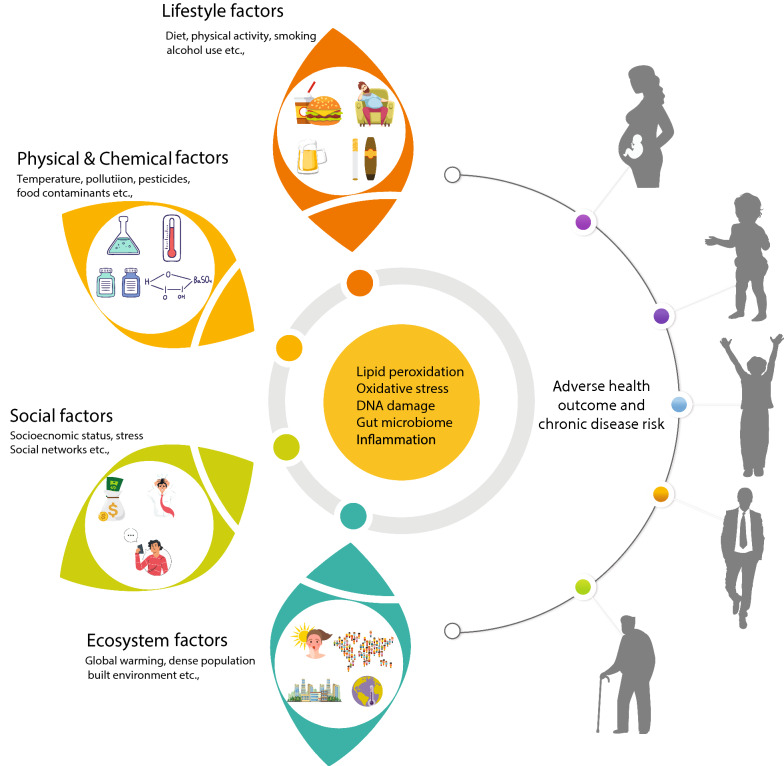
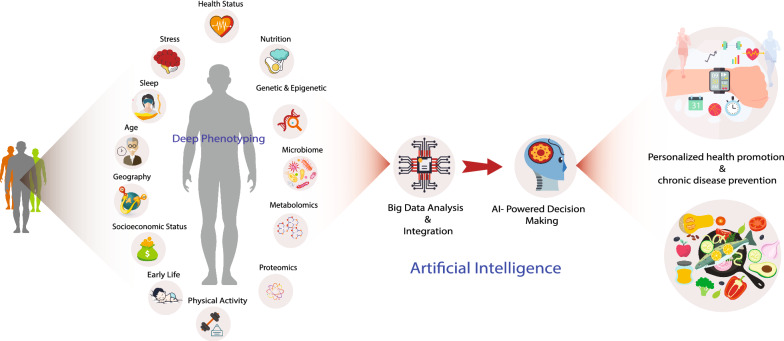
Aberrant metabolism is the root cause of several serious health issues, creating a huge burden to health and leading to diminished life expectancy. A dysregulated metabolism induces the secretion of several molecules which in turn trigger the inflammatory pathway. Inflammation is the natural reaction of the immune system to a variety of stimuli, such as pathogens, damaged cells, and harmful substances. Metabolically triggered inflammation, also called metaflammation or low-grade chronic inflammation, is the consequence of a synergic interaction between the host and the exposome—a combination of environmental drivers, including diet, lifestyle, pollutants and other factors throughout the life span of an individual. Various levels of chronic inflammation are associated with several lifestyle-related diseases such as diabetes, obesity, metabolic associated fatty liver disease (MAFLD), cancers, cardiovascular disorders (CVDs), autoimmune diseases, and chronic lung diseases. Chronic diseases are a growing concern worldwide, placing a heavy burden on individuals, families, governments, and health-care systems. New strategies are needed to empower communities worldwide to prevent and treat these diseases. Precision medicine provides a model for the next generation of lifestyle modification. This will capitalize on the dynamic interaction between an individual’s biology, lifestyle, behavior, and environment. The aim of precision medicine is to design and improve diagnosis, therapeutics and prognostication through the use of large complex datasets that incorporate individual gene, function, and environmental variations. The implementation of high-performance computing (HPC) and artificial intelligence (AI) can predict risks with greater accuracy based on available multidimensional clinical and biological datasets. AI-powered precision medicine provides clinicians with an opportunity to specifically tailor early interventions to each individual. In this article, we discuss the strengths and limitations of existing and evolving recent, data-driven technologies, such as AI, in preventing, treating and reversing lifestyle-related diseases.
Overview
The claims and statistics of this paper haven’t been checked yet.
Free: it reads the open-access text and checks the first 5 claims that cite a source we can check. Create a free account to check every claim.
Integrity signals
Registry
Cites
Statistics
Figures
Verification
Claims the paper makes
The claims and statistics of this paper haven’t been checked yet.
Free: it reads the open-access text and checks the first 5 claims that cite a source we can check. Create a free account to check every claim.
Claims other papers make about this one
Each is checked against this paper’s own text: does it say what the citing paper says it does?
The source backs part of the claim, not all of it — or backs it for a different population, condition or comparison.
In the citing paper
“In particular, edge AI with distributed and secure DL has been demonstrated to be able to significantly improve the reliability, accuracy, scalability, privacy and security for precision medicine and Internet of Medical Things [313], including medical imaging, drug development, and chronic disease management [314].”
From Edge artificial intelligence for 6g: vision, enabling technologies, and applications (2022) · cites this paper as [314]
Experimental — accuracy not yet measured
Self-check
Percentages, sums and reported differences re-computed from the paper’s own numbers.
The self-check needs the paper’s full text.
Citations
Cites
Dermatologist-level classification of skin cancer with deep neural networks
Esteva, A., Kuprel, B., Novoa, R. A., Ko, J., Swetter, S. M., Blau, H. M., & Thrun, S. (2017) · Nature · doi:10.1038/nature21056 · Cited by 14,362
James, S. L., Abate, D., Abate, K. H., Abay, S. M., Abbafati, C., Abbasi, N., Abbastabar, H., Abd-Allah, F., Abdela, J., Abdelalim, A., et al. (2018) · The Lancet · doi:10.1016/s0140-6736(18)32279-7 · Cited by 13,867
Vos, T., Abajobir, A. A., Abate, K. H., Abbafati, C., Abbas, K. M., Abd-Allah, F., Abdulkader, R. S., Abdulle, A. M., Abebo, T. A., Abera, S. F., et al. (2017) · The Lancet · doi:10.1016/s0140-6736(17)32154-2 · Cited by 13,220
Sudlow, C., Gallacher, J., Allen, N., Beral, V., Burton, P., Danesh, J., Downey, P., Elliott, P., Green, J., Landray, M., et al. (2015) · PLOS Medicine · doi:10.1371/journal.pmed.1001779 · Cited by 12,728
High-performance medicine: the convergence of human and artificial intelligence
Topol, E. J. (2019) · Nature Medicine · doi:10.1038/s41591-018-0300-7 · Cited by 10,450
Diet rapidly and reproducibly alters the human gut microbiome
David, L. A., Maurice, C. F., Carmody, R. N., Gootenberg, D. B., Button, J. E., Wolfe, B. E., Ling, A. V., Devlin, A. S., Varma, Y., Fischbach, M. A., et al. (2014) · Nature · doi:10.1038/nature12820 · Cited by 10,100
Obesity is associated with macrophage accumulation in adipose tissue
Weisberg, S. P., McCann, D., Desai, M., Rosenbaum, M., Leibel, R. L., & Ferrante, A. W. (2003) · Journal of Clinical Investigation · doi:10.1172/jci200319246 · Cited by 10,041 · cited 1×
“Such systemic inflammation characterized as ‘low-grade’ was associated with elevated levels of inflammatory mediators and increased immune cell infiltration in peripheral tissues without altering the primary function of the tissue [16, 17].”
BackgroundGenome-wide association study of 14,000 cases of seven common diseases and 3,000 shared controls
The Wellcome Trust Case Control Consortium, Management Committee, Burton, P. R., Clayton, D. G., Cardon, L. R., Craddock, N., Deloukas, P., Duncanson, A., Kwiatkowski, D. P., McCarthy, M. I., et al. (2007) · Nature · doi:10.1038/nature05911 · Cited by 9,442
The UK Biobank resource with deep phenotyping and genomic data
Bycroft, C., Freeman, C., Petkova, D., Band, G., Elliott, L. T., Sharp, K., Motyer, A., Vukcevic, D., Delaneau, O., O’Connell, J., et al. (2018) · Nature · doi:10.1038/s41586-018-0579-z · Cited by 8,876
Forouzanfar, M. H., Afshin, A., Alexander, L. T., Anderson, H. R., Bhutta, Z. A., Biryukov, S., Brauer, M., Burnett, R., Cercy, K., Charlson, F. J., et al. (2016) · The Lancet · doi:10.1016/s0140-6736(16)31679-8 · Cited by 7,698
Cited by
Revolutionizing healthcare: the role of artificial intelligence in clinical practice
Alowais, S. A., Alghamdi, S. S., Alsuhebany, N., Alqahtani, T., Alshaya, A. I., Almohareb, S. N., Aldairem, A., Alrashed, M., Bin Saleh, K., Badreldin, H. A., et al. (2023) · BMC Medical Education · doi:10.1186/s12909-023-04698-z · Cited by 3,146
“Nevertheless, addressing the ethical risks associated with AI implementation is imperative, particularly concerning data privacy and confidentiality violations, informed consent, and patient autonomy [48, 119].”
BackgroundEdge artificial intelligence for 6g: vision, enabling technologies, and applications
Letaief, K. B., Shi, Y., Lu, J., & Lu, J. (2022) · IEEE Journal on Selected Areas in Communications · doi:10.1109/jsac.2021.3126076 · Cited by 829
“In particular, edge AI with distributed and secure DL has been demonstrated to be able to significantly improve the reliability, accuracy, scalability, privacy and security for precision medicine and Internet of Medical Things [313], including medical imaging, drug development, and chronic disease management [314].”
BackgroundSelf-citationFaiyazuddin, M., Rahman, S. J. Q., Anand, G., Siddiqui, R. K., Mehta, R., Khatib, M. N., Gaidhane, S., Zahiruddin, Q. S., Hussain, A., & Sah, R. (2025) · Health Science Reports · doi:10.1002/hsr2.70312 · Cited by 242
Xie, Y., Lu, L., Gao, F., He, S.-J., Zhao, H.-J., Fang, Y., Yang, J.-M., An, Y., Ye, Z.-W., & Dong, Z. (2021) · Current Medical Science · doi:10.1007/s11596-021-2485-0 · Cited by 234
Short Chain Fatty Acid Metabolism in Relation to Gut Microbiota and Genetic Variability
Ramos Meyers, G., Samouda, H., & Bohn, T. (2022) · Nutrients · doi:10.3390/nu14245361 · Cited by 184
Translational precision medicine: an industry perspective
Hartl, D., Luca, V. D., Kostikova, A., Laramie, J. M., Kennedy, S., Ferrero, E., Siegel, R. W., Fink, M., Ahmed, S., Millholland, J. M., et al. (2021) · Journal of Translational Medicine · doi:10.1186/s12967-021-02910-6 · Cited by 187
“AI-powered approaches have the potential to enable precision medicine, particularly in chronic disease conditions, by dissecting complex high-dimensional patient datasets and tailoring drug development [115].”
BackgroundSingh, M., Kumar, A., Khanna, N. N., Laird, J. R., Nicolaides, A., Faa, G., Johri, A. M., Mantella, L. E., Fernandes, J. F. E., Teji, J. S., et al. (2024) · eClinicalMedicine · doi:10.1016/j.eclinm.2024.102660 · Cited by 163
Salivary MicroRNA Signature for Diagnosis of Endometriosis
Bendifallah, S., Suisse, S., Puchar, A., Delbos, L., Poilblanc, M., Descamps, P., Golfier, F., Jornea, L., Bouteiller, D., Touboul, C., et al. (2022) · Journal of Clinical Medicine · doi:10.3390/jcm11030612 · Cited by 146
Murala, D. K., Panda, S. K., & Dash, S. P. (2023) · IEEE Access · doi:10.1109/access.2023.3340791 · Cited by 154
“Ready Player One shows how metaverse technology might harm one’s mind [73], [145], [150], [151].”
BackgroundInfluentialBays, H. E., Fitch, A., Cuda, S., Gonsahn-Bollie, S., Rickey, E., Hablutzel, J., Coy, R., & Censani, M. (2023) · Obesity Pillars · doi:10.1016/j.obpill.2023.100065 · Cited by 105
Assertiveness-based Agent Communication for a Personalized Medicine on Medical Imaging Diagnosis
Calisto, F. M., Fernandes, J., Morais, M., Santiago, C., Abrantes, J. M., Nunes, N., & Nascimento, J. C. (2023) · Proceedings of the 2023 CHI Conference on Human Factors in Computing Systems · doi:10.1145/3544548.3580682 · Cited by 93
“In fact, recent works are highlighting how AI and the advancement of technologies together are empowering the aim of personalized and precision medicine [46, 111, 120].”
BackgroundA Survey on Collaborative DNN Inference for Edge Intelligence
Ren, W., Qu, Y., Dong, C., Jing, Y., Sun, H., Wu, Q., & Guo, S. (2023) · Machine Intelligence Research · doi:10.1007/s11633-022-1391-7 · Cited by 139
“Jouhari et al. [18] propose a DNN distribution method in UAV to realize data classification in resource constrained equipment and avoid additional latency introduced by server based solution due to data communication from air to ground link.”
BackgroundMethodInfluentialInsights into Nonalcoholic Fatty-Liver Disease Heterogeneity
Arrese, M., Arab, J. P., Barrera, F., Kaufmann, B., Valenti, L., & Feldstein, A. E. (2021) · Seminars in Liver Disease · doi:10.1055/s-0041-1730927 · Cited by 103
Artificial Intelligence in Genetics
Vilhekar, R. S., & Rawekar, A. (2024) · Cureus · doi:10.7759/cureus.52035 · Cited by 137
The future of pharmacy: How AI is revolutionizing the industry
Khan, O., Parvez, M., Kumari, P., Parvez, S., & Ahmad, S. (2023) · Intelligent Pharmacy · doi:10.1016/j.ipha.2023.04.008 · Cited by 141
Machine learning algorithms as new screening approach for patients with endometriosis
Bendifallah, S., Puchar, A., Suisse, S., Delbos, L., Poilblanc, M., Descamps, P., Golfier, F., Touboul, C., Dabi, Y., & Daraï, É. (2022) · Scientific Reports · doi:10.1038/s41598-021-04637-2 · Cited by 107
Perspectives on Precision Medicine Approaches to NAFLD Diagnosis and Management
Lonardo, A., Arab, J. P., & Arrese, M. A. (2021) · Advances in Therapy · doi:10.1007/s12325-021-01690-1 · Cited by 100
Młynarska, E., Bojdo, K., Bulicz, A., Frankenstein, H., Gąsior, M., Kustosik, N., Rysz, J., & Franczyk, B. (2025) · Current Issues in Molecular Biology · doi:10.3390/cimb47100787 · Cited by 108
Abbaoui, W., Retal, S., El Bhiri, B., Kharmoum, N., & Ziti, S. (2024) · Informatics in Medicine Unlocked · doi:10.1016/j.imu.2024.101475 · Cited by 82
Gkintoni, E., Vassilopoulos, S. P., & Νικολάου, Γ. (2025) · Medicina · doi:10.3390/medicina61030431 · Cited by 96
Ji, C., Jiang, T., Liu, L., Zhang, J., & You, L. (2025) · Frontiers in Endocrinology · doi:10.3389/fendo.2025.1571362 · Cited by 87
Exposomics: a review of methodologies, applications, and future directions in molecular medicine
Wan, M., Simonin, E. M., Johnson, M. M. D., Zhang, X., Lin, X., Gao, P., Patel, C. J., Yousuf, A. K., Snyder, M. P., Hong, X., et al. (2025) · EMBO Molecular Medicine · doi:10.1038/s44321-025-00191-w · Cited by 77
“…(ML), neural networks, supervised and unsupervised learning, and deep learning, are increasingly being integrated into exposomics for pattern recognition, prediction modeling, data integration, risk evaluation, and pathway analysis (Shamji et al, 2023; Subramanian et al, 2020; Turner et al, 2017).”
Analyzing chronic disease biomarkers using electrochemical sensors and artificial neural networks
Sinha, K., Uddin, Z., Kawsar, H. I., Islam, S., Deen, M. J., & Howlader, M. M. R. (2022) · TrAC Trends in Analytical Chemistry · doi:10.1016/j.trac.2022.116861 · Cited by 76
Integration of artificial intelligence in clinical laboratory medicine: Advancements and challenges
Xie, H., Jia, Y. H., & Liu, S. (2024) · Interdisciplinary medicine · doi:10.1002/inmd.20230056 · Cited by 85
Kor, C., Li, Y., Lin, P., Lin, S., Wang, B., & Lin, C. (2022) · Journal of Personalized Medicine · doi:10.3390/jpm12020228 · Cited by 72
“As ML becomes increasingly integrated into the world of precision medicine, it can help deepen knowledge about the origins and courses of chronic diseases, including COPD [27].”
Artificial Intelligence in Breast Cancer Screening and Diagnosis
Dileep, G., & Gianchandani, S. (2022) · Cureus · doi:10.7759/cureus.30318 · Cited by 74
“Many measures are taken to prevent any violation of confidentiality and legislation to keep a check on any malpractice [44].”
AI‐Driven Personalized Nutrition: Integrating Omics, Ethics, and Digital Health
Mundt, C., Yusufoğlu, B., Kudenko⋆, D., Mertoğlu, K., & Esatbeyoglu, T. (2025) · Molecular Nutrition & Food Research · doi:10.1002/mnfr.70293 · Cited by 68
“In practice, this integration could be particularly transformative in oncology, cardiometabolic disease prevention, and diabetes care, where omics-based biomarkers can help identify at-risk individuals and guide dietary interventions tailored to disease progression [5, 16, 42].”
MicroRNome analysis generates a blood-based signature for endometriosis
Bendifallah, S., Dabi, Y., Suisse, S., Jornea, L., Bouteiller, D., Touboul, C., Puchar, A., & Daraï, E. (2022) · Scientific Reports · doi:10.1038/s41598-022-07771-7 · Cited by 61
Emerging Hallmarks of Metabolic Reprogramming in Prostate Cancer
Lasorsa, F. M., di Meo, N. A., Rutigliano, M., Ferro, M., Terracciano, D., Tătaru, O. S., Battaglia, M., Ditonno, P., & Lucarelli, G. T. (2023) · International Journal of Molecular Sciences · doi:10.3390/ijms24020910 · Cited by 63
“Further future studies will be necessary to unravel molecular mechanisms linking aberrant metabolism and cancer [9,10].”
BackgroundRodríguez-Almeida, A. J., Fabelo, H. A., Ortega, S., Déniz-García, A., Balea-Fernandez, F., Quevedo, E., Soguero-Ruíz, C., Wägner, A. M., & Callicó, G. M. (2022) · IEEE Journal of Biomedical and Health Informatics · doi:10.1109/jbhi.2022.3196697 · Cited by 76
“specially need tools to enhance their management due to their continuously increase in prevalence all over the world [3].”
BackgroundApplications of artificial intelligence in nuclear medicine image generation
Cheng, Z., Wen, J., Huang, G., & Yan, J. (2021) · Quantitative Imaging in Medicine and Surgery · doi:10.21037/qims-20-1078 · Cited by 65
“With the accumulation of medical data and AI technology development, especially deep learning (DL), data-driven based precision medicine has quickly progressed (7,8).”
BackgroundAlanzi, T. M. (2023) · Journal of Multidisciplinary Healthcare · doi:10.2147/jmdh.s419847 · Cited by 58
“This may help doctors spot potential health issues before they worsen and take preventative action.(37) By offering a central platform for sharing patient data and insights, AI may promote greater communication and collaboration amongst doctors.”
BackgroundMoving towards the use of artificial intelligence in pain management
Antel, R., Whitelaw, S., Gore, G. C., & Ingelmo, P. M. (2024) · European Journal of Pain · doi:10.1002/ejp.4748 · Cited by 62
“All of these approaches aim to use collected data to develop clinically relevant models, with the objective of applying these analyses to then inform further assessment and treatment of patients (Subramanian et al., 2020).”
Liu, Y., & Wang, B. (2025) · Frontiers in Public Health · doi:10.3389/fpubh.2025.1510456 · Cited by 77
Komasawa, N., & Yokohira, M. (2025) · Cureus · doi:10.7759/cureus.86316 · Cited by 64
“Administrative tasks in clinical settings can be streamlined through the automated generation of medical notes, referral letters, and discharge summaries using generative AI [4].”
Current Applications of Artificial Intelligence in Bariatric Surgery
Bellini, V., Valente, M., Turetti, M., RIO, P. D., Saturno, F., Maffezzoni, M., & Bignami, E. G. (2022) · Obesity Surgery · doi:10.1007/s11695-022-06100-1 · Cited by 58
“• Several hurdles remain to be overcome before AI could be used in daily practice. it can be applied for the evaluation and optimization of health conditions to better control and prevent chronic diseases in the idea of precision medicine [9].”
BackgroundInnate and adaptive immune abnormalities underlying autoimmune diseases: the genetic connections
Chi, X., Huang, M., Tu, H., Zhang, B., Lin, X., Xu, H., Dong, C., & Hu, X. (2023) · Science China Life Sciences · doi:10.1007/s11427-021-2187-3 · Cited by 50
“This could lead to a new chance to personalize therapies specifically for autoimmune disease patients, particularly those with rare autoimmune disease, in order to achieve effective treatment (Subramanian et al., 2020).”
BackgroundExosomes in inflammation and cancer: from bench to bedside applications
Huang, S., Fang, Y., Qiu, Y., Liu, T., Zhang, W., Yang, Y., Zhong, R., Yang, Y., & Peng, X. (2025) · Molecular Biomedicine · doi:10.1186/s43556-025-00280-9 · Cited by 47
“Chronic inflammatory diseases, including inflammatory bowel disease (IBD), atherosclerosis, systemic lupus erythematosus, and non-alcoholic fatty liver disease, are major global causes of mortality globally [8].”
Zeng, J., & Jia, X. (2024) · Engineering · doi:10.1016/j.eng.2024.04.009 · Cited by 49
Joshi, S., Bisht, B., Kumar, V., Singh, N., Begum, J. P. S., Singh, N., & Kumar, S. (2023) · Systems Microbiology and Biomanufacturing · doi:10.1007/s43393-023-00200-4 · Cited by 56
“…and recipe evaluation, testing sustainability of food, precision medicine improving the disease diagnosis, and parenteral nutrition decision-support tool development and remote nutrition evaluation using tel-ehealth and wearable technologies and mobile applications dealing with nutrition [8, 9].”
Du, Y., Yang, P., Liu, Y., Deng, C., & Li, X. (2025) · Frontiers in Public Health · doi:10.3389/fpubh.2025.1689911 · Cited by 51
Palani, N., Mendonce, K. C., Altaf, R. R. S., Mohan, A., Surya, P., Monisha, P., Radhakrishnan, K., Subramaniyan, V., & Rajadesingu, S. (2025) · Journal of Biomaterials Science Polymer Edition · doi:10.1080/09205063.2025.2540362 · Cited by 52
Dong, C., Ji, Y., Fu, Z., Qi, Y. P., Yi, T., Yang, Y., Sun, Y., & Sun, H. (2025) · iScience · doi:10.1016/j.isci.2025.112044 · Cited by 47
Nahas, L. D., Datta, A., Alsamman, A. M., Adly, M. H., Al-Dewik, N. I. E., Sekaran, K., Sasikumar, K., Verma, K., Doss, C. G. P., & Zayed, H. (2023) · Metabolic Brain Disease · doi:10.1007/s11011-023-01322-3 · Cited by 45
“Enhanced data processing predictive modeling is now employed to develop accurate and precise therapeutic strategies (Subramanian et al. 2020; Bonkhoff and Grefkes 2022 ).”
MethodEndometriosis-associated infertility diagnosis based on saliva microRNA signatures
Dabi, Y., Suisse, S., Puchar, A., Delbos, L., Poilblanc, M., Descamps, P., Haury, J., Golfier, F., Jornéa, L., Bouteiller, D., et al. (2022) · Reproductive BioMedicine Online · doi:10.1016/j.rbmo.2022.09.019 · Cited by 42
Precision Medicine 2.0: How Digital Health and AI Are Changing the Game
Giansanti, D. (2023) · Journal of Personalized Medicine · doi:10.3390/jpm13071057 · Cited by 37
Learner-Centered Experience-Based Medical Education in an AI-Driven Society: A Literature Review
Komasawa, N., & Yokohira, M. (2023) · Cureus · doi:10.7759/cureus.46883 · Cited by 44
Artificial intelligence and personalized medicine: transforming patient care
Ghanem, M., Ghaith, A. K., & Bydon, M. (2024) · Elsevier eBooks · doi:10.1016/b978-0-443-13963-5.00012-1 · Cited by 48
LLM-Powered Multimodal AI Conversations for Diabetes Prevention
Dao, D. K. T., Teo, J. Y. C., Wang, W., & Nguyen, H. D. (2024) · doi:10.1145/3643479.3662049 · Cited by 41
“AI’s ability to analyze vast datasets for chronic disease risk prediction and support personalized and precision medicine [27] suggests a significant potential to improve patient outcomes in diabetes management [15].”
BackgroundXu, D., & Xu, Z. (2024) · Artificial Intelligence in Medicine · doi:10.1016/j.artmed.2024.102950 · Cited by 37
Peng, S., Qian, J., Xing, X., Wang, J., Adeli, A., & Wei, S. (2025) · Sustainability · doi:10.3390/su17020657 · Cited by 35
Kumar, R., Singh, A. K., Kassar, A. S. A., Humaida, M. I., Joshi, S., & Sharma, M. (2025) · Computer Modeling in Engineering & Sciences · doi:10.32604/cmes.2025.059152 · Cited by 59
Saeed, D. K., & Nashwan, A. J. (2025) · Cureus · doi:10.7759/cureus.85580 · Cited by 38
“Virtual coaches can engage users through conversational interfaces, providing support, accountability, and real-time feedback [6].”
InfluentialArtificial Intelligence at the Service of Precision Medicine
Abbaoui, W., Retal, S., Kharmoum, N., & Ziti, S. (2023) · Lecture notes in networks and systems · doi:10.1007/978-3-031-35248-5_9 · Cited by 39
Prescription Precision: A Comprehensive Review of Intelligent Prescription Systems
Tantray, J., Patel, A., Wani, S. N., Kosey, S., & Prajapati, B. G. (2024) · Current Pharmaceutical Design · doi:10.2174/0113816128321623240719104337 · Cited by 35
Siddiqui, M. F., Alam, A., Калматович, К. Р., Mouna, A., Villela, R., Nurmamatovna, M. A., Mrad, Y. N., Rahat, S. A. A., Magarde, B. K., Muhammad, W., et al. (2022) · Studies in computational intelligence · doi:10.1007/978-981-19-6379-7_2 · Cited by 31
A review of recent artificial intelligence for traditional medicine
Hou, C., Gao, Y., Lin, X., Wu, J., Li, N., Lv, H., & Chu, W. C. (2025) · Journal of Traditional and Complementary Medicine · doi:10.1016/j.jtcme.2025.02.009 · Cited by 30
Insulin discovery: A pivotal point in medical history
Falcetta, P., Aragona, M., Bertolotto, A., Bianchi, C., Campi, F., Garofolo, M., & Prato, S. D. (2021) · Metabolism · doi:10.1016/j.metabol.2021.154941 · Cited by 33
AI-Driven Personalized Nutrition Apps and Platforms for Enhanced Diet and Wellness
Prasad, G., Padhiary, M., Hoque, A., & Kumar, K. (2025) · Advances in computational intelligence and robotics book series · doi:10.4018/979-8-3693-9025-2.ch006 · Cited by 42
The Impact and Role of Artificial Intelligence (AI) in Healthcare: Systematic Review
Singh, K., Prabhu, A. A., & Kaur, N. (2025) · Current Topics in Medicinal Chemistry · doi:10.2174/0115680266339394250225112747 · Cited by 30
The Role of Neuroinflammation in the Comorbidity of Psychiatric Disorders and Internal Diseases
Cătălina, G. R., Gheorman, V., Gheorman, V., & Forțofoiu, M.-C. (2025) · Healthcare · doi:10.3390/healthcare13070837 · Cited by 33
“For conditions such as depression, anxiety, cardiovascular disease (CVD), and diabetes mellitus, emerging technologies offer innovative tools for monitoring neuroinflammation and improving treatment precision [165].”
Role of artificial intelligence in critical care nutrition support and research
Kittrell, H. D., Shaikh, A., Adintori, P. A., McCarthy, P. J., Kohli-Seth, R. D., Nadkarni, G. N., & Sakhuja, A. (2024) · Nutrition in Clinical Practice · doi:10.1002/ncp.11194 · Cited by 29
Albani, E. N., Toska, A. G., Togas, C., Rigatos, S., Вус, В., Fradelos, Ε. C., Tzenalis, A., & Saridi, M. (2024) · Nursing Reports · doi:10.3390/nursrep14030122 · Cited by 25
“Additionally, integrating technology such as telemedicine and artificial intelligence will play a crucial role in enhancing the efficiency and effectiveness of health care systems in the future [18,19].”
BackgroundComprehensive care for patients with obesity: An Obesity Medicine Association Position Statement
Fitch, A., Alexander, L., Brown, C. F., & Bays, H. E. (2023) · Obesity Pillars · doi:10.1016/j.obpill.2023.100070 · Cited by 24
A Review of the Applications, Benefits, and Challenges of Generative AI for Sustainable Toxicology
Alam, F., Alnazzawi, T. S. M., Mehmood, R., & Almaghthawi, A. (2025) · Current Research in Toxicology · doi:10.1016/j.crtox.2025.100232 · Cited by 28
“In contrast, Sub-ramanian et al. (Subramanian et al., 2020) the importance of AI applications, especially in treating chronic diseases, as most are more related to individual triggers and responses.”
The Medium is the Message: How Non-Clinical Information Shapes Clinical Decisions in LLMs
Gourabathina, A., Gerych, W., Pan, E., & Ghassemi, M. (2025) · ACM Conference on Fairness, Accountability, and Transparency (FAccT) · doi:10.1145/3715275.3732121 · Cited by 37
Walton, N., Nagarajan, R., Wang, C., Sincan, M., Freimuth, R. R., Everman, D. B., Walton, D. C., McGrath, S., Lemas, D. J., Benos, P. V., et al. (2023) · Journal of the American Medical Informatics Association · doi:10.1093/jamia/ocad211 · Cited by 26
“8 The inherent complexities of genomic data including large dimensionality and lack of prior knowledge regarding the functional aspects of most genomic variants present major challenges for AI application.”
BackgroundBiró, A., Vargas, A. I. C., & Szilágyi, L. S. (2023) · Acta Universitatis Sapientiae Informatica · doi:10.2478/ausi-2023-0022 · Cited by 24
AI-Driven Psychological Support and Cognitive Rehabilitation Strategies in Post-Cancer Care
Aburub, F. A. F., & Agha, A. S. A. A. (2024) · International Conference on Cyber Resilience (ICCR) · doi:10.1109/iccr61006.2024.10532962 · Cited by 24
Wang, B., Asan, O., & Mansouri, M. (2023) · JMIR Human Factors · doi:10.2196/49788 · Cited by 23
Alkhodari, M., Xiong, Z., Khandoker, A. H., Hadjileontiadis, L. J., Leeson, P., & Lapidaire, W. (2023) · Expert Review of Cardiovascular Therapy · doi:10.1080/14779072.2023.2223978 · Cited by 23
“AI has enabled the development of many applications related to data-driven personalized healthcare (Figure 1b), such as precision medicine [56] and digital twins [57], especially with the availability of strong computing machines and large clinical datasets of multiple data types [58].”
BackgroundCao, F., Yang, Y., Guo, C. X., Zhang, H., Yu, Q., & Guo, J. (2025) · Annals of Medicine · doi:10.1080/07853890.2025.2484665 · Cited by 27
“By considering patients’ genetic makeup, lifestyle, environment, and clinical signs, AI can tailor treatment regimens to suit individual patients more effectively [39].”
Komasawa, N. (2024) · Cureus · doi:10.7759/cureus.59031 · Cited by 29
“Recent advancements in identifying genetic polymorphisms linked to pain suggest that, in the future, assessing pain sensitivity through preoperative tests might be feasible [40,41].”
BackgroundGhozali, M. T. (2025) · Journal of Asthma · doi:10.1080/02770903.2025.2450482 · Cited by 25
Li, G., Shi, Q., Wu, Q., & Sui, X. (2025) · Cancer Biology and Medicine · doi:10.20892/j.issn.2095-3941.2025.0145 · Cited by 27
“The ability of AI to analyze large and complex biological datasets and identify patterns that might be difficult for humans to discern has significantly enhanced drug development processes, making AI a transformative tool in cancer research 388 .”
Isola, S., Murdaca, G., Brunetto, S., Zumbo, E., Tonacci, A., & Gangemi, S. (2024) · Informatics · doi:10.3390/informatics11040086 · Cited by 23
“For example, one of the main contributions to scientific knowledge in the field was published by Subramanian and co-authors in 2020 [21]; however, it is easy to understand that, especially within a topic that is revolutionizing scientific research in the medical field, updated evidence should be…”
Zhao, S., Du, R., He, Y., He, X., Jiang, Y., & Zhang, X. (2022) · Scientific Reports · doi:10.1038/s41598-022-09784-8 · Cited by 24
Pinnock, H., Noble, M., Lo, D. K. H., McClatchey, K., Marsh, V., & Hui, C. Y. (2023) · Expert Review of Respiratory Medicine · doi:10.1080/17476348.2023.2241357 · Cited by 23
“ASI requires multiple, diverse, large population datasets/biobanks to increase its accuracy (‘intelligence’); enabling it to provide tailor-made, dynamic treatment advice to the patient [162].”
BackgroundContieri, L. S., Ribeiro, T. B., Sosa, F. H. B., Vaz, B. M. C., Pizani, R. S., Pintado, M., Ventura, S. P. M., Mesquita, L. M. D. S., & Rostagno, M. A. (2023) · ACS Sustainable Chemistry & Engineering · doi:10.1021/acssuschemeng.3c03812 · Cited by 21
Challenges for AI in Healthcare Systems
Bertl, M., Lamo, Y., Leucker, M., Margaria, T., Mohammadi, E., Mukhiya, S. K., Pechmann, L., Piho, G., & Rabbi, F. (2024) · Lecture notes in computer science · doi:10.1007/978-3-031-73741-1_11 · Cited by 26
Al-Qudimat, A. R., Fares, Z. E., Elaarag, M., Osman, M., Al‐Zoubi, R. M., & Aboumarzouk, O. M. (2025) · Health Science Reports · doi:10.1002/hsr2.70200 · Cited by 23
Internet of Things and Big Data Analytics in Preventive Healthcare: A Synthetic Review
(2024) · doi:10.3390/electronics13183642 · Cited by 19
Effect of gardening activities on domains of health: a systematic review and meta-analysis
Wang, F., & Boros, S. (2025) · BMC Public Health · doi:10.1186/s12889-025-22263-9 · Cited by 23
“The number of management strategies for chronic conditions is increasing given that it is a growing concern worldwide, placing a heavy burden on individuals, families, governments, and health-care systems [5].”
Blockchain enhanced smart healthcare management for chronic diseases
Saxena, S., Saxena, S., Tahilramani, N., & Charanarur, P. (2025) · Discover Computing · doi:10.1007/s10791-025-09574-6 · Cited by 21
“Researchers are increasingly combining AI with wearable devices to enhance CDM [46], particularly for real-time monitoring [2, 4, 5, 14, 18, 22, 35].”
Revolutionizing Healthcare with AI: Innovative Strategies in Cancer Medicine
Khan, M., Shiwlani, A., Qayyum, M. U., Sherani, A. M. K., & Hussain, H. K. (2024) · International Journal of Multidisciplinary Sciences and Arts · doi:10.47709/ijmdsa.v3i1.3922 · Cited by 42
Zhang, Y., Yu, H., Dong, R., Ji, X., & Li, F. (2021) · BioMed Research International · doi:10.1155/2021/5592472 · Cited by 22
“Globally, chronic diseases are known to affect nearly a quarter of the adult population and are known to have a huge negative socioeconomic impact [34].”
BackgroundGandhi, V. D., Palikhe, N. S., & Vliagoftis, H. (2022) · Frontiers in Medicine · doi:10.3389/fmed.2022.954990 · Cited by 20
“Personalized medicine offers promise for improved diagnosis and treatment for inflammatory diseases including lung diseases (94, 95), but in asthma the lack of easily obtainable biomarkers to identify specific phenotypes and/or endotypes (96), limits the applicability of this approach.”
BackgroundArtificial Intelligence in Healthcare: Lost In Translation?Preprint
Madai, V. I., & Higgins, D. (2021) · arXiv (Cornell University) · doi:10.48550/arxiv.2107.13454 · Cited by 28
“While AI is used for many forms of automation, including in healthcare, it is under-recognised that many important healthcare applications are in fact precision medicine projects [18, 19, 20, 21].”
Internet of Things and Bigdata Analytics in Preventive Healthcare: A Synthetic Review
Šajnović, U., Vošner, H. B., Završnik, J., Žlahtič, B., & Kokol, P. (2024) · doi:10.20944/preprints202408.0445.v1 · Cited by 19
Pham, T. D., Ravi, V., Fan, C., Luo, B., Fan, C.-W., & Sun, X. (2023) · American Journal Of Pathology · doi:10.1016/j.ajpath.2023.01.007 · Cited by 22
Palomares, S. M., Ferrara, G., Sguanci, M., Gazineo, D., Godino, L., Palmisano, A., Paderno, A., Vrenna, G., Faraglia, E., Petrelli, F., et al. (2026) · Journal of Renal Nutrition · doi:10.1053/j.jrn.2025.06.002 · Cited by 17
Sarker, M. T. H. (2025) · Strategic Data Management and Innovation · doi:10.71292/sdmi.v2i01.18 · Cited by 17
Revolutionizing Healthcare: Qure.AI's Innovations in Medical Diagnosis and Treatment
Zavaleta‐Monestel, E., Quesada-Villaseñor, R., Arguedas‐Chacón, S., García-Montero, J., Barrantes-López, M., Salas-Segura, J., Anchía-Alfaro, A., Nieto-Bernal, D., & Diaz-Juan, D. E. (2024) · Cureus · doi:10.7759/cureus.61585 · Cited by 31
“For pharmacists, AI can be a powerful tool to enhance treatment safety for patients and achieve better overall therapeutic outcomes [17,18].”
BackgroundHow Digital Health is Revolutionizing Healthcare and Contributing to Positive Health Outcomes
Dave, P. (2024) · Journal of Drug Delivery and Therapeutics · doi:10.22270/jddt.v14i6.6640 · Cited by 17
Petit, P., & Vuillerme, N. (2025) · JMIR Public Health and Surveillance · doi:10.2196/62939 · Cited by 24
An Overview of the Use of Precision Population Medicine in Cancer Care: First of a Series
Yang, J. J., Nittala, M. R., Velazquez, A. E., Buddala, V., & Vijayakumar, S. (2023) · Cureus · doi:10.7759/cureus.37889 · Cited by 21
“Figure 5 depicts the application of artificial intelligence to improve health outcomes and disease prevention, and its subsets are depicted in Figure 6 [33,34].”
BackgroundMethodGlobal research trends on the human exposome: a bibliometric analysis (2005–2024)
Petit, P., & Vuillerme, N. (2025) · Environmental Science and Pollution Research · doi:10.1007/s11356-025-36197-7 · Cited by 17
“These data can provide real-time insights that support health surveillance and guide future precision prevention and medicine strategies (Kalia et al. 2022; Schmitt et al. 2023; Subramanian et al. 2020; Tagliaferro et al. 2024; Zhang et al. 2021).”
Raeve, P. D., Davidson, P. M., Shaffer, F. A., Pol, E., Pandey, A. K., & Adams, E. (2021) · Open Research Europe · doi:10.12688/openreseurope.13231.1 · Cited by 19
Enabling Precision Medicine via Contemporary and Future Communication Technologies: A Survey
Chude-Okonkwo, U. A. K., Paul, B. S., & Vasilakos, A. V. (2022) · IEEE Access · doi:10.1109/access.2022.3175573 · Cited by 16
“Indeed, AI finds usage in virtually all aspects of PM [41], [42] and other base technologies that will enable PM implementation, as illustrated in Fig.”
BackgroundMethodTürkoğlu, İ., Saçıntı, K. G., Panattoni, A., Namazov, A., Şanlıer, N. T., Şanlıer, N., & Cela, V. (2024) · Nutrition Reviews · doi:10.1093/nutrit/nuae120 · Cited by 16
Metadata
- Authors
- Subramanian, M., Wojtusciszyn, A., Favre, L., Boughorbel, S., Shan, J., Letaief, K. B., Pitteloud, N., & Chouchane, L.
- Affiliations
- Weill Cornell Medicine (US)
- Centre Hospitalier Universitaire Vaudois (CH)
- Sidra Medical and Research Center (QA)
- Hong Kong University of Science and Technology (HK)
- Cornell University (US)
- Corresponding author
- Pitteloud, Nelly
- Chouchane, Lotfi
- ORCID
- Venue
- Journal of Translational Medicine
- Published
- 2020-12
- Volume
- 18
- Issue
- 1
- Pages
- 472-472
- ISSN
- 1479-5876 (ISSN-L)
- PMC
- PMC7725219
- OpenAlex
- W3112526052
- Cited by
- 362
- References
- 157
- Citations by year
- 2026: 62 · 2025: 115 · 2024: 86 · 2023: 52 · 2022: 33 · 2021: 14
- FWCI
- 1.88
- Type
- journal article
- Language
- en
- Open access
- gold
- doi.org
- Licence
- cc-by
- creativecommons.org/licenses/by/4.0/ (tdm)
- creativecommons.org/licenses/by/4.0/ (vor, 8 d)
- Locations
- Journal of Translational Medicine (publishedVersion, cc-by)
- PubMed Central (publishedVersion, cc-by)
- PubMed (publishedVersion)
- SERVAL (Université de Lausanne) (publishedVersion, cc-by)
- IRIS (submittedVersion, cc-by)
- DOAJ (DOAJ: Directory of Open Access Journals) (submittedVersion, cc-by-sa)
- Rare & Special e-Zone (The Hong Kong University of Science and Technology) (submittedVersion)
- Funders
- Weill Cornell Medicine-Qatar (BMRP)
- Topics
- Health Sciences › Medicine › Health Informatics › Artificial Intelligence in Healthcare and Education
- Health Sciences › Health Professions › Health Information Management › Artificial Intelligence in Healthcare
- Health Sciences › Medicine › Public Health, Environmental and Occupational Health › Technology and Human Factors in Education and Health
- Keywords
- precision medicine, artificial intelligence, chronic disease management, metabolic inflammation, low-grade inflammation, exposome, lifestyle-related diseases, metabolic dysfunction, diabetes mellitus, obesity, non-alcoholic fatty liver disease, cardiovascular disease, autoimmune disease, chronic lung disease, risk prediction, high-performance computing, personalized medicine
- MeSH terms
- Artificial Intelligence, Chronic Disease, Diabetes Mellitus, Humans, Disease Management, Precision Medicine
About these checks
Registry, retraction, Cites and statistics results are computed, not judged, with one exception: a printed reference that no index lists is read once by a model before it counts as a citation error. Claims are extracted by a model and kept only when their quote appears verbatim in the text; each cited source is then checked, with a model’s help, for whether it says what the claim relies on. Those verdicts can be wrong — read the claim’s quote and the cited source before relying on one.
Statistics and arithmetic are recomputed, not judged.
Confidence bands are shown only for fields calibrated on our annotated test set. None is calibrated yet, so no band is shown.
What counts as a claim ›How we measure confidence ›How we check this ›
Are you an author, or do you see a problem with this page? Request a review
Data sources
Bibliographic data: Semantic Scholar, OpenAlex, Crossref.
Contains information from the Semantic Scholar Academic Graph Datasets, made available under the ODC Attribution License (ODC-BY 1.0).
Semantic Scholar’s data is described in: Kinney, R., et al. (2023). The Semantic Scholar Open Data Platform. arXiv:2301.10140.
