

Precision medicine in the era of artificial intelligence: implications in chronic disease management
Open accessThe DOI matches its Crossref record; 154 of the 157 references it cites were found in a registry or an index.
Abstract
Aberrant metabolism is the root cause of several serious health issues, creating a huge burden to health and leading to diminished life expectancy. A dysregulated metabolism induces the secretion of several molecules which in turn trigger the inflammatory pathway. Inflammation is the natural reaction of the immune system to a variety of stimuli, such as pathogens, damaged cells, and harmful substances. Metabolically triggered inflammation, also called metaflammation or low-grade chronic inflammation, is the consequence of a synergic interaction between the host and the exposome—a combination of environmental drivers, including diet, lifestyle, pollutants and other factors throughout the life span of an individual. Various levels of chronic inflammation are associated with several lifestyle-related diseases such as diabetes, obesity, metabolic associated fatty liver disease (MAFLD), cancers, cardiovascular disorders (CVDs), autoimmune diseases, and chronic lung diseases. Chronic diseases are a growing concern worldwide, placing a heavy burden on individuals, families, governments, and health-care systems. New strategies are needed to empower communities worldwide to prevent and treat these diseases. Precision medicine provides a model for the next generation of lifestyle modification. This will capitalize on the dynamic interaction between an individual’s biology, lifestyle, behavior, and environment. The aim of precision medicine is to design and improve diagnosis, therapeutics and prognostication through the use of large complex datasets that incorporate individual gene, function, and environmental variations. The implementation of high-performance computing (HPC) and artificial intelligence (AI) can predict risks with greater accuracy based on available multidimensional clinical and biological datasets. AI-powered precision medicine provides clinicians with an opportunity to specifically tailor early interventions to each individual. In this article, we discuss the strengths and limitations of existing and evolving recent, data-driven technologies, such as AI, in preventing, treating and reversing lifestyle-related diseases.
Overview
The claims and statistics of this paper haven’t been checked yet.
Free: it reads the open-access text and checks the first 5 claims that cite a source we can check. Create a free account to check every claim.
Integrity signals
Registry
Cites
Statistics
Figures
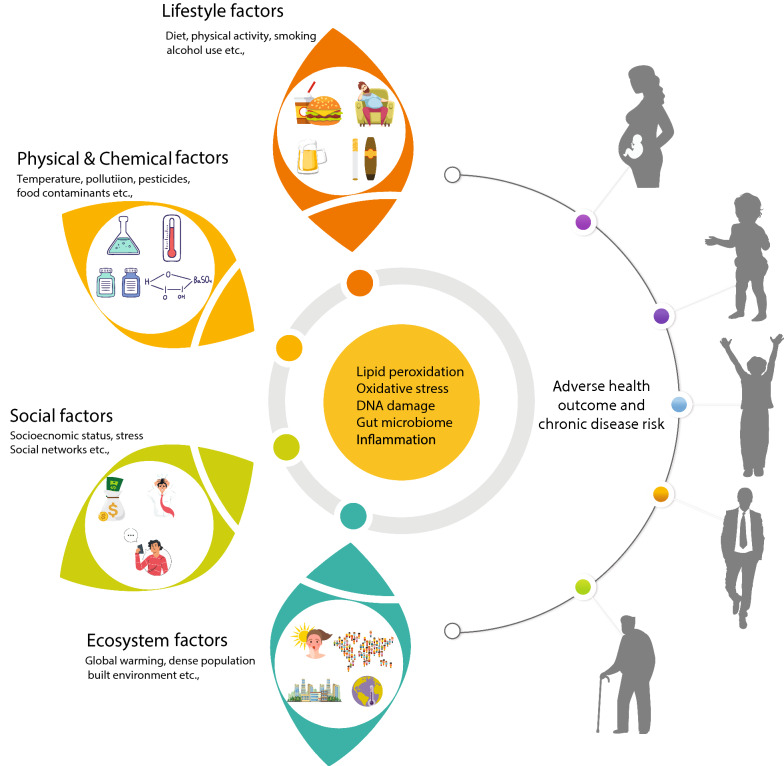
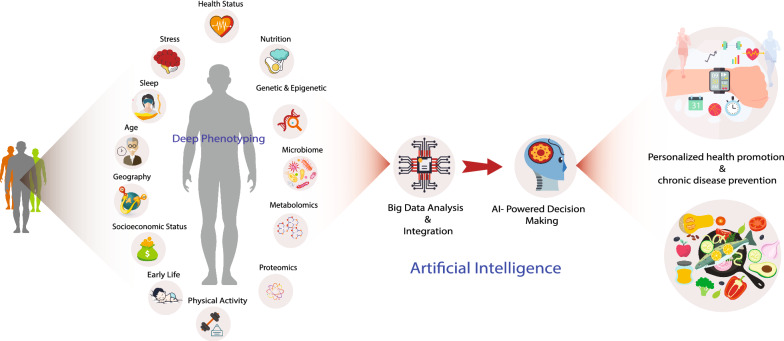
Verification
Claims the paper makes
The claims and statistics of this paper haven’t been checked yet.
Free: it reads the open-access text and checks the first 5 claims that cite a source we can check. Create a free account to check every claim.
Claims other papers make about this one
Each is checked against this paper’s own text: does it say what the citing paper says it does?
The source backs part of the claim, not all of it — or backs it for a different population, condition or comparison.
In the citing paper
“In particular, edge AI with distributed and secure DL has been demonstrated to be able to significantly improve the reliability, accuracy, scalability, privacy and security for precision medicine and Internet of Medical Things [313], including medical imaging, drug development, and chronic disease management [314].”
From Edge artificial intelligence for 6g: vision, enabling technologies, and applications (2022) · cites this paper as [314]
Experimental — accuracy not yet measured
Self-check
Percentages, sums and reported differences re-computed from the paper’s own numbers.
The self-check needs the paper’s full text.
Citations
Cites
Dermatologist-level classification of skin cancer with deep neural networks
Esteva, A., Kuprel, B., Novoa, R. A., Ko, J., Swetter, S. M., Blau, H. M., & Thrun, S. (2017) · Nature · doi:10.1038/nature21056 · Cited by 14,362
James, S. L., Abate, D., Abate, K. H., Abay, S. M., Abbafati, C., Abbasi, N., Abbastabar, H., Abd-Allah, F., Abdela, J., Abdelalim, A., et al. (2018) · The Lancet · doi:10.1016/s0140-6736(18)32279-7 · Cited by 13,867
Vos, T., Abajobir, A. A., Abate, K. H., Abbafati, C., Abbas, K. M., Abd-Allah, F., Abdulkader, R. S., Abdulle, A. M., Abebo, T. A., Abera, S. F., et al. (2017) · The Lancet · doi:10.1016/s0140-6736(17)32154-2 · Cited by 13,220
Sudlow, C., Gallacher, J., Allen, N., Beral, V., Burton, P., Danesh, J., Downey, P., Elliott, P., Green, J., Landray, M., et al. (2015) · PLOS Medicine · doi:10.1371/journal.pmed.1001779 · Cited by 12,728
High-performance medicine: the convergence of human and artificial intelligence
Topol, E. J. (2019) · Nature Medicine · doi:10.1038/s41591-018-0300-7 · Cited by 10,450
Diet rapidly and reproducibly alters the human gut microbiome
David, L. A., Maurice, C. F., Carmody, R. N., Gootenberg, D. B., Button, J. E., Wolfe, B. E., Ling, A. V., Devlin, A. S., Varma, Y., Fischbach, M. A., et al. (2014) · Nature · doi:10.1038/nature12820 · Cited by 10,100
Obesity is associated with macrophage accumulation in adipose tissue
Weisberg, S. P., McCann, D., Desai, M., Rosenbaum, M., Leibel, R. L., & Ferrante, A. W. (2003) · Journal of Clinical Investigation · doi:10.1172/jci200319246 · Cited by 10,041 · cited 1×
“Such systemic inflammation characterized as ‘low-grade’ was associated with elevated levels of inflammatory mediators and increased immune cell infiltration in peripheral tissues without altering the primary function of the tissue [16, 17].”
BackgroundGenome-wide association study of 14,000 cases of seven common diseases and 3,000 shared controls
The Wellcome Trust Case Control Consortium, Management Committee, Burton, P. R., Clayton, D. G., Cardon, L. R., Craddock, N., Deloukas, P., Duncanson, A., Kwiatkowski, D. P., McCarthy, M. I., et al. (2007) · Nature · doi:10.1038/nature05911 · Cited by 9,442
The UK Biobank resource with deep phenotyping and genomic data
Bycroft, C., Freeman, C., Petkova, D., Band, G., Elliott, L. T., Sharp, K., Motyer, A., Vukcevic, D., Delaneau, O., O’Connell, J., et al. (2018) · Nature · doi:10.1038/s41586-018-0579-z · Cited by 8,876
Forouzanfar, M. H., Afshin, A., Alexander, L. T., Anderson, H. R., Bhutta, Z. A., Biryukov, S., Brauer, M., Burnett, R., Cercy, K., Charlson, F. J., et al. (2016) · The Lancet · doi:10.1016/s0140-6736(16)31679-8 · Cited by 7,698
Cited by
Items 401–408 of 408
Modular Human-in-the-Loop Architecture for AI-Supported Heart Failure Monitoring
de Roberto, A. M., Rossi, D., Annunziata, M., Marco, F. D., Citarella, A. A., Paolillo, S., Gargiulo, P., & Tortora, G. (2026) · Proceedings - IEEE Symposium on Computer-Based Medical Systems · doi:10.1109/cbms69103.2026.00161
“Although Artificial Intelligence (AI) has been explored for chronic disease prediction with promising results, most models remain confined to experimental settings rather than system-level deployment [3].”
Darwish, A., Kiryowa, I., Boulkrane, M. S., & El-Messery, T. M. (2026) · Food Bioscience · doi:10.1016/j.fbio.2026.110215
Khan, I., Khan, I., Noor, U., Irfan, M., & Zhiqiang, L. (2026) · Archives of Microbiology · doi:10.1007/s00203-026-05209-6
Parvin, R. (2026) · Digital Health · doi:10.1177/20552076261501912
Machine learning: Early disease diagnosis, prediction and prevention
Meo, S. A. (2026) · Elsevier eBooks · doi:10.1016/b978-0-443-45973-3.00002-6
Sait, A. R. W., & Alkhurayyif, Y. (2026) · Frontiers in Medicine · doi:10.3389/fmed.2026.1812134
AI-Integrated Biosensors for Clinical Practice: Opportunities and Hurdles in Precision Diagnostics
Han, Y., Kim, D. H., & Pack, S. P. (2026) · Journal of Sensor and Actuator Networks · doi:10.3390/jsan15060086
AI and Mobile Technologies for Population-Level Chronic Disease Prevention
Feng, H., Yu, D., & Li, X. (2026) · Frontiers research topics · doi:10.3389/978-2-8325-9003-4
Metadata
- Authors
- Subramanian, M., Wojtusciszyn, A., Favre, L., Boughorbel, S., Shan, J., Letaief, K. B., Pitteloud, N., & Chouchane, L.
- Affiliations
- Weill Cornell Medicine (US)
- Centre Hospitalier Universitaire Vaudois (CH)
- Sidra Medical and Research Center (QA)
- Hong Kong University of Science and Technology (HK)
- Cornell University (US)
- Corresponding author
- Pitteloud, Nelly
- Chouchane, Lotfi
- ORCID
- Venue
- Journal of Translational Medicine
- Published
- 2020-12
- Volume
- 18
- Issue
- 1
- Pages
- 472-472
- ISSN
- 1479-5876 (ISSN-L)
- PMC
- PMC7725219
- OpenAlex
- W3112526052
- Semantic Scholar
- 3e3ac5bc42cac45f2a00101f031469e577d7337f
- Cited by
- 362
- References
- 157
- Citations by year
- 2026: 62 · 2025: 115 · 2024: 86 · 2023: 52 · 2022: 33 · 2021: 14
- FWCI
- 1.88
- Type
- journal article
- Language
- en
- Open access
- gold
- doi.org
- Licence
- cc-by
- creativecommons.org/licenses/by/4.0/ (tdm)
- creativecommons.org/licenses/by/4.0/ (vor, 8 d)
- Locations
- Journal of Translational Medicine (publishedVersion, cc-by)
- PubMed Central (publishedVersion, cc-by)
- PubMed (publishedVersion)
- SERVAL (Université de Lausanne) (publishedVersion, cc-by)
- IRIS (submittedVersion, cc-by)
- DOAJ (DOAJ: Directory of Open Access Journals) (submittedVersion, cc-by-sa)
- Rare & Special e-Zone (The Hong Kong University of Science and Technology) (submittedVersion)
- Funders
- Weill Cornell Medicine-Qatar (BMRP)
- Topics
- Health Sciences › Medicine › Health Informatics › Artificial Intelligence in Healthcare and Education
- Health Sciences › Health Professions › Health Information Management › Artificial Intelligence in Healthcare
- Health Sciences › Medicine › Public Health, Environmental and Occupational Health › Technology and Human Factors in Education and Health
- Keywords
- precision medicine, artificial intelligence, chronic disease management, metabolic inflammation, low-grade inflammation, exposome, lifestyle-related diseases, metabolic dysfunction, diabetes mellitus, obesity, non-alcoholic fatty liver disease, cardiovascular disease, autoimmune disease, chronic lung disease, risk prediction, high-performance computing, personalized medicine
- MeSH terms
- Artificial Intelligence, Chronic Disease, Diabetes Mellitus, Humans, Disease Management, Precision Medicine
About these checks
Registry, retraction, Cites and statistics results are computed, not judged, with one exception: a printed reference that no index lists is read once by a model before it counts as a citation error. Claims are extracted by a model and kept only when their quote appears verbatim in the text; each cited source is then checked, with a model’s help, for whether it says what the claim relies on. Those verdicts can be wrong — read the claim’s quote and the cited source before relying on one.
Statistics and arithmetic are recomputed, not judged.
Confidence bands are shown only for fields calibrated on our annotated test set. None is calibrated yet, so no band is shown.
What counts as a claim ›How we measure confidence ›How we check this ›
Are you an author, or do you see a problem with this page? Request a review
Data sources
Bibliographic data: Semantic Scholar, OpenAlex, Crossref.
Contains information from the Semantic Scholar Academic Graph Datasets, made available under the ODC Attribution License (ODC-BY 1.0).
Semantic Scholar’s data is described in: Kinney, R., et al. (2023). The Semantic Scholar Open Data Platform. arXiv:2301.10140.
