

Evaluation of serum miRNAs expression in frail and robust subjects undergoing multicomponent exercise protocol (VIVIFRAIL)
Open accessThe DOI matches its Crossref record; 60 of the 60 references it cites were found in a registry or an index.
Abstract
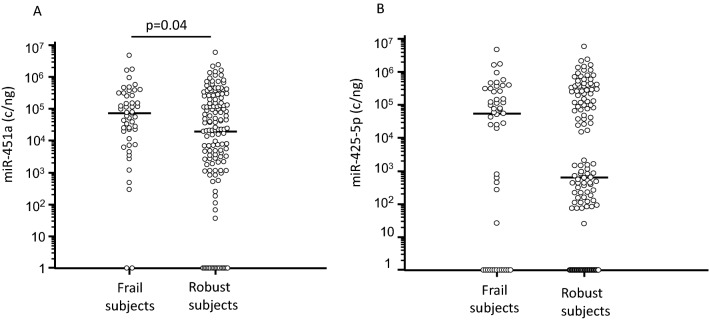
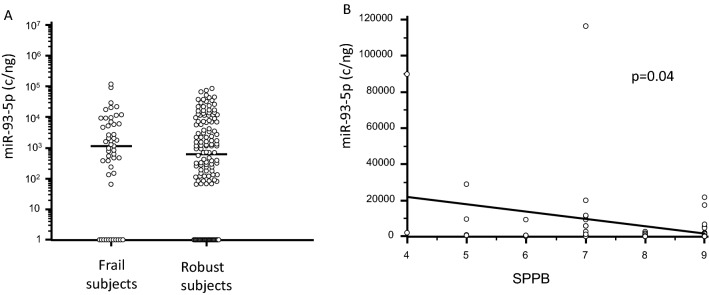
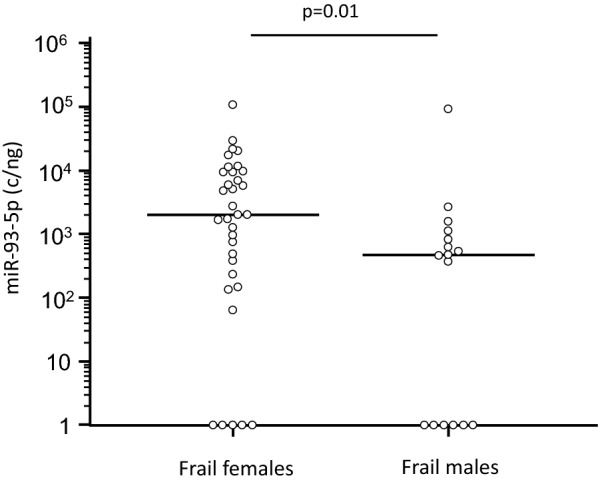
Background: Frailty, defined as physical performance impairment, is a common condition in older adults and can anticipate the development of sarcopenia, a geriatric syndrome characterized by loss of muscle strength and mass. microRNAs (miRNAs) are short molecules of RNA endowed with the ability to modulate gene expression; miRNAs are present in serum and are considered potential biomarkers for several diseases. Serum concentration of miR-451a, miR-93-5p, miR-155-5p, miR-421-3p, miR-425-5p, miR-495-3p and miR-744-5p was recently shown to be altered in sarcopenic patients. Methods: We verified if a particular miRNAs pattern could be detected in frailty as well by analyzing these molecules in 50 frail and 136 robust subjects. Additionally, a subgroup of these subjects (15 frail and 30 robust) underwent a 12-week program based on a multicomponent exercise protocol (VIVIFRAIL) consisting of resistance training, gait retraining, and balance training. After the program, serum miRNAs concentration was measured again, to verify whether the physical activity had an effect on their concentration. Moreover, clinical characteristics and indicators of physical performance of all subjects were compared before and after intervention to verify the effect of the VIVIFRAIL program. Results: At the end of the multicomponent exercise program, Short Physical Performance Battery (SPPB) score as well right and left handgrip (p < 0.05) were significantly increased in frail subjects; right and left handgrip significantly were increased also in robust subjects (p < 0.05). Interestingly, the variation of SPPB was significantly higher in frail compared to robust subjects (p < 0.0001). Moreover, at the end of the program, in frail compared to robust subjects: miR-451a serum concentration was significantly increased (frail: 6.59 × 10 4; 1.12 × 10 4–2.5 × 10 5 c/ng; robust: 2.31 × 10 4; 1.94 × 10 3–2.01 × 10 5 c/ng) (p < 0.05); and 2) miR-93-5p and miR-495-3p serum concentration was reduced, whereas that of miR-155-5p was significantly increased (p < 0.05 in both cases). Serum concentration of miR-93-5p and miR-495-3p was decreased, and that of miR-155-5p was increased at the end of the program in robust subjects alone, statistical significance being reached for miR-93-5p alone (p = 0.02). Conclusion: These results suggest that serum miR-451a should be investigated as a potential biomarker for frailty and show that the VIVIFRAIL multicomponent program modulates circulatory miRNAs expression, at least in older adults.
Overview
The claims and statistics of this paper haven’t been checked yet.
Free: it reads the open-access text and checks the first 5 claims that cite a source we can check. Create a free account to check every claim.
Integrity signals
Registry
Cites
Statistics
Figures
Verification
Claims the paper makes
The claims and statistics of this paper haven’t been checked yet.
Free: it reads the open-access text and checks the first 5 claims that cite a source we can check. Create a free account to check every claim.
Claims other papers make about this one
Each is checked against this paper’s own text: does it say what the citing paper says it does?
In the citing paper
“It also increases physical performance and HGS in frail individuals and modulates circulatory miRNA expression [250].”
From Global consensus on optimal exercise recommendations for enhancing healthy longevity in older adults (ICFSR) (2025) · cites this paper as [250]
In the citing paper
“It also increases physical performance and HGS in frail individuals and modulates circulatory miRNA expression [250].”
From Global consensus on optimal exercise recommendations for enhancing healthy longevity in older adults (ICFSR) (2025) · cites this paper as [250]
Self-check
Percentages, sums and reported differences re-computed from the paper’s own numbers.
The self-check needs the paper’s full text.
Citations
Cites
Frailty in Older Adults: Evidence for a Phenotype
Fried, L. P., Tangen, C. M., Walston, J., Newman, A. B., Hirsch, C., Gottdiener, J., Seeman, T., Tracy, R., Kop, W. J., Burke, G., et al. (2001) · The Journals of Gerontology Series A: Biological Sciences and Medical Sciences · doi:10.1093/gerona/56.3.m146 · Cited by 24,907
Assessment of Older People: Self-Maintaining and Instrumental Activities of Daily Living
Lawton, M. P., & Brody, E. M. (1969) · The Gerontologist · doi:10.1093/geront/9.3_part_1.179 · Cited by 18,540
Sarcopenia: revised European consensus on definition and diagnosis
Cruz-Jentoft, A. J., Bahat, G., Bauer, J., Boirie, Y., Bruyère, O., Cederholm, T., Cooper, C., Landi, F., Rolland, Y., Sayer, A. A., et al. (2019) · Age and Ageing · doi:10.1093/ageing/afy169 · Cited by 13,818
The C. elegans heterochronic gene lin-4 encodes small RNAs with antisense complementarity to lin-14
Lee, R. C., Feinbaum, R. L., & Ambros, V. (1993) · Cell · doi:10.1016/0092-8674(93)90529-y · Cited by 12,948
Guralnik, J. M., Simonsick, E. M., Ferrucci, L., Glynn, R. J., Berkman, L. F., Blazer, D. G., Scherr, P. A., & Wallace, R. B. (1994) · Journal of Gerontology · doi:10.1093/geronj/49.2.m85 · Cited by 9,792 · cited 1×
“Before as well after exercise protocols, all patients and controls were characterized for: SPPB [28], Activity of Daily Living (ADL) [29], Mini-Mental State Examination (MMSE) [30], Clock Drawing test (CDT) [31] and Geriatric Depression Scale (GDS) [32].”
MethodClegg, A., Young, J., Iliffe, S., Rikkert, M. O., & Rockwood, K. (2013) · The Lancet · doi:10.1016/s0140-6736(12)62167-9 · Cited by 9,503
Sheikh (1986) · doi:10.1300/j018v05n01_09 · Cited by 7,236 · cited 4×
“ADL Activity of daily living, CDT Clock Drawing Test, GDS Geriatric Depression Scale, MMSE mini mental state evaluation, SPPB Short Physical Performance Battery * p < 0.005 Frail subjects vs. robust subjects ** p < 0.05 Frail subjects vs. robust subjects ¶ p < 0.05 Frail subjects before vs. after intervention # p < 0.…”
MethodInfluentialmiRBase: annotating high confidence microRNAs using deep sequencing data
Kozomara, A., & Griffiths-Jones, S. (2014) · Nucleic Acids Research · doi:10.1093/nar/gkt1181 · Cited by 5,073
Frailty: implications for clinical practice and public health
Hoogendijk, E. O., Afilalo, J., Ensrud, K. E., Kowal, P., Onder, G., & Fried, L. P. (2019) · The Lancet · doi:10.1016/s0140-6736(19)31786-6 · Cited by 3,282 · cited 1×
“Physical decline is considered the cardinal sign of frailty [2, 3]; indeed, aging is typically characterized by muscle wasting that progressively causes disability, loss of muscle function and of self-sufficiency in older adults.”
BackgroundLu, T. X., & Rothenberg, M. E. (2018) · Journal of Allergy and Clinical Immunology · doi:10.1016/j.jaci.2017.08.034 · Cited by 2,425
Immunosenescence and Inflamm-Aging As Two Sides of the Same Coin: Friends or Foes?
Fulop, T., Larbi, A., Dupuis, G., Le Page, A., Frost, E. H., Cohen, A. A., Witkowski, J. M., & Franceschi, C. (2018) · Frontiers in Immunology · doi:10.3389/fimmu.2017.01960 · Cited by 1,364
Petersen, R. C. (2011) · New England Journal of Medicine · doi:10.1056/nejmcp0910237 · Cited by 1,289
Sarcopenia with limited mobility: an international consensus
Morley, J. E., Abbatecola, A. M., Argiles, J. M., Baracos, V., Bauer, J., Bhasin, S., Cederholm, T., Stewart Coats, A. J., Cummings, S. R., Evans, W. J., et al. (2011) · Journal of the American Medical Directors Association · doi:10.1016/j.jamda.2011.04.014 · Cited by 1,125
Clark, B. C., & Manini, T. M. (2008) · The Journals of Gerontology Series A: Biological Sciences and Medical Sciences · doi:10.1093/gerona/63.8.829 · Cited by 835
The challenge of time: Clock‐drawing and cognitive function in the elderly
Shulman, K. I., Shedletsky, R., & Silver, I. L. (1986) · International Journal of Geriatric Psychiatry · doi:10.1002/gps.930010209 · Cited by 540
Clark, B. C., & Manini, T. M. (2012) · Nutrition · doi:10.1016/j.nut.2011.12.002 · Cited by 414
Sarcopenia, frailty and their prevention by exercise
Nascimento, C. M., Ingles, M., Salvador-Pascual, A., Cominetti, M. R., Gomez-Cabrera, M. C., & Viña, J. (2019) · Free Radical Biology and Medicine · doi:10.1016/j.freeradbiomed.2018.08.035 · Cited by 396
Davidsen, P. K., Gallagher, I. J., Hartman, J. W., Tarnopolsky, M. A., Dela, F., Helge, J. W., Timmons, J. A., & Phillips, S. M. (2011) · Journal of Applied Physiology · doi:10.1152/japplphysiol.00901.2010 · Cited by 385 · cited 1×
“Interestingly, miR-451a expression was observed to be increased in muscles of powerlifter [42] and of people that are low-responders to resistance exercise training [43].”
BackgroundBiomarkers shared by frailty and sarcopenia in older adults: A systematic review and meta-analysis
Picca, A., Coelho-Junior, H. J., Calvani, R., Marzetti, E., & Vetrano, D. L. (2022) · Ageing Research Reviews · doi:10.1016/j.arr.2021.101530 · Cited by 368 · cited 1×
“Several proteins and biomolecules involved in inflammation and in oxidative stress are hypothesized to play a pathogenetic role in frailty and sarcopenia [15].”
BackgroundMicroRNA control of muscle development and disease
Williams, A. H., Liu, N., van Rooij, E., & Olson, E. N. (2009) · Current Opinion in Cell Biology · doi:10.1016/j.ceb.2009.01.029 · Cited by 350 · cited 1×
“Among these biomolecules, microRNAs (miRNAs) are involved in various pathways and cellular mechanisms that are potentially associated with sarcopenia, including satellite cell regulation [16, 17] and the functionality of muscle fibers and mitochondria [18].”
BackgroundSarcopenia: assessment of disease burden and strategies to improve outcomes
Liguori, I., Russo, G., Aran, L., Bulli, G., Curcio, F., Della-Morte, D., Gargiulo, G., Testa, G., Cacciatore, F., Bonaduce, D., et al. (2018) · Clinical Interventions in Aging · doi:10.2147/cia.s149232 · Cited by 300 · cited 1×
“The age-related decline of muscle activity (loss of mass and strength) is an overlapping aspect between sarcopenia (a complex disease in which several factors—genetics, environmental, inflammation, hormones, neuromuscular degeneration) and frailty, a state of increased vulnerability to stress due decreased physiologic…”
BackgroundSarcopenia in the elderly: Diagnosis, physiopathology and treatment
Malafarina, V., Úriz-Otano, F., Iniesta, R., & Gil-Guerrero, L. (2012) · Maturitas · doi:10.1016/j.maturitas.2011.11.012 · Cited by 297 · cited 1×
“The etiology of sarcopenia is multifactorial, involving many biological mechanisms [9, 10], like neuromuscular junction dysfunction, reduced satellite cell number/function, intramuscular adipose tissue infiltration [11] as well as chronic inflammation [12].”
BackgroundSarcopenia as the biological substrate of physical frailty
Landi, F., Calvani, R., Cesari, M., Tosato, M., Martone, A. M., Bernabei, R., Onder, G., & Marzetti, E. (2015) · Clinics in Geriatric Medicine · doi:10.1016/j.cger.2015.04.005 · Cited by 288 · cited 1×
“It has been proposed that sarcopenia may be the biological substrate for the development of physical frailty [13, 14].”
BackgroundBiomarkers in sarcopenia: A multifactorial approach
Curcio, F., Ferro, G., Basile, C., Liguori, I., Parrella, P., Pirozzi, F., Della-Morte, D., Gargiulo, G., Testa, G., Tocchetti, C. G., et al. (2016) · Experimental Gerontology · doi:10.1016/j.exger.2016.09.007 · Cited by 225 · cited 1×
“The age-related decline of muscle activity (loss of mass and strength) is an overlapping aspect between sarcopenia (a complex disease in which several factors—genetics, environmental, inflammation, hormones, neuromuscular degeneration) and frailty, a state of increased vulnerability to stress due decreased physiologic…”
BackgroundShah, J. S., Soon, P. S., & Marsh, D. J. (2016) · PLOS ONE · doi:10.1371/journal.pone.0153200 · Cited by 216
Differential Expression of MicroRNAs in Different Disease States
Abdellatif, M. (2012) · Circulation Research · doi:10.1161/circresaha.111.247437 · Cited by 171
Sarcopenia: An Overview on Current Definitions, Diagnosis and Treatment
Landi, F., Calvani, R., Cesari, M., Tosato, M., Martone, A. M., Ortolani, E., Savera, G., Salini, S., Sisto, A., Picca, A., et al. (2018) · Current Protein & Peptide Science · doi:10.2174/1389203718666170607113459 · Cited by 157 · cited 1×
“It has been proposed that sarcopenia may be the biological substrate for the development of physical frailty [13, 14].”
BackgroundmiR-451 Regulates Dendritic Cell Cytokine Responses to Influenza Infection
Rosenberger, C. M., Podyminogin, R. L., Navarro, G., Zhao, G.-W., Askovich, P. S., Weiss, M. J., & Aderem, A. (2012) · The Journal of Immunology · doi:10.4049/jimmunol.1201437 · Cited by 142
Muscle-to-organ cross talk mediated by myokines
Pedersen, L., & Hojman, P. (2012) · Adipocyte · doi:10.4161/adip.20344 · Cited by 134 · cited 1×
“The etiology of sarcopenia is multifactorial, involving many biological mechanisms [9, 10], like neuromuscular junction dysfunction, reduced satellite cell number/function, intramuscular adipose tissue infiltration [11] as well as chronic inflammation [12].”
BackgroundCesari, M., Landi, F., Calvani, R., Cherubini, A., Bari, M. D., KORTEBEIN, P. M., Signore, S. D., Lain, R. L., Vellas, B. J., Pahor, M., et al. (2017) · Aging Clinical and Experimental Research · doi:10.1007/s40520-016-0716-1 · Cited by 128 · cited 1×
“SPPB score (Short Physical Performance Battery) of the frail individuals ranged between 3 and 9, and was > 9 in robust subjects [24, 25].”
BackgroundMercken, E. M., Majounie, E., Ding, J., Guo, R., Kim, J., Bernier, M., Mattison, J., Cookson, M. R., Gorospe, M., de Cabo, R., et al. (2013) · Aging · doi:10.18632/aging.100598 · Cited by 125 · cited 1×
“miR-451a concentration in skeletal muscle was also shown to be inversely correlated to age in rhesus macaques [44], whereas its plasma concentration was inversely correlated with whole body muscle mass in middle aged men [42].”
BackgroundKelch, S., Balmayor, E. R., Seeliger, C., Vester, H., Kirschke, J. S., & van Griensven, M. (2017) · Scientific Reports · doi:10.1038/s41598-017-16113-x · Cited by 125 · cited 1×
“Notably, miR-93-5p was shown to be augmented also in serum, bone tissue and bone cells of patients suffering from osteoporosis, in whom miR93-5p concentration was correlated with bone mass density [55].”
Short‐term disuse promotes fatty acid infiltration into skeletal muscle
Pagano, A. F., Brioche, T., Arc‐Chagnaud, C., Demangel, R., Chopard, A., & Py, G. (2018) · Journal of Cachexia, Sarcopenia and Muscle · doi:10.1002/jcsm.12259 · Cited by 116 · cited 1×
“The etiology of sarcopenia is multifactorial, involving many biological mechanisms [9, 10], like neuromuscular junction dysfunction, reduced satellite cell number/function, intramuscular adipose tissue infiltration [11] as well as chronic inflammation [12].”
BackgroundCasas-Herrero, A., Anton-Rodrigo, I., Zambom-Ferraresi, F., Sáez de Asteasu, M. L., Martinez-Velilla, N., Elexpuru-Estomba, J., Marin-Epelde, I., Ramon-Espinoza, F., Petidier-Torregrosa, R., Sanchez-Sanchez, J. L., et al. (2019) · Trials · doi:10.1186/s13063-019-3426-0 · Cited by 108 · cited 1×
“Programs include arm and leg strength and power exercises, balance and coordination to prevent falls, flexibility and cardiovascular endurance exercises [27].”
BackgroundCirculating microRNAs in acute and chronic exercise: more than mere biomarkers
Sapp, R. M., Shill, D. D., Roth, S. M., & Hagberg, J. M. (2017) · Journal of Applied Physiology · doi:10.1152/japplphysiol.00982.2016 · Cited by 104
Margolis, L. M., Lessard, S. J., Ezzyat, Y., Fielding, R. A., & Rivas, D. A. (2016) · The Journals of Gerontology Series A · doi:10.1093/gerona/glw243 · Cited by 96
Roy, B., Lee, E. J., Li, T., & Rampersaud, M. (2022) · Genes · doi:10.3390/genes13030425 · Cited by 89
Rana, S., Valbuena, G. N., Curry, E. W., Bevan, C. L., & Keun, H. C. (2022) · British Journal of Cancer · doi:10.1038/s41416-021-01677-3 · Cited by 84
The Effects of Regular Exercise on Circulating Cardiovascular-related MicroRNAs
Barber, J. L., Zellars, K. N., Barringhaus, K. G., Bouchard, C., Spinale, F. G., & Sarzynski, M. A. (2019) · Scientific Reports · doi:10.1038/s41598-019-43978-x · Cited by 83
MicroRNA‐425‐3p predicts response to sorafenib therapy in patients with hepatocellular carcinoma
Vaira, V., Roncalli, M. G., Carnaghi, C., Faversani, A., Maggioni, M., Augello, C., Rimassa, L., Pressiani, T., Spagnuolo, G., Tommaso, L. D., et al. (2014) · Liver International · doi:10.1111/liv.12636 · Cited by 76
Marzetti, E., Cesari, M., Calvani, R., Msihid, J., Tosato, M., Rodriguez-Mañas, L., Lattanzio, F., Cherubini, A., Bejuit, R., Di Bari, M., et al. (2018) · Experimental Gerontology · doi:10.1016/j.exger.2018.09.017 · Cited by 76
Regulation of skeletal myogenesis by microRNAs
Xu, M., Chen, X., Chen, D., Yu, B., Li, M., He, J., & Huang, Z. (2019) · Journal of Cellular Physiology · doi:10.1002/jcp.28986 · Cited by 76 · cited 1×
“Among these biomolecules, microRNAs (miRNAs) are involved in various pathways and cellular mechanisms that are potentially associated with sarcopenia, including satellite cell regulation [16, 17] and the functionality of muscle fibers and mitochondria [18].”
BackgroundMicroRNA profiling in serum: Potential signatures for breast cancer diagnosis
Zou, X., Xia, T., Li, M., Wang, T., Liu, P., Xin Min, Z. H. O. U., Huang, Z., & Zhu, W. (2020) · Cancer Biomarkers · doi:10.3233/cbm-201547 · Cited by 75
Yy, S., Cui, J.-Y., Yuan, J., & Wang, X. (2018) · PubMed · doi:10.26355/eurrev_201809_15818 · Cited by 71
Identification of microRNAs in skeletal muscle associated with lung cancer cachexia
van de Worp, W. R. P. H., Schols, A. M. W. J., Dingemans, A. C., den Kamp, C. M. O., Degens, J. H. R. J., KELDERS, M. C. J. M., Coort, S. L., Woodruff, H. C., Kratassiouk, G., Harel‐Bellan, A., et al. (2019) · Journal of Cachexia Sarcopenia and Muscle · doi:10.1002/jcsm.12512 · Cited by 59
MicroRNAs in Muscle: Characterizing the Powerlifter Phenotype
D'Souza, R. F., Bjørnsen, T., Zeng, N., Aasen, K. M. M., Raastad, T., Cameron-Smith, D., & Mitchell, C. J. (2017) · Frontiers in Physiology · doi:10.3389/fphys.2017.00383 · Cited by 54 · cited 2×
“miR-451a concentration in skeletal muscle was also shown to be inversely correlated to age in rhesus macaques [44], whereas its plasma concentration was inversely correlated with whole body muscle mass in middle aged men [42].”
BackgroundMicroRNA regulatory networks in the pathogenesis of sarcopenia
Yin, J., Qian, Z., Chen, Y., Li, Y., & Zhou, X. (2020) · Journal of Cellular and Molecular Medicine · doi:10.1111/jcmm.15197 · Cited by 48
Okamoto, M., Fukushima, Y., Kouwaki, T., Daito, T., Kohara, M., Kida, H., & Oshiumi, H. (2018) · Journal of Biological Chemistry · doi:10.1074/jbc.ra118.003862 · Cited by 43 · cited 1×
“miR-451a miRNA regulates innate immune response, as it was shown to suppress the production of proinflammatory cytokines after influenza vaccine [45] and, at least in vitro, even in the course of influenza A infection [49].”
BackgroundSerum exosomal miR-451a acts as a candidate marker for pancreatic cancer
Chen, J., Yao, D., Chen, W., Li, Z., Guo, Y., Zhu, F., & Hu, X. (2022) · The International Journal of Biological Markers · doi:10.1177/17246008211070018 · Cited by 40
MiR-93-5p regulates tumorigenesis and tumor immunity by targeting PD-L1/CCND1 in breast cancer
Yang, M., Xiao, R., Wang, X., Xiong, Y., Duan, Z., Li, D., & Kan, Q. (2022) · Annals of Translational Medicine · doi:10.21037/atm-22-97 · Cited by 36
Yang, L., Yang, T., Wang, H., Dou, T., Fang, X.-C., Shi, L.-W., Li, X., & Feng, M. (2022) · Frontiers in Oncology · doi:10.3389/fonc.2022.765163 · Cited by 30
Oshiumi, H. (2021) · Frontiers in Immunology · doi:10.3389/fimmu.2021.685344 · Cited by 27
Záveský, L., Jandáková, E., Weinberger, V., Minář, L., Hanzíková, V., Dušková, D., Faridová, A., Turyna, R., Slanař, O., Hořínek, A., et al. (2022) · Molecular Biology Reports · doi:10.1007/s11033-021-07010-8 · Cited by 27
Agostini, S., Mancuso, R., Costa, A. S., Guerini, F. R., Trecate, F., Miglioli, R., Menna, E., Arosio, B., Clerici, M., & the SA. M. B. A. project (2021) · Journal of Translational Medicine · doi:10.1186/s12967-021-02989-x · Cited by 22 · cited 4×
“In our previous work, serum concentration of miR451a was found to be significantly increased in severe sarcopenic patients compared to robust subjects, suggesting this miRNA as a possible biomarker of the disease [23].”
BackgroundInfluentialSelf-citationBaker, B. A. (2018) · Journal of Functional Morphology and Kinesiology · doi:10.3390/jfmk3020036 · Cited by 20
Petrella, M., Aprahamian, I., Mamoni, R. L., Romanini, C. V., Lima, N. A., Robello, E. C., da Costa, D. L., An, V. N., Aguirre, B. N., Galdeano, J. R., et al. (2021) · BMC Geriatrics · doi:10.1186/s12877-021-02030-2 · Cited by 20 · cited 8×
“Thus, 15 frail and 30 robust subjects were able to complete the VIVIFRAIL program.”
MethodInfluentialIdentification of microRNA‐451a as a Novel Circulating Biomarker for Colorectal Cancer Diagnosis
Zhang, Z., Zhang, D., Cui, Y., Qiu, Y., Miao, C., & Lu, X. (2020) · BioMed Research International · doi:10.1155/2020/5236236 · Cited by 15
Deregulation of IL-37 and its miRNAs modulators in sarcopenic patients after rehabilitation
Rosa, F. L., Agostini, S., Saresella, M., Costa, A. S., Piancone, F., Miglioli, R., Trecate, F., & Clerici, M. (2021) · Journal of Translational Medicine · doi:10.1186/s12967-021-02830-5 · Cited by 15 · cited 1×
“We have recently shown that rehabilitation has an effect on the expression of miRNAs that are related to SNAP-25 and IL-17 expression in severe sarcopenic patients [23, 60].”
BackgroundSelf-citationIncreasing Fracture Risk Associates With Plasma Circulating MicroRNAs in Aging People’s Sarcopenia
He, N., Zhang, Y., Zhang, Y., Feng, B., Zheng, Z., Wang, D., Zhang, S., & Ye, H. (2021) · Frontiers in Physiology · doi:10.3389/fphys.2021.678610 · Cited by 10 · cited 1×
“Plasma concentration of miR-93-5p, on the other hand, was recently shown to be reduced in sarcopenic patients [54].”
BackgroundCOS-7 cells are a cellular model to monitor polyomavirus JC miR-J1-5p expression
Agostini, S., Mancuso, R., Costa, A. S., Guerini, F. R., & Clerici, M. (2020) · Molecular Biology Reports · doi:10.1007/s11033-020-05862-0 · Cited by 7 · cited 1×
“Samples resulted in less than two positive droplets are considered negative [34].”
BackgroundSelf-citation
Cited by
Izquierdo, M., de Souto Barreto, P., Arai, H., Bischoff-Ferrari, H. A., Cadore, E. L., Cesari, M., Chen, L.-K., Coen, P. M., Courneya, K. S., Duque, G., et al. (2025) · The Journal of nutrition, health and aging · doi:10.1016/j.jnha.2024.100401 · Cited by 273
Assar, M. E., Rodríguez-Sánchez, I., Álvarez‐Bustos, A., & Rodríguez‐Mañas, L. (2024) · Molecular Aspects of Medicine · doi:10.1016/j.mam.2024.101271 · Cited by 60
Lozupone, M., Solfrizzi, V., Sardone, R., Dibello, V., Castellana, F., Zupo, R., Lampignano, L., Bortone, I., Daniele, A., & Panza, F. (2023) · Epigenomics · doi:10.2217/epi-2023-0279 · Cited by 22
The Role of miRNAs and Extracellular Vesicles in Adaptation After Resistance Exercise: A Review
Csala, D., Ádám, Z., & Wilhelm, M. (2025) · Current Issues in Molecular Biology · doi:10.3390/cimb47080583 · Cited by 17
“The majority of studies examining the miRNA profile in serum or plasma in response to chronic RE have focused on the elderly population [99,104,106,107,109–111, 113, 114 ], with only one study addressing young”
MicroRNAs as commonly expressed biomarkers for sarcopenia and frailty: A systematic review
Shin, H. E., Jang, J. Y., Jung, H., Won, C. W., & Kim, M. (2024) · Experimental Gerontology · doi:10.1016/j.exger.2024.112600 · Cited by 15
“1); 11 were sarcopenia-related (Agostini et al., 2023; Agostini et al., 2021; Chen et al., 2019; Connolly et al., 2018b; He et al., 2021; He et al., 2020; Iannone et al., 2020; Iparraguirre et al., 2023; Liu et al., 2021; Val ´ a ˇ skov ´ a et al., 2021; Vrbov ´ a et al., 2021) and 4 were…”
Influential
Metadata
- Authors
- Agostini, S., Mancuso, R., Citterio, L. A., Mihali, G. A., Arosio, B., & Clerici, M.
- Affiliations
- Don Carlo Gnocchi Foundation (IT)
- Fondazione IRCCS Ca' Granda Ospedale Maggiore Policlinico (IT)
- University of Milan (IT)
- Corresponding author
- Mancuso, Roberta
- ORCID
- Venue
- Journal of Translational Medicine
- Published
- 2023-02-02
- Volume
- 21
- Issue
- 1
- Pages
- 67-67
- ISSN
- 1479-5876 (ISSN-L)
- PMC
- PMC9891895
- OpenAlex
- W4318756897
- Cited by
- 19
- References
- 60
- Citations by year
- 2026: 3 · 2025: 9 · 2024: 5 · 2023: 2
- FWCI
- 2.84
- Type
- journal article
- Language
- en
- Open access
- gold
- doi.org
- Licence
- cc-by
- creativecommons.org/licenses/by/4.0 (tdm)
- creativecommons.org/licenses/by/4.0 (vor)
- Locations
- Journal of Translational Medicine (publishedVersion, cc-by)
- PubMed Central (publishedVersion, cc-by)
- PubMed (publishedVersion)
- Archivio Istituzionale della Ricerca (Universita Degli Studi Di Milano) (submittedVersion, other-oa)
- DOAJ (DOAJ: Directory of Open Access Journals) (submittedVersion, cc-by-sa)
- Funders
- Fondazione Cariplo (2017-0622)
- Ministero della Salute (RC2021-2023)
- Fondazione Romeo ed Enrica Invernizzi
- Fondazione Alessandro e Vincenzo Negroni Prati Morosini
- Topics
- Health Sciences › Medicine › Geriatrics and Gerontology › Frailty in Older Adults
- Health Sciences › Medicine › Physiology (medical) › Nutrition and Health in Aging
- Life Sciences › Biochemistry, Genetics and Molecular Biology › Cancer Research › MicroRNA in disease regulation
- Keywords
- frailty, serum microRNA, miR-451a, miR-93-5p, miR-155-5p, miR-425-5p, miR-495-3p, miR-744-5p, multicomponent exercise, Vivifrail, resistance training, gait retraining, balance training, sarcopenia, physical performance, grip strength, Short Physical Performance Battery, biomarkers
- MeSH terms
- Frailty, Aged, Humans, Biomarkers, Exercise, Frail Elderly, Hand Strength, MicroRNAs, Sarcopenia
About these checks
Registry, retraction, Cites and statistics results are computed, not judged, with one exception: a printed reference that no index lists is read once by a model before it counts as a citation error. Claims are extracted by a model and kept only when their quote appears verbatim in the text; each cited source is then checked, with a model’s help, for whether it says what the claim relies on. Those verdicts can be wrong — read the claim’s quote and the cited source before relying on one.
Statistics and arithmetic are recomputed, not judged.
Confidence bands are shown only for fields calibrated on our annotated test set. None is calibrated yet, so no band is shown.
What counts as a claim ›How we measure confidence ›How we check this ›
Are you an author, or do you see a problem with this page? Request a review
Data sources
Bibliographic data: Semantic Scholar, OpenAlex, Crossref.
Contains information from the Semantic Scholar Academic Graph Datasets, made available under the ODC Attribution License (ODC-BY 1.0).
Semantic Scholar’s data is described in: Kinney, R., et al. (2023). The Semantic Scholar Open Data Platform. arXiv:2301.10140.
