

The interplay between androgens and the immune response in polycystic ovary syndrome
Open accessThe DOI matches its Crossref record; 89 of the 89 references it cites were found in a registry or an index.
Abstract
Polycystic ovary syndrome (PCOS) is a metabolic-reproductive-endocrine disorder that, while having a genetic component, is known to have a complex multifactorial etiology. As PCOS is a diagnosis of exclusion, standardized criteria have been developed for its diagnosis. The general consensus is that hyperandrogenism is the primary feature of PCOS and is associated with an array of physiological dysfunctions; excess androgens, for example, have been correlated with cytokine hypersecretion, adipocyte proliferation, and signaling pathway dysregulation. Another key feature of PCOS is insulin resistance, resulting in aberrant glucose and fatty acid metabolism. Additionally, the immune system plays a key role in PCOS. Hyperandrogenism stimulates some immune cells while it inhibits others, thereby disrupting the normal balance of immune cells and creating a state of chronic inflammation. This low-grade inflammation could contribute to infertility since it induces ovarian dysfunction. This dysregulated immune response in PCOS exhibits autoimmunity characteristics that require further investigation. This review paper examines the relationship between androgens and the immune response and how their malfunction contributes to PCOS.
Overview
The claims and statistics of this paper haven’t been checked yet.
Free: it reads the open-access text and checks the first 5 claims that cite a source we can check. Create a free account to check every claim.
Integrity signals
Registry
Cites
Statistics
Figures
Verification
Claims the paper makes
The claims and statistics of this paper haven’t been checked yet.
Free: it reads the open-access text and checks the first 5 claims that cite a source we can check. Create a free account to check every claim.
Self-check
Percentages, sums and reported differences re-computed from the paper’s own numbers.
The self-check needs the paper’s full text.
Citations
Cites
De Cillà, S. D., Farruggio, S., Vujosevic, S., Raina, G., Filippini, D., Gatti, V., Clemente, N., Mary, D., Vezzola, D., Casini, G., et al. (2017) · Cellular Physiology and Biochemistry · doi:10.1159/000479441 · Cited by 5,136
Autophagy: cellular and molecular mechanisms
Glick, D., Barth, S., & Macleod, K. F. (2010) · The Journal of Pathology · doi:10.1002/path.2697 · Cited by 3,802 · cited 1×
“It plays an important role in development [62].”
BackgroundThe Diagnosis of Polycystic Ovary Syndrome during Adolescence
Witchel, S. F., Oberfield, S., Rosenfield, R. L., Codner, E., Bonny, A., Ibáñez, L., Pena, A., Horikawa, R., Gomez-Lobo, V., Joel, D., et al. (2015) · Hormone Research in Paediatrics · doi:10.1159/000375530 · Cited by 3,113
Insulin Resistance and the Polycystic Ovary Syndrome: Mechanism and Implications for Pathogenesis*
Dunaif, A. (1997) · Endocrine Reviews · doi:10.1210/edrv.18.6.0318 · Cited by 2,458 · cited 1×
“In at least 50% of IR cases in women with PCOS [75], there is serine phosphorylation by phosphorylation-172–1-receptor substratum [76], which inhibits the insulin receptor signal [75].”
BackgroundPolycystic Ovary Syndrome: Definition, Aetiology, Diagnosis and Treatment
Escobar-Morreale, H. F. (2018) · Nature Reviews Endocrinology · doi:10.1038/nrendo.2018.24 · Cited by 2,083 · cited 1×
“Abdominal adiposity, obesity, and insulin resistance are commonly associated with this condition [1].”
BackgroundRosenfield, R. L., & Ehrmann, D. A. (2016) · Endocrine Reviews · doi:10.1210/er.2015-1104 · Cited by 1,603
THE ROYAL AUSTRALIAN COLLEGE OF GENERAL PRACTITIONERS
(1974) · Medical Journal of Australia · doi:10.5694/j.1326-5377.1974.tb93279.x · Cited by 1,341
Dumesic, D. A., Oberfield, S. E., Stener-Victorin, E., Marshall, J. C., Laven, J. S., & Legro, R. S. (2015) · Endocrine Reviews · doi:10.1210/er.2015-1018 · Cited by 1,020 · cited 1×
“The National Institutes of Health (NIH), the Androgen Society, and the Rotterdam criteria have been used in diagnosing PCOS; all three have hyperandrogenism as a central facet of their diagnostic criteria [3].”
MethodThe MAPK cascades: Signaling components, nuclear roles and mechanisms of nuclear translocation
Plotnikov, A., Zehorai, E., Procaccia, S., & Seger, R. (2011) · Biochimica et Biophysica Acta (BBA) - Molecular Cell Research · doi:10.1016/j.bbamcr.2010.12.012 · Cited by 986 · cited 1×
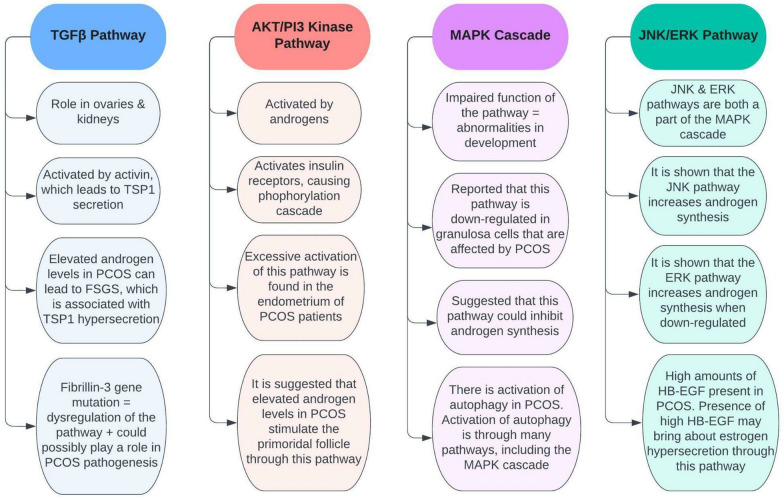
“Impaired function of the MAPK cascade can result in abnormalities in development and is also associated with the progression of numerous medical conditions [59].”
BackgroundNeutrophil-derived cytokines: facts beyond expression
Tecchio, C., Micheletti, A., & Cassatella, M. A. (2014) · Frontiers in Immunology · doi:10.3389/fimmu.2014.00508 · Cited by 699 · cited 3×
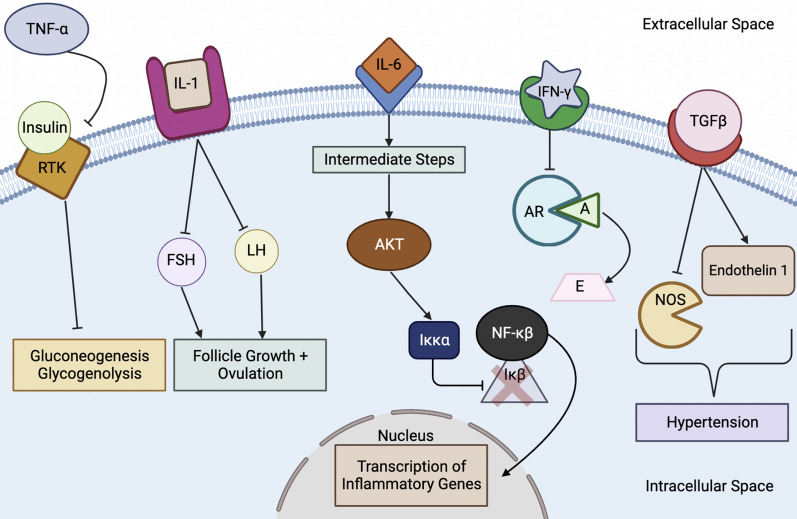
“Both of these interleukins then inhibit gonadotropin function to a greater extent, inhibiting the normal progression of the follicular and luteal phases of the ovarian cycle and contributing to PCOS-associated infertility [24, 25, 27].”
Background
Research works printed but not linked: 3
- de Medeiros S Barbosa B Lin Winck Yamamoto A Winck Yamamoto M Soutode Medeiros M Soares Junior J The interplay between androgens and adipocytes: the foundation of comorbidities of polycystic ovary syndrome GREM Gynecol Reproduct Endocrinol Metab 2022 01 02 08 10.53260/grem.223011 · doi:10.53260/grem.223011
- Genazzani A Prati A Genazzani A Battipaglia C Simoncini T Szeliga A Synergistic effects of the integrative administration of acetyl-L-carnitine, L-carnitine, L-arginine and N-acetyl-cysteine on metabolic dynamics and on hepatic insulin extraction in overweight/obese patients with PCOS, GREM Gynecological and Reproductive Endocrinol Metab 2020 01 2020 56 63 10.53260/grem.2010110 · doi:10.53260/grem.2010110
- Ali A Polycystic ovary syndrome as an autoimmune disease: a new concept Obstet Gynecol 2000 95 6 S48
Cited by
Obesity and Dyslipidemia: A Review of Current Evidence
Vekić, J., Stefanović, A., & Zeljković, A. (2023) · Current Obesity Reports · doi:10.1007/s13679-023-00518-z · Cited by 196
Polycystic Ovary Syndrome and Oxidative Stress—From Bench to Bedside
Żeber‐Lubecka, N., Ciebiera, M., & Hennig, E. E. (2023) · International Journal of Molecular Sciences · doi:10.3390/ijms241814126 · Cited by 181
“Increased OS and activate NF-κ B levels result in a state of chronic low-grade inflammation, which promotes the expression of various inflammatory molecules, including TNF-α and interleukin-6 (IL-6) [67].”
Androgen excess: a hallmark of polycystic ovary syndrome
Wang, K., Lǐ, Y., & Chen, Y. (2023) · Frontiers in Endocrinology · doi:10.3389/fendo.2023.1273542 · Cited by 162
Polycystic ovary syndrome and thyroid disorder: a comprehensive narrative review of the literature
Palomba, S., Colombo, C., Busnelli, A., Caserta, D., & Vitale, G. (2023) · Frontiers in Endocrinology · doi:10.3389/fendo.2023.1251866 · Cited by 73
“Considering data on autoimmunity and on low-grade chronic inflammation in women PCOS (52, 85, 86), it may be possible to hypothesize shorter euthyroid and SCH phases in women with PCOS and AIT (87).”
BackgroundVasukova, E. A., Zaikova, E. K., Kalinina, O., Gorelova, I. V., Pyanova, I., Bogatyreva, E., Vasilieva, E. Y., Grineva, E. N., & Popova, P. (2023) · Biomedicines · doi:10.3390/biomedicines11102791 · Cited by 67
“In ovaries and adipose tissue, macrophages are the most abundant immune cells balancing destructive and protective cell-mediated immunity in inflammation [5].”
BackgroundPatani, A., Balram, D., Yadav, V. K., Lian, K.-Y., Patel, A., & Sahoo, D. K. (2023) · Frontiers in Endocrinology · doi:10.3389/fendo.2023.1271521 · Cited by 67
Polycystic ovary syndrome and its management: In view of oxidative stress
Bhattacharya, K., Dey, R., Sen, D., Paul, N., Basak, A. K., Purkait, M. P., Shukla, N., Chaudhuri, G. R., Bhattacharya, A., Maiti, R., et al. (2024) · BioMolecular Concepts · doi:10.1515/bmc-2022-0038 · Cited by 67
“Several studies have reported a positive correlation between androgen levels and markers of OS and in fl ammation in PCOS patients [6,19,127,128].”
BackgroundRISING STARS: androgens and immune cell function
Ainslie, R. J., Simitsidellis, I., Kirkwood, P. M., & Gibson, D. A. (2024) · Journal of Endocrinology · doi:10.1530/joe-23-0398 · Cited by 48
Singh, V., Mahra, K., Jung, D.-R., & Shin, J. (2024) · Probiotics and Antimicrobial Proteins · doi:10.1007/s12602-024-10262-y · Cited by 47
Lorincz, C., Börzsei, D., Hoffmann, A., Varga, C., & Szabó, R. (2024) · Biomedicines · doi:10.3390/biomedicines12030560 · Cited by 43
“When discussing the effect of the immune system on PCOS, it is important to note that natural killer cells, dendritic cells, lymphoid T and B cells, and their role in cytokine dysregulation are also key features in PCOS [85].”
BackgroundYalçınkaya, A. S., Yalçınkaya, R., Sardh, F., & Landegren, N. (2025) · Frontiers in Immunology · doi:10.3389/fimmu.2024.1501364 · Cited by 47
Liu, C., Dou, Y., Zhang, M., Han, S., Hu, S., Li, Y., Yu, Z., Liu, Y., Liang, X., Chen, Z., et al. (2024) · Journal of Translational Medicine · doi:10.1186/s12967-024-04952-y · Cited by 39
“In addition, insulin resistance and compensatory hyperinsulinemia in obese women can further exacerbate hyperandrogenism [34, 35].”
BackgroundJabarpour, M., Amidi, F., Aleyasin, A., Nashtaei, M. S., & Saedi-Marghmaleki, M. (2024) · Journal of Cellular and Molecular Medicine · doi:10.1111/jcmm.18464 · Cited by 37
“72,73 At present, there is no clarity regarding whether inflammation induces HA by stimulating theca cell androgen synthesis, or whether HA itself initiates the inflammatory response.”
BackgroundCurrent Understanding of the Pathophysiology of Idiopathic Intracranial Hypertension
Lowe, M., Berman, G., Sumithran, P., & Mollan, S. P. (2025) · Current Neurology and Neuroscience Reports · doi:10.1007/s11910-025-01420-y · Cited by 30
The role of mitochondrial dysfunction in ovarian granulosa cells in polycystic ovary syndrome
Yan, X., Ma, D., Li, R., Xu, J., Zou, Y., & He, M. (2025) · Endocrine Connections · doi:10.1530/ec-25-0186 · Cited by 29
“As a result, the balance between cell proliferation and apoptosis is disrupted, leading to an accumulation of immature follicles and the absence of mature, ovulatory follicles (91, 118, 144).”
Omidvar-Mehrabadi, A., Ebrahimi, F., Shahbazi, M., & Mohammadnia‐Afrouzi, M. (2024) · Cytokine · doi:10.1016/j.cyto.2024.156588 · Cited by 25
The Role of the Liver in the Pathophysiology of PCOS: A Literature Review
Alhermi, A., Perks, H., Vadassery, V. N., Altahoo, N., Atkin, S. L., & Butler, A. E. (2025) · Biomolecules · doi:10.3390/biom15010051 · Cited by 27
“Chronic inflammation in PCOS patients, recognized by the presence of increased inflammatory markers and further dysregulated by hyperandrogenemia [52], contributes to dysfunction of the liver and disturbances in metabolism and may worsen NAFLD and insulin resistance [53].”
Self-citationDecoding sex differences in human immunity through systems immunology
Escrivà-Font, J., Cao, T., & Consiglio, C. R. (2025) · Oxford Open Immunology · doi:10.1093/oxfimm/iqaf006 · Cited by 20
“Higher concentration of testosterone in the blood is a hallmark of polycystic ovarian syndrome (PCOS) in women, and PCOS has been linked to an increased pro-inflammatory state [103].”
Yakut, S., Atcalı, T., Çağlayan, C., Ulucan, A., Kandemır, F. M., Kara, A., & Anuk, T. (2024) · Balkan Medical Journal · doi:10.4274/balkanmedj.galenos.2024.2024-1-60 · Cited by 18
“49 CRP has pro-and anti-inflammatory effects during inflammation, complement system activation, and infiltration-suppressing properties.”
BackgroundSamadi, F., Babei, H., Nayebzadeh, M., Sadati, E., Zahiri, Z., Esfidani, T., Forouzin, S., & Etezadi, A. (2025) · Tissue and Cell · doi:10.1016/j.tice.2025.103097 · Cited by 16
Voros, C., Papadimas, G. K., Mavrogianni, D., Koulakmanidis, A.-M., Athanasiou, D., Bananis, K., Athanasiou, A. I., Athanasiou, A. V., Papapanagiotou, I., Vaitsis, D., et al. (2025) · Genes · doi:10.3390/genes16091101 · Cited by 16
“In adipose tissue, especially visceral fat, hypertrophic adipocytes experience hypoxic stress due to inadequate angiogenesis, which activates HIF-1 α and enhances the transcription of VEGF, GLUT1, and several pro-inflammatory cytokines, including as TNF-α , IL-6, and MCP-1 [71].”
Brennan, E., Butler, A. E., Drage, D. S., Sathyapalan, T., & Atkin, S. L. (2023) · Frontiers in Endocrinology · doi:10.3389/fendo.2023.1233484 · Cited by 14
“Gene Set Enrichment Analysis was less revealing but showed interactions with immune cells that are known to be dysfunctional in PCOS (59).”
BackgroundSelf-citationPopovic, M., Monnerat, S., TAYLOR, A. E. R., Gilligan, L. C., Schiffer, L., Arlt, W., Vogt, D., Geyter, C. D., Hutter, N., Donath, M. Y., et al. (2024) · Frontiers in Endocrinology · doi:10.3389/fendo.2024.1435698 · Cited by 12
“However, metformin only partially acts through the IL-1 pathway ( 44, 45); therefore, a concurrent targeted IL-1 inhibition would have a synergistic effect.”
Liu, D., Liu, D., & Zhou, K. (2025) · Journal of Ovarian Research · doi:10.1186/s13048-025-01617-2 · Cited by 11
“Additionally, hyperandrogenism alters pDC activity, increasing inflammatory cytokine production and creating a feed-back loop that intensifies both inflammation and androgen excess [60].”
Zhang, J., Saeed, A., Hussain, M., Siddique, R., Xu, H., Bazmi, R. R., Hussain, L., & Lv, G. (2024) · Journal of Food Biochemistry · doi:10.1155/2024/1003797 · Cited by 13
Macrophage: Hidden Criminal in Therapy Resistance
Ding, Y., Cao, Q., Yang, W., Xu, J., & Xiao, P. (2024) · Journal of Innate Immunity · doi:10.1159/000538212 · Cited by 10
“Likewise, M1-like macrophages also contribute to insulin resistance in the development of atherosclerosis in mice and polycystic ovary syndrome in women [128, 129].”
BackgroundWhen IGF-1 Meets Metabolic Inflammation and Polycystic Ovary Syndrome
Li, X., Lin, S., Yang, X., Chen, C., Cao, S., Zhang, Q., Ma, J., Zhu, G., Zhang, Q., Fang, Q., et al. (2024) · International Immunopharmacology · doi:10.1016/j.intimp.2024.112529 · Cited by 10
Zhang, Y., Shi, B., Tian, Y., XU, S., & Chang, H. (2026) · Frontiers in Nutrition · doi:10.3389/fnut.2026.1697275 · Cited by 11
“Elevated androgen levels are observed in approximately 75–90% of PCOS women with oligomenorrhea, often correlating positively with phenotypic severity (9).”
Alshammary, A. F., Alsobaie, S. F., Alageel, A. A., Aldakheel, F. M., Ansar, S., Alrashoudi, R. H., Farzan, R. A., Alturki, N. A., Alhaizan, M. A., Al-Mutawa, J., et al. (2023) · Current Issues in Molecular Biology · doi:10.3390/cimb45070348 · Cited by 8
“The irregularity of menstruation in women leads to anovulatory infertility, which indicates that women with PCOS become pregnant and tend to experience miscarriage or premature delivery as pregnancy complications [49].”
BackgroundLiu, Y., Han, Y., Jiang, Y., Zhang, J., & Zhang, Y. (2025) · Frontiers in Medicine · doi:10.3389/fmed.2025.1531506 · Cited by 7
“Chronic inflammation can lead to the release of various cytokines from adipose tissue, which may disrupt ovarian androgen synthesis pathways and increase androgen levels (91).”
Pelechá-Salvador, M., Márquez‐Arrico, C. F., Fernández-Reyes, M., Perea‐Galera, L., Hermenejildo, J., Morillas, C., Sanz-Llorens, X., Hermo-Argibay, A., Víctor, V. M., López‐Domènech, S., et al. (2025) · Free Radical Biology and Medicine · doi:10.1016/j.freeradbiomed.2025.09.025 · Cited by 7
Sheng, Y., Hua, H., Cui, Y., & Sun, Y. (2025) · Journal of Thoracic Disease · doi:10.21037/jtd-24-750 · Cited by 7
“Consistent with this, compared to normal females, hyperandrogenism in females with polycystic ovary syndrome leads to higher neutrophil counts (43).”
Ma, S., Sun, C., Wang, Y., Zhang, X., & Kuang, H. (2026) · Journal of Ovarian Research · doi:10.1186/s13048-026-02054-5 · Cited by 7
“Mechanisti-cally, hyperandrogenemia exacerbates local inflammation through activation of the NF-κB pathway [3]; oxidative stress leads to mitochondrial dysfunction [4]; and insulin resistance further worsens the metabolic milieu [5].”
Chen, L., Hui, L., Shi, Y., Wang, A., Zhang, Y., Yao, X., & Li, J. (2025) · Molecular and Cellular Endocrinology · doi:10.1016/j.mce.2025.112639 · Cited by 6
Dadkhah, M., Gholizadeh, N., Azgomi, R. N. D., Hosseinzadeh, S., Hamedeyazdan, S., Haghighat, K., Afshari, S., Salimi, M., & Jazani, A. M. (2024) · Iranian journal of pharmaceutical research · doi:10.5812/ijpr-143290 · Cited by 7
Shalaby, A. M., Shalaby, R. H., Elshamy, A. M., Alnasser, S. M., Alorini, M., Jaber, F. A., Alabiad, M. A., Alshaikh, A. B. A., Hassan, S. M. A., Aziz, S. A. M. A., et al. (2024) · Cell Biochemistry and Function · doi:10.1002/cbf.4073 · Cited by 6
“42 Recent research suggests that elevated levels of TNF ‐ ɑ in PCOS may promote NF ‐ κ B, which impairs the endometrial GLUT ‐ 4 glucose transporter, thereby contributing to hyperglycemia.”
BackgroundKouchakzadeh, F., Ebrahimi‐Barough, S., Aflatoonian, B., Ai, J., Mazaheri, F., Montazeri, F., Hajizadeh-Tafti, F., Golzadeh, J., Naser, R., Sepehri, M., et al. (2024) · Regenerative Therapy · doi:10.1016/j.reth.2024.08.016 · Cited by 6
“It is characterized by hyper-androgenism, ovulatory dysfunction, and polycystic ovaries, leading to potential long-term health issues like type 2 diabetes, cardiovascular diseases, and endometrial cancer [2].”
BackgroundKwiatkowski, J., Akpang, N., Ziemkiewicz, Z., Zaborowska, Ł., & Ludwin, A. (2025) · International Journal of Molecular Sciences · doi:10.3390/ijms26178192 · Cited by 7
“Beyond nuclear antigens, mitochondrial dysfunction has also been implicated in PCOS [149,155].”
Chen, D., Yu, Q., wang, X., wang, Y., Zheng, J., Cai, L., Zheng, J., Zhang, Y., Wang, L., & Wang, Y. (2025) · Frontiers in Endocrinology · doi:10.3389/fendo.2025.1522269 · Cited by 5
“These granulosa cell groups regulate the growth and maturation of oocytes via paracrine and gap junction communication (1, 2).”
Genetic–epigenetic targets for PCOS-associated diabesity
Sharma, A. K., Mukherjee, M., Akhtar, M. S., Orayj, K. M., Farooqui, S., & Khan, A. (2025) · Drug Discovery Today · doi:10.1016/j.drudis.2025.104373 · Cited by 5
Ryssdal, M., Skage, J. E., Jarmund, A. H., Hanem, L. G. E., Løvvik, T. S., Giskeødegård, G. F., Iversen, A., & Vanky, E. (2025) · BJOG An International Journal of Obstetrics & Gynaecology · doi:10.1111/1471-0528.18320 · Cited by 5
“Women with PCOS have an altered immune response in the non-pregnant state, characterised by increased inflammatory markers [2, 3].”
The PCOS puzzle: putting the pieces together for optimal care
Dar, M. A., Maqbool, M., & Ara, I. (2023) · International Journal of Adolescent Medicine and Health · doi:10.1515/ijamh-2023-0102 · Cited by 7
Opydo-Szymaczek, J., Wendland, N., Formanowicz, D., Blacha, A., Jarząbek‐Bielecka, G., Radomyska, P., Kruszyńska, D., & Mizgier, M. (2025) · Journal of Clinical Medicine · doi:10.3390/jcm14176159 · Cited by 4
Pourahmad, B., Majidnia, M., Saniee, N., Afraie, M., Riyahifar, S., & Darbandi, Z. (2025) · Medical Journal of the Islamic Republic of Iran · doi:10.47176/mjiri.39.105 · Cited by 7
“Acne and hirsutism are both clinical signs of hyper-androgenism, which is a key characteristic of PCOS (17-19).”
Mohanty, A., Bashir, B., Kolekar, K. A., Acharya, A., Gulati, M., Chaitanya, M., Gupta, M., Patle, D., Gupta, G., & Singh, S. K. (2025) · Inflammopharmacology · doi:10.1007/s10787-025-02015-2 · Cited by 4
“The inflammatory state of PCOS causes various effects such as insulin resistance and ovarian dysfunction (Shabbir et al. 2023).”
Molecular Mechanisms Underlying Reproductive Dysfunction in Polycystic Ovary Syndrome
Kobayashi, H., Shigetomi, H., Nishio, M., Umetani, M., Imanaka, S., & Hashimoto, H. (2026) · Reproductive Sciences · doi:10.1007/s43032-026-02097-5 · Cited by 5
“This tis - sue-specific IR is thought to be influenced by progesterone resistance, persistent estrogen stimulation due to anovulatory cycles, fluctuations in local insulin concentrations, and low-grade chronic inflammation [ 19, 150, 151].”
Subakathulla, S., Manoj, N., Patanwala, A. M., Premvignesh, P. A., Alobaid, Y. M., Majie, A., Gorain, B., Dutta, S., Sengupta, P., Rosas, I. M., et al. (2026) · Frontiers in Endocrinology · doi:10.3389/fendo.2026.1825853 · Cited by 5
“This may be attributed to local in fl ammatory and immune responses (103).”
Zimmer, J., Mueller, L., Frank‐Herrmann, P., Rehnitz, J., Dietrich, J. E., Bettendorf, M., Strowitzki, T., & Krivega, M. (2024) · Cell Death and Disease · doi:10.1038/s41419-023-06397-5 · Cited by 4
Review on: Women with Polycystic Ovary Syndrome
Gusain, N., Anjankar, A. P., Ambad, R. S., Jha, R. K., & Jha, R. K. (2025) · Journal of Pharmacy And Bioallied Sciences · doi:10.4103/jpbs.jpbs_1995_24 · Cited by 4
“[3] Caspase‑1 is a key enzyme involved in the activation of proinflammatory cytokines, such as interleukin‑1 β (IL‑1 β ) and IL‑18, via the inflammasome pathway.”
Xuan, Y., Hong, X., Zhou, X., Yan, T., Qin, P., Peng, D., & Wang, B. (2024) · PeerJ · doi:10.7717/peerj.18194 · Cited by 4
Senthilkumar, H., & Arumugam, M. (2025) · The Journal of Steroid Biochemistry and Molecular Biology · doi:10.1016/j.jsbmb.2025.106795 · Cited by 4
Cardiometabolic risk in women with polycystic ovary syndrome: a comprehensive review
Cagnacci, A., ANTONELLI, G. A., VATTERONI, G., & Xholli, A. (2025) · Minerva Obstetrics and Gynecology · doi:10.23736/s2724-606x.25.05732-x · Cited by 4
Xu, K., Zhang, S., Guo, L., Liu, T., Li, Y., & Zhang, Y. (2026) · Journal of Ovarian Research · doi:10.1186/s13048-025-01956-0 · Cited by 3
“Previous studies have demonstrated that sustained hyper-androgenism or danger-associated signals within the PCOS follicular niche can trigger DC maturation and IL-12 secretion, thereby driving Th1/Th17 polarization and recruiting NK cells to establish a local pro-inflammatory feedback loop [16].”
Onaolapo, O. J., Aworinde, O., Olufemi-Aworinde, K. J., & Onaolapo, O. J. (2026) · Acta Bioscientia Journal of Biomedical and Biological Science Research · doi:10.71181/actabioscientia12550 · Cited by 3
Banerjee, A. A., & Banerjee, A. G. (2024) · International Journal of Translational Medical Research and Public Health · doi:10.25259/ijtmrph_20_2024 · Cited by 3
Gashti, N. G., Hajizadeh, K., Farshbaf‐Khalili, A., Mahdipour, M., & Shahnazi, M. (2025) · International Journal for Vitamin and Nutrition Research · doi:10.31083/ijvnr38965 · Cited by 5
“This inflammatory state involves immune cell dysfunction, cytokine imbalance, and autoantibody production, contributing to insulin resistance and hyper-androgenism [ 50].”
Inflammatory Responses of Women with Polycystic Ovary Syndrome in Vitro Differ from Healthy Women.
Rezayat, F., Hajiaghayi, M., Ghasemi, N., Mesdaghi, M., Tehrani, F. R., & Mosaffa, N. (2023) · PubMed Central · doi:10.22088/ijmcm.bums.12.1.70 · Cited by 3
Cao, Y., Wang, W., Song, X., Wen, Q., Xie, J., & Zhang, D. (2024) · Genes · doi:10.3390/genes15040494 · Cited by 5
Zhou, Y., Zhang, Q., Ding, R., Fan, X., Li, Q., & Li, Z. (2025) · Life Sciences · doi:10.1016/j.lfs.2025.123463 · Cited by 3
Gawron, I. M., Brodowicz, J., Skotniczny, K., & Jach, R. (2025) · Archives of Medical Research · doi:10.1016/j.arcmed.2025.103325 · Cited by 3
Akbaş, B., Dinç, G., Akbaş, A., Ercan, G., Aygün, H., & Erbaş, O. (2026) · Bratislavské lekárske listy/Bratislava medical journal · doi:10.1007/s44411-026-00514-4 · Cited by 2
“IGF-1, another hormone elevated in PCOS [28, 37, 38], promotes androgen synthesis via insulin synergy and contributes to follicular arrest, particularly under inflammatory conditions involving TNF-α and IL-1β [39, 40].”
Zhang, Y., Lin, Y., Xiong, X., Chen, X., Liu, X., & Huang, H. (2026) · Frontiers in Pharmacology · doi:10.3389/fphar.2026.1754568 · Cited by 4
“These observations are broadly consistent with prior reports describing chronic low-grade inflammation and immune imbalance in PCOS (Shabbir et al., 2023; Wang et al., 2023; Xie et al., 2024).”
Li, Q., Wu, Y., Chen, L., & Wang, R. (2026) · Current Obesity Reports · doi:10.1007/s13679-026-00703-w · Cited by 2
Xu, H., Zhang, H., Yang, R., Xie, X., Cao, Z., Zhao, Y. (., Lin, H., Lu, D., Bischoff, F. Z., Zhang, X., et al. (2026) · The Innovation Nutrition · doi:10.59717/j.xinn-nutri.2026.100004 · Cited by 2
Motafeghi, F., Naz, M. S. G., Tehrani, F. R., & Behboudi‐Gandevani, S. (2026) · Endocrine Connections · doi:10.1530/ec-25-0728 · Cited by 2
“Androgens also induce pro-in fl ammatory cytokines, fostering perifollicular in fl ammation that exacerbates miniaturization in follicles pre-sensitized by genetic factors, such as HSD3B1 polymorphisms (36, 37).”
Xu, J., & He, B. (2026) · Journal of Ovarian Research · doi:10.1186/s13048-026-02124-8 · Cited by 2
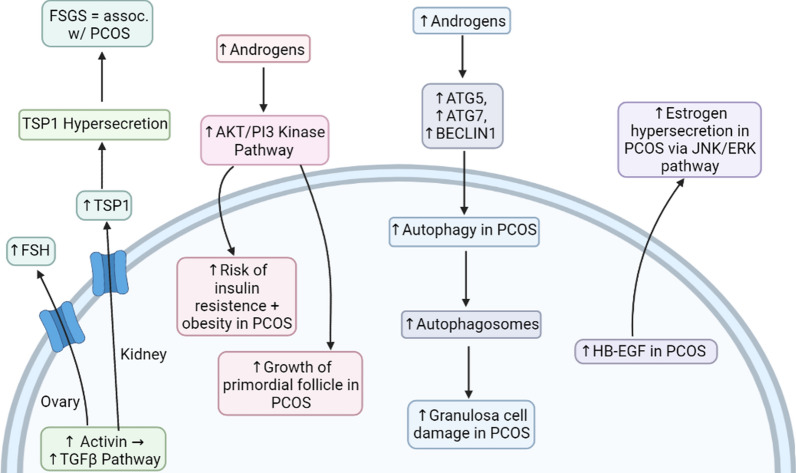
“Elevated androgens directly impair insulin signaling in peripheral tissues by disrupting the phosphatidylinositol 3-kinase/protein kinase B (PI3K/Akt) pathway, which is critical for glucose uptake [70, 71].”
Debnath, B., Nath, R., Das, J., Chaudhary, P., Dewan, D., Paul, D., Patel, A., Islam, A., Sridhar, S. B., Panigrahy, U. P., et al. (2026) · Health Nanotechnology · doi:10.1186/s44301-026-00030-y · Cited by 2
“Further research is necessary because the dysregulated immune response in PCOS displays autoimmunity traits [29].”
Sіusіuka, V. G., Sergienko, M. Y., Мakarchuk, O. I., Shevchenko, A. О., & Deinichenko, O. V. (2023) · Reproductive health of woman · doi:10.30841/2708-8731.6.2023.289991 · Cited by 3
Ali, R. M., Lomteva, S. V., Александрова, А. А., Nauka, Sagamonova, K. Y., Sagamonov, A. S., Ammar, M. N. A., Shkurat, T. P., & Nauka (2024) · RESEARCH RESULTS IN BIOMEDICINE · doi:10.18413/2658-6533-2024-10-2-0-9 · Cited by 2
Wang, J., & Zhou, Q. (2024) · British Journal of Hospital Medicine · doi:10.12968/hmed.2024.0478 · Cited by 3
Yang, Z., Zhou, C., Li, J., & Pan, J. (2024) · Genomics · doi:10.1016/j.ygeno.2024.110968 · Cited by 2
Steroid hormone profiling reveals altered adrenal androgen production in endometriosis
Simitsidellis, I., Ainslie, R. J., Taylor, A. E., Gilligan, L. C., Shaheen, F., Blanke, S., Anderson, C., Hapangama, D., Arlt, W., Horne, A. W., et al. (2026) · European Journal of Endocrinology · doi:10.1093/ejendo/lvag109 · Cited by 1
“17 This may explain how retrograde menstruation can lead to lesion formation in some women but not others.”
Akram, W., Fadhil, A., & Nori, W. (2024) · Al-Rafidain Journal of Medical Sciences · doi:10.54133/ajms.v6i2.934 · Cited by 1
Wang, X., Li, P., Lv, X., Deng, L., Zhou, Y., & Zhang, X. (2024) · Reproductive Toxicology · doi:10.1016/j.reprotox.2024.108723 · Cited by 1
Ling, S., Huang, L.-Y., Lia, T., Xie, D., Xiao, Q., Tian, C., & Li, Q. (2024) · Medicine · doi:10.1097/md.0000000000040162 · Cited by 2
“[30,32] Localized ovarian inflammation impairs ovulation and induces or exacerbates systemic inflammation.”
BackgroundPsycho-Neuroendocrine Regulation of Autoimmune Dysfunction in Polycystic Ovary Syndrome
Jeni, A., & Reddy, K. J. (2025) · Advances in medical diagnosis, treatment, and care (AMDTC) book series · doi:10.4018/979-8-3693-7432-0.ch021 · Cited by 1
Upadhyay, S., Mazumder, A., & Das, S. (2025) · Current Pharmaceutical Design · doi:10.2174/0113816128382284250822045319 · Cited by 1
Dehghani, F., Arefnezhad, R., Tanideh, N., Karimi, F., Aliakbari, F., Mohseni, G., & Esmaeilpour, T. (2025) · Zygote · doi:10.1017/s0967199425100142 · Cited by 1
Bezdoode, M. F., Kalhori, Z., Razlansari, R., & Jamshidi, A. (2025) · Cell and Tissue Biology · doi:10.1134/s1990519x25600619 · Cited by 2
Chen, L., Liu, L., He, G., Xu, Y., & Wei, R. (2025) · Journal of Thoracic Disease · doi:10.21037/jtd-2025-825 · Cited by 1
Mushtaq, Z., Rafiq, M., Rashid, S., Hafiz, S., Younis, W., & Amin, S. (2026) · Indian Journal of Clinical Biochemistry · doi:10.1007/s12291-026-01398-5 · Cited by 1
Baran, R., Brodowicz, J., Skotniczny, K., Jach, R., & Gawron, I. M. (2026) · Frontiers in Endocrinology · doi:10.3389/fendo.2026.1772362 · Cited by 2
Autoimmune diseases in patients with different PCOS phenotypes
Robeva, R. N., Кirilov, G., Kalinov, K., & Elenkova, A. P. (2026) · Frontiers in Reproductive Health · doi:10.3389/frph.2026.1806450 · Cited by 1
“The typical hormonal alterations in PCOS include various degrees of hyperandrogenism, fluctuating estrogen and prolactin levels, low progester о ne concentrations, and vitamin D deficiency, and most of these alterations may modulate immune system parameters (17–21).”
Phung, T. M., Nguyen, H. C., Ho, D. N., Thach, T. M. H., Nguyen, T. P., Nguyen, V. N. T., Lâm, Đ. T., & Nguyen, T. H. (2026) · Middle East Fertility Society Journal · doi:10.1186/s43043-026-00340-2 · Cited by 1
Peng, H., Jiang, J., Wang, Z., & Wang, W. (2026) · Journal of Ovarian Research · doi:10.1186/s13048-026-02201-y · Cited by 1
“It also suppresses the hepatic production of sex hormone-binding globulin (SHBG), increasing the fraction of free biologically active testosterone [26, 27].”
A Miswired Ovarian Ecosystem: LIF/JAK/STAT3 Distortion in PCOS
Sharma, A., Singh, S., Rajan, R. K., Bhattacharjee, A., & Chakraborty, M. (2026) · Reproductive Sciences · doi:10.1007/s43032-026-02155-y · Cited by 1
“This elicits a sustained Th17-dominant response, marked by increased IL-17 and TNF-α levels, which exacerbates ovarian damage and perpetuates STAT3-dependent inflammatory cycles [35].”
Risk Factors of Obesity in the Adult Population of Pakistan
Nomani, R. M. U. N., Khan, A. A., Shah, S. T. A., Naeem, A., Liaquat, A., & Khan, M. J. (2023) · Life and Science · doi:10.37185/lns.1.1.433 · Cited by 1
Ye, S., Huang, Y., Lu, Y., Li, X., Ye, M., Lu, H., Shi, J., Huang, J., & Cai, H. (2023) · Endocrine Journal · doi:10.1507/endocrj.ej23-0451 · Cited by 1
Poznyak, A. V., Khotina, V. A., Khotina, V. A., Sukhorukov, V. N., Sukhorukov, V. N., Kovyanova, T. I., Kovyanova, T. I., Starodubtseva, I. A., Elizova, N. V., Churov, A. V., et al. (2024) · OnLine Journal of Biological Sciences · doi:10.3844/ojbsci.2025.10.21 · Cited by 1
“Hyperandrogenism was thus proved to have an adverse effect on the IRS-1/PI3K/Akt insulin signaling pathway (Shabbir et al ., 2023).”
BackgroundEndocrine Functions of the Adipose Tissue
Mitov, M. I. (2024) · Contemporary Endocrinology · doi:10.1007/978-3-031-72570-8_4 · Cited by 1
Unraveling Immune Regulatory Mechanisms in PCOS: Role of T Regulatory Cells and Receptors
Abdullah, M., & Alabassi, H. M. (2025) · NTU Journal of Pure Sciences · doi:10.56286/awf99t04 · Cited by 1
Nabiuni, M. (2024) · TMP Universal Journal of Research and Review Archives. · doi:10.69557/ujrra.v3i4.132 · Cited by 1
Allawi, A. A. M., Mustafa, N. W., & Hadi, A. M. (2025) · Journal of Neonatal Surgery · doi:10.52783/jns.v14.1585
“Insulin resistance is another aspect of PCOS that results in abnormal metabolism of fatty acids and carbohydrates (3).”
Jain, A., Poyya, J., Neravi, A., Sunil Kumar, K. S., & Oli, A. K. (2025) · Natural Resources for Human Health · doi:10.53365/nrfhh/203184
“…both cytokines, suggest potential involvement in immune system dysregulation and inflammation linked to insulin resistance, a common PCOS trait ( Shabbir et al., 2023) Additionally, the elevated LH-FSH ratio, fasting insulin levels, and BMI are indicative of metabolic dysfunctions…”
Zhang, Y., Wang, Y., Wang, S., & Zhang, H. (2025) · Reproductive Sciences · doi:10.1007/s43032-025-01953-0 · Cited by 1
“Overactivation of Th1 cells may be linked to the onset of chronic inflammation [45].”
Research Progress on Tumor Necrosis Factor-α and Ovarian Diseases
潘, 慧. (2025) · Advances in Clinical Medicine · doi:10.12677/acm.2025.15103026
Khan, A., Sundus, H., Zaidi, S., Khan, H., & Khan, S. A. (2025) · Sleep and Vigilance · doi:10.1007/s41782-025-00326-6
“The interplay between hyperandrogen - ism, insulin resistance, and chronic inflammation in PCOS is known to affect both energy metabolism and neuromus - cular function [28].”
Duan, Y., Liu, P., Li, H., & Gao, Y. (2025) · Frontiers in Endocrinology · doi:10.3389/fendo.2025.1581148
Darbandi, N., Nidawi, H. H., & Mirzaie, M. (2025) · Cell & Tissue Journal · doi:10.61882/jct.16.3.309
Metadata
- Authors
- Shabbir, S., Khurram, E., Moorthi, V. S., Eissa, Y. T. H., Kamal, M. A., & Butler, A. E.
- Affiliations
- Royal College of Surgeons in Ireland - Bahrain (BH)
- Prince Sattam Bin Abdulaziz University (SA)
- Corresponding author
- Butler, Alexandra E.
- Venue
- Journal of Translational Medicine
- Published
- 2023-04-16
- Volume
- 21
- Issue
- 1
- Pages
- 259-259
- ISSN
- 1479-5876 (ISSN-L)
- PMC
- PMC10105935
- OpenAlex
- W4366003163
- Cited by
- 108
- References
- 89
- Citations by year
- 2026: 33 · 2025: 36 · 2024: 26 · 2023: 13
- FWCI
- 4.38
- Type
- journal article
- Language
- en
- Open access
- gold
- doi.org
- Licence
- cc-by
- creativecommons.org/licenses/by/4.0 (tdm)
- creativecommons.org/licenses/by/4.0 (vor)
- Locations
- Journal of Translational Medicine (publishedVersion, cc-by)
- PubMed Central (publishedVersion, cc-by)
- PubMed (publishedVersion)
- DOAJ (DOAJ: Directory of Open Access Journals) (submittedVersion, cc-by-sa)
- Figshare (submittedVersion, cc-by)
- Topics
- Health Sciences › Medicine › Reproductive Medicine › Ovarian function and disorders
- Health Sciences › Medicine › Reproductive Medicine › Reproductive Biology and Fertility
- Health Sciences › Medicine › Reproductive Medicine › Endometriosis Research and Treatment
- Keywords
- polycystic ovary syndrome, androgens, hyperandrogenism, immune response, chronic inflammation, insulin resistance, adipocyte proliferation, autoimmunity, infertility, ovarian dysfunction
- MeSH terms
- Androgens, Female, Humans, Immunity, Inflammation, Insulin Resistance, Polycystic Ovary Syndrome, Hyperandrogenism
About these checks
Registry, retraction, Cites and statistics results are computed, not judged, with one exception: a printed reference that no index lists is read once by a model before it counts as a citation error. Claims are extracted by a model and kept only when their quote appears verbatim in the text; each cited source is then checked, with a model’s help, for whether it says what the claim relies on. Those verdicts can be wrong — read the claim’s quote and the cited source before relying on one.
Statistics and arithmetic are recomputed, not judged.
Confidence bands are shown only for fields calibrated on our annotated test set. None is calibrated yet, so no band is shown.
What counts as a claim ›How we measure confidence ›How we check this ›
Are you an author, or do you see a problem with this page? Request a review
Data sources
Bibliographic data: Semantic Scholar, OpenAlex, Crossref.
Contains information from the Semantic Scholar Academic Graph Datasets, made available under the ODC Attribution License (ODC-BY 1.0).
Semantic Scholar’s data is described in: Kinney, R., et al. (2023). The Semantic Scholar Open Data Platform. arXiv:2301.10140.
