

Common questions and misconceptions about creatine supplementation: what does the scientific evidence really show?
Open accessThe DOI matches its Crossref record; 196 of the 201 references it cites were found in a registry or an index; 69 of the 251 sources its claims cite were checked for support.
Abstract
Supplementing with creatine is very popular amongst athletes and exercising individuals for improving muscle mass, performance and recovery. Accumulating evidence also suggests that creatine supplementation produces a variety of beneficial effects in older and patient populations. Furthermore, evidence-based research shows that creatine supplementation is relatively well tolerated, especially at recommended dosages (i.e. 3-5 g/day or 0.1 g/kg of body mass/day). Although there are over 500 peer-refereed publications involving creatine supplementation, it is somewhat surprising that questions regarding the efficacy and safety of creatine still remain. These include, but are not limited to: 1. Does creatine lead to water retention? 2. Is creatine an anabolic steroid? 3. Does creatine cause kidney damage/renal dysfunction? 4. Does creatine cause hair loss / baldness? 5. Does creatine lead to dehydration and muscle cramping? 6. Is creatine harmful for children and adolescents? 7. Does creatine increase fat mass? 8. Is a creatine 'loading-phase' required? 9. Is creatine beneficial for older adults? 10. Is creatine only useful for resistance / power type activities? 11. Is creatine only effective for males? 12. Are other forms of creatine similar or superior to monohydrate and is creatine stable in solutions/beverages? To answer these questions, an internationally renowned team of research experts was formed to perform an evidence-based scientific evaluation of the literature regarding creatine supplementation.
Overview
CoChat Summary
TL;DR
This expert narrative review evaluates 12 common questions and misconceptions about creatine supplementation and concludes that, at recommended doses, creatine is safe and effective for diverse populations. It refutes claims that creatine causes water retention, kidney damage, hair loss, dehydration/cramping, fat gain, or requires a loading phase, and identifies creatine monohydrate as the optimal form.
Key findings
- Across 12 questions, the authors conclude creatine supplementation does not always lead to water retention, is not an anabolic steroid, does not cause kidney damage/renal dysfunction in healthy individuals at recommended dosages, and the majority of evidence does not support a link to hair loss/baldness or dehydration/muscle cramping.
- Creatine supplementation does not increase fat mass; in older adults, a meta-analysis of 19 randomized controlled trials with 609 participants found the creatine group had a greater reduction in body fat percentage and lost ~0.5 kg more fat mass than placebo, although the absolute fat mass difference was not significant.
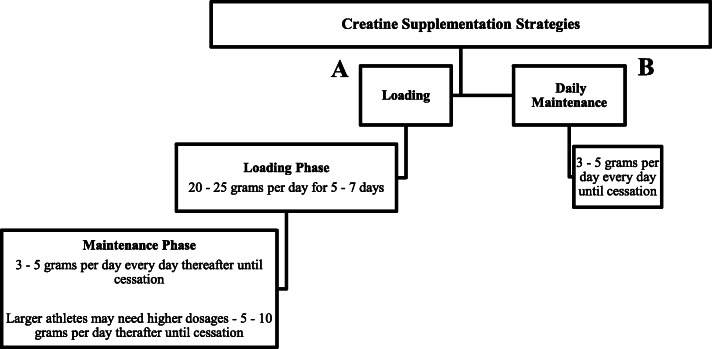
- A loading phase is not required: 3 g/day for 28 days or 20 g/day for 6 days produced similar (~20%) increases in muscle creatine, and recommended maintenance is 3–5 g/day or 0.1 g/kg/day. Creatine monohydrate is the optimal choice, with other forms not superior.
- Benefits extend beyond resistance/power activities and males: creatine appears safe and potentially beneficial for children and adolescents, benefits older adults especially when combined with resistance training, and may provide multifactorial benefits for females across the lifespan, though human pregnancy studies are lacking.
Methods
- An internationally renowned team of research experts, who collectively published over 200 peer-refereed articles involving creatine supplementation, was formed; each of 12 questions was answered by one researcher chosen for expertise, and the final manuscript was reviewed and approved by all authors, reflecting group opinion.
- The paper is an evidence-based scientific evaluation/narrative review of the literature, referencing over 500 peer-refereed publications and the 2017 International Society of Sports Nutrition position stand; no systematic search strategy, risk-of-bias assessment, or quantitative synthesis for the review itself is described.
- Evidence cited includes controlled trials, systematic reviews/meta-analyses, case reports, and survey data; for example, the fat-mass conclusion draws on a meta-analysis of 19 studies and 609 participants.
Limitations
- Stated in the paper: evidence is limited for children and adolescents; there are no human studies evaluating creatine supplementation during pregnancy; and future clinical trials involving frail populations with long-term follow-up and larger samples are needed.
- Stated/evident: this is not a systematic review, and the conclusions reflect group opinion rather than a protocol-driven, bias-assessed synthesis.
- Evident from the text: some conclusions rely on small or older studies, case reports, self-report surveys, and mixed findings, such as short-term water retention versus longer-term total body water data and inconsistent performance results in females.
Model-written summary. Check it against the paper before relying on it.
Integrity signals
Registry
Cites
Statistics
Figures
Verification
Claims the paper makes
52 Valid · 3 Not valid · 103 Not checked · 57 Own results and interpretations
At least one cited source doesn’t support this claim or points to a different paper, and none confirmed it — see the verdicts below.
In the paper
“Six weeks of creatine supplementation in non-resistance-trained males at a dosage of 0.3 g/kg lean body mass for five days followed by 0.075 g/kg lean body mass for 42 days produced no significant changes in TBW [43].”
§ Common questions and misconceptions about creatine supplementation: what does the scientific evidence really show? > Introduction > Does creatine lead to water retention?
What the sources say
- Disputedcites [43] Spillane M Schoch R Cooke M Harvey T Greenwood M Kreider R Willoughby DS The effects of creatine ethyl ester supplementation combined with heavy resistance training on body composition, muscle performance, and serum and muscle creatine levels J. Int. Soc. Sports Nutr. 2009 6 6 6 10.1186/1550-2783-6-6 19228401 PMC2649889 sourceExperimental — accuracy not yet measured
The Methods (Supplementation protocol) and Participants sections match the stated doses and describe males who were not resistance-trained. But the Results (Body water) report significant increases in total body water at days 27 and 48. Only the difference between supplement and placebo groups was not significant; that does not support the claim that total body water showed no significant changes. (LLM, conf=0.88)
Checked by a reasoning model — may be wrong.
plain- Asserted: passes — The authors put it forward as true.
- Checkable: passes — It can be checked against evidence.
- Load-bearing: unclear — It is unclear whether the paper’s conclusions depend on it.
- Based: passes — The paper gives a reason why it holds.
- Disputed
Every source the paper cites for this claim was checked and supports it.
In the paper
“The overwhelming majority of evidence in adult populations indicates that creatine supplementation, both short- and longer-term, is safe and generally well tolerated [2].”
§ Common questions and misconceptions about creatine supplementation: what does the scientific evidence really show? > Introduction > Is creatine harmful for children and adolescents?
What the sources say
- Supportedcites [2] Kreider RB Kalman DS Antonio J Ziegenfuss TN Wildman R Collins R Candow DG Kleiner SM Almada AL Lopez HL International Society of Sports Nutrition position stand: safety and efficacy of creatine supplementation in exercise, sport, and medicine J. Int. Soc. Sports Nutr 2017 14 18-z 10.1186/s12970-017-0173-z 28615996 PMC5469049 source
The Safety section says that short- and long-term studies consistently show no adverse health risks and describes creatine monohydrate as well tolerated. Those findings include adult populations, supporting the claim's narrower scope; page numbers are not supplied in our copy. (LLM, conf=0.94)
hedged- Asserted: passes — The authors put it forward as true.
- Checkable: passes — It can be checked against evidence.
- Load-bearing: unclear — It is unclear whether the paper’s conclusions depend on it.
- Based: passes — The paper gives a reason why it holds.
- Supported
The cited sources support only part of this claim — read each source’s verdict below.
In the paper
“Moreover, in a group of healthy recreational male bodybuilders, 5 g/day of creatine consumed either pre- or post-training had no effect on fat mass [90].”
§ Common questions and misconceptions about creatine supplementation: what does the scientific evidence really show? > Introduction > Does creatine increase fat mass?
What the sources say
- Partly supportedcites [90] Antonio J, Ciccone V. The effects of pre versus post workout supplementation of creatine monohydrate on body composition and strength. J. Int. Soc. Sports Nutr. 2013;10:36–6 eCollection 2013. PMC3750511 23919405 sourceExperimental — accuracy not yet measured
The Methods identify healthy recreational male bodybuilders receiving 5 g of creatine before or after training. The Results report no statistically significant change in fat mass, but they also report a mean decrease in both groups and suggest that post-workout supplementation was possibly more beneficial. Thus, “had no effect” overstates the finding. (LLM, conf=0.86)
plain- Asserted: passes — The authors put it forward as true.
- Checkable: passes — It can be checked against evidence.
- Load-bearing: unclear — It is unclear whether the paper’s conclusions depend on it.
- Based: passes — The paper gives a reason why it holds.
- Partly supported
The cited sources support only part of this claim — read each source’s verdict below.
In the paper
“The increase in cerebral PCr from 10 g of creatine supplementation was reported to be inversely related to symptoms of depression in adolescent females resistant to selective serotonin reuptake inhibitors [171]”
§ Common questions and misconceptions about creatine supplementation: what does the scientific evidence really show? > Introduction > Is creatine only effective for males?
What the sources say
- Partly supportedcites [171] Kondo DG Forrest LN Shi X Sung YH Hellem TL Huber RS Renshaw PF Creatine target engagement with brain bioenergetics: a dose-ranging phosphorus-31 magnetic resonance spectroscopy study of adolescent females with SSRI-resistant depression Amino Acids 2016 48 1941 1954 10.1007/s00726-016-2194-3 26907087 PMC4974294 sourceExperimental — accuracy not yet measured
The Results report a 9.1% increase in frontal-lobe PCr in the 10 g group and an inverse correlation between PCr and depression scores in the combined creatine-treated groups. They do not establish that correlation specifically for the 10 g group; the authors say only that visual inspection suggests the 4 g and 10 g groups contributed most to it. Pages were not provided in our copy. (LLM, conf=0.88)
plainstates an association- Asserted: passes — The authors put it forward as true.
- Checkable: passes — It can be checked against evidence.
- Load-bearing: unclear — It is unclear whether the paper’s conclusions depend on it.
- Based: passes — The paper gives a reason why it holds.
- Partly supported
The cited sources support only part of this claim — read each source’s verdict below.
In the paper
“Therefore, creatine supplementation may reduce the risk of heat related-illness when athletes train and/or compete in hot and humid environments [72, 146].”
§ Common questions and misconceptions about creatine supplementation: what does the scientific evidence really show? > Introduction > Is creatine only useful for resistance / power type activities?
What the sources say
- Not checked yetcites [72] Dalbo VJ Roberts MD Stout JR Kerksick CM Putting to rest the myth of creatine supplementation leading to muscle cramps and dehydration Br. J. Sports Med. 2008 42 567 573 10.1136/bjsm.2007.042473 18184753 source
Checked before — its earlier verdict is held back until a new check runs.
- Partly supportedcites [146] Buford TW Kreider RB Stout JR Greenwood M Campbell B Spano M Ziegenfuss T Lopez H Landis J Antonio J International Society of Sports Nutrition position stand: creatine supplementation and exercise J. Int. Soc. Sports Nutr. 2007 4 6 6 10.1186/1550-2783-4-6 17908288 PMC2048496 sourceExperimental — accuracy not yet measured
The Medical Safety of Creatine Supplementation section (page unavailable) says athletes taking creatine may have a lower risk of symptoms such as dehydration and cramping. It does not say that creatine reduces heat-related illness specifically, or establish that benefit for athletes training or competing in hot and humid conditions. (LLM, conf=0.78)
hedgedstates a possible cause- Asserted: passes — The authors put it forward as true.
- Checkable: passes — It can be checked against evidence.
- Load-bearing: passes — The paper’s conclusions depend on it.
- Based: passes — The paper gives a reason why it holds.
- Not checked yet
116 more claims · 16 with their cited sources checked
Create a free account to see all 215 claims and to verify the 8 references still open.
- It may state two separate claims as one. 75
- Probably not a substantial claim. 23
- The quote only partly states this claim. 2
Claims other papers make about this one
Each is checked against this paper’s own text: does it say what the citing paper says it does?
The cited source says what the claim attributes to it.
In the citing paper
“One of the most commonly used and scientifically supported ergogenic aids is creatine monohydrate (commonly referred to as creatine) [1,3,4,5].”
From Creatine for exercise and sports performance, with recovery considerations for healthy populations (2021) · cites this paper as [4]
The cited source says what the claim attributes to it.
In the citing paper
“athletes may experience a reduction in the risk of heat-related injuries when training or competing in these conditions [3,4,103,104,105].”
From Creatine for exercise and sports performance, with recovery considerations for healthy populations (2021) · cites this paper as [4]
The cited source says what the claim attributes to it.
In the citing paper
“Although several other forms of creatine have been proposed and marketed as alternatives, none have been shown to offer benefits above and beyond those seen with monohydrate.”
From Creatine for exercise and sports performance, with recovery considerations for healthy populations (2021) · cites this paper as [4]
The cited source says what the claim attributes to it.
In the citing paper
“Previous work has highlighted gender-specific differences in creatine production and turnover, which lays the foundation for gender considerations for creatine [4].”
From Creatine for exercise and sports performance, with recovery considerations for healthy populations (2021) · cites this paper as [4]
The cited source says what the claim attributes to it.
In the citing paper
“Many misconceptions are present regarding creatine [81]”
From Creatine Supplementation in Children and Adolescents (2021) · cites this paper as [81]
8 more claims about this paper
Create a free account to see every claim other papers make about this one.
Self-check
Percentages, sums and reported differences re-computed from the paper’s own numbers.
Each contradiction between two passages listed here was confirmed by an independent check.
Rated minor: it would not touch a result — a value no result rests on, a p-value that stays on the same side of the significance level, or a conflict that is clerical, resolved elsewhere in the paper, or outside its own findings.
In the paper
§ Common questions and misconceptions about creatine supplementation: what does the scientific evidence really show? > Introduction > Does creatine lead to water retention?
“Six weeks of creatine supplementation in non-resistance-trained males”
§ Common questions and misconceptions about creatine supplementation: what does the scientific evidence really show? > Introduction > Does creatine lead to water retention?
“for five days followed by 0.075 g/kg lean body mass for 42 days”
Citations
Cites
Sarcopenia: revised European consensus on definition and diagnosis
Cruz-Jentoft, A. J., Bahat, G., Bauer, J., Boirie, Y., Bruyère, O., Cederholm, T., Cooper, C., Landi, F., Rolland, Y., Sayer, A. A., et al. (2019) · Age and Ageing · doi:10.1093/ageing/afy169 · Cited by 13,818 · cited 1×
“decrease in muscle mass, strength, and functionality) that is associated with increased likelihood of adverse outcomes including falls, fractures, physical disability and mortality [107].”
BackgroundSarcopenia: revised European consensus on definition and diagnosis
Cruz-Jentoft, A. J., Bahat, G., Bauer, J., Boirie, Y., Bruyère, O., Cederholm, T., Cooper, C., Landi, F., Rolland, Y., Sayer, A. A., et al. (2019) · Age and Ageing · doi:10.1093/ageing/afz046 · Cited by 3,803
Creatine and Creatinine Metabolism
Wyss, M., & Kaddurah-Daouk, R. (2000) · Physiological Reviews · doi:10.1152/physrev.2000.80.3.1107 · Cited by 2,950 · cited 5×
“, 3–5 g/day) increases blood concentrations of creatine for 3-4 hours after ingestion thereby facilitating the uptake of creatine into tissue through diffusion and creatine transporters [1, 183, 184].”
BackgroundInfluentialElevation of creatine in resting and exercised muscle of normal subjects by creatine supplementation
Harris, R. C., Söderlund, K., & Hultman, E. (1992) · Clinical Science · doi:10.1042/cs0830367 · Cited by 1,168 · cited 5×
“[60] published a seminal paper which showed that ‘loading’ with creatine increased skeletal muscle creatine stores, as evaluated from muscle biopsies collected from the vastus lateralis in young, healthy human participants.”
BackgroundInfluentialKreider, R. B., Kalman, D. S., Antonio, J., Ziegenfuss, T. N., Wildman, R., Collins, R., Candow, D. G., Kleiner, S. M., Almada, A. L., & Lopez, H. L. (2017) · Journal of the International Society of Sports Nutrition · doi:10.1186/s12970-017-0173-z · Cited by 1,057 · cited 10×
“Based on the enormous popularity of creatine supplementation, the International Society of Sports Nutrition (ISSN) published an updated position stand in 2017 on the safety and efficacy of creatine supplementation in exercise, sport, and medicine [2].”
BackgroundInfluentialSelf-citationISSN exercise & sports nutrition review update: research & recommendations
Kerksick, C. M., Wilborn, C. D., Roberts, M. D., Smith-Ryan, A., Kleiner, S. M., Jäger, R., Collins, R., Cooke, M., Davis, J. N., Galvan, E., et al. (2018) · Journal of the International Society of Sports Nutrition · doi:10.1186/s12970-018-0242-y · Cited by 945 · cited 4×
“Creatine monohydrate powder has been the most extensively studied and commonly used form of creatine in dietary supplements since the early 1990s [2, 125].”
BackgroundInfluentialSelf-citationKuehner, C. (2003) · Acta Psychiatrica Scandinavica · doi:10.1034/j.1600-0447.2003.00204.x · Cited by 839 · cited 1×
“Depression is about 2 times higher among females throughout the reproductive years [173] and accelerates around pubertal hormonal changes [174].”
BackgroundMuscle creatine loading in men
Hultman, E., Soderlund, K., Timmons, J. A., Cederblad, G., & Greenhaff, P. L. (1996) · Journal of Applied Physiology · doi:10.1152/jappl.1996.81.1.232 · Cited by 822 · cited 5×
“istered creatine in hot tea [35, 60, 103, 104, 123, 182] but the solubility has no influence on tissue uptake [187].”
BackgroundInfluentialAndrogen Receptor Structure, Function and Biology: From Bench to Bedside.
(2016) · Europe PMC (PubMed Central) · Cited by 623
Effect of oral creatine supplementation on skeletal muscle phosphocreatine resynthesis
Greenhaff, P. L., Bodin, K., Soderlund, K., & Hultman, E. (1994) · American Journal of Physiology-Endocrinology and Metabolism · doi:10.1152/ajpendo.1994.266.5.e725 · Cited by 531 · cited 2×
“[60], several other investigations have demonstrated increased intramuscular creatine stores in humans from the creatine ‘loading’ phase [35, 103, 104].”
Background
Research works printed but not linked: 4
- Ziegenfuss T Lowery LM Lemon P Acute fluid volume changes in men during three days of creatine supplementation Journal of Exercise Physiology Online 1998 1 1
- Rawson ES The safety and efficacy of creatine monohydrate supplementation: What we have learned from the past 25 years of research Gatorade Sports Science Exchange 2018 29 1 6
- Kreider R Willoughby D Greenwood M Parise G Payne E Tarnopolsky M Effects of serum creatine supplementation on muscle creatine content Journal of Exercise Physiology Online 2003 6 24 33
- Howard AN Harris RC Compositions containing creatine; USP Office Editor: United States 1999
Cited by
Items 101–200 of 230
Naddafha, S., António, J., Kreider, R. B., & Stout, J. R. (2026) · Journal of the International Society of Sports Nutrition · doi:10.1080/15502783.2026.2668435 · Cited by 11
“Some have hypothesized that creatine's water retention effects could be less favorable in women or that, without concurrent resistance training, creatine might increase total body water without functional gains [6,11].”
InfluentialSelf-citationThe Role of Supplementation in Enhancing Recovery and Endurance among Fitness Trainers
Orhan, B. E. (2024) · IgMin Research · doi:10.61927/igmin243 · Cited by 3
MARQUES, J. N. A. D. V., & Capela, J. P. (2022) · Revista de Nutrição · doi:10.1590/1678-9865202235e200148 · Cited by 4
Marinho, A. H., Silva‐Cavalcante, M. D., Cristina-Souza, G., Sousa, F. A. D. B., Ataide‐Silva, T., Bertuzzi, R., de Araújo, G. G., & Lima‐Silva, A. E. (2024) · International Journal of Sport Nutrition and Exercise Metabolism · doi:10.1123/ijsnem.2023-0191 · Cited by 3
Continued elevation of creatinine and uric acid in a male athlete: A case report
Alaseem, A. M. (2024) · SAGE Open Medical Case Reports · doi:10.1177/2050313x241260229 · Cited by 3
“20,27 On the other hand, studies have shown that glomerular injury caused by increased intraglomerular pressure and flow can lead to progressive glomerular damage.”
BackgroundYu, H., Nie, Y., Ran, X., Li, S., Rong, K., & Zhang, X. (2024) · Fish Physiology and Biochemistry · doi:10.1007/s10695-024-01417-3 · Cited by 5
“Creatine is a naturally occurring non-protein amino acid in vertebrates and one of the most abundant single-molecule substances, found primarily in muscle and brain (Wallimann et al. 2011; Brosnan and Brosnan 2016; Kreider et al. 2017, 2022; Bonilla et al. 2021; Antonio et al. 2021).”
Ganson, K. T., Rodgers, R. F., Testa, A. M., Murray, S. B., & Nagata, J. M. (2025) · PLOS mental health. · doi:10.1371/journal.pmen.0000217 · Cited by 4
Maicas-Pérez, L., Hernández-Lougedo, J., Elvar, J. R. H., Pedauyé-Rueda, B., Cañuelo-Márquez, A. M., Barba-Ruíz, M., Lozano-Estevan, M. D. C., García-Fernández, P., & Maté‐Muñoz, J. L. (2023) · Nutrients · doi:10.3390/nu15030657 · Cited by 5
“Currently, creatine is one of the most popular nutritional ergogenic aids among professional and amateur athletes [3,16,17], as it is designed to increase exercise-associated strength and power in high-intensity, short (<30 s) exercise sessions [18].”
BackgroundPinto, M. D., Wakeling, J. M., Almonacid, J. A., & Blazevich, A. J. (2025) · bioRxiv (Cold Spring Harbor Laboratory) · doi:10.1101/2025.06.15.659256 · Cited by 4
Consumo de suplementos esportivos por praticantes de Crossfit®: uma revisão de literatura
Fenz, M. L. A., Silva, M. L. C., Santos, G. B., de Souza, C. S. H., & de Oliveira, R. B. S. (2024) · Brazilian Journal of Health Review · doi:10.34119/bjhrv7n3-510 · Cited by 4
Creatine monohydrate use is prospectively associated with muscle dysmorphia symptomatology
Ganson, K. T., Testa, A., & Nagata, J. M. (2024) · Eating Behaviors · doi:10.1016/j.eatbeh.2024.101910 · Cited by 3
Blachier, F. (2026) · Nutrients · doi:10.3390/nu18020296 · Cited by 5
“The interested readers are referred to recent reviews on that topic [90,91].”
Creatine in fatty liver disease: Differential roles, multi-organ lipid regulation, and safety
Zhou, X., Hu, Q., Chen, Y., Xiong, Y., Wang, Y., Li, D., Yan, J., Yang, J., Zhang, F., Cao, H., et al. (2026) · Nutrition · doi:10.1016/j.nut.2026.113176 · Cited by 3
Pereira, F., Forbes, S. C., Romano, V., Christopher, P. D., Santana, J. C., & António, J. (2026) · Journal of Functional Morphology and Kinesiology · doi:10.3390/jfmk11010105 · Cited by 2
“While creatine use has often been associated with increases in body mass, these changes are not consistently observed and may reflect alterations in intracellular water content rather than gains in fat-free tissue [7,16].”
Self-citationLópez‐Moreno, M., Muñoz, A., Aguilar‐Navarro, M., Gutiérrez‐Hellín, J., Franco-Andrés, A., López-López, P., Crespo-Cañizares, A., Marrero‐Fernández, P., & Forbes, S. C. (2026) · European Journal of Applied Physiology · doi:10.1007/s00421-026-06323-5 · Cited by 2
“A supplementation protocol without a loading phase was used, as moderate daily doses have been shown to effectively increase intramuscular creatine stores over time, while potentially improving tolerability and adherence (Antonio et al. 2021a).”
Self-citationSelective Attention and Inhibitory Processing in Older Adults: The Impact of Dietary Creatine
Machado, M., Oliveira, E. F., & Neumann, E. (2023) · Ageing International · doi:10.1007/s12126-023-09524-x · Cited by 3
“Creatine, a nonproteinogenic amino acid derivative, is produced endogenously in the human liver, kidney, and pancreas, and is naturally present in animal-based foods (Alraddadi et al., 2018 ; Antonio et al., 2021 ; Ellery et al., 2016 ; Wyss & Kaddurah-Daouk, 2000 ).”
Use of creatine for muscle hypertrophy in resistance training practitioners: a narrative review
Macêdo, F. F. F., & da Silva, F. R. O. (2023) · Brazilian Journal of Clinical Medicine and Review · doi:10.52600/2965-0968.bjcmr.2023.1.2.31-35 · Cited by 2
Reframing the problem of the harms associated with muscle-building dietary supplements use
Ganson, K. T. (2024) · Performance Enhancement & Health · doi:10.1016/j.peh.2024.100279 · Cited by 2
Carvalho, A. M. P., Tavares, P. G. D. S. Z., & Santos, A. C. D. C. P. (2024) · Research Society and Development · doi:10.33448/rsd-v13i6.46166 · Cited by 6
Ergonutrition Supplementation and Recovery in Water Polo: A Systematic Review
Miguel‐Ortega, Á., Barrenetxea-García, J., Rodríguez-Rodrigo, M.-A., Ordóñez, E. G., Mielgo‐Ayuso, J., & Calleja-González, J. (2025) · Nutrients · doi:10.3390/nu17081319 · Cited by 3
Roberts, T. D., Arnett, J. E., Ortega, D. G., Pioske, J. S., Daugherty, F. J., Tempesta, M. S., Dash, A. K., Schmidt, R. J., & Housh, T. J. (2025) · Journal of Dietary Supplements · doi:10.1080/19390211.2025.2518408 · Cited by 3
“…from creatine supplementation is primarily attributed to increased stores of phospho-creatine, which facilitates a higher rate of ATP turnover and helps delay the onset of fatigue during high-intensity, short-duration exercises (Antonio et al. 2021; Kreider et al. 2017; Harris et al. 1992).”
InfluentialFreund, B., & Mohney, G. L. (2025) · International Journal of Sports Physical Therapy · doi:10.26603/001c.142486 · Cited by 5
O uso de creatina monohidratada e o possível compromentimento na disfunção renal: revisão narrativa
Cassiano, L. C., Feitosa, F. L. L., Lago, V. J., de Almeida, S., Maniglia, F. P., & Franco, G. S. (2021) · Revista Eletrônica Acervo Saúde · doi:10.25248/reas.e8609.2021 · Cited by 6
Silva, I. R., de Almeida, S. G., & Faccin, T. D. A. O. (2022) · E-Acadêmica · doi:10.52076/eacad-v3i2.166 · Cited by 5
The Popular Ergogenic Substances in Sport and Physical Activity
Świtała, K. (2023) · Central European Journal of Sport Sciences and Medicine · doi:10.18276/cej.2023.1-07 · Cited by 4
“The ergogenic effect of creatine supplementation before such as training include enhanced force output, augmented power output; increased strength, anaerobic threshold and work capacity (Antonio et al., 2021; Kerksick et al., 2018).”
BackgroundInfluentialMuscle Cramps in Outpatients with Liver Diseases in Tokyo, Japan
Kanda, T., Sasaki, R., Matsumoto, N., Arima, S., Kanezawa, S., Honda, M., Totsuka, M., Ishii, T., Masuzaki, R., Ogawa, M., et al. (2023) · Medicina · doi:10.3390/medicina59091506 · Cited by 2
“may be smaller, as 37% of healthy people per year have muscle cramps as part of the spectrum of normal human physiology [15], although food and nutrition may affect the status of muscle cramps [16].”
BackgroundGutiérrez, A. J., Gil‐Izquierdo, Á., García, C. M. A., Lesmes, I. B., Nieto, G., Sánchez, S. P., & Mata, M. D. C. S. (2024) · Food Risk Assess Europe · doi:10.2903/fr.efsa.2024.fr-0046 · Cited by 3
Prokopidis, K., Forbes, S. C., Candow, D. G., Rusterholz, F., Campbell, B. I., & Ostojić, S. M. (2023) · Preprints.org · doi:10.20944/preprints202306.1334.v1 · Cited by 2
Self-citationCreatine Effects on Kidney Tissues and Renal Function: New Insights from a Bioinformatic StudyPreprint
Medeiros, M. A., Abreu, B. J., & Lima, J. P. M. S. (2024) · Preprints.org · doi:10.20944/preprints202406.1733.v1 · Cited by 2
Farfán-Díaz, Á., Fuentes-Hinojosa, C., Andrade-Oyarzun, M., Garcia-Carrillo, E., Molina-Márquez, I., Yáñez-Sepúlveda, R., Castillo-Paredes, A., Barrera-González, D., & Montalva-Valenzuela, F. (2026) · Adolescents · doi:10.3390/adolescents6040059 · Cited by 1
“Current adult evidence does not support a consistent increase in dehydration, heat illness, or muscle cramping with creatine monohydrate [7,53,63].”
Should we use urinary creatinine to evaluate patients supplemented with creatine?
Machado, M. (2021) · The Journal of Sports Medicine and Physical Fitness · doi:10.23736/s0022-4707.21.13557-1 · Cited by 1
Kuźnieców, T., Karaban, Ł., Paszkowska, M., Mularczyk, K., Borawski, M., Ciuła, A., Jakubiak, A., Miśkiewicz, J., Znamirowska, P., & Kupis, M. (2025) · Quality in Sport · doi:10.12775/qs.2025.41.60300 · Cited by 2
“Approximately 99% of consumed creatine monohydrate is absorbed into the bloodstream subsequently being transported into muscle tissue or excreted through urine [4].”
InfluentialCabre, H. E. (2025) · Strength and conditioning journal · doi:10.1519/ssc.0000000000000914 · Cited by 1
Snoch, O., Gut, G., Wieland, J., Korus, J., & Kamińska, D. (2025) · Pediatria i Medycyna Rodzinna · doi:10.15557/pimr.2025.0012 · Cited by 1
Yu, H., Xue, J., Li, Y., Shi, Y., Xiong, Y., Nie, Y., Hegazy, A. M., & Zhang, X. (2025) · Aquaculture · doi:10.1016/j.aquaculture.2025.743184 · Cited by 2
The effect of creatine supplementation on muscle protein synthesis in athletes: A review
Izadi, M. A., & Daryanoosh, F. (2025) · Nutrition Clinique et Métabolisme · doi:10.1016/j.nupar.2025.09.001 · Cited by 1
Liu, Q., Liu, J., Li, W., He, C., Sun, Z., Shen, G., & Feng, J. (2025) · Journal of Food Composition and Analysis · doi:10.1016/j.jfca.2025.108799 · Cited by 2
Ramos-Hernández, R., Busto, N. B., Miguel, Á., Martínez‐Ferrán, M., Santamaría-Peláez, M., Saiz‐Rodríguez, M., & Mielgo‐Ayuso, J. (2026) · Aging Clinical and Experimental Research · doi:10.1007/s40520-025-03312-0 · Cited by 1
“According to partial eta-squared (η²p) thresholds pro - posed by Richardson (2011) [71], most functional out-comes—particularly gait speed, chair-stand performance, TUG, and the 400-m walk—showed large effect sizes (η² p = 0.15–0.29).”
InfluentialSalem, A., Ammar, A., Kerkeni, M., Boujelbane, M. A., Uyar, A. M., Köbel, L. M., Selvaraj, S. A., Zare, R., Heinrich, K. M., Jahrami, H., et al. (2025) · Journal of the International Society of Sports Nutrition · doi:10.1080/15502783.2026.2617283 · Cited by 1
“Extensive randomised controlled trials and consensus statements already document long-term safety and efficacy of CrM; our results therefore complement, rather than duplicate, this literature by focusing on acute/short-term responses in resistance-trained males [4,22,86–88].”
Vieira, P. D. C., Spineli, M. N., Bagri, K. M., Mendonça, H. C., CIBREIROS, M. P. C., Leão, M. H. C., Mermelstein, C., & Costa, M. L. (2026) · Scientific Reports · doi:10.1038/s41598-026-41008-1 · Cited by 2
From Anecdote to Evidence: Dispelling Myths in Bodybuilding and Physique Sports
Roberts, B. M., Buckner, S. L., Colenso‐Semple, L. M., Conlin, L., Church, D. D., Campbell, B. I., Souza, E. O. D., Gonzalez, A. M., Helms, E. R., Newmire, D. E., et al. (2026) · Strength and conditioning journal · doi:10.1519/ssc.0000000000000937 · Cited by 1
Single-Dose Creatine Reduces Sleep Deprivation-Induced Deterioration in Cognitive Performance
Gordji-Nejad, A., Matusch, A., Hengstler, L., Beer, S., Kroll, T., Klein, S., Elmenhorst, D., Bauer, A., & Drzezga, A. (2026) · Nutrients · doi:10.3390/nu18081192 · Cited by 1
“While the customary daily dose ranges from ~0.03 g/kg to 0.1 g/kg [54,55], recent meta-analyses have shown that a creatine supplementation dosing regimen of 0.2 g/kg is safe [56].”
InfluentialMaaoui, K. B., Delleli, S., Jebabli, A., Mahdi, N., Coso, J. D., Chtourou, H., Ardigò, L. P., & Ouergui, I. (2026) · Nutrients · doi:10.3390/nu18111789 · Cited by 1
“Considering the treatment duration, a common misconception about Cr supplementation is that a “loading phase” is essential to achieve the supposed ergogenic benefits [48].”
Salazar‐Méndez, J., Núñez‐Cortés, R., Salazar-Orellana, C., Suso‐Martí, L., Calatayud, J., Cuyúl-Vásquez, I., Pizarro-Corbalán, K., & Ponce‐Fuentes, F. (2026) · Nutrition · doi:10.1016/j.nut.2026.113330 · Cited by 1
Burridge, J. D., Boolani, A., Zhang, Z., & Glenn, J. M. (2026) · Journal of the International Society of Sports Nutrition · doi:10.1080/15502783.2026.2702952 · Cited by 2
“The persistence of these misconceptions is consistent with broader observations that non-professional information channels, including social media and product marketing, may perpetuate misinformation [32].”
Suplementos ergogénicos: la evidencia más allá de una moda
Martorell, M., Ramírez‐Alarcón, K., Labraña, A. M., Lanuza, F., Martínez-Sangüinetti, M. A., Leiva-Ordóñez, A. M., Troncoso-Pantoja, C., Villagrán, M., Mardones, L., Celis-Morales, C. A., et al. (2021) · ARS MEDICA Revista de Ciencias Médicas · doi:10.11565/arsmed.v46i2.1789 · Cited by 1
Supplementation for athletes – part 1 – creatine
Szewczyk, P. B., Osowski, M., Dorożyński, B., & Szura, E. (2023) · Farmacja Polska · doi:10.32383/farmpol/166058 · Cited by 1
Indrısarı, M., Aksa, R., Khairi, N., Agiel, F. M. B., Harmawati, H., & Muslimin, L. (2023) · Tropical Journal of Natural Product Research · doi:10.26538/tjnpr/v7i7.12 · Cited by 2
Use of Creatine Monohydrate in MDX Mice: Morphometric and Stereological Analysis of the Diaphragm
Fernandes, V. A. R., Iatecola, A., da Cunha, M. R., Patah, G. C., GUARNIER, D., de Oliveira, J. V. M., Delforno, M. C., Banov, G. C., Shmayev, M., Leandro, J. V. A., et al. (2023) · Medicina Moderna - Modern Medicine · doi:10.31689/rmm.2023.30.3.191 · Cited by 2
Suplementação de creatina em idosos para a manutenção da massa muscular
Araújo, L. F. D. A., Teixeira, B. L. R., Santos, E. F. S., de Oliveira, F. F. M., Prates, F. L., Lopes, L. C., & Penna, L. G. (2023) · Revista Eletrônica Acervo Científico · doi:10.25248/reac.e14139.2023 · Cited by 8
Gacek, M. K., Wójtowicz, A., & Popek, A. (2024) · Sports · doi:10.3390/sports12010029 · Cited by 1
Mor, A., KARAKAŞ, F., Yılmaz, A. K., Mor, H., Acar, K., & Arslanoğlu, E. (2024) · Herkes için Spor ve Rekreasyon Dergisi · doi:10.56639/jsar.1488916 · Cited by 3
O uso da creatina e suas implicações nos praticantes de atividade física
Rabelo, A. F., Mascarenhas, G. C., & Garcia, P. P. C. (2024) · Research Society and Development · doi:10.33448/rsd-v13i12.47770 · Cited by 3
Fernandes, V. A. R., dos Santos, G. P., Iatecola, A., Buchaim, D. V., Garcia, I. J. F., Reis, C. H. B., Bueno, L. M. M., Pagani, B. T., Buchaim, R. L., & da Cunha, M. R. (2025) · Pathophysiology · doi:10.3390/pathophysiology32010002 · Cited by 1
Quaresma, M. V. L. D. S. (2025) · Nutrition Reviews · doi:10.1093/nutrit/nuaf240 · Cited by 1
Dunham, T. C., Murphy, J. E., MacPherson, R. E. K., Fajardo, V. A., Ward, W. E., & Roy, B. D. (2021) · Applied Physiology, Nutrition, and Metabolism · doi:10.1139/apnm-2021-0301 · Cited by 4
Gouveia, H. J. C. B., Manhães‐de‐Castro, R., Lacerda, D. C., & Toscano, A. E. (2022) · Clinical Nutrition ESPEN · doi:10.1016/j.clnesp.2022.11.016 · Cited by 1
Efeito da suplementação de creatina no exercício físico de adultos: uma revisão narrativa
Guiotto, V., Zanardo, V. P. S., Spinelli, R. B., & Martinazzo, J. (2023) · Revista Perspectiva · doi:10.31512/persp.v.47.n.177.2023.304.p.71-82
Escalante, G., & Mart, D. S. (2023) · International Journal of Sport Nutrition and Exercise Metabolism · doi:10.1123/ijsnem.2022-0251 · Cited by 1
CREATINE IN SPORTS NUTRITION AND CLINICAL PRACTICE. NEW DATA
Стогов, М. В., Nenenko, N. D., & Kuchin, R. V. (2021) · International Journal of Applied and Fundamental Research (Международный журнал прикладных и фундаментальных исследований) · doi:10.17513/mjpfi.13199
“Совокупность новых данных по применению креатина в качестве пищевой добавки в спорте и медицине позволила внести некоторые уточняющие положения в рекомендации ISnn, которые отражены в работе [32].”
Taşkın, S., Çelık, H., Demiryürek, Ş., & Taşkın, A. (2021) · International Journal of Research -GRANTHAALAYAH · doi:10.29121/granthaalayah.v9.i10.2021.4279 · Cited by 1
“Creatine, which is widely used among athletes, increases intramuscular storage phosphocreatine levels and causes an increase in exercise performance, post-exercise recovery, and muscle mass Poortmans et al. (2010), Harris et al. (1992), Antonio et al. (2021).”
BackgroundWomen in Sports and Exercise: From Health to Sports Performance
Clemente, F. M., & Silva, A. F. (2022) · MDPI eBooks · doi:10.3390/books978-3-0365-3132-8 · Cited by 3
Creatine supplementation and its influence on human organism
Siedlecki, W., Remjasz, K., Kosz, K., Kuchnicka, A. A., Kuchnicka, J., Zarankiewicz, N., Zielińska, M., Sapuła, K., Aleksandrowicz, J., & Fabiś, M. (2022) · Journal of Education Health and Sport · doi:10.12775/jehs.2022.12.09.002 · Cited by 1
“Egzogennym źródłem kreatyny są posiłki mięsne i/lub suplementy diety [1].”
BackgroundWhat do we know about creatine supplementation?
Egierska, D. M., & Perszke, M. (2022) · Journal of Education Health and Sport · doi:10.12775/jehs.2022.12.10.002
“Most of the exogenous supply of the creatine comes from meat consumption and/or dietary supplement.[1] Most of the creatine”
BackgroundTomaz, L. D. S. P., & Cruz, M. F. D. A. (2022) · Research Society and Development · doi:10.33448/rsd-v11i16.38519
Sports nutrition supplements: Current dental perspective
Alva, M. A. C., Cepeda, S. E. N., Longoria, J. A. G., Silva, J. Y. G., Quintana, G. M., Bernal, M. D. L. A. M., Izaguirre, F. P., & Soto, J. M. S. (2023) · International Journal of Applied Dental Sciences · doi:10.22271/oral.2023.v9.i1c.1679 · Cited by 1
Machado, M. (2023) · Journal of Cardiology & Current Research · doi:10.15406/jccr.2023.16.00573
Usage and Influence of Dietary Supplementation Amongst Adolescent Athletes
Harlow, A., Walker, J., & Wagstaff, A. (2023) · Journal of Sports Medicine and Allied Health Sciences Official Journal of the Ohio Athletic Trainers Association · doi:10.25035/jsmahs.09.01.09
IMPACT ASSESSMENT OF CREATINE ON MANY PHYSIOLOGICAL AND BIOCHEMICAL SCALES IN MALE RABBITS
Alwan, N. A., AL-MASOUDI, E. A., & Kudayer, A. (2022) · MINAR International Journal of Applied Sciences and Technology · doi:10.47832/2717-8234.12.21
Nutrition and Ergogenic Aids for Rowing Athletes: Traditional Review
AYTEPE, H., & Pehlivan, A. (2023) · Turkiye Klinikleri Journal of Sports Sciences · doi:10.5336/sportsci.2022-93780
Souza, A. P. D., Jardim, N. A., Júnior, J. G. B., & Reis, D. S. D. (2023) · Revista Contemporânea · doi:10.56083/rcv3n12-160
THE USE OF CREATINE BEYOND ERGOGENIC POTENTIAL: A NARRATIVE REVIEW
Khouuri, L. M., & Oliveira, R. B. D. A. (2024) · International Journal of Health Science · doi:10.22533/at.ed.1594302422036
Bulasikis, C. (2024) · Erfahrungsheilkunde · doi:10.1055/a-2257-6706
Creatine - new hope in cancer treatment
Mądry, W., Mazurkiewicz, A., Marcicka, J., Kołodziej, M., Męczyńska, J., Saiuk, N., Kozicz, M. A., Seredyński, T., Wojciechowska, A., & Salasa, W. (2024) · Journal of Education Health and Sport · doi:10.12775/jehs.2024.66.005
Creatine supplementation in sport and medicine - a review of recent reports
Jagodowski, P., Gawlik, Ł. M., Szpyra, J., & Banaszek, A. (2024) · Quality in Sport · doi:10.12775/qs.2024.16.52680
From Gym to Medicine: Creatine Uses Beyond Athletic Performance
Sikora, M., Iskrzyński, D., Gugulski, H., & Suchy, W. (2024) · International Journal Of Pharmaceutical Research And Allied Sciences · doi:10.51847/rrrbombiya
“…to a statistically significant reduction in the concentration of plasmatic caspase-3 following 7-days supplementation at the dose of 20 grams per day - typical loading phase dosage [3, 12], also a statistically significant increase in the concentration of antiapoptotic protein bcl-2 was noted [40].”
BackgroundMethodInfluentialA influência da suplementação de creatina na performance esportiva
OLIVEIRA, N. L. D., Rocha, J. P. M., Moreira, R. V., Maciel, G. I. F., & Pinton, L. D. O. (2024) · Brazilian Journal of Health Review · doi:10.34119/bjhrv7n4-135
Dietary supplements in sports and special physical education
Amanović, Đ., & Milosevic, M. M. (2024) · ЖУРНАЛ ЗА БЕЗБЈЕДНОСТ И КРИМИНАЛИСТИКУ · doi:10.5937/zurbezkrim2401039a
Pittas, G., Miller, J. M., Laithwaite, D., & Greenhaff, P. L. (2024) · Translational Exercise Biomedicine · doi:10.1515/teb-2024-0032
“The subsequent plethora of research on the e ff ects of Cr supplementation on exercise performance unequivocally demonstrated the positive ergogenic and metabolic e ff ects of Cr supplementation during short, high intensity exercise (for example see reviews [2 – 4]).”
Memudu, A. E., Alex, G. S., & Ihunwo, A. O. (2024) · Nutritional neurosciences · doi:10.1007/978-981-97-6341-2_9 · Cited by 1
Michailidis, K., Zaras, N. D., Balampanos, D., Avloniti, A. A., Stampoulis, T., Protopapa, M., Pantazis, D., Retzepis, N.-O., Smilios, I., & Chatzinikolaou, A. (2024) · Applied Sciences · doi:10.3390/app15010079
Creatina, el suplemento de moda en deportistas, ¿útil en insuficiencia cardiaca?
Carballeira, D., Dobarro, D., & Melendo‐Viu, M. (2025) · REC CardioClinics · doi:10.1016/j.rccl.2025.01.004
Physical effects of α-methyl guanidine acetic-acid consumption
Zevallos-Aquije, A., Maravi-Cardenas, A., Salas-Bolaños, R. A., Zevallos-Aquije, A., & Palomino-Salcedo, K. J. (2025) · Journal of Human Sport and Exercise · doi:10.55860/9kxt1b42
“A recent review of studies helps address and clarify common myths and misunderstandings about creatine, such as its safety and efficacy in different usage contexts (António et al., 2021; Macêdo & Silva, 2023).”
Lee, S.-H., Jang, S. Y., Park, S., Park, G., Oh, S., Beak, S.-J., & Choi, J. (2025) · Food Science of Animal Resources · doi:10.5851/kosfa.2025.e26
“Creatine is a substance involved in the body’s energy production process and is known to be helpful for those who need protein supplementation (Antonio et al., 2021).”
Czerwiec, B., Wojtas, M. M., Skowrońska-Borsuk, J., Pergoł, J. K., Narożniak, M., Borsuk, A., Pękacka, A. E., Borkowska, J., Krupa, Z., & Sposób, J. (2025) · International Journal of Innovative Technologies in Social Science · doi:10.31435/ijitss.2(46).2025.3413
Ibrahim, N. H., Alhassi, A., Mohammed, M., Othman, A., & Aldarrat, K. (2025) · Libyan journal of public health practices. · doi:10.37376/ljphp.v2i1.7346
Effect of creatine on improving a person’s physical performance: A literature review
Голденко, Д., Pylypenko, O. O., & Mandziuk, M. (2025) · Ukraïnsʹkij žurnal medicini bìologìï ta sportu · doi:10.63341/ujmbs/1.2025.38
Suplementação de creatina como estratégia terapêutica para a sarcopenia em idosos
Queiroz, J. V. V. G., & de Oliveira, E. S. A. (2025) · Cuadernos de Educación y Desarrollo · doi:10.55905/cuadv17n7-046 · Cited by 1
Top 5 Dietary Supplements for Bodybuilders
Haubenstricker, J. E., & Roberts, B. M. (2025) · Strength and conditioning journal · doi:10.1519/ssc.0000000000000925
What is creatine? What does the science say about its claims to build muscle and boost brain health?
Mantzioris, E. (2025) · The Conversation · doi:10.64628/aa.9csywnq69
The creatine boom: Trends and facts about supplements and use
Mills, S. (2025) · The Conversation · doi:10.64628/aam.3tj5jxkef
Mills, S. (2025) · The Conversation · doi:10.64628/aap.dcxxrxagt
Multi-analytical characterization of creatine degradation for dietary supplement safety assessment
Saiki, P. Y., Sales, G. M., de Oliveira, A. N., & Catharino, R. R. (2025) · Food Research International · doi:10.1016/j.foodres.2025.117472
McDonald, J. R., Berry, A. C., & Gladden, L. B. (2025) · Springer eBooks · doi:10.1007/978-3-032-05988-8_21
Hanakam, F., Göbe, L. M., & Ferrauti, A. (2025) · Springer eBooks · doi:10.1007/978-3-662-69524-1_7
CREATINE USE IN SPORTS: SAFETY AND MECHANISMS OF ACTION
Radkowski, P., Rafałowicz, A., Wojciechowska, U. J., Rafałowicz, M., & Grabarczyk, Ł. (2025) · International Journal of Innovative Technologies in Social Science · doi:10.31435/ijitss.4(48).2025.4156
Results of dynamic psychodiagnostic testing of high school students engaged in combat sports
Gunina-Orlova, L. M., Vysochina, N., & Nakonechnyi, A. V. (2025) · Scientific Journal of National Pedagogical Dragomanov University Series 15 Scientific and pedagogical problems of physical culture (physical culture and sports) · doi:10.31392/udu-nc.series15.2025.12(199).13
Yang, H., Zhang, J., Zhou, S., et al. (2026) · Nutrients · doi:10.3390/nu18020225
Creatine for women: should you add this supplement into your diet?
Roberts, J. (2026) · The Conversation · doi:10.64628/ab.9366nnx7s
Creatine supplementation as an adjunct to improving healthy aging
Evans, C., Pereira, F., Candow, D. G., & António, J. (2025) · Longevity · doi:10.1080/30653495.2025.2565997
Self-citation
Metadata
- Authors
- Antonio, J., Candow, D. G., Forbes, S. C., Gualano, B., Jagim, A. R., Kreider, R. B., Rawson, E. S., Smith-Ryan, A. E., VanDusseldorp, T. A., Willoughby, D. S., & Ziegenfuss, T. N.
- Affiliations
- Department of Health and Human PerformanceNova Southeastern University Davie Florida USA
- University of Regina (CA)
- Brandon University (CA)
- Universidade de São Paulo (BR)
- Mayo Clinic Health System (US)
- Texas A&M University (US)
- Messiah University (US)
- Department of Exercise and Sport ScienceUniversity of North Carolina Chapel Hill NC USA
- Kennesaw State University (US)
- University of Mary Hardin–Baylor (US)
- The Center for Applied Health Sciences Canfield Ohio USA
- ORCID
- Venue
- Journal of the International Society of Sports Nutrition
- Publisher
- Informa UK Limited
- Published
- 2021-01-02
- Volume
- 18
- Issue
- 1
- Pages
- 13-13
- ISSN
- 1550-2783 (ISSN-L)
- PMC
- PMC7871530
- OpenAlex
- W3127319292
- Cited by
- 345
- References
- 201
- Citations by year
- 2026: 84 · 2025: 64 · 2024: 111 · 2023: 33 · 2022: 33 · 2021: 19
- FWCI
- 6.15
- Type
- journal article
- Language
- en
- Open access
- gold
- doi.org
- Licence
- Locations
- Journal of the International Society of Sports Nutrition (publishedVersion, cc-by)
- PubMed Central (publishedVersion, cc-by)
- PubMed (publishedVersion)
- DigitalCommons - Kennesaw State University (Kennesaw State University) (submittedVersion)
- Digital Commons-TMC (Texas Medical Center) (submittedVersion)
- DOAJ (DOAJ: Directory of Open Access Journals) (submittedVersion, cc-by-sa)
- Topics
- Health Sciences › Nursing › Nutrition and Dietetics › Muscle metabolism and nutrition
- Health Sciences › Medicine › Physiology (medical) › Biochemical effects in animals
- Health Sciences › Medicine › Orthopedics and Sports Medicine › Sports Performance and Training
- Keywords
- creatine supplementation, creatine monohydrate, misconceptions, water retention, anabolic steroids, renal safety, hair loss, dehydration, creatine loading, fat mass, older adults, sex differences, exercise performance, muscle mass
- MeSH terms
- Adolescent, Adult, Alopecia, Body Water, Child, Creatine, Dehydration, Female, Humans, Kidney, Kidney Diseases, Male, Muscle Cramp, Sex Factors, Testosterone, Muscle, Skeletal, Dietary Supplements, Testosterone Congeners, Adiposity, Sports Nutritional Physiological Phenomena
About these checks
Registry, retraction, Cites and statistics results are computed, not judged, with one exception: a printed reference that no index lists is read once by a model before it counts as a citation error. Claims are extracted by a model and kept only when their quote appears verbatim in the text; each cited source is then checked, with a model’s help, for whether it says what the claim relies on. Those verdicts can be wrong — read the claim’s quote and the cited source before relying on one.
The claim verdicts this report counts are experimental: their accuracy is not yet measured.
A language model drew the claims from the paper on 2026-10-10, under version 3 of the claim definition (model deepseek-v4.1-flash, prompt extract-v3).
A second model labelled each claim on 2026-10-10 (model jev-1.13-20260917, definition revision gold-guideline-v0.2).
Cited sources are checked with a language model’s help (gpt-6-sol).
Statistics and arithmetic are recomputed, not judged.
Confidence bands are shown only for fields calibrated on our annotated test set. None is calibrated yet, so no band is shown.
What counts as a claim ›How we measure confidence ›How we check this ›
Are you an author, or do you see a problem with this page? Request a review
Data sources
Bibliographic data: Semantic Scholar, OpenAlex, Crossref.
Contains information from the Semantic Scholar Academic Graph Datasets, made available under the ODC Attribution License (ODC-BY 1.0).
Semantic Scholar’s data is described in: Kinney, R., et al. (2023). The Semantic Scholar Open Data Platform. arXiv:2301.10140.
