

Microglial activation in Parkinson’s disease using [18F]-FEPPA
Open accessThe DOI matches its Crossref record; 45 of the 47 references it cites were found in a registry or an index.
Abstract
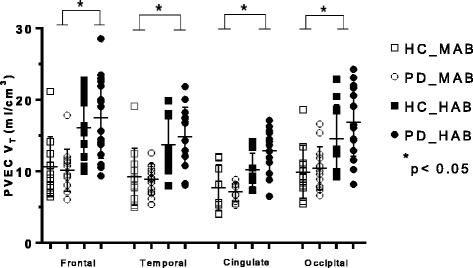
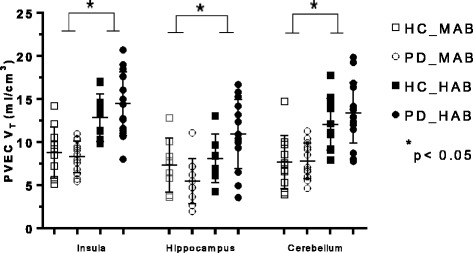
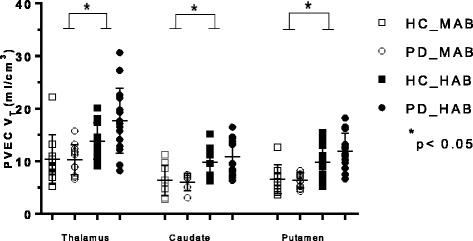
Neuroinflammatory processes including activated microglia have been reported to play an important role in Parkinson’s disease (PD). Increased expression of translocator protein (TSPO) has been observed after brain injury and inflammation in neurodegenerative diseases. Positron emission tomography (PET) radioligand targeting TSPO allows for the quantification of neuroinflammation in vivo. Based on the genotype of the rs6791 polymorphism in the TSPO gene, we included 25 mixed-affinity binders (MABs) (14 PD patients and 11 age-matched healthy controls (HC)) and 27 high-affinity binders (HABs) (16 PD patients and 11 age-matched HC) to assess regional differences in the second-generation radioligand [18F]-FEPPA between PD patients and HC. FEPPA total distribution volume (V T) values in cortical as well as subcortical brain regions were derived from a two-tissue compartment model with arterial plasma as an input function. Our results revealed a significant main effect of genotype on [18F]-FEPPA V T in every brain region, but no main effect of disease or disease × genotype interaction in any brain region. The overall percentage difference of the mean FEPPA V T between HC-MABs and HC-HABs was 32.6% (SD = 2.09) and for PD-MABs and PD-HABs was 43.1% (SD = 1.21). Future investigations are needed to determine the significance of [18F]-FEPPA as a biomarker of neuroinflammation as well as the importance of the rs6971 polymorphism and its clinical consequence in PD.
Overview
The claims and statistics of this paper haven’t been checked yet.
Free: it reads the open-access text and checks the first 5 claims that cite a source we can check. Create a free account to check every claim.
Integrity signals
Registry
Cites
Statistics
Figures
Verification
Claims the paper makes
The claims and statistics of this paper haven’t been checked yet.
Free: it reads the open-access text and checks the first 5 claims that cite a source we can check. Create a free account to check every claim.
Claims other papers make about this one
Each is checked against this paper’s own text: does it say what the citing paper says it does?
The source backs part of the claim, not all of it — or backs it for a different population, condition or comparison.
In the citing paper
“Methods to image microglia exist and are being used to test the effect of treatments on microglia205–210.”
From Microglial signatures and their role in health and disease (2018) · cites this paper as [207]
Experimental — accuracy not yet measured
Self-check
Percentages, sums and reported differences re-computed from the paper’s own numbers.
The self-check needs the paper’s full text.
Citations
Cites
McGeer, P. L., Itagaki, S., Boyes, B. E., & McGeer, E. G. (1988) · Neurology · doi:10.1212/wnl.38.8.1285 · Cited by 2,990
A rapid non-enzymatic method for the preparation of HMW DNA from blood for RFLP studies
Lahiri, D. K., & Numberger, J. I. (1991) · Nucleic Acids Research · doi:10.1093/nar/19.19.5444 · Cited by 2,300 · cited 1×
“Genomic DNA was obtained from peripheral leukocytes using high salt extraction methods [26].”
Logan, J., Fowler, J. S., Volkow, N. D., Wolf, A. P., Dewey, S. L., Schlyer, D. J., MacGregor, R. R., Hitzemann, R., Bendriem, B., Gatley, S. J., et al. (1990) · Journal of Cerebral Blood Flow & Metabolism · doi:10.1038/jcbfm.1990.127 · Cited by 1,479 · cited 1×
“Parametric images of [(18)F]-FEPPA VT were generated using the Logan graphical analysis method [23].”
In vivo imaging of microglial activation with [11C](R)-PK11195 PET in idiopathic Parkinson's disease
Gerhard, A., Pavese, N., Hotton, G., Turkheimer, F., Es, M., Hammers, A., Eggert, K., Oertel, W., Banati, R. B., & Brooks, D. J. (2006) · Neurobiology of Disease · doi:10.1016/j.nbd.2005.08.002 · Cited by 1,200 · cited 3×
“Similar observations were detected in longitudinal data [29], showing no correlation between levels of microglial activation and clinical severity as well as disease duration.”
Setiawan, E., Wilson, A. A., Mizrahi, R., Rusjan, P. M., Miler, L., Rajkowska, G., Suridjan, I., Kennedy, J. L., Rekkas, P. V., Houle, S., et al. (2015) · JAMA Psychiatry · doi:10.1001/jamapsychiatry.2014.2427 · Cited by 939 · cited 1×
“To this point, several studies observed a significant increase in [(18)F]-FEPPA VT in people with major depressive episodes [44] as well as AD patients [45].”
Self-citationRupprecht, R., Papadopoulos, V., Rammes, G., Baghai, T. C., Fan, J., Akula, N., Groyer, G., Adams, D., & Schumacher, M. (2010) · Nature Reviews Drug Discovery · doi:10.1038/nrd3295 · Cited by 930 · cited 1×
“Therefore, TSPO expression may represent a potential in vivo biomarker of neuroinflammation and reactive gliosis [8].”
Mogi, M., Harada, M., Kondo, T., Riederer, P., Inagaki, H., Minami, M., & Nagatsu, T. (1994) · Neuroscience Letters · doi:10.1016/0304-3940(94)90508-8 · Cited by 855
Microglial activation and dopamine terminal loss in early Parkinson's disease
Ouchi, Y., Yoshikawa, E., Sekine, Y., Futatsubashi, M., Kanno, T., Ogusu, T., & Torizuka, T. (2005) · Annals of Neurology · doi:10.1002/ana.20338 · Cited by 843 · cited 2×
“Thus far, several studies have explored the relationship between neuroinflammation and PD by using the first and most widely used radioligand [(11)C]-PK11195 [10, 11].”
Blum-Degena, D., Müller, T., Kuhn, W., Gerlach, M., Przuntek, H., & Riederer, P. (1995) · Neuroscience Letters · doi:10.1016/0304-3940(95)12192-7 · Cited by 801
Imamura, K., Hishikawa, N., Sawada, M., Nagatsu, T., Yoshida, M., & Hashizume, Y. (2003) · Acta Neuropathologica · doi:10.1007/s00401-003-0766-2 · Cited by 791
Owen, D. R., Yeo, A. J., Gunn, R. N., Song, K., Wadsworth, G., Lewis, A., Rhodes, C., Pulford, D. J., Bennacef, I., Parker, C. A., et al. (2012) · Journal of Cerebral Blood Flow & Metabolism · doi:10.1038/jcbfm.2011.147 · Cited by 779 · cited 4×
“These variations in TSPO binding affinity are derived from a single polymorphism located on exon 4 of the TSPO gene (rs6971) [17], which accounts for some of the large inter-individual variability in the outcome measures [16].”
InfluentialEpidemiology of parkinson’s disease
Tanner, C. M., & Goldman, S. M. (1996) · Neurologic Clinics · doi:10.1016/s0733-8619(05)70259-0 · Cited by 640
Translocator protein 18 kDa (TSPO): Molecular sensor of brain injury and repair
Chen, M.-K., & Guilarte, T. R. (2008) · Pharmacology & Therapeutics · doi:10.1016/j.pharmthera.2007.12.004 · Cited by 506 · cited 2×
“Positron emission tomography (PET) enables the quantification of neuroinflammation by using radioligands that target TSPO [9].”
Peripheral benzodiazepine receptors and mitochondrial function
Casellas, P. (2002) · Neurochemistry International · doi:10.1016/s0197-0186(01)00118-8 · Cited by 446 · cited 1×
“[33], as well as in mitochondrial respiration and apoptosis [34].”
Nuclear imaging of neuroinflammation: a comprehensive review of [11C]PK11195 challengers
Chauveau, F., Boutin, H., Van Camp, N., Dollé, F., & Tavitian, B. (2008) · European Journal of Nuclear Medicine and Molecular Imaging · doi:10.1007/s00259-008-0908-9 · Cited by 417 · cited 1×
“[(18)F]-FEPPA have been developed to offer a superior quality to quantify TSPO expression in vivo [13].”
Mixed-Affinity Binding in Humans with 18-kDa Translocator Protein Ligands
Owen, D. R. J., Gunn, R. N., Rabiner, E. A., Bennacef, I., Fujita, M., Kreisl, W. C., Innis, R. B., Pike, V. W., Reynolds, R., Matthews, P. M., et al. (2011) · Journal of Nuclear Medicine · doi:10.2967/jnumed.110.079459 · Cited by 358 · cited 1×
“Nonetheless, since the genetic variability is present in healthy as well as in diseaseaffected brains, it cannot be associated with a specific neurological condition [12, 36].”
The peripheral-type benzodiazepine receptor is functionally linked to Leydig cell steroidogenesis
Papadopoulos, V, Mukhin, A. G., Costa, E., & Krueger, K. E. (1990) · Journal of Biological Chemistry · doi:10.1016/s0021-9258(19)39661-9 · Cited by 346 · cited 1×
“[33], as well as in mitochondrial respiration and apoptosis [34].”
Association of circulating TNF-α and IL-6 with ageing and parkinsonism
Dobbs, R. J., Charlett, A., Purkiss, A. G., Dobbs, S. M., Weller, C., & Peterson, D. W. (1999) · Acta Neurologica Scandinavica · doi:10.1111/j.1600-0404.1999.tb00721.x · Cited by 324
Evolution of microglial activation in patients after ischemic stroke: a [11C](R)-PK11195 PET study
Gerhard, A., Schwarz, J., Myers, R., Wise, R., & Banati, R. B. (2005) · NeuroImage · doi:10.1016/j.neuroimage.2004.09.034 · Cited by 284
Microglia, Amyloid, and Glucose Metabolism in Parkinson’s Disease with and without Dementia
Edison, P., Ahmed, I., Fan, Z., Hinz, R., Gelosa, G., Ray Chaudhuri, K., Walker, Z., Turkheimer, F. E., & Brooks, D. J. (2013) · Neuropsychopharmacology · doi:10.1038/npp.2012.255 · Cited by 274 · cited 1×
“In addition, several studies [41, 42] including more severe cases of PD patients with dementia were able to show neuroinflammation in primarily cortical regions.”
[ 11 C]( R )-PK11195 PET imaging of microglial activation in multiple system atrophy
Gerhard, A., Banati, R. B., Goerres, G. B., Cagnin, A., Myers, R., Gunn, R. N., Turkheimer, F., Good, C. D., Mathias, C. J., Quinn, N., et al. (2003) · Neurology · doi:10.1212/01.wnl.0000078192.95645.e6 · Cited by 246
Microglial Response to Brain Injury: A Brief Synopsis
Streit, W. J. (2000) · Toxicologic Pathology · doi:10.1177/019262330002800104 · Cited by 229 · cited 2×
“Processes such as glial proliferation, migration, and phagocytosis or secretion of inflammatory cytokines in response to brain injury might be explanations for TSPO upregulation [35].”
Iannaccone, S., Cerami, C., Alessio, M., Garibotto, V., Panzacchi, A., Olivieri, S., Gelsomino, G., Moresco, R. M., & Perani, D. (2013) · Parkinsonism & Related Disorders · doi:10.1016/j.parkreldis.2012.07.002 · Cited by 221 · cited 1×
“The results have been inconclusive, as some studies were able to show increased neuroinflammation in PD patients compared to HC [10, 29, 39] and others not [11, 40].”
Owen, D. R., Howell, O. W., Tang, S.-P., Wells, L. A., Bennacef, I., Bergstrom, M., Gunn, R. N., Rabiner, E. A., Wilkins, M. R., Reynolds, R., et al. (2010) · Journal of Cerebral Blood Flow & Metabolism · doi:10.1038/jcbfm.2010.63 · Cited by 210 · cited 1×
“These variations in TSPO binding affinity are derived from a single polymorphism located on exon 4 of the TSPO gene (rs6971) [17], which accounts for some of the large inter-individual variability in the outcome measures [16].”
Wilson, A. A., Garcia, A., Parkes, J., McCormick, P., Stephenson, K. A., Houle, S., & Vasdev, N. (2008) · Nuclear Medicine and Biology · doi:10.1016/j.nucmedbio.2007.12.009 · Cited by 205 · cited 2×
“[(18)F]-FEPPA has shown a high affinity for TSPO, a suitable metabolic profile, high brain penetration, and good pharmacokinetics [14, 15].”
Self-citationMolecular imaging of microglia/macrophages in the brain
Venneti, S., Lopresti, B. J., & Wiley, C. A. (2013) · Glia · doi:10.1002/glia.22357 · Cited by 189 · cited 1×
“Its increased expression has been observed in various neuropathological conditions such as amyotrophic lateral sclerosis, Alzheimer disease (AD), frontotemporal dementia, and multiple sclerosis [7].”
Bartels, A. L., Willemsen, A. T. M., Doorduin, J., de Vries, E. F. J., Dierckx, R. A., & Leenders, K. L. (2010) · Parkinsonism & Related Disorders · doi:10.1016/j.parkreldis.2009.05.005 · Cited by 181 · cited 1×
“The results have been inconclusive, as some studies were able to show increased neuroinflammation in PD patients compared to HC [10, 29, 39] and others not [11, 40].”
An automated method for the extraction of regional data from PET images
Rusjan, P., Mamo, D., Ginovart, N., Hussey, D., Vitcu, I., Yasuno, F., Tetsuya, S., Houle, S., & Kapur, S. (2006) · Psychiatry Research: Neuroimaging · doi:10.1016/j.pscychresns.2006.01.011 · Cited by 177 · cited 7×
“Our a priori ROIs included cortical as well as subcortical brain regions such as frontal and temporal lobes, cingulate cortex, occipital lobe, insula, hippocampus, cerebellum, thalamus, caudate nucleus, and putamen.”
Self-citationKenk, M., Selvanathan, T., Rao, N., Suridjan, I., Rusjan, P., Remington, G., Meyer, J. H., Wilson, A. A., Houle, S., & Mizrahi, R. (2015) · Schizophrenia Bulletin · doi:10.1093/schbul/sbu157 · Cited by 169 · cited 2×
“In our study, we used [(18)F]-FEPPA, a novel radioligand exhibiting optimal chemical, pharmacokinetic, and pharmacodynamic properties for applications in imaging TSPO [22].”
Self-citationMizrahi, R., Rusjan, P. M., Kennedy, J., Pollock, B., Mulsant, B., Suridjan, I., De Luca, V., Wilson, A. A., & Houle, S. (2012) · Journal of Cerebral Blood Flow & Metabolism · doi:10.1038/jcbfm.2012.46 · Cited by 155 · cited 10×
“As previously reported [12, 18], we were able to observe an influence of the rs6971 polymorphism on TSPO binding affinity.”
Self-citationTerada, T., Yokokura, M., Yoshikawa, E., Futatsubashi, M., Kono, S., Konishi, T., Miyajima, H., Hashizume, T., & Ouchi, Y. (2016) · Annals of Nuclear Medicine · doi:10.1007/s12149-016-1099-2 · Cited by 133
Suridjan, I., Pollock, B. G., Verhoeff, N. P. L. G., Voineskos, A. N., Chow, T., Rusjan, P. M., Lobaugh, N. J., Houle, S., Mulsant, B. H., & Mizrahi, R. (2015) · Molecular Psychiatry · doi:10.1038/mp.2015.1 · Cited by 132 · cited 2×
“Especially in AD patients, a widespread distribution of activated microglia was noticed in gray and white matter indicating an important role of neuroinflammation in cognitive decline [45].”
Self-citationStructural and Functional Evolution of the Translocator Protein (18 kDa)
Fan, J., Lindemann, P., G.J. Feuilloley, M., & Papadopoulos, V. (2012) · Current Molecular Medicine · doi:10.2174/1566524011207040369 · Cited by 112 · cited 1×
“In addition, several studies [41, 42] including more severe cases of PD patients with dementia were able to show neuroinflammation in primarily cortical regions.”
Rusjan, P. M., Wilson, A. A., Bloomfield, P. M., Vitcu, I., Meyer, J. H., Houle, S., & Mizrahi, R. (2011) · Journal of Cerebral Blood Flow & Metabolism · doi:10.1038/jcbfm.2011.55 · Cited by 110 · cited 7×
“5, 7, 12, 15, 30, 45, 60, 90, and 120 min relative to time of injection [15].”
Self-citationRusjan, P. M., Wilson, A. A., Miler, L., Fan, I., Mizrahi, R., Houle, S., Vasdev, N., & Meyer, J. H. (2014) · Journal of Cerebral Blood Flow & Metabolism · doi:10.1038/jcbfm.2014.34 · Cited by 103 · cited 1×
“The dispersion effect was modeled as to the convolution with a monoexponential with dispersion coefficient of 16 s and corrected with iterative deconvolution [20].”
Self-citationImaging Striatal Microglial Activation in Patients with Parkinson’s Disease
Koshimori, Y., Ko, J.-H., Mizrahi, R., Rusjan, P., Mabrouk, R., Jacobs, M. F., Christopher, L., Hamani, C., Lang, A. E., Wilson, A. A., et al. (2015) · PLOS ONE · doi:10.1371/journal.pone.0138721 · Cited by 100 · cited 6×
“As previously reported [12, 18], we were able to observe an influence of the rs6971 polymorphism on TSPO binding affinity.”
Self-citationVarrone, A., Oikonen, V., Forsberg, A., Joutsa, J., Takano, A., Solin, O., Haaparanta-Solin, M., Nag, S., Nakao, R., Al-Tawil, N., et al. (2015) · European Journal of Nuclear Medicine and Molecular Imaging · doi:10.1007/s00259-014-2955-8 · Cited by 79 · cited 1×
“However, previous investigations using second-generation TSPO radioligands have also presented a stronger disease effect on TSPO expression in AD patients [37].”
Suridjan, I., Rusjan, P. M., Voineskos, A. N., Selvanathan, T., Setiawan, E., Strafella, A. P., Wilson, A. A., Meyer, J. H., Houle, S., & Mizrahi, R. (2014) · NeuroImage · doi:10.1016/j.neuroimage.2013.09.021 · Cited by 71
Self-citationCosta, B., Pini, S., Gabelloni, P., Da Pozzo, E., Abelli, M., Lari, L., Preve, M., Lucacchini, A., Cassano, G. B., & Martini, C. (2009) · Endocrinology · doi:10.1210/en.2009-0752 · Cited by 68
Lee, D. H., Kang, S. K., Lee, R. H., Ryu, J. M., Park, H. Y., Choi, H. S., Bae, Y. C., Suh, K. T., Kim, Y. K., & Jung, J. S. (2004) · Journal of Cellular Physiology · doi:10.1002/jcp.10391 · Cited by 58 · cited 1×
“Besides its role as a potential biomarker for neuroinflammation, TSPO has many physiological functions such as its participation in cell growth and proliferation [32] and steroidogenesis Fig.”
Costa, B., Pini, S., Martini, C., Abelli, M., Gabelloni, P., Landi, S., Muti, M., Gesi, C., Lari, L., Cardini, A., et al. (2009) · Psychiatric Genetics · doi:10.1097/ypg.0b013e32832080f6 · Cited by 56 · cited 1×
“Earlier studies have proposed a connection between the rs6971 polymorphism and variations in pregnenolone production and plasma levels of lowdensity lipoprotein cholesterol [30], as well as anxiety in depressive individuals [31].”
Bencherif, B., Stumpf, M. J., Links, J. M., & Frost, J. J. (2004) · PubMed · Cited by 47
Statistical Modeling of Positron Emission Tomography Images in Wavelet Space
Turkheimer, F., Brett, M., Aston, J. A. D., Leff, A. P., Sargent, P. A., Wise, R. J. S., Grasby, P. M., & Cunningham, V. J. (2000) · Journal of Cerebral Blood Flow & Metabolism · doi:10.1097/00004647-200011000-00011 · Cited by 33 · cited 1×
“A wavelet-based implementation of the kinetic modeling approach was applied to manage the low signal-to-noise ratio intrinsic of the voxel level quantification while maintaining the resolution [24, 25].”
Diffusion-weighted imaging and its relationship to microglial activation in parkinsonian syndromes
Kobylecki, C., Counsell, S. J., Cabanel, N., Wächter, T., Turkheimer, F., Eggert, K. M., Oertel, W. H., Brooks, D. J., & Gerhard, A. (2013) · Parkinsonism & Related Disorders · doi:10.1016/j.parkreldis.2013.01.017 · Cited by 26 · cited 3×
“However, findings are inconclusive, and elevated TSPO binding in nigro-striatal regions have not been consistently observed [11].”
Suridjan, I., Rusjan, P. M., Kenk, M., Verhoeff, N. P. L. G., Voineskos, A. N., Rotenberg, D., Wilson, A. A., Meyer, J. H., Houle, S., & Mizrahi, R. (2014) · Synapse · doi:10.1002/syn.21765 · Cited by 18 · cited 1×
“Based on previous imaging studies from our lab [12, 38] and based on the mean and variability of VT in our data (as displayed in Table 2), we used the F-test ANOVA to calculate the required total sample size, 52 participants will be needed to detect 30% difference between groups, assuming effect size d = 0.”
Self-citation
Cited by
Microglial signatures and their role in health and disease
Butovsky, O., & Weiner, H. L. (2018) · Nature Reviews Neuroscience · doi:10.1038/s41583-018-0057-5 · Cited by 1,046
Labandeira-Garcia, J. L., Rodríguez-Perez, A. I., Garrido-Gil, P., Rodriguez-Pallares, J., Lanciego, J. L., & Guerra, M. J. (2017) · Frontiers in Aging Neuroscience · doi:10.3389/fnagi.2017.00129 · Cited by 249
“Both PD patients (Ouchi et al., 2005; Ghadery et al., 2017) and PD animal models (Cicchetti et al., 2002; Rodriguez-Pallares et al., 2007) show enhancedmicroglial reaction in the substantia nigra and striatum (Figure 2).”
BackgroundPET imaging of neuroinflammation in neurological disorders
Kreisl, W. C., Kim, M.-J., Coughlin, J. M., Henter, I. D., Owen, D. R., & Innis, R. B. (2020) · The Lancet Neurology · doi:10.1016/s1474-4422(20)30346-x · Cited by 242
Nutma, E., Fancy, N., Weinert, M., Tsartsalis, S., Marzin, M. C., Muirhead, R. C. J., Falk, I., Breur, M., de Bruin, J., Hollaus, D., et al. (2023) · Nature Communications · doi:10.1038/s41467-023-40937-z · Cited by 191
Brain monoamine oxidase B and A in human parkinsonian dopamine deficiency disorders
Tong, J., Rathitharan, G., Meyer, J. H., Furukawa, Y., Ang, L.-C., Boileau, I., Guttman, M., Hornykiewicz, O., & Kish, S. J. (2017) · Brain · doi:10.1093/brain/awx172 · Cited by 201
Metadata
- Authors
- Ghadery, C., Koshimori, Y., Coakeley, S., Harris, M., Rusjan, P., Kim, J., Houle, S., & Strafella, A. P.
- Affiliations
- Centre for Addiction and Mental Health (CA)
- University Health Network (CA)
- Corresponding author
- Strafella, Antonio P.
- Venue
- Journal of Neuroinflammation
- Published
- 2017-01-11
- Volume
- 14
- Issue
- 1
- Pages
- 8-8
- ISSN
- 1742-2094 (ISSN-L)
- PMC
- PMC5234135
- OpenAlex
- W2577460502
- Cited by
- 113
- References
- 47
- Citations by year
- 2026: 4 · 2025: 10 · 2024: 3 · 2023: 11 · 2022: 16 · 2021: 13 · 2020: 19 · 2019: 17 · 2018: 12 · 2017: 8
- FWCI
- 7.63
- Type
- journal article
- Language
- en
- Open access
- gold
- doi.org
- Licence
- cc-by
- Locations
- Journal of Neuroinflammation (publishedVersion, cc-by)
- PubMed Central (publishedVersion, cc-by)
- PubMed (publishedVersion)
- TSpace (University of Toronto) (submittedVersion, cc-by)
- Funders
- Canadian Institutes of Health Research (INE 117891)
- Topics
- Life Sciences › Neuroscience › Neurology › Neuroinflammation and Neurodegeneration Mechanisms
- Health Sciences › Medicine › Clinical Neurology › Parkinson's Disease Mechanisms and Treatments
- Health Sciences › Medicine › Radiology, Nuclear Medicine and Imaging › Medical Imaging Techniques and Applications
- Keywords
- Parkinson's disease, microglial activation, neuroinflammation, [18F]FEPPA, translocator protein (TSPO), PET radiotracer, volume of distribution, high-affinity binders, two-tissue compartment model, biomarkers
- MeSH terms
- Aged, Anilides, Brain, Female, Fluorine Radioisotopes, Humans, Male, Middle Aged, Parkinson Disease, Pyridines, Severity of Illness Index, Case-Control Studies, Microglia, Receptors, GABA, Polymorphism, Single Nucleotide, Positron-Emission Tomography
About these checks
Registry, retraction, Cites and statistics results are computed, not judged, with one exception: a printed reference that no index lists is read once by a model before it counts as a citation error. Claims are extracted by a model and kept only when their quote appears verbatim in the text; each cited source is then checked, with a model’s help, for whether it says what the claim relies on. Those verdicts can be wrong — read the claim’s quote and the cited source before relying on one.
Statistics and arithmetic are recomputed, not judged.
Confidence bands are shown only for fields calibrated on our annotated test set. None is calibrated yet, so no band is shown.
What counts as a claim ›How we measure confidence ›How we check this ›
Are you an author, or do you see a problem with this page? Request a review
Data sources
Bibliographic data: Semantic Scholar, OpenAlex, Crossref.
Contains information from the Semantic Scholar Academic Graph Datasets, made available under the ODC Attribution License (ODC-BY 1.0).
Semantic Scholar’s data is described in: Kinney, R., et al. (2023). The Semantic Scholar Open Data Platform. arXiv:2301.10140.
