

Splenic sympathetic signaling contributes to acute neutrophil infiltration of the injured spinal cord
Open accessThe DOI matches its Crossref record; 47 of the 47 references it cites were found in a registry or an index.
Abstract
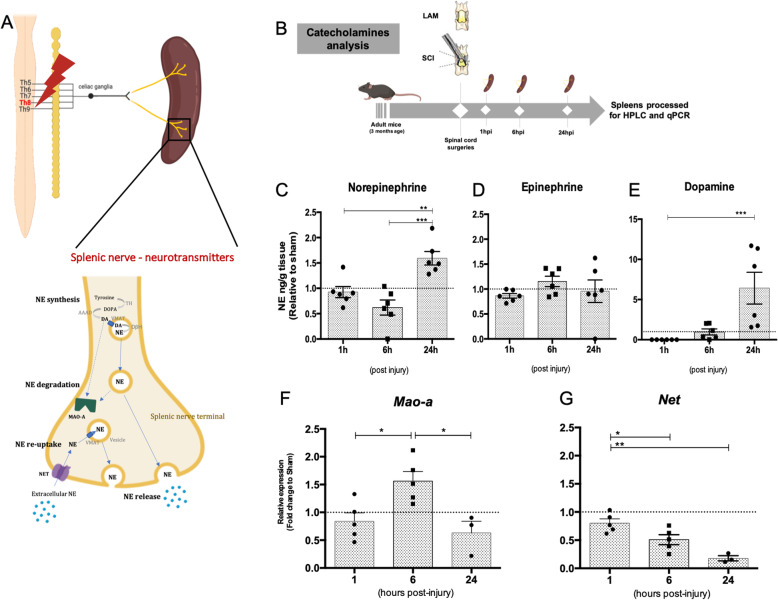
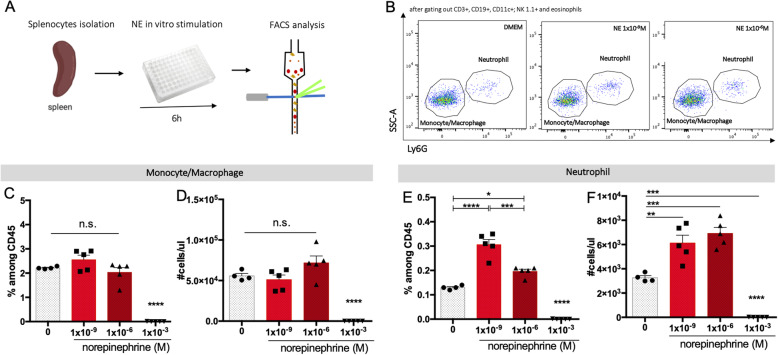
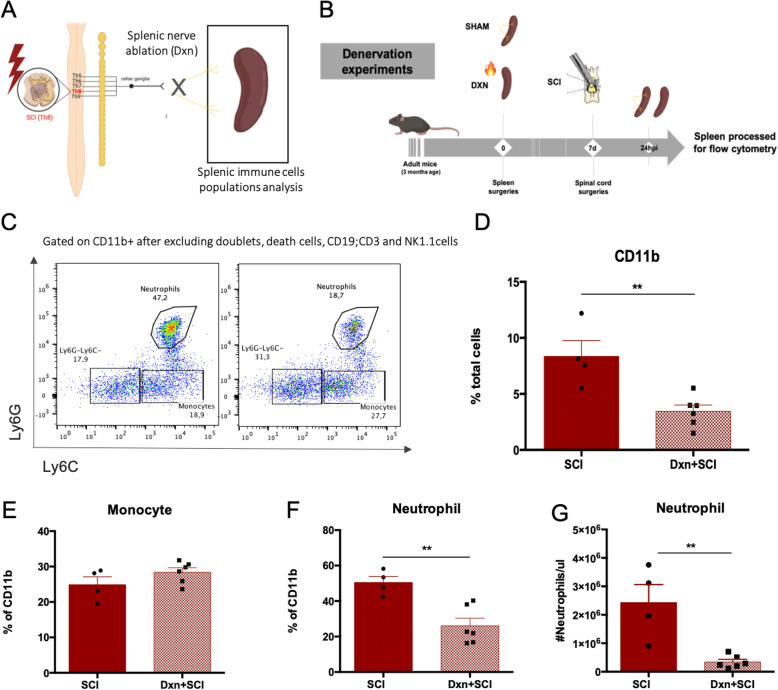
Background: Alterations in the immune system are a complication of spinal cord injury (SCI) and have been linked to an excessive sympathetic outflow to lymphoid organs. Still unknown is whether these peripheral immune changes also contribute for the deleterious inflammatory response mounted at the injured spinal cord. Methods: We analyzed different molecular outputs of the splenic sympathetic signaling for the first 24 h after a thoracic compression SCI. We also analyzed the effect of ablating the splenic sympathetic signaling to the innate immune and inflammatory response at the spleen and spinal cord 24 h after injury. Results: We found that norepinephrine (NE) levels were already raised at this time-point. Low doses of NE stimulation of splenocytes in vitro mainly affected the neutrophils’ population promoting an increase in both frequency and numbers. Interestingly, the interruption of the sympathetic communication to the spleen, by ablating the splenic nerve, resulted in reduced frequencies and numbers of neutrophils both at the spleen and spinal cord 1 day post-injury. Conclusion: Collectively, our data demonstrates that the splenic sympathetic signaling is involved in the infiltration of neutrophils after spinal cord injury. Our findings give new mechanistic insights into the dysfunctional regulation of the inflammatory response mounted at the injured spinal cord.
Overview
The claims and statistics of this paper haven’t been checked yet.
Free: it reads the open-access text and checks the first 5 claims that cite a source we can check. Create a free account to check every claim.
Integrity signals
Registry
Cites
Statistics
Figures
Verification
Claims the paper makes
The claims and statistics of this paper haven’t been checked yet.
Free: it reads the open-access text and checks the first 5 claims that cite a source we can check. Create a free account to check every claim.
Claims other papers make about this one
Each is checked against this paper’s own text: does it say what the citing paper says it does?
The cited source says what the claim attributes to it.
In the citing paper
“As neurons within the DMV drive parasympathetic functions in peripheral tissues84, this suggests that parasympathetic activity has anti-inflammatory roles in the spleen, while sympathetic inputs have known inflammatory functions85.”
From Central regulation of stress-evoked peripheral immune responses (2023) · cites this paper as [85]
Self-check
Percentages, sums and reported differences re-computed from the paper’s own numbers.
The self-check needs the paper’s full text.
Citations
Cites
Identification of splenic reservoir monocytes and their deployment to inflammatory sites
Swirski, F. K., Nahrendorf, M., Etzrodt, M., Wildgruber, M., Cortez-Retamozo, V., Panizzi, P., Figueiredo, J.-L., Kohler, R. H., Chudnovskiy, A., Waterman, P., et al. (2009) · Science · doi:10.1126/science.1175202 · Cited by 2,221 · cited 2×
“The spleen harbors a pool of monocytes that play a central role in tissue injury [11], and in fact, the monocyte-derived macrophages found in the spinal cord parenchyma in the first week after SCI are originated from this splenic pool [17].”
BackgroundBasso, D. M., Fisher, L. C., Anderson, A. J., Jakeman, L. B., Mctigue, D. M., & Popovich, P. G. (2006) · Journal of Neurotrauma · doi:10.1089/neu.2006.23.635 · Cited by 1,699 · cited 3×
“BMS scoring was performed as a quality control procedure for the surgery to exclude eventual partial lesions.”
MethodInfluentialSignals from the Sympathetic Nervous System Regulate Hematopoietic Stem Cell Egress from Bone Marrow
Katayama, Y., Battista, M., Kao, W.-M., Hidalgo, A., Peired, A. J., Thomas, S. A., & Frenette, P. S. (2006) · Cell · doi:10.1016/j.cell.2005.10.041 · Cited by 1,412 · cited 2×
“One possibility would be that the lack of NE prevents the egress of hematopoietic stem cells from the bone marrow to the spleen, as NE from sympathetic terminals was shown to be critically involved in this phenomena [10].”
BackgroundNegative magnetoresistance without well-defined chirality in the Weyl semimetal TaP
Arnold, F., Shekhar, C., Wu, S.-C., Sun, Y., dos Reis, R. D., Kumar, N., Naumann, M., Ajeesh, M. O., Schmidt, M., Grushin, A. G., et al. (2016) · Nature Communications · doi:10.1038/ncomms11615 · Cited by 1,224
The Spleen in Local and Systemic Regulation of Immunity
Bronte, V., & Pittet, M. J. (2013) · Immunity · doi:10.1016/j.immuni.2013.10.010 · Cited by 1,064
The cellular inflammatory response in human spinal cords after injury
Fleming, J. C., Norenberg, M. D., Ramsay, D. A., Dekaban, G. A., Marcillo, A. E., Saenz, A. D., Pasquale-Styles, M., Dietrich, W. D., & Weaver, L. C. (2006) · Brain · doi:10.1093/brain/awl296 · Cited by 847 · cited 2×
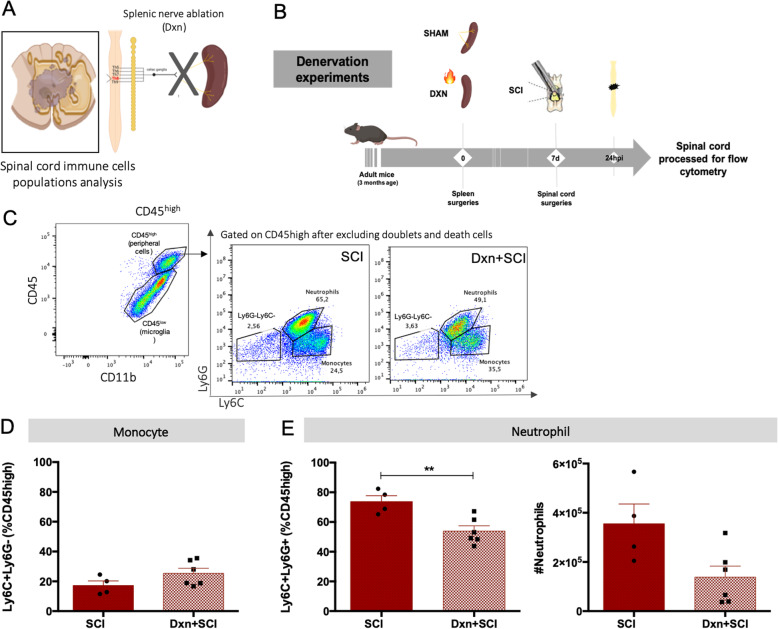
“In line with previous studies [23, 24], we observed that at 24 hpi the majority of CD45 positive cells (infiltrating inflammatory cells and residual activated microglia) were neutrophils (Fig.”
BackgroundResultChronic variable stress activates hematopoietic stem cells
Heidt, T., Sager, H. B., Courties, G., Dutta, P., Iwamoto, Y., Zaltsman, A., von zur Muhlen, C., Bode, C., Fricchione, G. L., Denninger, J., et al. (2014) · Nature Medicine · doi:10.1038/nm.3589 · Cited by 803
Puga, I., Cols, M., Barra, C. M., He, B., Cassis, L., Gentile, M., Comerma, L., Chorny, A., Shan, M., Xu, W., et al. (2012) · Nature Immunology · doi:10.1038/ni.2194 · Cited by 727 · cited 1×
“These extravascular neutrophils in the spleen are either located at the marginal zone where they help B cell stimulation and antibody-independent of T cell production [27], or in the red pulp [26, 35] where they were shown to be important for helping macrophages in the phagocytosis of bacteria [26].”
BackgroundEvrard, M., Kwok, I. W. H., Chong, S. Z., Teng, K. W. W., Becht, E., Chen, J., Sieow, J. L., Penny, H. L., Ching, G. C., Devi, S., et al. (2018) · Immunity · doi:10.1016/j.immuni.2018.02.002 · Cited by 705 · cited 1×
“sented a 10-fold increase [34], while other study demon-”
ResultBeck, K. D., Nguyen, H. X., Galvan, M. D., Salazar, D. L., Woodruff, T. M., & Anderson, A. J. (2010) · Brain · doi:10.1093/brain/awp322 · Cited by 646 · cited 2×
“In line with previous studies [23, 24], we observed that at 24 hpi the majority of CD45 positive cells (infiltrating inflammatory cells and residual activated microglia) were neutrophils (Fig.”
BackgroundResultAdrenergic Nerves Govern Circadian Leukocyte Recruitment to Tissues
Scheiermann, C., Kunisaki, Y., Lucas, D., Chow, A., Jang, J.-E., Zhang, D., Hashimoto, D., Merad, M., & Frenette, P. S. (2012) · Immunity · doi:10.1016/j.immuni.2012.05.021 · Cited by 516 · cited 2×
“steps of inflammation such as immune cell recruitment and mobilization [7, 8], and innate response to patho-”
BackgroundBergquist, J., Tarkowski, A., Ekman, R., & Ewing, A. (1994) · Proceedings of the National Academy of Sciences · doi:10.1073/pnas.91.26.12912 · Cited by 370 · cited 1×
“However, immune cells could also be the source of dopamine since they are also capable of producing this neurotransmitter with an impact in their function [30], so a non-neuronal source cannot be discarded.”
BackgroundNeutrophils instruct homeostatic and pathological states in naive tissues
Casanova-Acebes, M., Nicolás-Ávila, J. A., Li, J. L., García-Silva, S., Balachander, A., Rubio-Ponce, A., Weiss, L. A., Adrover, J. M., Burrows, K., A-González, N., et al. (2018) · Journal of Experimental Medicine · doi:10.1084/jem.20181468 · Cited by 315 · cited 2×
“These extravascular neutrophils in the spleen are either located at the marginal zone where they help B cell stimulation and antibody-independent of T cell production [27], or in the red pulp [26, 35] where they were shown to be important for helping macrophages in the phagocytosis of bacteria [26].”
BackgroundImmGen report: sexual dimorphism in the immune system transcriptome
Gal-Oz, S. T., Maier, B., Yoshida, H., Seddu, K., Elbaz, N., Czysz, C., Zuk, O., Stranger, B. E., Ner-Gaon, H., & Shay, T. (2019) · Nature Communications · doi:10.1038/s41467-019-12348-6 · Cited by 274 · cited 1×
“Also, the immune system displays sexual dimorphism, and differences in the genes expressed by immune cells from males or females have been described [46].”
BackgroundSplenic Ly6Ghigh mature and Ly6Gint immature neutrophils contribute to eradication of S. pneumoniae
Deniset, J. F., Surewaard, B. G., Lee, W.-Y., & Kubes, P. (2017) · Journal of Experimental Medicine · doi:10.1084/jem.20161621 · Cited by 231 · cited 3×
“These extravascular neutrophils in the spleen are either located at the marginal zone where they help B cell stimulation and antibody-independent of T cell production [27], or in the red pulp [26, 35] where they were shown to be important for helping macrophages in the phagocytosis of bacteria [26].”
BackgroundBrommer, B., Engel, O., Kopp, M. A., Watzlawick, R., Müller, S., Prüss, H., Chen, Y., DeVivo, M. J., Finkenstaedt, F. W., Dirnagl, U., et al. (2016) · Brain · doi:10.1093/brain/awv375 · Cited by 227
Greenhalgh, A. D., Zarruk, J. G., Healy, L. M., Baskar Jesudasan, S. J., Jhelum, P., Salmon, C. K., Formanek, A., Russo, M. V., Antel, J. P., McGavern, D. B., et al. (2018) · PLOS Biology · doi:10.1371/journal.pbio.2005264 · Cited by 207 · cited 1×
“Some lines of evidence demonstrate that the peripheral infiltration of myeloid cells affects local microglia responses diminishing phagocytic capacity and altering microglial cell death [15], highlighting the importance of peripheral inflammatory cells in shaping local responses.”
BackgroundLUCIN, K., SANDERS, V, JONES, T., MALARKEY, W., & POPOVICH, P. (2007) · Experimental Neurology · doi:10.1016/j.expneurol.2007.05.019 · Cited by 203 · cited 4×
“Lymphoid organs are not an exemption, and altered levels of NE were detected in the spleen weeks after the injury [2, 13].”
BackgroundInfluentialSemaphorins in interactions between T cells and antigen-presenting cells
Kikutani, H., & Kumanogoh, A. (2003) · Nature Reviews Immunology · doi:10.1038/nri1003 · Cited by 192 · cited 1×
“be produced by immune cells [31, 32] although this molecule is mostly known for its axonal guidance role, particularly during neurodevelopment and regeneration.”
BackgroundAutonomic Dysreflexia Causes Chronic Immune Suppression after Spinal Cord Injury
Zhang, Y., Guan, Z., Reader, B., Shawler, T., Mandrekar-Colucci, S., Huang, K., Weil, Z., Bratasz, A., Wells, J., Powell, N. D., et al. (2013) · Journal of Neuroscience · doi:10.1523/jneurosci.1974-13.2013 · Cited by 185 · cited 4×
“The sympathetic signaling can become further compromised by the increased intraspinal plasticity following the primary injury that through the reorganization of sympathetic pathways results in erroneous reflexive circuits [4, 5].”
BackgroundInfluentialSuzuki, K., Hayano, Y., Nakai, A., Furuta, F., & Noda, M. (2016) · Journal of Experimental Medicine · doi:10.1084/jem.20160723 · Cited by 184 · cited 2×
“steps of inflammation such as immune cell recruitment and mobilization [7, 8], and innate response to patho-”
BackgroundPrüss, H., Tedeschi, A., Thiriot, A., Lynch, L., Loughhead, S. M., Stutte, S., Mazo, I. B., Kopp, M. A., Brommer, B., Blex, C., et al. (2017) · Nature Neuroscience · doi:10.1038/nn.4643 · Cited by 178
Axonally Synthesized β-Actin and GAP-43 Proteins Support Distinct Modes of Axonal Growth
Donnelly, C. J., Park, M., Spillane, M., Yoo, S., Pacheco, A., Gomes, C., Vuppalanchi, D., McDonald, M., Kim, H. H., Merianda, T. T., et al. (2013) · The Journal of Neuroscience · doi:10.1523/jneurosci.1722-12.2013 · Cited by 168 · cited 1×
“Although Gap43 mRNA can be found at axon terminals for local protein synthesis [33], we cannot exclude that the quantities may be low for detecting significant variations.”
BackgroundDelaire, S., Billard, C., Tordjman, R., Chédotal, A., Elhabazi, A., Bensussan, A., & Boumsell, L. (2001) · The Journal of Immunology · doi:10.4049/jimmunol.166.7.4348 · Cited by 161 · cited 1×
“be produced by immune cells [31, 32] although this molecule is mostly known for its axonal guidance role, particularly during neurodevelopment and regeneration.”
BackgroundCarnevale, D., Perrotta, M., Pallante, F., Fardella, V., Iacobucci, R., Fardella, S., Carnevale, L., Carnevale, R., De Lucia, M., Cifelli, G., et al. (2016) · Nature Communications · doi:10.1038/ncomms13035 · Cited by 159 · cited 3×
“2–3 s until it dilated, resulting in thermoablation of the splenic nerve [12].”
BackgroundInfluentialThe systemic inflammatory response after spinal cord injury damages lungs and kidneys
Gris, D., Hamilton, E. F., & Weaver, L. C. (2008) · Experimental Neurology · doi:10.1016/j.expneurol.2008.01.033 · Cited by 143 · cited 1×
“Studies demonstrate that SCI can promote proinflammatory responses damaging peripheral organs [28, 29], to others showing deficient immune responses to pathogens or severe immunosuppression [1, 3–5, 13].”
BackgroundLong-Distance Control of Synapse Assembly by Target-Derived NGF
Sharma, N., Deppmann, C. D., Harrington, A. W., St. Hillaire, C., Chen, Z.-Y., Lee, F. S., & Ginty, D. D. (2010) · Neuron · doi:10.1016/j.neuron.2010.07.018 · Cited by 132 · cited 1×
“changes due to altered preganglionic signaling or by environmental molecules that signal back to the sympathetic nervous system [21].”
BackgroundNeurotransmitters of the sympathetic nerve terminal are powerful chemoattractants for monocytes
Straub, R. H., Mayer, M., Kreutz, M., Leeb, S., Schölmerich, J., & Falk, W. (2000) · Journal of Leukocyte Biology · doi:10.1002/jlb.67.4.553 · Cited by 131 · cited 1×
“While low doses enhanced migratory capacity [40], higher doses prevented the migration [42].”
BackgroundCatecholaminergic suppression of immunocompetent cells
Bergquist, J., Tarkowski, A., Ewing, A. G., & Ekman, R. (1998) · Immunology Today · doi:10.1016/s0167-5699(98)01367-x · Cited by 130
Sympathetic Neuronal Activation Triggers Myeloid Progenitor Proliferation and Differentiation
Vasamsetti, S. B., Florentin, J., Coppin, E., Stiekema, L. C. A., Zheng, K. H., Nisar, M. U., Sembrat, J., Levinthal, D. J., Rojas, M., Stroes, E. S. G., et al. (2018) · Immunity · doi:10.1016/j.immuni.2018.05.004 · Cited by 121 · cited 2×
“gens [6] and to extramedullary hematopoiesis [9, 10].”
BackgroundGender-related differences in recovery of locomotor function after spinal cord injury in mice
Farooque, M., Suo, Z., Arnold, P. M., Wulser, M. J., Chou, C.-T., Vancura, R. W., Fowler, S., & Festoff, B. W. (2006) · Spinal Cord · doi:10.1038/sj.sc.3101816 · Cited by 112 · cited 1×
“The spontaneous neurological recovery from CNS trauma, and specifically from SCI is enhanced in females than in male mice [45] although the exact mechanism is still unknown.”
BackgroundUeno, M., Ueno-Nakamura, Y., Niehaus, J., Popovich, P. G., & Yoshida, Y. (2016) · Nature Neuroscience · doi:10.1038/nn.4289 · Cited by 112 · cited 4×
“Neuroplastic events after SCI involving preganglionic neurons have been documented [4] but less clear is”
BackgroundInfluentialStress hormones collaborate to induce lymphocyte apoptosis after high level spinal cord injury
Lucin, K. M., Sanders, V. M., & Popovich, P. G. (2009) · Journal of Neurochemistry · doi:10.1111/j.1471-4159.2009.06232.x · Cited by 102 · cited 3×
“In this study, we identify the involvement of a heightened sympathetic nervous system functioning that was previously associated with some alterations of the immune system function [2, 3, 5, 22], with the frequencies of neutrophils present at the spinal cord after injury.”
BackgroundResultBlomster, L. V., Brennan, F. H., Lao, H. W., Harle, D. W., Harvey, A. R., & Ruitenberg, M. J. (2013) · Experimental Neurology · doi:10.1016/j.expneurol.2013.05.002 · Cited by 100 · cited 2×
“The spleen harbors a pool of monocytes that play a central role in tissue injury [11], and in fact, the monocyte-derived macrophages found in the spinal cord parenchyma in the first week after SCI are originated from this splenic pool [17].”
The spleen as a neuroimmune interface after spinal cord injury
Noble, B. T., Brennan, F. H., & Popovich, P. G. (2018) · Journal of Neuroimmunology · doi:10.1016/j.jneuroim.2018.05.007 · Cited by 99
Increased oxidative activity in human blood neutrophils and monocytes after spinal cord injury
Bao, F., Bailey, C. S., Gurr, K. R., Bailey, S. I., Rosas-Arellano, M. P., Dekaban, G. A., & Weaver, L. C. (2008) · Experimental Neurology · doi:10.1016/j.expneurol.2008.10.022 · Cited by 98 · cited 2×
“Studies demonstrate that SCI can promote proinflammatory responses damaging peripheral organs [28, 29], to others showing deficient immune responses to pathogens or severe immunosuppression [1, 3–5, 13].”
BackgroundActivation of the sympathetic nervous system modulates neutrophil function
Nicholls, A. J., Wen, S., Hall, P., Hickey, M. J., & Wong, C. H. Y. (2017) · Journal of Leukocyte Biology · doi:10.1002/jlb.3ma0517-194rr · Cited by 96 · cited 2×
“Conversely, prolonged stimulation triggered a pro-inflammatory profile in neutrophils [36].”
BackgroundImmunosuppressive myeloid-derived suppressor cells are increased in splenocytes from cancer patients
Jordan, K. R., Kapoor, P., Spongberg, E., Tobin, R. P., Gao, D., Borges, V. F., & McCarter, M. D. (2017) · Cancer Immunology Immunotherapy · doi:10.1007/s00262-016-1953-z · Cited by 81 · cited 1×
“myeloid-derived suppressor cells contributing for cancer progression [44].”
BackgroundDing, X., Wang, H., Qian, X., Han, X., Yang, L., Cao, Y., Wang, Q., & Yang, J. (2019) · Cell Reports · doi:10.1016/j.celrep.2019.05.082 · Cited by 71 · cited 3×
“gens [6] and to extramedullary hematopoiesis [9, 10].”
BackgroundRodrigues, A. J., Leão, P., Pêgo, J. M., Cardona, D., Carvalho, M. M., Oliveira, M., Costa, B. M., Carvalho, A. F., Morgado, P., Araújo, D., et al. (2012) · Molecular Psychiatry · doi:10.1038/mp.2011.126 · Cited by 56 · cited 1×
“Levels of dopamine, NE, epinephrine, and serotonin were measured by HPLC combined with electrochemical detection using a Gilson instrument, fitted with an analytical column (Supelco Supelcosil LC-18 3 mM, flow rate: 10 ml/min) as previously described [20].”
MethodLoss of Sympathetic Nerves in Spleens from Patients with End Stage Sepsis
Hoover, D. B., Brown, T. C., Miller, M. K., Schweitzer, J. B., & Williams, D. L. (2017) · Frontiers in Immunology · doi:10.3389/fimmu.2017.01712 · Cited by 54
Norepinephrine Inhibits Macrophage Migration by Decreasing CCR2 Expression
Xiu, F., Stanojcic, M., & Jeschke, M. G. (2013) · PLoS ONE · doi:10.1371/journal.pone.0069167 · Cited by 46 · cited 1×
“While low doses enhanced migratory capacity [40], higher doses prevented the migration [42].”
BackgroundMironets, E., Fischer, R., Bracchi-Ricard, V. C., Saltos, T. M., Truglio, T. S., O’Reilly, M. L., Swanson, K. A., Bethea, J. R., & Tom, V. J. (2019) · Journal of Neuroscience · doi:10.1523/jneurosci.2417-19.2019 · Cited by 39 · cited 3×
“Some of these include increased levels of norepinephrine (NE) [2, 13], hyper sympathetic innervation [14], atrophy, and changes in immune cell frequencies [1, 3, 4].”
BackgroundResultSeeley, E. J., Barry, S. S., Narala, S., Matthay, M. A., & Wolters, P. J. (2013) · The Journal of Immunology · doi:10.4049/jimmunol.1300027 · Cited by 35
Jhunjhunwala, S., Álvarez, D., Aresta-Dasilva, S., Tang, K., Tang, B. C., Greiner, D. L., Newburger, P. E., von Andrian, U. H., Langer, R., & Anderson, D. G. (2016) · Journal of Leukocyte Biology · doi:10.1189/jlb.1hi0615-248rr · Cited by 30 · cited 1×
“Still to understand is whether the increased number of neutrophils are a reflection of extramedullary myelopoiesis or from more maturation of immature neutrophils present at the spleen [25, 26].”
BackgroundHong, J., Chang, A., Liu, Y., Wang, J., & Fehlings, M. G. (2019) · International Journal of Molecular Sciences · doi:10.3390/ijms20153762 · Cited by 27 · cited 4×
“Lymphoid organs are not an exemption, and altered levels of NE were detected in the spleen weeks after the injury [2, 13].”
BackgroundInfluentialDefective activation of neutrophils after splenectomy.
Foster, P. N., Bolton, R. P., Cotter, K. L., & Losowsky, M. S. (1985) · Journal of Clinical Pathology · doi:10.1136/jcp.38.10.1175 · Cited by 13
Cited by
Central regulation of stress-evoked peripheral immune responses
Chan, K. L., Poller, W. C., Swirski, F. K., & Russo, S. J. (2023) · Nature Reviews Neuroscience · doi:10.1038/s41583-023-00729-2 · Cited by 207
Stroke–Heart Syndrome: Recent Advances and Challenges
Scheitz, J. F., Sposato, L. A., Schulz‐Menger, J., Nolte, C. H., Backs, J., & Endres, M. (2022) · Journal of the American Heart Association · doi:10.1161/jaha.122.026528 · Cited by 181
Jiao, W., Lin, J., Deng, Y., Ji, Y., Liang, C., Wei, S., Xi, J., & Yan, F. (2025) · Journal of Neuroinflammation · doi:10.1186/s12974-024-03312-3 · Cited by 144
Pathophysiology and Therapeutic Approaches for Spinal Cord Injury
Lima, R., Monteiro, A., Salgado, A. J., Monteiro, S., & Silva, N. A. (2022) · International Journal of Molecular Sciences · doi:10.3390/ijms232213833 · Cited by 147
“Inflammation is a major “secondary injury” event, and its dysregulated nature leads to more neuronal damage [21].”
BackgroundSelf-citationThe cholinergic anti-inflammatory pathway inhibits inflammation without lymphocyte relay
Simon, T., Kirk, J., Doležalová, N., Guyot, M., Panzolini, C., Bondue, A., Lavergne, J., Hugues, S., Hypolite, N., Saeb‐Parsy, K., et al. (2023) · Frontiers in Neuroscience · doi:10.3389/fnins.2023.1125492 · Cited by 70
“A potential explanation for this intriguing finding is the alterations in the levels of catecholaminedegrading enzymes in the spleen after an inflammatory stimulus (Monteiro et al., 2020; Ostadkarampour and Putnins, 2021).”
Background
Metadata
- Authors
- Monteiro, S., Pinho, A. G., Macieira, M., Serre-Miranda, C., Cibrão, J. R., Lima, R., Soares-Cunha, C., Vasconcelos, N. L., Lentilhas-Graça, J., Duarte-Silva, S., Miranda, A., Correia-Neves, M., Salgado, A. J., & Silva, N. A.
- Affiliations
- University of Minho (PT)
- Corresponding author
- Silva, Nuno A.
- ORCID
- Venue
- Journal of Neuroinflammation
- Published
- 2020-09-23
- Volume
- 17
- Issue
- 1
- Pages
- 282-282
- ISSN
- 1742-2094 (ISSN-L)
- PMC
- PMC7513542
- OpenAlex
- W3088067729
- Cited by
- 36
- References
- 47
- Citations by year
- 2026: 6 · 2025: 7 · 2024: 8 · 2023: 7 · 2022: 3 · 2021: 4 · 2020: 1
- FWCI
- 2.47
- Type
- journal article
- Language
- en
- Open access
- gold
- doi.org
- Licence
- cc-by
- creativecommons.org/licenses/by/4.0 (tdm)
- creativecommons.org/licenses/by/4.0 (vor)
- Locations
- Journal of Neuroinflammation (publishedVersion, cc-by)
- PubMed Central (publishedVersion, cc-by)
- PubMed (publishedVersion)
- DOAJ (DOAJ: Directory of Open Access Journals) (submittedVersion, cc-by-sa)
- Funders
- Santa Casa da Misericórdia de Lisboa (MC-04/17)
- Fundação para a Ciência e a Tecnologia (CEECIND/01902/2017, SFRH/BD/112494/2015, SFRH/BD/145860/2019, PD/BDE/127836/2016, CEECIND/03887/2017, SFRH/BD/136952/2018, PD/BD/127820/2016, CEECIND/04794/2007, PTDC/DTP-FTO/5109/2014, POCI-01-0145-FEDER-007038, NORTE-01-0145-FEDER-029968, NORTE-01-0145-FEDER-000013)
- Topics
- Health Sciences › Medicine › Clinical Neurology › Spinal Cord Injury Research
- Life Sciences › Neuroscience › Neurology › Vagus Nerve Stimulation Research
- Life Sciences › Neuroscience › Neurology › Neuroinflammation and Neurodegeneration Mechanisms
- Keywords
- spinal cord injury, neutrophil infiltration, norepinephrine, neuroinflammation, innate immune response, splenocytes
- MeSH terms
- Adrenergic Fibers, Animals, Female, Mice, Inbred C57BL, Spinal Cord Injuries, Spleen, Thoracic Vertebrae, Signal Transduction, Neutrophil Infiltration, Mice
About these checks
Registry, retraction, Cites and statistics results are computed, not judged, with one exception: a printed reference that no index lists is read once by a model before it counts as a citation error. Claims are extracted by a model and kept only when their quote appears verbatim in the text; each cited source is then checked, with a model’s help, for whether it says what the claim relies on. Those verdicts can be wrong — read the claim’s quote and the cited source before relying on one.
Statistics and arithmetic are recomputed, not judged.
Confidence bands are shown only for fields calibrated on our annotated test set. None is calibrated yet, so no band is shown.
What counts as a claim ›How we measure confidence ›How we check this ›
Are you an author, or do you see a problem with this page? Request a review
Data sources
Bibliographic data: Semantic Scholar, OpenAlex, Crossref.
Contains information from the Semantic Scholar Academic Graph Datasets, made available under the ODC Attribution License (ODC-BY 1.0).
Semantic Scholar’s data is described in: Kinney, R., et al. (2023). The Semantic Scholar Open Data Platform. arXiv:2301.10140.
