

Age related human T cell subset evolution and senescence
Open accessThe DOI matches its Crossref record; 26 of the 26 references it cites were found in a registry or an index.
Abstract
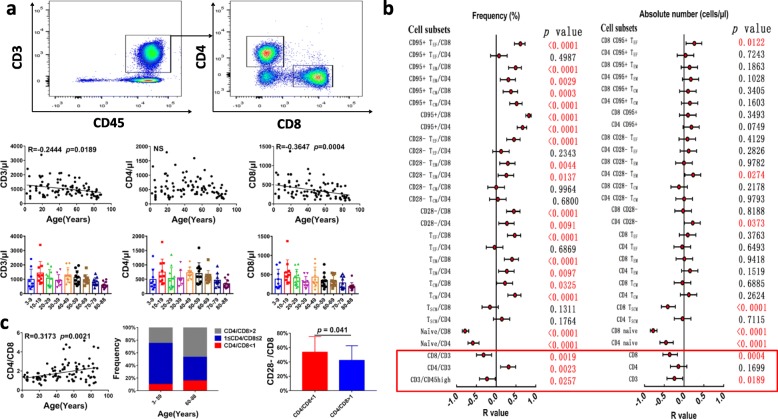
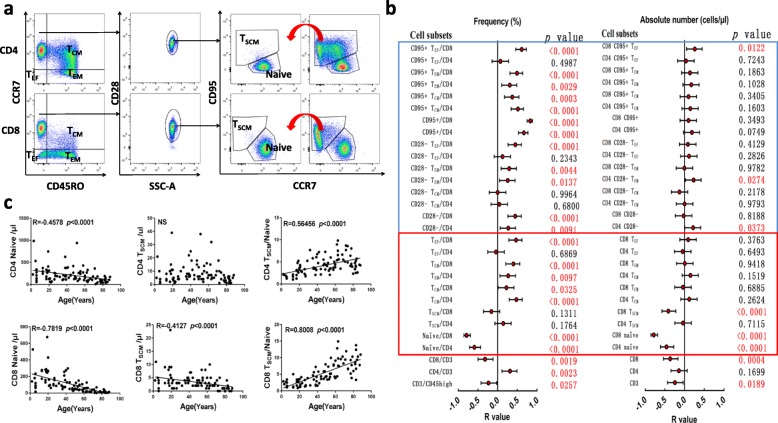
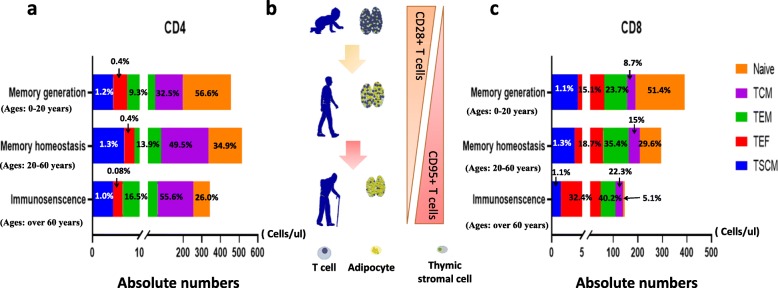
T cells are fundamental effector cells against viruses and cancers that can be divided into different subsets based on their long-term immune protection and immediate immune response effects. The percentage and absolute number of these subsets change with ageing, which leads to a reduced immune response in older individuals. Stem cell memory T cells (T SCM ) represent a small population of memory T cells with enhanced proliferation and differentiation properties that are endowed with high potential for maintaining T cell homeostasis. However, whether these cells change with ageing and gender remains unknown. Here, we assayed the distribution of T SCM and other T cell subsets in peripheral blood from 92 healthy subjects (44 females and 48 males) ranging from 3 to 88 years old by flow cytometry. We found that CD4+ and CD8+ T SCM in the circulation have relatively stable frequencies, and the absolute number of CD8+ T SCM decreased with age; however, the ratio of T SCM to the CD4+ or CD8+ naïve population increased with age. Unlike the obvious changes in other T cell subsets with age and gender, the stable level of T SCM in peripheral blood may support their capacity for sustaining long-term immunological memory, while their importance may increase together with ageing.
Overview
The claims and statistics of this paper haven’t been checked yet.
Free: it reads the open-access text and checks the first 5 claims that cite a source we can check. Create a free account to check every claim.
Integrity signals
Registry
Cites
Statistics
Figures
Verification
Claims the paper makes
The claims and statistics of this paper haven’t been checked yet.
Free: it reads the open-access text and checks the first 5 claims that cite a source we can check. Create a free account to check every claim.
Claims other papers make about this one
Each is checked against this paper’s own text: does it say what the citing paper says it does?
The source backs part of the claim, not all of it — or backs it for a different population, condition or comparison.
In the citing paper
“Such analysis should evidence a lower percentage of Tn and TSCM and higher percentage of Tem cells in old persons if compared to young donors, and an increase of senescent/exhausted cells in elderly donors [345].”
From Guidelines for the use of flow cytometry and cell sorting in immunological studies (third edition) (2021) · cites this paper as [345]
Experimental — accuracy not yet measuredIn the citing paper
“Additionally, monocytes and effector memory CD4+ T cells become more abundant, whereas plasmacytoid dendritic cells, naive CD4+ T cells, and CD8+ T cells decline with aging (111–113).”
From Connecting aging biology and inflammation in the omics era (2022) · cites this paper as [113]
In the citing paper
“However, a study has shown that the frequency of CD4+ and CD8+ TSCM is relatively stable at different ages, and the absolute number of CD8+ TSCM decreases with age [108].”
From Immunosenescence: a key player in cancer development (2020) · cites this paper as [108]
In the citing paper
“This approach highlights the possibility to compensate for the reduced central memory T cell abundance observed in elderly patients,38 thereby improving the robustness of autologous CAR T cell products in adoptive immunotherapy.”
From Lipid nanoparticle mRNA delivery preserves CAR T cell cytotoxicity and limits exhaustion compared to electroporation (2026) · cites this paper as [38]
In the citing paper
“particularly relevant given reduced abundance in elderly patients, limiting product quality in autologous settings.38”
From Lipid nanoparticle mRNA delivery preserves CAR T cell cytotoxicity and limits exhaustion compared to electroporation (2026) · cites this paper as [38]
Self-check
Percentages, sums and reported differences re-computed from the paper’s own numbers.
The self-check needs the paper’s full text.
Citations
Cites
A human memory T cell subset with stem cell–like properties
Gattinoni, L., Lugli, E., Ji, Y., Pos, Z., Paulos, C. M., Quigley, M. F., Almeida, J. R., Gostick, E., Yu, Z., Carpenito, C., et al. (2011) · Nature Medicine · doi:10.1038/nm.2446 · Cited by 1,974
Human memory T cells: generation, compartmentalization and homeostasis
Farber, D. L., Yudanin, N. A., & Restifo, N. P. (2014) · Nature Reviews Immunology · doi:10.1038/nri3567 · Cited by 897
Immunosenescence: emerging challenges for an ageing population
Aw, D., Silva, A. B., & Palmer, D. B. (2007) · Immunology · doi:10.1111/j.1365-2567.2007.02555.x · Cited by 880
A Gender Gap in Autoimmunity: Task Force on Gender, Multiple Sclerosis and Autoimmunity
Whitacre, C. C., Reingold, S. C., O'Looney, P. A., Blankenhorn, E., Brinley, F., Collier, E., Duquette, P., Fox, H., Giesser, B., Gilmore, W., et al. (1999) · Science · doi:10.1126/science.283.5406.1277 · Cited by 851
CD28− T cells: their role in the age-associated decline of immune function
Weng, N.-P., Akbar, A. N., & Goronzy, J. (2009) · Trends in Immunology · doi:10.1016/j.it.2009.03.013 · Cited by 633
Host-reactive CD8+ memory stem cells in graft-versus-host disease
Zhang, Y., Joe, G., Hexner, E., Zhu, J., & Emerson, S. G. (2005) · Nature Medicine · doi:10.1038/nm1326 · Cited by 369
Self-citationSaule, P., Trauet, J., Dutriez, V., Lekeux, V., Dessaint, J.-P., & Labalette, M. (2006) · Mechanisms of Ageing and Development · doi:10.1016/j.mad.2005.11.001 · Cited by 367
Naive T Cell Maintenance and Function in Human Aging
Goronzy, J. J., Fang, F., Cavanagh, M. M., Qi, Q., & Weyand, C. M. (2015) · The Journal of Immunology · doi:10.4049/jimmunol.1500046 · Cited by 348
Superior T memory stem cell persistence supports long-lived T cell memory
Lugli, E., Dominguez, M. H., Gattinoni, L., Chattopadhyay, P. K., Bolton, D. L., Song, K., Klatt, N. R., Brenchley, J. M., Vaccari, M., Gostick, E., et al. (2013) · Journal of Clinical Investigation · doi:10.1172/jci66327 · Cited by 302
T cell senescence and CAR-T cell exhaustion in hematological malignancies
Kasakovski, D., Xu, L., & Li, Y. (2018) · Journal of Hematology & Oncology · doi:10.1186/s13045-018-0629-x · Cited by 272
Self-citation
Cited by
COVID-19 pathophysiology: A review
Yuki, K., Fujiogi, M., & Koutsogiannaki, S. (2020) · Clinical Immunology · doi:10.1016/j.clim.2020.108427 · Cited by 2,206
“loss of expression of co-stimulatory molecules such as CD27 and CD28, with increased susceptibility to infections [66].”
Guidelines for the use of flow cytometry and cell sorting in immunological studies (third edition)
Cossarizza, A., Chang, H., Radbruch, A., Abrignani, S., Addo, R., Akdis, M., Andrä, I., Andreata, F., Annunziato, F., Arranz, E., et al. (2021) · European Journal of Immunology · doi:10.1002/eji.202170126 · Cited by 531
Bhaskar, S., Sinha, A., Banach, M., Mittoo, S., Weissert, R., Kass, J. S., Rajagopal, S., Pai, A. R., & Kutty, S. (2020) · Frontiers in Immunology · doi:10.3389/fimmu.2020.01648 · Cited by 511
“With age, the immune system can present with a series of changes, characterized by immunosenescence markers (34–36), a decrease in the generation of CD3+ T cells, an inversion of the CD4 to CD8 (CD4/CD8) T cells ratio due to the loss of CD8+ T cells (35) (increased CD4/CD8 ratio), an increase in regulatory T cells (Tr…”
BackgroundImmunosenescence: a key player in cancer development
Lian, J., Yue, Y., Yu, W., & Zhang, Y. (2020) · Journal of Hematology & Oncology · doi:10.1186/s13045-020-00986-z · Cited by 510
Self-citationImmune ageing at single-cell resolution
Mogilenko, D. A., Shchukina, I., & Artyomov, M. N. (2022) · Nature Reviews Immunology · doi:10.1038/s41577-021-00646-4 · Cited by 381
Influence of immune aging on vaccine responses
Gustafson, C. E., Kim, C., Weyand, C. M., & Goronzy, J. J. (2020) · Journal of Allergy and Clinical Immunology · doi:10.1016/j.jaci.2020.03.017 · Cited by 286
“Moreover, long-lived stem-like memory T cells, which have reacquired a naive phenotype,(126,127) are relatively maintained across age.(95) However, aging may cause expansion of certain clonotypes that subsequently dominate the immune recall response.”
In vivo antiviral host transcriptional response to SARS-CoV-2 by viral load, sex, and age
Lieberman, N. A. P., Peddu, V., Xie, H., Shrestha, L., Huang, M.-L., Mears, M. C., Cajimat, M. N., Bente, D. A., Shi, P.-Y., Bovier, F., et al. (2020) · PLOS Biology · doi:10.1371/journal.pbio.3000849 · Cited by 267
“These data suggest that age-related T-cell and NK cell dysfunction [32,33] may play a role in SARS-CoV-2 pathogenesis in older individuals.”
BackgroundCAR-T cell performance: How to improve their persistence?
López-Cantillo, G., Urueña, C., Camacho, B. A., & Ramírez-Segura, C. (2022) · Frontiers in Immunology · doi:10.3389/fimmu.2022.878209 · Cited by 207
“Compared to other TM subpopulations, the TSCM subset develops a faster response upon antigenic stimulation and can persist for a long time (27, 40).”
BackgroundImmunosenescence, aging and successful aging
Wang, Y., Dong, C., Han, Y., Gu, Z., & Sun, C. (2022) · Frontiers in Immunology · doi:10.3389/fimmu.2022.942796 · Cited by 201
Age-associated remodeling of T cell immunity and metabolism
Han, S., Georgiev, P., Ringel, A. E., Sharpe, A. H., & Haigis, M. C. (2023) · Cell Metabolism · doi:10.1016/j.cmet.2022.11.005 · Cited by 193
Connecting aging biology and inflammation in the omics era
Walker, K. A., Basisty, N., Wilson, D. M., & Ferrucci, L. (2022) · Journal of Clinical Investigation · doi:10.1172/jci158448 · Cited by 189
Shao, T., Verma, H. K., Pande, B., Costanzo, V., Ye, W., Cai, Y., & Bhaskar, L. V. (2021) · Frontiers in Physiology · doi:10.3389/fphys.2021.751374 · Cited by 226
Wang, Y., Li, R., Tong, R., Chen, T., Sun, M., Luo, L., Li, Z., Chen, Y., Zhao, Y., Zhang, C., et al. (2025) · Nature Immunology · doi:10.1038/s41590-024-02059-6 · Cited by 160
Lung innervation in the eye of a cytokine storm: neuroimmune interactions and COVID-19
Virgiliis, F. D., & Giovanni, S. D. (2020) · Nature Reviews Neurology · doi:10.1038/s41582-020-0402-y · Cited by 112
Reshef, Y., Rumker, L., Kang, J. B., Nathan, A., Korsunsky, I., Asgari, S., Murray, M. B., Moody, D. B., & Raychaudhuri, S. (2021) · Nature Biotechnology · doi:10.1038/s41587-021-01066-4 · Cited by 102
“We find older age is associated with higher CD8+/CD4+ ratio, decreased costimulatory molecule expression, and greater effector memory character relative to central memory character [30] (Figure 6E; Supplementary Table 18).”
BackgroundCould the Induction of Trained Immunity by β-Glucan Serve as a Defense Against COVID-19?
Geller, A. E., & Yan, J. (2020) · Frontiers in Immunology · doi:10.3389/fimmu.2020.01782 · Cited by 104
“CD8 T-cells specifically are seen to decline drastically with age due to this thymic loss (102, 103).”
BackgroundT Cell Immunosenescence in Aging, Obesity, and Cardiovascular Disease
Shirakawa, K., & Sano, M. (2021) · Cells · doi:10.3390/cells10092435 · Cited by 98
“Although human immunodeficiency virus (HIV)-infected individuals are at increased risk for CVD, CD28nullCD57+CD8+ T cells were increased in HIV-infected women, and their frequency was associated with potential carotid artery disease [115].”
BackgroundInfluentialNie, Y., Lu, W., Chen, D., Tu, H., Guo, Z., Zhou, X., Li, M., Tu, S., & Li, Y. (2020) · Biomarker Research · doi:10.1186/s40364-020-00197-1 · Cited by 89
Self-citationCostagliola, G., Spada, E., & Consolini, R. (2021) · Immunity, Inflammation and Disease · doi:10.1002/iid3.404 · Cited by 81
“distribution from naive T‐cells to memory T‐cells.(36) Naive CD4+ and CD8+ T‐cells decrease linearly with age; CD8+ twice more rapidly.”
BackgroundAssociation of TNF-α G-308 a Promoter Polymorphism with the Course and Outcome of COVID-19 Patients
Saleh, A. A. G., Sultan, A., Elashry, M. A., Farag, A., Mortada, M. I., Ghannam, M. A., Saed, A. M., & Ghoneem, E. A. (2020) · Immunological Investigations · doi:10.1080/08820139.2020.1851709 · Cited by 85
“Immunosenescence or decline in the immune function occurs with aging where a series of changes occur, a decrease in the generation of CD3 + T cells, a decrease in B lymphocytes, and an increase in regulatory T cells (Li et al. 2019; Weng et al. 2009).”
BackgroundSex and gender affect immune aging
Calabrò, A., Accardi, G., Aiello, A., Caruso, C., & Candore, G. (2023) · Frontiers in Aging · doi:10.3389/fragi.2023.1272118 · Cited by 71
Hyperbaric oxygen therapy for healthy aging: From mechanisms to therapeutics
Fu, Q., Duan, R., Sun, Y., & Li, Q. (2022) · Redox Biology · doi:10.1016/j.redox.2022.102352 · Cited by 84
The effects of age and systemic metabolism on anti-tumor T cell responses
Drijvers, J. M., Sharpe, A. H., & Haigis, M. C. (2020) · eLife · doi:10.7554/elife.62420 · Cited by 69
“While the number of naı̈ve T cells decreases with age, there are increased numbers of circulating T cells that express markers of antigen experience, for example CD45RO in humans or CD44 in mice (Lages et al., 2010; Li et al., 2019).”
BackgroundLuo, Q., Dwaraka, V. B., Chen, Q., Tong, H., Zhu, T., Seale, K., Raffaele, J. M., Zheng, S., Mendez, T. L., Chen, Y., et al. (2023) · Genome Medicine · doi:10.1186/s13073-023-01211-5 · Cited by 74
CD74 is a functional MIF receptor on activated CD4+ T cells
Zhang, L., Woltering, I., Holzner, M., Brandhofer, M., Schaefer, C.-C., Bushati, G., Ebert, S., Yang, B., Muenchhoff, M., Hellmuth, J. C., et al. (2024) · Cellular and Molecular Life Sciences · doi:10.1007/s00018-024-05338-5 · Cited by 75
Zhang, Z., Reynolds, S. R., Stolrow, H. G., Chen, J., Christensen, B. C., & Salas, L. A. (2023) · Aging Cell · doi:10.1111/acel.14071 · Cited by 67
“Decreases in naïve cell numbers and increases in memory cell numbers related to age have been well-documented in previous studies (Lazuardi et al., 2005; Li et al., 2019; Salam et al., 2013).”
ResultDevelopment of an epigenetic clock resistant to changes in immune cell composition
Tomusiak, A., Floro, A., Tiwari, R., Riley, R. R., Matsui, H., Andrews, N., Kasler, H. G., & Verdin, E. M. (2024) · Communications Biology · doi:10.1038/s42003-024-06609-4 · Cited by 85
“We also tested whether our clock could fi nd a shift in epigenetic age between CD4 + naive and CD4 + CM cells, as the proportion of CD4 + naive cells also decreases with age 96 .”
MethodHow aging impacts vaccine efficacy: known molecular and cellular mechanisms and future directions
Chen, J., Deng, J. C., & Goldstein, D. R. (2022) · Trends in Molecular Medicine · doi:10.1016/j.molmed.2022.09.008 · Cited by 64
Erawati, M., & Andriany, M. (2020) · Journal of Multidisciplinary Healthcare · doi:10.2147/jmdh.s241972 · Cited by 61
“One of the indicators is the changes in the characteristics of the T cells that are very instrumental in resisting attacks from exogenous microorganisms such as viruses and bacteria.(39) This situation will affect increasing susceptibility to various diseases, especially infectious diseases, including TB infections.”
BackgroundA high‐dimensional cytometry atlas of peripheral blood over the human life span
Jalali, S., Harpur, C. M., Piers, A. T., Auladell, M. A., Perriman, L., Li, S., An, K., Anderson, J., Berzins, S. P., Licciardi, P. V., et al. (2022) · Immunology and Cell Biology · doi:10.1111/imcb.12594 · Cited by 50
“In this study, we showed that CD8 T cells experienced the greatest change from na€ıve to memory cells.(73,74) This could be a result of thymus atrophy, which reduces thymic output of developing T cells and/or exposure to environmental antigens and pathogens that leads to T-cell activation and the formation of immunolo…”
ResultPugliese, D., Privitera, G., Crispino, F., Mezzina, N., Castiglione, F., Fiorino, G., Laterza, L., Viola, A., Bertani, L., Caprioli, F., et al. (2022) · Alimentary Pharmacology & Therapeutics · doi:10.1111/apt.16923 · Cited by 50
The role of the CD8+ T cell compartment in ageing and neurodegenerative disorders
Terrabuio, E., Zenaro, E., & Constantin, G. (2023) · Frontiers in Immunology · doi:10.3389/fimmu.2023.1233870 · Cited by 57
“Differently, aging is associated with immunosenescence, resulting in a decrease in the number of naïve and memory CD8+ T cells and an increase of senescent CD8+ T lymphocytes, particularly in the blood and blood-rich sites, such as spleen and lungs (26, 28, 60, 77, 82, 109).”
BackgroundRamasubramanian, R., Meier, H. C. S., Vivek, S., Klopack, E. T., Crimmins, E. M., Faul, J. D., Nikolich‐Žugich, J., & Thyagarajan, B. (2022) · Immunity & Ageing · doi:10.1186/s12979-022-00290-z · Cited by 50
Emery, A., Moore, S. E., Turner, J. E., & Campbell, J. P. (2022) · Frontiers in Oncology · doi:10.3389/fonc.2022.788113 · Cited by 54
“Interestingly, it has been found that the TSCM: naïve T cell ratio increases during aging, and therefore the dynamic role of TSCM cells in maintaining immunological memory may increase in ageing (150, 151).”
Backgroundvan de Sandt, C. E., Nguyen, T. H. O., Gherardin, N. A., Crawford, J. C., Samir, J., Minervina, A. A., Pogorelyy, M. V., Rizzetto, S., Szeto, C. W., Kaur, J., et al. (2023) · Nature Immunology · doi:10.1038/s41590-023-01633-8 · Cited by 51
“Aging compromised T cell immunity, including increased terminally differentiated T (T EMRA ) cells, decreased naive T cells and T cell functionality 8,12,17–21 , resulting in diminished recall capacity 22,23 .”
BackgroundZinc deficiency as possible link between immunosenescence and age-related diseases
Schulz, M. T., & Rink, L. (2025) · Immunity & Ageing · doi:10.1186/s12979-025-00511-1 · Cited by 56
Higher TIGIT + CD226 - γδ T cells in Patients with Acute Myeloid Leukemia
Jin, Z., Lan, T., Zhao, Y. S., Jin-xia, D., Chen, J., Lai, J., Xu, L., Chen, S., Zhong, X., Wu, X., et al. (2020) · Immunological Investigations · doi:10.1080/08820139.2020.1806868 · Cited by 43
“© 2020 Taylor & Francis Group, LLC of AML treatment (Li et al. 2019; Zhang and Li 2019).”
BackgroundMethodSelf-citationTerminally Differentiated CD4+ T Cells Promote Myocardial Inflammaging
Delgobo, M., Heinrichs, M., Hapke, N., Ashour, D., Appel, M., Srivastava, M., Heckel, T., Spyridopoulos, I., Hofmann, U., Frantz, S., et al. (2021) · Frontiers in Immunology · doi:10.3389/fimmu.2021.584538 · Cited by 43
“Myocardial- and Immunosenescence Phenotypes Develop Synchronously In humans, naïve T cells express the chemokine receptor CCR7 and lack the expression of activation markers such as CD45RO, while effector/memory T cells present the opposite phenotype (22).”
BackgroundIron homeostasis and neurodegeneration in the ageing brain: Insight into ferroptosis pathways
Alrouji, M., Anwar, S., Venkatesan, K., Shahwan, M. J., Hassan, M. I., Islam, A., & Shamsi, A. (2024) · Ageing Research Reviews · doi:10.1016/j.arr.2024.102575 · Cited by 49
AgeAnno: a knowledgebase of single-cell annotation of aging in human
Huang, K., Gong, H., Guan, J., Zhang, L., Hu, C., Zhao, W., Huang, L., Zhang, W., Kim, P., & Zhou, X. (2022) · Nucleic Acids Research · doi:10.1093/nar/gkac847 · Cited by 49
“For example, the changes in the proportion and the absolute number of T cells can reduce the immune response in older individuals (31).”
BackgroundMetabolic reprogramming: a bridge between aging and tumorigenesis
Drapela, S., Ilter, D., & Gomes, A. P. (2022) · Molecular Oncology · doi:10.1002/1878-0261.13261 · Cited by 41
High CD4‐to‐CD8 ratio identifies an at‐risk population susceptible to lethal COVID‐19
Zuani, M. D., Lázničková, P., Tomášková, V., Dvončová, M., Forte, G., Stokin, G. B., Šrámek, V., Helán, M., & Frič, J. (2021) · Scandinavian Journal of Immunology · doi:10.1111/sji.13125 · Cited by 50
CD38: an ecto-enzyme with functional diversity in T cells
Ghosh, A., Khanam, A., Ray, K., Mathur, P., Subramanian, A., Poonia, B., & Kottilil, S. (2023) · Frontiers in Immunology · doi:10.3389/fimmu.2023.1146791 · Cited by 46
Terekhova, M., Boháčová, P., & Artyomov, M. N. (2025) · Immunity · doi:10.1016/j.immuni.2025.10.009 · Cited by 47
In-depth immune cellular profiling reveals sex-specific associations with frailty
Samson, L. D., Boots, A. M. H., Ferreira, J. A., Picavet, H. S. J., de Rond, L., de Zeeuw‐Brouwer, M., Verschuren, W. M. M., Buisman, A., & Engelfriet, P. M. (2020) · Immunity & Ageing · doi:10.1186/s12979-020-00191-z · Cited by 38
Age-associated changes in innate and adaptive immunity: role of the gut microbiota
Gao, H., Nepovimová, E., Adam, V., Heger, Z., Valko, M., Wu, Q., & Kuča, K. (2024) · Frontiers in Immunology · doi:10.3389/fimmu.2024.1421062 · Cited by 47
Rebalancing the unbalanced aged immune system – A special focus on zinc
Baarz, B. R., & Rink, L. (2021) · Ageing Research Reviews · doi:10.1016/j.arr.2021.101541 · Cited by 41
Shin, K. K., Yi, Y., Kim, J. K., Kim, J. K., Hossain, M. A., Kim, J., & Cho, J. Y. (2020) · Molecules · doi:10.3390/molecules25071492 · Cited by 33
Age-Related Gene Alteration in Naïve and Memory T cells Using Precise Age-Tracking Model
Yang, X., Wang, X., Lei, L., Sun, L., Jiao, A., Zhu, K. Y., Xie, T., Liu, H., Zhang, X., Su, Y., et al. (2021) · Frontiers in Cell and Developmental Biology · doi:10.3389/fcell.2020.624380 · Cited by 39
“The aging process is accompanied by immunosenescence, which is associated with the loss of expression of costimulatory molecules, such as CD27 and CD28, and the reduction in IL-2 secretion (Li et al., 2019).”
BackgroundQuan, Y., Li, L., Yin, Z., Chen, S., Yi, J., Lang, J., Zhang, L., Yue, Q., & Zhao, J. (2022) · Frontiers in Pharmacology · doi:10.3389/fphar.2021.784335 · Cited by 32
Self-citationT cell control of inflammaging
Shchukina, I., Boháčová, P., & Artyomov, M. N. (2023) · Seminars in Immunology · doi:10.1016/j.smim.2023.101818 · Cited by 34
Update of Immunosenescence in Cerebral Small Vessel Disease
Jian, B., Hu, M., Cai, W., Zhang, B., & Lu, Z. (2020) · Frontiers in Immunology · doi:10.3389/fimmu.2020.585655 · Cited by 34
“Besides, both the increase of the CD4/CD8 ratio and CD8CD28 T cells was observed in elderly people (11, 36).”
BackgroundAgwa, S. H. A., Kamel, M. M., Elghazaly, H. A., Elsamee, A. M. A., Hafez, H. M., Girgis, S. A., Elarab, H. E., Ebeid, F. S. E., Sayed, S. M., Sherif, L., et al. (2021) · Genes · doi:10.3390/genes12060830 · Cited by 36
“who found that elderly males showed poor prognosis and an increased risk of COVID-19 severity [35], which could be explained by a decline in the immune function with aging and a decrease in the production of CD3 + T cells, and B lymphocytes, along with elevated regulatory T cells [36,37].”
BackgroundDepletion of polyfunctional CD26highCD8+ T cells repertoire in chronic lymphocytic leukemia
Bozorgmehr, N., Hnatiuk, M., Peters, A., & Elahi, S. (2023) · Experimental Hematology and Oncology · doi:10.1186/s40164-023-00375-5 · Cited by 34
“Given the reported impact of age and sex on T cell repertoire [57], we found these variables did not influence the frequency of CD26+CD8+ T cells (Additional file 1: Fig.”
BackgroundRenal inflamm-aging provokes intra-graft inflammation following experimental kidney transplantation
He, A., Sarwar, A., Thole, L. M. L., Siegle, J., Sattler, A., Ashraf, M., Proß, V., Stahl, C., Dornieden, T., Bergmann, Y., et al. (2022) · American Journal of Transplantation · doi:10.1111/ajt.17154 · Cited by 32
The unfolding palette of COVID-19 multisystemic syndrome and its neurological manifestations
Barrantes, F. J. (2021) · Brain Behavior & Immunity - Health · doi:10.1016/j.bbih.2021.100251 · Cited by 32
“This coincides with the decline in macrophage activity, naïve T cell production and effector memory T cell competence in the elderly (Li et al., 2019).”
Huff, W. X., Bam, M., Shireman, J. M., Kwon, J. H., Song, L., Newman, S., Cohen‐Gadol, A., Shapiro, S., Jones, T., Fulton, K., et al. (2021) · ImmunoHorizons · doi:10.4049/immunohorizons.2100008 · Cited by 33
Alterations of circulating lymphocyte subsets in patients with colorectal carcinoma
Waidhauser, J., Nerlinger, P., Arndt, T. T., Schiele, S., Sommer, F., Wolf, S., Löhr, P., Eser, S., Müller, G., Claus, R., et al. (2021) · Cancer Immunology Immunotherapy · doi:10.1007/s00262-021-03127-8 · Cited by 31
Triple jeopardy in ageing: COVID-19, co-morbidities and inflamm-ageing
Rea, I. M., & Alexander, H. D. (2021) · Ageing Research Reviews · doi:10.1016/j.arr.2021.101494 · Cited by 29
Shireman, J. M., Gonugunta, N., Zhao, L., Pattnaik, A., Distler, E., Her, S., Wang, X., Das, R., Galipeau, J., & Dey, M. (2023) · Aging Cell · doi:10.1111/acel.13864 · Cited by 27
“…suggest that one of the most consequential age- related immune dysfunctions happens within the T- cell compartment (Effros et al., 2005; Elyahu et al., 2019; GonzálezBermúdez et al., 2022; Henson et al., 2012; Huff et al., 2019, 2021; Li et al., 2019; Quinn et al., 2018; Yi et al., 2019).”
BackgroundFrumento, G., Verma, K., Croft, W. D., White, A. J., Zuo, J., Nagy, Z., Kissane, S., Anderson, G., Moss, P. A. H., & Chen, F. E. (2020) · iScience · doi:10.1016/j.isci.2020.100989 · Cited by 28
Current Scenario and Strategies to Tackle Cardiovascular Disease Risk in HIV Geriatrics
Shabil, M., Kumar, V., Dhingra, S., Ravichandiran, V., Parihar, V. K., Kumar, N., Pandey, K., & Murti, K. (2023) · Current Pharmacology Reports · doi:10.1007/s40495-023-00332-0 · Cited by 27
Age-Associated Contraction of Tumor-Specific T Cells Impairs Antitumor Immunity
Georgiev, P., Han, S., Huang, A. Y., Nguyen, T. H., Drijvers, J. M., Creasey, H., Pereira, J. A., Yao, C.-H., Park, J. S., Conway, T. S., et al. (2024) · Cancer Immunology Research · doi:10.1158/2326-6066.cir-24-0463 · Cited by 33
“…immune cells isolated from growing tumors versus tdLN. Consistent with previous reports that aging leads to a contraction in lymphocyte pools (11, 18), we observed reduced total CD3 + T-cell numbers and frequencies relative to all CD45 + leukocytes in tdLN across all three tumor models,…”
Ehx, G., Ritacco, C., & Baron, F. (2024) · Biomarker Research · doi:10.1186/s40364-024-00684-9 · Cited by 32
“In adults aged under 60, TN and TCM represent the majority of T cells with frequencies of 30–40% for TN, and 15–50% for TCM [192, 193].”
Jung, S., Jung, J. H., Noh, J. Y., Kim, W., Yoon, S., Jung, J., Kim, E. S., Kim, H. B., Cheong, H. J., Kim, W. J., et al. (2022) · Cell Reports · doi:10.1016/j.celrep.2022.111138 · Cited by 30
“Our study shows that the early generation of TSCM cells inversely correlates with the age of vaccinated individuals, consistent with the number of CD8 TSCM cells decreasing with age (Li et al., 2019).”
Signorini, C., Pignatti, P., & Coccini, T. (2021) · Life · doi:10.3390/life11030182 · Cited by 27
“A further item to be considered is immunosenescence, which represents age-related variation of immune responses [97].”
BackgroundComposition of the infiltrating immune cells in the brain of healthy individuals: effect of aging
Nevalainen, T., Autio, A., & Hurme, M. (2022) · Immunity & Ageing · doi:10.1186/s12979-022-00302-y · Cited by 26
“CD8 T cells are known to be affected by aging in terms of immunosenescence, which manifests as increased CD4/CD8 ratio mainly caused by decrease in CD8 T cell numbers in periphery [24].”
BackgroundImmunometabolism in the Aging Heart
Mapuskar, K. A., London, B., Zacharias, Z. R., Houtman, J. C. D., & Allen, B. G. (2024) · Journal of the American Heart Association · doi:10.1161/jaha.124.039216 · Cited by 27
“115 CD27 and CD28 provide a costimulatory signal and promote the assembly of the T-cell complex to amplify the T-cell receptor signals and support T-cell expansion.”
Wang, L., Rondaan, C., de Joode, A. A. E., Raveling‐Eelsing, E., Bos, N. A., & Westra, J. (2021) · Immunity & Ageing · doi:10.1186/s12979-021-00254-9 · Cited by 27
“CD28 is a key costimulatory receptor for T cell activation, proliferation, and survival [6].”
BackgroundEstablishing a human bone marrow single cell reference atlas to study ageing and diseases
Lee, N. Y. S., Li, M., Ang, K. S., & Chen, J. (2023) · Frontiers in Immunology · doi:10.3389/fimmu.2023.1127879 · Cited by 28
“Decline in naïve T cell populations have been reported for peripheral blood in different studies (17, 19, 20) and is well recognised.”
BackgroundSelf-citationMicrobial–Immune Crosstalk in Elderly-Onset Inflammatory Bowel Disease: Unchartered Territory
Meng, G., Monaghan, T. M., Duggal, N. A., Tighe, P., & Peerani, F. (2023) · Journal of Crohn s and Colitis · doi:10.1093/ecco-jcc/jjad025 · Cited by 23
The Impact of T-cell Aging on Alloimmunity and Inflammaging
Iske, J., Dedeilia, A., Xiao, Y., Martin, F., Emmert, M. Y., Sage, P. T., Abdi, R., Zhou, H., & Tullius, S. G. (2023) · Transplantation · doi:10.1097/tp.0000000000004715 · Cited by 23
“63 On a cellular level, an age-dependent decline in miR-181a, which regulates intrinsic TCR signaling, 64 has been observed in old human CD4 + T cells associated with an impaired TCR sensitivity in old CD4 + T cells induced through an augmented dual-specific phosphatase 6 activation.”
BackgroundImpact of age and gender on lymphocyte subset counts in patients with COVID ‐19
Löhr, P., Schiele, S., Arndt, T. T., Grützner, S., Claus, R., Römmele, C., Müller, G., Schmid, C., Dennehy, K. M., & Rank, A. (2021) · Cytometry Part A · doi:10.1002/cyto.a.24470 · Cited by 27
“9, 10 Aging mainly has a negative effect on the number of CD3 + and CD8 + cells, 26 which was also observed in our study, where at least the number of CD8 + cells decreased with age.”
Grievink, H. W., Smit, V., Huisman, B. W., Gal, P., Yavuz, Y., Klerks, C., Binder, C. J., Bot, I., Kuiper, J., Foks, A. C., et al. (2022) · Frontiers in Immunology · doi:10.3389/fimmu.2022.968815 · Cited by 25
“A hallmark of immunosenescence is decreased lymphopoiesis and accumulation of senescent cells (15, 16).”
BackgroundCD8+ T Cell Phenotype and Function in Childhood and Adult-Onset Connective Tissue Disease
Radziszewska, A., Moulder, Z., Jury, E. C., & Ciurtin, C. (2022) · International Journal of Molecular Sciences · doi:10.3390/ijms231911431 · Cited by 22
“these populations, however remained stable throughout [171].”
BackgroundQuan, X., Ruan, L., Zhou, H., Gao, W.-L., Zhang, Q., & Zhang, C. (2023) · Open Life Sciences · doi:10.1515/biol-2022-0557 · Cited by 21
“This process is accompanied by the reduced expression of membrane surface molecules, such as CD45RA, CD27, and CD28 [5,6].”
BackgroundUnderstanding T cell aging to improve anti-viral immunity
Zhang, H., Weyand, C. M., Goronzy, J. J., & Gustafson, C. E. (2021) · Current Opinion in Virology · doi:10.1016/j.coviro.2021.09.017 · Cited by 20
Hamdy, A., & Leonardi, A. J. (2022) · Pathogens · doi:10.3390/pathogens11040390 · Cited by 22
Liu, A., Xia, Y., Li, W., Zhang, G., Liu, Y., Ye, S., Zhao, Z.-R., Yang, Y., Jia, Y., Guo, Y., et al. (2022) · Contrast Media & Molecular Imaging · doi:10.1155/2022/3444360 · Cited by 20
“in the process of antitumor immunity [25, 26].”
Changes in immune cell subtypes during ageing
Thin, K. A., Cross, A. L., Angsuwatcharakon, P., Mutirangura, A., Puttipanyalears, C., & Edwards, S. W. (2024) · Archives of Gerontology and Geriatrics · doi:10.1016/j.archger.2024.105376 · Cited by 16
Immune system aging and the aging-related diseases in the COVID-19 era
Witkowski, J. M. (2022) · Immunology Letters · doi:10.1016/j.imlet.2022.01.005 · Cited by 21
“As their name calls for, they are fast responders to antigen stimulation, tend to preferentially survive after the neutralization of antigens, can reconstitute the memory cell compartment from their small numbers and may provide protection from specific pathogens for decades [42, 43].”
Franck, M., Daunizeau, C., Aronoff, J. E., Tanner, K., Trumble, B. C., Franceschi, C., Hertel, J., Fülöp, T., Lemoine, M., Gurven, M., et al. (2025) · Ageing Research Reviews · doi:10.1016/j.arr.2025.102880 · Cited by 25
Nissen, E., Reiner, A. P., Liu, S., Wallace, R. B., Molinaro, A. M., Salas, L. A., Christensen, B. C., Wiencke, J. K., Koestler, D. C., & Kelsey, K. T. (2023) · Clinical Epigenetics · doi:10.1186/s13148-023-01488-8 · Cited by 19
“One exception is CD8mem, where, similar to the above studies, we observed much larger absolute counts in the WHI than all other studies; this may be the result of small sample sizes of the other studies, systematic loss of CD8+ cells in PBMC preparation or perhaps chance.”
BackgroundResultInfluentialAltered Ca2+ Homeostasis in Immune Cells during Aging: Role of Ion Channels
Zöphel, D., Hof, C., & Lis, A. (2020) · International Journal of Molecular Sciences · doi:10.3390/ijms22010110 · Cited by 17
“Changes in the prevalence of distinct T cell subsets have already been studied extensively [17,62,66,194], however very little is known on functional alterations affecting activation and the underlying molecular mechanisms (not only) in aging.”
BackgroundXu, Y., Xu, L., Chen, C., Zhang, Y., Zeng, C., Jin, Z., Chen, S., Li, B., Zha, X., Yin, Z., et al. (2020) · BioMed Research International · doi:10.1155/2020/5910823 · Cited by 16
“There are limited basic data regarding the T cell immune status in the Chinese population [7, 8].”
BackgroundSelf-citationCOVID-19 pathophysiology: A review
Zhou, L., & Xing, S. (2024) · International Journal of Clinical Medical Research · doi:10.61466/ijcmr2020001 · Cited by 15
Qu, J., Yu, R., Wang, Q., Feng, C., & Lv, X. (2020) · Frontiers in Microbiology · doi:10.3389/fmicb.2020.541423 · Cited by 17
Dieckman, T., Schreurs, M., Mahfouz, A. E., Kooy–Winkelaar, Y., Neefjes‐Borst, A., Bouma, G., & Koning, F. (2022) · Cellular and Molecular Gastroenterology and Hepatology · doi:10.1016/j.jcmgh.2022.03.005 · Cited by 20
“Typically, peripheral CD8 T cells decrease with age and are considered a consistent immune aging marker.(20,21) However, we observed a decrease in the frequency of CD4 T cells in the periphery, coinciding with an increase in CD8 T cells, regardless of disease status.”
BackgroundKasakovski, D., Zeng, X., Lai, J., Yu, Z. H., Yao, D., Chen, S., Zha, X., Li, Y., & Xu, L. (2020) · Cytometry Part B Clinical Cytometry · doi:10.1002/cyto.b.21945 · Cited by 15
“The CCR7-BV421 fluorescent antibody was stained independently in 37 C in the dark as previously reported (Li et al., 2019).”
BackgroundMethodSelf-citationBooth, J. S., Goldberg, E., Patil, S. A., Barnes, R. S., Greenwald, B. D., & Sztein, M. B. (2021) · Immunity & Ageing · doi:10.1186/s12979-021-00227-y · Cited by 17
Development of a novel epigenetic clock resistant to changes in immune cell compositionPreprint
Tomusiak, A., Floro, A., Tiwari, R., Riley, R. R., Matsui, H., Andrews, N., Kasler, H., & Verdin, E. (2023) · bioRxiv · doi:10.1101/2023.03.01.530561 · Cited by 12
“We also tested whether our clock could find a shift in epigenetic age between CD4 + naive and CD4 + CM cells, as the proportion of CD4 + naive cells also decreases with age 95 .”
MethodThe long-lived immune system of centenarians
Plaza‐Florido, A., Carrera‐Bastos, P., Pérez‐Prieto, I., Fiuza‐Luces, C., Radom‐Aizik, S., Cruz, B. D. P., Franceschi, C., López‐Soto, A., López-Otín, C., & Lucía, A. (2026) · Nature reviews. Immunology · doi:10.1038/s41577-026-01291-5 · Cited by 19
“For CD4 + helper T cells, ageing is associated with decreased frequencies of naive cells 28–31 , recent thymic emigrants 32 and interferon (IFN)-activated subsets 33 , alongside an expansion of effector T cells 31 .”
Shen, D.-S., Chang, Y., Liang, Y., Chen, K.-H., & Zhu, X. (2021) · Cancer Management and Research · doi:10.2147/cmar.s334094 · Cited by 13
“After puberty, as the thymus involutes, the circulating T-cell reservoir diminishes, with the most pronounced decline being in the CD8 T-cell subset, accompanied by an increase in the circulating CD4/CD8 ratio.(28,29) Consistent with previous findings,(15,17) our study further showed a correlation between the level of…”
ResultDeciphering the impact of TERT/telomerase on immunosenescence and T cell revitalization
Huang, L., Zhang, M., Bai, D., & Qu, Y. (2024) · Frontiers in Immunology · doi:10.3389/fimmu.2024.1465006 · Cited by 15
Iwai, H., Inaba, M., Bui, D. V., Suzuki, K., Sakagami, T., Yun, Y., Mitani, A., Kobayashi, Y., & Kanda, A. (2021) · Journal of Neuroimmunology · doi:10.1016/j.jneuroim.2021.577628 · Cited by 16
“This animal model has several genetic loci responsible for their advance aging phenotype, especially early deterioration of thymic function with immunosenescence causing alterations in T cells sub-populations (Iwai and Inaba, 2012; Hosono et al., 1997; Liu and Kimura, 2007).”
BackgroundMitochondrial Dysfunction in CD4+ T Effector Memory RA+ Cells
Strickland, M., Lee, S., Neo, S., Balachander, A., Low, I., Mustafah, S., Goh, W. I., Wright, G. D., Larbi, A., & Pender, S. L. F. (2023) · Biology · doi:10.3390/biology12040597 · Cited by 17
“T cell compartmentalisation changes dramatically with age, with an increasing CD4: CD8 ratio and an increase in the number of memory T cells in the periphery [10].”
BackgroundVivarelli, M., Colucci, M., Algeri, M., Zotta, F., Emma, F., L’Erario, I., Busutti, M., Rota, S., Capelli, C., Introna, M., et al. (2023) · JCI Insight · doi:10.1172/jci.insight.169424 · Cited by 13
“The immune system of children is indeed known to be more “plastic” than that of adults for B cells (34) and T cells (35, 36).”
BackgroundT Cell Aging in Patients with Colorectal Cancer—What Do We Know So Far?
Thoma, O., Neurath, M. F., & Waldner, M. J. (2021) · Cancers · doi:10.3390/cancers13246227 · Cited by 16
“Hallmarks of T cell senescence include telomere attrition, loss of CD27/CD28 co-stimulatory molecules and the accumulation of a memory phenotype [51,52].”
BackgroundLiisborg, C., Skov, V., Kjær, L., Hasselbalch, H. C., & Sørensen, T. L. (2021) · Aging · doi:10.18632/aging.203803 · Cited by 16
“Finally, we also observed a smaller percentage of CD8 T cells in patients with MPN than AMD patients, which may reflect accelerated immune aging in these patients, since the overall CD8 T cell reservoir decreases with age [29].”
Ferragut, F., Alcaráz, P. B., Beati, P., Girard, M. C., Ossowski, M. S., Chadi, R., Fernandez, M. L., Hernández-Vásquez, Y., Acevedo, G. R., & Gómez, K. A. (2023) · The Journal of Immunology · doi:10.4049/jimmunol.2200436 · Cited by 12
Metadata
- Authors
- Li, M., Yao, D., Zeng, X., Kasakovski, D., Zhang, Y., Chen, S., Zha, X., Li, Y., & Xu, L.
- Affiliations
- Jinan University (CN)
- Corresponding author
- Li, Yangqiu
- Xu, Ling
- ORCID
- Venue
- Immunity & Ageing
- Published
- 2019-09-11
- Volume
- 16
- Issue
- 1
- Pages
- 24-24
- ISSN
- 1742-4933 (ISSN-L)
- PMC
- PMC6739976
- OpenAlex
- W2972520383
- Cited by
- 230
- References
- 26
- Citations by year
- 2026: 28 · 2025: 27 · 2024: 41 · 2023: 41 · 2022: 32 · 2021: 34 · 2020: 27
- FWCI
- 9.27
- Type
- journal article
- Language
- en
- Open access
- gold
- doi.org
- Licence
- cc-by
- creativecommons.org/licenses/by/4.0/ (tdm)
- creativecommons.org/licenses/by/4.0/ (vor)
- Locations
- Immunity & Ageing (publishedVersion, cc-by)
- PubMed Central (publishedVersion, cc-by)
- PubMed (publishedVersion)
- DOAJ (DOAJ: Directory of Open Access Journals) (submittedVersion, cc-by-sa)
- Funders
- National Natural Science Foundation of China (81770152, 91642111, 81570143)
- China postdoctoral science foundation (2018M640884)
- the Guangdong Provincial Applied Science and Technology Research & Development Program (2016B020237006)
- the Guangzhou Science and Technology Project (201807010004 and 201803040017)
- Jinan University 'national undergraduate innovative experimental program' project (201810559027)
- Topics
- Life Sciences › Immunology and Microbiology › Immunology › T-cell and B-cell Immunology
- Life Sciences › Biochemistry, Genetics and Molecular Biology › Cell Biology › Telomeres, Telomerase, and Senescence
- Health Sciences › Medicine › Hematology › Hematopoietic Stem Cell Transplantation
- Keywords
- T cell senescence, T cell subsets, stem cell memory T cells, aging, gender differences, CD4+ T cells, CD8+ T cells, naive T cells, immunosenescence, T cell homeostasis, immunological memory
About these checks
Registry, retraction, Cites and statistics results are computed, not judged, with one exception: a printed reference that no index lists is read once by a model before it counts as a citation error. Claims are extracted by a model and kept only when their quote appears verbatim in the text; each cited source is then checked, with a model’s help, for whether it says what the claim relies on. Those verdicts can be wrong — read the claim’s quote and the cited source before relying on one.
Statistics and arithmetic are recomputed, not judged.
Confidence bands are shown only for fields calibrated on our annotated test set. None is calibrated yet, so no band is shown.
What counts as a claim ›How we measure confidence ›How we check this ›
Are you an author, or do you see a problem with this page? Request a review
Data sources
Bibliographic data: Semantic Scholar, OpenAlex, Crossref.
Contains information from the Semantic Scholar Academic Graph Datasets, made available under the ODC Attribution License (ODC-BY 1.0).
Semantic Scholar’s data is described in: Kinney, R., et al. (2023). The Semantic Scholar Open Data Platform. arXiv:2301.10140.
