

Age related human T cell subset evolution and senescence
Open accessThe DOI matches its Crossref record; 26 of the 26 references it cites were found in a registry or an index.
Abstract
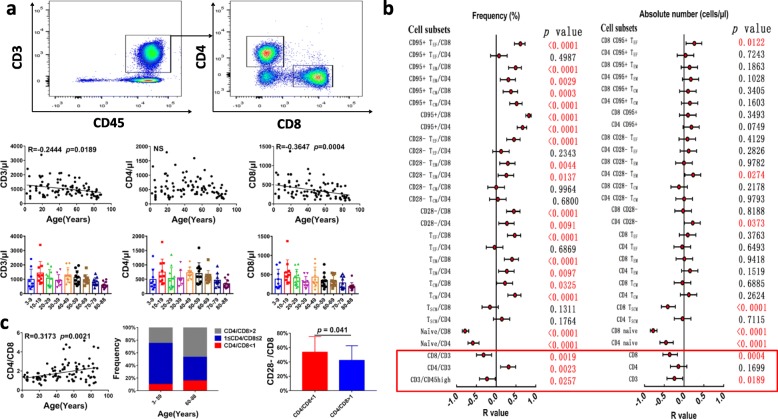
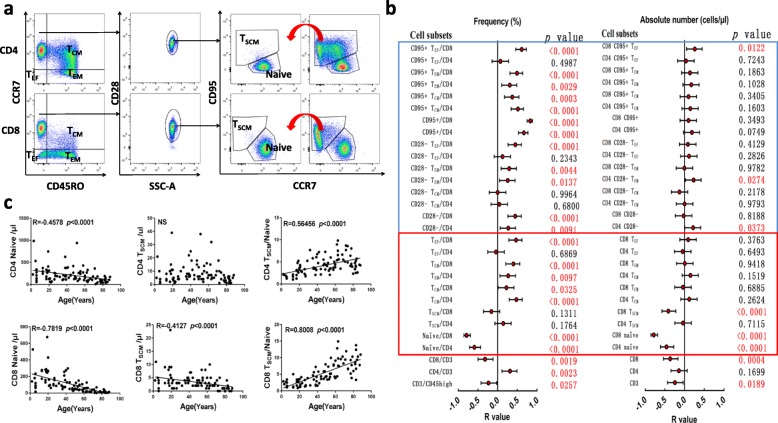
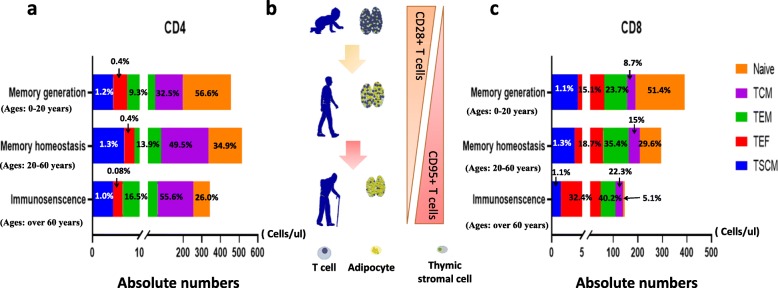
T cells are fundamental effector cells against viruses and cancers that can be divided into different subsets based on their long-term immune protection and immediate immune response effects. The percentage and absolute number of these subsets change with ageing, which leads to a reduced immune response in older individuals. Stem cell memory T cells (T SCM ) represent a small population of memory T cells with enhanced proliferation and differentiation properties that are endowed with high potential for maintaining T cell homeostasis. However, whether these cells change with ageing and gender remains unknown. Here, we assayed the distribution of T SCM and other T cell subsets in peripheral blood from 92 healthy subjects (44 females and 48 males) ranging from 3 to 88 years old by flow cytometry. We found that CD4+ and CD8+ T SCM in the circulation have relatively stable frequencies, and the absolute number of CD8+ T SCM decreased with age; however, the ratio of T SCM to the CD4+ or CD8+ naïve population increased with age. Unlike the obvious changes in other T cell subsets with age and gender, the stable level of T SCM in peripheral blood may support their capacity for sustaining long-term immunological memory, while their importance may increase together with ageing.
Overview
The claims and statistics of this paper haven’t been checked yet.
Free: it reads the open-access text and checks the first 5 claims that cite a source we can check. Create a free account to check every claim.
Integrity signals
Registry
Cites
Statistics
Figures
Verification
Claims the paper makes
The claims and statistics of this paper haven’t been checked yet.
Free: it reads the open-access text and checks the first 5 claims that cite a source we can check. Create a free account to check every claim.
Claims other papers make about this one
Each is checked against this paper’s own text: does it say what the citing paper says it does?
The source backs part of the claim, not all of it — or backs it for a different population, condition or comparison.
In the citing paper
“Such analysis should evidence a lower percentage of Tn and TSCM and higher percentage of Tem cells in old persons if compared to young donors, and an increase of senescent/exhausted cells in elderly donors [345].”
From Guidelines for the use of flow cytometry and cell sorting in immunological studies (third edition) (2021) · cites this paper as [345]
Experimental — accuracy not yet measuredIn the citing paper
“Additionally, monocytes and effector memory CD4+ T cells become more abundant, whereas plasmacytoid dendritic cells, naive CD4+ T cells, and CD8+ T cells decline with aging (111–113).”
From Connecting aging biology and inflammation in the omics era (2022) · cites this paper as [113]
In the citing paper
“However, a study has shown that the frequency of CD4+ and CD8+ TSCM is relatively stable at different ages, and the absolute number of CD8+ TSCM decreases with age [108].”
From Immunosenescence: a key player in cancer development (2020) · cites this paper as [108]
In the citing paper
“This approach highlights the possibility to compensate for the reduced central memory T cell abundance observed in elderly patients,38 thereby improving the robustness of autologous CAR T cell products in adoptive immunotherapy.”
From Lipid nanoparticle mRNA delivery preserves CAR T cell cytotoxicity and limits exhaustion compared to electroporation (2026) · cites this paper as [38]
In the citing paper
“particularly relevant given reduced abundance in elderly patients, limiting product quality in autologous settings.38”
From Lipid nanoparticle mRNA delivery preserves CAR T cell cytotoxicity and limits exhaustion compared to electroporation (2026) · cites this paper as [38]
Self-check
Percentages, sums and reported differences re-computed from the paper’s own numbers.
The self-check needs the paper’s full text.
Citations
Cites
A human memory T cell subset with stem cell–like properties
Gattinoni, L., Lugli, E., Ji, Y., Pos, Z., Paulos, C. M., Quigley, M. F., Almeida, J. R., Gostick, E., Yu, Z., Carpenito, C., et al. (2011) · Nature Medicine · doi:10.1038/nm.2446 · Cited by 1,974
Human memory T cells: generation, compartmentalization and homeostasis
Farber, D. L., Yudanin, N. A., & Restifo, N. P. (2014) · Nature Reviews Immunology · doi:10.1038/nri3567 · Cited by 897
Immunosenescence: emerging challenges for an ageing population
Aw, D., Silva, A. B., & Palmer, D. B. (2007) · Immunology · doi:10.1111/j.1365-2567.2007.02555.x · Cited by 880
A Gender Gap in Autoimmunity: Task Force on Gender, Multiple Sclerosis and Autoimmunity
Whitacre, C. C., Reingold, S. C., O'Looney, P. A., Blankenhorn, E., Brinley, F., Collier, E., Duquette, P., Fox, H., Giesser, B., Gilmore, W., et al. (1999) · Science · doi:10.1126/science.283.5406.1277 · Cited by 851
CD28− T cells: their role in the age-associated decline of immune function
Weng, N.-P., Akbar, A. N., & Goronzy, J. (2009) · Trends in Immunology · doi:10.1016/j.it.2009.03.013 · Cited by 633
Host-reactive CD8+ memory stem cells in graft-versus-host disease
Zhang, Y., Joe, G., Hexner, E., Zhu, J., & Emerson, S. G. (2005) · Nature Medicine · doi:10.1038/nm1326 · Cited by 369
Self-citationSaule, P., Trauet, J., Dutriez, V., Lekeux, V., Dessaint, J.-P., & Labalette, M. (2006) · Mechanisms of Ageing and Development · doi:10.1016/j.mad.2005.11.001 · Cited by 367
Naive T Cell Maintenance and Function in Human Aging
Goronzy, J. J., Fang, F., Cavanagh, M. M., Qi, Q., & Weyand, C. M. (2015) · The Journal of Immunology · doi:10.4049/jimmunol.1500046 · Cited by 348
Superior T memory stem cell persistence supports long-lived T cell memory
Lugli, E., Dominguez, M. H., Gattinoni, L., Chattopadhyay, P. K., Bolton, D. L., Song, K., Klatt, N. R., Brenchley, J. M., Vaccari, M., Gostick, E., et al. (2013) · Journal of Clinical Investigation · doi:10.1172/jci66327 · Cited by 302
T cell senescence and CAR-T cell exhaustion in hematological malignancies
Kasakovski, D., Xu, L., & Li, Y. (2018) · Journal of Hematology & Oncology · doi:10.1186/s13045-018-0629-x · Cited by 272
Self-citation
Cited by
Items 101–200 of 231
Toma, G. A., Lemnian, I., Karapetian, E., Große, I., & Seliger, B. (2022) · Frontiers in Immunology · doi:10.3389/fimmu.2022.806906 · Cited by 13
Mechanisms of Resistance to CAR T-Cells and How to Overcome Them
Legato, L., Bisio, M., Fasano, F., Savelli, C. B., Secreto, C., Dellacasa, C. M., Botto, B., Busca, A., Cerrano, M., Freilone, R., et al. (2025) · Methods and Protocols · doi:10.3390/mps8050108 · Cited by 16
“…numbers of CD4 + - and CD8 + -naïve T-cells, an absolute reduction in CD8 + TSCM cells, a relative increase in CD8 + CD28 − T-cells (indicative of senescent CD8 + T-cells), and an increase in both absolute and relative numbers of CD4 + CD28 − T-cells (indicative of senescent CD4 + T-cells) [28].”
Chang, Y., Cao, W., Lu, L., Han, Y., Lin, Q., Zhou, B., & Li, T. (2024) · Aging · doi:10.18632/aging.205985 · Cited by 11
“Adaptive immunity of T cells has always been a primary focus of research on immunosenescence [1, 2, 4, 5].”
BackgroundRosado, M. R. S., Marzan-Rivera, N., Watowich, M. M., Valle, A. D. N.-D., Pantoja, P., Pavez-Fox, M. A., Siracusa, E. R., Cooper, E. B., Valle, J. E. N.-D., Phillips, D., et al. (2023) · GeroScience · doi:10.1007/s11357-023-00962-8 · Cited by 15
“It is possible that this discrepancy is only reflected in the overall CD8 + cytotoxic T cell pool, as it has been reported that certain CD8 + T cell subsets – such as memory subsets – increase in proportion and efficacy with age [72].”
Fortier, J. C., Haltigan, E., Cavero-Chavez, V., Gomez-Manjarres, D. C., Squire, J. D., Reeves, W. H., & Cuervo‐Pardo, L. (2022) · Journal of Clinical Immunology · doi:10.1007/s10875-022-01290-w · Cited by 14
“Given the more precipitous decline in CD8 + T cells, the CD4/CD8 ratio increases with age [47].”
BackgroundLai, W., Feng, Q., Wen, L., Xiao, C., Wang, J., Zhu, Y. M., Mao, L., Zhu, Y., He, J., Li, Y., et al. (2025) · Aging Cell · doi:10.1111/acel.70082 · Cited by 15
“…correlated with the balance of immune cell numbers and functions, such as naïve T cells in healthy old individuals still exhibiting high expression of stemness and memory-related genes (Galletti et al. 2020), which have been reported to be associated with maintaining healthy aging (Li et al. 2019).”
Self-citationWei, B. K., Guo, Y. J., Zhang, L., Zhong, H., Miao, Q., Yan, L., Bai, Y., Feng, W., Liu, W., Niu, Q., et al. (2021) · BMC Immunology · doi:10.1186/s12865-021-00474-0 · Cited by 10
“One of the major causes of immunosenescence of T cells is the involution of the thymus [32, 33].”
BackgroundSelf-citationSystematic review and quantitative meta-analysis of age-dependent human T-lymphocyte homeostasis
Kulesh, V., Peskov, K. V., Helmlinger, G., & Bocharov, G. A. (2025) · Frontiers in Immunology · doi:10.3389/fimmu.2025.1475871 · Cited by 10
Hannikainen, P. A., Kosa, P. F., Barbour, C. R., & Bielekova, B. (2020) · Frontiers in Neurology · doi:10.3389/fneur.2020.565957 · Cited by 10
“These reproduced age 427 changes in blood include declines in proportion of plDCs with age (42), increases in CD56+ NK 428 cells (43–46) with age, positive correlation of HLA-DR+ CD8+ T cells (47,48) and HLA-DR+ 429 CD4+ T cells (47) with age, increases in CD4+ T cell/CD3+ T cell ratio with age (49), and 430 increases…”
Backgroundvan de Sandt, C. E., McQuilten, H. A., Aban, M., Nguyen, T. H. O., Valkenburg, S., Grant, E. J., Sant, S. A., Rossjohn, J., Gras, S., Crowe, J., et al. (2025) · EBioMedicine · doi:10.1016/j.ebiom.2025.105697 · Cited by 9
“28,32,47,48 Dynamic phenotypic changes across timepoints Phenotypic analysis was performed directly ex vivo using CD27, CD45RA and CD95 to identify A2/M1 58+ CD8 + T central memory (T cm ; CD27 + CD45RA − ), T effector memory (T em ; CD27 − CD45RA − ), terminally differentiated (T emra ; CD27 −…”
Coronavirus-2019 Disease (COVID-19) in children
Ovalı, F. (2020) · Medeniyet Medical Journal · doi:10.5222/mmj.2020.77675 · Cited by 8
Карал-оглы, Д. Д., Shumeev, A. N., Keburiya, V. V., Mintel, M. V., & Александрович, Р. С. (2023) · Life · doi:10.3390/life13020316 · Cited by 10
“In humans, a decrease in peripheral blood in the amount of both CD3+CD4+ (Th) and CD3+CD8+ (CTL) in old age was described [27].”
BackgroundBibliometric and visualization analysis of global research trends on immunosenescence (1970–2021)
Tan, Y., Zhang, C., Li, D., Huang, J., Liu, Z., Chen, T., Zou, X., & Qin, B. (2023) · Experimental Gerontology · doi:10.1016/j.exger.2023.112089 · Cited by 6
“T cells experience senescence due to the lack of the costimulatory molecules CD27 and CD28, reduced growth factor IL-2, and increased production of proinflammatory cytokines (61, 62).”
The use of alpha 1 thymosin as an immunomodulator of the response against SARS-Cov2
Espinar-Buitrago, M. D. L. S., Tarancón‐Díez, L., Vázquez‐Alejo, E., Magro-López, E., Genebat, M., Romero-Candau, F., Leal, M., & Muñoz‐Fernández, M. Á. (2023) · Immunity & Ageing · doi:10.1186/s12979-023-00351-x · Cited by 8
Sex- and age-specific aspects of human peripheral T-cell dynamics
Mika, J., Yoshida, K., Kusunoki, Y., Candéias, S. M., & Polańska, J. (2023) · Frontiers in Immunology · doi:10.3389/fimmu.2023.1224304 · Cited by 15
“As the respective abundance of naïve and memory CD4 + and CD8 + T lymphocyte populations evolves in time (12, 17, 18), the composition and diversity of the peripheral TCR repertoire further changes with age (6, 12, 19, 20).”
BackgroundKang, Y., Choi, D., Moon, D., Lee, K.-J., Oh, Y., Yang, J.-H., Jeong, S., Park, U., Im, S., Yang, S. H., et al. (2024) · Frontiers in Immunology · doi:10.3389/fimmu.2024.1477171 · Cited by 8
Pharmacotherapeutics of SARS-CoV-2 Infections
Kevadiya, B. D., Machhi, J., Herskovitz, J., Oleynikov, M. D., Blomberg, W. R., Bajwa, N., Soni, D., Das, S., Hasan, M., Patel, M., et al. (2021) · Journal of Neuroimmune Pharmacology · doi:10.1007/s11481-020-09968-x · Cited by 6
The Role of Inflammatory and Cytokine Biomarkers in the Pathogenesis of Frailty Syndrome
Mir, R., Jha, C. K., Khullar, N., Maqbool, M., Dabla, P. K., Mathur, S., Moustafa, A., Faridi, U. A., Hamadi, A., Mir, R., et al. (2022) · Endocrine Metabolic & Immune Disorders - Drug Targets · doi:10.2174/1871530322666220304220522 · Cited by 12
Picht, S., Farrera-Sal, M., Hiller, A. L., Brumhard, S., Klaas, A. M., Schulenberg, S., Friedrich, R., Scholz, C., Hemmerling, L., Simon, D. N., et al. (2026) · Molecular Therapy Nucleic Acids · doi:10.1016/j.omtn.2026.102929 · Cited by 7
“38 These considerations underscore the potential of mRNA-based CAR T cell engineering to fine-tune T cell function, trafficking, and phenotype, and the need to elucidate the comparative effects of mRNA delivery strategies on T cell functionality.”
Fang, M., Miao, Y., Zhu, L. D., Mei, Y., Zeng, H., Luo, L., Ding, Y., Zhou, L., Quan, X., Zhao, Q., et al. (2025) · Aging Cell · doi:10.1111/acel.14460 · Cited by 7
“These findings within our pediatric cohort are in line with prior research on young and aged populations (Li et al. 2019; Zheng et al. 2020), indicating consistent patterns of immune system remodeling from early childhood to advanced age.”
Payet, L. D., Coléon, A., Bedin, A., Auguste, L., Duroyon, M., Mollévi, C., Blain, H., Mennechet, F. J. D., Jeziorski, É., & Tuaillon, É. (2025) · Scientific Reports · doi:10.1038/s41598-025-13883-7 · Cited by 8
Towards a better preclinical cancer model – human immune aging in humanized mice
Tan, J. H. L., Hwang, Y. Y., Chin, H. X., Liu, M., Tan, S. Y., & Chen, Q. (2023) · Immunity & Ageing · doi:10.1186/s12979-023-00374-4 · Cited by 8
“One of the effects that aging has on the human T cell population is the decreased proportion of naïve T cells in the blood, with a corresponding increase of memory and senescent T cells [22].”
BackgroundSattler, A., Gamradt, S., Proß, V., Thole, L. M. L., He, A., Schrezenmeier, E. V., Jechow, K., Gold, S. M., Lukassen, S., Conrad, C., et al. (2024) · JCI Insight · doi:10.1172/jci.insight.166833 · Cited by 9
Schmälter, A., Löhr, P., Konrad, M., Waidhauser, J., Arndt, T. T., Schiele, S., Thomca, A., Hackanson, B. W., & Rank, A. (2024) · International Journal of Molecular Sciences · doi:10.3390/ijms25105056 · Cited by 6
“These fi ndings are in line with studies previously published by our group and others [8,9,44,45]. findings are in line with studies previously published by our group and others [8–11].”
ResultChenwi, C. A., Mundo, R. A. N., Nka, A. D., Semengue, E. N. J., Beloumou, G. A., Ka’e, A. C., Pabo, W., Takou, D., Abba, A., Djupsa, S. C. N., et al. (2024) · Journal of the International Association of Providers of AIDS Care (JIAPAC) · doi:10.1177/23259582241306484 · Cited by 6
Lower frequency of T stem cell memory (TSCM) cells in hepatitis B vaccine nonresponders
Vakili, M. E., Faghih, Z. S., Sarvari, J., Doroudchi, M., Hosseini, S. N., Kabelitz, D., & Kalantar, K. (2022) · Immunologic Research · doi:10.1007/s12026-022-09278-9 · Cited by 6
Blood filtering system for COVID-19 management: novel modality of the cytokine storm therapeutics
Chavda, V. P., Raval, N., Sheta, S., Vora, L. K., Elrashdy, F., Redwan, E. M. M. M., Uversky, V. N., & Ertaş, Y. N. (2023) · Frontiers in Immunology · doi:10.3389/fimmu.2023.1064459 · Cited by 6
Hou, Q., Wang, P., Kong, X., Chen, J., Yao, C., Luo, X., Li, Y., Jin, Z., & Wu, X. (2024) · Frontiers in Immunology · doi:10.3389/fimmu.2024.1321126 · Cited by 8
Self-citationMiroshnichenko, M. I., Kolpakov, F., & Akberdin, I. R. (2025) · Viruses · doi:10.3390/v17050589 · Cited by 9
“However, a dramatic decline in the number of naïve T and B cells remains a primary age-related impairment of the immune system [147–149].”
Nikoloudis, A., Buxhofer‐Ausch, V., Aichinger, C., Binder, M., Hasengruber, P., Kaynak, E., Wipplinger, D., Milanov, R., Straßl, I., Stiefel, O., et al. (2023) · European Journal Of Haematology · doi:10.1111/ejh.13956 · Cited by 5
“A rise in the CD4/CD8 ratio in the peripheral blood with aging has been observed due to a decreasing CD8+ cell proportion.(38) Nonetheless, donor age was not an independent predictor for aGVHD-associated mortality in a post hoc analyses of our cohort, with or without the CD4/CD8 ratio included in the statistical model.”
BackgroundLi, N., Li, Y., Yu, T. Y., Gou, M., Chen, W., Wang, X., Tong, J., Song, C., Tan, S., Wang, Z., et al. (2024) · Schizophrenia Research · doi:10.1016/j.schres.2024.04.017 · Cited by 6
Self-citationLi, L., Xu, C., Wang, W., & Zhang, Q. (2024) · The Clinical Respiratory Journal · doi:10.1111/crj.13763 · Cited by 5
“12 With the aging of the population, elderly patients are the main population of lung cancer patients, but they are excluded from many clinical trials including immunotherapy because of their special physiological functions.”
BackgroundRob, F. I., Stebbins, R. C., Momkus, J., Martin, C. L., Harris, K. M., & Aiello, A. E. (2025) · Brain Behavior & Immunity - Health · doi:10.1016/j.bbih.2025.100993 · Cited by 6
“Past research shows that the prevalence of individuals with more CD8 + T cells than CD4 + T cells is much greater among individuals aged 60 + than younger adults (Strindhall et al., 2013; Li et al., 2019).”
Eder, L., Dang, S., Caucheteux, S. M., Li, X., Thib, S., Ganatra, D. A., Ritchlin, C. T., Jurišica, I., Piguet, V., Diao, L., et al. (2025) · Annals of the Rheumatic Diseases · doi:10.1016/j.ard.2025.10.011 · Cited by 5
Zhang, Y., Guo, J., Chen, Z., Chang, Y., Zhang, X., Liu, Z., Li, X., Zha, X., Sun, G., & Li, Y. (2024) · Journal of Hazardous Materials · doi:10.1016/j.jhazmat.2024.136096 · Cited by 5
Self-citationDíez-Ricote, L., Cuadrado‐Soto, E., Pastor-Fernández, A., de la Peña, G., Martínez-Botas, J., Castañer, O., Martínez‐González, M. Á., Salas‐Salvadó, J., Fernández-Marcos, P. J., Gómez‐Coronado, D., et al. (2024) · Journal of the American Nutrition Association · doi:10.1080/27697061.2024.2407942 · Cited by 9
Guidelines on optimizing DNA methylation reference panels for cell-type deconvolution
Guo, X., & Teschendorff, A. E. (2026) · Communications Biology · doi:10.1038/s42003-026-09745-1 · Cited by 7
“The immune cell composition of peripheral blood undergoes signi fi cant changes with age, characterized by shifts in the proportions of various subgroups,includingtheratiosofmyeloidtolymphoidcellsandmemoryto naiveTcells 34 – 36 .”
Czarnogórski, M., Sakowska, J., Maziewski, M., Zieliński, M., Piekarska, A., Obuchowski, I., Młyński, M., Dutka, M., Sadowska‐Klasa, A., Zarzycka, E., et al. (2022) · Immunity & Ageing · doi:10.1097/01.hs9.0000851640.30897.61 · Cited by 4
Liu, A., Zhang, G., Yang, Y., Xia, Y., Li, W., Liu, Y., Cui, Q., Wang, D., Zhao, J., & Yu, J. (2022) · International Immunopharmacology · doi:10.1016/j.intimp.2022.109391 · Cited by 5
Human T cell development and aging: Remodeling throughout the lifespan
Mao, L., Feng, Q., Luo, O. J., Chen, G., & Leng, X. S. (2024) · Aging Research · doi:10.26599/agr.2024.9340021 · Cited by 5
Reshef, Y., Rumker, L., Kang, J. B., Nathan, A., Korsunsky, I., Asgari, S., Murray, M. B., Moody, D. B., & Raychaudhuri, S. (2021) · bioRxiv (Cold Spring Harbor Laboratory) · doi:10.1101/2021.04.19.440534 · Cited by 4
Absolute lymphocyte count trajectory predicts clinical outcome in severely injured patients
Reichardt, L.-M., Hindelang, B., Süberkrüb, L., Hamberger, K. L., Graw, J. A., Schuetze, K., Zechendorf, E., Mannes, M., Halbgebauer, R., Wohlgemuth, L., et al. (2025) · European Journal of Trauma and Emergency Surgery · doi:10.1007/s00068-025-02864-0 · Cited by 3
“Immune cells undergo a process known as immunosenescence over a lifetime, which includes reduced systemic T cell counts in healthy elderly adults compared to younger subjects [18].”
Dissecting Microscopic Colitis Immunopathophysiology: Insights From Basic Research
Münch, A., & Escudero‐Hernández, C. (2025) · United European Gastroenterology Journal · doi:10.1002/ueg2.70024 · Cited by 4
“…ageing, vitamin D deficiency (common in autoimmune disorders and ageing), and high oestrogen levels (e.g. during pregnancy) reduce CD8 þ T‐cell numbers and could contribute to trigger and/or maintain an immune response, and facilitate a lymphocytic infiltration in the affected organ [111–113].”
The mechanism of disease progression by aging and age-related gut dysbiosis in multiple sclerosis
Yadav, S. K., Chen, C., Dhib-Jalbut, S. S., & Ito, K. (2025) · Neurobiology of Disease · doi:10.1016/j.nbd.2025.106956 · Cited by 4
“This study suggests that the mechanical properties of the cellular environment may play a role in the age-associated decline of OPC differentiation in patients with MS. Tregs, which are important anti-inflammatory immune cells, have recently been recognized as key contributors to tissue…”
Aging‐Driven Immunosuppression: The Role of Tregs in the Ovarian Tumor Microenvironment
Udumula, M. P., Anjaly, K., Rashid, F., Nematullah, M., Singh, H., Bhardwaj, T., Hijaz, M., Giri, S., Chini, E. N., Gibson, H. M., et al. (2026) · Aging Cell · doi:10.1111/acel.70510 · Cited by 4
Age‐Associated Expansion of HIV / SIV Reservoirs in People With HIV and SIV ‐Infected Macaques
Acharya, A., Sutar, D., Mohan, M., Govind, V., Villinger, F. J., Pallikkuth, S., & Byrareddy, S. N. (2025) · Aging Cell · doi:10.1111/acel.70252 · Cited by 3
Aging and vaccines: impact of immunosenescence and inflammaging in vaccine response
Albaloshi, J., Alnakhli, A., & Cham, L. B. (2026) · Frontiers in Aging · doi:10.3389/fragi.2026.1797166 · Cited by 5
“With age, both the total number and percentage of CD4 + and CD8 + T cells within the CD3 + T cell population decreased significantly in the peripheral blood (Shen et al., 2024; Chang et al., 2024; Li et al., 2019).”
Traska, A.-K., Nowacki, T. M., Vollenberg, R., Rennebaum, F., Meier, J. A., Schomacher, T., Groba, S. N. R., Fischer, J., Trebicka, J., & Tepasse, P. (2024) · Cells · doi:10.3390/cells13090741 · Cited by 3
“There is evidence that advancing age is linked to immunosenescence, which leads to a decline in immune response [37,38].”
BackgroundGajewski, P. D., Bröde, P., Claus, M., Golka, K., Hengstler, J. G., Watzl, C., Wascher, E., & Getzmann, S. (2024) · Brain Behavior & Immunity - Health · doi:10.1016/j.bbih.2024.100909 · Cited by 17
Nuvakhova, M. B., & Rachin, S. A. (2020) · S S Korsakov Journal of Neurology and Psychiatry · doi:10.17116/jnevro2020120081154 · Cited by 3
Rosado, M. R. S., Marzan-Rivera, N., Watowich, M. M., Valle, A. D. N.-D., Pantoja, P., Pavez-Fox, M. A., Siracusa, E. R., Cooper, E. B., Valle, J. E. N.-D., Phillips, D., et al. (2021) · bioRxiv (Cold Spring Harbor Laboratory) · doi:10.1101/2021.12.06.471383 · Cited by 3
“It is possible that this discrepancy is only reflected in the overall CD8+ cytotoxic T cell 414 pool, as it has been reported that certain CD8+ T cell subsets – such as memory subsets – increase 415 in proportion and efficacy with age [60].”
BackgroundNaïve T-cell decline is a significant contributor to expression changes in ageing blood
Fraser, C., & Owen, B. M. (2024) · Frontiers in Aging · doi:10.3389/fragi.2024.1389789 · Cited by 2
Guyonnet, S., Hooper, C., Bischoff-Ferrari, H. A., Parini, A., Santin, Y., Pradère, J., Dray, C., Vellas, B. J., for the I. H. U. HealthAge INSPIRE/Open Science study group, Guyonnet, S., et al. (2025) · GeroScience · doi:10.1007/s11357-025-01718-2 · Cited by 4
“Altered T-cell subset distribution contributes to immuno-senescence leading to increased susceptibility to a multitude of age-associated diseases [35] and increasing evidence suggests that fat distribution in different depots affects overall health and particularly metabolic health [36].”
Li, N., Li, Y., Yu, T. Y., Chen, W., Gou, M., Zheng, W., Liu, Z., Wang, X., Fang, J., Tong, J., et al. (2025) · Schizophrenia · doi:10.1038/s41537-025-00650-w · Cited by 4
“Notably, neither single CD45RA-nor CD95 + T cells can be considered truly senescent 14 .”
Self-citationSingle-cell transcriptomics reveal intrinsic and systemic T cell aging in COVID-19 and HIV
Tomusiak, A., Lore, S., Scheibye‐Knudsen, M., & Verdin, E. (2026) · Aging · doi:10.18632/aging.206353 · Cited by 4
“Thymic involution leads to changes in cell-type composition via a decline in naïve CD4 and CD8 T cells and a concomitant increase in memory and effector T cells [23, 26 – 28].”
Chen, Y., Shu, J., Liu, H., Jiao, Y., He, M., Zha, X., Guo, R., Huang, C., Liu, Z., Li, G., et al. (2026) · International Immunopharmacology · doi:10.1016/j.intimp.2026.116476 · Cited by 2
Self-citationMemory T cell aging and rejuvenation
Adamo, S., Rurik, J. G., Gustafson, C. E., & Buggert, M. (2026) · Immunity · doi:10.1016/j.immuni.2026.02.018 · Cited by 6
Plaisse, C., Bézie, S., & Guillonneau, C. (2026) · Frontiers in Immunology · doi:10.3389/fimmu.2026.1797186 · Cited by 3
Aging of the adaptive immune system affects the gut microbiome and systemic levels of vitamin B6
Stahl, S., Widmaier, H., Sakk, V., Nalapareddy, K., Kissmann, A., Rosenau, F., Mulaw, M. A., Haslam, D. B., & Geiger, H. (2026) · Microbiome · doi:10.1186/s40168-026-02428-3 · Cited by 2
The aging transplant population and immunobiology: any therapeutic implication?
Schaenman, J. M. D., & Goldwater, D. S. (2020) · Current Opinion in Organ Transplantation · doi:10.1097/mot.0000000000000760 · Cited by 3
Pharmacotherapeutics for cytokine storm in COVID-19
Pal, R., & Chaudhary, M. J. (2024) · Elsevier eBooks · doi:10.1016/b978-0-323-95545-4.00003-7 · Cited by 2
Utilizing blood single-cell transcriptomics to integrate intrinsic and systemic immune agingPreprint
Tomusiak, A., Lore, S., Scheibye‐Knudsen, M., & Verdin, E. M. (2024) · bioRxiv (Cold Spring Harbor Laboratory) · doi:10.1101/2024.10.30.621198 · Cited by 2
“In agreement with previously identified and reported changes 28 , we identified an increase in the CD4/CD8 ratio with age (p=.0003) (Figure 1b).”
BackgroundResultEngelbrecht, M., Ndimba, R. J., Miles, X., Nair, S., Botha, M. H., Zwanepoel, E., de Kock, E. A., de Kock, M., & Vandevoorde, C. (2021) · Radiation · doi:10.3390/radiation2010001 · Cited by 1
Nguyen, H.-P., Bui, V. A., Hoang, A.-X. T., Nguyen, P. V., Nguyen, D.-T., Thi, H., Le, H.-A., Nguyen, T.-L., Nhung, H. T. M., Liêm, N. T., et al. (2023) · International Journal of Molecular Sciences · doi:10.3390/ijms24054284 · Cited by 1
“Several studies suggested that the total number of NK cells and T cells increased with aging, accompanied by the expansion of exhausted or senescent cells [16,19,49,50], leading to a decrease in peripheral immune cell proliferation.”
BackgroundZhu, P., Yang, L., Wu, Y., Shi, J., Lai, X., Liu, L., Ye, Y., Yu, J., Zhao, Y., Yuan, X., et al. (2024) · Clinical & Translational Immunology · doi:10.1002/cti2.1484 · Cited by 1
“35 A report on donor lymphocyte infusion also found a positive correlation between donor age and the CD4/CD8 ratio.”
BackgroundAgeing and its role in modulating healthy and tumour-associated macrophages
Duong, L., Jackaman, C., & Nelson, D. J. (2024) · Ageing and Cancer Research & Treatment · doi:10.37155/2972-4759-2024-02-01-1 · Cited by 1
Vakili, M. E., Mashhadi, N., Ataollahi, M. R., Meri, S., Kabelitz, D., & Kalantar, K. (2024) · Scandinavian Journal of Immunology · doi:10.1111/sji.13402 · Cited by 1
Peripheral blood lymphocyte subsets of Chinese adults with liver steatosis
Yan, X., Li, J., Wang, Q., Xu, T., & Wu, D. (2025) · Scientific Reports · doi:10.1038/s41598-025-99510-x · Cited by 3
“There was also an increase of CD8+HLA-DR/CD8+ and a decreasing trend of CD8+CD38+/CD8+ with aging 11,18,19 .”
The impact of sex on the immune system explored at the single-cell level
Yazar, S., Alquicira-Hernández, J., Wing, K., Senabouth, A., Andersen, S. B., Fairfax, K. A., Hewitt, A. W., Powell, J. E., & Ballouz, S. (2026) · The American Journal of Human Genetics · doi:10.1016/j.ajhg.2026.04.003 · Cited by 4
Bhasin, A. M., Marwaha, I. K., & Nooka, L. S. (2025) · Frontiers in Aging · doi:10.3389/fragi.2025.1684051 · Cited by 1
Nutritional immunology in lifespan
Fallah, M., Naeini, F., Fahimzad, F. S., Nouri, A., Manesh, S. M. R., Haghighi, A., & Ebrahimpour‐Koujan, S. (2025) · Experimental Gerontology · doi:10.1016/j.exger.2025.113015 · Cited by 2
Xiang, L., Wu, P., & Zhu, C. (2026) · Scientific Reports · doi:10.1038/s41598-026-48108-y · Cited by 1
Oreja‐Guevara, C., Meuth, S. G., Grigoriadis, N., Vermersch, P., Hartung, H. P., Sørensen, P. S., Leocani, L., Schmierer, K., Gold, R., & Fernandez, O. (2026) · Frontiers in Immunology · doi:10.3389/fimmu.2026.1832582 · Cited by 1
Regulation of T Cell Senescence in Health and Diseases
Mun, S., Choi, S., Kim, J., Kim, J., & Chung, Y. (2026) · Immune Network · doi:10.4110/in.2026.26.e27 · Cited by 1
“Despite this absolute decline, the ratio of CD8 + TSCM to naïve cells increases, suggesting a compensatory adaptation to sustain the peripheral T-cell pool as thymic output wanes (47).”
Liu, J., Zhang, Z., Zhang, J., & Nian, X. (2026) · Frontiers in Immunology · doi:10.3389/fimmu.2026.1919049 · Cited by 1
Effect of Age on the Clinicopathological Characteristics and Survival Outcomes of Thymoma Patients
Wang, Z., Chen, Y., Shi, Y., Zhang, R., Zhang, X., Meng, L., & Cao, W. (2022) · Health · doi:10.4236/health.2022.146047 · Cited by 1
Aging-related alternative splicing landscapes across human T cells
Mao, L., Zhu, Y., Zhang, B., Wu, G., Feng, Q., & Luo, O. J. (2023) · Aging Research · doi:10.26599/agr.2023.9340007 · Cited by 1
Au cœur de la capacité de vitalité : l’immuno-métabolisme et sa nature holistique
Mercier, J., Colson, S. S., & Rousseau, A. (2024) · Cahiers de Nutrition et de Diététique · doi:10.1016/j.cnd.2024.04.002 · Cited by 2
Immune Stimulation with Imiquimod to Best Face SARS-CoV-2 Infection and Prevent Long COVID
Pacheco-García, U., Varela-López, E., & Serafín‐López, J. (2024) · International Journal of Molecular Sciences · doi:10.3390/ijms25147661 · Cited by 1
Cellular and humoral mechanisms of immune aging
Nesterova, I. V., Ковалева, С. В., Chudilova, G. A., Poezzhaev, E. A., Pirogova, A. I., Chapurina, V. N., Lomtatidze, L. V., Teterin, Y. V., Pikturno, S. N., & Safontseva, A. D. (2024) · Cytokines and inflammation · doi:10.17816/ci642739 · Cited by 2
Immunopathology of COVID-19 caused by SARS-CoV-2: A brief review
Pattnaik, B., Panigrahi, P., & Yadav, M. P. (2020) · ACTA SCIENTIFIC MICROBIOLOGY · doi:10.31080/asmi.2020.03.0642
An Explication of Pandemic Public Health Emergency, Coronavirus Disease 2019 (COVID-19): A ReviewPreprint
Pant, N., & Upadhyay, A. (2020) · doi:10.21467/preprints.85 · Cited by 1
Liu, A., Xia, Y., Li, W., Zhang, G., Liu, Y., Ye, S., Zhao, Z.-R., Yang, Y., Yu, J., Jia, Y., et al. (2021) · Research Square · doi:10.21203/rs.3.rs-172495/v1 · Cited by 1
Ageing and vaccination in transplant patients
Wang, L. (2021) · University of Groningen research database (University of Groningen / Centre for Information Technology) · doi:10.33612/diss.160954435
Scordo, J. M., Piergallini, T. J., Reuter, N., Headley, C. A., Hodara, V. L., González, O., Giavedoni, L. D., Papin, J. F., & Turner, J. (2020) · Research Square · doi:10.21203/rs.3.rs-118635/v1
Potential Influence of Parasitic Interactions on COVID-19 Pathology and Epidemiology
Gupta, N., & Mishra, S. K. (2021) · Springer eBooks · doi:10.1007/978-981-16-5105-2_22
Ageing of long-term allogeneic hematopoietic cells recipients compared to their donorsPreprint
Czarnogórski, M. C., Sakowska, J., Maziewski, M., Zieliński, M., Piekarska, A., Obuchowski, I., Młyński, M., Dutka, M., Sadowska‐Klasa, A., Zarzycka, E., et al. (2022) · Research Square · doi:10.21203/rs.3.rs-1551685/v1
Impact of human CD8+ T cell senescence on 89 Zr radiolabelling and homing propertiesPreprint
Byström, J., Carrascal-Miniño, A., Keeling, G. P., Pham, T., Garrod-Ketchley, C., Schroth, J., de Rosales, R. T. M., Terry, S. Y. A., & Henson, S. M. (2023) · medRxiv · doi:10.1101/2023.02.04.23285413
“Old individuals have proportionally more EMRAs than young (Figure 3A), which has been well reported previously (17, 19).”
BackgroundTeng, Y., Huang, L., Chen, G., Jiang, X., Wei, X., Guo, H., Chen, F., Liu, S., Yang, S., Cai, Q., et al. (2023) · Journal of Cancer Research and Therapeutics · doi:10.4103/jcrt.jcrt_2388_21
Senescent white blood cells in colorectal carcinoma patients
Thin, K. A. (2022) · Chula Digiverse · doi:10.58837/chula.the.2022.25
Impact of human CD8+ T cell senescence on 89Zr radiolabelling and homing propertiesPreprint
Byström, J., Carrascal-Miniño, A., Keeling, G. P., Pham, T., Garrod-Ketchley, C., Schroth, J., de Rosales, R. T. M., Terry, S. Y. A., & Henson, S. M. (2023) · Research Square · doi:10.21203/rs.3.rs-3481416/v1
Changes in Immune Cell Subtypes During Ageingchanges in Immune Cell Subtypes During AgeingPreprint
Thin, K. A., Cross, A. L., Angsuwatcharakon, P., Mutirangura, A., Puttipanyalears, C., & Edwards, S. (2023) · SSRN Electronic Journal · doi:10.2139/ssrn.4628537
Relationship between Peripheral Blood Lymphocyte Subsets and Breast Cancer
李, 桐. (2024) · Advances in Clinical Medicine · doi:10.12677/acm.2024.141023
Thin, K. A., Cross, A. L., Angsuwatcharakon, P., Mutirangura, A., Puttipanyalears, C., Pike, T., Jones, R. M., Skaife, P., & Edwards, S. W. (2024) · bioRxiv (Cold Spring Harbor Laboratory) · doi:10.1101/2024.08.26.609793
Li, Q., & Meng, L. (2024) · Journal of Aging and Rehabilitation · doi:10.1097/jagr.0000000000000021
“4 11 Not only did the number of T cells and B cells change, but so did the expression of molecular markers.”
Guo, Y., Yu, L., Guo, L., Xu, L., & Li, Q. (2025) · Biometrics · doi:10.1093/biomtc/ujaf005 · Cited by 1
Self-citationImaging of Musculoskeletal Infections and Miscellaneous Diseases
Leone, A., Benenati, M., & Gullì, C. (2025) · Medical radiology · doi:10.1007/174_2025_572
Guo, X., & Teschendorff, A. E. (2025) · bioRxiv (Cold Spring Harbor Laboratory) · doi:10.1101/2025.08.20.671293
Tsyplenkov, K. K., Belousova, A. A., Zinovyeva, M. V., Алексеенко, И. В., & Pleshkan, V. V. (2025) · International Journal of Molecular Sciences · doi:10.3390/ijms26199547
“With advancing age, cytotoxic T cell populations decrease, while the number of regulatory cells remains stable [24].”
Mosoba, M. M., Marandu, T. F., Maganga, L., Mhidze, J., Mahenge, A., Mnkai, J., Urio, A., Chiwarengo, N., Torres, L., John, W., et al. (2025) · Tropical Medicine and Infectious Disease · doi:10.3390/tropicalmed10110317
“However, since the differentiation of cells changes with age, we performed logistic regression analysis adjusting for that influence [56].”
Metadata
- Authors
- Li, M., Yao, D., Zeng, X., Kasakovski, D., Zhang, Y., Chen, S., Zha, X., Li, Y., & Xu, L.
- Affiliations
- Jinan University (CN)
- Corresponding author
- Li, Yangqiu
- Xu, Ling
- ORCID
- Venue
- Immunity & Ageing
- Published
- 2019-09-11
- Volume
- 16
- Issue
- 1
- Pages
- 24-24
- ISSN
- 1742-4933 (ISSN-L)
- PMC
- PMC6739976
- OpenAlex
- W2972520383
- Cited by
- 230
- References
- 26
- Citations by year
- 2026: 28 · 2025: 27 · 2024: 41 · 2023: 41 · 2022: 32 · 2021: 34 · 2020: 27
- FWCI
- 9.27
- Type
- journal article
- Language
- en
- Open access
- gold
- doi.org
- Licence
- cc-by
- creativecommons.org/licenses/by/4.0/ (tdm)
- creativecommons.org/licenses/by/4.0/ (vor)
- Locations
- Immunity & Ageing (publishedVersion, cc-by)
- PubMed Central (publishedVersion, cc-by)
- PubMed (publishedVersion)
- DOAJ (DOAJ: Directory of Open Access Journals) (submittedVersion, cc-by-sa)
- Funders
- National Natural Science Foundation of China (81770152, 91642111, 81570143)
- China postdoctoral science foundation (2018M640884)
- the Guangdong Provincial Applied Science and Technology Research & Development Program (2016B020237006)
- the Guangzhou Science and Technology Project (201807010004 and 201803040017)
- Jinan University 'national undergraduate innovative experimental program' project (201810559027)
- Topics
- Life Sciences › Immunology and Microbiology › Immunology › T-cell and B-cell Immunology
- Life Sciences › Biochemistry, Genetics and Molecular Biology › Cell Biology › Telomeres, Telomerase, and Senescence
- Health Sciences › Medicine › Hematology › Hematopoietic Stem Cell Transplantation
- Keywords
- T cell senescence, T cell subsets, stem cell memory T cells, aging, gender differences, CD4+ T cells, CD8+ T cells, naive T cells, immunosenescence, T cell homeostasis, immunological memory
About these checks
Registry, retraction, Cites and statistics results are computed, not judged, with one exception: a printed reference that no index lists is read once by a model before it counts as a citation error. Claims are extracted by a model and kept only when their quote appears verbatim in the text; each cited source is then checked, with a model’s help, for whether it says what the claim relies on. Those verdicts can be wrong — read the claim’s quote and the cited source before relying on one.
Statistics and arithmetic are recomputed, not judged.
Confidence bands are shown only for fields calibrated on our annotated test set. None is calibrated yet, so no band is shown.
What counts as a claim ›How we measure confidence ›How we check this ›
Are you an author, or do you see a problem with this page? Request a review
Data sources
Bibliographic data: Semantic Scholar, OpenAlex, Crossref.
Contains information from the Semantic Scholar Academic Graph Datasets, made available under the ODC Attribution License (ODC-BY 1.0).
Semantic Scholar’s data is described in: Kinney, R., et al. (2023). The Semantic Scholar Open Data Platform. arXiv:2301.10140.
