

Control of cortical oscillatory frequency by a closed-loop system
Open accessThe DOI matches its Crossref record; 53 of the 53 references it cites were found in a registry or an index.
Abstract
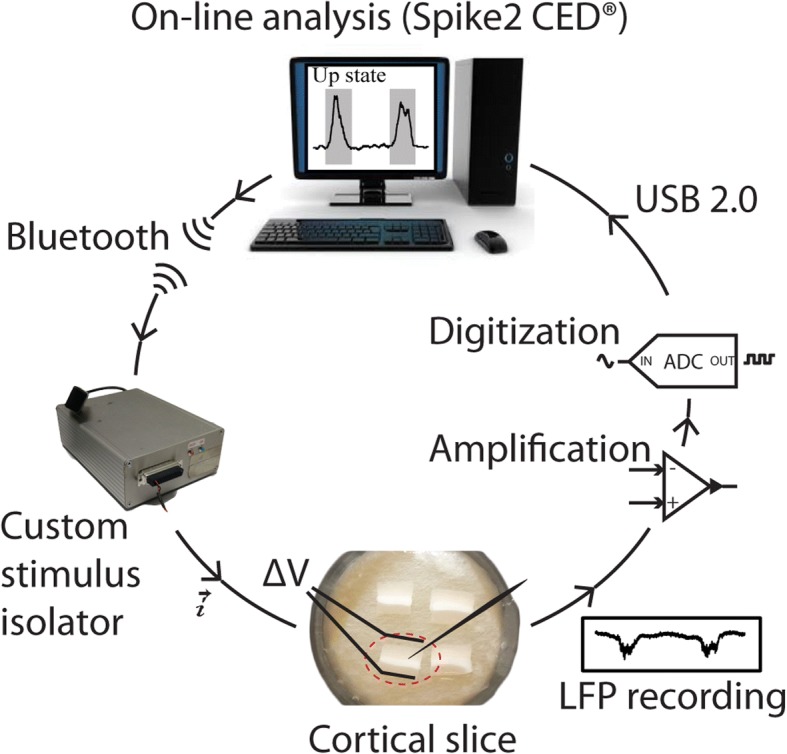
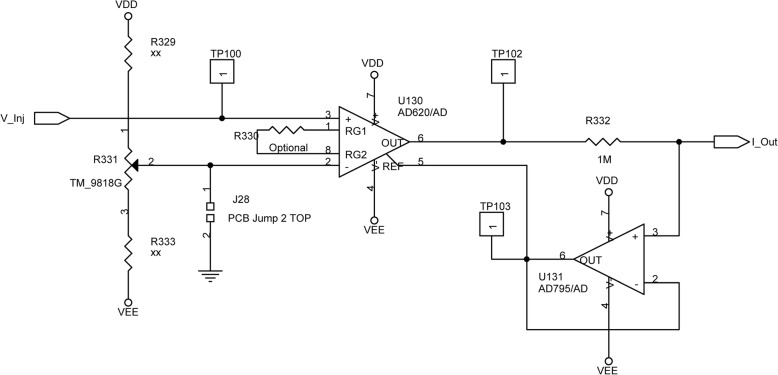
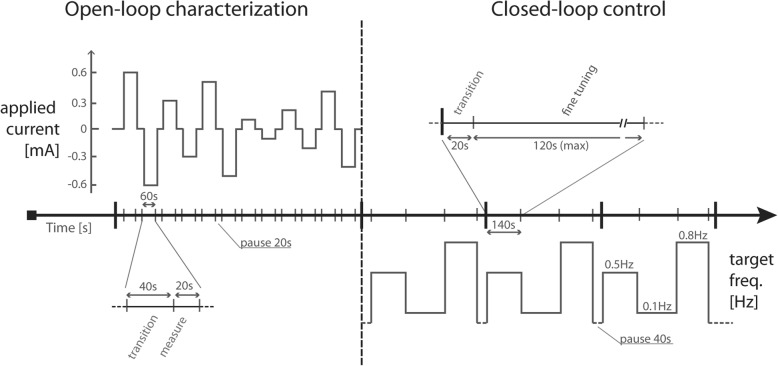
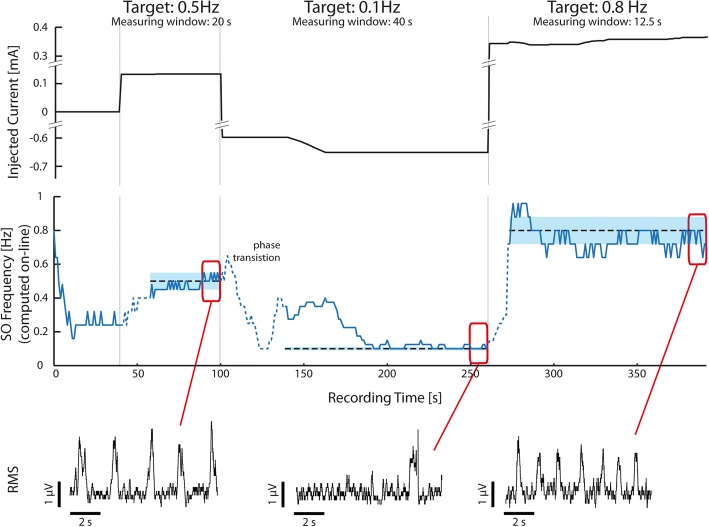
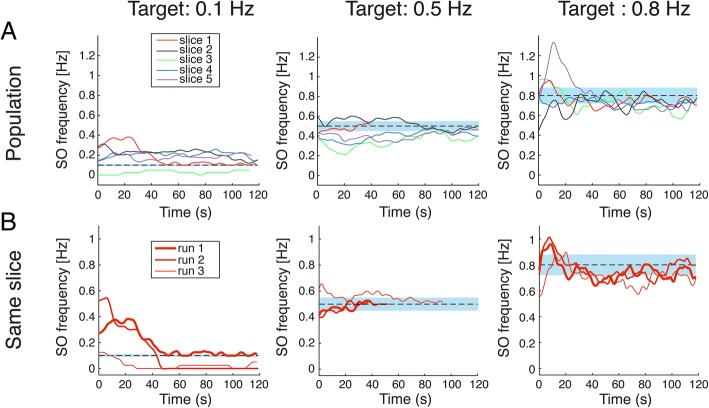
BACKGROUND: We present a closed-loop system able to control the frequency of slow oscillations (SO) spontaneously generated by the cortical network in vitro. The frequency of SO can be controlled by direct current (DC) electric fields within a certain range. Here we set out to design a system that would be able to autonomously bring the emergent oscillatory activity to a target frequency determined by the experimenter. METHODS: The cortical activity was recorded through an electrode and was analyzed online. Once a target frequency was set, the frequency of the slow oscillation was steered through the injection of DC of variable intensity that generated electric fields of proportional amplitudes in the brain slice. To achieve such closed-loop control, we designed a custom programmable stimulator ensuring low noise and accurate tuning over low current levels. For data recording and analysis, we relied on commercial acquisition and software tools. RESULTS: The result is a flexible and reliable system that ensures control over SO frequency in vitro. The system guarantees artifact removal, minimal gaps in data acquisition and robustness in spite of slice heterogeneity. CONCLUSIONS: Our tool opens new possibilities for the investigation of dynamics of cortical slow oscillations-an activity pattern that is associated with cognitive processes such as memory consolidation, and that is altered in several neurological conditions-and also for potential applications of this technology.
Overview
The claims and statistics of this paper haven’t been checked yet.
Free: it reads the open-access text and checks the first 5 claims that cite a source we can check. Create a free account to check every claim.
Integrity signals
Registry
Cites
Statistics
Figures
Verification
Claims the paper makes
The claims and statistics of this paper haven’t been checked yet.
Free: it reads the open-access text and checks the first 5 claims that cite a source we can check. Create a free account to check every claim.
Claims other papers make about this one
Each is checked against this paper’s own text: does it say what the citing paper says it does?
The check wasn’t confident either way, so it gives no verdict — never disputed.
In the citing paper
“Indeed, across various physiological and pathological conditions and experimental models, decreases and increases of PCI during loss and recovery of consciousness are invariably associated with the obliteration and resurgence of recurrent waves of activations.[36][37][38][39]”
From An integrative, multiscale view on neural theories of consciousness (2024) · cites this paper as [36]
Experimental — accuracy not yet measured
Self-check
Percentages, sums and reported differences re-computed from the paper’s own numbers.
The self-check needs the paper’s full text.
Citations
Cites
Hodgkin, A. L., & Huxley, A. F. (1952) · The Journal of Physiology · doi:10.1113/jphysiol.1952.sp004764 · Cited by 23,191 · cited 1×
“At the single-cell level, notable examples are the voltage-clamp technique used in 1952 by Hodgkin and Huxley to design their model [1], or the dynamical-clamp technique introduced in 1993 by Sharp and colleagues to add in-silico”
MethodDiekelmann, S., & Born, J. (2010) · Nature Reviews Neuroscience · doi:10.1038/nrn2762 · Cited by 3,760 · cited 1×
“Furthermore, it is well established that SO during slow-wave sleep are associated with consolidation of information, and with enhanced memory and cognitive performance [15, 16] (reviewed in [17]).”
BackgroundTranscranial direct current stimulation: State of the art 2008
Nitsche, M. A., Cohen, L. G., Wassermann, E. M., Priori, A., Lang, N., Antal, A., Paulus, W., Hummel, F., Boggio, P. S., Fregni, F., et al. (2008) · Brain Stimulation · doi:10.1016/j.brs.2008.06.004 · Cited by 3,057
Evidence-based guidelines on the therapeutic use of transcranial direct current stimulation (tDCS)
Lefaucheur, J.-P., Antal, A., Ayache, S. S., Benninger, D. H., Brunelin, J., Cogiamanian, F., Cotelli, M., De Ridder, D., Ferrucci, R., Langguth, B., et al. (2017) · Clinical Neurophysiology · doi:10.1016/j.clinph.2016.10.087 · Cited by 1,826 · cited 1×
“In fact, tDCS has been shown to have good potential for a wide range of clinical applications [45–47] (for a recent review see [48]).”
BackgroundBoosting slow oscillations during sleep potentiates memory
Marshall, L., Helgadóttir, H., Mölle, M., & Born, J. (2006) · Nature · doi:10.1038/nature05278 · Cited by 1,792 · cited 1×
“In particular, SO during sleep enhanced through transcranial magnetic stimulation have been found to enhance memory [49].”
BackgroundCellular and network mechanisms of rhythmic recurrent activity in neocortex
Sanchez-Vives, M. V., & McCormick, D. A. (2000) · Nature Neuroscience · doi:10.1038/79848 · Cited by 1,539 · cited 3×
“Then, a modified ACSF simulating ionic values in vivo (as described in [11, 36]), was used throughout the rest of the experiment, which had the same ionic composition except for different levels of the following (in mM): KCl, 4; MgSO4, 1; and CaCl2, 1.”
BackgroundMethodSelf-citationEffect on parkinsonian signs and symptoms of bilateral subthalamic nucleus stimulation
Limousin, P., Pollak, P., Benazzouz, A., Hoffmann, D., Le Bas, J.-F., Perret, J. E., Benabid, A.-L., & Broussolle, E. (1995) · The Lancet · doi:10.1016/s0140-6736(95)90062-4 · Cited by 1,392 · cited 1×
“In the realm of clinical applications, even though some brain stimulation procedures, such as deep brain stimulation in Parkinson’s disease [8], have been well established for over two decades, the use of closed-loop systems associated with deep brain stimulation is recent and still experimental [9] despite their adva…”
BackgroundAdaptive deep brain stimulation in advanced Parkinson disease.
Little, S., Pogosyan, A., Neal, S., Zavala, B., Zrinzo, L., Hariz, M., Foltynie, T., Limousin, P., Ashkan, K., FitzGerald, J., et al. (2013) · Annals of Neurology · doi:10.1002/ana.23951 · Cited by 1,374 · cited 1×
“In the realm of clinical applications, even though some brain stimulation procedures, such as deep brain stimulation in Parkinson’s disease [8], have been well established for over two decades, the use of closed-loop systems associated with deep brain stimulation is recent and still experimental [9] despite their adva…”
BackgroundSpectral fingerprints of large-scale neuronal interactions
Siegel, M., Donner, T. H., & Engel, A. K. (2012) · Nature Reviews Neuroscience · doi:10.1038/nrn3137 · Cited by 1,295 · cited 1×
“These frequency bands during wakefulness have been associated with cognitive processes, short-term and working memory [20, 21], as well as with attention and arousal levels [22–25].”
BackgroundEndogenous electric fields may guide neocortical network activity
Fröhlich, F., & McCormick, D. A. (2010) · Neuron · doi:10.1016/j.neuron.2010.06.005 · Cited by 913 · cited 1×
“Every second the software instructed the stimulator to inject current into the cortical slice [26, 28, 41] through two parallel customized silver-chloride wires (1 mm diameter, 10 mm length) placed 5–8 mm apart (depending on the slice size), such that the electric field was oriented parallel to the apical-dendritic ax…”
MethodAuditory closed-loop stimulation of the sleep slow oscillation enhances memory
Ngo, H.-V. V., Martinetz, T., Born, J., & Mölle, M. (2013) · Neuron · doi:10.1016/j.neuron.2013.03.006 · Cited by 885 · cited 1×
“Furthermore, slow waves have been entrained through auditory close-loop stimulation, also enhancing memory [51].”
BackgroundClosed-Loop Deep Brain Stimulation Is Superior in Ameliorating Parkinsonism
Rosin, B., Slovik, M., Mitelman, R., Rivlin-Etzion, M., Haber, S. N., Israel, Z., Vaadia, E., & Bergman, H. (2011) · Neuron · doi:10.1016/j.neuron.2011.08.023 · Cited by 793 · cited 1×
“In the realm of clinical applications, even though some brain stimulation procedures, such as deep brain stimulation in Parkinson’s disease [8], have been well established for over two decades, the use of closed-loop systems associated with deep brain stimulation is recent and still experimental [9] despite their adva…”
BackgroundBikson, M., Inoue, M., Akiyama, H., Deans, J. K., Fox, J. E., Miyakawa, H., & Jefferys, J. G. R. (2004) · The Journal of Physiology · doi:10.1113/jphysiol.2003.055772 · Cited by 743 · cited 3×
“This measure is not appreciably modified, neither by the presence of the slice nor by the recording electrodes [41].”
BackgroundMethodSteriade, M., Contreras, D., Curro Dossi, R., & Nunez, A. (1993) · The Journal of Neuroscience · doi:10.1523/jneurosci.13-08-03284.1993 · Cited by 722 · cited 1×
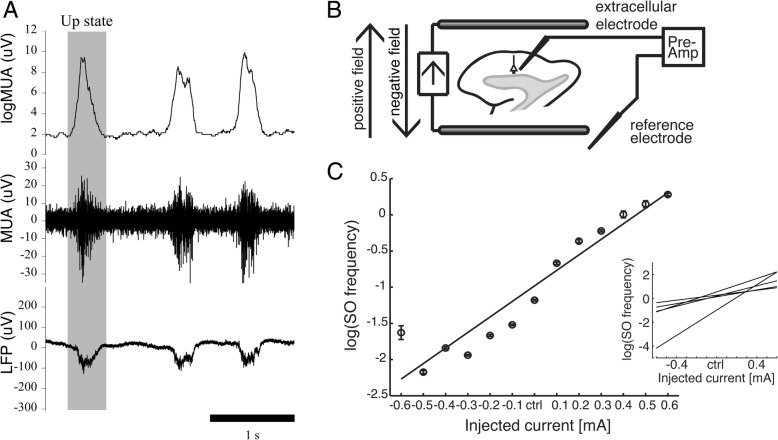
“SO alternate at a frequency of ≤1 Hz between active and silent periods of neuronal activity [18], also referred to as Up and Down states, respectively.”
BackgroundSynchronization of fast (30-40 Hz) spontaneous cortical rhythms during brain activation
Steriade, M., Amzica, F., & Contreras, D. (1996) · The Journal of Neuroscience · doi:10.1523/jneurosci.16-01-00392.1996 · Cited by 646 · cited 1×
“During Up states there is synchronization in beta (15–30 Hz) and gamma (30–90 Hz) frequencies, similar to what can be observed during wakefulness [12, 19].”
BackgroundSteriade, M., Contreras, D., & Nuiiez, A. (1993) · Cited by 594
Reato, D., Rahman, A., Bikson, M., & Parra, L. C. (2010) · The Journal of Neuroscience · doi:10.1523/jneurosci.2059-10.2010 · Cited by 573
Polarization of the human motor cortex through the scalp
Priori, A., Berardelli, A., Rona, S., Accornero, N., & Manfredi, M. (1998) · NeuroReport · doi:10.1097/00001756-199807130-00020 · Cited by 568
Transcranial direct current stimulation during sleep improves declarative memory
Marshall, L., Mölle, M., Hallschmid, M., & Born, J. (2004) · The Journal of Neuroscience · doi:10.1523/jneurosci.2725-04.2004 · Cited by 548 · cited 1×
“Furthermore, it is well established that SO during slow-wave sleep are associated with consolidation of information, and with enhanced memory and cognitive performance [15, 16] (reviewed in [17]).”
BackgroundControlling Bursting in Cortical Cultures with Closed-Loop Multi-Electrode Stimulation
Wagenaar, D. A., Madhavan, R., Pine, J., & Potter, S. M. (2005) · The Journal of Neuroscience · doi:10.1523/jneurosci.4209-04.2005 · Cited by 452 · cited 1×
“More recently, at the network level, different groups have demonstrated their ability to control the bursting frequency in in-vitro preparations [3, 4], and Jackson and colleagues were able to induce plasticity in the motor cortex during an in-vivo experiment thanks to an implantable closed-loop device [5].”
BackgroundLong-term motor cortex plasticity induced by an electronic neural implant
Jackson, A., Mavoori, J., & Fetz, E. E. (2006) · Nature · doi:10.1038/nature05226 · Cited by 450 · cited 1×
“More recently, at the network level, different groups have demonstrated their ability to control the bursting frequency in in-vitro preparations [3, 4], and Jackson and colleagues were able to induce plasticity in the motor cortex during an in-vivo experiment thanks to an implantable closed-loop device [5].”
BackgroundAghajanian, G. K., & Rasmussen, K. (1989) · Synapse · doi:10.1002/syn.890030406 · Cited by 445 · cited 1×
“Tissue viability was increased during preparation by modification of the sucrose-substitution technique [37].”
MethodClosed-loop stimulation of temporal cortex rescues functional networks and improves memory
Ezzyat, Y., Wanda, P. A., Levy, D. F., Kadel, A., Aka, A., Pedisich, I., Sperling, M. R., Sharan, A. D., Lega, B. C., Burks, A., et al. (2018) · Nature Communications · doi:10.1038/s41467-017-02753-0 · Cited by 347 · cited 1×
“Furthermore, a closed-loop system using alternating current (AC) stimulation of the human temporal cortex has been recently found to be useful for improving episodic memory [6] (for a review see [7]).”
BackgroundStam, C. J., Van Der Made, Y., Pijnenburg, Y. A. L., & Scheltens, P. (2003) · Acta Neurologica Scandinavica · doi:10.1034/j.1600-0404.2003.02067.x · Cited by 298 · cited 1×
“Because the imbalance between excitation and inhibition that leads to an alteration of the network activation patterns could be the basis of neurological or neurodegenerative diseases, such as Parkinson’s disease [24] and Alzheimer’s disease [43, 44], implantation of closed-loop systems may aid these clinical populati…”
BackgroundThe dynamic clamp: artificial conductances in biological neurons
Sharp, A. A., O'Neil, M. B., Abbott, L. F., & Marder, E. (1993) · Trends in Neurosciences · doi:10.1016/0166-2236(93)90004-6 · Cited by 291 · cited 1×
“org/publicdomain/ze conductances to the biological ones [2].”
Population dynamics of interacting spiking neurons
Mattia, M., & Del Giudice, P. (2002) · Physical Review E · doi:10.1103/physreve.66.051917 · Cited by 288 · cited 1×
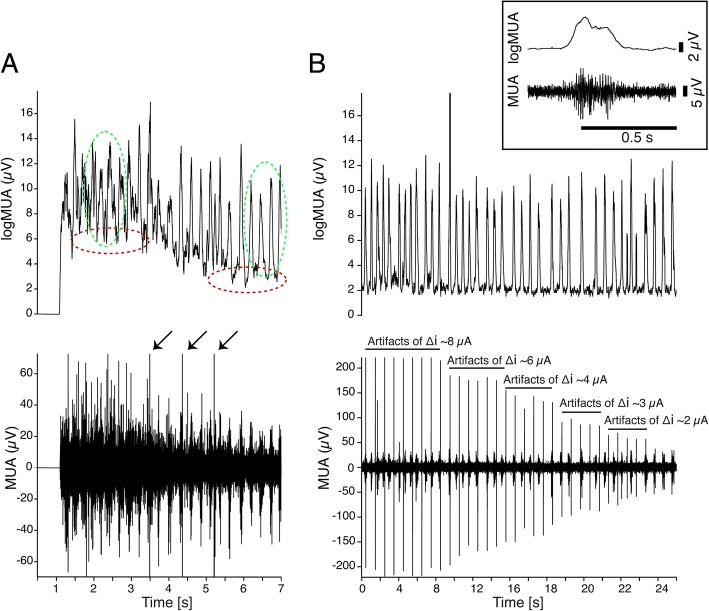
“A method to estimate MUA has already been described [28, 38]: in brief, the power spectrum of the population firing rate has Fourier components proportional to the firing rate itself [39].”
MethodClosed-loop Neurostimulation: The Clinical Experience
Sun, F. T., & Morrell, M. J. (2014) · Neurotherapeutics · doi:10.1007/s13311-014-0280-3 · Cited by 286 · cited 1×
“An implantable closed-loop system is thought to ameliorate the conditions of patients affected by Parkinson’s disease or suffering from epileptic crises (for a review see [42]).”
BackgroundHigh frequency oscillations in the intact brain
Buzsáki, G., & Silva, F. L. D. (2012) · Progress in Neurobiology · doi:10.1016/j.pneurobio.2012.02.004 · Cited by 252 · cited 1×
“These frequency bands during wakefulness have been associated with cognitive processes, short-term and working memory [20, 21], as well as with attention and arousal levels [22–25].”
BackgroundDesmedt, J. E., & Tomberg, C. (1994) · Neuroscience Letters · doi:10.1016/0304-3940(94)90432-4 · Cited by 240
Kirov, R., Weiss, C., Siebner, H. R., Born, J., & Marshall, L. (2009) · Proceedings of the National Academy of Sciences · doi:10.1073/pnas.0904438106 · Cited by 208 · cited 1×
“There is also memory enhancement while activated during wakefulness [50], although through the activation of higher frequencies.”
BackgroundBabiloni, C., Ferri, R., Moretti, D. V., Strambi, A., Binetti, G., Dal Forno, G., Ferreri, F., Lanuzza, B., Bonato, C., Nobili, F., et al. (2004) · European Journal of Neuroscience · doi:10.1111/j.0953-816x.2004.03333.x · Cited by 173 · cited 1×
“Because the imbalance between excitation and inhibition that leads to an alteration of the network activation patterns could be the basis of neurological or neurodegenerative diseases, such as Parkinson’s disease [24] and Alzheimer’s disease [43, 44], implantation of closed-loop systems may aid these clinical populati…”
BackgroundShaping the Default Activity Pattern of the Cortical Network
Sanchez-Vives, M. V., Massimini, M., & Mattia, M. (2017) · Neuron · doi:10.1016/j.neuron.2017.05.015 · Cited by 173 · cited 3×
“Cortical slices spontaneously engaged in the generation of the typical pattern of slow (< 1 Hz) oscillatory activity that has been proposed to be the default emergent activity of the cortical network [13, 14].”
BackgroundMethodSelf-citationDorval, A. D., Christini, D. J., & White, J. A. (2001) · Annals of Biomedical Engineering · doi:10.1114/1.1408929 · Cited by 162
Noninvasive Brain Stimulation Protocols in the Treatment of Epilepsy: Current State and Perspectives
Nitsche, M. A., & Paulus, W. (2009) · Neurotherapeutics · doi:10.1016/j.nurt.2009.01.003 · Cited by 150
Spontaneous High-Frequency (10–80 Hz) Oscillations during Up States in the Cerebral Cortex In Vitro
Compte, A., Reig, R., Descalzo, V. F., Harvey, M. A., Puccini, G. D., & Sanchez-Vives, M. V. (2008) · The Journal of Neuroscience · doi:10.1523/jneurosci.2684-08.2008 · Cited by 134 · cited 3×
“Interestingly, SO in in-vitro cortical slices [11, 12] can be modulated by DC stimulation.”
BackgroundSelf-citationSlow-Wave Activity Enhancement to Improve Cognition
Wilckens, K. A., Ferrarelli, F., Walker, M. P., & Buysse, D. J. (2018) · Trends in Neurosciences · doi:10.1016/j.tins.2018.03.003 · Cited by 133 · cited 2×
“Furthermore, it is well established that SO during slow-wave sleep are associated with consolidation of information, and with enhanced memory and cognitive performance [15, 16] (reviewed in [17]).”
BackgroundSlow and fast rhythms generated in the cerebral cortex of the anesthetized mouse
Ruiz-Mejias, M., Ciria-Suarez, L., Mattia, M., & Sanchez-Vives, M. V. (2011) · Journal of Neurophysiology · doi:10.1152/jn.00440.2011 · Cited by 126 · cited 2×
“7] kHz on an empirical basis, with respect to the one reported in [40].”
BackgroundSelf-citationAn autonomous implantable computer for neural recording and stimulation in unrestrained primates
Mavoori, J., Jackson, A., Diorio, C., & Fetz, E. E. (2005) · Journal of Neuroscience Methods · doi:10.1016/j.jneumeth.2005.04.017 · Cited by 122
Temperature Modulation of Slow and Fast Cortical Rhythms
Reig, R., Mattia, M., Compte, A., Belmonte, C., & Sanchez-Vives, M. V. (2009) · Journal of Neurophysiology · doi:10.1152/jn.00890.2009 · Cited by 117 · cited 2×
“LFP, local field potential; M signal and applied another moving-average filter with a longer time-window of 80ms to obtain MUA traces, similar to the ones obtained offline in [28, 38] (Fig.”
MethodResultSelf-citationNeural Control Engineering: The Emerging Intersection between Control Theory and Neuroscience
Schiff, S. J. (2011) · The MIT Press eBooks · doi:10.7551/mitpress/8436.001.0001 · Cited by 117
Neural Control Engineering: The Emerging Intersection Between Control Theory and Neuroscience
Schiff, S. J. (2011) · Cited by 111
Lopes, F. H. D. S., van Rotterdam, A., van Leeuwen, W. S., & Tielen, A. M. (1970) · Electroencephalography and Clinical Neurophysiology · doi:10.1016/0013-4694(70)90138-0 · Cited by 97
Sorensen, M. (2004) · Journal of Neuroscience · doi:10.1523/jneurosci.4449-03.2004 · Cited by 87
Slow wave activity as the default mode of the cerebral cortex
Sanchez-Vives, M. V. (2015) · Archives Italiennes de Biologie · doi:10.12871/000298292014239 · Cited by 77 · cited 2×
“Cortical slices spontaneously engaged in the generation of the typical pattern of slow (< 1 Hz) oscillatory activity that has been proposed to be the default emergent activity of the cortical network [13, 14].”
BackgroundSelf-citationClosed-loop, open-source electrophysiology
Rolston, J. D., Gross, R. E., & Potter, S. M. (2010) · Frontiers in Neuroscience · doi:10.3389/fnins.2010.00031 · Cited by 58
Lopes, F. H. D. S., van Rotterdam, A., van Leeuwen, W. S., & Tielen, A. M. (1970) · Electroencephalography and Clinical Neurophysiology · doi:10.1016/0013-4694(70)90137-9 · Cited by 45
Zrenner, C., Eytan, D., Wallach, A., Thier, P., & Marom, S. (2010) · Frontiers in Neuroscience · doi:10.3389/fnins.2010.00173 · Cited by 35
Arsiero, M., Lüscher, H.-R., & Giugliano, M. (2007) · PubMed · doi:10.4449/aib.v145i3.186 · Cited by 34 · cited 2×
“A set of possible tools ranging from dedicated hardware to real-time operating systems could be adopted to reduce latencies in the loop and to access faster dynamics (for a review see [7]).”
BackgroundSpontaneous Rhythmic Activity in the Adult Cerebral Cortex In Vitro
Sanchez-Vives, M. V. (2012) · Neuromethods · doi:10.1007/978-1-62703-020-5_8 · Cited by 26 · cited 11×
“Compte A, Reig R, Descalzo VF, Harvey MA, Puccini GD, Sanchez-Vives MV. Spontaneous high-frequency (10-80 Hz) oscillations during up states in the cerebral cortex in vitro.”
MethodSelf-citationControlling neural network responsiveness: tradeoffs and constraints
Keren, H., & Marom, S. (2014) · Frontiers in Neuroengineering · doi:10.3389/fneng.2014.00011 · Cited by 23 · cited 1×
“More recently, at the network level, different groups have demonstrated their ability to control the bursting frequency in in-vitro preparations [3, 4], and Jackson and colleagues were able to induce plasticity in the motor cortex during an in-vivo experiment thanks to an implantable closed-loop device [5].”
BackgroundD’Andola, M., Weinert, J. F., Covelo, J., Mattia, M., & Sanchez-Vives, M. V. (2026) · The Journal of Physiology · doi:10.1113/jp277400 · Cited by 15 · cited 10×
“Every second the software instructed the stimulator to inject current into the cortical slice [26, 28, 41] through two parallel customized silver-chloride wires (1 mm diameter, 10 mm length) placed 5–8 mm apart (depending on the slice size), such that the electric field was oriented parallel to the apical-dendritic ax…”
BackgroundMethodResultSelf-citationD’Andola, M., Weinert, J. F., Mattia, M., & Sanchez-Vives, M. V. (2018) · bioRxiv (Cold Spring Harbor Laboratory) · doi:10.1101/246819 · Cited by 13
Self-citationBouyer, J. J., Montaron, M., Rougeul, A., & Buser, P. (1980) · PubMed · Cited by 8
Cited by
An integrative, multiscale view on neural theories of consciousness
Storm, J. F., Klink, P. C., Aru, J., Senn, W., Goebel, R., Pigorini, A., Avanzini, P., Vanduffel, W., Roelfsema, P. R., Massimini, M., et al. (2024) · Neuron · doi:10.1016/j.neuron.2024.02.004 · Cited by 114
Sleep-like cortical dynamics during wakefulness and their network effects following brain injury
Massimini, M., Corbetta, M., Sanchez-Vives, M. V., Andrillon, T., Deco, G., Rosanova, M., & Sarasso, S. (2024) · Nature Communications · doi:10.1038/s41467-024-51586-1 · Cited by 82
Self-citationBrain state identification and neuromodulation to promote recovery of consciousness
van der Lande, G., Casas-Torremocha, D., Manasanch, A., Porta, L. D., Gosseries, O., Alnagger, N., Barra, A., Mejías, J. F., Panda, R., Riefolo, F., et al. (2024) · Brain Communications · doi:10.1093/braincomms/fcae362 · Cited by 28
“…techniques, tDCS is currently one of the most popular and well-studied, 171,172 as it is easy to apply and inexpensive. tDCS modulates membrane polarity and neuronal excitability, allowing for close-loop activity control 173 and producing long-term depression and potentiation-like mechanisms.”
BackgroundSelf-citationFarkhondeh Tale Navi, F., Heysieattalab, S., Ramanathan, D. S., Raoufy, M. R., & Nazari, M. A. (2022) · Neuroscience · doi:10.1016/j.neuroscience.2021.12.004 · Cited by 19
Altered Neocortical Dynamics in a Mouse Model of Williams–Beuren Syndrome
Dasilva, M., Navarro-Guzman, A., Ortiz‐Romero, P., Camassa, A., Muñoz, A., Campuzano, V., & Sanchez-Vives, M. V. (2019) · Molecular Neurobiology · doi:10.1007/s12035-019-01732-4 · Cited by 17
Self-citation
Metadata
- Authors
- D’Andola, M., Giulioni, M., Dante, V., Del Giudice, P., & Sanchez-Vives, M. V.
- Affiliations
- Consorci Institut D'Investigacions Biomediques August Pi I Sunyer (ES)
- Istituto Superiore di Sanità (IT)
- Institució Catalana de Recerca i Estudis Avançats (ES)
- Corresponding author
- Sanchez-Vives, Maria V.
- Venue
- Journal of NeuroEngineering and Rehabilitation
- Published
- 2019-01-09
- Volume
- 16
- Issue
- 1
- Pages
- 7-7
- ISSN
- 1743-0003 (ISSN-L)
- PMC
- PMC6327406
- OpenAlex
- W2914771135
- Cited by
- 16
- References
- 52
- Citations by year
- 2026: 1 · 2025: 3 · 2024: 5 · 2023: 3 · 2022: 1 · 2021: 2 · 2019: 1
- FWCI
- 0.58
- Type
- journal article
- Language
- en
- Open access
- gold
- doi.org
- Licence
- cc-by
- creativecommons.org/licenses/by/4.0/ (tdm)
- Locations
- Journal of NeuroEngineering and Rehabilitation (publishedVersion, cc-by)
- Europe PMC (PubMed Central) (publishedVersion, cc-by)
- PubMed Central (publishedVersion, cc-by)
- PubMed (publishedVersion)
- DOAJ (DOAJ: Directory of Open Access Journals) (submittedVersion, cc-by-sa)
- Zenodo (CERN European Organization for Nuclear Research) (submittedVersion, cc-by)
- Funders
- Ministerio de Economía y Competitividad (BFU2017-85048-R)
- FP7 Information and Communication Technologies (600806)
- Ministerio de Economía, Industria y Competitividad, Gobierno de España (FLAG-ERA (PCIN-2015-162-C02-01))
- Topics
- Life Sciences › Neuroscience › Cognitive Neuroscience › Neural dynamics and brain function
- Life Sciences › Neuroscience › Cellular and Molecular Neuroscience › Neuroscience and Neural Engineering
- Life Sciences › Neuroscience › Neurology › Transcranial Magnetic Stimulation Studies
- Keywords
- brain slices, memory consolidation, neurological disorders
- MeSH terms
- Animals, Brain, Electric Stimulation, Female, Ferrets, Male, Organ Culture Techniques, Brain-Computer Interfaces
About these checks
Registry, retraction, Cites and statistics results are computed, not judged, with one exception: a printed reference that no index lists is read once by a model before it counts as a citation error. Claims are extracted by a model and kept only when their quote appears verbatim in the text; each cited source is then checked, with a model’s help, for whether it says what the claim relies on. Those verdicts can be wrong — read the claim’s quote and the cited source before relying on one.
Statistics and arithmetic are recomputed, not judged.
Confidence bands are shown only for fields calibrated on our annotated test set. None is calibrated yet, so no band is shown.
What counts as a claim ›How we measure confidence ›How we check this ›
Are you an author, or do you see a problem with this page? Request a review
Data sources
Bibliographic data: Semantic Scholar, OpenAlex, Crossref.
Contains information from the Semantic Scholar Academic Graph Datasets, made available under the ODC Attribution License (ODC-BY 1.0).
Semantic Scholar’s data is described in: Kinney, R., et al. (2023). The Semantic Scholar Open Data Platform. arXiv:2301.10140.
