

Evaluation of tremor interference with control of voluntary reaching movements in patients with Parkinson's disease
Open accessThe DOI matches its Crossref record; 50 of the 51 references it cites were found in a registry or an index; 10 of the 33 sources its claims cite were checked for support.
Abstract
BACKGROUND: A large population of patients with Parkinson's disease (PD) displays the symptom of resting tremor. However, the extent that resting tremor may affect the performance of movement control has not been evaluated specifically. This study aims at establishing methods to quantitatively evaluate motor performance in PD patients with tremor, and at analyzing the interfering effects of tremor on control of reaching movements. METHODS: Ten PD patients with tremor and Ten healthy control subjects were recruited to participate in this study. All patients and healthy control subjects performed point-to-point reaching movements with their tremor affected arm or preferred arm. We verified that a smoothing model of minimum-jerk trajectory (MJT) can be used to extract voluntary movement trajectory from tremor-corrupted movement trajectory in the reaching tasks by the patients. Performance indices of reaction time (RT) and movement time (MT) of reaching movements by the PD subjects with tremor were evaluated using MJT trajectories. Differences of RT and MT between the recorded trajectories and MJT in PD and control subjects were calculated to investigate the extent that tremor may affect their motor performance. Linear mixed-effects model was used to identify the contributions of tremor, bradykinesia and rigidity to the performance indices of RT and MT based on UPDRS scores. The power spectrum densities (PSD) of tremor were also evaluated using hand velocities to represent tremor intensity and to analyze their correlations with RT and MT. RESULTS: The MJT model demonstrated good fit to recorded trajectory with a more consistent estimation of motor performance for both PD and control subjects. The RT and MT of patients were found to be 43.4 and 79.5% longer respectively than those of healthy control subjects. Analysis of the linear mixed-effects model was not able to reveal that tremor, bradykinesia and rigidity each had a significant contribution to RT or MT in PD patients with tremor. However, the PSD of tremor was found to correlate significantly to RT, but not to MT, in both linear regression and linear mixed-effects model. CONCLUSIONS: The minimum-jerk trajectory and power spectrum densities are effective quantitative tools for evaluating motor performance for PD patients with tremor. Resting tremor is one of the factors prolonging the initiation of voluntary reaching movement in these patients.
Overview
CoChat Summary
TL;DR
This study developed a minimum-jerk-trajectory (MJT) method to separate voluntary reaching from tremor in Parkinson’s disease (PD) and used it to quantify movement performance. In 10 PD patients with tremor versus 10 healthy controls, reaching reaction time and movement time were longer in PD, and tremor intensity was significantly related to prolonged reaction time.
Key findings
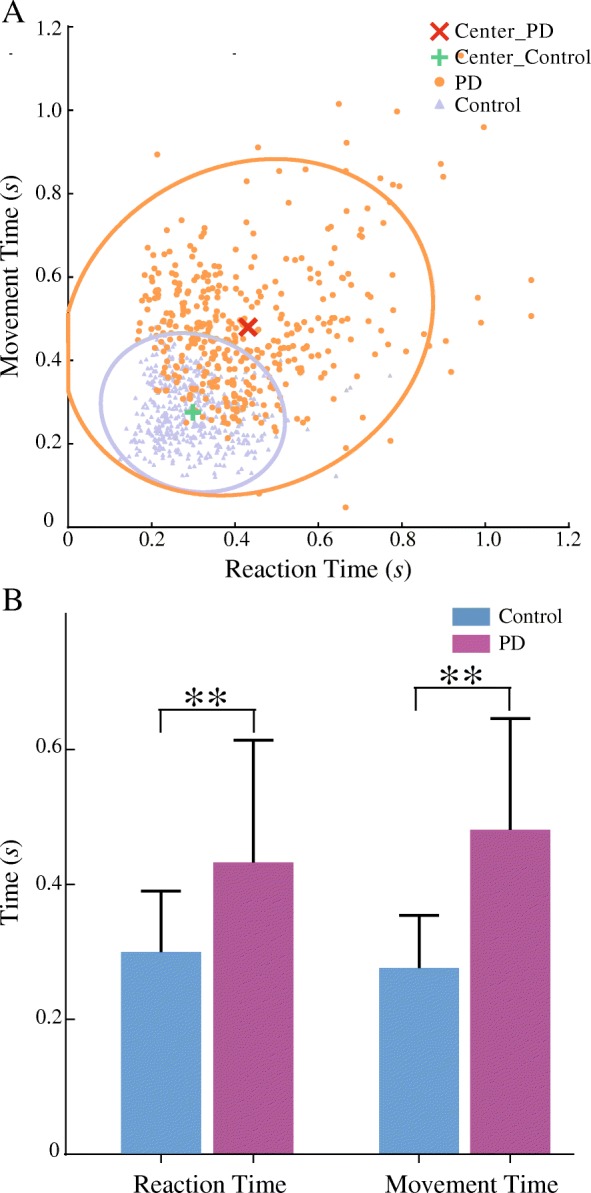
- In the 10 PD patients, reaction time (RT) and movement time (MT) were 43.4% and 79.5% longer than in the 10 healthy controls, respectively (p < 0.001 for both; effect sizes d = 0.903 for RT and d = 1.654 for MT).
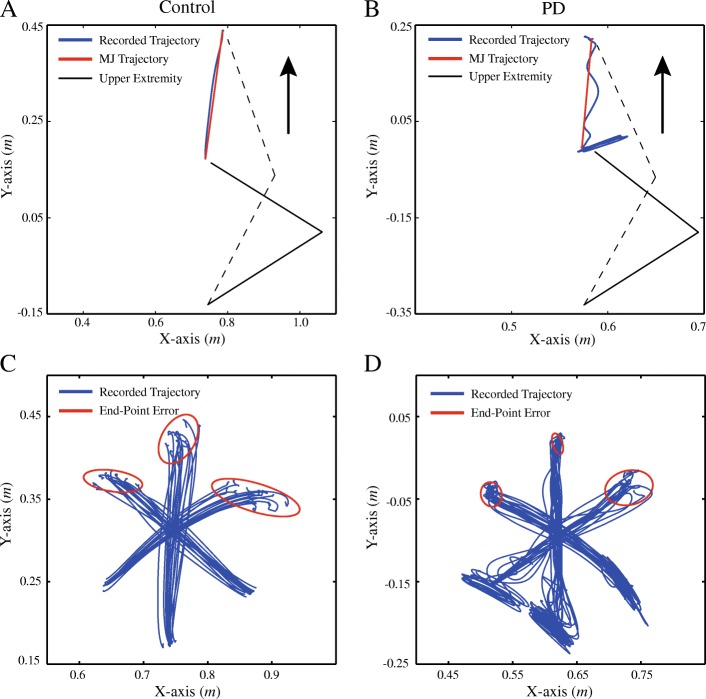
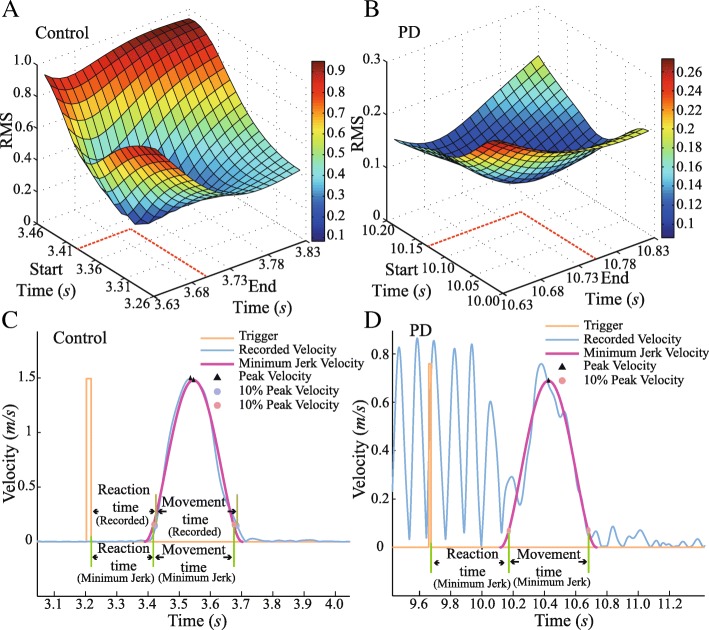
- The MJT-based estimates were consistent with recorded trajectories in healthy controls, but in PD patients tremor made recorded RT/MT less reliable; the authors therefore used MJT-extracted values for further analyses.
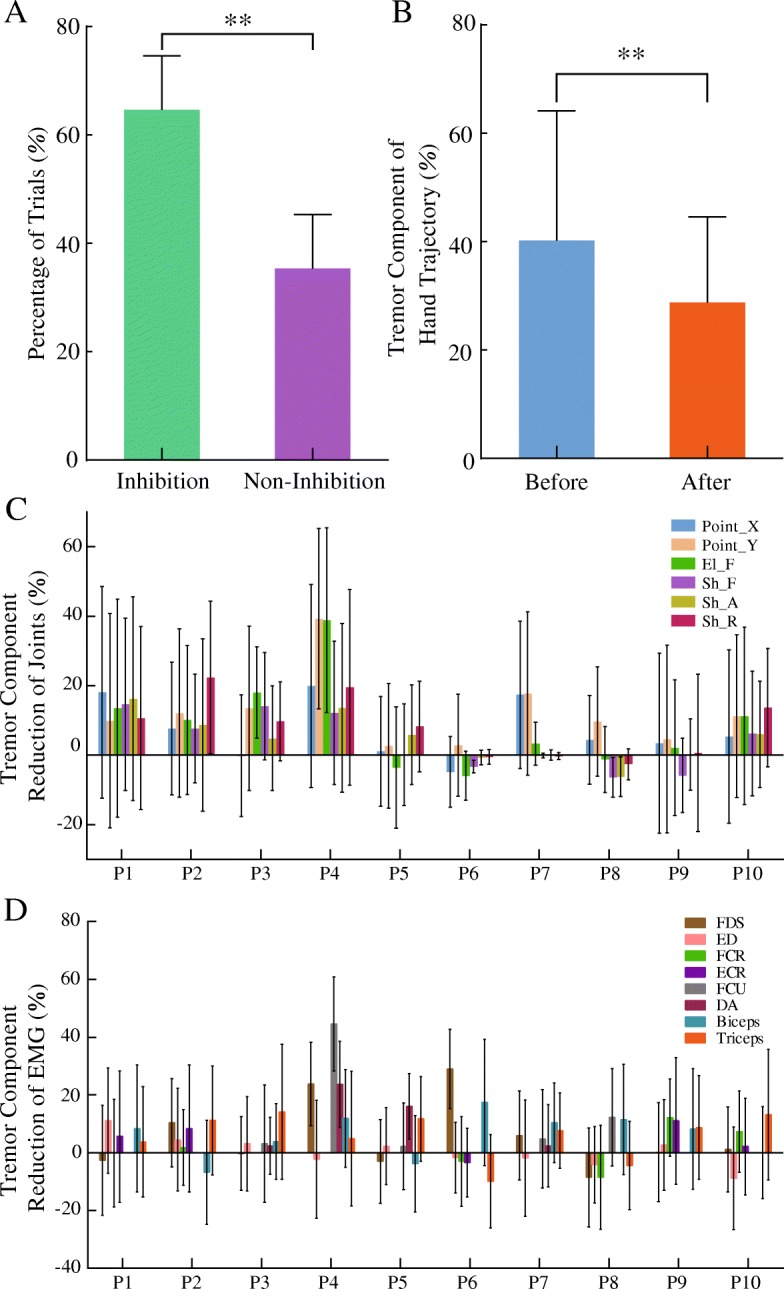
- Tremor activity decreased during/after movement: the tremor component across trials fell from 40.2 ± 24.0% before movement to 28.8 ± 15.8% after movement (p < 0.001, effect size r = 0.284), and inhibited trials were more common than non-inhibited trials (p = 0.005, r = 0.627).
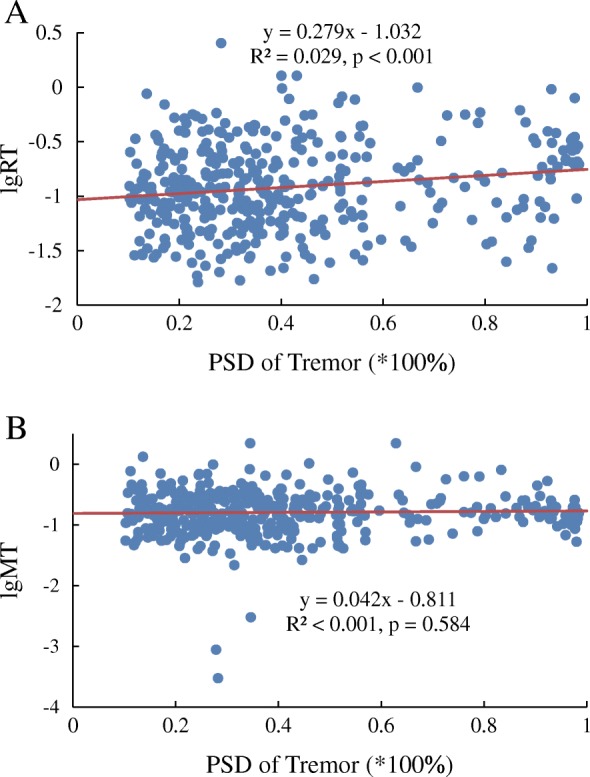
- Tremor intensity measured by PSD correlated significantly with RT (p < 0.001, R² = 0.029; LMM p = 0.012) but not with MT (p = 0.584; LMM p = 0.248).
Methods
- Design: comparative study of point-to-point reaching movements in 10 PD patients with moderate to severe resting tremor and 10 healthy controls.
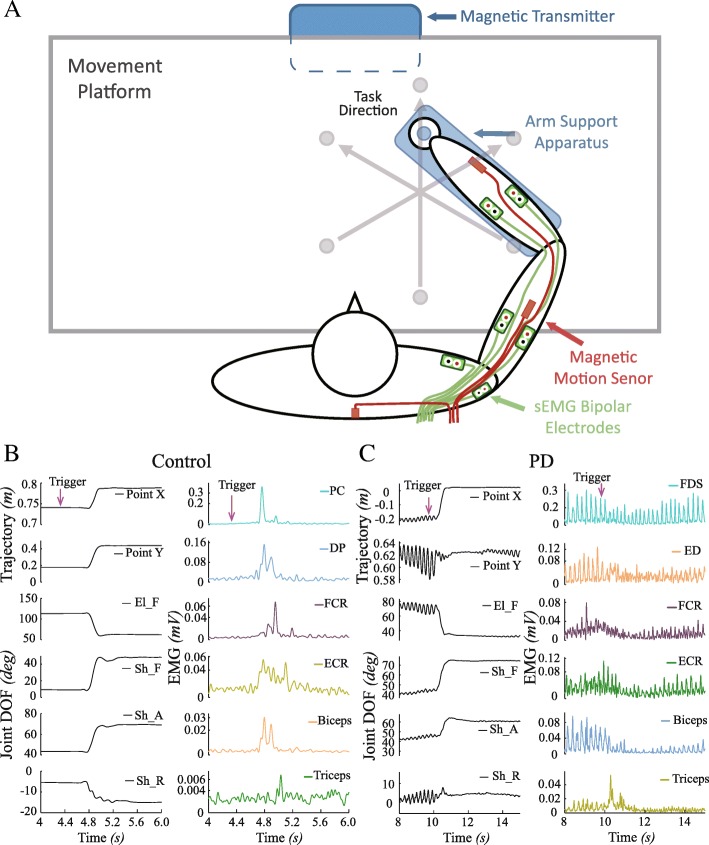
- Data/sample: kinematic recordings from reaching in three directions at a constant distance of 24 cm; patients also had sEMG recordings from selected muscles, and tremor intensity was quantified from hand-velocity power spectral density in the 2–7 Hz range.
- Analysis: a minimum-jerk trajectory (MJT) model with iterative RMS-error fitting was used to extract voluntary movement from tremor-corrupted trajectories; RT and MT were compared with t-tests/Wilcoxon tests, and linear mixed-effects models plus linear regression assessed contributions of tremor, bradykinesia, rigidity, and tremor PSD.
Limitations
- The paper states that selecting only patients with tremor does not allow distinguishing whether tremor, rigidity, or bradykinesia contributes most to impaired motor performance; it says subgrouping by PD subtype would be needed in future work.
- Evident from the text: the sample was small (10 PD, 10 controls), which limits generalizability and power.
- Evident from the text: patients were measured while on regular medication (taken 3 h before experiments), so medication effects on movement performance may confound interpretation.
Model-written summary. Check it against the paper before relying on it.
Integrity signals
Registry
Cites
Statistics
Figures
Verification
Claims the paper makes
6 Valid · 2 Not valid · 4 Not checked · 16 Own results and interpretations
Some cited sources support this claim and some don’t — read each source’s verdict below.
In the paper
“The abnormal cerebellum and basal ganglia that related to tremor [14, 22, 43, 44] and akinetic-rigid symptoms [6–9, 42] also lead to the longer RT or MT in PD patients.”
§ Evaluation of tremor interference with control of voluntary reaching movements in patients with Parkinson’s disease > Discussion
What the sources say
- Not checked — no full text of the sourcecites [14] Staude G Wolf W Ott M Oertel WH Dengler R Tremor as a factor in prolonged reaction times of parkinsonian patients Mov Disord Off J Mov Disord Soc 1995 10 153 162 10.1002/mds.870100205 7753057 source
- Supportedcites [22] Helmich RC Hallett M Deuschl G Toni I Bloem BR Cerebral causes and consequences of parkinsonian resting tremor: a tale of two circuits? Brain J Neurol 2012 135 3206 3226 10.1093/brain/aws023 PMC3501966 22382359 source
The citation appears in the group supporting the tremor-related part of the sentence. The paper’s discussion of the dimmer-switch model (p. 13) says that both the basal ganglia and the cerebello-thalamo-cortical circuit are causally related to tremor. The sentence’s conclusion about longer RT or MT is not the part to which this citation is attached. (LLM, conf=0.88)
- Not checked — no full text of the sourcecites [43] Mink JW Thach WT Basal ganglia motor control. III. Pallidal ablation: normal reaction time, muscle cocontraction, and slow movement J Neurophysiol 1991 65 330 351 10.1152/jn.1991.65.2.330 2016644 source
- Not checked — no full text of the sourcecites [44] Sasaki K Gemba H Tsujimoto T Cortical field potential associated with hand movement on warning-imperative visual stimulus and cerebellum in the monkey Brain Res 1990 519 343 346 10.1016/0006-8993(90)90099-W 2397415 source
- Partly supportedcites [6] Baraduc P Thobois S Gan J Broussolle E Desmurget M A common optimization principle for motor execution in healthy subjects and parkinsonian patients J Neurosci 2013 33 665 677 10.1523/JNEUROSCI.1482-12.2013 23303945 PMC6704928 sourceExperimental — accuracy not yet measured
Baraduc et al. (2013) do support the basal-ganglia/akinetic-rigid half of the claim: the Results section 'Reaction and movement times' reports mean RT 91 ms longer (352 vs 261 ms) and movement duration 1693 vs 940 ms in Off-DBS akinetic-rigid PD patients, and the Discussion/'What reduces the motor range in PD?' sections tie this slowing to basal ganglia dysfunction (GPi inactivation, direct/indirect pathway imbalance, narrow motor dynamic range). The cerebellar component is not supported: searches of our copy for 'cerebellum/cerebellar' returned no passage implicating the cerebellum at all. Tremor is also not offered as a cause of longer RT/MT — it appears only as oscillations superimposed on motor commands in some patients (Discussion, crediting Lance et al. 1963, Brown et al. 1997, Wenzelburger et al. 2000), and patients with mild tremor were excluded from the sample (Subjects). (LLM, conf=0.78)
- Not checked — no full text of the sourcecites [7] Majsak M The reaching movements of patients with Parkinson’s disease under self- determined maximal speed and visually cued conditions Brain. 1998 121 755 766 10.1093/brain/121.4.755 9577399 source
- Disputedcites [8] Mazzoni P Hristova A Krakauer JW Why don’t we move faster? Parkinson’s disease, movement vigor, and implicit motivation J Neurosci 2007 27 7105 7116 10.1523/JNEUROSCI.0264-07.2007 17611263 PMC6794577 sourceExperimental — accuracy not yet measured
The Results section, “Speed and MT were successfully matched between groups” (page unavailable), reports no significant difference in movement time between patients and controls. The paper also says its task did not measure reaction time; it does not establish that cerebellar or basal-ganglia abnormalities caused longer RT or MT. (LLM, conf=0.86)
Checked by a reasoning model — may be wrong.
- Not checked — no full text of the sourcecites [9] Romero DH Van Gemmert AWA Adler CH Bekkering H Stelmach GE Altered aiming movements in Parkinson’s disease patients and elderly adults as a function of delays in movement onset Exp Brain Res 2003 151 249 261 10.1007/s00221-003-1452-2 12783145 source
- Not checked — no full text of the sourcecites [42] Niv Y Joel D Dayan P A normative perspective on motivation Trends Cogn Sci 2006 10 375 381 10.1016/j.tics.2006.06.010 16843041 source
plainstates a cause- Asserted: passes — The authors put it forward as true.
- Checkable: passes — It can be checked against evidence.
- Load-bearing: passes — The paper’s conclusions depend on it.
- Based: passes — The paper gives a reason why it holds.
The cited sources support only part of this claim — read each source’s verdict below.
In the paper
“A second implication could be that the UPDRS scores are not sufficiently sensitive to motor performance [38].”
§ Evaluation of tremor interference with control of voluntary reaching movements in patients with Parkinson’s disease > Discussion
What the sources say
- Partly supportedcites [38] Nocera J Hass C Should gait speed be included in the clinical evaluation of Parkinson’s disease? Adv Park Dis 2012 01 1 4 10.4236/apd.2012.11001 sourceExperimental — accuracy not yet measured
Our copy does support the general thrust: the Discussion concludes that 'subjective measures of the UPDRS may not adequately evaluate physical function when compared to an objective measure of gait speed,' and the Introduction notes the UPDRS 'may be too simplistic and may fail to capture the essence of PIGD given its 0-4 scale.' However, the study population is 88 individuals with early-to-moderate idiopathic PD (Modified Hoehn & Yahr 1-2.5), with no tremor-predominant subgroup analysed and no mention of tremor as a stratifying feature — the qualifier 'in PD patients with tremor' is not this paper's. The claim also states as fact and across 'motor performance' what the source hedges ('may') and confines to gait/physical function, so that part attributed here is unsupported. (LLM, conf=0.72)
hedged- Asserted: passes — The authors put it forward as true.
- Checkable: passes — It can be checked against evidence.
- Load-bearing: passes — The paper’s conclusions depend on it.
- Based: passes — The paper gives a reason why it holds.
- Partly supported
The sources with a verdict support this claim; the rest weren’t checked yet, have no full text we could read, or their verdicts aren’t rated yet.
In the paper
“We demonstrate here that the use of PSD of tremor to quantify tremor intensity [20, 45] can improve its sensitivity for motor performance evaluation.”
§ Evaluation of tremor interference with control of voluntary reaching movements in patients with Parkinson’s disease > Discussion
What the sources say
- Supportedcites [20] Hao M-Z Xu S-Q Hu Z-X Xu F-L Niu C-XM Xiao Q Inhibition of parkinsonian tremor with cutaneous afferent evoked by transcutaneous electrical nerve stimulation J Neuroengineering Rehabil. 2017 14 75 10.1186/s12984-017-0286-2 PMC5513246 28705167 source
The “Estimation of tremor amplitude and frequency” section (page unavailable) identifies PSD peaks as the marker for tremor intensity. In the printed sentence, the citation attaches to using PSD to quantify tremor; the sensitivity comparison is the citing authors’ own conclusion, not a finding attributed to this source. (LLM, conf=0.87)
- Not checked — no full text of the sourcecites [45] Takanokura M Kokuzawa N Sakamoto K The origins of physiological tremor as deduced from immersions of the finger in various liquids Eur J Appl Physiol 2002 88 29 41 10.1007/s00421-002-0677-2 12436268 source
boostedstates a cause- Asserted: passes — The authors put it forward as true.
- Checkable: passes — It can be checked against evidence.
- Load-bearing: passes — The paper’s conclusions depend on it.
- Based: passes — The paper gives a reason why it holds.
- Supported
The cited sources support only part of this claim — read each source’s verdict below.
In the paper
“Lack of dopamine has been shown to result in slower movements that had the similar characteristics of the MJT [2, 8, 41, 42].”
§ Evaluation of tremor interference with control of voluntary reaching movements in patients with Parkinson’s disease > Discussion
What the sources say
- Not checked — no full text of the sourcecites [2] Ceravolo R Rossi C Del Prete E Bonuccelli U A review of adverse events linked to dopamine agonists in the treatment of Parkinson’s disease Expert Opin Drug Saf 2016 15 181 198 10.1517/14740338.2016.1130128 26646536 source
- Partly supportedcites [8] Mazzoni P Hristova A Krakauer JW Why don’t we move faster? Parkinson’s disease, movement vigor, and implicit motivation J Neurosci 2007 27 7105 7116 10.1523/JNEUROSCI.0264-07.2007 17611263 PMC6794577 sourceExperimental — accuracy not yet measured
The Conclusions (page unavailable) describe Parkinson’s disease as a dopamine-depleting condition in which patients are more likely to move slowly. The ‘Patients showed normal speed-accuracy trade-off’ section (page unavailable) reports no group difference in integrated squared jerk or other measured trajectory features. The paper does not compare those movements with a minimum-jerk trajectory, so that specific characterization is unsupported. (LLM, conf=0.84)
- Not checked — no full text of the sourcecites [41] Ghilardi MF Alberoni M Rossi M Franceschi M Mariani C Fazio F Visual feedback has differential effects on reaching movements in Parkinson’s and Alzheimer’s disease Brain Res 2000 876 112 123 10.1016/S0006-8993(00)02635-4 10973599 source
- Not checked — no full text of the sourcecites [42] Niv Y Joel D Dayan P A normative perspective on motivation Trends Cogn Sci 2006 10 375 381 10.1016/j.tics.2006.06.010 16843041 source
boostedstates a cause- Asserted: passes — The authors put it forward as true.
- Checkable: passes — It can be checked against evidence.
- Load-bearing: passes — The paper’s conclusions depend on it.
- Based: passes — The paper gives a reason why it holds.
Every source the paper cites for this claim was checked and supports it.
In the paper
“Prolonged RT and MT were also observed in the PD patients with other symptoms (i.e. bradykinesia and rigidity) [6].”
§ Evaluation of tremor interference with control of voluntary reaching movements in patients with Parkinson’s disease > Discussion
What the sources say
- Supportedcites [6] Baraduc P Thobois S Gan J Broussolle E Desmurget M A common optimization principle for motor execution in healthy subjects and parkinsonian patients J Neurosci 2013 33 665 677 10.1523/JNEUROSCI.1482-12.2013 23303945 PMC6704928 source
The Results subsection 'Reaction and movement times' (p. of our copy) states that PD patients without STN-DBS were slower to initiate and complete movements than controls: mean reaction time 352 ms vs 261 ms (91 ms longer, p = 0.017) and movement duration 1693 ms vs 940 ms (p < 10^-4). The 'Subjects' section confirms the sampled population was akinetic-rigid PD patients (bradykinesia and rigidity, 14 analyzed with bilateral STN-DBS), matching the population qualifier in the citing sentence. The Abstract likewise characterizes these patients as bradykinetic with an abnormally narrow motor dynamic range. (LLM, conf=0.88)
plainstates an association- Asserted: passes — The authors put it forward as true.
- Checkable: passes — It can be checked against evidence.
- Load-bearing: unclear — It is unclear whether the paper’s conclusions depend on it.
- Based: passes — The paper gives a reason why it holds.
- Supported
9 more claims
Create a free account to see all 28 claims and to verify the 2 references still open.
- Probably not a substantial claim. 4
- It may state two separate claims as one. 11
Citations
Cites
Welch, P. (1967) · IEEE Transactions on Audio and Electroacoustics · doi:10.1109/tau.1967.1161901 · Cited by 12,277
Hughes, A. J., Daniel, S. E., Kilford, L., & Lees, A. J. (1992) · Journal of Neurology, Neurosurgery & Psychiatry · doi:10.1136/jnnp.55.3.181 · Cited by 10,378
Cohen, J. (1992) · Psychological Bulletin · doi:10.1037//0033-2909.112.1.155 · Cited by 8,771
Mixed-effects modeling with crossed random effects for subjects and items
Baayen, R. H., Davidson, D. J., & Bates, D. M. (2008) · Journal of Memory and Language · doi:10.1016/j.jml.2007.12.005 · Cited by 8,540
Parkinson's disease: clinical features and diagnosis
Jankovic, J. (2008) · Journal of Neurology, Neurosurgery & Psychiatry · doi:10.1136/jnnp.2007.131045 · Cited by 5,720
The coordination of arm movements: an experimentally confirmed mathematical model
Flash, T., & Hogan, N. (1985) · The Journal of Neuroscience · doi:10.1523/jneurosci.05-07-01688.1985 · Cited by 4,395
Diagnostic Criteria for Parkinson Disease
Gelb, D. J., Oliver, E., & Gilman, S. (1999) · Archives of Neurology · doi:10.1001/archneur.56.1.33 · Cited by 2,822
The Unified Parkinson's Disease Rating Scale (UPDRS): Status and recommendations
Movement Disorder Society Task Force on Rating Scales for Parkinson's Disease (2003) · Movement Disorders · doi:10.1002/mds.10473 · Cited by 1,810
Variable expression of Parkinson's disease: A base‐line analysis of the DAT ATOP cohort
Jankovic, J., McDermott, M., Carter, J., Gauthier, S., Goetz, C., Golbe, L., Huber, S., Koller, W., Olanow, C., Shoulson, I., et al. (1990) · Neurology · doi:10.1212/wnl.40.10.1529 · Cited by 1,285 · cited 1×
“Introduction Parkinson’s disease (PD) is a progressive neurodegenerative disorder that has several clinical symptoms, including resting tremor, bradykinesia, rigidity, and gait disturbance [1, 2].”
BackgroundKinematic features of unrestrained vertical arm movements
Atkeson, C., & Hollerbach, J. (1985) · The Journal of Neuroscience · doi:10.1523/jneurosci.05-09-02318.1985 · Cited by 926
The cerebellum in Parkinson’s disease
Wu, T., & Hallett, M. (2013) · Brain · doi:10.1093/brain/aws360 · Cited by 748
Cerebral causes and consequences of parkinsonian resting tremor: a tale of two circuits?
Helmich, R. C., Hallett, M., Deuschl, G., Toni, I., & Bloem, B. R. (2012) · Brain · doi:10.1093/brain/aws023 · Cited by 581
Why Don't We Move Faster? Parkinson's Disease, Movement Vigor, and Implicit Motivation
Mazzoni, P., Hristova, A., & Krakauer, J. W. (2007) · The Journal of Neuroscience · doi:10.1523/jneurosci.0264-07.2007 · Cited by 557
The cerebral oscillatory network of parkinsonian resting tremor
Timmermann, L., Gross, J., Dirks, M., Volkmann, J., Freund, H.-J., & Schnitzler, A. (2003) · Brain · doi:10.1093/brain/awg022 · Cited by 544
Deuschl, G., Raethjen, J., Lindemann, M., & Krack, P. (2001) · Muscle & Nerve · doi:10.1002/mus.1063 · Cited by 508
Thenganatt, M. A., & Jankovic, J. (2014) · JAMA Neurology · doi:10.1001/jamaneurol.2013.6233 · Cited by 506
Mink, J. W., & Thach, W. T. (1991) · Journal of Neurophysiology · doi:10.1152/jn.1991.65.2.330 · Cited by 341
Berardelli, A., Dick, J. P., Rothwell, J. C., Day, B. L., & Marsden, C. D. (1986) · Journal of Neurology, Neurosurgery & Psychiatry · doi:10.1136/jnnp.49.11.1273 · Cited by 300
Relationship of motor symptoms to intellectual deficits in Parkinson disease
Mortimer, J. A., Pirozzolo, F. J., Hansch, E. C., & Webster, D. D. (1982) · Neurology · doi:10.1212/wnl.32.2.133 · Cited by 268
Mure, H., Hirano, S., Tang, C. C., Isaias, I. U., Antonini, A., Ma, Y., Dhawan, V., & Eidelberg, D. (2011) · NeuroImage · doi:10.1016/j.neuroimage.2010.09.028 · Cited by 259
A normative perspective on motivation
NIV, Y., JOEL, D., & DAYAN, P. (2006) · Trends in Cognitive Sciences · doi:10.1016/j.tics.2006.06.010 · Cited by 251
Long-term follow-up of thalamic deep brain stimulation for essential and parkinsonian tremor
Kumar, R., Lozano, A. M., Sime, E., & Lang, A. E. (2003) · Neurology · doi:10.1212/01.wnl.0000096012.07360.1c · Cited by 210
The dynamics of resting and postural tremor in Parkinson's disease
Vaillancourt, D. E., & Newell, K. M. (2000) · Clinical Neurophysiology · doi:10.1016/s1388-2457(00)00467-3 · Cited by 210
Science and Ethics in Conducting, Analyzing, and Reporting Psychological Research
Rosenthal, R. (1994) · Psychological Science · doi:10.1111/j.1467-9280.1994.tb00646.x · Cited by 200
Majsak, M. (1998) · Brain · doi:10.1093/brain/121.4.755 · Cited by 177
Parkinson's disease subtypes: clinical classification and ventricular cerebrospinal fluid analysis
Schiess, M. C., Zheng, H., Soukup, V. M., Bonnen, J. G., & Nauta, H. J. W. (2000) · Parkinsonism & Related Disorders · doi:10.1016/s1353-8020(99)00051-6 · Cited by 175
Amirabdollahian, F., Loureiro, R., Gradwell, E., Collin, C., Harwin, W., & Johnson, G. (2007) · Journal of NeuroEngineering and Rehabilitation · doi:10.1186/1743-0003-4-4 · Cited by 149
Reaction Time Deficits and Parkinson's Disease
Gauntlett-Gilbert, J., & Brown, V. J. (1998) · Neuroscience & Biobehavioral Reviews · doi:10.1016/s0149-7634(98)00014-1 · Cited by 142
Sturman, M. M. (2004) · Brain · doi:10.1093/brain/awh237 · Cited by 126
Parkinson Subtypes Progress Differently in Clinical Course and Imaging Pattern
Eggers, C., Pedrosa, D. J., Kahraman, D., Maier, F., Lewis, C. J., Fink, G. R., Schmidt, M., & Timmermann, L. (2012) · PLoS ONE · doi:10.1371/journal.pone.0046813 · Cited by 116
Real-Time Estimation of Pathological Tremor Parameters from Gyroscope Data
Gallego, J., Rocon, E., Roa, J. O., Moreno, J., & Pons, J. L. (2010) · Sensors · doi:10.3390/s100302129 · Cited by 107
Wada, Y., Kaneko, Y., Nakano, E., Osu, R., & Kawato, M. (2001) · Neural Networks · doi:10.1016/s0893-6080(01)00026-0 · Cited by 103
Ghilardi, M.-F., Alberoni, M., Rossi, M., Franceschi, M., Mariani, C., & Fazio, F. (2000) · Brain Research · doi:10.1016/s0006-8993(00)02635-4 · Cited by 102
Minimum jerk trajectory control for rehabilitation and haptic applications
Amirabdollahian, F., Loureiro, R., & Harwin, W. (2003) · Proceedings 2002 IEEE International Conference on Robotics and Automation (Cat. No.02CH37292) · doi:10.1109/robot.2002.1014233 · Cited by 100
A Common Optimization Principle for Motor Execution in Healthy Subjects and Parkinsonian Patients
Baraduc, P., Thobois, S., Gan, J., Broussolle, E., & Desmurget, M. (2013) · The Journal of Neuroscience · doi:10.1523/jneurosci.1482-12.2013 · Cited by 68
Baseline motor findings and Parkinson disease prognostic subtypes
Rajput, A. H., Rajput, M. L., Ferguson, L. W., & Rajput, A. H. (2017) · Neurology · doi:10.1212/wnl.0000000000004078 · Cited by 52
A review of adverse events linked to dopamine agonists in the treatment of Parkinson’s disease
Ceravolo, R., Rossi, C., Del Prete, E., & Bonuccelli, U. (2016) · Expert Opinion on Drug Safety · doi:10.1517/14740338.2016.1130128 · Cited by 44
Tremor as a factor in prolonged reaction times of Parkinsonian patients
Staude, G., Wolf, W., Ott, M., Oertel, W. H., & Dengler, R. (1995) · Movement Disorders · doi:10.1002/mds.870100205 · Cited by 39
Zhang, D., Liu, X., Chen, J., & Liu, B. (2014) · PLoS ONE · doi:10.1371/journal.pone.0115131 · Cited by 37
A Model of the Surface Electromyogram in Pathological Tremor
Dideriksen, J. L., Enoka, R. M., & Farina, D. (2011) · IEEE Transactions on Biomedical Engineering · doi:10.1109/tbme.2011.2118756 · Cited by 35
Romero, D. H., Van Gemmert, A. W. A., Adler, C. H., Bekkering, H., & Stelmach, G. E. (2003) · Experimental Brain Research · doi:10.1007/s00221-003-1452-2 · Cited by 33
Corticomuscular Transmission of Tremor Signals by Propriospinal Neurons in Parkinson's Disease
Hao, M., He, X., Xiao, Q., Alstermark, B., & Lan, N. (2013) · PLoS ONE · doi:10.1371/journal.pone.0079829 · Cited by 31
Self-citationHao, M.-Z., Xu, S.-Q., Hu, Z.-X., Xu, F.-L., Niu, C.-X. M., Xiao, Q., & Lan, N. (2017) · Journal of NeuroEngineering and Rehabilitation · doi:10.1186/s12984-017-0286-2 · Cited by 29 · cited 7×
“Recent studies on peripheral mechanism of tremor genesis may lead a novel protocol for tremor suppression [19, 20].”
BackgroundMethodInfluentialSelf-citationWang, J., Thomas, J. R., & Stelmach, G. E. (1998) · Parkinsonism & Related Disorders · doi:10.1016/s1353-8020(98)00010-8 · Cited by 24
Sasaki, K., Gemba, H., & Tsujimoto, T. (1990) · Brain Research · doi:10.1016/0006-8993(90)90099-w · Cited by 18
The origins of physiological tremor as deduced from immersions of the finger in various liquids
Takanokura, M., Kokuzawa, N., & Sakamoto, K. (2002) · European Journal of Applied Physiology · doi:10.1007/s00421-002-0677-2 · Cited by 18
He, X., Hao, M.-Z., Wei, M., Xiao, Q., & Lan, N. (2015) · Journal of NeuroEngineering and Rehabilitation · doi:10.1186/s12984-015-0101-x · Cited by 18
Self-citationHu, Z.-X., Xu, S., Hao, M., Xiao, Q., & Lan, N. (2019) · Journal of Neural Engineering · doi:10.1088/1741-2552/ab186f · Cited by 17
Self-citationShould gait speed be included in the clinical evaluation of Parkinson’s disease?
Nocera, J., & Hass, C. (2012) · Advances in Parkinson's Disease · doi:10.4236/apd.2012.11001 · Cited by 8
(2000) · doi:10.1002/1531-8257(200005)15:3<511::aid-mds1014>3.0.co;2-r
Cited by
Hu, Z.-X., Xu, S., Hao, M., Xiao, Q., & Lan, N. (2019) · Journal of Neural Engineering · doi:10.1088/1741-2552/ab186f · Cited by 17
“the minimum-jerk trajectory (MJT) [38], has been used to extract voluntary movement from tremor-corrupted movements in PD [8, 39].”
BackgroundMethodSelf-citationStatistical Analysis and Kinematic Assessment of Upper Limb Reaching Task in Parkinson’s Disease
Ponsiglione, A. M., Ricciardi, C., Amato, F., et al. (2022) · Sensors · doi:10.3390/s22051708 · Cited by 17
“Albeit with a different aim, the authors investigated fast front reaching movements of an upper extremity of both healthy and subjects with Parkinson’s disease using an arm support apparatus (equipped with four magnetic sensors) aiming at collecting kinematic data, used also to compute the indexes of the minimum jerk…”
MethodKelley, C. R., & Kauffman, J. L. (2020) · IEEE Transactions on Neural Systems and Rehabilitation Engineering · doi:10.1109/tnsre.2020.3018626 · Cited by 11
“Apart from tremor, Parkinson’s disease is associated with slowness of movement and increased reaction times, hinting at potentially increased CNS processing time [32].”
BackgroundRahimi, S., Towhidkhah, F., Baghdadi, G., Forogh, B., Saadat, P., Soleimani, G., & Habibi, S. A. (2023) · Frontiers in Aging Neuroscience · doi:10.3389/fnagi.2023.1187157 · Cited by 11
“This result offers confirming evidence for Frontiers in Aging 10 frontiersin.org the fact that the reaction time in PD patients decrease compared with healthy subjects (Hu et al., 2019).”
ResultDumican, M., Harper, K., & Stankiewicz, J. (2024) · Dysphagia · doi:10.1007/s00455-024-10688-0 · Cited by 4
“Limb motor control studies in PwPD have displayed that the presence of rest tremor significantly deteriorates con-trol over voluntary movement & movement initiation [21, 22] and that facial and limb tremor characteristics present similarly in terms of frequency and amplitude [15].”
Metadata
- Authors
- Hu, Z., Hao, M., Xu, S., Xiao, Q., & Lan, N.
- Affiliations
- Shanghai Jiao Tong University (CN)
- Corresponding author
- Xiao, Qin
- Lan, Ning
- Venue
- Journal of NeuroEngineering and Rehabilitation
- Published
- 2019-03-13
- Volume
- 16
- Issue
- 1
- Pages
- 38-38
- ISSN
- 1743-0003 (ISSN-L)
- PMC
- PMC6417201
- OpenAlex
- W2935894013
- Cited by
- 38
- References
- 51
- Citations by year
- 2025: 29 · 2024: 2 · 2023: 2 · 2022: 1 · 2021: 1 · 2020: 1 · 2019: 1
- FWCI
- 0.58
- Type
- journal article
- Language
- en
- Open access
- gold
- doi.org
- Licence
- cc-by
- creativecommons.org/licenses/by/4.0/ (tdm)
- Locations
- Journal of NeuroEngineering and Rehabilitation (publishedVersion, cc-by)
- Europe PMC (PubMed Central) (publishedVersion, cc-by)
- PubMed Central (publishedVersion, cc-by)
- PubMed (publishedVersion)
- DOAJ (DOAJ: Directory of Open Access Journals) (submittedVersion, cc-by-sa)
- Funders
- National Natural Science Foundation of China (61361160415, 81271684)
- Topics
- Life Sciences › Neuroscience › Cognitive Neuroscience › Motor Control and Adaptation
- Health Sciences › Medicine › Clinical Neurology › Deep Brain Stimulation and Movement Disorders
- Health Sciences › Medicine › Clinical Neurology › Parkinson's Disease Mechanisms and Treatments
- Keywords
- Parkinson's disease, resting tremor, reaching movements, minimum jerk trajectory, reaction time, movement time, bradykinesia, rigidity, motor performance assessment
- MeSH terms
- Aged, Aged, 80 and over, Female, Humans, Male, Middle Aged, Movement, Parkinson Disease, Tremor
About these checks
Registry, retraction, Cites and statistics results are computed, not judged, with one exception: a printed reference that no index lists is read once by a model before it counts as a citation error. Claims are extracted by a model and kept only when their quote appears verbatim in the text; each cited source is then checked, with a model’s help, for whether it says what the claim relies on. Those verdicts can be wrong — read the claim’s quote and the cited source before relying on one.
The claim verdicts this report counts are experimental: their accuracy is not yet measured.
A language model drew the claims from the paper on 2026-10-10, under version 3 of the claim definition (model deepseek-v4.1-flash, prompt extract-v3).
A second model labelled each claim on 2026-10-10 (model jev-1.13-20260917, definition revision gold-guideline-v0.2).
Cited sources are checked with a language model’s help (gpt-6-sol and qwen3.8-omni-flash).
Statistics and arithmetic are recomputed, not judged.
Confidence bands are shown only for fields calibrated on our annotated test set. None is calibrated yet, so no band is shown.
What counts as a claim ›How we measure confidence ›How we check this ›
Are you an author, or do you see a problem with this page? Request a review
Data sources
Bibliographic data: Semantic Scholar, OpenAlex, Crossref.
Contains information from the Semantic Scholar Academic Graph Datasets, made available under the ODC Attribution License (ODC-BY 1.0).
Semantic Scholar’s data is described in: Kinney, R., et al. (2023). The Semantic Scholar Open Data Platform. arXiv:2301.10140.
