

Effect of mobile application types on stroke rehabilitation: a systematic review
Open accessThe DOI matches its Crossref record; 87 of the 88 references it cites were found in a registry or an index.
Abstract
Background: Stroke is a significant contributor of worldwide disability and morbidity with substantial economic consequences. Rehabilitation is a vital component of stroke recovery, but inpatient stroke rehabilitation programs can struggle to meet the recommended hours of therapy per day outlined by the Canadian Stroke Best Practices and American Heart Association. Mobile applications (apps) are an emerging technology which may help bridge this deficit, however this area is understudied. The purpose of this study is to review the effect of mobile apps for stroke rehabilitation on stroke impairments and functional outcomes. Specifically, this paper will delve into the impact of varying mobile app types on stroke rehabilitation. Methods: This systematic review included 29 studies: 11 randomized control trials and 18 quasi-experimental studies. Data extrapolation mapped 5 mobile app types (therapy apps, education apps, rehab videos, reminders, and a combination of rehab videos with reminders) to stroke deficits (motor paresis, aphasia, neglect), adherence to exercise, activities of daily living (ADLs), quality of life, secondary stroke prevention, and depression and anxiety. Results: There were multiple studies supporting the use of therapy apps for motor paresis or aphasia, rehab videos for exercise adherence, and reminders for exercise adherence. For permutations involving other app types with stroke deficits or functional outcomes (adherence to exercise, ADLs, quality of life, secondary stroke prevention, depression and anxiety), the results were either non-significant or limited by a paucity of studies. Conclusion: Mobile apps demonstrate potential to assist with stroke recovery and augment face to face rehabilitation, however, development of a mobile app should be carefully planned when targeting specific stroke deficits or functional outcomes. This study found that mobile app types which mimicked principles of effective face-to-face therapy (massed practice, task-specific practice, goal-oriented practice, multisensory stimulation, rhythmic cueing, feedback, social interaction, and constraint-induced therapy) and education (interactivity, feedback, repetition, practice exercises, social learning) had the greatest benefits. Protocol registration PROPSERO (ID CRD42021186534). Registered 21 February 2021
Overview
The claims and statistics of this paper haven’t been checked yet.
Free: it reads the open-access text and checks the first 5 claims that cite a source we can check. Create a free account to check every claim.
Integrity signals
Registry
Cites
Statistics
Figures
Verification
Claims the paper makes
The claims and statistics of this paper haven’t been checked yet.
Free: it reads the open-access text and checks the first 5 claims that cite a source we can check. Create a free account to check every claim.
Claims other papers make about this one
Each is checked against this paper’s own text: does it say what the citing paper says it does?
The source backs part of the claim, not all of it — or backs it for a different population, condition or comparison.
In the citing paper
“A recent review by Szeto et al [26] on the effect of mobile apps for stroke rehabilitation reported that aphasia therapy apps that resulted in the greatest improvements were ones that incorporated characteristics of face-to-face therapy. These included massed practice (repetition) of goal-oriented, task-specific exercises, user interactivity, and multisensory stimulation.”
From Outcomes of an App-Based Intervention to Target Naming Among Individuals With Poststroke Aphasia: Virtual Randomized Controlled Trial (2025) · cites this paper as [26]
Experimental — accuracy not yet measuredThe cited source says what the claim attributes to it.
In the citing paper
“Nonetheless, our participants, who were an average of 4.6 years (SD 4.2) postonset of aphasia, self-managed their therapy with the app with periodic check-ins from the intervention team, supporting prior reports [152126] that tablet-based therapy apps can be an effective option for people with aphasia in the chronic stages to continue to work on their language [54].”
From Outcomes of an App-Based Intervention to Target Naming Among Individuals With Poststroke Aphasia: Virtual Randomized Controlled Trial (2025) · cites this paper as [26]
Self-check
Percentages, sums and reported differences re-computed from the paper’s own numbers.
The self-check needs the paper’s full text.
Citations
Cites
The Measurement of Observer Agreement for Categorical Data
Landis, J. R., & Koch, G. G. (1977) · Biometrics · doi:10.2307/2529310 · Cited by 81,148 · cited 1×
“Cohen’s kappa coefficient results of ≤ 0 represented poor agreement, 0.01–0.20 was slight agreement, 0.21–0.40 was fair agreement, 0.41– 0.60 was moderate agreement, 0.61–0.80 was substantial agreement, and 0.81–1.00 is almost perfect agreement [21].”
BackgroundInfluentialThe Cochrane Collaboration's tool for assessing risk of bias in randomised trials
Higgins, J. P. T., Altman, D. G., Gotzsche, P. C., Juni, P., Moher, D., Oxman, A. D., Savovic, J., Schulz, K. F., Weeks, L., Sterne, J. A. C., et al. (2011) · BMJ · doi:10.1136/bmj.d5928 · Cited by 33,817
Dermyshi, E., Wang, Y., Yan, C., Hong, W., Qiu, G., Gong, X., & Zhang, T. (2017) · Neonatology · doi:10.1159/000454668 · Cited by 24,451
Global Burden of Cardiovascular Diseases and Risk Factors, 1990–2019
Roth, G. A., Mensah, G. A., Johnson, C. O., Addolorato, G., Ammirati, E., Baddour, L. M., Barengo, N. C., Beaton, A. Z., Benjamin, E. J., Benziger, C. P., et al. (2020) · Journal of the American College of Cardiology · doi:10.1016/j.jacc.2020.11.010 · Cited by 11,449
Heart Disease and Stroke Statistics—2019 Update: A Report From the American Heart Association
Benjamin, E. J., Muntner, P., Alonso, A., Bittencourt, M. S., Callaway, C. W., Carson, A. P., Chamberlain, A. M., Chang, A. R., Cheng, S., Das, S. R., et al. (2019) · Circulation · doi:10.1161/cir.0000000000000659 · Cited by 9,036 · cited 1×
“From 1990 to 2019, strokes had a global rise in prevalence reaching 101 million people and causing a loss of 143 million disability-adjusted life years [1] at a cost of billions of dollars per year to North American economies [2, 3].”
BackgroundDowns, S. H., & Black, N. (1998) · Journal of Epidemiology and Community Health · doi:10.1136/jech.52.6.377 · Cited by 8,252 · cited 1×
“The methodological quality of each RCT was analyzed using the modified Downs and Black checklist [23, 24].”
MethodMayer, R. E. (2009) · doi:10.1017/cbo9780511811678 · Cited by 7,800
Mayer, R. (2020) · doi:10.1017/9781316941355 · Cited by 7,777
Winstein, C. J., Stein, J., Arena, R., Bates, B., Cherney, L. R., Cramer, S. C., Deruyter, F., Eng, J. J., Fisher, B., Harvey, R. L., et al. (2016) · Stroke · doi:10.1161/str.0000000000000098 · Cited by 3,293 · cited 1×
“Current Canadian Stroke Best Practices and American Heart Association guidelines state that inpatient stroke rehabilitation should provide task-specific therapy (defined as physiotherapy, occupational therapy, and speech and language therapy), for at least 3 h per day of 5 days per week [8, 9].”
BackgroundInternet-Based Learning in the Health Professions: A Meta-analysis
Cook, D. A., Levinson, A. J., Garside, S., Dupras, D. M., Erwin, P. J., & Montori, V. M. (2008) · JAMA · doi:10.1001/jama.300.10.1181 · Cited by 1,498
Boyle, E. A., Hainey, T., Connolly, T. M., Gray, G., Earp, J., Ott, M., Lim, T., Ninaus, M., Ribeiro, C., & Pereira, J. (2016) · Computers & Education · doi:10.1016/j.compedu.2015.11.003 · Cited by 1,133 · cited 1×
“Apps may also allow serious games and gamification principles to motivate patients to persist with exercise repetitions [60].”
BackgroundEstimates of the Prevalence of Acute Stroke Impairments and Disability in a Multiethnic Population
Lawrence, E. S., Coshall, C., Dundas, R., Stewart, J., Rudd, A. G., Howard, R., & Wolfe, C. D. A. (2001) · Stroke · doi:10.1161/01.str.32.6.1279 · Cited by 950 · cited 1×
“After a stroke, more than 70% of people will suffer from motor impairments including upper or lower extremity paresis [57].”
BackgroundCognitive Load Theory: Implications for medical education: AMEE Guide No. 86
Young, J. Q., Van Merrienboer, J., Durning, S., & Ten Cate, O. (2014) · Medical Teacher · doi:10.3109/0142159x.2014.889290 · Cited by 935 · cited 1×
“The improvement in reaction time may be due to dual channel assumption (using both auditory and visual channels to encode information) which is one aspect of the cognitive theory of multimedia learning and has been proven to be superior to using only one channel [65–67].”
BackgroundBarriers to treatment adherence in physiotherapy outpatient clinics: A systematic review
Jack, K., McLean, S. M., Moffett, J. K., & Gardiner, E. (2010) · Manual Therapy · doi:10.1016/j.math.2009.12.004 · Cited by 924 · cited 1×
“This built a social support network, which has known benefits on improving therapy adherence [71].”
BackgroundSocioeconomic Status and Access to Healthcare: Interrelated Drivers for Healthy Aging
McMaughan, D. J., Oloruntoba, O., & Smith, M. L. (2020) · Frontiers in Public Health · doi:10.3389/fpubh.2020.00231 · Cited by 895 · cited 1×
“As the demand for limited healthcare resources continues to rise due to multiple factors such as the COVID19 pandemic and aging population [77–79], technology has developed a larger role in patient care.”
BackgroundMeasurement of motor recovery after stroke. Outcome assessment and sample size requirements.
Duncan, P. W., Goldstein, L. B., Matchar, D., Divine, G. W., & Feussner, J. (1992) · Stroke · doi:10.1161/01.str.23.8.1084 · Cited by 745 · cited 1×
“Assuming increased exercise adherence leads to increased therapy time, mobile apps that promote adherence may have the potential to improve functional gain [10] since early rehabilitation results in better recovery up to 6 months since onset [68, 69].”
BackgroundBody-Weight–Supported Treadmill Rehabilitation after Stroke
Duncan, P. W., Sullivan, K. J., Behrman, A. L., Azen, S. P., Wu, S. S., Nadeau, S. E., Dobkin, B. H., Rose, D. K., Tilson, J. K., Cen, S., et al. (2011) · New England Journal of Medicine · doi:10.1056/nejmoa1010790 · Cited by 652
Constraint-induced movement therapy after stroke
Kwakkel, G., Veerbeek, J. M., van Wegen, E. E. H., & Wolf, S. L. (2015) · The Lancet Neurology · doi:10.1016/s1474-4422(14)70160-7 · Cited by 591
Golinelli, D., Boetto, E., Carullo, G., Nuzzolese, A. G., Landini, M. P., & Fantini, M. P. (2020) · Journal of Medical Internet Research · doi:10.2196/22280 · Cited by 574 · cited 2×
“COVID-19 has also necessitated increased technology usage leading to improved comfort level by clinicians, patients and caregivers [80, 81].”
BackgroundCook, D. A., Levinson, A. J., Garside, S., Dupras, D. M., Erwin, P. J., & Montori, V. M. (2010) · Academic Medicine · doi:10.1097/acm.0b013e3181d6c319 · Cited by 547 · cited 2×
“There is also mounting evidence, including recent systematic reviews and meta-analyses, that integrating online and face-to-face delivery methods together (known as blended learning) produces improved outcomes over either alone [53, 54].”
BackgroundDawson, J., Liu, C. Y., Francisco, G. E., Cramer, S. C., Wolf, S. L., Dixit, A., Alexander, J., Ali, R., Brown, B. L., Feng, W., et al. (2021) · The Lancet · doi:10.1016/s0140-6736(21)00475-x · Cited by 518 · cited 1×
“Across the literature, many in-person interventions require several weeks to months to lead to a positive change [74–76].”
BackgroundHankey, G. J., & Warlow, C. P. (1999) · The Lancet · doi:10.1016/s0140-6736(99)04407-4 · Cited by 513 · cited 1×
“Compared with other acute stroke interventions, stroke rehabilitation has been found to be as effective or superior to thrombolysis or aspirin [5, 6].”
BackgroundOrganised inpatient (stroke unit) care for stroke
Stroke Unit Trialists' Collaboration (2013) · Cochrane Database of Systematic Reviews · doi:10.1002/14651858.cd000197.pub3 · Cited by 506
Maier, M., Ballester, B. R., & Verschure, P. F. M. J. (2019) · Frontiers in Systems Neuroscience · doi:10.3389/fnsys.2019.00074 · Cited by 505 · cited 2×
“There is also mounting evidence, including recent systematic reviews and meta-analyses, that integrating online and face-to-face delivery methods together (known as blended learning) produces improved outcomes over either alone [53, 54].”
BackgroundTeasell, R., Salbach, N. M., Foley, N., Mountain, A., Cameron, J. I., Jong, A. D., Acerra, N. E., Bastasi, D., Carter, S. L., Fung, J., et al. (2020) · International Journal of Stroke · doi:10.1177/1747493019897843 · Cited by 436
Dinh-Le, C., Chuang, R., Chokshi, S., & Mann, D. (2019) · JMIR mHealth and uHealth · doi:10.2196/12861 · Cited by 410
Bartsch, S. M., Ferguson, M. C., McKinnell, J. A., O'Shea, K. J., Wedlock, P. T., Siegmund, S. S., & Lee, B. Y. (2020) · Health Affairs · doi:10.1377/hlthaff.2020.00426 · Cited by 377 · cited 1×
“As the demand for limited healthcare resources continues to rise due to multiple factors such as the COVID19 pandemic and aging population [77–79], technology has developed a larger role in patient care.”
BackgroundSix-month functional recovery of stroke patients: a multi-time-point study
Lee, K. B., Lim, S. H., Kim, K. H., Kim, K. J., Kim, Y. R., Chang, W. N., Yeom, J. W., Kim, Y. D., & Hwang, B. Y. (2015) · International Journal of Rehabilitation Research · doi:10.1097/mrr.0000000000000108 · Cited by 349 · cited 1×
“One of the challenges of conducting clinical trials in the early and late sub-acute periods is that an intervention during this time period has the potential to have longer lasting impacts on stroke recovery out to 6 months or even longer [72, 73].”
BackgroundTechnology Acceptance in Mobile Health: Scoping Review of Definitions, Models, and Measurement
Nadal, C., Sas, C., & Doherty, G. (2020) · Journal of Medical Internet Research · doi:10.2196/17256 · Cited by 320 · cited 1×
“However, the integration of new technology continues to be limited due to multiple challenges such as clinical acceptance, user learning curve, privacy and security, and the lack of funding models that support the use of technology to augment therapy [82–86].”
BackgroundIncidence and Profile of Inpatient Stroke-Induced Aphasia in Ontario, Canada
Dickey, L., Kagan, A., Lindsay, M. P., Fang, J., Rowland, A., & Black, S. (2010) · Archives of Physical Medicine and Rehabilitation · doi:10.1016/j.apmr.2009.09.020 · Cited by 297 · cited 1×
“Of the 2 RCTs [ 25, 30] that Aphasia is also a common consequence of stroke, affecting 35% of patients [61].”
BackgroundHarris, J. E., Eng, J. J., Miller, W. C., & Dawson, A. S. (2009) · Stroke · doi:10.1161/strokeaha.108.544585 · Cited by 259
Bayley, M. T., Hurdowar, A., Richards, C. L., Korner-Bitensky, N., Wood-Dauphinee, S., Eng, J. J., McKay-Lyons, M., Harrison, E., Teasell, R., Harrison, M., et al. (2012) · Disability and Rehabilitation · doi:10.3109/09638288.2012.656790 · Cited by 194 · cited 1×
“…for meeting current stroke rehabilitation guidelines, including insufficient staff, timing mismatch with other patient activities such as investigations for stroke work-up (CTs, echocardiograms, Holter monitors), and a rise in the number of patients requiring stroke rehabilitation [14, 15].”
BackgroundSmartphone Apps for the Treatment of Mental Disorders: Systematic Review
Miralles, I., Granell, C., Díaz-Sanahuja, L., Van Woensel, W., Bretón-López, J., Mira, A., Castilla, D., & Casteleyn, S. (2020) · JMIR mHealth and uHealth · doi:10.2196/14897 · Cited by 188 · cited 1×
“With the ubiquitous presence of smartphones, there has been a growing accessibility to devices and comfort with technology utilization which also paves a path for increased uptake [88].”
BackgroundImpact of Disability Status on Ischemic Stroke Costs in Canada in the First Year
Mittmann, N., Seung, S. J., Hill, M. D., Phillips, S. J., Hachinski, V., Côté, R., Buck, B. H., Mackey, A., Gladstone, D. J., Howse, D., et al. (2012) · Canadian Journal of Neurological Sciences / Journal Canadien des Sciences Neurologiques · doi:10.1017/s0317167100015638 · Cited by 161 · cited 1×
“From 1990 to 2019, strokes had a global rise in prevalence reaching 101 million people and causing a loss of 143 million disability-adjusted life years [1] at a cost of billions of dollars per year to North American economies [2, 3].”
BackgroundKamal, A. K., Shaikh, Q., Pasha, O., Azam, I., Islam, M., Memon, A. A., Rehman, H., Akram, M. A., Affan, M., Nazir, S., et al. (2015) · BMC Neurology · doi:10.1186/s12883-015-0471-5 · Cited by 159 · cited 5×
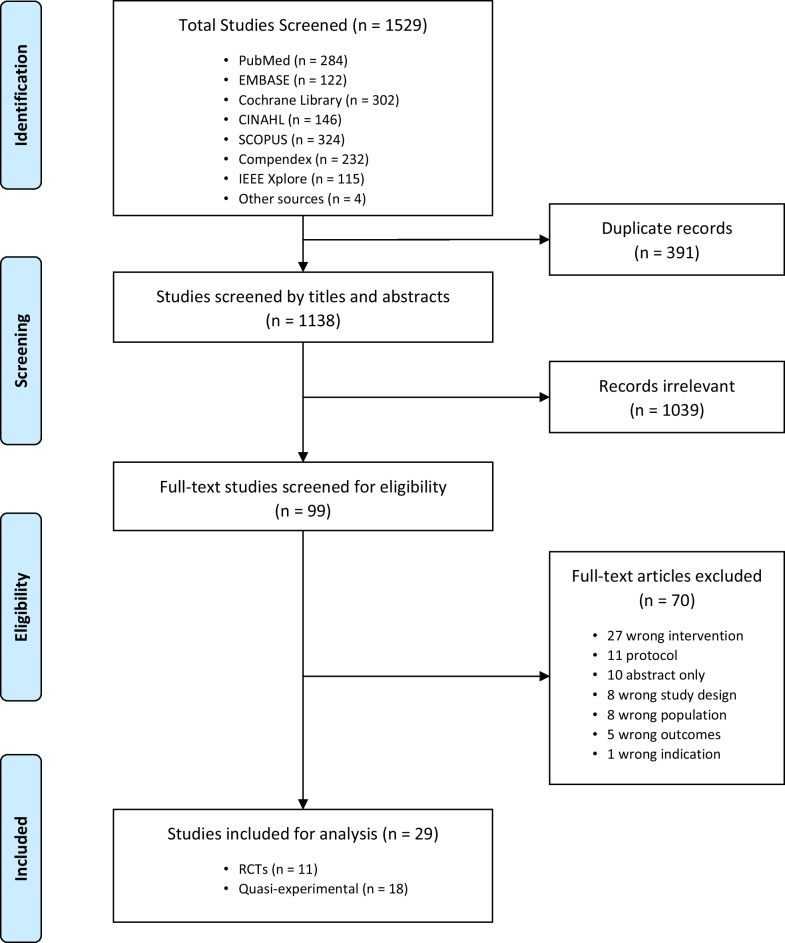
“The search identified 1529 possible studies for screening, 99 studies underwent a full text review, and ultimately 11 RCTs [16–18, 20, 25–31] and 18 quasi-experimental studies [32–49] met the eligibility criteria for inclusion in this manuscript (Fig.”
BackgroundMethodInfluentialPaul, L., Wyke, S., Brewster, S., Sattar, N., Gill, J. M. R., Alexander, G., Rafferty, D., McFadyen, A. K., Ramsay, A., & Dybus, A. (2016) · Topics in Stroke Rehabilitation · doi:10.1080/10749357.2015.1122266 · Cited by 157 · cited 9×
“Neither the RCT [26] using its therapy app nor the quasi-experimental study [38] using reminders had a benefit on depression and anxiety.”
BackgroundMethodInfluentialRecovery of functional status after stroke. A postrehabilitation follow-up study.
Ferrucci, L., Bandinelli, S., Guralnik, J. M., Lamponi, M., Bertini, C., Falchini, M., & Baroni, A. (1993) · Stroke · doi:10.1161/01.str.24.2.200 · Cited by 136 · cited 1×
“Assuming increased exercise adherence leads to increased therapy time, mobile apps that promote adherence may have the potential to improve functional gain [10] since early rehabilitation results in better recovery up to 6 months since onset [68, 69].”
BackgroundGilligan, A. K., Thrift, A. G., Sturm, J. W., Dewey, H. M., Macdonell, R. A. L., & Donnan, G. A. (2005) · Cerebrovascular Diseases · doi:10.1159/000087705 · Cited by 118 · cited 1×
“Compared with other acute stroke interventions, stroke rehabilitation has been found to be as effective or superior to thrombolysis or aspirin [5, 6].”
BackgroundiPractice: Piloting the Effectiveness of a Tablet-Based Home Practice Program in Aphasia Treatment
Wilkins, A., Stokes, P., & Kurland, J. (2014) · Seminars in Speech and Language · doi:10.1055/s-0033-1362991 · Cited by 115 · cited 2×
“quasi-experimental studies used a pre-test post-test design [32–34, 36, 37, 40–43, 45–49], 3 were a nonrandomized clinical trial [35, 38, 39, 45], and 1 was a crossover design study [43].”
BackgroundMethodImproved language in chronic aphasia after self-delivered iPad speech therapy
Stark, B. C., & Warburton, E. A. (2018) · Neuropsychological Rehabilitation · doi:10.1080/09602011.2016.1146150 · Cited by 110 · cited 3×
“Only one study used a task based therapy app and Bejeweled, a spatial awareness and decision making game, to rehabilitate chronic aphasia [44].”
BackgroundMethodFoley, N., McClure, J. A., Meyer, M., Salter, K., Bureau, Y., & Teasell, R. (2012) · Disability and Rehabilitation · doi:10.3109/09638288.2012.676145 · Cited by 108 · cited 1×
“…for meeting current stroke rehabilitation guidelines, including insufficient staff, timing mismatch with other patient activities such as investigations for stroke work-up (CTs, echocardiograms, Holter monitors), and a rise in the number of patients requiring stroke rehabilitation [14, 15].”
BackgroundEstimating the Cost-Effectiveness of Stroke Units in France Compared With Conventional Care
Launois, R., Giroud, M., Mègnigbêto, A., Lay, K. L., Présenté, G., Mahagne, M. H., Durand, I., & Gaudin, A. ‐. (2004) · Stroke · doi:10.1161/01.str.0000117574.19517.80 · Cited by 106 · cited 1×
“On a per dollar value, the clinical benefits of stroke rehabilitation have been shown to outweigh its costs significantly [7].”
BackgroundExcessive sedentary time during in-patient stroke rehabilitation
Barrett, M., Snow, J. C., Kirkland, M. C., Kelly, L. P., Gehue, M., Downer, M. B., McCarthy, J., & Ploughman, M. (2018) · Topics in Stroke Rehabilitation · doi:10.1080/10749357.2018.1458461 · Cited by 102
Impact of mHealth technology on adherence to healthy PA after stroke: a randomized study
Grau-Pellicer, M., Lalanza, J., Jovell-Fernández, E., & Capdevila, L. (2020) · Topics in Stroke Rehabilitation · doi:10.1080/10749357.2019.1691816 · Cited by 101 · cited 10×
“The search identified 1529 possible studies for screening, 99 studies underwent a full text review, and ultimately 11 RCTs [16–18, 20, 25–31] and 18 quasi-experimental studies [32–49] met the eligibility criteria for inclusion in this manuscript (Fig.”
BackgroundMethodInfluentialFiani, B., Siddiqi, I., Lee, S. C., & Dhillon, L. (2020) · Cureus · doi:10.7759/cureus.10563 · Cited by 94 · cited 1×
“COVID-19 has also necessitated increased technology usage leading to improved comfort level by clinicians, patients and caregivers [80, 81].”
BackgroundCorrection of post-stroke cognitive impairments using computer programs
Prokopenko, S. V., Mozheyko, E. Y., Петрова, М. М., Koryagina, T. D., Kaskaeva, D. S., Черных, Т. В., Shvetzova, I. N., & Bezdenezhnykh, A. F. (2013) · Journal of the Neurological Sciences · doi:10.1016/j.jns.2012.12.024 · Cited by 93 · cited 7×
“Neither the RCT [26] using its therapy app nor the quasi-experimental study [38] using reminders had a benefit on depression and anxiety.”
BackgroundMethodInfluentialA Telerehabilitation Approach for Chronic Aphasia Following Stroke
Choi, Y.-H., Park, H. K., & Paik, N.-J. (2016) · Telemedicine and e-Health · doi:10.1089/tmj.2015.0138 · Cited by 89 · cited 2×
“The mobile app designs focused on expressive and receptive communication by creating visual associations with pictures [40, 45, 46] or using voice recognition software to guide tasks [34, 36, 44].”
BackgroundKurland, J., Liu, A., & Stokes, P. (2018) · Journal of Speech, Language, and Hearing Research · doi:10.1044/2018_jslhr-l-17-0277 · Cited by 88 · cited 2×
“The mobile app designs focused on expressive and receptive communication by creating visual associations with pictures [40, 45, 46] or using voice recognition software to guide tasks [34, 36, 44].”
BackgroundSarfo, F. S., Adusei, N., Ampofo, M., Kpeme, F. K., & Ovbiagele, B. (2018) · Journal of the Neurological Sciences · doi:10.1016/j.jns.2018.01.039 · Cited by 78 · cited 7×
“The quasi-experimental study [43] using rehab videos demonstrated a correlation between improved exercise adherence and higher scores on the Montreal Cognitive Assessment test.”
BackgroundMethodInfluentialSedentary Behaviour and Physical Activity of People with Stroke in Rehabilitation Hospitals
Sjöholm, A., Skarin, M., Churilov, L., Nilsson, M., Bernhardt, J., & Lindén, T. (2014) · Stroke Research and Treatment · doi:10.1155/2014/591897 · Cited by 75
Daily Treatment Time and Functional Gains of Stroke Patients During Inpatient Rehabilitation
Wang, H., Camicia, M., Terdiman, J., Mannava, M. K., Sidney, S., & Sandel, M. E. (2013) · PM&R · doi:10.1016/j.pmrj.2012.08.013 · Cited by 75 · cited 2×
“Evidence supports that more therapy results in improved outcomes [10].”
BackgroundResultKang, Y., Shen, H.-N., Lin, C.-Y., Elwyn, G. J., Huang, S.-C., Wu, T.-F., & Hou, W.-H. (2019) · BMC Medical Informatics and Decision Making · doi:10.1186/s12911-019-1000-z · Cited by 75 · cited 5×
“Most of the RCTs generally had small sample sizes and only 4 trials [20, 25, 29, 31] showed a power analysis.”
BackgroundMethodInfluentialRose, D. K., Nadeau, S. E., Wu, S. S., Tilson, J. K., Dobkin, B. H., Pei, Q., & Duncan, P. W. (2017) · Physical Therapy · doi:10.1093/ptj/pzx079 · Cited by 73 · cited 1×
“Across the literature, many in-person interventions require several weeks to months to lead to a positive change [74–76].”
BackgroundUse of mobile applications in post-stroke rehabilitation: a systematic review
Zhou, X., Du, M., & Zhou, L. (2018) · Topics in Stroke Rehabilitation · doi:10.1080/10749357.2018.1482446 · Cited by 73 · cited 1×
“A 2018 systematic review defined several mobile apps for stroke rehabilitation with the potential to be clinically effective [19].”
BackgroundBrouns, B., Meesters, J. J. L., Wentink, M. M., de Kloet, A. J., Arwert, H. J., Vlieland, T. P. M. V., Boyce, L. W., & van Bodegom‐Vos, L. (2018) · Implementation Science · doi:10.1186/s13012-018-0827-5 · Cited by 73 · cited 1×
“Future studies should also examine real world use of mobile apps to examine barriers of implementation such as mobile app feasibility and privacy, organizational resource and time use, and motivating factors for patients and/ or healthcare providers use [87].”
BackgroundKamwesiga, J. T., Eriksson, G. M., Tham, K., Fors, U., Ndiwalana, A., von Koch, L., & Guidetti, S. (2018) · Globalization and Health · doi:10.1186/s12992-018-0400-7 · Cited by 72 · cited 2×
“Reminders used in 2 quasi-experimental studies [38, 39] had no effect on ADLs.”
MethodIntegrating the iPad into an Intensive, Comprehensive Aphasia Program
Carney, A., & Hoover, E. (2014) · Seminars in Speech and Language · doi:10.1055/s-0033-1362990 · Cited by 71 · cited 2×
“One RCT [20] and the quasiexperimental study [41] found therapy apps improved patient perceived quality of life whereas the other RCT [26] did not.”
BackgroundNascimento, D. D. C., Petriz, B. A., Oliveira, S. D. C., Vieira, D. C. L., Funghetto, S. S., Silva, A. D. O., & Prestes, J. (2019) · International Journal of General Medicine · doi:10.2147/ijgm.s194883 · Cited by 70 · cited 1×
“The methodological quality of each RCT was analyzed using the modified Downs and Black checklist [23, 24].”
MethodSureshkumar, K., Murthy, G., Natarajan, S., Naveen, C., Goenka, S., & Kuper, H. (2016) · BMJ Open · doi:10.1136/bmjopen-2015-009243 · Cited by 64 · cited 1×
“An education app providing information on stroke and post-stroke management was used in 1 quasi-experimental study [42] and showed improvement in ADLs.”
MethodRecovery after stroke: a 1-year profile
Horgan, F., O’Regan, M., Cunningham, C. J., & Finn, A. (2009) · Disability and Rehabilitation · doi:10.1080/09638280802355072 · Cited by 63 · cited 1×
“One of the challenges of conducting clinical trials in the early and late sub-acute periods is that an intervention during this time period has the potential to have longer lasting impacts on stroke recovery out to 6 months or even longer [72, 73].”
BackgroundZhang, J., Yu, J., Bao, Y., Xie, Q., Xu, Y., Zhang, J., & Wang, P. (2017) · PLOS ONE · doi:10.1371/journal.pone.0183349 · Cited by 63 · cited 1×
“…beneficial concepts of effective face-to-face stroke rehabilitation therapy (massed practice, task-specific practice, goal-oriented practice, multisensory stimulation, rhythmic cueing, feedback, social interaction, and constraint-induced therapy) when evaluating mobile applications [54–56].”
BackgroundScrivener, K., Sherrington, C., & Schurr, K. (2012) · Journal of Rehabilitation Medicine · doi:10.2340/16501977-1028 · Cited by 62 · cited 1×
“This aligns with face-to-face research that shows repetition of meaningful movements, such as with ADLs, resulted in better functional outcomes [58, 59].”
BackgroundKamal, A. K., Khoja, A. A., Usmani, B., Magsi, S., Malani, A., Peera, Z., Sattar, S., Akram, M. A., Shahnawaz, S., Zulfiqar, M., et al. (2020) · JMIR mhealth and uhealth · doi:10.2196/12113 · Cited by 62
Pusic, M. V., Ching, K., Yin, H. S., & Kessler, D. O. (2014) · Paediatrics & Child Health · doi:10.1093/pch/19.3.119 · Cited by 61
Kizony, R., Zeilig, G., Dudkiewicz, I., Schejter-Margalit, T., & Rand, D. (2016) · Journal of Neurologic Physical Therapy · doi:10.1097/npt.0000000000000110 · Cited by 60 · cited 3×
“Each therapy app was designed to promote repetitive motion, often in the form of a game [16, 32, 33, 49].”
BackgroundMethodEmmerson, K. B., Harding, K. E., & Taylor, N. F. (2017) · Clinical Rehabilitation · doi:10.1177/0269215516680856 · Cited by 60 · cited 7×
“In 1 RCT [25], a combination of rehab videos with reminders was found to have no impact on exercise adherence.”
BackgroundMethodInfluentialBallard, K. J., Etter, N. M., Shen, S., Monroe, P., & Tien Tan, C. (2019) · American Journal of Speech-Language Pathology · doi:10.1044/2018_ajslp-msc18-18-0109 · Cited by 60 · cited 3×
“One RCT [20] and 2 quasi-experimental studies [36, 47] used therapy apps and measured exercise adherence.”
BackgroundChung, B. P. H., Chiang, W. K. H., Lau, H. M.-C., Lau, T. F. O., Lai, C.-L., Sit, C. S. Y., Chan, K. Y., Yeung, C. Y., Lo, T. M., Hui, E., et al. (2020) · Hong Kong Physiotherapy Journal · doi:10.1142/s1013702520500079 · Cited by 58 · cited 8×
“Rehab videos were used in 1 RCT [18] and 1 quasi-experimental study [43] to measure exercise adherence.”
BackgroundMethodInfluentialFarmalarm: Application for Mobile Devices Improves Risk Factor Control After Stroke
Requena, M., Montiel, E., Baladas, M., Muchada, M., Boned, S., López, R., Rodríguez-Villatoro, N., Juega, J., García-Tornel, Á., Rodríguez-Luna, D., et al. (2019) · Stroke · doi:10.1161/strokeaha.118.024355 · Cited by 56
Putman, K. D., Wit, L. D., Schupp, W., Baert, I., Berman, P., Connell, L., Dejaeger, E. W., Meyer, A. D., Weerdt, W. D., Feys, H., et al. (2006) · Disability and Rehabilitation · doi:10.1080/09638280600638216 · Cited by 43 · cited 2×
“…much of their time sedentary, providing cost effective mobile apps for therapy may bring patients closer to, or even exceed, the standards set by the Canadian Stroke Best Practices and American Heart Association/ American Stroke Association [8, 9, 11–13], potentially improving stroke recovery.”
BackgroundSeo, W., Kang, J., Jeon, M., Lee, K., Lee, S., Kim, J. H., Oh, K., & Koh, S. (2015) · Journal of Clinical Neurology · doi:10.3988/jcn.2015.11.2.142 · Cited by 42 · cited 2×
“One RCT [31] and 3 quasi-experimental studies [35, 38, 48] used reminders to improve vascular risk factors.”
BackgroundRecoverNow: A mobile tablet-based therapy platform for early stroke rehabilitation
Pugliese, M., Ramsay, T., Shamloul, R., Mallet, K., Zakutney, L., Corbett, D., Dukelow, S., Stotts, G., Shamy, M., Wilson, K., et al. (2019) · PLOS ONE · doi:10.1371/journal.pone.0210725 · Cited by 42 · cited 2×
“One RCT [20] and 2 quasi-experimental studies [36, 47] used therapy apps and measured exercise adherence.”
BackgroundSelf-citationSupporting Stroke Motor Recovery Through a Mobile Application: A Pilot Study
Lawson, S., Tang, Z., & Feng, J. H. (2017) · American Journal of Occupational Therapy · doi:10.5014/ajot.2017.025023 · Cited by 40 · cited 5×
“The search identified 1529 possible studies for screening, 99 studies underwent a full text review, and ultimately 11 RCTs [16–18, 20, 25–31] and 18 quasi-experimental studies [32–49] met the eligibility criteria for inclusion in this manuscript (Fig.”
BackgroundMethodInfluentialStroke Patient Rehabilitation: A Pilot Study of an Android-Based Game
Carabeo, C. G. G., Dalida, C. M. M., Padilla, E. M. Z., & Rodrigo, M. M. T. (2014) · Simulation & Gaming · doi:10.1177/1046878114531102 · Cited by 39
Science of Learning Strategy Series: Article 1, Distributed Practice
Hoof, T. J. V., Sumeracki, M. A., & Madan, C. R. (2020) · Journal of Continuing Education in the Health Professions · doi:10.1097/ceh.0000000000000315 · Cited by 32 · cited 1×
“This again may point to the importance of dual channel learning and the impact that videos may have through the ability to revisit information and utilizing educational principles such as spaced repetition and distributed practice [65, 70].”
BackgroundIs Visual Scanning Better Than Mental Practice in Hemispatial Neglect? Results from a Pilot Study
Ferreira, H. P., Lopes, M. A. L., Luiz, R. R., Cardoso, L., & André, C. (2011) · Topics in Stroke Rehabilitation · doi:10.1310/tsr1802-155 · Cited by 31 · cited 1×
“For neglect, the evidence for stroke rehabilitation apps is mixed, similar to the literature on the impact of faceto-face visual scanning on post-stroke neglect [63, 64].”
BackgroundEllison, D. L., White, D., & Farrar, F. C. (2015) · Nursing Clinics of North America · doi:10.1016/j.cnur.2014.10.014 · Cited by 29
The effect of a finger training application using a tablet PC in chronic hemiparetic stroke patients
Jang, S. H., & Jang, W. H. (2016) · Somatosensory & Motor Research · doi:10.1080/08990220.2016.1197117 · Cited by 28 · cited 8×
“The search identified 1529 possible studies for screening, 99 studies underwent a full text review, and ultimately 11 RCTs [16–18, 20, 25–31] and 18 quasi-experimental studies [32–49] met the eligibility criteria for inclusion in this manuscript (Fig.”
BackgroundMethodInfluentialConstraint-induced aphasia therapy for patients with aphasia: A systematic review
Wang, G., Ge, L., Zheng, Q., Huang, P., & Xiang, J. (2020) · International Journal of Nursing Sciences · doi:10.1016/j.ijnss.2020.05.005 · Cited by 24 · cited 1×
“In a 2020 systematic review and meta-analysis, there was evidence supporting the use of face-to-face constraint-induced aphasia therapy which focuses on forcing patients to use verbal language with massed practice [62].”
BackgroundEffects of Mirror Therapy Using a Tablet PC on Central Facial Paresis in Stroke Patients
Kang, J.-A., Chun, M. H., Choi, S. J., Chang, M. C., & Yi, Y. G. (2017) · Annals of Rehabilitation Medicine · doi:10.5535/arm.2017.41.3.347 · Cited by 19 · cited 3×
“For methodological quality via the Downs and Black checklist, 4 studies were of excellent quality [18, 25, 28, 31], 6 were of good quality [16, 17, 20, 26, 29, 30], and 1 was of poor quality [27].”
MethodHow Does iReadMore Therapy Change the Reading Network of Patients with Central Alexia?
Kerry, S. J., Mejía, Ó. M. A., Penny, W. D., Crinion, J., Leff, A. P., & Woodhead, Z. (2019) · Journal of Neuroscience · doi:10.1523/jneurosci.1426-18.2019 · Cited by 13 · cited 2×
“The mobile app designs focused on expressive and receptive communication by creating visual associations with pictures [40, 45, 46] or using voice recognition software to guide tasks [34, 36, 44].”
BackgroundNew Technology: Safety, Efficacy, and Learning Curves
Ko, L. M. (2013) · Clinical Orthopaedics and Related Research · doi:10.1007/s11999-013-3413-9 · Cited by 11
Unilateral Neglect in Stroke: A Comparative Study
Chan, D. Y. W., & Man, D. W. K. (2013) · Topics in Geriatric Rehabilitation · doi:10.1097/tgr.0b013e31827ea7c9 · Cited by 10 · cited 1×
“For neglect, the evidence for stroke rehabilitation apps is mixed, similar to the literature on the impact of faceto-face visual scanning on post-stroke neglect [63, 64].”
BackgroundMoon, J.-H., Heo, S.-J., & Jung, J. (2019) · Medico-Legal Update · doi:10.5958/0974-1283.2019.00111.7 · Cited by 7 · cited 5×
“Of the 2 RCTs [25, 30] that showed no impact, the study by Moon et al.”
BackgroundMethodInfluentialKnoche, H. O., Hald, K., Richter, D., & Jørgensen, H. R. M. (2016) · International Conference on Pervasive Computing Technologies for Healthcare · doi:10.4108/eai.16-5-2016.2263289 · Cited by 6 · cited 7×
“In this review, a single RCT [27] showed its therapy app had no impact on neglect but the study methodology scored poorly on the Downs and Black checklist and there were multiple bias concerns as per the Cochrane Risk of Bias tool.”
BackgroundMethodInfluentialIntegration of new technology into clinical practice after FDA approval
Govil, A., & Hao, S. C. (2016) · Journal of Interventional Cardiac Electrophysiology · doi:10.1007/s10840-016-0171-0 · Cited by 4 · cited 1×
“However, the integration of new technology continues to be limited due to multiple challenges such as clinical acceptance, user learning curve, privacy and security, and the lack of funding models that support the use of technology to augment therapy [82–86].”
BackgroundRing a Bell? Adaptive Auditory Game Feedback to Sustain Performance in Stroke Rehabilitation
Hald, K., & Knoche, H. O. (2016) · Lecture notes of the Institute for Computer Sciences, Social Informatics and Telecommunications Engineering · doi:10.1007/978-3-319-49655-9_13 · Cited by 3 · cited 2×
“In 2017, the same authors published a quasi-experimental study exploring the same app but with a feedback system and this led to improved user reaction time, however no measure of neglect was used [37].”
BackgroundWith Every New Technology Comes a Learning Curve
Attaran, S., & Thourani, V. H. (2018) · Seminars in Thoracic and Cardiovascular Surgery · doi:10.1053/j.semtcvs.2018.04.011 · Cited by 2
Cited by
Telerehabilitation and Its Impact Following Stroke: An Umbrella Review of Systematic Reviews
Alwadai, B., Lazem, H., Almoajil, H., Hall, A., Mansoubi, M., & Dawes, H. (2024) · Journal of Clinical Medicine · doi:10.3390/jcm14010050 · Cited by 52
Triantafyllidis, A. K., Segkouli, S., Zygouris, S., Michailidou, C., Avgerinakis, K., Fappa, E., Vassiliades, S., Bougea, A. M., Papagiannakis, N., Katakis, I., et al. (2023) · Sensors · doi:10.3390/s23073396 · Cited by 24
Mobile Technology–Based Interventions for Stroke Self-Management Support: Scoping Review
Thompson, A. N., DAWSON, D. R., Legasto-Mulvale, J. M., Chandran, N., Tanchip, C., Niemczyk, V., Rashkovan, J., Jeyakumar, S., Wang, R. H., Cameron, J. I., et al. (2023) · JMIR mhealth and uhealth · doi:10.2196/46558 · Cited by 27
“…[69], or mobile apps for phones [10,11,14,69,71] and tablets [10,11,14,70,71]), or very broadly, focusing on mHealth in general and including devices and features that may not be entirely mobile and wireless (eg, computer programs [10,12,71], telephone calls [12], and web-based applications [13]).”
BackgroundPoststroke eHealth Technologies–Based Rehabilitation for Upper Limb Recovery: Systematic Review
Rampioni, M., Leonzi, S., Antognoli, L., Mura, A., & Stara, V. (2025) · Journal of Medical Internet Research · doi:10.2196/57957 · Cited by 24
“A total of 95 studies were included in the 7 reviews that overall mapped not only RCTs [30,32,33,35,36] and RCTs and non-RCT studies [31,34] but also observational studies [32] and uncontrolled clinical trials [34].”
InfluentialEnriched music-supported therapy for individuals with chronic stroke: a randomized controlled trial
Segura, E., Grau‐Sánchez, J., Porto, M. F., Puebla, M. D. L. C., Sánchez-Pinsach, D., Cerquides, J., Duarte, E., Palumbo, A., Turry, A., Raghavan, P., et al. (2024) · Journal of Neurology · doi:10.1007/s00415-024-12570-3 · Cited by 22
Metadata
- Authors
- Szeto, S. G., Wan, H., Alavinia, M., Dukelow, S., & MacNeill, H.
- Affiliations
- University Health Network (CA)
- University of Toronto (CA)
- University of Calgary (CA)
- Corresponding author
- Szeto, Stephen G.
- Venue
- Journal of NeuroEngineering and Rehabilitation
- Published
- 2023-01-24
- Volume
- 20
- Issue
- 1
- Pages
- 12-12
- ISSN
- 1743-0003 (ISSN-L)
- PMC
- PMC9872745
- OpenAlex
- W4317899396
- Cited by
- 29
- References
- 87
- Citations by year
- 2026: 8 · 2025: 13 · 2024: 5 · 2023: 3
- FWCI
- 0.98
- Type
- journal article
- Language
- en
- Open access
- gold
- doi.org
- Licence
- cc-by
- creativecommons.org/licenses/by/4.0 (tdm)
- creativecommons.org/licenses/by/4.0 (vor)
- Locations
- Journal of NeuroEngineering and Rehabilitation (publishedVersion, cc-by)
- PubMed Central (publishedVersion, cc-by)
- PubMed (publishedVersion)
- Libraries and Cultural Resources (University of Calgary) (submittedVersion, other-oa)
- DOAJ (DOAJ: Directory of Open Access Journals) (submittedVersion, cc-by-sa)
- Libraries and Cultural Resources (University of Calgary) (submittedVersion)
- Funders
- Division of Physical Medicine and Rehabilitation, University of Toronto
- Topics
- Health Sciences › Medicine › Rehabilitation › Stroke Rehabilitation and Recovery
- Health Sciences › Health Professions › General Health Professions › Mobile Health and mHealth Applications
- Health Sciences › Medicine › Clinical Neurology › Acute Ischemic Stroke Management
- Keywords
- stroke rehabilitation, mobile application, reminders, motor paresis, aphasia, hemispatial neglect, exercise adherence, activities of daily living, quality of life, secondary stroke prevention, anxiety and depression, constraint-induced movement therapy, task-specific practice, multisensory stimulation
- MeSH terms
- Stroke Rehabilitation, Activities of Daily Living, Aphasia, Canada, Humans, Quality of Life, Stroke, Mobile Applications
About these checks
Registry, retraction, Cites and statistics results are computed, not judged, with one exception: a printed reference that no index lists is read once by a model before it counts as a citation error. Claims are extracted by a model and kept only when their quote appears verbatim in the text; each cited source is then checked, with a model’s help, for whether it says what the claim relies on. Those verdicts can be wrong — read the claim’s quote and the cited source before relying on one.
Statistics and arithmetic are recomputed, not judged.
Confidence bands are shown only for fields calibrated on our annotated test set. None is calibrated yet, so no band is shown.
What counts as a claim ›How we measure confidence ›How we check this ›
Are you an author, or do you see a problem with this page? Request a review
Data sources
Bibliographic data: Semantic Scholar, OpenAlex, Crossref.
Contains information from the Semantic Scholar Academic Graph Datasets, made available under the ODC Attribution License (ODC-BY 1.0).
Semantic Scholar’s data is described in: Kinney, R., et al. (2023). The Semantic Scholar Open Data Platform. arXiv:2301.10140.
