

Effects from a 90-day inhalation toxicity study with cerium oxide and barium sulfate nanoparticles in rats
Open accessThe DOI matches its Crossref record; 57 of the 61 references it cites were found in a registry or an index; 50 of the 106 sources its claims cite were checked for support.
Abstract
Nanomaterials like cerium oxide and barium sulfate are frequently processed in industrial and consumer products and exposure of humans and other organisms is likely. Generally less information is given on health effects and toxicity, especially regarding long-term exposure to low nanoparticle doses. Since inhalation is still the major route of uptake the present study focused on pulmonary effects of CeO 2 NM-212 (0.1, 0.3, 1.0, 3.0 mg/m 3 ) and BaSO 4 NM-220 nanoparticles (50.0 mg/m 3 ) in a 90-day exposure setup. To define particle-related effects and potential mechanisms of action, observations in histopathology, bronchoalveolar lavage and immunohistochemistry were linked to pulmonary deposition and clearance rates. This further allows evaluation of potential overload related effects. Lung burden values increased with increasing nanoparticle dose levels and ongoing exposure. At higher doses, cerium clearance was impaired, suggesting lung overload. Barium elimination was extremely rapid and without any signs of overload. Bronchoalveolar lavage fluid analysis and histopathology revealed lung tissue inflammation with increasing severity and post-exposure persistency for CeO 2 . Also, marker levels for genotoxicity and cell proliferation were significantly increased. BaSO 4 showed less inflammation or persistency of effects and particularly affected the nasal cavity. CeO 2 nanoparticles penetrate the alveolar space and affect the respiratory tract after inhalation mainly in terms of inflammation. Effects at low dose levels and post-exposure persistency suggest potential long-term effects and a notable relevance for human health. The generated data might be useful to improve nanoparticle risk assessment and threshold value generation. Mechanistic investigations at conditions of non-overload and absent inflammation should be further investigated in future studies.
Overview
CoChat Summary
TL;DR
In a 90-day inhalation study in female Wistar rats, CeO2 nanoparticles caused dose-dependent lung burden, impaired clearance/lung overload at 3.0 mg/m3, persistent pulmonary inflammation, and increased genotoxicity/proliferation markers, while BaSO4 at 50 mg/m3 cleared rapidly with less severe effects mainly in the nasal cavity. The authors conclude a CeO2 NOAEL below 1.0 mg/m3 and suggest potential long-term human health relevance from low-dose and persistent effects.
Key findings
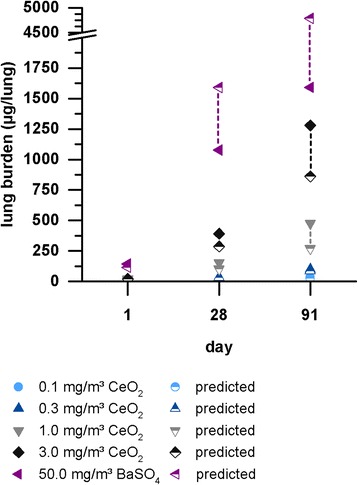
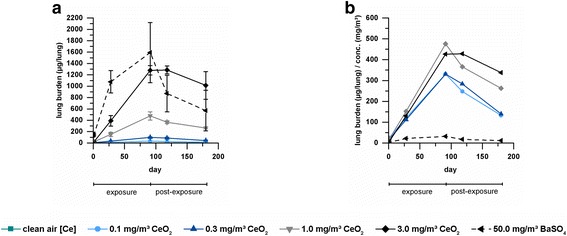
- CeO2 lung burden increased with dose and exposure duration; clearance half-times were 67, 69, 108, and 224 days for 0.1, 0.3, 1.0, and 3.0 mg/m3 CeO2, respectively, indicating impaired clearance/overload at 3.0 mg/m3. BaSO4 at 50.0 mg/m3 had a clearance half-time of 56 days and was eliminated rapidly without signs of overload.
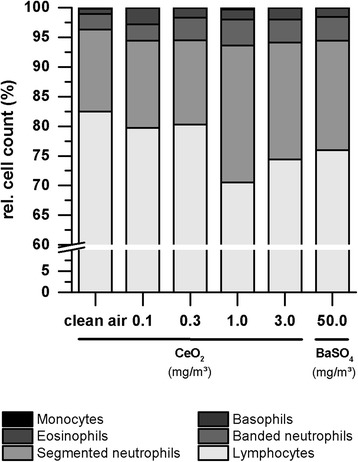
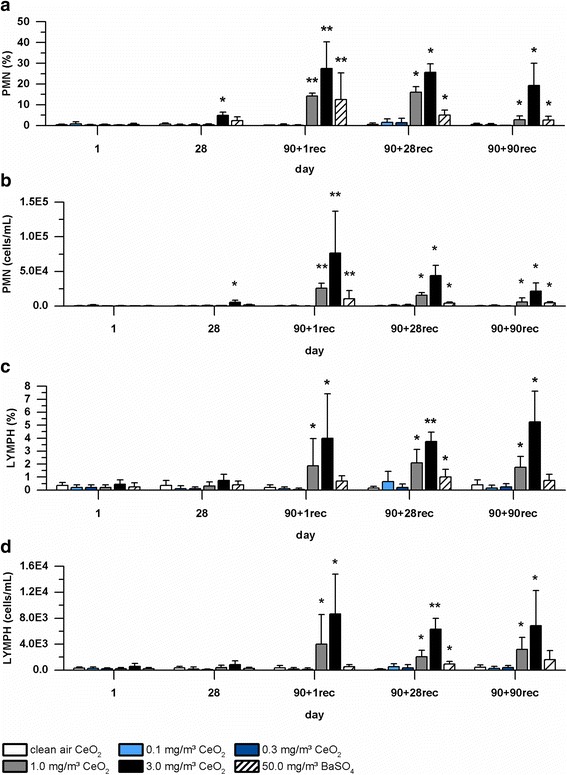
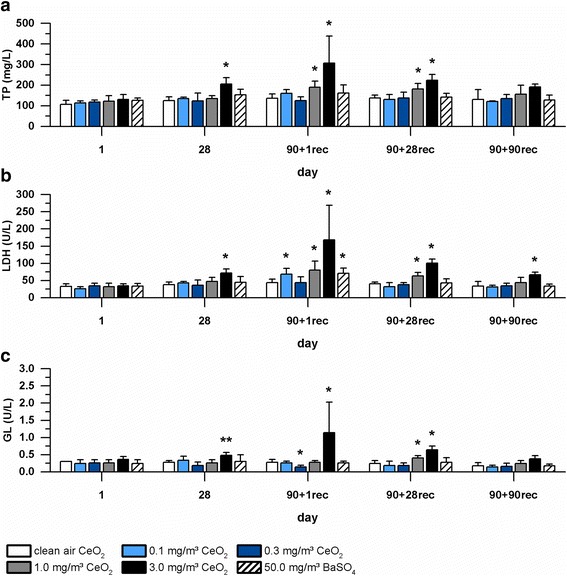
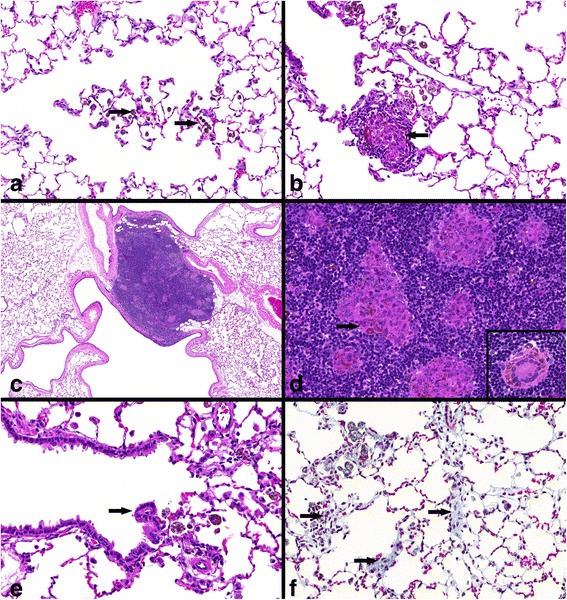
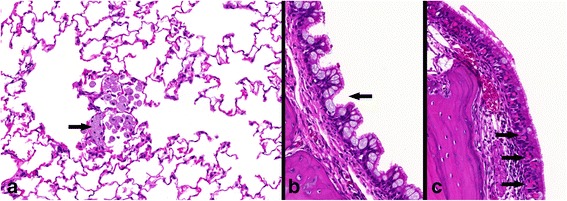
- BALF and histopathology showed increasing, post-exposure-persistent lung inflammation for CeO2, especially at 1.0 and 3.0 mg/m3: elevated neutrophils/lymphocytes and biochemical markers (TP, LDH, GL), plus particle-laden macrophages, inflammatory infiltrations, bronchiolo-alveolar hyperplasia, and very slight interstitial fibrosis at 3.0 mg/m3. BaSO4 caused less severe inflammation, mainly nasal cavity mucous cell hyperplasia and eosinophilic globules.
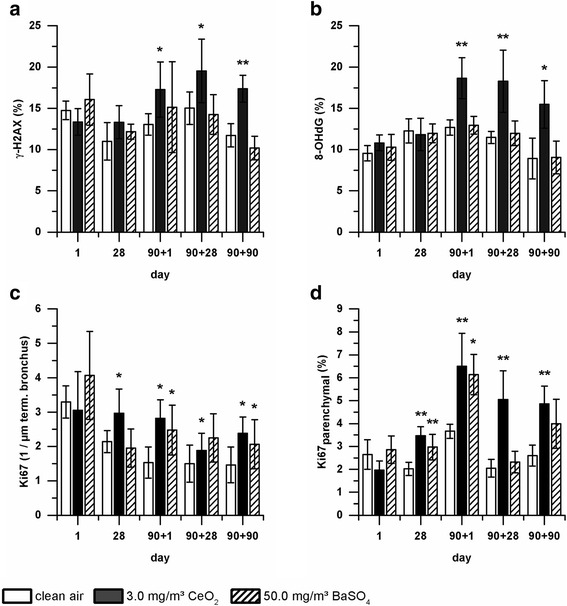
- Immunohistochemistry at 3.0 mg/m3 CeO2 showed significantly elevated γ-H2AX and 8-OHdG (about 5% and 6% above control, respectively) at post-exposure days, and increased Ki67 after 28 days exposure; BaSO4 did not elevate γ-H2AX or 8-OHdG but increased Ki67 without relevant persistency. Cleaved caspase-3 showed no changes.
- The paper reports a CeO2 NOAEL below 1.0 mg/m3 and a BMDL/NOAEL of 0.41 mg/m3 based on 90-day PMN data; the short-term BaSO4 NOAEC of 50.0 mg/m3 was refuted after 90-day inhalation.
Methods
- OECD TG 413 90-day inhalation toxicity study in female Wistar rats (576 total), nose-only exposure for 6 h/day, 5 days/week; CeO2 NM-212 at 0.1, 0.3, 1.0, and 3.0 mg/m3, BaSO4 NM-220 at 50.0 mg/m3, and clean air control; sacrifices at exposure day 1 and 28 and post-exposure days 1, 28, and 90.
- Endpoints included aerosol characterization, ICP-MS lung burden, bronchoalveolar lavage (cell counts, LDH, ß-glucuronidase, total protein), hematology/clinical chemistry, histopathology of respiratory organs, and immunohistochemistry for γ-H2AX, 8-OHdG, Ki67, and cleaved caspase-3.
- Statistics used Kruskal-Wallis-ANOVA with Mann-Whitney U-test for BALF and immunohistochemistry, ANOVA with Dunnett for body weights/hematology, and two-tailed Fisher test for histopathology.
Limitations
- The paper states that mechanistic investigations under non-overload and absent-inflammation conditions should be further investigated; genotoxicity marker increases were significant but slight and “should be interpreted with reservation”; BaSO4 was tested only at a very high 50.0 mg/m3 concentration of less relevance for some exposure scenarios; systemic genotoxicity was not tested; further mechanistic evaluations are required, especially for genotoxic effects and oxidative stress.
- Evident from the text: histopathology and immunohistochemistry were performed only in clean air, 3.0 mg/m3 CeO2, and 50.0 mg/m3 BaSO4 groups, not in the lower CeO2 dose groups; only female rats were used; and BaSO4 was not tested at lower concentrations.
Model-written summary. Check it against the paper before relying on it.
Integrity signals
Registry
Cites
Statistics
Figures

Verification
Claims the paper makes
36 Valid · 1 Not valid · 31 Not checked · 154 Own results and interpretations
At least one cited source doesn’t support this claim or points to a different paper, and none confirmed it — see the verdicts below.
In the paper
“The no-observed adverse effect level (NOAEL) for CeO2 is expected to be below 0.5 mg/m3 [17].”
§ Effects from a 90-day inhalation toxicity study with cerium oxide and barium sulfate nanoparticles in rats > Background
What the sources say
- Disputedcites [17] Keller J Wohlleben W Ma-Hock L Strauss V Groters S Kuttler K Time course of lung retention and toxicity of inhaled particles: short-term exposure to nano-ceria Arch Toxicol 2014 88 2033 2059 10.1007/s00204-014-1349-9 25273020 PMC4555363 sourceExperimental — accuracy not yet measured
The Study design section (page unavailable) says the 0.5 mg/m³ concentration was expected not to cause adverse effects. The Discussion, under Deposition and clearance (page unavailable), reports pulmonary inflammation only at 5 and 25 mg/m³. Although the Results report some changes in lavage markers at 0.5 mg/m³, the paper does not identify those changes as adverse effects or place the expected NOAEL below that concentration. (LLM, conf=0.83)
Checked by a reasoning model — may be wrong.
hedged- Asserted: passes — The authors put it forward as true.
- Checkable: passes — It can be checked against evidence.
- Load-bearing: unclear — It is unclear whether the paper’s conclusions depend on it.
- Based: passes — The paper gives a reason why it holds.
- Disputed
Every source the paper cites for this claim was checked and supports it.
In the paper
“DeLoid et al. [37] performed comprehensive investigations on density estimation for nanomaterial deposition and determined an effective density for CeO2 with different specific surface area in the range of 1.5 to 2.4 g/cm3.”
§ Effects from a 90-day inhalation toxicity study with cerium oxide and barium sulfate nanoparticles in rats > Discussion
What the sources say
- Supportedcites [37] DeLoid G Cohen JM Darrah T Derk R Rojanasakul L Pyrgiotakis G Estimating the effective density of engineered nanomaterials for in vitro dosimetry Nat Commun 2014 5 3514 10.1038/ncomms4514 24675174 PMC4038248 source
The Results section (“Effective Densities of ENMs by VCM and Sterling equation”) reports effective densities of 2.358, 1.625, and 1.474 g cm−3 for three CeO2 materials—approximately 1.5–2.4 g cm−3. It distinguishes them by dBET, a particle-size measure derived from specific surface area as described in Methods (“Nanomaterials and characterization”). (LLM, conf=0.94)
plain- Asserted: passes — The authors put it forward as true.
- Checkable: passes — It can be checked against evidence.
- Load-bearing: passes — The paper’s conclusions depend on it.
- Based: passes — The paper gives a reason why it holds.
- Supported
The sources with a verdict support this claim; the rest weren’t checked yet, have no full text we could read, or their verdicts aren’t rated yet.
In the paper
“Inhalation of CeO2induced pulmonary inflammation in a concentration-dependent manner with post-exposure persistency [3, 17, 22, 23].”
§ Effects from a 90-day inhalation toxicity study with cerium oxide and barium sulfate nanoparticles in rats > Background
What the sources say
- Not checked — no full text of the sourcecites [3] Gosens I Mathijssen LE Bokkers BGH Muijser H Cassee FR Comparative hazard identification of nano- and micro-sized cerium oxide particles based on 28-day inhalation studies in rats Nanotoxicology 2014 8 643 653 10.3109/17435390.2013.815814 23768316 source
- Supportedcites [17] Keller J Wohlleben W Ma-Hock L Strauss V Groters S Kuttler K Time course of lung retention and toxicity of inhaled particles: short-term exposure to nano-ceria Arch Toxicol 2014 88 2033 2059 10.1007/s00204-014-1349-9 25273020 PMC4555363 source
The Conclusion reports no lung inflammation at 0.5 mg/m³ and inflammatory responses at 5 mg/m³ and above. The Discussion (Local effects) reports that histopathological inflammation progressed after exposure ended at concentrations of 5 mg/m³ and above, although bronchoalveolar lavage measures regressed. Page numbers were not provided in our copy. (LLM, conf=0.91)
- Not checked — no full text of the sourcecites [22] Aalapati S Ganapathy S Manapuram S Anumolu G Prakya BM Toxicity and bio-accumulation of inhaled cerium oxide nanoparticles in CD1 mice Nanotoxicology 2014 8 786 798 23914771 source
- Supportedcites [23] Morimoto Y Izumi H Yoshiura Y Tomonaga T Oyabu T Myojo T Pulmonary toxicity of well-dispersed cerium oxide nanoparticles following intratracheal instillation and inhalation J Nanopart Res 2015 17 442 10.1007/s11051-015-3249-1 26594128 PMC4644191 source
The Results (Inhalation study; page not provided) report dose-dependent increases in lung lavage cell counts and persistently elevated neutrophils after inhalation at both tested concentrations. The Discussion (page not provided) describes persistent inflammation in rat lungs through 3 months after inhalation exposure. (LLM, conf=0.91)
plainstates a cause- Asserted: passes — The authors put it forward as true.
- Checkable: passes — It can be checked against evidence.
- Load-bearing: passes — The paper’s conclusions depend on it.
- Based: passes — The paper gives a reason why it holds.
The cited sources support only part of this claim — read each source’s verdict below.
In the paper
“Based on the results CeO2 NM-212 and BaSO4 NM-220 were chosen as representative nanomaterials with respectively higher and lower toxicity for further investigation regarding long-term exposure.”
§ Effects from a 90-day inhalation toxicity study with cerium oxide and barium sulfate nanoparticles in rats > Background
What the sources say
- Partly supportedcites [6] Landsiedel R Ma-Hock L Hofmann T Wiemann M Strauss V Treumann S Application of short-term inhalation studies to assess the inhalation toxicity of nanomaterials Part Fibre Toxicol 2014 11 16 10.1186/1743-8977-11-16 24708749 PMC4113196 sourceExperimental — accuracy not yet measured
The Abstract Results rank nano-CeO2 as higher in toxic potency and BaSO4 as lower; the Results identify the BaSO4 tested as NM-220. Our copy does not identify the CeO2 material as NM-212 or say that these two materials were chosen for further long-term exposure investigation. (LLM, conf=0.86)
plain- Asserted: passes — The authors put it forward as true.
- Checkable: passes — It can be checked against evidence.
- Load-bearing: passes — The paper’s conclusions depend on it.
- Based: passes — The paper gives a reason why it holds.
- Partly supported
Every source the paper cites for this claim was checked and supports it.
In the paper
“Keller et al. [17] measured lung burdens of 41 and 520 μg after 28 days exposure to 0.5 and 5.0 mg/m3 CeO2 NM-212.”
§ Effects from a 90-day inhalation toxicity study with cerium oxide and barium sulfate nanoparticles in rats > Discussion
What the sources say
- Supportedcites [17] Keller J Wohlleben W Ma-Hock L Strauss V Groters S Kuttler K Time course of lung retention and toxicity of inhaled particles: short-term exposure to nano-ceria Arch Toxicol 2014 88 2033 2059 10.1007/s00204-014-1349-9 25273020 PMC4555363 source
Table 5 in the Discussion (Comparison of 5 days and 4 weeks of exposure) reports lung burdens of 41 and 520 µg for Ceria NM-212 at 0.5 and 5 mg/m³, respectively, after four weeks of exposure. Its footnote specifies that these burdens were measured two days after exposure ended. (LLM, conf=0.94)
plain- Asserted: passes — The authors put it forward as true.
- Checkable: passes — It can be checked against evidence.
- Load-bearing: unclear — It is unclear whether the paper’s conclusions depend on it.
- Based: passes — The paper gives a reason why it holds.
- Supported
142 more claims · 17 with their cited sources checked
Create a free account to see all 222 claims and to verify the 2 references still open.
- Probably not a substantial claim. 40
- It may state two separate claims as one. 40
- The quote only partly states this claim. 1
Self-check
Percentages, sums and reported differences re-computed from the paper’s own numbers.
Each contradiction between two passages listed here was confirmed by an independent check.
Rated minor: it would not touch a result — a value no result rests on, a p-value that stays on the same side of the significance level, or a conflict that is clerical, resolved elsewhere in the paper, or outside its own findings.
In the paper
§ Effects from a 90-day inhalation toxicity study with cerium oxide and barium sulfate nanoparticles in rats > Discussion
“especially of 1.0 g/m3 CeO2 exposure”
§ Effects from a 90-day inhalation toxicity study with cerium oxide and barium sulfate nanoparticles in rats > Discussion
“For 1.0 mg/m3 CeO2 we calculated an increased clearance halftime (t1/2 = 108 days).”
Rated minor: it would not touch a result — a value no result rests on, a p-value that stays on the same side of the significance level, or a conflict that is clerical, resolved elsewhere in the paper, or outside its own findings.
In the paper
§ Effects from a 90-day inhalation toxicity study with cerium oxide and barium sulfate nanoparticles in rats > Results > Lung burden
“The mean insoluble fraction was <5% of the total content”
§ Effects from a 90-day inhalation toxicity study with cerium oxide and barium sulfate nanoparticles in rats > Results > Lung burden
“The soluble fraction of Ce or Ba was extremely low (mean values <5%). Hence, the total amount was dominated by the insoluble, particulate fraction”
Rated minor: it would not touch a result — a value no result rests on, a p-value that stays on the same side of the significance level, or a conflict that is clerical, resolved elsewhere in the paper, or outside its own findings.
In the paper
§ Effects from a 90-day inhalation toxicity study with cerium oxide and barium sulfate nanoparticles in rats > Results > Aerosol characteristics
“Note: a n = 78 exposure days; b n = 3”
§ Effects from a 90-day inhalation toxicity study with cerium oxide and barium sulfate nanoparticles in rats > Results > Lung burden
“Note: ad1, d28 and d90 account for one, 20 and 65 days exposure respectively”
Rated minor: it would not touch a result — a value no result rests on, a p-value that stays on the same side of the significance level, or a conflict that is clerical, resolved elsewhere in the paper, or outside its own findings.
In the paper
§ Effects from a 90-day inhalation toxicity study with cerium oxide and barium sulfate nanoparticles in rats > Results > Histopathology of respiratory organs
“Very slight inflammatory cell infiltrations occurred only after 90 days of nanoparticle exposure and did not show any post-exposure persistency.”
§ Effects from a 90-day inhalation toxicity study with cerium oxide and barium sulfate nanoparticles in rats > Results > Histopathology of respiratory organs
“| Infiltration of inflammatory cells, alveolar/interstitial | very slight | 0 | 0 | 0 | 0 | 2 | 0 | 0 | 6 | 5 | 0 | 5 | 5 | 0 | 5 | 3 |”
Cited works that were retracted
Works this paper cites that were later retracted, from the retraction notices publishers deposit. Major when the notice came out before this paper was published.
A note, not an issue: for example, a cited work that was retracted only after this paper was published, which its authors could not have known.
In the paper
“gle and repeated oral administration of CeO2 [49, 50].”
Cited work 10.1016/j.mrgentox.2014.09.009 · retracted 2022-07-08 · notice 10.1016/j.mrgentox.2022.503515 · this paper published 2017-07-12
Citations
Cites
1 retracted
Kumari, M., Kumari, S. I., Kamal, S. S. K., & Grover, P. (2014) · Mutation Research/Genetic Toxicology and Environmental Mutagenesis · doi:10.1016/j.mrgentox.2014.09.009 · Cited by 64 · cited 1×
“gle and repeated oral administration of CeO2 [49, 50].”
BackgroundRetractedNanotoxicology: An Emerging Discipline Evolving from Studies of Ultrafine Particles
Oberdörster, G., Oberdörster, E., & Oberdörster, J. (2005) · Environmental Health Perspectives · doi:10.1289/ehp.7339 · Cited by 7,891
The Principles of Humane Experimental Technique
(1960) · Medical Journal of Australia · doi:10.5694/j.1326-5377.1960.tb73127.x · Cited by 4,912 · cited 1×
“Valid markers for prediction of effects in turn can help to reduce long-term in vivo studies according to the “3R Principle” for replacement, reduction and refinement of animal experiments [31].”
BackgroundPharmacological potential of cerium oxide nanoparticles
Celardo, I., Pedersen, J. Z., Traversa, E., & Ghibelli, L. (2011) · Nanoscale · doi:10.1039/c0nr00875c · Cited by 1,151 · cited 1×
“opportunity of its use in biomedicine is discussed [5].”
BackgroundDeposition and biokinetics of inhaled nanoparticles
Geiser, M., & Kreyling, W. G. (2010) · Particle and Fibre Toxicology · doi:10.1186/1743-8977-7-2 · Cited by 747
Bermudez, E., Mangum, J. B., Wong, B. A., Asgharian, B., Hext, P. M., Warheit, D. B., & Everitt, J. I. (2004) · Toxicological Sciences · doi:10.1093/toxsci/kfh019 · Cited by 652 · cited 4×
“[35] exposed different animal species to 0.”
BackgroundResultInfluentialInfluence of particle size on regional lung deposition – What evidence is there?
Carvalho, T. C., Peters, J. I., & Williams III, R. O. (2011) · International Journal of Pharmaceutics · doi:10.1016/j.ijpharm.2010.12.040 · Cited by 614 · cited 1×
“The site of deposition depends on the material’s physico-chemical characteristics with the particle diameter as one important factor [7].”
BackgroundPossible mechanisms to explain dust overloading of the lungs
MORROW, P. (1988) · Fundamental and Applied Toxicology · doi:10.1016/0272-0590(88)90284-9 · Cited by 500 · cited 5×
“Based on a volumetric perspective an overload threshold of 1– 2 μl PM/lung is assumed for particles with a density of 1 g/cm(3) [12].”
BackgroundMethodInfluentialA Multiple-Path Model of Particle Deposition in the Rat Lung
Anjilvel, S. (1995) · Fundamental and Applied Toxicology · doi:10.1006/faat.1995.1144 · Cited by 498
C. L. Tran, D. B. (2000) · Inhalation Toxicology · doi:10.1080/08958370050166796 · Cited by 436 · cited 2×
“Differences in clearance rates were also detected in comparison to TiO2, another poorly soluble dust [38].”
BackgroundRevised guides for organ sampling and trimming in rats and mice – Part 2
Kittel, B., Ruehl-Fehlert, C., Morawietz, G., Klapwijk, J., Elwell, M. R., Lenz, B., O'Sullivan, M. G., Roth, D. R., & Wadsworth, P. F. (2004) · Experimental and Toxicologic Pathology · doi:10.1078/0940-2993-00349 · Cited by 332
Estimating the effective density of engineered nanomaterials for in vitro dosimetry
DeLoid, G., Cohen, J. M., Darrah, T., Derk, R., Rojanasakul, L., Pyrgiotakis, G., Wohlleben, W., & Demokritou, P. (2014) · Nature Communications · doi:10.1038/ncomms4514 · Cited by 327 · cited 1×
“[37] performed comprehensive investigations on density estimation for nanomaterial deposition and determined an effective density for CeO2 with different specific surface area in the range of 1.”
BackgroundCho, W.-S., Duffin, R., Poland, C. A., Howie, S. E. M., MacNee, W., Bradley, M., Megson, I. L., & Donaldson, K. (2010) · Environmental Health Perspectives · doi:10.1289/ehp.1002201 · Cited by 324
Lung Particle Overload: Implications for Occupational Exposures to Particles
Oberdorster, G. (1995) · Regulatory Toxicology and Pharmacology · doi:10.1006/rtph.1995.1017 · Cited by 310 · cited 7×
“The interpretation of our findings match the hypothesis of particle-related carcinogenesis [15].”
BackgroundInfluentialMechanism of polishing of SiO2 films by CeO2 particles
Hoshino, T., Kurata, Y., Terasaki, Y., & Susa, K. (2001) · Journal of Non-Crystalline Solids · doi:10.1016/s0022-3093(01)00364-7 · Cited by 305 · cited 1×
“CeO2 nanoparticles are further used as a polishing agent [4].”
BackgroundHazard and Risk Assessment of a Nanoparticulate Cerium Oxide-Based Diesel Fuel Additive—A Case Study
Park, B., Donaldson, K., Duffin, R., Tran, L., Kelly, F., Mudway, I., Morin, J.-P., Guest, R., Jenkinson, P., Samaras, Z., et al. (2008) · Inhalation Toxicology · doi:10.1080/08958370801915309 · Cited by 303 · cited 1×
“as an additional oxygen source in diesel fuel, to reduce fuel consumption and particulate emissions [1, 2].”
BackgroundRevised guides for organ sampling and trimming in rats and mice – Part 1
Ruehl-Fehlert, C., Kittel, B., Morawietz, G., Deslex, P., Keenan, C., Mahrt, C. R., Nolte, T., Robinson, M., Stuart, B. P., & Deschl, U. (2003) · Experimental and Toxicologic Pathology · doi:10.1078/0940-2993-00311 · Cited by 291
Genotoxicity of Poorly Soluble Particles
Schins, R. P. F., & Knaapen, A. M. (2007) · Inhalation Toxicology · doi:10.1080/08958370701496202 · Cited by 279 · cited 2×
“Potential genotoxic effects have been investigated for many particles, including poorly soluble, and especially those with pro-carcinogenic activity [46].”
BackgroundMECHANISMS OF GENOTOXICITY OF PARTICLES AND FIBERS
Schins, R. P. F. (2002) · Inhalation Toxicology · doi:10.1080/089583701753338631 · Cited by 257 · cited 1×
“Respective inflammation based mechanisms and the role of primary genotoxicity are still intensively discussed [46, 52].”
BackgroundTOXICOKINETICS AND EFFECTS OF FIBROUS AND NONFIBROUS PARTICLES
Oberdörster, G. (2002) · Inhalation Toxicology · doi:10.1080/089583701753338622 · Cited by 221 · cited 2×
“high risks of related adverse effects like fibrosis and tumor development [11].”
BackgroundRevised guides for organ sampling and trimming in rats and mice – Part 3
Morawietz, G., Ruehl-Fehlert, C., Kittel, B., Bube, A., Keane, K., Halm, S., Heuser, A., & Hellmann, J. (2004) · Experimental and Toxicologic Pathology · doi:10.1078/0940-2993-00350 · Cited by 219
Acute inhalation toxicity of cerium oxide nanoparticles in rats
Srinivas, A., Rao, P. J., Selvam, G., Murthy, P. B., & Reddy, P. N. (2011) · Toxicology Letters · doi:10.1016/j.toxlet.2011.05.1027 · Cited by 211 · cited 1×
“In most of the in vivo studies mentioned earlier, histopathological investigations were performed, revealing comparable findings after CeO2 exposure, especially in terms of particle-laden macrophages and lung inflammation [3, 6, 17, 22, 23, 26].”
BackgroundLung carcinogenesis and formation of 8-hydroxy-deoxyguanosine in mice by diesel exhaust particles
Ichinose, T. (1997) · Carcinogenesis · doi:10.1093/carcin/18.1.185 · Cited by 204
Ma, J. Y., Zhao, H., Mercer, R. R., Barger, M., Rao, M., Meighan, T., Schwegler-Berry, D., Castranova, V., & Ma, J. K. (2011) · Nanotoxicology · doi:10.3109/17435390.2010.519835 · Cited by 179
Geraets, L., Oomen, A. G., Schroeter, J. D., Coleman, V. A., & Cassee, F. R. (2012) · Toxicological Sciences · doi:10.1093/toxsci/kfs113 · Cited by 176 · cited 3×
“Respective studies further indicated distribution of cerium to extra-pulmonary organs [16, 17, 22]”
BackgroundMethodApplication of short-term inhalation studies to assess the inhalation toxicity of nanomaterials
Landsiedel, R., Ma-Hock, L., Hofmann, T., Wiemann, M., Strauss, V., Treumann, S., Wohlleben, W., Gröters, S., Wiench, K., & van Ravenzwaay, B. (2014) · Particle and Fibre Toxicology · doi:10.1186/1743-8977-11-16 · Cited by 169 · cited 5×
“Similar findings have been stated by others [6, 20].”
BackgroundResultInfluentialNew approaches for the evaluation of pulmonary toxicity: bronchoalveolar lavage fluid analysis*1
HENDERSON, R. (1985) · Fundamental and Applied Toxicology · doi:10.1016/0272-0590(85)90092-2 · Cited by 152 · cited 2×
“Increased LDH levels in BALF as an indication for cell damage and GL for increased phagocytic activity [41, 42] further supported the detected ongoing elimination of particles by macrophages and associated inflammatory reactions.”
BackgroundResultDemokritou, P., Gass, S., Pyrgiotakis, G., Cohen, J. M., Goldsmith, W., McKinney, W., Frazer, D., Ma, J., Schwegler-Berry, D., Brain, J., et al. (2013) · Nanotoxicology · doi:10.3109/17435390.2012.739665 · Cited by 152
Induction of pulmonary fibrosis by cerium oxide nanoparticles
Ma, J. Y., Mercer, R. R., Barger, M., Schwegler-Berry, D., Scabilloni, J., Ma, J. K., & Castranova, V. (2012) · Toxicology and Applied Pharmacology · doi:10.1016/j.taap.2012.05.005 · Cited by 142 · cited 1×
“[45] reported prominent signs of fibrosis after single intratracheal instillation.”
BackgroundToxicity and bio-accumulation of inhaled cerium oxide nanoparticles in CD1 mice
Aalapati, S., Ganapathy, S., Manapuram, S., Anumolu, G., & Prakya, B. M. (2013) · Nanotoxicology · doi:10.3109/17435390.2013.829877 · Cited by 141 · cited 16×
“Similar observations for CeO2 tested in vivo (28 days exposure) were described earlier [3, 17, 22, 23].”
BackgroundInfluentialNano-TiO2– feasibility and challenges for human health risk assessment based on open literature
Christensen, F. M., Johnston, H. J., Stone, V., Aitken, R. J., Hankin, S., Peters, S., & Aschberger, K. (2011) · Nanotoxicology · doi:10.3109/17435390.2010.504899 · Cited by 141
Yokel, R. A., Hussain, S., Garantziotis, S., Demokritou, P., Castranova, V., & Cassee, F. R. (2014) · Environ. Sci.: Nano · doi:10.1039/c4en00039k · Cited by 136 · cited 3×
“calator or secondarily via the lymphatic system [9, 10].”
BackgroundInfluentialDosimetric Comparisons of Particle Deposition and Retention in Rats and Humans
Brown, J. S., Wilson, W. E., & Grant, L. D. (2005) · Inhalation Toxicology · doi:10.1080/08958370590929475 · Cited by 131
Pauluhn, J. (2011) · Toxicology · doi:10.1016/j.tox.2010.10.009 · Cited by 124
El Yamani, N., Collins, A. R., Rundén-Pran, E., Fjellsbø, L. M., Shaposhnikov, S., Zielonddiny, S., & Dusinska, M. (2017) · Mutagenesis · doi:10.1093/mutage/gew060 · Cited by 120 · cited 1×
“CeO2 NM-212 revealing genotoxic effects at non-cytotoxic levels in different cell lines [51].”
BackgroundTime course of lung retention and toxicity of inhaled particles: short-term exposure to nano-Ceria
Keller, J., Wohlleben, W., Ma-Hock, L., Strauss, V., Gröters, S., Küttler, K., Wiench, K., Herden, C., Oberdörster, G., van Ravenzwaay, B., et al. (2014) · Archives of Toxicology · doi:10.1007/s00204-014-1349-9 · Cited by 115 · cited 10×
“Similar observations for CeO2 tested in vivo (28 days exposure) were described earlier [3, 17, 22, 23].”
BackgroundInfluentialPark, B., Martin, P., Harris, C., Guest, R., Whittingham, A., Jenkinson, P., & Handley, J. (2007) · Particle and Fibre Toxicology · doi:10.1186/1743-8977-4-12 · Cited by 87 · cited 1×
“as an additional oxygen source in diesel fuel, to reduce fuel consumption and particulate emissions [1, 2].”
BackgroundBiokinetics and effects of barium sulfate nanoparticles
Konduru, N., Keller, J., Ma-Hock, L., Gröters, S., Landsiedel, R., Donaghey, T. C., Brain, J. D., Wohlleben, W., & Molina, R. M. (2014) · Particle and Fibre Toxicology · doi:10.1186/s12989-014-0055-3 · Cited by 84 · cited 7×
“Similar findings have been stated by others [6, 20].”
BackgroundResultInfluentialMorimoto, Y., Izumi, H., Yoshiura, Y., Tomonaga, T., Oyabu, T., Myojo, T., Kawai, K., Yatera, K., Shimada, M., Kubo, M., et al. (2015) · Journal of Nanoparticle Research · doi:10.1007/s11051-015-3249-1 · Cited by 83 · cited 6×
“Similar observations for CeO2 tested in vivo (28 days exposure) were described earlier [3, 17, 22, 23].”
BackgroundInfluentialR. T. Cullen, C. L. T. (2000) · Inhalation Toxicology · doi:10.1080/08958370050166787 · Cited by 81 · cited 1×
“In general it was found that despite their low solubility, after inhalation BaSO4 nanoparticles are cleared from the respiratory tract more rapidly compared to other poorly soluble nanoparticles, including CeO2 [20, 21].”
BackgroundLarsen, S. T., Jackson, P., Poulsen, S. S., Levin, M., Jensen, K. A., Wallin, H., Nielsen, G. D., & Koponen, I. K. (2016) · Nanotoxicology · doi:10.1080/17435390.2016.1202350 · Cited by 79 · cited 1×
“[25] examined short-term exposure to a group of metal oxide nanoparticles including CeO2 and detected signs of DNA damage in lung tissue only after TiO2 inhalation.”
BackgroundKumari, M., Kumari, S. I., & Grover, P. (2014) · Mutagenesis · doi:10.1093/mutage/geu038 · Cited by 78 · cited 1×
“gle and repeated oral administration of CeO2 [49, 50].”
BackgroundGosens, I., Mathijssen, L. E. A. M., Bokkers, B. G. H., Muijser, H., & Cassee, F. R. (2014) · Nanotoxicology · doi:10.3109/17435390.2013.815814 · Cited by 72 · cited 17×
“Similar observations for CeO2 tested in vivo (28 days exposure) were described earlier [3, 17, 22, 23].”
BackgroundInfluentialTest No. 413: Subchronic Inhalation Toxicity: 90-day Study
OECD (2018) · OECD Guidelines for the Testing of Chemicals, Section 4 · doi:10.1787/9789264070806-en · Cited by 59
Comparative Study of Bronchoalveolar Lavage Fluid: Effect of Species, Age, and Method of Lavage
Henderson, R. F., Mauderly, J. L., Pickrell, J., Hahn, F. F., Muhle, H., & Rebar, A. H. (1987) · Experimental Lung Research · doi:10.3109/01902148709069597 · Cited by 58
Mathematical Modeling to Predict the Responses to Poorly Soluble Particles in Rat Lungs
Tran, C. L., Buchanan, D., Miller, B. G., Jones, A. D., & Donaldson, K. (2000) · Inhalation Toxicology · doi:10.1080/08958378.2000.11463252 · Cited by 52
Lung deposition and biokinetics of inhaled nanoparticles
Kreyling, W. (2013) · Pneumologie · doi:10.1055/s-0033-1357051 · Cited by 51
Seiler, F., Rehn, B., Rehn, S., Hermann, M., & Bruch, J. (2001) · American Journal of Respiratory Cell and Molecular Biology · doi:10.1165/ajrcmb.24.4.4181 · Cited by 41 · cited 1×
“Significant increases in 8-OHdG together with changes of Ki67 levels have been described for quartz particles [47].”
BackgroundCobben, N. A. M. (1999) · Experimental Lung Research · doi:10.1080/019021499270321 · Cited by 39 · cited 2×
“Increased LDH levels in BALF as an indication for cell damage and GL for increased phagocytic activity [41, 42] further supported the detected ongoing elimination of particles by macrophages and associated inflammatory reactions.”
BackgroundResultBowden, D. H., Hedgecock, C., & Adamson, I. Y. R. (1989) · The Journal of Pathology · doi:10.1002/path.1711580114 · Cited by 39 · cited 1×
“ation leads to translocation of particles to the interstitium [15], causing local interstitial effects like inflammatory cell infiltrations or even worse, fibrotic lesions [43, 44].”
BackgroundCordelli, E., Keller, J., Eleuteri, P., Villani, P., Ma-Hock, L., Schulz, M., Landsiedel, R., & Pacchierotti, F. (2017) · Mutagenesis · doi:10.1093/mutage/gew005 · Cited by 35
Rice, K. M., Nalabotu, S. K., Manne, N. D. P. K., Kolli, M. B., Nandyala, G., Arvapalli, R., Ma, J. Y., & Blough, E. R. (2015) · Journal of Preventive Medicine and Public Health · doi:10.3961/jpmph.15.006 · Cited by 29 · cited 1×
“Elevated cleaved caspase-3 levels have been reported after CeO2 nanoparticle instillation [30].”
BackgroundRittinghausen, S., Bellmann, B., Creutzenberg, O., Ernst, H., Kolling, A., Mangelsdorf, I., Kellner, R., Beneke, S., & Ziemann, C. (2013) · Toxicology · doi:10.1016/j.tox.2012.11.007 · Cited by 28 · cited 1×
“Four markers were selected to determine possible particle-related genotoxicity (Histon γ-H2AX and Hydroxy-2′-deoxyguanosine (8-OHdG)) [33], proliferation (Ki67), and apoptosis (cleaved caspase-3).”
BackgroundSelf-citationAcute Inflammatory Responses of Nanoparticles in an Intra-Tracheal Instillation Rat Model
Armstead, A., Minarchick, V. C., Porter, D. W., Nurkiewicz, T. R., & Li, B. (2015) · PLoS ONE · doi:10.1371/journal.pone.0118778 · Cited by 23
Renne, R. A., Consulting, T., Everitt, J. I., Harkema, J. R., & Plopper, C. G. (2009) · Cited by 20
Pauluhn, J. (2017) · Regulatory Toxicology and Pharmacology · doi:10.1016/j.yrtph.2017.03.023 · Cited by 11 · cited 4×
“described by Pauluhn [36] there are great differences between the densities stated for CeO2 nanoparticles.”
BackgroundMethodResultInfluentialKoch, W. (1998) · Birkhäuser Basel eBooks · doi:10.1007/978-3-0348-8855-4_19 · Cited by 10 · cited 4×
“Cerium oxide NM-212 and barium sulfate NM-220 were provided by the Fraunhofer Institute for Molecular Biology and Applied Ecology (Fh-IME, Schmallenberg, Germany).”
MethodInfluentialKeller, J., Ma‐Hock, L., Küttler, K., Strauss, V., Gröters, S., Wiench, K., Herden, C., van Ravenzwaay, B., & Landsiedel, R. (2015) · Journal of Comparative Pathology · doi:10.1016/j.jcpa.2014.10.075 · Cited by 8 · cited 1×
“However, few of them handle concentrations at lower levels (< 3 mg/m(3)) [17, 23, 34].”
Background(1989) · Europe PMC (PubMed Central)
Research works printed but not linked: 4
- Gehlhaus MW Shapard L External letter peer review of a report by Bio-Research Laboratories, LTD: “Support: Final report for a 90-day inhalation neurotoxicity and toxicity study by exposure to a dry powder aerosol of ceric oxide in the albino rat with cover letter dated 013095” 2006
- US EPA Benchmark Dose Technical Guidance Risk Assessment Forum: U.S. Environmental Protection Agency Document EPA/100/R-12/001 2012
- Singh C Friedrichs S Ceccone G Gibson N Jensen KA Levin M Cerium dioxide NM-211, NM-212, NM-213, characterisation and test item preparation: JRC repository: NM-series of representative manufactured nanomaterials 2014 Luxembourg Publications Office of the European Union
- Wohlleben W Ma-Hock L Boyko V Cox G Egenolf H Freiberger H Nanospecific guidance in REACH: a comparative physical-chemical characterization of 15 materials with methodical correlations J Ceramic Sci Technol 2013 4 93 104 · doi:10.4416/jcst2012-00045
Cited by
Subchronic and chronic toxicity evaluation of inorganic nanoparticles for delivery applications
Mohammadpour, R., Dobrovolskaia, M. A., Cheney, D. L., Greish, K. F., & Ghandehari, H. (2019) · Advanced Drug Delivery Reviews · doi:10.1016/j.addr.2019.07.006 · Cited by 280
“5 nm) nanoparticles by inhalation to female Wistar rats, 6 hrs/day, 5 days/week in different doses (Table 2) for 28 and 90 days.[224] This subchronic exposure induced pulmonary inflammation in alveolar space for CeO2 nanoparticles at the NOEL below 1.”
BackgroundMethodInfluentialQu, G., Xia, T., Zhou, W., Zhang, X., Zhang, H., Hu, L., Shi, J., Yu, X.-F., & Jiang, G. (2020) · Chemical Reviews · doi:10.1021/acs.chemrev.9b00445 · Cited by 275
Cerium Oxide Nanoparticles: Advances in Biodistribution, Toxicity, and Preclinical Exploration
Casals, E., Zeng, M., Parra‐Robert, M., Fernández‐Varo, G., Morales‐Ruiz, M., Jiménez, W., Puntes, V., & Casals, G. (2020) · Small · doi:10.1002/smll.201907322 · Cited by 204
Cerium and Its Oxidant-Based Nanomaterials for Antibacterial Applications: A State-of-the-Art Review
Qi, M., Li, W., Zheng, X., Li, X., Sun, Y., Wang, Y., Li, C., & Wang, L. (2020) · Frontiers in Materials · doi:10.3389/fmats.2020.00213 · Cited by 164
Nanomaterials: certain aspects of application, risk assessment and risk communication
Laux, P., Tentschert, J., Riebeling, C., Braeuning, A., Creutzenberg, O., Epp, A., Fessard, V., Haas, K., Haase, A., Hund‐Rinke, K., et al. (2017) · Archives of Toxicology · doi:10.1007/s00204-017-2144-1 · Cited by 174
“However, due to the small increase and the possibility of overload-related effects, the data on genotoxicity should be considered with care (Schwotzer et al. 2017).”
BackgroundSelf-citation
Metadata
- Authors
- Schwotzer, D., Ernst, H., Schaudien, D., Kock, H., Pohlmann, G., Dasenbrock, C., & Creutzenberg, O.
- Affiliations
- Fraunhofer Institute for Toxicology and Experimental Medicine (DE)
- Corresponding author
- Schwotzer, Daniela
- Venue
- Particle and Fibre Toxicology
- Published
- 2017-07-12
- Volume
- 14
- Issue
- 1
- Pages
- 23-23
- ISSN
- 1743-8977 (ISSN-L)
- PMC
- PMC5508701
- OpenAlex
- W2735396415
- Cited by
- 94
- References
- 61
- Citations by year
- 2026: 7 · 2025: 8 · 2024: 16 · 2023: 7 · 2022: 7 · 2021: 11 · 2020: 15 · 2019: 14 · 2018: 8 · 2017: 1
- FWCI
- 4.38
- Type
- journal article
- Language
- en
- Open access
- gold
- doi.org
- Licence
- cc-by
- Locations
- Particle and Fibre Toxicology (publishedVersion, cc-by)
- Europe PMC (PubMed Central) (publishedVersion, cc-by)
- PubMed Central (publishedVersion, cc-by)
- PubMed (publishedVersion)
- DOAJ (DOAJ: Directory of Open Access Journals) (submittedVersion)
- Publikationsdatenbank der Fraunhofer-Gesellschaft (Fraunhofer-Gesellschaft) (submittedVersion, other-oa)
- Fraunhofer-Publica (Fraunhofer-Gesellschaft) (submittedVersion)
- Funders
- Bundesministerium für Bildung und Forschung (03X0149)
- Topics
- Physical Sciences › Materials Science › Materials Chemistry › Nanoparticles: synthesis and applications
- Life Sciences › Immunology and Microbiology › Immunology › Immunotoxicology and immune responses
- Health Sciences › Medicine › Pulmonary and Respiratory Medicine › Occupational and environmental lung diseases
- Keywords
- cerium oxide nanoparticles, barium sulfate nanoparticles, inhalation toxicity, lung deposition, lung inflammation, genotoxicity, cell proliferation, nanoparticle clearance, chronic low-dose exposure, nanoparticle risk assessment, cut-off values
- MeSH terms
- Aerosols, Barium Sulfate, Body Burden, Bronchoalveolar Lavage Fluid, Cerium, Dose-Response Relationship, Drug, Lung, Pneumonia, Time Factors, Tissue Distribution, Biomarkers, Risk Assessment, Inhalation Exposure, Nanoparticles
About these checks
Registry, retraction, Cites and statistics results are computed, not judged, with one exception: a printed reference that no index lists is read once by a model before it counts as a citation error. Claims are extracted by a model and kept only when their quote appears verbatim in the text; each cited source is then checked, with a model’s help, for whether it says what the claim relies on. Those verdicts can be wrong — read the claim’s quote and the cited source before relying on one.
The claim verdicts this report counts are experimental: their accuracy is not yet measured.
A language model drew the claims from the paper on 2026-10-10, under version 3 of the claim definition (model deepseek-v4.1-flash, prompt extract-v3).
A second model labelled each claim on 2026-10-10 (model jev-1.13-20260917, definition revision gold-guideline-v0.2).
Cited sources are checked with a language model’s help (gpt-6-sol).
Statistics and arithmetic are recomputed, not judged.
Confidence bands are shown only for fields calibrated on our annotated test set. None is calibrated yet, so no band is shown.
What counts as a claim ›How we measure confidence ›How we check this ›
Are you an author, or do you see a problem with this page? Request a review
Data sources
Bibliographic data: Semantic Scholar, OpenAlex, Crossref.
Contains information from the Semantic Scholar Academic Graph Datasets, made available under the ODC Attribution License (ODC-BY 1.0).
Semantic Scholar’s data is described in: Kinney, R., et al. (2023). The Semantic Scholar Open Data Platform. arXiv:2301.10140.
