

The effects of probiotics on depressive symptoms in humans: a systematic review
Open accessThe DOI matches its Crossref record; 75 of the 75 references it cites were found in a registry or an index.
Abstract
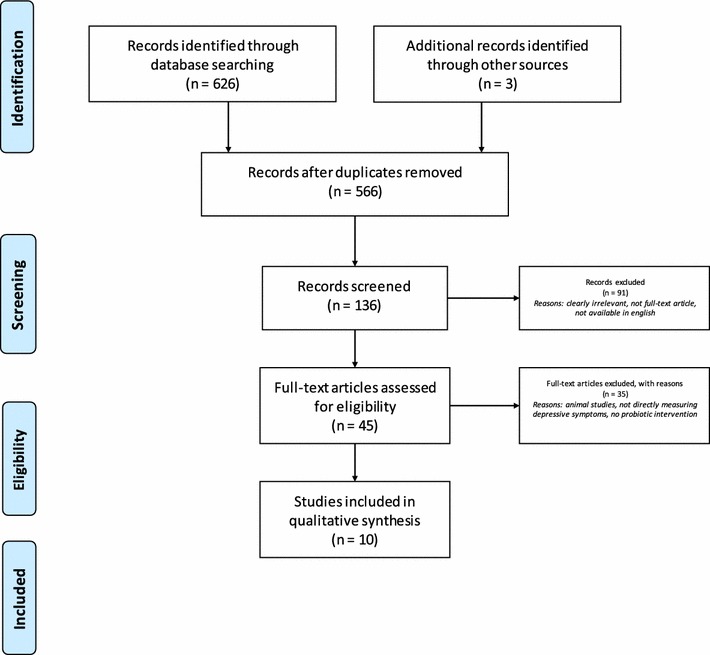
BACKGROUND: Patients suffering from depression experience significant mood, anxiety, and cognitive symptoms. Currently, most antidepressants work by altering neurotransmitter activity in the brain to improve these symptoms. However, in the last decade, research has revealed an extensive bidirectional communication network between the gastrointestinal tract and the central nervous system, referred to as the "gut-brain axis." Advances in this field have linked psychiatric disorders to changes in the microbiome, making it a potential target for novel antidepressant treatments. The aim of this review is to analyze the current body of research assessing the effects of probiotics, on symptoms of depression in humans. METHODS: A systematic search of five databases was performed and study selection was completed using the preferred reporting items for systematic reviews and meta-analyses process. RESULTS: Ten studies met criteria and were analyzed for effects on mood, anxiety, and cognition. Five studies assessed mood symptoms, seven studies assessed anxiety symptoms, and three studies assessed cognition. The majority of the studies found positive results on all measures of depressive symptoms; however, the strain of probiotic, the dosing, and duration of treatment varied widely and no studies assessed sleep. CONCLUSION: The evidence for probiotics alleviating depressive symptoms is compelling but additional double-blind randomized control trials in clinical populations are warranted to further assess efficacy.
Overview
The claims and statistics of this paper haven’t been checked yet.
Free: it reads the open-access text and checks the first 5 claims that cite a source we can check. Create a free account to check every claim.
Integrity signals
Registry
Cites
Statistics
Figures
Verification
Claims the paper makes
The claims and statistics of this paper haven’t been checked yet.
Free: it reads the open-access text and checks the first 5 claims that cite a source we can check. Create a free account to check every claim.
Claims other papers make about this one
Each is checked against this paper’s own text: does it say what the citing paper says it does?
The cited source says what the claim attributes to it.
In the citing paper
“Studies performed in healthy volunteers have shown that the administration of different probiotics were associated with an improved well-being (172–174)”
From Vagus Nerve as Modulator of the Brain–Gut Axis in Psychiatric and Inflammatory Disorders (2018) · cites this paper as [174]
In the citing paper
“as well as a decrease in anxiety and psychological distress (174, 175).”
From Vagus Nerve as Modulator of the Brain–Gut Axis in Psychiatric and Inflammatory Disorders (2018) · cites this paper as [174]
In the citing paper
“Concerning PD, many studies showed that probiotic intake can reduce neuroinflammation, inhibit the loss of dopaminergic neurons, and modulate brain functions, as explained in the sections that follow [324,325,326,327].”
From The Interplay between Gut Microbiota and Parkinson’s Disease: Implications on Diagnosis and Treatment (2022) · cites this paper as [326]
In the citing paper
“Meaningful amelioration in the anxiety symptoms after probiotic treatment was suggested by Wallace et al. [146]”
From The Role of Microbiota-Gut-Brain Axis in Neuropsychiatric and Neurological Disorders (2021) · cites this paper as [146]
In the citing paper
“For instance, MDD has been associated with alterations in brain structure and function, (e.g.[10,11]), gastrointestinal factors (e.g.[12,13]), immunology (e.g.[14]), endocrinology (including neurotransmitters, e.g.[15,16]), neurotrophic factors (e.g.[17,18]), hormones (e.g.[19]), and oxidative stress (e.g.[20]).”
From Prospective biomarkers of major depressive disorder: A systematic review and meta-analysis (2020) · cites this paper as [12]
1 more claim about this paper
Create a free account to see every claim other papers make about this one.
Self-check
Percentages, sums and reported differences re-computed from the paper’s own numbers.
The self-check needs the paper’s full text.
Citations
Cites
Assessing the quality of reports of randomized clinical trials: Is blinding necessary?
Jadad, A. R., Moore, R. A., Carroll, D., Jenkinson, C., Reynolds, D. J. M., Gavaghan, D. J., & McQuay, H. J. (1996) · Controlled Clinical Trials · doi:10.1016/0197-2456(95)00134-4 · Cited by 17,582 · cited 2×
“Quality control of selected studies Quality of included clinical trials was assessed using the Jadad Scale [41], a widely used scoring system that independently assesses the methodological quality of trials on three measures: randomization, blinding, and withdrawals/dropouts.”
MethodKessler, R. C., Chiu, W. T., Demler, O., & Walters, E. E. (2005) · Archives of General Psychiatry · doi:10.1001/archpsyc.62.6.617 · Cited by 12,052
Zhang, Q., Wang, C., Zheng, M., Li, Y., Li, J., Zhang, L., Shang, X., & Yan, C. (2015) · Cerebrovascular Diseases · doi:10.1159/000369778 · Cited by 11,533
Diet rapidly and reproducibly alters the human gut microbiome
David, L. A., Maurice, C. F., Carmody, R. N., Gootenberg, D. B., Button, J. E., Wolfe, B. E., Ling, A. V., Devlin, A. S., Varma, Y., Fischbach, M. A., et al. (2014) · Nature · doi:10.1038/nature12820 · Cited by 10,100 · cited 1×
“It is influenced by several factors, including genetics [10], age [11], sex [12], diet [13], and, of particular interest lately, stress [14].”
BackgroundMolecular Mechanisms of Depression: Perspectives on New Treatment Strategies
Lang, U. E., & Borgwardt, S. (2013) · Cellular Physiology and Biochemistry · doi:10.1159/000350094 · Cited by 8,475
Human gut microbiome viewed across age and geography
Yatsunenko, T., Rey, F. E., Manary, M. J., Trehan, I., Dominguez-Bello, M. G., Contreras, M., Magris, M., Hidalgo, G., Baldassano, R. N., Anokhin, A. P., et al. (2012) · Nature · doi:10.1038/nature11053 · Cited by 7,815 · cited 1×
“It is influenced by several factors, including genetics [10], age [11], sex [12], diet [13], and, of particular interest lately, stress [14].”
BackgroundDong, Y., Hao, L., Shi, Z., Wang, G., Zhang, Z., & Han, C. (2013) · Urologia Internationalis · doi:10.1159/000351405 · Cited by 4,540
Bravo, J. A., Forsythe, P., Chew, M. V., Escaravage, E., Savignac, H. M., Dinan, T. G., Bienenstock, J., & Cryan, J. F. (2011) · Proceedings of the National Academy of Sciences · doi:10.1073/pnas.1102999108 · Cited by 3,888 · cited 3×
“Finally, one of the most salient findings in preclinical studies of rodents treated with probiotics are the behavioral and psychological changes they induce, such as improved memory [33, 34] and reduced anxiety- and depressive-like behaviors [26, 32, 35, 36].”
BackgroundResultHuman Genetics Shape the Gut Microbiome
Goodrich, J. K., Waters, J. L., Poole, A. C., Sutter, J. L., Koren, O., Blekhman, R., Beaumont, M., Van Treuren, W., Knight, R., Bell, J. T., et al. (2014) · Cell · doi:10.1016/j.cell.2014.09.053 · Cited by 3,164 · cited 1×
“It is influenced by several factors, including genetics [10], age [11], sex [12], diet [13], and, of particular interest lately, stress [14].”
BackgroundAssociations of depression with C-reactive protein, IL-1, and IL-6: a meta-analysis.
Howren, M. B., Lamkin, D. M., & Suls, J. (2009) · Psychosomatic Medicine · doi:10.1097/psy.0b013e3181907c1b · Cited by 2,766
Cited by
Items 201–300 of 521
Erratum to: The effects of probiotics on depressive symptoms in humans: a systematic review
Wallace, C. J. K., & Milev, R. V. (2017) · Annals of General Psychiatry · doi:10.1186/s12991-017-0141-7 · Cited by 24
“1186/s12991‐017‐0138‐2 The original article [1] has been updated to include the correct version of Table 1.”
BackgroundSelf-citationIs diet important in bipolar disorder?
Łojko, D., Stelmach-Mardas, M., & Suwalska, A. (2018) · Psychiatria Polska · doi:10.12740/pp/onlinefirst/78703 · Cited by 27
“Finally, it is important to note that research into the relationship between diet and psychiatric disorders raises issues such as microbiota [75, 76], starvation (ketogenesis) [77], the effect of fermented foods [78], the use of functional foods (such as so-called psychobiotic yoghurts) [79, 80], but we are not aware…”
BackgroundLi, W., Guo, J., Shen, Y., Huang, L., Leng, B., Fan, D., Shui, L., & Chen, C. (2020) · Medicine · doi:10.1097/md.0000000000018608 · Cited by 28
Barzegari, A. A., Hashemzaei, M., Majdani, R., & Alihemmati, A. (2017) · Pharmaceutical and Biomedical Research · doi:10.29252/pbr.3.3.23 · Cited by 27
“The usefulness of probiotic bacteria in the treatment and prevention of some diseases have been shown in many researches (15-22).”
BackgroundCui, J., Wang, W., Tang, Y., Feng, S., Liu, H., & Hao, Z. (2025) · Interdisciplinary medicine · doi:10.1002/inmd.20240041 · Cited by 27
Shawky, E. M., Surendran, S., & El-Khair, R. M. A. (2025) · Probiotics and Antimicrobial Proteins · doi:10.1007/s12602-025-10592-5 · Cited by 25
“Although much of the current research on psychobiotics has focused on dairy-based probiotics, such as yogurt and kefir, fermented vegetables have garnered increasing attention for their unique probiotic composition and potential mental health benefits [2].”
A Comprehensive Review of Nutritional Influences on the Serotonergic System
Tang, J., Krushelnycky, L., Shaqo, A., & Cho, C. E. (2025) · Advances in Nutrition · doi:10.1016/j.advnut.2025.100524 · Cited by 34
“Certain probiotic strains, sometimes termed “ psychobiotics, ” have demonstrated the ability to modulate brain neurochemistry, including serotonin concentrations, and improve behavioral outcomes related to mood and stress responses in preclinical models and some human clinical studies [131,132].”
A review of new insights into existing major depressive disorder biomarkers
Rimti, F. H., Shahbaz, R., Bhatt, K., & Xiang, A. J. (2023) · Heliyon · doi:10.1016/j.heliyon.2023.e18909 · Cited by 23
A role for the microbiome in mother–infant interaction and perinatal depression
Sanders, A., Rackers, H., & Kimmel, M. (2019) · International Review of Psychiatry · doi:10.1080/09540261.2018.1548431 · Cited by 21
“A systematic review on probiotic administration concluded probiotics may alleviate depressive symptoms, although more research is needed (Wallace & Milev, 2017).”
BackgroundRole of microbes in the pathogenesis of neuropsychiatric disorders
Goswami, A., Wendt, F. R., Pathak, G. A., Tylee, D. S., Angelis, F. D., Lillo, A. D., & Polimanti, R. A. (2021) · Frontiers in Neuroendocrinology · doi:10.1016/j.yfrne.2021.100917 · Cited by 23
Epilepsy-associated comorbidities among adults: A plausible therapeutic role of gut microbiota
Arulsamy, A., & Shaikh, M. F. (2022) · Neurobiology of Disease · doi:10.1016/j.nbd.2022.105648 · Cited by 22
Deciphering the role of probiotics in mental health: a systematic literature review of psychobiotics
Hussain, A., Koser, N., Aun, S. M., Siddiqui, M. F., Malik, S. A., & Ali, S. A. (2024) · Beneficial Microbes · doi:10.1163/18762891-bja00053 · Cited by 24
Bartoš, A., Weinerová, J., & Diondet, S. (2023) · Frontiers in Aging Neuroscience · doi:10.3389/fnagi.2023.1163727 · Cited by 22
“This is in contrast to a systematic review suggesting that treatment with probiotics may improve symptoms associated with major depressive disorder (Wallace and Milev, 2017).”
ResultHashemi-Mohammadabad, N., Taghavi, S.-A., Lambert, N., Moshtaghi, R., Bazarganipour, F., & Sharifi, M. (2024) · BMC Psychiatry · doi:10.1186/s12888-023-05429-w · Cited by 23
Food Components with the Potential to be Used in the Therapeutic Approach of Mental Diseases
Fernández, M. J. F., Valero‐Cases, E., & Frutos‐Rincón, L. (2018) · Current Pharmaceutical Biotechnology · doi:10.2174/1389201019666180925120657 · Cited by 21
Zeng, C., Qiu, Y., Li, S., Teng, Z., Xiang, H., Chen, J., Wu, X., Cao, T., Zhang, S., Chen, Q., et al. (2022) · Frontiers in Pharmacology · doi:10.3389/fphar.2022.829815 · Cited by 21
“By comparison, there is now relatively robust evidence in animal studies to prove that probiotics can change behavior and improve depressive symptoms through regulating critical neurotransmitters, reducing overall inflammation, as well as its antioxidant and free radical scavenging abilities (Wallace and Milev, 2017).”
BackgroundResultKarbownik, M. S., Mokros, Ł., & Kowalczyk, E. (2022) · International Journal of Environmental Research and Public Health · doi:10.3390/ijerph19073861 · Cited by 20
“All these mechanisms may contribute to the antidepressant action of probiotics [45,47].”
BackgroundBai, J., Eldridge, R. C., Houser, M. C., Martin, M., Powell, C., Sutton, K. S., Noh, H. I., Wu, Y., Olson, T. A., Konstantinidis, K. T., et al. (2024) · Journal of Translational Medicine · doi:10.1186/s12967-024-05066-1 · Cited by 22
The Effect of Lactobacillus gasseri BNR17 on Postmenopausal Symptoms in Ovariectomized Rats
Lee, S., Jung, D. H., Park, M., Yeon, S.-W., Jung, S., Yun, S., Park, H.-O., & Yoo, W. (2021) · Journal of Microbiology and Biotechnology · doi:10.4014/jmb.2105.05032 · Cited by 20
“Probiotics are live microorganisms that provide various health benefits and are considered functional foods when administered in adequate amounts [10-13].”
The Microbiota-gut-immune-glia (MGIG) Axis in Major DepressionPreprint
Rudzki, L., & Maes, M. H. J. (2020) · Preprints.org · doi:10.20944/preprints202002.0084.v1 · Cited by 18
Hashemi, R., Raouf, M. M. H. M., Salih, T. S., Feyzpour, M., Eskandarioun, M., Nezamabadipour, N., & Gandomkar, H. (2025) · BMC Nutrition · doi:10.1186/s40795-025-01152-9 · Cited by 17
Souzedo, F. B., Bizarro, L., & de Pereira, A. P. A. (2020) · Jornal Brasileiro de Psiquiatria · doi:10.1590/0047-2085000000285 · Cited by 39
Kwon, H., Lee, E. H., Choi, J., Park, J., Kim, Y., & Han, P. (2023) · Experimental Neurobiology · doi:10.5607/en23024 · Cited by 17
Microbiota-Gut-Brain Axis and Antidepressant Treatment
Lachmansingh, D. A., Lavelle, A., Cryan, J. F., & Clarke, G. A. (2023) · Current topics in behavioral neurosciences · doi:10.1007/7854_2023_449 · Cited by 18
Gupta, S., Dinesh, S., & Sharma, S. (2024) · Central Nervous System Agents in Medicinal Chemistry · doi:10.2174/0118715249271548231115071021 · Cited by 20
Probiotics reduce negative mood over time: the value of daily self-reports in detecting effects
Johnson, K. V. ‐., & Steenbergen, L. (2025) · npj Mental Health Research · doi:10.1038/s44184-025-00123-z · Cited by 17
Is there a role of gut microbiota in mental health?
Lange, K. W., Lange, K. M., Nakamura, Y. K., & Kanaya, S. (2020) · Journal of Food Bioactives · doi:10.31665/jfb.2020.9213 · Cited by 17
“Future trials evaluating probiotic use in various mental disorders are required in order to determine efficacy and to address several key problems, such as beneficial strains, dosage, method of administration and treatment duration (Wallace and Milev, 2017).”
BackgroundSatapathy, P., Khan, K., Devi, A. T., Patil, A. G., Govindaraju, A. M., Gopal, S., Prasad, M. N. N., More, V. S., Kakarla, R. R., Raghu, A. V., et al. (2019) · Methods in microbiology · doi:10.1016/bs.mim.2019.02.001 · Cited by 19
Dipalma, G., Marinelli, G., Ferrante, L., Noia, A. D., Carone, C., Colonna, V., Marotti, P., Inchingolo, F., Palermo, A., Tartaglia, G. M., et al. (2025) · Nutrients · doi:10.3390/nu17142261 · Cited by 19
Mechanistic intersections between migraine and major depressive disorder
Johnson, M., Filali, Y., Adegboyo, A., Eberle, M., Townsend, A., Hussien, Y., Marcinkiewcz, C. A., & Hultman, R. C. (2025) · The Journal of Headache and Pain · doi:10.1186/s10194-025-02097-x · Cited by 17
“Probiotic treatment has been shown to ameliorate depressive-like behaviors in human and rodent models of stress and depression, possibly due to these probiotics increasing levels of the serotonin precursor tryptophan and consequently increasing 5-HT availability [192].”
Microbiota in anorexia nervosa: potential for treatment
Landini, L., Dadson, P., Gallo, F., Honka, M., & Cena, H. (2022) · Nutrition Research Reviews · doi:10.1017/s0954422422000130 · Cited by 17
Logan, A. C., & Prescott, S. L. (2017) · Challenges · doi:10.3390/challe8020024 · Cited by 16
Shaikh, M. F., Lee, C. Y., Chen, W. N., & Shaikh, F. (2020) · Frontiers in Pharmacology · doi:10.3389/fphar.2020.00465 · Cited by 17
“One may propose the mode of action involves the regulation of inflammatory markers and neurotransmission (Wallace and Milev, 2017).”
BackgroundGonzalez-Mercado, V. J., Lim, S. J., Saligan, L. N., Perez, N. B., Rodriguez, C. S., Bernabe, R. D., Ozorio, S., Pedro, E., Sepehri, F., & Aouizerat, B. E. (2021) · Depression Research and Treatment · doi:10.1155/2021/7967552 · Cited by 18
“Conversely, probiotic intervention can alleviate and improve depressive symptoms [38, 39].”
BackgroundPedroso, I., Kumbhare, S. V., Joshi, B., Saravanan, S. K., Mongad, D., Singh-Rambiritch, S., Uday, T., Muthukumar, K., Irudayanathan, C., Reddy-Sinha, C., et al. (2022) · Journal of Personalized Medicine · doi:10.3390/jpm12081237 · Cited by 15
“Previous research has pointed to the association between depression and Oscillospiraceae_UCG003 [59], Eubacterium ventriosum group [60,61], Lactobacillus [62], Prevotella [63], and anxiety with Ruminococcaceae_UBA1819 [64] and Ruminococcaceae_DTU089 [65] and the direction of the association was concordant with previou…”
ResultPay dirt! human health depends on soil health
Kemper, K. J., & Lal, R. (2017) · Complementary Therapies in Medicine · doi:10.1016/j.ctim.2017.04.005 · Cited by 20
Positive Effects of Probiotic Therapy in Patients with Post-Infectious Fatigue
Obermoser, K., Brigo, N., Schroll, A., Monfort‐Lanzas, P., Gostner, J. M., Engl, S., Geisler, S., Knoll, M., Schennach, H., Weiß, G., et al. (2023) · Metabolites · doi:10.3390/metabo13050639 · Cited by 15
“, probiotic dose and strains) and those conducted in populations without clinically diagnosed depression may account for the foregoing discrepancy in the literature [50,51].”
ResultObesity and Depression: Common Link and Possible Targets
Jitte, S., Keluth, S., Bisht, P., Wal, P., Singh, S., Murti, K., & Kumar, N. (2024) · CNS & Neurological Disorders - Drug Targets · doi:10.2174/0118715273291985240430074053 · Cited by 15
Zhang, P., Jin, W., Lyu, Z., Lyu, X., & Li, L. (2024) · Brain Research Bulletin · doi:10.1016/j.brainresbull.2024.111001 · Cited by 17
“It was found that the administration of Bifidobacteria and lactic acid bacteria was able to raise the mice ’ s levels of 5-hydroxytryptamine (5-HT) and tryptophan, alleviating symptoms of depression (Wallace and Milev, 2017).”
BackgroundKumar, A., Karamchandani, A., & Singh, S. (2024) · Neuroscience Informatics · doi:10.1016/j.neuri.2024.100175 · Cited by 18
Probiotic and prebiotic interventions in eating disorders: A narrative review
Baenas, I., Camacho‐Barcia, L., Miranda‐Olivos, R., Solé‐Morata, N., Misiolek, A., Jiménez‐Múrcia, S., & Fernández‐Aranda, F. (2024) · European Eating Disorders Review · doi:10.1002/erv.3069 · Cited by 16
Singh, P., Chung, H., Lee, I., D’Souza, R., Kim, H., & Hong, S. (2018) · BMC Genomics · doi:10.1186/s12864-018-4672-3 · Cited by 16
Gut Health = Mental Health? The Impact of Diet and Dietary Supplements on Mood Disorders
Mueller, M. R., Ganesh, R., & Bonnes, S. L. R. (2020) · Current Nutrition Reports · doi:10.1007/s13668-020-00340-2 · Cited by 20
Ferrari, S., Mulè, S., Rosso, G., Parini, F., Galla, R., Molinari, C. G., & Uberti, F. (2024) · International Journal of Molecular Sciences · doi:10.3390/ijms25094774 · Cited by 16
Kearns, R., Dooley, J. S. G., Matthews, M., & McNeilly, A. M. (2024) · Journal of the International Society of Sports Nutrition · doi:10.1080/15502783.2024.2388085 · Cited by 15
Microbiome-based approaches to personalized nutrition: from gut health to disease prevention
Nisa, P., Kirthi, A. V., & Sinha, P. (2025) · Folia Microbiologica · doi:10.1007/s12223-025-01337-6 · Cited by 20
“As natural ways to support the gut–brain connection and enhance mental health outcomes, dietary interventions high in fibre, fermented foods, and polyphenols are also being investigated (Jain et al. 2023; Wallace and Milev 2017).”
Karbownik, M. S., Kręczyńska, J., Wiktorowska‐Owczarek, A., Kwarta, P., Cybula, M., Stilinović, N., Pietras, T., & Kowalczyk, E. (2022) · Frontiers in Endocrinology · doi:10.3389/fendo.2021.800023 · Cited by 15
Can Gut Microbiota and Lifestyle Help Us in the Handling of Anorexia Nervosa Patients?
Mendez-Figueroa, V., Fernández, J. M. B., del Pozo, R. B. M., Fernández, A. B., Bailén, M., Bressa, C., Larrosa, M., & González-Soltero, R. (2019) · Microorganisms · doi:10.3390/microorganisms7020058 · Cited by 17
“Some probiotics were reported as supplements that improve emotions [62] and certain Lactobacillus strains improved behavioral abnormalities [63].”
BackgroundEskandar, K. (2025) · Middle East Current Psychiatry · doi:10.1186/s43045-025-00585-z · Cited by 15
Su, Y., & Xia, Y. (2026) · Current Research in Food Science · doi:10.1016/j.crfs.2026.101372 · Cited by 18
“A significant reduction in HAMD scores has been consistently used as a key efficacy measure in randomized controlled trials (RCTs) validating the antidepressant effects of specific probiotics (Wallace and Milev, 2017).”
Borrego-Ruiz, A., & García, J. J. B. (2024) · Ansiedad y Estrés · doi:10.5093/anyes2024a11 · Cited by 20
Probiotics/prebiotics/synbiotics and human neuropsychiatric outcomes: an umbrella review
Du, Q., Li, Q., Liu, C., Liao, G., Li, J., Yang, J., Zhang, Q., Gong, X., & Li, K. (2017) · Beneficial Microbes · doi:10.1163/18762891-bja00035 · Cited by 21
Moschonis, G., Sarapis, K., Resciniti, S. M., Hall, R., Yim, K., Tonkovic, M., Fitzgerald, C., Anixiadis, F., Vinh, A., Dinh, Q. N., et al. (2024) · British Journal Of Nutrition · doi:10.1017/s0007114524001703 · Cited by 19
Menni, A.-E., Theodorou, H., Tzikos, G., Theodorou, I. M., Semertzidou, E., Stelmach, V., Shrewsbury, A. D., Stavrou, G., & Kotzampassi, K. E. (2025) · Nutrients · doi:10.3390/nu17122022 · Cited by 14
“…3 of them included individuals with Major Depression Disorders [MDD] [42,61,62], while the remaining 16 studies were conducted with controls without depression or other clinical populations, e.g., irritable bowel syndrome, diabetes with coronary heart disease, and fibromyalgia [43,45,47,63,64].”
Chang, J. P., Iqbal, A. Z., Do, Q. L., Yaseen, M., Wu, S., Malau, I. A., Zailani, H., & Su, K. (2025) · Pharmacological Research · doi:10.1016/j.phrs.2025.107857 · Cited by 14
Complementary and Integrative Gastroenterology
Korzenik, J. R., Koch, A. K., & Langhorst, J. (2017) · Medical Clinics of North America · doi:10.1016/j.mcna.2017.04.009 · Cited by 14
Özer, M., Ozturk, B., Hayaloğlu, A. A., & Harsa, Ş. (2022) · Food Bioscience · doi:10.1016/j.fbio.2022.101678 · Cited by 13
Neutrophils in the Focus: Impact on Neuroimmune Dynamics and the Gut–Brain Axis
Kršek, A., & Batičić, L. (2024) · Gastrointestinal Disorders · doi:10.3390/gidisord6030039 · Cited by 14
“This persistent inflammation is implicated in various diseases, spanning cardiovascular, respiratory, neurodegenerative, metabolic, and autoimmune disorders, along with conditions like rheumatoid arthritis (RA), multiple sclerosis, inflammatory bowel disease, periodontitis, and sepsis [156,233].”
BackgroundTiwari, S., & Paramanik, V. (2025) · Molecular Neurobiology · doi:10.1007/s12035-025-04738-3 · Cited by 13
Drug and gut microbe relationships: Moving beyond antibiotics
Kumbhare, S. V., Pedroso, I., Ugalde, J. A., Márquez‐Miranda, V., Sinha, R., & Almonacid, D. E. (2023) · Drug Discovery Today · doi:10.1016/j.drudis.2023.103797 · Cited by 14
Cammisuli, D. M., Fusi, J., Scarfò, G., Daniele, S., Castelnuovo, G., & Franzoni, F. (2022) · Oxidative Medicine and Cellular Longevity · doi:10.1155/2022/8806009 · Cited by 12
“The rebalancing of a dysbiotic flora through the use of psychobiotics represents a therapeutic goal as a complementary intervention to standard care, especially for depressive symptoms [77, 78], even if additional RCTs in clinical populations are warranted to better evaluate their efficacy.”
Kreuzer, K., Birkl-Toeglhofer, A. M., Haybaeck, J., Reiter, A., Dalkner, N., Fellendorf, F. T., Maget, A., Platzer, M., Seidl, M., Mendel, L.-M., et al. (2024) · Neuropsychobiology · doi:10.1159/000538781 · Cited by 13
Duan, D., Wang, Y., Hu, X. Y., Wang, Y., Wang, Y., Hu, Y., Zhou, X., & Dong, X. (2024) · Neuroscience · doi:10.1016/j.neuroscience.2024.08.005 · Cited by 12
“Patients typically present with symptoms such as a persistent low mood or a loss of interest, which are frequently accompanied by feelings of guilt, hopelessness, and sleep disturbances (Wallace and Milev, 2017).”
BackgroundHu, J., Zhang, Y., Liu, C., Gkaravella, A., & Yu, J. (2025) · Journal of Pediatric Gastroenterology and Nutrition · doi:10.1002/jpn3.70092 · Cited by 11
“37 Additionally, short intervention durations in some studies 29 ‐ 31 (e.g., 12 weeks for scale assessing 24 – 24 changes) in Amat ‐ Bou et al. 31 hampered meaningful outcomes.”
Mógor, F., Kovács, T., Lohinai, Z., & Dóra, D. (2021) · Applied Sciences · doi:10.3390/app112412000 · Cited by 11
“Fecal microbiota transplantation (FMT), pre- and probiotic treatments have shown positive results in smaller cohorts of patients with depressive symptoms [86], and in mouse models of obsessive-compulsive disorder (OCD) [87].”
BackgroundKamat, D., Al-Ajlouni, Y. A., & Hall, R. C. W. (2023) · International Journal of Environmental Research and Public Health · doi:10.3390/ijerph20065171 · Cited by 10
“, most of the studies included found a positive association between receiving probiotics and depressive symptoms [44].”
ResultSimkin, D. R., & Arnold, L. E. (2020) · OBM Integrative and Complementary Medicine · doi:10.21926/obm.icm.2004040 · Cited by 12
Gut microbiota: A new window for the prevention and treatment of neuropsychiatric disease
Tang, Y., Zhang, Y., Chen, C., Cao, Y., Wang, Q., & Tang, C. (2025) · Journal of Central Nervous System Disease · doi:10.1177/11795735251322450 · Cited by 10
Misra, S., & Raghuwanshi, S. (2021) · Springer eBooks · doi:10.1007/978-981-16-5628-6_10 · Cited by 15
Mundula, T., Baldi, S., Gerace, E., & Amedei, A. (2023) · Biomedicines · doi:10.3390/biomedicines11020550 · Cited by 11
“In addition, preclinical and clinical studies have also confirmed that the GM manipulation of probiotics, especially Lactobacillus and Bifidobacterium strains, can improve depressive symptoms by increasing 5-HT levels in the brain [37,38].”
BackgroundMesripour, A., MESHKATI, A., & Hajhashemi, V. (2020) · Turkish Journal of Pharmaceutical Sciences · doi:10.4274/tjps.galenos.2019.94210 · Cited by 10
Jeremiah, O. J., Cousins, G., Boland, F., Kirby, B. P., & Ryan, B. K. (2020) · Heliyon · doi:10.1016/j.heliyon.2020.e04845 · Cited by 11
“, 2018), while also increasing the circulation of serotonin through microbiome signaling (Wallace and Milev, 2017).”
BackgroundA influência da nutrição no tratamento e prevenção dos transtornos mentais: ansiedade e depressão
Rebouças, F. D. C., Barbosa, L. L., do Nascimento, L. F., Ferreira, J. C. D. S., & Freitas, F. M. N. D. O. (2022) · Research Society and Development · doi:10.33448/rsd-v11i15.37078 · Cited by 11
Llopis, I., Miguel, N. S., & Serrano, M. Á. (2025) · Applied Sciences · doi:10.3390/app15084564 · Cited by 14
Cao, J., Ma, W., Chang, X., Pu, D., Tan, R., Hu, L., Hong, T., Cui, Y., Gao, L., & Wu, J. (2025) · BMC Microbiology · doi:10.1186/s12866-025-04097-y · Cited by 9
“The seventh point is that interactions between gut microbes and the brain may take place through the gut-brain axis, and the regulatory effects of probiotics may affect mood and mental health by influencing neurotransmitter production, inflammation levels, and other pathways [8, 9].”
Taboun, Z. S., & Sadeghi, J. (2023) · International Immunopharmacology · doi:10.1016/j.intimp.2023.111142 · Cited by 9
Poulios, E., Pavlidou, E., Papadopoulou, S. Κ., Rempetsioti, K., Migdanis, A., Mentzelou, M., Chatzidimitriou, M., Migdanis, I., Androutsos, O., & Giaginis, C. (2024) · Biology · doi:10.3390/biology13030158 · Cited by 12
“Moreover, although most studies exploring probiotics and mental health outcomes have utilized strains from the Bifidobacterium or Lactobacillus genera of bacteria, there was considerable heterogeneity in the precise strains utilized [101].”
BackgroundEffect of oral tryptamines on the gut microbiome of rats—a preliminary study
Xu, M., Kiss, A. J., Jones, J. A., McMurray, M. S., & Shi, H. (2024) · PeerJ · doi:10.7717/peerj.17517 · Cited by 10
“These changes have been shown to be reversible upon recolonization of the gut through dietary probiotics ( Wallace & Milev, 2017 ).”
The benefits of probiotic interventions in maternal-fetal health: An appraise review
Dhillon, P., Singh, K., & Kaur, K. (2020) · PharmaNutrition · doi:10.1016/j.phanu.2020.100211 · Cited by 11
Lopresti, A. L., Gupta, H., & Smith, S. J. (2018) · BMC Complementary and Alternative Medicine · doi:10.1186/s12906-018-2168-y · Cited by 9
“In recent metaanalyses, it has been confirmed that probiotics have some therapeutic benefit for the treatment of depression [43, 44].”
BackgroundRole of Endogenous Metabolite Alterations in Neuropsychiatric Disease
Crabtree, G. W., & Gogos, J. A. (2018) · ACS Chemical Neuroscience · doi:10.1021/acschemneuro.8b00145 · Cited by 9
The use of probiotics in depression
Lange, K. W., Nakamura, Y. K., & Lange, K. M. (2020) · Journal of Food Bioactives · doi:10.31665/jfb.2020.12244 · Cited by 10
Assessing the Labeling Information on Drugs Associated With Suicide Risk: Systematic Review
Jeon, S. M., Lim, H., Cheon, H.-B., Ryu, J., & Kwon, J. (2024) · JMIR Public Health and Surveillance · doi:10.2196/49755 · Cited by 9
The development and tendency of depression researches: Viewed from the microbiota-gut-brain axis
Liang, S., Wu, X., Xu, H., Niu, Y., & Jin, F. (2018) · Chinese Science Bulletin (Chinese Version) · doi:10.1360/n972017-01182 · Cited by 9
Poststroke Depression: Pathophysiology and Treatment Strategies
Lai, Y., & McCullough, L. D. (2019) · Elsevier eBooks · doi:10.1016/b978-0-12-813333-0.00018-4 · Cited by 9
Probiotics as Live Bio-therapeutics: Prospects and Perspectives
Kaur, J., Singh, B. P., Chaudhary, V., Elshaghabee, F. M. F., Singh, J., Singh, A., Rokana, N., & Panwar, H. (2020) · Microorganisms for sustainability · doi:10.1007/978-981-15-6795-7_5 · Cited by 10
Tranberg, A., Klarin, B., Johansson, J., & Påhlman, L. I. (2020) · MicrobiologyOpen · doi:10.1002/mbo3.1151 · Cited by 10
Developing our understanding of nutrition in depression
Upton, N. (2021) · British Journal Of Nutrition · doi:10.1017/s0007114521001744 · Cited by 8
“However, there remains a significant heterogeneity in the literature base in terms of the strength of this interaction(17,27,30), and one recent, updated review of RCT concluded that there was no enough evidence currently to support or refute the anti-depressant potential of probiotics (only seven of thirty-two studie…”
BackgroundHaas‐Neill, S., Iwashita, E., Dvorkin‐Gheva, A., & Forsythe, P. (2022) · International Journal of Molecular Sciences · doi:10.3390/ijms23179653 · Cited by 10
“The introduction of certain bacteria to the gut that modulate brain function, termed psychoactive-probiotics or psychobiotics, have been demonstrated to influence behaviour in animal models and mood/anxiety in humans [6,7].”
BackgroundJeremiah, O. J., Cousins, G., Leacy, F. P., Kirby, B. P., & Ryan, B. K. (2019) · Systematic Reviews · doi:10.1186/s13643-019-0978-8 · Cited by 8
Filho, A. S. S., Souza, T. B., Martins, J. L. R., Dietz, G. P. H., Fernandes, K. F., de Sá, S., Inácio, P. A., Oliveira-Silva, I., Pedrino, G. R., Aprigliano, V., et al. (2026) · Pharmaceuticals · doi:10.3390/ph19010156 · Cited by 7
“In response to this growing movement, the scientific literature has been marked by a substantial increase in the number of systematic reviews and meta-analyses over the years [5,8,9,11, 16– 54 ].”
Wang, L., Zhang, S., Liu, Y., Li, D., Tian, G., Li, X., & Li, Y. (2026) · Scientific Reports · doi:10.1038/s41598-026-41801-y · Cited by 8
Microbiota-Immune System Interactions in Human Neurological Disorders
Huang, Q., Fang, Y., Liao, D., & Xia, J. (2020) · CNS & Neurological Disorders - Drug Targets · doi:10.2174/1871527319666200726222138 · Cited by 9
Dow, E., Hernandez, M. I., & Johnston, C. S. (2025) · Physiological Reports · doi:10.14814/phy2.70219 · Cited by 8
Mahamud, A. G. M. S. U., Tanvir, I. A., Kabir, M. E., Samonty, I., Chowdhury, M. A. H., & Rahman, M. A. (2025) · Probiotics and Antimicrobial Proteins · doi:10.1007/s12602-025-10501-w · Cited by 7
The gut microbiome and psycho-cognitive traits
Vernice, N. A., Shah, N. B., Lam, E. H., Herd, P., Reiss, A. B., & Kasselman, L. J. (2020) · Progress in molecular biology and translational science · doi:10.1016/bs.pmbts.2020.08.014 · Cited by 8
Reigada, L. C., Buchanan, E. M., Hazeltine, D., Shakil, H., & Polokowski, A. R. (2021) · Journal of Affective Disorders Reports · doi:10.1016/j.jadr.2021.100141 · Cited by 10
Yousefalizadeh, S., Esmaili, H., & Jafarnejad, S. (2024) · Heart and Mind · doi:10.4103/hm.hm-d-23-00048 · Cited by 7
Voicu, S. N., Scărlătescu, A. I., Apetroaei, M.-M., Nedea, M. I., Blejan, I. E., Udeanu, D. I., Velescu, B. Ș., Ghica, M., Nedea, O. A., Cobelschi, C., et al. (2024) · Nutrients · doi:10.3390/nu16071077 · Cited by 10
Acute toxicity and genotoxicity studies on new melatonergic antidepressant GW117
Gao, M., Ma, H., Liu, T., Cao, C., Zhiyong, Z., Tang, L., Gu, W., Zhang, D., & Sun, H. (2023) · Heliyon · doi:10.1016/j.heliyon.2023.e14026 · Cited by 7
Metadata
- Authors
- Wallace, C. J. K., & Milev, R.
- Affiliations
- Queen's University (CA)
- Corresponding author
- Wallace, Caroline J. K.
- Venue
- Annals of General Psychiatry
- Published
- 2017-02-20
- Volume
- 16
- Issue
- 1
- Pages
- 14-14
- ISSN
- 1744-859X (ISSN-L)
- PMC
- PMC5319175
- OpenAlex
- W2589381355
- Semantic Scholar
- 491925c70b622cd64baaec14c2d22700e682708c
- Cited by
- 471
- References
- 75
- Citations by year
- 2026: 25 · 2025: 46 · 2024: 47 · 2023: 58 · 2022: 51 · 2021: 68 · 2020: 58 · 2019: 53 · 2018: 40 · 2017: 23
- FWCI
- 5.16
- Type
- journal article
- Language
- en
- Update notices
- correction (2017-03-07)
- Open access
- gold
- doi.org
- Licence
- cc-by
- Locations
- Annals of General Psychiatry (publishedVersion, cc-by)
- PubMed Central (publishedVersion, cc-by)
- PubMed (publishedVersion)
- DOAJ (DOAJ: Directory of Open Access Journals) (submittedVersion)
- Topics
- Life Sciences › Agricultural and Biological Sciences › Food Science › Probiotics and Fermented Foods
- Life Sciences › Biochemistry, Genetics and Molecular Biology › Molecular Biology › Gut microbiota and health
- Life Sciences › Neuroscience › Biological Psychiatry › Tryptophan and brain disorders
- Keywords
- probiotics, depression, depressive symptoms, gut-brain axis, gut microbiota, anxiety, mood, cognition, antidepressant alternatives
About these checks
Registry, retraction, Cites and statistics results are computed, not judged, with one exception: a printed reference that no index lists is read once by a model before it counts as a citation error. Claims are extracted by a model and kept only when their quote appears verbatim in the text; each cited source is then checked, with a model’s help, for whether it says what the claim relies on. Those verdicts can be wrong — read the claim’s quote and the cited source before relying on one.
Statistics and arithmetic are recomputed, not judged.
Confidence bands are shown only for fields calibrated on our annotated test set. None is calibrated yet, so no band is shown.
What counts as a claim ›How we measure confidence ›How we check this ›
Are you an author, or do you see a problem with this page? Request a review
Data sources
Bibliographic data: Semantic Scholar, OpenAlex, Crossref.
Contains information from the Semantic Scholar Academic Graph Datasets, made available under the ODC Attribution License (ODC-BY 1.0).
Semantic Scholar’s data is described in: Kinney, R., et al. (2023). The Semantic Scholar Open Data Platform. arXiv:2301.10140.
