

The effects of probiotics on depressive symptoms in humans: a systematic review
Open accessThe DOI matches its Crossref record; 75 of the 75 references it cites were found in a registry or an index.
Abstract
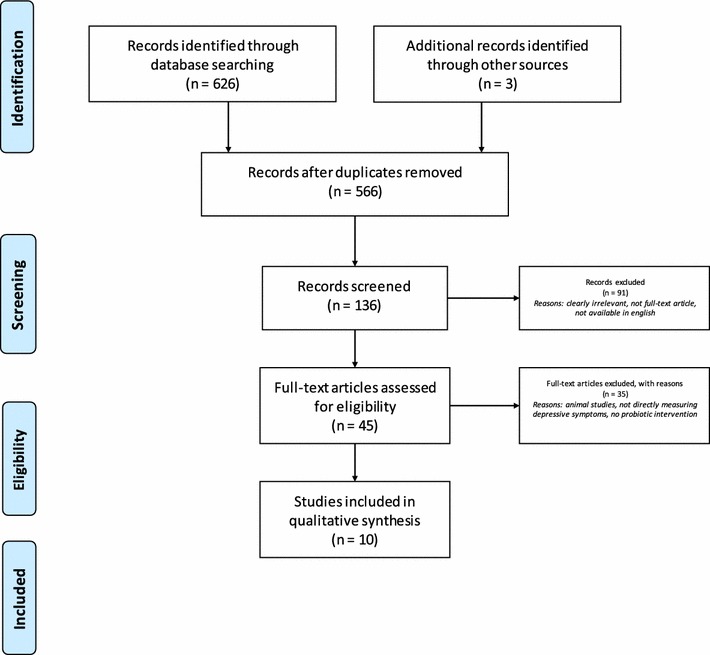
BACKGROUND: Patients suffering from depression experience significant mood, anxiety, and cognitive symptoms. Currently, most antidepressants work by altering neurotransmitter activity in the brain to improve these symptoms. However, in the last decade, research has revealed an extensive bidirectional communication network between the gastrointestinal tract and the central nervous system, referred to as the "gut-brain axis." Advances in this field have linked psychiatric disorders to changes in the microbiome, making it a potential target for novel antidepressant treatments. The aim of this review is to analyze the current body of research assessing the effects of probiotics, on symptoms of depression in humans. METHODS: A systematic search of five databases was performed and study selection was completed using the preferred reporting items for systematic reviews and meta-analyses process. RESULTS: Ten studies met criteria and were analyzed for effects on mood, anxiety, and cognition. Five studies assessed mood symptoms, seven studies assessed anxiety symptoms, and three studies assessed cognition. The majority of the studies found positive results on all measures of depressive symptoms; however, the strain of probiotic, the dosing, and duration of treatment varied widely and no studies assessed sleep. CONCLUSION: The evidence for probiotics alleviating depressive symptoms is compelling but additional double-blind randomized control trials in clinical populations are warranted to further assess efficacy.
Overview
The claims and statistics of this paper haven’t been checked yet.
Free: it reads the open-access text and checks the first 5 claims that cite a source we can check. Create a free account to check every claim.
Integrity signals
Registry
Cites
Statistics
Figures
Verification
Claims the paper makes
The claims and statistics of this paper haven’t been checked yet.
Free: it reads the open-access text and checks the first 5 claims that cite a source we can check. Create a free account to check every claim.
Claims other papers make about this one
Each is checked against this paper’s own text: does it say what the citing paper says it does?
The cited source says what the claim attributes to it.
In the citing paper
“Studies performed in healthy volunteers have shown that the administration of different probiotics were associated with an improved well-being (172–174)”
From Vagus Nerve as Modulator of the Brain–Gut Axis in Psychiatric and Inflammatory Disorders (2018) · cites this paper as [174]
In the citing paper
“as well as a decrease in anxiety and psychological distress (174, 175).”
From Vagus Nerve as Modulator of the Brain–Gut Axis in Psychiatric and Inflammatory Disorders (2018) · cites this paper as [174]
In the citing paper
“Concerning PD, many studies showed that probiotic intake can reduce neuroinflammation, inhibit the loss of dopaminergic neurons, and modulate brain functions, as explained in the sections that follow [324,325,326,327].”
From The Interplay between Gut Microbiota and Parkinson’s Disease: Implications on Diagnosis and Treatment (2022) · cites this paper as [326]
In the citing paper
“Meaningful amelioration in the anxiety symptoms after probiotic treatment was suggested by Wallace et al. [146]”
From The Role of Microbiota-Gut-Brain Axis in Neuropsychiatric and Neurological Disorders (2021) · cites this paper as [146]
In the citing paper
“For instance, MDD has been associated with alterations in brain structure and function, (e.g.[10,11]), gastrointestinal factors (e.g.[12,13]), immunology (e.g.[14]), endocrinology (including neurotransmitters, e.g.[15,16]), neurotrophic factors (e.g.[17,18]), hormones (e.g.[19]), and oxidative stress (e.g.[20]).”
From Prospective biomarkers of major depressive disorder: A systematic review and meta-analysis (2020) · cites this paper as [12]
1 more claim about this paper
Create a free account to see every claim other papers make about this one.
Self-check
Percentages, sums and reported differences re-computed from the paper’s own numbers.
The self-check needs the paper’s full text.
Citations
Cites
Assessing the quality of reports of randomized clinical trials: Is blinding necessary?
Jadad, A. R., Moore, R. A., Carroll, D., Jenkinson, C., Reynolds, D. J. M., Gavaghan, D. J., & McQuay, H. J. (1996) · Controlled Clinical Trials · doi:10.1016/0197-2456(95)00134-4 · Cited by 17,582 · cited 2×
“Quality control of selected studies Quality of included clinical trials was assessed using the Jadad Scale [41], a widely used scoring system that independently assesses the methodological quality of trials on three measures: randomization, blinding, and withdrawals/dropouts.”
MethodKessler, R. C., Chiu, W. T., Demler, O., & Walters, E. E. (2005) · Archives of General Psychiatry · doi:10.1001/archpsyc.62.6.617 · Cited by 12,052
Zhang, Q., Wang, C., Zheng, M., Li, Y., Li, J., Zhang, L., Shang, X., & Yan, C. (2015) · Cerebrovascular Diseases · doi:10.1159/000369778 · Cited by 11,533
Diet rapidly and reproducibly alters the human gut microbiome
David, L. A., Maurice, C. F., Carmody, R. N., Gootenberg, D. B., Button, J. E., Wolfe, B. E., Ling, A. V., Devlin, A. S., Varma, Y., Fischbach, M. A., et al. (2014) · Nature · doi:10.1038/nature12820 · Cited by 10,100 · cited 1×
“It is influenced by several factors, including genetics [10], age [11], sex [12], diet [13], and, of particular interest lately, stress [14].”
BackgroundMolecular Mechanisms of Depression: Perspectives on New Treatment Strategies
Lang, U. E., & Borgwardt, S. (2013) · Cellular Physiology and Biochemistry · doi:10.1159/000350094 · Cited by 8,475
Human gut microbiome viewed across age and geography
Yatsunenko, T., Rey, F. E., Manary, M. J., Trehan, I., Dominguez-Bello, M. G., Contreras, M., Magris, M., Hidalgo, G., Baldassano, R. N., Anokhin, A. P., et al. (2012) · Nature · doi:10.1038/nature11053 · Cited by 7,815 · cited 1×
“It is influenced by several factors, including genetics [10], age [11], sex [12], diet [13], and, of particular interest lately, stress [14].”
BackgroundDong, Y., Hao, L., Shi, Z., Wang, G., Zhang, Z., & Han, C. (2013) · Urologia Internationalis · doi:10.1159/000351405 · Cited by 4,540
Bravo, J. A., Forsythe, P., Chew, M. V., Escaravage, E., Savignac, H. M., Dinan, T. G., Bienenstock, J., & Cryan, J. F. (2011) · Proceedings of the National Academy of Sciences · doi:10.1073/pnas.1102999108 · Cited by 3,888 · cited 3×
“Finally, one of the most salient findings in preclinical studies of rodents treated with probiotics are the behavioral and psychological changes they induce, such as improved memory [33, 34] and reduced anxiety- and depressive-like behaviors [26, 32, 35, 36].”
BackgroundResultHuman Genetics Shape the Gut Microbiome
Goodrich, J. K., Waters, J. L., Poole, A. C., Sutter, J. L., Koren, O., Blekhman, R., Beaumont, M., Van Treuren, W., Knight, R., Bell, J. T., et al. (2014) · Cell · doi:10.1016/j.cell.2014.09.053 · Cited by 3,164 · cited 1×
“It is influenced by several factors, including genetics [10], age [11], sex [12], diet [13], and, of particular interest lately, stress [14].”
BackgroundAssociations of depression with C-reactive protein, IL-1, and IL-6: a meta-analysis.
Howren, M. B., Lamkin, D. M., & Suls, J. (2009) · Psychosomatic Medicine · doi:10.1097/psy.0b013e3181907c1b · Cited by 2,766
The Epidemiology of Depression Across Cultures
Kessler, R. C., & Bromet, E. J. (2013) · Annual Review of Public Health · doi:10.1146/annurev-publhealth-031912-114409 · Cited by 2,657 · cited 1×
“Background Major depressive disorder (MDD) is a complex psychiatric disorder of unknown etiology that will affect up to 20% of the population at some point in their lifetime [1], and is a leading cause of disability worldwide [2].”
BackgroundGut–brain axis: How the microbiome influences anxiety and depression
Foster, J. A., & McVey Neufeld, K.-A. (2013) · Trends in Neurosciences · doi:10.1016/j.tins.2013.01.005 · Cited by 2,460 · cited 1×
“” This communication network is bidirectional and occurs via the autonomic nervous system, the enteric nervous system, the neuroendocrine system, and the immune system [4].”
BackgroundAltered fecal microbiota composition in patients with major depressive disorder
Jiang, H., Ling, Z., Zhang, Y., Mao, H., Ma, Z., Yin, Y., Wang, W., Tang, W., Tan, Z., Shi, J., et al. (2015) · Brain, Behavior, and Immunity · doi:10.1016/j.bbi.2015.03.016 · Cited by 2,275
Sex differences in the gut microbiome drive hormone-dependent regulation of autoimmunity
Markle, J. G. M., Frank, D. N., Mortin-Toth, S., Robertson, C. E., Feazel, L. M., Rolle-Kampczyk, U., von Bergen, M., McCoy, K. D., Macpherson, A. J., & Danska, J. S. (2013) · Science · doi:10.1126/science.1233521 · Cited by 2,025 · cited 1×
“It is influenced by several factors, including genetics [10], age [11], sex [12], diet [13], and, of particular interest lately, stress [14].”
BackgroundKelly, J. R., Borre, Y., O' Brien, C., Patterson, E., El Aidy, S., Deane, J., Kennedy, P. J., Beers, S., Scott, K., Moloney, G., et al. (2016) · Journal of Psychiatric Research · doi:10.1016/j.jpsychires.2016.07.019 · Cited by 1,683
Probiotics and their fermented food products are beneficial for health
Parvez, S., Malik, K. A., Ah Kang, S., & Kim, H.-Y. (2006) · Journal of Applied Microbiology · doi:10.1111/j.1365-2672.2006.02963.x · Cited by 1,435 · cited 1×
“It has been well established that probiotics have therapeutic effects on many GI disorders [22]; however, with the emergence of the gut–brain axis, it has been discovered that their therapeutic effects extend beyond the gut and into the central nervous system [23].”
BackgroundPrinciples and clinical implications of the brain-gut-enteric microbiota axis
Rhee, S. H., Pothoulakis, C., & Mayer, E. A. (2009) · Nature Reviews Gastroenterology & Hepatology · doi:10.1038/nrgastro.2009.35 · Cited by 1,342 · cited 1×
“There is already evidence that psychological stress can increase permeability of the gastrointestinal lining [15], and conversely, mounting evidence that the microbiome can influence and modulate emotional behavior [16].”
BackgroundMessaoudi, M., Lalonde, R., Violle, N., Javelot, H., Desor, D., Nejdi, A., Bisson, J.-F., Rougeot, C., Pichelin, M., Cazaubiel, M., et al. (2011) · British Journal of Nutrition · doi:10.1017/s0007114510004319 · Cited by 1,324 · cited 5×
“This is consistent with research in animal models that report similar findings [26, 32, 35, 36], and in accordance with HPA activity in anxiety disorders.”
BackgroundResultInfluentialPsychobiotics: A novel class of psychotropic
Dinan, T. G., Stanton, C., & Cryan, J. F. (2013) · Biological Psychiatry · doi:10.1016/j.biopsych.2013.05.001 · Cited by 1,287 · cited 1×
“Psychobiotics on the other hand have been defined by Dinan and colleagues as live organisms that, when ingested in adequate amounts, produce a health benefit in patients suffering from psychiatric illness [54].”
BackgroundSen, S., Duman, R., & Sanacora, G. (2008) · Biological Psychiatry · doi:10.1016/j.biopsych.2008.05.005 · Cited by 1,232 · cited 1×
“Consumption of probiotics was also shown to increase expression of brain-derived neurotrophic factor (BDNF) [25], a growth factor crucial for brain plasticity, memory, and neuronal health [28] that is abnormally reduced in patients suffering from depression [29].”
BackgroundJumpertz, R., Le, D. S., Turnbaugh, P. J., Trinidad, C., Bogardus, C., Gordon, J. I., & Krakoff, J. (2011) · The American Journal of Clinical Nutrition · doi:10.3945/ajcn.110.010132 · Cited by 1,232 · cited 1×
“Probiotics have also been shown to possess both antioxidant and free radical scavenging abilities [37], increase production of gamma-aminobutyric acid (GABA) [38], and improve absorption of other nutrients [39], all of which have been implicated in the pathophysiology of depression.”
BackgroundStetler, C., & Miller, G. E. (2011) · Psychosomatic Medicine · doi:10.1097/psy.0b013e31820ad12b · Cited by 1,123 · cited 1×
“The reduction in these markers of chronic stress suggests that treatment with probiotics attenuated the hypothalamic–pituitary–adrenal (HPA) axis, which is hyperactive in depressed patients [27].”
BackgroundKawai, T., Takeuchi, O., Fujita, T., Inoue, J.-I., Mühlradt, P. F., Sato, S., Hoshino, K., & Akira, S. (2001) · The Journal of Immunology · doi:10.4049/jimmunol.167.10.5887 · Cited by 1,095 · cited 2×
“These endotoxins trigger immune activation through Toll-like receptor 4 (TLR4) [60], causing the body to mount a global immune response.”
BackgroundO'Mahony, S. M., Marchesi, J. R., Scully, P., Codling, C., Ceolho, A.-M., Quigley, E. M. M., Cryan, J. F., & Dinan, T. G. (2009) · Biological Psychiatry · doi:10.1016/j.biopsych.2008.06.026 · Cited by 1,069
Correlation between the human fecal microbiota and depression
Naseribafrouei, A., Hestad, K., Avershina, E., Sekelja, M., Linløkken, A., Wilson, R., & Rudi, K. (2014) · Neurogastroenterology & Motility · doi:10.1111/nmo.12378 · Cited by 1,044
Gut microbes and the brain: paradigm shift in neuroscience
Mayer, E. A., Knight, R., Mazmanian, S. K., Cryan, J. F., & Tillisch, K. (2014) · The Journal of Neuroscience · doi:10.1523/jneurosci.3299-14.2014 · Cited by 1,033 · cited 1×
“Many Lactobacillus and Bifidobacterium strains have been studied in respect to mental health and seem to show the most beneficial effects [62], as opposed to other species such as Streptococcus and Bacillus, but we have not yet identified the most efficacious strains or combinations of strains for improving mental hea…”
BackgroundDesbonnet, L., Garrett, L., Clarke, G., Bienenstock, J., & Dinan, T. G. (2008) · Journal of Psychiatric Research · doi:10.1016/j.jpsychires.2008.03.009 · Cited by 952 · cited 1×
“Desbonnet and colleagues found that consumption of probiotics increased plasma levels of serotonin’s precursor, tryptophan [30], and, along with Nishino’s group [31], decreased serotonin’s main metabolite 5-hydroxyindoleacetic acid (5-HIAA), similar to the antidepressant citalopram.”
BackgroundRole of serotonin in the pathophysiology of depression: focus on the serotonin transporter
Owens, M. J., & Nemeroff, C. B. (1994) · Clinical Chemistry · doi:10.1093/clinchem/40.2.288 · Cited by 929 · cited 1×
“Serotonin Serotonin, or 5-hydroxytryptamine (5-HT), is a monoamine neurotransmitter implicated in the aetiology and pathophysiology of MDD [61] and is the main target of SSRIs.”
BackgroundWhorwell, P. J., Altringer, L., Morel, J., Bond, Y., Charbonneau, D., O'Mahony, L., Kiely, B., Shanahan, F., & Quigley, E. M. M. (2006) · The American Journal of Gastroenterology · doi:10.1111/j.1572-0241.2006.00734.x · Cited by 799 · cited 1×
“Dosage may be species- and strain-dependent, with some species such as Bifidobacterium infantis 35,624 requiring 108 CFU to produce beneficial effects to treat irritable bowel syndrome [64], but research is lacking on effective dosages for other species.”
BackgroundSirey, J. A., Bruce, M. L., Alexopoulos, G. S., Perlick, D. A., Friedman, S. J., & Meyers, B. S. (2001) · Psychiatric Services · doi:10.1176/appi.ps.52.12.1615 · Cited by 796 · cited 1×
“Moreover, the perceived stigma associated with MDD and the use of antidepressants prevents individuals from seeking and adhering to treatment [52].”
BackgroundAkkasheh, G., Kashani-Poor, Z., Tajabadi-Ebrahimi, M., Jafari, P., Akbari, H., Taghizadeh, M., Memarzadeh, M. R., Asemi, Z., & Esmaillzadeh, A. (2016) · Nutrition · doi:10.1016/j.nut.2015.09.003 · Cited by 767
Steenbergen, L., Sellaro, R., van Hemert, S., Bosch, J. A., & Colzato, L. S. (2015) · Brain, Behavior, and Immunity · doi:10.1016/j.bbi.2015.04.003 · Cited by 671 · cited 1×
“Forty healthy young adults consumed either a probiotic supplement or placebo for 4 weeks and found that consumption of the multispecies probiotic formula significantly reduced overall cognitive reactivity to depression, in particular aggressive and ruminative thoughts [45].”
BackgroundAit-Belgnaoui, A., Durand, H., Cartier, C., Chaumaz, G., Eutamene, H., Ferrier, L., Houdeau, E., Fioramonti, J., Bueno, L., & Theodorou, V. (2012) · Psychoneuroendocrinology · doi:10.1016/j.psyneuen.2012.03.024 · Cited by 612 · cited 5×
“And the central nervous system is not the only physiological system implicated in depression that probiotics have been shown to influence in rodents: consumption of probiotics reduced levels of the pro-inflammatory cytokines interleukin-1-beta (IL1β) [24, 32] and interleukin-6 (IL-6), as well as tumor necrosis factor-…”
BackgroundInfluentialDietary pattern and depressive symptoms in middle age
Akbaraly, T. N., Brunner, E. J., Ferrie, J. E., Marmot, M. G., Kivimaki, M., & Singh-Manoux, A. (2009) · British Journal of Psychiatry · doi:10.1192/bjp.bp.108.058925 · Cited by 602 · cited 1×
“Several cross-sectional studies have used an overall diet approach to evaluate the association between nutrition and mental health [19, 20] but there is also considerable research looking at isolated nutrients and their impact on mental health.”
BackgroundSánchez-Villegas, A., Delgado-Rodríguez, M., Alonso, A., Schlatter, J., Lahortiga, F., Majem, L. S., & Martínez-González, M. A. (2009) · Archives of General Psychiatry · doi:10.1001/archgenpsychiatry.2009.129 · Cited by 577 · cited 1×
“Several cross-sectional studies have used an overall diet approach to evaluate the association between nutrition and mental health [19, 20] but there is also considerable research looking at isolated nutrients and their impact on mental health.”
BackgroundRao, A. V., Bested, A. C., Beaulne, T. M., Katzman, M. A., Iorio, C., Berardi, J. M., & Logan, A. C. (2009) · Gut Pathogens · doi:10.1186/1757-4749-1-6 · Cited by 577 · cited 2×
“Depressive and anxiety symptoms were assessed with the Beck Depression Inventory (BDI) and the Beck Anxiety Inventory (BAI) pre- and post-intervention, and results showed that while consumption of the probiotic improved anxiety scores, it had no effect on depressive symptoms [43].”
BackgroundResultMessaoudi, M., Violle, N., Bisson, J.-F., Desor, D., Javelot, H., & Rougeot, C. (2011) · Gut Microbes · doi:10.4161/gmic.2.4.16108 · Cited by 574 · cited 1×
“Similarly, Messaoudi and colleagues’ 2011 study also found no significant change on PSS scores after the introduction of their probiotic supplement, but secondary analyses showed that the reduced HSCL-90 and HADS scores held up in a subset of subjects with the lowest levels of stress, as measured by urinary free corti…”
Impact of consuming a milk drink containing a probiotic on mood and cognition
Benton, D., Williams, C., & Brown, A. (2007) · European Journal of Clinical Nutrition · doi:10.1038/sj.ejcn.1602546 · Cited by 554 · cited 2×
“There was also no effect on verbal fluency [42].”
BackgroundProduction of gaba (γ - aminobutyric acid) by microorganisms: a review
Dhakal, R., Bajpai, V. K., & Baek, K.-H. (2012) · Brazilian Journal of Microbiology · doi:10.1590/s1517-83822012000400001 · Cited by 545
(1996) · American Journal of Psychiatry · doi:10.1176/ajp.153.11.1411 · Cited by 538 · cited 1×
“Research on sub-clinical depression is equally important, as low-grade depressive symptoms also significantly affect performance at work [68], cause household, social, and financial strain [69], and are associated with decreased quality of life [70] and suicidal ideation [71].”
BackgroundLi, S., Zhao, Y., Zhang, L., Zhang, X., Huang, L., Li, D., Niu, C., Yang, Z., & Wang, Q. (2012) · Food Chemistry · doi:10.1016/j.foodchem.2012.06.048 · Cited by 449 · cited 1×
“Probiotics have also been shown to possess both antioxidant and free radical scavenging abilities [37], increase production of gamma-aminobutyric acid (GABA) [38], and improve absorption of other nutrients [39], all of which have been implicated in the pathophysiology of depression.”
BackgroundAit‐Belgnaoui, A., Colom, A., Braniste, V., Ramalho, L., Marrot, A., Cartier, C., Houdeau, E., Theodorou, V., & Tompkins, T. (2014) · Neurogastroenterology & Motility · doi:10.1111/nmo.12295 · Cited by 434 · cited 4×
“Consumption of probiotics was also shown to increase expression of brain-derived neurotrophic factor (BDNF) [25], a growth factor crucial for brain plasticity, memory, and neuronal health [28] that is abnormally reduced in patients suffering from depression [29].”
BackgroundInfluentialGut microbiota in autism and mood disorders
Mangiola, F. (2016) · World Journal of Gastroenterology · doi:10.3748/wjg.v22.i1.361 · Cited by 413 · cited 1×
“The microbiome, a complex microbial ecosystem containing some 100 trillion microorganisms, functions to establish the intestinal lining and aids in its maintenance [9].”
BackgroundBifidobacteria modulate cognitive processes in an anxious mouse strain
Savignac, H. M., Tramullas, M., Kiely, B., Dinan, T. G., & Cryan, J. F. (2015) · Behavioural Brain Research · doi:10.1016/j.bbr.2015.02.044 · Cited by 365 · cited 1×
“Finally, one of the most salient findings in preclinical studies of rodents treated with probiotics are the behavioral and psychological changes they induce, such as improved memory [33, 34] and reduced anxiety- and depressive-like behaviors [26, 32, 35, 36].”
BackgroundAnisman, H., Ravindran, A. V., Griffiths, J., & Merali, Z. (1999) · Molecular Psychiatry · doi:10.1038/sj.mp.4000436 · Cited by 309
Maes, M., Scharpé, S., Meltzer, H. Y., Okayli, G., Bosmans, E., D'Hondt, P., Vanden Bossche, B., & Cosyns, P. (1994) · Psychiatry Research · doi:10.1016/0165-1781(94)90003-5 · Cited by 302
Fermented foods, microbiota, and mental health: ancient practice meets nutritional psychiatry
Selhub, E. M., Logan, A. C., & Bested, A. C. (2014) · Journal of Physiological Anthropology · doi:10.1186/1880-6805-33-2 · Cited by 280 · cited 1×
“The brain’s structure and function is dependent on nutrient intake— including amino acids, fats, vitamins, minerals [17], thus diet has emerged as a compelling candidate in regulating mental health [18].”
BackgroundMajor depressive disorder: probiotics may be an adjuvant therapy
Logan, A. C., & Katzman, M. (2005) · Medical Hypotheses · doi:10.1016/j.mehy.2004.08.019 · Cited by 271 · cited 2×
“It has been well established that probiotics have therapeutic effects on many GI disorders [22]; however, with the emergence of the gut–brain axis, it has been discovered that their therapeutic effects extend beyond the gut and into the central nervous system [23].”
BackgroundMeddings, J. B., & Swain, M. G. (2000) · Gastroenterology · doi:10.1053/gast.2000.18152 · Cited by 269 · cited 1×
“There is already evidence that psychological stress can increase permeability of the gastrointestinal lining [15], and conversely, mounting evidence that the microbiome can influence and modulate emotional behavior [16].”
BackgroundNishino, R., Mikami, K., Takahashi, H., Tomonaga, S., Furuse, M., Hiramoto, T., Aiba, Y., Koga, Y., & Sudo, N. (2013) · Neurogastroenterology & Motility · doi:10.1111/nmo.12110 · Cited by 266 · cited 1×
“Desbonnet and colleagues found that consumption of probiotics increased plasma levels of serotonin’s precursor, tryptophan [30], and, along with Nishino’s group [31], decreased serotonin’s main metabolite 5-hydroxyindoleacetic acid (5-HIAA), similar to the antidepressant citalopram.”
BackgroundChachamovich, E., Fleck, M., Laidlaw, K., & Power, M. (2008) · The Gerontologist · doi:10.1093/geront/48.5.593 · Cited by 254 · cited 1×
“Research on sub-clinical depression is equally important, as low-grade depressive symptoms also significantly affect performance at work [68], cause household, social, and financial strain [69], and are associated with decreased quality of life [70] and suicidal ideation [71].”
BackgroundDuration of Antidepressant Drug Treatment: What Is an Adequate Trial?
Quitkin, F. M. (1984) · Archives of General Psychiatry · doi:10.1001/archpsyc.1984.01790140028003 · Cited by 232
A gut (microbiome) feeling about the brain
Sherwin, E., Rea, K., Dinan, T. G., & Cryan, J. F. (2016) · Current Opinion in Gastroenterology · doi:10.1097/mog.0000000000000244 · Cited by 206 · cited 1×
“Consumption of probiotics was also shown to increase expression of brain-derived neurotrophic factor (BDNF) [25], a growth factor crucial for brain plasticity, memory, and neuronal health [28] that is abnormally reduced in patients suffering from depression [29].”
BackgroundWalker, E. A., Katon, W. J., Jemelka, R. P., & Roy-Byrne, P. P. (1992) · The American Journal of Medicine · doi:10.1016/0002-9343(92)90133-v · Cited by 195 · cited 1×
“This is further corroborated by the high rate of comorbidity between psychiatric disorders and GI disorders [8].”
Luo, J., Wang, T., Liang, S., Hu, X., Li, W., & Jin, F. (2014) · Science China Life Sciences · doi:10.1007/s11427-014-4615-4 · Cited by 187
Suicide Ideation Among College Students Evidencing Subclinical Depression
Cukrowicz, K. C., Schlegel, E. F., Smith, P. N., Jacobs, M. P., Van Orden, K. A., Paukert, A. L., Pettit, J. W., & Joiner, T. E. (2011) · Journal of American College Health · doi:10.1080/07448481.2010.483710 · Cited by 184 · cited 1×
“Research on sub-clinical depression is equally important, as low-grade depressive symptoms also significantly affect performance at work [68], cause household, social, and financial strain [69], and are associated with decreased quality of life [70] and suicidal ideation [71].”
BackgroundChung, Y.-C., Jin, H.-M., Cui, Y., Kim, D. S., Jung, J. M., Park, J.-I., Jung, E.-S., Choi, E.-K., & Chae, S.-W. (2014) · Journal of Functional Foods · doi:10.1016/j.jff.2014.07.007 · Cited by 173 · cited 3×
“Similarly, Young-Chul Chung and colleagues implemented a 12-week, double-blind randomized controlled experiment with healthy 60–75 year olds and found no significant improvement in geriatric depression scale (GDS-SF) scores after treatment with a probiotic fermented milk [44].”
BackgroundMethodInfluentialLogan, A. C., & Jacka, F. N. (2014) · Journal of Physiological Anthropology · doi:10.1186/1880-6805-33-22 · Cited by 168
Raised levels of plasma interleukin‐1β in major and postviral depression
Owen, B. M., Eccleston, D., Ferrier, I. N., & Young, H. (2001) · Acta Psychiatrica Scandinavica · doi:10.1034/j.1600-0447.2001.00162.x · Cited by 165
Diop, L., Guillou, S., & Durand, H. (2008) · Nutrition Research · doi:10.1016/j.nutres.2007.10.001 · Cited by 162 · cited 1×
“longum have been shown to affect the gut–brain axis [63], but several studies exploring other strains of Lactobacillus and Bifidobacterium and garner similar results.”
ResultAnderson, H. D., Pace, W. D., Libby, A. M., West, D. R., & Valuck, R. J. (2012) · Clinical Therapeutics · doi:10.1016/j.clinthera.2011.11.024 · Cited by 147 · cited 1×
“Currently, most pharmacological treatments for MDD focus on altering neurotransmitter activity in the brain, but have a delayed onset of action and can produce adverse side effects such as headaches, nausea, agitation, sedation, and sexual dysfunction [3].”
BackgroundProbiotics normalize the gut-brain-microbiota axis in immunodeficient mice
Smith, C. J., Emge, J. R., Berzins, K., Lung, L., Khamishon, R., Shah, P., Rodrigues, D. M., Sousa, A. J., Reardon, C., Sherman, P. M., et al. (2014) · American Journal of Physiology-Gastrointestinal and Liver Physiology · doi:10.1152/ajpgi.00238.2014 · Cited by 143 · cited 1×
“Finally, one of the most salient findings in preclinical studies of rodents treated with probiotics are the behavioral and psychological changes they induce, such as improved memory [33, 34] and reduced anxiety- and depressive-like behaviors [26, 32, 35, 36].”
BackgroundMarcos, A., W�rnberg, J., Nova, E., Gómez‐Martínez, S., Alvarez, A. M., Alvarez, R., Mateos, J. A., & Cobo, J. M. (2004) · European Journal of Nutrition · doi:10.1007/s00394-004-0517-8 · Cited by 120 · cited 1×
“In 2004, Marcos and colleagues examined the effects of yogurt cultures with added probiotics on subjects under academic examination stress, and while numbers of lymphocytes and CD56 cells increased and decreased, respectively, levels of stress and anxiety, assessed using the state-trait anxiety inventory (STAI) remain…”
MethodFermented foods, neuroticism, and social anxiety: An interaction model
Hilimire, M. R., DeVylder, J., & Forestell, C. A. (2015) · Psychiatry Research · doi:10.1016/j.psychres.2015.04.023 · Cited by 113 · cited 1×
“Those at higher genetic risk for social anxiety (indexed by high neuroticism) showed fewer social anxiety symptoms when they consumed more fermented foods [50].”
BackgroundKantak, P. A., Bobrow, D. N., & Nyby, J. G. (2014) · Behavioural Pharmacology · doi:10.1097/fbp.0000000000000013 · Cited by 100 · cited 2×
“Finally, one of the most salient findings in preclinical studies of rodents treated with probiotics are the behavioral and psychological changes they induce, such as improved memory [33, 34] and reduced anxiety- and depressive-like behaviors [26, 32, 35, 36].”
BackgroundResultSubclinical depression and performance at work
Martin, J. K., Blum, T. C., Beach, S. R. H., & Roman, P. M. (1996) · Social Psychiatry and Psychiatric Epidemiology · doi:10.1007/bf00789116 · Cited by 90 · cited 1×
“Research on sub-clinical depression is equally important, as low-grade depressive symptoms also significantly affect performance at work [68], cause household, social, and financial strain [69], and are associated with decreased quality of life [70] and suicidal ideation [71].”
BackgroundMicrobiome-Gut-Brain Axis: Probiotics and Their Association With Depression
Cepeda, M. S., Katz, E. G., & Blacketer, C. (2017) · The Journal of Neuropsychiatry and Clinical Neurosciences · doi:10.1176/appi.neuropsych.15120410 · Cited by 89 · cited 1×
“Moreover, in Western societies, depression is more common among low socioeconomic status populations, who have also been shown to consume less probiotics and fermented foods than their higher SES counterparts, who also experience less depression [40].”
BackgroundYirmiya, R. (1997) · Current Opinion in Psychiatry · doi:10.1097/00001504-199711000-00011 · Cited by 88 · cited 1×
“in patients suffering from depression [55–57] and has been associated with specific symptoms of depression [58, 59].”
BackgroundGut Pathogens: enteric health at the interface of changing microbiology
Ahmed, N., Sechi, L. A., Megraud, F., & Hasnain, S. E. (2009) · Gut Pathogens · doi:10.1186/1757-4749-1-1 · Cited by 69
Prescott, S., & Logan, A. (2016) · International Journal of Environmental Research and Public Health · doi:10.3390/ijerph13111075 · Cited by 64 · cited 1×
“Encephalobiotics, for example, is an umbrella term that encompasses probiotics, prebiotics, postbiotics, microbes, microbial parts, and/or agents that influence the microbiome for cognition, mental well-being, and brain health [53].”
BackgroundJackson, M. L., Butt, H., Ball, M., Lewis, D. P., & Bruck, D. (2015) · Sleep Science · doi:10.1016/j.slsci.2015.10.001 · Cited by 63 · cited 1×
“Considering probiotics in the GI tract have been shown to affect levels of serotonin via the gut–brain axis, and changes in intestinal microbiota have been shown to improve sleep parameters in CFS patients [67], it seems likely that probiotics could have an effect on sleep as well, yet this has not been explored.”
BackgroundGartlehner, G., Hansen, R. A., Carey, T. S., Lohr, K. N., Gaynes, B. N., & Randolph, L. C. (2005) · International Clinical Psychopharmacology · doi:10.1097/00004850-200503000-00001 · Cited by 60 · cited 1×
“Even when they start to become effective, the side effects associated with them cause an estimated 15–30% of patients to discontinue their use [51].”
BackgroundProbiotics in the Treatment of Depression: Science or Science Fiction?
Dinan, T. G., & Quigley, E. M. (2011) · Australian & New Zealand Journal of Psychiatry · doi:10.3109/00048674.2011.613766 · Cited by 53 · cited 1×
“Central to this research are probiotics, defined as live microorganisms that, when ingested in adequate amounts, exert a health benefit on the host [21].”
BackgroundEffect of a probiotic multivitamin compound on stress and exhaustion
Gruenwald, J., Graubaum, H., & Harde, A. (2002) · Advances in Therapy · doi:10.1007/bf02850270 · Cited by 41 · cited 1×
“Moreover, Gruenwald and colleagues’ 6-month study evaluating the effects of a probiotic multivitamin in 42 adults suffering from stress and exhaustion found that participants’ general condition improved by 41%, with a mean increase of 17% in positive condition and a mean decrease of 23% in negative condition [48].”
BackgroundNAPSAQ-1: National Patient Sleep Assessment Questionnaire in depression
Paterson, L. M., Nutt, D. J., & Wilson, S. J. (2008) · International Journal of Psychiatry in Clinical Practice · doi:10.1080/13651500802450498 · Cited by 29 · cited 1×
“Sleep Impaired sleep is a poignant symptom of MDD, most commonly manifested in difficulty falling asleep, difficulty staying asleep, unrefreshing sleep, and daytime sleepiness [66].”
Background
Cited by
Cryan, J. F., O'Riordan, K. J., Cowan, C. S. M., Sandhu, K. V., Bastiaanssen, T. F. S., Boehme, M., Codagnone, M. G., Cussotto, S., Fulling, C., Golubeva, A. V., et al. (2019) · Physiological Reviews · doi:10.1152/physrev.00018.2018 · Cited by 5,286
Role of the gut microbiota in nutrition and health
Valdes, A. M., Walter, J., Segal, E., & Spector, T. D. (2018) · BMJ · doi:10.1136/bmj.k2179 · Cited by 2,375
“Depressive symptoms Wallace and Milev (2017)(79,130) 6/1080 Yes No quantitative analysis was performed.”
BackgroundVagus Nerve as Modulator of the Brain–Gut Axis in Psychiatric and Inflammatory Disorders
Breit, S., Kupferberg, A., Rogler, G., & Hasler, G. (2018) · Frontiers in Psychiatry · doi:10.3389/fpsyt.2018.00044 · Cited by 1,189
“Studies performed in healthy volunteers have shown that the administration of different probiotics were associated with an improved well-being (172–174), as well as a decrease in anxiety and psychological distress (174, 175).”
BackgroundGut Microbiome: Profound Implications for Diet and Disease
Hills, R., Pontefract, B., Mishcon, H., Black, C., Sutton, S., & Theberge, C. (2019) · Nutrients · doi:10.3390/nu11071613 · Cited by 1,092
The Role of Microbiota-Gut-Brain Axis in Neuropsychiatric and Neurological Disorders
Socała, K., Doboszewska, U., Szopa, A., Serefko, A., Włodarczyk, M., Zielińska, A., Poleszak, E., Fichna, J., & Wlaź, P. (2021) · Pharmacological Research · doi:10.1016/j.phrs.2021.105840 · Cited by 857
Metadata
- Authors
- Wallace, C. J. K., & Milev, R.
- Affiliations
- Queen's University (CA)
- Corresponding author
- Wallace, Caroline J. K.
- Venue
- Annals of General Psychiatry
- Published
- 2017-02-20
- Volume
- 16
- Issue
- 1
- Pages
- 14-14
- ISSN
- 1744-859X (ISSN-L)
- PMC
- PMC5319175
- OpenAlex
- W2589381355
- Cited by
- 471
- References
- 75
- Citations by year
- 2026: 25 · 2025: 46 · 2024: 47 · 2023: 58 · 2022: 51 · 2021: 68 · 2020: 58 · 2019: 53 · 2018: 40 · 2017: 23
- FWCI
- 5.16
- Type
- journal article
- Language
- en
- Update notices
- correction (2017-03-07)
- Open access
- gold
- doi.org
- Licence
- cc-by
- Locations
- Annals of General Psychiatry (publishedVersion, cc-by)
- PubMed Central (publishedVersion, cc-by)
- PubMed (publishedVersion)
- DOAJ (DOAJ: Directory of Open Access Journals) (submittedVersion)
- Topics
- Life Sciences › Agricultural and Biological Sciences › Food Science › Probiotics and Fermented Foods
- Life Sciences › Biochemistry, Genetics and Molecular Biology › Molecular Biology › Gut microbiota and health
- Life Sciences › Neuroscience › Biological Psychiatry › Tryptophan and brain disorders
- Keywords
- probiotics, depression, depressive symptoms, gut-brain axis, gut microbiota, anxiety, mood, cognition, antidepressant alternatives
About these checks
Registry, retraction, Cites and statistics results are computed, not judged, with one exception: a printed reference that no index lists is read once by a model before it counts as a citation error. Claims are extracted by a model and kept only when their quote appears verbatim in the text; each cited source is then checked, with a model’s help, for whether it says what the claim relies on. Those verdicts can be wrong — read the claim’s quote and the cited source before relying on one.
Statistics and arithmetic are recomputed, not judged.
Confidence bands are shown only for fields calibrated on our annotated test set. None is calibrated yet, so no band is shown.
What counts as a claim ›How we measure confidence ›How we check this ›
Are you an author, or do you see a problem with this page? Request a review
Data sources
Bibliographic data: Semantic Scholar, OpenAlex, Crossref.
Contains information from the Semantic Scholar Academic Graph Datasets, made available under the ODC Attribution License (ODC-BY 1.0).
Semantic Scholar’s data is described in: Kinney, R., et al. (2023). The Semantic Scholar Open Data Platform. arXiv:2301.10140.
