

The effects of probiotics on depressive symptoms in humans: a systematic review
Open accessThe DOI matches its Crossref record; 75 of the 75 references it cites were found in a registry or an index.
Abstract
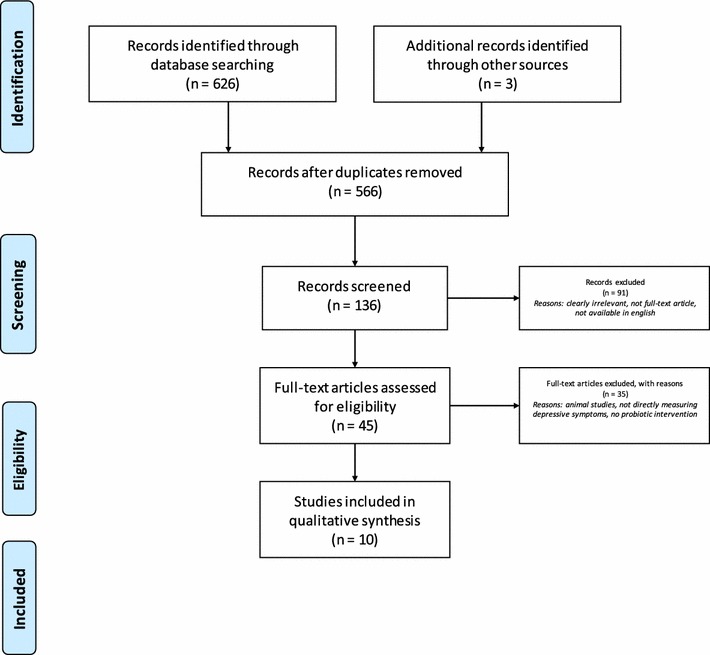
BACKGROUND: Patients suffering from depression experience significant mood, anxiety, and cognitive symptoms. Currently, most antidepressants work by altering neurotransmitter activity in the brain to improve these symptoms. However, in the last decade, research has revealed an extensive bidirectional communication network between the gastrointestinal tract and the central nervous system, referred to as the "gut-brain axis." Advances in this field have linked psychiatric disorders to changes in the microbiome, making it a potential target for novel antidepressant treatments. The aim of this review is to analyze the current body of research assessing the effects of probiotics, on symptoms of depression in humans. METHODS: A systematic search of five databases was performed and study selection was completed using the preferred reporting items for systematic reviews and meta-analyses process. RESULTS: Ten studies met criteria and were analyzed for effects on mood, anxiety, and cognition. Five studies assessed mood symptoms, seven studies assessed anxiety symptoms, and three studies assessed cognition. The majority of the studies found positive results on all measures of depressive symptoms; however, the strain of probiotic, the dosing, and duration of treatment varied widely and no studies assessed sleep. CONCLUSION: The evidence for probiotics alleviating depressive symptoms is compelling but additional double-blind randomized control trials in clinical populations are warranted to further assess efficacy.
Overview
The claims and statistics of this paper haven’t been checked yet.
Free: it reads the open-access text and checks the first 5 claims that cite a source we can check. Create a free account to check every claim.
Integrity signals
Registry
Cites
Statistics
Figures
Verification
Claims the paper makes
The claims and statistics of this paper haven’t been checked yet.
Free: it reads the open-access text and checks the first 5 claims that cite a source we can check. Create a free account to check every claim.
Claims other papers make about this one
Each is checked against this paper’s own text: does it say what the citing paper says it does?
The cited source says what the claim attributes to it.
In the citing paper
“Studies performed in healthy volunteers have shown that the administration of different probiotics were associated with an improved well-being (172–174)”
From Vagus Nerve as Modulator of the Brain–Gut Axis in Psychiatric and Inflammatory Disorders (2018) · cites this paper as [174]
In the citing paper
“as well as a decrease in anxiety and psychological distress (174, 175).”
From Vagus Nerve as Modulator of the Brain–Gut Axis in Psychiatric and Inflammatory Disorders (2018) · cites this paper as [174]
In the citing paper
“Concerning PD, many studies showed that probiotic intake can reduce neuroinflammation, inhibit the loss of dopaminergic neurons, and modulate brain functions, as explained in the sections that follow [324,325,326,327].”
From The Interplay between Gut Microbiota and Parkinson’s Disease: Implications on Diagnosis and Treatment (2022) · cites this paper as [326]
In the citing paper
“Meaningful amelioration in the anxiety symptoms after probiotic treatment was suggested by Wallace et al. [146]”
From The Role of Microbiota-Gut-Brain Axis in Neuropsychiatric and Neurological Disorders (2021) · cites this paper as [146]
In the citing paper
“For instance, MDD has been associated with alterations in brain structure and function, (e.g.[10,11]), gastrointestinal factors (e.g.[12,13]), immunology (e.g.[14]), endocrinology (including neurotransmitters, e.g.[15,16]), neurotrophic factors (e.g.[17,18]), hormones (e.g.[19]), and oxidative stress (e.g.[20]).”
From Prospective biomarkers of major depressive disorder: A systematic review and meta-analysis (2020) · cites this paper as [12]
1 more claim about this paper
Create a free account to see every claim other papers make about this one.
Self-check
Percentages, sums and reported differences re-computed from the paper’s own numbers.
The self-check needs the paper’s full text.
Citations
Cites
Assessing the quality of reports of randomized clinical trials: Is blinding necessary?
Jadad, A. R., Moore, R. A., Carroll, D., Jenkinson, C., Reynolds, D. J. M., Gavaghan, D. J., & McQuay, H. J. (1996) · Controlled Clinical Trials · doi:10.1016/0197-2456(95)00134-4 · Cited by 17,582 · cited 2×
“Quality control of selected studies Quality of included clinical trials was assessed using the Jadad Scale [41], a widely used scoring system that independently assesses the methodological quality of trials on three measures: randomization, blinding, and withdrawals/dropouts.”
MethodKessler, R. C., Chiu, W. T., Demler, O., & Walters, E. E. (2005) · Archives of General Psychiatry · doi:10.1001/archpsyc.62.6.617 · Cited by 12,052
Zhang, Q., Wang, C., Zheng, M., Li, Y., Li, J., Zhang, L., Shang, X., & Yan, C. (2015) · Cerebrovascular Diseases · doi:10.1159/000369778 · Cited by 11,533
Diet rapidly and reproducibly alters the human gut microbiome
David, L. A., Maurice, C. F., Carmody, R. N., Gootenberg, D. B., Button, J. E., Wolfe, B. E., Ling, A. V., Devlin, A. S., Varma, Y., Fischbach, M. A., et al. (2014) · Nature · doi:10.1038/nature12820 · Cited by 10,100 · cited 1×
“It is influenced by several factors, including genetics [10], age [11], sex [12], diet [13], and, of particular interest lately, stress [14].”
BackgroundMolecular Mechanisms of Depression: Perspectives on New Treatment Strategies
Lang, U. E., & Borgwardt, S. (2013) · Cellular Physiology and Biochemistry · doi:10.1159/000350094 · Cited by 8,475
Human gut microbiome viewed across age and geography
Yatsunenko, T., Rey, F. E., Manary, M. J., Trehan, I., Dominguez-Bello, M. G., Contreras, M., Magris, M., Hidalgo, G., Baldassano, R. N., Anokhin, A. P., et al. (2012) · Nature · doi:10.1038/nature11053 · Cited by 7,815 · cited 1×
“It is influenced by several factors, including genetics [10], age [11], sex [12], diet [13], and, of particular interest lately, stress [14].”
BackgroundDong, Y., Hao, L., Shi, Z., Wang, G., Zhang, Z., & Han, C. (2013) · Urologia Internationalis · doi:10.1159/000351405 · Cited by 4,540
Bravo, J. A., Forsythe, P., Chew, M. V., Escaravage, E., Savignac, H. M., Dinan, T. G., Bienenstock, J., & Cryan, J. F. (2011) · Proceedings of the National Academy of Sciences · doi:10.1073/pnas.1102999108 · Cited by 3,888 · cited 3×
“Finally, one of the most salient findings in preclinical studies of rodents treated with probiotics are the behavioral and psychological changes they induce, such as improved memory [33, 34] and reduced anxiety- and depressive-like behaviors [26, 32, 35, 36].”
BackgroundResultHuman Genetics Shape the Gut Microbiome
Goodrich, J. K., Waters, J. L., Poole, A. C., Sutter, J. L., Koren, O., Blekhman, R., Beaumont, M., Van Treuren, W., Knight, R., Bell, J. T., et al. (2014) · Cell · doi:10.1016/j.cell.2014.09.053 · Cited by 3,164 · cited 1×
“It is influenced by several factors, including genetics [10], age [11], sex [12], diet [13], and, of particular interest lately, stress [14].”
BackgroundAssociations of depression with C-reactive protein, IL-1, and IL-6: a meta-analysis.
Howren, M. B., Lamkin, D. M., & Suls, J. (2009) · Psychosomatic Medicine · doi:10.1097/psy.0b013e3181907c1b · Cited by 2,766
Cited by
Items 301–400 of 521
[Research progress of depression and the application of esketamine].
Lin, F., Hou, D., & Tang, Q. (2016) · Europe PMC (PubMed Central) · doi:10.3969/j.issn.1673-4254.2017.04.26 · Cited by 8
Villagomez, P. E., Hinojosa-Figueroa, M. S., Vallejo, P., Pérez, F., Burneo, G., Villarreal, C., Rodas, J. A., & León-Rojas, J. E. (2026) · Frontiers in Neuroscience · doi:10.3389/fnins.2026.1728473 · Cited by 10
Matin, M., Brockway, M. L., Badejo, A., Kouroupis, A., Janke, R., & Keys, E. (2017) · Beneficial Microbes · doi:10.1163/18762891-bja00034 · Cited by 7
Diet and Depression: From Epidemiology to Novel Therapeutics
Marx, W., Hoare, E., & Jacka, F. N. (2019) · Elsevier eBooks · doi:10.1016/b978-0-12-813333-0.00025-1 · Cited by 10
Lee, Y., Yeo, S., Kim, B., Holzapfel, W. H., & Kang, H. (2023) · Journal of Functional Foods · doi:10.1016/j.jff.2023.105692 · Cited by 7
Memory Reflections of the Microbiota-Gut and Oligodendrocyte Axis
Ray, S. K., & Mukherjee, S. (2023) · CNS & Neurological Disorders - Drug Targets · doi:10.2174/0118715273256132230921103333 · Cited by 6
Research progress in the prevention and treatment of insomnia with classical prescriptions.
Shi, X., Chen, L., Li, W., & Wang, R. (2023) · PubMed Central · doi:10.11817/j.issn.1672-7347.2023.230200 · Cited by 10
Faysal, M. F., Zehravi, M., Amin, M. A., Rab, S. O., Jahnavi, P., Arjun, U. V. N. V., Gupta, J. K., Billah, A. A. M., Vodeti, R., Prasad, P. D., et al. (2025) · Pathology - Research and Practice · doi:10.1016/j.prp.2025.156090 · Cited by 7
Disease modifying therapies for Parkinson's disease: Novel targets
Vijiaratnam, N., & Foltynie, T. (2021) · Neuropharmacology · doi:10.1016/j.neuropharm.2021.108839 · Cited by 7
“Encouraging evidence from GI and psychiatric disorders(Derwa et al., 2017) , (Wallace and Milev, 2017) has led to this approach being considered in PD(Gazerani, 2019) though current evidence exploring the potential for neuroprotection is still limited to preclinical (Goya et al., 2020) , (Srivastav…”
BackgroundA probiotic amylase blend reduces gastrointestinal symptoms in a randomised clinical study
Monica, M. B. L., Raub, B. J., Lopez, H. L., & Ziegenfuss, T. N. (2023) · Beneficial Microbes · doi:10.1163/18762891-20230043 · Cited by 7
Sharma, V., & Kaur, S. (2020) · The Open Microbiology Journal · doi:10.2174/1874285802014010018 · Cited by 7
Social jetlag: possibilities of micronutrient support
Shikh, E. V., Махова, А. А., Shikh, N. V., & NIKITIN, E. Y. (2022) · Voprosy Pitaniya · doi:10.33029/0042-8833-2022-91-3-85-95 · Cited by 9
Sun, Y., Li, X., Li, X., Liu, L., & Wei, S. H. (2024) · Research Square · doi:10.21203/rs.3.rs-5369999/v1 · Cited by 5
The Effectiveness of the Gut Microbiota Modulation on ADHD in Adults: A Systematic Review
Gomes, A., Siopa, C., Pestana, P. C., & Novais, F. (2025) · Current Treatment Options in Psychiatry · doi:10.1007/s40501-025-00358-9 · Cited by 6
“Currently, there is still no consensus on the optimal duration of these interventions, as this remains a relatively new field [73, 74].”
Shekarriz, S., Vigod, S. N., Bianco, T., Bala, A., Hao, C., Allard, J. P., Hota, S. S., Poutanen, S. M., Surette, M. G., & Taylor, V. H. (2026) · The Canadian Journal of Psychiatry · doi:10.1177/07067437261420877 · Cited by 5
Influence and Selection of Probiotics on Depressive Disorders in Occupational Health: Scoping Review
Picó-Monllor, J. A., Sala-Segura, E., Tobares, R. A., Moreno-Ochando, A., Hernández-Teruel, A., & Navarro‐López, V. (2023) · Nutrients · doi:10.3390/nu15163551 · Cited by 7
de Souza, C. R., Lazo, R. E. L., Mainka, F. F., Zinco, A. G., Mengarda, M., Bonetti, A. D. F., & Murakami, F. S. (2023) · PharmaNutrition · doi:10.1016/j.phanu.2023.100362 · Cited by 7
Psychobiotics in daily food against psychiatric disorders
Magalhães‐Guedes, K. T., Alessandra, S. M. D. N., Talita, A. D. A., & Sérgio, E. S. (2020) · African Journal of Food Science · doi:10.5897/ajfs2020.1927 · Cited by 6
“For example, low number of Bifidobacterium species and/or Lactobacillus species results in individuals with a high level of depressive disorder (Aizawa et al., 2016; Wallace and Milev, 2017).”
BackgroundNeurological disorders associated with impaired gut microbiota
Kanhere, H. S., Rahangdale, Y. U., Bodele, A. S., Wadhwani, D. I., Ghoshewar, A. R., & Karande, S. P. (2021) · GSC Biological and Pharmaceutical Sciences · doi:10.30574/gscbps.2021.15.2.0121 · Cited by 5
Wiss, D. A., Javanbakht, M., Li, M. J., Prelip, M. L., Bolan, R., SHOPTAW, S. J., & Gorbach, P. M. (2021) · Public Health Nutrition · doi:10.1017/s1368980021002494 · Cited by 5
Drugs and bugs: Negative affect, psychostimulant use and withdrawal, and the microbiome
Forouzan, S., McGrew, K., & Kosten, T. A. (2021) · American Journal on Addictions · doi:10.1111/ajad.13210 · Cited by 5
Designer Probiotics in Metabolic Disorders
Gupta, R. G., & Raghuwanshi, S. (2022) · Springer eBooks · doi:10.1007/978-981-16-8444-9_12 · Cited by 7
Kaunang, T. M. D., Setiawan, A. A., Mayulu, N., Leonita, I., Wijaya, A., Yusuf, V. M., Mahira, M. F. N. A., Yudisthira, D., Gunawan, W. B., Taslim, N. A., et al. (2023) · Frontiers in Nutrition · doi:10.3389/fnut.2023.1205434 · Cited by 5
Zhang, C., Ma, M.-H., Li, K., Xu, S., & Liu, Y. (2025) · Nutrition & Metabolism · doi:10.1186/s12986-025-00976-3 · Cited by 4
“Several studies have investigated the effects of probiotics on depressive symptoms, with many showing positive results in mood, anxiety, and cognition improvement [18].”
Ademoyegun, A. B., Ojo, E. T., Rasaq, W. A., Fabuluje, D. O., Akinsole, M. C., Awotipe, A. A., Awotidebe, T. O., & Mbada, C. E. (2025) · BMC Sports Science Medicine and Rehabilitation · doi:10.1186/s13102-025-01446-2 · Cited by 4
Amini, M., Motevaseli, E., Zahmatkesh, M., Yousefi, Z., Esmaeil-Jamaat, E., Hassanzadeh, G., & Mokhtari, T. (2026) · Molecular Neurobiology · doi:10.1007/s12035-025-05656-0 · Cited by 6
“Additionally, the involvement of the gut-brain axis, modulated by L.PS, aligns with emerging evidence that probiotics can alleviate depressive symptoms by altering gut microbiota and reducing inflammation [103, 104].”
The relationship between dietary patterns and neuroinflammation
Medoro, A., Scapagnini, G., Hu, F. B., & Davinelli, S. (2026) · Critical Reviews in Food Science and Nutrition · doi:10.1080/10408398.2026.2645262 · Cited by 7
“…and neurodegenerative conditions reported modest but significant improvements in mood, certain cognitive parameters, and inflammatory biomarkers, with Bifidobacterium longum and Lactobacillus plantarum among the strains most consistently associated with positive outcomes (Wallace and Milev 2017).”
Hacıoğlu, Ö. (2026) · Progress in molecular and subcellular biology · doi:10.1007/978-3-032-11438-9_9 · Cited by 4
Ong, J. S., Liu, Y.-W., Liong, M., Choi, S. B., Tsai, Y.-C., & Low, W. Y. (2020) · Genomics · doi:10.1016/j.ygeno.2020.06.052 · Cited by 4
The role of diet and microbiome in premenstrual syndrome
Rahimi, N., Soleimani, R. A., Milani, P. G., & Vadaei, S. (2024) · Gastrointestinal Nursing · doi:10.12968/gasn.2024.22.1.34 · Cited by 4
Chandran, S., Manohari, S. M., & Raman, V. (2019) · Telangana Journal of Psychiatry · doi:10.18231/j.tjp.2019.022 · Cited by 4
“counter probiotics, there has been no consensus regarding the use of probiotics as an alternative or adjuvant treatment in psychiatric disorders.(67)”
BackgroundThe gut microbiota–brain axis and role of probiotics
Sound, R. (2020) · Elsevier eBooks · doi:10.1016/b978-0-12-820593-8.00013-6 · Cited by 6
Kazemi, A., & Djafarian, K. (2021) · Elsevier eBooks · doi:10.1016/b978-0-12-817935-2.00048-9 · Cited by 6
The role of probiotics in maintaining immune homeostasis
Thipe, V. C., Mentor, S., de Lima, C. S. A., de Freitas, L. F., Fonseca, A. C. M., Nogueira, K. M., Rodrigues, A. S., Batista, J. G. S., Ferreira, A. H., & Lugão, A. B. (2021) · Elsevier eBooks · doi:10.1016/b978-0-12-823733-5.00024-6 · Cited by 6
Do common antibiotic treatments influence emotional processing?
Johnson, K. V. ‐., & Steenbergen, L. (2022) · Physiology & Behavior · doi:10.1016/j.physbeh.2022.113900 · Cited by 4
“In addition, probiotic studies in healthy volunteers have found that probiotic consumption can reduce cognitive reactivity to sad mood [54] and improve symptoms of depression and anxiety [55].”
Possible Weight Regain Managements after Bariatric Surgery
Ardekani, M. K., Lacy, V. A., Eshghjoo, S., & Anbara, T. (2022) · Obesity and metabolism · doi:10.14341/omet12859 · Cited by 5
Depressive Störungen in der Adoleszenz: Aktuelle Studienlage zur Mikrobiota-Darm-Hirn-Achse
Kandsperger, S., Brunner, R. M., Rupprecht, R., & Baghai, T. C. (2023) · Zeitschrift für Kinder- und Jugendpsychiatrie und Psychotherapie · doi:10.1024/1422-4917/a000917 · Cited by 4
McKennon, S., Levitt, S. E., & Bulaj, G. W. (2017) · Frontiers in Medicine · doi:10.3389/fmed.2017.00037 · Cited by 4
“Dietary and probiotic therapies can decrease depressive symptoms (23, 24), also in patients with MDD (25, 26).”
BackgroundMicrobiota, probióticos y el comportamiento humano
Fuenmayor-González, L., Fajardo-Loaiza, T., Rivadeneira, J., & Arévalo-Mancheno, J. (2022) · Revista Vive · doi:10.33996/revistavive.v5i13.1132 · Cited by 5
Dafini, D., Krishnarajabhatt, H. S., & Unnikrishnan, P. (2025) · Frontiers in Nutrition · doi:10.3389/fnut.2025.1677952 · Cited by 3
Exploring gut microbiota and spinal cord injury: pathogenesis, treatment strategies and prospects
Chen, Q., Zhong, M., & Ye, L. (2025) · Frontiers in Immunology · doi:10.3389/fimmu.2025.1693883 · Cited by 3
“Supplementing probiotics or prebiotics to restore gut microbiota balance can reduce in fl ammatory factor levels, improve neurotransmitter metabolism, and alleviate depressive symptoms (173, 174).”
Potential Role of Probiotics on Gut Microbiota in Neurological Disease
Jose, J. V., & Aliya, S. (2022) · Nutritional neurosciences · doi:10.1007/978-981-19-4530-4_10 · Cited by 3
THE GUT-BRAIN AXIS: EXPLORING THE ROLE OF MICROBIOTA IN DEPRESSION AND ANXIETY DISORDER
Curti, C. F., Bossolani, J. A., de Camargo, R. A., Caramelo, A. A. F., da Silva, M. G. L., Favaro, M. E. F., Soncin, L. V., Ismael, L., da Costa, M. C. S., Marim, A. G., et al. (2024) · International Journal of Health Science · doi:10.22533/at.ed.1594262418038 · Cited by 4
Bazmamoum, H., Keshtkarsohi, B., Mohammadi, Y., & Fayyazi, A. (2024) · Iranian journal of child neurology. · doi:10.22037/ijcn.v17i4.39598 · Cited by 5
Diabetes-induced depression: unravelling the role of gut dysbiosis
Sharma, V. (2025) · Journal of Diabetes & Metabolic Disorders · doi:10.1007/s40200-025-01643-3 · Cited by 3
Effects of Probiotics on Human Health and Disease: A Review
Amiri, A., Firoozeh, F., Zibaei, M., & Khaledi, A. (2021) · Acta Medica Bulgarica · doi:10.2478/amb-2021-0015 · Cited by 4
Gomes, F. D. O., Santos, L. C., & Welter, Á. (2020) · Singular Saúde e Biológicas · doi:10.33911/singularsb.v1i1.83 · Cited by 9
Animal Models Used for Studying the Benefits of Probiotics in Neurodegeneration
Divyashri, G., & Prapulla, S. G. (2022) · Springer eBooks · doi:10.1007/978-981-16-6760-2_10 · Cited by 3
Maulana, S., Platini, H., Musthofa, F., Andriani, D., Purba, F. D., Iskandarsyah, A., & Hinduan, Z. R. (2021) · Kumawula Jurnal Pengabdian Kepada Masyarakat · doi:10.24198/kumawula.v4i3.33744 · Cited by 3
Psychobiotics: Biotherapeutics for Positive Mental Health
Mörkl, S., Butler, M., Cichini, F., Cryan, J. F., & Dinan, T. G. (2020) · Oxford University Press eBooks · doi:10.1093/oxfordhb/9780190931544.013.7 · Cited by 3
Probiotic Effects on Disease Prevention and Treatment
Farahmandi, K., & Sulaimany, S. (2024) · IntechOpen eBooks · doi:10.5772/intechopen.109717 · Cited by 6
Oluwaseun, A., & Salawu, S. O. (2023) · Nepal Journal of Neuroscience · doi:10.3126/njn.v20i3.55252 · Cited by 3
Sharma, H., Noman, A. A., Ahmad, I., Tonni, S. D., Mim, T. J., Afrose, F., Sharma, P., Parvez, A., Tamanna, S., Azad, M. A., et al. (2025) · Current Gene Therapy · doi:10.2174/0115665232361169250617192348 · Cited by 3
Naghan, P. A., Setareh, J., Khoundabi, B., Panahi, A., & Rajabi, K. (2018) · Iranian Journal of Psychiatry and Behavioral Sciences · doi:10.5812/ijpbs.56000 · Cited by 3
“Consumption of probiotic diary products by those, who have a low mood, has been shown to improve their cognitive performance and mood (20, 21).”
BackgroundFecal Microbiota Transplantation in the Treatment-Resistant Psychiatric Disorders
Evrensel, A., & Ceylan, M. E. (2018) · Springer eBooks · doi:10.1007/978-981-10-4358-1_24 · Cited by 5
Kirchberger, I., Malečkar, B., Meisinger, C., Linseisen, J., Schmauß, M., & Baumgärtner, J. (2019) · BMJ Open · doi:10.1136/bmjopen-2019-032507 · Cited by 3
Advances in Probiotics for Health and Nutrition
Zambare, V., Din, M. F. M., Gupta, P., & Prajapati, B. G. (2023) · IntechOpen eBooks · doi:10.5772/intechopen.104299 · Cited by 6
Pavlova, T. A., Telepina, M. A., Perelygin, V. V., Smetannikova, E. A., Sklyarova, N. A., & Orlova, A. V. (2025) · Pharmacy Formulas · doi:10.17816/phf686915 · Cited by 3
Li, X., Liu, F., Zhu, Y., & Shi, H. (2026) · International Journal of General Medicine · doi:10.2147/ijgm.s593664 · Cited by 2
Ziaka, M. (2026) · Pathogens · doi:10.3390/pathogens15070659 · Cited by 2
“…probiotics can provide health benefits when given in sufficient quantities, potentially through their anti-inflammatory or antioxidant effects, with evidence indicating that they may also influence the CNS and behavior by modulating the GMBA, thereby addressing neuroinflammation [16,191–193].”
Shokr, M. M., Abu-Elsaoud, A. M., & Raish, S. M. A. (2026) · Molecular Neurobiology · doi:10.1007/s12035-026-06065-7 · Cited by 3
Balikji, J., Hoogbergen, M. M., Garssen, J., & Verster, J. C. (2022) · Brain Sciences · doi:10.3390/brainsci12080961 · Cited by 2
EFEK PEMBERIAN ANTIBIOTIK JANGKA PANJANG PADA ANXIETAS MENCIT (Mus musculus)
Ambar, S., Dadang, S., Endi, E., Nurul, A. D., & Rahma, T. S. (2022) · Pharmacoscript · doi:10.36423/pharmacoscript.v5i2.1025 · Cited by 2
“Microbiota usus dapat mempengaruhi dan memodulasi perilaku emosional (Wallace & Milev, 2017).”
BackgroundSharma, A., & Sharma, V. (2023) · Cureus · doi:10.7759/cureus.48462 · Cited by 2
“The consumption of probiotics has been demonstrated to boost the expression of BDNF [7].”
BackgroundInfluentialThe Maneuver of Psychobiotics in the Medical Aid of Clinical Depression
Balaprabha, G. R., Neerajakshi, P., Kaur, P., Kumar, G. N., & Ramarao, T. (2024) · International Journal Of Pharmaceutical Research And Allied Sciences · doi:10.51847/xbbvwpttng · Cited by 2
dos Santos, L. H. C., Silva, M., Costa, J., Silva, M. A. L., do Rêgo, L. V. R., de Mendonça, L. A., Filho, R. B., Falcão, D. W. A., Silva, A. K. D. A., Lins, M. A. B., et al. (2024) · Research Society and Development · doi:10.33448/rsd-v13i4.45472 · Cited by 4
Probiotics Supplementation Alleviates Endotoxemia-induced Behavioral Deficits in Mice
Babu, G. (2024) · Asian Journal of Pharmaceutics · doi:10.22377/ajp.v18i02.5454 · Cited by 3
Quo Vadis, Probiotics? Human Research Supports Further Study of Beneficial Microbes in Mental Health
Katzman, M. A., & Logan, A. C. (2017) · EBioMedicine · doi:10.1016/j.ebiom.2017.09.019 · Cited by 3
“Thus far, the human research has largely involved small sample sizes and pilot studies to determine if the elegant, if not astonishing, pre-clinical findings might translate to humans (Wallace and Milev, 2017).”
BackgroundInfluentialCzajeczny, D., Kabzińska, K., & Wójciak, R. W. (2020) · Postępy Mikrobiologii - Advancements of Microbiology · doi:10.21307/pm-2020.59.1.001 · Cited by 2
Role of Brain–Gut–Microbiome Axis in Depression Comorbid with Asthma
Bhatt, S., Pai, K. S. R., Patil, C. R., Manjula, S. N., & Lakshmi, S. M. (2022) · Springer eBooks · doi:10.1007/978-981-16-8957-4_9 · Cited by 2
Gut microbiome and neurocritically ill patients
Dono, A., Esquenazi, Y., & Choi, H. A. (2022) · Journal of Neurocritical Care · doi:10.18700/jnc.220058 · Cited by 2
“Accumulating evidence implicates the gut microbiome in various psychiatric, neurological, neurodegenerative, and neuro-oncological diseases [1-3,5-11].”
BackgroundUso de los probióticos como tratamiento de síntomas intestinales causados por depresión
Hernández, J. P. C., & Calle, D. F. C. (2023) · LATAM Revista Latinoamericana de Ciencias Sociales y Humanidades · doi:10.56712/latam.v4i2.617 · Cited by 2
Wang, Y., Kral, T. V. E., & Liu, J. (2023) · Evidence-Based Practice in Child and Adolescent Mental Health · doi:10.1080/23794925.2023.2224111 · Cited by 2
“Recent evidence has shown that vitamin D deficiency increases the risk of gut microbiota dysbiosis in animals and humans (Luthold et al., 2017; Wang et al., 2016; Wu et al., 2011), which can trigger the inflammatory pathway and lead to internalizing problems (Appleton, 2018; Wallace & Milev, 2017).”
BackgroundThe microbiota-gut-brain axis and bipolar disorder
Gomes‐da‐Costa, S., Salagre, E., Camino, S., Vázquez, G. H., & Grande, I. (2020) · Elsevier eBooks · doi:10.1016/b978-0-12-819182-8.00023-5 · Cited by 1
Karley, D., Nayak, K. K., & Kolla, V. (2024) · CRC Press eBooks · doi:10.1201/9781003160663-17 · Cited by 1
Intricacies of AI-Enhanced Mood Tracking for Personalized Well-Being
Karthikeyan, C. (2024) · Advances in business strategy and competitive advantage book series · doi:10.4018/979-8-3693-3498-0.ch011 · Cited by 1
The Link Between Gut Microbiota and Depression: Exploring the Correlation
Juśkiewicz, A., Grelewicz, O., Kucy, N., Servaas, E., Haber, M., Kula, P., Czachor, A., & Kotula, A. (2025) · Journal of Education Health and Sport · doi:10.12775/jehs.2025.77.55276 · Cited by 1
Myles, E. M., O’Leary, M. E., Romkey, I. D., Hamm, S. I., Dauphinee, L., Piano, A., Bronner, S., & Perrot, T. S. (2025) · Physiology & Behavior · doi:10.1016/j.physbeh.2025.115030 · Cited by 1
“Probiotic formulations have been reported to be strain-specific [28] and to aid with health-related outcomes (e.g., improve depressive symptoms, [29]; reduce bloating in irritable bowel syndrome, [30]).”
El segundo cerebro: la conexión entre la microbiota intestinal y la salud mental
Puebla, A. E. V. (2025) · EPISTEMUS · doi:10.36790/epistemus.v19i38.421 · Cited by 1
Przerwa, J. (2025) · International Journal of Innovative Technologies in Social Science · doi:10.31435/ijitss.4(48).2025.4431 · Cited by 1
Rosas-Sánchez, G. U., Germán-Ponciano, L. J., Rodríguez‐Landa, J. F., Jaime, H. B., Limón‐Morales, O., Muñoz‐Carrillo, J. L., Pérez-Vega, M. I., & Soria-Fregozo, C. (2026) · Nutrients · doi:10.3390/nu18050713 · Cited by 1
“…health through multiple potential mechanisms, including the production of neuroactive metabolites, the modulation of inflammatory pathways, and effects on HPA axis function [14,15], though the relative contribution of microbiota composition changes versus direct probiotic effects remains unclear.”
Megur, A., & Kumar, B. (2026) · Food Reviews International · doi:10.1080/87559129.2026.2649298 · Cited by 1
“Scale of production, strain origin, and culture preservation methods also contribute to variability, with commercial psychobiotic formulations often differing in viability, metabolic activity, and functional efficacy from laboratory-cultured or artisanal preparations [249] .”
Rymska, K., Lewandowski, M., Dmowska, D., Zdebski, P., Serafin, A., Chrzanowski, D., Bajek, W., Kaczmarek, M., Żmuda, K., & Skalska, M. (2026) · Quality in Sport · doi:10.12775/qs.2026.54.70517 · Cited by 1
Almarzooqi, S., Yassin, L. K., AlNuaimi, F., Alketbi, S., Skrabulyte-Barbulescu, J., AlAhbabi, N., Alremeithi, D., Almarashda, R., Almazrouei, S., Shehab, S., et al. (2026) · Translational Psychiatry · doi:10.1038/s41398-026-04305-x · Cited by 1
“Trials are typically short, use heterogeneous formulations and psychometric scales, rarely include microbiome or metabolomic pro fi ling, and seldom stratify by sex, baseline in fl ammation, or host microbial composition [213, 214].”
Shelley, B. P. (2018) · Archives of Medicine and Health Sciences · doi:10.4103/amhs.amhs_55_18 · Cited by 1
Depression in the elderly and psychobiotics
Vaghef‐Mehrabany, E., Ebrahimi‐Mameghani, M., Sanayei, M., & Vaghef‐Mehrabany, L. (2021) · Elsevier eBooks · doi:10.1016/b978-0-12-817990-1.00044-5 · Cited by 3
Gut Microbiota and its Role in Human Health
Rajilić-Stojanović, M. D. (2018) · Psihologijske teme · doi:10.31820/pt.27.1.2 · Cited by 1
“Finally, it is of importance to note that recently the probiotic strains with antidepressant properties have been successfully applied on humans (Wallace & Milev, 2017).”
BackgroundThe Role of Bacteria in Personalized Nutrition
Singhrao, S. K., Robinson, S. J., & Harding, A. (2019) · Elsevier eBooks · doi:10.1016/b978-0-12-816403-7.00004-0 · Cited by 1
Gut feelings: The microbiome and children's mental health
Rouse, A. (2018) · The Brown University Child and Adolescent Behavior Letter · doi:10.1002/cbl.30332 · Cited by 1
The Role of Probiotics in Various Diseases
Rashid, S. A. (2021) · International Journal of Human and Health Sciences (IJHHS) · doi:10.31344/ijhhs.v5i3.292 · Cited by 1
Polímeros de frutose: importância para a nutrição e saúde humana
Figueiredo-Ribeiro, R. D. C. L., Pessoni, R. A. B., Itaya, N. M., & Fialho, M. B. (2022) · Evidência · doi:10.18593/eba.27168 · Cited by 2
KOMBUCHA: PENDAYAGUNAAN MEKANISME GUT-BRAIN AXIS DALAM PENCEGAHAN DEPRESI
Atmaja, P. D. A. P., Haq, A. D., & Wiguna, V. V. (2022) · JIMKI Jurnal Ilmiah Mahasiswa Kedokteran Indonesia · doi:10.53366/jimki.v9i3.333 · Cited by 1
Microbiome Engineering for Metabolic Disorders
Aggarwal, N., Koh, E., Srivastava, S. K., Sieow, B. F., & Hwang, I. Y. (2022) · Wiley eBooks · doi:10.1002/9783527825462.ch2 · Cited by 2
Technology aspects of probiotic production and live biotherapeutics
Cassani, L., Gerbino, E., & Gómez‐Zavaglia, A. (2022) · Elsevier eBooks · doi:10.1016/b978-0-323-89908-6.00007-8 · Cited by 4
Pirhadi, M., Khaniki, G. J., Nejad, A. S. M., & Sadighara, P. (2022) · Current Women s Health Reviews · doi:10.2174/1573404819666220804093852 · Cited by 1
The Relationship Between Telomeres, Cognition, Mood, and Physical Function: A Systematic Review
Sheikh-Wu, S. F., Liang, Z., & Downs, C. A. (2022) · Biological Research For Nursing · doi:10.1177/10998004221132287 · Cited by 2
“For example, in persons with a healthy gut, a broad variety of gut microbiota, specifically increased probiotic (Lactobacillus and Bifidobacterium species) concentrations, have reduced adverse affective and cognitive symptoms (Allen et al., 2017; Mohajeri et al., 2018; Wallace & Milev, 2017).”
BackgroundThe Impact of the Human Microbiome on Mental Health: A Systemic Review
-, K. N. V. (2023) · International Journal For Multidisciplinary Research · doi:10.36948/ijfmr.2023.v05i02.1832 · Cited by 2
(2023) · doi:10.33847/978-5-6048575-1-9 · Cited by 1
Belokrylov, N., Валерьевич, С. А., & Belokrylov, A. (2023) · doi:10.33847/978-5-6048575-1-9_3 · Cited by 1
Metadata
- Authors
- Wallace, C. J. K., & Milev, R.
- Affiliations
- Queen's University (CA)
- Corresponding author
- Wallace, Caroline J. K.
- Venue
- Annals of General Psychiatry
- Published
- 2017-02-20
- Volume
- 16
- Issue
- 1
- Pages
- 14-14
- ISSN
- 1744-859X (ISSN-L)
- PMC
- PMC5319175
- OpenAlex
- W2589381355
- Semantic Scholar
- 491925c70b622cd64baaec14c2d22700e682708c
- Cited by
- 471
- References
- 75
- Citations by year
- 2026: 25 · 2025: 46 · 2024: 47 · 2023: 58 · 2022: 51 · 2021: 68 · 2020: 58 · 2019: 53 · 2018: 40 · 2017: 23
- FWCI
- 5.16
- Type
- journal article
- Language
- en
- Update notices
- correction (2017-03-07)
- Open access
- gold
- doi.org
- Licence
- cc-by
- Locations
- Annals of General Psychiatry (publishedVersion, cc-by)
- PubMed Central (publishedVersion, cc-by)
- PubMed (publishedVersion)
- DOAJ (DOAJ: Directory of Open Access Journals) (submittedVersion)
- Topics
- Life Sciences › Agricultural and Biological Sciences › Food Science › Probiotics and Fermented Foods
- Life Sciences › Biochemistry, Genetics and Molecular Biology › Molecular Biology › Gut microbiota and health
- Life Sciences › Neuroscience › Biological Psychiatry › Tryptophan and brain disorders
- Keywords
- probiotics, depression, depressive symptoms, gut-brain axis, gut microbiota, anxiety, mood, cognition, antidepressant alternatives
About these checks
Registry, retraction, Cites and statistics results are computed, not judged, with one exception: a printed reference that no index lists is read once by a model before it counts as a citation error. Claims are extracted by a model and kept only when their quote appears verbatim in the text; each cited source is then checked, with a model’s help, for whether it says what the claim relies on. Those verdicts can be wrong — read the claim’s quote and the cited source before relying on one.
Statistics and arithmetic are recomputed, not judged.
Confidence bands are shown only for fields calibrated on our annotated test set. None is calibrated yet, so no band is shown.
What counts as a claim ›How we measure confidence ›How we check this ›
Are you an author, or do you see a problem with this page? Request a review
Data sources
Bibliographic data: Semantic Scholar, OpenAlex, Crossref.
Contains information from the Semantic Scholar Academic Graph Datasets, made available under the ODC Attribution License (ODC-BY 1.0).
Semantic Scholar’s data is described in: Kinney, R., et al. (2023). The Semantic Scholar Open Data Platform. arXiv:2301.10140.
