

The effects of probiotics on depressive symptoms in humans: a systematic review
Open accessThe DOI matches its Crossref record; 75 of the 75 references it cites were found in a registry or an index.
Abstract
BACKGROUND: Patients suffering from depression experience significant mood, anxiety, and cognitive symptoms. Currently, most antidepressants work by altering neurotransmitter activity in the brain to improve these symptoms. However, in the last decade, research has revealed an extensive bidirectional communication network between the gastrointestinal tract and the central nervous system, referred to as the "gut-brain axis." Advances in this field have linked psychiatric disorders to changes in the microbiome, making it a potential target for novel antidepressant treatments. The aim of this review is to analyze the current body of research assessing the effects of probiotics, on symptoms of depression in humans. METHODS: A systematic search of five databases was performed and study selection was completed using the preferred reporting items for systematic reviews and meta-analyses process. RESULTS: Ten studies met criteria and were analyzed for effects on mood, anxiety, and cognition. Five studies assessed mood symptoms, seven studies assessed anxiety symptoms, and three studies assessed cognition. The majority of the studies found positive results on all measures of depressive symptoms; however, the strain of probiotic, the dosing, and duration of treatment varied widely and no studies assessed sleep. CONCLUSION: The evidence for probiotics alleviating depressive symptoms is compelling but additional double-blind randomized control trials in clinical populations are warranted to further assess efficacy.
Overview
The claims and statistics of this paper haven’t been checked yet.
Free: it reads the open-access text and checks the first 5 claims that cite a source we can check. Create a free account to check every claim.
Integrity signals
Registry
Cites
Statistics
Figures
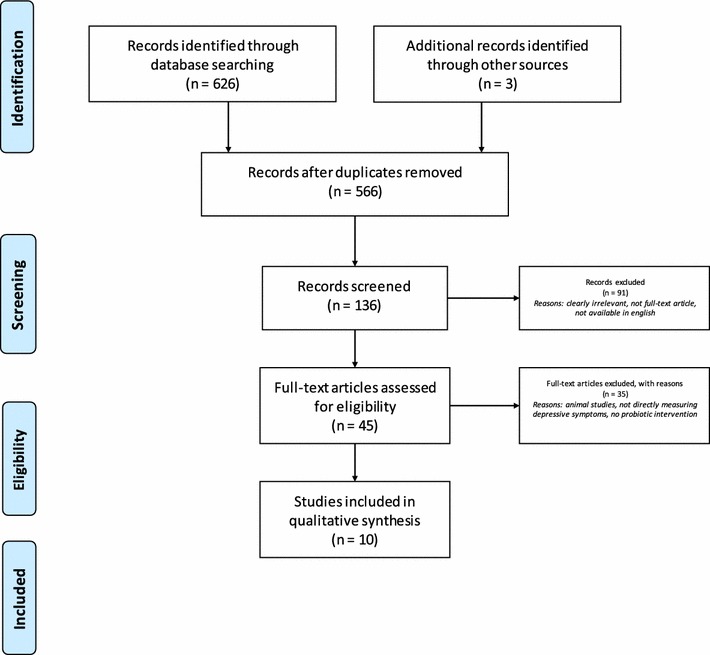
Verification
Claims the paper makes
The claims and statistics of this paper haven’t been checked yet.
Free: it reads the open-access text and checks the first 5 claims that cite a source we can check. Create a free account to check every claim.
Claims other papers make about this one
Each is checked against this paper’s own text: does it say what the citing paper says it does?
The cited source says what the claim attributes to it.
In the citing paper
“Studies performed in healthy volunteers have shown that the administration of different probiotics were associated with an improved well-being (172–174)”
From Vagus Nerve as Modulator of the Brain–Gut Axis in Psychiatric and Inflammatory Disorders (2018) · cites this paper as [174]
In the citing paper
“as well as a decrease in anxiety and psychological distress (174, 175).”
From Vagus Nerve as Modulator of the Brain–Gut Axis in Psychiatric and Inflammatory Disorders (2018) · cites this paper as [174]
In the citing paper
“Concerning PD, many studies showed that probiotic intake can reduce neuroinflammation, inhibit the loss of dopaminergic neurons, and modulate brain functions, as explained in the sections that follow [324,325,326,327].”
From The Interplay between Gut Microbiota and Parkinson’s Disease: Implications on Diagnosis and Treatment (2022) · cites this paper as [326]
In the citing paper
“Meaningful amelioration in the anxiety symptoms after probiotic treatment was suggested by Wallace et al. [146]”
From The Role of Microbiota-Gut-Brain Axis in Neuropsychiatric and Neurological Disorders (2021) · cites this paper as [146]
In the citing paper
“For instance, MDD has been associated with alterations in brain structure and function, (e.g.[10,11]), gastrointestinal factors (e.g.[12,13]), immunology (e.g.[14]), endocrinology (including neurotransmitters, e.g.[15,16]), neurotrophic factors (e.g.[17,18]), hormones (e.g.[19]), and oxidative stress (e.g.[20]).”
From Prospective biomarkers of major depressive disorder: A systematic review and meta-analysis (2020) · cites this paper as [12]
1 more claim about this paper
Create a free account to see every claim other papers make about this one.
Self-check
Percentages, sums and reported differences re-computed from the paper’s own numbers.
The self-check needs the paper’s full text.
Citations
Cites
Assessing the quality of reports of randomized clinical trials: Is blinding necessary?
Jadad, A. R., Moore, R. A., Carroll, D., Jenkinson, C., Reynolds, D. J. M., Gavaghan, D. J., & McQuay, H. J. (1996) · Controlled Clinical Trials · doi:10.1016/0197-2456(95)00134-4 · Cited by 17,582 · cited 2×
“Quality control of selected studies Quality of included clinical trials was assessed using the Jadad Scale [41], a widely used scoring system that independently assesses the methodological quality of trials on three measures: randomization, blinding, and withdrawals/dropouts.”
MethodKessler, R. C., Chiu, W. T., Demler, O., & Walters, E. E. (2005) · Archives of General Psychiatry · doi:10.1001/archpsyc.62.6.617 · Cited by 12,052
Zhang, Q., Wang, C., Zheng, M., Li, Y., Li, J., Zhang, L., Shang, X., & Yan, C. (2015) · Cerebrovascular Diseases · doi:10.1159/000369778 · Cited by 11,533
Diet rapidly and reproducibly alters the human gut microbiome
David, L. A., Maurice, C. F., Carmody, R. N., Gootenberg, D. B., Button, J. E., Wolfe, B. E., Ling, A. V., Devlin, A. S., Varma, Y., Fischbach, M. A., et al. (2014) · Nature · doi:10.1038/nature12820 · Cited by 10,100 · cited 1×
“It is influenced by several factors, including genetics [10], age [11], sex [12], diet [13], and, of particular interest lately, stress [14].”
BackgroundMolecular Mechanisms of Depression: Perspectives on New Treatment Strategies
Lang, U. E., & Borgwardt, S. (2013) · Cellular Physiology and Biochemistry · doi:10.1159/000350094 · Cited by 8,475
Human gut microbiome viewed across age and geography
Yatsunenko, T., Rey, F. E., Manary, M. J., Trehan, I., Dominguez-Bello, M. G., Contreras, M., Magris, M., Hidalgo, G., Baldassano, R. N., Anokhin, A. P., et al. (2012) · Nature · doi:10.1038/nature11053 · Cited by 7,815 · cited 1×
“It is influenced by several factors, including genetics [10], age [11], sex [12], diet [13], and, of particular interest lately, stress [14].”
BackgroundDong, Y., Hao, L., Shi, Z., Wang, G., Zhang, Z., & Han, C. (2013) · Urologia Internationalis · doi:10.1159/000351405 · Cited by 4,540
Bravo, J. A., Forsythe, P., Chew, M. V., Escaravage, E., Savignac, H. M., Dinan, T. G., Bienenstock, J., & Cryan, J. F. (2011) · Proceedings of the National Academy of Sciences · doi:10.1073/pnas.1102999108 · Cited by 3,888 · cited 3×
“Finally, one of the most salient findings in preclinical studies of rodents treated with probiotics are the behavioral and psychological changes they induce, such as improved memory [33, 34] and reduced anxiety- and depressive-like behaviors [26, 32, 35, 36].”
BackgroundResultHuman Genetics Shape the Gut Microbiome
Goodrich, J. K., Waters, J. L., Poole, A. C., Sutter, J. L., Koren, O., Blekhman, R., Beaumont, M., Van Treuren, W., Knight, R., Bell, J. T., et al. (2014) · Cell · doi:10.1016/j.cell.2014.09.053 · Cited by 3,164 · cited 1×
“It is influenced by several factors, including genetics [10], age [11], sex [12], diet [13], and, of particular interest lately, stress [14].”
BackgroundAssociations of depression with C-reactive protein, IL-1, and IL-6: a meta-analysis.
Howren, M. B., Lamkin, D. M., & Suls, J. (2009) · Psychosomatic Medicine · doi:10.1097/psy.0b013e3181907c1b · Cited by 2,766
Cited by
Items 101–200 of 521
Irwin, C. G., McCartney, D., Desbrow, B., & Khalesi, S. (2020) · European Journal of Clinical Nutrition · doi:10.1038/s41430-020-0656-x · Cited by 73
Zhang, N., Zhang, Y., Li, M., Wang, W., Liu, Z., Xi, C., Huang, X., Liu, J., Huang, J., Tian, D., et al. (2020) · Brain and Behavior · doi:10.1002/brb3.1699 · Cited by 67
“…microbiome, healthy volunteers, meta-analysis, probiotics, psychological stress, systematic review mental illness (Fond et al., 2015; Huang, Wang, & Hu, 2016; Liu et al., 2018; Ng, Peters, Ho, Lim, & Yeo, 2018; Pirbaglou et al., 2016; Reis, Ilardi, & Punt, 2018; Wallace & Milev, 2017).”
Minayo, M. D. S., Miranda, I., & Telhado, R. S. (2021) · Ciência & Saúde Coletiva · doi:10.1590/1413-81232021269.21342020 · Cited by 87
Song, X., Wang, W., Ding, S., Liu, X., Wang, Y., & Ma, H. (2021) · Journal of Affective Disorders · doi:10.1016/j.jad.2021.04.037 · Cited by 68
Nikolova, V., Zaidi, S. Y., Young, A. H., Cleare, A. J., & Stone, J. M. (2019) · Therapeutic Advances in Psychopharmacology · doi:10.1177/2045125319859963 · Cited by 66
Palepu, M. S. K., Gajula, S. N. R., Malleshwari, K., Sonti, R., & Dandekar, M. P. (2024) · ACS Chemical Neuroscience · doi:10.1021/acschemneuro.3c00727 · Cited by 71
Gualtieri, P., Marchetti, M., Cioccoloni, G., LORENZO, A. D., Romano, L., Cammarano, A., Colica, C., Condò, R., & Renzo, L. D. (2020) · Mediators of Inflammation · doi:10.1155/2020/2346126 · Cited by 73
“More recently, literature has shown that selective modulation of gut microbiota by exogenous agents, such as probiotic administration, could represent a novel therapeutic approach for mood and anxiety disorders [43, 44].”
BackgroundNadeem, I., Rahman, M. Z., Ad‐Dab'bagh, Y., & Akhtar, M. (2019) · Psychiatry and Clinical Neurosciences · doi:10.1111/pcn.12804 · Cited by 61
“A high-quality level means that we can be confident that the true effect lies close to that of the estimate of the effect, while a very low-quality level means we have very little confidence in the effect estimate.23 The studies rated as having high quality were Ng et al.,32 Wang et al.,21 and Huang et al.31; the stud…”
BackgroundResultInfluentialSleep and Microbiome in Psychiatric Diseases
Wagner‐Skacel, J., Dalkner, N., Mörkl, S., Kreuzer, K., Farzi, A., Lackner, S., Painold, A., Reininghaus, E. Z., Butler, M., & Bengesser, S. (2020) · Nutrients · doi:10.3390/nu12082198 · Cited by 70
“Of note, most of the probiotics RCT studies only included healthy individuals, and were summarized by an excellent comprehensive review by Wallace and Millev [87].”
Late Life Depression: The Essentials and the Essential Distinctions
Husain-Krautter, S., & Ellison, J. M. (2021) · FOCUS The Journal of Lifelong Learning in Psychiatry · doi:10.1176/appi.focus.20210006 · Cited by 77
Bhattarai, Y. (2018) · Neurogastroenterology & Motility · doi:10.1111/nmo.13366 · Cited by 59
Altered fecal microbiota composition in the Flinders sensitive line rat model of depression
Tillmann, S., Abildgaard, A., Winther, G., & Wegener, G. (2019) · Psychopharmacology · doi:10.1007/s00213-018-5094-2 · Cited by 61
Hofmeister, M., Clement, F., Patten, S., Li, J., Dowsett, L. E., Farkas, B., Mastikhina, L., Egunsola, O., Diaz, R., Cooke, N. C. A., et al. (2021) · CMAJ Open · doi:10.9778/cmajo.20200283 · Cited by 53
Jensen, G. S., Cash, H. A., Farmer, S., & Keller, D. (2017) · Journal of Inflammation Research · doi:10.2147/jir.s141660 · Cited by 60
Synthetic Biology and the Gut Microbiome
Dou, J., & Bennett, M. R. (2017) · Biotechnology Journal · doi:10.1002/biot.201700159 · Cited by 64
“treating a wide variety of disorders, including virus-induced diarrhea [71], colitis [72], eczema and dermatitis [73], anxiety disorders [18,24], and depression [74].”
Effect of probiotic administration on gut microbiota and depressive behaviors in mice
Liu, Q. F., Kim, H.-M., Lim, S., Chung, M.-J., Lim, C., Koo, B., & Kang, S. (2020) · DARU Journal of Pharmaceutical Sciences · doi:10.1007/s40199-020-00329-w · Cited by 68
“Depression is known as major depressive disorder, which is accompanied by a feeling of guilt and hopelessness as well as a change in appetite and sleep and impairment of daily function [1].”
Gut microbiota and probiotic therapy in ADHD: A review of current knowledge
Kalenik, A., Kardaś, K., Rahnama, A., Sirojć, K., & Wolańczyk, T. (2021) · Progress in Neuro-Psychopharmacology and Biological Psychiatry · doi:10.1016/j.pnpbp.2021.110277 · Cited by 57
Choi, J., Kwon, H., Kim, Y., & Han, P. (2022) · Molecular Neurobiology · doi:10.1007/s12035-021-02655-9 · Cited by 60
“Patients with depression have altered gut microbiota composition [9], whereas supplementation with probiotics results in anti-depressant effects in depression patients [10].”
BackgroundExploring the microbiome in health and disease: Implications for toxicology
Scotti, E., Boué, S., Sasso, G. L., Zanetti, F., Belcastro, V., Poussin, C., Sierro, N., Battey, J. N. D., Gimalac, A., Ivanov, N. V., et al. (2017) · Toxicology Research and Application · doi:10.1177/2397847317741884 · Cited by 97
Clostridiales are predominant microbes that mediate psychiatric disorders
Li, J., Ma, Y., Bao, Z., Gui, X., Li, A. N., Yang, Z., & Li, M. D. (2020) · Journal of Psychiatric Research · doi:10.1016/j.jpsychires.2020.07.018 · Cited by 60
Patterson, E., Tan, H. T., Groeger, D., Andrews, M. W., Buckley, M. J. M., Murphy, E. F., & Groeger, J. A. (2024) · Scientific Reports · doi:10.1038/s41598-024-53810-w · Cited by 64
“…the microbial production of tryptophan which can in turn increase serotonin availability in both the peripheral and central nervous system 93 can promote healthy sleep 93–95 , as serotonin can be converted to melatonin, the key molecule with hormonal properties that regulates sleep/wake cycles 96 .”
BackgroundČierniková, S., Mego, M., & Chovanec, M. (2021) · Cancers · doi:10.3390/cancers13040782 · Cited by 60
“reviewed the effects of probiotics on depressive symptoms and provided a list of clinical trials dealing with probiotic use for depression and anxiety [176].”
BackgroundOu, Y., Belzer, C., Smidt, H., & de Weerth, C. (2022) · Gut Microbes · doi:10.1080/19490976.2022.2038853 · Cited by 54
The Benefits of Prebiotics and Probiotics on Mental Health
Bistas, K. G., & Tabet, J. P. (2023) · Cureus · doi:10.7759/cureus.43217 · Cited by 62
“Several studies of patients with depression and anxiety have shown the positive effect of probiotics on modulating the symptoms of these disorders [16].”
BackgroundPrescott, S. L., Wegienka, G., Logan, A. C., & Katz, D. L. (2018) · BioPsychoSocial Medicine · doi:10.1186/s13030-018-0126-z · Cited by 53
Clerici, L., Bottari, D., & Bottari, B. (2025) · Current Nutrition Reports · doi:10.1007/s13668-025-00619-2 · Cited by 60
Epigenetic Targeting of Histone Deacetylases in Diagnostics and Treatment of Depression
Park, H., Kim, J., Ahn, S. H., & Ryu, H. (2021) · International Journal of Molecular Sciences · doi:10.3390/ijms22105398 · Cited by 58
“Additionally, changes in brain structure [11,12], gastrointestinal factors [13,14], oxidative stress [15], and endocannabinoid system components [16] have also been implicated in depression [17].”
BackgroundNtranos, A., & Casaccia, P. (2017) · Neurotherapeutics · doi:10.1007/s13311-017-0597-9 · Cited by 56
“Preliminary evidence has shown that daily supplementation with Lactobacillus and Bifidobacterium strains could exert a positive effect in mood, anxiety, and cognitive symptoms of depression, with the most benefit observed in anxiety-related symptoms [42].”
BackgroundProbiotics Affect One‐Carbon Metabolites and Catecholamines in a Genetic Rat Model of Depression
Tillmann, S., Awwad, H. M., Eskelund, A. R., Treccani, G., Geisel, J., Wegener, G., & Obeid, R. (2018) · Molecular Nutrition & Food Research · doi:10.1002/mnfr.201701070 · Cited by 54
Metabolic and Microbiota Measures as Peripheral Biomarkers in Major Depressive Disorder
Horne, R. G., & Foster, J. A. (2018) · Frontiers in Psychiatry · doi:10.3389/fpsyt.2018.00513 · Cited by 61
“The potential therapeutic benefits of treatments that target the microbiome, including probiotic and prebiotic administration, have begun to gain creditability for the treatment of psychiatric disorders (41) and the term psychobiotics is commonly used to classify products, such as probiotics and prebiotics, that when…”
BackgroundRuiz‐González, C., Román, P., Rueda‐Ruzafa, L., Rodríguez-Arrastia, M. J., & Cardona, D. (2020) · Progress in Neuro-Psychopharmacology and Biological Psychiatry · doi:10.1016/j.pnpbp.2020.110189 · Cited by 55
Desai, V., Kozyrskyj, A. L., Lau, S., Sanni, O. B., Dennett, L., Walter, J., & Ospina, M. B. (2021) · Frontiers in Psychiatry · doi:10.3389/fpsyt.2021.622181 · Cited by 60
Wallace, C. J. K., Foster, J. A., Soares, C. N., & Milev, R. V. (2019) · Neuropsychobiology · doi:10.1159/000496406 · Cited by 54
Self-citationStress, Dietary Patterns and Cardiovascular Disease: A Mini-Review
Morera, L. P., Marchiori, G. N., Medrano, L. A., & Defagó, M. D. (2019) · Frontiers in Neuroscience · doi:10.3389/fnins.2019.01226 · Cited by 61
“Together these findings reinforce the concept that DP can have either a positive or a negative impact on the CNS by regulating critical neurotransmitters implicated in psychiatric disorders, such as depression (Wallace and Milev, 2017; Zalar et al., 2018).”
BackgroundDöme, P., Tombor, L., Lazáry, J., Gonda, X., & Rihmer, Z. (2018) · Brain Research Bulletin · doi:10.1016/j.brainresbull.2018.12.015 · Cited by 54
“If we consider the growing body of evidence on the role of diet in mental health and also of dietary interventions in the treatment of various mental illnesses, we may conclude that a new discipline, called ‟nutritional psychiatry” has emerged during the last few years (Firth et al., 2017; Jacka, 2017; Sarris et al.,…”
Is adolescence the missing developmental link in Microbiome–Gut–Brain axis communication?
Flannery, J., Callaghan, B., Sharpton, T., Fisher, P., & Pfeifer, J. (2019) · Developmental Psychobiology · doi:10.1002/dev.21821 · Cited by 44
The microbiome and cognitive aging: a review of mechanisms
Komanduri, M., Gondalia, S. V., Scholey, A. B., & Stough, C. K. K. (2019) · Psychopharmacology · doi:10.1007/s00213-019-05231-1 · Cited by 49
Rianda, D., Agustina, R., Setiawan, E. A., & Manikam, N. R. M. (2019) · Beneficial Microbes · doi:10.3920/bm2019.0068 · Cited by 47
Fish‐Williamson, A., & Hahn‐Holbrook, J. (2023) · Frontiers in Psychiatry · doi:10.3389/fpsyt.2023.1193490 · Cited by 61
“A recent systematic review concluded that probiotic consumption is a promising avenue for the prevention and treatment of depression, although the review did not focus on PPD specifically (37).”
BackgroundSteer, E. (2019) · Journal of Ayurveda and Integrative Medicine · doi:10.1016/j.jaim.2017.08.002 · Cited by 57
“A systematic review of studies investigating the clinical effect of probiotics on depression found that majority of cases showed a decrease on ‘all measures of depressive symptoms’ [48].”
BackgroundPinzi, M., Fagiolini, A. M., Koukouna, D., Gualtieri, G., Rescalli, M. B., Pierini, C., Pardossi, S., Patrizio, B., & Cuomo, A. (2025) · Cells · doi:10.3390/cells14191558 · Cited by 54
“Microbiome interventions show inconsistent clinical benefits despite a strong pre-clinical rationale [104].”
InfluentialFleck, A.-K., Schuppan, D., Wiendl, H., & Klotz, L. (2017) · International Journal of Molecular Sciences · doi:10.3390/ijms18071526 · Cited by 53
“, MS or Neuromyelitis optica (NMO) [32]), and neuropsychiatric disorders, such as depression [33], schizophrenia [34], autism [35], Parkinson’s disease [36] and Alzheimer’s disease [37,38].”
BackgroundThe Effects of Unfermented and Fermented Cow and Sheep Milk on the Gut Microbiota
Rettedal, E. A., Altermann, E., Roy, N. C., & Dalziel, J. E. (2019) · Frontiers in Microbiology · doi:10.3389/fmicb.2019.00458 · Cited by 51
“Lactobacillus sp. have been linked to a number of beneficial effects including improvement in depression symptoms and gut function (Verna and Lucak, 2010; Wallace and Milev, 2017).”
BackgroundSmith, L. K., & Wissel, E. F. (2019) · Perspectives on Psychological Science · doi:10.1177/1745691618809379 · Cited by 42
Kolář, D., Kletečková, L., Brožka, H., & Valeš, K. (2021) · Neuroscience Letters · doi:10.1016/j.neulet.2021.136003 · Cited by 53
Abildinova, G. Z., Benberin, V. V., Vochshenkova, T. A., Afshar, A., Mussin, N. M., Kaliyev, A. A., Zhussupova, Z., & Tamadon, A. (2024) · Frontiers in Microbiology · doi:10.3389/fmicb.2024.1463958 · Cited by 48
Microbiota and epigenetics: promising therapeutic approaches?
El-Sayed, A., Aleya, L., & Kamel, M. S. (2021) · Environmental Science and Pollution Research · doi:10.1007/s11356-021-15623-6 · Cited by 47
“According to published data, probiotics could be used in the treatment of autoimmune arthritis (by Streptococcus lacticus and Bacillus bulgaricus ) (Warden 1909) , STEC E. co l i O157: H7- in fec t ions (by Bifidobacterium longum subspecies longum (JCM 1217)) (Fukuda et al. 2011), ulcerative colitis (by Streptococcus…”
BackgroundInfluentialA Biopsychosocial Overview of the Opioid Crisis: Considering Nutrition and Gastrointestinal Health
Wiss, D. A. (2019) · Frontiers in Public Health · doi:10.3389/fpubh.2019.00193 · Cited by 41
“Systematic reviews have suggested positive effects of probiotics on depressive symptoms (127, 128).”
BackgroundChakravarty, K., Gaur, S., Kumar, R., Jha, N. K., & Gupta, P. K. (2024) · Probiotics and Antimicrobial Proteins · doi:10.1007/s12602-024-10328-x · Cited by 44
“Administration of L. plantarum WCFS1 dosage of 4.5 10 1 ⁰ CFU/ day in children with autism spectrum disorder was found to cause improvement in behavior toward food and their school records [113].”
InfluentialLactobacillus-Based Probiotics Reduce the Adverse Effects of Stress in Rodents: A Meta-analysis
Mindus, C., Ellis, J. L., van Staaveren, N., & Harlander-Matauschek, A. (2021) · Frontiers in Behavioral Neuroscience · doi:10.3389/fnbeh.2021.642757 · Cited by 48
“Mindus et al. Lactobacillus-Based Probiotics in Stressed Rodents A complex and bidirectional communication network exists between the gut and the central nervous system, which includes the enteric nervous system (ENS), the immune system and the modulation of neuroactive compounds by the microbiota (Grenham et al., 201…”
BackgroundInfluentialForssten, S. D., Ouwehand, A. C., Griffin, S. M., & Patterson, E. (2022) · Nutrients · doi:10.3390/nu14030568 · Cited by 45
Aghamohammad, S., Hafezi, A., & Rohani, M. (2023) · Biomedicine & Pharmacotherapy · doi:10.1016/j.biopha.2023.114816 · Cited by 48
Probiotics, Prebiotics, and Fibers in Nutritive and Functional Beverages
Raman, M., Ambalam, P. S., & Doble, M. (2019) · Elsevier eBooks · doi:10.1016/b978-0-12-816842-4.00009-5 · Cited by 48
Enactive Pragmatism and Ecological Psychology
Crippen, M. (2020) · Frontiers in Psychology · doi:10.3389/fpsyg.2020.538644 · Cited by 47
Ahmed, S., Méndez, R. M. Y., Naveed, S., Akhter, S., Mushtaque, I., Malik, M. A., Ahmad, W., Figueroa, R. P. N., & Younas, A. (2023) · Health Psychology and Behavioral Medicine · doi:10.1080/21642850.2023.2192782 · Cited by 42
“As hepatitis reduces the opportunities for economic benefits, education, and employment (Wallace & Milev, 2017), it worsens the social and self-stigma.”
BackgroundGut microbiota in mental health and depression: role of pre/pro/synbiotics in their modulation
Methiwala, H. N., Vaidya, B., Addanki, V. K., Bishnoi, M., Sharma, S. S., & Kondepudi, K. K. (2021) · Food & Function · doi:10.1039/d0fo02855j · Cited by 41
The neuromicrobiology of Parkinson’s disease: A unifying theory
Muñoz, M., Empadinhas, N., & Cardoso, S. M. (2021) · Ageing Research Reviews · doi:10.1016/j.arr.2021.101396 · Cited by 39
“These beneficial effects can bypass the gut and extend to the CNS through the microbiota-gut-brain-axis (Sun et al., 2018a, 2018b; Wallace and Milev, 2017).”
Xie, J., Zhong, Q., Wu, W.-T., & Chen, J. (2023) · Journal of Translational Medicine · doi:10.1186/s12967-023-03942-w · Cited by 41
“The main symptoms of depression include anhedonia, loss of appetite, sleep disorders, depressed mood, and sense of worthlessness [3].”
BackgroundCaffrey, E. B., Perelman, D., Ward, C., Sonnenburg, E. D., Gardner, C. D., & Sonnenburg, J. L. (2025) · Advances in Nutrition · doi:10.1016/j.advnut.2025.100412 · Cited by 43
Gut microbiome-brain axis and inflammation in temperament, personality and psychopathology
Sumich, A. L., Heym, N., Lenzoni, S., & Hunter, K. A. (2022) · Current Opinion in Behavioral Sciences · doi:10.1016/j.cobeha.2022.101101 · Cited by 42
A narrative review on the use of probiotics in several diseases. Evidence and perspectives
Campaniello, D., Bevilacqua, A., Speranza, B., Racioppo, A., Sinigaglia, M., & Corbo, M. R. (2023) · Frontiers in Nutrition · doi:10.3389/fnut.2023.1209238 · Cited by 38
Maffioletti, E., Minelli, A., Tardito, D., & Gennarelli, M. (2020) · Genes · doi:10.3390/genes11091089 · Cited by 39
The critical role of gut-brain axis microbiome in mental disorders
Basiji, K., Sendani, A. A., Ghavami, S. B., Farmani, M., Kazemifard, N., Sadeghi, A., Lotfali, E., & Aghdaei, H. A. (2023) · Metabolic Brain Disease · doi:10.1007/s11011-023-01248-w · Cited by 58
“The main symptoms of depression include anhedonia, despair behavior, stress, a feeling of worthlessness and guilt, appetite, and sleep disorders (Yang et al. 2019; Rizvi et al. 2016; Su et al. 2017; Wallace and Milev 2017 ).”
BackgroundSochacka, K., Kotowska, A., & Lachowicz, S. (2024) · Nutrients · doi:10.3390/nu16071039 · Cited by 38
“Moreover, probiotics serve as SCFA sources, which play vital roles in anti-inflammatory processes, insulin sensitivity enhancement, and fat accumulation reduction [33,34].”
BackgroundBirmann, P. T., Casaril, A. M., Pesarico, A. P., Caballero, P. S., Smaniotto, T. Â., Rodrigues, R. R., Moreira, Â. N., Conceição, F. R., Sousa, F. S. S., Collares, T. V., et al. (2021) · Pharmacological Research · doi:10.1016/j.phrs.2021.105740 · Cited by 36
Colombetti, G., & Zavala, E. (2019) · Biology & Philosophy · doi:10.1007/s10539-019-9699-6 · Cited by 33
“Recent reviews acknowledge a possible role for probiotics in alleviating depressive symptoms in humans, although they also emphasize the need for further research and double-blind randomized control trials (Wallace and Milev 2017; Ng et al.”
BackgroundWang, L., Wu, X., Ma, Y., Li, X., Zhang, J., & Zhao, L. (2021) · Food & Function · doi:10.1039/d0fo03254a · Cited by 35
Dao, H. V., Hoang, L. B., Trinh, T. O., Tran, T. T. T., & Dao, L. V. (2021) · Journal of Multidisciplinary Healthcare · doi:10.2147/jmdh.s312316 · Cited by 34
Marć, M. A., Jastrząb, R., & Mytych, J. (2022) · Nutrients · doi:10.3390/nu14193967 · Cited by 36
Wang, X., Wang, H., Yu, Q., Fu, S., Yang, Z., Ye, Q., Lin, F., & Cai, G. (2023) · Journal of Affective Disorders · doi:10.1016/j.jad.2023.10.015 · Cited by 34
Zhuang, Y., Zeng, R., Liu, X., Yang, L., & Chan, Z. (2022) · Marine Drugs · doi:10.3390/md20110725 · Cited by 33
Cheng, S., Zhu, Z., Li, H., Wang, W., Jiang, Z., Pan, F., Liu, D., Ho, R., & Ho, C. S. H. (2023) · Journal of Affective Disorders · doi:10.1016/j.jad.2023.02.086 · Cited by 34
Syringe-feeding as a novel delivery method for accurate individual dosing of probiotics in rats
Tillmann, S., & Wegener, G. (2017) · Beneficial Microbes · doi:10.3920/bm2017.0127 · Cited by 32
Tremblay, A., Fatani, A., Ford, A. L., Piano, A., Nagulesapillai, V., Auger, J., MacPherson, C. W., Christman, M. C., Tompkins, T. A., & Dahl, W. J. (2021) · Journal of Dietary Supplements · doi:10.1080/19390211.2020.1749751 · Cited by 31
“In humans, compelling evidence is accumulating to support a beneficial effect of probiotics on gastrointestinal dysfunction and depressive-like symptoms (Wallace and Milev 2017; Parker et al. 2018; Nadeem et al. 2019).”
BackgroundGut Microbiota and Mental Health: A Comprehensive Review of Gut-Brain Interactions in Mood Disorders
Mehta, I., Juneja, K., Nimmakayala, T., Bansal, L. R., Pulekar, S., Duggineni, D., Ghori, H. K., Modi, N. M., & Younas, S. (2025) · Cureus · doi:10.7759/cureus.81447 · Cited by 57
“Psychobiotics, a specific class of probiotics targeting mental health, have demonstrated potential in reducing depressive symptoms, especially when used alongside traditional treatments, such as antidepressants and cognitive-behavioral therapy (CBT) [133].”
Suzuki, T., Kojima, N., Osuka, Y., Tokui, Y., Takasugi, S., Kawashima, A., Yamaji, T., Hosoi, E., Won, C. W., & Kim, H. (2019) · Journal of the American Medical Directors Association · doi:10.1016/j.jamda.2019.06.023 · Cited by 31
Agmatine as a novel candidate for rapid-onset antidepressant response
Valverde, A. P., Camargo, A., & Rodrigues, A. L. S. (2021) · World Journal of Psychiatry · doi:10.5498/wjp.v11.i11.981 · Cited by 33
A psychobiotic approach to the treatment of depression: A systematic review and meta-analysis
Zhu, H., Tian, P., Zhao, J., Zhang, H., Wang, G., & Chen, W. (2022) · Journal of Functional Foods · doi:10.1016/j.jff.2022.104999 · Cited by 34
Tarik, M., Ramakrishnan, L., Bhatia, N., Goswami, R., Kandasamy, D., Roy, A., Chandran, D. S., Singh, A., Upadhyay, A. D., Kalaivani, M., et al. (2022) · European Journal of Nutrition · doi:10.1007/s00394-022-02844-9 · Cited by 32
“These conditions include diabetes [3], cardiovascular health [4], cancer [5], depression [6], obesity [7], inflammation [8], dermatitis [9], respiratory tract infections [10], enhancement of nutritional status [11], etc.”
BackgroundA Critical Review on the Role of Probiotics in Lung Cancer Biology and Prognosis
Ashique, S., Mishra, N., Garg, A., Kumar, N., Khan, Z., Mohanto, S., Chellappan, D. K., Farid, A., & Taghizadeh‐Hesary, F. (2024) · Archivos de Bronconeumología · doi:10.1016/j.arbres.2024.04.030 · Cited by 30
Microbiota and Alcohol Use Disorder: Are Psychobiotics a Novel Therapeutic Strategy?
Rodríguez‐González, A., & Orío, L. (2020) · Current Pharmaceutical Design · doi:10.2174/1381612826666200122153541 · Cited by 31
Zielińska, D., Karbowiak, M., & Brzezicka, A. (2022) · International Journal of Environmental Research and Public Health · doi:10.3390/ijerph191711022 · Cited by 32
Tsai, W.-H., Yeh, W.-L., Chou, C.-H., Wu, C., Lai, C., Yeh, Y., Liao, C., & Wu, C.-C. (2023) · Biomedicines · doi:10.3390/biomedicines11041068 · Cited by 29
Kronsten, V. T., & Shawcross, D. L. (2022) · Analytical Biochemistry · doi:10.1016/j.ab.2021.114437 · Cited by 27
Alatan, H., Liang, S., Shimodaira, Y., Wu, X., Hu, X., Wang, T., Luo, J., Iijima, K., & Jin, F. (2024) · Frontiers in Immunology · doi:10.3389/fimmu.2024.1407620 · Cited by 28
Siegel, M. P., & Conklin, S. M. (2020) · Brain Behavior & Immunity - Health · doi:10.1016/j.bbih.2019.100029 · Cited by 27
Gill Jenkins, P. M. (2022) · Food & Nutrition Journal · doi:10.29011/2575-7091.100245 · Cited by 45
“Evidence on the use of probiotics in mental health conditions such as depression and anxiety is emerging with some positive [103] but also some null findings [104,105].”
Heterogeneity in major depressive disorder: The need for biomarker-based personalized treatments
Suseelan, S., & Pinna, G. (2022) · Advances in clinical chemistry · doi:10.1016/bs.acc.2022.09.001 · Cited by 33
Cooke, N. C. A., Bala, A., Allard, J. P., Hota, S. S., Poutanen, S. M., & Taylor, V. H. (2021) · Pilot and Feasibility Studies · doi:10.1186/s40814-021-00882-4 · Cited by 28
Pharmacomicrobiomics of Antidepressants in Depression: A Systematic Review
Brown, L. C., Bobo, W. V., Gall, C. A., Müller, D. J., & Bousman, C. (2023) · Journal of Personalized Medicine · doi:10.3390/jpm13071086 · Cited by 27
“From a clinical standpoint, probiotics are generally well tolerated and may be an attractive adjunct to antidepressants if antidepressant benefit can be consistently demonstrated and standardization of treatment can be achieved [68].”
BackgroundDoes “all disease begin in the gut”? The gut-organ cross talk in the microbiome
Chaudhary, P. P., Kaur, M., & Myles, I. A. (2024) · Applied Microbiology and Biotechnology · doi:10.1007/s00253-024-13180-9 · Cited by 30
“…probiotics, dietary modifications, and fecal microbiota transplantation (FMT), holds promise for restoring microbial balance and alleviating symptoms of mood disorders by targeting the gut-brain axis (Slyep-chenko et al. 2017; Wallace and Milev 2017) personalized approaches to mental health care.”
Lin, S.-K. K., Kuo, P., Hsu, C., Chiu, Y.-H., & Chen, C.-H. (2024) · Asian Journal of Psychiatry · doi:10.1016/j.ajp.2024.104210 · Cited by 30
Shokr, M. M., Eladawy, R. M., Azar, Y. O., & Raish, S. M. A. (2025) · Foods · doi:10.3390/foods14172926 · Cited by 29
“One could suggest that the mechanism of action entails controlling neurotransmission and inflammatory indicators [244].”
An exploratory study of the gut microbiota in major depression with anxious distress
Ritchie, G., Strodl, E. S., Parham, S. C., Bambling, M., Cramb, S. M., & Vitetta, L. (2022) · Journal of Affective Disorders · doi:10.1016/j.jad.2022.10.001 · Cited by 26
Probiotics in Psychosocial Stress and Anxiety. A Systematic Review
Vitellio, P., Chira, A., Angelis, M. D., Dumitrascu, D. L., & Portincasa, P. (2020) · Journal of Gastrointestinal and Liver Diseases · doi:10.15403/jgld-352 · Cited by 29
“This finding is in accordance with the work of Wallace and Milev [33] who systematically reviewed 10 randomized controlled trials on the effect of probiotic on anxiety, depression and stress.”
ResultChan, D. G., Ventura, K., Villeneuve, A., Du Bois, P., & Holahan, M. R. (2022) · Journal of Parkinson's Disease · doi:10.3233/jpd-223461 · Cited by 24
Schmidt, E. K. A., Raposo, P. J. F., Madsen, K. L., Fenrich, K. K., Kabarchuk, G., & Fouad, K. (2021) · Biology · doi:10.3390/biology10040254 · Cited by 28
Gut Feelings: Vagal Stimulation Reduces Emotional Biases
Johnson, K. V. ‐., & Steenbergen, L. (2022) · Neuroscience · doi:10.1016/j.neuroscience.2022.04.026 · Cited by 25
“, 2021), numerous meta-analyses and systematic reviews have concluded that probiotics can improve symptoms of depression and anxiety, including subclinical symptoms in healthy subjects (Pirbaglou et al., 2016; McKean et al., 2017; Wallace and Milev, 2017; Liu et al., 2019).”
Vitetta, L., Bambling, M., & Strodl, E. S. (2023) · Microorganisms · doi:10.3390/microorganisms11051334 · Cited by 26
“It has been suggested that probiotics can influence serotonin levels in plasma [128].”
BackgroundProbiotics, prebiotics, and synbiotics for the treatment of asthma: Protocol for a systematic review
Huang, L., Guo, J., Li, W., Jiang, M., Wang, F., Jia, K., Liu, T., & Gu, X. (2019) · Medicine · doi:10.1097/md.0000000000017840 · Cited by 27
Metadata
- Authors
- Wallace, C. J. K., & Milev, R.
- Affiliations
- Queen's University (CA)
- Corresponding author
- Wallace, Caroline J. K.
- Venue
- Annals of General Psychiatry
- Published
- 2017-02-20
- Volume
- 16
- Issue
- 1
- Pages
- 14-14
- ISSN
- 1744-859X (ISSN-L)
- PMC
- PMC5319175
- OpenAlex
- W2589381355
- Semantic Scholar
- 491925c70b622cd64baaec14c2d22700e682708c
- Cited by
- 471
- References
- 75
- Citations by year
- 2026: 25 · 2025: 46 · 2024: 47 · 2023: 58 · 2022: 51 · 2021: 68 · 2020: 58 · 2019: 53 · 2018: 40 · 2017: 23
- FWCI
- 5.16
- Type
- journal article
- Language
- en
- Update notices
- correction (2017-03-07)
- Open access
- gold
- doi.org
- Licence
- cc-by
- Locations
- Annals of General Psychiatry (publishedVersion, cc-by)
- PubMed Central (publishedVersion, cc-by)
- PubMed (publishedVersion)
- DOAJ (DOAJ: Directory of Open Access Journals) (submittedVersion)
- Topics
- Life Sciences › Agricultural and Biological Sciences › Food Science › Probiotics and Fermented Foods
- Life Sciences › Biochemistry, Genetics and Molecular Biology › Molecular Biology › Gut microbiota and health
- Life Sciences › Neuroscience › Biological Psychiatry › Tryptophan and brain disorders
- Keywords
- probiotics, depression, depressive symptoms, gut-brain axis, gut microbiota, anxiety, mood, cognition, antidepressant alternatives
About these checks
Registry, retraction, Cites and statistics results are computed, not judged, with one exception: a printed reference that no index lists is read once by a model before it counts as a citation error. Claims are extracted by a model and kept only when their quote appears verbatim in the text; each cited source is then checked, with a model’s help, for whether it says what the claim relies on. Those verdicts can be wrong — read the claim’s quote and the cited source before relying on one.
Statistics and arithmetic are recomputed, not judged.
Confidence bands are shown only for fields calibrated on our annotated test set. None is calibrated yet, so no band is shown.
What counts as a claim ›How we measure confidence ›How we check this ›
Are you an author, or do you see a problem with this page? Request a review
Data sources
Bibliographic data: Semantic Scholar, OpenAlex, Crossref.
Contains information from the Semantic Scholar Academic Graph Datasets, made available under the ODC Attribution License (ODC-BY 1.0).
Semantic Scholar’s data is described in: Kinney, R., et al. (2023). The Semantic Scholar Open Data Platform. arXiv:2301.10140.
