

The effects of probiotics on depressive symptoms in humans: a systematic review
Open accessThe DOI matches its Crossref record; 75 of the 75 references it cites were found in a registry or an index.
Abstract
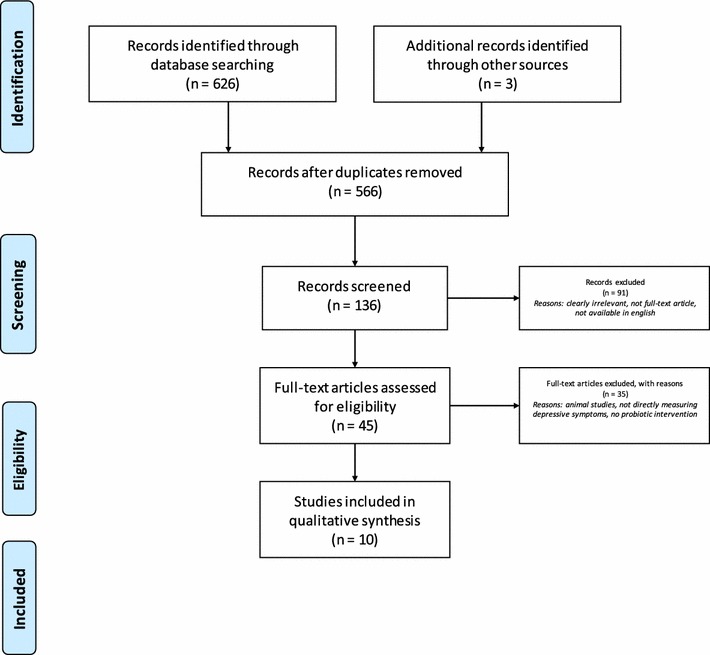
BACKGROUND: Patients suffering from depression experience significant mood, anxiety, and cognitive symptoms. Currently, most antidepressants work by altering neurotransmitter activity in the brain to improve these symptoms. However, in the last decade, research has revealed an extensive bidirectional communication network between the gastrointestinal tract and the central nervous system, referred to as the "gut-brain axis." Advances in this field have linked psychiatric disorders to changes in the microbiome, making it a potential target for novel antidepressant treatments. The aim of this review is to analyze the current body of research assessing the effects of probiotics, on symptoms of depression in humans. METHODS: A systematic search of five databases was performed and study selection was completed using the preferred reporting items for systematic reviews and meta-analyses process. RESULTS: Ten studies met criteria and were analyzed for effects on mood, anxiety, and cognition. Five studies assessed mood symptoms, seven studies assessed anxiety symptoms, and three studies assessed cognition. The majority of the studies found positive results on all measures of depressive symptoms; however, the strain of probiotic, the dosing, and duration of treatment varied widely and no studies assessed sleep. CONCLUSION: The evidence for probiotics alleviating depressive symptoms is compelling but additional double-blind randomized control trials in clinical populations are warranted to further assess efficacy.
Overview
The claims and statistics of this paper haven’t been checked yet.
Free: it reads the open-access text and checks the first 5 claims that cite a source we can check. Create a free account to check every claim.
Integrity signals
Registry
Cites
Statistics
Figures
Verification
Claims the paper makes
The claims and statistics of this paper haven’t been checked yet.
Free: it reads the open-access text and checks the first 5 claims that cite a source we can check. Create a free account to check every claim.
Claims other papers make about this one
Each is checked against this paper’s own text: does it say what the citing paper says it does?
The cited source says what the claim attributes to it.
In the citing paper
“Studies performed in healthy volunteers have shown that the administration of different probiotics were associated with an improved well-being (172–174)”
From Vagus Nerve as Modulator of the Brain–Gut Axis in Psychiatric and Inflammatory Disorders (2018) · cites this paper as [174]
In the citing paper
“as well as a decrease in anxiety and psychological distress (174, 175).”
From Vagus Nerve as Modulator of the Brain–Gut Axis in Psychiatric and Inflammatory Disorders (2018) · cites this paper as [174]
In the citing paper
“Concerning PD, many studies showed that probiotic intake can reduce neuroinflammation, inhibit the loss of dopaminergic neurons, and modulate brain functions, as explained in the sections that follow [324,325,326,327].”
From The Interplay between Gut Microbiota and Parkinson’s Disease: Implications on Diagnosis and Treatment (2022) · cites this paper as [326]
In the citing paper
“Meaningful amelioration in the anxiety symptoms after probiotic treatment was suggested by Wallace et al. [146]”
From The Role of Microbiota-Gut-Brain Axis in Neuropsychiatric and Neurological Disorders (2021) · cites this paper as [146]
In the citing paper
“For instance, MDD has been associated with alterations in brain structure and function, (e.g.[10,11]), gastrointestinal factors (e.g.[12,13]), immunology (e.g.[14]), endocrinology (including neurotransmitters, e.g.[15,16]), neurotrophic factors (e.g.[17,18]), hormones (e.g.[19]), and oxidative stress (e.g.[20]).”
From Prospective biomarkers of major depressive disorder: A systematic review and meta-analysis (2020) · cites this paper as [12]
1 more claim about this paper
Create a free account to see every claim other papers make about this one.
Self-check
Percentages, sums and reported differences re-computed from the paper’s own numbers.
The self-check needs the paper’s full text.
Citations
Cites
Assessing the quality of reports of randomized clinical trials: Is blinding necessary?
Jadad, A. R., Moore, R. A., Carroll, D., Jenkinson, C., Reynolds, D. J. M., Gavaghan, D. J., & McQuay, H. J. (1996) · Controlled Clinical Trials · doi:10.1016/0197-2456(95)00134-4 · Cited by 17,582 · cited 2×
“Quality control of selected studies Quality of included clinical trials was assessed using the Jadad Scale [41], a widely used scoring system that independently assesses the methodological quality of trials on three measures: randomization, blinding, and withdrawals/dropouts.”
MethodKessler, R. C., Chiu, W. T., Demler, O., & Walters, E. E. (2005) · Archives of General Psychiatry · doi:10.1001/archpsyc.62.6.617 · Cited by 12,052
Zhang, Q., Wang, C., Zheng, M., Li, Y., Li, J., Zhang, L., Shang, X., & Yan, C. (2015) · Cerebrovascular Diseases · doi:10.1159/000369778 · Cited by 11,533
Diet rapidly and reproducibly alters the human gut microbiome
David, L. A., Maurice, C. F., Carmody, R. N., Gootenberg, D. B., Button, J. E., Wolfe, B. E., Ling, A. V., Devlin, A. S., Varma, Y., Fischbach, M. A., et al. (2014) · Nature · doi:10.1038/nature12820 · Cited by 10,100 · cited 1×
“It is influenced by several factors, including genetics [10], age [11], sex [12], diet [13], and, of particular interest lately, stress [14].”
BackgroundMolecular Mechanisms of Depression: Perspectives on New Treatment Strategies
Lang, U. E., & Borgwardt, S. (2013) · Cellular Physiology and Biochemistry · doi:10.1159/000350094 · Cited by 8,475
Human gut microbiome viewed across age and geography
Yatsunenko, T., Rey, F. E., Manary, M. J., Trehan, I., Dominguez-Bello, M. G., Contreras, M., Magris, M., Hidalgo, G., Baldassano, R. N., Anokhin, A. P., et al. (2012) · Nature · doi:10.1038/nature11053 · Cited by 7,815 · cited 1×
“It is influenced by several factors, including genetics [10], age [11], sex [12], diet [13], and, of particular interest lately, stress [14].”
BackgroundDong, Y., Hao, L., Shi, Z., Wang, G., Zhang, Z., & Han, C. (2013) · Urologia Internationalis · doi:10.1159/000351405 · Cited by 4,540
Bravo, J. A., Forsythe, P., Chew, M. V., Escaravage, E., Savignac, H. M., Dinan, T. G., Bienenstock, J., & Cryan, J. F. (2011) · Proceedings of the National Academy of Sciences · doi:10.1073/pnas.1102999108 · Cited by 3,888 · cited 3×
“Finally, one of the most salient findings in preclinical studies of rodents treated with probiotics are the behavioral and psychological changes they induce, such as improved memory [33, 34] and reduced anxiety- and depressive-like behaviors [26, 32, 35, 36].”
BackgroundResultHuman Genetics Shape the Gut Microbiome
Goodrich, J. K., Waters, J. L., Poole, A. C., Sutter, J. L., Koren, O., Blekhman, R., Beaumont, M., Van Treuren, W., Knight, R., Bell, J. T., et al. (2014) · Cell · doi:10.1016/j.cell.2014.09.053 · Cited by 3,164 · cited 1×
“It is influenced by several factors, including genetics [10], age [11], sex [12], diet [13], and, of particular interest lately, stress [14].”
BackgroundAssociations of depression with C-reactive protein, IL-1, and IL-6: a meta-analysis.
Howren, M. B., Lamkin, D. M., & Suls, J. (2009) · Psychosomatic Medicine · doi:10.1097/psy.0b013e3181907c1b · Cited by 2,766
Cited by
Cryan, J. F., O'Riordan, K. J., Cowan, C. S. M., Sandhu, K. V., Bastiaanssen, T. F. S., Boehme, M., Codagnone, M. G., Cussotto, S., Fulling, C., Golubeva, A. V., et al. (2019) · Physiological Reviews · doi:10.1152/physrev.00018.2018 · Cited by 5,286
Role of the gut microbiota in nutrition and health
Valdes, A. M., Walter, J., Segal, E., & Spector, T. D. (2018) · BMJ · doi:10.1136/bmj.k2179 · Cited by 2,375
“Depressive symptoms Wallace and Milev (2017)(79,130) 6/1080 Yes No quantitative analysis was performed.”
BackgroundVagus Nerve as Modulator of the Brain–Gut Axis in Psychiatric and Inflammatory Disorders
Breit, S., Kupferberg, A., Rogler, G., & Hasler, G. (2018) · Frontiers in Psychiatry · doi:10.3389/fpsyt.2018.00044 · Cited by 1,189
“Studies performed in healthy volunteers have shown that the administration of different probiotics were associated with an improved well-being (172–174), as well as a decrease in anxiety and psychological distress (174, 175).”
BackgroundGut Microbiome: Profound Implications for Diet and Disease
Hills, R., Pontefract, B., Mishcon, H., Black, C., Sutton, S., & Theberge, C. (2019) · Nutrients · doi:10.3390/nu11071613 · Cited by 1,092
The Role of Microbiota-Gut-Brain Axis in Neuropsychiatric and Neurological Disorders
Socała, K., Doboszewska, U., Szopa, A., Serefko, A., Włodarczyk, M., Zielińska, A., Poleszak, E., Fichna, J., & Wlaź, P. (2021) · Pharmacological Research · doi:10.1016/j.phrs.2021.105840 · Cited by 857
Liu, R. T., Walsh, R. F. L., & Sheehan, A. E. (2019) · Neuroscience & Biobehavioral Reviews · doi:10.1016/j.neubiorev.2019.03.023 · Cited by 564
“This was supplemented with a search of the references of all prior systematic reviews of probiotics in relation to mental health as a general construct and depression and anxiety specifically (Huang et al., 2016; Liu et al., 2018; McKean et al., 2017; Ng et al., 2018; Pirbaglou et al., 2016; Reis et al., 2018; Romijn…”
BackgroundMethodInfluentialMolecular pathways of major depressive disorder converge on the synapse
Fries, G. R., Saldana, V. A., Finnstein, J., & Rein, T. (2023) · Molecular Psychiatry · doi:10.1038/s41380-022-01806-1 · Cited by 504
Altered Composition of Gut Microbiota in Depression: A Systematic Review
Barandouzi, Z. A., Starkweather, A. R., Henderson, W. A., Gyamfi, A., & Cong, X. S. (2020) · Frontiers in Psychiatry · doi:10.3389/fpsyt.2020.00541 · Cited by 454
Nutritional psychiatry: The present state of the evidence
Marx, W., Moseley, G., Berk, M., & Jacka, F. (2017) · Proceedings of the Nutrition Society · doi:10.1017/s0029665117002026 · Cited by 469
“…meta-analysis of fi ve RCT reported that probiotic supplementation decreased measures of depression ( − 0 · 30, 95 % CI − 0 · 51, − 0 · 09; P = 0 · 005) (100) , and an additional systematic review of ten RCT also concluded that probiotics may be bene fi cial to cognition, mood and anxiety (101) .”
The role of inflammation and the gut microbiome in depression and anxiety
Peirce, J. M., & Alviña, K. (2019) · Journal of Neuroscience Research · doi:10.1002/jnr.24476 · Cited by 466
“Furthermore, two meta‐studies investigating the efficacy of probi‐ otics on counteracting depression reported an overall improvement of depressive symptoms following probiotic administration with low risk of side effects (Huang, Wang, & Hu, 2016; Wallace & Milev, 2017).”
BackgroundDysbiosis of gut microbiota and microbial metabolites in Parkinson's disease
Sun, M.-F., & Shen, Y.-Q. (2018) · Ageing Research Reviews · doi:10.1016/j.arr.2018.04.004 · Cited by 445
Prospective biomarkers of major depressive disorder: A systematic review and meta-analysis
Kennis, M., Gerritsen, L., van Dalen, M., Williams, A., Cuijpers, P., & Bockting, C. (2020) · Molecular Psychiatry · doi:10.1038/s41380-019-0585-z · Cited by 435
Slykerman, R. F., Hood, F., Wickens, K., Thompson, J. M. D., Barthow, C., Murphy, R., Kang, J., Rowden, J., Stone, P., Crane, J., et al. (2017) · EBioMedicine · doi:10.1016/j.ebiom.2017.09.013 · Cited by 422
Microbiota-Gut-Brain Axis: New Therapeutic Opportunities
Long-Smith, C., O'Riordan, K. J., Clarke, G., Stanton, C., Dinan, T. G., & Cryan, J. F. (2020) · Annual Review of Pharmacology and Toxicology · doi:10.1146/annurev-pharmtox-010919-023628 · Cited by 419
Recognizing Depression from the Microbiota–Gut–Brain Axis
Liang, S., Wu, X., Hu, X., Wang, T., & Jin, F. (2018) · International Journal of Molecular Sciences · doi:10.3390/ijms19061592 · Cited by 380
Madison, A., & Kiecolt-Glaser, J. K. (2019) · Current Opinion in Behavioral Sciences · doi:10.1016/j.cobeha.2019.01.011 · Cited by 352
“In contrast, probiotic supplementation may reduce inflammation [54] and have positive effects on depression, anxiety, and stress, although some studies have not found this effect [55].”
BackgroundThe Gut-Brain Axis: Influence of Microbiota on Mood and Mental Health.
Appleton, J. (2018) · Europe PMC (PubMed Central) · Cited by 635
Microbiome-Gut-Brain Axis and Toll-Like Receptors in Parkinson’s Disease
Caputi, V., & Giron, M. C. (2018) · International Journal of Molecular Sciences · doi:10.3390/ijms19061689 · Cited by 338
Probiotics and the microbiota-gut-brain axis: Focus on psychiatry
Mörkl, S., Butler, M. I., Holl, A., Cryan, J. F., & Dinan, T. G. (2020) · Current Nutrition Reports · doi:10.1007/s13668-020-00313-5 · Cited by 337
Why does the microbiome affect behaviour?
Johnson, K. V.-A., & Foster, K. R. (2018) · Nature Reviews Microbiology · doi:10.1038/s41579-018-0014-3 · Cited by 333
Psychobiotics in mental health, neurodegenerative and neurodevelopmental disorders
Cheng, L.-H., Liu, Y.-W., Wu, C.-C., Wang, S., & Tsai, Y.-C. (2019) · Journal of Food and Drug Analysis · doi:10.1016/j.jfda.2019.01.002 · Cited by 291
Reduced microbiome alpha diversity in young patients with ADHD
Prehn-Kristensen, A., Zimmermann, A., Tittmann, L., Lieb, W., Schreiber, S., Baving, L., & Fischer, A. (2018) · PLOS ONE · doi:10.1371/journal.pone.0200728 · Cited by 292
Revisit gut microbiota and its impact on human health and disease
Ding, R.-X., Goh, W.-R., Wu, R.-N., Yue, X.-Q., Luo, X., Khine, W. W. T., Wu, J.-R., & Lee, Y.-K. (2019) · Journal of Food and Drug Analysis · doi:10.1016/j.jfda.2018.12.012 · Cited by 268
“While reviews have suggested that probioticsmay have the potential to reduce the risk of depression [63,64], majority of the studies were conducted on healthy individuals and there remains a lack of significant studies focused on patients with”
BackgroundGut-Brain Psychology: Rethinking Psychology From the Microbiota–Gut–Brain Axis
Liang, S., Wu, X., & Jin, F. (2018) · Frontiers in Integrative Neuroscience · doi:10.3389/fnint.2018.00033 · Cited by 263
“, 2016), while probiotics intervention can alleviate and improve the disorder (Liang et al., 2015; Pirbaglou et al., 2016; Wallace and Milev, 2017).”
BackgroundThe future of rodent models in depression research
Gururajan, A., Reif, A., Cryan, J. F., & Slattery, D. A. (2019) · Nature Reviews Neuroscience · doi:10.1038/s41583-019-0221-6 · Cited by 269
Effects of obesity on depression: A role for inflammation and the gut microbiota
Schachter, J., Martel, J., Lin, C.-S., Chang, C.-J., Wu, T.-R., Lu, C.-C., Ko, Y.-F., Lai, H.-C., Ojcius, D. M., & Young, J. D. (2018) · Brain, Behavior, and Immunity · doi:10.1016/j.bbi.2017.08.026 · Cited by 253
“Notably, recent clinical studies indicate that probiotics also reduce depression symptoms in humans (Huang et al., 2016; Wallace and Milev, 2017).”
BackgroundChakrabarti, A., Geurts, L., Hoyles, L., Iozzo, P., Kraneveld, A. D., La Fata, G., Miani, M., Patterson, E., Pot, B., Shortt, C., et al. (2022) · Cellular and Molecular Life Sciences · doi:10.1007/s00018-021-04060-w · Cited by 237
“How? How does the gut microbiota influence brain development [13] and function [14]? Are brain disorders potentially shaped by the gut microbiota [15]? What role does diet play and what is its scope in influencing the microbiota–gut–brain axis [16, 17]? How do dietary supplements exert their apparent effect(s) on stre…”
BackgroundChahwan, B., Kwan, S., Isik, A., van Hemert, S., Burke, C., & Roberts, L. (2019) · Journal of Affective Disorders · doi:10.1016/j.jad.2019.04.097 · Cited by 256
“Yet, there is no consensus on how long a probiotic trial should run (Wallace and Milev, 2017).”
BackgroundGut microbiome composition and diversity are related to human personality traits
Johnson, K. V.-A. (2020) · Human Microbiome Journal · doi:10.1016/j.humic.2019.100069 · Cited by 240
The Microbiome in Psychology and Cognitive Neuroscience
Sarkar, A., Harty, S., Lehto, S. M., Moeller, A. H., Dinan, T. G., Dunbar, R. I. M., Cryan, J. F., & Burnet, P. W. J. (2018) · Trends in Cognitive Sciences · doi:10.1016/j.tics.2018.04.006 · Cited by 232
Den, H., Dong, X., Chen, M., & Zou, Z. (2020) · Aging · doi:10.18632/aging.102810 · Cited by 230
Making Sense of … the Microbiome in Psychiatry
Bastiaanssen, T. F. S., Cowan, C. S. M., Claesson, M. J., Dinan, T. G., & Cryan, J. F. (2019) · International Journal of Neuropsychopharmacology · doi:10.1093/ijnp/pyy067 · Cited by 222
“These studies seem to hold translational value, with several systematic reviews indicating that probiotics effectively improve mood in humans (Huang et al., 2016; Pirbaglou et al., 2016; Wallace and Milev, 2017).”
ResultSasso, J. M., Ammar, R. M., Tenchov, R., Lemmel, S., Kelber, O., Grieswelle, M., & Zhou, Q. A. (2023) · ACS Chemical Neuroscience · doi:10.1021/acschemneuro.3c00127 · Cited by 204
Antidepressive Mechanisms of Probiotics and Their Therapeutic Potential
Yong, S. J., Tong, T., Chew, J., & Lim, W. L. (2020) · Frontiers in Neuroscience · doi:10.3389/fnins.2019.01361 · Cited by 204
“To what extent are probiotics viable tools to treat MDD/depression?”
BackgroundResultInfluentialA review of dietary and microbial connections to depression, anxiety, and stress
Taylor, A. M., & Holscher, H. D. (2020) · Nutritional Neuroscience · doi:10.1080/1028415x.2018.1493808 · Cited by 183
Probiotics: Versatile Bioactive Components in Promoting Human Health
Sharifi-Rad, J., Rodrigues, C. F., Stojanović-Radić, Z., Dimitrijević, M., Aleksić, A., Neffe-Skocińska, K., Zielińska, D., Kołożyn-Krajewska, D., Salehi, B., Milton Prabu, S., et al. (2020) · Medicina · doi:10.3390/medicina56090433 · Cited by 190
“The results, although preliminary, are important because probiotics have the advantage of not having the many side effects of antidepressant drugs [71].”
BackgroundAlli, S. R., Gorbovskaya, I., Liu, J. C. W., Kolla, N. J., Brown, L., & Müller, D. J. (2022) · International Journal of Molecular Sciences · doi:10.3390/ijms23094494 · Cited by 202
Harnessing Gut Microbes for Mental Health: Getting From Here to There
Bruce-Keller, A. J., Salbaum, J. M., & Berthoud, H.-R. (2018) · Biological Psychiatry · doi:10.1016/j.biopsych.2017.08.014 · Cited by 189
El Hage, R., Hernandez-Sanabria, E., & Van de Wiele, T. (2017) · Frontiers in Microbiology · doi:10.3389/fmicb.2017.01889 · Cited by 185
“In this way, the regulation of HPA axis and the activity of the neurotransmitters may be improved (Wallace and Milev, 2017).”
BackgroundInsulin Resistance as a Shared Pathogenic Mechanism Between Depression and Type 2 Diabetes
Lyra e Silva, N. D. M., Lam, M. P., Soares, C. N., Munoz, D. P., Milev, R., & De Felice, F. G. (2019) · Frontiers in Psychiatry · doi:10.3389/fpsyt.2019.00057 · Cited by 164
“Probiotics are emerging as promising treatments for depression, showing positive results in different clinical studies [for a systematic review see (121)].”
BackgroundSelf-citationInflammation-Induced Tryptophan Breakdown is Related With Anemia, Fatigue, and Depression in Cancer
Lanser, L., Kink, P., Egger, E. M., Willenbacher, W., Fuchs, D., Weiss, G., & Kurz, K. (2020) · Frontiers in Immunology · doi:10.3389/fimmu.2020.00249 · Cited by 169
PROVIT: Supplementary Probiotic Treatment and Vitamin B7 in Depression—A Randomized Controlled Trial
Reininghaus, E. Z., Platzer, M., Kohlhammer-Dohr, A., Hamm, C., Mörkl, S., Bengesser, S. A., Fellendorf, F. T., Lahousen-Luxenberger, T., Leitner-Afschar, B., Schöggl, H., et al. (2020) · Nutrients · doi:10.3390/nu12113422 · Cited by 157
“, irritable, bowel syndrome, diabetes with coronary heart disease, fibromyalgia) [6,13,15,17,18].”
BackgroundMethodAnsari, F., Pourjafar, H., Tabrizi, A., & Homayouni, A. (2020) · Current Pharmaceutical Biotechnology · doi:10.2174/1389201021666200107113812 · Cited by 170
Gutted! Unraveling the Role of the Microbiome in Major Depressive Disorder
Bastiaanssen, T. F. S., Cussotto, S., Claesson, M. J., Clarke, G., Dinan, T. G., & Cryan, J. F. (2020) · Harvard Review of Psychiatry · doi:10.1097/hrp.0000000000000243 · Cited by 159
Probiotics for Parkinson’s Disease
Gazerani, P. (2019) · International Journal of Molecular Sciences · doi:10.3390/ijms20174121 · Cited by 151
“Probiotics have positive modulatory effects on brain function including reports showing normalization of anxiety [158,159] and depression-like behavior [160] through the gut-brain axis [139].”
BackgroundHungin, A. P. S., Mitchell, C. R., Whorwell, P., Mulligan, C., Cole, O., Agréus, L., Fracasso, P., Lionis, C., Mendive, J., Philippart de Foy, J. ‐., et al. (2018) · Alimentary Pharmacology & Therapeutics · doi:10.1111/apt.14539 · Cited by 154
Yunes, R. A., Poluektova, E. U., Vasileva, E. V., Odorskaya, M. V., Marsova, M. V., Kovalev, G. I., & Danilenko, V. N. (2020) · Probiotics and Antimicrobial Proteins · doi:10.1007/s12602-019-09601-1 · Cited by 150
Zhang, X., Chen, S., Zhang, M., Ren, F., Ren, Y., Li, Y., Liu, N., Zhang, Y., Zhang, Q., & Wang, R. (2021) · Nutrients · doi:10.3390/nu13072238 · Cited by 136
“A recent meta-analysis of 1349 subjects involved in 10 probiotic interventions towards depression revealed that probiotics effectively alleviated mild and moderate depressive symptoms [10].”
BackgroundGut Microbiota: A Perspective for Psychiatrists
Rea, K., Dinan, T. G., & Cryan, J. F. (2020) · Neuropsychobiology · doi:10.1159/000504495 · Cited by 141
Zhou, Y., Chen, Y., He, H., Peng, M., Zeng, M., & Sun, H. (2023) · Neuropharmacology · doi:10.1016/j.neuropharm.2023.109690 · Cited by 153
Probiotics for the treatment of depressive symptoms: An anti-inflammatory mechanism?
Park, C., Brietzke, E., Rosenblat, J. D., Musial, N., Zuckerman, H., Ragguett, R.-M., Pan, Z., Rong, C., Fus, D., & McIntyre, R. S. (2018) · Brain, Behavior, and Immunity · doi:10.1016/j.bbi.2018.07.006 · Cited by 123
Liu, S., Guo, R., Liu, F., Yuan, Q., Yu, Y., & Ren, F. (2020) · Neuropsychiatric Disease and Treatment · doi:10.2147/ndt.s243551 · Cited by 130
Wallace, C. J. K., & Milev, R. V. (2021) · Frontiers in Psychiatry · doi:10.3389/fpsyt.2021.618279 · Cited by 119
Self-citationGut microbiota and old age: Modulating factors and interventions for healthy longevity
Coman, V., & Vodnar, D. C. (2020) · Experimental Gerontology · doi:10.1016/j.exger.2020.111095 · Cited by 118
The role of the gut-brain axis in depression: endocrine, neural, and immune pathways
Makris, A. P., Karianaki, M., Tsamis, K. I., & Paschou, S. Α. (2020) · HORMONES · doi:10.1007/s42000-020-00236-4 · Cited by 148
“Probiotics targeting mood disorders mainly utilize Lactobacillus and Bifidobacterium species like Lactobacillus helveticus and Bifidobacterium longum, but the most effective strains are yet to be identified [2].”
BackgroundInfluentialRudzki, L., Stone, T. W., Maes, M. H. J., Misiak, B., Samochowiec, J., & Szulc, A. (2021) · Progress in Neuro-Psychopharmacology and Biological Psychiatry · doi:10.1016/j.pnpbp.2020.110240 · Cited by 153
Amirani, E., Milajerdi, A., Mirzaei, H., Jamilian, H., Mansournia, M. A., Hallajzadeh, J., & Ghaderi, A. (2020) · Complementary Therapies in Medicine · doi:10.1016/j.ctim.2020.102361 · Cited by 113
Tette, F.-M., Kwofie, S. K., & Wilson, M. D. (2022) · Current Issues in Molecular Biology · doi:10.3390/cimb44040096 · Cited by 134
Novel drug developmental strategies for treatment‐resistant depression
Borbély, É., Simon, M., Fuchs, E., Wiborg, O., Czéh, B., & Helyes, Z. (2022) · British Journal of Pharmacology · doi:10.1111/bph.15753 · Cited by 106
“Rapidly accumulating evidence documents that psychobiotic therapy, that is, nurturing gut microbiome with prebiotic treatment, can have an antidepressant-like effect (Wallace & Milev, 2017), but to the best of our knowledge, probiotic therapy has not yet been tested in TRD patients.”
BackgroundThe Microbiota-Gut-Immune-Glia (MGIG) Axis in Major Depression
Rudzki, L., & Maes, M. (2020) · Molecular Neurobiology · doi:10.1007/s12035-020-01961-y · Cited by 111
“Furthermore, growing clinical data confirms the therapeutic effects of so-called psychobiotics in those disorders (32, 48-64).”
BackgroundBorrego-Ruiz, A., & Borrego, J. J. (2023) · Progress in Neuro-Psychopharmacology and Biological Psychiatry · doi:10.1016/j.pnpbp.2023.110861 · Cited by 120
“In addition, psychobiotics and pre-biotics have been used as adjunct therapy in psychiatric and psychological disorders (Cepeda et al., 2017; Huang et al., 2016; Ligezka et al., 2021; Ng et al., 2019; Pirbaglou et al., 2016; Wallace and Milev, 2017).”
Role of Probiotics in Health and Disease –A Review
Sen, M. (2019) · International Journal of Advancement in Life Sciences Research · doi:10.31632/ijalsr.2019v02i02.001 · Cited by 110
“Atopic Dermatitis: Supplementation with probiotic L. fermentum is seen to be beneficial in improving the extent and severity of allergic dermatitis in atopic children (Weston, 2005).”
BackgroundGutsy Moves: The Amygdala as a Critical Node in Microbiota to Brain Signaling
Cowan, C. S. M., Hoban, A. E., Ventura‐Silva, A. P., Dinan, T. G., Clarke, G., & Cryan, J. F. (2018) · BioEssays · doi:10.1002/bies.201700172 · Cited by 109
The Role of the Microbiome-Brain-Gut Axis in the Pathogenesis of Depressive Disorder
Młynarska, E., Gadzinowska, J., Tokarek, J., Forycka, J., Szuman, A., Franczyk, B., & Rysz, J. (2022) · Nutrients · doi:10.3390/nu14091921 · Cited by 109
Biomarkers of post-covid depression
Lorkiewicz, P., & Waszkiewicz, N. (2021) · Journal of Clinical Medicine · doi:10.3390/jcm10184142 · Cited by 102
Eltokhi, A., Janmaat, I. E., Genedi, M., Haarman, B. C. M., & Sommer, I. E. C. (2020) · Journal of Neuroscience Research · doi:10.1002/jnr.24616 · Cited by 98
“In humans, clinical studies have suggested that probiotics are beneficial in treating several psychological symptoms such as depression (Wallace & Milev, 2017), anxiety (Ng, Peters, Ho, Lim, & Yeo, 2018), and stress (Kato-Kataoka et al., 2016).”
BackgroundZepeda-Hernández, A., García-Amezquita, L. E., Requena, T., & García‐Cayuela, T. (2021) · Food Research International · doi:10.1016/j.foodres.2021.110208 · Cited by 106
Sharma, S., Chawla, S., Kumar, P., Ahmad, R., & Verma, P. K. (2024) · Brain Research · doi:10.1016/j.brainres.2024.149123 · Cited by 108
Epigenetics in depression and gut-brain axis: A molecular crosstalk
Begum, N., Mandhare, A., Tryphena, K. P., Srivastava, S., Shaikh, M. F., Singh, S. B., & Khatri, D. K. (2022) · Frontiers in Aging Neuroscience · doi:10.3389/fnagi.2022.1048333 · Cited by 106
Merkouris, E., Mavroudi, T., Miliotas, D., Tsiptsios, D., Serdari, A., Christidi, F., Doskas, T. K., Mueller, C., & Tsamakis, K. (2024) · Microorganisms · doi:10.3390/microorganisms12020411 · Cited by 110
“When looking at meta-analytic data, two relatively older studies from 2016 and 2017 examining the effectiveness of probiotics in alleviating depression revealed a general improvement of depressive symptoms following probiotic ingestion, with minimal potential for negative side effects [32,33].”
ResultInfluentialButler, M., Mörkl, S., Sandhu, K. V., Cryan, J. F., & Dinan, T. G. (2019) · The Canadian Journal of Psychiatry · doi:10.1177/0706743719874168 · Cited by 117
“probiotic trials in healthy human populations have included a stress or anxiety outcome, and although results have been inconsistent, they generate cautious optimism.(71,72) A small cross-sectional study, which would support the potential of microbiome-based treatments for anxiety disorders, found that higher intake o…”
ResultInterventions on Gut Microbiota for Healthy Aging
Zeppa, S. D., Agostini, D., Ferrini, F., Gervasi, M., Barbieri, E., Bartolacci, A., Piccoli, G., Saltarelli, R., Sestili, P., & Stocchi, V. (2022) · Cells · doi:10.3390/cells12010034 · Cited by 113
“be helpful for treating and preventing gastrointestinal diseases [83], irritable bowel syndrome [84], blood pressure [85] and depressive symptoms, according to recent metaanalyses of randomized controlled trials (RCTs) in adult populations [86].”
BackgroundVaghef-Mehrabany, E., Maleki, V., Behrooz, M., Ranjbar, F., & Ebrahimi-Mameghani, M. (2020) · Clinical Nutrition · doi:10.1016/j.clnu.2019.06.004 · Cited by 89
Sleep disorders related to nutrition and digestive diseases: a neglected clinical condition
Vernia, F., Ruscio, M. D., Ciccone, A. M., Viscido, A., Frieri, G., Stefanelli, G., & Latella, G. (2020) · International Journal of Medical Sciences · doi:10.7150/ijms.45512 · Cited by 101
“People suffering from jetlag, shift work, early morning starts, and late bedtimes have altered intestinal microbial balance and dysbiosis [119,120].”
BackgroundProbiotics: Current Landscape and Future Horizons
Day, R. L., Harper, A. J., Woods, R. M., Davies, O. G., & Heaney, L. M. (2019) · Future Science OA · doi:10.4155/fsoa-2019-0004 · Cited by 106
“Probiotics have demonstrated efficacy in reducing blood urea levels in chronic renal failure [117], treating and preventing atopic dermatitis [118,119], reducing transaminases and measures of fibrosis in non-alcoholic steatohepatitis [120], improving dysphoria and depression [19], preventing antibiotic-associated diar…”
BackgroundThe Potential Effects of Probiotics and ω-3 Fatty Acids on Chronic Low-Grade Inflammation
Hutchinson, A. N., Tingö, L., & Brummer, R. J. (2020) · Nutrients · doi:10.3390/nu12082402 · Cited by 101
“There is a robust body of evidence suggesting that probiotic supplements have positive effects on major depression that are driven by increased availability of serotonin and reductions in inflammatory biomarkers [50].”
BackgroundAkram, N., Faisal, Z., Irfan, R., Shah, Y. A., Batool, S. A., Zahid, T., Zulfiqar, A., Fatima, A., Jahan, Q., Tariq, H., et al. (2023) · Food Science & Nutrition · doi:10.1002/fsn3.3826 · Cited by 100
“Both in the early stages of development, when the programming of the HPA axis is being done, and throughout life, when a person's response to stress is being determined, the microbiota in the gut plays a significant role (Wallace & Milev, 2017).”
BackgroundRibera, C., Sánchez‐Ortí, J. V., Clarke, G. A., Marx, W., Mörkl, S., & Balanzá‐Martínez, V. (2024) · Neuroscience & Biobehavioral Reviews · doi:10.1016/j.neubiorev.2024.105561 · Cited by 100
“Also, there is not a current consensus regarding the optimal duration of these interventions as this is still a developing area (Wallace and Milev, 2017; M ¨ orkl et al., 2020).”
Xiang, S., Ji, J.-L., Li, S., Cao, X.-P., Xu, W., Tan, L., & Tan, C.-C. (2022) · Frontiers in Aging Neuroscience · doi:10.3389/fnagi.2022.730036 · Cited by 89
“Probiotics are living microbes that are good for health when consumed in regular amounts, which may be explained by their anti-inflammatory or antioxidant properties (Lynch and Pedersen, 2016; Wallace and Milev, 2017; Chunchai et al., 2018).”
BackgroundTargeting the Gut–Eye Axis: An Emerging Strategy to Face Ocular Diseases
Campagnoli, L. I. M., Varesi, A., Barbieri, A., Marchesi, N., & Pascale, A. (2023) · International Journal of Molecular Sciences · doi:10.3390/ijms241713338 · Cited by 99
Varesi, A., Campagnoli, L. I. M., Fahmideh, F., Pierella, E., Romeo, M., Ricevuti, G., Nicoletta, M., Chirumbolo, S., & Pascale, A. (2022) · International Journal of Molecular Sciences · doi:10.3390/ijms232012289 · Cited by 88
Heym, N., Heasman, B. C., Hunter, K., Blanco, S. R., Wang, G. Y., Siegert, R., Cleare, A., Gibson, G. R., Kumari, V., & Sumich, A. L. (2019) · Psychopharmacology · doi:10.1007/s00213-019-05230-2 · Cited by 83
Probiotics: Should All Patients Take Them?
Katkowska, M., Garbacz, K., & Kusiak, A. (2021) · Microorganisms · doi:10.3390/microorganisms9122620 · Cited by 77
Tremblay, A., Lingrand, L., Maillard, M., Feuz, B., & Tompkins, T. A. (2020) · Progress in Neuro-Psychopharmacology and Biological Psychiatry · doi:10.1016/j.pnpbp.2020.110142 · Cited by 95
Microbiome and Mental Health, Specifically as It Relates to Adolescents
Simkin, D. R. (2019) · Current Psychiatry Reports · doi:10.1007/s11920-019-1075-3 · Cited by 85
Role of Brain-Gut-Microbiota Axis in Depression: Emerging Therapeutic Avenues
Bhatt, S., Kanoujia, J., Mohana Lakshmi, S., Patil, C., Gupta, G., Chellappan, D. K., & Dua, K. (2023) · CNS & Neurological Disorders - Drug Targets · doi:10.2174/1871527321666220329140804 · Cited by 76
Rudzki, L., & Szulc, A. (2018) · Frontiers in Psychiatry · doi:10.3389/fpsyt.2018.00205 · Cited by 80
Boonchooduang, N., Louthrenoo, O., Chattipakorn, N., & Chattipakorn, S. C. (2020) · European Journal of Nutrition · doi:10.1007/s00394-020-02383-1 · Cited by 85
Welcome, M. O. (2019) · NeuroMolecular Medicine · doi:10.1007/s12017-019-08547-5 · Cited by 80
Xu, Y., Zeng, L., Zou, K., Shan, S., Wang, X., Xiong, J., Zhao, L., Zhang, L., & Cheng, G. (2021) · Translational Psychiatry · doi:10.1038/s41398-021-01590-6 · Cited by 81
“During the last decades, a growing number of studies have confirmed the anti-depression properties of probiotics in healthy populations [98, 99].”
BackgroundEl Dib, R., Periyasamy, A. G., de Barros, J. L., França, C. G., Senefonte, F. L., Vesentini, G., Alves, M. G. O., Rodrigues, J. V. D. S., Gomaa, H., Gomes Júnior, J. R., et al. (2021) · Clinical Nutrition ESPEN · doi:10.1016/j.clnesp.2021.07.027 · Cited by 75
The Role of Probiotics and Their Metabolites in the Treatment of Depression
Jach, M. E., Serefko, A., Szopa, A., Sajnaga, E., Golczyk, H., Santos, L. S., Borowicz, K. K., & Sieniawska, E. (2023) · Molecules · doi:10.3390/molecules28073213 · Cited by 89
Gut, Microbiome, and Brain Regulatory Axis: Relevance to Neurodegenerative and Psychiatric Disorders
Stefano, G. B., Pilonis, N., Ptacek, R., Raboch, J., Vnukova, M., & Kream, R. M. (2018) · Cellular and Molecular Neurobiology · doi:10.1007/s10571-018-0589-2 · Cited by 70
“2016; Wallace and Milev 2017b) and fecal microbiota transplants (Kang et al.”
Neuroinflammation, Gut-Brain Axis and Depression
Evrensel, A., Ünsalver, B. Ö., & Ceylan, M. E. (2019) · Psychiatry Investigation · doi:10.30773/pi.2019.08.09 · Cited by 76
Mathee, K., Cickovski, T., Deoraj, A., Stollstorff, M., & Narasimhan, G. (2020) · Journal of Medical Microbiology · doi:10.1099/jmm.0.001112 · Cited by 69
“Both meta- [118] and clinical analyses [119] demonstrated positive results for probiotics in battling depression and anxiety in humans.”
BackgroundJohnson, D., Letchumanan, V., Thum, C. C., Thurairajasingam, S., & Lee, L. (2023) · Nutrients · doi:10.3390/nu15061382 · Cited by 78
Flux, M. C., & Lowry, C. A. (2020) · Neurobiology of Disease · doi:10.1016/j.nbd.2019.104578 · Cited by 65
Lorente-Picón, M., & Laguna, A. (2021) · Biomolecules · doi:10.3390/biom11030433 · Cited by 69
Mendelian randomisation for nutritional psychiatry
Carnegie, R., Zheng, J., Sallis, H., Jones, H. J., Wade, K. H., Evans, J., Zammit, S., Munafo, M. R., & Martin, R. M. (2019) · The Lancet Psychiatry · doi:10.1016/s2215-0366(19)30293-7 · Cited by 73
Dawe, J. P., McCowan, L. M. E., Wilson, J., Okesene-Gafa, K. A. M., & Serlachius, A. S. (2020) · Scientific Reports · doi:10.1038/s41598-020-58129-w · Cited by 72
Metadata
- Authors
- Wallace, C. J. K., & Milev, R.
- Affiliations
- Queen's University (CA)
- Corresponding author
- Wallace, Caroline J. K.
- Venue
- Annals of General Psychiatry
- Published
- 2017-02-20
- Volume
- 16
- Issue
- 1
- Pages
- 14-14
- ISSN
- 1744-859X (ISSN-L)
- PMC
- PMC5319175
- OpenAlex
- W2589381355
- Cited by
- 471
- References
- 75
- Citations by year
- 2026: 25 · 2025: 46 · 2024: 47 · 2023: 58 · 2022: 51 · 2021: 68 · 2020: 58 · 2019: 53 · 2018: 40 · 2017: 23
- FWCI
- 5.16
- Type
- journal article
- Language
- en
- Update notices
- correction (2017-03-07)
- Open access
- gold
- doi.org
- Licence
- cc-by
- Locations
- Annals of General Psychiatry (publishedVersion, cc-by)
- PubMed Central (publishedVersion, cc-by)
- PubMed (publishedVersion)
- DOAJ (DOAJ: Directory of Open Access Journals) (submittedVersion)
- Topics
- Life Sciences › Agricultural and Biological Sciences › Food Science › Probiotics and Fermented Foods
- Life Sciences › Biochemistry, Genetics and Molecular Biology › Molecular Biology › Gut microbiota and health
- Life Sciences › Neuroscience › Biological Psychiatry › Tryptophan and brain disorders
- Keywords
- probiotics, depression, depressive symptoms, gut-brain axis, gut microbiota, anxiety, mood, cognition, antidepressant alternatives
About these checks
Registry, retraction, Cites and statistics results are computed, not judged, with one exception: a printed reference that no index lists is read once by a model before it counts as a citation error. Claims are extracted by a model and kept only when their quote appears verbatim in the text; each cited source is then checked, with a model’s help, for whether it says what the claim relies on. Those verdicts can be wrong — read the claim’s quote and the cited source before relying on one.
Statistics and arithmetic are recomputed, not judged.
Confidence bands are shown only for fields calibrated on our annotated test set. None is calibrated yet, so no band is shown.
What counts as a claim ›How we measure confidence ›How we check this ›
Are you an author, or do you see a problem with this page? Request a review
Data sources
Bibliographic data: Semantic Scholar, OpenAlex, Crossref.
Contains information from the Semantic Scholar Academic Graph Datasets, made available under the ODC Attribution License (ODC-BY 1.0).
Semantic Scholar’s data is described in: Kinney, R., et al. (2023). The Semantic Scholar Open Data Platform. arXiv:2301.10140.
