

The housing first technical assistance and training (HFTAT) implementation strategy: outcomes from a mixed methods study of three programs
Open accessThe DOI matches its Crossref record; 68 of the 68 references it cites were found in a registry or an index.
Abstract
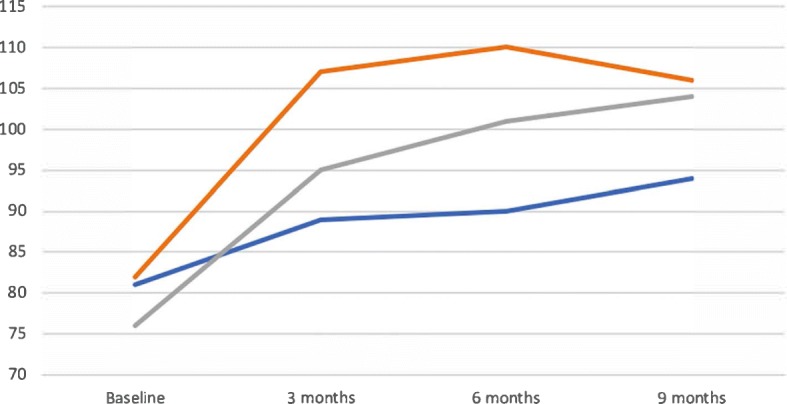
BACKGROUND: This paper discusses the initial testing of the Housing First Training and Technical Assistance (HFTAT) Program, a multifaceted, distance-based strategy for the implementation of the Housing First (HF) supportive housing model. HF is a complex housing intervention for serving people living with serious mental illness and a substance use disorder that requires significant individual- and structural-level changes to implement. As such, the HFTAT employs a combined training and consultation approach to target different levels of the organization. Training delivered to all organizational staff focuses on building individual knowledge and uses narrative storytelling to overcome attitudinal implementation barriers. Consultation seeks to build skills through technical assistance and fidelity audit and feedback. METHOD: We employed a mixed method design to understand both individual-level (e.g., satisfaction with the HFTAT, HF knowledge acquisition and retention, and HF acceptability and appropriateness) and structural-level (e.g., fidelity) outcomes. Quantitative data were collected at various time points, and qualitative data were collected at the end of HFTAT activities. Staff and administrators (n = 113) from three programs across three states participated in the study. RESULTS: Satisfaction with both training and consultation was high, and discussions demonstrated both activities were necessary. Flexibility of training modality and narrative storytelling were particular strengths, while digital badging and the community of practice were perceived as less valuable because of incompatibilities with the work context. HF knowledge was high post training and retained after 3-month follow-up. Participants reported training helped them better understand the model. Attitudes toward evidence-based interventions improved over 6 months, with qualitative data supporting this but demonstrating some minor concerns related to acceptability and appropriateness. Fidelity scores for all programs improved over 9 months. CONCLUSION: The HFTAT was a well-liked and generally useful implementation strategy. Results support prior research pointing to the value of both (a) multifaceted strategies and (b) combined training and consultation approaches. The study also provides evidence for narrative storytelling as an approach for changing attitudinal implementation barriers. The need for compatibility between specific elements of an implementation strategy and the work environment was also observed.
Overview
The claims and statistics of this paper haven’t been checked yet.
Free: it reads the open-access text and checks the first 5 claims that cite a source we can check. Create a free account to check every claim.
Integrity signals
Registry
Cites
Statistics
Figures
Verification
Claims the paper makes
The claims and statistics of this paper haven’t been checked yet.
Free: it reads the open-access text and checks the first 5 claims that cite a source we can check. Create a free account to check every claim.
Claims other papers make about this one
Each is checked against this paper’s own text: does it say what the citing paper says it does?
The source backs part of the claim, not all of it — or backs it for a different population, condition or comparison.
In the citing paper
“Consultation and supervision programs, such as technical assistance and training offered by Pathways Housing First Institute and Housing First Europe Hub, can be helpful for providing Housing First agencies with harm reduction knowledge and implementation recommendations (Watson et al., 2018).”
From Harm reduction outcomes and practices in Housing First: A mixed-methods systematic review (2021) · cites this paper as Watson et al., 2018
Experimental — accuracy not yet measured
Self-check
Percentages, sums and reported differences re-computed from the paper’s own numbers.
The self-check needs the paper’s full text.
Citations
Cites
The Discovery of Grounded Theory: Strategies for Qualitative Research.
Wagner, H. R., Glaser, B. G., & Strauss, A. L. (1968) · Social Forces · doi:10.2307/2575405 · Cited by 46,361
Three Approaches to Qualitative Content Analysis
Hsieh, H.-F., & Shannon, S. E. (2005) · Qualitative Health Research · doi:10.1177/1049732305276687 · Cited by 44,601 · cited 1×
“Qualitative analysis was primarily deductive [51, 52], focusing on overall themes, as well as differences between administrators and staff.”
MethodThe Discovery of Grounded Theory: Strategies for Qualitative Research
Glaser, B. G., & Strauss, A. L. (2017) · Aldine (Routledge reprint) · doi:10.4324/9780203793206 · Cited by 25,789
Designing and Conducting Mixed Methods Research
Robinson, P. (2007) · Australian and New Zealand Journal of Public Health · doi:10.1111/j.1753-6405.2007.00096.x · Cited by 23,258
Building Theories from Case Study Research
Eisenhardt, K. M. (1989) · The Academy of Management Review · doi:10.2307/258557 · Cited by 17,455
Qualitative Data Analysis: A Sourcebook of New Methods
Lotto, L. S., Miles, M. B., & Huberman, A. M. (1986) · Educational Evaluation and Policy Analysis · doi:10.2307/1163741 · Cited by 10,315
(2006) · Cited by 7,081
Powell, B. J., Waltz, T. J., Chinman, M. J., Damschroder, L. J., Smith, J. L., Matthieu, M. M., Proctor, E. K., & Kirchner, J. E. (2015) · Implementation Science · doi:10.1186/s13012-015-0209-1 · Cited by 4,963
(2009) · US Department of Education · Cited by 3,654
Implementing, Embedding, and Integrating Practices: An Outline of Normalization Process Theory
May, C., & Finch, T. (2009) · Sociology · doi:10.1177/0038038509103208 · Cited by 2,115
Proctor, E. K., Landsverk, J., Aarons, G., Chambers, D., Glisson, C., & Mittman, B. (2009) · Administration and Policy in Mental Health and Mental Health Services Research · doi:10.1007/s10488-008-0197-4 · Cited by 1,894
Forsetlund, L., Bjørndal, A., Rashidian, A., Jamtvedt, G., O'Brien, M. A., Wolf, F. M., Davis, D., Odgaard-Jensen, J., & Oxman, A. D. (2009) · Cochrane Database of Systematic Reviews · doi:10.1002/14651858.cd003030.pub2 · Cited by 1,849
Qualitative Text Analysis: A Guide to Methods, Practice & Using Software
Kuckartz, U. (2014) · doi:10.4135/9781446288719 · Cited by 1,411
Development of a theory of implementation and integration: Normalization Process Theory
May, C. R., Mair, F., Finch, T., MacFarlane, A., Dowrick, C., Treweek, S., Rapley, T., Ballini, L., Ong, B. N., Rogers, A., et al. (2009) · Implementation Science · doi:10.1186/1748-5908-4-29 · Cited by 1,409
Dissemination and Implementation Research in HealthTranslating Science to Practice
Brownson, R. C., Colditz, G. A., & Proctor, E. K. (2012) · doi:10.1093/acprof:oso/9780199751877.001.0001 · Cited by 1,355
Aarons, G. A. (2004) · Mental Health Services Research · doi:10.1023/b:mhsr.0000024351.12294.65 · Cited by 1,272 · cited 2×
“Table 5 shows average overall and sub-dimension scores on the Evidence-Based Practice Attitudes Scale for participants at all three data collection points.”
MethodBeidas, R. S., & Kendall, P. C. (2010) · Clinical Psychology: Science and Practice · doi:10.1111/j.1468-2850.2009.01187.x · Cited by 1,085 · cited 3×
“As such, the findings also support the usefulness of multifaceted strategies as an approach to implementing complex EBIs that can effectively engage multiple levels of an organization over a sustained period of time (6 months in this case) [6, 22, 23].”
BackgroundA compilation of strategies for implementing clinical innovations in health and mental health
Powell, B. J., McMillen, J. C., Proctor, E. K., Carpenter, C. R., Griffey, R. T., Bunger, A. C., Glass, J. E., & York, J. L. (2012) · Medical Care Research and Review · doi:10.1177/1077558711430690 · Cited by 1,069
Herschell, A. D., Kolko, D. J., Baumann, B. L., & Davis, A. C. (2010) · Clinical Psychology Review · doi:10.1016/j.cpr.2010.02.005 · Cited by 713
Evidence-Based Quality Improvement: The State Of The Science
Shojania, K. G., & Grimshaw, J. M. (2005) · Health Affairs · doi:10.1377/hlthaff.24.1.138 · Cited by 691
Evolution of Wenger's concept of community of practice
Li, L. C., Grimshaw, J. M., Nielsen, C., Judd, M., Coyte, P. C., & Graham, I. D. (2009) · Implementation Science · doi:10.1186/1748-5908-4-11 · Cited by 648
Mixed Method Research: Instruments, Validity, Reliability and Reporting Findings
Zohrabi, M. (2013) · Theory and Practice in Language Studies · doi:10.4304/tpls.3.2.254-262 · Cited by 593 · cited 1×
“, staff and administrators) enhances validity and reliability of the study findings [45, 67].”
BackgroundCultural influences on knowledge sharing through online communities of practice
Ardichvili, A., Maurer, M., Li, W., Wentling, T., & Stuedemann, R. (2006) · Journal of Knowledge Management · doi:10.1108/13673270610650139 · Cited by 563
2. Towards a Theory of Online Learning
Anderson, T. (2008) · The Theory and Practice of Online Learning · doi:10.15215/aupress/9781897425084.004 · Cited by 430
Padgett, D. K., Gulcur, L., & Tsemberis, S. (2006) · Research on Social Work Practice · doi:10.1177/1049731505282593 · Cited by 408
Self-citationRakovshik, S. G., & McManus, F. (2010) · Clinical Psychology Review · doi:10.1016/j.cpr.2010.03.004 · Cited by 281
Borntrager, C. F., Chorpita, B. F., Higa-McMillan, C., & Weisz, J. R. (2009) · Psychiatric Services · doi:10.1176/ps.2009.60.5.677 · Cited by 277 · cited 2×
“There is existing evidence that the way EBIs are presented to professionals can impact attitudes toward them [57, 61], and our findings provide support for narrative storytelling as an approach for introducing effect-”
ResultEdmunds, J. M., Beidas, R. S., & Kendall, P. C. (2013) · Clinical Psychology: Science and Practice · doi:10.1111/cpsp.12031 · Cited by 208
Telling Stories, Saving Lives: Creating Narrative Health Messages
Frank, L. B., Murphy, S. T., Chatterjee, J. S., Moran, M. B., & Baezconde-Garbanati, L. A. (2014) · Health Communication · doi:10.1080/10410236.2014.974126 · Cited by 193
Wiltsey Stirman, S., A Gutner, C., Crits-Christoph, P., Edmunds, J., Evans, A. C., & Beidas, R. S. (2015) · Implementation Science · doi:10.1186/s13012-015-0308-z · Cited by 188 · cited 1×
“, do not modify the critical components demonstrated to impact desired outcomes) [64, 65], and previous research has demonstrated flexibility in HF fidelity during the implementation process is important due to the significant influence the local community can have [66].”
BackgroundAdaptation in Dissemination and Implementation Science
Baumann, A. A., Cabassa, L. J., & Stirman, S. W. (2017) · Oxford Scholarship Online · doi:10.1093/oso/9780190683214.003.0017 · Cited by 151
Storytelling/narrative theory to address health communication with minority populations
Lee, H., Fawcett, J., & DeMarco, R. F. (2015) · Applied Nursing Research · doi:10.1016/j.apnr.2015.09.004 · Cited by 137
Strategies for Improving Fidelity in the National Evidence-Based Practices Project
Bond, G. R., Drake, R. E., McHugo, G. J., Rapp, C. A., & Whitley, R. (2009) · Research on Social Work Practice · doi:10.1177/1049731509335531 · Cited by 134
Torrey, W. C., Bond, G. R., McHugo, G. J., & Swain, K. (2011) · Administration and Policy in Mental Health and Mental Health Services Research · doi:10.1007/s10488-011-0357-9 · Cited by 122
Brunette, M. F., Asher, D., Whitley, R., Lutz, W. J., Wieder, B. L., Jones, A. M., & McHugo, G. J. (2008) · Psychiatric Services · doi:10.1176/appi.ps.59.9.989 · Cited by 122 · cited 3×
“This study supports previous research pointing to the value of combined training and consultation within an implementation strategy [1, 24, 41, 42], while also providing insights regarding a number of other strategies nested within the HFTAT’s two main components (e.”
InfluentialCollins, S. E., Malone, D. K., & Clifasefi, S. L. (2013) · American Journal of Public Health · doi:10.2105/ajph.2013.301312 · Cited by 114
Training Research: Practical Recommendations for Maximum Impact
Beidas, R. S., Koerner, K., Weingardt, K. R., & Kendall, P. C. (2011) · Administration and Policy in Mental Health and Mental Health Services Research · doi:10.1007/s10488-011-0338-z · Cited by 110
Gilburt, H., Slade, M., Bird, V., Oduola, S., & Craig, T. K. (2013) · BMC Psychiatry · doi:10.1186/1471-244x-13-167 · Cited by 107
Reding, M. E. J., Chorpita, B. F., Lau, A. S., & Innes-Gomberg, D. (2014) · Administration and Policy in Mental Health and Mental Health Services Research · doi:10.1007/s10488-013-0525-1 · Cited by 96
Defining the external implementation context: an integrative systematic literature review
Watson, D. P., Adams, E. L., Shue, S., Coates, H., McGuire, A., Chesher, J., Jackson, J., & Omenka, O. I. (2018) · BMC Health Services Research · doi:10.1186/s12913-018-3046-5 · Cited by 92
Self-citationThe Role of Organizational Processes in Dissemination and Implementation Research
Aarons, G. A., Moullin, J. C., & Ehrhart, M. G. (2017) · Oxford Scholarship Online · doi:10.1093/oso/9780190683214.003.0008 · Cited by 82 · cited 1×
“The implementation team participating in the HFTAT’s consultation activities comprises administrators and implementation champions and is aimed at improving their HF leadership skills (strong leadership is an established component of implementation success [40, 44]) and affecting changes at the structural-level of the…”
BackgroundAudit and feedback: effects on professional practice
Ivers, N., Yogasingam, S., Lacroix, M., Brown, K. A., Antony, J., Soobiah, C., Simeoni, M., Willis, T. A., Crawshaw, J., Antonopoulou, V., et al. (2025) · Cochrane Database of Systematic Reviews · doi:10.1002/14651858.cd000259.pub4 · Cited by 78
Colon-Emeric, C. S., Toles, M., Cary, M. P., Batchelor‐Murphy, M., Yap, T. L., Song, Y., Hall, R. K., Anderson, A. L., Burd, A., & Anderson, R. A. (2015) · Implementation Science · doi:10.1186/s13012-016-0454-y · Cited by 77
Training Satisfaction Rating Scale: Development of a Measurement Model Using Polychoric Correlations
Tello, F. P. H., Moscoso, S. C., Barbero, I., & Sanduvete‐Chaves, S. (2006) · European Journal of Psychological Assessment · doi:10.1027/1015-5759.22.4.268 · Cited by 76
Do implementation strategies increase adherence to pain assessment in hospitals? A systematic review
Ista, E., van Dijk, M., & van Achterberg, T. (2012) · International Journal of Nursing Studies · doi:10.1016/j.ijnurstu.2012.11.003 · Cited by 74
Watson, D. P., Shuman, V., Kowalsky, J., Golembiewski, E., & Brown, M. (2017) · Harm Reduction Journal · doi:10.1186/s12954-017-0158-x · Cited by 70
Self-citationNorman, C. D., & Huerta, T. (2006) · Implementation Science · doi:10.1186/1748-5908-1-20 · Cited by 68
Macnaughton, E., Stefancic, A., Nelson, G., Caplan, R., Townley, G., Aubry, T., McCullough, S., Patterson, M., Stergiopoulos, V., Vallée, C., et al. (2015) · American Journal of Community Psychology · doi:10.1007/s10464-015-9709-z · Cited by 66
Self-citationWatson, D. P., Young, J., Ahonen, E. Q., Xu, H., Henderson, M. L., Shuman, V., & Tolliver, R. (2014) · Implementation Science · doi:10.1186/s13012-014-0138-4 · Cited by 59
Self-citationTalkative objects in need of interpretation. re-thinking digital badges in education
Rughinis, R. V. (2013) · CHI Conference Extended Abstracts on Human Factors in Computing Systems (CHI EA) · doi:10.1145/2468356.2468729 · Cited by 49
Examining provider perspectives within housing first and traditional programs
Henwood, B. F., Shinn, M., Tsemberis, S., & Padgett, D. K. (2013) · American Journal of Psychiatric Rehabilitation · doi:10.1080/15487768.2013.847745 · Cited by 41
Self-citationWatson, D. P., Orwat, J., Wagner, D. E., Shuman, V., & Tolliver, R. (2013) · Substance Abuse Treatment, Prevention, and Policy · doi:10.1186/1747-597x-8-16 · Cited by 41
Self-citationKraus, S. W., & Stein, C. H. (2012) · Community Mental Health Journal · doi:10.1007/s10597-012-9505-2 · Cited by 40
Champagne, F., Lemieux‐Charles, L., Duranceau, M.-F., MacKean, G., & Reay, T. (2014) · Implementation Science · doi:10.1186/1748-5908-9-53 · Cited by 40
Open Badges: Challenges and Opportunities
Jovanović, J., & Devedžić, V. (2014) · Lecture notes in computer science · doi:10.1007/978-3-319-09635-3_6 · Cited by 36
Challenges to Implementing the Harm Reduction Approach
Mancini, M. A., Linhorst, D. M., Broderick, F., & Bayliff, S. (2008) · Journal of Social Work Practice in the Addictions · doi:10.1080/15332560802224576 · Cited by 33
Keller, C., Goering, P. N., Hume, C., Macnaughton, E., O'Campo, P. J., Sarang, A., Thomson, M., Vallée, C., Watson, A., & Tsemberis, S. J. (2013) · American Journal of Psychiatric Rehabilitation · doi:10.1080/15487768.2013.847761 · Cited by 18
Self-citationStergiopoulos, V., Zerger, S., Jeyaratnam, J., Connelly, J., Kruk, K., O'Campo, P. J., & Hwang, S. W. (2015) · Research on Social Work Practice · doi:10.1177/1049731515579280 · Cited by 18
Ruzek, J. I., Rosen, R. C., Marceau, L. D., Larson, M. J., Garvert, D. W., Smith, L., & Stoddard, A. (2012) · Implementation Science · doi:10.1186/1748-5908-7-43 · Cited by 18
O'Campo, P. J., Zerger, S., Gozdzik, A., Jeyaratnam, J., & Stergiopoulos, V. (2015) · Journal of Health Care for the Poor and Underserved · doi:10.1353/hpu.2015.0031 · Cited by 15
Evaluation of the implementation of the Montreal at home/chez soi project
Fleury, M., Grenier, G., & Vallée, C. (2014) · BMC Health Services Research · doi:10.1186/s12913-014-0557-6 · Cited by 14
Ponsford, R., Ford, J. R., Korjonen, M. H., Hughes, E., Keswani, A., Pliakas, T., & Egan, M. (2017) · Implementation Science · doi:10.1186/s13012-017-0622-8 · Cited by 12 · cited 2×
“[39] found both of these factors to be a barrier to success of an online learning community for alcohol harm reduction, as they noted study participants preferred to seek out known and trusted sources of information and a lack of fit between CoP access and participants’ daily work routines.”
BackgroundAhonen, E. Q., Watson, D. P., Adams, E. L., & McGuire, A. B. (2017) · Pilot and Feasibility Studies · doi:10.1186/s40814-017-0187-y · Cited by 10 · cited 2×
“Additional details of the HFTAT not described here can be found in previously published articles [26, 27] and Additional file 1.”
BackgroundSelf-citationDavis, D., & Hawk, M. E. (2015) · Social Work in Health Care · doi:10.1080/00981389.2014.990129 · Cited by 9
Implementation Evaluation of a Housing First Program in a Small Canadian City
Ecker, J., Aubry, T., Cherner, R., & Jetté, J. (2014) · Canadian Journal of Community Mental Health · doi:10.7870/cjcmh-2014-028 · Cited by 8
Waya), D. A. P. S. W. (. U., Ramsey, A. T., & van den Berk‐Clark, C. (2015) · BMC Research Notes · doi:10.1186/s13104-015-1110-3 · Cited by 8
Introducing Housing First in a Rural Service System: A Multistakeholder Perspective
Henwood, B. F., Melekis, K., & Stefancic, A. (2017) · Global Journal of Community Psychology Practice · doi:10.7728/0501201407 · Cited by 2
Tsemberis (1999) · doi:10.1002/(sici)1520-6629(199903)27:2<225::aid-jcop9>3.0.co;2-y
Self-citation
Research works printed but not linked: 2
- Miles MB, Huberman AM, Saldaña J. Qualitative data analysis: a methods sourcebook. 3rd ed. Thousand Oaks, Califorinia: SAGE Publications, Inc; 2013.
- VERBI Software-consult-Sozialforschung GmbH. MAXQDA, software for qualitative data analysis 1989 Berlin VERBI Soft
Cited by
Chen, Y., Cui, P. Y., Pan, Y., Waili, N., Waili, N., & Li, Y. (2021) · BMC Geriatrics · doi:10.1186/s12877-021-02207-9 · Cited by 59
“Many countries are planning and preparing to implement housing assistance programs around the world [40, 41].”
BackgroundHarm reduction outcomes and practices in Housing First: A mixed-methods systematic review
Kerman, N., Polillo, A., Bardwell, G., Gran-Ruaz, S., Savage, C., Felteau, C., & Tsemberis, S. (2021) · Drug and Alcohol Dependence · doi:10.1016/j.drugalcdep.2021.109052 · Cited by 42
Self-citationWatson, D. P., Snow‐Hill, N. L., Saldana, L., Walden, A. L., Staton, M. D., Kong, A., & Donenberg, G. R. (2020) · Implementation Research and Practice · doi:10.1177/2633489520974974 · Cited by 15
“For instance, prior studies have focused largely on the internal organizational setting over external factors (e.g., social climate, community infrastructure, the legal environment) that can play just as important of a role in the implementation process (Watson et al., 2018).”
BackgroundMethodSelf-citationAttempting Randomized Housing First Research in a Community Context: Reflections on Failure
Brown, M. M., Tran, A., Cummings, C., Fay, L., Malone, D. K., Fyall, R., & Tsemberis, S. J. (2020) · American Journal of Community Psychology · doi:10.1002/ajcp.12421 · Cited by 10
Self-citationDoran, K. M., Torsiglieri, A., Blaufarb, S., Hernandez, P. A., Melnick, E., Velez, L., Cleland, C. M., Neighbors, C. J., O’Grady, M. A., & Shelley, D. (2023) · Implementation Science · doi:10.1186/s13012-023-01278-z · Cited by 10
“Limited non-experimental research has examined implementation of “Housing First” principles including harm reduction into PSH [26].”
BackgroundMethod
Metadata
- Authors
- Watson, D. P., Ahonen, E. Q., Shuman, V., Brown, M., Tsemberis, S., Huynh, P., Ouyang, F., & Xu, H.
- Affiliations
- University of Illinois Chicago (US)
- Indiana University Indianapolis (US)
- Heartland Alliance (US)
- DePaul University (US)
- Columbia University Irving Medical Center (US)
- Indiana University School of Medicine (US)
- Corresponding author
- Watson, Dennis P.
- ORCID
- Venue
- Substance Abuse Treatment, Prevention, and Policy
- Published
- 2018-09-21
- Volume
- 13
- Issue
- 1
- Pages
- 32-32
- ISSN
- 1747-597X (ISSN-L)
- PMC
- PMC6151066
- OpenAlex
- W2890976994
- Cited by
- 13
- References
- 68
- Citations by year
- 2025: 3 · 2024: 3 · 2023: 3 · 2021: 2 · 2020: 2
- FWCI
- 1.53
- Type
- journal article
- Language
- en
- Open access
- gold
- doi.org
- Licence
- cc-by
- creativecommons.org/licenses/by/4.0/ (tdm)
- creativecommons.org/licenses/by/4.0/ (vor)
- Locations
- Substance Abuse Treatment Prevention and Policy (publishedVersion, cc-by)
- Europe PMC (PubMed Central) (publishedVersion, other-oa)
- PubMed Central (publishedVersion, cc-by)
- PubMed (publishedVersion)
- DOAJ (DOAJ: Directory of Open Access Journals) (submittedVersion, cc-by-sa)
- IUScholarWorks (Indiana University) (submittedVersion, cc-by-nc-nd)
- Funders
- National Institute on Drug Abuse (R34DA036001)
- National Center for Advancing Translational Sciences (KL2TR001106)
- Topics
- Health Sciences › Health Professions › General Health Professions › Health Policy Implementation Science
- Social Sciences › Sociology and Political Science › Homelessness and Social Issues
- Social Sciences › Psychology › Clinical Psychology › Psychiatric care and mental health services
- Keywords
- Housing First, supported housing, implementation strategies, technical assistance, storytelling, implementation barriers, severe mental illness, substance use disorders, communities of practice
- MeSH terms
- Adult, Attitude of Health Personnel, Mental Disorders, Female, Ill-Housed Persons, Housing, Humans, Health Knowledge, Attitudes, Practice, Male, Program Evaluation, Patient Satisfaction, Diagnosis, Dual (Psychiatry), Substance-Related Disorders, Narration
About these checks
Registry, retraction, Cites and statistics results are computed, not judged, with one exception: a printed reference that no index lists is read once by a model before it counts as a citation error. Claims are extracted by a model and kept only when their quote appears verbatim in the text; each cited source is then checked, with a model’s help, for whether it says what the claim relies on. Those verdicts can be wrong — read the claim’s quote and the cited source before relying on one.
Statistics and arithmetic are recomputed, not judged.
Confidence bands are shown only for fields calibrated on our annotated test set. None is calibrated yet, so no band is shown.
What counts as a claim ›How we measure confidence ›How we check this ›
Are you an author, or do you see a problem with this page? Request a review
Data sources
Bibliographic data: Semantic Scholar, OpenAlex, Crossref.
Contains information from the Semantic Scholar Academic Graph Datasets, made available under the ODC Attribution License (ODC-BY 1.0).
Semantic Scholar’s data is described in: Kinney, R., et al. (2023). The Semantic Scholar Open Data Platform. arXiv:2301.10140.
