

A refined compilation of implementation strategies: results from the Expert Recommendations for Implementing Change (ERIC) project
Open accessThe DOI matches its Crossref record; 61 of the 62 references it cites were found in a registry or an index; 15 of the 30 sources its claims cite were checked for support.
Abstract
BACKGROUND: Identifying, developing, and testing implementation strategies are important goals of implementation science. However, these efforts have been complicated by the use of inconsistent language and inadequate descriptions of implementation strategies in the literature. The Expert Recommendations for Implementing Change (ERIC) study aimed to refine a published compilation of implementation strategy terms and definitions by systematically gathering input from a wide range of stakeholders with expertise in implementation science and clinical practice. METHODS: Purposive sampling was used to recruit a panel of experts in implementation and clinical practice who engaged in three rounds of a modified Delphi process to generate consensus on implementation strategies and definitions. The first and second rounds involved Web-based surveys soliciting comments on implementation strategy terms and definitions. After each round, iterative refinements were made based upon participant feedback. The third round involved a live polling and consensus process via a Web-based platform and conference call. RESULTS: Participants identified substantial concerns with 31% of the terms and/or definitions and suggested five additional strategies. Seventy-five percent of definitions from the originally published compilation of strategies were retained after voting. Ultimately, the expert panel reached consensus on a final compilation of 73 implementation strategies. CONCLUSIONS: This research advances the field by improving the conceptual clarity, relevance, and comprehensiveness of implementation strategies that can be used in isolation or combination in implementation research and practice. Future phases of ERIC will focus on developing conceptually distinct categories of strategies as well as ratings for each strategy's importance and feasibility. Next, the expert panel will recommend multifaceted strategies for hypothetical yet real-world scenarios that vary by sites' endorsement of evidence-based programs and practices and the strength of contextual supports that surround the effort.
Overview
CoChat Summary
TL;DR
This paper reports the ERIC project’s modified Delphi process to refine a published compilation of implementation strategy terms and definitions through expert consensus. The result is a final compilation of 73 discrete implementation strategies, with 75% of original definitions retained after voting.
Key findings
- A panel of 71 experts participated across three modified Delphi rounds; round participation was 57, 43, and 40 experts, respectively.
- Participants identified substantial concerns with 31% of the original terms and/or definitions and suggested five additional strategies.
- Seventy-five percent of definitions from the original Powell et al. compilation were retained after voting, and the final compilation included 73 discrete implementation strategies.
- Of 21 alternative definitions suggested, an alternative was selected 81% of the time and the original definition was maintained 19% of the time; all five new strategies were retained in some form, with an average 84% vote to retain (range 100–71%).
Methods
- Purposive sampling recruited an expert panel of 71 implementation and clinical practice experts, mostly from the USA, with some Canadian affiliation.
- A three-round modified Delphi process was used: two Web-based surveys for feedback and iterative refinement, followed by a live Web-based polling and consensus meeting.
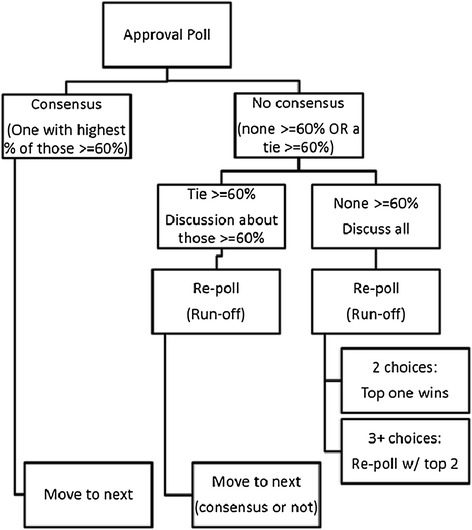
- Consensus voting used approval voting with a ≥60% supermajority threshold, followed by structured discussion and runoff voting when no clear winner emerged.
Limitations
- The paper states that using a different starting taxonomy may have yielded different results; the panel was limited to North America and mostly USA experts; online rather than in-person meetings may have produced less nuanced discussion; and some participants abstained from Round 3 voting for unknown reasons.
- The paper also states content limitations: the evidence base for each strategy was not considered, strategies were not explicitly tied to theories or conceptual models, and some strategies may be more applicable to US or North American settings.
- Evident from the text: the compilation is not intended as a checklist, and the authors note that no implementation effort could feasibly use every strategy; future research is needed to identify contexts and circumstances under which each discrete strategy is effective.
Model-written summary. Check it against the paper before relying on it.
Integrity signals
Registry
Cites
Statistics
Figures
Verification
Claims the paper makes
9 Valid · 0 Not valid · 8 Not checked · 53 Own results and interpretations
The cited sources support only part of this claim — read each source’s verdict below.
In the paper
“Second, published descriptions of implementation strategies too often do not include sufficient detail to enable either scientific or real-world replication [1,6]”
§ A refined compilation of implementation strategies: results from the Expert Recommendations for Implementing Change (ERIC) project > Background
What the sources say
- Could not verifycites [1] Proctor EK Powell BJ McMillen JC Implementation strategies: recommendations for specifying and reporting Implement Sci. 2013 8 1 11 10.1186/1748-5908-8-1 24289295 PMC3882890 sourceExperimental — accuracy not yet measured
Our copy of SENTRY contains no statement that published descriptions of implementation strategies lack sufficient detail for scientific or real-world replication; searched for replication/reproduce, intervention description detail, fidelity, reporting checklist, and generalizability. The closest passages are different points: the Background (p. n/a) notes prior single-centre and high-tech KT studies whose results 'are not applicable to hospitals without the required computer infrastructure' and whose generalizability remains untested, and the Discussion (p. n/a) concedes 'the lack of data on fidelity in the intervention group (i.e., the extent to which the intervention components were used/received as intended)' in their own trial. Neither addresses the adequacy of published reporting of implementation strategies, so this source neither supports nor contradicts the attributed claim. (LLM, conf=0.70)
- Supportedcites [6] Michie S Fixsen DL Grimshaw JM Eccles MP Specifying and reporting complex behaviour change interventions: the need for a scientific method Implement Sci. 2009 4 1 6 10.1186/1748-5908-4-40 19607700 PMC2717906 source
The 'Interventions aren't described' section (What is the problem?) states that published intervention evaluations 'are seldom reported by researchers or practitioners in enough detail to replicate them', and that researchers were less confident they could replicate behavioural interventions and judged they would need more information to deliver them in practice settings — covering both scientific and real-world replication. The Abstract reinforces this: complex behaviour change interventions 'are not well described; when they are described, the terminology used is inconsistent. This constrains scientific replication, and limits the subsequent introduction of successful interventions.' The only slight shift is terminological: this source speaks of 'behaviour change interventions' rather than 'implementation strategies', which the paired citation [6] presumably covers. (LLM, conf=0.88)
plain- Asserted: passes — The authors put it forward as true.
- Checkable: passes — It can be checked against evidence.
- Load-bearing: passes — The paper’s conclusions depend on it.
- Based: passes — The paper gives a reason why it holds.
- Could not verify
The cited sources support only part of this claim — read each source’s verdict below.
In the paper
“However, efforts to identify, develop, and test implementation strategies have been complicated by a lack of conceptual clarity [1,6-9].”
§ A refined compilation of implementation strategies: results from the Expert Recommendations for Implementing Change (ERIC) project > Background
What the sources say
- Could not verifycites [1] Proctor EK Powell BJ McMillen JC Implementation strategies: recommendations for specifying and reporting Implement Sci. 2013 8 1 11 10.1186/1748-5908-8-1 24289295 PMC3882890 sourceExperimental — accuracy not yet measured
The Background describes how the SENTRY intervention was developed, and the Discussion identifies practical barriers to testing and scaling it. The Results say that clinical risk terms such as “immobility” and “sepsis” needed clearer definitions, but no passage found in the search addresses a lack of conceptual clarity about implementation strategies as a complication in identifying, developing, or testing them. (LLM, conf=0.73)
- Supportedcites [6] Michie S Fixsen DL Grimshaw JM Eccles MP Specifying and reporting complex behaviour change interventions: the need for a scientific method Implement Sci. 2009 4 1 6 10.1186/1748-5908-4-40 19607700 PMC2717906 source
In “What is the problem? > Interventions aren't described” (page unavailable), the paper says interventions are often based on unstated or weakly applied models, leaving each new intervention and evaluation relatively isolated. It also says inconsistent terminology makes interventions difficult to distinguish and limits synthesis. Together, these passages support the claim that a lack of conceptual clarity complicates developing and testing implementation strategies. (LLM, conf=0.86)
- Partly supportedcites [7] McKibbon KA Lokker C Wilczynski NL Ciliska D Dobbins M Davis DA A cross-sectional study of the number and frequency of terms used to refer to knowledge translation in a body of health literature in 2006: a tower of Babel? Implement Sci. 2010 5 1 11 10.1186/1748-5908-5-16 21080976 PMC2834600 sourceExperimental — accuracy not yet measured
The Discussion (page unavailable) reports inconsistent terminology and definitions in knowledge translation and says this makes relevant research harder to find and understand. It does not specifically establish that this lack of clarity has complicated identifying, developing, or testing implementation strategies. (LLM, conf=0.84)
- Could not verifycites [8] Colquhoun H Leeman J Michie S Lokker C Bragge P Hempel S Towards a common terminology: a simplified framework of interventions to promote and integrate evidence into health practices, systems, and policies Implement Sci. 2014 9 1 6 10.1186/1748-5908-9-1 24885553 PMC4021969 sourceExperimental — accuracy not yet measured
The Background discusses factors affecting de-implementation and proposes a framework for prioritizing healthcare practices. The Empirical testing section discusses testing health policies, but neither section says that a lack of conceptual clarity has complicated efforts to identify, develop, or test implementation strategies. Searches for that phrase and related terms found no supporting passage in our copy. (LLM, conf=0.72)
- Supportedcites [9] Waltz TJ Powell BJ Chinman MJ Smith JL Matthieu MM Proctor EK Expert Recommendations for Implementing Change (ERIC): protocol for a mixed methods study Implement Sci. 2014 9 1 12 10.1186/1748-5908-9-39 24669765 PMC3987065 source
The Background section, “Lack of conceptual clarity for implementation strategies” (page not provided), says inconsistent terms and definitions hinder interpretation of research, synthesis, and replication. This supports the claim that conceptual ambiguity complicates work to identify, develop, and test implementation strategies. (LLM, conf=0.90)
plainstates a cause- Asserted: passes — The authors put it forward as true.
- Checkable: passes — It can be checked against evidence.
- Load-bearing: passes — The paper’s conclusions depend on it.
- Based: passes — The paper gives a reason why it holds.
- Could not verify
The cited sources support only part of this claim — read each source’s verdict below.
In the paper
“First, terms and definitions for implementation strategies are inconsistent [7,10].”
§ A refined compilation of implementation strategies: results from the Expert Recommendations for Implementing Change (ERIC) project > Background
What the sources say
- Partly supportedcites [7] McKibbon KA Lokker C Wilczynski NL Ciliska D Dobbins M Davis DA A cross-sectional study of the number and frequency of terms used to refer to knowledge translation in a body of health literature in 2006: a tower of Babel? Implement Sci. 2010 5 1 11 10.1186/1748-5908-5-16 21080976 PMC2834600 sourceExperimental — accuracy not yet measured
The Discussion reports inconsistent use of terms in articles about knowledge translation, and the Summary calls for standardizing terms and definitions. The study examines terminology for knowledge translation generally, however; it does not establish that definitions of implementation strategies specifically are inconsistent. The supplied copy gives section labels but no page numbers. (LLM, conf=0.83)
- Supportedcites [10] Powell BJ McMillen JC Proctor EK Carpenter CR Griffey RT Bunger AC A compilation of strategies for implementing clinical innovations in health and mental health Med Care Res Rev. 2012 69 123 57 10.1177/1077558711430690 22203646 PMC3524416 source
The Introduction says implementation strategies are rarely defined and that the terminology used to describe them is inconsistent. The Limitations section likewise describes improving consistency and clarity as an unfinished task. (LLM, conf=0.94)
plain- Asserted: passes — The authors put it forward as true.
- Checkable: passes — It can be checked against evidence.
- Load-bearing: passes — The paper’s conclusions depend on it.
- Based: passes — The paper gives a reason why it holds.
- Partly supported
Every source the paper cites for this claim was checked and supports it.
In the paper
“Powell et al. [10] proposed a consolidated compilation of 68 discrete (as opposed to multifaceted) implementation strategies and definitions based upon a review of the health and mental health literatures.”
§ A refined compilation of implementation strategies: results from the Expert Recommendations for Implementing Change (ERIC) project > Background
What the sources say
- Supportedcites [10] Powell BJ McMillen JC Proctor EK Carpenter CR Griffey RT Bunger AC A compilation of strategies for implementing clinical innovations in health and mental health Med Care Res Rev. 2012 69 123 57 10.1177/1077558711430690 22203646 PMC3524416 source
The Abstract states that the authors present a consolidated compilation of 68 discrete implementation strategies and definitions based on a review of 205 sources. The Introduction identifies health and mental health as the fields covered, and the Discussion distinguishes the discrete strategies from multifaceted implementation plans. (LLM, conf=0.95)
plain- Asserted: passes — The authors put it forward as true.
- Checkable: passes — It can be checked against evidence.
- Load-bearing: passes — The paper’s conclusions depend on it.
- Based: passes — The paper gives a reason why it holds.
- Supported
Every source the paper cites for this claim was checked and supports it.
In the paper
“Powell et al. [10] reviewed 41 compilations and reviews of implementation strategies and summarized them according to their foci and disciplines/clinical specialties that they represented”
§ A refined compilation of implementation strategies: results from the Expert Recommendations for Implementing Change (ERIC) project > Background
What the sources say
- Supportedcites [10] Powell BJ McMillen JC Proctor EK Carpenter CR Griffey RT Bunger AC A compilation of strategies for implementing clinical innovations in health and mental health Med Care Res Rev. 2012 69 123 57 10.1177/1077558711430690 22203646 PMC3524416 source
The Methods (Sources Identified) state that among the 205 sources identified, 41 were 'compilations, taxonomies, or reviews of multiple strategies', and the Introduction states 'For illustrative purposes, we provide brief summaries of 41 reviews and compilations of implementation strategies in Table 1.' The same Introduction section characterizes those sources by their foci — narrow scope on strategies with known effectiveness evidence, on 'specific medical conditions, fields of practice or disciplines', on a setting/study, exemplar programs, one level of target, or one type of strategy — which matches the claim's 'foci and disciplines/clinical specialties'. Only caveat: our copy does not reproduce Table 1's column headings, and the paper's overall review covered 205 sources rather than 41 alone. (LLM, conf=0.85)
plain- Asserted: passes — The authors put it forward as true.
- Checkable: passes — It can be checked against evidence.
- Load-bearing: passes — The paper’s conclusions depend on it.
- Based: passes — The paper gives a reason why it holds.
- Supported
17 more claims · 3 with their cited sources checked
Create a free account to see all 70 claims and to verify the 15 references still open.
- Probably not a substantial claim. 40
- It may state two separate claims as one. 23
- The quote only partly states this claim. 1
Claims other papers make about this one
Each is checked against this paper’s own text: does it say what the citing paper says it does?
The source backs part of the claim, not all of it — or backs it for a different population, condition or comparison.
In the citing paper
“In 2015, the Expert Recommendations for Implementing Change (ERIC) study organized a panel of implementation scientists to compile a standardized set of implementation strategy terms and definitions [2–4].”
From A systematic review of experimentally tested implementation strategies across health and human service settings: evidence from 2010-2022 (2024) · cites this paper as [2]
Experimental — accuracy not yet measuredThe source backs part of the claim, not all of it — or backs it for a different population, condition or comparison.
In the citing paper
“While there has been a rapid increase in the number of implementation trials over the past decade, the quality of trials has been criticised, and the effects of the strategies for such trials on implementation, patient or public health outcomes have been modest [11–13].”
From Guidance for conducting feasibility and pilot studies for implementation trials (2020) · cites this paper as [12]
Experimental — accuracy not yet measuredThe source backs part of the claim, not all of it — or backs it for a different population, condition or comparison.
In the citing paper
“The implementation of a new model of care is an ongoing process, usually lasting between 2 and 4 years [21,22].”
From Implementation of Brief Admission by Self-Referral in Child and Adolescent Psychiatry in Sweden: Insights from Implementers and Staff (2023) · cites this paper as [22]
Experimental — accuracy not yet measuredThe source backs part of the claim, not all of it — or backs it for a different population, condition or comparison.
In the citing paper
“Second, the operations manager was confident about the project, with an attitude that spread throughout the organization and helped us obtain a supportive organization [22].”
From Implementation of Brief Admission by Self-Referral in Child and Adolescent Psychiatry in Sweden: Insights from Implementers and Staff (2023) · cites this paper as [22]
Experimental — accuracy not yet measuredThe cited source says what the claim attributes to it.
In the citing paper
“Several resources can inform the use of implementation strategies, including established taxonomies of implementation strategies (6, 7, 24, 25) and behavior change techniques (27, 28), repositories of systematic reviews (38, 103, 104), methods for selecting and tailoring implementation strategies (40, 55, 56), and reporting guidelines that promote replicability (4, 98–100).”
From Enhancing the Impact of Implementation Strategies in Healthcare: A Research Agenda (2019) · cites this paper as [7]
11 more claims about this paper
Create a free account to see every claim other papers make about this one.
Citations
Cites
Damschroder, L. J., Aron, D. C., Keith, R. E., Kirsh, S. R., Alexander, J. A., & Lowery, J. C. (2009) · Implementation Science · doi:10.1186/1748-5908-4-50 · Cited by 14,496 · cited 3×
“, the Consolidated Framework for Implementation Research [47], Theoretical Domains Framework [48,49], Promoting Action on Research Implementation in Health Services (PARIHS) framework [50]).”
MethodSelf-citationPalinkas, L. A., Horwitz, S. M., Green, C. A., Wisdom, J. P., Duan, N., & Hoagwood, K. (2015) · Administration and Policy in Mental Health and Mental Health Services Research · doi:10.1007/s10488-013-0528-y · Cited by 12,038
Crossing the Quality Chasm: A New Health System for the 21st Century
Baker, A. (2001) · BMJ · doi:10.1136/bmj.323.7322.1192 · Cited by 10,736
Crossing the Quality Chasm: A New Health System for the 21st Century
Committee on Quality of Health Care in America (2002) · Journal For Healthcare Quality · doi:10.1111/j.1945-1474.2002.tb00463.x · Cited by 8,483
Cane, J., O’Connor, D., & Michie, S. (2012) · Implementation Science · doi:10.1186/1748-5908-7-37 · Cited by 4,888 · cited 2×
“, the Consolidated Framework for Implementation Research [47], Theoretical Domains Framework [48,49], Promoting Action on Research Implementation in Health Services (PARIHS) framework [50]).”
MethodFrom best evidence to best practice: effective implementation of change in patients' care
Grol, R., & Grimshaw, J. (2003) · The Lancet · doi:10.1016/s0140-6736(03)14546-1 · Cited by 4,531
Making psychological theory useful for implementing evidence based practice: a consensus approach
Michie, S. (2005) · Quality and Safety in Health Care · doi:10.1136/qshc.2004.011155 · Cited by 3,440 · cited 2×
“, the Consolidated Framework for Implementation Research [47], Theoretical Domains Framework [48,49], Promoting Action on Research Implementation in Health Services (PARIHS) framework [50]).”
MethodImplementation strategies: recommendations for specifying and reporting
Proctor, E. K., Powell, B. J., & McMillen, J. C. (2013) · Implementation Science · doi:10.1186/1748-5908-8-139 · Cited by 2,585 · cited 6×
“Taken together, these two deficiencies complicate the acquisition and interpretation of knowledge, preclude research syntheses such as systematic reviews and meta-analyses, limit replication in both research and practice, and ultimately stymie the translation and application of empirical studies that could inform impl…”
BackgroundMethodInfluentialSelf-citationBero, L. A., Grilli, R., Grimshaw, J. M., Harvey, E., Oxman, A. D., & Thomson, M. A. (1998) · BMJ · doi:10.1136/bmj.317.7156.465 · Cited by 2,396
Welcome to Implementation Science
Eccles, M. P., & Mittman, B. S. (2006) · Implementation Science · doi:10.1186/1748-5908-1-1 · Cited by 2,254
Research works printed but not linked: 4
- Cochrane Effective Practice and Organisation of Care Group Data collection checklist 2002 1 30
- Walter I Nutley S Davies H Developing a taxonomy of interventions used to increase the impact of research 2003 Andrews University of St. Andrews of St. Andrews
- Ryan R Lowe D Santesso N Hill S Development of a taxonomy of interventions directed at consumers to promote evidence-based prescribing and medicines use: a tool for evidence-based decision-making 2010 Melbourne, Australia In National Medicines Symposium
- Shojania KG McDonald KM Wachter RM Owens DK Closing the quality gap: a critical analysis of quality improvement strategies, volume 1—series overview and methodology. Technical review 9 2004 Agency for Healthcare Research and Quality Rockville, MD 20734525
Cited by
Items 401–500 of 1,024
Nathan, N., Wiggers, J., Bauman, A. E., Rissel, C. E., Searles, A., Reeves, P., Oldmeadow, C. J., Naylor, P., Cradock, A. L. I., Sutherland, R., et al. (2019) · BMC Public Health · doi:10.1186/s12889-019-6492-z · Cited by 46
“Table 1 describes each of the implementation strategies using the Expert Recommendations for Implementing Change (ERIC) taxonomy [34] and shows how these were mapped against the BCW and TDF to address barriers to practice change.”
MethodHu, J., Ruan, H., Li, Q., Gifford, W., Zhou, Y., Yu, L., & Harrison, D. M. (2020) · Journal of Pediatric Nursing · doi:10.1016/j.pedn.2020.06.004 · Cited by 54
Unützer, J., Carlo, A. D., Arao, R. F., Vredevoogd, M. A., Fortney, J. C., Powers, D., & Russo, J. E. (2020) · Health Affairs · doi:10.1377/hlthaff.2019.01714 · Cited by 45
Deressa, W. A., Kayembe, P. K., Neel, A. H., Mafuta, E. M., Seme, A., & Alonge, O. (2020) · BMC Public Health · doi:10.1186/s12889-020-09879-9 · Cited by 42
“implementation strategies with common nomenclature, definitions, and categories [34].”
BackgroundPiat, M., Wainwright, M., Sofouli, E., Albert, H., Casey, R., Rivest, M.-P., Briand, C., Kasdorf, S., Labonté, L., LeBlanc, S., et al. (2021) · Implementation Science Communications · doi:10.1186/s43058-020-00099-1 · Cited by 45
“A compilation of 73 implementation strategies and their definitions was produced by the Expert Recommendations for Implementing Change (ERIC) project [3].”
BackgroundMethodCzosnek, L., Richards, J. A., Zopf, E. M., Cormie, P., Rosenbaum, S., & Rankin, N. M. (2021) · BMC Cancer · doi:10.1186/s12885-021-08196-7 · Cited by 55
“Implementation strategies are the actions undertaken designed to cause the change that produces the desired implementation outcome [88].”
BackgroundA pilot study comparing tools for tracking implementation strategies and treatment adaptations
Walsh‐Bailey, C., Palazzo, L. G., Jones, S. M. W., Mettert, K. D., Powell, B. J., Stirman, S. W., Lyon, A. R., Rohde, P., & Lewis, C. C. (2021) · Implementation Research and Practice · doi:10.1177/26334895211016028 · Cited by 50
“Although adapting treatment is considered one of 73 + implementation strategies(11), a 2013 review of treatment adaptations (12) and a resulting framework illustrates a host of complexities that would not be captured by these two existing methods (13).”
BackgroundMethodSelf-citationLiaw, S. Y., Ooi, S. L., Mildon, R. L., Ang, E. N. K., Lau, T. C., & Chua, W. L. (2022) · Nurse Education Today · doi:10.1016/j.nedt.2021.105262 · Cited by 42
Evaluating the Implementation of Home-Based Videoconferencing for Providing Mental Health Services
Interian, A., King, A. R., St. Hill, L. M., Robinson, C. H., & Damschroder, L. J. (2018) · Psychiatric Services · doi:10.1176/appi.ps.201700004 · Cited by 41
“These recommendations align with those of experts in implementation science, particularly those involving identifying and preparing a local champion, conducting educational meetings, and holding local consensus discussions (17,18).”
BackgroundMethodSelf-citationLandis‐Lewis, Z., Kononowech, J., Scott, W., Hogikyan, R. V., Carpenter, J. G., Periyakoil, V. S., Miller, S. C., Levy, C. R., Ersek, M. T., & Sales, A. E. (2020) · Implementation Science · doi:10.1186/s13012-019-0950-y · Cited by 44
“When used in audit and feedback as an implementation strategy [12], the content of feedback reports depends on a foundational audit process involving performance measures and data, but these important relationships have not been adequately described.”
MethodLeon, N., & Xu, H. (2023) · BMC Health Services Research · doi:10.1186/s12913-023-09151-x · Cited by 53
“The implementation considerations identified from the perspective of providers in this review largely align with strategies identified in synthesise of other implementation frameworks (such as policy and leadership, financing, alignment with the health system, goodness of fit, capacity development, provider engagement…”
BackgroundMethodBeidas, R. S., Becker-Haimes, E. M., Adams, D. R., Skriner, L., Stewart, R. E., Wolk, C. B., Buttenheim, A. M., Williams, N. J., Inacker, P., Richey, E., et al. (2017) · Implementation Science · doi:10.1186/s13012-017-0684-7 · Cited by 40
“However, most prior implementation studies in community mental health settings have focused on training and consultation, despite evidence that these strategies do not produce sustainable changes in therapist behavior [7, 8].”
BackgroundLocke, J. J., Shih, W., Kang‐Yi, C. D., Caramanico, J., Shingledecker, T., Gibson, J., Frederick, L., & Mandell, D. S. (2018) · Autism · doi:10.1177/1362361318787802 · Cited by 48
“We tested two implementation strategies most relevant to the school context: (1) identify and prepare champions, individuals who support and drive through an implementation and (2) tailor strategies to address barriers and leverage facilitators that were identified through earlier data collection (Powell et al., 2015).”
BackgroundMethodInfluentialZullig, L. L., Deschodt, M., Liška, J., Bosworth, H. B., & Geest, S. D. (2018) · The Annual Review of Pharmacology and Toxicology · doi:10.1146/annurev-pharmtox-010818-021348 · Cited by 52
Bacci, J. L., Bigham, K. A., Dillon‐Sumner, L., Ferreri, S. P., Frail, C. K., Hamada, C. Y., Lantaff, W. M., McGivney, M. S., Renner, H. M., Snyder, M. E., et al. (2019) · JACCP JOURNAL OF THE AMERICAN COLLEGE OF CLINICAL PHARMACY · doi:10.1002/jac5.1136 · Cited by 49
“The ERIC project and Cochrane EPOC have each developed a taxonomy of implementation strategies.(32,33,45) The ERIC project named and defined 73 discrete implementation strategies, which were further classified into nine categories.”
MethodInfluentialYip, O., Huber, E., Stenz, S., Zullig, L. L., Zeller, A., Geest, S. D., & Deschodt, M. (2021) · International Journal of Integrated Care · doi:10.5334/ijic.5607 · Cited by 48
“The implementation strategies were specified according to the Expert Recommendations for Implementing Change (ERIC) compilation [28, 47, 49], and were added to the logic model to indicate the actors and outcomes they intend to influence.”
The Building Blocks of Implementation Frameworks and Models in Primary Care: A Narrative Review
Huybrechts, I., Declercq, A., Verté, E., Raeymaeckers, P., & Anthierens, S. (2021) · Frontiers in Public Health · doi:10.3389/fpubh.2021.675171 · Cited by 53
“Implementation strategies are discussed more in-depth in the Expert Recommendations for Implementing Change (ERIC) study, in which a compilation of 73 implementation strategies was made (62, 63).”
BackgroundMiller, D. W., Roseen, E. J., Stone, J. A., Gardiner, P. M., Olson, J. L., Rosen, S., Wayne, P. M., Davis, R., Coeytaux, R. R., & on behalf of the PCORI-SAR Stakeholder Group (2021) · Global Advances in Health and Medicine · doi:10.1177/21649561211042574 · Cited by 43
“A comprehensive list of 73 implementation strategies organized by nine domains (the Education Resources Information Center (ERIC) taxonomy) is an important guide for selecting and combining implementation strategies.(25) Implementation strategies that address multiple barriers at multiple-stakeholder levels are though…”
BackgroundSmith, S. N., Almirall, D., Prenovost, K., Liebrecht, C., Kyle, J., Eisenberg, D., Bauer, M. S., & Kilbourne, A. M. (2019) · Medical Care · doi:10.1097/mlr.0000000000001138 · Cited by 40
Technology-Based Alcohol Interventions in Primary Care: Systematic Review
Ramsey, A. T., Satterfield, J. M., Gerke, D. R., & Proctor, E. K. (2019) · Journal of Medical Internet Research · doi:10.2196/10859 · Cited by 40
“Although underreported and underspecified in clinical research [65], implementation strategies are necessary to maximize the translation of research-based interventions into practice settings [71,72].”
Self-citationThijssen, S. V., Jacobs, M., Swart, R., Heising, L. M., Ou, C. X. J., & Roumen, C. (2021) · Journal of Health Organization and Management · doi:10.1108/jhom-12-2020-0493 · Cited by 52
Shin, M. H., Montano, A.-R. L., Adjognon, O. L., Harvey, K. L. L., Solimeo, S. L., & Sullivan, J. L. (2022) · The Gerontologist · doi:10.1093/geront/gnac157 · Cited by 44
Implementation strategies for telemental health: a systematic review
Appleton, R., Barnett, P., Juan, N. V. S., Tuudah, E., Lyons, N., Parker, J., Roxburgh, E., Spyridonidis, S., Tamworth, M., Worden, M., et al. (2023) · BMC Health Services Research · doi:10.1186/s12913-022-08993-1 · Cited by 56
“Pre-post pilot training programme Staff (N=12) Job title n (%): Psychologists 7 (58), social workers 3 (25), other backgrounds 2 (17) Gender n (%): Male 4 (33), Female 8 (67); Age: mean 44.”
BackgroundMethodInfluentialHansen, E. E., Chiem, J. L., Righter-Foss, K., Zha, Y., Cockrell, H. C., Greenberg, S. L. M., Low, D. K., & Martin, L. D. (2023) · Anesthesia & Analgesia · doi:10.1213/ane.0000000000006421 · Cited by 44
Embedding implementation science in the research pipeline
Zullig, L. L., Drake, C., Check, D. K., Brunkert, T., Deschodt, M., Olson, M. S., & Geest, S. D. (2023) · Translational Behavioral Medicine · doi:10.1093/tbm/ibad050 · Cited by 47
Smith, J. D., Norton, W. E., Mitchell, S. A., Cronin, C. M., Hassett, M. J., Ridgeway, J. L., Garcia, S. F., Osarogiagbon, R. U., Dizon, D. S., Austin, J. D., et al. (2023) · Implementation Science Communications · doi:10.1186/s43058-023-00529-w · Cited by 42
“The strategies were later coded by research staff to name the strategy according to the Expert Recommendations for Implementing Change (ERIC) taxonomy [7].”
MethodSelf-citationBunger, A. C., Chuang, E., Girth, A. M., Lancaster, K. E., Smith, R., Phillips, R. J., Martin, J. K., Gadel, F., Willauer, T., Himmeger, M., et al. (2024) · Implementation Science · doi:10.1186/s13012-024-01335-1 · Cited by 48
“Relational implementation strategies that build or leverage relationships (e.g., network weaving, obtaining formal commitments, building a coalition) could guide collaborations for implementation [25, 26].”
BackgroundSelf-citationAfshar, M., Resnik, F., Ryan, M. M., Hintzke, J., Lemmon, K. K., Sullivan, A. G., Shah, T., Stordalen, A., Oberst, M., Dambach, J., et al. (2025) · NEJM AI · doi:10.1056/aidbp2401267 · Cited by 49
Fidelity monitoring in complex interventions: a case study of the WISE intervention
Swindle, T., Selig, J. P., Rutledge, J. M., Whiteside-Mansell, L., & Curran, G. M. (2018) · Archives of Public Health · doi:10.1186/s13690-018-0292-2 · Cited by 49
Implementation of eHealth Interventions Across the HIV Care Cascade: a Review of Recent Research
Kemp, C. G., & Velloza, J. (2018) · Current HIV/AIDS Reports · doi:10.1007/s11904-018-0415-y · Cited by 44
Helseth, S. A., Janssen, T., Scott, K., Squires, D. D., & Becker, S. J. (2018) · Journal of Substance Abuse Treatment · doi:10.1016/j.jsat.2018.09.004 · Cited by 42
Coffinier, C., Peredo, J., Russell, M. M., Yano, E. M., Hamilton, A. B., Lerner, B., Provenzale, D., Knight, S. J., Voils, C. I., & Scheuner, M. T. (2018) · Genetics in Medicine · doi:10.1038/s41436-018-0315-y · Cited by 46
Implementation of a billable transitional care model for stroke patients: the COMPASS study
Gesell, S. B., Bushnell, C., Jones, S. B., Coleman, S. W., Levy, S. M., Xenakis, J. G., Lutz, B. J., Bettger, J. P., Freburger, J. K., Halladay, J. R., et al. (2019) · BMC Health Services Research · doi:10.1186/s12913-019-4771-0 · Cited by 44
“We utilized a number of implementation strategies [19] prior to hospital implementation and during active implementation of COMPASS-TC (Additional file 2:”
MethodJones, L. K., Tilberry, S., Gregor, C., Yaeger, L. H., Hu, Y., Sturm, A. C., Seaton, T. L., Waltz, T. J., Rahm, A. K., Goldberg, A., et al. (2021) · Implementation Science · doi:10.1186/s13012-021-01108-0 · Cited by 38
“We included studies reported in English, regardless of the country where the study was conducted, that had at least one strategy promoting statin uptake that could be categorized using the ERIC compilation [14, 16].”
MethodInfluentialSelf-citationJacobsohn, G. C., Leaf, M. A., Liao, F., Maru, A., Engstrom, C. J., Salwei, M. E., Pankratz, G. T., Eastman, A., Carayon, P., Wiegmann, D. A., et al. (2021) · Healthcare · doi:10.1016/j.hjdsi.2021.100598 · Cited by 55
Zúñiga, F., Guerbaaï, R.-A., Geest, S. D., Popejoy, L., Bartáková, J., Denhaerynck, K., Trutschel, D., Basinska, K., Nicca, D., Kressig, R. W., et al. (2022) · Journal of the American Geriatrics Society · doi:10.1111/jgs.17677 · Cited by 40
“Implementation strategies were categorized according to the Expert Recommendations for Implementing Change compilation (ERIC).(31) These strategies included the promotion for adaptability with peripheral components, ongoing training for INTERCARE nurses, providing NH continuous support, and audit and feedback to help…”
MethodMielke, J., Brunkert, T., Zúñiga, F., Simon, M., Zullig, L. L., & Geest, S. D. (2022) · BMC Medical Research Methodology · doi:10.1186/s12874-022-01772-w · Cited by 57
“Background Successful implementation of interventions in real-world settings depends on the dynamic, multi-dimensional, multi-level interplay between context, intervention and implementation strategies [1, 2].”
BackgroundMustanski, B. S., Queiroz, A. A. F. L. N., Merle, J. L., Zamantakis, A., Zapata, J. P., Li, D. H., Benbow, N., Pyra, M. N., & Smith, J. D. (2023) · Annual Review of Psychology · doi:10.1146/annurev-psych-032620-035725 · Cited by 42
Self-citationAdsul, P., Shelton, R. C., Oh, A., Moise, N., Iwelunmor, J., & Griffith, D. M. (2024) · Annual Review of Public Health · doi:10.1146/annurev-publhealth-060922-034822 · Cited by 44
Liu, W., Jiang, F., Han, C., Yu, G., Shi, B., & Sun, J. (2026) · BMC Sports Science Medicine and Rehabilitation · doi:10.1186/s13102-026-01628-6 · Cited by 39
“CFIR application involved systematic charting of the determinants of implementation for the five domains, as depicted in Table 1 [17].”
Nazi, K. M., Turvey, C., Klein, D. M., & Hogan, T. P. (2018) · Journal of Medical Internet Research · doi:10.2196/10413 · Cited by 43
“Published compilations of implementation strategies have called for the further development of processes like UCD as a means to obtain and use patient or consumer feedback to support the adoption of innovations and practice change efforts in health care and other settings [31].”
MethodImplementation Teams: A Stakeholder View of Leading and Sustaining Change
Metz, A. J. R., & Bartley, L. (2020) · Springer eBooks · doi:10.1007/978-3-030-03874-8_8 · Cited by 49
Implementation and enforcement of state opioid prescribing laws
Stone, E. M., Rutkow, L., Bicket, M. C., Barry, C. L., Alexander, G. C., & McGinty, E. E. (2020) · Drug and Alcohol Dependence · doi:10.1016/j.drugalcdep.2020.108107 · Cited by 42
Dovigi, E., Kwok, E. Y. L., & English, J. C. (2020) · Current Dermatology Reports · doi:10.1007/s13671-020-00323-0 · Cited by 43
Systematic Review of Intraoperative Anesthesia Handoffs and Handoff Tools
Abraham, J., Pfeifer, E., Doering, M. M., Avidan, M. S., & Kannampallil, T. (2021) · Anesthesia & Analgesia · doi:10.1213/ane.0000000000005367 · Cited by 44
Implementing and sustaining family care programs in real-world settings: Barriers and facilitators
Hodgson, N., & Gitlin, L. N. (2021) · Bridging the Family Care Gap · doi:10.1016/b978-0-12-813898-4.00006-3 · Cited by 35
Vax, S., Farkas, M. D., Russinova, Z. L., Mueser, K. T., & Drainoni, M. (2021) · Implementation Science · doi:10.1186/s13012-021-01132-0 · Cited by 54
“To date, studies related to implementation strategies have mostly focused on clustering “small” strategies [20, 21].”
BackgroundMethodInfluentialMorrow, A., Chan, P., Tucker, K., & Taylor, N. J. (2021) · Genetics in Medicine · doi:10.1038/s41436-021-01272-0 · Cited by 47
García, A. M., Cross, J., Fitchett, E. J. A., Kawaza, K., Okomo, U. A., Spotswood, N. E., Chiume, M., Ezeaka, V. C., Irimu, G., Salim, N., et al. (2022) · EClinicalMedicine · doi:10.1016/j.eclinm.2021.101259 · Cited by 47
Munson, S. A., Friedman, E. C., Osterhage, K. P., Allred, R., Pullmann, M. D., Areán, P. A., & Lyon, A. R. (2022) · Journal of Medical Internet Research · doi:10.2196/37585 · Cited by 65
“More than 70 unique implementation strategies have been developed for use across a variety of health care delivery settings [26,27].”
BackgroundWaller, G., Finch, T. L., Giles, E. L., & Newbury‐Birch, D. (2017) · Implementation Science · doi:10.1186/s13012-017-0659-8 · Cited by 45
“Although the model will be developed with reference to the rapidly advancing knowledge on implementation determinants assessment [61] implementation strategies [62] and progress and outcomes assessment and measurement [63], it will be informed by in-depth qualitative research currently being undertaken with local scho…”
MethodYakovchenko, V., Chinman, M. J., Lamorte, C., Powell, B. J., Waltz, T. J., Merante, M., Gibson, S., Neely, B., Morgan, T. R., & Rogal, S. S. (2023) · Implementation Science Communications · doi:10.1186/s43058-023-00409-3 · Cited by 38
“In contrast, deciding on strategy inclusion based on a priori perceptions of feasibility is likely inappropriate, given our findings that respondents’ perceptions of feasibility do not match those of researchers [5].”
BackgroundSelf-citationGoldsmith, E. S., Koffel, E., Ackland, P. E., Hill, J., Landsteiner, A., Miller, W., Stroebel, B., Ullman, K., Wilt, T. J., & Duan-Porter, W. (2023) · Journal of General Internal Medicine · doi:10.1007/s11606-023-08140-4 · Cited by 38
Arnold, T. L., Whiteley, L., Elwy, A. R., Ward, L. M., Konkle‐Parker, D. J., Brock, J. B., Giorlando, K. K., Barnett, A. P., Sims-Gomillia, C. E., Craker, L. K., et al. (2022) · Journal of Racial and Ethnic Health Disparities · doi:10.1007/s40615-022-01452-x · Cited by 43
“We selected several strategies from the ERIC project [37] and operationalized the strategies according to the Proctor guidelines [33] as described below.”
BackgroundMethodInfluentialTildy, B. E., McNeill, A. D., Perman‐Howe, P. R., & Brose, L. S. (2023) · BMC Family Practice · doi:10.1186/s12875-023-01981-2 · Cited by 47
Rutten, L. J. F., Ridgeway, J. L., & Griffin, J. M. (2024) · Mayo Clinic Proceedings · doi:10.1016/j.mayocp.2023.02.005 · Cited by 48
Fontaine, G., Mooney, M., Porat‐Dahlerbruch, J., Cahir, K., Ellen, M., Spinewine, A., Taylor, N., Laritz, R., Bourbeau-Allard, È., & Grimshaw, J. (2025) · Implementation Science · doi:10.1186/s13012-025-01436-5 · Cited by 56
“Key examples of these frameworks guiding strategy design include the Behaviour Change Wheel [79] (linked to the Behaviour Change Technique Ontology & Taxonomy), the Expert Recommendations for Implementing Change (ERIC) Taxonomy [80], and Implementation Mapping/ Intervention Mapping [81].”
Sabater‐Hernández, D., Tudball, J., Ferguson, C., Franco-Trigo, L., Hossain, L. N., & Benrimoj, S. I. (2018) · BMC Health Services Research · doi:10.1186/s12913-018-2947-7 · Cited by 44
“lect and precisely define the implementation strategies and interventions once the most relevant determinants of practice have been determined [45, 46].”
Wu, R. R., Myers, R. A., Sperber, N. R., Voils, C. I., Neuner, J. M., McCarty, C. A., Haller, I. V., Harry, M. L., Fulda, K. G., Cross, D. S., et al. (2018) · Genetics in Medicine · doi:10.1038/s41436-018-0049-x · Cited by 41
“Strategies included assessing for readiness and identifying barriers and facilitators and conducting educational outreach and meetings through site visits, staff surveys, and qualitative interviews.(20) Surveys collected baseline provider and patient characteristics.”
Cook, C. R., Davis, C. J., Brown, E. C., Locke, J. J., Ehrhart, M. G., Aarons, G. A., Larson, M. F., & Lyon, A. R. (2018) · Implementation Science · doi:10.1186/s13012-018-0804-z · Cited by 41
“Use of implementation strategies Fifteen items assessing whether respondents used a subset of implementation strategies selected from an existing compilation that were relevant to the consultant role [26] were included as a self-report measure of consultant implementation-oriented behavior (see Additional file 1 for l…”
MethodThe ecology of multilevel intervention research
Hall, K. L., Oh, A., Perez, L. G., Rice, E. L., Patel, M. R., Czajkowski, S. M., & Klesges, L. M. (2018) · Translational Behavioral Medicine · doi:10.1093/tbm/iby102 · Cited by 41
Williams, E. C., Matson, T. E., & Harris, A. H. S. (2019) · Addiction Science & Clinical Practice · doi:10.1186/s13722-019-0134-8 · Cited by 41
Rankin, K., Kroelinger, C. D., DeSisto, C. L., Pliska, E. S., Akbarali, S., Mackie, C. N., & Goodman, D. A. (2016) · Maternal and Child Health Journal · doi:10.1007/s10995-016-2002-4 · Cited by 38
Lyon, A. R., & Lewis, C. C. (2016) · Administration and Policy in Mental Health and Mental Health Services Research · doi:10.1007/s10488-015-0704-3 · Cited by 39
“Specific subtypes of HIT support service quality monitoring and can be classified within the ‘‘quality management’’ set of implementation strategies articulated by Powell et al. (2012, 2015).”
BackgroundEzeanolue, E. E., Powell, B. J., Patel, D., Olutola, A., Obiefune, M., Dakum, P., Okonkwo, P., Gobir, B., Akinmurele, T., Nwandu, A., et al. (2016) · JAIDS Journal of Acquired Immune Deficiency Syndromes · doi:10.1097/qai.0000000000001066 · Cited by 37
“Many of these focus more on implementation strategies or the “how” of implementing PMTCT interventions.(24,25) The development and testing of implementation strategies has been prioritized internationally(12,15,26) and represents an important avenue for future research efforts in Nigeria.”
BackgroundSelf-citationEngell, T., Stadnick, N. A., Aarons, G. A., & Barnett, M. L. (2023) · Global Implementation Research and Applications · doi:10.1007/s43477-023-00077-4 · Cited by 37
Cheung, D. S. K., Ho, L. Y. W., Chan, L. C. K., Kwok, R. K. H., & Lai, C. K. Y. (2022) · Clinical Interventions in Aging · doi:10.2147/cia.s370661 · Cited by 40
Somerville, M., Cassidy, C. E., Curran, J., Johnson, C., Sinclair, D. E., & Rose, A. E. (2023) · Health Research Policy and Systems · doi:10.1186/s12961-023-01071-w · Cited by 45
“The Expert Recommendations for Implementing Change (ERIC) taxonomy includes a comprehensive list of 73 implementation strategies that were developed based on a review of the evidence and expert consultation [12].”
MethodInfluentialFirm, yet flexible: a fidelity debate paper with two case examples
Albers, B., Verweij, L., Blum, K., Oesch, S., Schultes, M.-T., Clack, L., & Naef, R. (2024) · Implementation Science · doi:10.1186/s13012-024-01406-3 · Cited by 37
“Tailoring has been characterized as a distinct implementation strategy [47] that involves prospectively identifying implementation barriers assumed to influence the implementation of an intervention.”
Sales, A. E., Ersek, M. T., Intrator, O. K., Levy, C. R., Carpenter, J. G., Hogikyan, R. V., Kales, H. C., Landis‐Lewis, Z., Olsan, T. H., Miller, S. C., et al. (2016) · Implementation Science · doi:10.1186/s13012-016-0497-0 · Cited by 42
“We will use information from ongoing interviews and focus groups with staff in CLCs and HBPC teams to understand how different design elements work, and we will use individual behavior change techniques [16] intentionally designed into both feedback interventions and learning collaboratives as implementation strategie…”
BackgroundMethodLyon, A. R., Connors, E. H., Jensen‐Doss, A., Landes, S. J., Lewis, C. C., McLeod, B. D., Rutt, C., Stanick, C., & Weiner, B. J. (2017) · Translational Behavioral Medicine · doi:10.1007/s13142-017-0464-6 · Cited by 45
“Frequently, the objectives of implementation science include the identification of multilevel variables that impact the uptake of evidence-based practices as well as specific strategies for improving adoption, implementation, and sustainment [4, 5].”
BackgroundSwindle, T., Johnson, S. L., Whiteside-Mansell, L., & Curran, G. M. (2017) · Implementation Science · doi:10.1186/s13012-017-0624-6 · Cited by 39
“After prioritizing barriers and facilitators identified in Aim 1 with the EBQI panel, experts in implementation science on the research staff will review the compilation of implementation strategies from the ERIC project [32] and select options potentially well suited to address the factors of priority considering dat…”
BackgroundMethodHsu, C. W., Evers, S., Balderson, B. H. K., Sherman, K. J., Foster, N. E., Estlin, K. T., Levine, M., & Cherkin, D. C. (2018) · Pain Medicine · doi:10.1093/pm/pny170 · Cited by 41
Markle‐Reid, M., McAiney, C. A., Fisher, K., Ganann, R., Gauthier, A. P., Heald-Taylor, G., McElhaney, J. E., McMillan, F., Petrie, P., Ploeg, J., et al. (2021) · PLoS ONE · doi:10.1371/journal.pone.0254573 · Cited by 45
Psychometric properties of leadership scales for health professionals: a systematic review
Carlson, M. A., Morris, S., Day, F. L., Dadich, A., Ryan, A., Fradgley, E. A., & Paul, C. L. (2021) · Implementation Science · doi:10.1186/s13012-021-01141-z · Cited by 44
“[33] include: identifying change champions, preparing them for the intervention and ensuring they are informed so they may influence the support of their colleagues [33].”
BackgroundInfluentialHawkins, E. J., Malte, C. A., Gordon, A. J., Williams, E. C., Hagedorn, H., Drexler, K. P. G., Blanchard, B. E., Burden, J. L., Knoeppel, J., Danner, A. N., et al. (2021) · JAMA Network Open · doi:10.1001/jamanetworkopen.2021.37238 · Cited by 38
Minegishi, T., Frakt, A. B., Garrido, M. M., Gellad, W. F., Hausmann, L. R. M., Lewis, E. T., Pizer, S. D., Trafton, J. A., & Oliva, E. M. (2019) · Substance Abuse · doi:10.1080/08897077.2018.1540376 · Cited by 37
“assistance, train and educate stakeholders) they used to implement STORM in clinical practice.(23,24) This will enable them to describe the number and types of strategies VHA medical centers use to implement the STORM policy, compare implementation strategies across the policy control and treatment groups, and examine…”
MethodHohmeier, K. C., Wheeler, J. S., Turner, K., Vick, J. S., Marchetti, M. L., Crain, J., & Brookhart, A. (2019) · Implementation Science · doi:10.1186/s13012-019-0946-7 · Cited by 36
Chapman, A., Rankin, N. M., Jongebloed, H., Yoong, S. L., White, V., Livingston, P. M., Hutchinson, A. M., & Ugalde, A. (2023) · Systematic Reviews · doi:10.1186/s13643-023-02285-3 · Cited by 36
“[13] have developed explicit guidance to name, define and operationalise implementation strategies, and taxonomies such as the BCT taxonomy [14] and ERIC compilation [15] — including setting specific adaptations [23, 24], can be used to consistently describe and/or categorise implementation strategies.”
BackgroundMethodMosch, L. K., Poncette, A.-S., Spies, C., Weber‐Carstens, S., Schieler, M., Krampe, H., & Balzer, F. (2022) · JMIR Formative Research · doi:10.2196/22866 · Cited by 47
Balis, L. E., Houghtaling, B., Clausen, W., Lane, H., Wende, M. E., Pereira, E. L., McLoughlin, G. M., & Harden, S. M. (2024) · International Journal of Behavioral Nutrition and Physical Activity · doi:10.1186/s12966-024-01685-5 · Cited by 39
“…developed a strong foundation of implementation strategies, with multiple compilations to choose from, such as the Expert Recommendations for Implementing Change (ERIC) compilation [10], Effective Practice and Organization of Care [26], and Leeman et al.’s classes of implementation strategies [27].”
InfluentialHuman-Centered Design to Enhance Implementation and Impact in Health
Lyon, A. R., Aung, T., Bruzios, K. E., & Munson, S. A. (2024) · Annual Review of Public Health · doi:10.1146/annurev-publhealth-071823-122337 · Cited by 55
Gold, R., Bunce, A. E., Cohen, D. J., Hollombe, C., Nelson, C. A., Proctor, E. K., Pope, J. A., & DeVoe, J. E. (2016) · Mayo Clinic Proceedings · doi:10.1016/j.mayocp.2016.03.014 · Cited by 36
Self-citationGreen, A. E., Willging, C. E., Ramos, M. M., Shattuck, D. G., & Gunderson, L. M. (2018) · Journal of Adolescent Health · doi:10.1016/j.jadohealth.2018.06.004 · Cited by 44
The clinician crowdsourcing challenge: using participatory design to seed implementation strategies
Stewart, R. E., Williams, N. J., Byeon, Y. V., Buttenheim, A. M., Sridharan, S., Zentgraf, K. A., Jones, D. T., Hoskins, K., Candon, M. K., & Beidas, R. S. (2019) · Implementation Science · doi:10.1186/s13012-019-0914-2 · Cited by 39
Stanhope, V., Ross, A. M., Choy-Brown, M., & Jessell, L. (2019) · Administration and Policy in Mental Health and Mental Health Services Research · doi:10.1007/s10488-019-00946-x · Cited by 38
“Often training is a multifaceted implementation strategy composed of several discrete activities, which can include: development and distribution of educational models; training providers and leadership in vivo or by webinar; train-thetrainer models; external and internal technical assistance; consultation; continuous…”
InfluentialDugstad, J., Sundling, V., Nilsen, E. R., & Eide, H. (2020) · BMC Health Services Research · doi:10.1186/s12913-020-4998-9 · Cited by 40
Braganza, M. Z., & Kilbourne, A. M. (2020) · Journal of General Internal Medicine · doi:10.1007/s11606-020-06143-z · Cited by 41
Pham, T. V., Koirala, R., Wainberg, M. L., & Kohrt, B. A. (2020) · Community Mental Health Journal · doi:10.1007/s10597-020-00705-5 · Cited by 46
Steffen, K. M., Holdsworth, L. M., Ford, M. A., Lee, G. M., Asch, S. M., & Proctor, E. K. (2021) · Implementation Science · doi:10.1186/s13012-021-01080-9 · Cited by 41
Self-citationQuality improvement studies in nursing homes: a scoping review
Toles, M., Colon-Emeric, C. S., Moreton, E., Frey, L., & Leeman, J. (2021) · BMC Health Services Research · doi:10.1186/s12913-021-06803-8 · Cited by 44
“Learning collaborative Bringing together staff and providers from multiple organizations to foster a “collaborative learning environment” [31]”
BackgroundMethodInfluentialPohnert, A. M., Schiltz, N. K., Pino, L., Ball, S., Duffy, E. G., McCormack, M. E., Oliver, B. J., Patterson, A., Pelton, L. J., & Dolansky, M. A. (2022) · Health Services Research · doi:10.1111/1475-6773.14071 · Cited by 43
“, audit and feedback, cues to action, informatics interfaces) to strategically improve the implementation of the 4Ms.(5,6) As MinuteClinic was aspir-”
MethodMetz, A. J. R., Kainz, K., & Boaz, A. (2023) · Frontiers in Health Services · doi:10.3389/frhs.2022.959386 · Cited by 45
Implementation Support for a Social Risk Screening and Referral Process in Community Health Centers
Gold, R. B., Kaufmann, J., Cottrell, E., Bunce, A., Sheppler, C. R., Hoopes, M. J., Krancari, M., Gottlieb, L. M., Bowen, M., Bava, J., et al. (2023) · NEJM Catalyst · doi:10.1056/cat.23.0034 · Cited by 44
Geng, E., Mody, A., & Powell, B. J. (2023) · Annual Review of Public Health · doi:10.1146/annurev-publhealth-051920-124515 · Cited by 45
Self-citationLewis, C. C., Puspitasari, A. J., Boyd, M. R., Scott, K., Marriott, B. R., Hoffman, M., Navarro, E., & Kassab, H. D. (2018) · BMC Research Notes · doi:10.1186/s13104-018-3193-0 · Cited by 42
“Standardized implementation method The standardized method was conceptualized as a “best practices” approach to implementation, incorporating six discrete implementation strategies [9]: (1) electronic health record (EHR) enhancements; (2) a needs assessment; (3) training; (4) MBC guidelines; (5) forming a team; and (6…”
Koh, S., Lee, M., Brotzman, L., & Shelton, R. C. (2018) · Translational Behavioral Medicine · doi:10.1093/tbm/iby095 · Cited by 45
“More than 70 discrete strategies have been identified in the D&I literature [47] including staff selection, technical assistance, and systems interventions [12].”
BackgroundWu, X. S., Miles, A., & Braakhuis, A. J. (2022) · Current Developments in Nutrition · doi:10.1093/cdn/nzac032 · Cited by 44
“In order to encourage consistent terminology use by determinants and future researchers, incorporation of the common nomenclature for implementation strategies suggested by the Expert Recommendations for Implementing Change (ERIC) Study was utilized (28, 29).”
Puffer, E. S., & Ayuku, D. (2022) · Perspectives on Psychological Science · doi:10.1177/17456916211049362 · Cited by 46
“An exciting next step is the potential for matching challenges that arise in the application of the CEM with specific, evidence-based implementation strategies designed to address those challenges (Powell et al., 2015).”
BackgroundShrubsole, K., Power, E., & Hallé, M. (2022) · International Journal of Language & Communication Disorders · doi:10.1111/1460-6984.12805 · Cited by 40
Metadata
- Authors
- Powell, B. J., Waltz, T. J., Chinman, M. J., Damschroder, L. J., Smith, J. L., Matthieu, M. M., Proctor, E. K., & Kirchner, J. E.
- Affiliations
- University of Pennsylvania (US)
- Eastern Michigan University (US)
- RAND Corporation (US)
- VA Ann Arbor Healthcare System (US)
- Central Arkansas Veterans Healthcare System (US)
- Washington University in St. Louis (US)
- Corresponding author
- Powell, Byron J
- ORCID
- Venue
- Implementation Science
- Published
- 2015-02-12
- Volume
- 10
- Issue
- 1
- Pages
- 21-21
- ISSN
- 1748-5908 (ISSN-L)
- PMC
- PMC4328074
- OpenAlex
- W2010049072
- Cited by
- 4,963
- References
- 62
- Citations by year
- 2026: 687 · 2025: 734 · 2024: 800 · 2023: 659 · 2022: 645 · 2021: 576 · 2020: 357 · 2019: 217 · 2018: 142 · 2017: 77 · 2016: 43 · 2015: 20
- FWCI
- 171.87
- Type
- journal article
- Language
- en
- Open access
- gold
- doi.org
- Locations
- Implementation Science (publishedVersion, cc-by)
- Europe PMC (PubMed Central) (publishedVersion, cc-by)
- PubMed Central (publishedVersion, cc-by)
- PubMed (publishedVersion)
- Funders
- U.S. Department of Veterans Affairs (VISN4 MIRECC)
- Doris Duke Charitable Foundation
- Purdue University
- University of Pennsylvania
- Health Services Research and Development (QLP 55-025)
- University of Minnesota (55-025)
- Washington University in St. Louis
- University of Washington
- Johns Hopkins University
- Indiana University-Purdue University Indianapolis
- University of Arkansas for Medical Sciences
- Fahs-Beck Fund for Research and Experimentation
- Saint Louis University
- University of Massachusetts Boston
- Eastern Michigan University
- University of Toronto
- Quality Enhancement Research Initiative
- University of California, Los Angeles
- Perelman School of Medicine, University of Pennsylvania
- VISN 4 Mental Illness Research, Education, and Clinical Center
- National Institute of Mental Health (F31MH098478)
- National Institute of Diabetes and Digestive and Kidney Diseases (P30DK092950)
- NIH Clinical Center
- Topics
- Health Sciences › Health Professions › General Health Professions › Health Policy Implementation Science
- Social Sciences › Sociology and Political Science › Delphi Technique in Research
- Health Sciences › Health Professions › General Health Professions › Health Sciences Research and Education
- Keywords
- implementation strategies, Expert Recommendations for Implementing Change, terminology and definitions, expert consensus, Delphi method, stakeholder feedback, contextual support
- MeSH terms
- Delphi Technique, Humans, Organizational Innovation, Program Development, Quality Improvement
About these checks
Registry, retraction, Cites and statistics results are computed, not judged, with one exception: a printed reference that no index lists is read once by a model before it counts as a citation error. Claims are extracted by a model and kept only when their quote appears verbatim in the text; each cited source is then checked, with a model’s help, for whether it says what the claim relies on. Those verdicts can be wrong — read the claim’s quote and the cited source before relying on one.
The claim verdicts this report counts are experimental: their accuracy is not yet measured.
A language model drew the claims from the paper on 2026-10-05, under version 3 of the claim definition (model deepseek-v4.1-flash, prompt extract-v3).
A second model labelled each claim on 2026-10-05 (model jev-1.13-20260917, definition revision gold-guideline-v0.2).
Cited sources are checked with a language model’s help (qwen3.8-omni-flash and gpt-6-sol).
Statistics and arithmetic are recomputed, not judged.
Confidence bands are shown only for fields calibrated on our annotated test set. None is calibrated yet, so no band is shown.
What counts as a claim ›How we measure confidence ›How we check this ›
Are you an author, or do you see a problem with this page? Request a review
Data sources
Bibliographic data: Semantic Scholar, OpenAlex, Crossref.
Contains information from the Semantic Scholar Academic Graph Datasets, made available under the ODC Attribution License (ODC-BY 1.0).
Semantic Scholar’s data is described in: Kinney, R., et al. (2023). The Semantic Scholar Open Data Platform. arXiv:2301.10140.
