

A refined compilation of implementation strategies: results from the Expert Recommendations for Implementing Change (ERIC) project
Open accessThe DOI matches its Crossref record; 61 of the 62 references it cites were found in a registry or an index; 15 of the 30 sources its claims cite were checked for support.
Abstract
BACKGROUND: Identifying, developing, and testing implementation strategies are important goals of implementation science. However, these efforts have been complicated by the use of inconsistent language and inadequate descriptions of implementation strategies in the literature. The Expert Recommendations for Implementing Change (ERIC) study aimed to refine a published compilation of implementation strategy terms and definitions by systematically gathering input from a wide range of stakeholders with expertise in implementation science and clinical practice. METHODS: Purposive sampling was used to recruit a panel of experts in implementation and clinical practice who engaged in three rounds of a modified Delphi process to generate consensus on implementation strategies and definitions. The first and second rounds involved Web-based surveys soliciting comments on implementation strategy terms and definitions. After each round, iterative refinements were made based upon participant feedback. The third round involved a live polling and consensus process via a Web-based platform and conference call. RESULTS: Participants identified substantial concerns with 31% of the terms and/or definitions and suggested five additional strategies. Seventy-five percent of definitions from the originally published compilation of strategies were retained after voting. Ultimately, the expert panel reached consensus on a final compilation of 73 implementation strategies. CONCLUSIONS: This research advances the field by improving the conceptual clarity, relevance, and comprehensiveness of implementation strategies that can be used in isolation or combination in implementation research and practice. Future phases of ERIC will focus on developing conceptually distinct categories of strategies as well as ratings for each strategy's importance and feasibility. Next, the expert panel will recommend multifaceted strategies for hypothetical yet real-world scenarios that vary by sites' endorsement of evidence-based programs and practices and the strength of contextual supports that surround the effort.
Overview
CoChat Summary
TL;DR
This paper reports the ERIC project’s modified Delphi process to refine a published compilation of implementation strategy terms and definitions through expert consensus. The result is a final compilation of 73 discrete implementation strategies, with 75% of original definitions retained after voting.
Key findings
- A panel of 71 experts participated across three modified Delphi rounds; round participation was 57, 43, and 40 experts, respectively.
- Participants identified substantial concerns with 31% of the original terms and/or definitions and suggested five additional strategies.
- Seventy-five percent of definitions from the original Powell et al. compilation were retained after voting, and the final compilation included 73 discrete implementation strategies.
- Of 21 alternative definitions suggested, an alternative was selected 81% of the time and the original definition was maintained 19% of the time; all five new strategies were retained in some form, with an average 84% vote to retain (range 100–71%).
Methods
- Purposive sampling recruited an expert panel of 71 implementation and clinical practice experts, mostly from the USA, with some Canadian affiliation.
- A three-round modified Delphi process was used: two Web-based surveys for feedback and iterative refinement, followed by a live Web-based polling and consensus meeting.
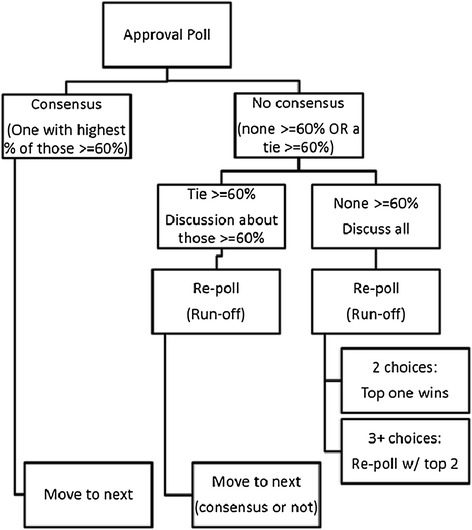
- Consensus voting used approval voting with a ≥60% supermajority threshold, followed by structured discussion and runoff voting when no clear winner emerged.
Limitations
- The paper states that using a different starting taxonomy may have yielded different results; the panel was limited to North America and mostly USA experts; online rather than in-person meetings may have produced less nuanced discussion; and some participants abstained from Round 3 voting for unknown reasons.
- The paper also states content limitations: the evidence base for each strategy was not considered, strategies were not explicitly tied to theories or conceptual models, and some strategies may be more applicable to US or North American settings.
- Evident from the text: the compilation is not intended as a checklist, and the authors note that no implementation effort could feasibly use every strategy; future research is needed to identify contexts and circumstances under which each discrete strategy is effective.
Model-written summary. Check it against the paper before relying on it.
Integrity signals
Registry
Cites
Statistics
Figures
Verification
Claims the paper makes
9 Valid · 0 Not valid · 8 Not checked · 53 Own results and interpretations
The cited sources support only part of this claim — read each source’s verdict below.
In the paper
“Second, published descriptions of implementation strategies too often do not include sufficient detail to enable either scientific or real-world replication [1,6]”
§ A refined compilation of implementation strategies: results from the Expert Recommendations for Implementing Change (ERIC) project > Background
What the sources say
- Could not verifycites [1] Proctor EK Powell BJ McMillen JC Implementation strategies: recommendations for specifying and reporting Implement Sci. 2013 8 1 11 10.1186/1748-5908-8-1 24289295 PMC3882890 sourceExperimental — accuracy not yet measured
Our copy of SENTRY contains no statement that published descriptions of implementation strategies lack sufficient detail for scientific or real-world replication; searched for replication/reproduce, intervention description detail, fidelity, reporting checklist, and generalizability. The closest passages are different points: the Background (p. n/a) notes prior single-centre and high-tech KT studies whose results 'are not applicable to hospitals without the required computer infrastructure' and whose generalizability remains untested, and the Discussion (p. n/a) concedes 'the lack of data on fidelity in the intervention group (i.e., the extent to which the intervention components were used/received as intended)' in their own trial. Neither addresses the adequacy of published reporting of implementation strategies, so this source neither supports nor contradicts the attributed claim. (LLM, conf=0.70)
- Supportedcites [6] Michie S Fixsen DL Grimshaw JM Eccles MP Specifying and reporting complex behaviour change interventions: the need for a scientific method Implement Sci. 2009 4 1 6 10.1186/1748-5908-4-40 19607700 PMC2717906 source
The 'Interventions aren't described' section (What is the problem?) states that published intervention evaluations 'are seldom reported by researchers or practitioners in enough detail to replicate them', and that researchers were less confident they could replicate behavioural interventions and judged they would need more information to deliver them in practice settings — covering both scientific and real-world replication. The Abstract reinforces this: complex behaviour change interventions 'are not well described; when they are described, the terminology used is inconsistent. This constrains scientific replication, and limits the subsequent introduction of successful interventions.' The only slight shift is terminological: this source speaks of 'behaviour change interventions' rather than 'implementation strategies', which the paired citation [6] presumably covers. (LLM, conf=0.88)
plain- Asserted: passes — The authors put it forward as true.
- Checkable: passes — It can be checked against evidence.
- Load-bearing: passes — The paper’s conclusions depend on it.
- Based: passes — The paper gives a reason why it holds.
- Could not verify
The cited sources support only part of this claim — read each source’s verdict below.
In the paper
“However, efforts to identify, develop, and test implementation strategies have been complicated by a lack of conceptual clarity [1,6-9].”
§ A refined compilation of implementation strategies: results from the Expert Recommendations for Implementing Change (ERIC) project > Background
What the sources say
- Could not verifycites [1] Proctor EK Powell BJ McMillen JC Implementation strategies: recommendations for specifying and reporting Implement Sci. 2013 8 1 11 10.1186/1748-5908-8-1 24289295 PMC3882890 sourceExperimental — accuracy not yet measured
The Background describes how the SENTRY intervention was developed, and the Discussion identifies practical barriers to testing and scaling it. The Results say that clinical risk terms such as “immobility” and “sepsis” needed clearer definitions, but no passage found in the search addresses a lack of conceptual clarity about implementation strategies as a complication in identifying, developing, or testing them. (LLM, conf=0.73)
- Supportedcites [6] Michie S Fixsen DL Grimshaw JM Eccles MP Specifying and reporting complex behaviour change interventions: the need for a scientific method Implement Sci. 2009 4 1 6 10.1186/1748-5908-4-40 19607700 PMC2717906 source
In “What is the problem? > Interventions aren't described” (page unavailable), the paper says interventions are often based on unstated or weakly applied models, leaving each new intervention and evaluation relatively isolated. It also says inconsistent terminology makes interventions difficult to distinguish and limits synthesis. Together, these passages support the claim that a lack of conceptual clarity complicates developing and testing implementation strategies. (LLM, conf=0.86)
- Partly supportedcites [7] McKibbon KA Lokker C Wilczynski NL Ciliska D Dobbins M Davis DA A cross-sectional study of the number and frequency of terms used to refer to knowledge translation in a body of health literature in 2006: a tower of Babel? Implement Sci. 2010 5 1 11 10.1186/1748-5908-5-16 21080976 PMC2834600 sourceExperimental — accuracy not yet measured
The Discussion (page unavailable) reports inconsistent terminology and definitions in knowledge translation and says this makes relevant research harder to find and understand. It does not specifically establish that this lack of clarity has complicated identifying, developing, or testing implementation strategies. (LLM, conf=0.84)
- Could not verifycites [8] Colquhoun H Leeman J Michie S Lokker C Bragge P Hempel S Towards a common terminology: a simplified framework of interventions to promote and integrate evidence into health practices, systems, and policies Implement Sci. 2014 9 1 6 10.1186/1748-5908-9-1 24885553 PMC4021969 sourceExperimental — accuracy not yet measured
The Background discusses factors affecting de-implementation and proposes a framework for prioritizing healthcare practices. The Empirical testing section discusses testing health policies, but neither section says that a lack of conceptual clarity has complicated efforts to identify, develop, or test implementation strategies. Searches for that phrase and related terms found no supporting passage in our copy. (LLM, conf=0.72)
- Supportedcites [9] Waltz TJ Powell BJ Chinman MJ Smith JL Matthieu MM Proctor EK Expert Recommendations for Implementing Change (ERIC): protocol for a mixed methods study Implement Sci. 2014 9 1 12 10.1186/1748-5908-9-39 24669765 PMC3987065 source
The Background section, “Lack of conceptual clarity for implementation strategies” (page not provided), says inconsistent terms and definitions hinder interpretation of research, synthesis, and replication. This supports the claim that conceptual ambiguity complicates work to identify, develop, and test implementation strategies. (LLM, conf=0.90)
plainstates a cause- Asserted: passes — The authors put it forward as true.
- Checkable: passes — It can be checked against evidence.
- Load-bearing: passes — The paper’s conclusions depend on it.
- Based: passes — The paper gives a reason why it holds.
- Could not verify
The cited sources support only part of this claim — read each source’s verdict below.
In the paper
“First, terms and definitions for implementation strategies are inconsistent [7,10].”
§ A refined compilation of implementation strategies: results from the Expert Recommendations for Implementing Change (ERIC) project > Background
What the sources say
- Partly supportedcites [7] McKibbon KA Lokker C Wilczynski NL Ciliska D Dobbins M Davis DA A cross-sectional study of the number and frequency of terms used to refer to knowledge translation in a body of health literature in 2006: a tower of Babel? Implement Sci. 2010 5 1 11 10.1186/1748-5908-5-16 21080976 PMC2834600 sourceExperimental — accuracy not yet measured
The Discussion reports inconsistent use of terms in articles about knowledge translation, and the Summary calls for standardizing terms and definitions. The study examines terminology for knowledge translation generally, however; it does not establish that definitions of implementation strategies specifically are inconsistent. The supplied copy gives section labels but no page numbers. (LLM, conf=0.83)
- Supportedcites [10] Powell BJ McMillen JC Proctor EK Carpenter CR Griffey RT Bunger AC A compilation of strategies for implementing clinical innovations in health and mental health Med Care Res Rev. 2012 69 123 57 10.1177/1077558711430690 22203646 PMC3524416 source
The Introduction says implementation strategies are rarely defined and that the terminology used to describe them is inconsistent. The Limitations section likewise describes improving consistency and clarity as an unfinished task. (LLM, conf=0.94)
plain- Asserted: passes — The authors put it forward as true.
- Checkable: passes — It can be checked against evidence.
- Load-bearing: passes — The paper’s conclusions depend on it.
- Based: passes — The paper gives a reason why it holds.
- Partly supported
Every source the paper cites for this claim was checked and supports it.
In the paper
“Powell et al. [10] proposed a consolidated compilation of 68 discrete (as opposed to multifaceted) implementation strategies and definitions based upon a review of the health and mental health literatures.”
§ A refined compilation of implementation strategies: results from the Expert Recommendations for Implementing Change (ERIC) project > Background
What the sources say
- Supportedcites [10] Powell BJ McMillen JC Proctor EK Carpenter CR Griffey RT Bunger AC A compilation of strategies for implementing clinical innovations in health and mental health Med Care Res Rev. 2012 69 123 57 10.1177/1077558711430690 22203646 PMC3524416 source
The Abstract states that the authors present a consolidated compilation of 68 discrete implementation strategies and definitions based on a review of 205 sources. The Introduction identifies health and mental health as the fields covered, and the Discussion distinguishes the discrete strategies from multifaceted implementation plans. (LLM, conf=0.95)
plain- Asserted: passes — The authors put it forward as true.
- Checkable: passes — It can be checked against evidence.
- Load-bearing: passes — The paper’s conclusions depend on it.
- Based: passes — The paper gives a reason why it holds.
- Supported
Every source the paper cites for this claim was checked and supports it.
In the paper
“Powell et al. [10] reviewed 41 compilations and reviews of implementation strategies and summarized them according to their foci and disciplines/clinical specialties that they represented”
§ A refined compilation of implementation strategies: results from the Expert Recommendations for Implementing Change (ERIC) project > Background
What the sources say
- Supportedcites [10] Powell BJ McMillen JC Proctor EK Carpenter CR Griffey RT Bunger AC A compilation of strategies for implementing clinical innovations in health and mental health Med Care Res Rev. 2012 69 123 57 10.1177/1077558711430690 22203646 PMC3524416 source
The Methods (Sources Identified) state that among the 205 sources identified, 41 were 'compilations, taxonomies, or reviews of multiple strategies', and the Introduction states 'For illustrative purposes, we provide brief summaries of 41 reviews and compilations of implementation strategies in Table 1.' The same Introduction section characterizes those sources by their foci — narrow scope on strategies with known effectiveness evidence, on 'specific medical conditions, fields of practice or disciplines', on a setting/study, exemplar programs, one level of target, or one type of strategy — which matches the claim's 'foci and disciplines/clinical specialties'. Only caveat: our copy does not reproduce Table 1's column headings, and the paper's overall review covered 205 sources rather than 41 alone. (LLM, conf=0.85)
plain- Asserted: passes — The authors put it forward as true.
- Checkable: passes — It can be checked against evidence.
- Load-bearing: passes — The paper’s conclusions depend on it.
- Based: passes — The paper gives a reason why it holds.
- Supported
17 more claims · 3 with their cited sources checked
Create a free account to see all 70 claims and to verify the 15 references still open.
- Probably not a substantial claim. 40
- It may state two separate claims as one. 23
- The quote only partly states this claim. 1
Claims other papers make about this one
Each is checked against this paper’s own text: does it say what the citing paper says it does?
The source backs part of the claim, not all of it — or backs it for a different population, condition or comparison.
In the citing paper
“In 2015, the Expert Recommendations for Implementing Change (ERIC) study organized a panel of implementation scientists to compile a standardized set of implementation strategy terms and definitions [2–4].”
From A systematic review of experimentally tested implementation strategies across health and human service settings: evidence from 2010-2022 (2024) · cites this paper as [2]
Experimental — accuracy not yet measuredThe source backs part of the claim, not all of it — or backs it for a different population, condition or comparison.
In the citing paper
“While there has been a rapid increase in the number of implementation trials over the past decade, the quality of trials has been criticised, and the effects of the strategies for such trials on implementation, patient or public health outcomes have been modest [11–13].”
From Guidance for conducting feasibility and pilot studies for implementation trials (2020) · cites this paper as [12]
Experimental — accuracy not yet measuredThe source backs part of the claim, not all of it — or backs it for a different population, condition or comparison.
In the citing paper
“The implementation of a new model of care is an ongoing process, usually lasting between 2 and 4 years [21,22].”
From Implementation of Brief Admission by Self-Referral in Child and Adolescent Psychiatry in Sweden: Insights from Implementers and Staff (2023) · cites this paper as [22]
Experimental — accuracy not yet measuredThe source backs part of the claim, not all of it — or backs it for a different population, condition or comparison.
In the citing paper
“Second, the operations manager was confident about the project, with an attitude that spread throughout the organization and helped us obtain a supportive organization [22].”
From Implementation of Brief Admission by Self-Referral in Child and Adolescent Psychiatry in Sweden: Insights from Implementers and Staff (2023) · cites this paper as [22]
Experimental — accuracy not yet measuredThe cited source says what the claim attributes to it.
In the citing paper
“Several resources can inform the use of implementation strategies, including established taxonomies of implementation strategies (6, 7, 24, 25) and behavior change techniques (27, 28), repositories of systematic reviews (38, 103, 104), methods for selecting and tailoring implementation strategies (40, 55, 56), and reporting guidelines that promote replicability (4, 98–100).”
From Enhancing the Impact of Implementation Strategies in Healthcare: A Research Agenda (2019) · cites this paper as [7]
11 more claims about this paper
Create a free account to see every claim other papers make about this one.
Citations
Cites
Damschroder, L. J., Aron, D. C., Keith, R. E., Kirsh, S. R., Alexander, J. A., & Lowery, J. C. (2009) · Implementation Science · doi:10.1186/1748-5908-4-50 · Cited by 14,496 · cited 3×
“, the Consolidated Framework for Implementation Research [47], Theoretical Domains Framework [48,49], Promoting Action on Research Implementation in Health Services (PARIHS) framework [50]).”
MethodSelf-citationPalinkas, L. A., Horwitz, S. M., Green, C. A., Wisdom, J. P., Duan, N., & Hoagwood, K. (2015) · Administration and Policy in Mental Health and Mental Health Services Research · doi:10.1007/s10488-013-0528-y · Cited by 12,038
Crossing the Quality Chasm: A New Health System for the 21st Century
Baker, A. (2001) · BMJ · doi:10.1136/bmj.323.7322.1192 · Cited by 10,736
Crossing the Quality Chasm: A New Health System for the 21st Century
Committee on Quality of Health Care in America (2002) · Journal For Healthcare Quality · doi:10.1111/j.1945-1474.2002.tb00463.x · Cited by 8,483
Cane, J., O’Connor, D., & Michie, S. (2012) · Implementation Science · doi:10.1186/1748-5908-7-37 · Cited by 4,888 · cited 2×
“, the Consolidated Framework for Implementation Research [47], Theoretical Domains Framework [48,49], Promoting Action on Research Implementation in Health Services (PARIHS) framework [50]).”
MethodFrom best evidence to best practice: effective implementation of change in patients' care
Grol, R., & Grimshaw, J. (2003) · The Lancet · doi:10.1016/s0140-6736(03)14546-1 · Cited by 4,531
Making psychological theory useful for implementing evidence based practice: a consensus approach
Michie, S. (2005) · Quality and Safety in Health Care · doi:10.1136/qshc.2004.011155 · Cited by 3,440 · cited 2×
“, the Consolidated Framework for Implementation Research [47], Theoretical Domains Framework [48,49], Promoting Action on Research Implementation in Health Services (PARIHS) framework [50]).”
MethodImplementation strategies: recommendations for specifying and reporting
Proctor, E. K., Powell, B. J., & McMillen, J. C. (2013) · Implementation Science · doi:10.1186/1748-5908-8-139 · Cited by 2,585 · cited 6×
“Taken together, these two deficiencies complicate the acquisition and interpretation of knowledge, preclude research syntheses such as systematic reviews and meta-analyses, limit replication in both research and practice, and ultimately stymie the translation and application of empirical studies that could inform impl…”
BackgroundMethodInfluentialSelf-citationBero, L. A., Grilli, R., Grimshaw, J. M., Harvey, E., Oxman, A. D., & Thomson, M. A. (1998) · BMJ · doi:10.1136/bmj.317.7156.465 · Cited by 2,396
Welcome to Implementation Science
Eccles, M. P., & Mittman, B. S. (2006) · Implementation Science · doi:10.1186/1748-5908-1-1 · Cited by 2,254
Research works printed but not linked: 4
- Cochrane Effective Practice and Organisation of Care Group Data collection checklist 2002 1 30
- Walter I Nutley S Davies H Developing a taxonomy of interventions used to increase the impact of research 2003 Andrews University of St. Andrews of St. Andrews
- Ryan R Lowe D Santesso N Hill S Development of a taxonomy of interventions directed at consumers to promote evidence-based prescribing and medicines use: a tool for evidence-based decision-making 2010 Melbourne, Australia In National Medicines Symposium
- Shojania KG McDonald KM Wachter RM Owens DK Closing the quality gap: a critical analysis of quality improvement strategies, volume 1—series overview and methodology. Technical review 9 2004 Agency for Healthcare Research and Quality Rockville, MD 20734525
Cited by
Items 201–300 of 1,024
Rositch, A. F., Unger‐Saldaña, K., DeBoer, R. J., Ng’ang’a, A., & Weiner, B. J. (2020) · Cancer · doi:10.1002/cncr.32877 · Cited by 87
Improving clinical practice guidelines with implementation science
Sarkies, M., Jones, L. K., Gidding, S. S., & Watts, G. F. (2021) · Nature Reviews Cardiology · doi:10.1038/s41569-021-00645-x · Cited by 84
Vaccine hesitancy educational tools for healthcare providers and trainees: A scoping review
Lip, A., Pateman, M., Fullerton, M. M., Chen, H. M., Bailey, L., Houle, S., Davidson, S., & Constantinescu, C. (2023) · Vaccine · doi:10.1016/j.vaccine.2022.09.093 · Cited by 74
Iowa Implementation for Sustainability Framework
Cullen, L., Hanrahan, K., Edmonds, S. W., Reisinger, H. S., & Wagner, M. (2022) · Implementation Science · doi:10.1186/s13012-021-01157-5 · Cited by 100
“Phases for implementation differ from steps in the EBP process, though these have been confused [14, 15, 68].”
BackgroundUsing Integrated Research-Practice Partnerships to Move Evidence-Based Principles Into Practice
Estabrooks, P. A., Harden, S. M., Almeida, F. A., Hill, J. L., Johnson, S. B., Porter, G. C., & Greenawald, M. H. (2019) · Exercise and Sport Sciences Reviews · doi:10.1249/jes.0000000000000194 · Cited by 79
Wagenaar, B. H., Hammett, W. H., Jackson, C., Atkins, D. L., Belus, J. M., & Kemp, C. G. (2020) · Global Mental Health · doi:10.1017/gmh.2020.1 · Cited by 71
“…clinical research, the social sciences, public health, economics, political science, industrial engineering, and business to develop, test, and employ implementation strategies – methods to enhance implementation outcomes for evidence-based interventions in routine practice (Proctor et al., 2013).”
MethodDomlyn, A. M., Scott, V. C., Livet, M., Lamont, A. E., Watson, A., Kenworthy, T., Talford, M., Yannayon, M., & Wandersman, A. H. (2021) · Journal of Community Psychology · doi:10.1002/jcop.22531 · Cited by 81
Intervention Optimization: A Paradigm Shift and Its Potential Implications for Clinical Psychology
Collins, L. M., Nahum-Shani, I. B., Guastaferro, K., Strayhorn, J. C., Vanness, D. J., & Murphy, S. A. (2024) · Annual Review of Clinical Psychology · doi:10.1146/annurev-clinpsy-080822-051119 · Cited by 86
Shea, C. M., Young, T. L., Powell, B. J., Rohweder, C. L., Enga, Z., Scott, J. E., Carter‐Edwards, L., & Corbie-Smith, G. M. (2017) · Translational Behavioral Medicine · doi:10.1007/s13142-017-0486-0 · Cited by 86
Self-citationDisengagement From Early Intervention Services for Psychosis: A Systematic Review
Mascayano, F., van der Ven, E., Martínez‐Alés, G., Restrepo, A., Zambrano, J., Jones, N., Cabassa, L. J., Smith, T. E., Yang, L. H., Susser, E., et al. (2020) · Psychiatric Services · doi:10.1176/appi.ps.201900375 · Cited by 87
Rogers, H. L., Hernando, S. P., Núñez-Fernández, S., Sánchez, Á., Martos, C., Moreno, M., & Grandes, G. (2021) · Journal of Health Organization and Management · doi:10.1108/jhom-12-2020-0512 · Cited by 82
“Barriers and facilitators of health promotion The Eric strategies list was compiled through amodified Delphi process including 169 expert implementation scientists and practitioners (Perry et al., 2019; Powell et al., 2015; Waltz et al., 2015).”
MethodGagliardi, A. R., Légaré, F., Brouwers, M. C., Webster, F., Badley, E., & Straus, S. (2015) · Implementation Science · doi:10.1186/s13012-016-0389-3 · Cited by 71
“The Expert Recommendations for Implementing Change initiative consolidated numerous existing taxonomies of implementation strategies with input from experts [20].”
BackgroundQuanbeck, A., Brown, R., Zgierska, A. E., Jacobson, N. A., Robinson, J. M., Johnson, R. A., Deyo, B. M. F., Madden, L. M., Tuan, W., & Alagöz, E. (2018) · Implementation Science · doi:10.1186/s13012-018-0713-1 · Cited by 81
Gruß, I., Bunce, A., Davis, J., Dambrun, K., Cottrell, E., & Gold, R. (2021) · Population Health Management · doi:10.1089/pop.2019.0205 · Cited by 72
“26 The present study observed that the use of pilot teams, target populations, and testing several screening questionnaires or modes were effective implementation strategies in the study CHCs. Selecting a single team to pilot SDH data collection provided an opportunity to reflect and respond to…”
InfluentialBricker, D. D., Felimban, H., Lin, F.-Y., Stegenga, S. M., & Storie, S. (2020) · Topics in Early Childhood Special Education · doi:10.1177/0271121419890683 · Cited by 90
“These supports, also known as implementation strategies or implementation drivers, may include follow-up coaching, additional time for learning new teaming and collaboration processes, and additional training or resources in areas of need that emerge (Powell et al., 2015).”
BackgroundLeo, A. D., Bayes, S. J., Bloxsome, D., & Butt, J. (2021) · Implementation Science Communications · doi:10.1186/s43058-020-00100-x · Cited by 85
Crable, E. L., Benintendi, A., Jones, D. K., Walley, A. Y., Milton, J. N., & Drainoni, M. (2022) · Implementation Science · doi:10.1186/s13012-021-01182-4 · Cited by 80
“Original ERIC strategies were derived from Delphi processes with implementation science experts [42].”
MethodGupta, A., Alston, L. V., Needham, C., Robinson, E., Marshall, J. M., Boelsen‐Robinson, T., Blake, M. R., Huggins, C. E., & Peeters, A. (2022) · Nutrients · doi:10.3390/nu14020294 · Cited by 81
“Previous studies have shown that providing ongoing business training and technical assistance (offered by trained professionals) to retailers may help raise awareness and enhance skills and preferences of retailers to stock a range of healthy products [43,44].”
BackgroundHarris, C., Green, S., & Elshaug, A. G. (2017) · BMC Health Services Research · doi:10.1186/s12913-017-2506-7 · Cited by 83
Real-Time Debriefing After Critical Events
Arriaga, A. F., Szyld, D., & Pian-Smith, M. C. M. (2020) · Anesthesiology Clinics · doi:10.1016/j.anclin.2020.08.003 · Cited by 81
“The Consolidated Framework for Implementation Research, the Expert Recommendation for Implementing Change, and Gagliardi and colleagues(71) publications have offered implementation strategy typologies, terms, checklists and/or definitions for those seeking a much more comprehensive list to consider for applicability (…”
Schults, J. A., Kleidon, T. M., Chopra, V., Cooke, M. L., Paterson, R., Ullman, A. J., Marsh, N. M., Ray‐Barruel, G., Hill, J. G., Devrim, İ., et al. (2020) · BMJ Quality & Safety · doi:10.1136/bmjqs-2020-011274 · Cited by 72
“18 This method is increasingly used to attain consensus regarding core outcomes in clinical trials, 19 implementation strategies 20 and MDS. 16 21 Written consent was waived for survey participants as participation implied consent, and written informed consent was obtained from Round 3 consensus…”
Forman‐Hoffman, V. L., Middleton, J. C., McKeeman, J. L., Stambaugh, L. F., Christian, R. B., Gaynes, B. N., Kane, H., Kahwati, L. C., Lohr, K. N., & Viswanathan, M. (2017) · Implementation Science · doi:10.1186/s13012-017-0626-4 · Cited by 98
“New taxonomies are continually emerging, such as the revised EPOC taxonomy [63] and the refined compilation of implementation strategies from the Expert Recommendations for Implementing Change (ERIC) project [64].”
MethodMajid, U., Kim, C., Cako, A., & Gagliardi, A. R. (2018) · PLoS ONE · doi:10.1371/journal.pone.0209826 · Cited by 85
How Practice Facilitation Strategies Differ by Practice Context
Nguyen, A. M., Cuthel, A. M., Padgett, D. K., Niles, P. M., Rogers, E., Pham-Singer, H., Ferran, D., Kaplan, S. A., Berry, C. A., & Shelley, D. (2019) · Journal of General Internal Medicine · doi:10.1007/s11606-019-05350-7 · Cited by 70
Grounding implementation science in health equity for cancer prevention and control
Adsul, P., Chambers, D., Brandt, H. M., Fernández, M. E., Ramanadhan, S., Torres, E., Leeman, J., Baquero, B. I., Fleisher, L. G., Escoffery, C., et al. (2022) · Implementation Science Communications · doi:10.1186/s43058-022-00311-4 · Cited by 72
“Since the push in 2013 for reporting and specifying implementation strategies [99], the field has progressed tremendously with the introduction of the Expert Recommendations for Implementing Change (ERIC) taxonomy [100], with calls for more focus on effectiveness research evaluating discrete implementation strategies…”
BackgroundBaffsky, R., Ivers, R., Cullen, P., Wang, J., McGillivray, L., & Torok, M. (2023) · Prevention Science · doi:10.1007/s11121-022-01434-9 · Cited by 60
Vandervelde, S., Vlaeyen, E., de Casterlé, B. D., Flamaing, J., Valy, S., Meurrens, J., Poels, J., Himpe, M., Belaen, G., & Milisen, K. (2023) · Implementation Science · doi:10.1186/s13012-022-01257-w · Cited by 84
Bullock, H. L., & Lavis, J. N. (2019) · Health Research Policy and Systems · doi:10.1186/s12961-019-0479-1 · Cited by 83
Kemp, C. G., Wagenaar, B. H., & Haroz, E. E. (2019) · Frontiers in Public Health · doi:10.3389/fpubh.2019.00325 · Cited by 63
“We define implementation strategy as a specific approach to facilitate, strengthen, and/or sustain the delivery of interventions in real-world settings (3, 4, 6).”
BackgroundToward the data-driven dissemination of findings from psychological science.
Purtle, J., Marzalik, J. S., Halfond, R. W., Bufka, L. F., Teachman, B. A., & Aarons, G. A. (2020) · American Psychologist · doi:10.1037/amp0000721 · Cited by 70
“A refined compilation of implementation strategies: results from the Expert Recommendations for Implementing Change (ERIC) project.”
Schleider, J. L., & Beidas, R. S. (2022) · Frontiers in Health Services · doi:10.3389/frhs.2022.997406 · Cited by 65
“These design features involve (1) including scientific evidence and social-norming data to normalize the users’ experiences and boost message credibility; (2) empowering users as “experts;” (3) allowing users to share back what they learn during the intervention, to help others in their community navigate similar chal…”
BackgroundLocke, J. J., Lee, K., Cook, C. R., Frederick, L., Vázquez-Colón, C. A., Ehrhart, M. G., Aarons, G. A., Davis, C. J., & Lyon, A. R. (2018) · School Mental Health · doi:10.1007/s12310-018-9292-1 · Cited by 80
Roberts, M. C., Mensah, G. A., & Khoury, M. J. (2019) · Ethnicity & Disease · doi:10.18865/ed.29.s1.187 · Cited by 68
Dissemination and Implementation of Evidence‐Based Dementia Care Using Embedded Pragmatic Trials
Gitlin, L. N., Baier, R. R., Jutkowitz, E., Baker, Z. G., Gustavson, A. M., Sefcik, J. S., Hodgson, N. A., Koeuth, S., & Gaugler, J. E. (2020) · Journal of the American Geriatrics Society · doi:10.1111/jgs.16622 · Cited by 63
“Strategies are clustered into nine themes: (1) use evaluative and iterative strategies, (2) provide interactive assistance, (3) adapt and tailor to context, (4) develop stakeholder interrelationships, (5) train and educate stakeholders, (6) support clinicians, (7) engage consumers, (8) utilize financial strategies, an…”
BackgroundMethodLyon, A. R., Whitaker, K. M., Locke, J. J., Cook, C. R., King, K. M., Duong, M. T., Davis, C. J., Weist, M. D., Ehrhart, M. G., & Aarons, G. A. (2018) · Implementation Science · doi:10.1186/s13012-018-0721-1 · Cited by 67
“Improving the efficiency, speed, and sustainment of EBP implementation requires research on the mechanisms through which multiple organizations impact implementation outcomes, yet no empirical evidence on these mechanisms exists to date [2, 14, 68, 69].”
BackgroundHaines, E. R., Dopp, A. R., Lyon, A. R., Witteman, H. O., Bender, M., Vaisson, G., Hitch, D., & Birken, S. A. (2021) · Implementation Science Communications · doi:10.1186/s43058-021-00147-4 · Cited by 71
“the adoption, implementation, and sustainability” of EBPs [12, 13].”
BackgroundImplementation Science Research in Communication Sciences and Disorders: A Scoping Review
Douglas, N., Feuerstein, J. L., Oshita, J. Y., Schliep, M. E., & Danowski, M. (2022) · American Journal of Speech-Language Pathology · doi:10.1044/2021_ajslp-21-00126 · Cited by 69
McHugh, S., Presseau, J., Luecking, C. T., & Powell, B. J. (2022) · Implementation Science · doi:10.1186/s13012-022-01227-2 · Cited by 75
“, what organizational units are affected), (3) timeframe and milestones, and (4) appropriate performance/progress measures [7].”
BackgroundMethodInfluentialSelf-citationOminyi, J., Nwedu, A. B., Agom, D. A., & Eze, U. (2025) · BMC Nursing · doi:10.1186/s12912-025-02912-5 · Cited by 85
“In low-resource settings, where staffing shortages and financial constraints are more pronounced, the directive leadership style observed at Site 1 may be more applicable, as clear decision-making structures help mitigate the impact of limited resources [40, 53].”
RetractedThe effectiveness of guideline implementation strategies in the dental setting: a systematic review
Villarosa, A. R., Maneze, D., Ramjan, L. M., Srinivas, R., Camilleri, M., & George, A. (2019) · Implementation Science · doi:10.1186/s13012-019-0954-7 · Cited by 74
Storesund, A., Haugen, A. S., Flaatten, H. K., Nortvedt, M. W., Eide, G. E., Boermeester, M. A., Sevdalis, N., Tveiten, Ø. V., Mahesparan, R., Hjallen, B. M., et al. (2020) · JAMA Surgery · doi:10.1001/jamasurg.2020.0989 · Cited by 69
Balis, L. E., Houghtaling, B., & Harden, S. M. (2022) · Translational Behavioral Medicine · doi:10.1093/tbm/ibac061 · Cited by 63
Forrester, J. A., Starr, N. E., Mammo, T. N., Schaps, D., Adem, M. I., Alemu, S. G., Amenu, D., Gebeyehu, N., Habteyohannes, T., Jiru, F., et al. (2020) · British journal of surgery · doi:10.1002/bjs.11997 · Cited by 68
“It leverages current concepts in implementation science, such as discrete implementation strategies, while also ensuring that specific implementation outcomes, such as acceptability and sustainability, are considered as the programme is adapted 9,10 .”
BackgroundEvidence-based practice implementation in healthcare in China: a living scoping review
Zhao, J., Bai, W., Zhang, Q., Su, Y., Wang, J., Xiao-ning, D., Zhou, Y., Kong, C., Qing, Y., Gong, S., et al. (2022) · The Lancet Regional Health - Western Pacific · doi:10.1016/j.lanwpc.2021.100355 · Cited by 81
Patey, A. M., Fontaine, G., Francis, J., McCleary, N., Presseau, J., & Grimshaw, J. (2022) · Psychology and Health · doi:10.1080/08870446.2022.2100887 · Cited by 77
“The Expert Recommendations of Implementation Strategies (ERIC) taxonomy is a list of 73 discrete strategies that can serve as ‘building blocks’ for constructing multifaceted, multilevel interventions for to change HCP behaviour (Powell et al., 2015).”
Chriqui, J. F., Asada, Y., Smith, N., Kroll‐Desrosiers, A., & Lemon, S. C. (2023) · Translational Behavioral Medicine · doi:10.1093/tbm/ibad034 · Cited by 77
“Likewise, studies to examine implementation strategies have embraced compilations such as the widely used Expert Recommendations for Implementing Change (ERIC) project which identified 73 strategies to support the implementation of interventions [8].”
BackgroundGarbutt, J. M., Dodd, S., Walling, E., Lee, A. A., Kulka, K., & Lobb, R. (2018) · Implementation Science · doi:10.1186/s13012-018-0729-6 · Cited by 75
“, barrier or facilitator from CFIR-guided analysis [3] Theoretical domain and techniques for behavior change from TDF-guided analysis [20] Implementation strategy [19]”
Powell, B. J., Patel, S. V., Haley, A. D., Haines, E. R., Knocke, K., Chandler, S., Katz, C. C., Seifert, H. T. P., Ake, G. S., Amaya-Jackson, L. M., et al. (2019) · Administration and Policy in Mental Health and Mental Health Services Research · doi:10.1007/s10488-019-01003-3 · Cited by 69
Self-citationLocke, J., Beidas, R. S., Marcus, S., Stahmer, A., Aarons, G. A., Lyon, A. R., Cannuscio, C., Barg, F., Dorsey, S., & Mandell, D. S. (2016) · Implementation Science · doi:10.1186/s13012-016-0501-8 · Cited by 62
“) as well as devise or adapt potential implementation strategies identified in Powell and colleagues (2015) with our school collaborators [61].”
BackgroundFour very basic ways to think about policy in implementation science
Purtle, J., Moucheraud, C., Yang, L. H., & Shelley, D. (2023) · Implementation Science Communications · doi:10.1186/s43058-023-00497-1 · Cited by 68
“…Change compendium (e.g., strategies such as “mandate change,” “change liability laws,” “change accreditation or membership require-ments”) [54], “policy categories” in the Behavior Change Wheel (e.g., “legislation, “regulation,” “fiscal measures”) [55], and the Policy Ecology Framework…”
Mazzucca, S., Tabak, R. G., Pilar, M., Ramsey, A. T., Baumann, A. A., Kryzer, E., Lewis, E. M., Padek, M., Powell, B. J., & Brownson, R. C. (2018) · Frontiers in Public Health · doi:10.3389/fpubh.2018.00032 · Cited by 63
“We used previous work by Powell and colleagues to categorize implementation strategies (27) to represent both D&I strategies within this review, since there has been more work done to articulate and categorize implementation strategies compared with dissemination strategies and there is likely a high amount of overlap…”
MethodSelf-citationThe case for prioritizing implementation strategy fidelity measurement: benefits and challenges
Akiba, C. F., Powell, B. J., Pence, B. W., Nguyen, M. X. B., Golin, C., & Go, V. (2022) · Translational Behavioral Medicine · doi:10.1093/tbm/ibab138 · Cited by 59
“Implementation strategies span multiple levels and categories [13, 14].”
BackgroundSelf-citationEdwards, J., Coward, M., & Carey, N. (2022) · BMJ Open · doi:10.1136/bmjopen-2021-052227 · Cited by 78
Strategies to adapt and implement health system guidelines and recommendations: a scoping review
Breneol, S., Curran, J., Marten, R., Minocha, K., Johnson, C., Wong, H., Langlois, É. V., Wozney, L., Vélez, C. M., Cassidy, C. E., et al. (2022) · Health Research Policy and Systems · doi:10.1186/s12961-022-00865-8 · Cited by 78
Breathett, K. K., Lewsey, S. C., Brownell, N. K., Enright, K. J., Evangelista, L. S., Ibrahim, N. E., Iturrizaga, J. C., Matlock, D. D., Ogunniyi, M. O., Sterling, M. R., et al. (2024) · Circulation · doi:10.1161/cir.0000000000001231 · Cited by 67
“67–69 Most of the studies presented sought to use evaluative and iterative strategies to intentionally re-examine the intervention and continually improve it; support clinicians and health care professionals through clinical reminders and revised professional roles; change infrastructure, often…”
BackgroundLessons Learned When Introducing Pharmacogenomic Panel Testing into Clinical Practice
Rosenman, M. B., Decker, B. S., Levy, K. D., Holmes, A. M., Pratt, V. M., & Eadon, M. T. (2016) · Value in Health · doi:10.1016/j.jval.2016.08.727 · Cited by 67
Regan, J., Lau, A. S., Barnett, M. L., Stadnick, N. A., Hamilton, A., Pesanti, K., Bando, L., & Brookman-Frazee, L. I. (2017) · BMC Health Services Research · doi:10.1186/s12913-017-2613-5 · Cited by 66
“Regarding the outer context, LACDMH employed a number of systemlevel implementation strategies identified by these studies [8, 9] primarily in the categories of utilizing financial strategies, developing stakeholder relationships, using evaluative and iterative strategies, and providing interactive assistance.”
BackgroundMethodDorsey, S., Kerns, S. E. U., Lucid, L., Pullmann, M. D., Harrison, J. P., Berliner, L., Thompson, K., & Deblinger, E. (2018) · Implementation Science · doi:10.1186/s13012-017-0708-3 · Cited by 67
“as “providing clinicians with ongoing supervision focusing on the innovation” [1].”
BackgroundMurrell, J. E., Pisegna, J. L., & Juckett, L. A. (2021) · Implementation Science · doi:10.1186/s13012-021-01178-0 · Cited by 60
“[28] Studies (N = 26) Implementation strategies (N = 150) Discrete ISc within cluster ERIC thematic cluster n % n % N n % ERIC taxonomy of implementation strategiesd 1 Use evaluative and iterative strategies 17 65 31 21 10 9 90 Assess for readiness and identify barriers and facilitators | Audit and provide feedback |…”
MethodShea, C. M., Turner, K. L., Albritton, J., & Reiter, K. L. (2018) · Health Care Management Review · doi:10.1097/hmr.0000000000000194 · Cited by 71
“…and other strategies that facilitate information sharing and cross-understanding between roles, for example, having team meetings with designated time to reflect on QI implementation (Farr & Cressey, 2015), or creating a glossary that defines key terms of the QI initiative (Powell et al., 2015).”
BackgroundPragmatic trials and implementation science: grounds for divorce?
Pawson, R. (2019) · BMC Medical Research Methodology · doi:10.1186/s12874-019-0814-9 · Cited by 65
Thillainadesan, J., Aitken, S., Monaro, S. R., Cullen, J. S., Kerdic, R., Hilmer, S. N., & Naganathan, V. (2021) · Journal of the American Medical Directors Association · doi:10.1016/j.jamda.2021.09.037 · Cited by 65
Schroeder, D. M., Luig, T., Finch, T. L., Beesoon, S., & Campbell-Scherer, D. L. (2022) · Implementation Science Communications · doi:10.1186/s43058-022-00264-8 · Cited by 70
Markle‐Reid, M., Fisher, K., Walker, K. M., Beauchamp, M., Cameron, J. I., Dayler, D., Fleck, R., Gafni, A., Ganann, R., Hajas, K., et al. (2023) · BMC Geriatrics · doi:10.1186/s12877-023-04403-1 · Cited by 69
“Monthly out-reach meetings were conducted to enable the principal investigators, the research coordinator, and the intervention teams to support and monitor intervention implementation and strategize to address any challenges [62].”
BackgroundGuerrero, E. G., Padwa, H., Fenwick, K. M., Harris, L. M., & Aarons, G. A. (2015) · Implementation Science · doi:10.1186/s13012-016-0438-y · Cited by 75
“Overall, findings contribute to the emerging literature on identifying new and refining existing strategies to build practitioners’ capacity to implement EBPs in community-based healthcare settings [67, 68].”
BackgroundEstimating Costs of an Implementation Intervention
Wagner, T. H., Yoon, J., Jacobs, J. C., So, A., Kilbourne, A. M., Yu, W., & Goodrich, D. E. (2020) · Medical Decision Making · doi:10.1177/0272989x20960455 · Cited by 59
Owoeye, O. B. A., Rauvola, R. S., & Brownson, R. C. (2020) · BMJ Open Sport & Exercise Medicine · doi:10.1136/bmjsem-2020-000974 · Cited by 71
Goedken, C. C., Livorsi, D. J., Sauder, M., Weg, M. W. V., Chasco, E. E., Chang, N.-C. N., Perencevich, E. N., & Reisinger, H. S. (2019) · Implementation Science · doi:10.1186/s13012-019-0943-x · Cited by 72
“For this reason, we compared their utilization of the term to that used by implementation experts [9].”
BackgroundInfluentialUse of Intervention Mapping to Enhance Health Care Professional Practice: A Systematic Review
Durks, D., Fernandez-Llimos, F., Hossain, L. N., Franco-Trigo, L., Benrimoj, S. I., & Sabater-Hernández, D. (2017) · Health Education & Behavior · doi:10.1177/1090198117709885 · Cited by 59
Implementing Exercise in Healthcare Settings: The Potential of Implementation Science
Czosnek, L., Rankin, N. M., Zopf, E. M., Richards, J. A., Rosenbaum, S., & Cormie, P. (2019) · Sports Medicine · doi:10.1007/s40279-019-01228-0 · Cited by 65
Smith, S. L., Franke, M. F., Rusangwa, C., Mukasakindi, H., Nyirandagijimana, B., Bienvenu, R., Uwimana, E., Uwamaliya, C., Ndikubwimana, J. S., Dorcas, S., et al. (2020) · PLoS ONE · doi:10.1371/journal.pone.0228854 · Cited by 65
Metz, A. J. R., Jensen, T. M., Farley, A. B., & Boaz, A. (2022) · Implementation Research and Practice · doi:10.1177/26334895221105585 · Cited by 73
“Taxonomies such as the compilation produced by the Expert Recommendations for Implementing Change project (Powell, et al., 2012; Powell et al., 2015) are valuable implementation tools as they support the selection, use, and improvement of implementation strategies to achieve implementation outcomes in a range of conte…”
MethodBalis, L. E., & Houghtaling, B. (2023) · Implementation Science Communications · doi:10.1186/s43058-023-00532-1 · Cited by 61
“ERIC is a compilation of implementation strategies developed through a multi-phase Delphi process with experts in clinical implementation research [5].”
BackgroundMethodInfluentialEbben, R. H. A., Siqeca, F., Madsen, U. R., Vloet, L. C. M., & van Achterberg, T. (2018) · BMJ Open · doi:10.1136/bmjopen-2017-017572 · Cited by 72
van Oers, H. A., Teela, L., Schepers, S. A., Grootenhuis, M. A., & Haverman, L. (2020) · Quality of Life Research · doi:10.1007/s11136-020-02586-3 · Cited by 63
Stahmer, A. C., Dababnah, S., & Rieth, S. R. (2019) · Pediatric Medicine · doi:10.21037/pm.2019.05.01 · Cited by 57
Gaias, L. M., Arnold, K. T., Liu, F. F., Pullmann, M. D., Duong, M. T., & Lyon, A. R. (2021) · Psychology in the Schools · doi:10.1002/pits.22515 · Cited by 89
“Building on work conducted in healthcare, Cook, Lyon, and colleagues (C. R. Cook et al., 2019; Lyon et al., 2019) adapted a leading compilation of implementation strategies (Expert Recommendations for Implementing Change [ERIC]; Powell et al., 2015) for schools.”
MethodStrengthening methods for tracking adaptations and modifications to implementation strategies
Haley, A. D., Powell, B. J., Walsh‐Bailey, C., Krancari, M., Gruß, I., Shea, C. M., Bunce, A., Marino, M., Frerichs, L., Lich, K. H., et al. (2021) · BMC Medical Research Methodology · doi:10.1186/s12874-021-01326-6 · Cited by 69
“We used the Expert Recommendations for Implementing Change (ERIC) taxonomy of 73 discrete implementation strategies, and research building on ERIC, to categorize these strategies [3, 8].”
BackgroundMethodSelf-citationThe Coming of Age of Implementation Science and Research in Critical Care Medicine
Barr, J., Paulson, S. S., Kamdar, B. B., Ervin, J. N., Lane-Fall, M. B., Liu, V. X., & Kleinpell, R. M. (2021) · Critical Care Medicine · doi:10.1097/ccm.0000000000005131 · Cited by 67
Blum, M., Goldstein, N. E., Jaarsma, T., Allen, L. A., & Gelfman, L. P. (2023) · European Journal of Heart Failure · doi:10.1002/ejhf.2981 · Cited by 69
Miklavcic, J. J., Fraser, K. D., Ploeg, J., Markle‐Reid, M., Fisher, K., Gafni, A., Griffith, L. E., Hirst, S. P., Sadowski, C. A., Thabane, L., et al. (2020) · BMC Geriatrics · doi:10.1186/s12877-020-01557-0 · Cited by 63
Roberts, N. A., Janda, M., Stover, A. M., Alexander, K. E., Wyld, D., & Mudge, A. (2020) · Quality of Life Research · doi:10.1007/s11136-020-02669-1 · Cited by 68
“Implementation science theories systematise barriers so they can be linked to the broader implementation literature [47], directly link barriers to evidence-based support strategies [48] and provide a way to examine contextual factors influencing implementation (e.”
BackgroundExtending analytic methods for economic evaluation in implementation science
O’Leary, M. C., Lich, K. H., Frerichs, L., Leeman, J., Reuland, D. S., & Wheeler, S. B. (2022) · Implementation Science · doi:10.1186/s13012-022-01192-w · Cited by 63
“In this case, the implementation strategy being employed is modeling and simulating change to motivate adoption of a range of EBIs [28].”
BackgroundMethodInfluentialConceptual tensions and practical trade-offs in tailoring implementation interventions
McHugh, S., Riordan, F., Curran, G. M., Lewis, C. C., Wolfenden, L., Presseau, J., Lengnick‐Hall, R., & Powell, B. J. (2022) · Frontiers in Health Services · doi:10.3389/frhs.2022.974095 · Cited by 69
“In a study by Schroeck et al. (38) researchers “cross walked” all possible ERIC strategies against determinants that were coded using the TICD framework.”
BackgroundSelf-citationRecommendations for Research and Practice to Improve Work Outcomes Among Cancer Survivors
de Moor, J. S., Alfano, C. M., Kent, E. E., Norton, W. E., Coughlan, D., Roberts, M. C., Grimes, M., & Bradley, C. J. (2018) · JNCI Journal of the National Cancer Institute · doi:10.1093/jnci/djy154 · Cited by 59
“Strategies may include traditional dissemination outlets, such as publications and use of social media to target end-users, but will likely require more intensive efforts to reach full integration into healthcare delivery and employer-based settings (77).”
BackgroundLeppla, L., Mielke, J., Kunze, M., Mauthner, O. E., Teynor, A., Valenta, S., Vanhoof, J. M. M., Dobbels, F., Berben, L., Zeiser, R., et al. (2020) · European Journal of Oncology Nursing · doi:10.1016/j.ejon.2020.101723 · Cited by 69
Selecting and tailoring implementation interventions: a concept mapping approach
Kwok, E. Y. L., Moodie, S., Cunningham, B. J., & Cardy, J. O. (2020) · BMC Health Services Research · doi:10.1186/s12913-020-05270-x · Cited by 67
Huang, K., Kwon, S. C., Cheng, S., Kamboukos, D. M., Shelley, D., Brotman, L. M., Kaplan, S. A., Ogedegbe, O., & Hoagwood, K. (2018) · Frontiers in Public Health · doi:10.3389/fpubh.2018.00190 · Cited by 65
“, factors and processes for three levels of PEC); (2) identifying relevant studies/literature; (3) study selection; (4) charting the data; and (5) collating, summarizing, and reporting results.”
BackgroundMethodInfluentialClosing the Science–Practice Gap in Implementation Before It Widens
Lyon, A. R., Comtois, K. A., Kerns, S. E. U., Landes, S. J., & Lewis, C. C. (2020) · Springer eBooks · doi:10.1007/978-3-030-03874-8_12 · Cited by 63
Ardito, V., Golubev, G., Ciani, O., & Tarricone, R. (2023) · JMIR Cancer · doi:10.2196/42092 · Cited by 56
“In addition, elaborating on implementation strategies, such as those described by the ERIC taxonomy Powell et al [149], seemed premature and was not performed.”
MethodShelton, R. C., Brotzman, L., Johnson, D., & Erwin, D. O. (2021) · Ethnicity & Disease · doi:10.18865/ed.31.1.119 · Cited by 57
Seroprevalence of Toxoplasma gondii infection in goats and sheep in Zimbabwe
Hove, T., Lind, P., & Mukaratirwa, S. (2005) · Onderstepoort Journal of Veterinary Research · doi:10.4102/ojvr.v72i4.175 · Cited by 66
Understanding VA’s Use of and Relationships With Community Care Providers Under the MISSION Act
Mattocks, K. M., Kroll‐Desrosiers, A., Kinney, R. L., Elwy, A. R., Cunningham, K. J., & Mengeling, M. A. (2021) · Medical Care · doi:10.1097/mlr.0000000000001545 · Cited by 57
“This critical strategy of stakeholder buy-in is essential for successful implementation 13 of VA ’ s expanded community care program, especially because in some areas there are fewer alternative providers to partner with.”
BackgroundAlignment in implementation of evidence-based interventions: a scoping review
Lundmark, R., Hasson, H., Richter, A., Khachatryan, E., Åkesson, A., & Eriksson, L. (2021) · Implementation Science · doi:10.1186/s13012-021-01160-w · Cited by 69
Advancing the use of organization theory in implementation science
Leeman, J., Baquero, B., Bender, M., Choy-Brown, M., Ko, L. K., Nilsen, P., Wangen, M., & Birken, S. A. (2019) · Preventive Medicine · doi:10.1016/j.ypmed.2019.105832 · Cited by 53
“These may include distributing patient education materials or developing reminder systems (Powell et al., 2015).”
BackgroundInfluentialWhite, M. C., Peven, K., Clancy, O., Okonkwo, I., Bakolis, I., Russ, S. J., Leather, A. J. M., & Sevdalis, N. (2020) · Annals of Surgery · doi:10.1097/sla.0000000000003944 · Cited by 64
Shidhaye, R. R. (2023) · Current Opinion in Psychology · doi:10.1016/j.copsyc.2023.101661 · Cited by 69
Schoffelen, T., Papan, C., Carrara, E., Eljaaly, K., Paul, M., Keuleyan, E. E., Martín‐Quirós, A., Peiffer‐Smadja, N., Palos, C., May, L. S., et al. (2024) · Clinical Microbiology and Infection · doi:10.1016/j.cmi.2024.05.014 · Cited by 65
Rogal, S. S., Yakovchenko, V., Waltz, T. J., Powell, B. J., Gonzalez, R., Park, A., Chartier, M., Ross, D., Morgan, T. R., Kirchner, J. E., et al. (2019) · Implementation Science · doi:10.1186/s13012-019-0881-7 · Cited by 52
Self-citationLovero, K. L., Kemp, C. G., Wagenaar, B. H., Giusto, A., Greene, M. C., Powell, B. J., & Proctor, E. K. (2023) · Implementation Science · doi:10.1186/s13012-023-01310-2 · Cited by 52
“…research in any language that cited either (1) the original implementation strategies compilation paper [23], (2) the ERIC compilation [21], or (3) the strategy categorization [24], or that mentioned the ‘Expert Recommendations for Implementing Change’ or ‘ERIC’ in the title or…”
MethodInfluentialSelf-citation
Metadata
- Authors
- Powell, B. J., Waltz, T. J., Chinman, M. J., Damschroder, L. J., Smith, J. L., Matthieu, M. M., Proctor, E. K., & Kirchner, J. E.
- Affiliations
- University of Pennsylvania (US)
- Eastern Michigan University (US)
- RAND Corporation (US)
- VA Ann Arbor Healthcare System (US)
- Central Arkansas Veterans Healthcare System (US)
- Washington University in St. Louis (US)
- Corresponding author
- Powell, Byron J
- ORCID
- Venue
- Implementation Science
- Published
- 2015-02-12
- Volume
- 10
- Issue
- 1
- Pages
- 21-21
- ISSN
- 1748-5908 (ISSN-L)
- PMC
- PMC4328074
- OpenAlex
- W2010049072
- Cited by
- 4,963
- References
- 62
- Citations by year
- 2026: 687 · 2025: 734 · 2024: 800 · 2023: 659 · 2022: 645 · 2021: 576 · 2020: 357 · 2019: 217 · 2018: 142 · 2017: 77 · 2016: 43 · 2015: 20
- FWCI
- 171.87
- Type
- journal article
- Language
- en
- Open access
- gold
- doi.org
- Locations
- Implementation Science (publishedVersion, cc-by)
- Europe PMC (PubMed Central) (publishedVersion, cc-by)
- PubMed Central (publishedVersion, cc-by)
- PubMed (publishedVersion)
- Funders
- U.S. Department of Veterans Affairs (VISN4 MIRECC)
- Doris Duke Charitable Foundation
- Purdue University
- University of Pennsylvania
- Health Services Research and Development (QLP 55-025)
- University of Minnesota (55-025)
- Washington University in St. Louis
- University of Washington
- Johns Hopkins University
- Indiana University-Purdue University Indianapolis
- University of Arkansas for Medical Sciences
- Fahs-Beck Fund for Research and Experimentation
- Saint Louis University
- University of Massachusetts Boston
- Eastern Michigan University
- University of Toronto
- Quality Enhancement Research Initiative
- University of California, Los Angeles
- Perelman School of Medicine, University of Pennsylvania
- VISN 4 Mental Illness Research, Education, and Clinical Center
- National Institute of Mental Health (F31MH098478)
- National Institute of Diabetes and Digestive and Kidney Diseases (P30DK092950)
- NIH Clinical Center
- Topics
- Health Sciences › Health Professions › General Health Professions › Health Policy Implementation Science
- Social Sciences › Sociology and Political Science › Delphi Technique in Research
- Health Sciences › Health Professions › General Health Professions › Health Sciences Research and Education
- Keywords
- implementation strategies, Expert Recommendations for Implementing Change, terminology and definitions, expert consensus, Delphi method, stakeholder feedback, contextual support
- MeSH terms
- Delphi Technique, Humans, Organizational Innovation, Program Development, Quality Improvement
About these checks
Registry, retraction, Cites and statistics results are computed, not judged, with one exception: a printed reference that no index lists is read once by a model before it counts as a citation error. Claims are extracted by a model and kept only when their quote appears verbatim in the text; each cited source is then checked, with a model’s help, for whether it says what the claim relies on. Those verdicts can be wrong — read the claim’s quote and the cited source before relying on one.
The claim verdicts this report counts are experimental: their accuracy is not yet measured.
A language model drew the claims from the paper on 2026-10-05, under version 3 of the claim definition (model deepseek-v4.1-flash, prompt extract-v3).
A second model labelled each claim on 2026-10-05 (model jev-1.13-20260917, definition revision gold-guideline-v0.2).
Cited sources are checked with a language model’s help (qwen3.8-omni-flash and gpt-6-sol).
Statistics and arithmetic are recomputed, not judged.
Confidence bands are shown only for fields calibrated on our annotated test set. None is calibrated yet, so no band is shown.
What counts as a claim ›How we measure confidence ›How we check this ›
Are you an author, or do you see a problem with this page? Request a review
Data sources
Bibliographic data: Semantic Scholar, OpenAlex, Crossref.
Contains information from the Semantic Scholar Academic Graph Datasets, made available under the ODC Attribution License (ODC-BY 1.0).
Semantic Scholar’s data is described in: Kinney, R., et al. (2023). The Semantic Scholar Open Data Platform. arXiv:2301.10140.
