

Advancing implementation science through measure development and evaluation: a study protocol
Open accessThe DOI matches its Crossref record; 31 of the 32 references it cites were found in a registry or an index.
Abstract
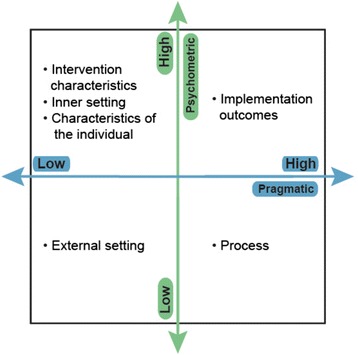
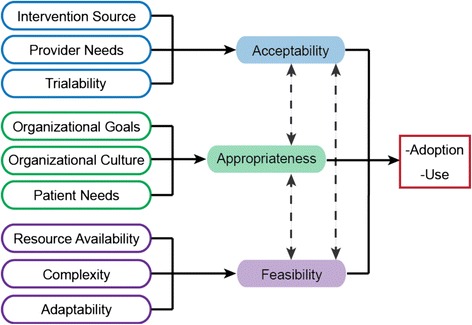
BACKGROUND: Significant gaps related to measurement issues are among the most critical barriers to advancing implementation science. Three issues motivated the study aims: (a) the lack of stakeholder involvement in defining pragmatic measure qualities; (b) the dearth of measures, particularly for implementation outcomes; and (c) unknown psychometric and pragmatic strength of existing measures. Aim 1: Establish a stakeholder-driven operationalization of pragmatic measures and develop reliable, valid rating criteria for assessing the construct. Aim 2: Develop reliable, valid, and pragmatic measures of three critical implementation outcomes, acceptability, appropriateness, and feasibility. Aim 3: Identify Consolidated Framework for Implementation Research and Implementation Outcome Framework-linked measures that demonstrate both psychometric and pragmatic strength. METHODS/DESIGN: For Aim 1, we will conduct (a) interviews with stakeholder panelists (N = 7) and complete a literature review to populate pragmatic measure construct criteria, (b) Q-sort activities (N = 20) to clarify the internal structure of the definition, (c) Delphi activities (N = 20) to achieve consensus on the dimension priorities, (d) test-retest and inter-rater reliability assessments of the emergent rating system, and (e) known-groups validity testing of the top three prioritized pragmatic criteria. For Aim 2, our systematic development process involves domain delineation, item generation, substantive validity assessment, structural validity assessment, reliability assessment, and predictive validity assessment. We will also assess discriminant validity, known-groups validity, structural invariance, sensitivity to change, and other pragmatic features. For Aim 3, we will refine our established evidence-based assessment (EBA) criteria, extract the relevant data from the literature, rate each measure using the EBA criteria, and summarize the data. DISCUSSION: The study outputs of each aim are expected to have a positive impact as they will establish and guide a comprehensive measurement-focused research agenda for implementation science and provide empirically supported measures, tools, and methods for accomplishing this work.
Overview
The claims and statistics of this paper haven’t been checked yet.
Free: it reads the open-access text and checks the first 5 claims that cite a source we can check. Create a free account to check every claim.
Integrity signals
Registry
Cites
Statistics
Figures
Verification
Claims the paper makes
The claims and statistics of this paper haven’t been checked yet.
Free: it reads the open-access text and checks the first 5 claims that cite a source we can check. Create a free account to check every claim.
Claims other papers make about this one
Each is checked against this paper’s own text: does it say what the citing paper says it does?
The source backs part of the claim, not all of it — or backs it for a different population, condition or comparison.
In the citing paper
“Furthermore, there is an increasing number of measures of implementation determinants [74, 75] (e.g., implementation leadership [76], implementation climate [77, 78], or implementation intentions [79]).”
From Ten recommendations for using implementation frameworks in research and practice (2020) · cites this paper as [74]
Experimental — accuracy not yet measuredThe source backs part of the claim, not all of it — or backs it for a different population, condition or comparison.
In the citing paper
“To date, there is no consensus on measures, and psychometric properties have not been reported for most measures, although efforts are underway to increase measurement rigor and identify psychometrically sound measures (75).”
From The Sustainability of Evidence-Based Interventions and Practices in Public Health and Health Care (2018) · cites this paper as [75]
Experimental — accuracy not yet measuredThe source backs part of the claim, not all of it — or backs it for a different population, condition or comparison.
In the citing paper
“Standardised tools to assess these outcomes are often unavailable due to the unique nature of interventions being implemented and the variable (and changing) implementation context in which the research is undertaken [64].”
From Guidance for conducting feasibility and pilot studies for implementation trials (2020) · cites this paper as [64]
Experimental — accuracy not yet measuredThe source backs part of the claim, not all of it — or backs it for a different population, condition or comparison.
In the citing paper
“few if any have been assessed for other measurement properties that are of key importance to implementation researchers and other implementation stakeholders (e.g., intermediaries, policymakers, practice leaders), such as stability, responsiveness, and predictive validity [2–4].”
From Psychometric assessment of three newly developed implementation outcome measures (2017) · cites this paper as [4]
Experimental — accuracy not yet measured
1 more claim about this paper
Create a free account to see every claim other papers make about this one.
Self-check
Percentages, sums and reported differences re-computed from the paper’s own numbers.
The self-check needs the paper’s full text.
Citations
Cites
Rogers, E. M., Singhal, A., & Quinlan, M. M. (2019) · An Integrated Approach to Communication Theory and Research · doi:10.4324/9780203710753-35 · Cited by 37,322
(1991) · Cited by 15,554
Damschroder, L. J., Aron, D. C., Keith, R. E., Kirsh, S. R., Alexander, J. A., & Lowery, J. C. (2009) · Implementation Science · doi:10.1186/1748-5908-4-50 · Cited by 14,496 · cited 7×
“Aim 3: identify CFIR- and IOF-linked measures that demonstrate both psychometric and pragmatic strength”
MethodInfluentialPower analysis and determination of sample size for covariance structure modeling.
MacCallum, R. C., Browne, M. W., & Sugawara, H. M. (1996) · Psychological Methods · doi:10.1037/1082-989x.1.2.130 · Cited by 10,418 · cited 3×
“The estimated power [25] for the model is 100 %.”
BackgroundMethodInfluentialProctor, E., Silmere, H., Raghavan, R., Hovmand, P., Aarons, G., Bunger, A., Griffey, R., & Hensley, M. (2011) · Administration and Policy in Mental Health and Mental Health Services Research · doi:10.1007/s10488-010-0319-7 · Cited by 8,721
Foundations of Behavioral Research
Stockton, R., & Kerlinger, F. N. (1974) · American Educational Research Journal · doi:10.2307/1162206 · Cited by 7,347 · cited 1×
“Reliability, the precision of a measure, is a necessary condition for validity [27].”
BackgroundResearch guidelines for the Delphi survey technique
Hasson, F. (2000) · Journal of Advanced Nursing · doi:10.1046/j.1365-2648.2000.01567.x · Cited by 5,951 · cited 1×
“In the first round, the stakeholders will again be asked to distribute 100 points among the dimensions, taking into account the measures of central tendency and levels of dispersion from the first round [13].”
BackgroundLost in knowledge translation: Time for a map?
Graham, I. D., Logan, J., Harrison, M. B., Straus, S. E., Tetroe, J., Caswell, W., & Robinson, N. (2006) · Journal of Continuing Education in the Health Professions · doi:10.1002/chp.47 · Cited by 4,705 · cited 1×
“In 2006, it was noted that “implementation science” had 29 related terms in use around the globe [9], which threatens the cumulative knowledge that can be gained.”
BackgroundMessick, S. (1995) · American Psychologist · doi:10.1037/0003-066x.50.9.741 · Cited by 4,198
A Brief Tutorial on the Development of Measures for Use in Survey Questionnaires
Hinkin, T. R. (1998) · Organizational Research Methods · doi:10.1177/109442819800100106 · Cited by 4,095 · cited 3×
“We predict that our measures will demonstrate sufficient inter-item [21] and test-retest reliability.”
MethodInfluential
Research works printed but not linked: 3
- Nunnally JC Bernstein: psychometric theory 1994 New York McGraw-Hill
- Donnelly J Trochim W The research methods knowledge base 2007 Ohio Atomic Dog Publishing
- Muthén LK Muthén BO Mplus Compr Model Program Appl Res Users Guide 2012 5 E22
Cited by
Psychometric assessment of three newly developed implementation outcome measures
Weiner, B. J., Lewis, C. C., Stanick, C., Powell, B. J., Dorsey, C. N., Clary, A. S., Boynton, M. H., & Halko, H. (2017) · Implementation Science · doi:10.1186/s13012-017-0635-3 · Cited by 2,819
“To address this limitation, we are working with stakeholders to define and operationalize pragmatic features of measures, with the goal of developing rating criteria that can be used to assess the pragmatic properties of measures, much like the psychometric properties of measures are assessed [4].”
Self-citationThe Sustainability of Evidence-Based Interventions and Practices in Public Health and Health Care
Shelton, R. C., Cooper, B. R., & Stirman, S. W. (2018) · Annual Review of Public Health · doi:10.1146/annurev-publhealth-040617-014731 · Cited by 806
Ten recommendations for using implementation frameworks in research and practice
Moullin, J. C., Dickson, K. S., Stadnick, N. A., Albers, B., Nilsen, P., Broder-Fingert, S., Mukasa, B., & Aarons, G. A. (2020) · Implementation Science Communications · doi:10.1186/s43058-020-00023-7 · Cited by 488
Guidance for conducting feasibility and pilot studies for implementation trials
Pearson, N., Naylor, P.-J., Ashe, M. C., Fernandez, M., Yoong, S. L., & Wolfenden, L. (2020) · Pilot and Feasibility Studies · doi:10.1186/s40814-020-00634-w · Cited by 475
A systematic review of empirical studies examining mechanisms of implementation in health
Lewis, C. C., Boyd, M. R., Walsh-Bailey, C., Lyon, A. R., Beidas, R., Mittman, B., Aarons, G. A., Weiner, B. J., & Chambers, D. A. (2020) · Implementation Science · doi:10.1186/s13012-020-00983-3 · Cited by 363
“However, conceptual, theoretical, and empirical work is needed to (a) articulate the theorized mechanisms for the 70+ strategies and proximal outcomes [128], (b) identify measures of implementation mechanisms and evaluate their psychometric evidence base [131] and pragmatic qualities [132], and (c) attempt to identify…”
BackgroundSelf-citationLyon, A. R., Brewer, S. K., & Areán, P. A. (2020) · American Psychologist · doi:10.1037/amp0000652 · Cited by 152
“Along with organizational determinants, variables at the level of the individuals involved in implementation—most often individual service providers, but also including service recipients—are among the most commonly studied in implementation research (Lewis et al., 2015).”
BackgroundMcKay, H., Naylor, P.-J., Lau, E., Gray, S. M., Wolfenden, L., Milat, A., Bauman, A., Race, D., Nettlefold, L., & Sims-Gould, J. (2019) · International Journal of Behavioral Nutrition and Physical Activity · doi:10.1186/s12966-019-0868-4 · Cited by 169
Hull, L., Athanasiou, T., & Russ, S. (2017) · Annals of Surgery · doi:10.1097/sla.0000000000002013 · Cited by 158
Powell, B. J., Stanick, C. F., Halko, H. M., Dorsey, C. N., Weiner, B. J., Barwick, M. A., Damschroder, L. J., Wensing, M., Wolfenden, L., & Lewis, C. C. (2017) · Implementation Science · doi:10.1186/s13012-017-0649-x · Cited by 144
“Next steps will include developing consensus on the relative priorities for these categories and criteria through a Delphi [18] study; developing rating criteria with concrete, measurable anchors; and assessing inter-rater reliability and known-groups validity of the criteria [3].”
BackgroundMethodInfluentialSelf-citationKemp, C. G., Jarrett, B. A., Kwon, C.-S., Song, L., Jetté, N., Sapag, J. C., Bass, J., Murray, L., Rao, D., & Baral, S. (2019) · BMC Medicine · doi:10.1186/s12916-018-1237-x · Cited by 138
“Increasingly, studies use psychometrically validated measures of implementation outcomes [25, 26].”
BackgroundRye, M., Torres, E. M., Friborg, O., Skre, I., & Aarons, G. A. (2017) · Implementation Science · doi:10.1186/s13012-017-0573-0 · Cited by 133
“The literature has suggested multiple criteria for “pragmatic” measures including being important to stakeholders; having low burden; being sensitive to change; being broadly applicable; can be used for benchmarking; has norms; is unlikely to cause harm; is psychometrically strong; and is related to theory or model [8…”
BackgroundAn updated protocol for a systematic review of implementation-related measures
Lewis, C. C., Mettert, K. D., Dorsey, C. N., Martinez, R. G., Weiner, B. J., Nolen, E., Stanick, C., Halko, H., & Powell, B. J. (2018) · Systematic Reviews · doi:10.1186/s13643-018-0728-3 · Cited by 118
“This preliminary research informed a series of measures- and methods-focused studies that were funded by the National Institute of Mental Health with the long-term objective of making available a comprehensive battery of reliable, valid, and pragmatic measures that researchers and stakeholders could use to advance imp…”
MethodSelf-citationLewis, C. C., Scott, K., & Marriott, B. R. (2018) · Implementation Science · doi:10.1186/s13012-018-0761-6 · Cited by 123
“, low cost, brief, actionable) and psychometrically strong [16].”
BackgroundMethodSelf-citationDesigning the Future of Children’s Mental Health Services
Lyon, A. R., Dopp, A. R., Brewer, S. K., Kientz, J. A., & Munson, S. A. (2020) · Administration and Policy in Mental Health and Mental Health Services Research · doi:10.1007/s10488-020-01038-x · Cited by 115
“…2008) are a popular type of progress monitoring and decision support technology that facilitate the use of measurement-based care (Scott and Lewis 2015) in practice by automating data collection, summarization/ synthesis, and display; the development of which could be facilitated by…”
BackgroundKemp, C. G., Weiner, B. J., Sherr, K. H., Kupfer, L. E., Cherutich, P. K., Wilson, D., Geng, E. H., & Wasserheit, J. N. (2018) · AIDS · doi:10.1097/qad.0000000000001897 · Cited by 103
Self-citationPowell, B. J., Mandell, D. S., Hadley, T. R., Rubin, R. M., Evans, A. C., Hurford, M. O., & Beidas, R. S. (2017) · Implementation Science · doi:10.1186/s13012-017-0593-9 · Cited by 102
Measurement resources for dissemination and implementation research in health
Rabin, B. A., Lewis, C. C., Norton, W. E., Neta, G., Chambers, D., Tobin, J. N., Brownson, R. C., & Glasgow, R. E. (2015) · Implementation Science · doi:10.1186/s13012-016-0401-y · Cited by 92
Self-citationApplying the Policy Ecology Framework to Philadelphia’s Behavioral Health Transformation Efforts
Powell, B. J., Beidas, R. S., Rubin, R. M., Stewart, R. E., Wolk, C. B., Matlin, S. L., Weaver, S., Hurford, M. O., Evans, A. C., Hadley, T. R., et al. (2016) · Administration and Policy in Mental Health and Mental Health Services Research · doi:10.1007/s10488-016-0733-6 · Cited by 82
“Further work to specify and measure implementation contexts, processes, and outcomes in large public behavioral health systems is warranted (Lewis et al. 2015; Proctor et al. 2014).”
BackgroundThe Development of a Brief Version of the Posttraumatic Cognitions Inventory (PTCI-9)
Wells, S. Y., Morland, L. A., Torres, E. M., Kloezeman, K. C., Mackintosh, M., & Aarons, G. A. (2017) · Assessment · doi:10.1177/1073191116685401 · Cited by 97
“There is a need for brief measures that are important to stakeholders, feasible for use in most “realworld settings,” reduce patient and provider burden, and are easy for providers to interpret the results (Glasgow, 2013; Glasgow & Riley, 2013; Lewis et al., 2015).”
BackgroundOrganizational Readiness for Change: What We Know, What We Think We Know, and What We Need to Know
Weiner, B. J., Clary, A., Klaman, S. L., Turner, K. L., & Alishahi-Tabriz, A. (2020) · Springer eBooks · doi:10.1007/978-3-030-03874-8_5 · Cited by 114
Self-citationHaroz, E. E., Bolton, P., Nguyen, A. J., Lee, C., Bogdanov, S., Bass, J., Singh, N. S., Doty, B., & Murray, L. (2019) · BMC Health Services Research · doi:10.1186/s12913-019-4097-y · Cited by 70
“As part of a three-year project sponsored by the United States Agency for International Development Victims of Torture Fund (VOT) JHU has partnered with NaUKMA to train mental health providers and peer veteran counselors in the Common Elements Treatment Approach (CETA) and test the intervention in a randomized control…”
MethodInfluentialAarons, G. A., Ehrhart, M. G., Torres, E. M., Finn, N. K., & Beidas, R. S. (2017) · Psychiatric Services · doi:10.1176/appi.ps.201600062 · Cited by 68
“There is a need for brief and pragmatic measures to guide leader development with the goal of changing strategic climate and improving implementation (54).”
BackgroundMazzucca, S., Tabak, R. G., Pilar, M., Ramsey, A. T., Baumann, A. A., Kryzer, E., Lewis, E. M., Padek, M., Powell, B. J., & Brownson, R. C. (2018) · Frontiers in Public Health · doi:10.3389/fpubh.2018.00032 · Cited by 63
Haines, E. R., Dopp, A. R., Lyon, A. R., Witteman, H. O., Bender, M., Vaisson, G., Hitch, D., & Birken, S. A. (2021) · Implementation Science Communications · doi:10.1186/s43058-021-00147-4 · Cited by 71
“, likelihood that need can be met through a service or resource) [58].”
BackgroundClosing the Science–Practice Gap in Implementation Before It Widens
Lyon, A. R., Comtois, K. A., Kerns, S. E. U., Landes, S. J., & Lewis, C. C. (2020) · Springer eBooks · doi:10.1007/978-3-030-03874-8_12 · Cited by 63
Self-citationAssessing Capacity of Faith-Based Organizations for Health Promotion Activities
Tagai, E. K., Scheirer, M. A., Santos, S. L. Z., Haider, M., Bowie, J. V., Slade, J. L., Whitehead, T. L., Wang, M. Q., & Holt, C. L. (2017) · Health Promotion Practice · doi:10.1177/1524839917737510 · Cited by 55
Setty, K., Jiménez, A., Willetts, J., Leifels, M., & Bartram, J. (2019) · Development Policy Review · doi:10.1111/dpr.12475 · Cited by 60
Brann, K. L., Daniels, B., Chafouleas, S. M., & DiOrio, C. A. (2021) · School Psychology Review · doi:10.1080/2372966x.2020.1836518 · Cited by 51
“Distinct and siloed assessments and systems increase burden, which can serve as a barrier to adoption, implementation, and sustainability (Lewis et al., 2015).”
BackgroundLewis, C. C., Darnell, D. A., Kerns, S. E. U., Monroe‐DeVita, M., Landes, S. J., Lyon, A. R., Stanick, C., Dorsey, S., Locke, J. J., Marriott, B. R., et al. (2016) · Implementation Science · doi:10.1186/s13012-016-0428-0 · Cited by 49
Self-citationImplementation of e‐mental health for depression and anxiety: A critical scoping review
Ellis, L. A., Augustsson, H., Grødahl, A. I., Pomare, C., Churruca, K., Long, J. C., Ludlow, K., Zurynski, Y. A., & Braithwaite, J. (2020) · Journal of Community Psychology · doi:10.1002/jcop.22309 · Cited by 41
Garner, B. R., Hunter, S. B., Funk, R. R., Griffin, B. A., & Godley, S. H. (2016) · Journal of Substance Abuse Treatment · doi:10.1016/j.jsat.2016.04.006 · Cited by 36
“Procedure exposure is fortunately one of the more pragmatic implementation outcomes (see Lewis et al., 2015 for more information on pragmatic implementation measures) because it is something that can be (and should be) documented by the implementation staff.”
Hull, L., Boulton, R., Jones, F., Boaz, A., & Sevdalis, N. (2022) · Translational Behavioral Medicine · doi:10.1093/tbm/ibac064 · Cited by 38
Howell, D., Powis, M., Kirkby, R. L., Amernic, H., Moody, L., Bryant‐Lukosius, D., O’Brien, M. A., Rask, S., & Krzyzanowska, M. K. (2021) · BMJ Quality & Safety · doi:10.1136/bmjqs-2020-012051 · Cited by 42
Advancing Implementation Science Measurement
Lewis, C. C., & Dorsey, C. N. (2020) · Springer eBooks · doi:10.1007/978-3-030-03874-8_9 · Cited by 27
Self-citationSzota, K., Thielemann, J. F. B., Christiansen, H., Rye, M., Aarons, G. A., & Barke, A. (2021) · Health Research Policy and Systems · doi:10.1186/s12961-021-00736-8 · Cited by 26
Tuzzio, L., Wellman, R., Marchis, E. H. D., Gottlieb, L. M., Walsh‐Bailey, C., Jones, S. M. W., Nau, C., Steiner, J. F., Banegas, M. P., Sharp, A. L., et al. (2022) · The Annals of Family Medicine · doi:10.1370/afm.2774 · Cited by 25
Self-citationIbañez, L. V., Stoep, A. V., Myers, K., Zhou, C., Dorsey, S., Steinman, K. J., & Stone, W. L. (2019) · BMC Psychiatry · doi:10.1186/s12888-019-2150-3 · Cited by 25
Pilar, M. R., Jost, E., Walsh‐Bailey, C., Powell, B. J., Mazzucca, S., Eyler, A. A., Purtle, J., Allen, P. M., & Brownson, R. C. (2022) · Implementation Research and Practice · doi:10.1177/26334895221141116 · Cited by 30
Bear, H. A., Dalzell, K., Edbrooke-Childs, J. H., & Wolpert, M. (2021) · British Journal of Clinical Psychology · doi:10.1111/bjc.12322 · Cited by 25
Zhou, C., Wang, Y., Wang, S., Ou, J., & Wu, Y. (2018) · Journal of Evaluation in Clinical Practice · doi:10.1111/jep.13072 · Cited by 15
Integrating Implementation Science with Quality Improvement to Improve Perinatal Outcomes
Callaghan‐Koru, J. A., Farzin, A., Ridout, E., & Curran, G. M. (2023) · Clinics in Perinatology · doi:10.1016/j.clp.2023.01.002 · Cited by 17
Efficient Implementation Monitoring in Routine Prevention Practice: A Grand Challenge for Schools
Shapiro, V. B., Kim, B. E., Robitaille, J. L., LeBuffe, P. A., & Ziemer, K. L. (2018) · Journal of the Society for Social Work and Research · doi:10.1086/699153 · Cited by 16
A Psychometric Evaluation of the Intention Scale for Providers-Direct Items
Mah, A. C., Hill, K. A., Cicero, D. C., & Nakamura, B. J. (2019) · The Journal of Behavioral Health Services & Research · doi:10.1007/s11414-019-09675-3 · Cited by 16
Objective Global Condition Assessment
Aktan, A. E., Brown, D. L., Farrar, C. R., Helmicki, A. J., Hunt, V. J., & Yao, J. (1997) · Cited by 14
Patel, Z. S., Becker, S. J., Olson, M. B., Rinella, H., & Scott, K. (2024) · Implementation Science Communications · doi:10.1186/s43058-024-00549-0 · Cited by 18
“Measurement issues in implementation science are among the most critical barriers to advancing the field [7, 9, 21–23, 30].”
BackgroundRuble, L. A., Ogle, L. N., & McGrew, J. H. (2022) · Psychology in the Schools · doi:10.1002/pits.22800 · Cited by 13
Practice change in chronic conditions care: an appraisal of theories
Harris, M., Lawn, S., Morello, A., Battersby, M., Ratcliffe, J., McEvoy, R. D., & Tieman, J. (2017) · BMC Health Services Research · doi:10.1186/s12913-017-2102-x · Cited by 17
Tsuyuki, K., Stockman, J. K., Stadnick, N. A., Moore, V., Zhu, H., Torres, V. E., Cano, R., Penninga, K., & Aldous, J. L. (2022) · JAIDS Journal of Acquired Immune Deficiency Syndromes · doi:10.1097/qai.0000000000002985 · Cited by 11
Sickle cell disease and implementation science: A partnership to accelerate advances
King, A. A., & Baumann, A. A. (2017) · Pediatric Blood & Cancer · doi:10.1002/pbc.26649 · Cited by 11
Hjort, A. V., Kuipers, M. A. G., Stage, M., Pisinger, C. H., & Klinker, C. D. (2022) · International Journal of Environmental Research and Public Health · doi:10.3390/ijerph191912489 · Cited by 11
“Even though fidelity measures are often intervention-specific [65], we believe our construct can guide future studies on STP implementation given the theoretical underpinnings and pragmatic form.”
BackgroundMFA and ASA-MF: A Psychometric Analysis of Attitudes Towards Measurement-Based Care
Patel, Z. S., Jensen‐Doss, A., & Lewis, C. C. (2021) · Administration and Policy in Mental Health and Mental Health Services Research · doi:10.1007/s10488-021-01138-2 · Cited by 10
Self-citationMcLoughlin, G. M., Walsh‐Bailey, C., Singleton, C. R., & Turner, L. R. (2022) · Frontiers in Public Health · doi:10.3389/fpubh.2022.984130 · Cited by 13
Diastasis recti is associated with incisional hernia after midline abdominal surgery
Booth, A. T., Gillen, K., Visintin, I., Ford, W. F., Kovacs, M. D., Edgerton, C. A., George, V. V., & Curran, T. (2022) · Hernia · doi:10.1007/s10029-022-02676-w · Cited by 9
“Other factors associated with IH development (p 0.1) were higher body mass index (BMI), wound classification III/IV (vs I/II), coronary artery disease (CAD), and surgical site infection (SSI).”
BackgroundInfluentialLee, K. (2020) · GLOBAL BUSINESS & FINANCE REVIEW · doi:10.17549/gbfr.2020.25.1.48 · Cited by 13
“Second, although this paper adopted and modified the existing measurements to evaluate the innovative IS behavior, future research will rely on a more formal approach to measure development and evaluation (Narasimhan & Das, 2001; Lewis et al., 2015).”
MethodInfluences of Inner and Outer Settings on Wraparound Implementation Outcomes
Olson, J. R., Azman, A. A., Estep, K. M., Coviello, K. A., Robshaw, S., & Bruns, E. J. (2021) · Global Implementation Research and Applications · doi:10.1007/s43477-021-00008-1 · Cited by 8
Provider perceptions of an integrated primary care quality improvement strategy: The PPAQ toolkit.
Beehler, G. P., & Lilienthal, K. R. (2016) · Psychological Services · doi:10.1037/ser0000108 · Cited by 9
Asgharzadeh, A., Shabaninejad, H., Aryankhesal, A., & Majdzadeh, R. (2019) · Evidence & Policy · doi:10.1332/174426419x15704986117256 · Cited by 7
Wolk, C. B., & Beidas, R. S. (2018) · Behavior Therapy · doi:10.1016/j.beth.2018.03.004 · Cited by 5
Craig, D. W., Hunyadi, J. V., Walker, T. J., Workman, L. M., McClam, M., Lamont, A. E., Padilla, J. R., Diamond, P. M., Wandersman, A. H., & Fernández, M. E. (2025) · Implementation Science Communications · doi:10.1186/s43058-025-00751-8 · Cited by 6
“Prag-matic and reliable measures are needed to understand determinants of implementation, evaluate implementation strategies, and assess implementation processes and outcomes [1, 2].”
Collective Health in Brazil and Implementation Science: Challenges and Potentialities
Silva, A. A., Lopes, G. P. D., Claro, H. G., Menezes, P. R., Tanaka, O. Y., & Campos, R. T. O. (2023) · Global Implementation Research and Applications · doi:10.1007/s43477-023-00095-2 · Cited by 8
“…to the participation and evaluation of the interventions’ target audience, CFIR can help with decisions regarding research design, and even in the stages of data collection and analysis, seeking for implemen-tation’s determiners in the results obtained (Kirk et al., 2015; Lewis et al., 2015).”
Measurement Issues in Dissemination and Implementation Research
Lewis, C. C., Mettert, K. D., Proctor, E. K., & Brownson, R. C. (2023) · Oxford University Press eBooks · doi:10.1093/oso/9780197660690.003.0015 · Cited by 6
Self-citationPsychometric evaluation of a pragmatic measure of clinical supervision as an implementation strategy
Choy-Brown, M., Williams, N. J., Vega, N. R., & Esp, S. M. (2023) · Implementation Science Communications · doi:10.1186/s43058-023-00419-1 · Cited by 7
“This measurement deficit has stalled efforts to assess the use of implementation strategies in community settings—for the purpose of identifying areas of strength and targets for improvement [2]—and has hindered the consolidation of research findings on the effects of implementation strategies across studies [10].”
BackgroundAldridge, W. A., Boothroyd, R. I., Veazey, C. A., Powell, B. J., Murray, D., & Prinz, R. J. (2016) · Cited by 7
Hunter, S. B., Schwartz, R. P., & Friedmann, P. D. (2015) · Journal of Substance Abuse Treatment · doi:10.1016/j.jsat.2015.10.001 · Cited by 5
Szota, K., Thielemann, J. F. B., Christiansen, H., Rye, M., Aarons, G. A., & Barke, A. (2020) · Research Square · doi:10.21203/rs.3.rs-104485/v1 · Cited by 5
“The Evidence-Based Practice Attitude Scale (EBPAS) (20) is an instrument that has been identi ed as a psychometrically strong measure assessing positive as well as ambivalent attitudes towards EBP (20, 30, 18).”
BackgroundAdaptability and Fidelity: Exploring the Relationship Between the Two When Implementing SC2.0
Jaouich, A., Carey, S., Saxton, K. G., Rash, J. A., & Brown, J. (2023) · Springer eBooks · doi:10.1007/978-3-031-45206-2_11 · Cited by 3
Malone, S. M., Rivera, J., Puerto‐Torres, M., Prewitt, K., Sakaan, F. M., Counts, L. E., Zebin, Z. A., Arias, A. V., Bhattacharyya, P., Gunasekera, S., et al. (2023) · Frontiers in Pediatrics · doi:10.3389/fped.2023.1127633 · Cited by 5
Jeldu, F. A., Tolera, M., & Woldeamanuel, T. (2023) · Preprints.org · doi:10.20944/preprints202307.0692.v1 · Cited by 3
Ritchie, C. S., Leff, B. A., Sy, M. S., Thacker, A., Donelan, K., Forester, B. P., Sheehan, O. C., & the Dementia Care Quality at Home Writing Group (2025) · Journal of the American Geriatrics Society · doi:10.1111/jgs.70112 · Cited by 2
Kemp, C. G., Danforth, K., Aldridge, L. R., Murray, L. K., & Haroz, E. E. (2023) · Cambridge Prisms Global Mental Health · doi:10.1017/gmh.2023.63 · Cited by 2
“Importantly, almost all extant, validated, pragmatic, quantitative implementation measures were developed for use in high-income countries (Lewis et al., 2015).”
BackgroundObiezu‐Umeh, C., Subramaniam, D. S., Nwaozuru, U., Gbaja-Biamila, T. A., Blessing, L. A., Shato, T., Oladele, D. A., Hirschhorn, L. R., Shacham, E., Xian, H., et al. (2025) · Frontiers in Health Services · doi:10.3389/frhs.2025.1618400 · Cited by 2
“Additionally, many studies do not use measures that have been empirically tested for substantive or predictive validity (11).”
Balayah, Z., Stavropoulou, C., Scarbrough, H., Nigam, A., & Ziemann, A. (2025) · Frontiers in Health Services · doi:10.3389/frhs.2025.1373429 · Cited by 2
Siraneh, Y., Woldie, M. K., & Birhanu, Z. (2022) · International Journal of Women s Health · doi:10.2147/ijwh.s385662 · Cited by 2
“We worked with experts to comment on these measures, with the goal of developing new scales that can be used to assess the pragmatic nature of the outcomes with psychometric properties that address/fit our stakeholders.(7) We recommend that researchers who are working on a similar approach and settings apply these pra…”
BackgroundMethodInfluentialBeadell, I., Byun, M., Feller, H., Ferrie, M. M., & Best, S. (2023) · Journal of Community Genetics · doi:10.1007/s12687-023-00643-1 · Cited by 1
Finch, T. L., Bührmann, L., Potthoff, S., May, C. R., Gibson, B., Gumančík, J., Wilson-Dickson, O., Girling, M., & Rapley, T. (2024) · NIHR Open Research · doi:10.3310/nihropenres.13559.1 · Cited by 1
“…us to explore questions about (statistical) relationships amongst the NPT constructs; relationships between NoMAD and other ‘implementation outcome’ measures 2,27,28 or in mixed methods studies, the triangulation of data collected using NoMAD alongside qualitative methods within single studies.”
MethodDymnicki, A. B., Bzura, R., Osher, D. M., Wandersman, A., Duplantier, D., Boyd, M. J., Cash, A. J., & Hutchison, L. A. (2019) · Evidence & Policy · doi:10.1332/174426418x15409834211096
Kemp, C. G. (2023) · Cambridge Prisms Global Mental Health · doi:10.1017/gmh.2023.63.pr7
(2023) · Cambridge Prisms Global Mental Health · doi:10.1017/gmh.2023.63.pr11
(2023) · Cambridge Prisms Global Mental Health · doi:10.1017/gmh.2023.63.pr4
(2023) · Cambridge Prisms Global Mental Health · doi:10.1017/gmh.2023.63.pr5
(2023) · Cambridge Prisms Global Mental Health · doi:10.1017/gmh.2023.63.pr10
(2023) · Cambridge Prisms Global Mental Health · doi:10.1017/gmh.2023.63.pr6
(2023) · Cambridge Prisms Global Mental Health · doi:10.1017/gmh.2023.63.pr9
(2023) · Cambridge Prisms Global Mental Health · doi:10.1017/gmh.2023.63.pr8
(2023) · Cambridge Prisms Global Mental Health · doi:10.1017/gmh.2023.63.pr3
(2023) · Cambridge Prisms Global Mental Health · doi:10.1017/gmh.2023.63.pr2
Kemp, C. G. (2023) · Cambridge Prisms Global Mental Health · doi:10.1017/gmh.2023.63.pr1
trauma-Informed PRACTICES in SCHOOLS: DISTRICT LEVEL CHANGE EFFORTS and IMPLEMENTATION OUTCOMES
Hales, T. W., Koury, S. P., Green, S. A., & Way, I. F. (2025) · Journal of Evidence-Based Social Work · doi:10.1080/26408066.2025.2547221 · Cited by 3
Yan, L., Chen, Z., Goklish, N. A., Mitchell, K., Watchman, C., Stifter, M., O’Keefe, V. M., Barlow, A., Cwik, M. F., Igusa, T., et al. (2025) · Annals of Epidemiology · doi:10.1016/j.annepidem.2025.10.020
A Measurement Roadmap to Guide Implementation Practitioners in Selecting Implementation Measures
Martinez, R. G., Antonaccio, C. M., Crane, M. E., Cramer, E. R., Fu, E. S., Arnold, T. L., Frank, H. E., Littlewood, A., Guzman, L. E., Hoyos, C. C.-D., et al. (2025) · Global Implementation Research and Applications · doi:10.1007/s43477-025-00189-z · Cited by 1
“These teams, including the Society for Implementation Research and Collaboration (née Seattle Implementation Research Conference; Lewis et al., 2015a, b, 2016) and the National Cancer Institute’s Grid-Enabled Measures (GEM) database (now called the Group-Evaluated Measures; Moser et al., 2011),…”
InfluentialSelf-citationAdditional file 2 of Guidance for conducting feasibility and pilot studies for implementation trials
Pearson, N., Naylor, P.-J., Ashe, M. C., Fernandez, M., Yoong, S. L., & Wolfenden, L. (2020) · Figshare · doi:10.6084/m9.figshare.13173941
Haines, E. R., Dopp, A. R., Lyon, A. R., Witteman, H. O., Bender, M., Vaisson, G., Hitch, D., & Birken, S. A. (2021) · Figshare · doi:10.6084/m9.figshare.14490557
Haines, E. R., Dopp, A. R., Lyon, A. R., Witteman, H. O., Bender, M., Vaisson, G., Hitch, D., & Birken, S. A. (2021) · Figshare · doi:10.6084/m9.figshare.14490560
Patel-Syed, Z., Becker, S., Olson, M. B., Rinella, H., & Scott, K. (2024) · Figshare · doi:10.6084/m9.figshare.26680738
Szota, K., Thielemann, J. F. B., Christiansen, H., Rye, M., Aarons, G. A., & Barke, A. (2021) · Figshare · doi:10.6084/m9.figshare.14722049
Haroz, E. E., Bolton, P. A., Nguyen, A. J., Lee, C., Bogdanov, S., Bass, J., Singh, N. S., Doty, B., & Murray, L. K. (2019) · Figshare · doi:10.6084/m9.figshare.8057684
Haines, E. R., Dopp, A. R., Lyon, A. R., Witteman, H. O., Bender, M., Vaisson, G., Hitch, D., & Birken, S. A. (2021) · Figshare · doi:10.6084/m9.figshare.14490563
Lewis, C. C., Boyd, M. R., Walsh‐Bailey, C., Lyon, A. R., Beidas, R., Mittman, B., Aarons, G. A., Weiner, B. J., & Chambers, D. (2020) · Figshare · doi:10.6084/m9.figshare.12144159
Self-citationLewis, C. C., Boyd, M. R., Walsh‐Bailey, C., Lyon, A. R., Beidas, R., Mittman, B., Aarons, G. A., Weiner, B. J., & Chambers, D. (2020) · Figshare · doi:10.6084/m9.figshare.12144168
Self-citation
Metadata
- Authors
- Lewis, C. C., Weiner, B. J., Stanick, C., & Fischer, S. M.
- Affiliations
- University of Washington (US)
- University of North Carolina at Chapel Hill (US)
- University of Montana (US)
- Indiana University Bloomington (US)
- Corresponding author
- Lewis, Cara C.
- Venue
- Implementation Science
- Published
- 2015-07-22
- Volume
- 10
- Issue
- 1
- Pages
- 102-102
- ISSN
- 1748-5908 (ISSN-L)
- PMC
- PMC4511441
- OpenAlex
- W1522008408
- Cited by
- 115
- References
- 32
- Citations by year
- 2026: 2 · 2025: 7 · 2024: 3 · 2023: 21 · 2022: 9 · 2021: 18 · 2020: 16 · 2019: 13 · 2018: 8 · 2017: 8 · 2016: 7 · 2015: 2
- FWCI
- 15.20
- Type
- journal article
- Language
- en
- Open access
- gold
- doi.org
- Locations
- Implementation Science (publishedVersion, cc-by)
- PubMed Central (publishedVersion, cc-by)
- PubMed (publishedVersion)
- Carolina Digital Repository (University of North Carolina at Chapel Hill) (submittedVersion)
- UNC Libraries
- Funders
- Georgia Clinical and Translational Science Alliance
- National Institutes of Health (2010-2015, UL1TR000083)
- National Institute of Mental Health (R01MH106510)
- National Center for Advancing Translational Sciences
- Topics
- Health Sciences › Health Professions › General Health Professions › Health Policy Implementation Science
- Social Sciences › Sociology and Political Science › Delphi Technique in Research
- Health Sciences › Nursing › Research and Theory › Health Education and Validation
- Keywords
- implementation outcomes, measurement development, stakeholder engagement, acceptability, appropriateness, feasibility, psychometric properties, grading criteria, Consolidated Framework for Implementation Research, structural invariance, sensitivity to change, known-groups validity
- MeSH terms
- Humans, Research Design, Program Evaluation, Program Development
About these checks
Registry, retraction, Cites and statistics results are computed, not judged, with one exception: a printed reference that no index lists is read once by a model before it counts as a citation error. Claims are extracted by a model and kept only when their quote appears verbatim in the text; each cited source is then checked, with a model’s help, for whether it says what the claim relies on. Those verdicts can be wrong — read the claim’s quote and the cited source before relying on one.
Statistics and arithmetic are recomputed, not judged.
Confidence bands are shown only for fields calibrated on our annotated test set. None is calibrated yet, so no band is shown.
What counts as a claim ›How we measure confidence ›How we check this ›
Are you an author, or do you see a problem with this page? Request a review
Data sources
Bibliographic data: Semantic Scholar, OpenAlex, Crossref.
Contains information from the Semantic Scholar Academic Graph Datasets, made available under the ODC Attribution License (ODC-BY 1.0).
Semantic Scholar’s data is described in: Kinney, R., et al. (2023). The Semantic Scholar Open Data Platform. arXiv:2301.10140.
