

Applying the COM-B model to creation of an IT-enabled health coaching and resource linkage program for low-income Latina moms with recent gestational diabetes: the STAR MAMA program
Open accessThe DOI matches its Crossref record; 50 of the 51 references it cites were found in a registry or an index, and 1 are not checked yet.
Abstract
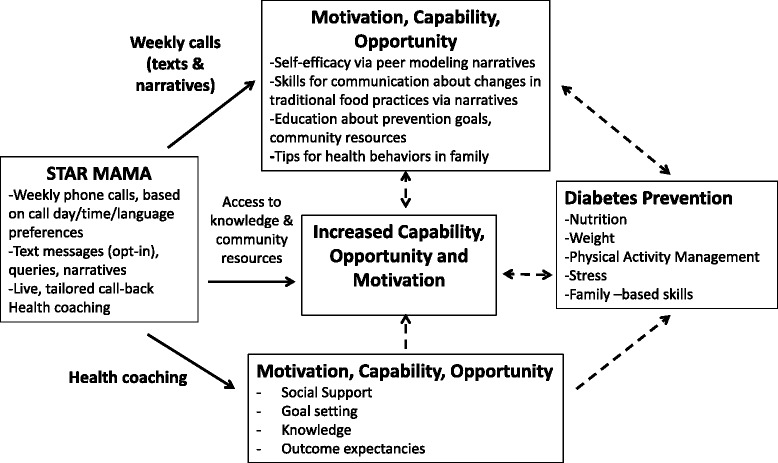
BACKGROUND: One of the fastest growing risk groups for early onset of diabetes is women with a recent pregnancy complicated by gestational diabetes, and for this group, Latinas are the largest at-risk group in the USA. Although evidence-based interventions, such as the Diabetes Prevention Program (DPP), which focuses on low-cost changes in eating, physical activity and weight management can lower diabetes risk and delay onset, these programs have yet to be tailored to postpartum Latina women. This study aims to tailor a IT-enabled health communication program to promote DPP-concordant behavior change among postpartum Latina women with recent gestational diabetes. The COM-B model (incorporating Capability, Opportunity, and Motivational behavioral barriers and enablers) and the Behavior Change Wheel (BCW) framework, convey a theoretically based approach for intervention development. We combined a health literacy-tailored health IT tool for reaching ethnic minority patients with diabetes with a BCW-based approach to develop a health coaching intervention targeted to postpartum Latina women with recent gestational diabetes. Current evidence, four focus groups (n = 22 participants), and input from a Regional Consortium of health care providers, diabetes experts, and health literacy practitioners informed the intervention development. Thematic analysis of focus group data used the COM-B model to determine content. Relevant cultural, theoretical, and technological components that underpin the design and development of the intervention were selected using the BCW framework. RESULTS: STAR MAMA delivers DPP content in Spanish and English using health communication strategies to: (1) validate the emotions and experiences postpartum women struggle with; (2) encourage integration of prevention strategies into family life through mothers becoming intergenerational custodians of health; and (3) increase social and material supports through referral to social networks, health coaches, and community resources. Feasibility, acceptability, and health-related outcomes (weight loss, physical activity, consumption of healthy foods, breastfeeding, and glucose screening) will be evaluated at 9 months postpartum using a randomized controlled trial design. CONCLUSIONS: STAR MAMA provides a DPP-based intervention that integrates theory-based design steps. Through systematic use of behavioral theory to inform intervention development, STAR MAMA may represent a strategy to develop health IT intervention tools to meet the needs of diverse populations. TRIAL REGISTRATION: ClinicalTrials.gov NCT02240420.
Overview
The claims and statistics of this paper haven’t been checked yet.
Free: it reads the open-access text and checks the first 5 claims that cite a source we can check. Create a free account to check every claim.
Integrity signals
Registry
Cites
Statistics
Figures
Verification
Claims the paper makes
The claims and statistics of this paper haven’t been checked yet.
Free: it reads the open-access text and checks the first 5 claims that cite a source we can check. Create a free account to check every claim.
Claims other papers make about this one
Each is checked against this paper’s own text: does it say what the citing paper says it does?
The source backs part of the claim, not all of it — or backs it for a different population, condition or comparison.
In the citing paper
“In contrast, nine studies [15, 18, 21, 23, 26, 30, 31, 33, 34] found patients with misconceptions about PA and their health conditions had lower exercise adherence.”
From Identifying the factors affecting ‘patient engagement’ in exercise rehabilitation (2022) · cites this paper as [33]
Experimental — accuracy not yet measuredThe cited source says what the claim attributes to it.
In the citing paper
“A prominent physical opportunity determinant noted in multiple articles was the availability of time for engaging in PA [15, 20, 21, 25, 26, 28, 30, 31, 33].”
From Identifying the factors affecting ‘patient engagement’ in exercise rehabilitation (2022) · cites this paper as [33]
In the citing paper
“Conversely, a lack of social support opportunities was cited in four studies as a barrier to treatment adherence [22, 23, 33, 34].”
From Identifying the factors affecting ‘patient engagement’ in exercise rehabilitation (2022) · cites this paper as [33]
Self-check
Percentages, sums and reported differences re-computed from the paper’s own numbers.
The self-check needs the paper’s full text.
Citations
Cites
(1998) · Sage eBooks · Cited by 38,631
Reduction in the incidence of type 2 diabetes with lifestyle intervention or metformin
(2002) · New England Journal of Medicine · doi:10.1056/nejmoa012512 · Cited by 19,011
Michie, S., van Stralen, M. M., & West, R. (2011) · Implementation Science · doi:10.1186/1748-5908-6-42 · Cited by 13,697 · cited 7×
“…in the environment or social setting that influence behavior and includes social and physical opportunity; and motivation refers to beliefs and emotions/impulses that are not always consciously recognized, but often direct behavior, and encompasses reflective and automatic motivation [30, 33].”
BackgroundMethodInfluentialMichie, S., Richardson, M., Johnston, M., Abraham, C., Francis, J., Hardeman, W., Eccles, M. P., Cane, J., & Wood, C. E. (2013) · Annals of Behavioral Medicine · doi:10.1007/s12160-013-9486-6 · Cited by 7,629 · cited 2×
“the sources of behavior that may be selected for intervention targets [30–34].”
BackgroundMaking psychological theory useful for implementing evidence based practice: a consensus approach
Michie, S. (2005) · Quality and Safety in Health Care · doi:10.1136/qshc.2004.011155 · Cited by 3,440 · cited 1×
“The second layer of the BCW provides direction to help identify intervention options, by a process of selecting from among nine intervention functions that could be applied to an intervention to address the behavioral barriers and leverage potential enablers identified with the COM-B analysis [31].”
BackgroundType 2 diabetes mellitus after gestational diabetes: a systematic review and meta-analysis
Bellamy, L., Casas, J.-P., Hingorani, A. D., & Williams, D. (2009) · The Lancet · doi:10.1016/s0140-6736(09)60731-5 · Cited by 3,253 · cited 4×
“GDM is one of the strongest predictors of development of T2DM, and women with a GDM pregnancy represent the single most identifiable risk group for subsequent rapid onset of T2DM among younger-aged populations [1, 3, 4].”
BackgroundInfluentialDiabetes Prevention Program Research Group (2009) · The Lancet · doi:10.1016/s0140-6736(09)61457-4 · Cited by 3,020
(2014) · Cited by 2,276
Gestational Diabetes and the Incidence of Type 2 Diabetes
Kim, C., Newton, K. M., & Knopp, R. H. (2002) · Diabetes Care · doi:10.2337/diacare.25.10.1862 · Cited by 2,276 · cited 2×
“Gestational diabetes mellitus (GDM) is defined as diabetes diagnosed in and confined to pregnancy [1].”
BackgroundMichie, S., Johnston, M., Francis, J., Hardeman, W., & Eccles, M. (2008) · Applied Psychology · doi:10.1111/j.1464-0597.2008.00341.x · Cited by 1,789 · cited 1×
“…of the individual theories and models of behavior change do not include a strong emphasis on the context in which a behavior occurs, often fail to focus on reflective processes that affect behavior (eg. beliefs and feelings), and are unable to explicitly state how to bring about change [28 – 30] .”
Background
Cited by
Szinay, D., Jones, A., Chadborn, T., Brown, J., & Naughton, F. (2020) · Journal of Medical Internet Research · doi:10.2196/17572 · Cited by 289
“COM-B is increasingly being applied to inform the development of digital behavior change interventions [21-23].”
BackgroundFlannery, C., McHugh, S., Anaba, A. E., Clifford, E., O’Riordan, M., Kenny, L. C., McAuliffe, F. M., Kearney, P. M., & Byrne, M. (2018) · BMC Pregnancy and Childbirth · doi:10.1186/s12884-018-1816-z · Cited by 218
“To date, a number of empirical studies have used either the TDF or COM-B in order to develop behaviour change interventions in different contexts [51, 52] but to our knowledge this has not yet been done for physical activity in an overweight and obese pregnant population.”
BackgroundAyakaka, I., Ackerman, S., Ggita, J. M., Kajubi, P., Dowdy, D. W., Haberer, J. E., Fair, E., Hopewell, P. C., Handley, M. A., Cattamanchi, A., et al. (2017) · Implementation Science · doi:10.1186/s13012-017-0561-4 · Cited by 154
Self-citationDennison, R. A., Ward, R. J., Griffin, S. J., & Usher‐Smith, J. A. (2019) · Diabetic Medicine · doi:10.1111/dme.13926 · Cited by 127
Ojo, S. O., Bailey, D. P., Hewson, D. J., & Chater, A. (2019) · International Journal of Environmental Research and Public Health · doi:10.3390/ijerph16162903 · Cited by 131
Identifying the factors affecting ‘patient engagement’ in exercise rehabilitation
Teo, J. L., Zheng, Z., & Bird, S. R. (2022) · BMC Sports Science, Medicine and Rehabilitation · doi:10.1186/s13102-022-00407-3 · Cited by 96
“physical opportunity determinant noted in multiple articles was the availability of time for engaging in PA [15, 20, 21, 25, 26, 28, 30, 31, 33].”
BackgroundResultInfluentialTargeting interventions to distinct meat-eating groups reduces meat consumption
Lacroix, K., & Gifford, R. (2020) · Food Quality and Preference · doi:10.1016/j.foodqual.2020.103997 · Cited by 91
Gustafson, P. E., Aziz, Y. H. A., Lambert, M. V., Bartholomew, K., Rankin, N. M., Fusheini, A., BROWN, R. M. A., Carswell, P., Ratima, M. M., Priest, P. C., et al. (2023) · Implementation Science · doi:10.1186/s13012-023-01304-0 · Cited by 94
“COM-B is not equity-focused but has been used to adapt a gestational diabetes programme for Latina women [72] and to design a smoking cessation service for Aboriginal and Torres Straight Islander people in Australia [73].”
MethodMuhwava, L. S., Murphy, K., Zarowsky, C., & Levitt, N. (2019) · PLOS ONE · doi:10.1371/journal.pone.0225431 · Cited by 71
“This model has been used in the context of GDM to develop effective health communication content for the STAR MAMA program for low-income postGDM Latina women in the US [35].”
MethodBarriers and facilitators to healthy eating among low-income Latino adolescents
Beck, A. L., Iturralde, E., Haya-Fisher, J., Kim, S., Keeton, V. F., & Fernández, A. (2019) · Appetite · doi:10.1016/j.appet.2019.04.004 · Cited by 108
“The COM-B model is informed by other health behavior theoretical frameworks that incorporate individual-, social-, and other environmental factors into understanding the target behavior, however, the COM-B model provides the additional advantage of explicitly linking behavioral factors to intervention functions, and h…”
MethodAyton, D. R., Barker, A. L., Morello, R. T., Brand, C. A., Talevski, J., Landgren, F. S., Melhem, M. M., Bian, E., Brauer, S. G., Hill, K. D., et al. (2017) · PLOS ONE · doi:10.1371/journal.pone.0171932 · Cited by 66
Updates in Gestational Diabetes Prevalence, Treatment, and Health Policy
Dickens, L. T., & Thomas, C. C. (2019) · Current Diabetes Reports · doi:10.1007/s11892-019-1147-0 · Cited by 84
Thompson, L. M., Díaz-Artiga, A., Weinstein, J. R., & Handley, M. A. (2018) · BMC Public Health · doi:10.1186/s12889-018-5138-x · Cited by 82
“In Phase 2, we used the COM-B Model to assess behaviors around stove use and designed intervention functions for a behavioral change intervention, as has been done in previous studies [43, 52].”
MethodSelf-citationBehavioural factors that drive stacking with traditional cooking fuels using the COM-B model
Perros, T., Allison, A. L., Tomei, J., & Parikh, P. (2022) · Nature Energy · doi:10.1038/s41560-022-01074-x · Cited by 61
Radu, I., Scheermesser, M., Spiess, M. R., Schulze, C., Händler‐Schuster, D., & Pehlke‐Milde, J. (2023) · International Journal of Environmental Research and Public Health · doi:10.3390/ijerph20206962 · Cited by 79
“Seven of the ten studies used qualitative methods: Handley et al. [63] and Lee et al. [32] conducted focus groups, Burchert et al. [61], Liss et al. [65] and Quarells et al. [67] conducted both focus groups and interviews and Zheng and Woo [52] assembled the participants for a talking-based…”
MethodGender differentials in readiness and use of mHealth services in a rural area of Bangladesh
Khatun, F., Heywood, A. E., Hanifi, S. M. A., Rahman, M. S., RAY, P. K., Liaw, S., & Bhuiya, A. (2017) · BMC Health Services Research · doi:10.1186/s12913-017-2523-6 · Cited by 65
“Bangladesh Demographic and Health Survey and other studies used this validated tool as a proxy of socioeconomic status of a household [46].”
BackgroundMethodRottapel, R. E., Zhou, E. S., Spadola, C., Clark, C. R., Kontos, E. Z., Laver, K., Chen, J. T., Redline, S. S., & Bertisch, S. M. (2020) · Sleep Health · doi:10.1016/j.sleh.2019.12.009 · Cited by 59
Croot, L., O’Cathain, A., Sworn, K., Yardley, L., Turner, K., Duncan, E., & Hoddinott, P. (2019) · Pilot and Feasibility Studies · doi:10.1186/s40814-019-0512-8 · Cited by 51
Haynes, A. S., & Loblay, V. (2024) · Qualitative Health Research · doi:10.1177/10497323241230890 · Cited by 64
Bull, E. R., Hart, J., Swift, J., Baxter, K., McLauchlan, N., Joseph, S., & Byrne-Davis, L. M. T. (2019) · BMC Health Services Research · doi:10.1186/s12913-019-3885-8 · Cited by 55
Murphy, K., Berk, J., Muhwava, L. S., Booley, S., Harbron, J., Ware, L. J., Norris, S. A., Zarowsky, C., Lambert, E. V., & Levitt, N. S. (2023) · BMC Public Health · doi:10.1186/s12889-023-15586-y · Cited by 55
Stroke survivors’ perceptions of their sedentary behaviours three months after stroke
Fitzsimons, C. F., Nicholson, S. L., Morris, J. H., Mead, G. E., CHASTIN, S. F. M., & Niven, A. G. (2020) · Disability and Rehabilitation · doi:10.1080/09638288.2020.1768304 · Cited by 39
Keller, M. S., Carrascoza-Bolanos, J., Breda, K., Kim, L. Y., Kennelty, K. A., Leang, D. W., Murry, L. T., Nuckols, T. K., Schnipper, J. L., & Pevnick, J. M. (2023) · BMJ Open · doi:10.1136/bmjopen-2022-066234 · Cited by 43
Smith, R., Michalopoulou, M., Reid, H. A. B., Payne, S., Wango, Y. N., Kenworthy, Y., Román, C., Santos, M., Hirst, J. E., & Mackillop, L. H. (2022) · BMC Pregnancy and Childbirth · doi:10.1186/s12884-022-04539-9 · Cited by 41
“Whilst the BCW has been applied to the development and evaluation of interventions including modifying PA behaviour [19, 20, 49] it has not previously been applied to the development of interventions to promote PA in women with GDM.”
MethodSchildmeijer, K. G. I., Nilsén, P., Ericsson, C., Broström, A., & Skagerström, J. (2018) · Health Science Reports · doi:10.1002/hsr2.87 · Cited by 35
“Earlier studies have applied COM-B to many different types of behaviours, including patients’ medication adherence [12], audiologists’ behavioural planning [13] and health coaching for women with diabetes [14].”
MethodEkberg, K., Schuetz, S., Timmer, B. H. B., & Hickson, L. M. H. (2020) · International Journal of Audiology · doi:10.1080/14992027.2020.1745305 · Cited by 38
“The COM-B provides a systematic method for identifying and assessing potential barriers and facilitators to the behaviour change in question, leading to the development of evidence-based behaviour change strategies in the subsequent steps of the BCW process (Handley et al. 2015).”
MethodInterventions for improving health literacy in migrants
Baumeister, A., Aldin, A., Chakraverty, D., Hübner, C., Adams, A., Monsef, I., Skoetz, N., Kalbe, E., & Woopen, C. (2023) · Cochrane Database of Systematic Reviews · doi:10.1002/14651858.cd013303.pub2 · Cited by 36
Shrubsole, K., Worrall, L. E., & Power, E. (2018) · Aphasiology · doi:10.1080/02687038.2018.1510112 · Cited by 30
“The BCW allows barriers to be “mapped” to evidence-based behaviour change interventions, and is therefore useful in designing behaviour change interventions (Handley et al., 2016; Mc Sharry, Murphy, & Byrne, 2016).”
BackgroundPostoperative opioid prescribing is not my job: A qualitative analysis of care transitions
Klueh, M. P., Sloss, K. R., Dossett, L. A., Englesbe, M. J., Waljee, J. F., Brummett, C. M., Lagisetty, P., & Lee, J. S.-J. (2019) · Surgery · doi:10.1016/j.surg.2019.05.033 · Cited by 26
Athavale, P., Thomas, M., Delgadillo-Duenas, A. T., Leong, K., Najmabadi, A., Harleman, E., Rios, C., Quan, J., Soria, C., & Handley, M. A. (2016) · Journal of Diabetes Research · doi:10.1155/2016/4353956 · Cited by 26
Self-citationThe community pharmacy setting for diabetes prevention: Views and perceptions of stakeholders
Katangwe‐Chigamba, T., Family, H. E., Sokhi, J., Al‐Jabr, H., Kirkdale, C. L., & Twigg, M. J. (2019) · PLoS ONE · doi:10.1371/journal.pone.0219686 · Cited by 27
Oliwa, J. N., Nzinga, J., Masini, E., van Hensbroek, M. B., Jones, C. O. H., English, M., & Hoog, A. H. V. (2020) · Implementation Science · doi:10.1186/s13012-020-01061-4 · Cited by 27
Cancelliere, C., Sutton, D. A., Côté, P., French, S. D., Taylor-Vaisey, A. L., & Mior, S. A. (2019) · Implementation Science · doi:10.1186/s13012-019-0931-1 · Cited by 23
Breuing, J., Pieper, D., Neuhaus, A. L., Heß, S., Lütkemeier, L., Haas, F., Spiller, M., & Graf, C. (2020) · PLoS ONE · doi:10.1371/journal.pone.0232250 · Cited by 20
Identifying barriers to physical activity among African American women with asthma
Nyenhuis, S. M., Shah, N., Ma, J., Marquez, D. X., Wilbur, J., Cattamanchi, A., & Sharp, L. K. (2019) · Cogent Medicine · doi:10.1080/2331205x.2019.1582399 · Cited by 19
Philippine, T., Forsgren, E., DeWitt, C., Carter, I., McCollough, M., & Taira, B. R. (2022) · BMC Health Services Research · doi:10.1186/s12913-022-07862-1 · Cited by 19
Addis, S., Holland‐Hart, D., Edwards, A., Neal, R. D., & Wood, F. (2018) · Journal of Evaluation in Clinical Practice · doi:10.1111/jep.13023 · Cited by 22
“One of the strengths of the COM-B model is that it facilitates the understanding of behaviour in context and has been applied successfully to analyse behaviours in a number of health settings, including audiology ((25)), medical adherence (22) and IT-enabled health coaching for mothers ((20)).”
BackgroundMethodInfluentialUnderstanding the causes of prescribing errors from a behavioural perspective
Bannan, D. F., Aseeri, M. A., AlAzmi, A., & Tully, M. P. (2018) · Research in Social and Administrative Pharmacy · doi:10.1016/j.sapharm.2018.07.007 · Cited by 22
Breuing, J., Joisten, C., Neuhaus, A. L., Heß, S., Kusche, L., Haas, F., Spiller, M., & Pieper, D. (2021) · Systematic Reviews · doi:10.1186/s13643-021-01846-8 · Cited by 20
“, 2016 [43] USA, California, San Francisco and Sonoma County Focus groups/migrants Health literacy-tailored health IT tool delivering DPP content ADPP + TA”
BackgroundNouri, S. S., Tan, C. H., Rangel, M., Wertz, M., Sanchez, A. X., Alvarado, A., Arreola, E., Quinn, M., Pantilat, S. Z., Lyles, C. R., et al. (2023) · Journal of the American Geriatrics Society · doi:10.1111/jgs.18236 · Cited by 21
Haley, J. A., Rhind, D. J. A., & Maidment, D. W. (2023) · mHealth · doi:10.21037/mhealth-22-52 · Cited by 19
“A mid ring on the BCW incorporates nine intervention functions (69,70), and the outer ring comprises seven policy options (71,72), which can support the delivery of the intervention functions (73).”
Chen, I., Doum, D., Mannion, K., Hustedt, J. C., Sovannaroth, S., McIver, D. J., MacDonald, M. B., Lobo, N. F., Tatarsky, A., Handley, M. A., et al. (2023) · Malaria Journal · doi:10.1186/s12936-023-04685-1 · Cited by 16
“…researchers (IC, MH, and JN) using the COM-B framework to identify barriers and enablers to product uptake, in this case the behaviours were to use the vector control products in addition to any vector control tools they were already using (e.g., long-lasting insecticidal net (LLIN), LLIHN) [15].”
BackgroundMethodInfluentialSelf-citationDiabetes after pregnancy prevention trials: Systematic review for core outcome set development
O'Reilly, S. L., Leonard, Y., Dasgupta, K., & Maindal, H. T. (2020) · Maternal and Child Nutrition · doi:10.1111/mcn.12947 · Cited by 18
Rawahi, S. H. A., Asimakopoulou, K. G., & Newton, T. (2018) · BDJ Open · doi:10.1038/bdjopen.2017.24 · Cited by 17
Rodriguez, D. V., Lawrence, K. S., Luu, S., Yu, J. L., Feldthouse, D. M., González, J., & Mann, D. (2021) · Journal of the American Medical Informatics Association · doi:10.1093/jamia/ocab206 · Cited by 15
Meinokat, P., & Wagner, I. (2021) · Education and Information Technologies · doi:10.1007/s10639-021-10795-7 · Cited by 41
“, 2012), while prevention strategies often searched for causes (Handley et al., 2016).”
BackgroundRoesler, A., Butten, K., Calyx, C., Holmes‐Truscott, E., & Taylor, P. J. (2023) · Nutrients · doi:10.3390/nu15153304 · Cited by 17
Lawrence, K. S., Rodriguez, D. V., Feldthouse, D. M., Shelley, D., Yu, J. L., Belli, H. M., González, J., Tasneem, S., Fontaine, J., Groom, L. L., et al. (2021) · JMIR Research Protocols · doi:10.2196/26750 · Cited by 18
“This model is widely used in behavior change health research and has been proven effective for designing health interventions targeting disease prevention [23-26].”
Odes, R., Alway, J., Kushel, M., Max, W. B., & Vijayaraghavan, M. (2022) · BMC Public Health · doi:10.1186/s12889-022-14423-y · Cited by 14
“The BCW includes three layers [1]: the first uses the Capability, Opportunity, Motivation, Behavior (COM-B) [24, 25] model to highlight key barriers and potential enablers to voluntarily adopting a smoke-free home [2]; the second highlights five intervention options that cuts across individual, social, and organizatio…”
Vasquez, T. T., Fernández, A., Haya-Fisher, J., Kim, S., & Beck, A. L. (2020) · Hispanic Health Care International · doi:10.1177/1540415320956933 · Cited by 21
“The COM-B model has been widely used to inform the design and evaluation of health behavior interventions (Curtis et al., 2015; Handley et al., 2016; Mangurian et al., 2017) including studies with adolescents (Carney et al., 2016; Harris et al., 2019; McDonagh et al., 2018).”
MethodDale, J. R., Loew, J., Nanton, V., & Smith, G. G. (2018) · JMIR Aging · doi:10.2196/aging.9025 · Cited by 14
Whitley, M. D., Payán, D. D., Flórez, K. R., Williams, M. V., Wong, E. C., Branch, C. A., & Derose, K. P. (2019) · Health Informatics Journal · doi:10.1177/1460458219853408 · Cited by 16
Gopalan, A., Blatchins, M. A., Xu, K. K., Altschuler, A., Marshall, C. J., Hessler, D. M., Fernandez, A., & Grant, R. W. (2022) · The Journal of the American Board of Family Medicine · doi:10.3122/jabfm.2022.02.210223 · Cited by 12
MacPherson, M., & Kapadia, S. (2023) · BMC Digital Health · doi:10.1186/s44247-023-00033-0 · Cited by 14
Soelling, S. J., Rubio-Chavez, A., Ingram, Z., Baird, L., Brindle, M. E., Cooper, Z. R., Vranceanu, A., Ritchie, C. S., & Cauley, C. E. (2025) · Journal of Gastrointestinal Surgery · doi:10.1016/j.gassur.2025.101963 · Cited by 12
Ayton, D., O’Donnell, R., Vicary, D., Bateman, C., Moran, C., Srikanth, V. K., Lustig, J., Banaszak‐Holl, J., Hunter, P. C., Pritchard, E., et al. (2020) · BMJ Open · doi:10.1136/bmjopen-2019-036449 · Cited by 11
Health literacy of ethnic minority in remote China: precise intervention is needed
Hu, H., Liu, J., Liang, Y., & Xu, Y. (2021) · The Lancet Regional Health - Western Pacific · doi:10.1016/j.lanwpc.2021.100322 · Cited by 11
Hu, H., Xu, Y., Shao, Y., Liang, Y., Wang, Q., Luo, S., Lu, H., Meng, H., & Liu, C. (2022) · Frontiers in Public Health · doi:10.3389/fpubh.2022.940619 · Cited by 13
“Some evidence suggests that model-based health literacy assessments or interventions can provide a better picture of these needs (32, 33).”
BackgroundDiamond‐Smith, N., Walker, D. M., Afulani, P. A., Donnay, F. A., Lin, S., Peca, E., & Stanton, M. E. (2023) · Global Health Science and Practice · doi:10.9745/ghsp-d-22-00278 · Cited by 11
Challenges to Video Visits for Patients With Non–English Language Preference: A Qualitative Study
Kong, M., Ríos‐Fetchko, F., Olmos-Rodriguez, M., Branagan, L., Iott, B. E., Tack, T. C., Yarbrough, C., Grumbach, K., & Fernández, A. (2025) · JAMA Network Open · doi:10.1001/jamanetworkopen.2024.57477 · Cited by 16
Perceptions of falls risk and falls prevention among people with osteoarthritis
Tsindos, T., Ayton, D., Soh, S., & Ackerman, I. N. (2020) · Disability and Rehabilitation · doi:10.1080/09638288.2020.1806364 · Cited by 12
The STAR-MAMA RCT: Bilingual Mobile Health Coaching for Postpartum Weight Loss
Horwitz, M. E. M., Edwards, C. V., Athavale, P., McCloskey, L., Cabral, H., Benjamin, E. J., & Handley, M. A. (2023) · American Journal of Preventive Medicine · doi:10.1016/j.amepre.2023.03.021 · Cited by 10
Self-citationCarey, R. L., Le, H., Coffman, D. L., Nahum-Shani, I. B., Thirumalai, M., Hagen, C., Baehr, L. A., Schmidt-Read, M., Lamboy, M. R., Kolakowsky‐Hayner, S. A., et al. (2024) · JMIR Research Protocols · doi:10.2196/57699 · Cited by 14
“The proposed intervention approach builds on the COM-B model [31]—an organizing framework for designing behavior change interventions [32-34].”
MethodGómez, M. L., Hieronymus, L. B., Ashford, K. B., Barnett, J., & Renn, T. A. (2018) · Diabetes Spectrum · doi:10.2337/ds18-0013 · Cited by 9
“Likewise, research has shown the difficulty of recruiting women with young children for interventional programs for type 2 diabetes prevention due to competing demands and barriers such as household responsibilities, child care, and financial constraints (26).”
BackgroundOliwa, J. N., Odero, S. A., Nzinga, J., van Hensbroek, M. B., Jones, C. H. D., English, M., & Hoog, A. H. V. (2020) · BMC Health Services Research · doi:10.1186/s12913-020-05588-6 · Cited by 23
Pajka, S. E., Kushel, M., Handley, M. A., Olsen, P., Li, B., Enriquez, C., Kaplan, L. M., & Sudore, R. L. (2023) · Journal of the American Geriatrics Society · doi:10.1111/jgs.18314 · Cited by 7
Self-citation“At the End I Have a Say”: Engaging the Chinese Community in Advance Care Planning
Nouri, S. S., Li, L., Huang, C., Chung, A., Stokes, S. C., Pan, S., Wong, E. C., Newman, J., Woo, J. W., Cheng, J. W., et al. (2023) · Journal of Pain and Symptom Management · doi:10.1016/j.jpainsymman.2023.07.017 · Cited by 8
Velloza, J., Mehtani, N. J., Hickey, M. D., Imbert, E., Appa, A. A., & Riley, E. D. (2024) · Current HIV/AIDS Reports · doi:10.1007/s11904-024-00714-z · Cited by 5
“[12, 20–24] The BCW is represented as a hub with three central components: capability, opportunity, and motivation [20, 21].”
Perera, M. J., Reina, S. A., Elfassy, T., Potter, J. E., Alvarez, D. S., Simon, M. A., Isasi, C. R., Stuebe, A. M., Schneiderman, N., & Llabre, M. M. (2018) · Women & Health · doi:10.1080/03630242.2018.1500415 · Cited by 6
“Hispanic/Latina women with a history of GDM (Dulce Mothers, PREVENT-DM, and STAR MAMA); however, these interventions have primarily recruited samples of majority Mexican descent (Handley et al. 2016; Perez et al. 2015; Philis-Tsimikas et al. 2014).”
BackgroundFang, A., Abdelgadir, D. A., Gopalan, A., Ross, T. B., Uratsu, C. S., Sterling, S., Grant, R. W., & Iturralde, E. (2021) · Patient Education and Counseling · doi:10.1016/j.pec.2021.04.038 · Cited by 5
Sheshadri, A., Elia, J. R., Garcia, G., Abrams, G., Adey, D., Lai, J. C., & Sudore, R. L. (2023) · Kidney Medicine · doi:10.1016/j.xkme.2023.100779 · Cited by 7
“The guide was updated using an iterative process based on the BCW framework 40-43 and piloted with transplantation providers and a patient-caregiver dyad (not included in this analysis).”
MethodWhat matters when exploring fidelity when using health IT to reduce disparities?
Handley, M. A., Landeros, J., Wu, C., Najmabadi, A., Vargas, D., & Athavale, P. (2021) · BMC Medical Informatics and Decision Making · doi:10.1186/s12911-021-01476-z · Cited by 6
Self-citationHandley, M. A., Santos, M. G., & Bastías, M. J. T. (2022) · International Journal of Environmental Research and Public Health · doi:10.3390/ijerph20010696 · Cited by 7
Self-citationSchildmeijer, K. G. I., Nilsén, P., Ericsson, C., Broström, A., & Skagerström, J. (2018) · Journal of Patient Care · doi:10.4172/2573-4598.1000137 · Cited by 4
O’Callaghan, C., Tran, A., Tam, N., Wen, L. M., & Harris‐Roxas, B. (2021) · Health Promotion International · doi:10.1093/heapro/daab129 · Cited by 7
Taiminen, H. M. (2022) · Journal of Nonprofit & Public Sector Marketing · doi:10.1080/10495142.2022.2130495 · Cited by 4
“In practice, the COM-B model was utilized to organize the data into categories related to capability, opportunity, and motivation, following the inductive identification of enablers and barriers within each category (see, Handley et al., 2016).”
MethodLyles, C. R., Khoong, E. C., Stern, R. J., Abtahi, N., Sharma, A. E., Pletcher, M. J., Xia, F., Garcia, F., Shah, N. D., Tieu, L., et al. (2025) · Contemporary Clinical Trials · doi:10.1016/j.cct.2025.107879 · Cited by 3
Factors affecting COVID-19 vaccine uptake in Vietnam: an extended COM-B model
Xuan, T. N., Hoang, N. B., & Lan, P. P. T. (2024) · International Journal of Pharmaceutical and Healthcare Marketing · doi:10.1108/ijphm-03-2022-0028 · Cited by 3
Sundin, E., Mrowiec, A., Bowpitt, G., Boatman, C. A., Williams, A. J., Sarkar, M., & Baguley, T. S. (2019) · European Journal of Public Health · doi:10.1093/eurpub/ckz202 · Cited by 4
Shrubsole, K., Pitt, R., Till, K., Finch, E., & Ryan, B. (2020) · Brain Impairment · doi:10.1017/brimp.2020.11 · Cited by 3
Gresham, P. E., Fields, S. A., Beebe, E., & Smallman, R. (2025) · Appetite · doi:10.1016/j.appet.2025.107953 · Cited by 2
Birkás, B., Tóth, G., Balku, E., Nárai, E., & Vitrai, J. (2020) · Psychology Health & Medicine · doi:10.1080/13548506.2020.1762903 · Cited by 4
Identifying The Factors Affecting ‘Patient Engagement’ In Exercise RehabilitationPreprint
Teo, J. L., Zheng, Z., & Bird, S. R. (2021) · Research Square · doi:10.21203/rs.3.rs-753800/v1 · Cited by 3
Beyond Technology: A Narrative Review of Organizational Dynamics in IT Change Management
Noviany, H. (2024) · Data Journal of Information Systems and Management · doi:10.61978/data.v2i2.718 · Cited by 2
Olaoye, I., Brown, N., Tsofliou, F., Kelaiditi, E., & Myrissa, K. (2026) · Health Psychology and Behavioral Medicine · doi:10.1080/21642850.2026.2616929 · Cited by 2
“Power et al.’s UK home based exercise programme (16) and the STAR MAMA project in the US (Handley et al., 2015) applied the BCW and COM B model to embed cultural and contextual relevance.”
Burns, K., van Rensburg, C., Bloom, S., Villanueva, C., Ikihele, A., Blow, N., Vogranic, A., Crone, E. M., du Toit, C., Panisset, M. G., et al. (2026) · Journal of Medical Internet Research · doi:10.2196/89596 · Cited by 2
“…Calderón et al [125], Campbell et al [135], Cerda Diez et al [49], Dobson et al [122], Fontil et al [60], Garvelink et al [61], Handley et al [68], Doty et al [58], Hearn et al [136], Hoque and Sorwar [129], Hutchings et al [75], Hynie et al [74], Kayastha et al [130], Lindegaard et al [80],…”
Yan, J., Fang, Z., Chen, L., Tang, J., Lu, Q., & Lin, X. (2024) · Journal of Housing and the Built Environment · doi:10.1007/s10901-024-10120-x · Cited by 3
“It has been widely employed for behaviour change studies such as diabetes, medication, energy saving behaviours (Handley et al., 2015; Jackson et al., 2014; Perros et al., 2022).”
Barah, E. J., & Jackson, J. (2025) · Journal of Renal Care · doi:10.1111/jorc.70002 · Cited by 2
Moore, A. P., Rivas, C. A., Harding, S., & Goff, L. M. (2025) · BMC Public Health · doi:10.1186/s12889-025-21767-8 · Cited by 4
Koukamari, P. H., Ghaffari, M., Tavafian, S. S., & Ramezankhani, A. (2021) · Health Scope · doi:10.5812/jhealthscope.108354 · Cited by 4
Barbala, I. M., Grewal, N. K., Haug, H., Eriksen, A. M., & Terragni, L. (2019) · Norsk tidsskrift for ernæring · doi:10.18261/ntfe.17.4.2 · Cited by 2
Athavale, P., Prata, N., Sokal‐Gutierrez, K., Lahiff, M., Najmabadi, A., Landeros, J., Rios, C., Quan, J., & Handley, M. A. (2020) · Research Square · doi:10.21203/rs.2.21040/v1 · Cited by 1
“This paper is a quantitative descriptive analysis of the baseline data from the STAR MAMA (support via Telephone Advice and Resources/Sistema Teléfonico de Apoyo y RecursosMAMA; 2014–2018) intervention trial to identify factors that are associated with varying risk perception in the study population [25].”
MethodSelf-citationCauley, C. E., Rubio-Chavez, A., Brindle, M. E., Cooper, Z. R., Vranceanu, A., & Ritchie, C. S. (2024) · JMIR Research Protocols · doi:10.2196/60575 · Cited by 1
The Walking and Lifestyle Coaching (WALC) Program for University Students: A Pilot Study
Cole, A., Corrales, F., Stone, E., & Biber, D. (2024) · American Journal of Lifestyle Medicine · doi:10.1177/15598276241266783 · Cited by 2
“81 It also gives students opportunities to engage in healthy behaviors through the program ’ s creation and availability.”
Beauchamp, A., Hilbers, J., Cvetanovska, N., Shee, A. W., Horvat, L., Rogers, S. L., Cooper, A., Flemming-Judge, E., Rawlinson, S., & Jessup, R. L. (2025) · JMIR Formative Research · doi:10.2196/77263 · Cited by 2
“The COM-B model considers 3 key domains associated with behavior change: Capability, Opportunity, and Motivation [38].”
Perceções e comportamentos dos médicos oncologistas relativos à promoção de atividade física
Rodrigues, B., Ribeiro, C., Encantado, J., & Palmeira, A. L. (2020) · Psychology Community & Health · doi:10.5964/pch.v8i1.315 · Cited by 2
“…estudos que utilizam o modelo COM-B, relativos a comportamentos de saúde (Ayakaka et al., 2017; Connell, McMahon, Tyson, Watkins, & Eng, 2016; Handley et al., 2016; Munir et al., 2018; Nyenhuis, Ma, & Sharp, 2017; Thompson, Diaz-Artiga, Weinstein, & Handley, 2018) e um estudo direcionado a…”
Bolou, A., & Gourounti, K. (2024) · World Journal of Advanced Research and Reviews · doi:10.30574/wjarr.2024.21.3.0822 · Cited by 1
“(24, 25) Health coaches should be trained to follow specific diabetes prevention programmes and hold a health coaching certificate.”
Bump Start: developing and piloting a healthy living group intervention for obese pregnant women
Bull, E. R., Clayton, H., & Hendry, T. (2017) · British Journal of Midwifery · doi:10.12968/bjom.2017.25.6.386 · Cited by 2
Wibowo, R. A., Hartarto, R. B., Bhattacharjee, A., Wardani, D. T. K., Sambodo, N. P., Utomo, P. S., Annisa, L., Hakim, M. S., Sofyana, M., & Dewi, F. S. T. (2023) · Frontiers in Public Health · doi:10.3389/fpubh.2023.960500 · Cited by 2
Behavioral Intervention Functions in Type 2 Diabetes Apps: Literature Review
Gabarrón, E., Randine, P., & Årsand, E. (2024) · Journal of Diabetes Science and Technology · doi:10.1177/19322968241305646 · Cited by 1
“The BCW framework has been studied as a basis for improving non-technology-based intervention programs in diabetes, 7-11 and for creating technology-based interventions as well, such as a phone-based program for women with gestational diabetes 7 ; an app to increase physical activity 12 ; a virtual…”
Metadata
- Authors
- Handley, M. A., Harleman, E., Gonzalez-Mendez, E., Stotland, N. E., Althavale, P., Fisher, L., Martinez, D., Ko, J., Sausjord, I., & Rios, C.
- Affiliations
- San Francisco General Hospital (US)
- University of California, San Francisco (US)
- Corresponding author
- Handley, Margaret A.
- Venue
- Implementation Science
- Published
- 2015-12
- Volume
- 11
- Issue
- 1
- Pages
- 73-73
- ISSN
- 1748-5908 (ISSN-L)
- PMC
- PMC4870786
- OpenAlex
- W2399070678
- Cited by
- 116
- References
- 51
- Citations by year
- 2026: 4 · 2025: 10 · 2024: 10 · 2023: 19 · 2022: 10 · 2021: 10 · 2020: 22 · 2019: 15 · 2018: 11 · 2017: 4 · 2016: 1
- FWCI
- 9.75
- Type
- journal article
- Language
- en
- Open access
- gold
- doi.org
- Licence
- cc-by
- creativecommons.org/licenses/by/4.0/ (tdm)
- creativecommons.org/licenses/by/4.0/ (vor, 169 d)
- Locations
- Implementation Science (publishedVersion, cc-by)
- PubMed Central (publishedVersion, cc-by)
- PubMed (publishedVersion)
- eScholarship (California Digital Library) (submittedVersion)
- eScholarship (California Digital Library) (submittedVersion, cc-by)
- Funders
- National Center on Minority Health and Health Disparities (P60MD006902.)
- National Institute of Diabetes and Digestive and Kidney Diseases (P30DK092924)
- Woman Infant Children Program
- Topics
- Health Sciences › Health Professions › General Health Professions › Mobile Health and mHealth Applications
- Health Sciences › Medicine › Endocrinology, Diabetes and Metabolism › Diabetes Management and Education
- Health Sciences › Medicine › Obstetrics and Gynecology › Gestational Diabetes Research and Management
- Keywords
- gestational diabetes mellitus, Hispanic women, postpartum women, health coaching, resource linking, COM-B model, Behaviour Change Wheel, health information technology, health literacy, Diabetes Prevention Program, type 2 diabetes prevention, intergenerational health, social support, intervention development
- MeSH terms
- Adult, Female, Health Education, Health Promotion, Hispanic or Latino, Humans, Medical Informatics, Motivation, Poverty, Pregnancy, Diabetes, Gestational, Focus Groups, Telemedicine, Postpartum Period
About these checks
Registry, retraction, Cites and statistics results are computed, not judged, with one exception: a printed reference that no index lists is read once by a model before it counts as a citation error. Claims are extracted by a model and kept only when their quote appears verbatim in the text; each cited source is then checked, with a model’s help, for whether it says what the claim relies on. Those verdicts can be wrong — read the claim’s quote and the cited source before relying on one.
Statistics and arithmetic are recomputed, not judged.
Confidence bands are shown only for fields calibrated on our annotated test set. None is calibrated yet, so no band is shown.
What counts as a claim ›How we measure confidence ›How we check this ›
Are you an author, or do you see a problem with this page? Request a review
Data sources
Bibliographic data: Semantic Scholar, OpenAlex, Crossref.
Contains information from the Semantic Scholar Academic Graph Datasets, made available under the ODC Attribution License (ODC-BY 1.0).
Semantic Scholar’s data is described in: Kinney, R., et al. (2023). The Semantic Scholar Open Data Platform. arXiv:2301.10140.
