

Applying the COM-B model to creation of an IT-enabled health coaching and resource linkage program for low-income Latina moms with recent gestational diabetes: the STAR MAMA program
Open accessThe DOI matches its Crossref record; 50 of the 51 references it cites were found in a registry or an index, and 1 are not checked yet.
Abstract
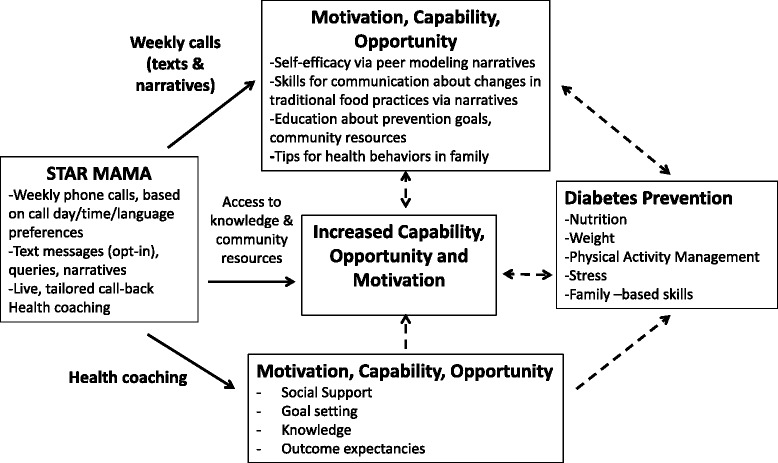
BACKGROUND: One of the fastest growing risk groups for early onset of diabetes is women with a recent pregnancy complicated by gestational diabetes, and for this group, Latinas are the largest at-risk group in the USA. Although evidence-based interventions, such as the Diabetes Prevention Program (DPP), which focuses on low-cost changes in eating, physical activity and weight management can lower diabetes risk and delay onset, these programs have yet to be tailored to postpartum Latina women. This study aims to tailor a IT-enabled health communication program to promote DPP-concordant behavior change among postpartum Latina women with recent gestational diabetes. The COM-B model (incorporating Capability, Opportunity, and Motivational behavioral barriers and enablers) and the Behavior Change Wheel (BCW) framework, convey a theoretically based approach for intervention development. We combined a health literacy-tailored health IT tool for reaching ethnic minority patients with diabetes with a BCW-based approach to develop a health coaching intervention targeted to postpartum Latina women with recent gestational diabetes. Current evidence, four focus groups (n = 22 participants), and input from a Regional Consortium of health care providers, diabetes experts, and health literacy practitioners informed the intervention development. Thematic analysis of focus group data used the COM-B model to determine content. Relevant cultural, theoretical, and technological components that underpin the design and development of the intervention were selected using the BCW framework. RESULTS: STAR MAMA delivers DPP content in Spanish and English using health communication strategies to: (1) validate the emotions and experiences postpartum women struggle with; (2) encourage integration of prevention strategies into family life through mothers becoming intergenerational custodians of health; and (3) increase social and material supports through referral to social networks, health coaches, and community resources. Feasibility, acceptability, and health-related outcomes (weight loss, physical activity, consumption of healthy foods, breastfeeding, and glucose screening) will be evaluated at 9 months postpartum using a randomized controlled trial design. CONCLUSIONS: STAR MAMA provides a DPP-based intervention that integrates theory-based design steps. Through systematic use of behavioral theory to inform intervention development, STAR MAMA may represent a strategy to develop health IT intervention tools to meet the needs of diverse populations. TRIAL REGISTRATION: ClinicalTrials.gov NCT02240420.
Overview
The claims and statistics of this paper haven’t been checked yet.
Free: it reads the open-access text and checks the first 5 claims that cite a source we can check. Create a free account to check every claim.
Integrity signals
Registry
Cites
Statistics
Figures
Verification
Claims the paper makes
The claims and statistics of this paper haven’t been checked yet.
Free: it reads the open-access text and checks the first 5 claims that cite a source we can check. Create a free account to check every claim.
Claims other papers make about this one
Each is checked against this paper’s own text: does it say what the citing paper says it does?
The source backs part of the claim, not all of it — or backs it for a different population, condition or comparison.
In the citing paper
“In contrast, nine studies [15, 18, 21, 23, 26, 30, 31, 33, 34] found patients with misconceptions about PA and their health conditions had lower exercise adherence.”
From Identifying the factors affecting ‘patient engagement’ in exercise rehabilitation (2022) · cites this paper as [33]
Experimental — accuracy not yet measuredThe cited source says what the claim attributes to it.
In the citing paper
“A prominent physical opportunity determinant noted in multiple articles was the availability of time for engaging in PA [15, 20, 21, 25, 26, 28, 30, 31, 33].”
From Identifying the factors affecting ‘patient engagement’ in exercise rehabilitation (2022) · cites this paper as [33]
In the citing paper
“Conversely, a lack of social support opportunities was cited in four studies as a barrier to treatment adherence [22, 23, 33, 34].”
From Identifying the factors affecting ‘patient engagement’ in exercise rehabilitation (2022) · cites this paper as [33]
Self-check
Percentages, sums and reported differences re-computed from the paper’s own numbers.
The self-check needs the paper’s full text.
Citations
Cites
(1998) · Sage eBooks · Cited by 38,631
Reduction in the incidence of type 2 diabetes with lifestyle intervention or metformin
(2002) · New England Journal of Medicine · doi:10.1056/nejmoa012512 · Cited by 19,011
Michie, S., van Stralen, M. M., & West, R. (2011) · Implementation Science · doi:10.1186/1748-5908-6-42 · Cited by 13,697 · cited 7×
“…in the environment or social setting that influence behavior and includes social and physical opportunity; and motivation refers to beliefs and emotions/impulses that are not always consciously recognized, but often direct behavior, and encompasses reflective and automatic motivation [30, 33].”
BackgroundMethodInfluentialMichie, S., Richardson, M., Johnston, M., Abraham, C., Francis, J., Hardeman, W., Eccles, M. P., Cane, J., & Wood, C. E. (2013) · Annals of Behavioral Medicine · doi:10.1007/s12160-013-9486-6 · Cited by 7,629 · cited 2×
“the sources of behavior that may be selected for intervention targets [30–34].”
BackgroundMaking psychological theory useful for implementing evidence based practice: a consensus approach
Michie, S. (2005) · Quality and Safety in Health Care · doi:10.1136/qshc.2004.011155 · Cited by 3,440 · cited 1×
“The second layer of the BCW provides direction to help identify intervention options, by a process of selecting from among nine intervention functions that could be applied to an intervention to address the behavioral barriers and leverage potential enablers identified with the COM-B analysis [31].”
BackgroundType 2 diabetes mellitus after gestational diabetes: a systematic review and meta-analysis
Bellamy, L., Casas, J.-P., Hingorani, A. D., & Williams, D. (2009) · The Lancet · doi:10.1016/s0140-6736(09)60731-5 · Cited by 3,253 · cited 4×
“GDM is one of the strongest predictors of development of T2DM, and women with a GDM pregnancy represent the single most identifiable risk group for subsequent rapid onset of T2DM among younger-aged populations [1, 3, 4].”
BackgroundInfluentialDiabetes Prevention Program Research Group (2009) · The Lancet · doi:10.1016/s0140-6736(09)61457-4 · Cited by 3,020
(2014) · Cited by 2,276
Gestational Diabetes and the Incidence of Type 2 Diabetes
Kim, C., Newton, K. M., & Knopp, R. H. (2002) · Diabetes Care · doi:10.2337/diacare.25.10.1862 · Cited by 2,276 · cited 2×
“Gestational diabetes mellitus (GDM) is defined as diabetes diagnosed in and confined to pregnancy [1].”
BackgroundMichie, S., Johnston, M., Francis, J., Hardeman, W., & Eccles, M. (2008) · Applied Psychology · doi:10.1111/j.1464-0597.2008.00341.x · Cited by 1,789 · cited 1×
“…of the individual theories and models of behavior change do not include a strong emphasis on the context in which a behavior occurs, often fail to focus on reflective processes that affect behavior (eg. beliefs and feelings), and are unable to explicitly state how to bring about change [28 – 30] .”
BackgroundBright Futures: Guidelines for Health Supervision of Infants, Children, and Adolescents.
Green, M. (1994) · Cited by 1,715
French, S. D., Green, S. E., O’Connor, D. A., McKenzie, J. E., Francis, J. J., Michie, S., Buchbinder, R., Schattner, P., Spike, N., & Grimshaw, J. M. (2012) · Implementation Science · doi:10.1186/1748-5908-7-38 · Cited by 1,338
Increasing Prevalence of Gestational Diabetes Mellitus
Ferrara, A. (2007) · Diabetes Care · doi:10.2337/dc07-s206 · Cited by 1,171 · cited 1×
“The incidence of GDM is increasing and now affects 7–10 % of US pregnancies [2, 3].”
BackgroundGynecologists (1983) · Medical Entomology and Zoology · Cited by 912
Ratner, R. E., Christophi, C. A., Metzger, B. E., Dabelea, D., Bennett, P. H., Pi-Sunyer, X., Fowler, S., Kahn, S. E., & The Diabetes Prevention Program Research Group (2008) · The Journal of Clinical Endocrinology & Metabolism · doi:10.1210/jc.2008-0772 · Cited by 867 · cited 1×
“This seminal evidence comes from the Diabetes Prevention Program (DPP) trial which found that compared to control the incidence of T2DM was reduced by 58 % with the lifestyle intervention and 31 % with metformin [13, 14].”
BackgroundSandelowski, M. (2004) · Qualitative Health Research · doi:10.1177/1049732304269672 · Cited by 616 · cited 1×
“Data analysis to identify diabetes-relevant barriers and facilitators was based on qualitative data analysis methods described by Sandelowski and others [39, 40], which we have used previously [41] in which general topic area prompts are used to orient qualitative data descriptions.”
MethodGestational diabetes: the need for a common ground
Reece, E. A., Leguizamón, G., & Wiznitzer, A. (2009) · The Lancet · doi:10.1016/s0140-6736(09)60515-8 · Cited by 589 · cited 2×
“GDM is one of the strongest predictors of development of T2DM, and women with a GDM pregnancy represent the single most identifiable risk group for subsequent rapid onset of T2DM among younger-aged populations [1, 3, 4].”
BackgroundDeSisto, C. L., Kim, S. Y., & Sharma, A. J. (2014) · Preventing Chronic Disease · doi:10.5888/pcd11.130415 · Cited by 577
Secreted blood reporters: Insights and applications
Tannous, B. A., & Teng, J. (2011) · Biotechnology Advances · doi:10.1016/j.biotechadv.2011.08.021 · Cited by 248
Ferrara, A., Hedderson, M. M., Albright, C. L., Ehrlich, S. F., Quesenberry, C. P., Peng, T., Feng, J., Ching, J., & Crites, Y. (2011) · Diabetes Care · doi:10.2337/dc10-2221 · Cited by 238 · cited 1×
“Consequently, modified versions of the DPP have been translated into a variety of clinic and community-based programs, but few focus specifically on pGDM women [15, 16].”
BackgroundSchillinger, D., Handley, M., Wang, F., & Hammer, H. (2009) · Diabetes Care · doi:10.2337/dc08-0787 · Cited by 230
Self-citationAAP Committee on Fetus and Newborn (2012) · American Academy of Pediatrics eBooks · doi:10.1542/9781581107715 · Cited by 224
Gunderson, E. P., Lewis, C. E., Tsai, A.-L., Chiang, V., Carnethon, M., Quesenberry, C. P., & Sidney, S. (2007) · Diabetes · doi:10.2337/db07-1024 · Cited by 164 · cited 2×
“Because STAR MAMA focuses on pGDM women, the importance of breastfeeding and support for breastfeeding challenges was emphasized [5].”
BackgroundCurtis, K. E., Lahiri, S., & Brown, K. E. (2015) · JMIR mHealth and uHealth · doi:10.2196/mhealth.3857 · Cited by 146 · cited 1×
“beliefs and feelings), and are unable to explicitly state how to bring about change [28–30].”
BackgroundBright futures guidelines for health supervision of infants, children, and adolescents
Hagan, J. F., Shaw, J. S., & Duncan, P. M. (2008) · Cited by 129
England, L. J., Dietz, P. M., Njoroge, T., Callaghan, W. M., Bruce, C., Buus, R. M., & Williamson, D. F. (2009) · American Journal of Obstetrics and Gynecology · doi:10.1016/j.ajog.2008.06.031 · Cited by 119 · cited 1×
“The diabetes prevention literature indicates that the long-term risk for developing T2DM can be reduced significantly through behavior change related to diet, exercise, and metformin therapy, with diet and physical activity conferring the most potent risk reduction [3, 10–12].”
BackgroundLie, M. L. S., Hayes, L., Lewis‐Barned, N. J., May, C., White, M., & Bell, R. (2013) · Diabetic Medicine · doi:10.1111/dme.12206 · Cited by 117
Greenhalgh, T., Clinch, M., Afsar, N., Choudhury, Y., Sudra, R., Campbell-Richards, D., Claydon, A., Hitman, G. A., Hanson, P., & Finer, S. (2015) · BMC Medicine · doi:10.1186/s12916-015-0360-1 · Cited by 115 · cited 2×
“However, women in the STAR MAMA focus groups also described additional barriers, that reflected experiences related to isolation and persistent poverty associated with migration, and with some of the intergenerational barriers as described by Greenhalgh et al. [47].”
BackgroundMethodTabak, R. G., Sinclair, K. A., Baumann, A. A., Racette, S. B., Sebert Kuhlmann, A., Johnson-Jennings, M. D., & Brownson, R. C. (2015) · Translational Behavioral Medicine · doi:10.1007/s13142-015-0341-0 · Cited by 110 · cited 1×
“This study has a number of strengths, primarily the close involvement of the Regional Group of stakeholders in all phases of the development and pilot testing of the STAR MAMA calls and health coaching materials, and the use of a comprehensive theory-informed approach, the COM-B and BCW, which enables a more detailed…”
Trends in Gestational Diabetes Among Hospital Deliveries in 19 U.S. States, 2000–2010
Bardenheier, B. H., Imperatore, G., Gilboa, S. M., Geiss, L. S., Saydah, S. H., Devlin, H. M., Kim, S. Y., & Gregg, E. W. (2015) · American Journal of Preventive Medicine · doi:10.1016/j.amepre.2015.01.026 · Cited by 105
Schillinger, D., Hammer, H., Wang, F., Palacios, J., McLean, I., Tang, A., Youmans, S., & Handley, M. (2008) · Health Education & Behavior · doi:10.1177/1090198106296772 · Cited by 101 · cited 1×
“limited English proficiency in the area of diabetes self-management [21–27] but have not been applied”
BackgroundSelf-citationHandley, M. A., Shumway, M., & Schillinger, D. (2008) · The Annals of Family Medicine · doi:10.1370/afm.889 · Cited by 95
Self-citationAsking Mom: Formative Research for an HPV Vaccine Campaign Targeting Mothers of Adolescent Girls
Shafer, A., Cates, J. R., Diehl, S. J., & Hartmann, M. (2011) · Journal of Health Communication · doi:10.1080/10810730.2011.571343 · Cited by 80 · cited 2×
“Emotional truths are insights or observations that resonate affectively with a target audience and influence decision-making [36].”
BackgroundVerier‐Mine, O. (2010) · Diabetes & Metabolism · doi:10.1016/j.diabet.2010.11.011 · Cited by 78 · cited 1×
“The diabetes prevention literature indicates that the long-term risk for developing T2DM can be reduced significantly through behavior change related to diet, exercise, and metformin therapy, with diet and physical activity conferring the most potent risk reduction [3, 10 – 12].”
BackgroundVan Ryswyk, E., Middleton, P., Shute, E., Hague, W., & Crowther, C. (2015) · Diabetes Research and Clinical Practice · doi:10.1016/j.diabres.2015.09.010 · Cited by 77 · cited 1×
“…of the specific barriers that women reported are consistent with literature among other populations of pGDM women describing a multitude of challenges to diabetes prevention efforts [45, 46], such as tiredness, childcare demands, and not feeling it is ‘ right ’ to not be with their babies [38].”
ResultVesco, K. K., Dietz, P. M., Bulkley, J., Bruce, F. C., Callaghan, W. M., England, L., Kimes, T., Bachman, D. J., Hartinger, K. J., & Hornbrook, M. C. (2012) · American Journal of Obstetrics and Gynecology · doi:10.1016/j.ajog.2012.08.017 · Cited by 73
Francis, J. J., Tinmouth, A., Stanworth, S. J., Grimshaw, J. M., Johnston, M., Hyde, C., Stockton, C., Brehaut, J. C., Fergusson, D., & Eccles, M. P. (2009) · Implementation Science · doi:10.1186/1748-5908-4-70 · Cited by 60
Ferrara, A., Hedderson, M. M., Albright, C. L., Brown, S. D., Ehrlich, S. F., Caan, B. J., Sternfeld, B., Gordon, N. P., Schmittdiel, J. A., Gunderson, E. P., et al. (2014) · BMC Pregnancy and Childbirth · doi:10.1186/1471-2393-14-21 · Cited by 58 · cited 1×
“than women not receiving the counseling [17].”
The Role of Telemedicine in the Management of the Pregnancy Complicated by Diabetes
Mastrogiannis, D. S., Igwe, E., & Homko, C. J. (2012) · Current Diabetes Reports · doi:10.1007/s11892-012-0352-x · Cited by 54 · cited 1×
“ATSM programs have been particularly successful in reaching and engaging patients with low health literacy and limited English proficiency in the area of diabetes self-management [21 – 27] but have not been applied to diabetes prevention.”
BackgroundJones, E. J., Peercy, M. T., Woods, J. C., Parker, S. P., Jackson, T., Mata, S., McCage, S., Levkoff, S. E., Nicklas, J. M., & Seely, E. W. (2015) · Preventing Chronic Disease · doi:10.5888/pcd12.140566 · Cited by 41
An approach to the postpartum office visit.
Blenning, C. E., & Paladine, H. L. (2005) · PubMed · Cited by 39
Strategies for Diabetes Prevention Before and After Pregnancy in Women with GDM
Ferrara, A. M., & Ehrlich, S. F. (2011) · Current Diabetes Reviews · doi:10.2174/157339911794940738 · Cited by 37 · cited 1×
“Consequently, modified versions of the DPP have been translated into a variety of clinic and community-based programs, but few focus specifically on pGDM women [15, 16].”
BackgroundMadres para la Salud: Design of a theory-based intervention for postpartum Latinas
Keller, C., Records, K., Ainsworth, B., Belyea, M., Permana, P., Coonrod, D., Vega-López, S., & Nagle-Williams, A. (2011) · Contemporary Clinical Trials · doi:10.1016/j.cct.2011.01.003 · Cited by 27 · cited 1×
“…eating in the context of their roles in their family, the presence or absence of social support, and the influences of migration, which have been shown to have a large impact on interventions that aim to improve women ’ s ability to adopt healthy behaviors such as physical activity [37, 38].”
BackgroundDepression self-management assistance using automated telephonic assessments and social support.
Piette, J. D., Aikens, J. E., TRIVEDI, R. B., Parrish, D., Standiford, C. J., Marinec, N. S., Striplin, D., & Bernstein, S. J. (2013) · PubMed · Cited by 24
Prevention of type 2 diabetes among women with prior gestational diabetes mellitus
Hod, M., Hadar, E., & Cabero, L. (2015) · International Journal of Gynecology & Obstetrics · doi:10.1016/j.ijgo.2015.02.010 · Cited by 20 · cited 1×
“Furthermore, the effect of GDM spans multiple generations by influencing metabolic programming in a woman ’ s offspring [6].”
BackgroundHandley, M. A., Hammer, H., & Schillinger, D. (2006) · The Journal of the American Board of Family Medicine · doi:10.3122/jabfm.19.1.85 · Cited by 18
Self-citationHandley, M. A., Robles, M., Sanford, E., Collins, N., Seligman, H. K., DeFries, T., Pérez, R. L., & Grieshop, J. (2012) · Global Public Health · doi:10.1080/17441692.2012.729218 · Cited by 17 · cited 1×
“Data analysis to identify diabetes-relevant barriers and facilitators was based on qualitative data analysis methods described by Sandelowski and others [39, 40], which we have used previously [41] in which general topic area prompts are used to orient qualitative data descriptions.”
MethodSelf-citationBrodey, B. B., Rosen, C. S., Brodey, I. S., Sheetz, B. M., & Unützer, J. (2005) · Mental Health Services Research · doi:10.1007/s11020-005-5786-1 · Cited by 16
Post-partum screening after gestational diabetes
Gupta, Y., & Gupta, A. (2013) · The Lancet Diabetes & Endocrinology · doi:10.1016/s2213-8587(13)70066-4 · Cited by 11
DeFries, T., Rodrigues, M., Ghorob, A., & Handley, M. A. (2015) · MedEdPORTAL · doi:10.15766/mep_2374-8265.10050 · Cited by 5 · cited 1×
“…general health coaching skill development, such as patient-centered counseling and action planning we have applied in related work, with tailored content specific to postpartum women, including narratives developed specifically for Latinas, co-developed with experienced health coaches [48].”
Self-citationCgA in heart diseases: more than meets the eye
Corti, A., & Tota, B. (2013) · The Lancet Diabetes & Endocrinology · doi:10.1016/s2213-8587(13)70068-8 · Cited by 1
Cited by
Szinay, D., Jones, A., Chadborn, T., Brown, J., & Naughton, F. (2020) · Journal of Medical Internet Research · doi:10.2196/17572 · Cited by 289
“COM-B is increasingly being applied to inform the development of digital behavior change interventions [21-23].”
BackgroundFlannery, C., McHugh, S., Anaba, A. E., Clifford, E., O’Riordan, M., Kenny, L. C., McAuliffe, F. M., Kearney, P. M., & Byrne, M. (2018) · BMC Pregnancy and Childbirth · doi:10.1186/s12884-018-1816-z · Cited by 218
“To date, a number of empirical studies have used either the TDF or COM-B in order to develop behaviour change interventions in different contexts [51, 52] but to our knowledge this has not yet been done for physical activity in an overweight and obese pregnant population.”
BackgroundAyakaka, I., Ackerman, S., Ggita, J. M., Kajubi, P., Dowdy, D. W., Haberer, J. E., Fair, E., Hopewell, P. C., Handley, M. A., Cattamanchi, A., et al. (2017) · Implementation Science · doi:10.1186/s13012-017-0561-4 · Cited by 154
Self-citationDennison, R. A., Ward, R. J., Griffin, S. J., & Usher‐Smith, J. A. (2019) · Diabetic Medicine · doi:10.1111/dme.13926 · Cited by 127
Ojo, S. O., Bailey, D. P., Hewson, D. J., & Chater, A. (2019) · International Journal of Environmental Research and Public Health · doi:10.3390/ijerph16162903 · Cited by 131
Metadata
- Authors
- Handley, M. A., Harleman, E., Gonzalez-Mendez, E., Stotland, N. E., Althavale, P., Fisher, L., Martinez, D., Ko, J., Sausjord, I., & Rios, C.
- Affiliations
- San Francisco General Hospital (US)
- University of California, San Francisco (US)
- Corresponding author
- Handley, Margaret A.
- Venue
- Implementation Science
- Published
- 2015-12
- Volume
- 11
- Issue
- 1
- Pages
- 73-73
- ISSN
- 1748-5908 (ISSN-L)
- PMC
- PMC4870786
- OpenAlex
- W2399070678
- Cited by
- 116
- References
- 51
- Citations by year
- 2026: 4 · 2025: 10 · 2024: 10 · 2023: 19 · 2022: 10 · 2021: 10 · 2020: 22 · 2019: 15 · 2018: 11 · 2017: 4 · 2016: 1
- FWCI
- 9.75
- Type
- journal article
- Language
- en
- Open access
- gold
- doi.org
- Licence
- cc-by
- creativecommons.org/licenses/by/4.0/ (tdm)
- creativecommons.org/licenses/by/4.0/ (vor, 169 d)
- Locations
- Implementation Science (publishedVersion, cc-by)
- PubMed Central (publishedVersion, cc-by)
- PubMed (publishedVersion)
- eScholarship (California Digital Library) (submittedVersion)
- eScholarship (California Digital Library) (submittedVersion, cc-by)
- Funders
- National Center on Minority Health and Health Disparities (P60MD006902.)
- National Institute of Diabetes and Digestive and Kidney Diseases (P30DK092924)
- Woman Infant Children Program
- Topics
- Health Sciences › Health Professions › General Health Professions › Mobile Health and mHealth Applications
- Health Sciences › Medicine › Endocrinology, Diabetes and Metabolism › Diabetes Management and Education
- Health Sciences › Medicine › Obstetrics and Gynecology › Gestational Diabetes Research and Management
- Keywords
- gestational diabetes mellitus, Hispanic women, postpartum women, health coaching, resource linking, COM-B model, Behaviour Change Wheel, health information technology, health literacy, Diabetes Prevention Program, type 2 diabetes prevention, intergenerational health, social support, intervention development
- MeSH terms
- Adult, Female, Health Education, Health Promotion, Hispanic or Latino, Humans, Medical Informatics, Motivation, Poverty, Pregnancy, Diabetes, Gestational, Focus Groups, Telemedicine, Postpartum Period
About these checks
Registry, retraction, Cites and statistics results are computed, not judged, with one exception: a printed reference that no index lists is read once by a model before it counts as a citation error. Claims are extracted by a model and kept only when their quote appears verbatim in the text; each cited source is then checked, with a model’s help, for whether it says what the claim relies on. Those verdicts can be wrong — read the claim’s quote and the cited source before relying on one.
Statistics and arithmetic are recomputed, not judged.
Confidence bands are shown only for fields calibrated on our annotated test set. None is calibrated yet, so no band is shown.
What counts as a claim ›How we measure confidence ›How we check this ›
Are you an author, or do you see a problem with this page? Request a review
Data sources
Bibliographic data: Semantic Scholar, OpenAlex, Crossref.
Contains information from the Semantic Scholar Academic Graph Datasets, made available under the ODC Attribution License (ODC-BY 1.0).
Semantic Scholar’s data is described in: Kinney, R., et al. (2023). The Semantic Scholar Open Data Platform. arXiv:2301.10140.
