

Implementation, context and complexity
Open accessThe DOI matches its Crossref record; 101 of the 101 references it cites were found in a registry or an index; 30 of the 121 sources its claims cite were checked for support.
Abstract
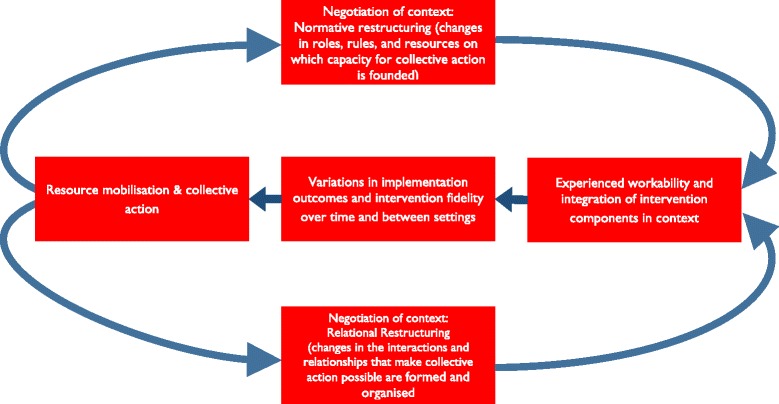
BACKGROUND: Context is a problem in research on health behaviour change, knowledge translation, practice implementation and health improvement. This is because many intervention and evaluation designs seek to eliminate contextual confounders, when these represent the normal conditions into which interventions must be integrated if they are to be workable in practice. DISCUSSION: We present an ecological model of the ways that participants in implementation and health improvement processes interact with contexts. The paper addresses the problem of context as it affects processes of implementation, scaling up and diffusion of interventions. We extend our earlier work to develop Normalisation Process Theory and show how these processes involve interactions between mechanisms of resource mobilisation, collective action and negotiations with context. These mechanisms are adaptive. They contribute to self-organisation in complex adaptive systems. CONCLUSION: Implementation includes the translational efforts that take healthcare interventions beyond the closed systems of evaluation studies into the open systems of 'real world' contexts. The outcome of these processes depends on interactions and negotiations between their participants and contexts. In these negotiations, the plasticity of intervention components, the degree of participants' discretion over resource mobilisation and actors' contributions, and the elasticity of contexts, all play important parts. Understanding these processes in terms of feedback loops, adaptive mechanisms and the practical compromises that stem from them enables us to see the mechanisms specified by NPT as core elements of self-organisation in complex systems.
Overview
CoChat Summary
TL;DR
This conceptual paper extends Normalisation Process Theory (NPT) to treat implementation contexts as complex adaptive social systems, where outcomes emerge from negotiations among participants, intervention components, and contexts. It argues that intervention plasticity, contextual elasticity, coupling, and normative/relational restructuring shape implementation, scaling up/out, and fidelity.
Key findings
- Implementation contexts are dynamic, emergent, and negotiated rather than fixed backdrops; the paper defines context as “complex adaptive systems that form the dynamic environment(s) in which implementation processes are situated.”
- Outcomes depend on the plasticity of intervention components, participants’ discretion over resource mobilisation and actors’ contributions, the elasticity of contexts, and the extent of normative and relational restructuring.
- The paper proposes six propositions: differences in resource mobilisation/actors’ contributions explain variations over time; normative/relational restructuring explains variations between settings; greater intervention plasticity reduces strain on host contexts; greater contextual elasticity reduces strain on actors; tighter coupling reduces discretion and requires more adaptive work for integration; looser coupling increases discretion and requires more adaptive work for workability.
- Illustrative cases include the MOVE trial, which had positive outcomes and was sustained at 2-year follow-up, and the WISE trial, which failed because a plastic intervention was enacted in an inelastic primary care context.
Methods
- Theoretical/conceptual paper, not an empirical study; it develops and extends NPT by engaging with ideas about complex adaptive systems.
- Uses conceptual definitions in Tables 1 and 2, a figure presenting implementation as feedback loops, and six verifiable propositions; draws on prior literature and process evaluation examples such as MOVE, WISE, and CAREDEM.
- No sample, data collection, or statistical analysis is reported.
Limitations
- The paper states that future work will explore methodological implications, including study design, measurement, and evaluation raised by understanding implementation as non-linear, emergent, and dynamic, and will link micro-/meso-level propositions to macro-level “whole systems” models.
- Evident from the text: the propositions are conceptual and are not empirically tested in this paper.
- Evident from the text: the cited trials are illustrative examples from other studies, not new empirical evidence generated here.
Model-written summary. Check it against the paper before relying on it.
Integrity signals
Registry
Cites
Statistics
Figures
Verification
Claims the paper makes
9 Valid · 5 Not valid · 35 Not checked · 66 Own results and interpretations
Some cited sources support this claim and some don’t — read each source’s verdict below.
In the paper
“This led to a successful intervention.”
§ Implementation, context and complexity > Contexts are negotiated
What the sources say
- Not checked yetcites [57] Kennedy A Vassilev I James E Rogers A Implementing a social network intervention designed to enhance and diversify support for people with long-term conditions. a qualitative study Implement Sci 2016 11 1 1 15 26926837 PMC4772323
- Partly supportedcites [84] Blickem C Kennedy A Jariwala P Morris R Bowen R Vassilev I Brooks H Blakeman T Rogers A Aligning everyday life priorities with people’s self-management support networks: an exploration of the work and implementation of a needs-led telephone support system BMC Health Serv Res 2014 14 1 262 10.1186/1472-6963-14-262 24938492 PMC4071856 sourceExperimental — accuracy not yet measured
Our copy does support the 'successful intervention' element: Background > Study aims states 'The BRIGHT trial led to significant improvement in health outcomes' and Results (opening paragraph) concedes 'although the trial resulted in improved patient outcomes'. However, this paper reports those outcome figures only in passing ('These results will be reported in more detail elsewhere') — it is a nested qualitative study of the work of delivering PLANS, not the trial report, and its own findings stress that 'PLANS received a mixed reception', with men particularly resistant and viewing it as an unwanted intrusion in their social life (Discussion). Nothing in our copy makes the causal attribution the citing sentence draws, i.e. that shifting focus to normative/relational restructuring of informal social networks is what produced the success; the paper instead frames normative assumptions as a source of tension ('challenging to normative assumptions about where participants were in life', Results; Conclusions) and describes the emphasis shift as towards personal and community resources rather than as the mechanism of the improved outcomes. (LLM, conf=0.70)
- Disputedcites [85] Reeves D Blickem C Vassilev I Brooks H Kennedy A Richardson G The contribution of social networks to the health and self-management of patients with long-term conditions: a longitudinal study PloS One 2014 9 e98340 10.1371/journal.pone.0098340 24887107 PMC4041782 sourceExperimental — accuracy not yet measured
Our copy of Reeves et al. (2014) is an observational longitudinal study (Methods, Design and Sample Characteristics / Measures of Network Change: baseline face-to-face name-generator interviews plus a 12-month postal follow-up); it designs, delivers and evaluates no intervention, and its Discussion (Summary of Findings) explicitly frames the network-investment benefit as conditional: 'This result clearly needs validation in further studies but if correct, the implication is that considerable health service cost saving could accrue from investing in increasing the illness support people receive from their personal networks.' The paper does re-orientate attention from individual self-management to networks (Introduction; Discussion, Conclusion — 'more meaningfully construed as a collective and networked phenomena'), but it never describes 'normative and relational restructuring' of informal networks, and the same Summary of Findings cautions that network characteristics were largely responding to patient health need ('rally around', positive care law) rather than being deliberately restructured. So the attribution of a resulting 'successful intervention' to this source runs against what our copy states. (LLM, conf=0.68)
Checked by a reasoning model — may be wrong.
- Partly supportedcites [86] Blickem C Kennedy A Vassilev I Morris R Brooks H Jariwala P Linking people with long-term health conditions to healthy community activities: development of patient-Led assessment for network support (PLANS) Health Expect 2013 16 e48 e59 10.1111/hex.12088 23731452 PMC3908360 sourceExperimental — accuracy not yet measured
Our copy does support the developmental shift the claim describes: the paper used normalization process theory to guide development of PLANS, orienting it to patients' existing relationships and network support, and the Discussion speaks of 'shifting the emphasis in health provision away from a focus on individuals towards social engagement, well-being and network support' (Discussion). But the paper is a development-and-pilot study only: its strongest outcome statements are pilot acceptability/usability ('There was general support for the PLANS tool'; 'All participants felt that their results were useful and relevant to them', Methods – Piloting the PLANS tool / Box 2), while the Discussion hedges that 'the approach we have developed here may have limitations' and that PLANS 'could also be expected to perform better if [part] of a complex intervention... rather than when used on its own'. No demonstration that the resulting intervention was 'successful' is attributed here; the only patient-outcome evidence in the paper (reduced isolation, increased confidence) is reported from another work it cites (Woodall & South's CHAT social prescribing evaluation, ref. 19, Resources for self-care support: beyond the individual). (LLM, conf=0.70)
plainstates a cause- Asserted: passes — The authors put it forward as true.
- Checkable: passes — It can be checked against evidence.
- Load-bearing: passes — The paper’s conclusions depend on it.
- Based: passes — The paper gives a reason why it holds.
The sources with a verdict support this claim; the rest weren’t checked yet, have no full text we could read, or their verdicts aren’t rated yet.
In the paper
“Changes in the organisation of clinical work in surgery [15, 16], the delivery of telemedicine systems at scale [17, 18] and the scaling out and spread of new health technologies [19, 20], all provide evidence of the role of environmental mechanisms in shaping interventions.”
§ Implementation, context and complexity > Background
What the sources say
- Supportedcites [15] Kellogg KC Operating room: relational spaces and microinstitutional change in surgery1 Am J Sociol 2009 115 3 657 711 10.1086/603535 20503740 source
The Introduction describes how a new regulation prompted two teaching hospitals to introduce programs intended to change surgical residents’ work practices. It reports that practice changed at one hospital but not the other; the paper attributes that difference to relational spaces and interactions within the hospitals. This supports the surgery-related example of how context shapes change, without attributing the telemedicine or technology-spread examples to this source. Page numbers are unavailable in our copy. (LLM, conf=0.88)
- Not checked yetcites [16] Kellogg KC Breen E Ferzoco SJ Zinner MJ Ashley SW Resistance to change in surgical residency: an ethnographic study of work hours reform J Am Coll Surg 2006 202 4 630 636 10.1016/j.jamcollsurg.2005.11.024 16571434 source
- Supportedcites [17] Sanders C Rogers A Bowen R Bower P Hirani S Cartwright M Fitzpatrick R Knapp M Barlow J Hendy J Exploring barriers to participation and adoption of telehealth and telecare within the whole system demonstrator trial: a qualitative study BMC Health Serv Res 2012 12 1 220 10.1186/1472-6963-12-220 22834978 PMC3413558 source
The Participants and methods section describes the Whole System Demonstrator trial across three sites, with participating Primary Care Trusts and Local Authorities. The Discussion explicitly says that service changes and existing provider relationships highlight the importance of organizational context for adopting telehealth and telecare. This supports the telemedicine-delivery and environmental-context portion of the citing sentence; the surgery and spread examples are separately cited. (LLM, conf=0.87)
- Supportedcites [18] Agbakoba R, McGee-Lennon M, Bouamrane M-M, Watson N, Mair FS: Implementation factors affecting the large-scale deployment of digital health and well-being technologies: a qualitative study of the initial phases of the ‘Living-It-Up’ programme. Health Informatics J 2015:1460458215594651. [Epub ahead of print] PMC5228630 26276795 source
The citation is attached to the scaling and spread of new health technologies, not to the surgery or telemedicine examples. The Introduction describes context and stakeholder collaboration as factors in deployment at scale, while the Results section on cultural shifts in work practices reports that organisational behaviours and ways of working affected the integration of new technologies. These passages support the claim that the implementation environment shapes such interventions. (LLM, conf=0.88)
- Not checked yetcites [19] Burri RV Doing distinctions: boundary work and symbolic capital in radiology Soc Stud Sci 2008 38 1 35 62 10.1177/0306312707082021 source
- Not checked yetcites [20] Cox H, Webster A. Translating biomedical science into clinical practice: molecular diagnostics and the determination of malignancy. Health: 2012;17(4):391-406. 23074299 source
plainstates a cause- Asserted: passes — The authors put it forward as true.
- Checkable: passes — It can be checked against evidence.
- Load-bearing: passes — The paper’s conclusions depend on it.
- Based: passes — The paper gives a reason why it holds.
- Supported
The cited sources support only part of this claim — read each source’s verdict below.
In the paper
“Attempts to understand the dynamics of implementation and to evaluate their effects are either front-loaded into clinical trials in the form of programme theories that specify their expected mode of operation and outcomes or revealed in retrospective ‘process’ evaluations of activity over time and the effects of this activity on outcomes [1, 2].”
§ Implementation, context and complexity > Background
What the sources say
- Not checked yetcites [1] Hawe P Lessons from complex interventions to improve health Annu Rev Public Health 2015 36 307 323 10.1146/annurev-publhealth-031912-114421 25581153 source
- Partly supportedcites [2] Grant A Treweek S Dreischulte T Foy R Guthrie B Process evaluations for cluster-randomised trials of complex interventions: a proposed framework for design and reporting Trials 2013 14 1 15 10.1186/1745-6215-14-15 23311722 PMC3600672 sourceExperimental — accuracy not yet measured
The Theory and Process evaluation purpose sections support using theory to specify expected changes and process evaluations to examine implementation and its relationship to outcomes (page numbers unavailable). But the Background says process evaluations can run parallel to trials or follow them, and Reporting process evaluations treats both pre-specified and post-hoc designs as legitimate. The claim’s characterization of process evaluations as retrospective is therefore too narrow. (LLM, conf=0.88)
plain- Asserted: passes — The authors put it forward as true.
- Checkable: passes — It can be checked against evidence.
- Load-bearing: passes — The paper’s conclusions depend on it.
- Based: passes — The paper gives a reason why it holds.
The sources with a verdict support this claim; the rest weren’t checked yet, have no full text we could read, or their verdicts aren’t rated yet.
In the paper
“Process evaluations by Hooker et al. [66, 67], Kennedy et al. [51, 68], Bamford et al. [69], Clarke et al. [46] Godfrey et al. [70] and Ong et al. [71], all show how complex intervention trials are shaped in this way.”
§ Implementation, context and complexity > Context is a dynamic accomplishment
What the sources say
- Supportedcites [66] Hooker L Small R Humphreys C Hegarty K Taft A Applying normalization process theory to understand implementation of a family violence screening and care model in maternal and child health nursing practice: a mixed method process evaluation of a randomised controlled trial Implement Sci 2015 10 1 39 10.1186/s13012-015-0230-4 25890352 PMC4379540 source
The Methods identify this as a process evaluation of a cluster randomised trial. The Discussion says implementation depended on social, organisational and environmental context, and the Results table identifies specific barriers and enablers. This supports the claim as it applies to Hooker et al. (LLM, conf=0.93)
- Not checked yetcites [67] Hooker L, Small R, Taft A: Understanding sustained domestic violence identification in maternal and child health nurse care: process evaluation from a 2‐year follow‐up of the MOVE trial. J Adv Nurs 2015 26564793 source
- Supportedcites [51] Kennedy A Rogers A Chew-Graham C Blakeman T Bowen R Gardner C Lee V Morris R Protheroe J Implementation of a self-management support approach (WISE) across a health system: a process evaluation explaining what did and did not work for organisations, clinicians and patients Implement Sci 2014 9 1 129 10.1186/s13012-014-0129-5 25331942 PMC4210530 source
The Introduction identifies this as a process evaluation alongside a randomised trial of a complex intervention. The Discussion explains that how WISE was interpreted in its particular primary-care context contributed to its failure to become embedded in everyday practice. This supports the claim as applied to Kennedy et al.; it does not assess the other named studies. (LLM, conf=0.93)
- Supportedcites [68] Kennedy A Rogers A Bowen R Lee V Blakeman T Gardner C Morris R Protheroe J Chew-Graham C Implementing, embedding and integrating self-management support tools for people with long-term conditions in primary care nursing: a qualitative study Int J Nurs Stud 2014 51 8 1103 1113 10.1016/j.ijnurstu.2013.11.008 24373719 source
The Introduction identifies this qualitative study as a process evaluation of a randomised trial. The Discussion explains how practice finances, performance targets, nurses’ autonomy and established routines affected whether the intervention’s tools were used—supporting the claim that contextual dynamics shaped the trial’s implementation. (LLM, conf=0.92)
- Supportedcites [69] Bamford C Poole M Brittain K Chew-Graham C Fox C Iliffe S Manthorpe J Robinson L team C Understanding the challenges to implementing case management for people with dementia in primary care in England: a qualitative study using normalization process theory BMC Health Serv Res 2014 14 1 549 10.1186/s12913-014-0549-6 25409598 PMC4232624 source
The Background describes CAREDEM’s process evaluation as examining the social and organisational factors affecting implementation of a complex dementia case-management intervention. The Discussion (Implications for practice and future research) reports that existing care systems and organisational upheaval in English primary care helped shape what could be implemented in the feasibility study. (LLM, conf=0.90)
plainstates a cause- Asserted: passes — The authors put it forward as true.
- Checkable: passes — It can be checked against evidence.
- Load-bearing: passes — The paper’s conclusions depend on it.
- Based: passes — The paper gives a reason why it holds.
- Supported
The sources with a verdict support this claim; the rest weren’t checked yet, have no full text we could read, or their verdicts aren’t rated yet.
In the paper
“NPT studies (e.g. [18, 48–52]) have focused on contextual and relational integration [21, 23]—the work that actors do to when they realise and execute interventions in organisational and relational settings.”
§ Implementation, context and complexity > The problem of context
What the sources say
- Supportedcites [18] Agbakoba R, McGee-Lennon M, Bouamrane M-M, Watson N, Mair FS: Implementation factors affecting the large-scale deployment of digital health and well-being technologies: a qualitative study of the initial phases of the ‘Living-It-Up’ programme. Health Informatics J 2015:1460458215594651. [Epub ahead of print] PMC5228630 26276795 source
The Data analysis and theoretical framework section (page unavailable) says the study used NPT to analyse social processes in implementing and integrating the Living-It-Up programme. The Results section on roles and collective aims describes stakeholders developing relationships across organisational structures. This supports citing the paper as an example of an NPT study of implementation in organisational and relational settings; the separate citations [21, 23] accompany the specific terminology. (LLM, conf=0.88)
- Supportedcites [48] Atkins S Lewin S Ringsberg K Thorson A Provider experiences of the implementation of a new tuberculosis treatment programme: a qualitative study using the normalisation process model BMC Health Serv Res 2011 11 1 275 10.1186/1472-6963-11-275 22004533 PMC3215962 source
The cited paper is an example of a study using the normalisation process model to examine implementation. Its Methods section describes the model as addressing the work of putting practices into effect, and its Results examine both relational integration and contextual integration in the clinic setting. The separate definition cited to [21, 23] need not be attributed to this paper. (LLM, conf=0.86)
- Supportedcites [49] Bamford C Heaven B May C Moynihan P Implementing nutrition guidelines for older people in residential care homes: a qualitative study using normalization process theory Implement Sci 2012 7 1 106 10.1186/1748-5908-7-106 23110857 PMC3514214 source
The cited paper is itself an NPT study: its Abstract (Methods) says the care-home findings were mapped to NPT constructs. Its Background describes NPT as focusing on the individual and collective work of making an intervention work. The separate citations [21, 23] appear to support the specific phrase “contextual and relational integration,” rather than this paper. (LLM, conf=0.91)
- Supportedcites [50] Drew S Judge A May C Farmer A Cooper C Javaid MK Gooberman-Hill R Implementation of secondary fracture prevention services after hip fracture: a qualitative study using extended Normalization Process Theory Implement Sci 2015 10 1 57 10.1186/s13012-015-0243-z 25903563 PMC4470053 source
The Background identifies this as a study using extended Normalization Process Theory to examine participants’ collective work implementing healthcare services in complex organizational contexts. The Results (Capacity) describe the cooperative work and relationships involved. This supports its citation as an example of an NPT study; the sentence cites other sources for the specific terminology “contextual and relational integration.” (LLM, conf=0.90)
- Supportedcites [51] Kennedy A Rogers A Chew-Graham C Blakeman T Bowen R Gardner C Lee V Morris R Protheroe J Implementation of a self-management support approach (WISE) across a health system: a process evaluation explaining what did and did not work for organisations, clinicians and patients Implement Sci 2014 9 1 129 10.1186/s13012-014-0129-5 25331942 PMC4210530 source
The Methods describe an NPT-based process evaluation across organisational, practice-staff and patient levels. The Introduction’s ‘Process evaluation question’ section defines collective action in terms of the relationships and work needed to put an intervention into practice, matching the claim’s description of this study’s focus. The supplied copy gives no page numbers. (LLM, conf=0.88)
- Supportedcites [52] Franx G Oud M de Lange J Wensing M Grol R Implementing a stepped-care approach in primary care: results of a qualitative study Implement Sci 2012 7 1 8 10.1186/1748-5908-7-8 22293362 PMC3292960 source
The paper is an example of an NPT study: Methods > Analysis says the authors used NPT constructs to interpret the implementation of stepped care, and Discussion examines clinicians’ shared understanding, engagement, and organization of care. The specific terminology “contextual and relational integration” is attached to different citations in the citing sentence, not attributed specifically to this paper. (LLM, conf=0.88)
- Not checked yetcites [21] May C A rational model for assessing and evaluating complex interventions in health care BMC Health Serv Res 2006 6 86 1 11 16827928 PMC1534030
- Not checked yetcites [23] May C Finch T Implementation, embedding, and integration: an outline of normalization process theory Sociology 2009 43 3 535 554 10.1177/0038038509103208 source
plain- Asserted: passes — The authors put it forward as true.
- Checkable: passes — It can be checked against evidence.
- Load-bearing: unclear — It is unclear whether the paper’s conclusions depend on it.
- Based: passes — The paper gives a reason why it holds.
- Supported
47 more claims · 2 with their cited sources checked
Create a free account to see all 115 claims and to verify the 91 references still open.
- Probably not a substantial claim. 47
- It may state two separate claims as one. 23
- The quote only partly states this claim. 2
Claims other papers make about this one
Each is checked against this paper’s own text: does it say what the citing paper says it does?
The source backs part of the claim, not all of it — or backs it for a different population, condition or comparison.
In the citing paper
“NPT is a theory of implementation that focuses on what people—both individuals and groups—do rather than what they believe or intend, and it has been built up from studies of practice in many different healthcare systems.”
From Using Normalization Process Theory in feasibility studies and process evaluations of complex healthcare interventions: a systematic review (2018) · cites this paper as [10]
Experimental — accuracy not yet measuredThe cited source says what the claim attributes to it.
In the citing paper
“Normalization Process Theory (NPT) identifies, characterises and explains key mechanisms that promote and inhibit the implementation, embedding and integration of new health techniques, technologies and other complex interventions.”
From Using Normalization Process Theory in feasibility studies and process evaluations of complex healthcare interventions: a systematic review (2018) · cites this paper as [10]
The cited source says what the claim attributes to it.
In the citing paper
“NPT is a theory of implementation that focuses on what people—both individuals and groups—do rather than what they believe or intend, and it has been built up from studies of practice in many different healthcare systems.”
From Using Normalization Process Theory in feasibility studies and process evaluations of complex healthcare interventions: a systematic review (2018) · cites this paper as [10]
The cited source says what the claim attributes to it.
In the citing paper
“In the most recent iteration of the theory—Extended Normalization Process Theory (ENPT) [9, 10]—we pointed to the dynamic role of implementation contexts in the mobilisation and negotiation of implementation processes.”
From Using Normalization Process Theory in feasibility studies and process evaluations of complex healthcare interventions: a systematic review (2018) · cites this paper as [10]
The cited source says what the claim attributes to it.
In the citing paper
“In its most recent iteration, we have shown how the basic mechanisms characterised in NPT function as self-organising mechanisms in complex adaptive social systems [10].”
From Using Normalization Process Theory in feasibility studies and process evaluations of complex healthcare interventions: a systematic review (2018) · cites this paper as [10]
2 more claims about this paper
Create a free account to see every claim other papers make about this one.
Self-check
Percentages, sums and reported differences re-computed from the paper’s own numbers.
Each contradiction between two passages listed here was confirmed by an independent check.
Rated minor: it would not touch a result — a value no result rests on, a p-value that stays on the same side of the significance level, or a conflict that is clerical, resolved elsewhere in the paper, or outside its own findings.
In the paper
§ Implementation, context and complexity > Context is a dynamic accomplishment
“and Ong et al. [71]”
§ Implementation, context and complexity > References
“71. Sanders T, Foster NE, Ong BN. Perceptions of general practitioners towards the use of a new system for treating back pain: a qualitative interview study.”
Citations
Cites
Damschroder, L. J., Aron, D. C., Keith, R. E., Kirsh, S. R., Alexander, J. A., & Lowery, J. C. (2009) · Implementation Science · doi:10.1186/1748-5908-4-50 · Cited by 14,496 · cited 4×
“[35]—raises questions about how to discriminate between factors that are at work far beyond the investigative remit of the researcher.”
BackgroundInfluentialThe Theory of Social and Economic Organization.
Delatour, G. S., Weber, M., Henderson, A. M., & Parsons, T. (1948) · American Sociological Review · doi:10.2307/2086579 · Cited by 11,300
Powers, C. H., & Giddens, A. (1988) · Social Forces · doi:10.2307/2579442 · Cited by 8,828
Diffusion of Innovations in Service Organizations: Systematic Review and Recommendations
GREENHALGH, T., ROBERT, G., MACFARLANE, F., BATE, P., & KYRIAKIDOU, O. (2004) · The Milbank Quarterly · doi:10.1111/j.0887-378x.2004.00325.x · Cited by 7,448 · cited 1×
“[33], Rycroft-Malone et al.”
Gluesing, J. C. (2012) · Leadership in Science and Technology: A Reference Handbook · doi:10.4135/9781412994231.n14 · Cited by 3,210
The challenge of complexity in health care
Plsek, P. E., & Greenhalgh, T. (2001) · BMJ · doi:10.1136/bmj.323.7313.625 · Cited by 2,578
(2009) · The SAGE Glossary of the Social and Behavioral Sciences · doi:10.4135/9781412972024.n747 · Cited by 2,442
Implementing, Embedding, and Integrating Practices: An Outline of Normalization Process Theory
May, C., & Finch, T. (2009) · Sociology · doi:10.1177/0038038509103208 · Cited by 2,115
Self-citationThe dynamic sustainability framework: addressing the paradox of sustainment amid ongoing change
Chambers, D. A., Glasgow, R. E., & Stange, K. C. (2013) · Implementation Science · doi:10.1186/1748-5908-8-117 · Cited by 1,724 · cited 1×
“Elasticity The extent to which contexts can be stretched or compressed in ways that make space for intervention components and allow them to fit [89].”
BackgroundOntologies, socio-technical transitions (to sustainability), and the multi-level perspective
Geels, F. W. (2010) · Research Policy · doi:10.1016/j.respol.2010.01.022 · Cited by 1,718 · cited 1×
“Even so, it is hard to accommodate the complicated and interdependent relationships between different structural elements of ‘whole systems’, or to track the pathways through which different macro-level actors and processes shape implementation contexts at meso- and micro-level [39–41].”
Background
Research works printed but not linked: 2
- MRC A framework for development and evaluation of complex interventions to improve health 2000 London Medical Research Council
- Harre R Social being 1993 2 Oxford Blackwell Publishers
Cited by
Items 401–500 of 1,000
Lindholm, L. H., Koivukangas, A., Lassila, A., & Kampman, O. (2019) · Nordic Journal of Psychiatry · doi:10.1080/08039488.2019.1582698 · Cited by 11
“Actual implementation outcomes arise from complex interactions between the programme, its target group and the organization involved [21].”
BackgroundBrown, V., Tran, H. N. Q., Blake, M. R., Rachel, L., & Moodie, M. (2020) · Health Research Policy and Systems · doi:10.1186/s12961-020-00633-6 · Cited by 11
Herber, O. R., Ehringfeld, I., Steinhoff, P., & Whittal, A. (2021) · BMC Health Services Research · doi:10.1186/s12913-021-06596-w · Cited by 12
“[30] emphasise that complexity may lead to intervention failure unless it can be managed effectively.”
BackgroundStockton, D. A., Fowler, C., Debono, D. S., & Travaglia, J. (2022) · Health & Social Care in the Community · doi:10.1111/hsc.14052 · Cited by 10
“The panel members were then asked to reflect on and revise as necessary their scores for those items which had not yet reached consensus in light of the feedback of the full group (McMillan et al., 2016; Stewart et al., 2017).”
BackgroundMethodResultInfluentialUpscaling telemonitoring in Dutch University Medical Centres: A baseline measurement
Gijsbers, H., Kleiss, J., Nurmohamed, A. S., van de Belt, T. H., Schijven, M. P., Bekker, M. N., Buijs, M. A., Buskens, E., Chavannes, N. H., van Dam, D., et al. (2023) · International Journal of Medical Informatics · doi:10.1016/j.ijmedinf.2023.105085 · Cited by 12
Huybrechts, I., Declercq, A., Verté, E., Boeckxstaens, P., Raeymaeckers, P., & Anthierens, S. (2023) · Social Science & Medicine · doi:10.1016/j.socscimed.2023.116048 · Cited by 11
Scaling-up and future sustainability of a national reproductive genetic carrier screening program
Fehlberg, Z., Best, S., Long, J. C., Theodorou, T., Pope, C. J., Hibbert, P. D., Williams, S., Freeman, L., Righetti, S., Archibald, A. D., et al. (2023) · npj Genomic Medicine · doi:10.1038/s41525-023-00357-w · Cited by 12
“Understanding contextual factors such as, prior experience of an innovation crucial to ‘ scaling up and out ’ of programs 28 and ensuring consistent uptake by HCPs 29 .”
Implementing medication adherence interventions in four Dutch living labs; context matters
Hogervorst, S., Vervloet, M., Janssen, R., Koster, E. S., Adriaanse, M. C., Bekker, C. L., van den Bemt, B. J. F., Bouvy, M. L., Heerdink, E. R., Hugtenburg, J. G., et al. (2023) · BMC Health Services Research · doi:10.1186/s12913-023-10018-4 · Cited by 10
“[33].”
MethodHavers, S. M., Martin, E. K., Wilson, A. J., & Hall, L. (2020) · Journal of Infection Prevention · doi:10.1177/1757177420907696 · Cited by 10
“…and adoption of evidence-based practice and other safety and quality improvement interventions is prolific (Denis et al., 2002; Greenhalgh et al., 2004; May et al., 2016), the implementation of government developed, and mandated health policy specifically has not been extensively investigated.”
BackgroundKihlgren, A. L., Pejner, M. N., & James, I. (2020) · Scandinavian Journal of Caring Sciences · doi:10.1111/scs.12878 · Cited by 10
Strid, E. N., Wallin, L., & Nilsagård, Y. E. (2022) · JMIR Research Protocols · doi:10.2196/37634 · Cited by 10
Fulop, N., Ramsay, A. I. G., Vindrola‐Padros, C., Clarke, C. S., Hunter, R. M., Black, G. B., Wood, V. J., Melnychuk, M., Perry, C., Vallejo‐Torres, L., et al. (2023) · Health and Social Care Delivery Research · doi:10.3310/qfgt2379 · Cited by 13
Implementation Science and Translation in Behavior Change
Łuszczyńska, A., Łobczowska, K., & Horodyska, K. (2020) · Cambridge University Press eBooks · doi:10.1017/9781108677318.023 · Cited by 15
López, L. C. V., Gurovich, F. V., Dreser, A., Wirtz, V. J., & Reich, M. R. (2021) · Journal of Pharmaceutical Policy and Practice · doi:10.1186/s40545-021-00318-7 · Cited by 10
Zipfel, N., Horreh, B., Hulshof, C. T. J., Suman, A., de Boer, A. G. E. M., & van der Burg-Vermeulen, S. J. (2021) · BMC Public Health · doi:10.1186/s12889-021-11047-6 · Cited by 11
“The literature describes contexts in implementation research as dynamic since barriers in one environment may be facilitators in another [35].”
BackgroundHolmström, P., Björk‐Eriksson, T., Davidsen, P. I., Bååthe, F., & Olsson, C. (2022) · International Journal of Health Policy and Management · doi:10.34172/ijhpm.2022.5693 · Cited by 10
“An SD-based modelling process usually encompasses: (1) problem articulation, (2) formulation of a dynamic hypothesis, (3) formulation of a simulation model, (4) model testing, and (5) policy design and evaluation.”
BackgroundMethodBoaden, R. (2020) · Journal of Health Services Research & Policy · doi:10.1177/1355819620907352 · Cited by 10
Context matters—the phased development of an adaptable food literacy intervention: Up for Cooking
Harms, L. S. E., van Assema, P., Gubbels, J. S., Gerards, S. M. P. L., Linssen, E., Vonken, L., & Bessems, K. M. H. H. (2023) · Health Promotion International · doi:10.1093/heapro/daad071 · Cited by 9
Ntsweng, O., Kodyš, M., Ong, Z. Q., Zhou, F., de Marassé, A., Sadek, I., Aloulou, H., Tan, S. S.-L., & Mokhtari, M. (2025) · JMIR Rehabilitation and Assistive Technologies · doi:10.2196/57989 · Cited by 9
Challenges of implementing inclusive city policies in three European port cities
Zhao, R., Edelenbos, J., de Jong, M., Belabas, W., & Björner, E. (2025) · npj Urban Sustainability · doi:10.1038/s42949-025-00239-3 · Cited by 9
“This approach provides a more comprehensive understanding of inclusive policy implementation, deepening insights into policy implementation complexity 87 , and offers a new perspective on how policies adapt to different institutional settings.”
Gilbert, A. W., Jones, J., Stokes, M. J., Mentzakis, E., & May, C. R. (2019) · BMJ Open · doi:10.1136/bmjopen-2019-035210 · Cited by 9
Self-citationGaidhane, A. M., Khatib, M. N., Telrandhe, S., Patil, M. S., Kogade, P., Gaidhane, S., Choudhari, S. G., Holding, P., Saxena, D. B., & Zahiruddin, Q. S. (2023) · Frontiers in Public Health · doi:10.3389/fpubh.2023.1165728 · Cited by 10
Mody, A., Filiatreau, L. M., Goss, C. W., Powell, B. J., & Geng, E. (2023) · Implementation Science Communications · doi:10.1186/s43058-023-00536-x · Cited by 9
Overton, C., Tarrant, C., Creese, J., & Armstrong, N. (2024) · BMJ Open Quality · doi:10.1136/bmjoq-2024-002796 · Cited by 11
“10 11 While various aspects of coproduction have been subjected to systematic reviews in the last 5 years, none has targeted the influence of coproduction activities on the postimplementation phase, that is, in supporting the sustainability of innovations.”
BackgroundProcess Evaluations for the Scale-Up of Complex Interventions – a Scoping Review
Rathod, L., Heine, M., Boateng, D., Martens, M., van Olmen, J., Ku, G. M., & Klipstein‐Grobusch, K. (2024) · International Journal of Integrated Care · doi:10.5334/ijic.7600 · Cited by 10
The Early Implementation of FFT-CW®, MST-Psychiatric®, and SafeCare® in Australia
Albers, B., Hateley-Browne, J., Steele, T., Rose, V. K., Shlonsky, A., & Mildon, R. L. (2020) · Research on Social Work Practice · doi:10.1177/1049731520908326 · Cited by 11
Interventional STS: A Framework for Developing Workable Technologies
Lyle, K. (2020) · Sociological Research Online · doi:10.1177/1360780420915723 · Cited by 10
“NPT is an STS theory that functions at the middle range to offer an understanding of the work that is done to integrate new practices and technologies within organisational settings (May, 2013a, 2013b; May et al., 2016; May and Finch, 2009).”
BackgroundAbdallah, B., Whitford, H., Bradbury‐Jones, C., & Jones, M. C. (2020) · Journal of Clinical Nursing · doi:10.1111/jocn.15564 · Cited by 9
Walker, A., Dale, C., Curran, N., Boaz, A., & Hurley, M. (2020) · BMJ Leader · doi:10.1136/leader-2020-000252 · Cited by 10
Culph, J., Clemson, L. M., Jeon, Y., Scanlan, J. N., & Laver, K. (2021) · Journal of Applied Gerontology · doi:10.1177/0733464820986286 · Cited by 10
“However, it is also acknowledged that contexts are dynamic (May et al., 2016), hence an important area of research to capture the in-depth experience of implementation during this time of instability.”
BackgroundBisschops, E. H., de Schipper, J. C., Schippers, B., Embregts, P. J. C. M., & Schuengel, C. (2022) · Journal of Intellectual & Developmental Disability · doi:10.3109/13668250.2022.2044270 · Cited by 9
“Dynamic and often unpredictable interactions and behaviours occur between various actors within complex adaptive contexts (Greenhalgh et al., 2004; May et al., 2016; Plsek & Greenhalgh, 2001).”
BackgroundMethodInfluentialEdwards, H. B., Redaniel, M. T., Rejon, C. S., Pithara, C., Margelyte, R., Stone, T. J., Peters, T. J., Hollingworth, W., McLeod, H., Craggs, P., et al. (2023) · BJOG An International Journal of Obstetrics & Gynaecology · doi:10.1111/1471-0528.17651 · Cited by 11
“22 This study has highlighted some of the challenges of conducting RCTs of quality improvement interventions: there were variations in implementation between units, a key element of QI and a normal feature of real-world interventions, but a disadvantage for getting a clear comparison between groups.”
BackgroundConway, A., Dowling, M., & Devane, D. (2019) · BMC Medical Education · doi:10.1186/s12909-019-1488-z · Cited by 11
de Ridder, D. T. D., Gillebaart, M., & Friese, M. (2020) · Cambridge University Press eBooks · doi:10.1017/9781108677318.040 · Cited by 11
Diez‐Canseco, F., Rojas-Vargas, J., Toyama, M., Mendoza, M., Cavero, V., Maldonado, H., Caballero, J., & Cutipé, Y. (2020) · Revista Panamericana de Salud Pública · doi:10.26633/rpsp.2020.169 · Cited by 9
“At the same time, it is important to ensure that the PCC-R can be adapted to accommodate different situations and users with different health conditions, needs, and resources (23, 24).”
BackgroundIngemann, C., Kuhn, R. L., Kvernmo, S. E., Tjørnhøj‐Thomsen, T., & Larsen, C. V. L. (2021) · International Journal of Circumpolar Health · doi:10.1080/22423982.2021.1938443 · Cited by 9
Conway, A., Dowling, M., Binchy, Á., Grosvenor, J., Coohill, M., Naughton, D., James, J., & Devane, D. (2019) · BMC Medical Education · doi:10.1186/s12909-019-1489-y · Cited by 9
Piotrowski, A., Coenen, J., Rupietta, C., Basten, J., Muth, C., Söling, S., Zimmer, V., Karbach, U., Kellermann-Mühlhoff, P., Köberlein–Neu, J., et al. (2023) · BMC Health Services Research · doi:10.1186/s12913-023-10156-9 · Cited by 10
“Carl May describes implementation as a “negotiation of context” [44], wherein certain implementation activities must occur.”
BackgroundKlausen, M. D., Lindberg, L., Johansen, S. K., Rathleff, M. S., & Lyng, K. D. (2025) · Musculoskeletal Care · doi:10.1002/msc.70108 · Cited by 9
“Implementation is complex and challenging due to the involvement of various stakeholders on different organisational levels regarding different individuals and their interacting relations in different healthcare sectors (May et al. 2016).”
Kamarajah, S. K., Kouli, O., Ng, W. H., Pius, R., Shaw, C. A., Ademuyiwa, A. O., Adisa, A., Agbeko, A. E., Aguilera, M. L., Alves, M. S., et al. (2026) · The Lancet Global Health · doi:10.1016/s2214-109x(25)00476-0 · Cited by 9
“The aim of this study was neither to capture the many important cultural and contextual factors influencing local implementation, 38 nor was it to perform a comprehensive end-to-end health technology assessment.”
Implementation Initiatives to Improve Low Back Pain Care in Australia: A Scoping Review
Costa, N., Blyth, F., Amorim, A. B., Parambath, S., Shanmuganathan, S., & Schneider, C. H. (2022) · Pain Medicine · doi:10.1093/pm/pnac102 · Cited by 8
“As implementation is influenced by the systems in which it occurs [34], it is crucial to review implementation studies conducted locally to promote advances in practice and policy within the Australian context.”
BackgroundMartens, M., Wouters, E., van Olmen, J., Klemenc–Ketiš, Z., Chhim, S., Chham, S., Buffel, V., Danhieux, K., Stojnić, N., Zavrnik, Č., et al. (2022) · BMJ Open · doi:10.1136/bmjopen-2022-062151 · Cited by 8
Best, S., Long, J. C., Fehlberg, Z., Taylor, N. J., Ellis, L. A., Boggs, K., & Braithwaite, J. (2023) · BMC Health Services Research · doi:10.1186/s12913-023-10053-1 · Cited by 8
Gelin, M., Gesar, B., Källberg, A.-S., Ehrenberg, A., & Gustavsson, C. (2023) · BMC Health Services Research · doi:10.1186/s12913-023-10300-5 · Cited by 10
“Contextual determinants such as mutual agreement about the purpose, as well as the management and staff’s skills are important intervention components, which confirms the findings of our study [41, 42].”
ResultGranberg, A., Lundqvist, L., Duberg, A., & Matérne, M. (2024) · Frontiers in Rehabilitation Sciences · doi:10.3389/fresc.2024.1294990 · Cited by 9
“Consequently, we cannot understand or explain fi ndings in this fi eld without looking at the context in which they are embedded (1, 6, 7).”
BackgroundMartini, D., Schalkwijk, H., Schoonhoven, L., Noordegraaf, M., & Lalleman, P. (2024) · Journal of Advanced Nursing · doi:10.1111/jan.16240 · Cited by 9
“However, as contexts are unstable, unfolding processes (May et al., 2016 ), capturing them in general ‘factors’ might not be sufficient.”
Hampton, S., Murray, J., Lawton, R., & Sheard, L. (2024) · BMJ Quality & Safety · doi:10.1136/bmjqs-2024-017268 · Cited by 8
Evaluation of Behavior Change Interventions
Matthews, L., & Simpson, S. A. (2020) · Cambridge University Press eBooks · doi:10.1017/9781108677318.022 · Cited by 10
Kaehne, A. (2020) · Journal of Integrated Care · doi:10.1108/jica-07-2020-078 · Cited by 11
Johnson, H., Yorganci, E., Evans, C., Barclay, S. I. G., Murtagh, F. E., Yi, D., Gao, W., Sampson, E. L., Droney, J., Farquhar, M. C., et al. (2020) · PLoS ONE · doi:10.1371/journal.pone.0239181 · Cited by 8
“These components are considered to be dynamic and interact within the wider context of the intervention, such as existing organisational structures and procedures [36].”
BackgroundOsman, S., Churruca, K., Ellis, L. A., & Braithwaite, J. (2023) · The International Journal of Health Planning and Management · doi:10.1002/hpm.3741 · Cited by 9
Robertson, S. T., Rosbergen, I. C. M., Brauer, S., Grimley, R., & Burton‐Jones, A. (2023) · BMC Health Services Research · doi:10.1186/s12913-023-10314-z · Cited by 9
Drivers of telemedicine in primary care clinics at a large academic medical centre
Parameswaran, V., Koos, H., Kalwani, N. M., Qureshi, L., Rosengaus, L., Dash, R., Scheinker, D., Rodríguez, F., Johnson, C., Stange, K. C., et al. (2023) · Journal of Telemedicine and Telecare · doi:10.1177/1357633x231219311 · Cited by 8
“37 40 Empowering users, reforming funding structures, improving digital ecosystems and fostering stake-holder collaboration are also critical.”
Bracher, M., Steward, K., Wallis, K., May, C. R., Aburrow, A., & Murphy, J. L. (2019) · BMJ Open · doi:10.1136/bmjopen-2018-025966 · Cited by 8
Self-citationEpton, T., & Armitage, C. J. (2020) · Cambridge University Press eBooks · doi:10.1017/9781108677318.038 · Cited by 8
Barranco, L., Freire, K. E., & Payne, G. H. (2021) · Health Promotion Practice · doi:10.1177/15248399211028156 · Cited by 8
“…contextual factors that affect health agencies’ implementation was the genesis of the VPP and what others have pointed to as an often-overlooked component of bridging research and practice (Brownson, Fielding, & Green, 2018; Hanson et al., 2012; May et al., 2016; Nilsen & Bernhardsson, 2019).”
Hardy, M., Sasseville, M., Attieh, R., Bergeron-Drolet, L.-A., Barony, R., Gallani, M. C. B. J., Côté, A., Laberge, M., Voyer, P., Couture, V., et al. (2022) · Implementation Science Communications · doi:10.1186/s43058-022-00312-3 · Cited by 9
Zaman, A. G. N. M., Tytgat, K. M. A. J., Klinkenbijl, J. H. G., de Boer, A. G. E. M., & Frings‐Dresen, M. H. W. (2019) · Journal of Cancer Survivorship · doi:10.1007/s11764-019-00797-3 · Cited by 8
Improving and supporting quality of care in Dutch nursing homes: a quantitative study
van den Berg, B., Zuure, M. B., Vermunt, P., Zondervan-Zwijnenburg, M. A. J., & Minkman, M. M. N. (2025) · BMC Health Services Research · doi:10.1186/s12913-025-12640-w · Cited by 8
“The outcome of this process depends on the interactions and negotiations between their participants and contexts [49].”
Salma, I., & Waelli, M. (2022) · Healthcare · doi:10.3390/healthcare10030417 · Cited by 9
Komolafe, A. O., Oyelade, O. O., Adedini, S. A., & Irinoye, O. O. (2022) · BMC Pregnancy and Childbirth · doi:10.1186/s12884-022-05278-7 · Cited by 7
“Outer settings consist of political and economic factors, while inner settings are the structure and culture [6, 19].”
BackgroundHudon, C., Lambert, M., Aubrey‐Bassler, K., Chouinard, M., Doucet, S. A., Ramsden, V. R., Zed, J., Luke, A., Bisson, M., Howse, D., et al. (2024) · Archives of Public Health · doi:10.1186/s13690-024-01258-9 · Cited by 7
Ageing and complexity: Reframing older adults’ learning through interdisciplinary lenses
Formenti, L., Cino, D., & Loberto, F. (2024) · European Journal for Research on the Education and Learning of Adults · doi:10.3384/rela.2000-7426.5193 · Cited by 8
Claessens, D., Boudewijns, E. A., Vervloet, M., Keijsers, L. C. E. M., Slok, A. H. M., van Schayck, O. C. P., & van Dijk, L. (2025) · BMJ Open · doi:10.1136/bmjopen-2024-087197 · Cited by 7
Jeffries, M., Abuzour, A. S., Ashcroft, D. M., Avery, A. J., Langridge, M., Francis, G., O'Brien, A., Millington, T., & Keers, R. N. (2025) · BMJ Open · doi:10.1136/bmjopen-2024-086309 · Cited by 7
“22 NPT is built on four constructs: coherence—the way the intervention is understood, cognitive participation; the way people work together to put the new intervention into practice; collective action—the ways people work in operationalising the intervention; and reflexive monitoring—how people…”
Locally adapted guidelines: a scoping review
Pieper, D., Pachanov, A., Bahns, C., Prill, R., Kopkow, C., Shehu, E., Adaptation Working Group-Guidelines International Network, Song, Y., Amer, Y. S., Stein, A. T., et al. (2025) · Systematic Reviews · doi:10.1186/s13643-025-02808-0 · Cited by 7
“Implementation science has been dealing with this for a long time [40], also in relation to CPGs [5, 14, 41, 42].”
Negotiating Lay and Clinical Issues: Implementing a Lay Navigation Program in Cancer Care
Holdsworth, L. M., Zionts, D. L., Wang, S., Veruttipong, D., Brown‐Johnson, C. G., Asch, S. M., Rosenthal, E. L., & Winget, M. (2019) · JCO Oncology Practice · doi:10.1200/jop.19.00339 · Cited by 7
Economic and Behavioral Economic Approaches to Behavior Change
Brown, P. M., Cameron, L. D., Wilkinson, M., & Taylor, D. (2020) · Cambridge University Press eBooks · doi:10.1017/9781108677318.042 · Cited by 10
Belle, S. V. (2022) · International Journal for Equity in Health · doi:10.1186/s12939-022-01644-1 · Cited by 8
“[47–50].”
The Voting Scheme Determines the Winner. Considering Possible Options for Designing a Delphi Study
Ehringfeld, I., Steinhoff, P., Störk, S., Whittal, A., & Herber, O. R. (2023) · International Journal of Qualitative Methods · doi:10.1177/16094069221148871 · Cited by 7
“To add to this complexity, factors which might be a facilitator in one implementation context could be a barrier in another (May et al., 2016).”
BackgroundMartens, M., van Olmen, J., Wouters, E., Boateng, D., Damme, W. V., & Belle, S. V. (2023) · BMJ Global Health · doi:10.1136/bmjgh-2023-012637 · Cited by 7
“…and the MSM are suitable because we have a fluid context (a fragmented vs centralised vs developing health system in the Belgian, Slovenian and Cambodian case, respectively) and fluid intervention design (high plasticity of the intervention, 71 completely adapted to the context and stakeholders).”
The Pathway Building Technique in Implementation Research Using Mixed Methods Design
Younas, A., Porr, C., Maddigan, J., Moore, J. E., Navarro, P., & Whitehead, D. (2023) · Canadian Journal of Nursing Research · doi:10.1177/08445621231213432 · Cited by 7
“Changing behavior can be a long, arduous, and challenging process (Braithwaite et al., 2018; May et al., 2016).”
BackgroundEngelmann, P., Eilerskov, N., Thilsing, T., Bernardini, F., Rasmussen, S., Löwe, B., Herrmann‐Lingen, C., Gostoli, S., Andréasson, F., Rafanelli, C., et al. (2023) · Frontiers in Cardiovascular Medicine · doi:10.3389/fcvm.2023.1186390 · Cited by 8
“Although BCC interventions often yield mixed results [e.g. (9)] and researchers emphasize the importance of patient and carer involvement in the development of care models (35, 36), the patient perspective on BCC for multimorbid patients has not been systematically studied.”
BackgroundKarkou, V., Omylinska‐Thurston, J., Thurston, S., Clark, R., Perris, E., Kaehne, A., & Pearson, M. (2024) · PLoS ONE · doi:10.1371/journal.pone.0296178 · Cited by 7
Big Data and what it means for evaluating integrated care programmes
Kaehne, A. (2019) · Journal of Integrated Care · doi:10.1108/jica-05-2019-0017 · Cited by 7
Maniatopoulos, G., Hunter, D. J., Erskine, J., & Hudson, B. (2020) · Organizational behaviour in health care · doi:10.1007/978-3-030-26684-4_1 · Cited by 8
Zhan, Y., Xu, Q., Xiang-hong, Q., & Shao, L. (2020) · Journal of Nursing Management · doi:10.1111/jonm.13152 · Cited by 7
Lobban, F. A., Appelbe, D., Appleton, V., Aref-Adib, G., Barraclough, J., Billsborough, J., Fisher, N. R., Foster, S., Gill, B., Glentworth, D., et al. (2020) · Health Services and Delivery Research · doi:10.3310/hsdr08370 · Cited by 7
Implementing Effective Vaccination Interventions Into Sustainable ‘Real World’ Practice
Stockwell, M. S., Stokley, S. K., & Kempe, A. (2021) · Academic Pediatrics · doi:10.1016/j.acap.2021.02.015 · Cited by 7
Context and Complexity in Telemedicine Evaluation: Work Domain Analysis in a Surgical Setting
Aminoff, H., & Meijer, S. (2021) · JMIR Perioperative Medicine · doi:10.2196/26580 · Cited by 8
“However, complexity science ideas have been, for example, used to inform theories and frameworks for evidence translation, implementation, and evaluation [30,39,46,47].”
Nordin, H., Rørtveit, K., Mathisen, G. E., Joa, I., Johannessen, J. O., Ruud, T., & Hartveit, M. (2022) · Journal of Health Organization and Management · doi:10.1108/jhom-08-2021-0286 · Cited by 7
Evaluating Implementation of the Updated Care Considerations for Duchenne Muscular Dystrophy
Ong, K. S., Kinnett, K., Soelaeman, R. H., Webb, L., Bain, J., Martin, A. S., Westfield, C. P., Bolen, J., & Street, N. (2018) · PEDIATRICS · doi:10.1542/peds.2018-0333n · Cited by 7
Aw, S., Koh, G. C., Tan, C. S., Wong, M. L., Vrijhoef, H. J., Harding, S. C., Geronimo, M. A., & Hildon, Z. J. (2019) · BMC Geriatrics · doi:10.1186/s12877-019-1271-3 · Cited by 8
“Such program often require more coordination [24], communication, and”
BackgroundMethodInfluentialChanging Behavior Using Integrative Self-Control Theory
Hofmann, W., Dohle, S., & Diel, K. (2020) · Cambridge University Press eBooks · doi:10.1017/9781108677318.011 · Cited by 8
Aminoff, H., Meijer, S., Arnelo, U., & Groth, K. (2021) · JMIR Formative Research · doi:10.2196/26505 · Cited by 8
Kormelinck, C. M. G., van Teunenbroek, C. F., Zuidema, S. U., Smalbrugge, M., & Gerritsen, D. L. (2021) · BMC Geriatrics · doi:10.1186/s12877-021-02357-w · Cited by 7
“To date, these contextual/environmental characteristics have been viewed as confounders or barriers, but it might be more appropriate to accept them as normal conditions into which interventions must be integrated [39].”
BackgroundRasool, S., Dobbie, F., Khan, Z., Holliday, R., Khalid, F., Khan, T., & Bauld, L. (2024) · BMC Public Health · doi:10.1186/s12889-024-18821-2 · Cited by 6
“These findings are in line with the existing literature, as it is well established, that in addition to other factors (such as external, and organisational/contextual factors), how the individuals think, also influences the implementation of complex interventions [29, 30].”
ResultMicallef, C., Somanadhan, S., O’Donnell, D., Thompson, W., Stokes, D., Koe, S., & Davies, C. (2025) · Journal of Pediatric Nursing · doi:10.1016/j.pedn.2025.01.017 · Cited by 6
Stankov, I., Useche, A. F., Lekkas, P., Henson, R. M., Headen, I. E., Purtle, J., & Langellier, B. A. (2025) · Obesity Reviews · doi:10.1111/obr.13966 · Cited by 7
“Concurrently, its long been understood that “systems” are context-sensitive [94–96], with any attempt to summarize this research by its nature forfeiting intrinsic context-specific detail.”
Mathieson, A., Luker, K. A., & Grande, G. (2020) · Primary Health Care Research & Development · doi:10.1017/s146342362000050x · Cited by 7
“Thus, it is necessary to assess the context, and possibly wait for it to change, or shift the focus of the intervention (May et al., 2016).”
BackgroundContextual factors of advanced practice nursing development: A network analysis
Guerra, S. S., Jean, E., Kilpatrick, K., Zabalegui, A., & Martínez-Gaitero, C. (2022) · International Journal of Nursing Practice · doi:10.1111/ijn.13114 · Cited by 6
Carstensen, K., Kjeldsen, A. M., Lou, S., & Nielsen, C. P. (2023) · BMC Health Services Research · doi:10.1186/s12913-023-09201-4 · Cited by 7
Bachouri-Muniesa, H., Lhuisset, L., Solana, A. A., Fabre, N., Dieste, S. A., Bois, J. E., Verloigne, M., Clemente, J. A. J., Dubertrand, L., Ribeiro, J. C., et al. (2023) · Behavioral Sciences · doi:10.3390/bs13040290 · Cited by 6
Dam, J. L., Wright, A., Bos, J. J., & Bragge, P. (2023) · BMC Health Services Research · doi:10.1186/s12913-023-10087-5 · Cited by 6
“NPT is an inherently fluid model, which encourages paying close attention to the iterative and dynamic nature of health improvement processes [34].”
BackgroundSustainability of an outcome measure in outpatient stroke rehabilitation: A realist evaluation
Ataman, R., Ahmed, S., Berta, W. B., & Thomas, A. (2024) · Journal of Evaluation in Clinical Practice · doi:10.1111/jep.13972 · Cited by 6
Finn, M., Walsh, A., Rafter, N., Hogan, C., Keane, T., Jenkins, L., Mellon, L., Schwanberg, L., Valentelyte, G., Williams, D. J., et al. (2024) · Safety Science · doi:10.1016/j.ssci.2024.106489 · Cited by 6
Mapping key actors in family support. A European perspective
García, L. J., Canavan, J., Baena, S., Herrera, D., Lloyd, A., Schima, J., & Grasmeijer, A. J. (2024) · Children and Youth Services Review · doi:10.1016/j.childyouth.2024.107618 · Cited by 7
Vanhamel, J., Reyniers, T., Vuylsteke, B., Callens, S. F. J., Nöstlinger, C., Veld, D. H. I. ‘., Kenyon, C. R., Praet, J. T. V., Libois, A., Vincent, A., et al. (2024) · Journal of the International AIDS Society · doi:10.1002/jia2.26260 · Cited by 6
Latif, A., Gulzar, N., Gohil, S., & Ansong, T. (2020) · International Journal of Pharmacy Practice · doi:10.1111/ijpp.12663 · Cited by 6
“This is somewhat unsurprising given that new ways of working do not easily translate into practice.([33]) Employers would be well-minded to prioritise and encourage QI methods to allow pharmacy teams to critically reflect and improve services and work practices.”
BackgroundSalma, I., & Waelli, M. (2021) · BMC Health Services Research · doi:10.1186/s12913-021-06940-0 · Cited by 6
Metadata
- Authors
- May, C. R., Johnson, M., & Finch, T.
- Affiliations
- University Hospital Southampton NHS Foundation Trust (GB)
- Newcastle University (GB)
- Corresponding author
- May, Carl R.
- Venue
- Implementation Science
- Published
- 2016-10-19
- Volume
- 11
- Issue
- 1
- Pages
- 141-141
- ISSN
- 1748-5908 (ISSN-L)
- PMC
- PMC5069794
- OpenAlex
- W2535269105
- Semantic Scholar
- 6473263e7f0252fc52c284ce2b6f5c6d170975f8
- Cited by
- 978
- References
- 101
- Citations by year
- 2026: 85 · 2025: 96 · 2024: 112 · 2023: 108 · 2022: 133 · 2021: 125 · 2020: 150 · 2019: 71 · 2018: 61 · 2017: 34
- FWCI
- 103.70
- Type
- journal article
- Language
- en
- Open access
- gold
- doi.org
- Licence
- Locations
- Implementation Science (publishedVersion, cc-by)
- PubMed Central (publishedVersion, cc-by)
- PubMed (publishedVersion)
- ePrints Soton (University of Southampton) (acceptedVersion)
- Northumbria Research Link (Northumbria University) (acceptedVersion)
- LSHTM Research Online (London School of Hygiene and Tropical Medicine) (acceptedVersion)
- Newcastle University ePrints (Newcastle Univesity) (cc-by)
- Funders
- Economic and Social Research Council (ES-062-23-3274)
- Topics
- Health Sciences › Health Professions › General Health Professions › Health Policy Implementation Science
- Social Sciences › Public Administration › Evaluation and Performance Assessment
- Health Sciences › Medicine › Public Health, Environmental and Occupational Health › Clinical practice guidelines implementation
- Keywords
- Normalisation Process Theory, health behavior change, knowledge translation, practice implementation, scaling up interventions, diffusion of innovations, ecological model, complex adaptive systems, self-organization, resource mobilization, collective action, adaptive mechanisms, feedback loops, health improvement
- MeSH terms
- Delivery of Health Care, Humans, Translational Research, Biomedical
About these checks
Registry, retraction, Cites and statistics results are computed, not judged, with one exception: a printed reference that no index lists is read once by a model before it counts as a citation error. Claims are extracted by a model and kept only when their quote appears verbatim in the text; each cited source is then checked, with a model’s help, for whether it says what the claim relies on. Those verdicts can be wrong — read the claim’s quote and the cited source before relying on one.
The claim verdicts this report counts are experimental: their accuracy is not yet measured.
A language model drew the claims from the paper on 2026-10-07, under version 3 of the claim definition (model deepseek-v4.1-flash, prompt extract-v3).
A second model labelled each claim on 2026-10-07 (model jev-1.13-20260917, definition revision gold-guideline-v0.2).
Cited sources are checked with a language model’s help (qwen3.8-omni-flash and gpt-6-sol).
Statistics and arithmetic are recomputed, not judged.
Confidence bands are shown only for fields calibrated on our annotated test set. None is calibrated yet, so no band is shown.
What counts as a claim ›How we measure confidence ›How we check this ›
Are you an author, or do you see a problem with this page? Request a review
Data sources
Bibliographic data: Semantic Scholar, OpenAlex, Crossref.
Contains information from the Semantic Scholar Academic Graph Datasets, made available under the ODC Attribution License (ODC-BY 1.0).
Semantic Scholar’s data is described in: Kinney, R., et al. (2023). The Semantic Scholar Open Data Platform. arXiv:2301.10140.
