

Developing a comprehensive definition of sustainability
Open accessThe DOI matches its Crossref record; 38 of the 38 references it cites were found in a registry or an index.
Abstract
BACKGROUND: Understanding sustainability is one of the significant implementation science challenges. One of the big challenges in researching sustainability is the lack of consistent definitions in the literature. Most implementation studies do not present a definition of sustainability, even when assessing sustainability. The aim of the current study was to systematically develop a comprehensive definition of sustainability based on definitions already used in the literature. METHODS: We searched for knowledge syntheses of sustainability and abstracted sustainability definitions from the articles identified through any relevant systematic and scoping reviews. The constructs in the abstracted sustainability definitions were mapped to an existing definition. The comprehensive definition of sustainability was revised to include emerging constructs. RESULTS: We identified four knowledge syntheses of sustainability, which identified 209 original articles. Of the 209 articles, 24 (11.5%) included a definition of sustainability. These definitions were mapped to three constructs from an existing definition, and nine new constructs emerged. We reviewed all constructs and created a revised definition: (1) after a defined period of time, (2) a program, clinical intervention, and/or implementation strategies continue to be delivered and/or (3) individual behavior change (i.e., clinician, patient) is maintained; (4) the program and individual behavior change may evolve or adapt while (5) continuing to produce benefits for individuals/systems. All 24 definitions were remapped to the comprehensive definition (percent agreement among three coders was 94%). Of the 24 definitions, 17 described the continued delivery of a program (70.8%), 17 mentioned continued outcomes (70.8%), 13 mentioned time (54.2%), 8 addressed the individual maintenance of a behavior change (33.3%), and 6 described the evolution or adaptation (25.0%). CONCLUSIONS: We drew from over 200 studies to identify 24 existing definitions of sustainability. Based on these definitions, we identified five key sustainability constructs, which can be used as the basis for future research on sustainability. Our next step is to identify sustainability frameworks and develop a meta-framework using a concept mapping approach to consolidate the factors and considerations across sustainability frameworks.
Overview
The claims and statistics of this paper haven’t been checked yet.
Free: it reads the open-access text and checks the first 5 claims that cite a source we can check. Create a free account to check every claim.
Integrity signals
Registry
Cites
Statistics
Figures
Verification
Claims the paper makes
The claims and statistics of this paper haven’t been checked yet.
Free: it reads the open-access text and checks the first 5 claims that cite a source we can check. Create a free account to check every claim.
Claims other papers make about this one
Each is checked against this paper’s own text: does it say what the citing paper says it does?
The check wasn’t confident either way, so it gives no verdict — never disputed.
In the citing paper
“Management and reporting of SP present close connections, as one can serve as an input for the other.”
From Sustainability Reporting and Performance Measurement Systems: How do Small- and Medium-Sized Benefit Corporations Manage Integration? (2018) · cites this paper as [69]
Experimental — accuracy not yet measuredIn the citing paper
“More recently, the ability to adapt and continuously improve has also been recognised as a potential definition of sustainability [14].”
From Navigating the sustainability landscape: a systematic review of sustainability approaches in healthcare (2018) · cites this paper as [14]
Self-check
Percentages, sums and reported differences re-computed from the paper’s own numbers.
The self-check needs the paper’s full text.
Citations
Cites
The Measurement of Observer Agreement for Categorical Data
Landis, J. R., & Koch, G. G. (1977) · Biometrics · doi:10.2307/2529310 · Cited by 81,148 · cited 1×
“Inter-rater reliability for the mapped constructs was 94%, indicating substantial agreement among the three reviewers [28].”
BackgroundQualitative research in health care: Analysing qualitative data
Pope, C. (2000) · BMJ · doi:10.1136/bmj.320.7227.114 · Cited by 8,131
Diffusion of Innovations in Service Organizations: Systematic Review and Recommendations
GREENHALGH, T., ROBERT, G., MACFARLANE, F., BATE, P., & KYRIAKIDOU, O. (2004) · The Milbank Quarterly · doi:10.1111/j.0887-378x.2004.00325.x · Cited by 7,448 · cited 2×
““Sustainability of organizational innovations can be thought of as the point at which new ways of working become the norm and the underlying systems and ways of working become transformed in support” [2].”
BackgroundEvaluating the public health impact of health promotion interventions: the RE-AIM framework.
Glasgow, R. E., Vogt, T. M., & Boles, S. M. (1999) · American Journal of Public Health · doi:10.2105/ajph.89.9.1322 · Cited by 7,217 · cited 4×
“Definitions referring to evidence-based programs primarily focused on continuing program delivery at the organizational level, using descriptions such as “the continued use of an intervention” [22], “program or policy becomes institutionalized or part of the routine organizational practices and policies” [23], “progra…”
BackgroundInfluentialQualitative data analysis for applied policy research
(2002) · Analyzing Qualitative Data · doi:10.4324/9780203413081-14 · Cited by 4,964
Powell, B. J., Waltz, T. J., Chinman, M. J., Damschroder, L. J., Smith, J. L., Matthieu, M. M., Proctor, E. K., & Kirchner, J. E. (2015) · Implementation Science · doi:10.1186/s13012-015-0209-1 · Cited by 4,963
Qualitative data analysis for applied policy research
Ritchie, J., & Spencer, L. (2010) · Analyzing qualitative data · doi:10.4324/9780203413081_chapter_9 · Cited by 4,800
Advancing a Conceptual Model of Evidence-Based Practice Implementation in Public Service Sectors
Aarons, G. A., Hurlburt, M., & Horwitz, S. M. (2011) · Administration and Policy in Mental Health and Mental Health Services Research · doi:10.1007/s10488-010-0327-7 · Cited by 3,240
The dynamic sustainability framework: addressing the paradox of sustainment amid ongoing change
Chambers, D. A., Glasgow, R. E., & Stange, K. C. (2013) · Implementation Science · doi:10.1186/1748-5908-8-117 · Cited by 1,724 · cited 4×
“Definitions referring to evidence-based programs primarily focused on continuing program delivery at the organizational level, using descriptions such as “the continued use of an intervention” [22], “program or policy becomes institutionalized or part of the routine organizational practices and policies” [23], “progra…”
BackgroundInfluentialDissemination and Implementation Research in HealthTranslating Science to Practice
Brownson, R. C., Colditz, G. A., & Proctor, E. K. (2012) · doi:10.1093/acprof:oso/9780199751877.001.0001 · Cited by 1,355
Research works printed but not linked: 1
- Brownson R Colditz G Proctor E Dissemination and implementation research in health 2012 1 Oxford Oxford University Press
Cited by
The Sustainability of Evidence-Based Interventions and Practices in Public Health and Health Care
Shelton, R. C., Cooper, B. R., & Stirman, S. W. (2018) · Annual Review of Public Health · doi:10.1146/annurev-publhealth-040617-014731 · Cited by 806
Klaic, M., Kapp, S., Hudson, P., Chapman, W., Denehy, L., Story, D., & Francis, J. J. (2022) · Implementation Science · doi:10.1186/s13012-021-01171-7 · Cited by 394
“The two most frequently used frameworks included ongoing maintenance of benefits from the intervention, capacity building and integration of the intervention or program within the organisation [95, 96].”
BackgroundMethodShelton, R. C., Chambers, D. A., & Glasgow, R. E. (2020) · Frontiers in Public Health · doi:10.3389/fpubh.2020.00134 · Cited by 448
“(15) described sustainability as “after a defined period of time, the program, clinical intervention, and/or implementation strategies continue to be delivered and/or individual behavior change (i.”
BackgroundLennox, L., Maher, L., & Reed, J. (2018) · Implementation Science · doi:10.1186/s13012-017-0707-4 · Cited by 421
“More recently, the ability to adapt and continuously improve has also been recognised as a potential definition of sustainability [14].”
BackgroundMeans, A. R., Kemp, C. G., Gwayi-Chore, M.-C., Gimbel, S., Soi, C., Sherr, K., Wagenaar, B. H., Wasserheit, J. N., & Weiner, B. J. (2020) · Implementation Science · doi:10.1186/s13012-020-0977-0 · Cited by 418
“Sustainability is a key implementation outcome, and definitions of sustainability vary in the implementation literature [51, 52].”
BackgroundFoster, A., Croot, L., Brazier, J., Harris, J., & O’Cathain, A. (2018) · Journal of Patient-Reported Outcomes · doi:10.1186/s41687-018-0072-3 · Cited by 386
Evidence-based intervention sustainability strategies: a systematic review
Hailemariam, M., Bustos, T., Montgomery, B., Barajas, R., Evans, L. B., & Drahota, A. (2019) · Implementation Science · doi:10.1186/s13012-019-0910-6 · Cited by 398
Tan, T., Mills, G., Papadonikolaki, E., & Liu, Z. (2021) · Automation in Construction · doi:10.1016/j.autcon.2020.103451 · Cited by 212
“Many new fields and concepts emerging in the reviewed papers may have different interpretations and definitions of these concepts in their practices or studies, such as sustainability [68], constructability [78], DfMA [38] and safety management [49].”
BackgroundMilat, A., Lee, K., Conte, K., Grunseit, A., Wolfenden, L., van Nassau, F., Orr, N., Sreeram, P., & Bauman, A. (2020) · Health Research Policy and Systems · doi:10.1186/s12961-019-0494-2 · Cited by 235
Cowie, J., Nicoll, A., Dimova, E. D., Campbell, P., & Duncan, E. A. (2020) · BMC Health Services Research · doi:10.1186/s12913-020-05434-9 · Cited by 231
“Table of included studies mapped to Moore (2017) definition of sustainability.”
BackgroundFridell, M., Edwin, S., von Schreeb, J., & Saulnier, D. D. (2019) · International Journal of Health Policy and Management · doi:10.15171/ijhpm.2019.71 · Cited by 222
Sustainability of public health interventions: where are the gaps?
Walugembe, D. R., Sibbald, S., Le Ber, M. J., & Kothari, A. (2019) · Health Research Policy and Systems · doi:10.1186/s12961-018-0405-y · Cited by 204
McKay, H., Naylor, P.-J., Lau, E., Gray, S. M., Wolfenden, L., Milat, A., Bauman, A., Race, D., Nettlefold, L., & Sims-Gould, J. (2019) · International Journal of Behavioral Nutrition and Physical Activity · doi:10.1186/s12966-019-0868-4 · Cited by 169
Wang, D. Y., Wong, E. L., Nilsén, P., Chung, V. C., Tian, Y., & Yeoh, E. (2023) · Implementation Science · doi:10.1186/s13012-023-01296-x · Cited by 174
Shelton, R. C., Lee, M., Brotzman, L., Wolfenden, L., Nathan, N., & Wainberg, M. L. (2020) · International Journal of Behavioral Medicine · doi:10.1007/s12529-020-09848-x · Cited by 161
“, clinician, patient) is maintained; the program and individual behavior change may evolve or adapt while continuing to produce benefits for individuals/systems” [129].”
BackgroundEffective strategies for scaling up evidence-based practices in primary care: a systematic review
Ben Charif, A., Zomahoun, H. T. V., LeBlanc, A., Langlois, L., Wolfenden, L., Yoong, S. L., Williams, C. M., Lépine, R., & Légaré, F. (2017) · Implementation Science · doi:10.1186/s13012-017-0672-y · Cited by 140
Braithwaite, J., Ludlow, K., Testa, L., Herkes, J., Augustsson, H., Lamprell, G., McPherson, E., & Zurynski, Y. (2020) · BMJ Open · doi:10.1136/bmjopen-2019-036453 · Cited by 147
Nigri, G., & Del Baldo, M. (2018) · Sustainability · doi:10.3390/su10124499 · Cited by 144
“For instance, indicators related to social and environmental practices can be included as part of the reporting framework [68,69].”
Backgroundvon Thiele Schwarz, U., Aarons, G. A., & Hasson, H. (2019) · BMC Health Services Research · doi:10.1186/s12913-019-4668-y · Cited by 134
“This perspective on implementation success aligns with recent definitions of sustainability, which highlight the ability to continuously deliver benefits as key part of the construct [74], with adaptations being a strategy to promote it [75].”
BackgroundBirken, S. A., Haines, E. R., Hwang, S., Chambers, D. A., Bunger, A. C., & Nilsen, P. (2020) · Implementation Science · doi:10.1186/s13012-020-01040-9 · Cited by 122
Lin, F. F., Wu, Z., Song, B., Coyer, F. M., & Chaboyer, W. P. (2019) · International Journal of Nursing Studies · doi:10.1016/j.ijnurstu.2019.103483 · Cited by 151
Feroz, A. K., Zo, H., Eom, J., & Chiravuri, A. (2023) · Technology in Society · doi:10.1016/j.techsoc.2023.102257 · Cited by 126
Nathan, N., Powell, B. J., Shelton, R. C., Laur, C. V., Wolfenden, L., Hailemariam, M., Yoong, S. L., Sutherland, R., Kingsland, M., Waltz, T. J., et al. (2022) · Frontiers in Health Services · doi:10.3389/frhs.2022.905909 · Cited by 105
“, clinician, patient) is maintained; (4) the program and individual behavior change may evolve or adapt while (5) continuing to produce benefits for individuals/systems” (22).”
BackgroundBasheer, N., Ahmed, V., Bahroun, Z., & Anane, C. (2025) · Discover Sustainability · doi:10.1007/s43621-025-01116-w · Cited by 105
“Scholars have noted the vagueness of sustainability definitions [4], while others emphasize adaptability and systemic evolution [5].”
Making change last? Exploring the value of sustainability approaches in healthcare: a scoping review
Lennox, L., Linwood-Amor, A., Maher, L., & Reed, J. E. (2020) · Health Research Policy and Systems · doi:10.1186/s12961-020-00601-0 · Cited by 110
Penno, L. N., Davies, B., Graham, I. D., Backman, C., MacDonald, I., Bain, J., Johnson, A. M., Moore, J. E., & Squires, J. E. (2019) · Implementation Science · doi:10.1186/s13012-019-0952-9 · Cited by 108
Self-citationShelton, R. C., & Lee, M. (2019) · American Journal of Public Health · doi:10.2105/ajph.2018.304913 · Cited by 95
Kuchenmüller, T., Boeira, L. D. S., Oliver, S. R., Moat, K. A., El‐Jardali, F., Barreto, J. O. M., & Lavis, J. N. (2022) · Health Research Policy and Systems · doi:10.1186/s12961-022-00820-7 · Cited by 100
“On the one hand, these terms are frequently used synonymously [48, 49]l on the other hand, sustainability is seen, at times, as subsuming institutionalization [48, 49, 51, 52] or, conversely, is considered as not having the same degree of constancy—for example, new organizational activities can be sustained through te…”
BackgroundUllah, Z., Sulaiman, M. A. B. A., Ali, S. B., Ahmad, N., Scholz, M., & Han, H. (2021) · International Journal of Environmental Research and Public Health · doi:10.3390/ijerph18126672 · Cited by 102
“, patient, clinician) is maintained; (4) the program and individual behavior change may evolve or adapt while (5) continuing to produce benefits for individuals/systems [31].”
BackgroundHall, A., Shoesmith, A., Doherty, E., McEvoy, B., Mettert, K., Lewis, C. C., Wolfenden, L., Yoong, S., Kingsland, M., Shelton, R. C., et al. (2022) · Implementation Science · doi:10.1186/s13012-022-01252-1 · Cited by 81
“For measures of sustainability as an outcome to have adequate content validity, they should encompass the features of a multi-component definition, such as that proposed by Moore and reflect concepts of time, continued delivery of the EBI, maintained behaviour change, evolution and/or adaptation of the program, and co…”
BackgroundMethodInfluentialLee, K., van Nassau, F., Grunseit, A. C., Conte, K. P., Milat, A., Wolfenden, L., & Bauman, A. E. (2020) · Health Research Policy and Systems · doi:10.1186/s12961-020-00636-3 · Cited by 85
“While there have been various attempts at defining what constitutes the ‘sustainability’ of health interventions [20, 23], to date, there has been no single agreed definition [24, 25].”
BackgroundResultRahat, N., Sahni, S., & Nasim, S. (2023) · International Journal of Consumer Studies · doi:10.1111/ijcs.12997 · Cited by 77
Advancing the pragmatic measurement of sustainment: a narrative review of measures
Moullin, J. C., Sklar, M., Green, A., Dickson, K. S., Stadnick, N. A., Reeder, K., & Aarons, G. A. (2020) · Implementation Science Communications · doi:10.1186/s43058-020-00068-8 · Cited by 72
Palinkas, L. A., Chou, C.-P., Spear, S. E., Mendon, S. J., Villamar, J., & Brown, C. H. (2020) · Implementation Science · doi:10.1186/s13012-020-01030-x · Cited by 70
The sustainability of Lean in pediatric healthcare: a realist review
Flynn, R., Newton, A. S., Rotter, T., Hartfield, D. S., Walton, S., Fiander, M., & Scott, S. D. (2018) · Systematic Reviews · doi:10.1186/s13643-018-0800-z · Cited by 80
Implementing Improvements: Opportunities to Integrate Quality Improvement and Implementation Science
Tyler, A. N., & Glasgow, R. E. (2021) · Hospital Pediatrics · doi:10.1542/hpeds.2020-002246 · Cited by 76
Wątróbski, J., Bączkiewicz, A., & Rudawska, I. (2023) · Ecological Indicators · doi:10.1016/j.ecolind.2023.110493 · Cited by 69
“In narrow sense, it may refer to a program, clinical intervention, or strategy that continue to be delivered after a defined period of time and keep to produce benefits for the target group (Moore et al., 2017).”
BackgroundCollaborative innovation for sustainability in Nordic cities
Leminen, S., Rajahonka, M., Westerlund, M., & Hossain, M. (2021) · Journal of Cleaner Production · doi:10.1016/j.jclepro.2021.129549 · Cited by 76
Conceptualizing and measuring sustainability of prevention programs, policies, and practices
Palinkas, L. A., Spear, S. E., Mendon, S. J., Villamar, J., Reynolds, C., Green, C. D., Olson, C., Adade, A., & Brown, C. H. (2020) · Translational Behavioral Medicine · doi:10.1093/tbm/ibz170 · Cited by 66
“The sustainability literature suggests that organizational capacity and support [5,8,12,35], characteristics of the implementers or program being implemented [36–38], and sustainability planning [13] may be key factors in predicting whether an EBP will be sustained [12].”
BackgroundFacilitators and Barriers to the Sustainability of a School-Based Bullying Prevention Program
Herkama, S., Kontio, M., Sainio, M., Turunen, T., Poskiparta, E., & Salmivalli, C. (2022) · Prevention Science · doi:10.1007/s11121-022-01368-2 · Cited by 76
“Thus, the implemented program may evolve or adapt while still continuing to produce the anticipated benefits (Moore et al., 2017), and the adaptation of the intervention to better fit the context is important for the sustainment of it (Herlitz et al.”
Recent Developments in Synthesis, Properties, Applications and Recycling of Bio-Based Elastomers
Burelo, M., Martínez, A., Hernández‐Varela, J. D., Stringer, T., Ramírez-Melgarejo, M., Yau, A. Y., Luna‐Bárcenas, G., & Treviño‐Quintanilla, C. D. (2024) · Molecules · doi:10.3390/molecules29020387 · Cited by 69
Transformative education for sustainable development: A faculty perspective
O’Grady, M. J. (2023) · Environment Development and Sustainability · doi:10.1007/s10668-023-03609-y · Cited by 70
“Operationalizing and measuring sustainability is practically impossible without a standardized definition (Moore et al., 2017).”
Nader, J., El-Khalil, R., Nassar, E., & Hong, P. C. (2022) · International Journal of Production Economics · doi:10.1016/j.ijpe.2022.108419 · Cited by 57
Mohaghegh, F., Zaim, H., Dženopoljac, V., Dženopoljac, A., & Bontis, N. (2024) · Knowledge and Process Management · doi:10.1002/kpm.1777 · Cited by 64
Hunting Wildlife in the Tropics and Subtropics
Fa, J. E., Funk, S. M., & Nasi, R. (2022) · Cambridge University Press eBooks · doi:10.1017/9781316338704 · Cited by 70
Flynn, R., Cassidy, C. E., Dobson, L., Al-Rassi, J., Langley, J. E., Swindle, J., Graham, I. D., & Scott, S. D. (2023) · Implementation Science · doi:10.1186/s13012-023-01320-0 · Cited by 61
“Sustainability occurs after a defined period of time, where the EBI continues in practice, KT strategies continue to be delivered, behavior change is maintained, and where the EBI and behavior change may evolve or adapt while continuing to produce ben‑ efits for individuals/systems [35].”
BackgroundInfluentialCollaborative Organization Models for Sustainable Development in the Agri-Food Sector
Ammirato, S., Felicetti, A. M., Феррара, М., Raso, C., & Violi, A. (2021) · Sustainability · doi:10.3390/su13042301 · Cited by 63
Johnson, A. M., Moore, J. E., Chambers, D. A., Rup, J., Dinyarian, C., & Straus, S. E. (2019) · Implementation Science · doi:10.1186/s13012-019-0895-1 · Cited by 53
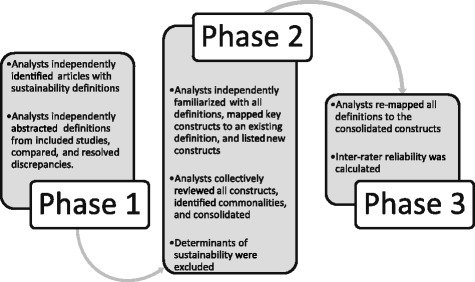
“Analysts exported data under the “definition” code and mapped it to the five concepts included in a published sustainability definition [10].”
BackgroundMethodSelf-citationDeveloping a conceptual framework for digital platform literacy
Ha, S., & Kim, S. (2023) · Telecommunications Policy · doi:10.1016/j.telpol.2023.102682 · Cited by 62
Defining sustainability in practice: views from implementing real-world innovations in health care
Urquhart, R., Kendell, C., Cornelissen, E., Madden, L. L., Powell, B. J., Kissmann, G., Richmond, S. A., Willis, C., & Bender, J. L. (2020) · BMC Health Services Research · doi:10.1186/s12913-020-4933-0 · Cited by 41
van Schie, V. (2024) · Health Policy · doi:10.1016/j.healthpol.2024.105115 · Cited by 51
Sedovs, E., Volkova, T., & Ludviga, I. (2024) · Sustainable Futures · doi:10.1016/j.sftr.2024.100414 · Cited by 52
How Green Possibilities Can Help in a Future Sustainable Conservation of Cultural Heritage in Europe
Turo, F. D., & Medeghini, L. (2021) · Sustainability · doi:10.3390/su13073609 · Cited by 46
Big Data and Sustainable Consumption: A Review and Research Agenda
Chandra, S., & Verma, S. (2021) · Vision The Journal of Business Perspective · doi:10.1177/09722629211022520 · Cited by 57
“Different authors have argued that sustainability is best explained by the concept of a system (Galvič & Lukman, 2007; Moore et al., 2017).”
BackgroundMoro, C., Mills, K. A., Phelps, C., & Birt, J. (2023) · International Journal of Educational Technology in Higher Education · doi:10.1186/s41239-022-00378-y · Cited by 49
“Sustainability refers to the quality of being able to continue over a period of time (Moore et al., 2017), and also encompasses environmental sustainability, which is the quality of causing little or no damage to the environment, and therefore, able to continue for a long time.”
BackgroundGreene, M. C., Huang, T. T. ‐., Giusto, A. M., Lovero, K. L., Stockton, M. A., Shelton, R. C., dos Santos, P., Saúte, F., & Wainberg, M. L. (2021) · Harvard Review of Psychiatry · doi:10.1097/hrp.0000000000000306 · Cited by 47
Al-Faouri, A. H. (2023) · Cogent Business & Management · doi:10.1080/23311975.2023.2262694 · Cited by 47
“Its ultimate target is to expand opportunities for all people, both now and in the future, as delineated by Moore et al. (2017).”
BackgroundSustained Effectiveness of Evidence-Based Parenting Programs After the Research Trial Ends
Gray, G., Totsika, V., & Lindsay, G. (2018) · Frontiers in Psychology · doi:10.3389/fpsyg.2018.02035 · Cited by 46
Sustainable antibullying program implementation: School profiles and predictors
Sainio, M., Herkama, S., Turunen, T., Rönkkö, M., Kontio, M., Poskiparta, E., & Salmivalli, C. (2018) · Scandinavian Journal of Psychology · doi:10.1111/sjop.12487 · Cited by 44
“Studies of sustainability also differ in the time horizons taken (Moore et al., 2017).”
BackgroundKamishibai cards to sustain evidence-based practices to reduce healthcare–associated infections
Shea, G. E., Smith, W., Koffarnus, K., Knobloch, M. J., & Safdar, N. (2018) · American Journal of Infection Control · doi:10.1016/j.ajic.2018.10.004 · Cited by 43
Paterson, C., Leduc, C., Maxwell, M., Aust, B., Amann, B. L., Pashoja, A. C., Coppens, E., Couwenbergh, C., O’Connor, C., Arensman, E., et al. (2021) · Systematic Reviews · doi:10.1186/s13643-020-01570-9 · Cited by 52
“direct quotes, page numbers) will be structured using an adapted version of the RE-AIM framework [40] which has been complemented using selected categories from Nielson and Randall’s model of organisational-level interventions [16] and Moore’s sustainability criteria [41].”
MethodApproaches to Spread, Scale-Up, and Sustainability
Papoutsi, C., Greenhalgh, T., & Marjanovic, S. (2024) · Cambridge University Press eBooks · doi:10.1017/9781009326049 · Cited by 46
Timperi, M., Kokkonen, K., & Hannola, L. (2024) · Production & Manufacturing Research · doi:10.1080/21693277.2024.2428249 · Cited by 47
“Due to the extensive interest, numerous academic papers discuss sustainability, sustainable development, and sustainable business models (e.g. Dyllick & Muff, 2016; Geissdoerfer et al., 2018; Moore et al., 2017; Ruggerio, 2021).”
Rates of sustainment in the Universal Stages of Implementation Completion
Wong, D. R., Schaper, H., & Saldana, L. (2022) · Implementation Science Communications · doi:10.1186/s43058-021-00250-6 · Cited by 44
“Sustainment is the desired outcome of implementation, typically involving the goal of maintenance of the practice within the service setting [4, 5].”
BackgroundSustainability Definitions, Historical Context, and Frameworks
Garren, S. J., & Brinkmann, R. (2018) · Springer eBooks · doi:10.1007/978-3-319-71389-2_1 · Cited by 55
Road to Sustainability: University–Start-Up Collaboration
Jirapong, K., Cagarman, K., & von Arnim, L. (2021) · Sustainability · doi:10.3390/su13116131 · Cited by 40
Mansell, P., Philbin, S. P., & Broyd, T. (2020) · Sustainability · doi:10.3390/su12166413 · Cited by 41
Liu, X., Wang, T., Tan, J.-Y. B., Stewart, S., Chan, R. J., Eliseeva, S., Polotan, M. J., & Zhao, I. (2022) · BMC Family Practice · doi:10.1186/s12875-022-01641-x · Cited by 42
“described five elements for the assessment of sustainability, including a defined period of time and the continued delivery of an intervention and/ or maintenance of beneficial behaviour, meaning behavioural changes may evolve or adapt while continuing to produce benefits [45].”
BackgroundKoh, S., Lee, M., Brotzman, L., & Shelton, R. C. (2018) · Translational Behavioral Medicine · doi:10.1093/tbm/iby095 · Cited by 45
“…program, clinical intervention, and/or implementation strategies continue to be delivered and/or individual behavior change (i.e., clinician, patient) is maintained; the program and individual behavior change may evolve or adapt while continuing to produce benefits for individuals/systems” [52].”
BackgroundCzosnek, L., Zopf, E. M., Cormie, P., Rosenbaum, S., Richards, J. A., & Rankin, N. M. (2022) · Implementation Science Communications · doi:10.1186/s43058-022-00337-8 · Cited by 44
Pratama, A., Tanzil, N. D., Koeswayo, P. S., Muhammad, K., & Megawati, L. R. (2024) · Journal of Ecohumanism · doi:10.62754/joe.v3i4.3830 · Cited by 43
“(Moore et al., 2017) The application of sustainability science in economics, business management, and accounting can focus on both macro and micro issues.”
BackgroundConsumer seafood preferences related to alternative food networks and their value chains
Witter, A., Murray, G., & Sumaila, U. R. (2021) · Marine Policy · doi:10.1016/j.marpol.2021.104694 · Cited by 37
Peñarroya-Farell, M., Miralles, F., & Vaziri, M. (2023) · Journal of Open Innovation Technology Market and Complexity · doi:10.1016/j.joitmc.2023.100036 · Cited by 43
Richter, F., Gawenko, W., Götze, U., & Hinz, M. (2023) · Schmalenbach Journal of Business Research · doi:10.1007/s41471-023-00174-y · Cited by 36
“Currently, there are various understandings of what sustainability means (Valdivia et al. 2021; Moore et al. 2017).”
BackgroundRimache, L. K. C., Ugarte‐Gil, C., & Brunette, M. (2023) · PLOS Global Public Health · doi:10.1371/journal.pgph.0001482 · Cited by 44
Geoethics, a Branding for Sustainable Practices
Bohle, M., & Marone, E. (2021) · Sustainability · doi:10.3390/su13020895 · Cited by 37
Ryan, G. W., Gilbert, P. A., Ashida, S., Charlton, M. E., Scherer, A. M., & Askelson, N. M. (2022) · Preventing Chronic Disease · doi:10.5888/pcd19.210378 · Cited by 36
“Sustainability has long been a challenge for implementation science, and many implementation studies lack an explicit definition of what sustainability means in practice (21,22), making it even harder for researchers and practitioners alike to focus on best practices in this area.”
Sustaining quality improvement efforts: emerging principles and practice
Burke, R. E., & de Mheen, P. J. M. (2021) · BMJ Quality & Safety · doi:10.1136/bmjqs-2021-013016 · Cited by 39
The Future of Parenting Programs: III Uptake and Scale
Britto, P. R., Bradley, R. H., Yoshikawa, H., Ponguta, L. A., Richter, L., & Kotler, J. A. (2022) · Parenting · doi:10.1080/15295192.2022.2086809 · Cited by 38
Sustainability of SMEs and Health Sector in a Dynamic Capabilities Perspective
Akkaya, B., & Üstgörül, S. (2020) · Advances in business strategy and competitive advantage book series · doi:10.4018/978-1-7998-2577-7.ch004 · Cited by 40
Understanding the sustainment of population health programmes from a whole-of-system approach
Crane, M. A., Nathan, N., McKay, H. A., Lee, K., Wiggers, J., & Bauman, A. E. (2022) · Health Research Policy and Systems · doi:10.1186/s12961-022-00843-0 · Cited by 39
“Sustainment also largely depends on the nature of the intervention and outcomes [4, 5], as many population health changes may not be detectable until at least 3–10 years post-implementation [6].”
BackgroundFlynn, R., Stevens, B., Bains, A., Kennedy, M., & Scott, S. D. (2022) · Systematic Reviews · doi:10.1186/s13643-022-02093-1 · Cited by 39
“[4] who define sustainability under five constructs: (1) as occurring after a defined period of time, (2) where the intervention, and/or implementation strategies continue to be delivered, (3) behavior change is maintained, Open Access”
BackgroundSustainable biobanks: a case study for a green global bioethics
Samuel, G. N., Lucivero, F., & Lucassen, A. (2022) · Global Bioethics · doi:10.1080/11287462.2021.1997428 · Cited by 34
“One example is a de fi nition of activities continuing and enduring over time (Shearman, 1990), which is often used in healthcare when examining issues related to the implementation of speci fi c initiatives or resource allocation (Lennox et al., 2018; Moore et al., 2017; Munthe et al., 2021).”
Carruthers, S., Mleczko, N., Page, S., Ahuja, S., Ellis, C., Howlin, P., Leadbitter, K., Taylor, L. J., Slonims, V., & Charman, T. (2022) · Autism · doi:10.1177/13623613221125630 · Cited by 36
Making the connection between health equity and sustainability
Shelton, R. C., Hailemariam, M., & Iwelunmor, J. (2023) · Frontiers in Public Health · doi:10.3389/fpubh.2023.1226175 · Cited by 39
“Additionally, we define sustainability as the extent to which there is continued delivery and ongoing health benefits of EBIs over time, recognizing that EBIs may need to evolve in response to changing contexts to maximize benefits (21, 22).”
BackgroundUrquhart, R., Kendell, C., Cornelissen, E., Powell, B. J., Madden, L. L., Kissmann, G., Richmond, S. A., & Bender, J. L. (2021) · BMJ Open · doi:10.1136/bmjopen-2020-042503 · Cited by 32
Eco-Normalization: Evaluating the Longevity of an Innovation in Context
Hamza, D. M., & Regehr, G. (2021) · Academic Medicine · doi:10.1097/acm.0000000000004318 · Cited by 32
Sustaining Knowledge Translation Practices: A Critical Interpretive Synthesis
Borst, R. A. J., Wehrens, R., & Bal, R. A. (2022) · International Journal of Health Policy and Management · doi:10.34172/ijhpm.2022.6424 · Cited by 38
“approaches in the health policy and systems research literature sees sustainability of KT practices as the extent to which they are routinised, or exist over time.(5,6,11) This means, for instance, that policymaking processes would be regularly informed by relevant knowledge through interactions between policymakers,…”
Varallyay, N. I., Langlois, É. V., Tran, N. T., Elias, V., & Revéiz, L. (2020) · Health Research Policy and Systems · doi:10.1186/s12961-020-00579-9 · Cited by 33
Schwarz, U. V. T., Giannotta, F., Neher, M., Zetterlund, J., & Hasson, H. (2021) · Implementation Science Communications · doi:10.1186/s43058-021-00131-y · Cited by 33
“It is also consistent with definitions of sustainability as the ability to continuously deliver value, rather than as the consistent delivery of an EBI [27].”
Laur, C., Bell, J., Valaitis, R., Ray, S., & Keller, H. (2018) · BMC Health Services Research · doi:10.1186/s12913-018-3748-8 · Cited by 30
“, clinician, patient) is maintained; 4) the program and individual behavior change may evolve or adapt while 5) continuing to produce benefits for individuals/systems [2].”
BackgroundTosarkani, B. M., & Amin, S. H. (2020) · Computers & Industrial Engineering · doi:10.1016/j.cie.2020.106611 · Cited by 30
Karimi, D., Bahrami, J., Mobaraki, J., Missimer, T., & Taheri, K. (2022) · Hydrogeology Journal · doi:10.1007/s10040-022-02512-6 · Cited by 30
“The desired means of managing groundwater fall within the realm of sustainable development, which has been defined in a variety of ways as discussed in the Brundtland Report (WCED 1987; Brown et al.”
BackgroundRaza, H., Ali, A., Rafiq, N., Liu, X., Asif, T., & Jing, C. (2023) · Sustainability · doi:10.3390/su15054327 · Cited by 34
Factors Influencing Sustainability of Non-Governmental Organizations in the developing world
Gul, K., & Morandé, S. (2023) · SEISENSE Business Review · doi:10.33215/sbr.v3i1.885 · Cited by 36
Willging, C. E., Gunderson, L. M., Green, A. E., Jaramillo, E. T., Garrison, L., Ehrhart, M. G., & Aarons, G. A. (2018) · Human Services Organizations Management Leadership & Governance · doi:10.1080/23303131.2018.1495673 · Cited by 34
“Such failures minimize the positive effects of EBIs for clients and of public resources allocated for this purpose (Aarons, Hurlburt, & Horwitz, 2011; Moore et al., 2017).”
BackgroundSustainable Financial Education and Consumer Life Satisfaction
Chen, F., Lu, J., Li, J., Wang, W., & Bissielou, H. (2020) · Sustainability · doi:10.3390/su12031150 · Cited by 32
“[22], sustainability is considered as follows: (1) after a defined period of time, (2) a program and/or implementation strategies continue to be delivered and (3) individual behavior change is maintained; (4) the program and individual behavior change may evolve or adapt while (5) continuing to produce benefits for in…”
BackgroundFlynn, R., Mrklas, K., Campbell, A., Wasylak, T., & Scott, S. D. (2021) · BMC Health Services Research · doi:10.1186/s12913-021-07214-5 · Cited by 29
Garner, B. R., & Mady, A. (2023) · Journal of Business and Industrial Marketing · doi:10.1108/jbim-09-2022-0418 · Cited by 34
Integrating Sustainability into Contemporary Art and Design: An Interdisciplinary Approach
Zhang, L., & Shen, T. (2024) · Sustainability · doi:10.3390/su16156539 · Cited by 28
Metadata
- Authors
- Moore, J. E., Mascarenhas, A., Bain, J., & Straus, S. E.
- Affiliations
- St. Michael's Hospital (CA)
- Corresponding author
- Moore, Julia E.
- Venue
- Implementation Science
- Published
- 2017-09-02
- Volume
- 12
- Issue
- 1
- Pages
- 110-110
- ISSN
- 1748-5908 (ISSN-L)
- PMC
- PMC5581411
- OpenAlex
- W2751732558
- Cited by
- 630
- References
- 38
- Citations by year
- 2026: 56 · 2025: 82 · 2024: 99 · 2023: 111 · 2022: 87 · 2021: 86 · 2020: 48 · 2019: 27 · 2018: 28 · 2017: 5
- FWCI
- 47.67
- Type
- journal article
- Language
- en
- Open access
- gold
- doi.org
- Licence
- cc-by
- creativecommons.org/licenses/by/4.0/ (tdm)
- Locations
- Implementation Science (publishedVersion, cc-by)
- PubMed Central (publishedVersion, cc-by)
- PubMed (publishedVersion)
- TSpace (University of Toronto) (submittedVersion, cc-by)
- DOAJ (DOAJ: Directory of Open Access Journals) (submittedVersion, cc-by-sa)
- Topics
- Health Sciences › Health Professions › General Health Professions › Health Policy Implementation Science
- Health Sciences › Health Professions › General Health Professions › Health Sciences Research and Education
- Health Sciences › Medicine › Public Health, Environmental and Occupational Health › Clinical practice guidelines implementation
- Keywords
- sustainability, definition of sustainability, behavior maintenance, sustainability framework, concept mapping, meta-framework
- MeSH terms
- Delivery of Health Care, Health Plan Implementation, Health Services Research, Humans, Program Evaluation
About these checks
Registry, retraction, Cites and statistics results are computed, not judged, with one exception: a printed reference that no index lists is read once by a model before it counts as a citation error. Claims are extracted by a model and kept only when their quote appears verbatim in the text; each cited source is then checked, with a model’s help, for whether it says what the claim relies on. Those verdicts can be wrong — read the claim’s quote and the cited source before relying on one.
Statistics and arithmetic are recomputed, not judged.
Confidence bands are shown only for fields calibrated on our annotated test set. None is calibrated yet, so no band is shown.
What counts as a claim ›How we measure confidence ›How we check this ›
Are you an author, or do you see a problem with this page? Request a review
Data sources
Bibliographic data: Semantic Scholar, OpenAlex, Crossref.
Contains information from the Semantic Scholar Academic Graph Datasets, made available under the ODC Attribution License (ODC-BY 1.0).
Semantic Scholar’s data is described in: Kinney, R., et al. (2023). The Semantic Scholar Open Data Platform. arXiv:2301.10140.
