

Using Normalization Process Theory in feasibility studies and process evaluations of complex healthcare interventions: a systematic review
Open accessThe DOI matches its Crossref record; 228 of the 232 references it cites were found in a registry or an index; 62 of the 91 sources its claims cite were checked for support.
Abstract
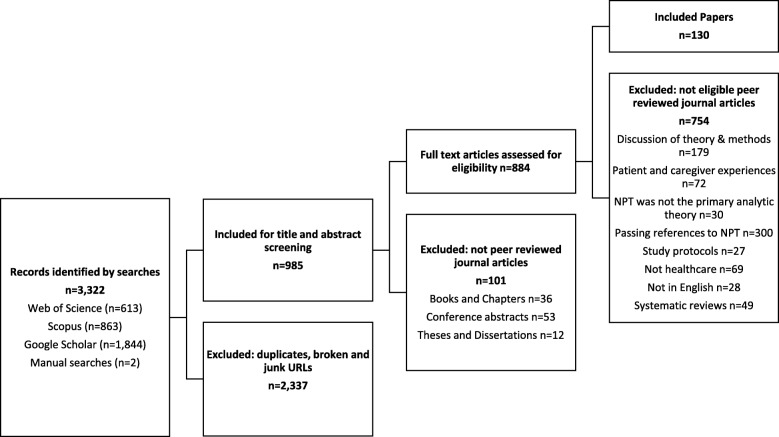
BACKGROUND: Normalization Process Theory (NPT) identifies, characterises and explains key mechanisms that promote and inhibit the implementation, embedding and integration of new health techniques, technologies and other complex interventions. A large body of literature that employs NPT to inform feasibility studies and process evaluations of complex healthcare interventions has now emerged. The aims of this review were to review this literature; to identify and characterise the uses and limits of NPT in research on the implementation and integration of healthcare interventions; and to explore NPT's contribution to understanding the dynamics of these processes. METHODS: A qualitative systematic review was conducted. We searched Web of Science, Scopus and Google Scholar for articles with empirical data in peer-reviewed journals that cited either key papers presenting and developing NPT, or the NPT Online Toolkit ( www.normalizationprocess.org ). We included in the review only articles that used NPT as the primary approach to collection, analysis or reporting of data in studies of the implementation of healthcare techniques, technologies or other interventions. A structured data extraction instrument was used, and data were analysed qualitatively. RESULTS: Searches revealed 3322 citations. We show that after eliminating 2337 duplicates and broken or junk URLs, 985 were screened as titles and abstracts. Of these, 101 were excluded because they did not fit the inclusion criteria for the review. This left 884 articles for full-text screening. Of these, 754 did not fit the inclusion criteria for the review. This left 130 papers presenting results from 108 identifiable studies to be included in the review. NPT appears to provide researchers and practitioners with a conceptual vocabulary for rigorous studies of implementation processes. It identifies, characterises and explains empirically identifiable mechanisms that motivate and shape implementation processes. Taken together, these mean that analyses using NPT can effectively assist in the explanation of the success or failure of specific implementation projects. Ten percent of papers included critiques of some aspect of NPT, with those that did mainly focusing on its terminology. However, two studies critiqued NPT emphasis on agency, and one study critiqued NPT for its normative focus. CONCLUSIONS: This review demonstrates that researchers found NPT useful and applied it across a wide range of interventions. It has been effectively used to aid intervention development and implementation planning as well as evaluating and understanding implementation processes themselves. In particular, NPT appears to have offered a valuable set of conceptual tools to aid understanding of implementation as a dynamic process.
Overview
CoChat Summary
TL;DR
This qualitative systematic review identified 130 papers reporting 108 studies that used Normalization Process Theory (NPT) as the primary analytic framework in feasibility studies and process evaluations of complex healthcare interventions. The authors conclude that NPT provides a coherent, stable, and flexibly applicable conceptual vocabulary that helped explain implementation outcomes, though some users criticized its terminology, agency emphasis, and normative focus.
Key findings
- Searches revealed 3322 citations; after screening, 130 papers from 108 identifiable studies were included. NPT was used in 26 controlled studies, generating 40/130 (30.8%) articles, and 82 uncontrolled studies, generating 90/130 (69.2%) articles.
- Use of NPT was planned in the study protocol in 54/108 (50%) studies overall: 19/26 (73%) controlled studies and 35/82 (42.7%) uncontrolled studies. 64/108 (59.2%) studies cited systematic reviews or rigorously developed clinical guidelines as the evidence base for the intervention.
- In all but one study, implementation outcomes could be explained by reference to NPT mechanisms; differences between participant groups were characterized in 69/108 (64%) studies and between settings in 36/108 (33%) studies. About 10% of papers included critiques of NPT, mainly about terminology; two critiqued its emphasis on agency, and one critiqued its normative focus.
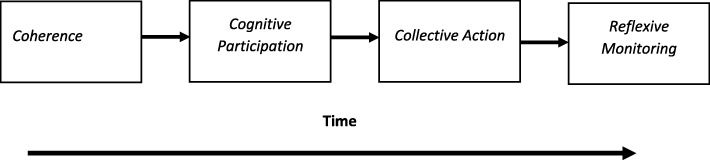
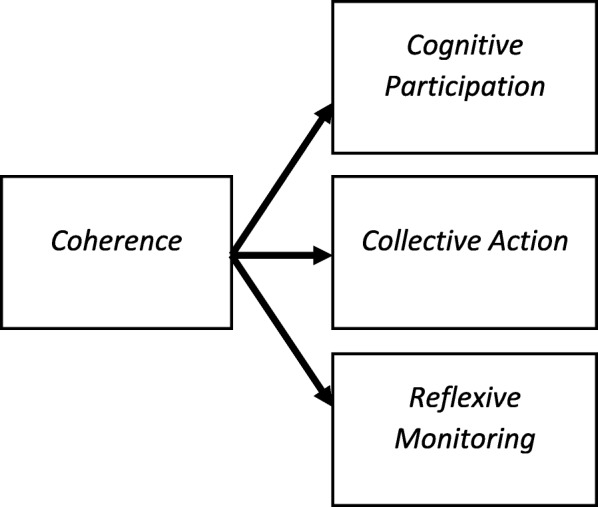
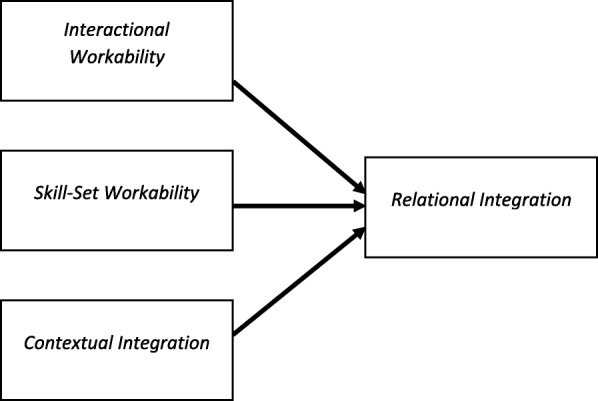
- Researchers applied NPT constructs in four distinctive ways: as a linear sequence over time, with coherence as an obligatory starting point, with relational integration as an obligatory point of passage, or as mechanisms operating simultaneously but unevenly. NPT was used to aid intervention development and implementation planning as well as to evaluate and understand implementation processes.
Methods
- Qualitative systematic review using citation searches of Web of Science, Scopus, and Google Scholar for articles citing key NPT papers or the NPT Online Toolkit; searches ran from June 2015 to December 2017. Inclusion criteria were peer-reviewed English-language empirical articles on healthcare intervention implementation in which NPT was the primary analytic framework; exclusions included protocols, reviews, non-healthcare settings, non-English papers, and passing references to NPT.
- Screening was done by independent reviewer pairs; data were extracted with a structured instrument, and qualitative analysis characterized uses, limits, and contributions of NPT. Coding was jointly checked on 75/130 included papers, and categorisation was jointly checked for all included papers. PROSPERO deemed the review ineligible for public registration because NPT was not a healthcare intervention.
Limitations
- Stated by the authors: searches were undertaken in only two databases, so some studies may have been missed; Google Scholar results were unstable and produced multiple versions of references, though it identified about 20 papers that would otherwise have been excluded; non-English studies were excluded; a different research team might reach different conclusions; and findings apply only to healthcare implementation research.
- Evident from the text: included studies often focused on feasibility or early implementation phases, skewing analyses toward implementation rather than embedding and integration; few studies tracked an intervention over its whole life; most papers used the 2009 elaboration of NPT; and critiques of NPT were rare.
Model-written summary. Check it against the paper before relying on it.
Integrity signals
Registry
Cites
Statistics
Figures
Verification
Claims the paper makes
34 Valid · 3 Not valid · 24 Not checked · 105 Own results and interpretations
The cited sources support only part of this claim — read each source’s verdict below.
In the paper
“The development of NPT first involved the iterative development of a robust generic theory of implementation [5–9, 11, 12].”
§ Using Normalization Process Theory in feasibility studies and process evaluations of complex healthcare interventions: a systematic review > Background > What is NPT and what does it do?
What the sources say
- Not checked yetcites [5] May C A rational model for assessing and evaluating complex interventions in health care BMC Health Serv Res 2006 6 86 1 11 16827928 PMC1534030 source
- Partly supportedcites [6] May C Finch T Mair F Ballini L Dowrick C Eccles M Gask L MacFarlane A Murray E Rapley T Understanding the implementation of complex interventions in health care: the normalization process model BMC Health Serv Res 2007 7 148 10.1186/1472-6963-7-148 17880693 PMC2089069 sourceExperimental — accuracy not yet measured
The Background describes successive development of the Normalization Process Model from empirical studies into a robust applied theory. But the Conclusion explicitly says the model is not a general theory: its scope is the implementation of complex interventions in healthcare, so this paper does not support calling it a generic theory of implementation. (LLM, conf=0.86)
- Not checked — no full text of the sourcecites [7] May C Finch T Implementation, embedding, and integration: an outline of normalization process theory Sociology 2009 43 3 535 554 10.1177/0038038509103208 source
- Supportedcites [8] May C, Mair FS, Finch T, MacFarlane A, Dowrick C, Treweek S, Rapley T, Ballini L, Ong BN, Rogers A, et al. Development of a theory of implementation and integration: normalization process theory. Implement Sci. 2009:4(29). PMC2693517 19460163 source
The Methods (Abstract; no page given) describe successive stages from empirical generalizations to an applied model and then a formal theory. The Results ('The changing scope of the theory'; no page given) describe the resulting NPT as a generalizable middle-range theory of implementation, embedding, and integration. (LLM, conf=0.91)
- Partly supportedcites [9] May C Towards a general theory of implementation Implement Sci 2013 8 1 18 10.1186/1748-5908-8-18 23406398 PMC3602092 sourceExperimental — accuracy not yet measured
The ‘Theory-building as a journey’ section describes a progression from the Normalization Process Model to NPT, which it calls a generic, middle-range theory of implementation. It says the journey began with the narrower model, however, and that the proposed general theory was a later extension of NPT—not the first step in its development. (LLM, conf=0.82)
- Partly supportedcites [11] May CR, Mair FS, Dowrick CF, Finch TL. Process evaluation for complex interventions in primary care: understanding trials using the normalization process model. BMC Fam Pract. 2007;8 PMC1950872 17650326 sourceExperimental — accuracy not yet measured
The Background (page unavailable) describes the development and application of the Normalization Process Model (NPM) to understand implementation, and the Authors’ contributions say the model was modified for this paper. The copy does not establish that NPT’s development first involved an iterative process yielding a robust generic theory of implementation; it discusses NPM and refers the fuller account of its development elsewhere. (LLM, conf=0.83)
- Not checked yetcites [12] May C Agency and implementation: understanding the embedding of healthcare innovations in practice Soc Sci Med 2013 78 0 26 33 10.1016/j.socscimed.2012.11.021 23246396 source
Checked before — its earlier verdict is held back until a new check runs.
plainstates a cause- Asserted: passes — The authors put it forward as true.
- Checkable: passes — It can be checked against evidence.
- Load-bearing: unclear — It is unclear whether the paper’s conclusions depend on it.
- Based: passes — The paper gives a reason why it holds.
Every source the paper cites for this claim was checked and supports it.
In the paper
“concerns raised by McEvoy et al. about the lack of prospective application do not just apply to NPT.”
§ Using Normalization Process Theory in feasibility studies and process evaluations of complex healthcare interventions: a systematic review > Discussion > Key results of the review
What the sources say
- Supportedcites Kirk et al. [18] Kirk MA Kelley C Yankey N Birken SA Abadie B Damschroder L A systematic review of the use of the consolidated framework for implementation research Implement Sci 2016 11 72 10.1186/s13012-016-0437-z 27189233 PMC4869309 source
The Discussion (Phase of implementation; page unavailable) reports that only two studies used CFIR before implementation and calls this a missed opportunity. The Discussion (Contribution of the CFIR to implementation science; page unavailable) also reports minimal prospective use of PARIHS. Together, these passages support the point that the concern is not limited to NPT. (LLM, conf=0.92)
plain- Asserted: passes — The authors put it forward as true.
- Checkable: passes — It can be checked against evidence.
- Load-bearing: unclear — It is unclear whether the paper’s conclusions depend on it.
- Based: passes — The paper gives a reason why it holds.
- Supported
The cited sources support only part of this claim — read each source’s verdict below.
In the paper
“Normalization Process Theory (NPT) identifies, characterises and explains key mechanisms that promote and inhibit the implementation, embedding and integration of new health techniques, technologies and other complex interventions.”
- Also stated in: § Background · boosted
“Normalization Process Theory (NPT) [5–10] is one of these. It identifies, characterises and explains mechanisms that have been empirically demonstrated to motivate and shape implementation processes and affect their outcomes.”
§ Using Normalization Process Theory in feasibility studies and process evaluations of complex healthcare interventions: a systematic review > Abstract > Background
What the sources say
- Supportedcites [5] May C A rational model for assessing and evaluating complex interventions in health care BMC Health Serv Res 2006 6 86 1 11 16827928 PMC1534030 source
The Background section (p.1) frames the paper's purpose with the question 'How can those factors that promote or inhibit the normalization of complex interventions be identified, conceptualized, and evaluated?', and the Abstract's conclusion states the model assesses 'the potential for complex interventions to become routinely embedded in everyday clinical work' and evaluates 'the factors that promote or inhibit' normalization — matching the claim's identify/characterise/explain and promote/inhibit structure. 'Normalization' is defined in the Normalization of complex interventions section as 'the embedding of a technique, technology or organizational change as a routine and taken-for-granted element of clinical practice', and the same section treats new techniques, technologies and organizational forms as 'complex interventions', while the Results/Abstract cover introduction (implementation) and integration (contextual/relational integration). The only divergence is terminological: this 2006 paper names it the 'normalization process model' rather than 'Normalization Process Theory', which is a later label for the same framework, so the wording difference does not undercut the attributed content. (LLM, conf=0.85)
- Partly supportedcites [6] May C Finch T Mair F Ballini L Dowrick C Eccles M Gask L MacFarlane A Murray E Rapley T Understanding the implementation of complex interventions in health care: the normalization process model BMC Health Serv Res 2007 7 148 10.1186/1472-6963-7-148 17880693 PMC2089069 sourceExperimental — accuracy not yet measured
The Background and Abstract Results sections say the Normalization Process Model identifies factors that promote or inhibit implementation and explains how complex interventions become embedded in health care practice. The cited paper calls this the Normalization Process Model, not Normalization Process Theory (NPT), and describes its scope as complex interventions in health care rather than the broader formulation in the claim. The copy provides no page numbers. (LLM, conf=0.88)
- Not checked — no full text of the sourcecites [7] May C Finch T Implementation, embedding, and integration: an outline of normalization process theory Sociology 2009 43 3 535 554 10.1177/0038038509103208 source
- Supportedcites [8] May C, Mair FS, Finch T, MacFarlane A, Dowrick C, Treweek S, Rapley T, Ballini L, Ong BN, Rogers A, et al. Development of a theory of implementation and integration: normalization process theory. Implement Sci. 2009:4(29). PMC2693517 19460163 source
The Background section (‘What is NPT?’; page not provided) says NPT explains implementation, embedding and integration, and identifies mechanisms that promote or inhibit the enactment of practices. The Methods section (‘Phase three: Making a formal theory’; page not provided) describes it as a general theory applicable beyond healthcare and complex interventions. (LLM, conf=0.94)
- Supportedcites [9] May C Towards a general theory of implementation Implement Sci 2013 8 1 18 10.1186/1748-5908-8-18 23406398 PMC3602092 source
The Background’s ‘Constructs of the general theory’ section says NPT characterizes social mechanisms involved in implementing and embedding complex interventions, then identifies four mechanisms. The same section discusses techniques and technologies as components of complex interventions. Page numbers are not available in our copy. (LLM, conf=0.91)
- Supportedcites [10] May CR Johnson M Finch T Implementation, context and complexity Implement Sci 2016 11 1 141 10.1186/s13012-016-0506-3 27756414 PMC5069794 source
The Background’s Table 1 describes NPT as analysing mechanisms of implementation and asks what promotes or inhibits the implementation, embedding and integration of practices. It identifies the practices as new techniques, technologies or organisational interventions, while the Purpose of this paper section also discusses the routine incorporation of complex interventions. (LLM, conf=0.92)
boostedstates a cause- Asserted: passes — The authors put it forward as true.
- Checkable: passes — It can be checked against evidence.
- Load-bearing: passes — The paper’s conclusions depend on it.
- Based: passes — The paper gives a reason why it holds.
- Also stated in: § Background · boosted
Every source the paper cites for this claim was checked and supports it.
In the paper
“In the period since McEvoy et al.’s review [17], studies using NPT have proliferated.”
§ Using Normalization Process Theory in feasibility studies and process evaluations of complex healthcare interventions: a systematic review > Background > The purpose of this review
What the sources say
- Supportedcites [17] McEvoy R Ballini L Maltoni S ODonnell C Mair F MacFarlane A A qualitative systematic review of studies using the normalization process theory to research implementation processes Implement Sci 2014 9 1 2 10.1186/1748-5908-9-2 24383661 PMC3905960 source
The citation identifies McEvoy et al.’s review as the point from which the citing authors measure time. The Discussion describes the paper as a review of 29 NPT papers; the statement about proliferation since that review is the citing authors’ own observation, not a finding attributed to the review. (LLM, conf=0.91)
plain- Asserted: passes — The authors put it forward as true.
- Checkable: passes — It can be checked against evidence.
- Load-bearing: passes — The paper’s conclusions depend on it.
- Based: passes — The paper gives a reason why it holds.
- Supported
Every source the paper cites for this claim was checked and supports it.
In the paper
“A review by McEvoy et al. [17], published in 2014, provided a qualitative synthesis of 29 early and heterogeneous studies in which NPT was used.”
§ Using Normalization Process Theory in feasibility studies and process evaluations of complex healthcare interventions: a systematic review > Background > The purpose of this review
What the sources say
- Supportedcites [17] McEvoy R Ballini L Maltoni S ODonnell C Mair F MacFarlane A A qualitative systematic review of studies using the normalization process theory to research implementation processes Implement Sci 2014 9 1 2 10.1186/1748-5908-9-2 24383661 PMC3905960 source
The Methods describe a qualitative systematic review using framework analysis and limit the included publications to 2006–June 2012. The Results report 29 articles using NPT across several healthcare fields, and the Discussion describes a diverse range of settings. These passages support the characterization of the studies as early and heterogeneous. (LLM, conf=0.92)
plain- Asserted: passes — The authors put it forward as true.
- Checkable: passes — It can be checked against evidence.
- Load-bearing: passes — The paper’s conclusions depend on it.
- Based: passes — The paper gives a reason why it holds.
- Supported
75 more claims · 5 with their cited sources checked
Create a free account to see all 166 claims and to verify the 9 references still open.
- Probably not a substantial claim. 61
- It may state two separate claims as one. 32
- The quote only partly states this claim. 1
Claims other papers make about this one
Each is checked against this paper’s own text: does it say what the citing paper says it does?
The cited source says what the claim attributes to it.
In the citing paper
“Previous research has shown that NPT can be applied effectively to qualitative data in healthcare contexts and, more recently, in school-based research [38, 40, 41].”
In the citing paper
“NPT is a useful framework to explain and understand how people integrate new interventions into their everyday routines [24].”
Self-check
Percentages, sums and reported differences re-computed from the paper’s own numbers.
Each contradiction between two passages listed here was confirmed by an independent check.
Rated minor: it would not touch a result — a value no result rests on, a p-value that stays on the same side of the significance level, or a conflict that is clerical, resolved elsewhere in the paper, or outside its own findings.
In the paper
§ Using Normalization Process Theory in feasibility studies and process evaluations of complex healthcare interventions: a systematic review > Discussion > Key results of the review
“The major papers by Clarke et al. [34, 35] and Hooker et al. [38–41] are important examples of such work.”
§ Using Normalization Process Theory in feasibility studies and process evaluations of complex healthcare interventions: a systematic review > References
“34. Grant A Dreischulte T Guthrie B Process evaluation of the data-driven quality improvement in primary care (DQIP) trial: active and less active ingredients of a multi-component complex intervention to reduce high-risk primary care prescribing Implement Sci 2017 12 1 4”
Rated minor: it would not touch a result — a value no result rests on, a p-value that stays on the same side of the significance level, or a conflict that is clerical, resolved elsewhere in the paper, or outside its own findings.
In the paper
§ Using Normalization Process Theory in feasibility studies and process evaluations of complex healthcare interventions: a systematic review > Results > Types of studies
“106. Walker et al. [144] | Australia | NPT | Colorectal cancer risk prediction | NICE guideline [199]”
§ Using Normalization Process Theory in feasibility studies and process evaluations of complex healthcare interventions: a systematic review > References
“199. NICE Depression in adults with a chronic physical health problem (CG91) 2009 Manchester National Institute for Health and Clinical Excellence”
Rated minor: it would not touch a result — a value no result rests on, a p-value that stays on the same side of the significance level, or a conflict that is clerical, resolved elsewhere in the paper, or outside its own findings.
In the paper
§ Using Normalization Process Theory in feasibility studies and process evaluations of complex healthcare interventions: a systematic review > Results > Types of studies
“13. Grant et al. [34, 35] | UK | NPT | Primary care prescribing | NICE guideline [157]”
§ Using Normalization Process Theory in feasibility studies and process evaluations of complex healthcare interventions: a systematic review > References
“157. NICE Delirium: diagnosis, prevention and management (CG103) 2010 Manchester National Institute for Clinical Excellence”
Rated minor: it would not touch a result — a value no result rests on, a p-value that stays on the same side of the significance level, or a conflict that is clerical, resolved elsewhere in the paper, or outside its own findings.
In the paper
§ Using Normalization Process Theory in feasibility studies and process evaluations of complex healthcare interventions: a systematic review > Results > Types of studies
“14. Godfrey et al. [36] | UK | NPT | Delirium prevention in hospital | Systematic review [158]”
§ Using Normalization Process Theory in feasibility studies and process evaluations of complex healthcare interventions: a systematic review > References
“158. Howard RL Avery AJ Slavenburg S Royal S Pipe G Lucassen P Pirmohamed M Which drugs cause preventable admissions to hospital? A systematic review Br J Clin Pharmacol 2007 63 2 136 147”
Citations
Cites
Three Approaches to Qualitative Content Analysis
Hsieh, H.-F., & Shannon, S. E. (2005) · Qualitative Health Research · doi:10.1177/1049732305276687 · Cited by 44,601 · cited 1×
“Some used deductive strategies that relied on framework or directed content [204, 205] analyses and in which interpretation of data was structured prospectively by the theory.”
MethodDamschroder, L. J., Aron, D. C., Keith, R. E., Kirsh, S. R., Alexander, J. A., & Lowery, J. C. (2009) · Implementation Science · doi:10.1186/1748-5908-4-50 · Cited by 14,496 · cited 2×
“For example, Kirk et al. [18] point to the problem of low levels of prospective use of the CFIR [208] and PARIHS [209] frameworks.”
Diffusion of Innovations in Service Organizations: Systematic Review and Recommendations
GREENHALGH, T., ROBERT, G., MACFARLANE, F., BATE, P., & KYRIAKIDOU, O. (2004) · The Milbank Quarterly · doi:10.1111/j.0887-378x.2004.00325.x · Cited by 7,448
Decision aids for people facing health treatment or screening decisions
Stacey, D., Légaré, F., Lewis, K., Barry, M. J., Bennett, C. L., Eden, K. B., Holmes-Rovner, M., Llewellyn-Thomas, H., Lyddiatt, A., Thomson, R., et al. (2017) · Cochrane Database of Systematic Reviews · doi:10.1002/14651858.cd001431.pub5 · Cited by 6,685
Qualitative data analysis for applied policy research
(2002) · Analyzing Qualitative Data · doi:10.4324/9780203413081-14 · Cited by 4,964 · cited 2×
“Some used deductive strategies that relied on framework or directed content [204, 205] analyses and in which interpretation of data was structured prospectively by the theory.”
MethodQualitative data analysis for applied policy research
Ritchie, J., & Spencer, L. (2010) · Analyzing qualitative data · doi:10.4324/9780203413081_chapter_9 · Cited by 4,800
Making sense of implementation theories, models and frameworks
Nilsen, P. (2015) · Implementation Science · doi:10.1186/s13012-015-0242-0 · Cited by 4,447
Chaudhry, B., Wang, J., Wu, S., Maglione, M., Mojica, W., Roth, E., Morton, S. C., & Shekelle, P. G. (2006) · Annals of Internal Medicine · doi:10.7326/0003-4819-144-10-200605160-00125 · Cited by 3,159
Garg, A. X., Adhikari, N. K. J., McDonald, H., Rosas-Arellano, M. P., Devereaux, P. J., Beyene, J., Sam, J., & Haynes, R. B. (2005) · JAMA · doi:10.1001/jama.293.10.1223 · Cited by 2,936
Implementing, Embedding, and Integrating Practices: An Outline of Normalization Process Theory
May, C., & Finch, T. (2009) · Sociology · doi:10.1177/0038038509103208 · Cited by 2,115
Self-citation
Research works printed but not linked: 16
- Hooker L Small R Taft A Understanding sustained domestic violence identification in maternal and child health nurse care: process evaluation from a 2-year follow-up of the MOVE trial J Adv Nurs 2016 72 3 533 544 10.1111/jan.12851 26564793 · DOI · Paper page
- NICE Chronic kidney disease. Early identification and management of chronic kidney disease in adults in primary and secondary care (CG73) 2008 London National Institute for Health and Clinical Excellence 25340245
- NICE Delirium: diagnosis, prevention and management (CG103) 2010 Manchester National Institute for Clinical Excellence
- WHO WHO recommendations for prevention and treatment of pre-eclampsia and eclampsia 2011 Geneva World Health Organization 23741776
- FSA Guidance on food served to older people in residential care 2007 London Food Standards Agency
- NICE Chronic fatigue syndrome/myalgic encephalitis (or encalopathy): diagnosis and management of CFS/ME in adults and children (CG53) 2007 London National Institute of Clinical Excellence
- NICE Falls in older people: assessing risk and prevention (CG161) 2013 Manchester National Institute for Clinical Excellence 31869045
- NICE Osteoporosis: secondary prevention including strontium ranelate (TA161) 2008 Manchester National Institue of Clinical Excellence
- Deshpande A Khoja S McKibbon A Rizo C Jadad A Telehealth for acute stroke management (Telestroke): systematic review and environment scan (technology overview 37) 2008 Ottowa Canadian Agency for Drugs and Technologies in Health
- NICE Referral guidelines for suspected cancer 2005 London National Institute for Health and Clinical Excellence
- NICE Acute kidney injury: prevention, detection and management of acute kidney injury up to the point of renal replacement therapy (CG169) 2013 Manchester National Institute of Health and Care Excellence
- NICE Chronic heart failure: management of chronic heart failure in adults in primary and secondary care 2008 London National Institute of Health and Care Excellence
- NICE Depression in adults with a chronic physical health problem (CG91) 2009 Manchester National Institute for Health and Clinical Excellence
- Dedoose Dedoose version 4.5, web application for managing, analyzing, and presenting qualitative and mixed method research data 2013 Los Angeles SocioCultural Research Consultants, LLC
- de Brún T de-Brún MOR van Weel-Baumgarten E van Weel C Dowrick C Lionis C O’Donnell CA Burns N Mair FS Saridaki A Guidelines and training initiatives that support communication in cross-cultural primary-care settings: appraising their implementability using normalization process theory Fam Pract 2015 32 4 420 425 25917169
- NICE Psychosis and schizophrenia in adults: prevention and management [CG178] 2014 London National Institute for Health and Care Excellence 32207892
Cited by
Items 201–300 of 681
Purcell, C., Daw, P., Kerr, C., Cleland, J. G. F., Cowie, A., Dalal, H. M., Ibbotson, T. R., Murphy, C., & Taylor, R. S. (2020) · BMJ Open · doi:10.1136/bmjopen-2020-040771 · Cited by 14
“Integrative analysis will involve placing all relevant data in one integrative matrix and assessing for synergies which indicate our key findings, again guided by the NPT framework.”
MethodInfluentialTang, J. H., Smith, J. S., McGue, S. R., Gadama, L. A., Mwapasa, V., Chipeta, E. K., Chinkhumba, J., Schouten, E. J., Ngwira, B. M., Barnabas, R. V., et al. (2021) · Pilot and Feasibility Studies · doi:10.1186/s40814-021-00839-7 · Cited by 11
“We will analyze the findings from mixed methods assessments using the normalization process theory to gauge potential sustainability of the interventions [30].”
MethodHuybrechts, I., Boeykens, D., Grudniewicz, A., Gray, C. S., Sutter, A. D., Pype, P. F., VELDE, D. V. D., Boeckxstaens, P., & Anthierens, S. (2023) · Primary Health Care Research & Development · doi:10.1017/s1463423622000767 · Cited by 11
“Normalization process theory (NPT) has been specifically developed to help understand and explain the processes of implementation and normalization of complex interventions, such as GOC (May and Finch, 2009; May, 2013; May et al., 2018; McEvoy et al., 2014; Murray et al., 2010; De Brún et al., 2016).”
Chauhan, R., Davies, M. J., May, C., Misra, S., Sargeant, J. A., Skarlatos, M., Speight, J., Wilmot, E. G., Wilson, C., & Hadjiconstantinou, M. (2025) · BMC Health Services Research · doi:10.1186/s12913-025-12616-w · Cited by 10
“NPT is an implementation theory focused on understanding the work that individuals and groups of people do, to make practices (often complex interventions) routine in everyday life, usually in the context of healthcare delivery [19, 22, 23].”
Self-citationJameson, A., Tomlinson, J., Medlinskiene, K., Howard, D., Saeed, I., Sohal, J., Dalton, C., Sagoo, G. S., Cardno, A. G., Bristow, G. C., et al. (2024) · Journal of Personalized Medicine · doi:10.3390/jpm14101032 · Cited by 13
“NPT includes four constructs (see Table 1), and sixteen sub-constructs that help to understand the factors influencing the success of intervention implementation [51].”
BackgroundKvæl, L. A. H., Gulbrandsen, P., Werner, A., & Bergland, A. (2024) · BMC Health Services Research · doi:10.1186/s12913-024-11647-z · Cited by 10
“Recent reviews underscore the value of NPT in crafting interventions, devising implementation strategies and grasping the intricacies of the implementation process [39–41].”
BackgroundBastien, S., Ferenchick, E. K., Mbassi, S. M., Plesons, M., & Chandra‐Mouli, V. (2022) · Global Health Action · doi:10.1080/16549716.2021.2022280 · Cited by 15
“A recent systematic review of the use of NPT in complex healthcare interventions found that it can be useful in all programming phases, from intervention development and implementation planning, to evaluation of complex implementation processes [21].”
BackgroundMethodLittlewood, E., Chew-Graham, C. A., Coleman, E., Gascoyne, S., Sloan, C., Ali, S., Badenhorst, J., Bailey, D., Crosland, S., Kitchen, C. E. W., et al. (2022) · Public Health Research · doi:10.3310/ekze0617 · Cited by 9
O'Reilly, S. L., May, C. R., Ford, D., & Dunbar, J. (2022) · Family Practice · doi:10.1093/fampra/cmac022 · Cited by 9
Self-citationHølmkjær, P., Holm, A., Overbeck, G., & Rozing, M. P. (2022) · Trials · doi:10.1186/s13063-022-06368-9 · Cited by 10
“We will use normalization process theory to assess the extent to which the new processes become embedded in daily practice [34].”
MethodBLANDFORD, A. E., Abdi, S., Aristidou, A., Carmichael, J., Cappellaro, G., Hussain, R., & Balaskas, K. (2022) · BMJ Open · doi:10.1136/bmjopen-2022-060810 · Cited by 10
Gibbs, J., Howarth, A., Sheringham, J., Jackson, L., Wong, G., Copas, A. J., Crundwell, D., Mercer, C. H., Mohammed, H. P., Ross, J. D. C., et al. (2022) · BMJ Open · doi:10.1136/bmjopen-2022-067170 · Cited by 11
“9 38 NPT recognises that normalisation is a non-linear, iterative and contingent process, and influenced by the contexts in which implementation occurs.”
Self-citationUpscaling telemonitoring in Dutch University Medical Centres: A baseline measurement
Gijsbers, H., Kleiss, J., Nurmohamed, A. S., van de Belt, T. H., Schijven, M. P., Bekker, M. N., Buijs, M. A., Buskens, E., Chavannes, N. H., van Dam, D., et al. (2023) · International Journal of Medical Informatics · doi:10.1016/j.ijmedinf.2023.105085 · Cited by 12
“[19,20] NPT offers a framework with four constructs to assess how complex interventions, such as tele-monitoring, become integrated into health practice through individual and collective implementation.”
BackgroundFeasibility of an implementation strategy for preventing falls in homecare services
Linnerud, S., Kvæl, L. A. H., Bjerk, M., Taraldsen, K., Skelton, D. A., & Brovold, T. (2024) · Implementation Science Communications · doi:10.1186/s43058-024-00615-7 · Cited by 12
“The Normalisation Process Theory (NPT) is an implementation theory identifying, describing and explaining mechanisms promoting the implementation of complex interventions [16].”
BackgroundMethodRobinson, L. A., Poole, M., McLellan, E., Lee, R. P., Amador, S., Bhattarai, N., Bryant, A., Coe, D., Corbett, A., Exley, C., et al. (2020) · Programme Grants for Applied Research · doi:10.3310/pgfar08080 · Cited by 12
Anaba, M. K., Ibisomi, L., Owusu‐Agyei, S., Chirwa, T. F., & Ramaswamy, R. (2019) · BMC Health Services Research · doi:10.1186/s12913-019-4324-6 · Cited by 9
Asthana, S., Gradinger, F., Elston, J., Martin, S., & Byng, R. (2020) · International Journal of Integrated Care · doi:10.5334/ijic.5196 · Cited by 13
Protocol for a mixed methods process evaluation of the Promoting Resilience in Nurses (PRiN) trial
Bui, M. V., McInnes, E., Ennis, G., & Foster, K. (2022) · International Journal of Mental Health Nursing · doi:10.1111/inm.12989 · Cited by 16
“NPT has been used extensively in prior qualitative or quantitative studies, but only in a few mixed methods studies (May et al .”
BackgroundMethodInfluentialBatterham, P. J., Allenhof, C., Pashoja, A. C., Etzelmueller, A., Fanaj, N., Finch, T. L., Freund, J., Hanssen, D. J. C., Mathiasen, K., Piera-Jiménez, J., et al. (2024) · Implementation Research and Practice · doi:10.1177/26334895241245448 · Cited by 15
“Both theories have good face validity (May et al., 2018; Weiner et al., 2020a, 2020b) and are perceived as useful in explaining and hypothesizing implementation processes and outcomes.”
Self-citationFarmer, N., McPherson, A., Thomson, J., & Lowrie, R. (2024) · PLoS ONE · doi:10.1371/journal.pone.0302988 · Cited by 9
“…evaluation of complex interventions found that it provides an important theoretical framework to support comprehension and implementation of interventions in transformational healthcare [23] and can be useful to understand the implementation of complex interventions in health care systems [24].”
BackgroundJones, F., Domeny, A., Fish, J. E., Leggat, F. J., Patel, I., McRae, J., Rowe, C., & Busse, M. E. (2024) · Health Expectations · doi:10.1111/hex.14093 · Cited by 8
“34,35 This was to understand how the language and techniques used by HCPs would be different to existing healthcare practice and facilitate engagement and enthusiasm as well as active and ongoing reflection during intervention delivery.”
BackgroundMarcuzzi, A., Klevanger, N. E., Aasdahl, L., Gismervik, S., Bach, K., Mork, P. J., & Nordstoga, A. L. (2024) · JMIR Human Factors · doi:10.2196/55716 · Cited by 15
“The interview guide was semistructured and developed using the Normalization Process Theory [19,20].”
MethodGaneshkumar, P., Jeemon, P., Thankappan, K. R., Ali, M. K., Mahal, A. S., McPake, B., Chambers, J. C., Absetz, P., Sathish, T., Nabil, A. M., et al. (2024) · BMC Public Health · doi:10.1186/s12889-024-19746-6 · Cited by 8
“Enablers and barriers to further scaling-up of the program are based on NPT. NPT focuses on what groups or individuals do, rather than what they believe [18].”
BackgroundO’Doherty, L., Carter, G., sleath, E., Brown, K., Brown, S., Lutman, E., Jackson, L., Heron, J. E., Kalsi, P., Ladeinde, O. C., et al. (2024) · Health and Social Care Delivery Research · doi:10.3310/ctgf3870 · Cited by 16
Elf, M., Klockar, E., Kylén, M., von Koch, L., Ytterberg, C., Wallin, L., Finch, T. L., Gustavsson, C., & Jones, F. (2022) · JMIR Research Protocols · doi:10.2196/37672 · Cited by 11
“NPT has been applied in health care settings [40], including stroke care and rehabilitation [40-42], allowing us to compare our findings with previous studies.”
ResultSelf-citationSharpe, H. M., Potestio, M. L., Cave, A., Johnson, D. W., & Scott, S. D. (2022) · BMJ Open · doi:10.1136/bmjopen-2021-058950 · Cited by 11
Evans, L. V., Ray, J. M., Bonz, J. W., Joseph, M., Gerwin, J. N., Dziura, J. D., Venkatesh, A. K., & Wong, A. H.-W. (2022) · BMJ Open · doi:10.1136/bmjopen-2021-058980 · Cited by 8
Thompson, C. A., Daffu-O’Reilly, A., Willis, T. A., Gordon, A. L., Noakes, C. J., Khaliq, K. A., Farrin, A. J., Kemp, A. H., Hall, T., Bojke, C., et al. (2023) · Implementation Science Communications · doi:10.1186/s43058-023-00533-0 · Cited by 11
“They have potential for analysing proximity networks [15], informing models of infection spread in long-term care [14], and as a swift, automated, scalable contact tracing method.”
BackgroundJones, S. E., Brown, T. J., Watson, P., Homer, C. V., Freeman, C., Bakhai, C., & Ells, L. J. (2024) · BMC Health Services Research · doi:10.1186/s12913-023-10501-y · Cited by 9
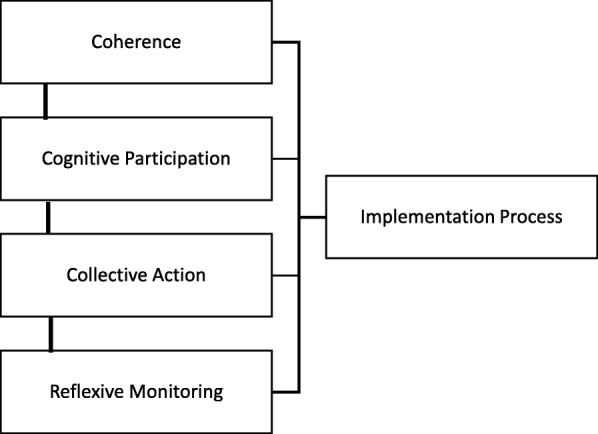
“We used NPT to describe ‘a linear process in time’, starting with sense-making, then moving through engagement and participation, taking action and then reflecting back [18, 19].”
Chisholm, A., Tucker, K. L., Crawford, C., Green, M., Greenfield, S., Hodgkinson, J., Lavallee, L., Leeson, P., Mackillop, L. H., McCourt, C., et al. (2024) · Pregnancy Hypertension · doi:10.1016/j.preghy.2024.01.134 · Cited by 11
Richards, K. L., Phillips, M. D., Grycuk, L., Hyam, L., Allen, K. L., & Schmidt, U. H. (2024) · Journal of Eating Disorders · doi:10.1186/s40337-024-01000-4 · Cited by 10
“A growing body of literature demonstrates the value of the NPT in planning and evaluating implementation [27, 28].”
BackgroundStewart, C., Gallacher, K., Nakham, A., Cruickshank, M., Newlands, R. S. N., Bond, C. M., Myint, P. K., Bhattacharya, D., & Mair, F. S. (2019) · Journal of Evidence-Based Medicine · doi:10.1111/jebm.12359 · Cited by 10
Self-citationDavis, S. (2020) · Frontiers in Digital Health · doi:10.3389/fdgth.2020.575951 · Cited by 10
“While NoMAD has been identified as a robust instrument for use in quantitative investigations (21), at the initiation of this study, full psychometric testing had not been completed, so basic psychometric evaluation was included as part of this study.”
BackgroundMethodInfluentialMandel, R. T., Bruce, G., Moss, R., Carrington, R., & Gilbert, A. W. (2020) · Disability and Rehabilitation · doi:10.1080/09638288.2020.1845825 · Cited by 10
“Normalisation Process Theory (NPT) [47] has been widely used to support studies in implementation research in healthcare [48].”
MethodPolicy Implementation: A Review of Selected Literature
Mugambwa, J., Nabeta, I. N., Ngoma, M., Rudaheranwa, N., Kaberuka, W., & Munene, J. C. K. (2020) · System dynamics for performance management · doi:10.1007/978-3-030-42970-6_5 · Cited by 18
Nicoll, A., Maxwell, M., & Williams, B. (2021) · Implementation Science Communications · doi:10.1186/s43058-021-00159-0 · Cited by 14
“sometimes at the expense of other activities’ ([34], p.”
BackgroundMay, C. R., Albers, B., Desveaux, L., Finch, T. L., Gilbert, A. W., Hillis, A., Girling, M., Kislov, R., MacFarlane, A. E., Mair, F. S., et al. (2022) · NIHR Open Research · doi:10.3310/nihropenres.13269.1 · Cited by 13
“In our earlier review 13 , we discovered that combining searches using bibliographic databases (e.g., Web of Science, PubMed, and Scopus) and search engines (i.e., Google Scholar) generated not only a significant number of duplicate citations, but also significant numbers of broken or ‘page not…”
BackgroundMethodResultInfluentialSelf-citationHigham, R., Pini, S. A., Quyn, A. J., Kowal, M. R., Helliwell, J. A., Saman, R., Lewthwaite, P., Young, N. R., & Rousseau, N. S. (2022) · Frontiers in Sociology · doi:10.3389/fsoc.2022.958250 · Cited by 10
“This could potentially have made it easier to quickly locate our findings within wider academic discussions; however, this kind of purely deductive analysis can create pressure to “force” qualitative data into an inflexible framework (May et al., 2018).”
BackgroundSocial prescribing in the NHS—is it too soon to judge its value?
Westlake, D., Tierney, S., Wong, G., & Mahtani, K. R. (2023) · BMJ · doi:10.1136/bmj.p699 · Cited by 8
Bracher, M., Steward, K., Wallis, K., May, C. R., Aburrow, A., & Murphy, J. L. (2019) · BMJ Open · doi:10.1136/bmjopen-2018-025966 · Cited by 8
“NPT is now widely used to inform process evaluation research, a recent systematic review shows 130 reports of feasibility studies and process evaluations of controlled and uncontrolled interventions in open and closed systems, most of these published in the last 5 years.(26) NPT has been used in two previous studies f…”
BackgroundMethodSelf-citationExperiences of support to return to work after stroke: longitudinal case studies from RETAKE trial
Trusson, D., Powers, K., Radford, K., Bowen, A., Craven, K., Holmes, J. A., Lindley, R., McKevitt, C., Phillips, J. S., Thompson, E., et al. (2025) · Health Technology Assessment · doi:10.3310/wrks9661 · Cited by 11
“37 Longitudinal case studies allowed the psychosocial and environmental factors impacting on participants’ RTW experiences to be explored; factors which are often missing from evaluations of RTW interventions.”
Ntsweng, O., Kodyš, M., Ong, Z. Q., Zhou, F., de Marassé, A., Sadek, I., Aloulou, H., Tan, S. S.-L., & Mokhtari, M. (2025) · JMIR Rehabilitation and Assistive Technologies · doi:10.2196/57989 · Cited by 9
Thompson, C. A., Willis, T. A., Farrin, A. J., Gordon, A. L., Daffu-O’Reilly, A., Noakes, C. J., Khaliq, K. A., Kemp, A. H., Hall, T., Bojke, C., et al. (2025) · Health Technology Assessment · doi:10.3310/uhdn6497 · Cited by 10
“The implementation of scientific theories 41 , 53 , 56 should be used as the basis for planning, implementation and evaluation of change efforts and technology introduction.”
Fasugba, O., Dale, S., McInnes, E., Cadilhac, D. A.-M., Noetel, M., Coughlan, K., McElduff, B., Kim, J., Langley, T., Cheung, N. W., et al. (2023) · Implementation Science · doi:10.1186/s13012-023-01260-9 · Cited by 7
“The focus group and interview questions will be designed using the Normalisation Process Theory [70].”
BackgroundMethodInfluentialHigashi, R. T., Kruse, G. R., Richards, J. A., Sood, A., Chen, P. M., Quirk, L., Kramer, J., Tiro, J. A., Tuzzio, L., Haas, J. S., et al. (2023) · International Journal of Qualitative Methods · doi:10.1177/16094069231157345 · Cited by 8
“Coding also drew from the Consolidated Framework for Implementation Research (CFIR) (Damschroder et al., 2009) constructs to re fl ect internal and external organizational motivators, and from the Normalization Process Theory (May et al., 2018; McNaughton et al., 2020) (NPT) constructs to re fl ect actors ’ collective a…”
Barchéus, I.-M., Ranner, M., Lexell, E. M., & Larsson-Lund, M. (2023) · Scandinavian Journal of Occupational Therapy · doi:10.1080/11038128.2023.2247029 · Cited by 9
“Considering implementation and sustainability issues early in the process of using new services is also in line with the literature on how complex interventions should be developed and evaluated [16,35,39].”
Tazzyman, A., Ferguson, J., Boyd, A., Bryce, M., Tredinnick‐Rowe, J., Price, T., & Walshe, K. (2019) · Journal of Health Services Research & Policy · doi:10.1177/1355819619848017 · Cited by 9
“We have noted earlier that existing work that has used NPT in health care has explored implementation of clinical and behavioural practices at an individual level rather than those at an organizational level.(15,21,22) Our use of NPT in this study demonstrates its value for exploring and analysing the implementation o…”
Johnson, H., Yorganci, E., Evans, C., Barclay, S. I. G., Murtagh, F. E., Yi, D., Gao, W., Sampson, E. L., Droney, J., Farquhar, M. C., et al. (2020) · PLoS ONE · doi:10.1371/journal.pone.0239181 · Cited by 8
Roberti, J. E., Barón, F. J., Rodriguez, V. E., Belizán, M., Arias, P., Ratto, M. E., Reina, R., Ini, N., Loudet, C., & García‐Elorrio, E. (2021) · Global Qualitative Nursing Research · doi:10.1177/23333936211015660 · Cited by 7
“Reflexive Monitoring refers to how actors assess the intervention consequences, both individually and collectively, and how assessments may lead to reconfigurations of the intervention (May & Finch, 2009; May et al., 2018).”
BackgroundMethodInfluentialPanfilis, L. D., Veronese, S., Bruzzone, M., Cascioli, M., Gajofatto, A., Grasso, M. G., Kruger, P., Lugaresi, A., Manson, L., Montepietra, S., et al. (2021) · BMJ Open · doi:10.1136/bmjopen-2021-052012 · Cited by 8
“51 These components are considered to be dynamic and interact within the wider context of the intervention, such as existing organisational structures and procedures.”
BackgroundMethodAugustsson, H., Costea, V.-A., Eriksson, L., Hasson, H., Bäck, A., Åhström, M., & Bergström, A. (2021) · Implementation Science Communications · doi:10.1186/s43058-021-00233-7 · Cited by 9
“The NPT provides understanding of how practices become normalized and how work routines are created [28, 29].”
BackgroundTraynor, O., McCrorie, P., Chng, N. R., & Martin, A. (2022) · International Journal of Environmental Research and Public Health · doi:10.3390/ijerph19127461 · Cited by 8
“NPT identifies factors that support and impede the normalisation of complex interventions into routine practice [46,47].”
BackgroundHussein, M., Pavlova, M., & Groot, W. (2022) · International Journal for Quality in Health Care · doi:10.1093/intqhc/mzac070 · Cited by 5
“Notably, the NPT was adopted as an explorative model to elucidate the working mechanisms of accreditation, from introduction to normalisation [12].”
MethodInfluentialDefeyter, M. A., Finch, T. L., Crilley, E., Shinwell, J., & Mann, E. (2022) · Frontiers in Public Health · doi:10.3389/fpubh.2022.954679 · Cited by 11
Self-citationWhole person HIV services: a social science approach
van Heerden, A. C., Humphries, H., & Geng, E. H. (2022) · Current Opinion in HIV and AIDS · doi:10.1097/coh.0000000000000773 · Cited by 7
Lu, Z., Signer, T., Sylvester, R., Gonzenbach, R. R., von Wyl, V., & Haag, C. (2023) · JMIR mhealth and uhealth · doi:10.2196/50729 · Cited by 8
“In the context of digitally supported interventions, the normalization process theory (NPT) is a well-established framework for guiding the implementation of novel interventions in routine settings [30,31].”
BackgroundTiem, J. M. V., Steffensmeier, K. S., Wakefield, B. J., Stewart, G. L., Zemblidge, N., Steffen, M. J. A., & Moeckli, J. K. (2019) · BMC Health Services Research · doi:10.1186/s12913-019-4355-z · Cited by 7
“It was originally developed to understand the implementation of “complex healthcare interventions” and has since been employed in over 100 studies to understand the feasibility of healthcare interventions [40, 41].”
BackgroundDaw, P., van Beurden, S. B., Greaves, C. J., Zanten, J. V., Harrison, A. S., Dalal, H. M., McDonagh, S. T. J., Doherty, P., & Taylor, R. S. (2020) · BMJ Open · doi:10.1136/bmjopen-2019-036137 · Cited by 8
“36 NPT suggests general mechanisms that are associated with successful implementation.”
Adoption of technological innovation in healthcare delivery: A social dynamic perspectivePreprint
Wong, J. W. H., Näswall, K., Pawsey, F., Chase, J. G., & Malinen, S. (2021) · doi:10.31234/osf.io/2vydq · Cited by 7
Ashworth, E., McCarthy, M., Wynne, S., Robinson, J., McKay, S., Lane, S., Richardson, G., Boardman, N., Henderson, K., Crosbie, V., et al. (2024) · PLoS ONE · doi:10.1371/journal.pone.0302873 · Cited by 6
“This process will be aided through use of the NPT toolkit (http://www.normalizationprocess.org/) and application of the NPT statements generated by May et al. [40, 41].”
BackgroundMethodNieto-Casado, F. J., Gómez‐Gómez, I., Aznar‐Lou, I., Barquero‐Jimenez, C., Cáceres, I., Carretero, S., de-Juan-Iglesias, P., Domínguez‐Salas, S., Gil-Cosano, J. J., Goossens, L., et al. (2025) · Open Research Europe · doi:10.12688/openreseurope.20386.1 · Cited by 7
Lunze, K., Kiriazova, T. K., Blokhina, E. A., Bushara, N., Bridden, C. L., Gnatienko, N., Bendiks, S., Quinn, E. K., Krupitsky, E. M., Raj, A., et al. (2020) · Global Public Health · doi:10.1080/17441692.2020.1834599 · Cited by 6
“May et al., 2018; Saluja et al., 2017; Van Belle et al., 2017).”
Ackerman, S., Wing, H. E., Aceves, B., Pisciotta, M., Hessler, D., & Gottlieb, L. M. (2023) · SSM - Qualitative Research in Health · doi:10.1016/j.ssmqr.2023.100267 · Cited by 9
Hyde, A. M., Johnson, E., Luig, T., Schroeder, D., Carbonneau, M., Campbell-Scherer, D. L., & Tandon, P. (2023) · BMC Health Services Research · doi:10.1186/s12913-023-09632-z · Cited by 7
A new neonatal BCG vaccination pathway in England: a mixed methods evaluation of its implementation
Jones, K., Chisnall, G., Crocker-Buqué, T., et al. (2024) · BMC Public Health · doi:10.1186/s12889-024-18586-8 · Cited by 6
“Survey and qualitative data were analysed separately and subsequently synthesized by applying Normalization Process Theory (NPT) as a guiding framework [15].”
Jepma, P., Eijk, R., Bos, A. A. E., Toet, N., Latour, C. H. M., Buurman, B. M., & van Rijn, M. (2024) · International Journal of Nursing Studies Advances · doi:10.1016/j.ijnsa.2024.100264 · Cited by 7
“This framework has been used previously in qualitative feasibility studies, and its constructs have been well-validated, ensuring validity in the current study (May et al., 2018; McEvoy et al., 2014).”
Delvaux, J., John, A., Wedderburn, L., & Morris, J. H. (2020) · Rehabilitation Process and Outcome · doi:10.1177/1179572720950210 · Cited by 9
Gillan, C., Hodges, B. D., Wiljer, D., & Dobrow, M. (2021) · JMIR Research Protocols · doi:10.2196/27340 · Cited by 8
“A recent systematic literature review conducted by May et al [20] highlighted that although NPT had been used on occasion to investigate formal changes in professional roles, few have explored NPT constructs from a macro perspective.”
MethodContext and Complexity in Telemedicine Evaluation: Work Domain Analysis in a Surgical Setting
Aminoff, H., & Meijer, S. (2021) · JMIR Perioperative Medicine · doi:10.2196/26580 · Cited by 8
“Guidance for evaluating complex interventions also recommends that the intervention and its assumed causal mechanisms be clearly described, but this is difficult to achieve without a systematic description of the implementation context [32].”
BackgroundLoyal, D., Ricci, L., Villegente, J., Ayav, C., Kivits, J., & Rat, A. (2021) · Chronic Illness · doi:10.1177/17423953211058411 · Cited by 10
Netter, A.-L., Etzelmueller, A., Kircher, T. T. J., Rapley, T., Ebert, D. D., & Brakemeier, E. (2022) · Journal of Technology in Behavioral Science · doi:10.1007/s41347-021-00237-z · Cited by 8
“Previous studies underpin the ability of the theory to explain change processes in complex systems including a multiple stakeholder perspective (May et al., 2018).”
BackgroundSelf-citationFlowers, P., Leiser, R., Mapp, F., McLeod, J., Stirrup, O., Illingworth, C. J. R., Blackstone, J., & Breuer, J. (2023) · British Journal of Health Psychology · doi:10.1111/bjhp.12666 · Cited by 5
Gijsbers, H., Nurmohamed, A. S., van de Belt, T. H., Schijven, M. P., & The Citrien 2 Project Leaders and Steering Group (2023) · JMIR Research Protocols · doi:10.2196/45201 · Cited by 6
“The NPT successfully aids in the conceptual understanding of implementation processes and outcomes across a wide variety of health care settings [34].”
BackgroundO'Reilly, S. L., Laws, R., Maindal, H. T., Teede, H. J., Harrison, C. L., McAuliffe, F. M., Geraghty, A. A., Campoy, C., García-Bermúdez, M., Pirhonen, L., et al. (2023) · JMIR Research Protocols · doi:10.2196/51431 · Cited by 11
“The interview transcripts will be analyzed inductively using reflexive thematic analysis [55] and deductively using normalization process theory [56] to explore this aspect.”
Albutt, A., Hardman, J., McVey, L., Odo, C., Paleri, V., Patterson, J. M., Webb, S. M., Rousseau, N. S., Kellar, I., & Randell, R. (2024) · BMJ Open · doi:10.1136/bmjopen-2023-081151 · Cited by 10
“13 NPT has been widely used in studies on implementation of interventions in healthcare including in trial process evaluations, 15 16 e-health 17 and decision aids.”
MethodeHealth technologies and the know-do gap: exploring the role of knowledge mobilisation
Asthana, S., Sheaff, R., Jones, R. B., & Chatterjee, A. (2020) · Evidence & Policy · doi:10.1332/174426420x15808912803267 · Cited by 7
“Much literature now discusses factors influencing the adoption of technological innovation (e.g. Greenhalgh et al, 2004; van Gemert-Pijnen et al, 2011; van Dyk, 2014; Abbott et al, 2014; Greenhalgh et al, 2017; Lennon et al, 2017; May et al, 2018;).”
BackgroundDuke, S., Richardson, A. M., May, C. R., Lund, S., Lunt, N. T., & Campling, N. C. (2021) · International Journal of Nursing Studies Advances · doi:10.1016/j.ijnsa.2021.100022 · Cited by 7
“These constructs provide a means of analysing implementation work to illuminate the organisational and relational factors that promote and inhibit implementation ( Murray et al., 2010 ; May, 2013 , May et al., 2018 ).”
Self-citationForde, R., Abiola, O., Anderson, J. E., Bick, D., Brackenridge, A., Banerjee, A., Chamley, M., Chua, K., Hopkins, L., Hunt, K. F., et al. (2022) · BMC Family Practice · doi:10.1186/s12875-022-01683-1 · Cited by 7
Paudyal, V., Lowrie, R., Mair, F. S., Middleton, L. J., Cheed, V., Hislop, J., Williamson, A. E., Barnes, N., Jolly, C., Saunders, K., et al. (2023) · Pilot and Feasibility Studies · doi:10.1186/s40814-023-01261-x · Cited by 8
“Qualitative data Interview transcripts will be analysed using a framework approach underpinned by Normalisation Process Theory, an implementation theory with four constructs: coherence (sense making); cognitive participation (engagement); collective actions (operationalisation) and reflexive monitoring (appraisal) [24…”
MethodSelf-citationOssenberg, C., Mitchell, M. L., & Henderson, A. J. (2020) · BMJ Open · doi:10.1136/bmjopen-2019-034945 · Cited by 10
“16 17 21 As a middle-range theory—one which addresses the distinct question of how practices become implemented and routinely embedded 15 22 —NPT is built around four principal constructs referred to as generative mechanisms: 15 1.”
Mwanga, J. R., Hokororo, A., Ndosi, H., Masenge, T. J., Kalabamu, F. S., Tawfik, D. S., Mediratta, R. P., Rozenfeld, B., Berg, M., Smith, Z. H., et al. (2024) · BMC Health Services Research · doi:10.1186/s12913-024-11554-3 · Cited by 5
“The NoMAD is a 23-item questionnaire based on the NPT that was designed to assess the social processes influencing the integration of complex interventions [18, 21].”
MethodRahayu, U., Ibrahim, K., & Herman, H. (2025) · Journal of Multidisciplinary Healthcare · doi:10.2147/jmdh.s523495 · Cited by 7
“39 In addition, reflexive monitoring allows for ongoing evaluation to assess the effectiveness of discharge planning and to make improvements based on feedback from patients and healthcare professionals.”
InfluentialPhysical activity in kidney disease: evidence and implementation
Young, H. M. L., Billany, R. E., Graham-Brown, M. P. M., Lightfoot, C. J., March, D. S., & Smith, A. C. (2025) · Nature Reviews Nephrology · doi:10.1038/s41581-025-00999-2 · Cited by 10
“…theories and frameworks that can be used across a range of disciplines in diverse settings include the consolidated framework for implementation research 124 , normalization process theory 125,126 , and the reach, efficacy, adoption, implementation, maintenance framework 127 (Box 1).”
Colombo, M. G., Joos, S., & Koch, R. (2023) · BMC Health Services Research · doi:10.1186/s12913-023-09592-4 · Cited by 6
“This became especially apparent when the quantitative results were assigned to the mechanisms and components of NPT.”
MethodResultInfluentialDiabetes prevention after gestational diabetes: challenges and opportunities
Dunne, P., Sherry, D., & O'Reilly, S. L. (2024) · Proceedings of The Nutrition Society · doi:10.1017/s0029665124007456 · Cited by 9
Stevenson, F. A., Pfeffer, P., Walker, S., Ismaila, H., Jegatheesan, V., Mohammad, I., BLANDFORD, A. E., Linke, S., Hurst, J. R., Ricketts, W. M., et al. (2024) · BMJ Open · doi:10.1136/bmjopen-2024-092824 · Cited by 6
Leitch, S. V., Smith, A. J., Crengle, S. M., & Stokes, T. (2021) · Implementation Science Communications · doi:10.1186/s43058-021-00120-1 · Cited by 6
Pearson, M., Jackson, G., Jackson, C., Boland, J. W., Featherstone, I., Huang, C., Ogden, M., Sartain, K., Siddiqi, N., Twiddy, M., et al. (2022) · BMJ Open · doi:10.1136/bmjopen-2021-060450 · Cited by 5
Nazir, M. F., & Qureshi, S. F. (2023) · International Journal of Environmental Research and Public Health · doi:10.3390/ijerph20054630 · Cited by 9
“[90] found that the latent construct of reflexive monitoring was the least applied theoretical construct in the studies, which is a result inconsistent with our specific case.”
ResultUse of video group consultations by general practice staff during the COVID-19 pandemic
Scott, E., Swaithes, L., Wynne‐Jones, G., & Finney, A. G. (2023) · Primary Health Care · doi:10.7748/phc.2023.e1801 · Cited by 4
Morken, I. M., Wathne, H. B., Karlsen, B., Storm, M., Nordfonn, O. K., Gjeilo, K. H., Urstad, K. H., Søreide, J. A., & Husebø, A. M. L. (2023) · BMJ Open · doi:10.1136/bmjopen-2022-069599 · Cited by 6
Johnson, L., Mardo, J. N., & Demain, S. H. (2023) · PLoS ONE · doi:10.1371/journal.pone.0282612 · Cited by 6
O'Reilly, S. L., McAuliffe, F. M., Geraghty, A. A., Burden, C., & Davies, A. K. (2023) · Proceedings of The Nutrition Society · doi:10.1017/s0029665123004883 · Cited by 7
Kasongo, B. M., Mukalay, A., Molima, C. E. N., Makali, S. L., Chiribagula, C. Z., Mparanyi, G. J., Karemere, H. B., Bisimwa, G. B., & Macq, J. (2023) · BMC Health Services Research · doi:10.1186/s12913-023-10455-1 · Cited by 6
“The Normalization Process Model (NPT) is a theoretical framework that aids in the understanding of how complex interventions are integrated and become feasible in everyday practice, particularly in health care [26–28].”
BackgroundWhitehead, P. J., Belshaw, S., Brady, S., Coleman, E., Dean, A., Doherty, L., Fairhurst, C. M., Francis-Farrell, S., Golding-Day, M. R., Gray, J., et al. (2024) · Trials · doi:10.1186/s13063-023-07677-3 · Cited by 7
Self-citationVandrevala, T., Montague, A., Boulton, R., Coxon, K., & Jones, C. E. (2024) · BMC Pregnancy and Childbirth · doi:10.1186/s12884-024-06715-5 · Cited by 6
“Utilising an NPT framework in this context has helped in allowing us to explore local implementation factors [48].”
MethodNunes, A. R., Atherton, H., Dahlmann, F., Eccles, A., Geddes, O., Gregg, M., Karaba, F., Spencer, R. A., Twohig, H., & Dale, J. R. (2025) · Family Practice · doi:10.1093/fampra/cmaf050 · Cited by 7
Smith, J. D., Mohanty, N., Davis, M. M., Knapp, A. A., Tedla, Y. G., Carroll, A. J., Price, H. E., Villamar, J. A., Padilla, R., Jordan, N., et al. (2020) · Implementation Science Communications · doi:10.1186/s43058-020-00039-z · Cited by 5
Kiely, B. T., O'Donnell, P., Byers, V., Galvin, E., Boland, F., Smith, S. M., Connolly, D., O’Shea, E., & Clyne, B. (2021) · HRB Open Research · doi:10.12688/hrbopenres.13258.1 · Cited by 5
“NPT has been widely used in the evaluation of complex interventions and found to support the identification of barriers and facilitators to implementation at the individual and organisational level 43 .”
MethodPike, M., Campagna-Wilson, L., Sears, K., Warren, R., LeGAY, D. A., & Trudel, D. (2021) · Journal of Military Veteran and Family Health · doi:10.3138/jmvfh-2020-0060 · Cited by 8
Metadata
- Authors
- May, C. R., Cummings, A., Girling, M., Bracher, M., Mair, F. S., May, C. M., Murray, E., Myall, M., Rapley, T., & Finch, T.
- Affiliations
- London School of Hygiene & Tropical Medicine (GB)
- Corresponding author
- May, Carl R.
- ORCID
- Venue
- Implementation Science
- Published
- 2018-06-07
- Volume
- 13
- Issue
- 1
- Pages
- 80-80
- ISSN
- 1748-5908 (ISSN-L)
- PMC
- PMC5992634
- OpenAlex
- W2807684088
- Semantic Scholar
- ef32367f55a3af726f807d58aa67422e9778dc6b
- Cited by
- 683
- References
- 231
- Citations by year
- 2026: 65 · 2025: 78 · 2024: 127 · 2023: 115 · 2022: 94 · 2021: 95 · 2020: 71 · 2019: 31 · 2018: 6
- FWCI
- 9.17
- Type
- journal article
- Language
- en
- Open access
- gold
- doi.org
- Licence
- cc-by
- creativecommons.org/licenses/by/4.0/ (tdm)
- Locations
- Implementation Science (publishedVersion, cc-by)
- Europe PMC (PubMed Central) (publishedVersion, cc-by)
- PubMed Central (publishedVersion, cc-by)
- PubMed (publishedVersion)
- ePrints Soton (University of Southampton) (acceptedVersion, cc-by)
- Northumbria Research Link (Northumbria University) (acceptedVersion)
- DOAJ (DOAJ: Directory of Open Access Journals) (acceptedVersion)
- ENLIGHTEN (Jurnal Bimbingan dan Konseling Islam) (acceptedVersion, cc-by-sa)
- UCL Discovery (University College London) (acceptedVersion)
- LSHTM Research Online (London School of Hygiene and Tropical Medicine) (acceptedVersion)
- Funders
- Macmillan Cancer Support
- National Institute for Health and Care Research
- University of Southampton
- Economic and Social Research Council (ES/I037342/1, ES-062-23-3274)
- Topics
- Health Sciences › Health Professions › General Health Professions › Health Policy Implementation Science
- Health Sciences › Medicine › Public Health, Environmental and Occupational Health › Clinical practice guidelines implementation
- Social Sciences › Sociology and Political Science › Delphi Technique in Research
- Keywords
- Normalization Process Theory, feasibility study, process evaluation, complex interventions, implementation mechanisms, implementation planning, agency
- MeSH terms
- Adolescent, Australia, Child, Delivery of Health Care, Feasibility Studies, Female, Humans, Models, Theoretical, Pregnancy, Systems Theory, Process Assessment, Health Care
About these checks
Registry, retraction, Cites and statistics results are computed, not judged, with one exception: a printed reference that no index lists is read once by a model before it counts as a citation error. Claims are extracted by a model and kept only when their quote appears verbatim in the text; each cited source is then checked, with a model’s help, for whether it says what the claim relies on. Those verdicts can be wrong — read the claim’s quote and the cited source before relying on one.
The claim verdicts this report counts are experimental: their accuracy is not yet measured.
A language model drew the claims from the paper on 2026-10-10, under version 3 of the claim definition (model deepseek-v4.1-flash, prompt extract-v3).
A second model labelled each claim on 2026-10-10 (model jev-1.13-20260917, definition revision gold-guideline-v0.2).
Cited sources are checked with a language model’s help (gpt-6-sol and qwen3.8-omni-flash).
Statistics and arithmetic are recomputed, not judged.
Confidence bands are shown only for fields calibrated on our annotated test set. None is calibrated yet, so no band is shown.
What counts as a claim ›How we measure confidence ›How we check this ›
Are you an author, or do you see a problem with this page? Request a review
Data sources
Bibliographic data: Semantic Scholar, OpenAlex, Crossref.
Contains information from the Semantic Scholar Academic Graph Datasets, made available under the ODC Attribution License (ODC-BY 1.0).
Semantic Scholar’s data is described in: Kinney, R., et al. (2023). The Semantic Scholar Open Data Platform. arXiv:2301.10140.
