

Using Normalization Process Theory in feasibility studies and process evaluations of complex healthcare interventions: a systematic review
Open accessThe DOI matches its Crossref record; 228 of the 232 references it cites were found in a registry or an index; 62 of the 91 sources its claims cite were checked for support.
Abstract
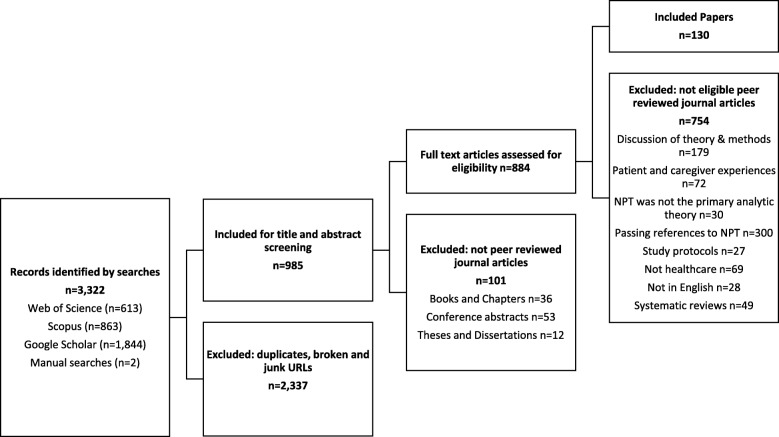
BACKGROUND: Normalization Process Theory (NPT) identifies, characterises and explains key mechanisms that promote and inhibit the implementation, embedding and integration of new health techniques, technologies and other complex interventions. A large body of literature that employs NPT to inform feasibility studies and process evaluations of complex healthcare interventions has now emerged. The aims of this review were to review this literature; to identify and characterise the uses and limits of NPT in research on the implementation and integration of healthcare interventions; and to explore NPT's contribution to understanding the dynamics of these processes. METHODS: A qualitative systematic review was conducted. We searched Web of Science, Scopus and Google Scholar for articles with empirical data in peer-reviewed journals that cited either key papers presenting and developing NPT, or the NPT Online Toolkit ( www.normalizationprocess.org ). We included in the review only articles that used NPT as the primary approach to collection, analysis or reporting of data in studies of the implementation of healthcare techniques, technologies or other interventions. A structured data extraction instrument was used, and data were analysed qualitatively. RESULTS: Searches revealed 3322 citations. We show that after eliminating 2337 duplicates and broken or junk URLs, 985 were screened as titles and abstracts. Of these, 101 were excluded because they did not fit the inclusion criteria for the review. This left 884 articles for full-text screening. Of these, 754 did not fit the inclusion criteria for the review. This left 130 papers presenting results from 108 identifiable studies to be included in the review. NPT appears to provide researchers and practitioners with a conceptual vocabulary for rigorous studies of implementation processes. It identifies, characterises and explains empirically identifiable mechanisms that motivate and shape implementation processes. Taken together, these mean that analyses using NPT can effectively assist in the explanation of the success or failure of specific implementation projects. Ten percent of papers included critiques of some aspect of NPT, with those that did mainly focusing on its terminology. However, two studies critiqued NPT emphasis on agency, and one study critiqued NPT for its normative focus. CONCLUSIONS: This review demonstrates that researchers found NPT useful and applied it across a wide range of interventions. It has been effectively used to aid intervention development and implementation planning as well as evaluating and understanding implementation processes themselves. In particular, NPT appears to have offered a valuable set of conceptual tools to aid understanding of implementation as a dynamic process.
Overview
CoChat Summary
TL;DR
This qualitative systematic review identified 130 papers reporting 108 studies that used Normalization Process Theory (NPT) as the primary analytic framework in feasibility studies and process evaluations of complex healthcare interventions. The authors conclude that NPT provides a coherent, stable, and flexibly applicable conceptual vocabulary that helped explain implementation outcomes, though some users criticized its terminology, agency emphasis, and normative focus.
Key findings
- Searches revealed 3322 citations; after screening, 130 papers from 108 identifiable studies were included. NPT was used in 26 controlled studies, generating 40/130 (30.8%) articles, and 82 uncontrolled studies, generating 90/130 (69.2%) articles.
- Use of NPT was planned in the study protocol in 54/108 (50%) studies overall: 19/26 (73%) controlled studies and 35/82 (42.7%) uncontrolled studies. 64/108 (59.2%) studies cited systematic reviews or rigorously developed clinical guidelines as the evidence base for the intervention.
- In all but one study, implementation outcomes could be explained by reference to NPT mechanisms; differences between participant groups were characterized in 69/108 (64%) studies and between settings in 36/108 (33%) studies. About 10% of papers included critiques of NPT, mainly about terminology; two critiqued its emphasis on agency, and one critiqued its normative focus.
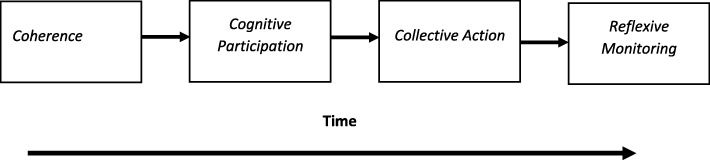
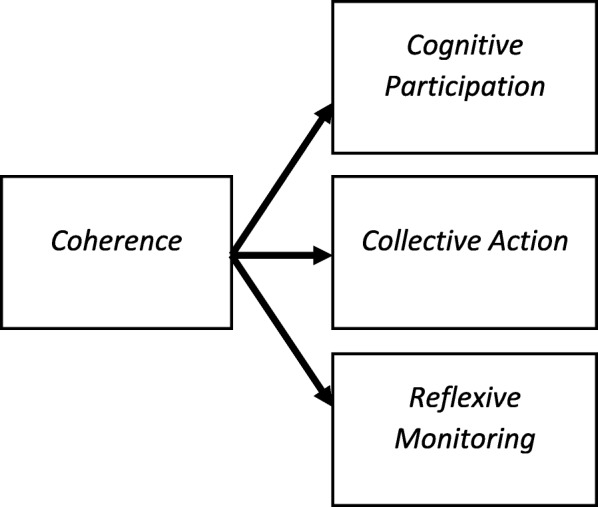
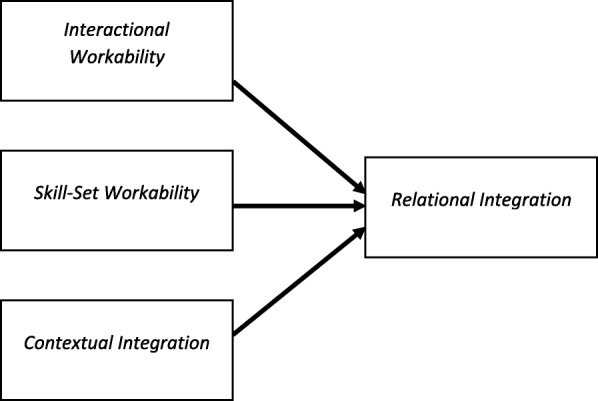
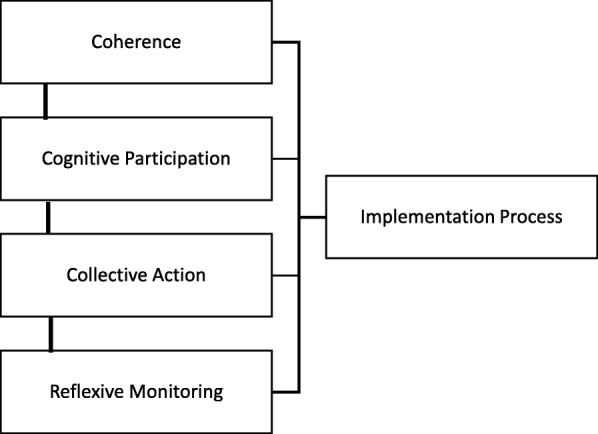
- Researchers applied NPT constructs in four distinctive ways: as a linear sequence over time, with coherence as an obligatory starting point, with relational integration as an obligatory point of passage, or as mechanisms operating simultaneously but unevenly. NPT was used to aid intervention development and implementation planning as well as to evaluate and understand implementation processes.
Methods
- Qualitative systematic review using citation searches of Web of Science, Scopus, and Google Scholar for articles citing key NPT papers or the NPT Online Toolkit; searches ran from June 2015 to December 2017. Inclusion criteria were peer-reviewed English-language empirical articles on healthcare intervention implementation in which NPT was the primary analytic framework; exclusions included protocols, reviews, non-healthcare settings, non-English papers, and passing references to NPT.
- Screening was done by independent reviewer pairs; data were extracted with a structured instrument, and qualitative analysis characterized uses, limits, and contributions of NPT. Coding was jointly checked on 75/130 included papers, and categorisation was jointly checked for all included papers. PROSPERO deemed the review ineligible for public registration because NPT was not a healthcare intervention.
Limitations
- Stated by the authors: searches were undertaken in only two databases, so some studies may have been missed; Google Scholar results were unstable and produced multiple versions of references, though it identified about 20 papers that would otherwise have been excluded; non-English studies were excluded; a different research team might reach different conclusions; and findings apply only to healthcare implementation research.
- Evident from the text: included studies often focused on feasibility or early implementation phases, skewing analyses toward implementation rather than embedding and integration; few studies tracked an intervention over its whole life; most papers used the 2009 elaboration of NPT; and critiques of NPT were rare.
Model-written summary. Check it against the paper before relying on it.
Integrity signals
Registry
Cites
Statistics
Figures
Verification
Claims the paper makes
34 Valid · 3 Not valid · 24 Not checked · 105 Own results and interpretations
The cited sources support only part of this claim — read each source’s verdict below.
In the paper
“The development of NPT first involved the iterative development of a robust generic theory of implementation [5–9, 11, 12].”
§ Using Normalization Process Theory in feasibility studies and process evaluations of complex healthcare interventions: a systematic review > Background > What is NPT and what does it do?
What the sources say
- Not checked yetcites [5] May C A rational model for assessing and evaluating complex interventions in health care BMC Health Serv Res 2006 6 86 1 11 16827928 PMC1534030 source
- Partly supportedcites [6] May C Finch T Mair F Ballini L Dowrick C Eccles M Gask L MacFarlane A Murray E Rapley T Understanding the implementation of complex interventions in health care: the normalization process model BMC Health Serv Res 2007 7 148 10.1186/1472-6963-7-148 17880693 PMC2089069 sourceExperimental — accuracy not yet measured
The Background describes successive development of the Normalization Process Model from empirical studies into a robust applied theory. But the Conclusion explicitly says the model is not a general theory: its scope is the implementation of complex interventions in healthcare, so this paper does not support calling it a generic theory of implementation. (LLM, conf=0.86)
- Not checked — no full text of the sourcecites [7] May C Finch T Implementation, embedding, and integration: an outline of normalization process theory Sociology 2009 43 3 535 554 10.1177/0038038509103208 source
- Supportedcites [8] May C, Mair FS, Finch T, MacFarlane A, Dowrick C, Treweek S, Rapley T, Ballini L, Ong BN, Rogers A, et al. Development of a theory of implementation and integration: normalization process theory. Implement Sci. 2009:4(29). PMC2693517 19460163 source
The Methods (Abstract; no page given) describe successive stages from empirical generalizations to an applied model and then a formal theory. The Results ('The changing scope of the theory'; no page given) describe the resulting NPT as a generalizable middle-range theory of implementation, embedding, and integration. (LLM, conf=0.91)
- Partly supportedcites [9] May C Towards a general theory of implementation Implement Sci 2013 8 1 18 10.1186/1748-5908-8-18 23406398 PMC3602092 sourceExperimental — accuracy not yet measured
The ‘Theory-building as a journey’ section describes a progression from the Normalization Process Model to NPT, which it calls a generic, middle-range theory of implementation. It says the journey began with the narrower model, however, and that the proposed general theory was a later extension of NPT—not the first step in its development. (LLM, conf=0.82)
- Partly supportedcites [11] May CR, Mair FS, Dowrick CF, Finch TL. Process evaluation for complex interventions in primary care: understanding trials using the normalization process model. BMC Fam Pract. 2007;8 PMC1950872 17650326 sourceExperimental — accuracy not yet measured
The Background (page unavailable) describes the development and application of the Normalization Process Model (NPM) to understand implementation, and the Authors’ contributions say the model was modified for this paper. The copy does not establish that NPT’s development first involved an iterative process yielding a robust generic theory of implementation; it discusses NPM and refers the fuller account of its development elsewhere. (LLM, conf=0.83)
- Not checked yetcites [12] May C Agency and implementation: understanding the embedding of healthcare innovations in practice Soc Sci Med 2013 78 0 26 33 10.1016/j.socscimed.2012.11.021 23246396 source
Checked before — its earlier verdict is held back until a new check runs.
plainstates a cause- Asserted: passes — The authors put it forward as true.
- Checkable: passes — It can be checked against evidence.
- Load-bearing: unclear — It is unclear whether the paper’s conclusions depend on it.
- Based: passes — The paper gives a reason why it holds.
Every source the paper cites for this claim was checked and supports it.
In the paper
“concerns raised by McEvoy et al. about the lack of prospective application do not just apply to NPT.”
§ Using Normalization Process Theory in feasibility studies and process evaluations of complex healthcare interventions: a systematic review > Discussion > Key results of the review
What the sources say
- Supportedcites Kirk et al. [18] Kirk MA Kelley C Yankey N Birken SA Abadie B Damschroder L A systematic review of the use of the consolidated framework for implementation research Implement Sci 2016 11 72 10.1186/s13012-016-0437-z 27189233 PMC4869309 source
The Discussion (Phase of implementation; page unavailable) reports that only two studies used CFIR before implementation and calls this a missed opportunity. The Discussion (Contribution of the CFIR to implementation science; page unavailable) also reports minimal prospective use of PARIHS. Together, these passages support the point that the concern is not limited to NPT. (LLM, conf=0.92)
plain- Asserted: passes — The authors put it forward as true.
- Checkable: passes — It can be checked against evidence.
- Load-bearing: unclear — It is unclear whether the paper’s conclusions depend on it.
- Based: passes — The paper gives a reason why it holds.
- Supported
The cited sources support only part of this claim — read each source’s verdict below.
In the paper
“Normalization Process Theory (NPT) identifies, characterises and explains key mechanisms that promote and inhibit the implementation, embedding and integration of new health techniques, technologies and other complex interventions.”
- Also stated in: § Background · boosted
“Normalization Process Theory (NPT) [5–10] is one of these. It identifies, characterises and explains mechanisms that have been empirically demonstrated to motivate and shape implementation processes and affect their outcomes.”
§ Using Normalization Process Theory in feasibility studies and process evaluations of complex healthcare interventions: a systematic review > Abstract > Background
What the sources say
- Supportedcites [5] May C A rational model for assessing and evaluating complex interventions in health care BMC Health Serv Res 2006 6 86 1 11 16827928 PMC1534030 source
The Background section (p.1) frames the paper's purpose with the question 'How can those factors that promote or inhibit the normalization of complex interventions be identified, conceptualized, and evaluated?', and the Abstract's conclusion states the model assesses 'the potential for complex interventions to become routinely embedded in everyday clinical work' and evaluates 'the factors that promote or inhibit' normalization — matching the claim's identify/characterise/explain and promote/inhibit structure. 'Normalization' is defined in the Normalization of complex interventions section as 'the embedding of a technique, technology or organizational change as a routine and taken-for-granted element of clinical practice', and the same section treats new techniques, technologies and organizational forms as 'complex interventions', while the Results/Abstract cover introduction (implementation) and integration (contextual/relational integration). The only divergence is terminological: this 2006 paper names it the 'normalization process model' rather than 'Normalization Process Theory', which is a later label for the same framework, so the wording difference does not undercut the attributed content. (LLM, conf=0.85)
- Partly supportedcites [6] May C Finch T Mair F Ballini L Dowrick C Eccles M Gask L MacFarlane A Murray E Rapley T Understanding the implementation of complex interventions in health care: the normalization process model BMC Health Serv Res 2007 7 148 10.1186/1472-6963-7-148 17880693 PMC2089069 sourceExperimental — accuracy not yet measured
The Background and Abstract Results sections say the Normalization Process Model identifies factors that promote or inhibit implementation and explains how complex interventions become embedded in health care practice. The cited paper calls this the Normalization Process Model, not Normalization Process Theory (NPT), and describes its scope as complex interventions in health care rather than the broader formulation in the claim. The copy provides no page numbers. (LLM, conf=0.88)
- Not checked — no full text of the sourcecites [7] May C Finch T Implementation, embedding, and integration: an outline of normalization process theory Sociology 2009 43 3 535 554 10.1177/0038038509103208 source
- Supportedcites [8] May C, Mair FS, Finch T, MacFarlane A, Dowrick C, Treweek S, Rapley T, Ballini L, Ong BN, Rogers A, et al. Development of a theory of implementation and integration: normalization process theory. Implement Sci. 2009:4(29). PMC2693517 19460163 source
The Background section (‘What is NPT?’; page not provided) says NPT explains implementation, embedding and integration, and identifies mechanisms that promote or inhibit the enactment of practices. The Methods section (‘Phase three: Making a formal theory’; page not provided) describes it as a general theory applicable beyond healthcare and complex interventions. (LLM, conf=0.94)
- Supportedcites [9] May C Towards a general theory of implementation Implement Sci 2013 8 1 18 10.1186/1748-5908-8-18 23406398 PMC3602092 source
The Background’s ‘Constructs of the general theory’ section says NPT characterizes social mechanisms involved in implementing and embedding complex interventions, then identifies four mechanisms. The same section discusses techniques and technologies as components of complex interventions. Page numbers are not available in our copy. (LLM, conf=0.91)
- Supportedcites [10] May CR Johnson M Finch T Implementation, context and complexity Implement Sci 2016 11 1 141 10.1186/s13012-016-0506-3 27756414 PMC5069794 source
The Background’s Table 1 describes NPT as analysing mechanisms of implementation and asks what promotes or inhibits the implementation, embedding and integration of practices. It identifies the practices as new techniques, technologies or organisational interventions, while the Purpose of this paper section also discusses the routine incorporation of complex interventions. (LLM, conf=0.92)
boostedstates a cause- Asserted: passes — The authors put it forward as true.
- Checkable: passes — It can be checked against evidence.
- Load-bearing: passes — The paper’s conclusions depend on it.
- Based: passes — The paper gives a reason why it holds.
- Also stated in: § Background · boosted
Every source the paper cites for this claim was checked and supports it.
In the paper
“In the period since McEvoy et al.’s review [17], studies using NPT have proliferated.”
§ Using Normalization Process Theory in feasibility studies and process evaluations of complex healthcare interventions: a systematic review > Background > The purpose of this review
What the sources say
- Supportedcites [17] McEvoy R Ballini L Maltoni S ODonnell C Mair F MacFarlane A A qualitative systematic review of studies using the normalization process theory to research implementation processes Implement Sci 2014 9 1 2 10.1186/1748-5908-9-2 24383661 PMC3905960 source
The citation identifies McEvoy et al.’s review as the point from which the citing authors measure time. The Discussion describes the paper as a review of 29 NPT papers; the statement about proliferation since that review is the citing authors’ own observation, not a finding attributed to the review. (LLM, conf=0.91)
plain- Asserted: passes — The authors put it forward as true.
- Checkable: passes — It can be checked against evidence.
- Load-bearing: passes — The paper’s conclusions depend on it.
- Based: passes — The paper gives a reason why it holds.
- Supported
Every source the paper cites for this claim was checked and supports it.
In the paper
“A review by McEvoy et al. [17], published in 2014, provided a qualitative synthesis of 29 early and heterogeneous studies in which NPT was used.”
§ Using Normalization Process Theory in feasibility studies and process evaluations of complex healthcare interventions: a systematic review > Background > The purpose of this review
What the sources say
- Supportedcites [17] McEvoy R Ballini L Maltoni S ODonnell C Mair F MacFarlane A A qualitative systematic review of studies using the normalization process theory to research implementation processes Implement Sci 2014 9 1 2 10.1186/1748-5908-9-2 24383661 PMC3905960 source
The Methods describe a qualitative systematic review using framework analysis and limit the included publications to 2006–June 2012. The Results report 29 articles using NPT across several healthcare fields, and the Discussion describes a diverse range of settings. These passages support the characterization of the studies as early and heterogeneous. (LLM, conf=0.92)
plain- Asserted: passes — The authors put it forward as true.
- Checkable: passes — It can be checked against evidence.
- Load-bearing: passes — The paper’s conclusions depend on it.
- Based: passes — The paper gives a reason why it holds.
- Supported
75 more claims · 5 with their cited sources checked
Create a free account to see all 166 claims and to verify the 9 references still open.
- Probably not a substantial claim. 61
- It may state two separate claims as one. 32
- The quote only partly states this claim. 1
Claims other papers make about this one
Each is checked against this paper’s own text: does it say what the citing paper says it does?
The cited source says what the claim attributes to it.
In the citing paper
“Previous research has shown that NPT can be applied effectively to qualitative data in healthcare contexts and, more recently, in school-based research [38, 40, 41].”
In the citing paper
“NPT is a useful framework to explain and understand how people integrate new interventions into their everyday routines [24].”
Self-check
Percentages, sums and reported differences re-computed from the paper’s own numbers.
Each contradiction between two passages listed here was confirmed by an independent check.
Rated minor: it would not touch a result — a value no result rests on, a p-value that stays on the same side of the significance level, or a conflict that is clerical, resolved elsewhere in the paper, or outside its own findings.
In the paper
§ Using Normalization Process Theory in feasibility studies and process evaluations of complex healthcare interventions: a systematic review > Discussion > Key results of the review
“The major papers by Clarke et al. [34, 35] and Hooker et al. [38–41] are important examples of such work.”
§ Using Normalization Process Theory in feasibility studies and process evaluations of complex healthcare interventions: a systematic review > References
“34. Grant A Dreischulte T Guthrie B Process evaluation of the data-driven quality improvement in primary care (DQIP) trial: active and less active ingredients of a multi-component complex intervention to reduce high-risk primary care prescribing Implement Sci 2017 12 1 4”
Rated minor: it would not touch a result — a value no result rests on, a p-value that stays on the same side of the significance level, or a conflict that is clerical, resolved elsewhere in the paper, or outside its own findings.
In the paper
§ Using Normalization Process Theory in feasibility studies and process evaluations of complex healthcare interventions: a systematic review > Results > Types of studies
“106. Walker et al. [144] | Australia | NPT | Colorectal cancer risk prediction | NICE guideline [199]”
§ Using Normalization Process Theory in feasibility studies and process evaluations of complex healthcare interventions: a systematic review > References
“199. NICE Depression in adults with a chronic physical health problem (CG91) 2009 Manchester National Institute for Health and Clinical Excellence”
Rated minor: it would not touch a result — a value no result rests on, a p-value that stays on the same side of the significance level, or a conflict that is clerical, resolved elsewhere in the paper, or outside its own findings.
In the paper
§ Using Normalization Process Theory in feasibility studies and process evaluations of complex healthcare interventions: a systematic review > Results > Types of studies
“13. Grant et al. [34, 35] | UK | NPT | Primary care prescribing | NICE guideline [157]”
§ Using Normalization Process Theory in feasibility studies and process evaluations of complex healthcare interventions: a systematic review > References
“157. NICE Delirium: diagnosis, prevention and management (CG103) 2010 Manchester National Institute for Clinical Excellence”
Rated minor: it would not touch a result — a value no result rests on, a p-value that stays on the same side of the significance level, or a conflict that is clerical, resolved elsewhere in the paper, or outside its own findings.
In the paper
§ Using Normalization Process Theory in feasibility studies and process evaluations of complex healthcare interventions: a systematic review > Results > Types of studies
“14. Godfrey et al. [36] | UK | NPT | Delirium prevention in hospital | Systematic review [158]”
§ Using Normalization Process Theory in feasibility studies and process evaluations of complex healthcare interventions: a systematic review > References
“158. Howard RL Avery AJ Slavenburg S Royal S Pipe G Lucassen P Pirmohamed M Which drugs cause preventable admissions to hospital? A systematic review Br J Clin Pharmacol 2007 63 2 136 147”
Citations
Cites
Three Approaches to Qualitative Content Analysis
Hsieh, H.-F., & Shannon, S. E. (2005) · Qualitative Health Research · doi:10.1177/1049732305276687 · Cited by 44,601 · cited 1×
“Some used deductive strategies that relied on framework or directed content [204, 205] analyses and in which interpretation of data was structured prospectively by the theory.”
MethodDamschroder, L. J., Aron, D. C., Keith, R. E., Kirsh, S. R., Alexander, J. A., & Lowery, J. C. (2009) · Implementation Science · doi:10.1186/1748-5908-4-50 · Cited by 14,496 · cited 2×
“For example, Kirk et al. [18] point to the problem of low levels of prospective use of the CFIR [208] and PARIHS [209] frameworks.”
Diffusion of Innovations in Service Organizations: Systematic Review and Recommendations
GREENHALGH, T., ROBERT, G., MACFARLANE, F., BATE, P., & KYRIAKIDOU, O. (2004) · The Milbank Quarterly · doi:10.1111/j.0887-378x.2004.00325.x · Cited by 7,448
Decision aids for people facing health treatment or screening decisions
Stacey, D., Légaré, F., Lewis, K., Barry, M. J., Bennett, C. L., Eden, K. B., Holmes-Rovner, M., Llewellyn-Thomas, H., Lyddiatt, A., Thomson, R., et al. (2017) · Cochrane Database of Systematic Reviews · doi:10.1002/14651858.cd001431.pub5 · Cited by 6,685
Qualitative data analysis for applied policy research
(2002) · Analyzing Qualitative Data · doi:10.4324/9780203413081-14 · Cited by 4,964 · cited 2×
“Some used deductive strategies that relied on framework or directed content [204, 205] analyses and in which interpretation of data was structured prospectively by the theory.”
MethodQualitative data analysis for applied policy research
Ritchie, J., & Spencer, L. (2010) · Analyzing qualitative data · doi:10.4324/9780203413081_chapter_9 · Cited by 4,800
Making sense of implementation theories, models and frameworks
Nilsen, P. (2015) · Implementation Science · doi:10.1186/s13012-015-0242-0 · Cited by 4,447
Chaudhry, B., Wang, J., Wu, S., Maglione, M., Mojica, W., Roth, E., Morton, S. C., & Shekelle, P. G. (2006) · Annals of Internal Medicine · doi:10.7326/0003-4819-144-10-200605160-00125 · Cited by 3,159
Garg, A. X., Adhikari, N. K. J., McDonald, H., Rosas-Arellano, M. P., Devereaux, P. J., Beyene, J., Sam, J., & Haynes, R. B. (2005) · JAMA · doi:10.1001/jama.293.10.1223 · Cited by 2,936
Implementing, Embedding, and Integrating Practices: An Outline of Normalization Process Theory
May, C., & Finch, T. (2009) · Sociology · doi:10.1177/0038038509103208 · Cited by 2,115
Self-citation
Research works printed but not linked: 16
- Hooker L Small R Taft A Understanding sustained domestic violence identification in maternal and child health nurse care: process evaluation from a 2-year follow-up of the MOVE trial J Adv Nurs 2016 72 3 533 544 10.1111/jan.12851 26564793 · DOI · Paper page
- NICE Chronic kidney disease. Early identification and management of chronic kidney disease in adults in primary and secondary care (CG73) 2008 London National Institute for Health and Clinical Excellence 25340245
- NICE Delirium: diagnosis, prevention and management (CG103) 2010 Manchester National Institute for Clinical Excellence
- WHO WHO recommendations for prevention and treatment of pre-eclampsia and eclampsia 2011 Geneva World Health Organization 23741776
- FSA Guidance on food served to older people in residential care 2007 London Food Standards Agency
- NICE Chronic fatigue syndrome/myalgic encephalitis (or encalopathy): diagnosis and management of CFS/ME in adults and children (CG53) 2007 London National Institute of Clinical Excellence
- NICE Falls in older people: assessing risk and prevention (CG161) 2013 Manchester National Institute for Clinical Excellence 31869045
- NICE Osteoporosis: secondary prevention including strontium ranelate (TA161) 2008 Manchester National Institue of Clinical Excellence
- Deshpande A Khoja S McKibbon A Rizo C Jadad A Telehealth for acute stroke management (Telestroke): systematic review and environment scan (technology overview 37) 2008 Ottowa Canadian Agency for Drugs and Technologies in Health
- NICE Referral guidelines for suspected cancer 2005 London National Institute for Health and Clinical Excellence
- NICE Acute kidney injury: prevention, detection and management of acute kidney injury up to the point of renal replacement therapy (CG169) 2013 Manchester National Institute of Health and Care Excellence
- NICE Chronic heart failure: management of chronic heart failure in adults in primary and secondary care 2008 London National Institute of Health and Care Excellence
- NICE Depression in adults with a chronic physical health problem (CG91) 2009 Manchester National Institute for Health and Clinical Excellence
- Dedoose Dedoose version 4.5, web application for managing, analyzing, and presenting qualitative and mixed method research data 2013 Los Angeles SocioCultural Research Consultants, LLC
- de Brún T de-Brún MOR van Weel-Baumgarten E van Weel C Dowrick C Lionis C O’Donnell CA Burns N Mair FS Saridaki A Guidelines and training initiatives that support communication in cross-cultural primary-care settings: appraising their implementability using normalization process theory Fam Pract 2015 32 4 420 425 25917169
- NICE Psychosis and schizophrenia in adults: prevention and management [CG178] 2014 London National Institute for Health and Care Excellence 32207892
Cited by
Items 501–600 of 681
Yang, W. X., Liu, L., Chen, J., Mao, R., Yang, T., Linghu, L., Huang, L., Xu, D. R., & Cai, Y. (2024) · medRxiv · doi:10.1101/2024.06.19.24309131
Guimarães, V. C. A., & de Oliveira, A. P. L. R. (2024) · EaD & Tecnologias Digitais na Educação · doi:10.30612/eadtde.v13i15.18133 · Cited by 3
Tumuhimbise, W., Theuring, S., Kaggwa, F., et al. (2024) · Research Square · doi:10.21203/rs.3.rs-4757157/v1
Przybylak‐Brouillard, A., Nugus, P., & Lambert, S. (2024) · Psycho-Oncology · doi:10.1002/pon.9307 · Cited by 1
Maack, K., Gillberg, N., & Wikström, E. (2024) · BMC Health Services Research · doi:10.1186/s12913-024-11913-0
“The implementation in this study indicated a constant interaction between implementation mechanisms, as well as the surrounding context and iterations based on implementation outcomes, as have been shown in other studies [39].”
Clifford, A., Gardner, K., (Nununccal), R. B., Iningai), A. W. (., Harald, P., Butler, D., Mathew, S. A., Mackenzie, J. D., Mills, R., & Eaton, M. (2024) · Journal of Evaluation in Clinical Practice · doi:10.1111/jep.14255 · Cited by 1
Howells, L., Thomas, K. S., Santer, M., Müller, I., Greenwell, K., Roberts, A., Williams, H. C., Harvey, J., Lax, S. J., Rogers, N. K., et al. (2025) · BMC Health Services Research · doi:10.1186/s12913-024-12179-2 · Cited by 1
Consistent, Concise and Meaningful: Clinician Perceptions of a Novel Dyspnea Assessment Tool
Kalluri, M., & Pooler, C. (2025) · American Journal of Hospice and Palliative Medicine® · doi:10.1177/10499091251325566
“25,28,29 Although not ILD-specialists, these community HCP-Ps recognized the uniqueness of ILD-related dyspnea, and the need to alleviate suffering from burdensome dyspnea and poor quality of life with advanced disease.”
Benson, T. (2025) · Springer eBooks · doi:10.1007/978-3-031-87260-0_15
Leiser, R., McLeod, J., Mapp, F., Stirrup, O., Blackstone, J., Illingworth, C. J. R., Nebbia, G., Price, J. R., Snell, L. B., Saluja, T., et al. (2025) · PLoS ONE · doi:10.1371/journal.pone.0321534
“Extensive research with NPT has examined the implementation of a variety of healthcare interventions to date [14; 15].”
Scoping Review: Environmental Factors Influencing Food Intake in Mental Health Inpatient Settings
Marino, L. V., Meyer, R. W., Veale, S., & Brown, J. V. E. (2025) · Dietetics · doi:10.3390/dietetics4020018 · Cited by 1
Coope, C., Baker, D., Lippiett, K. A., Moult, A., Scott, L. J., Chilcott, S., Turner, A. J., Jinks, C., Portillo, M. C., Dziedzic, K., et al. (2025) · BJGP Open · doi:10.3399/bjgpo.2025.0022 · Cited by 1
“11,22”
Sometoimittajan työnkuva ja normalisoituvat käytännöt Instagram-journalismissa
Mäenpää, J., & Kallio, S.-M. (2025) · Media & viestintä · doi:10.23983/mv.156556 · Cited by 5
Staniszewska, S. H., Walsh, J., Langley, J., Dziedzic, K., Moult, A., Andrews, N., Bain, C., Bearne, L., Bird, P., Gazeley, T., et al. (2025) · Research Involvement and Engagement · doi:10.1186/s40900-025-00728-w
Hackenberger, P. N., Hascher, K., Owens, R., Witt, A., Barnard, C., Glover, D., Nelson, P., Holtz, J., Lenz, B., Jordan, S. W., et al. (2025) · JNCI Monographs · doi:10.1093/jncimonographs/lgaf005
Thies, K. M., Angers, M., Schiessl, A., Khalid, N., Harding, K., & Ward, D. (2025) · BMJ Open Quality · doi:10.1136/bmjoq-2024-002972
“A full description of the 9-month learning collaborative, May 2018 through January 2019, is in a previous paper, in which we also report team outcomes and insights from site visits to selected participating health centres.”
InfluentialÖsth, J., Lundin, A., Wennberg, P., Andréasson, S., & Danielsson, A. (2025) · Addiction Science & Clinical Practice · doi:10.1186/s13722-025-00597-4 · Cited by 1
“NPT has been applied in various studies on the implementation of health care interventions, guiding the understanding of critical factors for success or failure [30].”
Manning, M., McClean, B., Cunningham, L. J., Dervin, J., Ward, M., & Carolan, A. (2026) · PLoS ONE · doi:10.1371/journal.pone.0331427
“NPT draws on sociological theory and empirical evidence to articulate the ways in which complex interventions become adopted and embedded into routine clinical practice [46,47].”
Reidy, C., Seeley, A. E., Tucker, K. L., et al. (2025) · medRxiv · doi:10.1101/2025.08.21.25334150
Knighton, A. J., Kean, J. T., Peltan, I. D., Lisonbee, D., Krueger, A., Wolfe, D., Winberg, C., Sillito, C. W., Jones, C. B., Carpenter, L., et al. (2025) · Implementation Science Communications · doi:10.1186/s43058-025-00770-5 · Cited by 1
“The framework has good face validity in designing and evaluating evidence-based practice implementations [42–47]; and is useful across a wide variety of clinical settings [48], but with limited applications to date in adult ICU settings [49, 50].”
Person-centred medicine in the care home setting: feasibility testing of a complex intervention
Christensen, L. D., Bekker, H., Bro, F., Olesen, A. E., Kristensen, J. K., & Høj, K. (2025) · BMC Family Practice · doi:10.1186/s12875-025-02925-8 · Cited by 1
“Furthermore, it has been suggested as a prospective tool to heighten the awareness of facilitators and barriers to successful implementation [62, 63].”
Relevanz der digitalen Gesundheitskompetenz (dGK) für Versorgungsforschung und -praxis – Teil II
Sinha, M., Fischer, F., Giehl, C., Harst, L., Härter, M. C., Häupl, T., Jerke, K., Kernebeck, S., Merkel, S., Mewes, J. S., et al. (2025) · Das Gesundheitswesen · doi:10.1055/a-2674-1729 · Cited by 1
“Es bedarf multiperspektivischer formativer Evaluationen im Rahmen eines iterativen Implementierungsprozes - ses [31], während die Messung der Wirksamkeit summativer Evaluation bedarf (s. Kapitel 4).”
Cave, M., Swiers, R., Salonen, D., Hulse, S., Crosbie, J., O'Donnell, A. J., Jackson, K., Holland, E.-J., & Jong, F. C.-D. (2025) · Public Health in Practice · doi:10.1016/j.puhip.2025.100661
“Examining implementation through these constructs helps reveal underlying mechanisms shaping people ’ s efforts and using a dual approach allowed the retention of the richness of data and connecting experiences to theoretical constructs [25].”
Taggart, L., McDermott, G., Dunkley, A. J., Truesdale, M., COATES, V. E., Khunti, K., Clarke, M. J., Pollard, D. J., Brennan, A., Hadjiconstantinou, M., et al. (2025) · NIHR Open Research · doi:10.3310/nihropenres.13964.1 · Cited by 1
van der Smissen, D., Leenen-Brinkhuis, C., Janssens, K. M. E., Porte, P. J., van Assen, M. A. L. M., & Weggelaar‐Jansen, A. M. (2025) · Journal of Medical Internet Research · doi:10.2196/71915 · Cited by 1
“For instance, the review by May et al [17] shows that the NPT was effective, useful, and applicable to assess whether eHealth interventions were successfully implementable.”
Nursing Strategies to Prevent Pressure Injuries in Hospitalized Patients
Alzahrani, N., Alanazi, T. H. B. M., Alenazi, H. S. B., Alanzei, A. H. J., Alnakhli, M. F., al Oraidy, B. N. T., Alshammari Abeer Awad, S., Alanazi Sami Awadh, E., Aldahmashi, A. A. F., & Al-Hazmi, M. (2024) · International Journal of Computational and Experimental Science and Engineering · doi:10.22399/ijcesen.4060
“It is imperative that this education also addresses the insidious problem of medical device-related pressure injuries, teaching nurses to assess skin under and around devices routinely [58].”
Zombré, D., Kiendrébéogo, J. A., Kaboré, I., Tiendrébéogo, S., Kafando, Y., Chaitkin, M., Kaboré, R., Tapsoba, C., Sory, O., Nacanabo, R., et al. (2026) · JMIR Research Protocols · doi:10.2196/86135 · Cited by 1
“NPT focuses on the collective work required for a new practice to become routine, examining it through 4 key constructs: coherence, cognitive participation, collective action, and reflexive monitoring [20].”
InfluentialPurvis, T. L., Ross, A. G., Blennerhassett, J. M., Barclay, K., Frost, T., Wong, D. K., Hillier, S., Bagot, K. L., Kim, J., Cranefield, J., et al. (2025) · Health Expectations · doi:10.1111/hex.70474
“Questions referenced the Normalisation Process Theory [25] and were tailored to the intervention components, to explore how the developed follow ‐ up service was embedded and integrated into practice at the test site.”
Roberti, J. E., Alonso, J. P., Ini, N., Barón, F. J., Monteverde, N., Rodríguez, A. P., Chismechian, M., & García‐Elorrio, E. (2025) · Journal of Pediatric Nursing · doi:10.1016/j.pedn.2025.11.017
Understanding risk stratification of chronic kidney disease: qualitative study in primary carePreprint
Veighey, K. V., Teasdale, E. J., Myall, M., Henaghan‐Sykes, K., Blakeman, T., Ibrahim, K., Raut, B., Everitt, H., & Fraser, S. D. (2025) · medRxiv · doi:10.64898/2025.12.16.25342377
Self-citationSarfo, F. S., Wahab, K., Matuja, S. S., Adebayo, P. B., Adoukonou, T., Tagge, R., & Ovbiagele, B. I. (2026) · Equity Neuroscience · doi:10.1016/j.neuros.2026.100020 · Cited by 1
Factors Influencing the Adoption of a Patient Decision Aid Development Platform: A Qualitative Study
Bélanger, J., Bonner, C., Bravo, P., Dionne, É., Hastings, K., Légaré, F., Prévost, K., Selby, K., Stacey, D., Straus, S. E., et al. (2026) · MDM Policy & Practice · doi:10.1177/23814683251409185
“25,35,36 The application of NPT to the project can be found in Supplementary Material 1.”
Müller, S., Gagelmann, L. K., Tönnies, J., Wildenauer, A., Wensing, M., Friederich, H., & Haun, M. W. (2026) · Journal of General Internal Medicine · doi:10.1007/s11606-025-10109-4
Votruba, N., Majumdar, S., Raj, S. T., Nayak, V., Sharma, A., Peiris, D., Liu, H., Arora, V., Verma, M., Ameer, M. A., et al. (2026) · Women s Health · doi:10.1177/17455057261425789
“44 It focuses on four key constructs: coherence (e.g. what is the purpose of the SHP intervention), cognitive participation (what promotes participation in the SHP intervention), collective action (how do women and ASHAs interact with the SHP app to make them work for them), and reflexive…”
Editorial: Designing equity: Reframing health marketing for sustainable social impact
Parkinson, J. E. (2026) · Health Marketing Quarterly · doi:10.1080/07359683.2026.2641890
“A further example comes from Normalization Process Theory (NPT), which focuses on how new practices become routinely embedded, or fail to, within organizational and social contexts (May et al., 2009; 2016; 2018).”
Mazzoni, A., Roberti, J. E., Guglielmino, M., Barón, F. J., Mazzaresi, Y., Falaschi, A., Alvarez, J., Gibbons, L., Leslie, H. H., Silva, C., et al. (2026) · BMJ Open · doi:10.1136/bmjopen-2025-111459
“26 NPT will be used during the codesign phase to identify factors that may affect stakeholder engagement and operationalisation of implementation strategies.”
Louch, G., Macrae, C., Sheard, L., Jones, L., Titcombe, J., Lawton, R., Woodward, S., Wiig, S., & O'Hara, J. K. (2026) · doi:10.2196/preprints.95083
Chen, J., Yang, J., Liu, S., He, W., Chen, X., Cai, Y., Tong, G., Zhou, H., Luo, H., Luo, L., et al. (2026) · Tobacco Induced Diseases · doi:10.18332/tid/217143
“The appropriateness of BISC delivery will be measured by Normalization Process Theory (NPT)-guided questionnaires (Supplementary file Appendix E) 23 , while its acceptability will be assessed through semi-structured interviews.”
Xu, Y., Yang, C., Zhi, J., Ma, Y., Zheng, H., Liu, Q., & Liao, J. (2026) · Frontiers in Public Health · doi:10.3389/fpubh.2026.1781781
“…process theory (NPT), an implementation framework that examines the work required to introduce and sustain new practices in healthcare settings (24), the aim of this study was to use mixed methods to assess PCPs’ perceptions of CCMM and to identify the key factors for influencing its…”
Implementation Science in Pharmacy Practice Research
Iqbal, A., Michel, D. E., & Gülpınar, G. (2026) · Elsevier eBooks · doi:10.1016/b978-0-443-26472-6.00084-x
Kanmodi, K. K., Jayasinghe, Y. A., Jayasinghe, R. D., Okeke, E. B., Nkhata, M. J., & Nnyanzi, L. A. (2026) · Journal of Global Oral Health · doi:10.25259/jgoh_40_2025
Feasibility study of a colorectal cancer e-care plan for shared follow-up survivorship care
Taggart, J., Chin, M. T. M., Liauw, W., Goldstein, D., Uebel, K., Vuong, K., Mendoza-Jones, P., & Harris, M. (2026) · Australian Journal of Primary Health · doi:10.1071/py25068
Iyamu, I. O., Haag, D., Bartlett, S., Worthington, C., Grace, D., & Gilbert, M. (2026) · Implementation Science Communications · doi:10.21203/rs.3.rs-9227568/v1
Cosgrove, J., Rabello, R., Dunphy, E., et al. (2026) · doi:10.2196/preprints.99607
Feasibility and Challenges of Ambulance-Delivered Blood Pressure Lowering in Hyperacute Stroke
Gao, X., Chen, C., Lin, Y., Yang, J., Li, G., Song, L., Anderson, C. S., Liu, F., Ouyang, M., & for the INTERACT4 study group and investigators (2026) · Cerebrovascular Diseases · doi:10.1159/000552172
Nielsen, K. M., Packull-McCormick, S. R., & Grant, L. E. (2026) · BMC Medical Informatics and Decision Making · doi:10.1186/s12911-026-03515-z
Development of an evidence-based framework to address medication errors in health care
Kynoch, K., Ramis, M., & Khalil, H. (2026) · IJQHC Communications · doi:10.1093/ijcoms/lyag019
Brooks, C. F., Frankland, J., & Myall, M. (2026) · Frontiers in Health Services · doi:10.3389/frhs.2026.1737019
“By examining these interacting dimensions, it supports a whole system approach to implementation within and across these levels (22).”
InfluentialSelf-citationWestlake, D., Meindl, M., & Bennett, V. (2026) · Evaluation · doi:10.1177/13563890261439289
“Similarly, developers of major frameworks acknowledge challenges capturing temporal dynamics and sudden external shocks (May et al., 2018; Pfadenhauer et al., 2017).”
Implementation Burden and Hidden Labor in a Multisite Digital Psychiatry Trial
Rubene, L. (2026) · Healthcare · doi:10.3390/healthcare14111430
“NPT has been used to study implementation processes across complex healthcare interventions and has been described as useful for examining how implementation is shaped by sense-making, participation, collective action, and reflexive monitoring [13,14].”
McGowan, L. J., Nichol, B., Lecouturier, J., Banks, H., Dhami, R., Kelly, M. P., Sniehotta, F. F., & Graham, F. (2026) · BMC Health Services Research · doi:10.1186/s12913-026-14740-7
“However, given that this study identified collective action as essential, it would have been relevant and valuable to sample a range of stakeholders [64, 65], including the patient voice which is lacking in implementation research [64] including on VWs [9].”
Littlecott, H., Forte, C., Wort, G. K., Nagraj, S., Campbell, R. M., Reid, N. A., Stiles, J., & Kidger, J. (2026) · Buildings · doi:10.3390/buildings16132521
Iyamu, I. O., Haag, D., Pedersen, H., Bondyra, M., Bartlett, S., Worthington, C., Grace, D., & Gilbert, M. (2026) · Research Square · doi:10.21203/rs.3.rs-9621352/v1
Integrating preexposure prophylaxis into gynecologic care: determinants and strategies
Irie, W. C., Ganz, E., MacIntyre, L., et al. (2026) · Frontiers in Public Health · doi:10.3389/fpubh.2026.1868869
Apini-Welcland, L., Daniele, M., Runge, I., Rocca‐Ihenacho, L., & McCourt, C. (2026) · Reproductive Health · doi:10.1186/s12978-026-02394-x
Designing complex health system interventions: an integrated theory-informed approach
Nagraj, S., & Maraschin, F. (2026) · Frontiers in Health Services · doi:10.3389/frhs.2026.1820296
“To date, implementation frameworks have frequently been applied retrospectively, serving primarily to explain variation in outcomes rather than proactively shaping intervention design (41, 42).”
Devane, A. K., Gothankar, J. S., & Doke, P. P. (2026) · Frontiers in Health Services · doi:10.3389/frhs.2026.1818244
Allsop, M. J., Birtwistle, J. C., Bradshaw, A., Carder, P., Evans, C., Foy, R., Hibbert, B., Martin, P. M., Relton, S. D., Richards, S. H., et al. (2025) · Health and Social Care Delivery Research · doi:10.3310/hsda7175 · Cited by 1
López, J. D., Schmidt, E., Parkinson, K., et al. (2026) · Frontiers in Reproductive Health · doi:10.3389/frph.2026.1867104
“We draw on Normalization Process Theory (NPT), a sociological framework that explains how new practices become embedded (or fail to become embedded) in healthcare (18).”
InfluentialMathenge, W. C., Uwizeye, O., Whitestone, N., & Cherwek, D. H. (2026) · Dialogues in Health · doi:10.1016/j.dialog.2026.100332 · Cited by 1
“Research has demonstrated its value in understanding the factors that enable or inhibit the embedding of new practices [8].”
Purnamasari, N., Adliah, F., Rapley, T., Pennington, L., & Basu, A. P. (2026) · Developmental Medicine & Child Neurology · doi:10.1111/dmcn.70436
Self-citationTalbot, R., Keogh, R., Rosenthal, L., Anthony, B. F., Pearson, M., Edwards, R. T., Henry, M. L., Warren, J. D., Varley, R. A., BCPPA Patient and Public Involvement Advisory Group, et al. (2026) · BMJ Open · doi:10.1136/bmjopen-2026-117509
Steinbrenner, J. R. D., Reszka, S. S., Kuhn, L., Dees, R., Parkin, R., & Watson, L. R. (2026) · Behavioral Sciences · doi:10.3390/bs16081363
“We used a multi-phased study using mixed methods approaches guided by an implementation science framework using the Normalization Process Theory (NPT; May et al., 2009), which has been widely used in health care settings (May et al., 2018) and adapted for education settings (Wood, 2017).”
Cosgrove, J., Rabello, R., Dunphy, E., Marsh, W., & Morrissey, D. (2026) · Journal of Medical Internet Research · doi:10.2196/99607
Liu, J., He, Z., Yang, X., & Xu, F. (2026) · Frontiers in Public Health · doi:10.3389/fpubh.2026.1900791
“In addition, measurement instruments for NPT constructs tailored to this population and setting have yet to be fully validated and contextually adapted (13).”
Teo, K. Y., Kan, S. H., Yuan, L. X., Yong, P. Y. L., & Ng, G. N. J. (2026) · BMC Nursing · doi:10.1186/s12912-026-05270-y
Robbers, G. M. L., Lim, Y. L., Cheng, Y., & Ford, E. A. (2026) · Journal of Primary Care & Community Health · doi:10.1177/21501319261481606
“16 The four NPT implementation constructs are used in this study; these relate to the work involved in an implementation as carried out by individual ‘actors’ within a system.”
Muriithi, G. N., Arasa, R., & Mutetei, T. M. (2026) · Lecture notes in networks and systems · doi:10.1007/978-3-032-27541-7_10
All-domain complexity of video remote interpreting in maternity care: A NASSS analysis
Li, L. (2026) · Interpreting International Journal of Research and Practice in Interpreting · doi:10.1075/intp.00137.li
Duffy, L., Chew-Graham, C. A., Ching, B. C. F., Chipp, B., Clarke, C., Deane, L., Dehbi, H., Freemantle, N., Gafoor, R., Harding-Brown, L., et al. (2026) · Trials · doi:10.1186/s13063-026-09949-0
“…analysis using the Theoretical Framework of Acceptability [25] to understand acceptability of the intervention and Normal-isation Process Theory [26] to understand barriers and facilitators to implementation of prescribing pregabalin in combination with antidepressants for people with anxiety…”
Hicks, A.-K., Bailie, J., Allison, K. R., & Edmiston, N. (2026) · Trauma Violence & Abuse · doi:10.1177/15248380261467492 · Cited by 1
al-madah, R. (2026) · Asian Journal of Periodontics and Orthodontics · doi:10.51847/0aplv3gv8n
Gillam, J., Davies, N., Ellis-Smith, C. I., Dar, A., Sampson, E. L., & Evans, C. (2026) · Digital Health · doi:10.1177/20552076261476137
“Previously, the three phases of implementation were considered as linear and distinct: the NPT is often regarded as a temporal process, 52 and in this study, it was supposed that the mechanisms of change required to implement the Framework would operate sequentially.”
Embregts, P. J. C. M., Widdershoven, S., Lokman, S., van Hoof, F., Werdt, L. M. A. D., & Frielink, N. (2026) · Journal of Intellectual & Developmental Disability · doi:10.3109/13668250.2026.2707840
Kosari, S., Clair, B. S., Sonter, J., Naunton, M., Liyanage, L. S., Koerner, J., & Davey, R. (2026) · International Journal of Pharmacy Practice · doi:10.1093/ijpp/riag133
Mitchell, S., Asante, K., Chen, L., & Al-Hassan, M. (2026) · Annals of Pharmacy Education Safety and Public Health Advocacy · doi:10.51847/skgtwlzkcc
Farnood, A., Johnston, B., & Mair, F. S. (2020) · Figshare · doi:10.6084/m9.figshare.13059289
Self-citationThompson, C. A., Daffu-O’Reilly, A., Willis, T., Gordon, A. G., Noakes, C., Khaliq, K., Farrin, A., Kemp, A., Hall, T., Bojke, C., et al. (2024) · Figshare · doi:10.6084/m9.figshare.26649252
Crabb, S., Morgan, A., Hunter, M. S., et al. (2023) · Figshare · doi:10.6084/m9.figshare.23658137
Ohr, S. O., Cleasby, P., Jeong, S., & Barrett, T. (2021) · Figshare · doi:10.6084/m9.figshare.16599518
Saito, J., Odawara, M., Fujimori, M., Kuchiba, A., Oyamada, S., Swe, K. T., Saito, E., Fukai, K., Tatemichi, M., Nakamura, M., et al. (2023) · Figshare · doi:10.6084/m9.figshare.23354442
Moussa, L., Benrimoj, S. I., Musial, K., Kocbek, S., & García‐Cárdenas, V. (2021) · Figshare · doi:10.6084/m9.figshare.15020564
Vos, J. A. M., de Best, R., Duineveld, L. A. M., van Weert, H. C. P. M., & van Asselt, K. M. (2022) · Figshare · doi:10.6084/m9.figshare.18517537
Paudyal, V., Lowrie, R., Mair, F. S., Middleton, L., Cheed, V., Hislop, J., Williamson, A., Barnes, N., Jolly, C., Saunders, K., et al. (2024) · Figshare · doi:10.6084/m9.figshare.26570656
Self-citationFults, E., Gerwin, J. N., Boyce, M. W., et al. (2024) · Figshare · doi:10.6084/m9.figshare.27124246
Richards, K. L., Phillips, M. D., Grycuk, L., Hyam, L., Allen, K., & Schmidt, U. (2024) · Figshare · doi:10.6084/m9.figshare.25556600
Duke, S., Campling, N. C., May, C. R., Lund, S., Lunt, N. T., & Richardson, A. (2020) · Figshare · doi:10.6084/m9.figshare.12986902
Self-citationWatkinson, F., Dharmayat, K., & Mastellos, N. (2021) · Figshare · doi:10.6084/m9.figshare.15049028
Moschopoulou, E., Brewin, D., Ridge, D., Donovan, S., Taylor, S. J. C., Bourke, L., Eva, G., Khan, I., & Chalder, T. (2022) · Figshare · doi:10.6084/m9.figshare.20064718
Mwanga, J. R., Hokororo, A., Ndosi, H., Masenge, T. J., Kalabamu, F. S., Tawfik, D. S., Mediratta, R. P., Rozenfeld, B., Berg, M., Smith, Z. H., et al. (2024) · Figshare · doi:10.6084/m9.figshare.27019247
Jones, S. E., Brown, T. J., Watson, P., Homer, C., Freeman, C., Bakhai, C., & Ells, L. J. (2024) · Figshare · doi:10.6084/m9.figshare.26666221
Linnerud, S., Kvæl, L. A. H., Bjerk, M., Taraldsen, K., Skelton, D. A., & Brovold, T. (2024) · Figshare · doi:10.6084/m9.figshare.26751652
French, C. M., Dowrick, A., Fudge, N., Pinnock, H., & Taylor, S. J. (2022) · Figshare · doi:10.6084/m9.figshare.21628620
Richter, C., Fleischer, S., Langner, H., Meyer, G., Balzer, K., Köpke, S., Sönnichsen, A. C., Löscher, S., & Berg, A. (2022) · Figshare · doi:10.6084/m9.figshare.20278989
Carter, H., Beard, D., Harvey, A., et al. (2024) · Figshare · doi:10.6084/m9.figshare.26618080
Svedin, F., Blomberg, O., Brantnell, A., Farrand, P. A., Åberg, A. C., & Woodford, J. (2024) · Figshare · doi:10.6084/m9.figshare.26650719
Eboreime, E., Banke-Thomas, A. O., Obi‐Jeff, C., Adelabu, Y., Balogun, M. R., Aiyenigba, A. A., Oluwole, E. O., Akinajo, O. R., & AFOLABI, B. B. (2023) · Figshare · doi:10.6084/m9.figshare.22621333
Duke, S., Campling, N. C., May, C. R., Lund, S., Lunt, N. T., & Richardson, A. (2020) · Figshare · doi:10.6084/m9.figshare.12986905
Self-citationHølmkjær, P., Holm, A., Overbeck, G., & Rozing, M. P. (2022) · Figshare · doi:10.6084/m9.figshare.19778229
Metadata
- Authors
- May, C. R., Cummings, A., Girling, M., Bracher, M., Mair, F. S., May, C. M., Murray, E., Myall, M., Rapley, T., & Finch, T.
- Affiliations
- London School of Hygiene & Tropical Medicine (GB)
- Corresponding author
- May, Carl R.
- ORCID
- Venue
- Implementation Science
- Published
- 2018-06-07
- Volume
- 13
- Issue
- 1
- Pages
- 80-80
- ISSN
- 1748-5908 (ISSN-L)
- PMC
- PMC5992634
- OpenAlex
- W2807684088
- Semantic Scholar
- ef32367f55a3af726f807d58aa67422e9778dc6b
- Cited by
- 683
- References
- 231
- Citations by year
- 2026: 65 · 2025: 78 · 2024: 127 · 2023: 115 · 2022: 94 · 2021: 95 · 2020: 71 · 2019: 31 · 2018: 6
- FWCI
- 9.17
- Type
- journal article
- Language
- en
- Open access
- gold
- doi.org
- Licence
- cc-by
- creativecommons.org/licenses/by/4.0/ (tdm)
- Locations
- Implementation Science (publishedVersion, cc-by)
- Europe PMC (PubMed Central) (publishedVersion, cc-by)
- PubMed Central (publishedVersion, cc-by)
- PubMed (publishedVersion)
- ePrints Soton (University of Southampton) (acceptedVersion, cc-by)
- Northumbria Research Link (Northumbria University) (acceptedVersion)
- DOAJ (DOAJ: Directory of Open Access Journals) (acceptedVersion)
- ENLIGHTEN (Jurnal Bimbingan dan Konseling Islam) (acceptedVersion, cc-by-sa)
- UCL Discovery (University College London) (acceptedVersion)
- LSHTM Research Online (London School of Hygiene and Tropical Medicine) (acceptedVersion)
- Funders
- Macmillan Cancer Support
- National Institute for Health and Care Research
- University of Southampton
- Economic and Social Research Council (ES/I037342/1, ES-062-23-3274)
- Topics
- Health Sciences › Health Professions › General Health Professions › Health Policy Implementation Science
- Health Sciences › Medicine › Public Health, Environmental and Occupational Health › Clinical practice guidelines implementation
- Social Sciences › Sociology and Political Science › Delphi Technique in Research
- Keywords
- Normalization Process Theory, feasibility study, process evaluation, complex interventions, implementation mechanisms, implementation planning, agency
- MeSH terms
- Adolescent, Australia, Child, Delivery of Health Care, Feasibility Studies, Female, Humans, Models, Theoretical, Pregnancy, Systems Theory, Process Assessment, Health Care
About these checks
Registry, retraction, Cites and statistics results are computed, not judged, with one exception: a printed reference that no index lists is read once by a model before it counts as a citation error. Claims are extracted by a model and kept only when their quote appears verbatim in the text; each cited source is then checked, with a model’s help, for whether it says what the claim relies on. Those verdicts can be wrong — read the claim’s quote and the cited source before relying on one.
The claim verdicts this report counts are experimental: their accuracy is not yet measured.
A language model drew the claims from the paper on 2026-10-10, under version 3 of the claim definition (model deepseek-v4.1-flash, prompt extract-v3).
A second model labelled each claim on 2026-10-10 (model jev-1.13-20260917, definition revision gold-guideline-v0.2).
Cited sources are checked with a language model’s help (gpt-6-sol and qwen3.8-omni-flash).
Statistics and arithmetic are recomputed, not judged.
Confidence bands are shown only for fields calibrated on our annotated test set. None is calibrated yet, so no band is shown.
What counts as a claim ›How we measure confidence ›How we check this ›
Are you an author, or do you see a problem with this page? Request a review
Data sources
Bibliographic data: Semantic Scholar, OpenAlex, Crossref.
Contains information from the Semantic Scholar Academic Graph Datasets, made available under the ODC Attribution License (ODC-BY 1.0).
Semantic Scholar’s data is described in: Kinney, R., et al. (2023). The Semantic Scholar Open Data Platform. arXiv:2301.10140.
