

Genetic perturbations of disease risk genes in mice capture transcriptomic signatures of late-onset Alzheimer’s disease
Open accessPublished version of a preprint
The DOI matches its Crossref record; 61 of the 61 references it cites were found in a registry or an index.
Abstract
Background: New genetic and genomic resources have identified multiple genetic risk factors for late-onset Alzheimer’s disease (LOAD) and characterized this common dementia at the molecular level. Experimental studies in model organisms can validate these associations and elucidate the links between specific genetic factors and transcriptomic signatures. Animal models based on LOAD-associated genes can potentially connect common genetic variation with LOAD transcriptomes, thereby providing novel insights into basic biological mechanisms underlying the disease. Methods: We performed RNA-Seq on whole brain samples from a panel of six-month-old female mice, each carrying one of the following mutations: homozygous deletions of Apoe and Clu ; hemizygous deletions of Bin1 and Cd2ap ; and a transgenic APOEε4 . Similar data from a transgenic APP/PS1 model was included for comparison to early-onset variant effects. Weighted gene co-expression network analysis (WGCNA) was used to identify modules of correlated genes and each module was tested for differential expression by strain. We then compared mouse modules with human postmortem brain modules from the Accelerating Medicine’s Partnership for AD (AMP-AD) to determine the LOAD-related processes affected by each genetic risk factor. Results: Mouse modules were significantly enriched in multiple AD-related processes, including immune response, inflammation, lipid processing, endocytosis, and synaptic cell function. WGCNA modules were significantly associated with Apoe −/− , APOEε4 , Clu −/− , and APP/PS1 mouse models. Apoe −/− , GFAP-driven APOEε4, and APP/PS1 driven modules overlapped with AMP-AD inflammation and microglial modules; Clu −/− driven modules overlapped with synaptic modules; and APP/PS1 modules separately overlapped with lipid-processing and metabolism modules. Conclusions: This study of genetic mouse models provides a basis to dissect the role of AD risk genes in relevant AD pathologies. We determined that different genetic perturbations affect different molecular mechanisms comprising AD, and mapped specific effects to each risk gene. Our approach provides a platform for further exploration into the causes and progression of AD by assessing animal models at different ages and/or with different combinations of LOAD risk variants.
Overview
The claims and statistics of this paper haven’t been checked yet.
Free: it reads the open-access text and checks the first 5 claims that cite a source we can check. Create a free account to check every claim.
Integrity signals
Registry
Cites
Statistics
Figures
Verification
Claims the paper makes
The claims and statistics of this paper haven’t been checked yet.
Free: it reads the open-access text and checks the first 5 claims that cite a source we can check. Create a free account to check every claim.
Claims other papers make about this one
Each is checked against this paper’s own text: does it say what the citing paper says it does?
The check wasn’t confident either way, so it gives no verdict — never disputed.
In the citing paper
“Studies in both animal and human models show that increased Aβ plaque burden correlates with dysregulation of key ciliary signaling pathways, including Shh and Wnt [107,108,109,110].”
From The Impact of Neurotoxin Proteins Trafficked by Primary Cilia and Extracellular Vesicles in Neurodegenerative Diseases (2025) · cites this paper as [107]
Experimental — accuracy not yet measured
Self-check
Percentages, sums and reported differences re-computed from the paper’s own numbers.
The self-check needs the paper’s full text.
Citations
Cites
Moderated estimation of fold change and dispersion for RNA-seq data with DESeq2
Love, M. I., Huber, W., & Anders, S. (2014) · Genome Biology · doi:10.1186/s13059-014-0550-8 · Cited by 95,106
Trimmomatic: a flexible trimmer for Illumina sequence data
Bolger, A. M., Lohse, M., & Usadel, B. (2014) · Bioinformatics · doi:10.1093/bioinformatics/btu170 · Cited by 65,548
Cytoscape: A software Environment for integrated models of biomolecular interaction networks
Shannon, P., Markiel, A., Ozier, O., Baliga, N. S., Wang, J. T., Ramage, D., Amin, N., Schwikowski, B., & Ideker, T. (2003) · Genome Research · doi:10.1101/gr.1239303 · Cited by 51,888 · cited 1×
“0) [34] and the Enrichr webtool that contains ENCODE and ChEA 227 consensus transcription factor annotations from Chip-X library [35].”
STAR: ultrafast universal RNA-seq aligner
Dobin, A., Davis, C. A., Schlesinger, F., Drenkow, J., Zaleski, C., Jha, S., Batut, P., Chaisson, M., & Gingeras, T. R. (2013) · Bioinformatics · doi:10.1093/bioinformatics/bts635 · Cited by 51,709
clusterProfiler: an R Package for Comparing Biological Themes Among Gene Clusters
Yu, G., Wang, L.-G., Han, Y., & He, Q.-Y. (2012) · OMICS: A Journal of Integrative Biology · doi:10.1089/omi.2011.0118 · Cited by 36,259 · cited 1×
“Functional annotations and enrichment analysis were performed using the R package 207 clusterProfiler [32].”
MethodWGCNA: an R package for weighted correlation network analysis
Langfelder, P., & Horvath, S. (2008) · BMC Bioinformatics · doi:10.1186/1471-2105-9-559 · Cited by 27,252
RSEM: accurate transcript quantification from RNA-Seq data with or without a reference genome
Li, B., & Dewey, C. N. (2011) · BMC Bioinformatics · doi:10.1186/1471-2105-12-323 · Cited by 22,179 · cited 1×
“31) [25], 163 and raw read counts using HTSeq-count (v0.”
MethodHTSeq—a Python framework to work with high-throughput sequencing data
Anders, S., Pyl, P. T., & Huber, W. (2015) · Bioinformatics · doi:10.1093/bioinformatics/btu638 · Cited by 21,464
Corder, E. H., Saunders, A. M., Strittmatter, W. J., Schmechel, D. E., Gaskell, P. C., Small, G. W., Roses, A. D., Haines, J. L., & Pericak-Vance, M. A. (1993) · Science · doi:10.1126/science.8346443 · Cited by 9,429 · cited 1×
“Before the era of 84 large-scale genome wide association studies, the e4 allele of the apolipoprotein 85 E (APOE) gene was the only well-established major risk factor for LOAD, accounting for 86 about 30% of genetic variance [10, 11].”
BackgroundAdjusting batch effects in microarray expression data using empirical Bayes methods
Johnson, W. E., Li, C., & Rabinovic, A. (2007) · Biostatistics · doi:10.1093/biostatistics/kxj037 · Cited by 8,658
Enrichr: interactive and collaborative HTML5 gene list enrichment analysis tool
Chen, E. Y., Tan, C. M., Kou, Y., Duan, Q., Wang, Z., Meirelles, G. V., Clark, N. R., & Ma’ayan, A. (2013) · BMC Bioinformatics · doi:10.1186/1471-2105-14-128 · Cited by 7,814 · cited 1×
“0) [34] and the Enrichr webtool that contains ENCODE and ChEA 227 consensus transcription factor annotations from Chip-X library [35].”
A General Framework for Weighted Gene Co-Expression Network Analysis
Zhang, B., & Horvath, S. (2005) · Statistical Applications in Genetics and Molecular Biology · doi:10.2202/1544-6115.1128 · Cited by 5,684
Meta-Analysis of 74,046 Individuals Identifies 11 New Susceptibility Loci for Alzheimer’s Disease
(EADI), E. A. D. I., Lambert, J.-C., (GERAD), G. A. E. R. I. A. D., Alzheimer's Disease Genetic Consortium (ADGC), (CHARGE), C. F. H. A. A. R. I. G. E., Ibrahim-Verbaas, C. A., Harold, D., Naj, A. C., Sims, R., Bellenguez, C., et al. (2013) · Nature Genetics · doi:10.1038/ng.2802 · Cited by 4,336 · cited 2×
“Genome-wide association studies (GWAS) have identified dozens of additional genetic risk loci for LOAD, with candidate genes including clusterin (CLU), bridging integrator 1 (BIN1), and CD2 associated protein (CD2AP) [1, 2, 7, 13].”
BackgroundTREM2 Variants in Alzheimer's Disease
Guerreiro, R., Wojtas, A., Bras, J., Carrasquillo, M., Rogaeva, E., Majounie, E., Cruchaga, C., Sassi, C., Kauwe, J. S. K., Younkin, S., et al. (2013) · New England Journal of Medicine · doi:10.1056/nejmoa1211851 · Cited by 3,020 · cited 1×
“490 Previous studies have already implicated the role of TREM2 in AD susceptibility due to 491 association of heterozygous rare variants in TREM2 with elevated risk of AD [51] and 492 higher cortical TREM2 RNA expression with increased amyloid pathology [52].”
BackgroundKrasemann, S., Madore, C., Cialic, R., Baufeld, C., Calcagno, N., El Fatimy, R., Beckers, L., O’Loughlin, E., Xu, Y., Fanek, Z., et al. (2017) · Immunity · doi:10.1016/j.immuni.2017.08.008 · Cited by 2,979 · cited 1×
“The latter limitation may be insufficient to capture the role of APOE variants in microglia and disease risk [55].”
Background2018 Alzheimer's disease facts and figures
Alzheimer's Association (2018) · Alzheimer's & Dementia · doi:10.1016/j.jalz.2018.02.001 · Cited by 1,912
The role of apolipoprotein E in Alzheimer's disease
Kim, J., Basak, J. M., & Holtzman, D. M. (2009) · Neuron · doi:10.1016/j.neuron.2009.06.026 · Cited by 1,661 · cited 1×
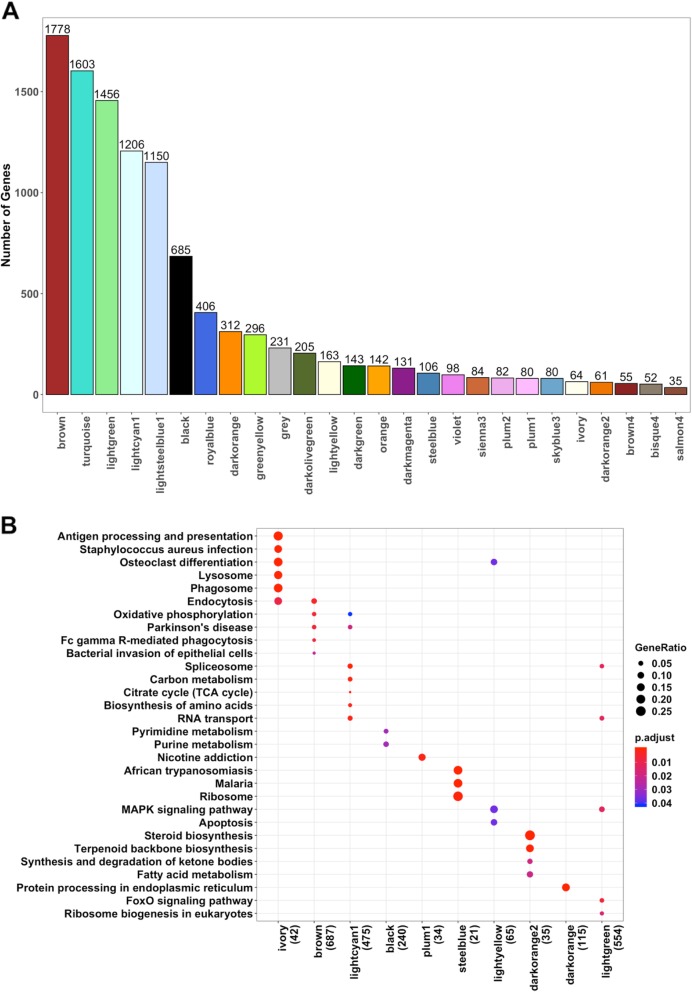
“in inflammation and microglia related pathways such as osteoclast differentiation, 339 staphylococcus aures infection, phagosome, and endocytosis (Figure 2B), implicating 340 an important role of Apoe in inflammatory and microglia related functions [40-42].”
BackgroundIntegrated Systems Approach Identifies Genetic Nodes and Networks in Late-Onset Alzheimer’s Disease
Zhang, B., Gaiteri, C., Bodea, L.-G., Wang, Z., McElwee, J., Podtelezhnikov, A. A., Zhang, C., Xie, T., Tran, L., Dobrin, R., et al. (2013) · Cell · doi:10.1016/j.cell.2013.03.030 · Cited by 1,657 · cited 2×
“These novel risk genes cluster in functional 94 classes suggesting prominent roles in lipid processing, the immune system, and 95 synaptic cell function such as endocytosis [1, 14].”
BackgroundJankowsky, J. L., Fadale, D. J., Anderson, J., Xu, G. M., Gonzales, V., Jenkins, N. A., Copeland, N. G., Lee, M. K., Younkin, L. H., Wagner, S. L., et al. (2004) · Human Molecular Genetics · doi:10.1093/hmg/ddh019 · Cited by 1,575 · cited 1×
“of the following mutations in LOAD associated genes: homozygous deletion in Apoe 124 and Clu; heterozygous deletion in Cd2ap and Bin1; and a transgenic APOEε4 driven by 125 a GFAP promoter on a Apoe background (herein referred to as Apoe, Clu, Cd2ap, 126 Bin1 and APOEε4) (Table 1, [16-21]).”
BackgroundCunningham, F., Amode, M. R., Barrell, D., Beal, K., Billis, K., Brent, S., Carvalho-Silva, D., Clapham, P., Coates, G., Fitzgerald, S., et al. (2015) · Nucleic Acids Research · doi:10.1093/nar/gku1010 · Cited by 1,115
The ETS-domain transcription factor family
Sharrocks, A. D. (2001) · Nature Reviews Molecular Cell Biology · doi:10.1038/35099076 · Cited by 1,086 · cited 1×
“ETS-domain proteins play a role in the regulation of neuronal functions [49].”
BackgroundPiedrahita, J. A., Zhang, S. H., Hagaman, J. R., Oliver, P. M., & Maeda, N. (1992) · Proceedings of the National Academy of Sciences · doi:10.1073/pnas.89.10.4471 · Cited by 944 · cited 1×
“of the following mutations in LOAD associated genes: homozygous deletion in Apoe 124 and Clu; heterozygous deletion in Cd2ap and Bin1; and a transgenic APOEε4 driven by 125 a GFAP promoter on a Apoe background (herein referred to as Apoe, Clu, Cd2ap, 126 Bin1 and APOEε4) (Table 1, [16-21]).”
BackgroundiRegulon: From a Gene List to a Gene Regulatory Network Using Large Motif and Track Collections
Janky, R., Verfaillie, A., Imrichová, H., Van de Sande, B., Standaert, L., Christiaens, V., Hulselmans, G., Herten, K., Naval Sanchez, M., Potier, D., et al. (2014) · PLoS Computational Biology · doi:10.1371/journal.pcbi.1003731 · Cited by 900
GC-Content Normalization for RNA-Seq Data
Risso, D., Schwartz, K., Sherlock, G., & Dudoit, S. (2011) · BMC Bioinformatics · doi:10.1186/1471-2105-12-480 · Cited by 867 · cited 1×
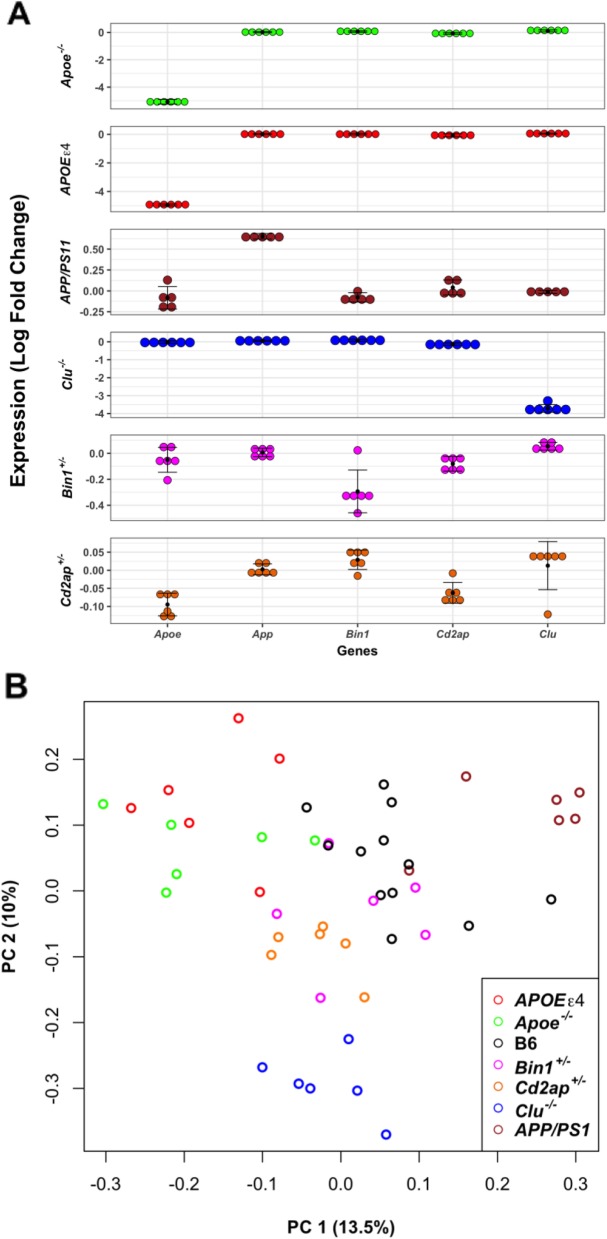
“We then used the plotPCA function of Bioconductor package EDASeq [28] to observe the differences in distribution of samples due to batch effects.”
MethodCongenital Nephrotic Syndrome in Mice Lacking CD2-Associated Protein
Shih, N.-Y., Li, J., Karpitskii, V., Nguyen, A., Dustin, M. L., Kanagawa, O., Miner, J. H., & Shaw, A. S. (1999) · Science · doi:10.1126/science.286.5438.312 · Cited by 861
The Genetics of Alzheimer Disease: Back to the Future
Bertram, L., Lill, C. M., & Tanzi, R. E. (2010) · Neuron · doi:10.1016/j.neuron.2010.10.013 · Cited by 834 · cited 1×
“factors that influence disease onset, progression and severity [8, 9].”
BackgroundProgress in molecular biology and translational science
Teplow, D. B. (2008) · Elsevier eBooks · Cited by 832
The Genetics of Alzheimer's Disease
Bertram, L., & Tanzi, R. E. (2012) · Progress in Molecular Biology and Translational Science · doi:10.1016/b978-0-12-385883-2.00008-4 · Cited by 760
The genetics of Alzheimer disease
Tanzi, R. E. (2012) · Cold Spring Harbor Perspectives in Medicine · doi:10.1101/cshperspect.a006296 · Cited by 727
APOE and Alzheimer disease: a major gene with semi-dominant inheritance
Genin, E., Hannequin, D., Wallon, D., Sleegers, K., Hiltunen, M., Combarros, O., Bullido, M. J., Engelborghs, S., De Deyn, P., Berr, C., et al. (2011) · Molecular Psychiatry · doi:10.1038/mp.2011.52 · Cited by 714 · cited 2×
“penetrance [11] with homozygous carriers having a roughly five-times-increased risk 88 compared to those who inherit only one e4 allele of APOE [1, 12].”
BackgroundA multi-omic atlas of the human frontal cortex for aging and Alzheimer’s disease research
De Jager, P. L., Ma, Y., McCabe, C., Xu, J., Vardarajan, B. N., Felsky, D., Klein, H.-U., White, C. C., Peters, M. A., Lodgson, B., et al. (2018) · Scientific Data · doi:10.1038/sdata.2018.142 · Cited by 598 · cited 1×
“A detailed description on post-mortem brain sample collection, tissue and RNA 238 preparation, sequencing, and sample QC has been provided elsewhere [36-38].”
MethodWang, M., Beckmann, N. D., Roussos, P., Wang, E., Zhou, X., Wang, Q., Ming, C., Neff, R., Ma, W., Fullard, J. F., et al. (2018) · Scientific Data · doi:10.1038/sdata.2018.185 · Cited by 502 · cited 1×
“A detailed description on post-mortem brain sample collection, tissue and RNA 238 preparation, sequencing, and sample QC has been provided elsewhere [36-38].”
MethodApoE and Clusterin Cooperatively Suppress Aβ Levels and Deposition
DeMattos, R. B., Cirrito, J. R., Parsadanian, M., May, P. C., O'Dell, M. A., Taylor, J. W., Harmony, J. A. K., Aronow, B. J., Bales, K. R., Paul, S. M., et al. (2004) · Neuron · doi:10.1016/s0896-6273(03)00850-x · Cited by 459 · cited 1×
“It has been speculated that absence of both Apoe and Clu resulted in accelerated disease onset, and more extensive amyloid deposition in the PDAPP transgenic mice brain [52].”
Allen, M., Carrasquillo, M. M., Funk, C., Heavner, B. D., Zou, F., Younkin, C. S., Burgess, J. D., Chai, H.-S., Crook, J., Eddy, J. A., et al. (2016) · Scientific Data · doi:10.1038/sdata.2016.89 · Cited by 439 · cited 1×
“A detailed description on post-mortem brain sample collection, tissue and RNA 238 preparation, sequencing, and sample QC has been provided elsewhere [36-38].”
MethodNeurochemical characteristics of early and late onset types of Alzheimer's disease.
Rossor, M. N., Iversen, L. L., Reynolds, G. P., Mountjoy, C. Q., & Roth, M. (1984) · BMJ · doi:10.1136/bmj.288.6422.961 · Cited by 417 · cited 1×
“Clinically, AD is classified into two subtypes: early 76 onset with Mendelian inheritance, and late onset (or sporadic) AD [1, 4].”
BackgroundExpression of Novel Alzheimer’s Disease Risk Genes in Control and Alzheimer’s Disease Brains
Karch, C. M., Jeng, A. T., Nowotny, P., Cady, J., Cruchaga, C., & Goate, A. M. (2012) · PLoS ONE · doi:10.1371/journal.pone.0050976 · Cited by 328 · cited 1×
“We have observed that Bin1 527 models were significantly associated with multiple AMP-AD co-expression modules, 528 which in turn were enriched in immune response, inflammation, and synaptic functioning 529 pathways, which is in concordance with other studies [57, 58].”
ResultApoE facilitates the microglial response to amyloid plaque pathology
Ulrich, J. D., Ulland, T. K., Mahan, T. E., Nyström, S., Nilsson, K. P., Song, W. M., Zhou, Y., Reinartz, M., Choi, S., Jiang, H., et al. (2018) · Journal of Experimental Medicine · doi:10.1084/jem.20171265 · Cited by 297 · cited 1×
“in inflammation and microglia related pathways such as osteoclast differentiation, 339 staphylococcus aures infection, phagosome, and endocytosis (Figure 2B), implicating 340 an important role of Apoe in inflammatory and microglia related functions [40-42].”
BackgroundGenetic insights in Alzheimer's disease
Bettens, K., Sleegers, K., & Van Broeckhoven, C. (2013) · The Lancet Neurology · doi:10.1016/s1474-4422(12)70259-4 · Cited by 290 · cited 8×
“In comparison to rare casual variants in three genes: amyloid precursor protein (APP), presenilin 1 (PSEN1), and presenilin 2 (PSEN2) that contribute to EOAD [1, 6, 7], the genetics factors influencing LOAD are complex due to the interplay of genetic and environmental factors that influence disease onset, progression…”
BackgroundInfluentialApolipoprotein J (clusterin) and Alzheimer's disease
Calero, M., Rostagno, A., Matsubara, E., Zlokovic, B., Frangione, B., & Ghiso, J. (2000) · Microscopy Research and Technique · doi:10.1002/1097-0029(20000815)50:4<305::aid-jemt10>3.0.co;2-l · Cited by 256 · cited 8×
“These findings suggest that APOE and CLU risk genes are associated with distinct AD-related pathways.”
ResultInfluentialCardiac BIN1 folds T-tubule membrane, controlling ion flux and limiting arrhythmia
Hong, T., Yang, H., Zhang, S.-S., Cho, H. C., Kalashnikova, M., Sun, B., Zhang, H., Bhargava, A., Grabe, M., Olgin, J., et al. (2014) · Nature Medicine · doi:10.1038/nm.3543 · Cited by 248
Genetics of Alzheimer's Disease: A Centennial Review
Ertekin-Taner, N. (2007) · Neurologic Clinics · doi:10.1016/j.ncl.2007.03.009 · Cited by 234 · cited 1×
“In comparison to rare casual variants in three genes: amyloid precursor protein (APP), presenilin 1 (PSEN1), and presenilin 2 (PSEN2) that contribute to EOAD [1, 6, 7], the genetics factors influencing LOAD are complex due to the interplay of genetic and environmental factors that influence disease onset, progression…”
BackgroundSun, Y., Wu, S., Bu, G., Onifade, M. K., Patel, S. N., LaDu, M. J., Fagan, A. M., & Holtzman, D. M. (1998) · The Journal of Neuroscience · doi:10.1523/jneurosci.18-09-03261.1998 · Cited by 213 · cited 1×
“of the following mutations in LOAD associated genes: homozygous deletion in Apoe 124 and Clu; heterozygous deletion in Cd2ap and Bin1; and a transgenic APOEε4 driven by 125 a GFAP promoter on a Apoe background (herein referred to as Apoe, Clu, Cd2ap, 126 Bin1 and APOEε4) (Table 1, [16-21]).”
BackgroundApolipoprotein J/clusterin limits the severity of murine autoimmune myocarditis
McLaughlin, L., Zhu, G., Mistry, M., Ley-Ebert, C., Stuart, W. D., Florio, C. J., Groen, P. A., Witt, S. A., Kimball, T. R., Witte, D. P., et al. (2000) · Journal of Clinical Investigation · doi:10.1172/jci9037 · Cited by 207 · cited 1×
“of the following mutations in LOAD associated genes: homozygous deletion in Apoe 124 and Clu; heterozygous deletion in Cd2ap and Bin1; and a transgenic APOEε4 driven by 125 a GFAP promoter on a Apoe background (herein referred to as Apoe, Clu, Cd2ap, 126 Bin1 and APOEε4) (Table 1, [16-21]).”
BackgroundHuman APOE4 increases microglia reactivity at Aβ plaques in a mouse model of Aβ deposition
Rodriguez, G. A., Tai, L. M., LaDu, M. J., & Rebeck, G. W. (2014) · Journal of Neuroinflammation · doi:10.1186/1742-2094-11-111 · Cited by 193 · cited 1×
“in inflammation and microglia related pathways such as osteoclast differentiation, 339 staphylococcus aures infection, phagosome, and endocytosis (Figure 2B), implicating 340 an important role of Apoe in inflammatory and microglia related functions [40-42].”
BackgroundBridging integrator 1 (BIN1): form, function, and Alzheimer's disease
Tan, M.-S., Yu, J.-T., & Tan, L. (2013) · Trends in Molecular Medicine · doi:10.1016/j.molmed.2013.06.004 · Cited by 189 · cited 1×
“We have observed that Bin1 527 models were significantly associated with multiple AMP-AD co-expression modules, 528 which in turn were enriched in immune response, inflammation, and synaptic functioning 529 pathways, which is in concordance with other studies [57, 58].”
ResultThe genetics of Alzheimer's disease
Bagyinszky, E., Youn, Y. C., An, S., & Kim, S. (2014) · Clinical Interventions in Aging · doi:10.2147/cia.s51571 · Cited by 173 · cited 3×
“rare casual variants in three genes: amyloid precursor protein (APP), presenilin 81 1 (PSEN1), and presenilin 2 (PSEN2) that contribute to EOAD [1, 6, 7], the genetics 82 factors influencing LOAD are complex due to the interplay of genetic and environmental 83”
BackgroundCD33 modulates TREM2: convergence of Alzheimer loci
Chan, G., White, C. C., Winn, P. A., Cimpean, M., Replogle, J. M., Glick, L. R., Cuerdon, N. E., Ryan, K. J., Johnson, K. A., Schneider, J. A., et al. (2015) · Nature Neuroscience · doi:10.1038/nn.4126 · Cited by 162 · cited 1×
“490 Previous studies have already implicated the role of TREM2 in AD susceptibility due to 491 association of heterozygous rare variants in TREM2 with elevated risk of AD [51] and 492 higher cortical TREM2 RNA expression with increased amyloid pathology [52].”
Apolipoprotein E4 inhibits autophagy gene products through direct, specific binding to CLEAR motifs
Parcon, P. A., Balasubramaniam, M., Ayyadevara, S., Jones, R. A., Liu, L., Shmookler Reis, R. J., Barger, S. W., Mrak, R. E., & Griffin, W. S. T. (2018) · Alzheimer's & Dementia · doi:10.1016/j.jalz.2017.07.754 · Cited by 122
Transcriptional regulation of Alzheimer's disease genes: implications for susceptibility
Theuns, J. (2000) · Human Molecular Genetics · doi:10.1093/hmg/9.16.2383 · Cited by 87 · cited 1×
“ETS family members ELK1 and ETS1 have been reported to expressed 467 in neuronal cells and activate transcription of early onset AD candidate gene PSEN1 468 [44, 50].”
BackgroundRole of clusterin in the brain vascular clearance of amyloid-β
Nelson, A. R., Sagare, A. P., & Zlokovic, B. V. (2017) · Proceedings of the National Academy of Sciences · doi:10.1073/pnas.1711357114 · Cited by 80 · cited 10×
“These findings suggest that APOE and CLU risk genes are associated with distinct AD-related pathways.”
BackgroundResultInfluentialBouter, Y., Kacprowski, T., Weissmann, R., Dietrich, K., Borgers, H., Brauß, A., Sperling, C., Wirths, O., Albrecht, M., Jensen, L. R., et al. (2014) · Frontiers in Aging Neuroscience · doi:10.3389/fnagi.2014.00075 · Cited by 76
Transcriptional regulation and its misregulation in Alzheimer’s disease
Chen, X.-F., Zhang, Y.-W., Xu, H., & Bu, G. (2013) · Molecular Brain · doi:10.1186/1756-6606-6-44 · Cited by 67
Jackson, H. M., Soto, I., Graham, L. C., Carter, G. W., & Howell, G. R. (2013) · BMC Genomics · doi:10.1186/1471-2164-14-831 · Cited by 66 · cited 1×
“Alzheimer’s disease (EOAD) strikes prior to the age of 65 and accounts for 78 approximately 5% of all AD cases, while the much more common late-onset Alzheimer’s 79 disease (LOAD) is diagnosed at later life stages (> 65 years) [2, 5].”
BackgroundSelf-citationRoussotte, F. F., Gutman, B. A., Madsen, S. K., Colby, J. B., Thompson, P. M., & Initiative, F. T. A. D. N. (2014) · The Journal of Neuroscience · doi:10.1523/jneurosci.5236-13.2014 · Cited by 63
The Alzheimer's disease risk factor CD2AP maintains blood–brain barrier integrity
Cochran, J. N., Rush, T., Buckingham, S. C., & Roberson, E. D. (2015) · Human Molecular Genetics · doi:10.1093/hmg/ddv371 · Cited by 50 · cited 1×
“mice, it may be due to their involvement in similar pathways like blood-brain carrier, and loss of function in Cd2ap may contribute to genetic risk of AD by facilitating age related blood-brain barrier breakdown [58].”
BackgroundLogsdon, B. A., Perumal, T. M., Swarup, V., Wang, M., Funk, C., Gaiteri, C., Allen, M., Wang, X., Dammer, E., Srivastava, G., et al. (2019) · bioRxiv (Cold Spring Harbor Laboratory) · doi:10.1101/510420 · Cited by 44 · cited 8×
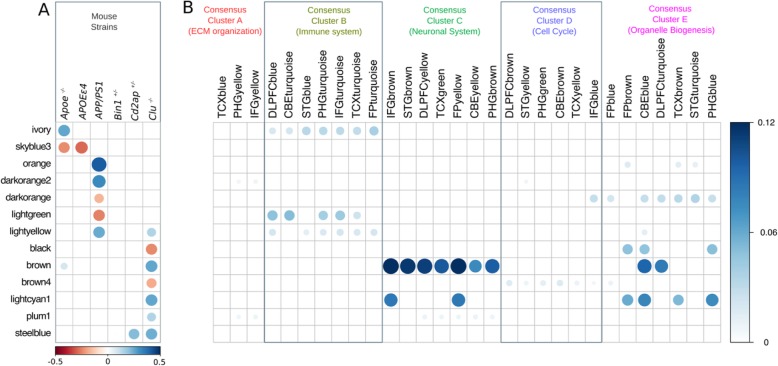
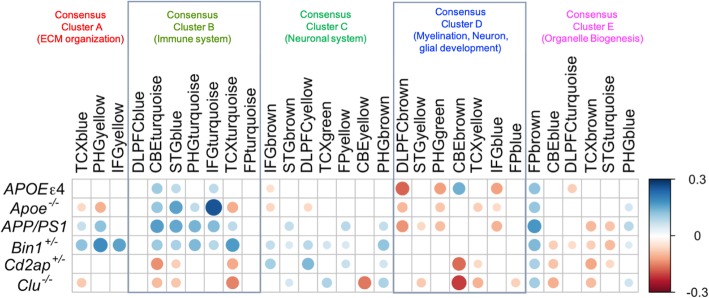
“Overlapping modules were therefore grouped into Consensus Clusters [39].”
BackgroundMethodInfluentialSelf-citationTranscription factor Sp1 inhibition, memory, and cytokines in a mouse model of Alzheimer's disease.
Citron, B. A., Saykally, J. N., Cao, C., Dennis, J. S., Runfeldt, M. J., & Arendash, G. W. (2015) · PubMed · Cited by 42
Staging Alzheimer’s Disease in the Brain and Retina of B6.APP/PS1 Mice by Transcriptional Profiling
Chintapaludi, S. R., Uyar, A., Jackson, H. M., Acklin, C. J., Wang, X., Sasner, M., Carter, G. W., & Howell, G. R. (2020) · Journal of Alzheimer s Disease · doi:10.3233/jad-190793 · Cited by 26 · cited 2×
“Differential expression in the APP/PS1 models 171 were obtained from a generalized linear model with the same significance threshold 172 [22].”
MethodSelf-citationWan, Y.-W., Al-Ouran, R., Mangleburg, C. G., Lee, T. V., Allison, K., Neuner, S., Kaczorowski, C., Phillip, V., Howell, G., Martini-Stoica, H., et al. (2019) · bioRxiv (Cold Spring Harbor Laboratory) · doi:10.1101/506873 · Cited by 5 · cited 1×
“neuropathology or transcriptomic signatures of LOAD [15].”
Self-citationStaging Alzheimer’s disease in the brain and retina of B6.APP/PS1 mice by transcriptional profilingPreprint
Chintapaludi, S. R., Uyar, A., Jackson, H. M., et al. (2019) · bioRxiv (Cold Spring Harbor Laboratory) · doi:10.1101/741421 · Cited by 2
Self-citationChapter 7. Genetics of Alzheimer’s Disease
McQueen, M. B., & Blacker, D. (2008) · American Psychiatric Association Publishing eBooks · doi:10.1176/appi.books.9781615377565.lg07 · Cited by 1
Cited by
APOE2: protective mechanism and therapeutic implications for Alzheimer’s disease
Li, Z., Shue, F., Zhao, N., Shinohara, M., & Bu, G. (2020) · Molecular Neurodegeneration · doi:10.1186/s13024-020-00413-4 · Cited by 306
Human Microglia Show Unique Transcriptional Changes in Alzheimer's Disease
Prater, K. E., Green, K. J., Mamde, S., Sun, W., Cochoit, A., Smith, C. L., Chiou, K. L., Heath, L., Rose, S. E., Wiley, J., et al. (2023) · Nature Aging · doi:10.1038/s43587-023-00424-y · Cited by 164
Model organism development and evaluation for late‐onset Alzheimer's disease: MODEL‐AD
Oblak, A. L., Forner, S., Territo, P. R., Sasner, M., Carter, G. W., Howell, G. R., Sukoff‐Rizzo, S. J., Logsdon, B. A., Mangravite, L. M., Mortazavi, A., et al. (2020) · Alzheimer's & Dementia: Translational Research & Clinical Interventions · doi:10.1002/trc2.12110 · Cited by 105
Self-citationZheng, Q., Li, G., Wang, S., Zhou, Y., Liu, K., Gao, Y., Zhou, Y., Zheng, L., Zhu, L., Deng, Q., et al. (2021) · Science Advances · doi:10.1126/sciadv.abe1340 · Cited by 85
Rangan, P., Lobo, F., Parrella, E., Rochette, N. C., Morselli, M., Stephen, T., Cremonini, A. L., Tagliafico, L., Persia, A., Caffa, I., et al. (2022) · Cell Reports · doi:10.1016/j.celrep.2022.111417 · Cited by 79
Metadata
- Authors
- Pandey, R. S., Graham, L., Uyar, A., Preuss, C., Howell, G. R., & Carter, G. W.
- Affiliations
- The Jackson Laboratory for Genomic Medicine (US)
- Tufts University (US)
- Jackson Laboratory (US)
- Corresponding author
- Howell, Gareth R.
- Carter, Gregory W.
- Venue
- Molecular Neurodegeneration
- Published
- 2019-12
- Volume
- 14
- Issue
- 1
- Pages
- 50-50
- ISSN
- 1750-1326 (ISSN-L)
- PMC
- PMC6933917
- OpenAlex
- W2998276382
- Cited by
- 37
- References
- 60
- Citations by year
- 2026: 4 · 2025: 4 · 2024: 7 · 2023: 3 · 2022: 8 · 2021: 5 · 2020: 6
- FWCI
- 3.26
- Type
- journal article
- Language
- en
- Open access
- gold
- doi.org
- Licence
- cc-by
- creativecommons.org/licenses/by/4.0/ (tdm)
- creativecommons.org/licenses/by/4.0/ (vor, 25 d)
- Locations
- Molecular Neurodegeneration (publishedVersion, cc-by)
- PubMed Central (publishedVersion, cc-by)
- PubMed (publishedVersion)
- DOAJ (DOAJ: Directory of Open Access Journals) (submittedVersion)
- Funders
- National Institute on Aging (U54 AG054345, AG055104)
- Topics
- Life Sciences › Neuroscience › Cellular and Molecular Neuroscience › Alzheimer's disease research and treatments
- Life Sciences › Neuroscience › Neurology › Neuroinflammation and Neurodegeneration Mechanisms
- Health Sciences › Medicine › Psychiatry and Mental health › Dementia and Cognitive Impairment Research
- Keywords
- late-onset Alzheimer's disease, risk genes, mouse model, gene expression signatures, apolipoprotein E deficiency, BIN1, CD2AP, APP/PS1 mice, gene co-expression modules, inflammation, microglia, synaptic function, lipid metabolism, endocytosis
- MeSH terms
- Alzheimer Disease, Animals, Brain, Disease Models, Animal, Mice, Transgenic, Amyloid beta-Peptides, Amyloid beta-Protein Precursor, Microglia
About these checks
Registry, retraction, Cites and statistics results are computed, not judged, with one exception: a printed reference that no index lists is read once by a model before it counts as a citation error. Claims are extracted by a model and kept only when their quote appears verbatim in the text; each cited source is then checked, with a model’s help, for whether it says what the claim relies on. Those verdicts can be wrong — read the claim’s quote and the cited source before relying on one.
Statistics and arithmetic are recomputed, not judged.
Confidence bands are shown only for fields calibrated on our annotated test set. None is calibrated yet, so no band is shown.
What counts as a claim ›How we measure confidence ›How we check this ›
Are you an author, or do you see a problem with this page? Request a review
Data sources
Bibliographic data: Semantic Scholar, OpenAlex, Crossref.
Contains information from the Semantic Scholar Academic Graph Datasets, made available under the ODC Attribution License (ODC-BY 1.0).
Semantic Scholar’s data is described in: Kinney, R., et al. (2023). The Semantic Scholar Open Data Platform. arXiv:2301.10140.
