

The DOI matches its Crossref record; 186 of the 187 references it cites were found in a registry or an index.
Restoring Wnt/β-catenin signaling is a promising therapeutic strategy for Alzheimer’s disease
Open accessAbstract
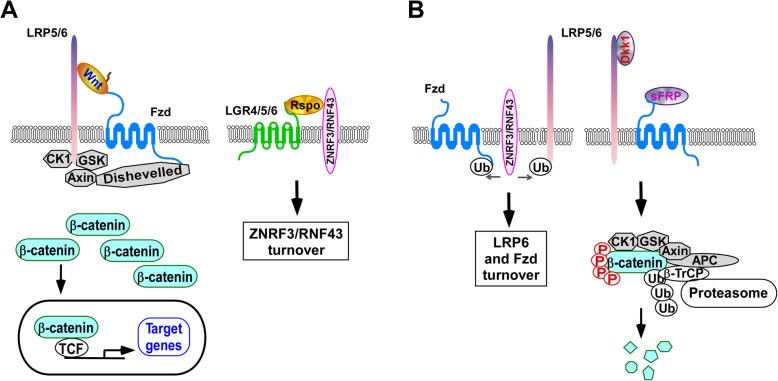
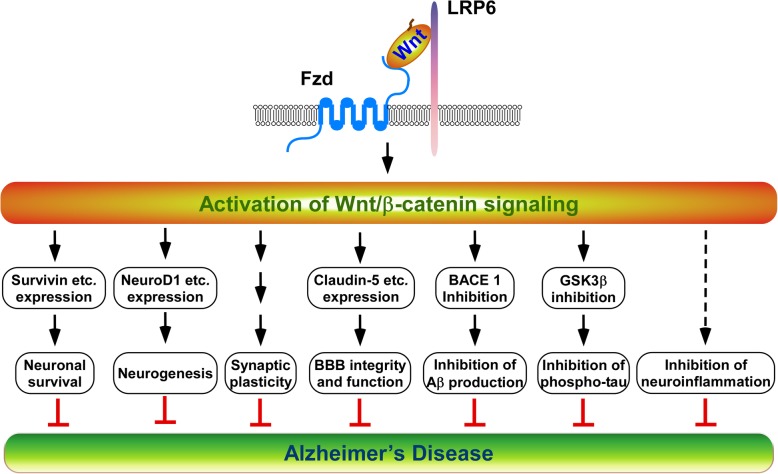
Alzheimer’s disease (AD) is an aging-related neurological disorder characterized by synaptic loss and dementia. Wnt/β-catenin signaling is an essential signal transduction pathway that regulates numerous cellular processes including cell survival. In brain, Wnt/β-catenin signaling is not only crucial for neuronal survival and neurogenesis, but it plays important roles in regulating synaptic plasticity and blood-brain barrier integrity and function. Moreover, activation of Wnt/β-catenin signaling inhibits amyloid-β production and tau protein hyperphosphorylation in the brain. Critically, Wnt/β-catenin signaling is greatly suppressed in AD brain via multiple pathogenic mechanisms. As such, restoring Wnt/β-catenin signaling represents a unique opportunity for the rational design of novel AD therapies.
Overview
The claims and statistics of this paper haven’t been checked yet.
Run the check — free, no account needed. It reads the open-access text and checks the sources it cites.
Integrity signals
Registry
Cites
Statistics
Figures
Verification
Claims the paper makes
The claims and statistics of this paper haven’t been checked yet.
Run the check — free, no account needed. It reads the open-access text and checks the sources it cites.
Claims other papers make about this one
Each is checked against this paper’s own text: does it say what the citing paper says it does?
The cited source says what the claim attributes to it.
In the citing paper
“restoring Wnt/β-catenin signaling, which is greatly suppressed in AD brains, is a promising therapeutic strategy”
From CI-994 is a dual modulator of class I HDACs and Wnt/β-catenin signaling for the treatment of Alzheimer's disease (2026) · cites this paper as [14]
The cited source says what the claim attributes to it.
In the citing paper
“Wnt/β-catenin signaling is not only crucial for neuronal survival and neurogenesis but also plays important roles in regulating synaptic plasticity and blood–brain barrier integrity and function [14].”
From CI-994 is a dual modulator of class I HDACs and Wnt/β-catenin signaling for the treatment of Alzheimer's disease (2026) · cites this paper as [14]
Self-check
Percentages, sums and reported differences re-computed from the paper’s own numbers.
The self-check needs the paper’s full text.
Citations
Cites
Neuroinflammation in Alzheimer's disease
Heneka, M. T., Carson, M. J., Khoury, J. E., Landreth, G. E., Brosseron, F., Feinstein, D. L., Jacobs, A. H., Wyss-Coray, T., Vitorica, J., Ransohoff, R. M., et al. (2015) · The Lancet Neurology · doi:10.1016/s1474-4422(15)70016-5 · Cited by 6,226
The amyloid hypothesis of Alzheimer's disease at 25 years
Selkoe, D. J., & Hardy, J. (2016) · EMBO Molecular Medicine · doi:10.15252/emmm.201606210 · Cited by 6,164
Zhang, Y., Chen, K., Sloan, S. A., Bennett, M. L., Scholze, A. R., O'Keeffe, S., Phatnani, H. P., Guarnieri, P., Caneda, C., Ruderisch, N., et al. (2014) · The Journal of Neuroscience · doi:10.1523/jneurosci.1860-14.2014 · Cited by 4,875
Goate, A., Chartier-Harlin, M.-C., Mullan, M., Brown, J., Crawford, F., Fidani, L., Giuffra, L., Haynes, A., Irving, N., James, L., et al. (1991) · Nature · doi:10.1038/349704a0 · Cited by 4,659
Terry, R. D., Masliah, E., Salmon, D. P., Butters, N., DeTeresa, R., Hill, R., Hansen, L. A., & Katzman, R. (1991) · Annals of Neurology · doi:10.1002/ana.410300410 · Cited by 4,397
Wnt/β-Catenin Signaling, Disease, and Emerging Therapeutic Modalities
Nusse, R., & Clevers, H. (2017) · Cell · doi:10.1016/j.cell.2017.05.016 · Cited by 4,342
Cloning of a gene bearing missense mutations in early-onset familial Alzheimer's disease
Sherrington, R., Rogaev, E. I., Liang, Y., Rogaeva, E. A., Levesque, G., Ikeda, M., Chi, H., Lin, C., Li, G., Holman, K., et al. (1995) · Nature · doi:10.1038/375754a0 · Cited by 4,051
Neuropathological alterations in Alzheimer disease
Serrano-Pozo, A., Frosch, M. P., Masliah, E., & Hyman, B. T. (2011) · Cold Spring Harbor Perspectives in Medicine · doi:10.1101/cshperspect.a006189 · Cited by 3,345
Alzheimer Disease: An Update on Pathobiology and Treatment Strategies
Long, J. M., & Holtzman, D. M. (2019) · Cell · doi:10.1016/j.cell.2019.09.001 · Cited by 3,204
Blood–brain barrier breakdown in Alzheimer disease and other neurodegenerative disorders
Sweeney, M. D., Sagare, A. P., & Zlokovic, B. V. (2018) · Nature Reviews Neurology · doi:10.1038/nrneurol.2017.188 · Cited by 3,076
Cited by
Sorted by citations
Wnt/β-catenin signalling: function, biological mechanisms, and therapeutic opportunities
Liu, J., Xiao, Q., Xiao, J., Niu, C., Li, Y., Zhang, X., Zhou, Z., Shu, G., & Yin, G. (2022) · Signal Transduction and Targeted Therapy · doi:10.1038/s41392-021-00762-6 · Cited by 2,519
Self-citationWnt signaling pathway: A comprehensive review
Hayat, R., Manzoor, M., & Hussain, A. (2022) · Cell Biology International · doi:10.1002/cbin.11797 · Cited by 379
Ramakrishna, K., Nalla, L. V., Dumala, N., Venkateswarlu, K., Viswanadh, M. K., Nalluri, B. N., Chakravarthy, G., Duguluri, S., Singh, P., Nand, S., et al. (2023) · Diseases · doi:10.3390/diseases11030089 · Cited by 206
Identification of altered exosomal microRNAs and mRNAs in Alzheimer's disease
Su, L., Li, R., Zhang, Z.-Q., Liu, J., Du, J., & Wei, H. (2021) · Ageing Research Reviews · doi:10.1016/j.arr.2021.101497 · Cited by 118
Primary cilia and ciliary signaling pathways in aging and age-related brain disorders
Ma, R., Kutchy, N. A., Chen, L., Meigs, D. D., & Hu, G. (2022) · Neurobiology of Disease · doi:10.1016/j.nbd.2021.105607 · Cited by 114
Metadata
- Authors
- Jia, L., Piña-Crespo, J., & Li, Y.
- Affiliations
- Mayo Clinic (US)
- Sanford Burnham Prebys Medical Discovery Institute (US)
- Corresponding author
- Li, Yonghe
- Venue
- Molecular Brain
- Published
- 2019-12
- Volume
- 12
- Issue
- 1
- Pages
- 104-104
- ISSN
- 1756-6606 (ISSN-L)
- PMC
- PMC6894260
- OpenAlex
- W2992486783
- Cited by
- 288
- References
- 187
- Citations by year
- 2026: 31 · 2025: 42 · 2024: 48 · 2023: 48 · 2022: 57 · 2021: 45 · 2020: 16
- FWCI
- 3.47
- Type
- journal article
- Language
- en
- Open access
- gold
- doi.org
- Licence
- Locations
- Molecular Brain (publishedVersion, cc-by)
- PubMed Central (publishedVersion, cc-by)
- PubMed (publishedVersion)
- DOAJ (DOAJ: Directory of Open Access Journals) (submittedVersion, cc-by-sa)
- Funders
- The Ed and Ethel Moore Alzheimer’s Disease Research Program Pilot Grant from the Florida Department of Health (9AZ09)
- Topics
- Life Sciences › Neuroscience › Cellular and Molecular Neuroscience › Alzheimer's disease research and treatments
- Life Sciences › Biochemistry, Genetics and Molecular Biology › Molecular Biology › Wnt/β-catenin signaling in development and cancer
- Health Sciences › Medicine › Psychiatry and Mental health › Dementia and Cognitive Impairment Research
- Keywords
- Alzheimer's disease, Wnt/β-catenin signaling, therapeutic target, synaptic plasticity, blood-brain barrier, amyloid-beta production, tau hyperphosphorylation, neuronal survival, neurogenesis, synaptic loss
- MeSH terms
- Alzheimer Disease, Animals, Brain, Humans, Neuronal Plasticity, Neurogenesis, Molecular Targeted Therapy, Wnt Signaling Pathway
About these checks
Registry, retraction, Cites and statistics results are computed, not judged, with one exception: a printed reference that no index lists is read once by a model before it counts as a citation error. Claims are extracted by a model and kept only when their quote appears verbatim in the text; each cited source is then checked, with a model’s help, for whether it says what the claim relies on. Those verdicts can be wrong — read the claim’s quote and the cited source before relying on one.
Statistics and arithmetic are recomputed, not judged.
Confidence bands are shown only for fields calibrated on our annotated test set. None is calibrated yet, so no band is shown.
What counts as a claim ›How we measure confidence ›How we check this ›
Are you an author, or do you see a problem with this page? Request a review
