

Cancer-associated adipocytes: key players in breast cancer progression
Open accessThe DOI matches its Crossref record; 150 of the 151 references it cites were found in a registry or an index.
Abstract
Adipocytes are one of the primary stromal cells in many tissues, and they are considered to play an active role in the tumor microenvironment. Cancer-associated adipocytes (CAAs) are not only found adjacent to cancer cells, but also communicate with cancer cells through releasing various factors that can mediate local and systemic effects. The adipocyte-cancer cell crosstalk leads to phenotypical and functional changes of both cell types, which can further enhance tumor progression. Indeed, obesity, which is associated with an increase in adipose mass and an alteration of adipose tissue, is becoming pandemic in some countries and it is now considered to be an independent risk factor for cancer progression. In this review, we focus on the potential mechanisms involved with special attention to the adipocyte-cancer cell circle in breast cancer. We envisage that besides having a direct impact on tumor cells, CAAs systemically preconditions the tumor microenvironment by favoring anti-tumor immunity. A better understanding of cancer-associated adipocytes and the key molecular events in the adipocyte-cancer cell crosstalk will provide insights into tumor biology and permit the optimization of therapeutic strategies.
Overview
The claims and statistics of this paper haven’t been checked yet.
Free: it reads the open-access text and checks the first 5 claims that cite a source we can check. Create a free account to check every claim.
Integrity signals
Registry
Cites
Statistics
Figures
Verification
Claims the paper makes
The claims and statistics of this paper haven’t been checked yet.
Free: it reads the open-access text and checks the first 5 claims that cite a source we can check. Create a free account to check every claim.
Claims other papers make about this one
Each is checked against this paper’s own text: does it say what the citing paper says it does?
The cited source says what the claim attributes to it.
In the citing paper
“All these factors can modify the behavior and stimulate the tumorigenic potential of breast cancer cells.”
From 3D In Vitro Model (R)evolution: Unveiling Tumor–Stroma Interactions (2021) · cites this paper as [50]
The cited source says what the claim attributes to it.
In the citing paper
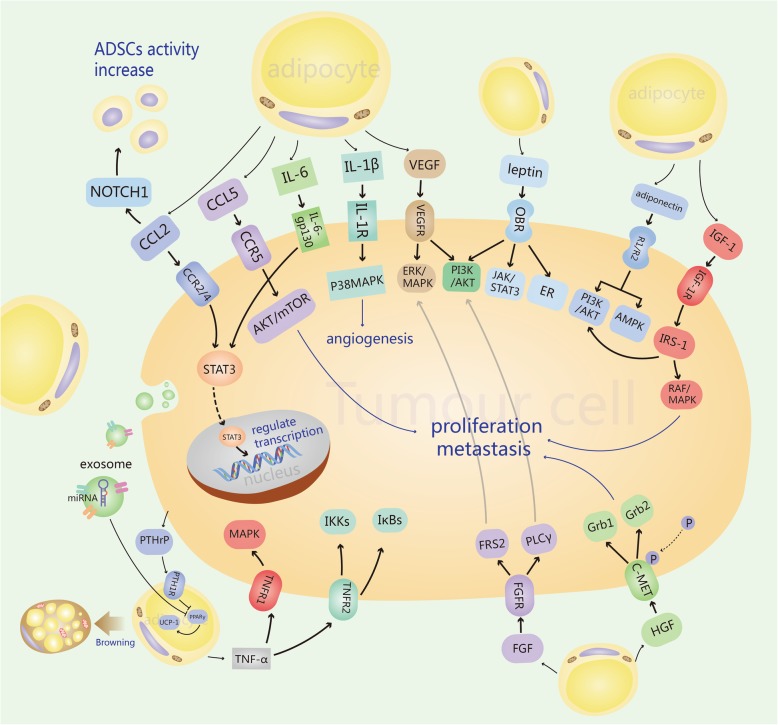
“In breast cancer, CAAs secrete chemokines CCL2 and CCL5, in fl ammatory factors such as IL-1 β and IL-6, VEGF, tumor necrosis factor (TNFα ), and adipokines such as leptin [50].”
From 3D In Vitro Model (R)evolution: Unveiling Tumor–Stroma Interactions (2021) · cites this paper as [50]
Self-check
Percentages, sums and reported differences re-computed from the paper’s own numbers.
The self-check needs the paper’s full text.
Citations
Cites
4 retracted
Akiyama, M., Hideshima, T., Hayashi, T., Tai, Y., Mitsiades, C. S., Mitsiades, N., Chauhan, D., Richardson, P. G. G., Munshi, N. C., & Anderson, K. C. (2003) · PubMed · Cited by 212
RetractedZhang, H., Zhu, L., Bai, M., Liu, Y., Zhan, Y., Deng, T., Yang, H., Sun, W., Wang, X., Zhu, K., et al. (2019) · International Journal of Cancer · doi:10.1002/ijc.31977 · Cited by 210
Self-citationRetractedWu, Q., Li, J., Li, Z., Sun, S., Zhu, S., Wang, L., Wu, J., Yuan, J., Zhang, Y., Sun, S., et al. (2019) · Journal of Experimental & Clinical Cancer Research · doi:10.1186/s13046-019-1210-3 · Cited by 137
Self-citationRetractedWu, Q., Sun, S., Li, Z., Yang, Q., Li, B., Zhu, S., Wang, L., Wu, J., Yuan, J., Yang, C., et al. (2018) · Molecular Cancer · doi:10.1186/s12943-018-0899-5 · Cited by 102
Self-citationRetractedUnderstanding the Warburg Effect: The Metabolic Requirements of Cell Proliferation
Vander Heiden, M. G., Cantley, L. C., & Thompson, C. B. (2009) · Science · doi:10.1126/science.1160809 · Cited by 16,197
Warburg, O. (1956) · Science · doi:10.1126/science.123.3191.309 · Cited by 13,425
The biology of VEGF and its receptors
Ferrara, N., Gerber, H.-P., & LeCouter, J. (2003) · Nature Medicine · doi:10.1038/nm0603-669 · Cited by 9,591
Long non-coding RNA HOTAIR reprograms chromatin state to promote cancer metastasis
Gupta, R. A., Shah, N., Wang, K. C., Kim, J., Horlings, H. M., Wong, D. J., Tsai, M.-C., Hung, T., Argani, P., Rinn, J. L., et al. (2010) · Nature · doi:10.1038/nature08975 · Cited by 5,218
Regulation of cancer cell metabolism
Cairns, R. A., Harris, I. S., & Mak, T. W. (2011) · Nature Reviews Cancer · doi:10.1038/nrc2981 · Cited by 4,744
Infliximab for Induction and Maintenance Therapy for Ulcerative Colitis
Rutgeerts, P., Sandborn, W. J., Feagan, B. G., Reinisch, W., Olson, A., Johanns, J., Travers, S., Rachmilewitz, D., Hanauer, S. B., Lichtenstein, G. R., et al. (2005) · New England Journal of Medicine · doi:10.1056/nejmoa050516 · Cited by 3,902
Cited by
Items 401–500 of 504
Novel Adipokines and the Risk of Obesity-Related Breast Cancer.
Asal, D. M., Mesbah, N. M., Abo–Elmatty, D. M., Fathy, H., & Abdel-Hamed, A. (2021) · Records of Pharmaceutical and Biomedical Sciences/Records of Pharmaceutical & Biomedical Sciences · doi:10.21608/rpbs.2021.103530.1118
Tumor-asszociált miofibroblasztok genetikai, epigenetikai, transzkripciós és funkcionális jellemzői
Huliák, I. (2021) · SZTE Repository of Dissertations (University of Szeged) · doi:10.14232/phd.10787
Macrophages in Tumor-Associated Adipose Microenvironment Accelerate Tumor ProgressionPreprint
Li, B., Wu, Q., Yang, Q., Li, Z., Li, J., Wu, J., Zhu, S., Wang, L., Liao, S., Sun, S., et al. (2020) · Research Square · doi:10.21203/rs.3.rs-86067/v1
“In particular, obesity-caused chronic in ammation is considered as a potent driver of cancer initiation and progression through its ability to cultivate a supported microenvironment that is permissive to neoplastic transformation[4-6].”
BackgroundSelf-citationWik, E., Ingebriktsen, L. M., & Akslen, L. A. (2022) · Springer eBooks · doi:10.1007/978-3-030-98950-7_23
Cancer and Lipid Metabolism: Roles of Adipocytes on Tumor Microenvironment
Chu, D., Nguyen, Q. H., Le, B. N., Ngoc, S. M. V., Quyen, M. L., & Cao, B. A. (2022) · Springer eBooks · doi:10.1007/978-3-030-80962-1_106-1
Xing, F., Zhao, D., Wu, S.-Y., Tyagi, A., Wu, K., Sharma, S., Liu, Y., Deshpande, R. P., Wang, Y., Cleary, J. A., et al. (2023) · doi:10.1158/0008-5472.c.6513627.v1
Role of Cancer-Associated Adipocytes in the Progression of Breast Cancer
Jurj, A. M., Ciocan, C. A., Ráduly, L., Zănoagă, O., Berindan‐Neagoe, I., & Braicu, C. (2022) · Springer eBooks · doi:10.1007/978-3-030-80962-1_54-1
Robertson, B., Loya, M. G., Han, W., Harris, A., Drew, C. P., Lee, C.-W., Qutaish, M. Q., Pencheva, N., Franken, P., Koopman, L. A., et al. (2023) · Journal for ImmunoTherapy of Cancer · doi:10.1136/jitc-2023-sitc2023.0562
Extracellular vesicles derived from oxidatively stressed stromal cells promote cancer progression
Chen, V., & Li, Z. (2024) · Journal of Emerging Investigators · doi:10.59720/22-071
Self-citationAn Ex Vivo Model of Ovarian Cancer Peritoneal Metastasis Using Human Omentum
Wong, T., Tedja, R., Chehade, H., Morris, R. T., Alvero, A. B., & Mor, G. (2024) · Journal of Visualized Experiments · doi:10.3791/66031
Bhattacharya, M., & Samanta, D. (2024) · IP Indian Journal of Immunology and Respiratory Medicine · doi:10.18231/j.ijirm.2023.026
Xiao, R., Wang, N., Xiao, W., & Liu, Y. (2024) · Research Square · doi:10.21203/rs.3.rs-4136576/v1
Lundø, K., Dmytriyeva, O., Spøhr, L., Gonçalves‐Alves, E., Yao, J., Blasco, L. P., Trauelsen, M., Ponniah, M., Severin, M., Sandelin, A., et al. (2023) · Figshare · doi:10.6084/m9.figshare.24628097
Rôle des inhibiteurs de PARP dans le mimétisme vasculaire des cellules tumorales mammaires
Chivot, J. (2022) · theses.fr (ABES) · doi:10.70675/9446cc2az91aez4c0bzb0cczba1f18527ff3
Patch Antennas in Medical Imaging- A Critical Analysis for Cancer Diagnosis
Deebu, U. S., & Sreeja, T. K. (2024) · International Conference on Trends in Engineering Systems and Technologies (ICTEST) · doi:10.1109/ictest60614.2024.10576097
“Cancerous tissue, or malignant tissue, results from uncontrolled cell division and invasion of surrounding tissues due to genetic mutations disrupting normal cell cycle regulation [1].”
Backgroundde Juan-Maciá, P., Losada-Echeberría, M., Micol, V., Barrajón‐Catalán, E., & Herranz‐López, M. (2024) · Interdisciplinary cancer research · doi:10.1007/16833_2024_430 · Cited by 1
Fatty Acid Metabolism Promotes Breast Cancer Metastasis
张, 研. (2024) · Advances in Clinical Medicine · doi:10.12677/acm.2024.14112889
Étude du mécanisme d’action de la MMP11 dans le cancer du sein
Jaulin, A. (2022) · theses.fr (ABES) · doi:10.70675/f9d68c97za7a6z46d0zba94z218e0429289e
Leonardi, L. (2023) · theses.fr (ABES) · doi:10.70675/3af71f99z635bz42b6zb564z40236ed96f3c
Expression of recombinant canine perilipin3 (PLIN3) and its assessment for immunoreactivity
Behera, A., Sahu, G., Pandey, V. K., Franco, P. S., Kumar, P., Kumar, M., Saini, M., & Irungbam, K. (2025) · Gene Reports · doi:10.1016/j.genrep.2025.102157
The role of adipose tissue in colorectal cancer
Lazarchuk, I., Plizga, W., Stołecka, G., Sydor, M., Parmar, S., & Woźniak, S. (2024) · Medical Journal of Cell Biology · doi:10.2478/acb-2024-0024 · Cited by 1
Cancer and Lipid Metabolism: Roles of Adipocytes on Tumor Microenvironment
Chu, D., Nguyen, Q. H., Le, B. N., Ngoc, S. M. V., Quyen, M. L., & Cao, B. A. (2025) · Springer eBooks · doi:10.1007/978-3-032-00761-2_106
Additional file 5 of CAA-derived IL-6 induced M2 macrophage polarization by activating STAT3
Zhao, C., Zeng, N., Zhou, X., Tan, Y., Wang, Y., Zhang, J., Wu, Y., & Zhang, Q. (2023) · Figshare · doi:10.6084/m9.figshare.22729201
Additional file 2 of CAA-derived IL-6 induced M2 macrophage polarization by activating STAT3
Zhao, C., Zeng, N., Zhou, X., Tan, Y., Wang, Y., Zhang, J., Wu, Y., & Zhang, Q. (2023) · Figshare · doi:10.6084/m9.figshare.22729192
Jurj, A., Ionescu, C., Berindan‐Neagoe, I., & Braicu, C. (2022) · Figshare · doi:10.6084/m9.figshare.21151438
Additional file 2 of Inverse FASN and LDHA correlation drives metabolic resistance in breast cancer
Papulino, C., Chianese, U., Ali, A., Favale, G., Tuccillo, C., Ciardiello, F., Mauro, A. D., Mignogna, C., Ferrara, G., Budillon, A., et al. (2024) · Figshare · doi:10.6084/m9.figshare.26361085
Liu, S.-Q., Chen, D.-Y., Li, B., Gao, Z.-J., Feng, H., Yu, X., Liu, Z., Wang, Y., Li, W.-G., Sun, S., et al. (2024) · Figshare · doi:10.6084/m9.figshare.26604406
Self-citationChan, K., Cheung, S. M., Senn, N., Husain, E. A., Masannat, Y., Heys, S. D., & He, J. (2022) · Figshare · doi:10.6084/m9.figshare.19382392
Additional file 1 of CAA-derived IL-6 induced M2 macrophage polarization by activating STAT3
Zhao, C., Zeng, N., Zhou, X., Tan, Y., Wang, Y., Zhang, J., Wu, Y., & Zhang, Q. (2023) · Figshare · doi:10.6084/m9.figshare.22729189
Harris, A. R., Wang, T., Heng, Y. J., Baker, G. M., Le, P. A., Wang, J., Ambrosone, C., Brufsky, A., Couch, F. J., Modugno, F., et al. (2024) · Figshare · doi:10.6084/m9.figshare.26735037
Liu, S.-Q., Chen, D.-Y., Li, B., Gao, Z.-J., Feng, H.-F., Yu, X., Liu, Z., Wang, Y., Li, W.-G., Sun, S., et al. (2024) · Figshare · doi:10.6084/m9.figshare.26604397
Self-citationAdditional file 7 of Inverse FASN and LDHA correlation drives metabolic resistance in breast cancer
Papulino, C., Chianese, U., Ali, A., Favale, G., Tuccillo, C., Ciardiello, F., Mauro, A. D., Mignogna, C., Ferrara, G., Budillon, A., et al. (2024) · Figshare · doi:10.6084/m9.figshare.26753020
Additional file 3 of CAA-derived IL-6 induced M2 macrophage polarization by activating STAT3
Zhao, C., Zeng, N., Zhou, X., Tan, Y., Wang, Y., Zhang, J., Wu, Y., & Zhang, Q. (2023) · Figshare · doi:10.6084/m9.figshare.22729195
Liu, S.-Q., Chen, D.-Y., Li, B., Gao, Z.-J., Feng, H., Yu, X., Liu, Z., Wang, Y., Li, W.-G., Sun, S., et al. (2024) · Figshare · doi:10.6084/m9.figshare.26604409
Self-citationZhang, Y., Tedja, R., Millman, M., Wong, T., Fox, A. L., Chehade, H., Gershater, M., Adzibolosu, N. K., Gogoi, R. P., Anderson, M., et al. (2023) · Figshare · doi:10.6084/m9.figshare.24709018
Han, J., Li, S., Zhan, Q., Hu, Y., Zhong, C., Yang, J., & Qiu, Z. (2023) · Figshare · doi:10.6084/m9.figshare.24770429
Additional file 4 of Inverse FASN and LDHA correlation drives metabolic resistance in breast cancer
Papulino, C., Chianese, U., Ali, A., Favale, G., Tuccillo, C., Ciardiello, F., Mauro, A. D., Mignogna, C., Ferrara, G., Budillon, A., et al. (2024) · Figshare · doi:10.6084/m9.figshare.26753008
Williams, M. E., Howard, D. J., Donnelly, C., Izadi, F., Parra, J. G., Pugh, M., Edwards, K., Lutchman-Sigh, K., Jones, S., Margarit, L., et al. (2024) · Figshare · doi:10.6084/m9.figshare.27042452
Liu, S.-Q., Chen, D.-Y., Li, B., Gao, Z.-J., Feng, H.-F., Yu, X., Liu, Z., Wang, Y., Li, W.-G., Sun, S., et al. (2024) · Figshare · doi:10.6084/m9.figshare.26604403
Self-citationHarris, A. R., Wang, T., Heng, Y. J., Baker, G. M., Le, P. A., Wang, J., Ambrosone, C., Brufsky, A., Couch, F. J., Modugno, F., et al. (2024) · Figshare · doi:10.6084/m9.figshare.26735034
Additional file 6 of Inverse FASN and LDHA correlation drives metabolic resistance in breast cancer
Papulino, C., Chianese, U., Ali, A., Favale, G., Tuccillo, C., Ciardiello, F., Mauro, A. D., Mignogna, C., Ferrara, G., Budillon, A., et al. (2024) · Figshare · doi:10.6084/m9.figshare.26753014
Additional file 1 of Inverse FASN and LDHA correlation drives metabolic resistance in breast cancer
Papulino, C., Chianese, U., Ali, A., Favale, G., Tuccillo, C., Ciardiello, F., Mauro, A. D., Mignogna, C., Ferrara, G., Budillon, A., et al. (2024) · Figshare · doi:10.6084/m9.figshare.26360879
Hu, S., Tey, S. K., & Kwong, A. (2024) · Figshare · doi:10.6084/m9.figshare.27124072
Meyer, D. M., Pastor‐Villaescusa, B., Michel, S., Hauner, H., & Hauner, D. (2022) · Figshare · doi:10.6084/m9.figshare.21601538
Jung, J., Kim, N. H., Kwon, M., Park, J., Lim, D., Kim, Y., Gil, W., Cheong, Y. H., & Park, S.-A. (2023) · Figshare · doi:10.6084/m9.figshare.24439267
Additional file 1 of CMTM7 inhibits breast cancer progression by regulating Wnt/β-catenin signaling
Chen, Z., Tian, Y., Zhou, G.-L., Yue, H.-R., Zhou, X.-J., Ma, H.-Y., Ge, J., Wang, X., Cao, X., & Yu, Y. (2023) · Figshare · doi:10.6084/m9.figshare.22613011
Additional file 5 of Inverse FASN and LDHA correlation drives metabolic resistance in breast cancer
Papulino, C., Chianese, U., Ali, A., Favale, G., Tuccillo, C., Ciardiello, F., Mauro, A. D., Mignogna, C., Ferrara, G., Budillon, A., et al. (2024) · Figshare · doi:10.6084/m9.figshare.26753011
Harris, A. R., Wang, T., Heng, Y. J., Baker, G. M., Le, P. A., Wang, J., Ambrosone, C., Brufsky, A., Couch, F. J., Modugno, F., et al. (2024) · Figshare · doi:10.6084/m9.figshare.26735049
Han, J., Li, S., Zhan, Q., Hu, Y., Zhong, C., Yang, J., & Qiu, Z. (2024) · Figshare · doi:10.6084/m9.figshare.24770669
Additional file 3 of Inverse FASN and LDHA correlation drives metabolic resistance in breast cancer
Papulino, C., Chianese, U., Ali, A., Favale, G., Tuccillo, C., Ciardiello, F., Mauro, A. D., Mignogna, C., Ferrara, G., Budillon, A., et al. (2024) · Figshare · doi:10.6084/m9.figshare.26753005
Williams, M. E., Howard, D. J., Donnelly, C., Izadi, F., Parra, J. G., Pugh, M., Edwards, K., Lutchman-Sigh, K., Jones, S., Margarit, L., et al. (2024) · Figshare · doi:10.6084/m9.figshare.27042449
Harris, A. R., Wang, T., Heng, Y. J., Baker, G. M., Le, P. A., Wang, J., Ambrosone, C., Brufsky, A., Couch, F. J., Modugno, F., et al. (2024) · Figshare · doi:10.6084/m9.figshare.26735043
Liu, S.-Q., Chen, D.-Y., Li, B., Gao, Z.-J., Feng, H.-F., Yu, X., Liu, Z., Wang, Y., Li, W.-G., Sun, S., et al. (2024) · Figshare · doi:10.6084/m9.figshare.26604400
Self-citationHarris, A. R., Wang, T., Heng, Y. J., Baker, G. M., Le, P. A., Wang, J., Ambrosone, C., Brufsky, A., Couch, F. J., Modugno, F., et al. (2024) · Figshare · doi:10.6084/m9.figshare.26735052
Meyer, D. M., Pastor‐Villaescusa, B., Michel, S., Hauner, H., & Hauner, D. (2022) · Figshare · doi:10.6084/m9.figshare.21601535
Harris, A. R., Wang, T., Heng, Y. J., Baker, G. M., Le, P. A., Wang, J., Ambrosone, C., Brufsky, A., Couch, F. J., Modugno, F., et al. (2024) · Figshare · doi:10.6084/m9.figshare.26735061
Harris, A. R., Wang, T., Heng, Y. J., Baker, G. M., Le, P. A., Wang, J., Ambrosone, C., Brufsky, A., Couch, F. J., Modugno, F., et al. (2024) · Figshare · doi:10.6084/m9.figshare.26735058
Harris, A. R., Wang, T., Heng, Y. J., Baker, G. M., Le, P. A., Wang, J., Ambrosone, C., Brufsky, A., Couch, F. J., Modugno, F., et al. (2024) · Figshare · doi:10.6084/m9.figshare.26735055
Harris, A. R., Wang, T., Heng, Y. J., Baker, G. M., Le, P. A., Wang, J., Ambrosone, C., Brufsky, A., Couch, F. J., Modugno, F., et al. (2024) · Figshare · doi:10.6084/m9.figshare.26735046
Meyer, D. M., Pastor‐Villaescusa, B., Michel, S., Hauner, H., & Hauner, D. (2022) · Figshare · doi:10.6084/m9.figshare.21601532
Harris, A. R., Wang, T., Heng, Y. J., Baker, G. M., Le, P. A., Wang, J., Ambrosone, C., Brufsky, A., Couch, F. J., Modugno, F., et al. (2024) · Figshare · doi:10.6084/m9.figshare.26735040
Jung, J., Kim, N. H., Kwon, M., Park, J., Lim, D., Kim, Y., Gil, W., Cheong, Y. H., & Park, S.-A. (2024) · Figshare · doi:10.6084/m9.figshare.24439475
Additional file 4 of CAA-derived IL-6 induced M2 macrophage polarization by activating STAT3
Zhao, C., Zeng, N., Zhou, X., Tan, Y., Wang, Y., Zhang, J., Wu, Y., & Zhang, Q. (2023) · Figshare · doi:10.6084/m9.figshare.22729198
Simiczyjew, A., Wądzyńska, J., Pietraszek‐Gremplewicz, K., Kot, M., Ziętek, M., Matkowski, R., & Nowak, D. (2024) · Figshare · doi:10.6084/m9.figshare.26606035
Silva, D. S. D. (2023) · LA Referencia (Red Federada de Repositorios Institucionales de Publicaciones Científicas)
Flores-Torres, S. (2023) · eScholarship@McGill (McGill) · doi:10.82308/2519 · Cited by 1
Role of Cancer-Associated Adipocytes in the Progression of Breast Cancer
Jurj, A., Ciocan, C. A., Raduly, L., Zănoagă, O., Berindan‐Neagoe, I., & Braicu, C. (2025) · Springer eBooks · doi:10.1007/978-3-032-00759-9_54
Common Pathways Regulating Macrophage Differentiation and Breast Cancer Metastasis
Sinha, A., Pankaj, P. P., & Kumar, R. (2024) · Breast Global Journal · doi:10.4103/bgj.bgj_22_24
Role of Tumor Microenvironment in Metastatic Breast Cancer
Kaçaroğlu, D., & Gürbüz, N. (2026) · Springer eBooks · doi:10.1007/978-981-95-3682-5_3
Xie, L., Huang, J., Liu, T., Liu, Y., Wang, Q., Wang, M., Chen, J., Zhang, X., & Zhao, J. (2026) · Epigenetics Insights · doi:10.48130/epi-0025-0016
Skoniecka, A., Słonimska, P., Tymińska, A., Czerwiec, K., Deptuła, M., Zawrzykraj, M., Kondej, K., Zieliński, J., Zacchigna, S., Sachadyn, P., et al. (2026) · Scientific Reports · doi:10.1038/s41598-026-39457-9
“Previous studies have indicated that chemotherapy may induce changes in healthy fibroblasts, such as increased secretion of inflammatory cytokines (e.g. IL-6 IL-6) and enhanced glycolytic activity 50 .”
Gholami, H., Gachpazan, M., Erfanian, M., & Hasanzadeh, M. (2026) · Advances in Cancer Biology - Metastasis · doi:10.1016/j.adcanc.2026.100179 · Cited by 1
The impact of lipid metabolism remodeling in the tumor microenvironment on angiogenesis
Ye, C., Wang, Z., & Li, L. (2026) · Discover Oncology · doi:10.1007/s12672-026-04645-6
“This bidirectional interaction alters the phenotypes and functions of both adipocytes and cancer cells, thereby promoting tumor progression [77].”
Morawiec, M.-L., Wendlocha, D., Kabut, J., & Mielczarek‐Palacz, A. (2026) · Frontiers in Immunology · doi:10.3389/fimmu.2026.1724900
“The adipokines secreted by adipocytes and/or CAA and their interactions with breast cancer cells may contribute to the pathogenesis of the disease (13, 17, 22, 23).”
Licata, A. G. (2026) · Open Research Online (The Open University) · doi:10.21954/ou.ro.00109330
Shahd, N. N., Hussain, K. A. M., & Al-Safy, A. H. (2026) · AIP conference proceedings · doi:10.1063/5.0318634
Rôle des flux de lactate dans le métabolisme des tissus adipeux beiges et bruns
Lagarde, D. (2020) · theses.fr (ABES) · doi:10.70675/6dfcfe91z26c5z42a8z8f53zb5a5be6082a4 · Cited by 1
Proteomic signatures of adipocyte recruitment in breast cancer
Argyris, D. G., Ploumaki, I., Argyri, T., Anastasiadou, D. P., Karagiannis, N., Pavlou, M. P., Torres, E. T. R., Benard, O., Hazan, R. B., Filippou, P. S., et al. (2026) · Endocrine Related Cancer · doi:10.1530/erc-25-0361
Gao, C., Li, C., Du, L., Liu, J., Lei, J., & Wang, L. (2026) · npj Systems Biology and Applications · doi:10.1038/s41540-026-00695-2
“CAAs support tumor progression via metabolic symbiosis, particularly under hypoxia 31 .”
Genomics-Driven Immunotherapy: Advancing Cancer Treatment through Personalized Approaches
Kate, A. A., Desai, S. A., Sapkal, S. P., More, M. J., & Patel, V. P. (2026) · Current Genomics · doi:10.2174/0113892029403241260416110923
“These cells help regulate tumor metabolism and are involved in inflammation and tumor promotion [19].”
Qiu, S., Chen, X., Yang, J., Sun, Y., Liu, Y., Wu, D., & Sun, J. (2026) · Cell Division · doi:10.1186/s13008-026-00183-3
“Among the cellular constituents of the tumor microenvironment, adipocytes have recently been recognized for their role in cancer development, particularly through processes such as adipo-genesis-the formation of adipocytes from precursor cells [6–9].”
LEVEL OF MONOCYTE CHEMOATTRACTANT PROTEIN-1 IN MEDULLARY AND PAPILLARY THYROID CARCINOMAS
Kobrynska, N. Y., Pushkarev, V. M., Левчук, Н. І., Guda, B. B., Komisarenko, І. І., Furmanova, O. V., & Ковзун, О. І. (2026) · PROBLEMS OF ENDOCRINE PATHOLOGY · doi:10.21856/j-pep.2026.2.01
Zhou, X. Y., Xiao, J. N., Yang, Z., Zeng, N., Wu, H., Zhang, J., & Wu, Y. H. (2026) · Discover Oncology · doi:10.1007/s12672-026-05553-5
“In turn, CAAs are involved in BC progression through the secretion of cytokines, adipokines, and lipid metabolites [2].”
Lima, I. D. S. (2026) · Journal of international women's studies
Fenesan, M. P., Bogdan, R. G., Cosma, A. A., Vornicu, V., Melnic, E., Radu, D. V., Baran, P., Crăiniceanu, Z. P., Heredea, R., Cernetchi, O., et al. (2026) · Medical Sciences · doi:10.3390/medsci14030403
“CAASs release substances that may promote tumor growth, invasion, and metastatic potential [38–40].”
KOREEDA, Y., Fujisaki, A., Tsuda, Y., Tani, N., Tanoue, T., Tashima, Y., Shimajiri, S., Hayashida, Y., Yamaguchi, M., Inoue, Y., et al. (2026) · Japanese Journal of Radiology · doi:10.1007/s11604-026-02051-0
An, L., Yang, Z., Li, R., Cheng, J., Cai, Y., Dong, H., Liu, Y., Li, Y., & Li, Y. (2026) · Chemical Engineering Journal · doi:10.1016/j.cej.2026.180379
Cibler le cancer du sein métastatique triple négatif avec un vaccin autologue à cellules cancéreuses
Niavarani, S.-R. (2022) · Knowledge UdeS (Institutional Deposit of the University of Sherbrooke)
Circulating MicroRNAs Reflect Body Composition Features in Newly Diagnosed Breast Cancer
Tambaro, F., Orlando, S., Imbimbo, G., Luca, A. D., Melcarne, R., Amabile, M. I., Muscaritoli, M., & Molfino, A. (2026) · International Journal of Molecular Sciences · doi:10.3390/ijms27167098
“Given the frequent coexistence of metabolic comorbidities in BC and their association with adverse clinical outcomes [20], we next evaluated whether the presence of major metabolic comorbidities could influence fat distribution and body composition alterations observed in BC through the modulation…”
Михалева, Л. М., Martynova, M., Владиславовна, Г. З., Shakhpazyan, N. K., Chizhikov, N., Pechnikova, V. V., Gushchin, M. Y., & Ilyichev, A. V. (2026) · Life · doi:10.3390/life16081304
“Specifically, normal adipocytes are transformed into the so-called “cancer-associated adipocytes” [74].”
Adipocyte-derived estrogen signaling influences TROP2 expression in ERα-positive breast cancer
Gelsomino, L., Manna, L., Marchio, V., Console, P. D., Augimeri, G., Giordano, C., Győrffy, B., Bonofiglio, D., Angelis, C. D., Catalano, S., et al. (2026) · Frontiers in Endocrinology · doi:10.3389/fendo.2026.1866290
“Although adipocyte-tumor crosstalk is increasingly recognized as a determinant of therapy resistance, including chemotherapy, targeted therapy, hormonal therapy, and immune therapy (36), its impact on the ef fi cacy of antibody – drug conjugates (ADCs) have not been systematically investigated.”
Díaz-Grijuela, E., Goñi, S., Urdiciain, A., Barajas, M. A., Gonzalez-Valdes, I. B., Espinal, M., Caballero, C., Santamaría, E., Hernández, A., Astigarraga, E., et al. (2026) · Cell Biochemistry and Biophysics · doi:10.1007/s12013-026-02111-2
“Like-wise, the decrease in proteins such as Ehhadh may indicate a negative regulation of the stroma-dependent PPAR-α pro - gram [32 ], promoting a transition towards a more inflam - matory and stressed TME, along with a reduced capacity to handle complex lipids [32, 33].”
Malla, R. R., & Nagaraju, G. P. (2026) · Biochemical Pharmacology · doi:10.1016/j.bcp.2026.118390
Caballero, C. D., & Schulze, A. (2026) · Genes & Development · doi:10.1101/gad.353813.126
Heterogeneity in cancer: molecular mechanisms and therapeutic strategies
He, Y., Niu, L., Ren, Y.-M., Yuan, G.-Q., Pan, Y.-W., & Jin, W. (2026) · Signal Transduction and Targeted Therapy · doi:10.1038/s41392-026-03064-x
“221 These changes connect cellular metabolic reprogramming with whole-body glucose dysregulation.”
VEGF-Leptin Crosstalk in Breast and Ovarian Cancer: Drivers of Angiogenesis and Progression
Al-Eidan, A. A. (2026) · Cancer Management and Research · doi:10.2147/cmar.s635303
Liu, X., Zheng, D., Su, L., He, Z., & Huang, D. (2026) · Research Square · doi:10.21203/rs.3.rs-10805516/v1
Yang, J., Cai, X., He, F., 张君红, Zhang, Z., Yi, Z., Xie, C., & Xu, B. (2026) · Signal Transduction and Targeted Therapy · doi:10.1038/s41392-026-02903-1
任传富, Chen, X., Zheng, L., Chen, H., Yang, Z., Xia, X., Kang, X., Luo, B., He, Z., Shi, Z., et al. (2026) · Cellular Signalling · doi:10.1016/j.cellsig.2026.112958
Metadata
- Authors
- Wu, Q., Li, B., Li, Z., Li, J., Sun, S., & Sun, S.
- Affiliations
- Université Paris-Sud (FR)
- Renmin Hospital of Wuhan University (CN)
- Corresponding author
- Sun, Si
- Sun, Shengrong
- Venue
- Journal of Hematology & Oncology
- Published
- 2019-09-10
- Volume
- 12
- Issue
- 1
- Pages
- 95-95
- ISSN
- 1756-8722 (ISSN-L)
- PMC
- PMC6734503
- OpenAlex
- W2972584423
- Semantic Scholar
- 894bc532f56c3ff5c11ff42c221956d25ebcc79d
- Cited by
- 462
- References
- 150
- Citations by year
- 2026: 44 · 2025: 59 · 2024: 82 · 2023: 82 · 2022: 70 · 2021: 71 · 2020: 52
- FWCI
- 4.63
- Type
- journal article
- Language
- en
- Open access
- gold
- doi.org
- Licence
- cc-by
- creativecommons.org/licenses/by/4.0/ (tdm)
- creativecommons.org/licenses/by/4.0/ (vor)
- Locations
- Journal of Hematology & Oncology (publishedVersion, cc-by)
- PubMed Central (publishedVersion, cc-by)
- PubMed (publishedVersion)
- DOAJ (DOAJ: Directory of Open Access Journals) (submittedVersion)
- Funders
- National Natural Science Foundation of China (81471781)
- National Key Scientific Instrument and Equipment Development Projects of China (2012YQ160203)
- Topics
- Life Sciences › Biochemistry, Genetics and Molecular Biology › Cancer Research › Cancer, Lipids, and Metabolism
- Health Sciences › Medicine › Endocrinology, Diabetes and Metabolism › Adipokines, Inflammation, and Metabolic Diseases
- Health Sciences › Medicine › Physiology (medical) › Adipose Tissue and Metabolism
- Keywords
- cancer-associated adipocytes, breast cancer progression, tumor microenvironment, obesity, adipose tissue, antitumor immunity, tumor stroma
- MeSH terms
- Breast Neoplasms, Female, Gene Expression Regulation, Humans, Cytokines, Adipocytes, Disease Progression, Tumor Microenvironment
About these checks
Registry, retraction, Cites and statistics results are computed, not judged, with one exception: a printed reference that no index lists is read once by a model before it counts as a citation error. Claims are extracted by a model and kept only when their quote appears verbatim in the text; each cited source is then checked, with a model’s help, for whether it says what the claim relies on. Those verdicts can be wrong — read the claim’s quote and the cited source before relying on one.
Statistics and arithmetic are recomputed, not judged.
Confidence bands are shown only for fields calibrated on our annotated test set. None is calibrated yet, so no band is shown.
What counts as a claim ›How we measure confidence ›How we check this ›
Are you an author, or do you see a problem with this page? Request a review
Data sources
Bibliographic data: Semantic Scholar, OpenAlex, Crossref.
Contains information from the Semantic Scholar Academic Graph Datasets, made available under the ODC Attribution License (ODC-BY 1.0).
Semantic Scholar’s data is described in: Kinney, R., et al. (2023). The Semantic Scholar Open Data Platform. arXiv:2301.10140.
