

Cancer-associated adipocytes: key players in breast cancer progression
Open accessThe DOI matches its Crossref record; 150 of the 150 references it cites were found in a registry or an index.
Abstract
Adipocytes are one of the primary stromal cells in many tissues, and they are considered to play an active role in the tumor microenvironment. Cancer-associated adipocytes (CAAs) are not only found adjacent to cancer cells, but also communicate with cancer cells through releasing various factors that can mediate local and systemic effects. The adipocyte-cancer cell crosstalk leads to phenotypical and functional changes of both cell types, which can further enhance tumor progression. Indeed, obesity, which is associated with an increase in adipose mass and an alteration of adipose tissue, is becoming pandemic in some countries and it is now considered to be an independent risk factor for cancer progression. In this review, we focus on the potential mechanisms involved with special attention to the adipocyte-cancer cell circle in breast cancer. We envisage that besides having a direct impact on tumor cells, CAAs systemically preconditions the tumor microenvironment by favoring anti-tumor immunity. A better understanding of cancer-associated adipocytes and the key molecular events in the adipocyte-cancer cell crosstalk will provide insights into tumor biology and permit the optimization of therapeutic strategies.
Overview
The claims and statistics of this paper haven’t been checked yet.
Free: it reads the open-access text and checks the first 5 claims that cite a source we can check. Create a free account to check every claim.
Integrity signals
Registry
Cites
Statistics
Figures
Verification
Claims the paper makes
The claims and statistics of this paper haven’t been checked yet.
Free: it reads the open-access text and checks the first 5 claims that cite a source we can check. Create a free account to check every claim.
Claims other papers make about this one
Each is checked against this paper’s own text: does it say what the citing paper says it does?
The cited source says what the claim attributes to it.
In the citing paper
“All these factors can modify the behavior and stimulate the tumorigenic potential of breast cancer cells.”
From 3D In Vitro Model (R)evolution: Unveiling Tumor–Stroma Interactions (2021) · cites this paper as [50]
The cited source says what the claim attributes to it.
In the citing paper
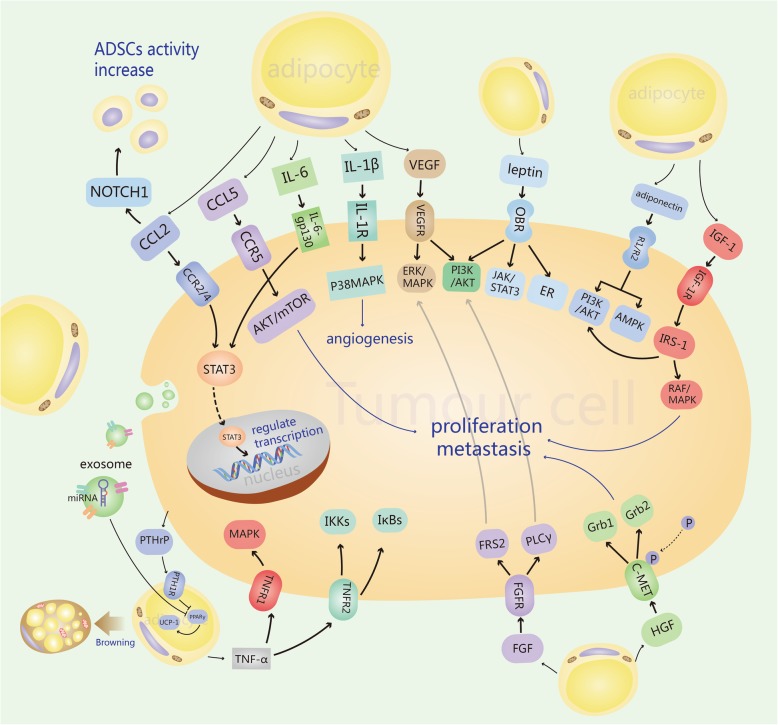
“In breast cancer, CAAs secrete chemokines CCL2 and CCL5, in fl ammatory factors such as IL-1 β and IL-6, VEGF, tumor necrosis factor (TNFα ), and adipokines such as leptin [50].”
From 3D In Vitro Model (R)evolution: Unveiling Tumor–Stroma Interactions (2021) · cites this paper as [50]
Self-check
Percentages, sums and reported differences re-computed from the paper’s own numbers.
The self-check needs the paper’s full text.
Citations
Cites
4 retracted
Akiyama, M., Hideshima, T., Hayashi, T., Tai, Y., Mitsiades, C. S., Mitsiades, N., Chauhan, D., Richardson, P. G. G., Munshi, N. C., & Anderson, K. C. (2003) · PubMed · Cited by 212
RetractedZhang, H., Zhu, L., Bai, M., Liu, Y., Zhan, Y., Deng, T., Yang, H., Sun, W., Wang, X., Zhu, K., et al. (2019) · International Journal of Cancer · doi:10.1002/ijc.31977 · Cited by 210
Self-citationRetractedWu, Q., Li, J., Li, Z., Sun, S., Zhu, S., Wang, L., Wu, J., Yuan, J., Zhang, Y., Sun, S., et al. (2019) · Journal of Experimental & Clinical Cancer Research · doi:10.1186/s13046-019-1210-3 · Cited by 137
Self-citationRetractedWu, Q., Sun, S., Li, Z., Yang, Q., Li, B., Zhu, S., Wang, L., Wu, J., Yuan, J., Yang, C., et al. (2018) · Molecular Cancer · doi:10.1186/s12943-018-0899-5 · Cited by 102
Self-citationRetractedUnderstanding the Warburg Effect: The Metabolic Requirements of Cell Proliferation
Vander Heiden, M. G., Cantley, L. C., & Thompson, C. B. (2009) · Science · doi:10.1126/science.1160809 · Cited by 16,197
Warburg, O. (1956) · Science · doi:10.1126/science.123.3191.309 · Cited by 13,425
The biology of VEGF and its receptors
Ferrara, N., Gerber, H.-P., & LeCouter, J. (2003) · Nature Medicine · doi:10.1038/nm0603-669 · Cited by 9,591
Long non-coding RNA HOTAIR reprograms chromatin state to promote cancer metastasis
Gupta, R. A., Shah, N., Wang, K. C., Kim, J., Horlings, H. M., Wong, D. J., Tsai, M.-C., Hung, T., Argani, P., Rinn, J. L., et al. (2010) · Nature · doi:10.1038/nature08975 · Cited by 5,218
Regulation of cancer cell metabolism
Cairns, R. A., Harris, I. S., & Mak, T. W. (2011) · Nature Reviews Cancer · doi:10.1038/nrc2981 · Cited by 4,744
Infliximab for Induction and Maintenance Therapy for Ulcerative Colitis
Rutgeerts, P., Sandborn, W. J., Feagan, B. G., Reinisch, W., Olson, A., Johanns, J., Travers, S., Rachmilewitz, D., Hanauer, S. B., Lichtenstein, G. R., et al. (2005) · New England Journal of Medicine · doi:10.1056/nejmoa050516 · Cited by 3,902
Communication by Extracellular Vesicles: Where We Are and Where We Need to Go
Tkach, M., & Théry, C. (2016) · Cell · doi:10.1016/j.cell.2016.01.043 · Cited by 3,444
Mesenchymal stem cells within tumour stroma promote breast cancer metastasis
Karnoub, A. E., Dash, A. B., Vo, A. P., Sullivan, A., Brooks, M. W., Bell, G. W., Richardson, A. L., Polyak, K., Tubo, R., & Weinberg, R. A. (2007) · Nature · doi:10.1038/nature06188 · Cited by 3,206
Infliximab for the Treatment of Fistulas in Patients with Crohn's Disease
Present, D. H., Rutgeerts, P., Targan, S., Hanauer, S. B., Mayer, L., van Hogezand, R. A., Podolsky, D. K., Sands, B. E., Braakman, T., DeWoody, K. L., et al. (1999) · New England Journal of Medicine · doi:10.1056/nejm199905063401804 · Cited by 2,752
Adipocytes promote ovarian cancer metastasis and provide energy for rapid tumor growth
Nieman, K. M., Kenny, H. A., Penicka, C. V., Ladanyi, A., Buell-Gutbrod, R., Zillhardt, M. R., Romero, I. L., Carey, M. S., Mills, G. B., Hotamisligil, G. S., et al. (2011) · Nature Medicine · doi:10.1038/nm.2492 · Cited by 2,279
From Krebs to clinic: glutamine metabolism to cancer therapy
Altman, B. J., Stine, Z. E., & Dang, C. V. (2016) · Nature Reviews Cancer · doi:10.1038/nrc.2016.71 · Cited by 2,119 · cited 2×
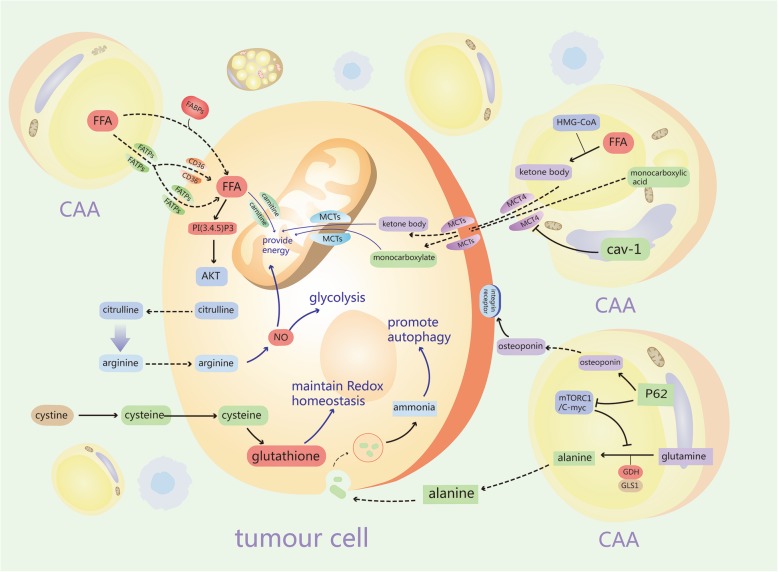
“Glutamine is also the substrate of the antioxidant glutathione and contributed to nucleotide synthesis [98, 99].”
BackgroundMicroenvironmental regulation of tumour angiogenesis
De Palma, M., Biziato, D., & Petrova, T. V. (2017) · Nature Reviews Cancer · doi:10.1038/nrc.2017.51 · Cited by 1,847
Cancer metabolism: a therapeutic perspective
Martinez-Outschoorn, U. E., Peiris-Pagés, M., Pestell, R. G., Sotgia, F., & Lisanti, M. P. (2017) · Nature Reviews Clinical Oncology · doi:10.1038/nrclinonc.2016.60 · Cited by 1,505
The reverse Warburg effect: Aerobic glycolysis in cancer associated fibroblasts and the tumor stroma
Pavlides, S., Whitaker-Menezes, D., Castello-Cros, R., Flomenberg, N., Witkiewicz, A. K., Frank, P. G., Casimiro, M. C., Wang, C., Fortina, P., Addya, S., et al. (2009) · Cell Cycle · doi:10.4161/cc.8.23.10238 · Cited by 1,391
Kogo, R., Shimamura, T., Mimori, K., Kawahara, K., Imoto, S., Sudo, T., Tanaka, F., Shibata, K., Suzuki, A., Komune, S., et al. (2011) · Cancer Research · doi:10.1158/0008-5472.can-11-1021 · Cited by 1,238
Chan, D. S. M., Vieira, A. R., Aune, D., Bandera, E. V., Greenwood, D. C., McTiernan, A., Navarro Rosenblatt, D., Thune, I., Vieira, R., & Norat, T. (2014) · Annals of Oncology · doi:10.1093/annonc/mdu042 · Cited by 1,165
Cancer-associated adipocytes exhibit an activated phenotype and contribute to breast cancer invasion
Dirat, B., Bochet, L., Dabek, M., Daviaud, D., Dauvillier, S., Majed, B., Wang, Y. Y., Meulle, A., Salles, B., Le Gonidec, S., et al. (2011) · Cancer Research · doi:10.1158/0008-5472.can-10-3323 · Cited by 1,134
Pancreatic stellate cells support tumour metabolism through autophagic alanine secretion
Sousa, C. M., Biancur, D. E., Wang, X., Halbrook, C. J., Sherman, M. H., Zhang, L., Kremer, D., Hwang, R. F., Witkiewicz, A. K., Ying, H., et al. (2016) · Nature · doi:10.1038/nature19084 · Cited by 1,122
Fong, M. Y., Zhou, W., Liu, L., Alontaga, A. Y., Chandra, M., Ashby, J., Chow, A., O’Connor, S. T. F., Li, S., Chin, A. R., et al. (2015) · Nature Cell Biology · doi:10.1038/ncb3094 · Cited by 1,118
Self-citationExtracellular Vesicles in Cancer: Exosomes, Microvesicles and the Emerging Role of Large Oncosomes
Minciacchi, V. R., Freeman, M. R., & Di Vizio, D. (2015) · Seminars in Cell & Developmental Biology · doi:10.1016/j.semcdb.2015.02.010 · Cited by 963
Picon‐Ruiz, M., Morata‐Tarifa, C., Valle‐Goffin, J. J., Friedman, E. R., & Slingerland, J. M. (2017) · CA: A Cancer Journal for Clinicians · doi:10.3322/caac.21405 · Cited by 893
Metabolic Interactions in the Tumor Microenvironment
Lyssiotis, C. A., & Kimmelman, A. C. (2017) · Trends in Cell Biology · doi:10.1016/j.tcb.2017.06.003 · Cited by 853
Jones, G., Sebba, A., Gu, J., Lowenstein, M. B., Calvo, A., Gomez-Reino, J. J., Siri, D. A., Tomšič, M., Alecock, E., Woodworth, T., et al. (2010) · Annals of the Rheumatic Diseases · doi:10.1136/ard.2008.105197 · Cited by 797
Obesity, Inflammation, and Cancer
Deng, T., Lyon, C. J., Bergin, S., Caligiuri, M. A., & Hsueh, W. A. (2016) · Annual Review of Pathology: Mechanisms of Disease · doi:10.1146/annurev-pathol-012615-044359 · Cited by 794
Mitochondrial reactive oxygen species and cancer
Sullivan, L. B., & Chandel, N. S. (2014) · Cancer & Metabolism · doi:10.1186/2049-3002-2-17 · Cited by 786
Au Yeung, C. L., Co, N.-N., Tsuruga, T., Yeung, T.-L., Kwan, S.-Y., Leung, C. S., Li, Y., Lu, E. S., Kwan, K., Wong, K.-K., et al. (2016) · Nature Communications · doi:10.1038/ncomms11150 · Cited by 774
A Switch from White to Brown Fat Increases Energy Expenditure in Cancer-Associated Cachexia
Petruzzelli, M., Schweiger, M., Schreiber, R., Campos-Olivas, R., Tsoli, M., Allen, J., Swarbrick, M., Rose-John, S., Rincon, M., Robertson, G., et al. (2014) · Cell Metabolism · doi:10.1016/j.cmet.2014.06.011 · Cited by 750
Tumor-associated stromal cells as key contributors to the tumor microenvironment
Bussard, K. M., Mutkus, L., Stumpf, K., Gomez-Manzano, C., & Marini, F. C. (2016) · Breast Cancer Research · doi:10.1186/s13058-016-0740-2 · Cited by 746 · cited 1×
“A laboratory study found that, compared with normal or thin women, the proliferation ability of MCF-7 cells increased when cultured with the conditioned media of adipocytes from obese women (body mass index (BMI): 30–35 kg/ m(2)) [5].”
BackgroundExosome mediated communication within the tumor microenvironment
Milane, L., Singh, A., Mattheolabakis, G., Suresh, M., & Amiji, M. M. (2015) · Journal of Controlled Release · doi:10.1016/j.jconrel.2015.06.029 · Cited by 742
(2000) · PubMed · Cited by 706
Interleukin-6 signaling pathway in targeted therapy for cancer
Guo, Y., Xu, F., Lu, T., Duan, Z., & Zhang, Z. (2012) · Cancer Treatment Reviews · doi:10.1016/j.ctrv.2012.04.007 · Cited by 686
Tumour-derived PTH-related protein triggers adipose tissue browning and cancer cachexia
Kir, S., White, J. P., Kleiner, S., Kazak, L., Cohen, P., Baracos, V. E., & Spiegelman, B. M. (2014) · Nature · doi:10.1038/nature13528 · Cited by 670
hsa-miR-210 Is Induced by Hypoxia and Is an Independent Prognostic Factor in Breast Cancer
Camps, C., Buffa, F. M., Colella, S., Moore, J., Sotiriou, C., Sheldon, H., Harris, A. L., Gleadle, J. M., & Ragoussis, J. (2008) · Clinical Cancer Research · doi:10.1158/1078-0432.ccr-07-1755 · Cited by 662
Cancer cell metabolism: the essential role of the nonessential amino acid, glutamine
Zhang, J., Pavlova, N. N., & Thompson, C. B. (2017) · The EMBO Journal · doi:10.15252/embj.201696151 · Cited by 651
Constitutive activation of STAT 3 in breast cancer cells: A review
Banerjee, K., & Resat, H. (2016) · International Journal of Cancer · doi:10.1002/ijc.29923 · Cited by 611 · cited 4×
“In HER2-positive breast cancer, IL-6 can also induce the production and maintenance of breast cancer stem cells (CSCs) through nuclear factor kappa-B (NF-κB) and STAT3 signaling pathways, then promoting tumor progression [31].”
BackgroundInfluentialChua, H. L., Bhat-Nakshatri, P., Clare, S. E., Morimiya, A., Badve, S., & Nakshatri, H. (2007) · Oncogene · doi:10.1038/sj.onc.1209808 · Cited by 596
Tardito, S., Oudin, A., Ahmed, S. U., Fack, F., Keunen, O., Zheng, L., Miletic, H., Sakariassen, P. Ø., Weinstock, A., Wagner, A., et al. (2015) · Nature Cell Biology · doi:10.1038/ncb3272 · Cited by 557
Bevacizumab: An angiogenesis inhibitor for the treatment of solid malignancies
Shih, T., & Lindley, C. (2006) · Clinical Therapeutics · doi:10.1016/j.clinthera.2006.11.015 · Cited by 521
Adipocyte-induced CD36 expression drives ovarian cancer progression and metastasis
Ladanyi, A., Mukherjee, A., Kenny, H. A., Johnson, A., Mitra, A. K., Sundaresan, S., Nieman, K. M., Pascual, G., Benitah, S. A., Montag, A., et al. (2018) · Oncogene · doi:10.1038/s41388-017-0093-z · Cited by 517
Lipogenesis and lipolysis: The pathways exploited by the cancer cells to acquire fatty acids
Zaidi, N., Lupien, L., Kuemmerle, N. B., Kinlaw, W. B., Swinnen, J. V., & Smans, K. (2013) · Progress in Lipid Research · doi:10.1016/j.plipres.2013.08.005 · Cited by 477
Yan, W., Wu, X., Zhou, W., Fong, M. Y., Cao, M., Liu, J., Liu, X., Chen, C.-H., Fadare, O., Pizzo, D. P., et al. (2018) · Nature Cell Biology · doi:10.1038/s41556-018-0083-6 · Cited by 469
Metabolic recycling of ammonia via glutamate dehydrogenase supports breast cancer biomass
Spinelli, J. B., Yoon, H., Ringel, A. E., Jeanfavre, S., Clish, C. B., & Haigis, M. C. (2017) · Science · doi:10.1126/science.aam9305 · Cited by 468
Mammary adipocytes stimulate breast cancer invasion through metabolic remodeling of tumor cells
Wang, Y. Y., Attané, C., Milhas, D., Dirat, B., Dauvillier, S., Guerard, A., Gilhodes, J., Lazar, I., Alet, N., Laurent, V., et al. (2017) · JCI Insight · doi:10.1172/jci.insight.87489 · Cited by 455
Macrophages Induce Invasiveness of Epithelial Cancer Cells Via NF-κB and JNK
Hagemann, T., Wilson, J., Kulbe, H., Li, N. F., Leinster, D. A., Charles, K., Klemm, F., Pukrop, T., Binder, C., & Balkwill, F. R. (2005) · The Journal of Immunology · doi:10.4049/jimmunol.175.2.1197 · Cited by 434
Yang, L., Achreja, A., Yeung, T.-L., Mangala, L. S., Jiang, D., Han, C., Baddour, J., Marini, J. C., Ni, J., Nakahara, R., et al. (2016) · Cell Metabolism · doi:10.1016/j.cmet.2016.10.011 · Cited by 429
Martinez-Outschoorn, U. E., Lisanti, M. P., & Sotgia, F. (2014) · Seminars in Cancer Biology · doi:10.1016/j.semcancer.2014.01.005 · Cited by 423
Effector T Cells Abrogate Stroma-Mediated Chemoresistance in Ovarian Cancer
Wang, W., Kryczek, I., Dostál, L., Lin, H., Tan, L., Zhao, L., Lu, F., Wei, S., Maj, T., Peng, D., et al. (2016) · Cell · doi:10.1016/j.cell.2016.04.009 · Cited by 422
Tsuyada, A., Chow, A., Wu, J., Somlo, G., Chu, P., Loera, S., Luu, T., Li, A. X., Wu, X., Ye, W., et al. (2012) · Cancer Research · doi:10.1158/0008-5472.can-11-3567 · Cited by 407
Parathyroid Hormone Directs Bone Marrow Mesenchymal Cell Fate
Fan, Y., Hanai, J.-I., Le, P. T., Bi, R., Maridas, D., DeMambro, V., Figueroa, C. A., Kir, S., Zhou, X., Mannstadt, M., et al. (2017) · Cell Metabolism · doi:10.1016/j.cmet.2017.01.001 · Cited by 390
Lazar, I., Clement, E., Dauvillier, S., Milhas, D., Ducoux-Petit, M., LeGonidec, S., Moro, C., Soldan, V., Dalle, S., Balor, S., et al. (2016) · Cancer Research · doi:10.1158/0008-5472.can-16-0651 · Cited by 387
Activity of the Monocarboxylate Transporter 1 Inhibitor AZD3965 in Small Cell Lung Cancer
Polański, R., Hodgkinson, C. L., Fusi, A., Nonaka, D., Priest, L., Kelly, P., Trapani, F., Bishop, P. W., White, A., Critchlow, S. E., et al. (2014) · Clinical Cancer Research · doi:10.1158/1078-0432.ccr-13-2270 · Cited by 378
Role of monocarboxylate transporters in human cancers: state of the art
Pinheiro, C., Longatto-Filho, A., Azevedo-Silva, J., Casal, M., Schmitt, F. C., & Baltazar, F. (2012) · Journal of Bioenergetics and Biomembranes · doi:10.1007/s10863-012-9428-1 · Cited by 368
Adipocyte-Derived Lipids Mediate Melanoma Progression via FATP Proteins
Zhang, M., Di Martino, J. S., Bowman, R. L., Campbell, N. R., Baksh, S. C., Simon-Vermot, T., Kim, I. S., Haldeman, P., Mondal, C., Yong-Gonzales, V., et al. (2018) · Cancer Discovery · doi:10.1158/2159-8290.cd-17-1371 · Cited by 360
Leukemic blasts program bone marrow adipocytes to generate a protumoral microenvironment
Shafat, M. S., Oellerich, T., Mohr, S., Robinson, S. D., Edwards, D. R., Marlein, C. R., Piddock, R. E., Fenech, M., Zaitseva, L., Abdul-Aziz, A., et al. (2017) · Blood · doi:10.1182/blood-2016-08-734798 · Cited by 337 · cited 1×
“The expression of FABP4 was found in ovarian cancer and acute myeloid leukemia at the adipocyte-tumor cell margin, providing fatty acids for rapid tumor growth [62, 79].”
BackgroundWilde, L., Roche, M., Domingo-Vidal, M., Tanson, K., Philp, N., Curry, J., & Martinez-Outschoorn, U. (2017) · Seminars in Oncology · doi:10.1053/j.seminoncol.2017.10.004 · Cited by 326
Valencia, T., Kim, J. Y., Abu-Baker, S., Moscat-Pardos, J., Ahn, C. S., Reina-Campos, M., Duran, A., Castilla, E. A., Metallo, C. M., Diaz-Meco, M. T., et al. (2014) · Cancer Cell · doi:10.1016/j.ccr.2014.05.004 · Cited by 304
Wen, Y.-A., Xing, X., Harris, J. W., Zaytseva, Y. Y., Mitov, M. I., Napier, D. L., Weiss, H. L., Mark Evers, B., & Gao, T. (2017) · Cell Death & Disease · doi:10.1038/cddis.2017.21 · Cited by 291
Monocyte chemoattractant protein-1: A key mediator in inflammatory processes
Melgarejo, E., Medina, M. Á., Sánchez-Jiménez, F., & Urdiales, J. L. (2009) · The International Journal of Biochemistry & Cell Biology · doi:10.1016/j.biocel.2008.07.018 · Cited by 283
CCR5 Antagonist Blocks Metastasis of Basal Breast Cancer Cells
Velasco-Velázquez, M., Jiao, X., De La Fuente, M., Pestell, T. G., Ertel, A., Lisanti, M. P., & Pestell, R. G. (2012) · Cancer Research · doi:10.1158/0008-5472.can-11-3917 · Cited by 282
Obesity Promotes Breast Cancer by CCL2-Mediated Macrophage Recruitment and Angiogenesis
Arendt, L. M., McCready, J., Keller, P. J., Baker, D. D., Naber, S. P., Seewaldt, V., & Kuperwasser, C. (2013) · Cancer Research · doi:10.1158/0008-5472.can-13-0926 · Cited by 265
Caveolin-1 in the regulation of cell metabolism: a cancer perspective
Nwosu, Z. C., Ebert, M. P., Dooley, S., & Meyer, C. (2016) · Molecular Cancer · doi:10.1186/s12943-016-0558-7 · Cited by 256
Metabolic reprogramming induced by ketone bodies diminishes pancreatic cancer cachexia
Shukla, S. K., Gebregiworgis, T., Purohit, V., Chaika, N. V., Gunda, V., Radhakrishnan, P., Mehla, K., Pipinos, I. I., Powers, R., Yu, F., et al. (2014) · Cancer & Metabolism · doi:10.1186/2049-3002-2-18 · Cited by 255
Adipocyte biology in breast cancer: From silent bystander to active facilitator
Choi, J., Cha, Y. J., & Koo, J. S. (2018) · Progress in Lipid Research · doi:10.1016/j.plipres.2017.11.002 · Cited by 255
Pathogenesis of pancreatic cancer exosome-induced lipolysis in adipose tissue
Sagar, G., Sah, R. P., Javeed, N., Dutta, S. K., Smyrk, T. C., Lau, J. S., Giorgadze, N., Tchkonia, T., Kirkland, J. L., Chari, S. T., et al. (2016) · Gut · doi:10.1136/gutjnl-2014-308350 · Cited by 246
CCL5 Promotes Macrophage Recruitment and Survival in Human Adipose Tissue
Keophiphath, M., Rouault, C., Divoux, A., Clément, K., & Lacasa, D. (2010) · Arteriosclerosis, Thrombosis, and Vascular Biology · doi:10.1161/atvbaha.109.197442 · Cited by 229
Incio, J., Ligibel, J. A., McManus, D. T., Suboj, P., Jung, K., Kawaguchi, K., Pinter, M., Babykutty, S., Chin, S. M., Vardam, T. D., et al. (2018) · Science Translational Medicine · doi:10.1126/scitranslmed.aag0945 · Cited by 222 · cited 19×
“In addition, IL-6 promotes the proliferation and survival of tumor cells, as well as angiogenesis, by regulating Janus kinase (JAK)/STAT3 signaling pathways [30].”
BackgroundInfluentialAdipose tissue remodeling in pathophysiology of obesity
Lee, M.-J., Wu, Y., & Fried, S. K. (2010) · Current Opinion in Clinical Nutrition and Metabolic Care · doi:10.1097/mco.0b013e32833aabef · Cited by 211
Ketone body utilization drives tumor growth and metastasis
Martinez-Outschoorn, U. E., Lin, Z., Whitaker-Menezes, D., Howell, A., Sotgia, F., & Lisanti, M. P. (2012) · Cell Cycle · doi:10.4161/cc.22137 · Cited by 207 · cited 8×
“Meanwhile, MCT1 is a marker of mitochondrial metabolism (oxidative phosphorylation, OXPHOS), which is involved in the uptake of monocarboxylates and predominantly transports lactate into cells [69, 70].”
BackgroundInfluentialOkumura, M., Yamamoto, M., Sakuma, H., Kojima, T., Maruyama, T., Jamali, M., Cooper, D. R., & Yasuda, K. (2002) · Biochimica et Biophysica Acta (BBA) - Molecular Cell Research · doi:10.1016/s0167-4889(02)00276-8 · Cited by 206 · cited 1×
“Moreover, leptin increases the expression of cyclin D1 and cyclin-dependent kinase 2 [48], which accelerates the cell cycle of breast cancer cells.”
BackgroundThe role of IL-1B in breast cancer bone metastasis
Tulotta, C., & Ottewell, P. (2018) · Endocrine-Related Cancer · doi:10.1530/erc-17-0309 · Cited by 191
Unique Metabolic Adaptations Dictate Distal Organ-Specific Metastatic Colonization
Schild, T., Low, V., Blenis, J., & Gomes, A. P. (2018) · Cancer Cell · doi:10.1016/j.ccell.2018.02.001 · Cited by 190
Macrophages contribute to the pathogenesis of sclerosing cholangitis in mice
Guicciardi, M. E., Trussoni, C. E., Krishnan, A., Bronk, S. F., Lorenzo Pisarello, M. J., O'Hara, S. P., Splinter, P. L., Gao, Y., Vig, P., Revzin, A., et al. (2018) · Journal of Hepatology · doi:10.1016/j.jhep.2018.05.018 · Cited by 183
Molecular Mechanisms Involved in the Growth Stimulation of Breast Cancer Cells by Leptin
Yin, N., Wang, D., Zhang, H., Yi, X., Sun, X., Shi, B., Wu, H., Wu, G., Wang, X., & Shang, Y. (2004) · Cancer Research · doi:10.1158/0008-5472.can-04-0655 · Cited by 180
HIV pathogenesis: 25 years of progress and persistent challenges
Levy, J. A. (2009) · AIDS · doi:10.1097/qad.0b013e3283217f9f · Cited by 178 · cited 1×
“So far, there have been some targeted treatments used in the clinical practice or for clinical and preclinical studies, such as Cenicriviroc (inhibitor of CCR2) inhibiting CCL2 [137, 138], Maraviroc (inhibitor of CCR5) inhibiting CCL5 [139], Tocilizumab (monoclonal antibody of IL-6R) [140], Canakinumab (monoclonal ant…”
MethodSotgia, F., Martinez-Outschoorn, U. E., Pavlides, S., Howell, A., Pestell, R. G., & Lisanti, M. P. (2011) · Breast Cancer Research · doi:10.1186/bcr2892 · Cited by 177
Ko, Y.-H., Lin, Z., Flomenberg, N., Pestell, R. G., Howell, A., Sotgia, F., Lisanti, M. P., & Martinez-Outschoorn, U. E. (2011) · Cancer Biology & Therapy · doi:10.4161/cbt.12.12.18671 · Cited by 173
Hao, J., Yan, F., Zhang, Y., Triplett, A., Zhang, Y., Schultz, D. A., Sun, Y., Zeng, J., Silverstein, K. A. T., Zheng, Q., et al. (2018) · Cancer Research · doi:10.1158/0008-5472.can-17-2465 · Cited by 168
Self-citationGLUT-1 expression in ovarian carcinoma: Association with survival and response to chemotherapy
Cantuaria, G., Fagotti, A., Ferrandina, G., Magalhaes, A., Nadji, M., Angioli, R., Penalver, M., Mancuso, S., & Scambia, G. (2001) · Cancer · doi:10.1002/1097-0142(20010901)92:5<1144::aid-cncr1432>3.0.co;2-t · Cited by 166
Association of FABP5 Expression With Poor Survival in Triple-Negative Breast Cancer
Liu, R.-Z., Graham, K., Glubrecht, D. D., Germain, D. R., Mackey, J. R., & Godbout, R. (2011) · The American Journal of Pathology · doi:10.1016/j.ajpath.2010.11.075 · Cited by 163
Bhome, R., Goh, R. W., Bullock, M. D., Pillar, N., Thirdborough, S. M., Mellone, M., Mirnezami, R., Galea, D., Veselkov, K., Gu, Q., et al. (2017) · Aging · doi:10.18632/aging.101355 · Cited by 155
Kumar, D., New, J., Vishwakarma, V., Joshi, R., Enders, J., Lin, F., Dasari, S., Gutierrez, W. R., Leef, G., Ponnurangam, S., et al. (2018) · Cancer Research · doi:10.1158/0008-5472.can-17-1076 · Cited by 154
Lapeire, L., Hendrix, A., Lambein, K., Van Bockstal, M., Braems, G., Van Den Broecke, R., Limame, R., Mestdagh, P., Vandesompele, J., Vanhove, C., et al. (2014) · Cancer Research · doi:10.1158/0008-5472.can-14-0160 · Cited by 146
D'Esposito, V., Liguoro, D., Ambrosio, M. R., Collina, F., Cantile, M., Spinelli, R., Raciti, G. A., Miele, C., Valentino, R., Campiglia, P., et al. (2016) · Oncotarget · doi:10.18632/oncotarget.8336 · Cited by 146
Guaita‐Esteruelas, S., Bosquet, A., Saavedra-García, P., Gumà, J., Girona, J., Lam, E. W. ‐., Amillano, K., Borràs, J., & Masana, L. (2016) · Molecular Carcinogenesis · doi:10.1002/mc.22485 · Cited by 146
Guaita‐Esteruelas, S., Gumà, J., Masana, L., & Borràs, J. (2017) · Molecular and Cellular Endocrinology · doi:10.1016/j.mce.2017.02.002 · Cited by 144 · cited 2×
“these macrophages, and the expression of fatty acid-binding proteins in tumor-associated macrophages (TAM) promotes breast cancer progression [82, 85], suggesting that macrophages, not adipocytes, may be the main source of FABP4 in patients with breast cancer.”
BackgroundExosomes released by hepatocarcinoma cells endow adipocytes with tumor-promoting properties
Wang, S., Xu, M., Li, X., Su, X., Xiao, X., Keating, A., & Zhao, R. C. (2018) · Journal of Hematology & Oncology · doi:10.1186/s13045-018-0625-1 · Cited by 144
Glutaminolysis and autophagy in cancer
Villar, V. H., Merhi, F., Djavaheri-Mergny, M., & Durán, R. V. (2015) · Autophagy · doi:10.1080/15548627.2015.1053680 · Cited by 143
Adipocyte–Tumor Cell Metabolic Crosstalk in Breast Cancer
Hoy, A. J., Balaban, S., & Saunders, D. N. (2017) · Trends in Molecular Medicine · doi:10.1016/j.molmed.2017.02.009 · Cited by 139
Leptin pro-angiogenic signature in breast cancer is linked to IL-1 signalling
Zhou, W., Guo, S., & Gonzalez-Perez, R. R. (2010) · British Journal of Cancer · doi:10.1038/sj.bjc.6606013 · Cited by 138
A niche role for cancer exosomes in metastasis
Zhang, Y., & Wang, X.-F. (2015) · Nature Cell Biology · doi:10.1038/ncb3181 · Cited by 130
Chiavarina, B., Whitaker-Menezes, D., Martinez-Outschoorn, U. E., Witkiewicz, A. K., Birbe, R., Howell, A., Pestell, R. G., Smith, J., Daniel, R., Sotgia, F., et al. (2011) · Cancer Biology & Therapy · doi:10.4161/cbt.12.12.18703 · Cited by 128
Infliximab for the treatment of rheumatoid arthritis
Blumenauer, B. B., Judd, M., Wells, G. A., Burls, A., Cranney, A., Hochberg, M. C., Tugwell, P., & Lopez-Olivo, M. A. (2002) · Cochrane Database of Systematic Reviews · doi:10.1002/14651858.cd003785 · Cited by 127
Notch Shapes the Innate Immunophenotype in Breast Cancer
Shen, Q., Cohen, B. L., Zheng, W., Rahbar, R., Martin, B. G., Murakami, K., Lamorte, S., Thompson, P. K., Berman, H. K., Zúñiga‐Pflücker, J. C., et al. (2017) · Cancer Discovery · doi:10.1158/2159-8290.cd-17-0037 · Cited by 126
Martinez-Outschoorn, U. E., Lin, Z., Whitaker-Menezes, D., Howell, A., Lisanti, M. P., & Sotgia, F. (2012) · Cell Cycle · doi:10.4161/cc.22136 · Cited by 121 · cited 2×
“related to worse outcomes in breast cancer patients [88, 92, 93].”
BackgroundMicroenvironmental Control of Adipocyte Fate and Function
Pope, B. D., Warren, C. R., Parker, K. K., & Cowan, C. A. (2016) · Trends in Cell Biology · doi:10.1016/j.tcb.2016.05.005 · Cited by 119
Stender, J. D., Nwachukwu, J. C., Kastrati, I., Kim, Y., Strid, T., Yakir, M., Srinivasan, S., Nowak, J., Izard, T., Rangarajan, E. S., et al. (2017) · Molecular Cell · doi:10.1016/j.molcel.2017.02.008 · Cited by 119
Huang, C.-K., Chang, P.-H., Kuo, W.-H., Chen, C.-L., Jeng, Y.-M., Chang, K.-J., Shew, J.-Y., Hu, C.-M., & Lee, W.-H. (2017) · Nature Communications · doi:10.1038/ncomms14706 · Cited by 117 · cited 2×
“For instance, breast cancer cells that were co-cultured with CAAs overexpress MCT2, inducing H3K9 acetylation, upregulating several tumor-promoting genes, and increasing the uptake of β-hydroxybutyrate to promote tumorigenesis [72].”
BackgroundATP-Induced Inflammation Drives Tissue-Resident Th17 Cells in Metabolically Unhealthy Obesity
Pandolfi, J. B., Ferraro, A. A., Sananez, I., Gancedo, M. C., Baz, P., Billordo, L. A., Fainboim, L., & Arruvito, L. (2016) · The Journal of Immunology · doi:10.4049/jimmunol.1502506 · Cited by 116
Santander, A. M., López-Ocejo, O., Casas, O., Agostini, T., Sanchez, L., Lamas-Basulto, E., Carrió, R., Cleary, M. P., Gonzalez-Perez, R. R., & Torroella‐Kouri, M. (2015) · Cancers · doi:10.3390/cancers7010143 · Cited by 115
Huang, J., Durán, Á., Reina‐Campos, M., Valencia, T., Castilla, E. A., Müller, T. D., Tschöp, M. H., Moscat, J., & Díaz-Meco, M. T. (2018) · Cancer Cell · doi:10.1016/j.ccell.2018.03.001 · Cited by 114
Koru-Sengul, T., Santander, A. M., Miao, F., Sanchez, L. G., Jorda, M., Glück, S., Ince, T. A., Nadji, M., Chen, Z., Penichet, M. L., et al. (2016) · Breast Cancer Research and Treatment · doi:10.1007/s10549-016-3847-3 · Cited by 113
Park, J., Kim, M., Sun, K., An, Y. A., Gu, X., & Scherer, P. E. (2017) · Diabetes · doi:10.2337/db16-1081 · Cited by 113 · cited 1×
“VEGF-A-induced browning is not associated with IL-4, contrary to traditional cold-induced browning [44].”
BackgroundAmino acid management in cancer
Tsun, Z.-Y., & Possemato, R. (2015) · Seminars in Cell & Developmental Biology · doi:10.1016/j.semcdb.2015.08.002 · Cited by 112
Ma, X., Li, Z., Li, T., Zhu, L., Li, Z., & Tian, N. (2017) · Europe PMC (PubMed Central) · Cited by 109
Self-citationCancer-mediated adipose reversion promotes cancer cell migration via IL-6 and MCP-1
Fujisaki, K., Fujimoto, H., Sangai, T., Nagashima, T., Sakakibara, M., Shiina, N., Kuroda, M., Aoyagi, Y., & Miyazaki, M. (2015) · Breast Cancer Research and Treatment · doi:10.1007/s10549-015-3318-2 · Cited by 107
Adipose PD-L1 Modulates PD-1/PD-L1 Checkpoint Blockade Immunotherapy Efficacy in Breast Cancer
Wu, B., Sun, X., Gupta, H. B., Yuan, B., Li, J., Ge, F., Chiang, H.-C., Zhang, X., Zhang, C., Zhang, D., et al. (2018) · OncoImmunology · doi:10.1080/2162402x.2018.1500107 · Cited by 102
Self-citationErratum: From Krebs to clinic: glutamine metabolism to cancer therapy
Altman, B. J., Stine, Z. E., & Dang, C. V. (2016) · Nature reviews. Cancer · doi:10.1038/nrc.2016.131 · Cited by 101
Andò, S., Barone, I., Giordano, C., Bonofiglio, D., & Catalano, S. (2014) · Frontiers in Oncology · doi:10.3389/fonc.2014.00340 · Cited by 100 · cited 1×
“synthesis and plasma levels of leptin increase according to total adipose tissue mass, and leptin could also be produced by cancer-associated fibroblasts [47].”
BackgroundSalimian Rizi, B., Caneba, C., Nowicka, A., Nabiyar, A. W., Liu, X., Chen, K., Klopp, A., & Nagrath, D. (2015) · Cancer Research · doi:10.1158/0008-5472.can-14-1337 · Cited by 98
Antonia, S. J., Balmanoukian, A., Brahmer, J., Ou, S.-H. I., Hellmann, M. D., Kim, S.-W., Ahn, M.-J., Kim, D.-W., Gutierrez, M., Liu, S. V., et al. (2019) · Journal of Thoracic Oncology · doi:10.1016/j.jtho.2019.06.010 · Cited by 97 · cited 9×
“Wu B, Sun X, Gupta HB, Yuan B, Li J, Ge F, Chiang HC, Zhang X, Zhang C, Zhang D, et al. Adipose PD-L1 modulates PD-1/PD-L1 checkpoint blockade immunotherapy efficacy in breast cancer.”
MethodInfluentialLopes‐Coelho, F., André, S., Félix, A., & Serpa, J. (2017) · Molecular and Cellular Endocrinology · doi:10.1016/j.mce.2017.01.031 · Cited by 96
Liu, S., Lee, J. S., Jie, C., Park, M. H., Iwakura, Y., Patel, Y. K., Soni, M., Reisman, D., & Chen, H. (2018) · Cancer Research · doi:10.1158/0008-5472.can-17-2761 · Cited by 95 · cited 1×
“In HER2-positive breast cancer, IL-6 can also induce the production and maintenance of breast cancer stem cells (CSCs) through nuclear factor kappa-B (NF-κB) and STAT3 signaling pathways, then promoting tumor progression [31].”
BackgroundJin, K., Pandey, N. B., & Popel, A. S. (2018) · Breast Cancer Research · doi:10.1186/s13058-018-0981-3 · Cited by 93
IL‐1 family in breast cancer: Potential interplay with leptin and other adipocytokines
Perrier, S., Caldefie-Chézet, F., & Vasson, M.-P. (2009) · FEBS Letters · doi:10.1016/j.febslet.2008.12.030 · Cited by 92
Wang, J., Wu, Y., Guo, J., Fei, X., Yu, L., & Ma, S. (2017) · Oncotarget · doi:10.18632/oncotarget.18737 · Cited by 92
Chan, G. K., Deckelbaum, R. A., Bolivar, I., Goltzman, D., & Karaplis, A. C. (2001) · Endocrinology · doi:10.1210/endo.142.11.8515 · Cited by 85
Sanchez-Alvarez, R., Martinez-Outschoorn, U. E., Lamb, R., Hulit, J., Howell, A., Gandara, R., Sartini, M., Rubin, E., Lisanti, M. P., & Sotgia, F. (2013) · Cell Cycle · doi:10.4161/cc.23058 · Cited by 85
Yang, D., Li, Y., Xing, L., Tan, Y., Sun, J., Zeng, B., Xiang, T., Tan, J., Ren, G., & Yang, D. (2018) · Cell Communication and Signaling · doi:10.1186/s12964-018-0221-6 · Cited by 85
Recent Advances in Discovering the Role of CCL5 in Metastatic Breast Cancer
Khalid, A., Wolfram, J., Ferrari, I., Mu, C., Mai, J., Yang, Z., Zhao, Y., Ferrari, M., Ma, X., & Shen, H. (2015) · Mini-Reviews in Medicinal Chemistry · doi:10.2174/138955751513150923094709 · Cited by 81
TNF induction of jagged-1 in endothelial cells is NFκB-dependent
Johnston, D. A., Dong, B., & Hughes, C. C. W. (2009) · Gene · doi:10.1016/j.gene.2009.01.003 · Cited by 80 · cited 1×
“Another study also found that TNF-α induced the expression of VEGF to promote angiogenesis [40].”
BackgroundRodrigues, L. M., Uribe-Lewis, S., Madhu, B., Honess, D. J., Stubbs, M., & Griffiths, J. R. (2017) · Cancer & Metabolism · doi:10.1186/s40170-017-0166-z · Cited by 78
CCL5 activation of CCR5 regulates cell metabolism to enhance proliferation of breast cancer cells
Gao, D. F., Rahbar, R., & Fish, E. N. (2016) · Open Biology · doi:10.1098/rsob.160122 · Cited by 77
Miki, T., Yano, S., Hanibuchi, M., Kanematsu, T., Muguruma, H., & Sone, S. (2003) · International Journal of Cancer · doi:10.1002/ijc.11586 · Cited by 74
The CCL5/CCR5 axis promotes metastasis in basal breast cancer
Velasco-Velázquez, M., & Pestell, R. G. (2013) · OncoImmunology · doi:10.4161/onci.23660 · Cited by 74
Guo, C., Chen, Y., Gao, W., Chang, A., Ye, Y., Shen, W., Luo, Y., Yang, S., Sun, P., Xiang, R., et al. (2017) · Theranostics · doi:10.7150/thno.17237 · Cited by 73
Avelumab: combining immune checkpoint inhibition and antibody-dependent cytotoxicity
Hamilton, G., & Rath, B. (2017) · Expert Opinion on Biological Therapy · doi:10.1080/14712598.2017.1294156 · Cited by 71 · cited 9×
“Wu B, Sun X, Gupta HB, Yuan B, Li J, Ge F, Chiang HC, Zhang X, Zhang C, Zhang D, et al. Adipose PD-L1 modulates PD-1/PD-L1 checkpoint blockade immunotherapy efficacy in breast cancer.”
MethodInfluentialNivolumab for relapsed or refractory Hodgkin lymphoma: real-life experience
Beköz, H. S., Karadurmuş, N., Paydaş, S., Türker, A., Toptaş, T., Tuğlular, T., Sönmez, M., Gülbaş, Z., Tekgündüz, E., Ali Hakan, K. A. Y. A., et al. (2017) · Annals of Oncology · doi:10.1093/annonc/mdx341 · Cited by 69
Endomembrane PtdIns(3,4,5)P3 activates the PI3K-Akt pathway
Jethwa, N., Chung, G. H. C., Lete, M. G., Alonso, A., Byrne, R. D., Calleja, V., & Larijani, B. (2015) · Journal of Cell Science · doi:10.1242/jcs.172775 · Cited by 68
Singh, R., Parveen, M., Basgen, J. M., Fazel, S., Meshesha, M. F., Thames, E. C., Moore, B., Martinez, L., Howard, C. B., Vergnes, L., et al. (2015) · Molecular Cancer Research · doi:10.1158/1541-7786.mcr-15-0151 · Cited by 67
Stromal Expression of miR-21 Identifies High-Risk Group in Triple-Negative Breast Cancer
MacKenzie, T. A., Schwartz, G. N., Calderone, H. M., Graveel, C. R., Winn, M. E., Hostetter, G. H., Wells, W. A., & Sempere, L. F. (2014) · American Journal Of Pathology · doi:10.1016/j.ajpath.2014.08.020 · Cited by 61
Stokes, L., & Surprenant, A. (2007) · The Journal of Immunology · doi:10.4049/jimmunol.179.9.6016 · Cited by 56
TNF-α promotes gallbladder cancer cell growth and invasion through autocrine mechanisms
Zhu, G., Du, Q., Wang, X., Tang, N., She, F., & Chen, Y. (2014) · International Journal of Molecular Medicine · doi:10.3892/ijmm.2014.1711 · Cited by 53 · cited 1×
“Therefore, TNF-α plays an important role in tumor proliferation, angiogenesis, invasion, and metastasis [42].”
BackgroundKim, H. S., Jung, M., Choi, S. K., Woo, J., Piao, Y. J., Hwang, E. H., Kim, H., Kim, S. J., & Moon, W. K. (2018) · Journal of Experimental & Clinical Cancer Research · doi:10.1186/s13046-018-0867-3 · Cited by 53
Brogan, P. A., Hofer, M., Kuemmerle-Deschner, J. B., Koné‐Paut, I., Roesler, J., Kallinich, T., Horneff, G., Penadés, I. C., Sevilla‐Perez, B., Goffin, L., et al. (2019) · Arthritis & Rheumatology · doi:10.1002/art.41004 · Cited by 51
Gandellini, P., Doldi, V., & Zaffaroni, N. (2017) · Seminars in Cancer Biology · doi:10.1016/j.semcancer.2017.03.005 · Cited by 50
Li, Z., Wu, Q., Sun, S., Wu, J., Li, J., Zhang, Y., Wang, C., Yuan, J., & Sun, S. (2018) · Biochemical and Biophysical Research Communications · doi:10.1016/j.bbrc.2018.05.091 · Cited by 47
Self-citationTumor Necrosis Factor-α, a Regulator and Therapeutic Agent on Breast Cancer
Liu, D., Wang, X., & Chen, Z. (2016) · Current Pharmaceutical Biotechnology · doi:10.2174/1389201017666160301102713 · Cited by 45 · cited 1×
“TNF-α participates in multiple cellular signaling pathways by binding to receptors, which correlates with inflammation and survival of breast cancer [37].”
BackgroundGuaita‐Esteruelas, S., Saavedra-García, P., Bosquet, A., Borràs, J., Girona, J., Amiliano, K., Rodríguez-Balada, M., Heras, M., Masana, L., & Gumà, J. (2017) · The Oncologist · doi:10.1634/theoncologist.2016-0483 · Cited by 42
Cancer cell CCL5 mediates bone marrow independent angiogenesis in breast cancer
Sax, M. J., Gasch, C., Athota, V. R., Freeman, R., Rasighaemi, P., Westcott, D. E., Day, C. J., Nikolić, I., Elsworth, B., Wei, M. Q., et al. (2016) · Oncotarget · doi:10.18632/oncotarget.13387 · Cited by 41
Kiso, M., Tanaka, S., Saji, S., Toi, M., & Sato, F. (2018) · International Journal of Cancer · doi:10.1002/ijc.31645 · Cited by 41
Cenicriviroc, an orally active CCR5 antagonist for the potential treatment of HIV infection.
Klibanov, O. M., Williams, S. H., & Iler, C. A. (2010) · PubMed · Cited by 39
Bar, I., Merhi, A., Abdel‐Sater, F., Addi, A. B., Sollennita, S., Canon, J.-L. R., & Delrée, P. (2017) · Journal of Histochemistry & Cytochemistry · doi:10.1369/0022155417702849 · Cited by 37 · cited 1×
“miR-210, induced by HIF-1a, is overexpressed in tumor cells and in the tumor microenvironment and shows an inverse correlation with survival in patients with breast cancer [129, 130].”
BackgroundMetabolic Remodeling Induced by Adipocytes: A New Achilles' Heel in Invasive Breast Cancer?
Attané, C., Milhas, D., Hoy, A. J., & Muller, C. (2018) · Current Medicinal Chemistry · doi:10.2174/0929867325666180426165001 · Cited by 34 · cited 1×
“A key point is that we cannot identify whether the influence of adipocytes on breast cancer in obese individuals is different from that in normal or lean individuals based on the significant differences in adipocyte biology between thin and obese individuals, such as secretory protein spectrum changes, adipocyte size,…”
BackgroundZheng, Z., Liu, L., Zhan, Y., Yu, S., & Kang, T. (2018) · Cell Cycle · doi:10.1080/15384101.2018.1480207 · Cited by 34
Kim, E. J., Kim, Y.-J., Kim, S., Kim, J. E., Tian, Y.-D., Doh, E. J., Lee, D. H., & Chung, J. H. (2017) · British Journal of Dermatology · doi:10.1111/bjd.15907 · Cited by 29
The role of adipose-derived inflammatory cytokines in type 1 diabetes
Shao, L., Feng, B., Zhang, Y., Zhou, H. J., Ji, W., & Wang, M. (2016) · Adipocyte · doi:10.1080/21623945.2016.1162358 · Cited by 26
Research works printed but not linked: 1
- 12. Saji H, Koike M, Yamori T, Saji S, Seiki M, Matsushima K, Toi M. Significant correlation of monocyte chemoattractant protein-1 expression with neovascularization and progression of breast carcinoma. Cancer. 2001;92(5): 1085-91. · DOI · Paper page
Cited by
Lipid metabolic reprogramming in tumor microenvironment: from mechanisms to therapeutics
Jin, H.-R., Wang, J., Wang, Z.-J., Xi, M.-J., Xia, B.-H., Deng, K., & Yang, J.-L. (2023) · Journal of Hematology & Oncology · doi:10.1186/s13045-023-01498-2 · Cited by 481
“In obese phenotypes, changes in metabolic spectra within tumor tissues result in the accumulation of lipids in adipocytes within the TME [111, 112].”
BackgroundThe CCL5/CCR5 Axis in Cancer Progression
Aldinucci, D., Borghese, C., & Casagrande, N. (2020) · Cancers · doi:10.3390/cancers12071765 · Cited by 400
“By secreting chemokines, cancer cells recruit T cells, monocytes, myeloid cells, fibroblasts and mesenchymal stromal cells (MSCs) from bone marrow or adipose tissue, and then “educate” [3] them to become immunosuppressive T regulatory cells (Tregs) [4], tumor-associated macrophages (M2-TAM) [5], myeloid-derived suppre…”
Background3D In Vitro Model (R)evolution: Unveiling Tumor–Stroma Interactions
Rodrigues, J., Heinrich, M. A., Teixeira, L. M., & Prakash, J. (2021) · Trends in Cancer · doi:10.1016/j.trecan.2020.10.009 · Cited by 405
“In breast cancer, CAAs secrete chemokines CCL2 and CCL5, inflammatory factors such as IL-1β and IL-6, VEGF, tumor necrosis factor (TNF-α), and adipokines such as leptin [50].”
BackgroundMetabolic regulatory crosstalk between tumor microenvironment and tumor-associated macrophages
Chen, D., Zhang, X., Li, Z., & Zhu, B. (2021) · Theranostics · doi:10.7150/thno.51777 · Cited by 390
Self-citationObesity, Diabetes, and Increased Cancer Progression
Kim, D.-S., & Scherer, P. E. (2021) · Diabetes & Metabolism Journal · doi:10.4093/dmj.2021.0077 · Cited by 302
“Adipocytes also acquire phenotypic changes through multiple bioactive factors released by surrounding cancer cells, resulting in significantly increased secretion of many metabolic substrates [30,78,87].”
Background
Metadata
- Authors
- Wu, Q., Li, B., Li, Z., Li, J., Sun, S., & Sun, S.
- Affiliations
- Université Paris-Sud (FR)
- Renmin Hospital of Wuhan University (CN)
- Corresponding author
- Sun, Si
- Sun, Shengrong
- Venue
- Journal of Hematology & Oncology
- Published
- 2019-09-10
- Volume
- 12
- Issue
- 1
- Pages
- 95-95
- ISSN
- 1756-8722 (ISSN-L)
- PMC
- PMC6734503
- OpenAlex
- W2972584423
- Cited by
- 462
- References
- 150
- Citations by year
- 2026: 44 · 2025: 59 · 2024: 82 · 2023: 82 · 2022: 70 · 2021: 71 · 2020: 52
- FWCI
- 4.63
- Type
- journal article
- Language
- en
- Open access
- gold
- doi.org
- Licence
- cc-by
- creativecommons.org/licenses/by/4.0/ (tdm)
- creativecommons.org/licenses/by/4.0/ (vor)
- Locations
- Journal of Hematology & Oncology (publishedVersion, cc-by)
- PubMed Central (publishedVersion, cc-by)
- PubMed (publishedVersion)
- DOAJ (DOAJ: Directory of Open Access Journals) (submittedVersion)
- Funders
- National Natural Science Foundation of China (81471781)
- National Key Scientific Instrument and Equipment Development Projects of China (2012YQ160203)
- Topics
- Life Sciences › Biochemistry, Genetics and Molecular Biology › Cancer Research › Cancer, Lipids, and Metabolism
- Health Sciences › Medicine › Endocrinology, Diabetes and Metabolism › Adipokines, Inflammation, and Metabolic Diseases
- Health Sciences › Medicine › Physiology (medical) › Adipose Tissue and Metabolism
- Keywords
- cancer-associated adipocytes, breast cancer progression, tumor microenvironment, obesity, adipose tissue, antitumor immunity, tumor stroma
- MeSH terms
- Breast Neoplasms, Female, Gene Expression Regulation, Humans, Cytokines, Adipocytes, Disease Progression, Tumor Microenvironment
About these checks
Registry, retraction, Cites and statistics results are computed, not judged, with one exception: a printed reference that no index lists is read once by a model before it counts as a citation error. Claims are extracted by a model and kept only when their quote appears verbatim in the text; each cited source is then checked, with a model’s help, for whether it says what the claim relies on. Those verdicts can be wrong — read the claim’s quote and the cited source before relying on one.
Statistics and arithmetic are recomputed, not judged.
Confidence bands are shown only for fields calibrated on our annotated test set. None is calibrated yet, so no band is shown.
What counts as a claim ›How we measure confidence ›How we check this ›
Are you an author, or do you see a problem with this page? Request a review
Data sources
Bibliographic data: Semantic Scholar, OpenAlex, Crossref.
Contains information from the Semantic Scholar Academic Graph Datasets, made available under the ODC Attribution License (ODC-BY 1.0).
Semantic Scholar’s data is described in: Kinney, R., et al. (2023). The Semantic Scholar Open Data Platform. arXiv:2301.10140.
