

The role of cellular reactive oxygen species in cancer chemotherapy
Open accessThe DOI matches its Crossref record; 75 of the 75 references it cites were found in a registry or an index.
Abstract
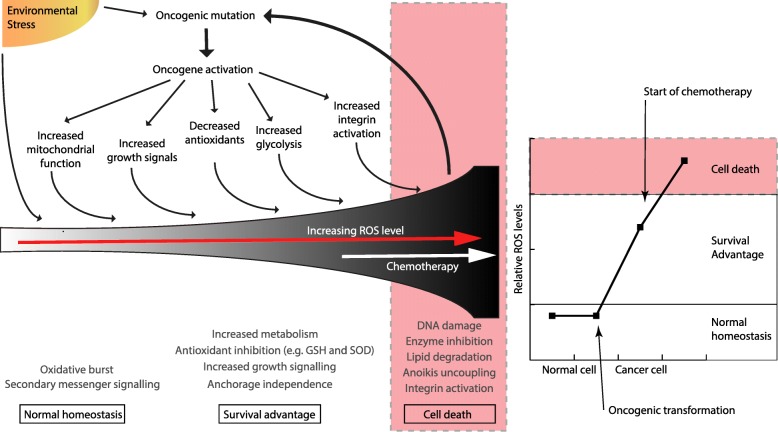
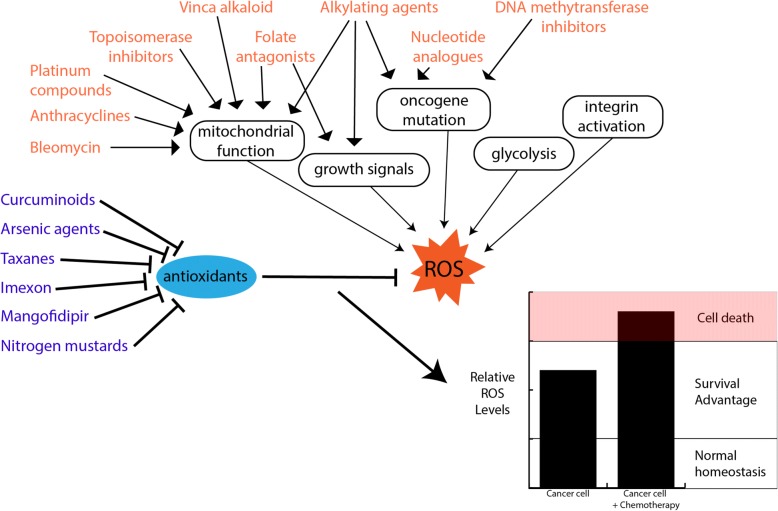
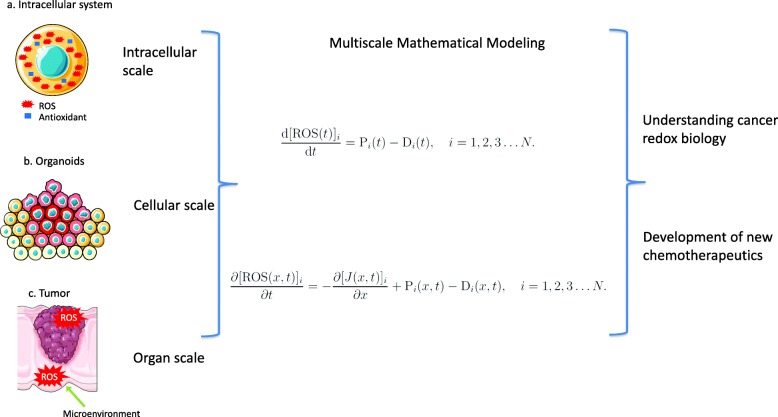
Most chemotherapeutics elevate intracellular levels of reactive oxygen species (ROS), and many can alter redox-homeostasis of cancer cells. It is widely accepted that the anticancer effect of these chemotherapeutics is due to the induction of oxidative stress and ROS-mediated cell injury in cancer. However, various new therapeutic approaches targeting intracellular ROS levels have yielded mixed results. Since it is impossible to quantitatively detect dynamic ROS levels in tumors during and after chemotherapy in clinical settings, it is of increasing interest to apply mathematical modeling techniques to predict ROS levels for understanding complex tumor biology during chemotherapy. This review outlines the current understanding of the role of ROS in cancer cells during carcinogenesis and during chemotherapy, provides a critical analysis of the methods used for quantitative ROS detection and discusses the application of mathematical modeling in predicting treatment responses. Finally, we provide insights on and perspectives for future development of effective therapeutic ROS-inducing anticancer agents or antioxidants for cancer treatment.
Overview
The claims and statistics of this paper haven’t been checked yet.
Free: it reads the open-access text and checks the first 5 claims that cite a source we can check. Create a free account to check every claim.
Integrity signals
Registry
Cites
Statistics
Figures
Verification
Claims the paper makes
The claims and statistics of this paper haven’t been checked yet.
Free: it reads the open-access text and checks the first 5 claims that cite a source we can check. Create a free account to check every claim.
Claims other papers make about this one
Each is checked against this paper’s own text: does it say what the citing paper says it does?
In the citing paper
“Most chemotherapeutic agents produce ROS, and many can alter redox homeostasis in cancer cells.4”
From Reactive Oxygen Species in Cancer: Current Findings and Future Directions (2021) · cites this paper as [4]
Self-check
Percentages, sums and reported differences re-computed from the paper’s own numbers.
The self-check needs the paper’s full text.
Citations
Cites
Ferroptosis: An Iron-Dependent Form of Nonapoptotic Cell Death
Dixon, S. J., Lemberg, K. M., Lamprecht, M. R., Skouta, R., Zaitsev, E. M., Gleason, C. E., Patel, D. N., Bauer, A. J., Cantley, A. M., Yang, W. S., et al. (2012) · Cell · doi:10.1016/j.cell.2012.03.042 · Cited by 18,691
Reactive oxygen species: Metabolism, oxidative stress, and signal transduction
Apel, K., & Hirt, H. (2004) · Annual Review of Plant Biology · doi:10.1146/annurev.arplant.55.031903.141701 · Cited by 11,723
Activation of apoptosis signalling pathways by reactive oxygen species
Redza-Dutordoir, M., & Averill-Bates, D. A. (2016) · Biochimica et Biophysica Acta (BBA) - Molecular Cell Research · doi:10.1016/j.bbamcr.2016.09.012 · Cited by 3,731
Tumour evolution inferred by single-cell sequencing
Navin, N., Kendall, J., Troge, J., Andrews, P., Rodgers, L., McIndoo, J., Cook, K., Stepansky, A., Levy, D., Esposito, D., et al. (2011) · Nature · doi:10.1038/nature09807 · Cited by 2,598
Halliwell, B., & Whiteman, M. (2004) · British Journal of Pharmacology · doi:10.1038/sj.bjp.0705776 · Cited by 2,238
Antioxidants Maintain Cellular Redox Homeostasis by Elimination of Reactive Oxygen Species
He, L., He, T., Farrar, S., Ji, L., Liu, T., & Ma, X. (2017) · Cellular Physiology and Biochemistry · doi:10.1159/000485089 · Cited by 2,127
ROS stress in cancer cells and therapeutic implications
Pelicano, H., Carney, D., & Huang, P. (2004) · Drug Resistance Updates · doi:10.1016/j.drup.2004.01.004 · Cited by 2,006
Mitochondrial metabolism and ROS generation are essential for Kras-mediated tumorigenicity
Weinberg, F., Hamanaka, R., Wheaton, W. W., Weinberg, S., Joseph, J., Lopez, M., Kalyanaraman, B., Mutlu, G. M., Budinger, G. R. S., & Chandel, N. S. (2010) · Proceedings of the National Academy of Sciences · doi:10.1073/pnas.1003428107 · Cited by 1,742
Free-radical chemistry of cigarette smoke and its toxicological implications.
Church, D. F., & Pryor, W. A. (1985) · Environmental Health Perspectives · doi:10.1289/ehp.8564111 · Cited by 1,441
Oxidative stress inhibits distant metastasis by human melanoma cells
Piskounova, E., Agathocleous, M., Murphy, M. M., Hu, Z., Huddlestun, S. E., Zhao, Z., Leitch, A. M., Johnson, T. M., DeBerardinis, R. J., & Morrison, S. J. (2015) · Nature · doi:10.1038/nature15726 · Cited by 1,269
Antioxidant and oncogene rescue of metabolic defects caused by loss of matrix attachment
Schafer, Z. T., Grassian, A. R., Song, L., Jiang, Z., Gerhart-Hines, Z., Irie, H. Y., Gao, S., Puigserver, P., & Brugge, J. S. (2009) · Nature · doi:10.1038/nature08268 · Cited by 1,031
Redox- and non-redox-metal-induced formation of free radicals and their role in human disease
Valko, M., Jomova, K., Rhodes, C. J., Kuča, K., & Musílek, K. (2016) · Archives of Toxicology · doi:10.1007/s00204-015-1579-5 · Cited by 1,022
Hanson, G. T., Aggeler, R., Oglesbee, D., Cannon, M., Capaldi, R. A., Tsien, R. Y., & Remington, S. J. (2004) · Journal of Biological Chemistry · doi:10.1074/jbc.m312846200 · Cited by 988 · cited 2×
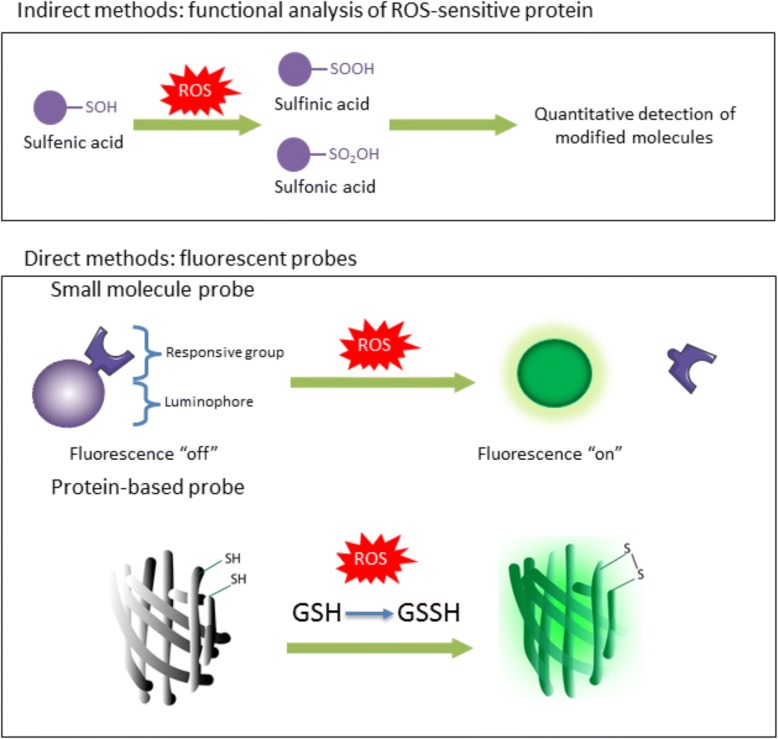
“Protein based probes have also been developed based on fluorescent proteins modified for redox sensitivity, the main benefits being these probes can be genetically-encoded such that they are targeted to specific cellular compartments to detect any spatiotemporal ROS changes [60, 61].”
Backgroundc-Myc Can Induce DNA Damage, Increase Reactive Oxygen Species, and Mitigate p53 Function
Vafa, O., Wade, M., Kern, S., Beeche, M., Pandita, T. K., Hampton, G. M., & Wahl, G. M. (2002) · Molecular Cell · doi:10.1016/s1097-2765(02)00520-8 · Cited by 876
Antioxidants Accelerate Lung Cancer Progression in Mice
Sayin, V. I., Ibrahim, M. X., Larsson, E., Nilsson, J. A., Lindahl, P., & Bergo, M. O. (2014) · Science Translational Medicine · doi:10.1126/scitranslmed.3007653 · Cited by 867
Cancer cell killing via ROS: To increase or decrease, that is the question
Wang, J., & Yi, J. (2008) · Cancer Biology & Therapy · doi:10.4161/cbt.7.12.7067 · Cited by 790
Marullo, R., Werner, E., Degtyareva, N., Moore, B., Altavilla, G., Ramalingam, S. S., & Doetsch, P. W. (2013) · PLoS ONE · doi:10.1371/journal.pone.0081162 · Cited by 777
Chemotherapy-Associated Oxidative Stress: Impact on Chemotherapeutic Effectiveness
Conklin, K. A. (2004) · Integrative Cancer Therapies · doi:10.1177/1534735404270335 · Cited by 752
Mechanisms of free radical-induced damage to DNA
Dizdaroglu, M., & Jaruga, P. (2012) · Free Radical Research · doi:10.3109/10715762.2011.653969 · Cited by 738
Oxidative mechanism of arsenic toxicity and carcinogenesis
Shi, H., Shi, X., & Liu, K. J. (2004) · Molecular and Cellular Biochemistry · doi:10.1023/b:mcbi.0000007262.26044.e8 · Cited by 684
Mouret, S., Baudouin, C., Charveron, M., Favier, A., Cadet, J., & Douki, T. (2006) · Proceedings of the National Academy of Sciences · doi:10.1073/pnas.0604213103 · Cited by 684
Suppression of anoikis and induction of metastasis by the neurotrophic receptor TrkB
Douma, S., van Laar, T., Zevenhoven, J., Meuwissen, R., van Garderen, E., & Peeper, D. S. (2004) · Nature · doi:10.1038/nature02765 · Cited by 607
ROS in Cancer: The Burning Question
Chio, I. I. C., & Tuveson, D. A. (2017) · Trends in Molecular Medicine · doi:10.1016/j.molmed.2017.03.004 · Cited by 532
Quantifying changes in the thiol redox proteome upon oxidative stress in vivo
Leichert, L. I., Gehrke, F., Gudiseva, H. V., Blackwell, T., Ilbert, M., Walker, A. K., Strahler, J. R., Andrews, P. C., & Jakob, U. (2008) · Proceedings of the National Academy of Sciences · doi:10.1073/pnas.0707723105 · Cited by 519
Kim, Y.-S., Morgan, M. J., Choksi, S., & Liu, Z.-G. (2007) · Molecular Cell · doi:10.1016/j.molcel.2007.04.021 · Cited by 519
Jiao, X., Li, Y., Niu, J., Xie, X., Wang, X., & Tang, B. (2018) · Analytical Chemistry · doi:10.1021/acs.analchem.7b04234 · Cited by 484
Mechanism of apoptosis induced by doxorubicin through the generation of hydrogen peroxide
Mizutani, H., Tada-Oikawa, S., Hiraku, Y., Kojima, M., & Kawanishi, S. (2005) · Life Sciences · doi:10.1016/j.lfs.2004.05.040 · Cited by 472
Reactive oxygen species as essential mediators of cell adhesion
Chiarugi, P., Pani, G., Giannoni, E., Taddei, L., Colavitti, R., Raugei, G., Symons, M., Borrello, S., Galeotti, T., & Ramponi, G. (2003) · The Journal of Cell Biology · doi:10.1083/jcb.200211118 · Cited by 444
Breast Tumor Heterogeneity: Cancer Stem Cells or Clonal Evolution?
Campbell, L. L., & Polyak, K. (2007) · Cell Cycle · doi:10.4161/cc.6.19.4914 · Cited by 416
Shedding light on disulfide bond formation: engineering a redox switch in green fluorescent protein
Ostergaard, H. (2001) · The EMBO Journal · doi:10.1093/emboj/20.21.5853 · Cited by 333
DNA damage-induced reactive oxygen species (ROS) stress response in Saccharomyces cerevisiae
Rowe, L. A., Degtyareva, N., & Doetsch, P. W. (2008) · Free Radical Biology and Medicine · doi:10.1016/j.freeradbiomed.2008.07.018 · Cited by 330
Sallmyr, A., Fan, J., Datta, K., Kim, K.-T., Grosu, D., Shapiro, P., Small, D., & Rassool, F. (2008) · Blood · doi:10.1182/blood-2007-05-092510 · Cited by 318
Dissecting Redox Biology Using Fluorescent Protein Sensors
Schwarzländer, M., Dick, T. P., Meyer, A. J., & Morgan, B. (2016) · Antioxidants & Redox Signaling · doi:10.1089/ars.2015.6266 · Cited by 304
Tanaka, H., Matsumura, I., Ezoe, S., Satoh, Y., Sakamaki, T., Albanese, C., Machii, T., Pestell, R. G., & Kanakura, Y. (2002) · Molecular Cell · doi:10.1016/s1097-2765(02)00522-1 · Cited by 291
The Roles of ROS in Cancer Heterogeneity and Therapy
de Sá Junior, P. L., Câmara, D. A. D., Porcacchia, A. S., Fonseca, P. M. M., Jorge, S. D., Araldi, R. P., & Ferreira, A. K. (2017) · Oxidative Medicine and Cellular Longevity · doi:10.1155/2017/2467940 · Cited by 287
NRF2 activation by antioxidant antidiabetic agents accelerates tumor metastasis
Wang, H., Liu, X., Long, M., Huang, Y., Zhang, L., Zhang, R., Zheng, Y., Liao, X., Wang, Y., Liao, Q., et al. (2016) · Science Translational Medicine · doi:10.1126/scitranslmed.aad6095 · Cited by 286
Self-citationClinical trials of antioxidants as cancer prevention agents: Past, present, and future
Goodman, M., Bostick, R. M., Kucuk, O., & Jones, D. P. (2011) · Free Radical Biology and Medicine · doi:10.1016/j.freeradbiomed.2011.05.018 · Cited by 255
A threshold concept for cancer therapy
Kong, Q., Beel, J. A., & Lillehei, K. O. (2000) · Medical Hypotheses · doi:10.1054/mehy.1999.0982 · Cited by 250
Mitochondrial ROS generation for regulation of autophagic pathways in cancer
Li, Z.-Y., Yang, Y., Ming, M., & Liu, B. (2011) · Biochemical and Biophysical Research Communications · doi:10.1016/j.bbrc.2011.09.046 · Cited by 235
Chou, W.-C., Jie, C., Kenedy, A. A., Jones, R. J., Trush, M. A., & Dang, C. V. (2004) · Proceedings of the National Academy of Sciences · doi:10.1073/pnas.0306687101 · Cited by 234
Alexandre, J., Nicco, C., Chéreau, C., Laurent, A., Weill, B., Goldwasser, F., & Batteux, F. (2006) · JNCI: Journal of the National Cancer Institute · doi:10.1093/jnci/djj049 · Cited by 199
Genetically encoded fluorescent redox sensors
Lukyanov, K. A., & Belousov, V. V. (2014) · Biochimica et Biophysica Acta (BBA) - General Subjects · doi:10.1016/j.bbagen.2013.05.030 · Cited by 198
Reactive Oxygen Species Regulate Hypoxia-Inducible Factor 1α Differentially in Cancer and Ischemia
Qutub, A. A., & Popel, A. S. (2008) · Molecular and Cellular Biology · doi:10.1128/mcb.00060-08 · Cited by 191
Global proteomic assessment of the classical protein-tyrosine phosphatome and “Redoxome”
Karisch, R., Fernandez, M., Taylor, P., Virtanen, C., St-Germain, J. R., Jin, L. L., Harris, I. S., Mori, J., Mak, T. W., Senis, Y. A., et al. (2011) · Cell · doi:10.1016/j.cell.2011.07.020 · Cited by 179
Xiao, D., Powolny, A. A., Moura, M. B., Kelley, E. E., Bommareddy, A., Kim, S.-H., Hahm, E.-R., Normolle, D., Van Houten, B., & Singh, S. V. (2010) · Journal of Biological Chemistry · doi:10.1074/jbc.m109.063255 · Cited by 176
Yen, Y.-P., Tsai, K.-S., Chen, Y.-W., Huang, C.-F., Yang, R.-S., & Liu, S.-H. (2012) · Archives of Toxicology · doi:10.1007/s00204-012-0864-9 · Cited by 164
Zhang, F., Liang, X., Zhang, W., Wang, Y., Wang, H., Mohammed, Y., Song, B., Zhang, R., & Yuan, J. (2016) · Biosensors and Bioelectronics · doi:10.1016/j.bios.2016.09.067 · Cited by 140
Self-citationAzimi, I., Petersen, R. M., Thompson, E. W., Roberts-Thomson, S. J., & Monteith, G. R. (2017) · Scientific Reports · doi:10.1038/s41598-017-15474-7 · Cited by 137
Redox Control of Leukemia: From Molecular Mechanisms to Therapeutic Opportunities
Irwin, M. E., Rivera-Del Valle, N., & Chandra, J. (2013) · Antioxidants & Redox Signaling · doi:10.1089/ars.2011.4258 · Cited by 136
Xiao, Y., Zhang, R., Ye, Z., Dai, Z., An, H., & Yuan, J. (2012) · Analytical Chemistry · doi:10.1021/ac3028189 · Cited by 132
Dikalov, S. I., Polienko, Y. F., & Kirilyuk, I. (2018) · Antioxidants & Redox Signaling · doi:10.1089/ars.2017.7396 · Cited by 120
Reactive oxygen species in haematopoiesis: leukaemic cells take a walk on the wild side
Prieto-Bermejo, R., Romo-González, M., Pérez-Fernández, A., Ijurko, C., & Hernández-Hernández, Á. (2018) · Journal of Experimental & Clinical Cancer Research · doi:10.1186/s13046-018-0797-0 · Cited by 119
Quantifying the roles of cell motility and cell proliferation in a circular barrier assay
Simpson, M. J., Treloar, K. K., Binder, B. J., Haridas, P., Manton, K. J., Leavesley, D. I., McElwain, D. L. S., & Baker, R. E. (2013) · Journal of The Royal Society Interface · doi:10.1098/rsif.2013.0007 · Cited by 117
Self-citationParadoxical action of reactive oxygen species in creation and therapy of cancer
Kardeh, S., Ashkani‐Esfahani, S., & Alizadeh, A. M. (2014) · European Journal of Pharmacology · doi:10.1016/j.ejphar.2014.04.023 · Cited by 101
Bioluminescent Probe for Hydrogen Peroxide Imaging in Vitro and in Vivo
Wu, W., Li, J., Chen, L., Ma, Z., Zhang, W., Liu, Z., Cheng, Y., Du, L., & Li, M. (2014) · Analytical Chemistry · doi:10.1021/ac502396g · Cited by 99
Looking inside an invasion wave of cells using continuum models: Proliferation is the key
Simpson, M. J., Landman, K. A., Hughes, B. D., & Newgreen, D. F. (2006) · Journal of Theoretical Biology · doi:10.1016/j.jtbi.2006.06.021 · Cited by 92
Self-citationLi, X., Wang, H., Wang, J., Chen, Y., Yin, X., Shi, G., Li, H., Hu, Z., & Liang, X. (2016) · BMC Cancer · doi:10.1186/s12885-016-2640-3 · Cited by 87
Self-citationVanadium‐induced apoptosis and pulmonary inflammation in mice: Role of reactive oxygen species
Wang, L., Medan, D., Mercer, R., Overmiller, D., Leornard, S., Castranova, V., Shi, X., Ding, M., Huang, C., & Rojanasakul, Y. (2003) · Journal of Cellular Physiology · doi:10.1002/jcp.10232 · Cited by 86
Li, X., Dong, Y., Wang, W., Wang, H., Chen, Y., Shi, G., Yi, J., & Wang, J. (2012) · Stem Cells and Development · doi:10.1089/scd.2011.0709 · Cited by 80
Self-citationNew tools for redox biology: From imaging to manipulation
Bilan, D. S., & Belousov, V. V. (2016) · Free Radical Biology and Medicine · doi:10.1016/j.freeradbiomed.2016.12.004 · Cited by 75
Takeuchi, T., Nakajima, M., & Morimoto, K. (1996) · Carcinogenesis · doi:10.1093/carcin/17.8.1543 · Cited by 74
In Vivo EPR Imaging of the Distribution and Metabolism of Nitroxide Radicals in Human Skin
He, G., Samouilov, A., Kuppusamy, P., & Zweier, J. L. (2001) · Journal of Magnetic Resonance · doi:10.1006/jmre.2000.2226 · Cited by 72
Haridas, P., McGovern, J. A., McElwain, S. D. L., & Simpson, M. J. (2017) · PeerJ · doi:10.7717/peerj.3754 · Cited by 65
Self-citationPhase I Trial of Imexon in Patients With Advanced Malignancy
Dragovich, T., Gordon, M., Mendelson, D., Wong, L., Modiano, M., Chow, H.-H. S., Samulitis, B., O'Day, S., Grenier, K., Hersh, E., et al. (2007) · Journal of Clinical Oncology · doi:10.1200/jco.2006.08.9672 · Cited by 56
Haridas, P., Penington, C. J., McGovern, J., McElwain, D. L. S., & Simpson, M. J. (2017) · Journal of Theoretical Biology · doi:10.1016/j.jtbi.2017.04.017 · Cited by 55
Self-citationMaiti, A. K. (2009) · The Pharmacogenomics Journal · doi:10.1038/tpj.2009.49 · Cited by 54
Cao, L., Xu, X., Cao, L. L., Wang, R.-H., Coumoul, X., Kim, S. S., & Deng, C.-X. (2007) · Carcinogenesis · doi:10.1093/carcin/bgm060 · Cited by 54
Two-photon dual imaging platform for in vivo monitoring cellular oxidative stress in liver injury
Wang, H., Zhang, R., Bridle, K. R., Jayachandran, A., Thomas, J. A., Zhang, W., Yuan, J., Xu, Z. P., Crawford, D. H., Liang, X., et al. (2017) · Scientific Reports · doi:10.1038/srep45374 · Cited by 50
Self-citationMolavian, H. R., Goldman, A. J., Phipps, C. J., Kohandel, M., Wouters, B. G., Sengupta, S., & Sivaloganathan, S. (2016) · Scientific Reports · doi:10.1038/srep27439 · Cited by 49
Wang, H., Li, X., Chen, T., Wang, W., Liu, Q., Li, H., Yi, J., & Wang, J. (2012) · Oncology Reports · doi:10.3892/or.2012.2156 · Cited by 43
Self-citationCaia, G. L., Efimova, O. V., Velayutham, M., El‐Mahdy, M. A., Abdelghany, T. M., Kesselring, E., Petryakov, S. V., Sun, Z., Samouilov, A., & Zweier, J. L. (2011) · Journal of Magnetic Resonance · doi:10.1016/j.jmr.2011.10.017 · Cited by 34
Chen, D., Bobko, A. A., Gross, A. C., Evans, R., Marsh, C. B., Khramtsov, V. V., Eubank, T. D., & Friedman, A. (2014) · PLoS ONE · doi:10.1371/journal.pone.0107511 · Cited by 31
Li, C., Wang, S., Huang, Y., Wen, Q., Wang, L., & Kan, Y. (2014) · Dalton Transactions · doi:10.1039/c3dt53498g · Cited by 30
Visualization of reactive oxygen species formation by phagocytizing macrophages
Peskin, A. V., Khramtsov, A., Ia, M., Zemskov, V. M., & Zbarsky, I. B. (1984) · Experimental Cell Research · doi:10.1016/0014-4827(84)90372-0 · Cited by 9
Visualization and Modeling of the In Vivo Distribution of Mesenchymal Stem Cells
Wang, H., Thorling, C. A., Xu, Z. P., Crawford, D. H., Liang, X., Liu, X., & Roberts, M. S. (2017) · Current Protocols in Stem Cell Biology · doi:10.1002/cpsc.39 · Cited by 4
Self-citation
Cited by
Reactive oxygen species (ROS) as pleiotropic physiological signalling agents
Sies, H., & Jones, D. P. (2020) · Nature Reviews Molecular Cell Biology · doi:10.1038/s41580-020-0230-3 · Cited by 5,335
Role of Reactive Oxygen Species in Cancer Progression: Molecular Mechanisms and Recent Advancements
Aggarwal, V., Tuli, H., Varol, A., Thakral, F., Yerer, M., Sak, K., Varol, M., Jain, A., Khan, M., & Sethi, G. (2019) · Biomolecules · doi:10.3390/biom9110735 · Cited by 1,221
Reactive Oxygen Species in Cancer: Current Findings and Future Directions
Nakamura, H., & Takada, K. (2021) · Cancer Science · doi:10.1111/cas.15068 · Cited by 1,027
The multi-factorial nature of clinical multidrug resistance in cancer
Assaraf, Y. G., Brozovic, A., Gonçalves, A. C., Jurkovicova, D., Linē, A., Machuqueiro, M., Saponara, S., Sarmento-Ribeiro, A. B., Xavier, C. P. R., & Vasconcelos, M. H. (2019) · Drug Resistance Updates · doi:10.1016/j.drup.2019.100645 · Cited by 528
The multifaceted role of reactive oxygen species in tumorigenesis
Kirtonia, A., Sethi, G., & Garg, M. (2020) · Cellular and Molecular Life Sciences · doi:10.1007/s00018-020-03536-5 · Cited by 452
Metadata
- Authors
- Yang, H., Villani, R. M., Wang, H., Simpson, M. J., Roberts, M. S., Tang, M., & Liang, X.
- Affiliations
- Translational Research Institute (AU)
- Queensland University of Technology (AU)
- Shanghai Jiao Tong University (CN)
- Corresponding author
- Liang, Xiaowen
- ORCID
- Venue
- Journal of Experimental & Clinical Cancer Research
- Published
- 2018-11-01
- Volume
- 37
- Issue
- 1
- Pages
- 266-266
- ISSN
- 0392-9078 (ISSN-L)
- 1756-9966
- PMC
- PMC6211502
- OpenAlex
- W2898994124
- Cited by
- 794
- References
- 75
- Citations by year
- 2026: 59 · 2025: 89 · 2024: 111 · 2023: 103 · 2022: 130 · 2021: 145 · 2020: 110 · 2019: 45
- FWCI
- 7.32
- Type
- journal article
- Language
- en
- Open access
- gold
- doi.org
- Licence
- cc-by
- creativecommons.org/licenses/by/4.0/ (tdm)
- Locations
- Journal of Experimental & Clinical Cancer Research (publishedVersion, cc-by)
- Europe PMC (PubMed Central) (publishedVersion, cc-by)
- PubMed Central (publishedVersion, cc-by)
- PubMed (publishedVersion)
- DOAJ (DOAJ: Directory of Open Access Journals) (submittedVersion, cc-by-sa)
- QUT ePrints (Queensland University of Technology) (submittedVersion, cc-by)
- Funders
- Medical Research Council
- Australian Research Council (DP170100474)
- National Health and Medical Research Council (1125794)
- Topics
- Life Sciences › Biochemistry, Genetics and Molecular Biology › Molecular Biology › Redox biology and oxidative stress
- Life Sciences › Biochemistry, Genetics and Molecular Biology › Molecular Biology › Cancer and biochemical research
- Life Sciences › Pharmacology, Toxicology and Pharmaceutics › Toxicology › Bioactive Compounds and Antitumor Agents
- Keywords
- reactive oxygen species, cancer chemotherapy, oxidative stress, redox homeostasis, treatment response prediction, antioxidants, carcinogenesis
- MeSH terms
- Humans, Neoplasms, Reactive Oxygen Species, Oxidative Stress
About these checks
Registry, retraction, Cites and statistics results are computed, not judged, with one exception: a printed reference that no index lists is read once by a model before it counts as a citation error. Claims are extracted by a model and kept only when their quote appears verbatim in the text; each cited source is then checked, with a model’s help, for whether it says what the claim relies on. Those verdicts can be wrong — read the claim’s quote and the cited source before relying on one.
Statistics and arithmetic are recomputed, not judged.
Confidence bands are shown only for fields calibrated on our annotated test set. None is calibrated yet, so no band is shown.
What counts as a claim ›How we measure confidence ›How we check this ›
Are you an author, or do you see a problem with this page? Request a review
Data sources
Bibliographic data: Semantic Scholar, OpenAlex, Crossref.
Contains information from the Semantic Scholar Academic Graph Datasets, made available under the ODC Attribution License (ODC-BY 1.0).
Semantic Scholar’s data is described in: Kinney, R., et al. (2023). The Semantic Scholar Open Data Platform. arXiv:2301.10140.
