

The role of cellular reactive oxygen species in cancer chemotherapy
Open accessThe DOI matches its Crossref record; 75 of the 75 references it cites were found in a registry or an index.
Abstract
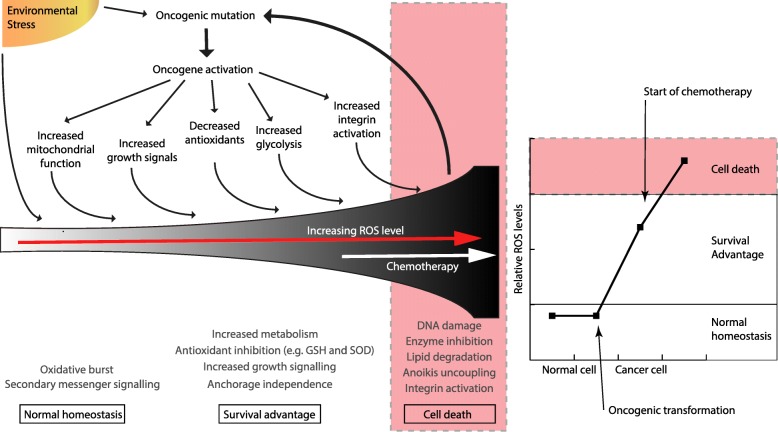
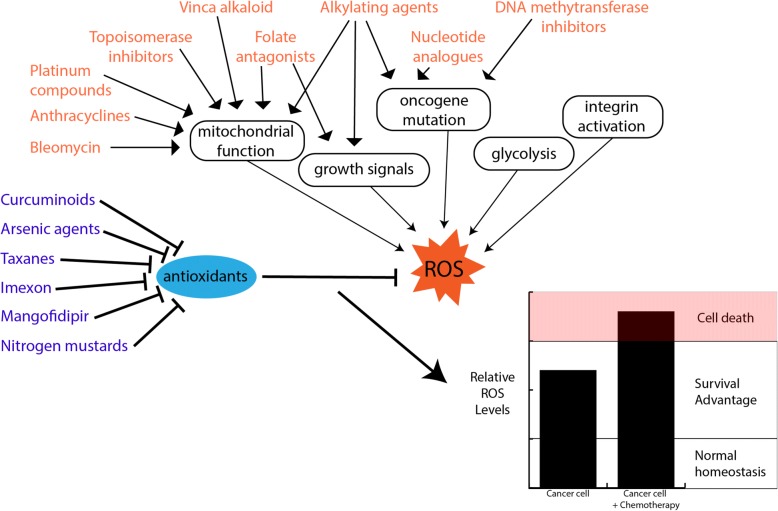
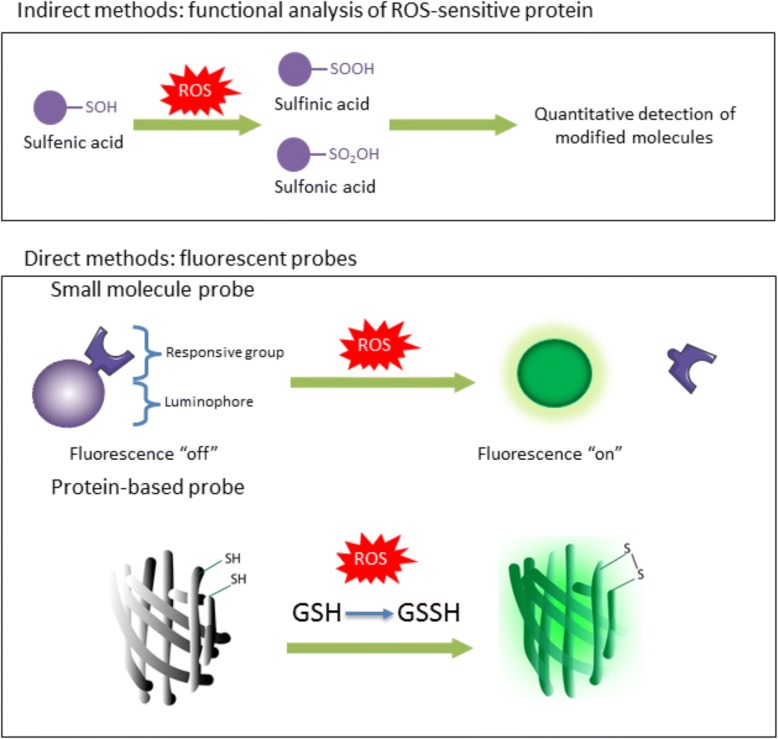
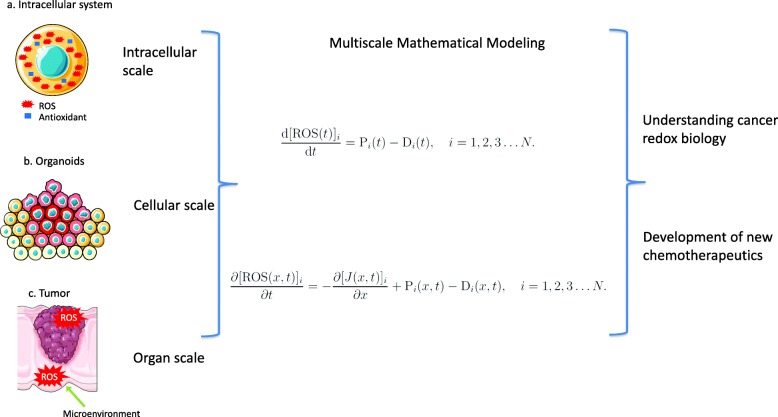
Most chemotherapeutics elevate intracellular levels of reactive oxygen species (ROS), and many can alter redox-homeostasis of cancer cells. It is widely accepted that the anticancer effect of these chemotherapeutics is due to the induction of oxidative stress and ROS-mediated cell injury in cancer. However, various new therapeutic approaches targeting intracellular ROS levels have yielded mixed results. Since it is impossible to quantitatively detect dynamic ROS levels in tumors during and after chemotherapy in clinical settings, it is of increasing interest to apply mathematical modeling techniques to predict ROS levels for understanding complex tumor biology during chemotherapy. This review outlines the current understanding of the role of ROS in cancer cells during carcinogenesis and during chemotherapy, provides a critical analysis of the methods used for quantitative ROS detection and discusses the application of mathematical modeling in predicting treatment responses. Finally, we provide insights on and perspectives for future development of effective therapeutic ROS-inducing anticancer agents or antioxidants for cancer treatment.
Overview
The claims and statistics of this paper haven’t been checked yet.
Free: it reads the open-access text and checks the first 5 claims that cite a source we can check. Create a free account to check every claim.
Integrity signals
Registry
Cites
Statistics
Figures
Verification
Claims the paper makes
The claims and statistics of this paper haven’t been checked yet.
Free: it reads the open-access text and checks the first 5 claims that cite a source we can check. Create a free account to check every claim.
Claims other papers make about this one
Each is checked against this paper’s own text: does it say what the citing paper says it does?
In the citing paper
“Most chemotherapeutic agents produce ROS, and many can alter redox homeostasis in cancer cells.4”
From Reactive Oxygen Species in Cancer: Current Findings and Future Directions (2021) · cites this paper as [4]
Self-check
Percentages, sums and reported differences re-computed from the paper’s own numbers.
The self-check needs the paper’s full text.
Citations
Cites
Ferroptosis: An Iron-Dependent Form of Nonapoptotic Cell Death
Dixon, S. J., Lemberg, K. M., Lamprecht, M. R., Skouta, R., Zaitsev, E. M., Gleason, C. E., Patel, D. N., Bauer, A. J., Cantley, A. M., Yang, W. S., et al. (2012) · Cell · doi:10.1016/j.cell.2012.03.042 · Cited by 18,691
Reactive oxygen species: Metabolism, oxidative stress, and signal transduction
Apel, K., & Hirt, H. (2004) · Annual Review of Plant Biology · doi:10.1146/annurev.arplant.55.031903.141701 · Cited by 11,723
Activation of apoptosis signalling pathways by reactive oxygen species
Redza-Dutordoir, M., & Averill-Bates, D. A. (2016) · Biochimica et Biophysica Acta (BBA) - Molecular Cell Research · doi:10.1016/j.bbamcr.2016.09.012 · Cited by 3,731
Tumour evolution inferred by single-cell sequencing
Navin, N., Kendall, J., Troge, J., Andrews, P., Rodgers, L., McIndoo, J., Cook, K., Stepansky, A., Levy, D., Esposito, D., et al. (2011) · Nature · doi:10.1038/nature09807 · Cited by 2,598
Halliwell, B., & Whiteman, M. (2004) · British Journal of Pharmacology · doi:10.1038/sj.bjp.0705776 · Cited by 2,238
Antioxidants Maintain Cellular Redox Homeostasis by Elimination of Reactive Oxygen Species
He, L., He, T., Farrar, S., Ji, L., Liu, T., & Ma, X. (2017) · Cellular Physiology and Biochemistry · doi:10.1159/000485089 · Cited by 2,127
ROS stress in cancer cells and therapeutic implications
Pelicano, H., Carney, D., & Huang, P. (2004) · Drug Resistance Updates · doi:10.1016/j.drup.2004.01.004 · Cited by 2,006
Mitochondrial metabolism and ROS generation are essential for Kras-mediated tumorigenicity
Weinberg, F., Hamanaka, R., Wheaton, W. W., Weinberg, S., Joseph, J., Lopez, M., Kalyanaraman, B., Mutlu, G. M., Budinger, G. R. S., & Chandel, N. S. (2010) · Proceedings of the National Academy of Sciences · doi:10.1073/pnas.1003428107 · Cited by 1,742
Free-radical chemistry of cigarette smoke and its toxicological implications.
Church, D. F., & Pryor, W. A. (1985) · Environmental Health Perspectives · doi:10.1289/ehp.8564111 · Cited by 1,441
Oxidative stress inhibits distant metastasis by human melanoma cells
Piskounova, E., Agathocleous, M., Murphy, M. M., Hu, Z., Huddlestun, S. E., Zhao, Z., Leitch, A. M., Johnson, T. M., DeBerardinis, R. J., & Morrison, S. J. (2015) · Nature · doi:10.1038/nature15726 · Cited by 1,269
Cited by
Reactive oxygen species (ROS) as pleiotropic physiological signalling agents
Sies, H., & Jones, D. P. (2020) · Nature Reviews Molecular Cell Biology · doi:10.1038/s41580-020-0230-3 · Cited by 5,335
Role of Reactive Oxygen Species in Cancer Progression: Molecular Mechanisms and Recent Advancements
Aggarwal, V., Tuli, H., Varol, A., Thakral, F., Yerer, M., Sak, K., Varol, M., Jain, A., Khan, M., & Sethi, G. (2019) · Biomolecules · doi:10.3390/biom9110735 · Cited by 1,221
Reactive Oxygen Species in Cancer: Current Findings and Future Directions
Nakamura, H., & Takada, K. (2021) · Cancer Science · doi:10.1111/cas.15068 · Cited by 1,027
The multi-factorial nature of clinical multidrug resistance in cancer
Assaraf, Y. G., Brozovic, A., Gonçalves, A. C., Jurkovicova, D., Linē, A., Machuqueiro, M., Saponara, S., Sarmento-Ribeiro, A. B., Xavier, C. P. R., & Vasconcelos, M. H. (2019) · Drug Resistance Updates · doi:10.1016/j.drup.2019.100645 · Cited by 528
The multifaceted role of reactive oxygen species in tumorigenesis
Kirtonia, A., Sethi, G., & Garg, M. (2020) · Cellular and Molecular Life Sciences · doi:10.1007/s00018-020-03536-5 · Cited by 452
The interplay of ROS and the PI3K/Akt pathway in autophagy regulation
Kma, L., & Baruah, T. J. (2022) · Biotechnology and Applied Biochemistry · doi:10.1002/bab.2104 · Cited by 394
Therapy resistance: opportunities created by adaptive responses to targeted therapies in cancer
Labrie, M., Brugge, J. S., Mills, G. B., & Zervantonakis, I. K. (2022) · Nature Reviews Cancer · doi:10.1038/s41568-022-00454-5 · Cited by 369
Apoptosis Deregulation and the Development of Cancer Multi-Drug Resistance
Neophytou, C. M., Trougakos, I. P., Erin, N., & Papageorgis, P. (2021) · Cancers · doi:10.3390/cancers13174363 · Cited by 371
Understanding the tumor microenvironment for effective immunotherapy
Sadeghi Rad, H., Monkman, J., Warkiani, M. E., Ladwa, R., O'Byrne, K., Rezaei, N., & Kulasinghe, A. (2021) · Medicinal Research Reviews · doi:10.1002/med.21765 · Cited by 334
“oxidants and antioxidants to become resistant to chemotherapeutic agents that elicit cancer cell cytotoxicity through the generation of oxidants.(11,14,16) Therefore, for anticancer drugs to be effective, the extent of oxidant‐ or”
BackgroundAntioxidant Functionalized Nanoparticles: A Combat against Oxidative Stress
Kumar, H., Bhardwaj, K., Nepovimova, E., Kuča, K., Singh Dhanjal, D., Bhardwaj, S., Bhatia, S. K., Verma, R., & Kumar, D. (2020) · Nanomaterials · doi:10.3390/nano10071334 · Cited by 331
Cancer Metabolism: The Role of ROS in DNA Damage and Induction of Apoptosis in Cancer Cells
Zhao, Y., Ye, X., Xiong, Z., Ihsan, A., Ares, I., Martínez, M., Lopez-Torres, B., Martínez-Larrañaga, M.-R., Anadón, A., Wang, X., et al. (2023) · Metabolites · doi:10.3390/metabo13070796 · Cited by 323
The Influence of Cell Cycle Regulation on Chemotherapy
Sun, Y., Liu, Y., Ma, X., & Hu, H. (2021) · International Journal of Molecular Sciences · doi:10.3390/ijms22136923 · Cited by 290
Extracellular vesicles: mediators of intercellular communication in tissue injury and disease
Berumen Sánchez, G., Bunn, K. E., Pua, H. H., & Rafat, M. (2021) · Cell Communication and Signaling · doi:10.1186/s12964-021-00787-y · Cited by 289
An efficient method to isolate lemon derived extracellular vesicles for gastric cancer therapy
Yang, M., Liu, X., Luo, Q., Xu, L., & Chen, F. (2020) · Journal of Nanobiotechnology · doi:10.1186/s12951-020-00656-9 · Cited by 287
STAT proteins in cancer: orchestration of metabolism
Li, Y.-J., Zhang, C., Martincuks, A., Herrmann, A., & Yu, H. (2023) · Nature Reviews Cancer · doi:10.1038/s41568-022-00537-3 · Cited by 282
The functional roles of TCA cycle metabolites in cancer
Eniafe, J., & Jiang, S. (2021) · Oncogene · doi:10.1038/s41388-020-01639-8 · Cited by 273
Invasion and metastasis in cancer: molecular insights and therapeutic targets
Li, Y., Liu, F., Cai, Q., Deng, L., Ouyang, Q., Zhang, X. H.-F., & Zheng, J. (2025) · Signal Transduction and Targeted Therapy · doi:10.1038/s41392-025-02148-4 · Cited by 244
“180 Neutrophil accumulation in the lungs precedes signi fi cant tumor cell invasion, and systemic perturbation in myelopoiesis is evident in both mouse models and human BC. 96 In melanoma, factors that inhibit macrophage migration stimulate Kupffer cells to secrete TGF-β , attract bone…”
Naked Selenium Nanoparticles for Antibacterial and Anticancer Treatments
Geoffrion, L. D., Hesabizadeh, T., Medina-Cruz, D., Kusper, M., Taylor, P., Vernet-Crua, A., Chen, J., Ajo, A., Webster, T. J., & Guisbiers, G. (2020) · ACS Omega · doi:10.1021/acsomega.9b03172 · Cited by 218
Opening doors with ultrasound and microbubbles: Beating biological barriers to promote drug delivery
Deprez, J., Lajoinie, G., Engelen, Y., De Smedt, S. C., & Lentacker, I. (2021) · Advanced Drug Delivery Reviews · doi:10.1016/j.addr.2021.02.015 · Cited by 207
The force awakens: metastatic dormant cancer cells
Park, S.-Y., & Nam, J.-S. (2020) · Experimental & Molecular Medicine · doi:10.1038/s12276-020-0423-z · Cited by 205
Molecular and cellular paradigms of multidrug resistance in cancer
Vaidya, F. U., Sufiyan Chhipa, A., Mishra, V., Gupta, V. K., Rawat, S. G., Kumar, A., & Pathak, C. (2022) · Cancer Reports · doi:10.1002/cnr2.1291 · Cited by 197
“However, excess ROS also induce apoptosis and ceases the tumor progression.(156) Therefore, ROS play a dual role in the development and treatment of cancer through regulating several transcription factors such as NF-κB, AP-1, p53, HIF-1α, PPAR-γ, Wnt/ β-catenin, & Nrf2 and enzymes such as superoxide dismutase (SOD), g…”
BackgroundCancer chemotherapy: insights into cellular and tumor microenvironmental mechanisms of action
Tilsed, C. M., Fisher, S. A., Nowak, A. K., Lake, R. A., & Lesterhuis, W. J. (2022) · Frontiers in Oncology · doi:10.3389/fonc.2022.960317 · Cited by 197
“These drugs also have known secondary mechanisms of action, such as effects on mitochondrial biogenesis (22) or the production of reactive oxygen species (32), which contributes to their cytotoxicity (Figure 2B).”
BackgroundMitochondrial Dynamics, ROS, and Cell Signaling: A Blended Overview
Brillo, V., Chieregato, L., Leanza, L., Muccioli, S., & Costa, R. (2021) · Life · doi:10.3390/life11040332 · Cited by 195
Emerging role of NRF2 in ROS-mediated tumor chemoresistance
Xue, D., Zhou, X., & Qiu, J. (2020) · Biomedicine & Pharmacotherapy · doi:10.1016/j.biopha.2020.110676 · Cited by 191
Contact-electro-catalysis (CEC)
Wang, Z., Dong, X., Tang, W., & Wang, Z. L. (2024) · Chemical Society Reviews · doi:10.1039/d3cs00736g · Cited by 179
Targeted Delivery of Drugs and Genes Using Polymer Nanocarriers for Cancer Therapy
Xia, W., Tao, Z., Zhu, B., Zhang, W., Liu, C., Chen, S., & Song, M. (2021) · International Journal of Molecular Sciences · doi:10.3390/ijms22179118 · Cited by 173
Impact of cancer metabolism on therapy resistance – Clinical implications
Gonçalves, A. C., Richiardone, E., Jorge, J., Polónia, B., Xavier, C. P. R., Salaroglio, I. C., Riganti, C., Vasconcelos, M. H., Corbet, C., & Sarmento-Ribeiro, A. B. (2021) · Drug Resistance Updates · doi:10.1016/j.drup.2021.100797 · Cited by 164
Fu, S., Yang, R., Zhang, L., Liu, W., Du, G., Cao, Y., Xu, Z., Cui, H., Kang, Y., & Xue, P. (2020) · Biomaterials · doi:10.1016/j.biomaterials.2020.120279 · Cited by 159
Reactive Oxygen Species and Antitumor Immunity—From Surveillance to Evasion
Kotsafti, A., Scarpa, M., Castagliuolo, I., & Scarpa, M. (2020) · Cancers · doi:10.3390/cancers12071748 · Cited by 152
Duanghathaipornsuk, S., Farrell, E. J., Alba‐Rubio, A. C., Zelenay, P., & Kim, D. (2021) · Biosensors · doi:10.3390/bios11020030 · Cited by 154
Lu, Y., Zhu, J., Zhang, Y., Li, W., Xiong, Y., Fan, Y., Wu, Y., Zhao, J., Shang, C., Liang, H., et al. (2024) · Advanced Science · doi:10.1002/advs.202401399 · Cited by 215
Zhang, J., Simpson, C. M., Berner, J., Chong, H. B., Fang, J., Ordulu, Z., Weiss‐Sadan, T., Possemato, A. P., Harry, S. A., Takahashi, M., et al. (2023) · Cell · doi:10.1016/j.cell.2023.04.026 · Cited by 157
Implications of reactive oxygen species on cancer formation and its treatment
Shah, M. A., & Rogoff, H. A. (2021) · Seminars in Oncology · doi:10.1053/j.seminoncol.2021.05.002 · Cited by 170
Redox-Mediated Mechanism of Chemoresistance in Cancer Cells
Kim, E.-K., Jang, M., Song, M.-J., Kim, D., Kim, Y., & Jang, H. H. (2019) · Antioxidants · doi:10.3390/antiox8100471 · Cited by 141
Bell, C. R., Pelly, V. S., Moeini, A., Chiang, S., Flanagan, E., Bromley, C. P., Clark, C. I., Earnshaw, C. H., Koufaki, M. A., Bonavita, E., et al. (2022) · Nature Communications · doi:10.1038/s41467-022-29606-9 · Cited by 149
Cancer metabolism and tumor microenvironment: fostering each other?
Yuan, Y., Li, H., Wang, P., Chen, L., Guo, D. S., Jiang, H., He, B., Qin, S., Wang, K., Li, N., et al. (2021) · Science China Life Sciences · doi:10.1007/s11427-021-1999-2 · Cited by 144
The Relationship of Redox With Hallmarks of Cancer: The Importance of Homeostasis and Context
Xing, F., Hu, Q., Qin, Y., Xu, J., Zhang, B., Yu, X., & Wang, W. (2022) · Frontiers in Oncology · doi:10.3389/fonc.2022.862743 · Cited by 155
Chang, W., Bow, Y., Fu, P.-J., Li, C., Wu, C., Chang, Y.-H., Teng, Y., Li, R., Lu, M., Liu, Y., et al. (2021) · Oxidative Medicine and Cellular Longevity · doi:10.1155/2021/7689045 · Cited by 145
Metabolic Fitness and Plasticity in Cancer Progression
McGuirk, S., Audet-Delage, Y., & St‐Pierre, J. (2020) · Trends in cancer · doi:10.1016/j.trecan.2019.11.009 · Cited by 143
Ren, Y., Wang, R., Weng, S., Xu, H., Zhang, Y., Chen, S., Liu, S., Ba, Y., Zhou, Z., Luo, P., et al. (2023) · Molecular Cancer · doi:10.1186/s12943-023-01831-w · Cited by 156
Emanuelli, M., Sartini, D., Molinelli, E., Campagna, R., Pozzi, V., Salvolini, E., Simonetti, O., Campanati, A., & Offidani, A. (2022) · Antioxidants · doi:10.3390/antiox11040612 · Cited by 132
“Analogously to other cancer cells, ROS production is boosted in melanoma cells as a consequence of the activation of numerous recognized oncogenes, inactivation of tumor suppressors [51,52], intratumor hypoxia [50,52], impaired integrin signaling [53], and reprogrammed metabolism [50,54].”
BackgroundNanoparticle drug delivery systems for synergistic delivery of tumor therapy
Chen, D., Liu, X., Lu, X., & Tian, J. (2023) · Frontiers in Pharmacology · doi:10.3389/fphar.2023.1111991 · Cited by 184
Pharmacologic management of cognitive impairment induced by cancer therapy
Karschnia, P., Parsons, M. W., & Dietrich, J. (2019) · The Lancet Oncology · doi:10.1016/s1470-2045(18)30938-0 · Cited by 120
Hyaluronan and Reactive Oxygen Species Signaling—Novel Cues from the Matrix?
Berdiaki, A., Neagu, M. T., Spyridaki, I., Николаевич, К. А., Pérez, S., & Nikitovic, D. (2023) · Antioxidants · doi:10.3390/antiox12040824 · Cited by 132
Insights into the role of GPX3, a highly efficient plasma antioxidant, in cancer
Nirgude, S., & Choudhary, B. (2020) · Biochemical Pharmacology · doi:10.1016/j.bcp.2020.114365 · Cited by 140
Cognitive impairment after cancer treatment: mechanisms, clinical characterization, and management
Fleming, B., Edison, P., & Kenny, L. M. (2023) · BMJ · doi:10.1136/bmj-2022-071726 · Cited by 144
Ashrafizadeh, M., Bakhoda, M. R., Bahmanpour, Z., Ilkhani, K., Zarrabi, A., Makvandi, P., Khan, H., Mazaheri, S., Darvish, M., & Mirzaei, H. (2020) · Frontiers in Chemistry · doi:10.3389/fchem.2020.00829 · Cited by 114
Huang, T., Yan, S., Yu, Y., Xue, Y., Yu, Y., & Han, C. (2022) · Analytical Chemistry · doi:10.1021/acs.analchem.1c04729 · Cited by 112
Cao, Y., Wang, J., Tian, H., & Fu, G. (2020) · Journal of Experimental & Clinical Cancer Research · doi:10.1186/s13046-020-01621-y · Cited by 119
The Antioxidant, Anti-Inflammatory and Immunomodulatory Effects of Camel Milk
Behrouz, S., Saadat, S., Memarzia, A., Sarir, H., Folkerts, G., & Boskabady, M. H. (2022) · Frontiers in Immunology · doi:10.3389/fimmu.2022.855342 · Cited by 125
Zhan, M., Ding, Y., Huang, S., Liu, Y., Xiao, J., Yu, H. T., Lu, L., & Wang, X. (2023) · Nature Communications · doi:10.1038/s41467-023-38753-6 · Cited by 117
Alhakamy, N. A., Fahmy, U. A., Badr-Eldin, S. M., Ahmed, O. A. A., Asfour, H. Z., Aldawsari, H. M., Algandaby, M. M., Eid, B. G., Abdel‐Naim, A. B., Awan, Z. A., et al. (2020) · Pharmaceutics · doi:10.3390/pharmaceutics12040346 · Cited by 103
RetractedLoenhout, J. V., Peeters, M., Bogaerts, A., Smits, E., & Deben, C. (2020) · Antioxidants · doi:10.3390/antiox9121188 · Cited by 115
An ecofriendly synthesized gold nanoparticles induces cytotoxicity via apoptosis in HepG2 cells
Nandhini, J. T., Ezhilarasan, D., & Rajeshkumar, S. (2020) · Environmental Toxicology · doi:10.1002/tox.23007 · Cited by 115
Zhao, Y., Liu, J., He, M., Dong, Q., Zhang, L., Xu, Z., Kang, Y., & Xue, P. (2022) · ACS Nano · doi:10.1021/acsnano.2c02540 · Cited by 104
Oxygen-Vacancy Engineering of Cerium-Oxide Nanoparticles for Antioxidant Activity
Gunawan, C., Lord, M. S., Lovell, E. C., Wong, R. J., Jung, M., Oscar, D., Mann, R., & Amal, R. (2019) · ACS Omega · doi:10.1021/acsomega.9b00521 · Cited by 105
Charan, M., Das, S., Mishra, S., Chatterjee, N., Varikuti, S., Kaul, K., Misri, S., Ahirwar, D. K., Satoskar, A. R., & Ganju, R. K. (2020) · Cell Death and Disease · doi:10.1038/s41419-020-02992-y · Cited by 105
Choi, H.-J., Jhe, Y.-L., Kim, J., Lim, J. Y., Lee, J. E., Shin, M., & Cheong, J. (2020) · Redox Biology · doi:10.1016/j.redox.2020.101589 · Cited by 113
Nanoceria: an innovative strategy for cancer treatment
Tang, J., Moonshi, S. S., & Ta, H. T. (2023) · Cellular and Molecular Life Sciences · doi:10.1007/s00018-023-04694-y · Cited by 111
Small‐Molecule Inhibition of Glucose Transporters GLUT‐1–4
Reckzeh, E. S., & Waldmann, H. (2019) · ChemBioChem · doi:10.1002/cbic.201900544 · Cited by 112
İçsel, C., Yılmaz, V. T., Aydınlık, Ş., & Aygün, M. (2020) · European Journal of Medicinal Chemistry · doi:10.1016/j.ejmech.2020.112535 · Cited by 98
Wang, Y., Zhang, J., Ren, S., Sun, D., Huang, H.-Y., Wang, H., Jin, Y., Li, F., Zheng, C., Yang, L., et al. (2019) · Cell Reports · doi:10.1016/j.celrep.2019.06.026 · Cited by 95
Self-citationSelf-triggered thermoelectric nanoheterojunction for cancer catalytic and immunotherapy
Xue, Y., Kang, Y., Dong, J., Li, R., Ye, J., Fan, Y., Han, J., Yu, J., Ni, G., Ji, X., et al. (2023) · Nature Communications · doi:10.1038/s41467-023-40954-y · Cited by 105
Li, H., Yu, Y., Liu, Y., Luo, Z., Law, B. Y. K., Zheng, Y., Huang, X., & Li, W. (2022) · Pharmacological Research · doi:10.1016/j.phrs.2022.106306 · Cited by 99
Exploiting Mitochondrial Vulnerabilities to Trigger Apoptosis Selectively in Cancer Cells
Nguyen, C. C., & Pandey, S. (2019) · Cancers · doi:10.3390/cancers11070916 · Cited by 103
Chien, C.-H., Hsueh, W., Chuang, J., & Chang, K. (2021) · Journal of Biomedical Science · doi:10.1186/s12929-021-00717-7 · Cited by 109
Cognitive adverse effects of chemotherapy and immunotherapy: are interventions within reach?
Schagen, S. B., Tsvetkov, A. S., Compter, A., & Wefel, J. S. (2022) · Nature Reviews Neurology · doi:10.1038/s41582-021-00617-2 · Cited by 110
Khan, M. Z., Xiao, J., Ma, Y., Ma, J., Liu, S., Khan, A. A., Khan, J. M., & Cao, Z. (2021) · Antioxidants · doi:10.3390/antiox10050788 · Cited by 112
Mitochondrial Dysfunction at the Center of Cancer Therapy
Chiu, H. Y., Tay, E. X. Y., Ong, D. S. T., & Taneja, R. (2019) · Antioxidants and Redox Signaling · doi:10.1089/ars.2019.7898 · Cited by 95
Gao, Q., Chen, N., Li, B., Zu, M., Ma, Y., Xu, H., Zhu, Z., Reis, R. L., Kundu, S. C., & Xiao, B. (2024) · Journal of Nanobiotechnology · doi:10.1186/s12951-023-02286-3 · Cited by 100
Song, H., Liu, D., Wang, L., Liu, K., Chen, C., Wang, L., Ren, Y., Ju, B., Zhong, F., Jiang, X., et al. (2022) · Molecular Cancer · doi:10.1186/s12943-022-01519-7 · Cited by 98
Meulmeester, F. L., Luo, J. M., Martens, L. G., Mills, K. A., van Heemst, D., & Noordam, R. (2022) · Antioxidants · doi:10.3390/antiox11122322 · Cited by 113
Serine-dependent redox homeostasis regulates glioblastoma cell survival
Engel, A. L., Lorenz, N. I., Klann, K., Münch, C., Depner, C., Steinbach, J. P., Ronellenfitsch, M. W., & Luger, A.-L. (2020) · British Journal of Cancer · doi:10.1038/s41416-020-0794-x · Cited by 85
Zhang, F., Chen, F., Yang, C., Wang, L., Hu, H., Li, X., Zheng, X., Wang, Z., Chang, Z., Li, T., et al. (2021) · Small · doi:10.1002/smll.202100006 · Cited by 91
The mystery of mitochondria-ER contact sites in physiology and pathology: A cancer perspective
Simões, I. C. M., Morciano, G., Lebiedzińska, M., Aguiari, G., Pinton, P., Potes, Y., & Wieckowski, M. R. (2020) · Biochimica et Biophysica Acta (BBA) - Molecular Basis of Disease · doi:10.1016/j.bbadis.2020.165834 · Cited by 100
Oxidative Stress-Related Mechanisms in Melanoma and in the Acquired Resistance to Targeted Therapies
Pizzimenti, S., Ribero, S., Cucci, M. A., Grattarola, M., Monge, C., Dianzani, C., Barrera, G., & Muzio, G. (2021) · Antioxidants · doi:10.3390/antiox10121942 · Cited by 79
“In terms of internal mechanisms, ROS production is enhanced in cancer cells as a result of the activation of several well-known oncogenes, loss of tumor suppressors [84,85], tumor hypoxia [84,86], altered integrin signaling [87], and reprogrammed metabolism [84,88].”
BackgroundYusupov, M., Privat‐Maldonado, A., Cordeiro, R. M., Verswyvel, H., Shaw, P., Razzokov, J., Smits, E., & Bogaerts, A. (2021) · Redox Biology · doi:10.1016/j.redox.2021.101968 · Cited by 81
Sawma, T., Shaito, A. A., Najm, N., Sidani, M., Orekhov, A. N., EL‐Yazbi, A. F., Iratni, R., & Eid, A. H. (2022) · Atherosclerosis · doi:10.1016/j.atherosclerosis.2022.08.012 · Cited by 83
Tumour Microenvironment Stress Promotes the Development of Drug Resistance
Seebacher, N. A., Krchniaková, M., Stacy, A. E., Skoda, J., & Jansson, P. J. (2021) · Antioxidants · doi:10.3390/antiox10111801 · Cited by 89
Alexa‐Stratulat, T., Pešić, M., Gašparović, A. Č., Trougakos, I. P., & Riganti, C. (2019) · Drug Resistance Updates · doi:10.1016/j.drup.2019.100643 · Cited by 81
Mitochondria: Insights into Crucial Features to Overcome Cancer Chemoresistance
Genovese, I., Carinci, M., Modesti, L., Aguiari, G., Pinton, P., & Giorgi, C. (2021) · International Journal of Molecular Sciences · doi:10.3390/ijms22094770 · Cited by 82
Oxygen vacancy enhanced biomimetic superoxide dismutase activity of CeO2-Gd nanozymes
Shi, X., Yang, J., Wen, X., Tian, F., & Li, C. (2020) · Journal of Rare Earths · doi:10.1016/j.jre.2020.06.019 · Cited by 74
Ren, J., Zhou, J., Liu, H., Jiao, X., Cao, Y., Xu, Z., Kang, Y., & Xue, P. (2021) · Theranostics · doi:10.7150/thno.62984 · Cited by 78
Hyaluronic acid-based nano drug delivery systems for breast cancer treatment: Recent advances
Jia, Y., Chen, S., Wang, C., Sun, T., & Yang, L. (2022) · Frontiers in Bioengineering and Biotechnology · doi:10.3389/fbioe.2022.990145 · Cited by 81
Oxidative Stress Inducers in Cancer Therapy: Preclinical and Clinical Evidence
Nizami, Z. N., Aburawi, H. E., Semlali, A., Muhammad, K., & Iratni, R. (2023) · Antioxidants · doi:10.3390/antiox12061159 · Cited by 85
Recent progress in stimuli-responsive nanosystems for inducing immunogenic cell death
Banstola, A., Poudel, K., Kim, J. O., Jeong, J., & Yook, S. (2021) · Journal of Controlled Release · doi:10.1016/j.jconrel.2021.07.038 · Cited by 73
Insights into the Role of Oxidative Stress in Ovarian Cancer
Ding, D., Xie, L., Shen, Y., Li, J., Guo, Y., Fu, Y., Liu, F.-Y., & Han, F. (2021) · Oxidative Medicine and Cellular Longevity · doi:10.1155/2021/8388258 · Cited by 78
Wu, C., Tan, X., Hu, X., Zhou, M., Yan, J., & Ding, C. (2020) · The Journal of Immunology · doi:10.4049/jimmunol.1900930 · Cited by 72
Remodeling tumor microenvironment with natural products to overcome drug resistance
Zhang, W., Li, S., Li, C., Li, T., & Huang, Y. (2022) · Frontiers in Immunology · doi:10.3389/fimmu.2022.1051998 · Cited by 87
Wang, Q., Gao, S., Shou, Y., Jia, Y., Wei, Z., Liu, Y., Shi, J., Miao, D., Miao, Q., Zhao, C., et al. (2023) · International Journal of Biological Sciences · doi:10.7150/ijbs.79853 · Cited by 79
Self-citationYan, Y., Zhou, S., Chen, X., Yi, Q., Feng, S., Zhao, Z., Liu, Y., Liang, Q., Xu, Z., Li, Z., et al. (2024) · Signal Transduction and Targeted Therapy · doi:10.1038/s41392-024-01763-x · Cited by 80
Carvalho, T. M. A., Molfetta, D. D., Greco, M. R., Koltai, T., Alfarouk, K. O., Reshkin, S. J., & Cardone, R. A. (2021) · Cancers · doi:10.3390/cancers13236135 · Cited by 83
Mutant p53 and Cellular Stress Pathways: A Criminal Alliance That Promotes Cancer Progression
D’Orazi, G., & Cirone, M. (2019) · Cancers · doi:10.3390/cancers11050614 · Cited by 73
Montani, M. S. G., Cecere, N., Granato, M., Romeo, M. A., Falcinelli, L., Ciciarelli, U., D’Orazi, G., Faggioni, A., & Cirone, M. (2019) · Cancers · doi:10.3390/cancers11050703 · Cited by 71
Fuloria, S., Subramaniyan, V., Sundram, K., Kumari, U., Sathasivam, K. V., Meenakshi, D. U., Wu, Y. S., Sekar, M., Chitranshi, N., Malviya, R., et al. (2021) · Antioxidants · doi:10.3390/antiox10010128 · Cited by 94
Liu, X., Xu, Y., Liu, F., Pan, Y., Lu, M., Zhu, Q., & Tan, S. (2021) · Frontiers in Chemistry · doi:10.3389/fchem.2021.648684 · Cited by 83
Advances in polysaccharide-based nano/microcapsules for biomedical applications: A review
Meng, Q., Zhong, S., Gao, Y., & Cui, X. (2022) · International Journal of Biological Macromolecules · doi:10.1016/j.ijbiomac.2022.08.129 · Cited by 72
Cyanine dyes in the mitochondria-targeting photodynamic and photothermal therapy
Kejík, Z., Hajduch, J., Abramenko, N., Vellieux, F. M. D., Veselá, K., Fialová, J. L., Petrláková, K., Kučnirová, K., Kaplánek, R., Tatar, A., et al. (2024) · Communications Chemistry · doi:10.1038/s42004-024-01256-6 · Cited by 75
Redox regulation and its emerging roles in cancer treatment
Zhang, H., Mao, Z., Kang, Y., Zhang, W., Mei, L., & Ji, X. (2022) · Coordination Chemistry Reviews · doi:10.1016/j.ccr.2022.214897 · Cited by 69
Targeted Anti-Mitochondrial Therapy: The Future of Oncology
Taghizadeh‐Hesary, F., Behnam, B., Akbari, H., & Bahadori, M. (2022) · Genes · doi:10.3390/genes13101728 · Cited by 64
Metadata
- Authors
- Yang, H., Villani, R. M., Wang, H., Simpson, M. J., Roberts, M. S., Tang, M., & Liang, X.
- Affiliations
- Translational Research Institute (AU)
- Queensland University of Technology (AU)
- Shanghai Jiao Tong University (CN)
- Corresponding author
- Liang, Xiaowen
- ORCID
- Venue
- Journal of Experimental & Clinical Cancer Research
- Published
- 2018-11-01
- Volume
- 37
- Issue
- 1
- Pages
- 266-266
- ISSN
- 0392-9078 (ISSN-L)
- 1756-9966
- PMC
- PMC6211502
- OpenAlex
- W2898994124
- Cited by
- 794
- References
- 75
- Citations by year
- 2026: 59 · 2025: 89 · 2024: 111 · 2023: 103 · 2022: 130 · 2021: 145 · 2020: 110 · 2019: 45
- FWCI
- 7.32
- Type
- journal article
- Language
- en
- Open access
- gold
- doi.org
- Licence
- cc-by
- creativecommons.org/licenses/by/4.0/ (tdm)
- Locations
- Journal of Experimental & Clinical Cancer Research (publishedVersion, cc-by)
- Europe PMC (PubMed Central) (publishedVersion, cc-by)
- PubMed Central (publishedVersion, cc-by)
- PubMed (publishedVersion)
- DOAJ (DOAJ: Directory of Open Access Journals) (submittedVersion, cc-by-sa)
- QUT ePrints (Queensland University of Technology) (submittedVersion, cc-by)
- Funders
- Medical Research Council
- Australian Research Council (DP170100474)
- National Health and Medical Research Council (1125794)
- Topics
- Life Sciences › Biochemistry, Genetics and Molecular Biology › Molecular Biology › Redox biology and oxidative stress
- Life Sciences › Biochemistry, Genetics and Molecular Biology › Molecular Biology › Cancer and biochemical research
- Life Sciences › Pharmacology, Toxicology and Pharmaceutics › Toxicology › Bioactive Compounds and Antitumor Agents
- Keywords
- reactive oxygen species, cancer chemotherapy, oxidative stress, redox homeostasis, treatment response prediction, antioxidants, carcinogenesis
- MeSH terms
- Humans, Neoplasms, Reactive Oxygen Species, Oxidative Stress
About these checks
Registry, retraction, Cites and statistics results are computed, not judged, with one exception: a printed reference that no index lists is read once by a model before it counts as a citation error. Claims are extracted by a model and kept only when their quote appears verbatim in the text; each cited source is then checked, with a model’s help, for whether it says what the claim relies on. Those verdicts can be wrong — read the claim’s quote and the cited source before relying on one.
Statistics and arithmetic are recomputed, not judged.
Confidence bands are shown only for fields calibrated on our annotated test set. None is calibrated yet, so no band is shown.
What counts as a claim ›How we measure confidence ›How we check this ›
Are you an author, or do you see a problem with this page? Request a review
Data sources
Bibliographic data: Semantic Scholar, OpenAlex, Crossref.
Contains information from the Semantic Scholar Academic Graph Datasets, made available under the ODC Attribution License (ODC-BY 1.0).
Semantic Scholar’s data is described in: Kinney, R., et al. (2023). The Semantic Scholar Open Data Platform. arXiv:2301.10140.
