

Identification of a novel gene signature predicting response to first-line chemotherapy in BRCA wild-type high-grade serous ovarian cancer patients
Open accessThe DOI matches its Crossref record; 75 of the 75 references it cites were found in a registry or an index; 21 of the 52 sources its claims cite were checked for support.
Abstract
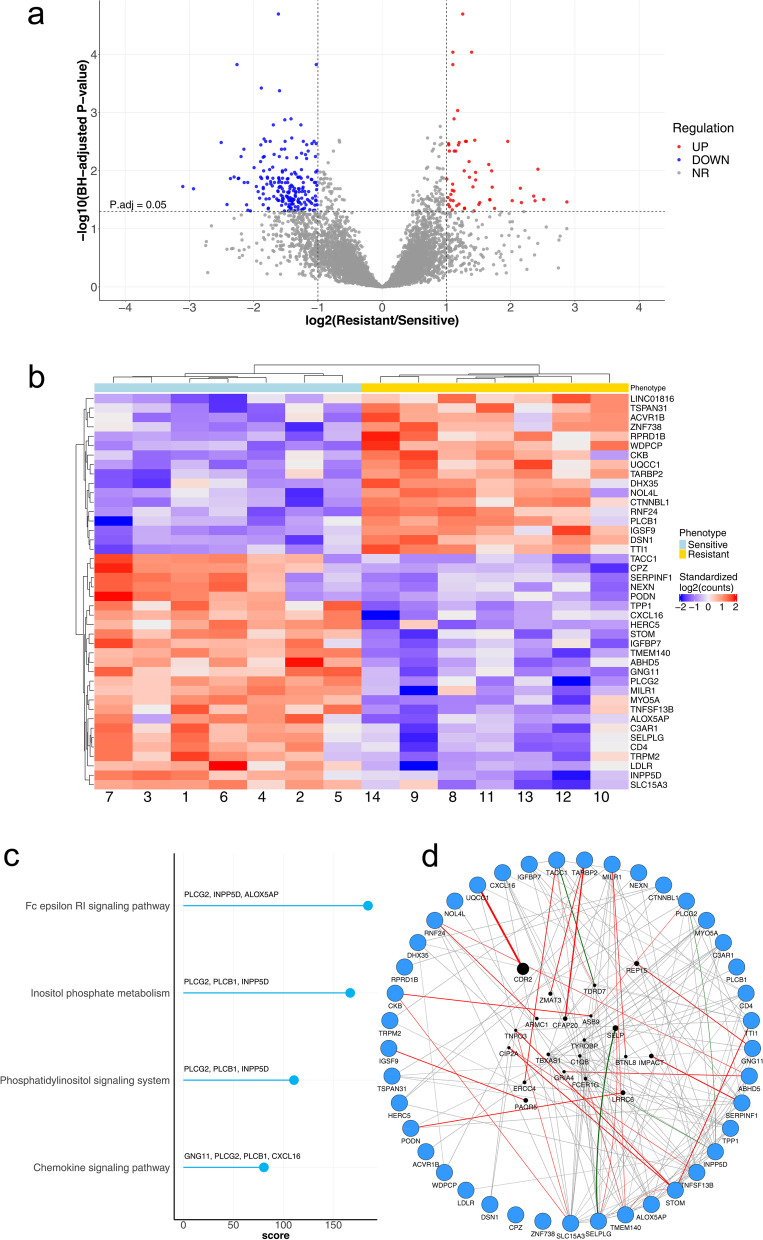
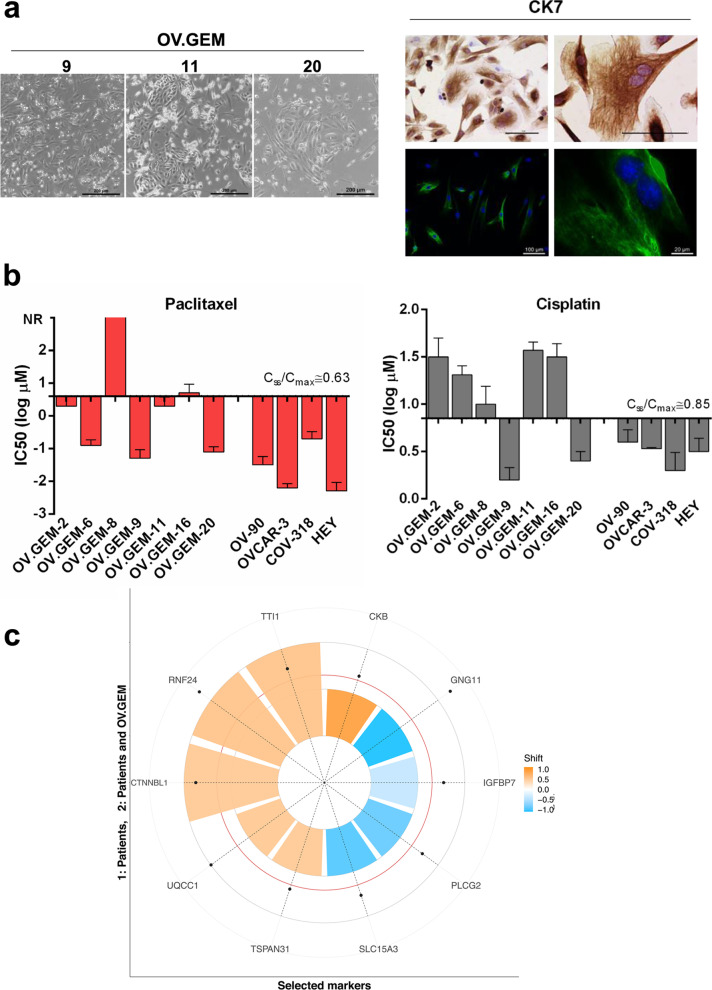
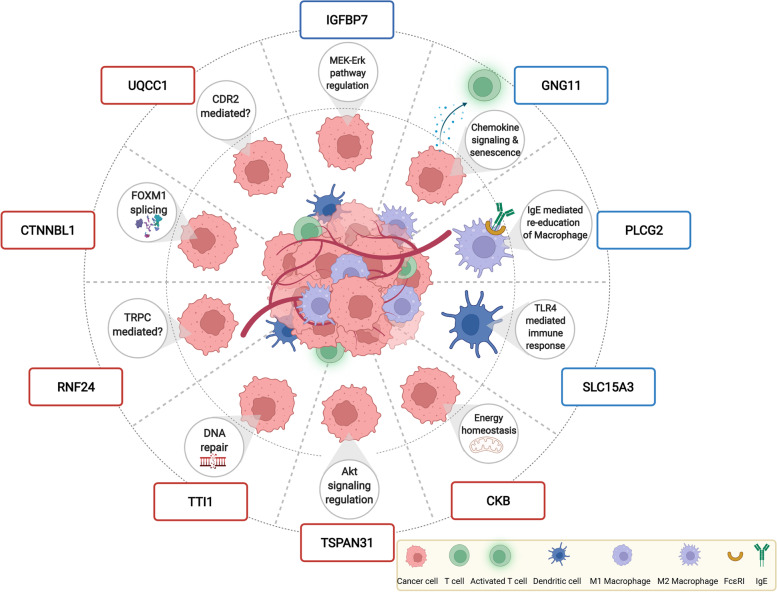
BACKGROUND: High-grade serous ovarian cancer (HGSOC) has poor survival rates due to a combination of diagnosis at advanced stage and disease recurrence as a result of chemotherapy resistance. In BRCA1 (Breast Cancer gene 1) - or BRCA2-wild type (BRCAwt) HGSOC patients, resistance and progressive disease occur earlier and more often than in mutated BRCA. Identification of biomarkers helpful in predicting response to first-line chemotherapy is a challenge to improve BRCAwt HGSOC management. METHODS: To identify a gene signature that can predict response to first-line chemotherapy, pre-treatment tumor biopsies from a restricted cohort of BRCAwt HGSOC patients were profiled by RNA sequencing (RNA-Seq) technology. Patients were sub-grouped according to platinum-free interval (PFI), into sensitive (PFI > 12 months) and resistant (PFI < 6 months). The gene panel identified by RNA-seq analysis was then tested by high-throughput quantitative real-time PCR (HT RT-qPCR) in a validation cohort, and statistical/bioinformatic methods were used to identify eligible markers and to explore the relevant pathway/gene network enrichments of the identified gene set. Finally, a panel of primary HGSOC cell lines was exploited to uncover cell-autonomous mechanisms of resistance. RESULTS: RNA-seq identified a 42-gene panel discriminating sensitive and resistant BRCAwt HGSOC patients and pathway analysis pointed to the immune system as a possible driver of chemotherapy response. From the extended cohort analysis of the 42 DEGs (differentially expressed genes), a statistical approach combined with the random forest classifier model generated a ten-gene signature predictive of response to first-line chemotherapy. The ten-gene signature included: CKB (Creatine kinase B), CTNNBL1 (Catenin, beta like 1), GNG11 (G protein subunit gamma 11), IGFBP7 (Insulin-like growth factor-binding protein 7), PLCG2 (Phospholipase C, gamma 2), RNF24 (Ring finger protein 24), SLC15A3 (Solute carrier family 15 member 3), TSPAN31 (Tetraspanin 31), TTI1 (TELO2 interacting protein 1) and UQCC1 (Ubiquinol-cytochrome c reductase complex assembly factor). Cytotoxicity assays, combined with gene-expression analysis in primary HGSOC cell lines, allowed to define CTNNBL1, RNF24, and TTI1 as cell-autonomous contributors to tumor resistance. CONCLUSIONS: Using machine-learning techniques we have identified a gene signature that could predict response to first-line chemotherapy in BRCAwt HGSOC patients, providing a useful tool towards personalized treatment modalities.
Overview
CoChat Summary
## TL;DR
This retrospective study in BRCA-wild-type HGSOC patients identified a 10-gene expression signature that predicted response to first-line platinum-based chemotherapy. The Random Forest model based on this signature reportedly achieved about 93% accuracy and 94% precision in the validation cohort.
## Key findings
- In the discovery cohort, RNA-seq measured 10,807 expressed genes and identified 258 differentially expressed genes (DEGs) at adjusted P < 0.05 and |log2FC| > 1; with stricter filtering (adjusted P < 0.005 and |log2FC| > 1), 42 DEGs were retained.
- KEGG pathway analysis of the 42 DEGs found 4 significantly enriched pathways: Fc Epsilon RI signaling (combined score 184.64; padj 0.027), Inositol phosphate metabolism (166.85; 0.027), Phosphatidylinositol signaling system (110.64; 0.033), and Chemokine signaling pathway (80.53; 0.027).
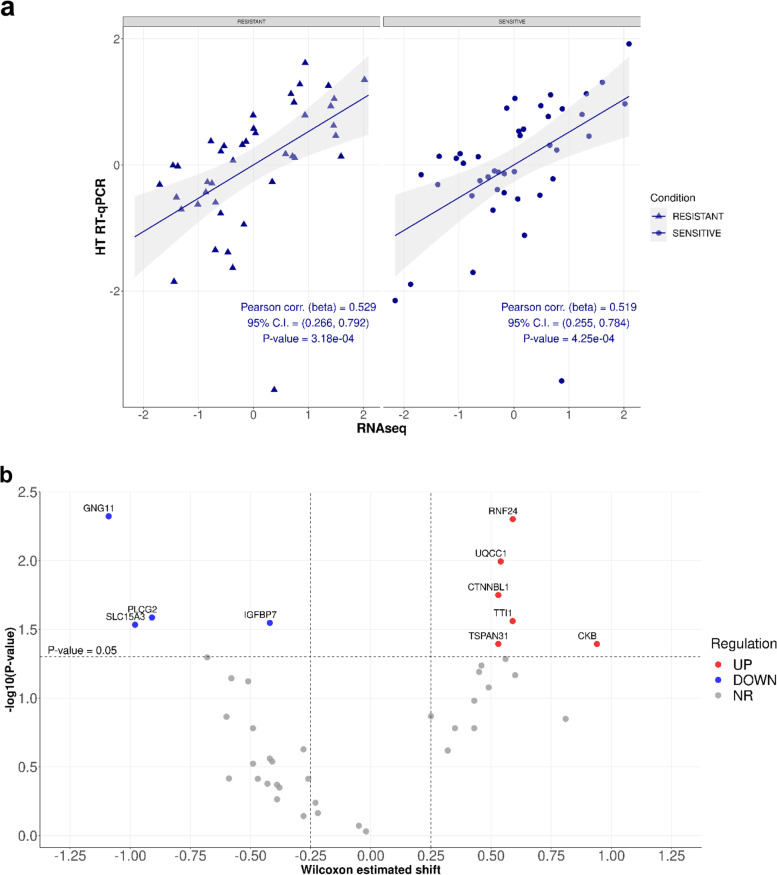
- In the validation cohort (25 sensitive, 19 resistant), HT RT-qPCR reduced the panel to 10 genes associated with chemotherapy response: 4 downregulated (GNG11, IGFBP7, PLCG2, SLC15A3) and 6 upregulated (CKB, CTNNBL1, RNF24, TSPAN31, TTI1, UQCC1).
- The Random Forest classifier using the 10-gene signature achieved about 93% classification accuracy and 94% precision; in primary HGSOC cell lines, CTNNBL1, RNF24, and TTI1 showed the same resistance-related trend as in patient tumors.
## Methods
- Retrospective study of 44 BRCAwt HGSOC women treated at a single center (2014–2018); discovery cohort was 14 patients (7 sensitive, 7 resistant) and validation cohort was 44 patients total with 25 sensitive and 19 resistant in the qPCR phase.
- Pretreatment frozen tumor biopsies were profiled by RNA-seq in the discovery cohort, then the 42-gene panel was tested by HT RT-qPCR in the validation cohort; patients were classified as sensitive (PFI > 12 months) or resistant (PFI < 6 months).
- Main analyses included differential expression testing, KEGG/ORA pathway analysis, GeneMANIA/cBioPortal network analyses, correlation between RNA-seq and qPCR, Wilcoxon testing, and a 4-fold cross-validation Random Forest classifier.
## Limitations
- The paper states that the study was retrospective, which makes it susceptible to bias.
- The paper states that sample size was not large enough to detect definitive associations between biomarker expression and response to therapy.
- Evident from the text: the study was conducted at a single tertiary-care center and the signature still needs prospective validation before clinical use.
Model-written summary. Check it against the paper before relying on it.
Integrity signals
Registry
Cites
Statistics
Figures
Verification
Claims the paper makes
15 Valid · 2 Not valid · 23 Not checked · 57 Own results and interpretations
Every source the paper cites for this claim was checked and supports it.
In the paper
“Our results confirm the low translational relevance of established cancer cell lines for the identification of clinical anti-cancer drug resistance [38].”
§ Identification of a novel gene signature predicting response to first-line chemotherapy in BRCA wild-type high-grade serous ovarian cancer patients > Results > Epithelial markers of sensitivity to chemotherapy
What the sources say
- Supportedcites [38] Gillet JP Calcagno AM Varma S Marino M Green LJ Vora MI Redefining the relevance of established cancer cell lines to the study of mechanisms of clinical anti-cancer drug resistance Proc Natl Acad Sci U S A 2011 108 18708 18713 22068913 PMC3219108 source
The Abstract reports no correlation between clinical samples and established cancer cell lines in their multidrug-resistance gene expression profiles. The section ‘Heterogeneity Among the Cell Lines Within Tumor Types of the NCI-60’ cautions against directly applying cell-line findings on clinical drug resistance to patients. The cited paper therefore supports the attributed point about limited translational relevance; ‘our results confirm’ is the citing authors’ own conclusion. (LLM, conf=0.92)
boosted- Asserted: passes — The authors put it forward as true.
- Checkable: passes — It can be checked against evidence.
- Load-bearing: passes — The paper’s conclusions depend on it.
- Based: passes — The paper gives a reason why it holds.
- Supported
The cited sources support only part of this claim — read each source’s verdict below.
In the paper
“These findings are in line with recent evidences indicating that chemoresistance in HGSOC stems from complex, and not fully understood, mechanisms linked to pre-existing gene expression intrinsic within the chemotherapy-naive tumor cells or the immediate microenvironment (revised in 6, [39]).”
§ Identification of a novel gene signature predicting response to first-line chemotherapy in BRCA wild-type high-grade serous ovarian cancer patients > Discussion
What the sources say
- Not checked — no full text of the sourcecites [6] Marchetti C, De Felice F, Romito A, Iacobelli V, Sassu CM, Corrado G, et al. Chemotherapy resistance in epithelial ovarian cancer: mechanisms and emerging treatments. Semin Cancer Biol. 2021;77:144-66. 34464704 source
- Partly supportedcites [39] Yang Y Yang Y Yang J Zhao X Wei X Tumor microenvironment in ovarian Cancer: function and therapeutic strategy Front Cell Dev Biol 2020 8 758 32850861 PMC7431690 sourceExperimental — accuracy not yet measured
The review’s “Treatment Impact and Response Prediction in Ovarian Cancer TME” section (page unavailable) links recurrence to chemotherapy-resistant cancer stem cells and reports gene-expression and microenvironmental differences between treatment-naive and recurrent ovarian cancer. It does not establish that pre-existing gene expression in chemotherapy-naive HGSOC tumor cells or their immediate microenvironment gives rise to chemoresistance; the differences it describes were observed after treatment. (LLM, conf=0.82)
hedgedstates an association- Asserted: passes — The authors put it forward as true.
- Checkable: passes — It can be checked against evidence.
- Load-bearing: passes — The paper’s conclusions depend on it.
- Based: passes — The paper gives a reason why it holds.
A result the paper reports from its own data — it cites no other source for it, so there is none to check. The quote shows it is in the paper.
In the paper
“RNA-seq identified a 42-gene panel discriminating sensitive and resistant BRCAwt HGSOC patients”
- Also stated in: § Study population · hedged
“This analysis allowed the identification of a restricted panel of 42 DEGs that could discriminate chemotherapy-sensitive from -resistant patients.”
§ Identification of a novel gene signature predicting response to first-line chemotherapy in BRCA wild-type high-grade serous ovarian cancer patients > Abstract > Results
plainstates an associationn = 14- Asserted: passes — The authors put it forward as true.
- Checkable: passes — It can be checked against evidence.
- Load-bearing: passes — The paper’s conclusions depend on it.
- Based: passes — The paper gives a reason why it holds.
- Rests on an assumption not shown here.
- Also stated in: § Study population · hedged
A result the paper reports from its own data — it cites no other source for it, so there is none to check. The quote shows it is in the paper.
In the paper
“The random forest classification model based on the ten-gene signature accurately differentiated S and R patients.”
§ Identification of a novel gene signature predicting response to first-line chemotherapy in BRCA wild-type high-grade serous ovarian cancer patients > Results > Validation of RNA-seq data by HT RT-qPCR
plainstates an association- Asserted: passes — The authors put it forward as true.
- Checkable: passes — It can be checked against evidence.
- Load-bearing: passes — The paper’s conclusions depend on it.
- Based: passes — The paper gives a reason why it holds.
A result the paper reports from its own data — it cites no other source for it, so there is none to check. The quote shows it is in the paper.
In the paper
“The final gene panel included 4 downregulated (i.e. GNG11, IGFBP7, PLCG2 and SLC15A3) and 6 upregulated (i.e. CKB, CTNNBL1, RNF24, TSPAN31, TTI1 and UQCC1) genes (Table 2).”
- Also stated in: § Discussion · plain
“The signature includes downregulated (i.e. GNG11, IGFBP7, PLCG2, and SLC15A3) and upregulated (i.e. CKB, CTNNBL1, RNF24, TSPAN31, TTI1 and UQCC1) genes.”
- Also stated in: § Discussion · hedged
“Consistent with a role of the immune system in driving chemosensitivity are also our findings showing a downregulation of SLC15A3 in R vs S patients.”
§ Identification of a novel gene signature predicting response to first-line chemotherapy in BRCA wild-type high-grade serous ovarian cancer patients > Results > Validation of RNA-seq data by HT RT-qPCR
plain- Asserted: passes — The authors put it forward as true.
- Checkable: passes — It can be checked against evidence.
- Load-bearing: passes — The paper’s conclusions depend on it.
- Based: passes — The paper gives a reason why it holds.
- Also stated in: § Discussion · plain
37 more claims
Create a free account to see all 97 claims and to verify the 5 references still open.
- Probably not a substantial claim. 48
- It may state two separate claims as one. 27
Citations
Cites
R: A Language and Environment for Statistical Computing
R Core Team (2025) · doi:10.32614/r.manuals · Cited by 352,181
Analysis of Relative Gene Expression Data Using Real-Time Quantitative PCR and the 2−ΔΔCT Method
Livak, K. J., & Schmittgen, T. D. (2001) · Methods · doi:10.1006/meth.2001.1262 · Cited by 180,860
Controlling the False Discovery Rate: A Practical and Powerful Approach to Multiple Testing
Benjamini, Y., & Hochberg, Y. (1995) · Journal of the Royal Statistical Society Series B: Statistical Methodology · doi:10.1111/j.2517-6161.1995.tb02031.x · Cited by 109,482
Sung, H., Ferlay, J., Siegel, R. L., Laversanne, M., Soerjomataram, I., Jemal, A., & Bray, F. (2021) · CA: A Cancer Journal for Clinicians · doi:10.3322/caac.21660 · Cited by 108,699 · cited 1×
“Nearly 314,000 women were estimated to have been diagnosed with ovarian cancer and 207,000 to have died from disease in 2020, with rates varying across the world [1].”
BackgroundModerated estimation of fold change and dispersion for RNA-seq data with DESeq2
Love, M. I., Huber, W., & Anders, S. (2014) · Genome Biology · doi:10.1186/s13059-014-0550-8 · Cited by 95,106 · cited 1×
“The DEseq2 algorithm [23] was then used to determine DEGs at a significance threshold of Benjamini-Hochberg (BH) adjusted P value < 0.”
Wickham, H. (2016) · Use R! · doi:10.1007/978-3-319-24277-4 · Cited by 33,115
Vandesompele, J., De Preter, K., Pattyn, F., Poppe, B., Van Roy, N., De Paepe, A., & Speleman, F. (2002) · Genome Biology · doi:10.1186/gb-2002-3-7-research0034 · Cited by 20,038 · cited 1×
“The geometric mean of RPL13A, RPL4 and GAPDH was taken as reference genes, following GeNorm and Normfinder algorithm [18, 19].”
MethodNew Guidelines to Evaluate the Response to Treatment in Solid Tumors
Therasse, P., Arbuck, S. G., Eisenhauer, E. A., Wanders, J., Kaplan, R. S., Rubinstein, L., Verweij, J., Van Glabbeke, M., van Oosterom, A. T., Christian, M. C., et al. (2000) · JNCI: Journal of the National Cancer Institute · doi:10.1093/jnci/92.3.205 · Cited by 15,660 · cited 1×
“Response to chemotherapy and progression were defined according to Response Evaluation Criteria in Solid Tumors (RECIST) and Gynecologic Cancer Intergroup (GCIG) criteria [10, 11].”
MethodIntegrated genomic analyses of ovarian carcinoma
Perou, C. M. (2019) · Carolina Digital Repository (University of North Carolina at Chapel Hill) · doi:10.17615/hvp3-wg08 · Cited by 7,925
Andersen, C. L., Jensen, J. L., & Ørntoft, T. F. (2004) · Cancer Research · doi:10.1158/0008-5472.can-04-0496 · Cited by 7,127 · cited 1×
“The geometric mean of RPL13A, RPL4 and GAPDH was taken as reference genes, following GeNorm and Normfinder algorithm [18, 19].”
MethodMutation of the mouse klotho gene leads to a syndrome resembling ageing
Kuro-o, M., Matsumura, Y., Aizawa, H., Kawaguchi, H., Suga, T., Utsugi, T., Ohyama, Y., Kurabayashi, M., Kaname, T., Kume, E., et al. (1997) · Nature · doi:10.1038/36285 · Cited by 3,837
Gene set knowledge discovery with enrichr
Xie, Z., Bailey, A., Kuleshov, M. V., Clarke, D. J. B., Evangelista, J. E., Jenkins, S. L., Lachmann, A., Wojciechowicz, M. L., Kropiwnicki, E., Jagodnik, K. M., et al. (2021) · Current Protocols · doi:10.1002/cpz1.90 · Cited by 3,451 · cited 1×
“Over Representation Analysis (ORA) To functionally annotate the 42 DEGs, we performed an ORA over the Kyoto Encyclopedia of Genes and Genomes (KEGG) database, using the Enrichr web-based tool [30].”
MethodApetoh, L., Ghiringhelli, F., Tesniere, A., Obeid, M., Ortiz, C., Criollo, A., Mignot, G., Maiuri, M. C., Ullrich, E., Saulnier, P., et al. (2007) · Nature Medicine · doi:10.1038/nm1622 · Cited by 3,056 · cited 1×
“Relevant to our results, previous studies have demonstrated that TLR4-mediated immune response to dying tumor cells is essential for the efficacy of anticancer chemotherapy and radiotherapy; specifically, it has been reported that in the treatment of established tumors with chemotherapy or radiotherapy the presence of…”
ResultInfluence of tumour micro-environment heterogeneity on therapeutic response
Junttila, M. R., & de Sauvage, F. J. (2013) · Nature · doi:10.1038/nature12626 · Cited by 2,694 · cited 1×
“Epithelial markers of sensitivity to chemotherapy It is well known that tumor microenvironment may considerably shape responses to drug treatment, a condition that could partially explain discrepancies between drug sensitivity in vitro and in vivo [34].”
BackgroundLheureux, S., Gourley, C., Vergote, I., & Oza, A. M. (2019) · The Lancet · doi:10.1016/s0140-6736(18)32552-2 · Cited by 1,919
Evaluating cell lines as tumour models by comparison of genomic profiles
Domcke, S., Sinha, R., Levine, D. A., Sander, C., & Schultz, N. (2013) · Nature Communications · doi:10.1038/ncomms3126 · Cited by 1,418 · cited 1×
“We also tested, for comparison, the cytotoxicity of cisplatin and paclitaxel on a panel of established cell lines, selected among those considered as really representative of HGSOC [15, 37].”
GeneMANIA Cytoscape plugin: fast gene function predictions on the desktop
Montojo, J., Zuberi, K., Rodriguez, H., Kazi, F., Wright, G., Donaldson, S. L., Morris, Q., & Bader, G. D. (2010) · Bioinformatics · doi:10.1093/bioinformatics/btq562 · Cited by 631 · cited 1×
“2 was used to generate the interaction networks [32].”
Hamilton, T. C., Young, R. C., McKoy, W. M., Grotzinger, K. R., Green, J. A., Chu, E. W., Whang‐Peng, J., Rogan, A. M., Green, W. R., & Ozols, R. F. (1983) · PubMed · Cited by 603
Gillet, J.-P., Calcagno, A. M., Varma, S., Marino, M., Green, L. J., Vora, M. I., Patel, C., Orina, J. N., Eliseeva, T. A., Singal, V., et al. (2011) · Proceedings of the National Academy of Sciences · doi:10.1073/pnas.1111840108 · Cited by 477 · cited 1×
“Our results confirm the low translational relevance of established cancer cell lines for the identification of clinical anti-cancer drug resistance [38].”
ResultThe Wnt/β-catenin pathway in ovarian cancer: A review
Arend, R. C., Londoño-Joshi, A. I., Straughn, J. M., & Buchsbaum, D. J. (2013) · Gynecologic Oncology · doi:10.1016/j.ygyno.2013.09.034 · Cited by 458 · cited 1×
“Notably, TSPAN31 is also involved in the activation of Akt signaling pathway, a key regulator of survival in ovarian cancer, also associated with chemoresistance [70].”
BackgroundComparative properties of five human ovarian adenocarcinoma cell lines.
Buick, R. N., Pullano, R., & Trent, J. M. (1985) · PubMed · Cited by 349
Cisplatin-Induced Antitumor Immunomodulation: A Review of Preclinical and Clinical Evidence
de Biasi, A. R., Villena-Vargas, J., & Adusumilli, P. S. (2014) · Clinical Cancer Research · doi:10.1158/1078-0432.ccr-14-1298 · Cited by 342 · cited 1×
“This is particularly significant when considering evidence indicating that the antitumor activity of cisplatin is not limited to its ability to inhibit mitosis, but it also has important immunomodulatory effects, including recruitment and proliferation of CD8+ T cells [55].”
Backgroundde Witte, C. J., Espejo Valle-Inclan, J., Hami, N., Lõhmussaar, K., Kopper, O., Vreuls, C. P. H., Jonges, G. N., van Diest, P., Nguyen, L., Clevers, H., et al. (2020) · Cell Reports · doi:10.1016/j.celrep.2020.107762 · Cited by 303
The Role of Tumor-Associated Macrophages in the Progression and Chemoresistance of Ovarian Cancer
Nowak, M., & Klink, M. (2020) · Cells · doi:10.3390/cells9051299 · Cited by 287 · cited 1×
“Noteworthy, TAMs, the most abundant population of tumor-infiltrating immune cells in TME, with high density in HGSOC [44, 45], are critical in fostering tumor progression and chemoresistance in ovarian cancer [46].”
BackgroundCell Origins of High-Grade Serous Ovarian Cancer
Kim, J., Park, E., Kim, O., Schilder, J., Coffey, D., Cho, C.-H., & Bast, R. (2018) · Cancers · doi:10.3390/cancers10110433 · Cited by 264 · cited 1×
“Over 90% of ovarian malignancies are categorized as epithelial ovarian cancers and HGSOC is estimated to be 50–60% of all ovarian malignancies [2].”
BackgroundDEBrowser: interactive differential expression analysis and visualization tool for count data
Kucukural, A., Yukselen, O., Ozata, D. M., Moore, M. J., & Garber, M. (2019) · BMC Genomics · doi:10.1186/s12864-018-5362-x · Cited by 247 · cited 1×
“Differential expression analysis was performed using the DEBrowser R package [21], filtering out genes showing average raw counts less than 50.”
MethodAn organelle-specific protein landscape identifies novel diseases and molecular mechanisms
Boldt, K., van Reeuwijk, J., Lu, Q., Koutroumpas, K., Nguyen, T.-M. T., Texier, Y., van Beersum, S. E. C., Horn, N., Willer, J. R., Mans, D. A., et al. (2016) · Nature Communications · doi:10.1038/ncomms11491 · Cited by 240 · cited 9×
“Notably, a strong physical interaction was evident between UQCC1 and CDR2 (Cerebellar degenerationrelated protein 2) (Fig.”
BackgroundInfluentialTumor microenvironment in ovarian cancer: function and therapeutic strategy
Yang, Y., Yang, Y., Yang, J., Zhao, X., & Wei, X. (2020) · Frontiers in Cell and Developmental Biology · doi:10.3389/fcell.2020.00758 · Cited by 218 · cited 1×
“the immediate microenvironment (revised in 6, [39]).”
Hurov, K. E., Cotta-Ramusino, C., & Elledge, S. J. (2010) · Genes & Development · doi:10.1101/gad.1934210 · Cited by 210 · cited 1×
“radiation, as well as other genotoxic agents [59].”
BackgroundUse of CA-125 to Define Progression of Ovarian Cancer in Patients With Persistently Elevated Levels
Rustin, G. J. S., Marples, M., Nelstrop, A. E., Mahmoudi, M., & Meyer, T. (2001) · Journal of Clinical Oncology · doi:10.1200/jco.2001.19.20.4054 · Cited by 201 · cited 1×
“Response to chemotherapy and progression were defined according to Response Evaluation Criteria in Solid Tumors (RECIST) and Gynecologic Cancer Intergroup (GCIG) criteria [10, 11].”
MethodCHARACTERIZATION OF FOUR NOVEL EPITHELIAL OVARIAN CANCER CELL LINES
PROVENCHER, D. M., LOUNIS, H., CHAMPOUX, L., TÉTRAULT, M., MANDERSON, E. N., WANG, J. C., EYDOUX, P., SAVOIE, R., TONIN, P. N., & MES-MASSON, A.-M. (2000) · In Vitro Cellular & Developmental Biology - Animal · doi:10.1290/1071-2690(2000)036<0357:cofneo>2.0.co;2 · Cited by 176
Dressman, H. K., Hans, C., Bild, A., Olson, J. A., Rosen, E., Marcom, P. K., Liotcheva, V. B., Jones, E. L., Vujaskovic, Z., Marks, J., et al. (2006) · Clinical Cancer Research · doi:10.1158/1078-0432.ccr-05-1447 · Cited by 163 · cited 1×
“Lastly, RNF24 is a membrane protein which interacts with TRPC (transient receptor potential channel) proteins [71] and, although literature data have suggested that it may act as a cancer-promoting factor in different tumors [72, 73], its mechanistic role is still to be uncovered.”
Backgroundvan den Berg‐Bakker, C. A. M., Hagemeijer, A., Franken‐Postma, E. M., Smit, V. T. H. B. M., Kuppen, P. J. K., Claasen, H. H. V. R., Cornelisse, C. J., & Schrier, P. I. (1993) · International Journal of Cancer · doi:10.1002/ijc.2910530415 · Cited by 140
Chemotherapy resistance in epithelial ovarian cancer: Mechanisms and emerging treatments
Marchetti, C., De Felice, F., Romito, A., Iacobelli, V., Sassu, C. M., Corrado, G., Ricci, C., Scambia, G., & Fagotti, A. (2021) · Seminars in Cancer Biology · doi:10.1016/j.semcancer.2021.08.011 · Cited by 139 · cited 2×
“of platinum resistance was used, identifying as “resistant” (PFI < 6 months) patients who relapsed less than 6 months after chemotherapy was stopped, or that progressed during therapy, and as “sensitive”, patients relapsing 6 months or more after chemotherapy [6].”
BackgroundMethodSelf-citationIntegrated genomic analyses of ovarian carcinoma
The Cancer Genome Atlas Research Network (2011) · Nature · doi:10.1038/nature10166 · Cited by 129
Insulin Growth Factor Binding Protein 7 (IGFBP7)-Related Cancer and IGFBP3 and IGFBP7 Crosstalk
Jin, L., Shen, F., Weinfeld, M., & Sergi, C. (2020) · Frontiers in Oncology · doi:10.3389/fonc.2020.00727 · Cited by 123 · cited 1×
“IGFBP7 also possesses an IGF-independent activity [56].”
The role of PLCγ2 in immunological disorders, cancer, and neurodegeneration
Jackson, J. T., Mulazzani, E., Nutt, S. L., & Masters, S. L. (2021) · Journal of Biological Chemistry · doi:10.1016/j.jbc.2021.100905 · Cited by 113 · cited 1×
“In particular, PLCG2, one of the gene in our signature, is a critical signaling molecule in both the innate and adaptive immune systems [47], being activated in monocytes, macrophages, and mast cells through crosslinking of the FcεR and FcγR [48].”
BackgroundOvercoming PARPi resistance: Preclinical and clinical evidence in ovarian cancer
Chiappa, M., Guffanti, F., Bertoni, F., Colombo, I., & Damia, G. (2021) · Drug Resistance Updates · doi:10.1016/j.drup.2021.100744 · Cited by 110 · cited 2×
“Indeed, the use of PARPI has markedly transformed the therapeutic armamentarium in HGSOC over the last 5 years, since women with HRD (homologous recombination deficiency), in particular BRCA1/2-mutated HGSOCs, greatly benefit from PARPI treatment [4].”
BackgroundChemotherapy-induced senescence, an adaptive mechanism driving resistance and tumor heterogeneity
Guillon, J., Petit, C., Toutain, B., Guette, C., Lelièvre, E., & Coqueret, O. (2019) · Cell Cycle · doi:10.1080/15384101.2019.1652047 · Cited by 102 · cited 1×
“Crucially to our findings, incomplete and heterogeneous senescence response of cancer cells contributes to chemotherapy resistance [53].”
BackgroundNagai, N., Kinoshita, M., Ogata, H., Tsujino, D., Wada, Y., Someya, K., Ohno, T., Masuhara, K., Tanaka, Y., Kato, K., et al. (1996) · Cancer Chemotherapy and Pharmacology · doi:10.1007/s002800050548 · Cited by 100 · cited 1×
“Css/Cmax), and as sensitive when the IC50 value was lower than Css/Cmax, as previously reported [35, 36].”
Result(2000) · PubMed · Cited by 94
Li, W., Turner, A., Aggarwal, P., Matter, A., Storvick, E., Arnett, D. K., & Broeckel, U. (2015) · BMC Genomics · doi:10.1186/s12864-015-2270-1 · Cited by 92 · cited 3×
“The Ion AmpliSeqTM technology accurately maintains expression levels of all targeted genes as previously described [16].”
MethodInfluentialZhao, F., Siu, M. K. Y., Jiang, L., Tam, K. F., Ngan, H. Y. S., Le, X. F., Wong, O. G. W., Wong, E. S. Y., Gomes, A. R., Bella, L., et al. (2014) · PLoS ONE · doi:10.1371/journal.pone.0113478 · Cited by 88 · cited 1×
“Specifically, the spliceosome-associated factor CTNNBL1, has been related to proliferation and invasion in HGSOC, at least partially through regulation of FOXM1 splicing [60], Notably, the FOXM1 signaling pathway is activated in 84% high-grade serous ovarian cancer [61] and linked to platinum resistance [62, 63].”
BackgroundPellizzari, G., Hoskin, C., Crescioli, S., Mele, S., Gotovina, J., Chiaruttini, G., Bianchini, R., Ilieva, K., Bax, H. J., Papa, S., et al. (2019) · EBioMedicine · doi:10.1016/j.ebiom.2019.03.080 · Cited by 77
Kim, S. I., Lee, M., Kim, H. S., Chung, H. H., Kim, J.-W., Park, N. H., & Song, Y.-S. (2019) · Journal of Ovarian Research · doi:10.1186/s13048-019-0511-7 · Cited by 75 · cited 1×
“Accordingly, advanced-stage, BRCA1/2wt HGSOC patients have a worse prognosis, with shorter PFS (progression free survival) than those with BRCA mutations [7].”
BackgroundKnockdown of creatine kinase B inhibits ovarian cancer progression by decreasing glycolysis
Li, X.-H., Chen, X.-J., Ou, W.-B., Zhang, Q., Lv, Z.-R., Zhan, Y., Ma, L., Huang, T., Yan, Y.-B., & Zhou, H.-M. (2013) · The International Journal of Biochemistry & Cell Biology · doi:10.1016/j.biocel.2013.02.003 · Cited by 74 · cited 1×
“Mechanistic studies have suggested that CKB is involved in the regulation of energy homeostasis and metabolic state in ovarian cancer [68].”
BackgroundKonstantinopoulos, P. A., Lheureux, S., & Moore, K. N. (2020) · American Society of Clinical Oncology Educational Book · doi:10.1200/edbk_288015 · Cited by 72 · cited 1×
“Actually, PARPI approval has been granted for patients with ovarian cancer, both in the front line setting and as maintenance or treatment in recurrent platinum-sensitive disease regardless of HRD status [4, 5].”
BackgroundPhospholipase Cγ2 Is Essential for Specific Functions of FcεR and FcγR
Wen, R., Jou, S.-T., Chen, Y., Hoffmeyer, A., & Wang, D. (2002) · The Journal of Immunology · doi:10.4049/jimmunol.169.12.6743 · Cited by 71
Huddleston, H. G., Wong, K.-K., Welch, W. R., Berkowitz, R. S., & Mok, S. C. (2005) · Gynecologic Oncology · doi:10.1016/j.ygyno.2004.08.047 · Cited by 68 · cited 1×
“Finally, CKB gene expression has been reported to be up-regulated in ovarian cancer cells in vitro and in vivo and CKB enzyme activity to be significantly elevated in sera from ovarian cancer patients, including those with stage I disease [67].”
BackgroundTassi, R. A., Todeschini, P., Siegel, E. R., Calza, S., Cappella, P., Ardighieri, L., Cadei, M., Bugatti, M., Romani, C., Bandiera, E., et al. (2017) · Journal of Experimental & Clinical Cancer Research · doi:10.1186/s13046-017-0536-y · Cited by 67 · cited 1×
“Specifically, the spliceosome-associated factor CTNNBL1, has been related to proliferation and invasion in HGSOC, at least partially through regulation of FOXM1 splicing [60], Notably, the FOXM1 signaling pathway is activated in 84% high-grade serous ovarian cancer [61] and linked to platinum resistance [62, 63].”
BackgroundSong, F., Yi, Y., Li, C., Hu, Y., Wang, J., Smith, D. E., & Jiang, H. (2018) · Cell Death & Disease · doi:10.1038/s41419-018-0809-1 · Cited by 63 · cited 1×
“Despite the limited information available, SLC15A3 has been reported to be regulated by various Toll-like receptors (TLR), playing an important role in regulating TLR4-mediated inflammatory responses [50].”
BackgroundKoti, M., Siu, A., Clément, I., Bidarimath, M., Turashvili, G., Edwards, A. K., Rahimi, K., Mes‐Masson, A., & Squire, J. A. (2015) · British Journal of Cancer · doi:10.1038/bjc.2015.459 · Cited by 60
IgE immunotherapy: A novel concept with promise for the treatment of cancer
Josephs, D. H., Spicer, J. F., Karagiannis, P., Gould, H. J., & Karagiannis, S. N. (2014) · mAbs · doi:10.4161/mabs.27029 · Cited by 58
G-protein γ subunit GNG11 strongly regulates cellular senescence
Hossain, M. N., Sakemura, R., Fujii, M., & Ayusawa, D. (2006) · Biochemical and Biophysical Research Communications · doi:10.1016/j.bbrc.2006.10.112 · Cited by 57
Koti, M., Siu, A., Clément, I., Bidarimath, M., Turashvili, G., Edwards, A., Rahimi, K., Masson, A.-M. M., & Squire, J. A. (2015) · British Journal of Cancer · doi:10.1038/bjc.2015.81 · Cited by 57 · cited 1×
“In this context it is worthy to note that the pre-existing state of the tumor immune microenvironment has been demonstrated to play a key role in inherent-drug resistance in HGSOCs, infiltrated by a massive amounts of innate and adaptive immune cells [40].”
BackgroundSlominski, A. T., Roloff, B., Zbytek, B., Wei, E. T., Fechner, K., Curry, J. L., & Wortsman, J. (2000) · In Vitro Cellular & Developmental Biology - Animal · doi:10.1290/1071-2690(2000)036<0201:ahsemt>2.0.co;2 · Cited by 56
RNF24, a new TRPC interacting protein, causes the intracellular retention of TRPC
Lussier, M. P., Lepage, P. K., Bousquet, S. M., & Boulay, G. (2008) · Cell Calcium · doi:10.1016/j.ceca.2007.07.009 · Cited by 47 · cited 1×
“Lastly, RNF24 is a membrane protein which interacts with TRPC (transient receptor potential channel) proteins [71] and, although literature data have suggested that it may act as a cancer-promoting factor in different tumors [72, 73], its mechanistic role is still to be uncovered.”
BackgroundCiucci, A., Zannoni, G. F., Buttarelli, M., Lisi, L., Travaglia, D., Martinelli, E., Scambia, G., & Gallo, D. (2016) · Oncotarget · doi:10.18632/oncotarget.6943 · Cited by 46 · cited 1×
“Noteworthy, TAMs, the most abundant population of tumor-infiltrating immune cells in TME, with high density in HGSOC [44, 45], are critical in fostering tumor progression and chemoresistance in ovarian cancer [46].”
BackgroundSelf-citationButtarelli, M., Babini, G., Raspaglio, G., Filippetti, F., Battaglia, A., Ciucci, A., Ferrandina, G., Petrillo, M., Marino, C., Mancuso, M., et al. (2019) · Journal of Experimental & Clinical Cancer Research · doi:10.1186/s13046-019-1268-y · Cited by 42 · cited 1×
“48 dynamic array (Fluidigm Corporation, San Francisco, CA, USA) and a Biomark platform, following the manufacturer’s protocol, as previously described [17].”
MethodSelf-citationComputing maximum likelihood estimates in recursive linear models with correlated errorsPreprint
Drton, M., Eichler, M., & Richardson, T. S. (2006) · arXiv (Cornell University) · doi:10.48550/arxiv.math/0601631 · Cited by 41
Harnessing Therapeutic IgE Antibodies to Re-educate Macrophages against Cancer
Pellizzari, G., Bax, H. J., Josephs, D. H., Gotovina, J., Jensen-Jarolim, E., Spicer, J. F., & Karagiannis, S. N. (2020) · Trends in Molecular Medicine · doi:10.1016/j.molmed.2020.03.002 · Cited by 29
Okamura, J., Huang, Y., Moon, D., Brait, M., Chang, X., & Sook-Kim, M. (2012) · Cancer Biology & Therapy · doi:10.4161/cbt.13.3.18695 · Cited by 28
Spliceosome-associated factor CTNNBL1 promotes proliferation and invasion in ovarian cancer
Li, Y., Guo, H., Jin, C., Qiu, C., Gao, M., Zhang, L., Liu, Z., & Kong, B. (2017) · Experimental Cell Research · doi:10.1016/j.yexcr.2017.05.008 · Cited by 28 · cited 1×
“Specifically, the spliceosome-associated factor CTNNBL1, has been related to proliferation and invasion in HGSOC, at least partially through regulation of FOXM1 splicing [60], Notably, the FOXM1 signaling pathway is activated in 84% high-grade serous ovarian cancer [61] and linked to platinum resistance [62, 63].”
BackgroundCiucci, A., Zannoni, G. F., Buttarelli, M., Martinelli, E., Mascilini, F., Petrillo, M., Ferrandina, G., Scambia, G., & Gallo, D. (2016) · Oncotarget · doi:10.18632/oncotarget.10797 · Cited by 27 · cited 1×
“Noteworthy, TAMs, the most abundant population of tumor-infiltrating immune cells in TME, with high density in HGSOC [44, 45], are critical in fostering tumor progression and chemoresistance in ovarian cancer [46].”
BackgroundSelf-citationLin, T., Gu, J., Qu, K., Zhang, X., Ma, X., Miao, R., Xiang, X., Fu, Y., Niu, W., She, J., et al. (2018) · Aging · doi:10.18632/aging.101563 · Cited by 26 · cited 1×
“Lastly, RNF24 is a membrane protein which interacts with TRPC (transient receptor potential channel) proteins [71] and, although literature data have suggested that it may act as a cancer-promoting factor in different tumors [72, 73], its mechanistic role is still to be uncovered.”
BackgroundGrassi, M., Palluzzi, F., & Tarantino, B. (2022) · Bioinformatics · doi:10.1093/bioinformatics/btac567 · Cited by 26 · cited 2×
“The entire procedure is implemented in the SEMrun() function of R package SEMgraph [29].”
MethodSelf-citationWang, J., Zhou, Y., Li, D., Sun, X., Deng, Y., & Zhao, Q. (2017) · FEBS Letters · doi:10.1002/1873-3468.12737 · Cited by 25
Funingana, I.-G., Reinius, M. A. V., Petrillo, A., Ang, J. E., & Brenton, J. D. (2021) · Seminars in Cancer Biology · doi:10.1016/j.semcancer.2021.02.008 · Cited by 23 · cited 3×
“In the era of personalized cancer therapy, validated predictive biomarkers do not exist for platinum sensitivity in women with BRCAwt ovarian cancers and predicting platinum sensitivity remains a challenge [8].”
BackgroundGambaro, K., Quinn, M. C., Cáceres-Gorriti, K. Y., Shapiro, R. S., Provencher, D., Rahimi, K., Mes-Masson, A.-M., & Tonin, P. N. (2015) · BMC Cancer · doi:10.1186/s12885-015-1138-8 · Cited by 21 · cited 1×
“Notably, it has been proposed as a candidate tumor suppressor gene in several cancer types, including ovarian cancer [57], although conflicting results in different tumors suggest that it IGFBP7 functions may be a “double-edged sword” in cancer proliferation, progression, and prognosis.”
BackgroundCinalli, R. M., Herman, C. E., Lew, B. O., Wieman, H. L., Thompson, C. B., & Rathmell, J. C. (2005) · European Journal of Immunology · doi:10.1002/eji.200425729 · Cited by 19 · cited 1×
“Besides, in the KEGG pathway analysis, GNG11 was found enriched in chemokine signaling pathway (along with PLCG2, PLCB1 and CXCL16), and studies have uncovered the importance of G protein-coupled receptor (GPCR) for the maintenance of T cell trophic state, growth, and proliferation [54].”
MethodKar, S. P., Considine, D. P. C., Tyrer, J. P., Plummer, J. T., Chen, S., Dezem, F. S., Barbeira, A. N., Rajagopal, P. S., Rosenow, W. T., Moreno, F., et al. (2021) · Human Genetics and Genomics Advances · doi:10.1016/j.xhgg.2021.100042 · Cited by 18 · cited 1×
“Likewise, UQCC1, a protein involved in cytochrome b translation and/or stability, has been recently identified as a candidate ovarian cancer susceptibility gene [64].”
BackgroundLysosomal amino acid transporters as key players in inflammatory diseases
Toyama-Sorimachi, N., & Kobayashi, T. (2021) · International Immunology · doi:10.1093/intimm/dxab069 · Cited by 14
Ivy, S. P., Kunos, C. A., Arnaldez, F. I., & Kohn, E. C. (2019) · Expert Opinion on Investigational Drugs · doi:10.1080/13543784.2019.1657403 · Cited by 11 · cited 1×
“Despite various approaches have been developed, including mutational signature, transcriptomic signatures, tumor mutational burden, and functional biomarkers, no definitive results have been reached yet to guide precision treatment for women with BRCAwt ovarian cancers [8, 9].”
BackgroundLiontos, M., Fiste, O., Drakopoulou, D., Thomakos, N., Goula, K., Zagouri, F., Anagnostouli, M. C., & Dimopoulos, M. A. (2021) · Gynecologic Oncology Reports · doi:10.1016/j.gore.2021.100826 · Cited by 5 · cited 1×
“Relevant to our results, recent studies have underscored the importance of CDR2 as target of an effective immune response in patients with paraneoplastic cerebellar degeneration (usually observed in gynecological cancer), pointing to its role in fueling immunogenic cell death (ICD) initiated by some chemotherapeutic a…”
ResultPalluzzi, F., & Grassi, M. (2021) · arXiv (Cornell University) · doi:10.48550/arxiv.2103.08332 · Cited by 3 · cited 2×
“The entire procedure is implemented in the SEMrun() function of R package SEMgraph [29].”
MethodSelf-citation
Research works printed but not linked: 3
- Leek JT Johnson WE Parker HS Fertig EJ Jaffe AE Zhang Y Storey JD Torres LC Sva: surrogate variable analysis. R package version 3.40.0 2021
- Liaw A Wiener M Classification and regression by randomForest R News 2002 2 18 22
- Slawski M Boulesteix A Bernau C CMA: synthesis of microarray-based classification 2021
Cited by
Current Status and Prospects of Clinical Treatment of Osteosarcoma
Jiang, Z.-Y., Liu, J., Wang, X., Ma, Y., & Fu, D. (2022) · Technology in Cancer Research & Treatment · doi:10.1177/15330338221124696 · Cited by 88
Molecular Management of High-Grade Serous Ovarian Carcinoma
Punzón-Jiménez, P., Lago, V., Domingo, S., Simón, C., & Mas, A. (2022) · International Journal of Molecular Sciences · doi:10.3390/ijms232213777 · Cited by 52
“identified a 10-gene signature (including genes such as CTNNBL1, CKB, GNG11, IGFBP7, and PLCG2) for classifying wild-type BRCA HGSOC patients into sensitiveand resistant-to-therapy groups [92].”
BackgroundCesari, E., Ciucci, A., Pieraccioli, M., Caggiano, C., Nero, C., Bonvissuto, D., Sillano, F., Buttarelli, M., Piermattei, A., Loverro, M., et al. (2023) · Journal of Experimental & Clinical Cancer Research · doi:10.1186/s13046-023-02682-5 · Cited by 64
Self-citationCiucci, A., Buttarelli, M., Fagotti, A., Scambia, G., & Gallo, D. (2022) · Cellular and Molecular Life Sciences · doi:10.1007/s00018-022-04395-y · Cited by 51
Self-citationMulti-Omics Data Analysis Identifies Prognostic Biomarkers across Cancers
Karaman, E. D., & Işık, Z. (2023) · Medical Sciences · doi:10.3390/medsci11030044 · Cited by 36
“[52] generated a ten-gene signature, including the downregulated GNG11 gene, that predicts response to first-line chemotherapy in high-grade serous ovarian cancer patients.”
Background
Metadata
- Authors
- Buttarelli, M., Ciucci, A., Palluzzi, F., Raspaglio, G., Marchetti, C., Perrone, E., Minucci, A., Giacò, L., Fagotti, A., Scambia, G., & Gallo, D.
- Affiliations
- Università Cattolica del Sacro Cuore (IT)
- Agostino Gemelli University Polyclinic (IT)
- Corresponding author
- Gallo, Daniela
- ORCID
- Venue
- Journal of Experimental & Clinical Cancer Research
- Published
- 2022-02-04
- Volume
- 41
- Issue
- 1
- Pages
- 50-50
- ISSN
- 0392-9078 (ISSN-L)
- 1756-9966
- PMC
- PMC8815250
- OpenAlex
- W4210641711
- Semantic Scholar
- 949e7940be890966ef51d8f9f8799930479e4aea
- Cited by
- 32
- References
- 74
- Citations by year
- 2026: 6 · 2025: 5 · 2024: 9 · 2023: 7 · 2022: 5
- FWCI
- 6.10
- Type
- journal article
- Language
- en
- Open access
- gold
- doi.org
- Licence
- cc-by
- creativecommons.org/licenses/by/4.0 (tdm)
- creativecommons.org/licenses/by/4.0 (vor)
- Locations
- Journal of Experimental & Clinical Cancer Research (publishedVersion, cc-by)
- PubMed Central (publishedVersion, cc-by)
- PubMed (publishedVersion)
- DOAJ (DOAJ: Directory of Open Access Journals) (submittedVersion, cc-by-sa)
- PubliCatt (Università Cattolica del Sacro Cuore) (submittedVersion, other-oa)
- Topics
- Health Sciences › Medicine › Oncology › Ovarian cancer diagnosis and treatment
- Life Sciences › Biochemistry, Genetics and Molecular Biology › Genetics › BRCA gene mutations in cancer
- Life Sciences › Biochemistry, Genetics and Molecular Biology › Cancer Research › Breast Cancer Treatment Studies
- Keywords
- high-grade serous ovarian cancer, BRCA wild-type, chemotherapy response prediction, gene expression signatures, platinum-free interval, chemoresistance, predictive biomarkers, immune response, creatine kinase B, PLCγ2, IGFBP7
- MeSH terms
- Female, Humans, Ovarian Neoplasms, Retrospective Studies, Survival Analysis, BRCA1 Protein, Gene Expression Profiling, Neoplasm Grading
About these checks
Registry, retraction, Cites and statistics results are computed, not judged, with one exception: a printed reference that no index lists is read once by a model before it counts as a citation error. Claims are extracted by a model and kept only when their quote appears verbatim in the text; each cited source is then checked, with a model’s help, for whether it says what the claim relies on. Those verdicts can be wrong — read the claim’s quote and the cited source before relying on one.
The claim verdicts this report counts are experimental: their accuracy is not yet measured.
A language model drew the claims from the paper on 2026-10-10, under version 3 of the claim definition (model deepseek-v4.1-flash, prompt extract-v3).
A second model labelled each claim on 2026-10-10 (model jev-1.13-20260917, definition revision gold-guideline-v0.2).
Cited sources are checked with a language model’s help (gpt-6-sol).
Statistics and arithmetic are recomputed, not judged.
Confidence bands are shown only for fields calibrated on our annotated test set. None is calibrated yet, so no band is shown.
What counts as a claim ›How we measure confidence ›How we check this ›
Are you an author, or do you see a problem with this page? Request a review
Data sources
Bibliographic data: Semantic Scholar, OpenAlex, Crossref.
Contains information from the Semantic Scholar Academic Graph Datasets, made available under the ODC Attribution License (ODC-BY 1.0).
Semantic Scholar’s data is described in: Kinney, R., et al. (2023). The Semantic Scholar Open Data Platform. arXiv:2301.10140.
