

Targeting PP2A in cancer: an underrated option
Open accessThe DOI matches its Crossref record; 287 of the 287 references it cites were found in a registry or an index; 8 of the 162 sources its claims cite were checked for support.
Abstract
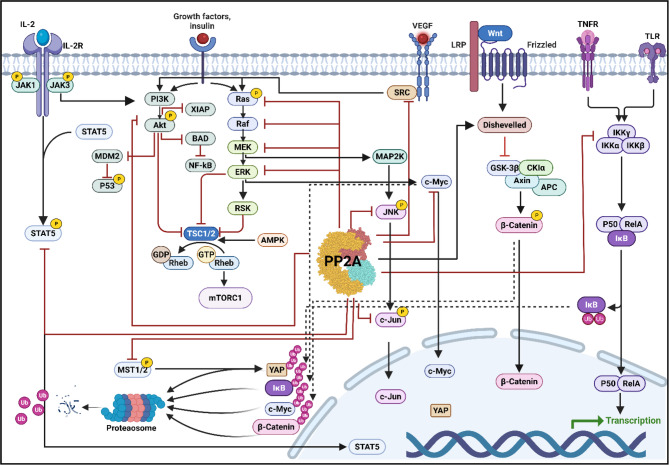
Protein phosphatase 2A plays a central role in modulating multiple signaling pathways, including PI3K, EGFR, Myc, WNT, JAK/STAT, RAS/MAPK, and NF-κB, which are frequently dysregulated in cancer. Although PP2A is broadly considered a tumor suppressor due to its frequent functional loss in tumors, its biological role is highly context-dependent and varies across cancer types and stages. The activity of the heterotrimeric PP2A complex is tightly controlled by the precise assembly and composition of the scaffolding (A), catalytic (C), and variable regulatory (B) subunits, with the latter exhibiting tissue- and developmental stage-specific patterns, thus allowing PP2A to exert context-dependent effects on signaling networks. In many cancers, PP2A dysregulation arises from mutations in subunit genes, post-translational modifications, or disrupted expression, leading to impaired holoenzyme formation and loss of activity. PP2A dysfunctionality often promotes the aberrant activation of pathways, including mTOR, and the enhanced phosphorylation of own and downstream targets, such as S6 kinase, facilitating tumor growth and progression. In this review, we discuss the mechanisms of PP2A dysregulation in cancer and highlight PP2A restoration as a promising therapeutic approach.
Overview
CoChat Summary
## TL;DR
This review argues that PP2A is a context-dependent cancer target: it can act as a tumor suppressor in many settings, but some PP2A complexes or regulatory states can also support oncogenic signaling. It highlights PP2A modulators already in preclinical/clinical study and makes a special case for the brain-enriched subunit PPP2R2C/B55γ as a potential biomarker and therapeutic handle.
## Key findings
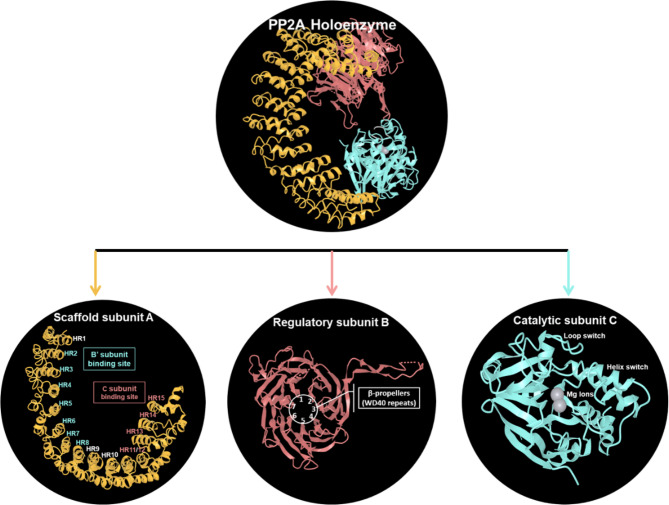
- PP2A is described as a major serine/threonine phosphatase that dephosphorylates over 300 substrates and is involved in more than 90 distinct holoenzyme assembly combinations.
- In glioma/GBM, restoration of PPP2R2C/B55γ inhibited colony formation and suppressed proliferation in both in vitro and in vivo models; B55γ overexpression also decreased S6 kinase (S6K) phosphorylation.
- In mouse models, Aα mutations or loss of B′ subunits promoted tumors: E64D/+, del5-6/+, and del5-6/E64D mice showed an approximately 50% increased lung cancer rate after benzopyrene exposure versus wild-type mice; B56δ KO animals developed malignant lymphomas and up to 60% of the oldest mice developed HCC.
- The review notes therapeutic candidates and reported effects including LB-100 potentiating CAR-T efficacy in GBM via mTORC1 activation, and DBK-061/DBK-1154 (as named in the text) reducing intracranial tumor growth and increasing survival in GBM mouse models.
## Methods
- Narrative review/overview of the PP2A literature, with a historical section, structural summary, and disease-by-disease discussion across cancers and selected neurodevelopmental disorders.
- Synthesizes published evidence from in vitro experiments, mouse knockout/knock-in models, preclinical studies, and clinical studies/trials; no new patient cohort or original experimental dataset is presented in the text provided.
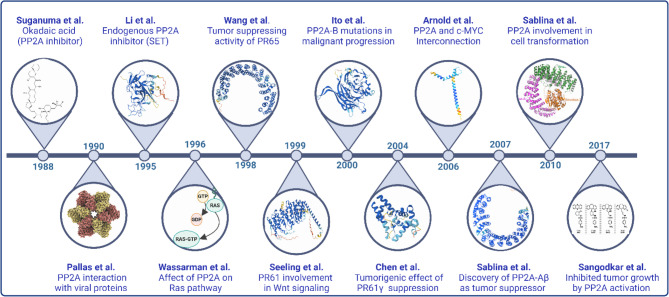
- Main analysis is qualitative and mechanistic, organizing findings around PP2A structure, dysregulation, therapeutic modulation, PPP2R2C/B55γ, splice variants, biomarkers, and tumor microenvironment effects.
## Limitations
- The paper explicitly notes that the functional significance of B55γ/PPP2R2C, including its transcriptional variants and protein isoforms, is incompletely understood, and that there is little direct evidence linking specific PPP2R2C splice variants to treatment-resistant GBM or prostate cancer.
- It states that specificity and delivery efficiency remain major obstacles when targeting splicing events or abnormal RNA species at the post-transcriptional level.
- Evident from the text: this is a review, so conclusions depend on heterogeneous prior studies rather than a single standardized dataset, and many claims are context-dependent across cancer types and model systems.
Model-written summary. Check it against the paper before relying on it.
Integrity signals
Registry
Cites
Statistics
Figures
Verification
Claims the paper makes
7 Valid · 0 Not valid · 98 Not checked · 13 Own results and interpretations
The cited sources support only part of this claim — read each source’s verdict below.
In the paper
“More importantly, knockout (KO) studies in mice have revealed that the homozygous deletion of PPP2R1A and PPP2CA is embryonically lethal [ 36 – 38 ].”
What the sources say
- Partly supportedcites [36] Ruediger R, Ruiz J, Walter G. Human cancer-associated mutations in the Aα subunit of protein phosphatase 2A increase lung cancer incidence in Aα knock-in and knockout mice. Mol Cell Biol. 2011;31:3832–44. https://doi.org/10.1128/MCB.05744-11. sourceExperimental — accuracy not yet measured
The Results section (“Requirement of Aα for embryonic development”) reports that mice homozygous for the Aα knockout allele produced no surviving pups and that development was blocked before E10.5. This supports embryonic lethality for PPP2R1A, but the cited paper does not report a PPP2CA knockout or establish its embryonic lethality. (LLM, conf=0.88)
- Not checked yetcites [37] Gu P, Qi X, Zhou Y, Wang Y, Gao X. Generation of Ppp2Ca and Ppp2Cb conditional null alleles in mouse. Genesis. 2012;50:429–36. https://doi.org/10.1002/dvg.20815. source
- Partly supportedcites [38] Götz J, Probst A, Ehler E, Hemmings B, Kues W. Delayed embryonic lethality in mice lacking protein phosphatase 2A catalytic subunit Calpha. Proc Natl Acad Sci U S A. 1998;95:12370–5. https://doi.org/10.1073/pnas.95.21.12370. sourceExperimental — accuracy not yet measured
The Results and Discussion report that no homozygous Cα-null mice were found among more than 350 offspring, supporting embryonic lethality for the PP2A Cα gene (PPP2CA). This paper does not report a PPP2R1A knockout or a combined deletion of the two genes. (LLM, conf=0.88)
boostedstates a cause- Asserted: passes — The authors put it forward as true.
- Checkable: passes — It can be checked against evidence.
- Load-bearing: unclear — It is unclear whether the paper’s conclusions depend on it.
- Based: passes — The paper gives a reason why it holds.
- Partly supported
Every source the paper cites for this claim was checked and supports it.
In the paper
“Clinically relevant examples include HER2 splice variants (lacking exon 16) that confer resistance to trastuzumab [ 256 ].”
What the sources say
- Supportedcites [256] Mitra D, Brumlik MJ, Okamgba SU, Zhu Y, Duplessis TT, Parvani JG, et al. An oncogenic isoform of HER2 associated with locally disseminated breast cancer and trastuzumab resistance. Mol Cancer Ther. 2009;8:2152–62. https://doi.org/10.1158/1535-7163.MCT-09-0295. source
The HER2Δ16 Is a Tumor-Specific HER2 Oncogenic Isoform section identifies HER2Δ16 as a splice isoform with an exon 16 deletion. The Introduction reports that tumor cell lines expressing HER2Δ16 resist trastuzumab. The paper presents this as a preclinical finding, not a clinically verified treatment response. (LLM, conf=0.92)
plainstates a cause- Asserted: passes — The authors put it forward as true.
- Checkable: passes — It can be checked against evidence.
- Load-bearing: unclear — It is unclear whether the paper’s conclusions depend on it.
- Based: passes — The paper gives a reason why it holds.
- Supported
Every source the paper cites for this claim was checked and supports it.
In the paper
“and the oncoprotein CIP2A blocks PP2A-B56α to stabilize c-MYC in HNC [ 195 ].”
What the sources say
- Supportedcites [195] Junttila MR, Puustinen P, Niemelä M, Ahola R, Arnold H, Böttzauw T, et al. CIP2A inhibits PP2A in human malignancies. Cell. 2007;130:51–62. https://doi.org/10.1016/j.cell.2007.04.044. source
The Results state that B56α is required to recruit PP2A to c-Myc and that CIP2A inhibits c-Myc-associated PP2A activity. In HNSCC cell lines, CIP2A depletion increased that activity and reduced c-Myc protein levels. The claim is supported as inhibition of PP2A activity, rather than a block of PP2A recruitment. (LLM, conf=0.88)
plainstates a cause- Asserted: passes — The authors put it forward as true.
- Checkable: passes — It can be checked against evidence.
- Load-bearing: unclear — It is unclear whether the paper’s conclusions depend on it.
- Based: passes — The paper gives a reason why it holds.
- Supported
A conclusion the paper draws from its own results — it cites no other source for it, so there is none to check. The quote shows it is in the paper.
In the paper
“Considering the substantial involvement of PP2A in cell cycle regulation, tumor development, and various neurodevelopmental disorders, PP2A has emerged as a promising target for therapeutic approaches in cancer research.”
plain- Asserted: passes — The authors put it forward as true.
- Checkable: passes — It can be checked against evidence.
- Load-bearing: passes — The paper’s conclusions depend on it.
- Based: passes — The paper gives a reason why it holds.
- Rests on an assumption not shown here.
In the paper
“The structural diversity underpins their substrate and context specificity, enabling the selective recognition and dephosphorylation of a wide array of target proteins in different physiological settings using a limited and cost-efficient modular system [ 9 ].”
What the sources say
- Not checked yetcites [9] Wlodarchak N, Xing Y. Pp2a as a master regulator of the cell cycle. Crit Rev Biochem Mol Biol. 2016;51:162–84. https://doi.org/10.3109/10409238.2016.1143913. source
plainstates a cause- Asserted: passes — The authors put it forward as true.
- Checkable: passes — It can be checked against evidence.
- Load-bearing: unclear — It is unclear whether the paper’s conclusions depend on it.
- Based: passes — The paper gives a reason why it holds.
44 more claims
Create a free account to see all 118 claims and to verify the 154 references still open.
- Probably not a substantial claim. 24
- It may state two separate claims as one. 57
Self-check
Percentages, sums and reported differences re-computed from the paper’s own numbers.
Each contradiction between two passages listed here was confirmed by an independent check.
Rated minor: it would not touch a result — a value no result rests on, a p-value that stays on the same side of the significance level, or a conflict that is clerical, resolved elsewhere in the paper, or outside its own findings.
In the paper
“reduced expression of both scaffold (PP2A-Aα and PP2A-Bα) and regulatory (PP2A-B′α) subunits.”
“This core enzyme combines with a variable regulatory B subunit (PP2A-B) to complete the holoenzyme”
Rated minor: it would not touch a result — a value no result rests on, a p-value that stays on the same side of the significance level, or a conflict that is clerical, resolved elsewhere in the paper, or outside its own findings.
In the paper
“One notable mutation is P179R”
“arginine (R) is replaced by proline (P) at residue 179.”
Rated minor: it would not touch a result — a value no result rests on, a p-value that stays on the same side of the significance level, or a conflict that is clerical, resolved elsewhere in the paper, or outside its own findings.
In the paper
“this downregulation improves glucose homeostasis (favoring gluconeogenesis) by suppressing S6K phosphorylation.”
“Conversely, PPP2R2C overexpression led to decreased S6 kinase (S6K) phosphorylation”
Citations
Cites
Items 201–287 of 287
B56γ Tumor-Associated Mutations Provide New Mechanisms for B56γ-PP2A Tumor Suppressor Activity
Nobumori, Y., Shouse, G. P., Wu, Y., Lee, K. J., Shen, B., & Liu, X. (2013) · Molecular Cancer Research · doi:10.1158/1541-7786.mcr-12-0633 · Cited by 33 · cited 1×
“…tumor-suppressive functions in prostate [77], ovarian, and breast cancer patients [1] ∎ PPP2R5C reduced tumor-suppressive functions in lung cancer [78] Upregulation of PPP2R2A (PR55α) was observed in pancreatic ductal adenocarcinoma (PDAC) independent of mutation [79] Downregulation of PPP2R3B ,…”
Chao, T.-T., Wang, C., Lai, C., Chen, Y., Tsai, Y.-T., Chen, P.-T., Lin, H.-I., Huang, Y.-C. T., Shiau, C., Yu, C., et al. (2014) · Journal of Pharmacology and Experimental Therapeutics · doi:10.1124/jpet.114.215418 · Cited by 33 · cited 2×
“…its interaction with Hsp70-interacting protein (CHIP), triggering ubiquitination and leading to subsequent CIP2A degradation [211] TD-19 NSCLC [212] No clinical trial Induces apoptosis through CIP2A/PP2A/p-AKT pathway [212] FTY720 AML [213] CLL [214] Inhibits SET–PP2A binding [213]; activates…”
Protein serine/threonine phosphatases as binding proteins for okadaic acid
Nagao, M., Shima, H., Nakayasu, M., & Sugimura, T. (1995) · Mutation research. Fundamental and molecular mechanisms of mutagenesis · doi:10.1016/0027-5107(95)00143-3 · Cited by 33 · cited 1×
“This pivotal study provided new insights into the role of PP2A inhibition in tumor progression [16, 17].”
Guo, X.-D., Ji, J., Xue, T.-F., Sun, Y., Guo, R., Cheng, H., & Sun, X. (2020) · Frontiers in Immunology · doi:10.3389/fimmu.2020.00178 · Cited by 33 · cited 1×
“…binding [213]; activates protein kinase C, inhibits PP2A by phosphorylation of PP2A-C T307, activates PP2A-A, and requires intact/unmutated B55α [215–218] OSU-2 S Mantle cell lymphoma NSCLC [219, 220] Interactions with the immune system [221] Inhibits the SET–PP2A binding [222] MP07-66 CLL…”
Ppp2ca knockout in mice spermatogenesis
Pan, X., Chen, X., Tong, X., Tang, C., & Li, J. (2015) · Reproduction · doi:10.1530/rep-14-0231 · Cited by 32 · cited 1×
“…No mesoderm formation Cα cKO (G) [37] Lethal Cα cKO (O) [143] Female infertility Chromosomal misalignment Impaired AurK B/C inhibition Cα cKO (G) [144] Male infertility Cα cKO (H.C.) [145] Lethal ↓ Fetal liver erythropoiesis ↑ Apoptosis ↓ p-STAT5 Impaired Bclx signaling Cα cKO (Ma) [146] ↑…”
Wang, S., Xie, W., Wang, D., Peng, Z., Zheng, Y., Liu, N., Dai, W., Wang, Y., Wang, Z., Yang, Y., et al. (2015) · Oncotarget · doi:10.18632/oncotarget.3665 · Cited by 32 · cited 1×
“…NSCLC [219, 220] Interactions with the immune system [221] Inhibits the SET–PP2A binding [222] MP07-66 CLL [216] Under investigation Disrupts the SET–PP2A complex [216] TGI1002 Chronic myeloid leukemia (CML) [223] No clinical trial Inhibits the SET–PP2A interaction and increases PP2A activity [223]”
Critical role of striatin in blood pressure and vascular responses to dietary sodium intake
Garza, A. E., Pojoga, L. H., Moize, B., Hafiz, W. M., Opsasnick, L. A., Siddiqui, W. T., Horenstein, M., Adler, G. K., Williams, G. H., & Khalil, R. A. (2015) · Hypertension · doi:10.1161/hypertensionaha.115.05600 · Cited by 31
Liver-specific deletion of Ppp2cα enhances glucose metabolism and insulin sensitivity
Xian, L., Hou, S., Huang, Z., Tang, A., Shi, P., Wang, Q., Song, A., Jiang, S., Lin, Z., Guo, S., et al. (2015) · Aging · doi:10.18632/aging.100725 · Cited by 31 · cited 1×
“…↓ Fetal liver erythropoiesis ↑ Apoptosis ↓ p-STAT5 Impaired Bclx signaling Cα cKO (Ma) [146] ↑ Antiviral response ↑ Type I IFN signaling Cα cKO (H) [147] ↑ Glycogen storage ↑ Insulin sensitivity ↑ Akt Cα cKO (H) [148] ↓ Liver injury (CCl4 − ) ↓ TGF-ß1/SMAD signaling Cα cKO (CNS) [149] Microcephaly…”
Nasa, I., Cressey, L. E., Kruse, T., Hertz, E. P. T., Gui, J., Graves, L. M., Nilsson, J., & Kettenbach, A. N. (2020) · Science Signaling · doi:10.1126/scisignal.aba7823 · Cited by 30 · cited 1×
“…B55/B56 subunits [85–87] - Phosphorylation of PP2A-C at T304 by CDK1-cyclin B disrupts holoenzyme formation by inhibiting the binding of B55 [88] - Ubiquitination of PP2A-C promotes its degradation; the Alpha4–MID1 complex inhibits this process by preventing polyubiquitination [89, 90] ∎…”
Regulation and role of the PP2A-B56 holoenzyme family in cancer
Peris, I., Romero-Murillo, S., Vicente, C., Narla, G., & Odero, M. D. (2023) · Biochimica et Biophysica Acta (BBA) - Reviews on Cancer · doi:10.1016/j.bbcan.2023.188953 · Cited by 30 · cited 1×
“For instance, suppressed B55α disrupts cell–cycle proteins such as Cyclin D1, promoting metastasis in breast and lung cancers [282], while overexpressed B56γ paradoxically inactivates PP2A in T-cell leukemia [283].”
Deichmann, M., Polychronidis, M., Wacker, J., Thome, M., & Näher, H. (2001) · Melanoma Research · doi:10.1097/00008390-200112000-00004 · Cited by 30
Cristobal, I., Cirauqui, C., Castello-Cros, R., Garcia-Orti, L., Calasanz, M. J., & Odero, M. D. (2013) · Haematologica · doi:10.3324/haematol.2013.084731 · Cited by 30
Protein phosphatase subunit G5PR is needed for inhibition of B cell receptor-induced apoptosis
Xing, Y., Igarashi, H., Wang, X., & Sakaguchi, N. (2005) · The Journal of Experimental Medicine · doi:10.1084/jem.20050637 · Cited by 30
Chen, W., Gu, P., Jiang, X., Ruan, H.-B., Li, C., & Gao, X. (2011) · The American Journal of Pathology · doi:10.1016/j.ajpath.2011.01.041 · Cited by 30 · cited 1×
“…Lethal Cα cKO (O) [143] Female infertility Chromosomal misalignment Impaired AurK B/C inhibition Cα cKO (G) [144] Male infertility Cα cKO (H.C.) [145] Lethal ↓ Fetal liver erythropoiesis ↑ Apoptosis ↓ p-STAT5 Impaired Bclx signaling Cα cKO (Ma) [146] ↑ Antiviral response ↑ Type I IFN signaling…”
Grochola, L. F., Vázquez, A., Bond, E. E., Würl, P., Taubert, H. W., Müller, T. H., Levine, A. J., & Bond, G. L. (2009) · Clinical Cancer Research · doi:10.1158/1078-0432.ccr-09-0797 · Cited by 30
Shouse, G., de Necochea-Campion, R., Mirshahidi, S., Liu, X., & Chen, C.-S. (2016) · Oncotarget · doi:10.18632/oncotarget.11209 · Cited by 29 · cited 1×
“Acute myeloid leukemia (AML) [123] E83*, G29* (LOF) [123 Lack of canonical cancer hotspots or known oncogenic mutations (TCGA).”
Functional importance of PP2A regulatory subunit loss in breast cancer
Watt, L. F., Panicker, N., Mannan, A., Copeland, B., Kahl, R. G. S., Dun, M. D., Young, B., Roselli, S., & Verrills, N. M. (2017) · Breast Cancer Research and Treatment · doi:10.1007/s10549-017-4403-5 · Cited by 29 · cited 3×
“PP2A is a crucial member of the tumor suppressor family, and its alteration has been linked to various human malignancies, such as breast [1, 2], oral [3], brain [4], and colorectal cancers (CRC) [5].”
PP2A regulates kinetochore-microtubule attachment during meiosis I in oocyte
Tang, A., Shi, P., Song, A., Zou, D., Zhou, Y., Gu, P., Huang, Z., Wang, Q., Lin, Z., & Gao, X. (2016) · Cell Cycle · doi:10.1080/15384101.2016.1175256 · Cited by 29 · cited 2×
“Impaired chromatin remodeling PPP2CB (U/ES/S/E) Cβ cKO (G) [37] Cβ cKO (O) [143] PPP2R2A (ES/S/E) B55α ↓ (H.M.) [161] B55α ↓ (H.M.) plus IR-KO [161] ↓ Insulin sensitivity Type 2 diabetes ↓ Akt/p-Akt signaling ↓ Akt/p-Akt signaling Table 4 Mouse model studies of PP2A subunit mutations across cancer…”
Liu, B., Sun, L.-H., Huang, Y.-F., Guo, L.-J., & Luo, L.-S. (2018) · The International Journal of Biochemistry & Cell Biology · doi:10.1016/j.biocel.2017.12.015 · Cited by 29 · cited 1×
“…signaling Cα cKO (H) [147] ↑ Glycogen storage ↑ Insulin sensitivity ↑ Akt Cα cKO (H) [148] ↓ Liver injury (CCl4 − ) ↓ TGF-ß1/SMAD signaling Cα cKO (CNS) [149] Microcephaly ↓ Plasticity ↑ Hippo-p73 signaling ↑ Apoptosis Cα cKO (C) [150] Hypertrophy ↑ Glycolysis ↑ ß-oxidation ↓ Fatty acid transport”
The protein phosphatase 2A regulatory subunit PR70 is a gonosomal melanoma tumor suppressor gene
van Kempen, L. C. L., Redpath, M., Elchebly, M., Klein, K. O., Papadakis, A. I., Wilmott, J. S., Scolyer, R. A., Edqvist, P.-H., Pontén, F., Schadendorf, D., et al. (2016) · Science Translational Medicine · doi:10.1126/scitranslmed.aai9188 · Cited by 29 · cited 1×
“…of PPP2R3B , linked to X chromosome inactivation, was associated with tumorigenesis in females with breast, ovarian, and melanoma tumors [80] Loss of heterozygosity in: ∎ PPP2R1B led to the generation of a dysfunctional protein incapable of binding to the C subunit [81] ∎ PPP2R2A…”
Identification and characterization of protein phosphatase 2C activation by ceramide
Perry, D. M., Kitatani, K., Roddy, P. L., El-Osta, M., & Hannun, Y. A. (2012) · Journal of Lipid Research · doi:10.1194/jlr.m025395 · Cited by 29
PP2A and Its Inhibitors in Helper T-Cell Differentiation and Autoimmunity
Khan, M. M., Ullah, U., Khan, M. H., & Lahesmaa, R. (2022) · Frontiers in Immunology · doi:10.3389/fimmu.2021.786857 · Cited by 28 · cited 1×
“Due to its pleiotropic functions, the modulation of PP2A activity can have widespread and sometimes unpredictable effects on cellular homeostasis, leading to unintended consequences such as impaired immune responses or metabolic dysregulation [276].”
Regulation of PP2A, PP4, and PP6 holoenzyme assembly by carboxyl-terminal methylation
Lyons, S. P., Greiner, E. C., Cressey, L. E., Adamo, M. E., & Kettenbach, A. N. (2021) · Scientific Reports · doi:10.1038/s41598-021-02456-z · Cited by 27 · cited 1×
“By contrast, the PR72 and Strn subfamilies showed independence from the carboxymethylation of the AC dimer [66].”
In silico analysis of alternative splicing on drug-target gene interactions
Ji, Y., Mishra, R. K., & Davuluri, R. V. (2020) · Scientific Reports · doi:10.1038/s41598-019-56894-x · Cited by 27 · cited 1×
“A comprehensive drug–target analysis revealed that 76% of 883 small-molecule oncology therapeutics could either miss their intended isoform or affect unintended variants in healthy tissues [254].”
Phosphatase Specificity and Pathway Insulation in Signaling Networks
Rowland, M. A., Harrison, B., & Deeds, E. J. (2015) · Biophysical Journal · doi:10.1016/j.bpj.2014.12.011 · Cited by 27 · cited 1×
“The regulation of PP2A is controlled through multiple mechanisms to maintain cellular homeostasis and prevent uncontrolled proliferation [68, 69].”
Dias, M. H., Liudkovska, V., Navarro, J. M., Giebel, L., Champagne, J., Papagianni, C., Bleijerveld, O. B., Velds, A., Agami, R., Bernards, R., et al. (2024) · EMBO Reports · doi:10.1038/s44319-024-00128-3 · Cited by 26 · cited 1×
“…trial Binds to A subunit, inhibiting PP2A assembly with B56α [107] LB-100 Resistant HER2-positive breast cancer CRC [227] Adverse splicing events [228] Binds to the C subunit and disrupts/impairs the holoenzyme conformation [229] Preclinical studies have demonstrated that LB-100-medi-ated PP2A…”
PP2A and cancer epigenetics: a therapeutic opportunity waiting to happen
Tinsley, S. L., & Allen-Petersen, B. L. (2022) · NAR Cancer · doi:10.1093/narcan/zcac002 · Cited by 26 · cited 1×
“The regulatory subunit is grouped into B (PR55/B55), B ′ (PR61/B56), B ″ (PR48/PR70/PR72/ PR130), and B ‴ (PR93/PR110/STRN), allowing for over 90 distinct holoenzyme assembly combinations, thus resulting in diverse PP2A functionalities [12, 53].”
PP2A-B55 Holoenzyme Regulation and Cancer
Goguet-Rubio, P., Amin, P., Awal, S., Vigneron, S., Charrasse, S., Méchali, F., Labbé, J. C., Lorca, T., & Castro, A. (2020) · Biomolecules · doi:10.3390/biom10111586 · Cited by 25 · cited 2×
“Furthermore, PP2A regulates c-MYC by dephosphorylating key residues, with PP2A-B55α targeting S62 to stabilize c-MYC and PP2A-B56α targeting T58 to promote its degradation, thus regulating tumor growth [186–188].”
CIP2A protein expression in high‐grade, high‐stage bladder cancer
Huang, L. P., Savoly, D., Sidi, A. A., Adelson, M. E., Mordechai, E., & Trama, J. P. (2012) · Cancer Medicine · doi:10.1002/cam4.15 · Cited by 25 · cited 1×
“More importantly, CIP2A overexpression has been detected in a broad range of malignancies, including hepatocellular carcinoma (HCC) [111] and bladder carcinoma, in which its expression correlates with disease progression [112].”
Velmurugan, B. K., Lee, C., Chiang, S., Hua, C., Chen, M., Lin, S., Yeh, K., & Ko, Y. (2017) · Journal of Cellular Physiology · doi:10.1002/jcp.26001 · Cited by 25 · cited 2×
“PP2A is a crucial member of the tumor suppressor family, and its alteration has been linked to various human malignancies, such as breast [1, 2], oral [3], brain [4], and colorectal cancers (CRC) [5].”
Everett, A. D., Kamibayashi, C., & Brautigan, D. L. (2002) · American Journal of Physiology-Lung Cellular and Molecular Physiology · doi:10.1152/ajplung.00262.2001 · Cited by 24
Mani, R., Chiang, C., Frissora, F. W., Yan, R., Mo, X. M., Baskar, S., Rader, C. M., Klisovic, R. B., Phelps, M. A., Chen, C., et al. (2015) · Experimental Hematology · doi:10.1016/j.exphem.2015.04.008 · Cited by 24 · cited 1×
“…inhibits PP2A by phosphorylation of PP2A-C T307, activates PP2A-A, and requires intact/unmutated B55α [215–218] OSU-2 S Mantle cell lymphoma NSCLC [219, 220] Interactions with the immune system [221] Inhibits the SET–PP2A binding [222] MP07-66 CLL [216] Under investigation Disrupts the SET–PP2A…”
Oncogenes and cell proliferation
Broach, J. R., & Levine, A. J. (1997) · Current Opinion in Genetics & Development · doi:10.1016/s0959-437x(97)80102-5 · Cited by 23 · cited 1×
“Indeed, many proto-oncogenes encode protein kinases [182], and several canonical oncogenic signaling cascades are subject to tight regulation by PP2A.”
Pleiotropy of PP2A Phosphatases in Cancer with a Focus on Glioblastoma IDH Wildtype
Kashani, E., & Vassella, E. (2022) · Cancers · doi:10.3390/cancers14215227 · Cited by 22 · cited 1×
“Its expression is highly tissue specific, with elevated levels predominantly observed in neuronal tissues, such as the cerebral cortex and basal ganglia, which enables some degree of specificity as a tumor target and provides further proof of its key role in neuronal cells [247].”
Tian, L., Zhang, X., Haesen, D., Bravo, J., Fominaya, J. M., Choquet, S., Zini, J. M., Loisel, S., Waelkens, E., Janssens, V., et al. (2017) · International Journal of Peptide Research and Therapeutics · doi:10.1007/s10989-017-9633-1 · Cited by 22 · cited 1×
“Among the inhibitors, SET directly [193] binds to the PP2A-C subunit, blocking its activity [194], while CIP2A interferes with the dephosphorylation of critical oncogenic targets, including c-MYC and Akt [195], thereby stabilizing malignant pathways.”
FTY720 Inhibits Expansion of Breast Cancer Stem Cells via PP2A Activation
Hirata, N., Yamada, S., Yanagida, S., Ono, A., & Kanda, Y. (2021) · International Journal of Molecular Sciences · doi:10.3390/ijms22147259 · Cited by 22
Lu, N., Liu, Y., Tang, A., Chen, L., Miao, D., & Yuan, X. (2015) · BioMed Research International · doi:10.1155/2015/794862 · Cited by 21 · cited 1×
“…signaling Cα cKO (Ma) [146] ↑ Antiviral response ↑ Type I IFN signaling Cα cKO (H) [147] ↑ Glycogen storage ↑ Insulin sensitivity ↑ Akt Cα cKO (H) [148] ↓ Liver injury (CCl4 − ) ↓ TGF-ß1/SMAD signaling Cα cKO (CNS) [149] Microcephaly ↓ Plasticity ↑ Hippo-p73 signaling ↑ Apoptosis Cα cKO (C) [150]…”
Lacroix, B., Lorca, T., & Castro, A. (2022) · Frontiers in Cell and Developmental Biology · doi:10.3389/fcell.2022.967909 · Cited by 21
CIP2A promotes T-cell activation and immune response to Listeria monocytogenes infection
Côme, C., Cvrljevic, A., Khan, M. M., Treise, I., Adler, T., Aguilar-Pimentel, J. A., Au-Yeung, B., Sittig, E., Laajala, T. D., Chen, Y., et al. (2016) · PLoS ONE · doi:10.1371/journal.pone.0152996 · Cited by 20 · cited 1×
“Notably, several studies have demonstrated that PP2A is involved in CD4 + T-cell activation and differentiation [284, 285].”
Profiling metabolic remodeling in PP2Acα deficiency and chronic pressure overload mouse hearts
Dong, D., Li, L., Gu, P., Jin, T., Wen, M., Yuan, C., Gao, X., Liu, C., & Zhang, Z. (2015) · FEBS Letters · doi:10.1016/j.febslet.2015.10.016 · Cited by 20 · cited 1×
“…signaling Cα cKO (H) [147] ↑ Glycogen storage ↑ Insulin sensitivity ↑ Akt Cα cKO (H) [148] ↓ Liver injury (CCl4 − ) ↓ TGF-ß1/SMAD signaling Cα cKO (CNS) [149] Microcephaly ↓ Plasticity ↑ Hippo-p73 signaling ↑ Apoptosis Cα cKO (C) [150] Hypertrophy ↑ Glycolysis ↑ ß-oxidation ↓ Fatty acid transport”
PPP2R1B is modulated by ubiquitination and is essential for spermatogenesis
Du, M., Yuan, L., Zhang, Z., Zhang, C., Zhu, M., Zhang, Z., Li, R., Zhao, X., Liang, H., Li, Y., et al. (2021) · The FASEB Journal · doi:10.1096/fj.202002810r · Cited by 20 · cited 1×
“…mTORC1 Aα cKO (B-cells) [140] ↓ B cell survival Impaired redirection of glycolysis to PPP Aα transgene (M) [141] Cardiomyopathy PPP2R1B (U/ES/S) Aβ [142] Male infertility Meiotic arrest in spermatocytes Cα KO [38] Lethal (embryo) No mesoderm formation Cα cKO (G) [37] Lethal Cα cKO (O) [143] Female…”
Xing, J., Chen, K., Gao, S., Pousse, M., Ying, Y., Wang, B., Chen, L., Wang, C., Wang, L., Hu, W., et al. (2023) · Aging Cell · doi:10.1111/acel.13780 · Cited by 19 · cited 1×
“For instance, B55γ, B55β, and B56ε are predominantly expressed in the brain [55] and have been associated with brain tumors, neurodegenerative diseases [56, 57], and intellectual disabilities [58].”
Janghorban, M., Langer, E. M., Wang, X., Zachman, D., Daniel, C. J., Hooper, J., Fleming, W. H., Agarwal, A., & Sears, R. C. (2017) · PLoS ONE · doi:10.1371/journal.pone.0188910 · Cited by 19 · cited 2×
“The loss of B56α did not affect the progression to squamous cell carcinoma, suggesting that B56α primarily inhibits tumor initiation [164].”
Patterning and gastrulation defects caused by the tw18 lethal are due to loss of Ppp2r1a
Lange, L., Marks, M., Liu, J., Wittler, L., Bauer, H., Piehl, S., Bläß, G., Timmermann, B., & Herrmann, B. G. (2017) · Biology Open · doi:10.1242/bio.023200 · Cited by 19
PPP2R1A mutations cause ATR inhibitor sensitivity in ovarian clear cell carcinoma
Stewart, J., Krastev, D. B., Brough, R., Zatreanu, D. A., Song, F., Baxter, J. S., Sridhar, S., Frankum, J. R., Konde, A., Yang, W. W., et al. (2025) · Oncogene · doi:10.1038/s41388-024-03265-0 · Cited by 19 · cited 2×
“…and heterozygote deletions of exons [116] Colon adenocarcinoma [116] Lung adenocarcinoma [116] Ovarian clear-cell carcinoma [117] R183W [116, 117] These hotspot LOF mutations in HR5 and HR7 disrupt interactions with PP2A-C [118], B55, and B56 subunits [116, 118, 119], impairing the PP2A…”
PP2A subunit PPP2R2C is downregulated in the brains of Alzheimer’s transgenic mice
Leong, W., Xu, W. L., Wang, B., Gao, S., Zhai, X., Wang, C., Gilson, É., Ye, J., & Lu, Y. (2020) · Aging · doi:10.18632/aging.103048 · Cited by 19 · cited 1×
“For instance, B55γ, B55β, and B56ε are predominantly expressed in the brain [55] and have been associated with brain tumors, neurodegenerative diseases [56, 57], and intellectual disabilities [58].”
Li, Y., Cao, Y., Wu, X. L., Han, G., Wang, L., Zhang, Y., Chen, X., Hao, B., Yue, Z., & Liu, J. (2015) · Cancer Cell International · doi:10.1186/s12935-015-0164-6 · Cited by 18 · cited 3×
“Conversely, PPP2R2C overexpression led to decreased S6 kinase (S6K) phosphorylation, a downstream target of the mTOR pathway, suggesting S6K as a key substrate of B55γ [10, 108].”
Structural basis for PTPA interaction with the invariant C-terminal tail of PP2A
Löw, C., Quistgaard, E. M., Kovermann, M., Anandapadamanaban, M., Balbach, J., & Nordlund, P. (2014) · Biological Chemistry · doi:10.1515/hsz-2014-0106 · Cited by 18
Investigation of PP2A and Its Endogenous Inhibitors in Neuroblastoma Cell Survival and Tumor Growth
Williams, A. P., Garner, E. F., Waters, A. M., Stafman, L. L., Aye, J. M., Markert, H. R., Stewart, J. E., & Beierle, E. A. (2018) · Translational Oncology · doi:10.1016/j.tranon.2018.09.011 · Cited by 18 · cited 2×
“These approaches can be broadly categorized into (i) direct pharmacological activation or inhibition of PP2A holoenzymes, (ii) selective targeting of regulatory subunits to restore tumor-suppressive phosphatase activity, and (iii) disruption of endogenous PP2A regulators [110].”
Role of CIP2A in the antitumor effect of bortezomib in colon cancer
Ding, Y., Wang, Y., Ju, S.-Q., Wu, X., Zhu, W., SHI, F., & MAO, L. (2014) · Molecular Medicine Reports · doi:10.3892/mmr.2014.2173 · Cited by 18
Pusey, M., Bail, S., Xu, Y., Buiakova, O. I., Nestor, M., Yang, J., & Rice, L. M. (2016) · Tumor Biology · doi:10.1007/s13277-016-5036-8 · Cited by 18 · cited 1×
“Endometrial adenocarcinoma Xenograft tumor models [224] No clinical trial Inhibits the PME-1-PP2A-A–PP2A-B interaction [224] PP2A-inhibiting drugs targeting specific PP2A subunits SMAPs PDAC [225, 226] No clinical trial Binds to A subunit, inhibiting PP2A assembly with B56α [107] LB-100 Resistant…”
Folliculitis-perifolliculitis related to erlotinib therapy spares previously irradiated skin
Acharya, J., Lyon, C. C., & Bottomley, D. (2008) · Journal of the American Academy of Dermatology · doi:10.1016/j.jaad.2008.07.057 · Cited by 18
PP2A as a potential therapeutic target for breast cancer: Current insights and future perspectives
Qi, Y., Li, L., Wei, Y., & Ma, F. (2024) · Biomedicine & Pharmacotherapy · doi:10.1016/j.biopha.2024.116398 · Cited by 17 · cited 4×
“PP2A constitutes about 1% of all cellular proteins and represents more than 70% of neuronal phosphatases, underscoring its important role in general and in the nervous system in particular [6, 12, 13].”
InfluentialMo, S.-T., Chiang, S.-J., Lai, T.-Y., Cheng, Y.-L., Chung, C.-E., Kuo, S. C. H., Reece, K. M., Chen, Y.-C., Chang, N., Wadzinski, B. E., et al. (2014) · PLoS ONE · doi:10.1371/journal.pone.0116074 · Cited by 17 · cited 1×
“The mechanism of how the individual regulatory B subunits identify the AC dimer for assembling into the holoenzyme remains partially understood [33, 59, 60].”
A novel SIK2 inhibitor SIC-19 exhibits synthetic lethality with PARP inhibitors in ovarian cancer
Wang, F., Yu, X., Qian, J., Cao, Y., Dong, S., Zhan, S., Lü, Z., Bast, R. C., Song, Q., Chen, Y., et al. (2024) · Drug Resistance Updates · doi:10.1016/j.drup.2024.101077 · Cited by 16 · cited 1×
“In DNA repair, B55γ-containing holoenzymes might be able to regulate the DNA damage response by interacting with SIK2, which has been observed to exert a regulatory function in DNA damage response [244].”
Takai, M., Nakagawa, T., Tanabe, A., Terai, Y., Ohmichi, M., & Asahi, M. (2015) · Cancer Biology & Therapy · doi:10.1080/15384047.2014.1002362 · Cited by 16 · cited 1×
“Emerging evidence suggests that the HIF1α–PP2A axis mediates the cross-talk between mTOR and ERK pathways in hypoxic ovarian cancer microenvironments [274].”
Yang, X. F., Qu, K., Tao, J., Yin, G., Han, S., Liu, Q., & Sun, H. (2017) · Biochemical and Biophysical Research Communications · doi:10.1016/j.bbrc.2017.11.124 · Cited by 16 · cited 2×
“More-over, a recent study reported that CIP2A knockdown led to cell cycle arrest in the G1 phase and enhanced cellular senescence in HCC [111].”
WU, R. T., Connolly, D. C., Ren, X., Fearon, E. R., & Cho, K. R. (1999) · Neoplasia · doi:10.1038/sj.neo.7900042 · Cited by 16 · cited 2×
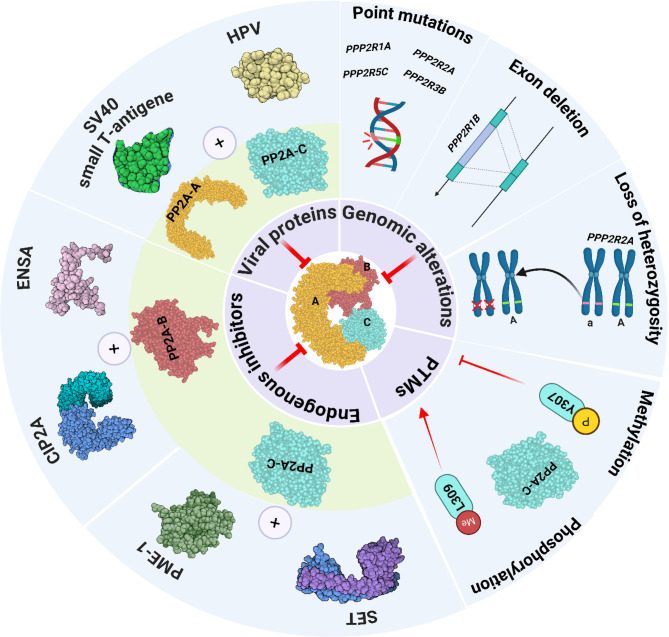
“Among these, genetic alterations in the PP2A subunit genes, namely point mutations, deletions, and loss of heterozygosity (LOH), play a central role in disrupting PP2A functions and contribute to tumorigenesis [104, 105].”
Conditional knockout in mice reveals the critical roles of Ppp2ca in epidermis development
Fang, C., Li, L., & Li, J. (2016) · International Journal of Molecular Sciences · doi:10.3390/ijms17050756 · Cited by 15 · cited 1×
“Cα cKO (E) [151] Smaller animals ↓ Akt and Wnt signaling Cα transgene (CNS) [152, 153] Tau aggregation ↑ p-Tau ↑ ERK and JNK Cα transgene (Os) [154] Larger mice ↑ Bone formation ↑ Adipogenesis ↑ PPARγ ↑ CBPα ↑ Adipogenesis Cα transgene (CNS) [155, 156] Tangles ↓ CNS development ↑ p-Tau ↑ p-Vimentin…”
Xing, Y., Wang, X., Igarashi, H., Kawamoto, H., & Sakaguchi, N. (2008) · Molecular Immunology · doi:10.1016/j.molimm.2007.10.028 · Cited by 15
Singh, D., Qiu, Z., Spehar, J. M., Fa, P., Thomas, H., Prasad, C. B., Cai, S., Wang, J. J., Yan, C., Zhang, X., et al. (2024) · Cancer Letters · doi:10.1016/j.canlet.2024.217110 · Cited by 15 · cited 2×
“The LOH of PPP2R2A in non-small cell lung cancer (NSCLC) [83] and PPP2R1A mutations in USC and UCS [104] represent additional genetic mechanisms contributing to PP2A dysregulation.”
Kolodziej, M. A., Barim, B. A., Nagl, J., Weigand, M. A., Uhl, E., Uhle, F., Fazio, P. D., Schwarm, F. P., & Stein, M. (2020) · International Journal of Oncology · doi:10.3892/ijo.2020.5114 · Cited by 14 · cited 1×
“By reactivating PP2A, FTY720 has the potential to counteract tumor growth in malignancies [113, 235] such as GBM [237].”
Gerthofer, V., Scheiter, A., Lüke, F., Keil, F., Utpatel, K., Pöhmerer, L., Seitz, J., Niessen, C., Ignatov, A., Dietmaier, W., et al. (2021) · JCO Precision Oncology · doi:10.1200/po.21.00184 · Cited by 14 · cited 1×
“PPP2R3C (B’’γ) PPP2R6A (Strn) Mesothelioma [132] Papillary thyroid cancer (TCGA) [133] Papillary renal cell carcinoma (TCGA) STRN-ALK fusion [133] STRN-driven ALK activation promoted cell proliferation independently of thyroid stimulating hormone, caused oncogenic transformation and induced tumors…”
Fingolimod Augments Monomethylfumarate Killing of GBM Cells
Dent, P., Booth, L. A., Roberts, J. L., Poklepovic, A. S., & Hancock, J. F. (2020) · Frontiers in Oncology · doi:10.3389/fonc.2020.00022 · Cited by 14 · cited 1×
“Conversely, FTY720, also known as fingolimod, serves as an activator of PP2A designed to restore its function in cancer types in which PP2A activity is suppressed [235, 236].”
Jäger, K., Mensch, J., Grimmig, M., Neuner, B., Gorzelniak, K., Türkmen, S., Demuth, I., Hartmann, A., Hartmann, C., Wittig, F., et al. (2022) · Science Advances · doi:10.1126/sciadv.abk2814 · Cited by 13 · cited 3×
“This and another study indicated that PPP2R2C is an effective suppressor of the mTOR/S6K pathway [109].”
InfluentialSelf-citationProtein phosphatase 2A B55β limits CD8+ T cell lifespan following cytokine withdrawal
Rodríguez‐Rodríguez, N., Madera-Salcedo, I. K., Cisneros-Segura, J. A., García-González, H. B., Apostolidis, S. A., Saint-Martin, A., Esquivel‐Velázquez, M., Nguyen, T., Romero‐Rodríguez, D. P., Tsokos, G. C., et al. (2020) · Journal of Clinical Investigation · doi:10.1172/jci129479 · Cited by 13
Noncanonical regulation of insulin-mediated ERK activation by phosphoinositide 3-kinase γ
Mohan, M. L., Chatterjee, A., Ganapathy, S., Mukherjee, S., Srikanthan, S., Jolly, G., Anand, R., & Prasad, S. V. N. (2017) · Molecular Biology of the Cell · doi:10.1091/mbc.e16-12-0864 · Cited by 13 · cited 1×
“PP2A dephosphorylates Akt at critical residues, thereby limiting its kinase activity [183] and functioning as an antagonist of ERK [184].”
The Pivotal Role of Protein Phosphatase 2A (PP2A) in Brain Tumors
Cucinotta, L., Filippone, A., Casili, G., Lanza, M., Bova, V., Capra, A. P., Giuffrida, R., Colarossi, C., Sciacca, D., Paterniti, I., et al. (2022) · International Journal of Molecular Sciences · doi:10.3390/ijms232415717 · Cited by 13 · cited 2×
“Under certain conditions, PP2A may also facilitate tumorigenesis [18, 19], particularly derived from studies with endogenous inhibitors, such as CIP2A (cancerous inhibitor of PP2A) and SET (SET nuclear proto-oncogene) [4, 20], or non-genomic inhibition [21].”
Kitabatake, M., Toda, T., Kuwahara, K., Igarashi, H., Ohtsuji, M., Tsurui, H., Hirose, S., & Sakaguchi, N. (2012) · The Journal of Immunology · doi:10.4049/jimmunol.1102774 · Cited by 12
Cryo-EM structures of PP2A:B55 with p107 and Eya3 define substrate recruitment
Padi, S. K. R., Godek, R. J., Peti, W., & Page, R. (2025) · Nature Structural & Molecular Biology · doi:10.1038/s41594-025-01535-3 · Cited by 12 · cited 1×
“This interaction relies on a distinct peptide-binding groove unique to B55, which is regulated by phosphorylation [67].”
Avcı, Ç. B., Şahin, F., Gündüz, C., Selvi, N., Aydın, H. H., Öktem, G., Topcuoglu, N., & Saydam, G. (2007) · Hematology · doi:10.1080/10245330701562279 · Cited by 12 · cited 1×
“In addition, it has been demonstrated that PP2A directly affects human telomerase reverse transcriptase activity [267].”
Mutant PP2A Induces IGFBP2 Secretion to Promote Development of High-Grade Uterine Cancer
Haanen, T. J., Boock, S., Callahan, C. G., Peris, I., Zawacki, K. P., Raines, B., Nino, C. A., Tran, B., Harold, A., Onishi, G. H., et al. (2024) · Cancer Research · doi:10.1158/0008-5472.can-24-1263 · Cited by 10 · cited 5×
“Here, PP2A plays a critical role in modulating paracrine signaling pathways, particularly through its regulation of insulin-like growth factor binding protein 2 [104].”
InfluentialGao, S., Shan, L., Zhang, M., Wang, Y., Zhan, X., Yin, Y., Jiang, Z., Tao, X., Li, X., Ye, M., et al. (2022) · Cellular Oncology · doi:10.1007/s13402-022-00710-8 · Cited by 10 · cited 1×
“This reduction in functional p21 levels facilitates cell cycle progression and enhances tumor sensitivity to cytotoxic therapies [231].”
LSD1-targeted therapy—a multi-purpose key to unlock immunotherapy in small cell lung cancer
Sattler, M., & Salgia, R. (2023) · Translational Lung Cancer Research · doi:10.21037/tlcr-23-40 · Cited by 10
PP2A regulatory subunit B55γ is a gatekeeper of osteoblast maturation and lineage maintenance
Serguienko, A., Hanes, R., Grad, I., Wang, M. Y., Myklebost, O., & Munthe, E. (2017) · Stem Cells and Development · doi:10.1089/scd.2017.0129 · Cited by 9 · cited 2×
“Thus, the dysregulation of this subunit could disrupt lineage commitment in bone formation while simultaneously driving mitotic errors in cancer, a duality that warrants further exploration for targeted therapies [264].”
Wang, J., Chen, Y., Li, S., Liu, W., Zhou, X. A., Luo, Y., Xu, Z., Xiong, Y., Cheng, K., Ruan, M., et al. (2023) · Journal of Clinical Investigation · doi:10.1172/jci172137 · Cited by 9 · cited 1×
“This targeted approach capitalizes on the inherent genomic instability of BRCA2 -mutant cells, resulting in mitotic catastrophe and selective tumor cell elimination while preserving normal tissue function [234].”
Özel, B., Kıpçak, S., Avcı, Ç. B., Gündüz, C., Saydam, G., Aktan, Ç., & Günel, N. S. (2022) · Medical Oncology · doi:10.1007/s12032-021-01643-2 · Cited by 8 · cited 2×
“Treatment with these inhibitors induces significant biological consequences in CML cells, including (i) the activation of apoptotic pathways and (ii) the induction of cell cycle arrest [69].”
Polubothu, S., Al-Olabi, L., Lionarons, D. A., Harland, M., Thomas, A. C., Horswell, S. D., Hunt, L., Wlodarchak, N., Paula, A., Brand, S., et al. (2021) · Genetics in Medicine · doi:10.1038/s41436-021-01204-y · Cited by 8 · cited 1×
“Germline PPP2R3B duplications in melanocytic nevi and melanoma promoted proliferation and reduced migration [131].”
Reduction of protein phosphatase 2A Cα promotes in vivo bone formation and adipocyte differentiation
Yoshida, K., Teramachi, J., Uchibe, K., Ikegame, M., Qiu, L., Yang, D., & Okamura, H. (2018) · Molecular and Cellular Endocrinology · doi:10.1016/j.mce.2017.11.005 · Cited by 7 · cited 1×
“Cα cKO (E) [151] Smaller animals ↓ Akt and Wnt signaling Cα transgene (CNS) [152, 153] Tau aggregation ↑ p-Tau ↑ ERK and JNK Cα transgene (Os) [154] Larger mice ↑ Bone formation ↑ Adipogenesis ↑ PPARγ ↑ CBPα ↑ Adipogenesis Cα transgene (CNS) [155, 156] Tangles ↓ CNS development ↑ p-Tau ↑ p-Vimentin…”
Zhang, K., Zhao, Z., Chen, J., Bao, Z., Chai, R., Sun, Z., Wu, L., Wang, Z., Liu, H., Mu, Q., et al. (2022) · Holistic Integrative Oncology · doi:10.1007/s44178-022-00014-9 · Cited by 7 · cited 1×
“In addition, splicing variants of genes such as p53 [258], BRCA1 [259], and MET [260] have been shown to alter cellular functions in ways that either promote or suppress cancer.”
The PP2A regulator IER5L supports prostate cancer progression
Crespo, J. R., Martín-Martín, N., Garcia‐Longarte, S., Corres-Mendizabal, J., Carlevaris, O., Astobiza, I., Zabala‐Letona, A., Guiu, M., Azkargorta, M., González-Lopez, M., et al. (2024) · Cell Death and Disease · doi:10.1038/s41419-024-06907-z · Cited by 6 · cited 2×
“Created using biorender.com PP2A target proteins may influence tumorigenesis in aggressive prostate cancer, in which these regulators are often upregulated [106].”
Han, M., Liu, X., Hailati, S., Nurahmat, N., Dilimulati, D., Baishan, A., Aikebaier, A., & Zhou, W. (2024) · Pharmaceuticals · doi:10.3390/ph17050582 · Cited by 5 · cited 1×
“…PP2A by phosphorylation of PP2A-C T307, activates PP2A-A, and requires intact/unmutated B55α [215–218] OSU-2 S Mantle cell lymphoma NSCLC [219, 220] Interactions with the immune system [221] Inhibits the SET–PP2A binding [222] MP07-66 CLL [216] Under investigation Disrupts the SET–PP2A…”
Proposing candidate genes under telomeric control based on cross-species position data
Projahn, E., Fuellen, G., Walter, M., & Möller, S. (2024) · NAR Genomics and Bioinformatics · doi:10.1093/nargab/lqae037 · Cited by 4 · cited 1×
“2) [265].”
Self-citationGermline mutations in PPP2R1B in patients with a personal and family history of cancer
Mazhar, S., O’Connor, C. M., Harold, A., Dowdican, A. C., Ulintz, P., Hanson, E. N., Zhang, Y., Jacobs, M. F., Merajver, S. D., Jackson, M. W., et al. (2025) · JCI Insight · doi:10.1172/jci.insight.186288 · Cited by 4 · cited 1×
“Breast carcinoma (LOF variants) [122] E6*, V115fs, R194*, R233C [122] Truncated Aβ products are unstable and fail to bind PP2A-C, leading to loss of phosphatase activity [122].”
Paradoxical action of PP2A inhibition and its potential for therapeutic sensitization
Jiang, Y., Yuan, Y., Qiao, G., Deng, Z., Liu, Z., Zhang, Y., Yu, L., Lin, H., Ma, L., & Zhang, J. (2024) · Journal of Cellular Physiology · doi:10.1002/jcp.31413 · Cited by 4 · cited 1×
“Under certain conditions, PP2A may also facilitate tumorigenesis [18, 19], particularly derived from studies with endogenous inhibitors, such as CIP2A (cancerous inhibitor of PP2A) and SET (SET nuclear proto-oncogene) [4, 20], or non-genomic inhibition [21].”
Follicular rash during therapy with erlotinib (Tarceva®)
Gerdes, S., & Mrowietz, U. (2006) · JDDG Journal der Deutschen Dermatologischen Gesellschaft · doi:10.1111/j.1610-0387.2006.06088.x · Cited by 4
Khalil, S. M., Goswami, S., Mo, X. M., & Muthusamy, N. (2019) · Blood · doi:10.1182/blood-2019-129224 · Cited by 3 · cited 1×
“…B55α [215–218] OSU-2 S Mantle cell lymphoma NSCLC [219, 220] Interactions with the immune system [221] Inhibits the SET–PP2A binding [222] MP07-66 CLL [216] Under investigation Disrupts the SET–PP2A complex [216] TGI1002 Chronic myeloid leukemia (CML) [223] No clinical trial…”
Cited by
Balancing the Edge: Phosphatases as Homeostatic Buffers of Oncogenic Kinase Signaling in Cancer
Ehm, P. A. H. (2026) · Kinases and Phosphatases · doi:10.3390/kinasesphosphatases4010004 · Cited by 2
Decreased PP2A expression and activity represent a therapeutic target for plexiform neurofibroma
Yue, M., Wang, Y., Gu, J., Zhang, C., Chen, Y., Gao, A., Choi, K., Wu, Z., Wang, Z., Pundavela, J., et al. (2026) · Acta Neuropathologica Communications · doi:10.1186/s40478-026-02315-w · Cited by 1
“The specific B subunit with which PP2A associates determines its signaling specificity and, in a context-dependent manner, its pro-or anti-tumorigenic function [21].”
Yang, P., Huang, W., Li, Q., Tu, Z., Ren, W., Shu, X., Chu, T., & Shu, P. (2026) · Journal of Inflammation Research · doi:10.2147/jir.s568022 · Cited by 1
Murr, J., Schneider, C., Duan, N., Köse, H., Rajamani, A., He, X., Buchloh, J., Hintze, C., Naik, A., Goeke, D., et al. (2026) · MedComm · doi:10.1002/mco2.70794
“Nonetheless, accumulating evidence indicates that the documented tumor-promoting functions of PP2A [ 13, 15 ] are pharmacologically exploitable targets in cancer cells.”
Targeting MYC-Driven Cancers: From Oncogenic Addiction to Therapeutic Vulnerability
Sainero‐Alcolado, L., Lama, D., Alzrigat, M., & Arsenian‐Henriksson, M. (2026) · BioDrugs · doi:10.1007/s40259-026-00798-6
“As PP2A regulates MYC dephosphorylation, a step necessary for its proteasomal degradation, pharmacologic activators of PP2A have been explored as indirect MYC inhibitors [197].”
Metadata
- Authors
- Sarais, F., Krempien, F., Koehn, C., Brewing, L., Classen, C. F., Walter, M., & Shokraie, O.
- Affiliations
- Universitätsmedizin Rostock (DE)
- Corresponding author
- Shokraie, Olia
- Venue
- Journal of Experimental & Clinical Cancer Research
- Published
- 2025-10-27
- Volume
- 44
- Issue
- 1
- Pages
- 295-295
- ISSN
- 0392-9078 (ISSN-L)
- 1756-9966
- PMC
- PMC12557939
- OpenAlex
- W4415571081
- Cited by
- 8
- References
- 287
- Citations by year
- 2026: 8
- FWCI
- 0.71
- Type
- journal article
- Language
- en
- Open access
- gold
- doi.org
- Licence
- cc-by
- creativecommons.org/licenses/by/4.0 (tdm)
- creativecommons.org/licenses/by/4.0 (vor)
- Locations
- Journal of Experimental & Clinical Cancer Research (publishedVersion, cc-by)
- Europe PMC (PubMed Central) (publishedVersion, cc-by)
- PubMed (publishedVersion)
- DOAJ (DOAJ: Directory of Open Access Journals) (submittedVersion, cc-by-sa)
- Funders
- Universitätsmedizin Rostock
- Topics
- Life Sciences › Biochemistry, Genetics and Molecular Biology › Molecular Biology › Protein Tyrosine Phosphatases
- Life Sciences › Biochemistry, Genetics and Molecular Biology › Molecular Biology › PI3K/AKT/mTOR signaling in cancer
- Life Sciences › Biochemistry, Genetics and Molecular Biology › Molecular Biology › Protein Kinase Regulation and GTPase Signaling
- Keywords
- protein phosphatase 2A, PI3K signaling, mTOR signaling, tumor suppressor function, signaling pathway dysregulation
- MeSH terms
- Animals, Humans, Neoplasms, Signal Transduction, Gene Expression Regulation, Neoplastic, Protein Phosphatase 2, Molecular Targeted Therapy
About these checks
Registry, retraction, Cites and statistics results are computed, not judged, with one exception: a printed reference that no index lists is read once by a model before it counts as a citation error. Claims are extracted by a model and kept only when their quote appears verbatim in the text; each cited source is then checked, with a model’s help, for whether it says what the claim relies on. Those verdicts can be wrong — read the claim’s quote and the cited source before relying on one.
The claim verdicts this report counts are experimental: their accuracy is not yet measured.
A language model drew the claims from the paper on 2026-10-11, under version 3 of the claim definition (model deepseek-v4.1-flash, prompt extract-v3).
A second model labelled each claim on 2026-10-11 (model jev-1.13-20260917, definition revision gold-guideline-v0.2).
Cited sources are checked with a language model’s help (gpt-6-sol).
Statistics and arithmetic are recomputed, not judged.
Confidence bands are shown only for fields calibrated on our annotated test set. None is calibrated yet, so no band is shown.
What counts as a claim ›How we measure confidence ›How we check this ›
Are you an author, or do you see a problem with this page? Request a review
Data sources
Bibliographic data: Semantic Scholar, OpenAlex, Crossref.
Contains information from the Semantic Scholar Academic Graph Datasets, made available under the ODC Attribution License (ODC-BY 1.0).
Semantic Scholar’s data is described in: Kinney, R., et al. (2023). The Semantic Scholar Open Data Platform. arXiv:2301.10140.
