

The global prevalence of ADHD in children and adolescents: a systematic review and meta-analysis
Open accessThe DOI matches its Crossref record; 81 of the 82 references it cites were found in a registry or an index; 12 of the 12 sources its claims cite were checked for support.
Abstract
Background: Attention-Deficit / Hyperactivity Disorder is a developmental neurological disorder that has three basic characteristics: Attention Deficit, Hyperactivity, and impulsivity. This study aimed to investigate the prevalence of ADHD in children and adolescents. Methods: This investigation was carried out using the meta-analysis method under PRISMA guidelines. Until October 2020, the articles were gathered by scanning PubMed, Scopus, WOS, and Science Direct databases. The second version of Comprehensive Meta-Analysis software was used to run analyses after extracting data from chosen papers. At a significance level of 0.05, the I 2 test was used to analyze study heterogeneity, and the Egger test was used to assess publication bias. Results: This analysis includes 61 cross-sectional research, with 53 research used to determine the prevalence of ADHD in children, 7.6% of 96,907 children aged 3 to 12 years had ADHD (95% confidence interval: 6.1–9.4%), and 5.6% of teenagers aged 12 to 18 years have ADHD (95% confidence interval: 4.8-7%). The prevalence of ADHD in children and adolescents according to the DSM-V criterion is also higher than previous diagnostic criteria, according to studies. Conclusion: The findings of this study based on meta-analysis show the high prevalence of attention deficit hyperactivity disorder (ADHD). The findings of this study demonstrate the importance of management and policy in the treatment and control of ADHD in children and adolescents.
Overview
CoChat Summary
TL;DR
This systematic review and meta-analysis of 61 cross-sectional studies estimated the global prevalence of ADHD in children and adolescents, finding higher prevalence in children under 12 than in adolescents 12–18. Prevalence varied by diagnostic criteria, with DSM-V yielding higher estimates than DSM-IV or ICD-10-based criteria.
Key findings
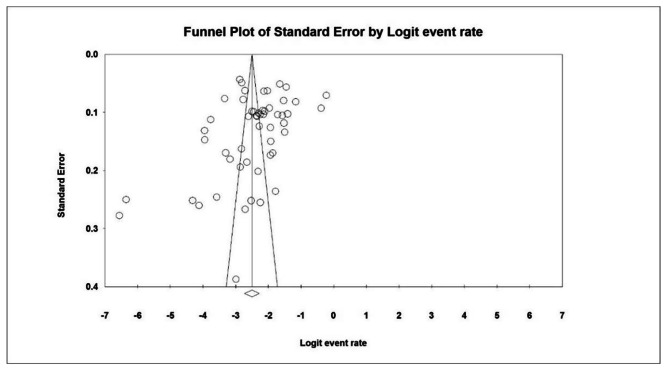
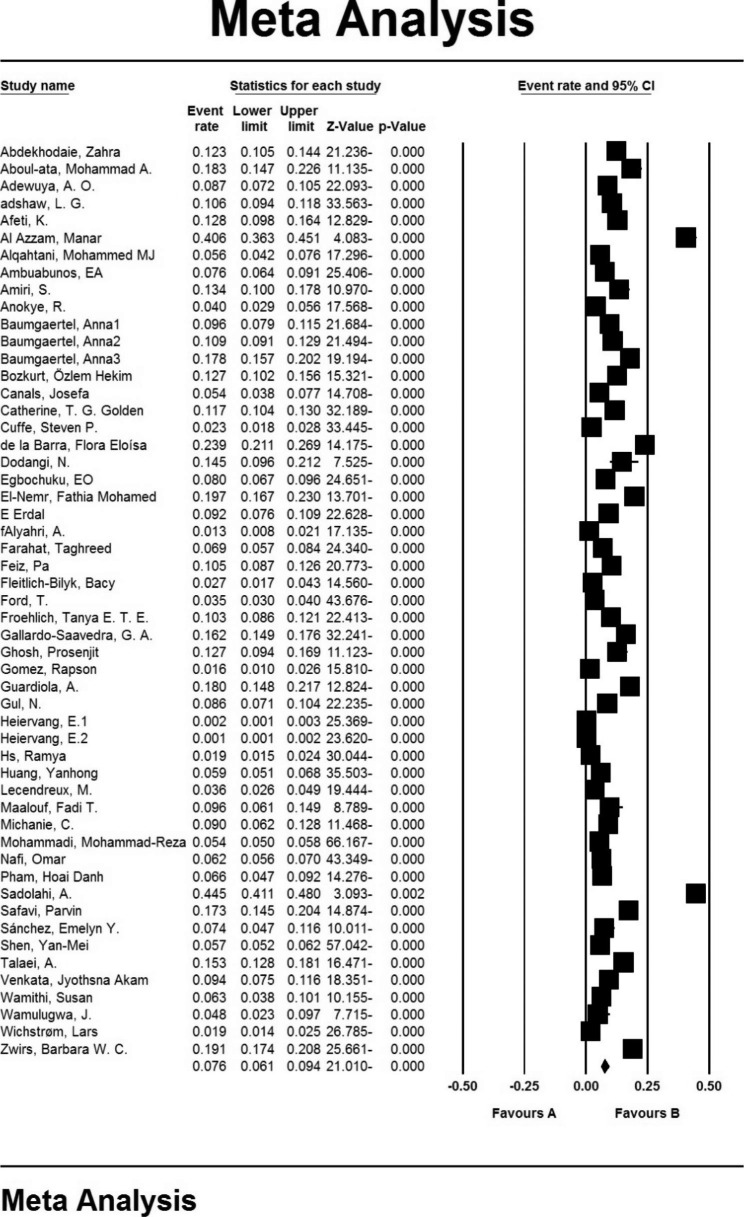
- Among 53 studies of children under 12, ADHD prevalence was 7.6% (95% CI 6.1–9.4%); the abstract reports a sample of 96,907 children, while the results text reports 96,904.
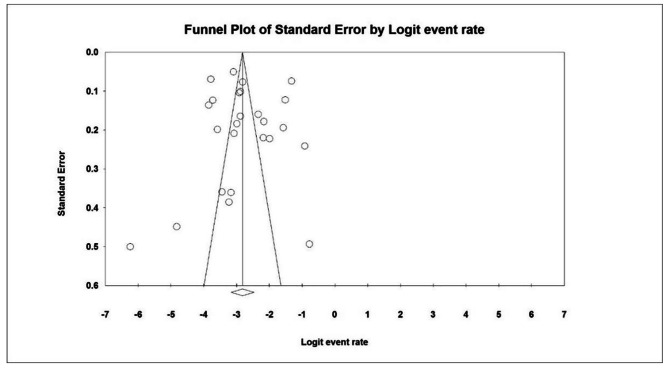
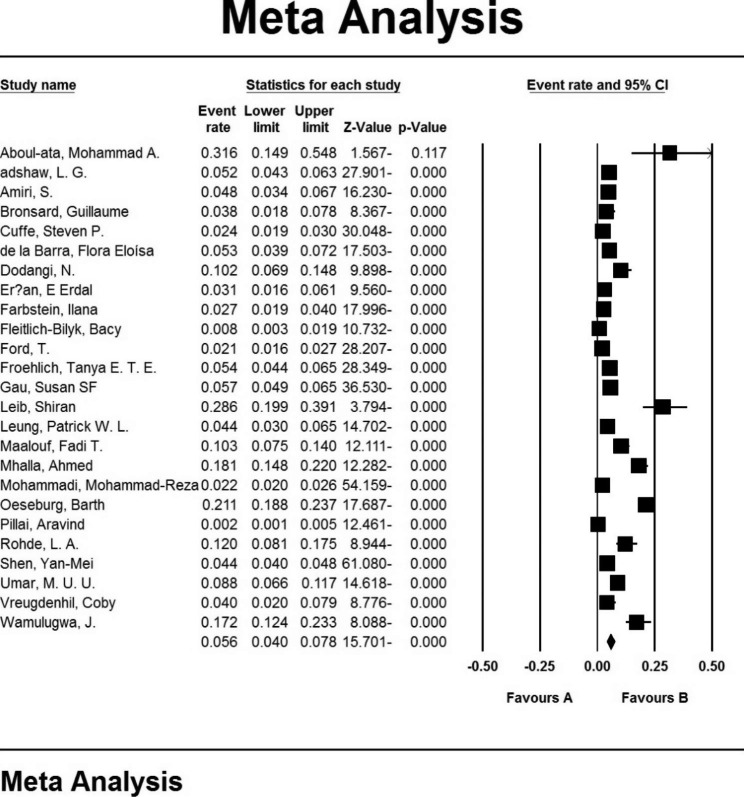
- Among 25 studies of adolescents aged 12–18, ADHD prevalence was 5.6%; the abstract reports 95% CI 4.8–7%, while the results text reports 95% CI 4–7.8%.
- By diagnostic criteria in children under 12: DSM-IV 7.7% (95% CI 6–9.9), DSM-IV-TR 8.3% (95% CI 4.9–13.6), DSM-III 10.1% (95% CI 9–11.3), DSM-IV plus ICD-10 4.4% (95% CI 2.4–8.2), and DSM-V 11.3% (95% CI 5.3–22.2).
- By subtype, children under 12 had inattentive 33.2% (95% CI 27.6–39.3), hyperactive-impulsive 30.3% (95% CI 23.8–37.7), and combined 31.4% (95% CI 24.6–39.1); adolescents had inattentive 37.3% (95% CI 30–45.4), hyperactive-impulsive 23.1% (95% CI 13.2–38.2), and combined 31.1% (95% CI 15.6–42.3).
Methods
- Systematic review and meta-analysis following PRISMA, searching PubMed, Scopus, WOS, and Science Direct for articles published up to October 2020; 61 cross-sectional studies were included after screening and full-text review.
- Eligibility focused on people under 18, with ADHD prevalence assessed by DSM-V, DSM-IV, DSM-IV-TR, and ICD-10 criteria; observational cross-sectional studies were included, and interventional or other observational designs were excluded.
- Data were analyzed in Comprehensive Meta-Analysis software version 2 using a random-effects model; heterogeneity was assessed with I², and publication bias with Egger’s test and funnel plots.
Limitations
- The paper states high heterogeneity of studies in terms of age group, and that studies reporting combined child and adolescent prevalence were removed because the aim was to measure children and adolescents separately.
- The paper states that only cross-sectional papers were included, so participants could not be followed over time and symptoms could not be measured longitudinally.
- Evident from the text: heterogeneity was very high (I² = 98.6 for children under 12 and 97.8 for adolescents), and although studies scoring below 16 on STROBE were considered at high risk of bias, none were omitted from the analysis.
Model-written summary. Check it against the paper before relying on it.
Integrity signals
Registry
Cites
Statistics
Figures
Verification
Claims the paper makes
8 Valid · 4 Not valid · 0 Not checked · 46 Own results and interpretations
At least one cited source doesn’t support this claim or points to a different paper, and none confirmed it — see the verdicts below.
In the paper
“Only one study [76] documented the prevalence of ADHD in teenagers other than children, which is consistent with our findings.”
§ The global prevalence of ADHD in children and adolescents: a systematic review and meta-analysis > Discussion
What the sources say
- Disputedcites [76] Willcutt EG The prevalence of DSM-IV attention-deficit/hyperactivity disorder: a meta-analytic review Neurotherapeutics 2012 9 3 490 9 10.1007/s13311-012-0135-8 22976615 PMC3441936 sourceExperimental — accuracy not yet measured
Table 3 (Developmental Differences; page not available in our copy) reports ADHD prevalence for 13–18-year-olds from six samples, not one study. The Overall ADHD section likewise reports a prevalence estimate for adolescent samples. The citing authors’ statement about their own findings is not part of the attribution being judged. (LLM, conf=0.90)
Checked by a reasoning model — may be wrong.
plain- Asserted: passes — The authors put it forward as true.
- Checkable: passes — It can be checked against evidence.
- Load-bearing: unclear — It is unclear whether the paper’s conclusions depend on it.
- Based: passes — The paper gives a reason why it holds.
- Disputed
The cited sources support only part of this claim — read each source’s verdict below.
In the paper
“In light of these circumstances, the rise in the number of patients diagnosed with ADHD based on DSM-V diagnostic criteria is reasonable [80].”
§ The global prevalence of ADHD in children and adolescents: a systematic review and meta-analysis > Discussion
What the sources say
- Partly supportedcites [80] Epstein JN Loren RE Changes in the definition of ADHD in DSM-5: subtle but important Neuropsychiatry 2013 3 5 455 10.2217/npy.13.59 24644516 PMC3955126 sourceExperimental — accuracy not yet measured
In the main text, Epstein and Loren explain that the more inclusive DSM-5 criteria may increase the number of children meeting diagnostic criteria and that ADHD prevalence rates may increase. This makes a rise plausible, but the paper does not establish that the number of diagnosed patients has risen; it frames the increase as a possibility. (LLM, conf=0.86)
plain- Asserted: passes — The authors put it forward as true.
- Checkable: unclear — It is unclear whether it could be checked against evidence.
- Load-bearing: unclear — It is unclear whether the paper’s conclusions depend on it.
- Based: passes — The paper gives a reason why it holds.
- Partly supported
A result the paper reports from its own data — it cites no other source for it, so there is none to check. The quote shows it is in the paper.
In the paper
“Combined ADHD was 31.4% (95% confidence interval: 24.6.39.1%)”
§ The global prevalence of ADHD in children and adolescents: a systematic review and meta-analysis > General prevalence of hyperactivity in children (under 12 years)
plain- Asserted: passes — The authors put it forward as true.
- Checkable: passes — It can be checked against evidence.
- Load-bearing: unclear — It is unclear whether the paper’s conclusions depend on it.
- Based: passes — The paper gives a reason why it holds.
- Rests on 2 assumptions not shown here.
A result the paper reports from its own data — it cites no other source for it, so there is none to check. The quote shows it is in the paper.
In the paper
“Other criteria used to determine the prevalence of ADHD in children were DSM-IV-TR, DSM-III, DSM-V, DSM-IV, and ICD10, which were: 8.3% (95% confidence interval: 4.9–13.9%); 10.1% (95%confidence interval: 9-11.3%); 11.3% (95% confidence interval: 5.3–22.2%); and 4.4% (95%confidence interval: 2.4–8.2%), respectively (Table 2).”
§ The global prevalence of ADHD in children and adolescents: a systematic review and meta-analysis > General prevalence of hyperactivity in children (under 12 years)
plain- Asserted: passes — The authors put it forward as true.
- Checkable: passes — It can be checked against evidence.
- Load-bearing: unclear — It is unclear whether the paper’s conclusions depend on it.
- Based: passes — The paper gives a reason why it holds.
- Rests on 2 assumptions not shown here.
A result the paper reports from its own data — it cites no other source for it, so there is none to check. The quote shows it is in the paper.
In the paper
“According to the findings, the incidence of ADHD is 7.6% in children aged 3 to 12 years and 5.6% in teenagers aged 12 to 18.”
§ The global prevalence of ADHD in children and adolescents: a systematic review and meta-analysis > Discussion
plain- Asserted: passes — The authors put it forward as true.
- Checkable: passes — It can be checked against evidence.
- Load-bearing: passes — The paper’s conclusions depend on it.
- Based: passes — The paper gives a reason why it holds.
32 more claims
Create a free account to see all 58 claims and every source verdict.
- Probably not a substantial claim. 18
- It may state two separate claims as one. 7
- The quote only partly states this claim. 1
Claims other papers make about this one
Each is checked against this paper’s own text: does it say what the citing paper says it does?
The source backs part of the claim, not all of it — or backs it for a different population, condition or comparison.
In the citing paper
“Differences in ADHD prevalence in different geographical regions40 may be due to differences in study methodologies, including sample size, response rate, information sources from parents or teachers, cultural factors and clinical diagnosis criteria of ADHD.”
From Association between attention-deficit/hyperactivity disorders and intestinal disorders: A systematic review and Meta-analysis (2025) · cites this paper as [40]
Experimental — accuracy not yet measuredThe cited source says what the claim attributes to it.
In the citing paper
“Only one of the studies reviewed in this paper on ADHD in children with CP [13] reported a prevalence rate lower than those for the global prevalence of ADHD in children and adolescents [53].”
From The Mental Health of Children with Cerebral Palsy: A Review of the Last Five Years of Research (2025) · cites this paper as [53]
The cited source says what the claim attributes to it.
In the citing paper
“A 2023 systematic review on the global prevalence of ADHD reported rates of 7.6% in children (between ages 3 and 12 years) and 5.6% in teenagers (between ages 12 and 18 years) [53].”
From The Mental Health of Children with Cerebral Palsy: A Review of the Last Five Years of Research (2025) · cites this paper as [53]
Self-check
Percentages, sums and reported differences re-computed from the paper’s own numbers.
Each contradiction between two passages listed here was confirmed by an independent check.
Rated minor: it would not touch a result — a value no result rests on, a p-value that stays on the same side of the significance level, or a conflict that is clerical, resolved elsewhere in the paper, or outside its own findings.
In the paper
§ The global prevalence of ADHD in children and adolescents: a systematic review and meta-analysis > General prevalence of hyperactivity in children (under 12 years)
“8.3% (95% confidence interval: 4.9–13.9%)”
§ The global prevalence of ADHD in children and adolescents: a systematic review and meta-analysis > General prevalence of hyperactivity in children (under 12 years)
“| DSM-IV TR | 5 | 12,069 | 95.7 | 0.390 | 8.3 (95%CI: 4.9–13.6) |”
Rated minor: it would not touch a result — a value no result rests on, a p-value that stays on the same side of the significance level, or a conflict that is clerical, resolved elsewhere in the paper, or outside its own findings.
In the paper
§ The global prevalence of ADHD in children and adolescents: a systematic review and meta-analysis > Abstract > Results
“5.6% of teenagers aged 12 to 18 years have ADHD (95% confidence interval: 4.8-7%)”
§ The global prevalence of ADHD in children and adolescents: a systematic review and meta-analysis > General prevalence of hyperactivity in adolescents (12–18 years)
“In 25 studies involving teenagers aged 12 to 18, the prevalence of ADHD was determined to be 5.6% (95% confidence interval: 4-7.8%).”
Rated minor: it would not touch a result — a value no result rests on, a p-value that stays on the same side of the significance level, or a conflict that is clerical, resolved elsewhere in the paper, or outside its own findings.
In the paper
§ The global prevalence of ADHD in children and adolescents: a systematic review and meta-analysis > Abstract > Results
“7.6% of 96,907 children aged 3 to 12 years had ADHD”
§ The global prevalence of ADHD in children and adolescents: a systematic review and meta-analysis > General prevalence of hyperactivity in children (under 12 years)
“ADHD prevalence was found to be 7.6% (95% confidence interval: 6.1–9.4%) in 53 studies with a total sample size of 96,904 participants”
Rated minor: it would not touch a result — a value no result rests on, a p-value that stays on the same side of the significance level, or a conflict that is clerical, resolved elsewhere in the paper, or outside its own findings.
In the paper
§ The global prevalence of ADHD in children and adolescents: a systematic review and meta-analysis > Eligibility criteria
“Population: All people under the age of 18 were examined in this study.”
§ The global prevalence of ADHD in children and adolescents: a systematic review and meta-analysis > Results
“| Leib, Shiran [54] | 2020 | Israel | DSM-IV | 13–19 | 84 | 24 |”
Citations
Cites
Preferred Reporting Items for Systematic Reviews and Meta-Analyses: the PRISMA statement
Moher, D., Liberati, A., Tetzlaff, J., Altman, D. G., & for the PRISMA Group (2009) · BMJ · doi:10.1136/bmj.b2535 · Cited by 83,823
Preferred Reporting Items for Systematic Reviews and Meta-Analyses: The PRISMA Statement
Moher, D., Liberati, A., Tetzlaff, J., Altman, D. G., & The PRISMA Group (2009) · PLoS Medicine · doi:10.1371/journal.pmed.1000097 · Cited by 64,042 · cited 2×
“The technique for carrying out the various stages of this study following the criteria of Guideline [16] was created and implemented.”
Wang, G., Ma, R., Qiao, G., Wada, K., Aizawa, Y., & Satoh, T. (2015) · Integrative Medicine International · doi:10.1159/000368408 · Cited by 18,657
The Prevalence of DSM-IV Attention-Deficit/Hyperactivity Disorder: A Meta-Analytic Review
Willcutt, E. G. (2012) · Neurotherapeutics · doi:10.1007/s13311-012-0135-8 · Cited by 2,160 · cited 2×
“Another study indicated that the prevalence of ADHD was lower in adults over the age of 18 than in teenagers [76].”
BackgroundResultThe British Child and Adolescent Mental Health Survey 1999: The Prevalence of DSM-IV Disorders
FORD, T., GOODMAN, R., & MELTZER, H. (2003) · Journal of the American Academy of Child & Adolescent Psychiatry · doi:10.1097/00004583-200310000-00011 · Cited by 1,227 · cited 1×
“[43] 2003 England DSM-IV and ICD-10 5–12”
ADHD in Children and Young People: Prevalence, Care Pathways, and Service Provision
Sayal, K., Prasad, V., Daley, D., Ford, T., & Coghill, D. (2018) · The Lancet Psychiatry · doi:10.1016/s2215-0366(17)30167-0 · Cited by 1,223 · cited 2×
“Even though the prevalence of ADHD in adults is decreasing, it is nevertheless recognized as a risk factor for issues such as academic failure, workplace challenges, and criminality [75].”
BackgroundEriksen, M. B., & Frandsen, T. F. (2018) · Journal of the Medical Library Association · doi:10.5195/jmla.2018.345 · Cited by 1,216
Song, P., Zha, M., Yang, Q., Zhang, Y., Li, X., & Rudan, I. (2021) · Journal of Global Health · doi:10.7189/jogh.11.04009 · Cited by 896
Froehlich, T. E., Lanphear, B. P., Epstein, J. N., Barbaresi, W. J., Katusic, S. K., & Kahn, R. S. (2007) · Archives of Pediatrics & Adolescent Medicine · doi:10.1001/archpedi.161.9.857 · Cited by 794
Gender Differences in Attention-Deficit/Hyperactivity Disorder
Rucklidge, J. J. (2010) · Psychiatric Clinics of North America · doi:10.1016/j.psc.2010.01.006 · Cited by 571 · cited 4×
“As previously mentioned, boys are more likely to manifest ADHD symptoms [6] with three times more likely to receive an ADHD diagnosis than girls [9].”
BackgroundInfluentialPrevalence of psychiatric disorders in preschoolers
Wichstrøm, L., Berg‐Nielsen, T. S., Angold, A., Egger, H. L., Solheim, E., & Sveen, T. H. (2012) · Journal of Child Psychology and Psychiatry · doi:10.1111/j.1469-7610.2011.02514.x · Cited by 538 · cited 1×
“Wichstrøm, Lars [73] 2012 Norway DSM-IV children 2475 47”
Prevalence of Child and Adolescent Psychiatric Disorders in Southeast Brazil
Fleitlich-Bilyk, B., & Goodman, R. (2004) · Journal of the American Academy of Child & Adolescent Psychiatry · doi:10.1097/01.chi.0000120021.14101.ca · Cited by 517 · cited 1×
“Fleitlich-Bilyk, Bacy [42] 2004 Brazil DSM-IV 7–10 627 17”
Sharma, A., & Couture, J. (2014) · Annals of Pharmacotherapy · doi:10.1177/1060028013510699 · Cited by 516 · cited 1×
“Increased motor activity in inappropriate contexts, excessive wobbling, finger play, and talkativeness are examples of these social circumstances, which can interfere with personal and educational life [3].”
BackgroundComorbidity prevalence and treatment outcome in children and adolescents with ADHD
on behalf of Lombardy ADHD Group, Reale, L., Bartoli, B., Cartabia, M., Zanetti, M., Costantino, M. A., Canevini, M. P., Termine, C., & Bonati, M. (2017) · European Child & Adolescent Psychiatry · doi:10.1007/s00787-017-1005-z · Cited by 414 · cited 1×
“As previously mentioned, boys are more likely to manifest ADHD symptoms [6] with three times more likely to receive an ADHD diagnosis than girls [9].”
BackgroundBAUMGAERTEL, A., WOLRAICH, M. L., & DIETRICH, M. (1995) · Journal of the American Academy of Child & Adolescent Psychiatry · doi:10.1097/00004583-199505000-00015 · Cited by 394 · cited 1×
“Baumgaertel, Anna [27] 1995 Germany DSM-III”
Psychiatric Disorders in Norwegian 8- to 10-Year-Olds
HEIERVANG, E., STORMARK, K. M., LUNDERVOLD, A. J., HEIMANN, M., GOODMAN, R., POSSERUD, M.-B., ULLEBØ, A. K., PLESSEN, K. J., BJELLAND, I., LIE, S. A., et al. (2007) · Journal of the American Academy of Child & Adolescent Psychiatry · doi:10.1097/chi.0b013e31803062bf · Cited by 392
A 3-Year Panel Study of Mental Disorders Among Adolescents in Taiwan
Gau, S. S. F., Chong, M. Y., Chen, T. H. H., & Cheng, A. T. A. (2005) · American Journal of Psychiatry · doi:10.1176/appi.ajp.162.7.1344 · Cited by 362 · cited 1×
“Gau, Susan SF [46] 2005 Taiwan DSM-IV 13–15 3156 179”
ROHDE, L. A., BIEDERMAN, J., BUSNELLO, E. A., ZIMMERMANN, H., SCHMITZ, M., MARTINS, S., & TRAMONTINA, S. (1999) · Journal of the American Academy of Child & Adolescent Psychiatry · doi:10.1097/00004583-199906000-00019 · Cited by 329
Young, S., Moss, D., Sedgwick, O., Fridman, M., & Hodgkins, P. (2015) · Psychological Medicine · doi:10.1017/s0033291714000762 · Cited by 291 · cited 1×
“Furthermore, because the onset of ADHD symptoms in adults is socially problematic, many of these people will be admitted to psychiatric hospitals, affecting the prevalence of ADHD in adults in the general population [82, 83].”
BackgroundAttention Deficit–Hyperactivity Disorder
Rappley, M. D. (2005) · New England Journal of Medicine · doi:10.1056/nejmcp032387 · Cited by 281
Changes in the definition of ADHD in DSM-5: subtle but important
Epstein, J. N., & Loren, R. E. (2013) · Neuropsychiatry · doi:10.2217/npy.13.59 · Cited by 273 · cited 1×
“In light of these circumstances, the rise in the number of patients diagnosed with ADHD based on DSM-V diagnostic criteria is reasonable [80].”
BackgroundPrevalence and Correlates of ADHD Symptoms in the National Health Interview Survey
Cuffe, S. P., Moore, C. G., & McKeown, R. E. (2005) · Journal of Attention Disorders · doi:10.1177/1087054705280413 · Cited by 272
Kim, J. H., Kim, J. Y., Lee, J., Jeong, G. H., Lee, E., Lee, S., Lee, K. H., Kronbichler, A., Stubbs, B., Solmi, M., et al. (2020) · The Lancet Psychiatry · doi:10.1016/s2215-0366(20)30312-6 · Cited by 258 · cited 1×
“ADHD in children is caused by several factors, including genetics and environment, premature birth, preeclampsia, hypertension, overweight, and obesity in pregnant women, as well as maternal smoking exposure [7, 8].”
BackgroundWang, T., Liu, K., Li, Z., Xu, Y., Liu, Y., Shi, W., & Chen, L. (2017) · BMC Psychiatry · doi:10.1186/s12888-016-1187-9 · Cited by 240 · cited 1×
“72% of children and adolescents had ADHD [79].”
BackgroundPrevalence of ADHD and Its Comorbidities in a Population-Based Sample
Mohammadi, M.-R., Zarafshan, H., Khaleghi, A., Ahmadi, N., Hooshyari, Z., Mostafavi, S.-A., Ahmadi, A., Alavi, S.-S., Shakiba, A., & Salmanian, M. (2021) · Journal of Attention Disorders · doi:10.1177/1087054719886372 · Cited by 194 · cited 1×
“Mohammadi, Mohammad-Reza [58] 2019 Iran DSM-IV TR 6–9”
Self-citationPsychiatric Disorders in a Representative Sample of Incarcerated Boys in The Netherlands
Vreugdenhil, C., DORELEIJERS, T. A. H., Vermeiren, R. R. J. M., Wouters, L. F., & van den Brink, W. (2004) · Journal of the American Academy of Child & Adolescent Psychiatry · doi:10.1097/00004583-200401000-00019 · Cited by 190
ADHD and behavioral disorders: Assessment, management, and an update from DSM-5
Austerman, J. (2015) · Cleveland Clinic Journal of Medicine · doi:10.3949/ccjm.82.s1.01 · Cited by 177 · cited 1×
“It is one of the most prevalent causes of children being sent to psychology and psychiatric clinics [1, 2].”
BackgroundCatalá-López, F., Peiró, S., Ridao, M., Sanfélix-Gimeno, G., Gènova-Maleras, R., & Catalá, M. A. (2012) · BMC Psychiatry · doi:10.1186/1471-244x-12-168 · Cited by 176 · cited 1×
“6% in this study, and 7% in children (participants under 12 years old), which is similar to the current study [78].”
ResultThe Prevalence of Attention Deficit/Hyperactivity Disorder among Chinese Children and Adolescents
Liu, A., Xu, Y., Yan, Q., & Tong, L. (2018) · Scientific Reports · doi:10.1038/s41598-018-29488-2 · Cited by 160
Leung, P. W. L., Hung, S., Ho, T., Lee, C., Liu, W.-S., Tang, C.-P., & Kwong, S. (2008) · European Child & Adolescent Psychiatry · doi:10.1007/s00787-008-0687-7 · Cited by 148
Non-traditional lifestyles and prevalence of mental disorders in adolescents in Goa, India
Pillai, A., Patel, V., Cardozo, P., Goodman, R., Weiss, H. A., & Andrew, G. (2008) · British Journal of Psychiatry · doi:10.1192/bjp.bp.106.034223 · Cited by 148 · cited 1×
“Pillai, Aravind [61] 2008 India DSM-IV and ICD-10 12–16 2048 4”
Wamithi, S., Ochieng, R., Njenga, F., Akech, S., & Macharia, W. M. (2015) · Child and Adolescent Psychiatry and Mental Health · doi:10.1186/s13034-015-0033-z · Cited by 142 · cited 1×
“Wamithi, Susan [71] 2015 Kenya DSM-IV 6–12 240 15”
Prevalence of attention deficit hyperactivity disorder in primary school children
Venkata, J. A., & Panicker, A. S. (2013) · Indian Journal of Psychiatry · doi:10.4103/0019-5545.120544 · Cited by 138 · cited 1×
“Venkata, Jyothsna Akam [69] 2013 India DSM-5 6–11 770 72”
Lecendreux, M., Konofal, E., & Faraone, S. V. (2011) · Journal of Attention Disorders · doi:10.1177/1087054710372491 · Cited by 138
Erşan, E. E., Doğan, O., Doğan, S., & Sümer, H. (2004) · European Child & Adolescent Psychiatry · doi:10.1007/s00787-004-0410-2 · Cited by 128 · cited 1×
“Erşan, E Erdal [37] 2004 Turkey DSM-IV 6–12”
Ayano, G., Yohannes, K., & Abraha, M. (2020) · Annals of General Psychiatry · doi:10.1186/s12991-020-00271-w · Cited by 123 · cited 2×
“Adults have lower rates of ADHD than children, according to previous research [77].”
ResultPsychiatric disorders among adolescents from Lebanon: prevalence, correlates, and treatment gap
Maalouf, F. T., Ghandour, L. A., Halabi, F., Zeinoun, P. A., Shehab, A. A. S., & Tavitian, L. (2016) · Social Psychiatry and Psychiatric Epidemiology · doi:10.1007/s00127-016-1241-4 · Cited by 109 · cited 2×
“[15] 2016 Lebanon DSM-IV and ICD-10 11–12”
BackgroundGuardiola, A., Fuchs, F. D., & Rotta, N. T. (2000) · Arquivos de Neuro-Psiquiatria · doi:10.1590/s0004-282x2000000300001 · Cited by 103
Prevalence of Psychiatric Disorders Among Children of Different Ethnic Origin
Zwirs, B. W. C., Burger, H., Schulpen, T. W. J., Wiznitzer, M., Fedder, H., & Buitelaar, J. K. (2007) · Journal of Abnormal Child Psychology · doi:10.1007/s10802-007-9112-9 · Cited by 101 · cited 1×
“[74] 2007 Netherlands DSM-IV 6–10 2041 389 Table 1 (continued)”
The prevalence of DSM-IV psychiatric disorders among 7–10 year old Yemeni schoolchildren
Alyahri, A., & Goodman, R. (2007) · Social Psychiatry and Psychiatric Epidemiology · doi:10.1007/s00127-007-0293-x · Cited by 98
Canals, J., Morales‐Hidalgo, P., Jané, M. C., & Llaberia, E. D. (2016) · Journal of Attention Disorders · doi:10.1177/1087054716638511 · Cited by 96 · cited 1×
“Canals, Josefa [30] 2018 Spain DSM-IV 3–6 516 28”
Baggio, S., Fructuoso, A., Guimaraes, M., Fois, E., Golay, D., Heller, P., Perroud, N., Aubry, C., Young, S., Delessert, D., et al. (2018) · Frontiers in Psychiatry · doi:10.3389/fpsyt.2018.00331 · Cited by 95 · cited 2×
“As a result, the number of people in prison with ADHD is on the rise [82].”
BackgroundFilipovic-Pierucci, A., Samson, S., Fagot, J.-P., & Fagot-Campagna, A. (2017) · BMC Psychiatry · doi:10.1186/s12888-016-1163-4 · Cited by 94
Bronsard, G., Lançon, C., Loundou, A., Auquier, P., Rufo, M., & Siméoni, M.-C. (2011) · Children and Youth Services Review · doi:10.1016/j.childyouth.2011.05.014 · Cited by 88 · cited 1×
“Bronsard, Guillaume [29] 2011 France DSM-III-R 13–17 183 7”
Attention-deficit hyperactive disorder in school-aged children in Saudi Arabia
Alqahtani, M. M. J. (2010) · European Journal of Pediatrics · doi:10.1007/s00431-010-1190-y · Cited by 86 · cited 1×
“Alqahtani, Mohammed MJ [23] 2010 Saudi Arabia DSM-IV 7–9 708 40”
Adewuya, A. O., & Famuyiwa, O. O. (2006) · European Child & Adolescent Psychiatry · doi:10.1007/s00787-006-0569-9 · Cited by 82
Epidemiology of ADHD in Chilean children and adolescents
de la Barra, F. E., Vicente, B., Saldivia, S., & Melipillan, R. (2013) · ADHD Attention Deficit and Hyperactivity Disorders · doi:10.1007/s12402-012-0090-6 · Cited by 66
The prevalence of psychiatric disorders among students aged 6~ 16 years old in central Hunan, China
Shen, Y., Chan, B. S. M., Liu, J., Zhou, Y., Cui, X., He, Y., Fang, Y.-M., Xiang, Y., & Luo, X. (2018) · BMC Psychiatry · doi:10.1186/s12888-018-1823-7 · Cited by 52 · cited 1×
“Shen, Yan-Mei [66] 2018 China DSM-IV 6–11”
Abdekhodaie, Z., Tabatabaei, S. M., & Gholizadeh, M. (2011) · Research in Developmental Disabilities · doi:10.1016/j.ridd.2011.10.006 · Cited by 46 · cited 1×
“Abdekhodaie, Zahra [18] 2012 Iran DSM-IV-TR 5–6 1083 133”
Attention-Deficit Hyperactive Disorder among Primary School Children in Menoufia Governorate, Egypt
Farahat, T. M., Alkot, M., Rajab, A. Z., & Anbar, R. (2014) · International Journal of Family Medicine · doi:10.1155/2014/257369 · Cited by 44
Prevalence of chronic diseases in adolescents with intellectual disability
Oeseburg, B., Jansen, D. E. M. C., Dijkstra, G. J., Groothoff, J. W., & Reijneveld, S. A. (2010) · Research in Developmental Disabilities · doi:10.1016/j.ridd.2010.01.011 · Cited by 44 · cited 2×
“Oeseburg, Barth [14] 2010 Netherlands 12–18 1083 229”
BackgroundGul, N., Tiryaki, A., Kültür, S. E. Ç., Topbaş, M., & Ak, İ. (2010) · Klinik Psikofarmakoloji Bülteni-Bulletin of Clinical Psychopharmacology · doi:10.1080/10177833.2010.11790634 · Cited by 44
Edel, M., Blackwell, B., Schaub, M., Emons, B., Fox, T., Tornau, F., Vieten, B., Roser, P., Haussleiter, I. S., & Juckel, G. (2017) · Annals of General Psychiatry · doi:10.1186/s12991-016-0124-0 · Cited by 40
Wamulugwa, J., Kakooza, A., Kitaka, S. B., Nalugya, J., Kaddumukasa, M., Moore, S. M., Sajatovic, M., & Katabira, E. T. (2017) · Child and Adolescent Psychiatry and Mental Health · doi:10.1186/s13034-017-0155-6 · Cited by 39
Arulappan, J., Catherine, T., Robert, N. G., Mala, K., & Kanniammal, C. (2019) · Indian Journal of Psychiatry · doi:10.4103/psychiatry.indianjpsychiatry_333_17 · Cited by 39 · cited 1×
“Golden [31] 2019 India DSM-V 8–11 2453 286”
Ibadin, M., Ambuabunos, E., & Ofovwe, E. (2011) · Annals of African Medicine · doi:10.4103/1596-3519.82065 · Cited by 37 · cited 1×
“Ambuabunos, EA [24] 2011 Nigeria DSM-IV 6–12 1473 112”
Prevalence and Correlates of ADHD Among Adolescent Students in Nigeria
Umar, M. U., Obindo, J. T., & Omigbodun, O. O. (2015) · Journal of Attention Disorders · doi:10.1177/1087054715594456 · Cited by 35
Prevalence of ADHD in Qatari School-Age Children
Bradshaw, L., & Kamal, M. (2016) · Journal of Attention Disorders · doi:10.1177/1087054713517545 · Cited by 34
Huang, Y., Zheng, S., Xu, C., Lin, K., Wu, K., Zheng, M., Zhang, J., & Xu, H. (2017) · Neuropsychiatric Disease and Treatment · doi:10.2147/ndt.s126100 · Cited by 34 · cited 1×
“Huang, Yanhong [52] 2017 China DSM-5 7–12 2959 175”
Talaeı, A., Mokhber, N., Abdollahian, E., Bordbar, M. R. F., & Salari, E. (2009) · Journal of Attention Disorders · doi:10.1177/1087054708329886 · Cited by 33
Prevalence of ADHD in primary school children in Vinh Long, Vietnam
Pham, H. D., Nguyen, H. B. H., & Tran, T. D. (2015) · Pediatrics International · doi:10.1111/ped.12656 · Cited by 32 · cited 1×
“Pham, Hoai Danh [60] 2015 Vietnam DSM-IV 5–10 471 31”
Sánchez, E. Y., Velarde, S., & Britton, G. B. (2010) · Child Psychiatry & Human Development · doi:10.1007/s10578-010-0213-2 · Cited by 32 · cited 1×
“[65] 2011 Panama DSM-IV-TR children 229 17”
Dodangi, N., Ashtiani, N. H., & Valadbeigi, B. (2014) · Iranian Red Crescent Medical Journal · doi:10.5812/ircmj.16743 · Cited by 31
Farbstein, I., Mansbach‐Kleinfeld, I., Auerbach, J. G., Ponizovsky, A. M., & Apter, A. S. (2014) · PubMed · Cited by 31
Aboul-ata, M. A., & Amin, F. A. (2015) · Journal of Attention Disorders · doi:10.1177/1087054715576917 · Cited by 29
Prevalence of Attention Deficit Hyperactivity Disorder in Children
El-Nemr, F. M., Badr, H. S., & Salem, M. S. (2015) · Science Journal of Public Health · doi:10.11648/j.sjph.20150302.28 · Cited by 28 · cited 1×
“El-Nemr, Fathia Mohamed [36] 2015 Egypt DSM-IV 5–12 600 118”
Prevalence of attention deficit hyperactivity disorder among school-aged children in Jordan
AlAzzam, M., ALBashtawy, M., Tubaishat, A., Batiha, A.-M. M., & Tawalbeh, L. I. (2017) · Eastern Mediterranean Health Journal · doi:10.26719/2017.23.7.486 · Cited by 27 · cited 1×
“Al Azzam, Manar [22] 2017 Jordan 6–12 480 195”
DSM-IV ADHD: Prevalence based on parent and teacher ratings of Malaysian primary school children
Gomez, R., & Hafetz, N. (2011) · Asian Journal of Psychiatry · doi:10.1016/j.ajp.2010.12.003 · Cited by 24
Symptom Prevalence of ADHD and ODD in a Pediatric Population in Argentina
Michanie, C., Kunst, G., Margulies, D. S., & Yakhkind, A. (2007) · Journal of Attention Disorders · doi:10.1177/1087054707299406 · Cited by 22 · cited 1×
“[57] 2007 Argentina DSM III-R 6–12 300 27”
Afeti, K., & Nyarko, S. H. (2017) · Annals of General Psychiatry · doi:10.1186/s12991-017-0135-5 · Cited by 22
Egbochuku, E. O., & Abikwi, M. I. (2007) · Journal of Human Ecology · doi:10.1080/09709274.2007.11906041 · Cited by 21 · cited 1×
“Egbochuku, EO [35] 2007 Nigeria DSM-IV 6–12 1384 111”
Prevalence of ADHD in Mexican schoolchildren through screening with Conners scales 3.
Saavedra, G. G., Martínez-Wbaldo, M. D. C., & Padrón-García, A. L. (2019) · Actas Españolas de Psiquiatría · Cited by 20
Leib, S., Mann, T. G., Stein, D. J., Vusiker, I., Latzer, I. T., Ben‐Ami, M., Feigin, A., & Dubnov‐Raz, G. (2019) · Acta Paediatrica · doi:10.1111/apa.15039 · Cited by 18 · cited 1×
“Leib, Shiran [54] 2020 Israel DSM-IV 13–19 84 24”
Safavi, P., Ganji, F., & Bidad, A. (2016) · JOURNAL OF CLINICAL AND DIAGNOSTIC RESEARCH · doi:10.7860/jcdr/2016/14481.7671 · Cited by 17
ADHD in Tunisian Adolescents: Prevalence and Associated Factors
Mhalla, A., Guedria, A., Brahem, T., Amamou, B., Sboui, W., Gaddour, N., & Gaha, L. (2018) · Journal of Attention Disorders · doi:10.1177/1087054717702217 · Cited by 17 · cited 1×
“Mhalla, Ahmed [56] 2018 Tunis DSM-IV ADO 447 81 Table 1 Information table of studies entered into the systematic review”
BackgroundNafi, O., & Shaheen, A. M. (2011) · Jordan Medical Journal · Cited by 16
Hs, R., As, G., & Pandit, L. V. (2017) · Current Pediatric Research · Cited by 14
Ghosh, P., Choudhury, H. A., & Victor, R. (2018) · Open Journal of Psychiatry & Allied Sciences · doi:10.5958/2394-2061.2018.00025.3 · Cited by 12 · cited 1×
“Ghosh, Prosenjit [47] 2018 India DSM-5 6–11 300 38”
Amiri, S., Mohammadi, M. R., Ahmadi, N., Khaleghi, A., Nourouzi, S., Rahimi, V. A., Farahbakhsh, M., Hemmati, A., Abdi, S., Moharrami, S., et al. (2019) · Iranian Journal of Psychiatry and Behavioral Sciences · doi:10.5812/ijpbs.88594 · Cited by 11
Self-citationFeiz, P., & Emamipour, S. (2013) · Procedia - Social and Behavioral Sciences · doi:10.1016/j.sbspro.2013.07.022 · Cited by 9 · cited 1×
“Feiz, Pa [41] 2013 Tehran DSM-IV 6–7 1000 105”
Anokye, R., Acheampong, E., Edusei, A. K., Owusu, I., & Mprah, W. K. (2020) · East Asian Archives of Psychiatry · doi:10.12809/eaap1907 · Cited by 8
Research works printed but not linked: 5
- Kaplan BJ Kaplan and sadock’s synopsis of psychiatry. Behavioral sciences/clinical psychiatry Tijdschrift voor Psychiatrie 2016 58 1 78 9
- Ngan M Tsang B Kwong K Prevalence Risk factors and impact of ADHD on children with recent Onset Epilepsy HK J Paediatr (new series) 2019 24 2 65 9
- Shaabani M Yadegari A Prevalence of attention deficit hyperactivity disorder (ADHD) in elementary school children in Zanjan 2004–2005 J Adv Med Biomedical Res 2005 13 51 42 8
- Bozkurt ÖH Dirik E Üneri ÖŞ Prevalence of ADHD in Northern Cyprus Anadolu Psikiyatri Dergisi 2017 18 5 478
- Mhalla A, Guedria A, Brahem T, Amamou B, Sboui W, Gaddour N et al. ADHD in Tunisian Adolescents: Prevalence and Associated Factors. JOURNAL OF ATTENTION DISORDERS. 2018;22(2, SI):154 – 62. 28381094 · DOI · Paper page
Cited by
Koirala, S., Grimsrud, G. J., Mooney, M. A., Larsen, B., Feczko, E., Elison, J. T., Nelson, S. M., Nigg, J. T., Tervo‐Clemmens, B., & Fair, D. A. (2024) · Nature reviews. Neuroscience · doi:10.1038/s41583-024-00869-z · Cited by 86
“ADHD is estimated to affect 2–7% of children 8,9 , with a higher diagnosis rate in males than in females 10 .”
Al-Wardat, M. S., Etoom, M., Almhdawi, K. A., Hawamdeh, Z. M., & Khader, Y. S. (2024) · BMJ Open · doi:10.1136/bmjopen-2023-078849 · Cited by 82
“11 Additionally, a previous systematic review reported that the global prevalence of persistent adult ADHD from childhood was 2.58%, and the prevalence of symptomatic adult ADHD was 6.76%.”
BackgroundInfluentialLiu, J. J., Borsari, B., Li, Y., Liu, S. X., Gao, Y., Xin, X., Lou, S., Jensen, M., Garrido-Martín, D., Verplaetse, T. L., et al. (2024) · Cell · doi:10.1016/j.cell.2024.11.012 · Cited by 70
Lisco, G., Tullio, A. D., Iovino, M., Disoteo, O., Guastamacchia, E., Giagulli, V. A., & Triggiani, V. (2023) · Biomedicines · doi:10.3390/biomedicines11112993 · Cited by 54
Taylor, J., Hall, R., Langton, T., Fraser, L., & Hewitt, C. E. (2024) · Archives of Disease in Childhood · doi:10.1136/archdischild-2023-326681 · Cited by 51
Metadata
- Authors
- Salari, N., Ghasemi, H., Abdoli, N., Rahmani, A., Shiri, M. H., Hashemian, A. H., Akbari, H., & Mohammadi, M.
- Affiliations
- Kermanshah University of Medical Sciences (IR)
- Charité – Universitätsmedizin Berlin (DE)
- Gerash University of Medical Sciences (IR)
- Corresponding author
- Mohammadi, Masoud
- ORCID
- Venue
- Italian Journal of Pediatrics
- Published
- 2023-04-20
- Volume
- 49
- Issue
- 1
- Pages
- 48-48
- ISSN
- 1720-8424 (ISSN-L)
- 1824-7288
- PMC
- PMC10120242
- OpenAlex
- W4366549485
- Cited by
- 670
- References
- 82
- Citations by year
- 2026: 241 · 2025: 244 · 2024: 155 · 2023: 29
- FWCI
- 30.65
- Type
- journal article
- Language
- en
- Open access
- gold
- doi.org
- Licence
- cc-by
- creativecommons.org/licenses/by/4.0 (tdm)
- creativecommons.org/licenses/by/4.0 (vor)
- Locations
- The Italian Journal of Pediatrics/Italian journal of pediatrics (publishedVersion, cc-by)
- PubMed Central (publishedVersion, cc-by)
- PubMed (publishedVersion)
- DOAJ (DOAJ: Directory of Open Access Journals) (submittedVersion, cc-by-sa)
- Funders
- Deputy for Research and Technology, Kermanshah University of Medical Sciences (3011572)
- Topics
- Health Sciences › Medicine › Psychiatry and Mental health › Attention Deficit Hyperactivity Disorder
- Social Sciences › Psychology › Clinical Psychology › Child and Adolescent Psychosocial and Emotional Development
- Social Sciences › Psychology › Neuropsychology and Physiological Psychology › Developmental and Educational Neuropsychology
- Keywords
- attention deficit hyperactivity disorder, ADHD prevalence, children, adolescents, DSM-5 diagnostic criteria, hyperactivity, impulsivity, attention deficits
- MeSH terms
- Adolescent, Attention Deficit Disorder with Hyperactivity, Child, Cross-Sectional Studies, Humans, Bibliometrics, Prevalence, Databases, Factual
About these checks
Registry, retraction, Cites and statistics results are computed, not judged, with one exception: a printed reference that no index lists is read once by a model before it counts as a citation error. Claims are extracted by a model and kept only when their quote appears verbatim in the text; each cited source is then checked, with a model’s help, for whether it says what the claim relies on. Those verdicts can be wrong — read the claim’s quote and the cited source before relying on one.
The claim verdicts this report counts are experimental: their accuracy is not yet measured.
A language model drew the claims from the paper on 2026-10-23, under version 3 of the claim definition (model deepseek-v4.1-flash, prompt extract-v3).
A second model labelled each claim on 2026-10-23 (model jev-1.13-20260917, definition revision gold-guideline-v0.2).
Cited sources are checked with a language model’s help (gpt-6-sol).
Statistics and arithmetic are recomputed, not judged.
Confidence bands are shown only for fields calibrated on our annotated test set. None is calibrated yet, so no band is shown.
What counts as a claim ›How we measure confidence ›How we check this ›
Are you an author, or do you see a problem with this page? Request a review
Data sources
Bibliographic data: Semantic Scholar, OpenAlex, Crossref.
Contains information from the Semantic Scholar Academic Graph Datasets, made available under the ODC Attribution License (ODC-BY 1.0).
Semantic Scholar’s data is described in: Kinney, R., et al. (2023). The Semantic Scholar Open Data Platform. arXiv:2301.10140.
