

Temporal variability is a personalized feature of the human microbiome
Open accessThe DOI matches its Crossref record; 42 of the 42 references it cites were found in a registry or an index.
Abstract
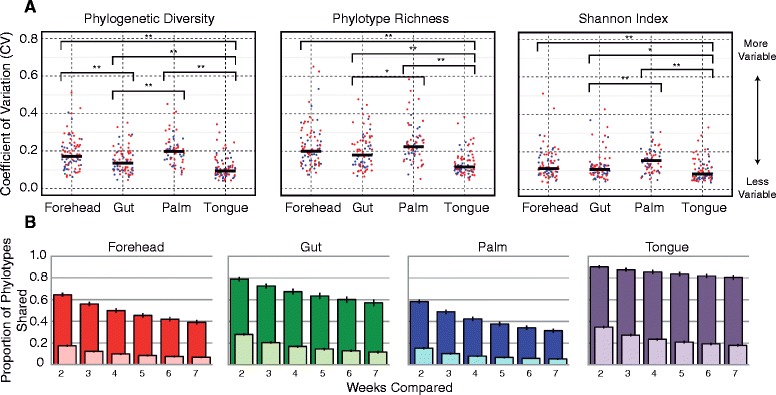
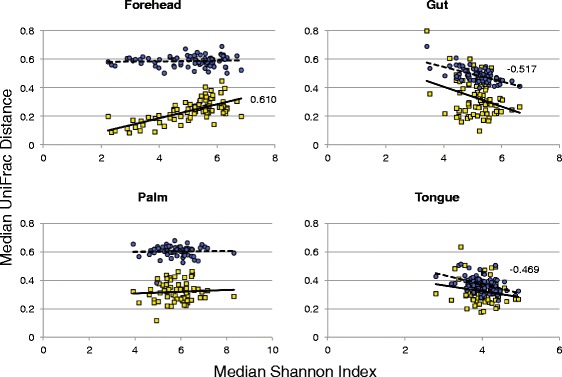
Background: It is now apparent that the complex microbial communities found on and in the human body vary across individuals. What has largely been missing from previous studies is an understanding of how these communities vary over time within individuals. To the extent to which it has been considered, it is often assumed that temporal variability is negligible for healthy adults. Here we address this gap in understanding by profiling the forehead, gut (fecal), palm, and tongue microbial communities in 85 adults, weekly over 3 months. Results: We found that skin (forehead and palm) varied most in the number of taxa present, whereas gut and tongue communities varied more in the relative abundances of taxa. Within each body habitat, there was a wide range of temporal variability across the study population, with some individuals harboring more variable communities than others. The best predictor of these differences in variability across individuals was microbial diversity; individuals with more diverse gut or tongue communities were more stable in composition than individuals with less diverse communities. Conclusions: Longitudinal sampling of a relatively large number of individuals allowed us to observe high levels of temporal variability in both diversity and community structure in all body habitats studied. These findings suggest that temporal dynamics may need to be considered when attempting to link changes in microbiome structure to changes in health status. Furthermore, our findings show that, not only is the composition of an individual’s microbiome highly personalized, but their degree of temporal variability is also a personalized feature.
Overview
The claims and statistics of this paper haven’t been checked yet.
Free: it reads the open-access text and checks the first 5 claims that cite a source we can check. Create a free account to check every claim.
Integrity signals
Registry
Cites
Statistics
Figures
Verification
Claims the paper makes
The claims and statistics of this paper haven’t been checked yet.
Free: it reads the open-access text and checks the first 5 claims that cite a source we can check. Create a free account to check every claim.
Claims other papers make about this one
Each is checked against this paper’s own text: does it say what the citing paper says it does?
The source backs part of the claim, not all of it — or backs it for a different population, condition or comparison.
In the citing paper
“Study of short-term longitudinal samplings from half the donors found that individuals are more similar to themselves over time compared with others (Costello et al., 2009; Flores et al., 2014; Mehta et al., 2018).”
From Gut microbiome stability and dynamics in healthy donors and patients with non-gastrointestinal cancers (2021) · cites this paper as Flores et al., 2014
Experimental — accuracy not yet measuredIn the citing paper
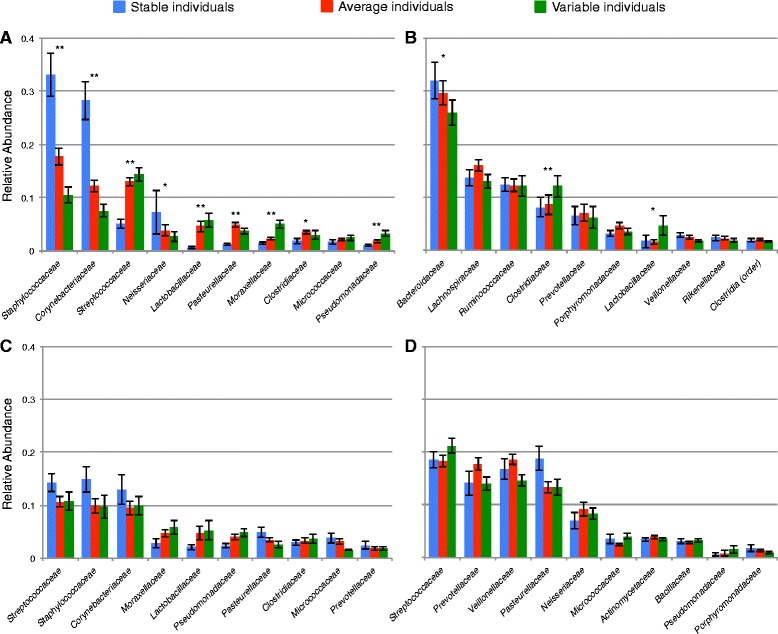
“while Bacteroidota was higher in donors with greater species stability over time (Fig. 6 D and Data S1, table 15; Flores et al., 2014).”
From Gut microbiome stability and dynamics in healthy donors and patients with non-gastrointestinal cancers (2021) · cites this paper as Flores et al., 2014
Self-check
Percentages, sums and reported differences re-computed from the paper’s own numbers.
The self-check needs the paper’s full text.
Citations
Cites
vegan: Community Ecology Package
Oksanen, J., Simpson, G. L., Blanchet, F. G., Kindt, R., Legendre, P., Minchin, P. R., O'Hara, R. B., Solymos, P., Stevens, M. H. H., Szoecs, E., et al. (2001) · CRAN: Contributed Packages · doi:10.32614/cran.package.vegan · Cited by 22,615
Search and clustering orders of magnitude faster than BLAST
Edgar, R. C. (2010) · Bioinformatics · doi:10.1093/bioinformatics/btq461 · Cited by 20,826
Non‐parametric multivariate analyses of changes in community structure
CLARKE, K. R. (1993) · Australian Journal of Ecology · doi:10.1111/j.1442-9993.1993.tb00438.x · Cited by 14,128 · cited 2×
“To determine if certain taxa were more or less abundant in the different quartiles (that is, stability classes), we rank transformed the most abundant bacterial families (>1% across individuals) for each body habitat and tested for differences between the groups using the nonparametric Kruskal-Wallis analysis of varia…”
Structure, function and diversity of the healthy human microbiome
The Human Microbiome Project Consortium (2012) · Nature · doi:10.1038/nature11234 · Cited by 11,726 · cited 3×
“Previous studies that have characterized human associated microbial communities over time have been based on relatively few individuals [3,4], intermittent sampling intervals [2,5,6], single body habitats [4,7-10], or focused on disease states [11], leaving us with an incomplete picture of the range of normal variabil…”
Self-citationDiet rapidly and reproducibly alters the human gut microbiome
David, L. A., Maurice, C. F., Carmody, R. N., Gootenberg, D. B., Button, J. E., Wolfe, B. E., Ling, A. V., Devlin, A. S., Varma, Y., Fischbach, M. A., et al. (2014) · Nature · doi:10.1038/nature12820 · Cited by 10,100 · cited 1×
“Previous studies that have characterized human associated microbial communities over time have been based on relatively few individuals [3,4], intermittent sampling intervals [2,5,6], single body habitats [4,7-10], or focused on disease states [11], leaving us with an incomplete picture of the range of normal variabil…”
Ultra-high-throughput microbial community analysis on the Illumina HiSeq and MiSeq platforms
Caporaso, J. G., Lauber, C. L., Walters, W. A., Berg-Lyons, D., Huntley, J., Fierer, N., Owens, S. M., Betley, J., Fraser, L., Bauer, M., et al. (2012) · The ISME Journal · doi:10.1038/ismej.2012.8 · Cited by 8,839 · cited 3×
“DNA extraction and PCR amplification of the variable region 4 (V4) of the 16S rRNA gene using Illumina adapted universal primers 515 F/806R [12,30] was conducted using the direct PCR protocol as previously described [31].”
Self-citationHuman gut microbes associated with obesity
Ley, R. E., Turnbaugh, P. J., Klein, S., & Gordon, J. I. (2006) · Nature · doi:10.1038/4441022a · Cited by 8,785 · cited 1×
“A higher Firmicutes:Bacteriodetes ratio has been observed in guts of obese individuals [26,27], but we did not have enough diversity in body mass index (BMI) to formally test if temporal variability may also be associated with obesity.”
UniFrac: a New Phylogenetic Method for Comparing Microbial Communities
Lozupone, C., & Knight, R. (2005) · Applied and Environmental Microbiology · doi:10.1128/aem.71.12.8228-8235.2005 · Cited by 8,227 · cited 2×
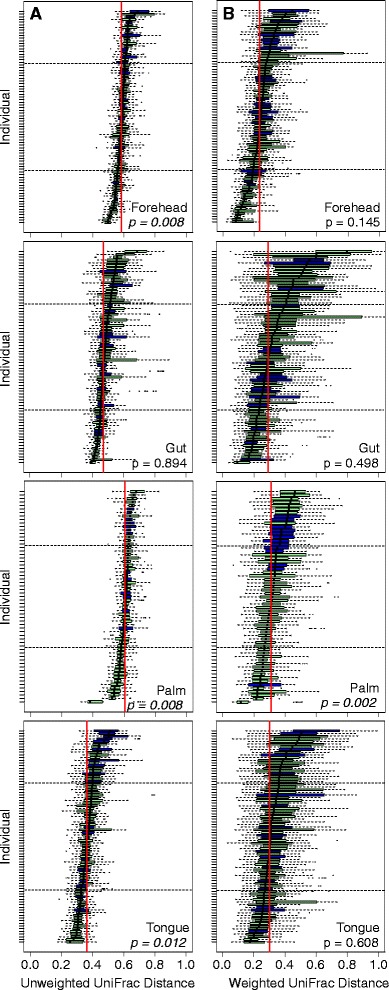
“A similar pattern was observed when we used median unweighted UniFrac values [16] (a phylogenetic metric of community membership) for each body habitat, where turnover was found to be greater for the skin than for the tongue and gut communities (Figure 2a and Additional file 5a).”
Self-citationMeasuring biological diversity
(2004) · Choice Reviews Online · doi:10.5860/choice.42-1547 · Cited by 6,621
Linking long-term dietary patterns with gut microbial enterotypes
Wu, G. D., Chen, J., Hoffmann, C., Bittinger, K., Chen, Y.-Y., Keilbaugh, S. A., Bewtra, M., Knights, D., Walters, W. A., Knight, R., et al. (2011) · Science · doi:10.1126/science.1208344 · Cited by 6,513 · cited 1×
“Previous studies that have characterized human associated microbial communities over time have been based on relatively few individuals [3,4], intermittent sampling intervals [2,5,6], single body habitats [4,7-10], or focused on disease states [11], leaving us with an incomplete picture of the range of normal variabil…”
Self-citation
Cited by
Items 201–300 of 461
Temporal Variation of the Facial Skin Microbiome: A 2-Year Longitudinal Study in Healthy Adults
Hillebrand, G. G., Dimitriu, P. A., Malik, K. A., Park, Y., Qu, D., Mohn, W. W., & Kong, R. (2020) · Plastic & Reconstructive Surgery · doi:10.1097/prs.0000000000007621 · Cited by 31
Investigation of Age-Related Changes in the Skin Microbiota of Korean Women
Kim, M., Park, T., Yun, J. I., Lim, H. W., Han, N. R., & Lee, S. T. (2020) · Microorganisms · doi:10.3390/microorganisms8101581 · Cited by 32
Ge, Y., Zhu, W., Chen, L., Li, D., Li, Q., & Jie, H. (2021) · Animals · doi:10.3390/ani11123349 · Cited by 32
Janvier, X., Alexandre, S., Boukerb, A. M., Souak, D., Maillot, O., Barreau, M., Gouriou, F., Grillon, C., Feuilloley, M. G. J., & Groboillot, A. (2020) · Frontiers in Microbiology · doi:10.3389/fmicb.2020.591839 · Cited by 26
Ramkumar, D. P., Marty, A. M., Ramkumar, J., Rosencranz, H., Vedantham, R., Goldman, M., Meyer, E., Steinmetz, J., Weckle, A. L., Bloedorn, K., et al. (2024) · One Health · doi:10.1016/j.onehlt.2024.100734 · Cited by 32
“In comparisons of the microbiota in health and disease, a highly diverse microbiota has been associated with health and stability over time [118,119].”
Stability of healthy subgingival microbiome across space and time
Tamashiro, R. A., Strange, L., Schnackenberg, K., Santos, J., Gadalla, H., Zhao, L., Li, E. C., Hill, E. V., Hill, B., Sidhu, G. S., et al. (2021) · Scientific Reports · doi:10.1038/s41598-021-03479-2 · Cited by 31
Deoni, S., D’Sa, V. A., Volpe, A. R., Beauchemin, J., Croff, J. M., Elliott, A., Pini, N., Lucchini, M., & Fifer, W. P. (2022) · Developmental Cognitive Neuroscience · doi:10.1016/j.dcn.2022.101059 · Cited by 31
Png, C. W., Chua, Y. K., Law, J.-H., Zhang, Y., & Tan, K. (2022) · Scientific Reports · doi:10.1038/s41598-022-14203-z · Cited by 32
q2-longitudinal: a QIIME 2 plugin for longitudinal and paired-sample analyses of microbiome dataPreprint
Bokulich, N. A., Zhang, Y., Dillon, M. R., Rideout, J. R., Bolyen, E. K., Li, H., Albert, P. S., & Caporaso, J. G. (2017) · bioRxiv (Cold Spring Harbor Laboratory) · doi:10.1101/223974 · Cited by 35
Self-citationSequencing Technologies in Forensic Microbiology: Current Trends and Advancements
Oliveira, M. T. D. S., Marszałek, K., Kowalski, M. B., Frolova, A., Łabaj, P. P., Branicki, W., Madureira-Carvalho, Á., da Silva, D. D., & Dinis‐Oliveira, R. J. (2024) · Forensic Sciences · doi:10.3390/forensicsci4040035 · Cited by 34
Ananke: temporal clustering reveals ecological dynamics of microbial communities
Hall, M., Rohwer, R. R., Perrie, J., McMahon, K. D., & Beiko, R. G. (2017) · PeerJ · doi:10.7717/peerj.3812 · Cited by 29
Use of the Microbiome in the Practice of Epidemiology: A Primer on -Omic Technologies
Foxman, B., & Martin, E. T. (2015) · American Journal of Epidemiology · doi:10.1093/aje/kwv102 · Cited by 29
Most self-touches are with the nondominant hand
Zhang, N., Jia, W., Wang, P., King, M., Chan, P., & Li, Y. (2020) · Scientific Reports · doi:10.1038/s41598-020-67521-5 · Cited by 28
Bach, L., Ram, A., Ijaz, U. Z., Evans, T. J., & Lindström, J. (2021) · Frontiers in Microbiology · doi:10.3389/fmicb.2020.573969 · Cited by 30
Effect of Environmental Exposures on the Gut Microbiota from Early Infancy to Two Years of Age
Sugino, K. Y., Ma, T., Paneth, N., & Comstock, S. S. (2021) · Microorganisms · doi:10.3390/microorganisms9102140 · Cited by 31
Universal gut microbial relationships in the gut microbiome of wild baboons
Roche, K. E., Björk, J. R., Dasari, M. R., Grieneisen, L., Jansen, D., Gould, T. J., Gesquiere, L. R., Barreiro, L. B., Alberts, S. C., Blekhman, R., et al. (2023) · eLife · doi:10.7554/elife.83152 · Cited by 29
“…attributed to host-specific microbial ecologies and relationships ( Franzosa et al., 2015 ; Faith et al., 2013 ; Bik et al., 2016 ; Caporaso et al., 2011 ; Costello et al., 2009 ; Risely et al., 2021 ; Kolodny et al., 2019 ; Flores et al., 2014 ; Johnson et al., 2019 ; Pruss et al., 2021 ).”
Environmental influences on the skin microbiome of humans and cattle in rural Madagascar
Manus, M. B., Yu, J. J., Park, L. P., Mueller, O., Windsor, S. C., Horvath, J. E., & Nunn, C. L. (2017) · Evolution Medicine and Public Health · doi:10.1093/emph/eox013 · Cited by 28
Consumer Safety Considerations of Skin and Oral Microbiome Perturbation
McBain, A. J., O’Neill, C. A., Amézquita, A., Price, L. J., Faust, K., Tett, A., Segata, N., Swann, J. R., Smith, A. M., Murphy, B., et al. (2019) · Clinical Microbiology Reviews · doi:10.1128/cmr.00051-19 · Cited by 29
McDonald, D. T., Hornig, M., Lozupone, C., Debelius, J. W., Gilbert, J. A., & Knight, R. D. (2015) · Microbial Ecology in Health and Disease · doi:10.3402/mehd.v26.26555 · Cited by 28
Self-citationKohn, J. N., Kościółek, T., Marotz, C. A., Aleti, G., Guay-Ross, R. N., Hong, S.-H., Hansen, S., Swafford, A. D.-E., Knight, R. D., & Hong, S. (2020) · Brain Behavior and Immunity · doi:10.1016/j.bbi.2020.02.004 · Cited by 28
Self-citationAdvanced Organotypic In Vitro Model Systems for Host–Microbial Coculture
Kim, R. (2023) · BioChip Journal · doi:10.1007/s13206-023-00103-5 · Cited by 27
Composition and variation of respiratory microbiota in healthy military personnel
Hang, J., Zavaljevski, N., Yang, Y., Desai, V., Ruck, R. C., Macareo, L. R., Jarman, R. G., Reifman, J., Kuschner, R. A., & Keiser, P. B. (2017) · PLoS ONE · doi:10.1371/journal.pone.0188461 · Cited by 23
MAGNETO: An Automated Workflow for Genome-Resolved Metagenomics
Churcheward, B., Millet, M., Bihouée, A., Fertin, G., & Chaffron, S. (2022) · mSystems · doi:10.1128/msystems.00432-22 · Cited by 28
Microbial diversity of extreme habitats in human homes
Savage, A. M., Hills, J., Driscoll, K., Fergus, D. J., Grunden, A. M., & Dunn, R. R. (2016) · PeerJ · doi:10.7717/peerj.2376 · Cited by 22
Self-citationMicrobial Skin Inhabitants: Friends Forever
Dorrestein, P. C., Gallo, R. L., & Knight, R. D. (2016) · Cell · doi:10.1016/j.cell.2016.04.035 · Cited by 22
Self-citationFrankel‐Bricker, J., Buerki, S., Feris, K. P., & White, M. M. (2019) · Applied and Environmental Microbiology · doi:10.1128/aem.02334-19 · Cited by 23
Moving microbes: the dynamics of transient microbial residence on human skinPreprint
Vandegrift, R., Fahimipour, A. K., Muscarella, M. E., Bateman, A. C., Wymelenberg, K. G. V. D., & Bohannan, B. J. M. (2019) · bioRxiv (Cold Spring Harbor Laboratory) · doi:10.1101/586008 · Cited by 22
Vila-Real, C., Costa, C. M., Pimenta‐Martins, A., Mbugua, S. K., Hagrétou, S.-L., Katina, K., Maina, N. H., Pinto, E. C. B., & Gomes, A. (2025) · Foods · doi:10.3390/foods14030433 · Cited by 27
Aslam, H., Collier, F., Davis, J. A., Quinn, T. P., O’Hely, M., Pasco, J. A., Jacka, F. N., & Loughman, A. (2021) · Journal of Nutrition · doi:10.1093/jn/nxab252 · Cited by 24
Reproducibility of assessing fecal microbiota in chronic constipation
Parthasarathy, G., Chen, J., Chia, N., O’Connor, H. M., Gaskins, H. R., & Bharucha, A. E. (2017) · Neurogastroenterology & Motility · doi:10.1111/nmo.13172 · Cited by 21
TADA: phylogenetic augmentation of microbiome samples enhances phenotype classification
Sayyari, E., Kawas, B., & Mirarab, S. (2019) · Bioinformatics · doi:10.1093/bioinformatics/btz394 · Cited by 26
Is the skin microbiota a modifiable risk factor for breast disease?: A systematic review
Wang, K., Nakano, K., Naderi, N., Bajaj‐Elliott, M., & Mosahebi, A. (2021) · The Breast · doi:10.1016/j.breast.2021.07.014 · Cited by 24
Hoang, T., Kim, M. J., Park, J. W., Jeong, S., Lee, J., & Shin, A. (2022) · BMC Cancer · doi:10.1186/s12885-022-09735-6 · Cited by 21
Khafipour, A., Eissa, N., Munyaka, P. M., Rabbi, M. F., Kapoor, K., Kermarrec, L., Khafipour, E., Bernstein, C. N., & Ghia, J. (2020) · Frontiers in Microbiology · doi:10.3389/fmicb.2020.01405 · Cited by 21
Barnes, C. J., Clausen, M., Asplund, M., Rasmussen, L., Olesen, C. M., Yüksel, Y. T., Andersen, P. S., Litman, T., Hansen, A. J., & Agner, T. (2022) · mSphere · doi:10.1128/msphere.00917-21 · Cited by 20
Garden soil bacteria transiently colonize gardeners' skin after direct soil contact
Mhuireach, G. Á., Wymelenberg, K. G. V. D., & Langellotto, G. (2023) · Urban Agriculture & Regional Food Systems · doi:10.1002/uar2.20035 · Cited by 20
“Other hand microbiome studies have also observed a high degree of inter-and intrapersonal variation (Flores et al., 2014; Fierer et al., 2008), and that microbiome community variability itself can be a distinguishing trait between different individuals (Oh et al., 2016).”
BackgroundStability of human gut microbiome: Comparison of ecological modelling and observational approaches
Revel-Muroz, A., Akulinin, M., Shilova, P., Tyakht, A., & Klimenko, N. S. (2023) · Computational and Structural Biotechnology Journal · doi:10.1016/j.csbj.2023.08.030 · Cited by 20
“Among these factors, functional redundancy has been identified as a key determinant of microbiome stability [1,34,38,43,44].”
BackgroundHow stable is the human gut microbiota? And why this question matters
Brüssow, H. (2016) · Environmental Microbiology · doi:10.1111/1462-2920.13473 · Cited by 19
Kurtz, Z. D., Bonneau, R., & Müller, C. L. (2019) · bioRxiv (Cold Spring Harbor Laboratory) · doi:10.1101/2019.12.21.885889 · Cited by 24
Ma, Q., Huang, C., He, J., Zeng, X. F., Qu, Y.-L., Xiang, H., Yang, Z., Mao, L., Zheng, R., Xiao, J., et al. (2024) · International Journal of Surgery · doi:10.1097/js9.0000000000002152 · Cited by 18
A Model for Paired-Multinomial Data and Its Application to Analysis of Data on a Taxonomic Tree
Shi, P., & Li, H. (2017) · Biometrics · doi:10.1111/biom.12681 · Cited by 19
Temporal Stability of the Healthy Human Skin Microbiome Following Dead Sea Climatotherapy
Brandwein, M., Fuks, G., Israel, A., Al‐Ashhab, A., Nejman, D., Straussman, R., Hodak, E., Harari, M., Steinberg, D., Bentwich, Z., et al. (2017) · Acta Dermato Venereologica · doi:10.2340/00015555-2769 · Cited by 19
“In addition, the degree of temporal stability of the human skin microbiome has been expounded through both 16S and metagenomics studies (4, 5).”
BackgroundCui, X., Liu, J., Xiao, W., Chu, Y., & Ouyang, X. (2019) · Archives of Oral Biology · doi:10.1016/j.archoralbio.2019.02.012 · Cited by 18
The Microbiome and Mental Health Across the Lifespan
Dickerson, F., Dilmore, A. H., Godoy‐Vitorino, F., Nguyen, T. T., Paulus, M. P., Pinto‐Tomás, A. A., Moya-Roman, C., Zúñiga-Chaves, I., Severance, E. G., & Jeste, D. V. (2022) · Current topics in behavioral neurosciences · doi:10.1007/7854_2022_384 · Cited by 18
Multi-dimensional metagenomics
Peng, H., Ruiz-Moreno, A. J., & Fu, J. (2025) · Nature Reviews Bioengineering · doi:10.1038/s44222-025-00346-x · Cited by 21
“Time-series data have demonstrated that although the microbiota of healthy adults exhibits strong individual specificity and stability, short-term fluctuations and long-term shifts are common 86 .”
Thiruppathy, D., Moyne, O., Marotz, C. A., Williams, M. R., Navarro, P., Zaramela, L. S., & Zengler, K. (2025) · Microbiome · doi:10.1186/s40168-025-02063-4 · Cited by 17
“2a, b, Table 1, PERMANOVA) [66, 67].”
The Role of Leather Microbes in Human Health
Oruko, R. O., Odiyo, J. O., & Edokpayi, J. N. (2019) · IntechOpen eBooks · doi:10.5772/intechopen.81125 · Cited by 17
Common antibiotics, azithromycin and amoxicillin, affect gut metagenomics within a household
Chopyk, J., Güemes, A. G. C., Ramirez‐Sanchez, C., Attai, H., Ly, M., Jones, M. B., Liu, R., Liu, C., Yang, K., Tu, X. M., et al. (2023) · BMC Microbiology · doi:10.1186/s12866-023-02949-z · Cited by 18
Cong, J., Zhu, J., Zhang, C., Li, T., Liu, K., Liu, D., Zhou, N., Jiang, M., Hou, H., & Zhang, X. (2019) · Frontiers in Microbiology · doi:10.3389/fmicb.2019.01008 · Cited by 16
Chen, M. Y., Kueneman, J. G., González, A., Humphrey, G. C., Knight, R. D., & McKenzie, V. J. (2022) · Molecular Ecology · doi:10.1111/mec.16372 · Cited by 16
Self-citationMochochoko, B. M., Pohl, C. H., & O’Neill, H. G. (2022) · iScience · doi:10.1016/j.isci.2022.105870 · Cited by 14
Li, Y., Liu, Z., Luo, G., Lan, H., Chen, P., Du, R., Jing, G., Liu, L., Cui, X., Li, Y., et al. (2023) · iScience · doi:10.1016/j.isci.2023.106615 · Cited by 15
Longitudinal study of the interplay between the skin barrier and facial microbiome over 1 year
Seo, J. Y., You, S. W., Gu, K., Kim, H., Shin, J., Leem, S., Hwang, B. K., Kim, Y., & Kang, N. G. (2023) · Frontiers in Microbiology · doi:10.3389/fmicb.2023.1298632 · Cited by 16
“The longitudinal studies conducted within 6 months demonstrated that composition and diversity of skin microbiome can vary temporally depending on the skin sites and subjects (Grice et al., 2009; Flores et al., 2014).”
BackgroundCharacterization of communal sink drain communities of a university campus
Withey, Z., Goodall, T., MacIntyre, S., & Gweon, H. S. (2021) · Environmental DNA · doi:10.1002/edn3.196 · Cited by 14
Shi, P., Zhou, Y., & Zhang, A. R. (2021) · Biometrika · doi:10.1093/biomet/asab020 · Cited by 22
The Human Microbiome in Health and Disease
Arnold, W., Hill, E. S., Fei, N., Yee, A. L., Garcia, M. S., Cralle, L. E., & Gilbert, J. A. (2018) · Springer eBooks · doi:10.1007/978-3-319-96830-8_39 · Cited by 15
Curcumin Between Pleiotropic Potential and Translational Constraints
Magini, A., & Datti, A. (2026) · International Journal of Molecular Sciences · doi:10.3390/ijms27052212 · Cited by 17
“Importantly, these effects are highly variable, given that inter-individual differences in microbiome structure can lead to unpredictable changes in drug exposure and therapeutic response [55,123,124].”
Forensic human identification using skin microbiome genetic signatures
Schmedes, S. E., Woerner, A. E., & Budowle, B. (2019) · Elsevier eBooks · doi:10.1016/b978-0-12-815379-6.00011-8 · Cited by 15
Senina, A. M., Markelova, M., Khusnutdinova, D. R., Siniagina, M., Kupriyanova, O. V., Synbulatova, G. E., Kayumov, A. R., Boulygina, E. A., & Grigoryeva, T. V. (2024) · Microorganisms · doi:10.3390/microorganisms12081712 · Cited by 15
Lactobacillus levels and prognosis of patients with acute myocardial infarction.
Cai, J., Liu, Y., Wang, J., Wang, J.-X., Wang, Y., Xu, S.-B., Cui, Z., & Gao, J. (2022) · PubMed Central · doi:10.11909/j.issn.1671-5411.2022.02.009 · Cited by 14
BiomeHorizon : Visualizing Microbiome Time Series Data in R
Fink, I., Abdill, R. J., Blekhman, R., & Grieneisen, L. (2022) · mSystems · doi:10.1128/msystems.01380-21 · Cited by 15
“…the health of their hosts (McKenney et al. , 2018; Costello et al. , 2012), host-associated microbial communities demonstrate considerable variation both between hosts and within an individual host over time (Flores et al. , 2014; Human Microbiome Project Consortium, 2012; Johnson et al. , 2019).”
BackgroundPinoargote, G., & Ravishankar, S. (2018) · Journal of Probiotics & Health · doi:10.4172/2329-8901.1000193 · Cited by 13
Norouzi‐Beirami, M. H., Marashi, S., Banaei‐Moghaddam, A. M., & Kavousi, K. (2020) · Frontiers in Microbiology · doi:10.3389/fmicb.2019.03117 · Cited by 15
Han, N., Zhang, T., Qiang, Y., Peng, X., Li, X., & Zhang, W. (2022) · Communications Biology · doi:10.1038/s42003-022-04359-9 · Cited by 13
Nuclear receptor corepressor 1 deficiency exacerbates asthma by modulating macrophage polarization
Hou, C., Yan, L., Sun, K., Zhou, T., Zou, Y., Xiong, W., & Duan, S. (2023) · Cell Death Discovery · doi:10.1038/s41420-023-01724-3 · Cited by 12
Sewall, J. M., Oliver, A. S., Denaro, K., Chase, A. B., Weihe, C., Lay, M., Martiny, J. B. H., & Whiteson, K. (2020) · Journal of Microbiology and Biology Education · doi:10.1128/jmbe.v21i1.1991 · Cited by 15
Oral Microbiome in Four Female Centenarians
Nomura, Y., Kakuta, E., Okada, A., Otsuka, R., Shimada, M., Tomizawa, Y., Taguchi, C., Arikawa, K., Daikoku, H., Sato, T., et al. (2020) · Applied Sciences · doi:10.3390/app10155312 · Cited by 14
Phillips, S., Watt, R., Atkinson, T., Rajan, S., Hayhoe, A., Savva, G. M., Hornberger, M., Burton, B., Saada, J., Cambell-Kelly, M., et al. (2022) · PLoS ONE · doi:10.1371/journal.pone.0276118 · Cited by 13
Maritan, E., Gallo, M., Šrůtková, D., Jelinkova, A., Benada, O., Kofroňová, O., Silva-Soares, N. F., Hudcovic, T., Gifford, I., Barrick, J. E., et al. (2022) · BMC Biology · doi:10.1186/s12915-022-01477-y · Cited by 14
Mohr, A. E., Ahern, M. M., Sears, D. D., Bruening, M. M., & Whisner, C. M. (2023) · Gut Microbes · doi:10.1080/19490976.2023.2250482 · Cited by 14
Taylor-Baer, M., & Herman, D. R. (2017) · Springer eBooks · doi:10.1007/978-3-319-47143-3_18 · Cited by 15
Corrigan, A., Russell, N. T., Welge, M. E., Auvil, L. S., Bushell, C., White, B. A., & Murphy, R. A. (2018) · Scientific Reports · doi:10.1038/s41598-018-31438-x · Cited by 16
Skin Microbiota and Clinical Associations in Netherton Syndrome
Sillanpää, V., Soratto, T. A. T., Eränkö, E., Barrientos‐Somarribas, M., Hannula‐Jouppi, K., Andersson, B., & Ranki, A. (2021) · JID Innovations · doi:10.1016/j.xjidi.2021.100008 · Cited by 12
Bringing pharmacomicrobiomics to the clinic through well‐designed studies
Steiner, H. E., Patterson, H. K., Giles, J. B., & Karnes, J. H. (2022) · Clinical and Translational Science · doi:10.1111/cts.13381 · Cited by 12
The interplay between the microbiota and opioid in the treatment of neuropathic pain
Gong, Z., Xue, Q., Luo, Y., Yu, B., Hua, B., & Liu, Z. (2024) · Frontiers in Microbiology · doi:10.3389/fmicb.2024.1390046 · Cited by 12
“Due to the heterogeneity of external perturbations, the rate of change in the gut microbiota varies among individuals (Flores et al., 2014).”
BackgroundWang, H., Chan, M. W., Chan, H. H. L., & Pang, H. (2020) · Acta Dermato Venereologica · doi:10.2340/00015555-3638 · Cited by 13
Bradley, E. S., Schell, B. R., Ward, D. V., Bucci, V., Zeamer, A. L., & Haran, J. P. (2021) · The Journals of Gerontology Series A · doi:10.1093/gerona/glab345 · Cited by 12
Foam soap is not as effective as liquid soap in eliminating hand microbial flora
Dixon, N., Morgan, M. A., & Equils, O. (2017) · American Journal of Infection Control · doi:10.1016/j.ajic.2017.01.020 · Cited by 12
KAWANO, T., Shigeishi, H., Fukada, E., YANAGISAWA, T., Kuroda, N., Takemoto, T., & Sugiyama, M. (2018) · Journal of Applied Oral Science · doi:10.1590/1678-7757-2017-0516 · Cited by 11
Does the Vaginal Microbiota Influence the Incidence of the Preterm Premature Rupture of Membranes?
Feduniw, S., Żeber‐Lubecka, N., Pruc, M., Gaca, Z., Szarpak, Ł., & Ciebiera, M. (2025) · Journal of Clinical Medicine · doi:10.3390/jcm14186577 · Cited by 10
“This temporal variability complicates the interpretation of microbial data and calls for longitudinal studies that capture microbial transitions before, during, and after PPROM [58].”
New Personalized Medicine Model for Medication Management
Alagiakrishnan, K., Halverson, T., Olivares, D. V. F., & Sadowski, C. A. (2026) · Journal of Personalized Medicine · doi:10.3390/jpm16040182 · Cited by 10
Frąszczak, K., Barczyński, B., Siwiec, R., Kondracka, A., Malm, A., Kotarski, J., Witt, E., & Korona‐Głowniak, I. (2023) · Frontiers in Microbiology · doi:10.3389/fmicb.2023.1257587 · Cited by 12
Link Between Oral and Gut Microbiomes: The Oral–Gut Axis
Colombo, A. P. V., Lourenço, T. G. B., de Oliveira, A. M., & da Costa, A. L. A. (2025) · Advances in experimental medicine and biology · doi:10.1007/978-3-031-79146-8_5 · Cited by 13
MiRKAT-MC: A Distance-Based Microbiome Kernel Association Test With Multi-Categorical Outcomes
Jiang, Z., He, M., Chen, J., Zhao, N., & Zhan, X. (2022) · Frontiers in Genetics · doi:10.3389/fgene.2022.841764 · Cited by 12
“Flores et al. (Flores et al., 2014) explored the effect of antibiotic use on temporal variability of the microbiome diversity and community structure in gut, palm and tongue.”
BackgroundCharacterizing and Functionally Defining the Gut Microbiota: Methodology and Implications
Ellermann, M., Carr, J. S., Fodor, A. A., Arthur, J. C., & Carroll, I. M. (2017) · Elsevier eBooks · doi:10.1016/b978-0-12-804024-9.00002-1 · Cited by 12
Factors affecting microbial metabolism in a human fecal fermentation model to evaluate prebiotics
Parkar, S. G., Davis, P., Trower, T. M., HEDDERLEY, D. I., Sutton, K. H., & Ingram, J. R. (2018) · Journal of Nutrition & Intermediary Metabolism · doi:10.1016/j.jnim.2018.12.003 · Cited by 10
Petitclerc, I., Perron, J., Dugas, C., Mayer, T., Raymond, F., Marzo, V. D., Veilleux, A., & Robitaille, J. (2025) · BMC Pregnancy and Childbirth · doi:10.1186/s12884-025-07584-2 · Cited by 11
“First, only one fecal sample per participant was available, which may not capture the temporal variability of the microbiota [92, 93].”
Buerger, S. M. (2020) · Wiley eBooks · doi:10.1002/9781119593058.ch3 · Cited by 9
Liu, Z., Luo, G., Du, R., Kan, G., Han, X., Zhong, G., Xing, W., Cui, Y., Sun, W., Li, J., et al. (2023) · iScience · doi:10.1016/j.isci.2023.108556 · Cited by 9
Ecological patterns and processes of temporal turnover within lung infection microbiota
Gavillet, H., Hatfield, L. R., Jones, A. M., Maitra, A., Horsley, A. R., Rivett, D. W., & Gast, C. (2024) · Microbiome · doi:10.1186/s40168-024-01780-6 · Cited by 9
“Indeed, it has been recommended that temporal dynamics need to be considered when attempting to connect changes in human microbiota to changes in health status [27].”
BackgroundHaagmans, R., Charity, O. J., Baker, D., Telatin, A., Savva, G. M., Adriaenssens, E. M., Powell, P. P., & Carding, S. R. (2025) · Viruses · doi:10.3390/v17020155 · Cited by 9
“Standardised methods for which bias and reproducibility have been assessed are important, particularly for longitudinal studies, to account for any methodological variability [10,11].”
Microbiota profiling on itchy scalp with undetermined origin
Li, X., Yang, F., Yan, H., Shi, Y., Chang, X., Zhang, M., Zhang, M. H., & Zhang, M. H. (2022) · Archives of Microbiology · doi:10.1007/s00203-022-03077-4 · Cited by 9
The Block Bootstrap Method for Longitudinal Microbiome DataPreprint
Jeganathan, P., Callahan, B. J., Proctor, D. M., Relman, D. A., & Holmes, S. (2018) · arXiv (Cornell University) · doi:10.48550/arxiv.1809.01832 · Cited by 16
“…increasingly adopted longitudinal experimental designs consisting of repeated biological observations from each subject (Schloissnig et al. 2013, Flores et al. 2014, DiGiulio et al. 2015, Fukuyama et al. 2017, Proctor et al. 2018) for purposes such as the detection of microbial biomarkers of…”
BackgroundSynchrony and idiosyncrasy in the gut microbiome of wild baboonsPreprint
Björk, J. R., Dasari, M. R., Roche, K., Grieneisen, L., Gould, T. J., Grenier, J., Yotova, V., Gottel, N., Jansen, D., Gesquiere, L. R., et al. (2021) · bioRxiv (Cold Spring Harbor Laboratory) · doi:10.1101/2021.11.24.469913 · Cited by 10
Quantifying compositional variability in microbial communities with FAVA
Morrison, M. L., Xue, K. S., & Rosenberg, N. A. (2025) · Proceedings of the National Academy of Sciences · doi:10.1073/pnas.2413211122 · Cited by 11
Maldonado-Gómez, M. X., Ng, K. M., Drexler, R. A., Conner, A. M. S., Vierra, C. G., Krishnakumar, N., Gerber, H. M., Taylor, Z. R., Treon, J. L., Ellis, M., et al. (2025) · mBio · doi:10.1128/mbio.00470-25 · Cited by 9
“Given the wide variability of the microbiota between individuals across and within different geographic regions (19–22), an approach involving a cohort or population of multiple donors is required to generate robust, generalizable conclusions.”
Microbiome and well-being: a meta-analysis
Kowal, M., Sorokowski, P., David, D., Iuga, I. A., Renwick, S., & Sorokowska, A. (2025) · npj Biofilms and Microbiomes · doi:10.1038/s41522-025-00829-0 · Cited by 8
Nita, I.-B., Văcărean-Trandafir, I.-C., Amărandi, R.-M., Ilie, O., Dobrin, R., Bejenariu, A. C., Ivanov, I.-C., & Doroftei, B. (2025) · BMC Psychiatry · doi:10.1186/s12888-025-07461-4 · Cited by 8
“This also limits the extrapolation to the broader population of patients with SCZ, as gut microbiome composition can vary over time and be influenced by many factors [135, 136], reflected by an intra-individual variability greater than between-group variability [137].”
Host, microbial, and environmental drivers of vaginal microbiota composition
Young, R. B., Correia, G. D. S., & MacIntyre, D. A. (2026) · Fertility and Sterility · doi:10.1016/j.fertnstert.2026.01.020 · Cited by 9
Bacterial profile-based body fluid identification using a machine learning approach
Kim, S., Lee, H. C., Sim, J. E., Park, S. J., & Oh, H. H. (2024) · Genes & Genomics · doi:10.1007/s13258-024-01594-8 · Cited by 8
“Significant between-group and within-group differences were similar to the results of Dobay et al., who compared the microbiome of body fluids exposed to an indoor environment (Dobay et al. 2019 ), and Flores et al., who compared the microbiome of the tongue and skin (Flores et al. 2014).”
Metadata
- Authors
- Flores, G. E., Caporaso, J. G., Henley, J. B., Rideout, J. R., Domogala, D., Chase, J., Leff, J. W., Vázquez-Baeza, Y., Gonzalez, A., Knight, R., Dunn, R. R., & Fierer, N.
- Affiliations
- California State University, Northridge (US)
- Northern Arizona University (US)
- Cooperative Institute for Research in Environmental Sciences (US)
- Howard Hughes Medical Institute (US)
- North Carolina State University (US)
- Corresponding author
- Flores, Gilberto E
- Fierer, Noah
- ORCID
- Venue
- Genome Biology
- Published
- 2014-12-03
- Volume
- 15
- Issue
- 12
- Pages
- 531-531
- ISSN
- 1465-6906 (ISSN-L)
- 1474-760X
- PMC
- PMC4252997
- OpenAlex
- W2167123129
- Semantic Scholar
- 40dc97fcb625a91529213aea54269160b0385fee
- Cited by
- 446
- References
- 42
- Citations by year
- 2026: 23 · 2025: 36 · 2024: 34 · 2023: 31 · 2022: 45 · 2021: 51 · 2020: 51 · 2019: 50 · 2018: 37 · 2017: 41 · 2016: 36 · 2015: 10 · 2014: 1
- FWCI
- 12.02
- Type
- journal article
- Language
- en
- Open access
- gold
- doi.org
- Licence
- cc-by
- creativecommons.org/licenses/by/4.0 (tdm)
- creativecommons.org/licenses/by/4.0 (vor)
- Locations
- Genome biology (publishedVersion, cc-by)
- Europe PMC (PubMed Central) (publishedVersion, cc-by)
- PubMed Central (publishedVersion, cc-by)
- PubMed (publishedVersion)
- eScholarship (California Digital Library) (submittedVersion)
- Funders
- Howard Hughes Medical Institute
- North Carolina State University
- Amazon Web Services
- National Institutes of Health
- Topics
- Life Sciences › Biochemistry, Genetics and Molecular Biology › Molecular Biology › Gut microbiota and health
- Physical Sciences › Environmental Science › Ecology › Microbial Community Ecology and Physiology
- Health Sciences › Dentistry › Periodontics › Oral microbiology and periodontitis research
- Keywords
- human microbiome, temporal variation, microbiome stability, interindividual variability, skin microbiome, gut microbiota, tongue microbiome, microbial diversity, community composition
- MeSH terms
- Adult, Bacteria, Feces, Female, Forehead, Hand, Humans, Longitudinal Studies, Male, Middle Aged, Phylogeny, Tongue, Genome, Bacterial, Genomics, Young Adult, Microbiota, Healthy Volunteers
About these checks
Registry, retraction, Cites and statistics results are computed, not judged, with one exception: a printed reference that no index lists is read once by a model before it counts as a citation error. Claims are extracted by a model and kept only when their quote appears verbatim in the text; each cited source is then checked, with a model’s help, for whether it says what the claim relies on. Those verdicts can be wrong — read the claim’s quote and the cited source before relying on one.
Statistics and arithmetic are recomputed, not judged.
Confidence bands are shown only for fields calibrated on our annotated test set. None is calibrated yet, so no band is shown.
What counts as a claim ›How we measure confidence ›How we check this ›
Are you an author, or do you see a problem with this page? Request a review
Data sources
Bibliographic data: Semantic Scholar, OpenAlex, Crossref.
Contains information from the Semantic Scholar Academic Graph Datasets, made available under the ODC Attribution License (ODC-BY 1.0).
Semantic Scholar’s data is described in: Kinney, R., et al. (2023). The Semantic Scholar Open Data Platform. arXiv:2301.10140.
