

Temporal variability is a personalized feature of the human microbiome
Open accessThe DOI matches its Crossref record; 42 of the 42 references it cites were found in a registry or an index.
Abstract
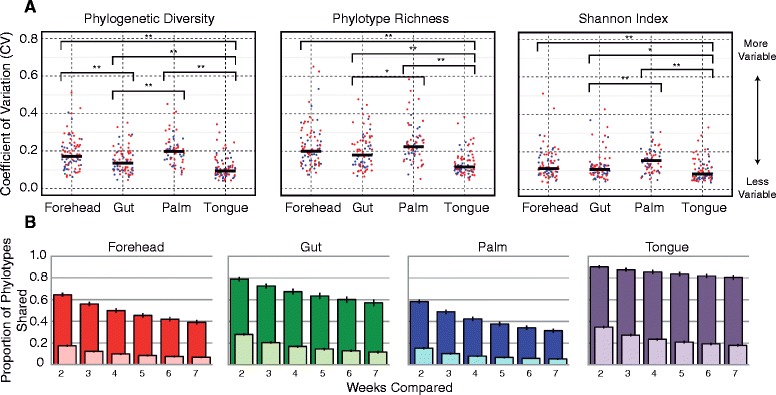
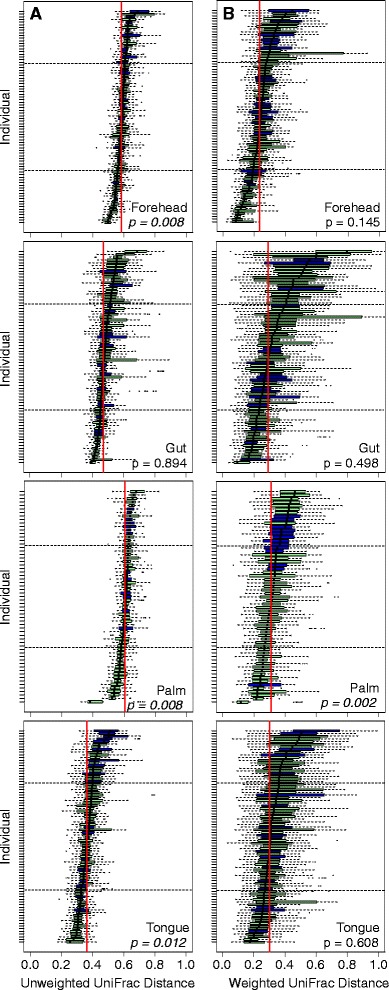
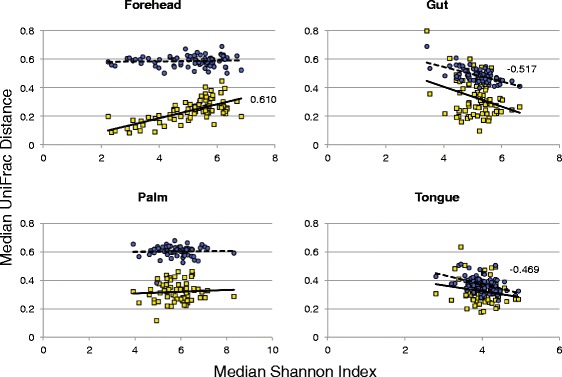
Background: It is now apparent that the complex microbial communities found on and in the human body vary across individuals. What has largely been missing from previous studies is an understanding of how these communities vary over time within individuals. To the extent to which it has been considered, it is often assumed that temporal variability is negligible for healthy adults. Here we address this gap in understanding by profiling the forehead, gut (fecal), palm, and tongue microbial communities in 85 adults, weekly over 3 months. Results: We found that skin (forehead and palm) varied most in the number of taxa present, whereas gut and tongue communities varied more in the relative abundances of taxa. Within each body habitat, there was a wide range of temporal variability across the study population, with some individuals harboring more variable communities than others. The best predictor of these differences in variability across individuals was microbial diversity; individuals with more diverse gut or tongue communities were more stable in composition than individuals with less diverse communities. Conclusions: Longitudinal sampling of a relatively large number of individuals allowed us to observe high levels of temporal variability in both diversity and community structure in all body habitats studied. These findings suggest that temporal dynamics may need to be considered when attempting to link changes in microbiome structure to changes in health status. Furthermore, our findings show that, not only is the composition of an individual’s microbiome highly personalized, but their degree of temporal variability is also a personalized feature.
Overview
The claims and statistics of this paper haven’t been checked yet.
Free: it reads the open-access text and checks the first 5 claims that cite a source we can check. Create a free account to check every claim.
Integrity signals
Registry
Cites
Statistics
Figures
Verification
Claims the paper makes
The claims and statistics of this paper haven’t been checked yet.
Free: it reads the open-access text and checks the first 5 claims that cite a source we can check. Create a free account to check every claim.
Claims other papers make about this one
Each is checked against this paper’s own text: does it say what the citing paper says it does?
The source backs part of the claim, not all of it — or backs it for a different population, condition or comparison.
In the citing paper
“Study of short-term longitudinal samplings from half the donors found that individuals are more similar to themselves over time compared with others (Costello et al., 2009; Flores et al., 2014; Mehta et al., 2018).”
From Gut microbiome stability and dynamics in healthy donors and patients with non-gastrointestinal cancers (2021) · cites this paper as Flores et al., 2014
Experimental — accuracy not yet measuredIn the citing paper
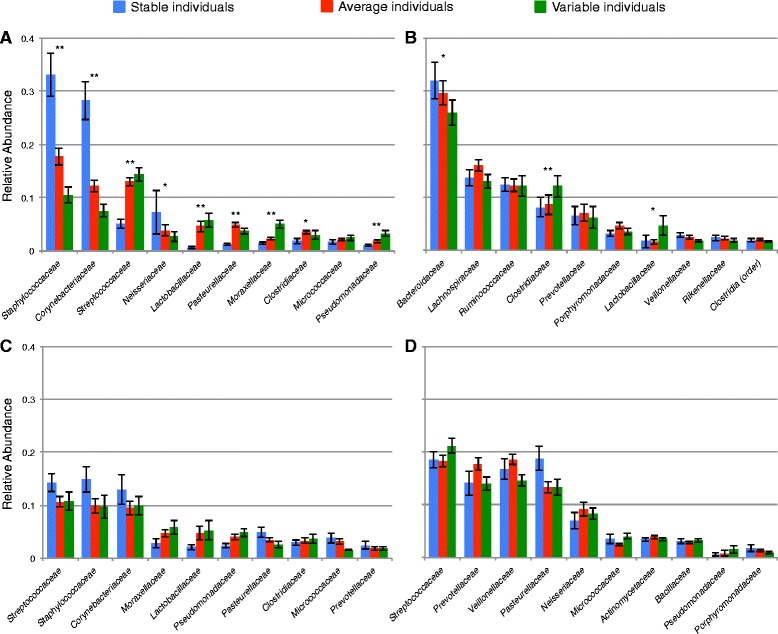
“while Bacteroidota was higher in donors with greater species stability over time (Fig. 6 D and Data S1, table 15; Flores et al., 2014).”
From Gut microbiome stability and dynamics in healthy donors and patients with non-gastrointestinal cancers (2021) · cites this paper as Flores et al., 2014
Self-check
Percentages, sums and reported differences re-computed from the paper’s own numbers.
The self-check needs the paper’s full text.
Citations
Cites
vegan: Community Ecology Package
Oksanen, J., Simpson, G. L., Blanchet, F. G., Kindt, R., Legendre, P., Minchin, P. R., O'Hara, R. B., Solymos, P., Stevens, M. H. H., Szoecs, E., et al. (2001) · CRAN: Contributed Packages · doi:10.32614/cran.package.vegan · Cited by 22,615
Search and clustering orders of magnitude faster than BLAST
Edgar, R. C. (2010) · Bioinformatics · doi:10.1093/bioinformatics/btq461 · Cited by 20,826
Non‐parametric multivariate analyses of changes in community structure
CLARKE, K. R. (1993) · Australian Journal of Ecology · doi:10.1111/j.1442-9993.1993.tb00438.x · Cited by 14,128 · cited 2×
“To determine if certain taxa were more or less abundant in the different quartiles (that is, stability classes), we rank transformed the most abundant bacterial families (>1% across individuals) for each body habitat and tested for differences between the groups using the nonparametric Kruskal-Wallis analysis of varia…”
Structure, function and diversity of the healthy human microbiome
The Human Microbiome Project Consortium (2012) · Nature · doi:10.1038/nature11234 · Cited by 11,726 · cited 3×
“Previous studies that have characterized human associated microbial communities over time have been based on relatively few individuals [3,4], intermittent sampling intervals [2,5,6], single body habitats [4,7-10], or focused on disease states [11], leaving us with an incomplete picture of the range of normal variabil…”
Self-citationDiet rapidly and reproducibly alters the human gut microbiome
David, L. A., Maurice, C. F., Carmody, R. N., Gootenberg, D. B., Button, J. E., Wolfe, B. E., Ling, A. V., Devlin, A. S., Varma, Y., Fischbach, M. A., et al. (2014) · Nature · doi:10.1038/nature12820 · Cited by 10,100 · cited 1×
“Previous studies that have characterized human associated microbial communities over time have been based on relatively few individuals [3,4], intermittent sampling intervals [2,5,6], single body habitats [4,7-10], or focused on disease states [11], leaving us with an incomplete picture of the range of normal variabil…”
Ultra-high-throughput microbial community analysis on the Illumina HiSeq and MiSeq platforms
Caporaso, J. G., Lauber, C. L., Walters, W. A., Berg-Lyons, D., Huntley, J., Fierer, N., Owens, S. M., Betley, J., Fraser, L., Bauer, M., et al. (2012) · The ISME Journal · doi:10.1038/ismej.2012.8 · Cited by 8,839 · cited 3×
“DNA extraction and PCR amplification of the variable region 4 (V4) of the 16S rRNA gene using Illumina adapted universal primers 515 F/806R [12,30] was conducted using the direct PCR protocol as previously described [31].”
Self-citationHuman gut microbes associated with obesity
Ley, R. E., Turnbaugh, P. J., Klein, S., & Gordon, J. I. (2006) · Nature · doi:10.1038/4441022a · Cited by 8,785 · cited 1×
“A higher Firmicutes:Bacteriodetes ratio has been observed in guts of obese individuals [26,27], but we did not have enough diversity in body mass index (BMI) to formally test if temporal variability may also be associated with obesity.”
UniFrac: a New Phylogenetic Method for Comparing Microbial Communities
Lozupone, C., & Knight, R. (2005) · Applied and Environmental Microbiology · doi:10.1128/aem.71.12.8228-8235.2005 · Cited by 8,227 · cited 2×
“A similar pattern was observed when we used median unweighted UniFrac values [16] (a phylogenetic metric of community membership) for each body habitat, where turnover was found to be greater for the skin than for the tongue and gut communities (Figure 2a and Additional file 5a).”
Self-citationMeasuring biological diversity
(2004) · Choice Reviews Online · doi:10.5860/choice.42-1547 · Cited by 6,621
Linking long-term dietary patterns with gut microbial enterotypes
Wu, G. D., Chen, J., Hoffmann, C., Bittinger, K., Chen, Y.-Y., Keilbaugh, S. A., Bewtra, M., Knights, D., Walters, W. A., Knight, R., et al. (2011) · Science · doi:10.1126/science.1208344 · Cited by 6,513 · cited 1×
“Previous studies that have characterized human associated microbial communities over time have been based on relatively few individuals [3,4], intermittent sampling intervals [2,5,6], single body habitats [4,7-10], or focused on disease states [11], leaving us with an incomplete picture of the range of normal variabil…”
Self-citation
Cited by
Items 101–200 of 460
Effects of spaceflight on the composition and function of the human gut microbiota
Liu, Z., Luo, G., Du, R., Sun, W., Li, J., Lan, H., Chen, P., Yuan, X., Cao, D., Li, Y., et al. (2020) · Gut Microbes · doi:10.1080/19490976.2019.1710091 · Cited by 92
Cleland, E. J., Bassiouni, A., Vreugde, S., & Wormald, P. (2016) · American Journal of Rhinology and Allergy · doi:10.2500/ajra.2016.30.4261 · Cited by 86
Skin and gut microbiomes of a wild mammal respond to different environmental cues
Lavrinienko, A., Tukalenko, E., Mappes, T., & Watts, P. C. (2018) · Microbiome · doi:10.1186/s40168-018-0595-0 · Cited by 87
The Inuit gut microbiome is dynamic over time and shaped by traditional foods
Dubois, G., Girard, C., Lapointe, F.-J., & Shapiro, B. J. (2017) · Microbiome · doi:10.1186/s40168-017-0370-7 · Cited by 75
Antibiotic-perturbed microbiota and the role of probiotics
Szajewska, H., Scott, K. P., de Meij, T. G. J., Forslund, S. K., Knight, R. D., Koren, O., Little, P. S., Johnston, B. C., Łukasik, J., Suez, J., et al. (2024) · Nature Reviews Gastroenterology & Hepatology · doi:10.1038/s41575-024-01023-x · Cited by 91
“Examples include observations that students who had to take antibiotics had low microbiota stability week to week 123 , and that patients with inflammatory bowel disease had increased variability in the microbiota compared with healthy controls 124 , both as measured by phylogenetic β-diversity.”
Self-citationCleanliness in context: reconciling hygiene with a modern microbial perspective
Vandegrift, R., Bateman, A. C., Siemens, K. N., Nguyen, M., Wilson, H. E., Green, J. L., Wymelenberg, K. G. V. D., & Hickey, R. J. (2017) · Microbiome · doi:10.1186/s40168-017-0294-2 · Cited by 85
Primate microbiomes over time: Longitudinal answers to standing questions in microbiome research
Björk, J. R., Dasari, M. R., Grieneisen, L., & Archie, E. A. (2019) · American Journal of Primatology · doi:10.1002/ajp.22970 · Cited by 82
“As a result, most such data sets have either few subjects (e.g., Caporaso et al., 2011; David et al., 2014), or if they have more subjects, they have relatively few time points per subject, limiting their statistical power (e.g., Claesson et al., 2011; Faith et al., 2013; Flores et al., 2014).”
Cornuault, J. K., Moncaut, E., Loux, V., Mathieu, A., Sokol, H., Petit, M., & Paepe, M. D. (2019) · The ISME Journal · doi:10.1038/s41396-019-0566-x · Cited by 79
An optimal statistical and computational framework for generalized tensor estimation
Han, R., Willett, R. M., & Zhang, A. R. (2022) · The Annals of Statistics · doi:10.1214/21-aos2061 · Cited by 80
Impact of demographics on human gut microbial diversity in a US Midwest population
Chen, J., Ryu, E., Hathcock, M., Ballman, K., Chia, N., Olson, J. E., & Nelson, H. (2016) · PeerJ · doi:10.7717/peerj.1514 · Cited by 74
Depiction of Vaginal Microbiota in Women With High-Risk Human Papillomavirus Infection
Wei, Z., Chen, H., Wang, C., Yang, G., Han, S., & Zhang, S.-L. (2021) · Frontiers in Public Health · doi:10.3389/fpubh.2020.587298 · Cited by 78
Gut Microbiome in Anesthesiology and Pain Medicine
Minerbi, A., & Shen, S. (2022) · Anesthesiology · doi:10.1097/aln.0000000000004204 · Cited by 88
Early life gut microbiome and its impact on childhood health and chronic conditions
Núñez, H., Nieto, P. A., Mars, R. A. T., Ghavami, M., Hoy, C. S., & Sukhum, K. V. (2025) · Gut Microbes · doi:10.1080/19490976.2025.2463567 · Cited by 89
Multidomain analyses of a longitudinal human microbiome intestinal cleanout perturbation experiment
Fukuyama, J., Rumker, L., Sankaran, K., Jeganathan, P., Dethlefsen, L., Relman, D. A., & Holmes, S. P. (2017) · PLOS Computational Biology · doi:10.1371/journal.pcbi.1005706 · Cited by 73
From taxonomy to metabolic output: what factors define gut microbiome health?
Wilmanski, T., Rappaport, N., Diener, C., Gibbons, S. M., & Price, N. D. (2021) · Gut Microbes · doi:10.1080/19490976.2021.1907270 · Cited by 73
A Pilot Study: Changes of Gut Microbiota in Post-surgery Colorectal Cancer Patients
Cong, J., Zhu, H., Liu, D., Li, T., Zhang, C., Zhu, J., Lv, H., Liu, K., Hao, C., Tian, Z., et al. (2018) · Frontiers in Microbiology · doi:10.3389/fmicb.2018.02777 · Cited by 74
Viral biogeography of the mammalian gut and parenchymal organs
Shkoporov, A. N., Stockdale, S. R., Lavelle, A., Kondova, I. I., Hueston, C. M., Upadrasta, A., Khokhlova, E. V., van der Kamp, I., Ouwerling, B., Draper, L. A., et al. (2022) · Nature Microbiology · doi:10.1038/s41564-022-01178-w · Cited by 72
The potential role of the microbiota in prostate cancer pathogenesis and treatment
Pernigoni, N., Guo, C. W., Gallagher, L., Yuan, W., Colucci, M., Troiani, M., Liu, L., Maraccani, L., Guccini, I., Migliorini, D., et al. (2023) · Nature Reviews Urology · doi:10.1038/s41585-023-00795-2 · Cited by 77
The Gut Microbiome, Metformin, and Aging
Induri, S. N. R., Kansara, P., Thomas, S. C., Xu, F., Saxena, D. B., & Li, X. (2021) · The Annual Review of Pharmacology and Toxicology · doi:10.1146/annurev-pharmtox-051920-093829 · Cited by 71
Leung, M. H. Y., Tong, X., Wilkins, D. E., Cheung, H. H. L., & Lee, P. K. H. (2018) · Microbiome · doi:10.1186/s40168-018-0412-9 · Cited by 68
The Impact of Pollution on Skin and Proper Efficacy Testing for Anti-Pollution Claims
Rembiesa, J., Ruzgas, T. A., Engblom, J., & Holefors, A. (2018) · Cosmetics · doi:10.3390/cosmetics5010004 · Cited by 73
Analysis of Microbial Communities: An Emerging Tool in Forensic Sciences
Gouello, A., Dunyach‐Remy, C., Siatka, C., & Lavigne, J. (2021) · Diagnostics · doi:10.3390/diagnostics12010001 · Cited by 70
The History of the Intestinal Microbiota and the Gut-Brain Axis
Lewandowska, Z., Figlerowicz, M., & Mazur‐Melewska, K. (2022) · Pathogens · doi:10.3390/pathogens11121540 · Cited by 70
Skin Microbiome Analysis for Forensic Human Identification: What Do We Know So Far?
Tozzo, P., D’Angiolella, G., Brun, P., Castagliuolo, I., Gino, S., & Caenazzo, L. (2020) · Microorganisms · doi:10.3390/microorganisms8060873 · Cited by 70
Temporal probabilistic modeling of bacterial compositions derived from 16S rRNA sequencing
Äijö, T., Müller, C. L., & Bonneau, R. (2017) · Bioinformatics · doi:10.1093/bioinformatics/btx549 · Cited by 71
The Future of Environmental DNA in Forensic Science
Allwood, J. S., Fierer, N., & Dunn, R. R. (2019) · Applied and Environmental Microbiology · doi:10.1128/aem.01504-19 · Cited by 65
Self-citationInvestigation of direct and indirect transfer of microbiomes between individuals
Neckovic, A., van Oorschot, R. A. H., Szkuta, B., & Durdle, A. (2019) · Forensic Science International Genetics · doi:10.1016/j.fsigen.2019.102212 · Cited by 68
Byrd, A. L., Liu, M., Fujimura, K. E., Lyalina, S., Nagarkar, D. R., Charbit, B., Bergstedt, J., Patin, E., Harrison, O. J., Quintana-Murci, L., et al. (2021) · Journal of Experimental Medicine · doi:10.1084/jem.20200606 · Cited by 63
Minor taxa in human skin microbiome contribute to the personal identification
Watanabe, H., Nakamura, I., Mizutani, S., Kurokawa, Y., Mori, H., Kurokawa, K., & Yamada, T. (2018) · PLoS ONE · doi:10.1371/journal.pone.0199947 · Cited by 77
Probing the diversity of healthy oral microbiome with bioinformatics approaches
Moon, J.-H., & Lee, J.-H. (2016) · BMB Reports · doi:10.5483/bmbrep.2016.49.12.164 · Cited by 53
Filter forensics: microbiota recovery from residential HVAC filters
Maestre, J. P., Jennings, W. C., Wylie, D., Horner, S. D., Siegel, J. A., & Kinney, K. A. (2018) · Microbiome · doi:10.1186/s40168-018-0407-6 · Cited by 67
Personalized Nutrition Through The Gut Microbiota: Current Insights And Future Perspectives
Vandeputte, D. (2020) · Nutrition Reviews · doi:10.1093/nutrit/nuaa098 · Cited by 66
Huang, S., Jiang, S., Huo, D., Allaband, C., Estaki, M., Cantu, V., Belda-Ferre, P., Vázquez-Baeza, Y., Zhu, Q., Ma, C., et al. (2021) · Microbiome · doi:10.1186/s40168-021-01102-0 · Cited by 61
Self-citationImmune checkpoint inhibitors unleash pathogenic immune responses against the microbiota
Hu, Z. I., Link, V. M., Lima-Junior, D. S., Delaleu, J., Bouladoux, N. J., Han, S., Collins, N., & Belkaid, Y. (2022) · Proceedings of the National Academy of Sciences · doi:10.1073/pnas.2200348119 · Cited by 61
The dynamic core microbiome: Structure, dynamics and stabilityPreprint
Björk, J. R., O’Hara, R. B., Ribes, M., Coma, R., & Montoya, J. M. (2017) · bioRxiv (Cold Spring Harbor Laboratory) · doi:10.1101/137885 · Cited by 68
Synchrony and idiosyncrasy in the gut microbiome of wild baboons
Björk, J. R., Dasari, M. R., Roche, K., Grieneisen, L., Gould, T. J., Grenier, J., Yotova, V., Gottel, N., Jansen, D., Gesquiere, L. R., et al. (2022) · Nature Ecology & Evolution · doi:10.1038/s41559-022-01773-4 · Cited by 63
The Microbiome of the Built Environment and Human Behavior
Stamper, C. E., Hoisington, A. J., Gomez, O. M., Halweg‐Edwards, A. L., Smith, D. G., Bates, K. L., Kinney, K. A., Postolache, T. T., Brenner, L. A., Rook, G. A. W., et al. (2016) · International review of neurobiology · doi:10.1016/bs.irn.2016.07.006 · Cited by 66
Disturbance Regimes Predictably Alter Diversity in an Ecologically Complex Bacterial System
Gibbons, S. M., Scholz, M., Hutchison, A. L., Dinner, A. R., Gilbert, J. A., & Coleman, M. L. (2016) · mBio · doi:10.1128/mbio.01372-16 · Cited by 66
“In the human gut, microbial diversity appears to be connected with community stability and host health (8, 9).”
Beyond the gut: Skin microbiome compositional changes are associated with BMI
Brandwein, M., Katz, I., Katz, A., & Kohen, R. (2019) · Human Microbiome Journal · doi:10.1016/j.humic.2019.100063 · Cited by 62
Human Immune System Variation during 1 Year
Lakshmikanth, T., Muhammad, S. A., Olin, A., Chen, Y., Mikeš, J., Fagerberg, L., Gummesson, A., Bergström, G. M. L., Uhlén, M., & Brodin, P. (2020) · Cell Reports · doi:10.1016/j.celrep.2020.107923 · Cited by 66
Basavaprabhu, H. N., Sonu, K. S., & Prabha, R. (2020) · Microbial Pathogenesis · doi:10.1016/j.micpath.2020.104029 · Cited by 55
Challenges in Human Skin Microbial Profiling for Forensic Science: A Review
Neckovic, A., van Oorschot, R. A. H., Szkuta, B., & Durdle, A. (2020) · Genes · doi:10.3390/genes11091015 · Cited by 57
Rumen Bacteria and Serum Metabolites Predictive of Feed Efficiency Phenotypes in Beef Cattle
Clemmons, B. A., Martino, C., Powers, J. B., Campagna, S. R., Voy, B. H., Donohoe, D. R., Gaffney, J., Embree, M. M., & Myer, P. R. (2019) · Scientific Reports · doi:10.1038/s41598-019-55978-y · Cited by 62
City-scale distribution and dispersal routes of mycobiome in residences
Tong, X., Leung, M. H. Y., Wilkins, D. E., & Lee, P. K. H. (2017) · Microbiome · doi:10.1186/s40168-017-0346-7 · Cited by 59
Minnebo, Y., Delbaere, K., Goethals, V., Raes, J., de Wiele, T. V., & Paepe, K. D. (2023) · Microbiome · doi:10.1186/s40168-023-01691-y · Cited by 59
The pathobiome concept applied to postharvest pathology and its implication on biocontrol strategies
Droby, S., Zhimo, V. Y., Wisniewski, M., & Freilich, S. (2022) · Postharvest Biology and Technology · doi:10.1016/j.postharvbio.2022.111911 · Cited by 56
Temporal Stability of the Ruminal Bacterial Communities in Beef Steers
Clemmons, B. A., Martino, C., Schneider, L. G., Lefler, J., Embree, M. M., & Myer, P. R. (2019) · Scientific Reports · doi:10.1038/s41598-019-45995-2 · Cited by 54
Association between Residential Greenness and Human Microbiota: Evidence from Multiple Countries
Zhang, Y., Fan, S., Zhang, Z., Li, J., Liu, X.-X., Hu, L.-X., Knibbs, L. D., Dadvand, P., Jalaludin, B. B., Browning, M. H. E. M., et al. (2023) · Environmental Health Perspectives · doi:10.1289/ehp12186 · Cited by 56
Pinoargote, G., Flores, G. E., Cooper, K. K., & Ravishankar, S. (2018) · Aquaculture Research · doi:10.1111/are.13791 · Cited by 56
Self-citationDietary Habits of 2- to 9-Year-Old American Children Are Associated with Gut Microbiome Composition
Herman, D. R., Rhoades, N., Mercado, J., Argueta, P., Lopez, U., & Flores, G. E. (2020) · Journal of the Academy of Nutrition and Dietetics · doi:10.1016/j.jand.2019.07.024 · Cited by 50
Self-citationSkin Microbiome in Cutaneous T-Cell Lymphoma by 16S and Whole-Genome Shotgun Sequencing
Salava, A., Deptula, P., Lyyski, A., Laine, P., Paulin, L. G., Väkevä, L. H., Ranki, A., Auvinen, P., & Lauerma, A. (2020) · Journal of Investigative Dermatology · doi:10.1016/j.jid.2020.03.951 · Cited by 52
Oliveira, R. A., & Pamer, E. G. (2023) · Cell Host & Microbe · doi:10.1016/j.chom.2023.03.002 · Cited by 52
Biology of the Tongue Coating and Its Value in Disease Diagnosis
Sun, S., Wei, H., Zhu, R., Pang, B., Jia, S., Liu, G., & Hua, B. (2017) · Complementary Medicine Research · doi:10.1159/000479024 · Cited by 49
Sharma, A., Richardson, M., Cralle, L. E., Stamper, C. E., Maestre, J. P., Stearns‐Yoder, K. A., Postolache, T. T., Bates, K. L., Kinney, K. A., Brenner, L. A., et al. (2019) · Microbiome · doi:10.1186/s40168-019-0686-6 · Cited by 55
Experimental metagenomics and ribosomal profiling of the human skin microbiome
Ferretti, P., Farina, S., Cristofolini, M., Girolomoni, G., Tett, A., & Segata, N. (2016) · Experimental Dermatology · doi:10.1111/exd.13210 · Cited by 54
The Role of the Human Microbiome in Chemical Toxicity
Koontz, J. M., Dancy, B. C. R., Horton, C. L., Stallings, J. D., DiVito, V. T., & Lewis, J. A. (2019) · International Journal of Toxicology · doi:10.1177/1091581819849833 · Cited by 51
Comparative Analysis of Gut Microbiota Following Changes in Training Volume Among Swimmers
Hampton‐Marcell, J., Eshoo-Anton, T. W., Cook, M. D., Gilbert, J. A., Horswill, C. A., & Poretsky, R. S. (2020) · International Journal of Sports Medicine · doi:10.1055/a-1079-5450 · Cited by 54
Gueniche, A., Perin, O., Bouslimani, A., Landemaine, L., Misra, N., Cupferman, S., Aguilar, L., Clavaud, C., Chopra, T., & Khodr, A. (2022) · Pathogens · doi:10.3390/pathogens11020121 · Cited by 44
Cláudia-Ferreira, A., Barbosa, D. J., Saegeman, V., Fernández-Rodríguez, A., Dinis‐Oliveira, R. J., Freitas, A. R., & on behalf of the ESCMID Study Group of Forensic and Post-Mortem Microbiology (ESGFOR) (2023) · Microorganisms · doi:10.3390/microorganisms11102509 · Cited by 55
“There is also a considerable inter-individual fluctuation in the stability of the human gut, tongue, forehead, and palm microbiome so including temporal variability throughout life is a relevant factor to add to the microbiome composition [17].”
BackgroundA general framework for association analysis of microbial communities on a taxonomic tree
Tang, Z.-Z., Chen, G., Alekseyenko, A. V., & Li, H. (2016) · Bioinformatics · doi:10.1093/bioinformatics/btw804 · Cited by 51
Diverse bacterial communities exist on canine skin and are impacted by cohabitation and time
Torres, S. M. F., Clayton, J. B., Danzeisen, J. L., Ward, T., Huang, H., Knights, D., & Johnson, T. J. (2017) · PeerJ · doi:10.7717/peerj.3075 · Cited by 55
Tensor clustering with planted structures: Statistical optimality and computational limits
Luo, Y., & Zhang, A. R. (2022) · The Annals of Statistics · doi:10.1214/21-aos2123 · Cited by 83
Skeen, H. R., Cooper, N. W., Hackett, S. J., Bates, J. M., & Marra, P. P. (2021) · Molecular Ecology · doi:10.1111/mec.16170 · Cited by 51
Yi, W., Ji, Y., Gao, H., Pan, R., Wei, Q., Cheng, J., Song, J. H., He, Y., Tang, C. K., Liu, X., et al. (2021) · Environmental Pollution · doi:10.1016/j.envpol.2021.118135 · Cited by 50
Wheatley, R. C., Kilgour, E., Jacobs, T., Lamarca, Á., Hubner, R. A., Valle, J. W., & McNamara, M. G. (2021) · British Journal of Cancer · doi:10.1038/s41416-021-01583-8 · Cited by 49
Association of Parkinson’s Disease With Microbes and Microbiological Therapy
Chen, Z.-J., Liang, C.-Y., Yang, L.-Q., Ren, S.-M., Xia, Y.-M., Cui, L., Li, X.-F., & Gao, B.-L. (2021) · Frontiers in Cellular and Infection Microbiology · doi:10.3389/fcimb.2021.619354 · Cited by 45
Berding, K., & Donovan, S. M. (2020) · Frontiers in Nutrition · doi:10.3389/fnut.2019.00193 · Cited by 43
Grembi, J. A., Nguyen, L. H., Haggerty, T. D., Gardner, C. D., Holmes, S., & Parsonnet, J. (2020) · Scientific Reports · doi:10.1038/s41598-020-58000-y · Cited by 49
The evolutionary history of the human oral microbiota and its implications for modern health
Weyrich, L. S. (2020) · Periodontology 2000 · doi:10.1111/prd.12353 · Cited by 54
A comprehensive approach to stool donor screening for faecal microbiota transplantation in China
He, J., He, X., Ma, Y., Yang, L., Fang, H., Shang, S., Xia, H., Lian, G., Tang, H., Wang, Q., et al. (2021) · Microbial Cell Factories · doi:10.1186/s12934-021-01705-0 · Cited by 58
Long-term dynamics of the human oral microbiome during clinical disease progression
Duran-Pinedo, A. E., Solbiati, J., Teles, F., Teles, R. P., Zang, Y., & Frias‐Lopez, J. (2021) · BMC Biology · doi:10.1186/s12915-021-01169-z · Cited by 50
The Gut Microbiota-Related Antihyperglycemic Effect of Metformin
Szymczak-Pajor, I., Drzewoski, J., Kozłowska, M., Krekora, J., & Śliwińska, A. (2025) · Pharmaceuticals · doi:10.3390/ph18010055 · Cited by 46
Fuentes‐Chust, C., Parolo, C., Rosati, G., Rivas, L., Perez‐Toralla, K., Simon, S., de Lecuona, I., Junot, C., Trebicka, J., & Merkoçi, A. (2021) · Advanced Materials · doi:10.1002/adma.202006104 · Cited by 47
Methodological Considerations in Longitudinal Analyses of Microbiome Data: A Comprehensive Review
Lyu, R., Qu, Y., Divaris, K., & Wu, D. (2023) · Genes · doi:10.3390/genes15010051 · Cited by 50
“As a result, most datasets either include many time points from a few participants, or relatively few time points from larger numbers of participants, limiting their statistical power [37–39], and the discrepancies can even lead to seemingly contradictory results [40].”
BackgroundThe dynamic relationship between skin microbiomes and personal care products: A comprehensive review
Mim, M. F., Sikder, M. H., Chowdhury, M. Z. H., Bhuiyan, A. S., Zinan, N., & Islam, S. M. N. (2024) · Heliyon · doi:10.1016/j.heliyon.2024.e34549 · Cited by 43
“In contrast to individual variances, it is a well-known fact that most adult human microbiomes remain stable without intervention [9,92,93].”
BackgroundMicrobiome-Aware Ecotoxicology of Organisms: Relevance, Pitfalls, and Challenges
Duperron, S., Halary, S., Gallet, A., & Marie, B. (2020) · Frontiers in Public Health · doi:10.3389/fpubh.2020.00407 · Cited by 44
Braun, T., Segni, A. D., BenShoshan, M., Asaf, R., Squires, J. E., Barhom, S. F., Saar, E. G., Cesarkas, K., Smollan, G., Weiss, B., et al. (2017) · Scientific Reports · doi:10.1038/s41598-017-01217-1 · Cited by 45
Peterson, S. W., Knox, N., Golding, G. R., Tyler, S. D., Tyler, A. D., Mabon, P., Embree, J. E., Fleming, F., Fanella, S. T., Domselaar, G. V., et al. (2016) · PLoS ONE · doi:10.1371/journal.pone.0152493 · Cited by 44
Sitkin, S. I., Vakhitov, T., & Demyanova, E. V. (2018) · Almanac of Clinical Medicine · doi:10.18786/2072-0505-2018-46-5-396-425 · Cited by 48
“Полученные данные позволили сделать выводы о необходимости учета временнóй динамики при изучении связи изменений микробиома с изменениями состояния здоровья [82].”
Passenger-surface microbiome interactions in the subway of Mexico City
Vargas-Robles, D., Gonzalez-Cedillo, C., Hernández, A. M., Alcaraz, L. D., & Peimbert, M. (2020) · PLoS ONE · doi:10.1371/journal.pone.0237272 · Cited by 40
“This high inter-variation may be due to intrinsic factors such as age (Flores et al., 2014; Song et al., 2013), sex (Takagi et al.”
Oral microbiome dysbiosis among cigarette smokers and smokeless tobacco users compared to non-users
Chattopadhyay, S., Malayil, L., Chopyk, J., Smyth, E. M., Kulkarni, P., Raspanti, G., Thomas, S. B., Sapkota, A., Mongodin, E. F., & Sapkota, A. R. (2024) · Scientific Reports · doi:10.1038/s41598-024-60730-2 · Cited by 49
“In addition, salivary microbiome diversity has been found to remain relatively stable within individuals over a short-time period 31–34 up to a year 35 , and this result did not change with the use of antibiotics 36,37 .”
BackgroundElevation is Associated with Human Skin Microbiomes
Li, H., Wang, Y., Yu, Q., Feng, T., Zhou, R., Shao, L., Qu, J., Li, N., Bo, T., & Zhou, H. (2019) · Microorganisms · doi:10.3390/microorganisms7120611 · Cited by 42
Massively parallel sequencing is unlocking the potential of environmental trace evidence
Young, J. M., & Linacre, A. M. T. (2020) · Forensic Science International Genetics · doi:10.1016/j.fsigen.2020.102393 · Cited by 37
Mahnert, A., Verseux, C., Schwendner, P., Koskinen, K., Kumpitsch, C., Blohs, M., Wink, L., Brunner, D., Goessler, T., Billi, D., et al. (2021) · Microbiome · doi:10.1186/s40168-020-00959-x · Cited by 38
Sadoughi, B., Schneider, D., Daniel, R., Schülke, O., & Ostner, J. (2022) · Microbiome · doi:10.1186/s40168-022-01283-2 · Cited by 42
Hwang, B. K., Lee, S., Myoung, J., Hwang, S. J., Lim, J. M., Jeong, E. T., Park, S. G., & Youn, S. H. (2021) · MicrobiologyOpen · doi:10.1002/mbo3.1236 · Cited by 36
Lee, Y., Cappellato, M., & Camillo, B. D. (2022) · GigaScience · doi:10.1093/gigascience/giad083 · Cited by 45
Olteanu, G., Pană, M.-A., Busnatu, Ș., Lupuliasa, D., Neacșu, S. M., Mititelu, M., Musuc, A. M., Ioniță-Mîndrican, C.-B., & Boroghină, S. C. (2024) · International Journal of Molecular Sciences · doi:10.3390/ijms25105561 · Cited by 39
“The The relative proportions of each of these taxa vary significantly inter-individually and even within the same individual during its lifetime [2,15,44,48–50]. within the same individual during its lifetime [2,15,44,48–50].”
BackgroundMicrobiota and lifestyle interactions through the lifespan
Rampelli, S., Candela, M., Turroni, S., Biagi, E., Pflueger, M., Wolters, M., Ahrens, W., & Brigidi, P. (2016) · Trends in Food Science & Technology · doi:10.1016/j.tifs.2016.03.003 · Cited by 43
Vogtmann, E., Hua, X., Zhou, L. F., Wan, Y., Suman, S., Zhu, B., Dagnall, C. L., Hutchinson, A. A., Jones, K. M., Hicks, B. D., et al. (2018) · Cancer Epidemiology Biomarkers & Prevention · doi:10.1158/1055-9965.epi-17-1004 · Cited by 39
Hypergravity disrupts murine intestinal microbiota
Alauzet, C., Cunat, L., Wack, M., Lozniewski, A., Busby-Venner, H., Agrinier, N., Cailliez‐Grimal, C., & Frippiat, J. (2019) · Scientific Reports · doi:10.1038/s41598-019-45153-8 · Cited by 36
Early Life Microbiota Colonization at Six Months of Age: A Transitional Time Point
Raspini, B., Vacca, M., Porri, D., Giuseppe, R. D., Calabrese, F. M., Chieppa, M., Liso, M., Cerbo, R. M., Civardi, E., Garofoli, F., et al. (2021) · Frontiers in Cellular and Infection Microbiology · doi:10.3389/fcimb.2021.590202 · Cited by 39
Probing periodontal microbial dark matter using metataxonomics and metagenomics
Kumar, P., Dabdoub, S. M., & Ganesan, S. M. (2020) · Periodontology 2000 · doi:10.1111/prd.12349 · Cited by 36
Symbiosis and Dysbiosis of the Human Mycobiome
Mishra, K., Bukavina, L., & Ghannoum, M. A. (2021) · Frontiers in Microbiology · doi:10.3389/fmicb.2021.636131 · Cited by 37
The Gut Microbiome and Xenobiotics: Identifying Knowledge Gaps
Sutherland, V. L., McQueen, C. A., Mendrick, D. L., Gulezian, D., Cerniglia, C. E., Foley, S. L., Forry, S., Khare, S., Liang, X., Manautou, J. E., et al. (2020) · Toxicological Sciences · doi:10.1093/toxsci/kfaa060 · Cited by 33
Guo, W., Zhou, M., Li, F., Neves, A. L. A., Ma, T., Bi, S., Wang, W., Long, R., & Guan, L. L. (2024) · BMC Biology · doi:10.1186/s12915-024-02035-4 · Cited by 40
“To assess the temporal variability of microbial composition within each ruminant species, the coefficient of variation (CV) was calculated, with higher values indicating higher temporal variation [123].”
MethodEmerson, J., Keady, P. B., Clements, N. S., Morgan, E. E., Awerbuch, J. J., Miller, S. L., & Fierer, N. (2016) · Indoor Air · doi:10.1111/ina.12347 · Cited by 33
Self-citationpldist: ecological dissimilarities for paired and longitudinal microbiome association analysis
Plantinga, A., Chen, J., Jenq, R. R., & Wu, M. C. (2019) · Bioinformatics · doi:10.1093/bioinformatics/btz120 · Cited by 33
Saarenpää, M., Roslund, M. I., Nurminen, N., Puhakka, R., Kummola, L., Laitinen, O. H., Hyöty, H., & Sinkkonen, A. (2024) · Environment International · doi:10.1016/j.envint.2024.108705 · Cited by 37
Temporal Variation of the Facial Skin Microbiome: A 2-Year Longitudinal Study in Healthy Adults
Hillebrand, G. G., Dimitriu, P. A., Malik, K. A., Park, Y., Qu, D., Mohn, W. W., & Kong, R. (2020) · Plastic & Reconstructive Surgery · doi:10.1097/prs.0000000000007621 · Cited by 31
Metadata
- Authors
- Flores, G. E., Caporaso, J. G., Henley, J. B., Rideout, J. R., Domogala, D., Chase, J., Leff, J. W., Vázquez-Baeza, Y., Gonzalez, A., Knight, R., Dunn, R. R., & Fierer, N.
- Affiliations
- California State University, Northridge (US)
- Northern Arizona University (US)
- Cooperative Institute for Research in Environmental Sciences (US)
- Howard Hughes Medical Institute (US)
- North Carolina State University (US)
- Corresponding author
- Flores, Gilberto E
- Fierer, Noah
- ORCID
- Venue
- Genome Biology
- Published
- 2014-12-03
- Volume
- 15
- Issue
- 12
- Pages
- 531-531
- ISSN
- 1465-6906 (ISSN-L)
- 1474-760X
- PMC
- PMC4252997
- OpenAlex
- W2167123129
- Cited by
- 446
- References
- 42
- Citations by year
- 2026: 23 · 2025: 36 · 2024: 34 · 2023: 31 · 2022: 45 · 2021: 51 · 2020: 51 · 2019: 50 · 2018: 37 · 2017: 41 · 2016: 36 · 2015: 10 · 2014: 1
- FWCI
- 12.02
- Type
- journal article
- Language
- en
- Open access
- gold
- doi.org
- Licence
- cc-by
- creativecommons.org/licenses/by/4.0 (tdm)
- creativecommons.org/licenses/by/4.0 (vor)
- Locations
- Genome biology (publishedVersion, cc-by)
- Europe PMC (PubMed Central) (publishedVersion, cc-by)
- PubMed Central (publishedVersion, cc-by)
- PubMed (publishedVersion)
- eScholarship (California Digital Library) (submittedVersion)
- Funders
- Howard Hughes Medical Institute
- North Carolina State University
- Amazon Web Services
- National Institutes of Health
- Topics
- Life Sciences › Biochemistry, Genetics and Molecular Biology › Molecular Biology › Gut microbiota and health
- Physical Sciences › Environmental Science › Ecology › Microbial Community Ecology and Physiology
- Health Sciences › Dentistry › Periodontics › Oral microbiology and periodontitis research
- Keywords
- human microbiome, temporal variation, microbiome stability, interindividual variability, skin microbiome, gut microbiota, tongue microbiome, microbial diversity, community composition
- MeSH terms
- Adult, Bacteria, Feces, Female, Forehead, Hand, Humans, Longitudinal Studies, Male, Middle Aged, Phylogeny, Tongue, Genome, Bacterial, Genomics, Young Adult, Microbiota, Healthy Volunteers
About these checks
Registry, retraction, Cites and statistics results are computed, not judged, with one exception: a printed reference that no index lists is read once by a model before it counts as a citation error. Claims are extracted by a model and kept only when their quote appears verbatim in the text; each cited source is then checked, with a model’s help, for whether it says what the claim relies on. Those verdicts can be wrong — read the claim’s quote and the cited source before relying on one.
Statistics and arithmetic are recomputed, not judged.
Confidence bands are shown only for fields calibrated on our annotated test set. None is calibrated yet, so no band is shown.
What counts as a claim ›How we measure confidence ›How we check this ›
Are you an author, or do you see a problem with this page? Request a review
Data sources
Bibliographic data: Semantic Scholar, OpenAlex, Crossref.
Contains information from the Semantic Scholar Academic Graph Datasets, made available under the ODC Attribution License (ODC-BY 1.0).
Semantic Scholar’s data is described in: Kinney, R., et al. (2023). The Semantic Scholar Open Data Platform. arXiv:2301.10140.
