

The Ensembl Variant Effect Predictor
Open accessPublished version of a preprint
The DOI matches its Crossref record; 125 of the 125 references it cites were found in a registry or an index.
Abstract
The Ensembl Variant Effect Predictor (VEP) is a powerful toolset for the analysis, annotation and prioritization of genomic variants, including in non-coding regions. The VEP accurately predicts the effects of sequence variants on transcripts, protein products, regulatory regions and binding motifs by leveraging the high quality, broad scope, and integrated nature of the Ensembl databases. In addition, it enables comparison with a large collection of existing publicly available variation data within Ensembl to provide insights into population and ancestral genetics, phenotypes and disease. The VEP is open source and free to use. It is available via a simple web interface ( http://www.ensembl.org/vep ), a powerful downloadable package, and both Ensembl’s Perl and REST application program interface (API) services.
Overview
The claims and statistics of this paper haven’t been checked yet.
Free: it reads the open-access text and checks the first 5 claims that cite a source we can check. Create a free account to check every claim.
Integrity signals
Registry
Cites
Statistics
Figures
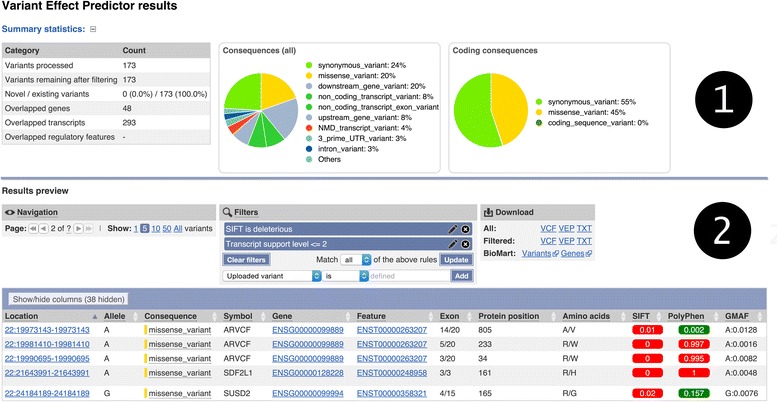
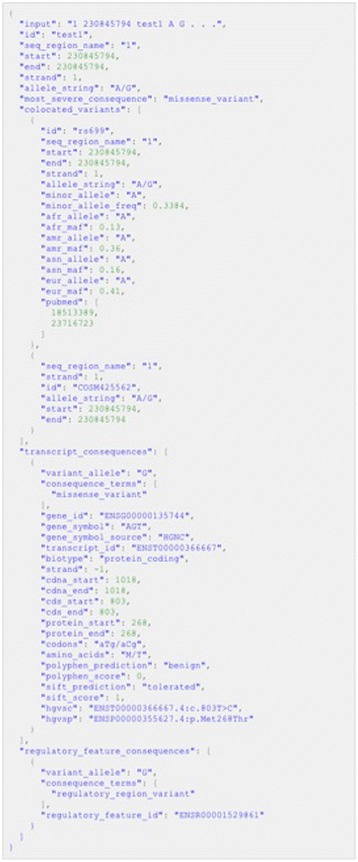
Verification
Claims the paper makes
The claims and statistics of this paper haven’t been checked yet.
Free: it reads the open-access text and checks the first 5 claims that cite a source we can check. Create a free account to check every claim.
Claims other papers make about this one
Each is checked against this paper’s own text: does it say what the citing paper says it does?
The check wasn’t confident either way, so it gives no verdict — never disputed.
In the citing paper
“The ranking of variant types based on the lowest percentile of GPN scores is generally consistent with established notions of deleteriousness (41)*.”
From DNA language models are powerful predictors of genome-wide variant effects (2023) · cites this paper as [41]
Experimental — accuracy not yet measured
Self-check
Percentages, sums and reported differences re-computed from the paper’s own numbers.
The self-check needs the paper’s full text.
Citations
Cites
An integrated encyclopedia of DNA elements in the human genome
The ENCODE Project Consortium (2012) · Nature · doi:10.1038/nature11247 · Cited by 18,072
Self-citationANNOVAR: functional annotation of genetic variants from high-throughput sequencing data
Wang, K., Li, M., & Hakonarson, H. (2010) · Nucleic Acids Research · doi:10.1093/nar/gkq603 · Cited by 14,621
A method and server for predicting damaging missense mutations.
Adzhubei, I. A., Schmidt, S., Peshkin, L., Ramensky, V. E., Gerasimova, A., Bork, P., Kondrashov, A. S., & Sunyaev, S. R. (2010) · Nature Methods · doi:10.1038/nmeth0410-248 · Cited by 13,194 · cited 2×
“PolyPhen-2 [41] results are available for human proteins.”
BackgroundCingolani, P., Platts, A., Wang, L. L., Coon, M., Nguyen, T., Wang, L., Land, S. J., Lu, X., & Ruden, D. M. (2012) · Fly · doi:10.4161/fly.19695 · Cited by 11,816 · cited 2×
“The VEP’s VCF output follows a standard agreed with other annotation tool providers (Cingolani et al. 2012) to promote transparent cross-comparison and benchmarking of results.”
An integrated map of genetic variation from 1,092 human genomes
The 1000 Genomes Project Consortium (2012) · Nature · doi:10.1038/nature11632 · Cited by 7,711 · cited 1×
“It has been used for analysis in numerous large-scale projects, including the 1000 Genomes [31] and Exome Aggregation Consortium (ExAC) [32].”
MethodSelf-citationdbSNP: the NCBI database of genetic variation
Sherry, S. T. (2001) · Nucleic Acids Research · doi:10.1093/nar/29.1.308 · Cited by 7,502 · cited 2×
“Ensembl integrates and quality checks variants from dbSNP [56] and other sources for 20 species.”
BackgroundKumar, P., Henikoff, S., & Ng, P. C. (2009) · Nature Protocols · doi:10.1038/nprot.2009.86 · Cited by 6,521 · cited 1×
“Sorting Intolerant From Tolerant (SIFT, Kumar et al. 2009) results are available for the ten species that are most used in Ensembl.”
BackgroundA general framework for estimating the relative pathogenicity of human genetic variants
Kircher, M., Witten, D. M., Jain, P., O'Roak, B. J., Cooper, G. M., & Shendure, J. (2014) · Nature Genetics · doi:10.1038/ng.2892 · Cited by 6,183
A New Initiative on Precision Medicine
Collins, F. S., & Varmus, H. (2015) · New England Journal of Medicine · doi:10.1056/nejmp1500523 · Cited by 5,202
The Genotype-Tissue Expression (GTEx) pilot analysis: Multitissue gene regulation in humans
The GTEx Consortium, Ardlie, K. G., Deluca, D. S., Segrè, A. V., Sullivan, T. J., Young, T. R., Gelfand, E. T., Trowbridge, C. A., Maller, J. B., Tukiainen, T., et al. (2015) · Science · doi:10.1126/science.1262110 · Cited by 5,062 · cited 1×
“Data from large scale efforts such as the Genotype-Tissue Expression project, which aims to systematically characterize the effects of regulatory variants in different tissues [84], will be integrated into the VEP reference data in order to have the most current data available to the VEP for analysis.”
MethodGENCODE: The reference human genome annotation for The ENCODE Project
Harrow, J., Frankish, A., Gonzalez, J. M., Tapanari, E., Diekhans, M., Kokocinski, F., Aken, B. L., Barrell, D., Zadissa, A., Searle, S., et al. (2012) · Genome Research · doi:10.1101/gr.135350.111 · Cited by 4,585 · cited 8×
“There are two major sources of Homo sapiens annotation: GENCODE [17] and Reference Sequence (RefSeq) [18] at the National Center for Biotechnology Information (NCBI).”
BackgroundInfluentialHindorff, L. A., Sethupathy, P., Junkins, H. A., Ramos, E. M., Mehta, J. P., Collins, F. S., & Manolio, T. A. (2009) · Proceedings of the National Academy of Sciences · doi:10.1073/pnas.0903103106 · Cited by 4,013 · cited 2×
“WGS studies will also detect variants in regulatory and non-coding regions of the genome, which are thought to comprise the majority of trait-associated variants [8] and play a role in cancer [9].”
BackgroundClinVar: public archive of relationships among sequence variation and human phenotype
Landrum, M. J., Lee, J. M., Riley, G. R., Jang, W., Rubinstein, W. S., Church, D. M., & Maglott, D. R. (2014) · Nucleic Acids Research · doi:10.1093/nar/gkt1113 · Cited by 3,516 · cited 3×
“Clinical significance states assigned by ClinVar [65] are also available for human variants.”
BackgroundPractical estimates of rock mass strength
Hoek, E., & Brown, E. T. (1997) · International Journal of Rock Mechanics and Mining Sciences · doi:10.1016/s1365-1609(97)80069-x · Cited by 3,388
MutationTaster2: mutation prediction for the deep-sequencing age
Schwarz, J. M., Cooper, D. N., Schuelke, M., & Seelow, D. (2014) · Nature Methods · doi:10.1038/nmeth.2890 · Cited by 3,362 · cited 1×
“Other pathogenicity predictor scores such as Condel (Gonzalez-Perez et al. 2012), FATHMM (Shihab et al. 2013) and MutationTaster (Schwarz et al. 2014) are available for human data via VEP plugins (see Table 4).”
MethodThe NHGRI GWAS Catalog, a curated resource of SNP-trait associations
Welter, D., MacArthur, J., Morales, J., Burdett, T., Hall, P., Junkins, H., Klemm, A., Flicek, P., Manolio, T., Hindorff, L., et al. (2014) · Nucleic Acids Research · doi:10.1093/nar/gkt1229 · Cited by 2,707 · cited 3×
“The VEP includes PubMed identifiers for variants which have been cited, and also annotates those associated with a phenotype, disease or trait, using data from OMIM (http://omim.org/), Orphanet (http://www.orpha.net/), the GWAS Catalog (Welter et al. 2013) and other data sources (http://www.ensembl.org/info/genome/var…”
MethodSelf-citationVisscher, P. M., Brown, M. A., McCarthy, M. I., & Yang, J. (2012) · The American Journal of Human Genetics · doi:10.1016/j.ajhg.2011.11.029 · Cited by 2,425 · cited 2×
“Despite many array-based genome-wide association studies searching for risk loci, only a relatively small heritable component in these conditions has been elucidated (Visscher et al. 2012).”
BackgroundCOSMIC: mining complete cancer genomes in the Catalogue of Somatic Mutations in Cancer
Forbes, S. A., Bindal, N., Bamford, S., Cole, C., Kok, C. Y., Beare, D., Jia, M., Shepherd, R., Leung, K., Menzies, A., et al. (2011) · Nucleic Acids Research · doi:10.1093/nar/gkq929 · Cited by 2,278 · cited 2×
“Additional human data include mutations from COSMIC [57] and the Human Gene Mutation Database [58] and structural variants and copy number variants from the Database of Genomic Variants archive [59].”
MethodMutation nomenclature extensions and suggestions to describe complex mutations: A discussion
Dunnen, J. T. D., & Antonarakis, S. E. (2000) · Human Mutation · doi:10.1002/(sici)1098-1004(200001)15:1<7::aid-humu4>3.0.co;2-n · Cited by 1,756 · cited 1×
“HGVS notations are also derived from TranscriptVariationAlleles, though they undergo significant additional processing to conform to the nomenclature definition (den Dunnen and Antonarakis 2000).”
MethodThe Bioperl Toolkit: Perl Modules for the Life Sciences
Stajich, J. E., Block, D., Boulez, K., Brenner, S. E., Chervitz, S. A., Dagdigian, C., Fuellen, G., Gilbert, J. G. R., Korf, I., Lapp, H., et al. (2002) · Genome Research · doi:10.1101/gr.361602 · Cited by 1,654 · cited 2×
“Installation of the VEP script triggers automated installation of the Ensembl API, along with the BioPerl API [87] upon which the Ensembl API depends.”
MethodDeriving the consequences of genomic variants with the Ensembl API and SNP Effect Predictor
McLaren, W., Pritchard, B., Rios, D., Chen, Y., Flicek, P., & Cunningham, F. (2010) · Bioinformatics · doi:10.1093/bioinformatics/btq330 · Cited by 1,586
Self-citationAnalysis of immune-related loci identifies 48 new susceptibility variants for multiple sclerosis
International Multiple Sclerosis Genetics Consortium (IMSGC) (2013) · Nature Genetics · doi:10.1038/ng.2770 · Cited by 1,386
Self-citationDistribution and intensity of constraint in mammalian genomic sequence
Cooper, G. M., Stone, E. A., Asimenos, G., Green, E. D., Batzoglou, S., & Sidow, A. (2005) · Genome Research · doi:10.1101/gr.3577405 · Cited by 1,359 · cited 2×
“GERP (Cooper et al. 2005) and other conservation scores derived from genomic multiple alignments, which may predict functional importance in non-coding regions, can be added via a plugin.”
BackgroundWildfire as a hydrological and geomorphological agent
Shakesby, R. A., & Doerr, S. H. (2006) · Earth-Science Reviews · doi:10.1016/j.earscirev.2005.10.006 · Cited by 1,346
Shihab, H. A., Gough, J., Cooper, D. N., Stenson, P. D., Barker, G. L. A., Edwards, K. J., Day, I. N. M., & Gaunt, T. R. (2013) · Human Mutation · doi:10.1002/humu.22225 · Cited by 1,341 · cited 3×
“Other pathogenicity predictor scores such as Condel (Gonzalez-Perez et al. 2012), FATHMM (Shihab et al. 2013) and MutationTaster (Schwarz et al. 2014) are available for human data via VEP plugins (see Table 4).”
MethodLarge-scale discovery of novel genetic causes of developmental disorders
Study, T. D. D. D. (2015) · Nature · doi:10.1038/nature14135 · Cited by 1,124
Cunningham, F., Amode, M. R., Barrell, D., Beal, K., Billis, K., Brent, S., Carvalho-Silva, D., Clapham, P., Coates, G., Fitzgerald, S., et al. (2015) · Nucleic Acids Research · doi:10.1093/nar/gku1010 · Cited by 1,115
Self-citationLandslide hazard mapping at Selangor, Malaysia using frequency ratio and logistic regression models
Lee, S., & Pradhan, B. (2007) · Landslides · doi:10.1007/s10346-006-0047-y · Cited by 1,097
Liu, X., Wu, C., Li, C., & Boerwinkle, E. (2016) · Human Mutation · doi:10.1002/humu.22932 · Cited by 983
DEBRIS-FLOW MOBILIZATION FROM LANDSLIDES
Iverson, R. M., Reid, M. E., & LaHusen, R. G. (1997) · Annual Review of Earth and Planetary Sciences · doi:10.1146/annurev.earth.25.1.85 · Cited by 961
Whole-genome sequencing of multiple Arabidopsis thaliana populations
Cao, J., Schneeberger, K., Ossowski, S., Günther, T., Bender, S., Fitz, J., Koenig, D., Lanz, C., Stegle, O., Lippert, C., et al. (2011) · Nature Genetics · doi:10.1038/ng.911 · Cited by 950 · cited 1×
“In other species, efforts such as Genome 10K (Koepfli et al. 2015), the 1001 Arabidopsis genomes (Cao et al. 2011) and 1000 bull genome project (Daetwyler et al. 2014) have similar goals, but operate under different funding models, often with less support than the Homo sapiens focused projects.”
BackgroundRefSeq: an update on mammalian reference sequences
Pruitt, K. D., Brown, G. R., Hiatt, S. M., Thibaud-Nissen, F., Astashyn, A., Ermolaeva, O., Farrell, C. M., Hart, J., Landrum, M. J., McGarvey, K. M., et al. (2014) · Nucleic Acids Research · doi:10.1093/nar/gkt1114 · Cited by 945 · cited 2×
“There are two major sources of Homo sapiens annotation: GENCODE (Harrow et al. 2012) and Reference Sequence (RefSeq, Pruitt et al. 2014) at the National Center for Biotechnology Information (NCBI).”
BackgroundThe UCSC Genome Browser database: 2015 update
Rosenbloom, K. R., Armstrong, J., Barber, G. P., Casper, J., Clawson, H., Diekhans, M., Dreszer, T. R., Fujita, P. A., Guruvadoo, L., Haeussler, M., et al. (2015) · Nucleic Acids Research · doi:10.1093/nar/gku1177 · Cited by 874 · cited 3×
“The SO terms are used widely including by the UCSC Genome Browser (Rosenbloom et al. 2014), the 1000 Genomes Project (Clarke et al. 2012), ClinVar, the ExAC project and the International Cancer Genome Consortium (The International Cancer Genome Consortium Mutation Pathways and Consequences Subgroup…”
MethodWhole-genome sequencing of 234 bulls facilitates mapping of monogenic and complex traits in cattle
Daetwyler, H. D., Capitan, A., Pausch, H., Stothard, P., van Binsbergen, R., Brøndum, R. F., Liao, X., Djari, A., Rodriguez, S. C., Grohs, C., et al. (2014) · Nature Genetics · doi:10.1038/ng.3034 · Cited by 842 · cited 1×
“For data reproducibility, transcript isoforms and transcript versions must be rigorously tracked, although in some cases even including the version is not sufficient to avoid all potential misinterpretations (Dalgleish et al. 2010).”
BackgroundNon-coding recurrent mutations in chronic lymphocytic leukaemia
Puente, X. S., Beà, S., Valdés-Mas, R., Villamor, N., Gutiérrez-Abril, J., Martín-Subero, J. I., Munar, M., Rubio-Pérez, C., Jares, P., Aymerich, M., et al. (2015) · Nature · doi:10.1038/nature14666 · Cited by 829
Large-scale whole-genome sequencing of the Icelandic population
Gudbjartsson, D. F., Helgason, H., Gudjonsson, S. A., Zink, F., Oddson, A., Gylfason, A., Besenbacher, S., Magnusson, G., Halldorsson, B. V., Hjartarson, E., et al. (2015) · Nature Genetics · doi:10.1038/ng.3247 · Cited by 791
Wright, C. F., Fitzgerald, T. W., Jones, W. D., Clayton, S., McRae, J. F., van Kogelenberg, M., King, D. A., Ambridge, K., Barrett, D. M., Bayzetinova, T., et al. (2015) · The Lancet · doi:10.1016/s0140-6736(14)61705-0 · Cited by 743 · cited 1×
“The VEP is platform independent and available as (1) an online tool, (2) an easily installed Perl script, or (3) via the Ensembl Representational State Transfer (REST) application program interface (API) (Yates et al. 2014).”
AN ANALYSIS OF THE RELATIONS AMONG ELEMENTS OF CLIMATE, SURFACE PROPERTIES, AND GEOMORPHOLOGY
MELTON, M. A. (1957) · doi:10.21236/ad0148373 · Cited by 734
Ohlmacher, G. C., & Davis, J. C. (2003) · Engineering Geology · doi:10.1016/s0013-7952(03)00069-3 · Cited by 664
Rapid Whole-Genome Sequencing for Genetic Disease Diagnosis in Neonatal Intensive Care Units
Saunders, C. J., Miller, N. A., Soden, S. E., Dinwiddie, D. L., Noll, A., Alnadi, N. A., Andraws, N., Patterson, M. L., Krivohlavek, L. A., Fellis, J., et al. (2012) · Science Translational Medicine · doi:10.1126/scitranslmed.3004041 · Cited by 656 · cited 2×
“2014), for patient diagnosis in the clinic and for research on GWAS studies (Leslie et al.; Hou and Zhao 2013; International Multiple Sclerosis Genetics Consortium 2013; Saunders et al. 2012; Wright et al. 2015).”
BackgroundSearching for missing heritability: Designing rare variant association studies
Zuk, O., Schaffner, S. F., Samocha, K., Do, R., Hechter, E., Kathiresan, S., Daly, M. J., Neale, B. M., Sunyaev, S. R., & Lander, E. S. (2014) · Proceedings of the National Academy of Sciences · doi:10.1073/pnas.1322563111 · Cited by 635 · cited 2×
“WGS in large numbers of samples is required to yield enough statistical power to detect rare variants with potential phenotypic or disease associations (Pierre and Génin 2014; Zuk et al. 2014).”
BackgroundSchmidt, K. M., Roering, J. J., Stock, J. D., Dietrich, W. E., Montgomery, D. R., & Schaub, T. (2001) · Canadian Geotechnical Journal · doi:10.1139/cgj-38-5-995 · Cited by 634
A survey of tools for variant analysis of next-generation genome sequencing data
Pabinger, S., Dander, A., Fischer, M., Snajder, R., Sperk, M., Efremova, M., Krabichler, B., Speicher, M. R., Zschocke, J., & Trajanoski, Z. (2014) · Briefings in Bioinformatics · doi:10.1093/bib/bbs086 · Cited by 596 · cited 2×
“To facilitate this, we developed the Ensembl Variant Effect Predictor (VEP) (www.ensembl.org/vep), which differs significantly from other tools (Pabinger et al. 2014) (see Table 1 and discussion below) and from the previously published Ensembl SNP Effect Predictor (McLaren et al. 2010).”
MethodLiu, X., Jian, X., & Boerwinkle, E. (2013) · Human Mutation · doi:10.1002/humu.22376 · Cited by 587 · cited 1×
“dbNSFP Ensembl Provides pre-calculated scores from dbNSFP for many pathogenicity prediction tools for every possible missense variant in the human genome (Liu et al. 2013).”
MethodA rheologic classification of subaerial sediment-water flows
Pierson, T. C., & Costa, J. E. (1987) · Reviews in Engineering Geology · doi:10.1130/reg7-p1 · Cited by 558
Non-coding recurrent mutations in chronic lymphocytic leukaemia
Puente, X. S., Beà, S., Valdés-Mas, R., Villamor, N., Gutiérrez-Abril, J., Martín-Subero, J. I., Munar, M., Rubio-Pérez, C., Jares, P., Aymerich, M., et al. (2016) · Nature · doi:10.1038/nature18910 · Cited by 546
In silico prediction of splice-altering single nucleotide variants in the human genome
Jian, X., Boerwinkle, E., & Liu, X. (2014) · Nucleic Acids Research · doi:10.1093/nar/gku1206 · Cited by 537 · cited 2×
“The data files necessary for annotation in 80 vertebrate species and many invertebrates are distributed by Ensembl and Ensembl Genomes (Kersey et al. 2014), respectively.”
MethodCannon, S. H., Gartner, J. E., Wilson, R. C., Bowers, J. C., & Laber, J. L. (2008) · Geomorphology · doi:10.1016/j.geomorph.2007.03.019 · Cited by 533
Functional annotation of noncoding sequence variants
Ritchie, G. R. S., Dunham, I., Zeggini, E., & Flicek, P. (2014) · Nature Methods · doi:10.1038/nmeth.2832 · Cited by 520
Self-citationThe geological strength index: applications and limitations
Marinos, V., Marinos, P., & Hoek, E. (2005) · Bulletin of Engineering Geology and the Environment · doi:10.1007/s10064-004-0270-5 · Cited by 485
Human Genome Sequencing in Health and Disease
Gonzaga-Jauregui, C., Lupski, J. R., & Gibbs, R. A. (2012) · Annual Review of Medicine · doi:10.1146/annurev-med-051010-162644 · Cited by 473 · cited 4×
“Around 20,000 – 25,000 of these variants are protein coding, 10,000 change an amino acid but only 50 – 100 of these are protein truncating or loss of function variants (Gonzaga-Jauregui et al. 2012).”
BackgroundInfluentialThe 1000 Genomes Project: data management and community access
The 1000 Genomes Project Consortium, Clarke, L., Zheng-Bradley, X., Smith, R., Kulesha, E., Xiao, C., Toneva, I., Vaughan, B., Preuss, D., Leinonen, R., et al. (2012) · Nature Methods · doi:10.1038/nmeth.1974 · Cited by 455 · cited 4×
“Recognising this value, major population sequencing initiatives have been launched in Iceland (Gudbjartsson et al. 2015), the UK (100,000 Genomes Project 2014) and the USA (Precision Medicine Initiative, Collins and Varmus 2015).”
MethodInfluentialSelf-citationDahal, R. K., Hasegawa, S., Nonomura, A., Yamanaka, M., Masuda, T., & Nishino, K. (2008) · Environmental Geology · doi:10.1007/s00254-007-0818-3 · Cited by 434
Zerbino, D. R., Wilder, S. P., Johnson, N., Juettemann, T., & Flicek, P. R. (2015) · Genome Biology · doi:10.1186/s13059-015-0621-5 · Cited by 429
Self-citationGEMINI: Integrative Exploration of Genetic Variation and Genome Annotations
Paila, U., Chapman, B. A., Kirchner, R., & Quinlan, A. R. (2013) · PLoS Computational Biology · doi:10.1371/journal.pcbi.1003153 · Cited by 428 · cited 1×
“VEP’s annotations are used as input to tools for deep exploration of variant annotation such as GEMINI [33].”
MethodUnified representation of genetic variants
Tan, A., Abecasis, G. R., & Kang, H. M. (2015) · Bioinformatics · doi:10.1093/bioinformatics/btv112 · Cited by 398 · cited 3×
“Optionally, in a process analogous to that described in [88], VEP’s parser can be forced to decompose alternative alleles in complex variant descriptions to their most minimal representation by stripping identical bases from the 5′ and 3′ ends of the reference and alternative allele.”
MethodInfluentialBLUEPRINT to decode the epigenetic signature written in blood
Adams, D., Altucci, L., Antonarakis, S. E., Ballesteros, J., Beck, S., Bird, A., Bock, C., Boehm, B., Campo, E., Caricasole, A., et al. (2012) · Nature Biotechnology · doi:10.1038/nbt.2153 · Cited by 345 · cited 3×
“The Ensembl Regulatory Build [46], which uses data from ENCODE [47], BLUEPRINT [48], and the NIH Epigenomics Roadmap [49], is the primary regulatory annotation but the VEP analysis can be limited to regulatory regions observed in specific cell types.”
MethodSelf-citationPetryszak, R., Burdett, T., Fiorelli, B., Fonseca, N. A., Gonzalez-Porta, M., Hastings, E., Huber, W., Jupp, S., Keays, M., Kryvych, N., et al. (2014) · Nucleic Acids Research · doi:10.1093/nar/gkt1270 · Cited by 344 · cited 2×
“For example an experimental plugin, GXA.pm, uses data from the Expression Atlas project (Petryszak et al. 2014) to indicate expression levels across tissues for many transcripts, which can be used to filter transcript isoforms.”
MethodDoerr, S. H., Shakesby, R. A., Blake, W. H., Chafer, C. J., Humphreys, G. S., & Wallbrink, P. J. (2006) · Journal of Hydrology · doi:10.1016/j.jhydrol.2005.06.038 · Cited by 341
Recognition of debris flow, debris flood and flood hazard through watershed morphometrics
Wilford, D. J., Sakals, M. E., Innes, J. L., Sidle, R. C., & Bergerud, W. A. (2004) · Landslides · doi:10.1007/s10346-003-0002-0 · Cited by 341
The Genome 10K Project: A Way Forward
Koepfli, K.-P., Paten, B., Scientists, T. G. 1. C. O., & O’Brien, S. J. (2015) · Annual Review of Animal Biosciences · doi:10.1146/annurev-animal-090414-014900 · Cited by 311 · cited 1×
“In other species, efforts such as Genome 10K (Koepfli et al. 2015), the 1001 Arabidopsis genomes (Cao et al. 2011) and 1000 bull genome project (Daetwyler et al. 2014) have similar goals, but operate under different funding models, often with less support than the Homo sapiens focused projects.”
BackgrounddbVar and DGVa: public archives for genomic structural variation
Lappalainen, I., Lopez, J., Skipper, L., Hefferon, T., Spalding, J. D., Garner, J., Chen, C., Maguire, M., Corbett, M., Zhou, G., et al. (2012) · Nucleic Acids Research · doi:10.1093/nar/gks1213 · Cited by 308
Self-citationKean, J. W., McCoy, S. W., Tucker, G. E., Staley, D. M., & Coe, J. A. (2013) · Journal of Geophysical Research: Earth Surface · doi:10.1002/jgrf.20148 · Cited by 289
Landslide hazard and risk mapping at catchment scale in the Arno River basin
Catani, F., Casagli, N., Ermini, L., Righini, G., & Menduni, G. (2005) · Landslides · doi:10.1007/s10346-005-0021-0 · Cited by 288
Wildfire-related debris-flow initiation processes, Storm King Mountain, Colorado
Cannon, S. H., Kirkham, R. M., & Parise, M. (2001) · Geomorphology · doi:10.1016/s0169-555x(00)00108-2 · Cited by 280
Climatic factors influencing occurrence of debris flows
Wieczorek, G. F., & Glade, T. (2007) · Springer Praxis Books · doi:10.1007/3-540-27129-5_14 · Cited by 278
Climate change impacts on mass movements — Case studies from the European Alps
Stoffel, M., Tiranti, D., & Huggel, C. (2014) · Science of The Total Environment · doi:10.1016/j.scitotenv.2014.02.102 · Cited by 276
Human Gene Mutation Database?A biomedical information and research resource
Krawczak, M., Ball, E. V., Fenton, I., Stenson, P. D., Abeysinghe, S., Thomas, N., & Cooper, D. N. (2000) · Human Mutation · doi:10.1002/(sici)1098-1004(200001)15:1<45::aid-humu10>3.0.co;2-t · Cited by 273
Recent debris flow occurrences associated with glaciers in the Alps
Chiarle, M., Iannotti, S., Mortara, G., & Deline, P. (2007) · Global and Planetary Change · doi:10.1016/j.gloplacha.2006.07.003 · Cited by 254
The $1,000 genome, the $100,000 analysis?
Mardis, E. R. (2010) · Genome Medicine · doi:10.1186/gm205 · Cited by 241
Bragin, E., Chatzimichali, E. A., Wright, C. F., Hurles, M. E., Firth, H. V., Bevan, A. P., & Swaminathan, G. J. (2014) · Nucleic Acids Research · doi:10.1093/nar/gkt937 · Cited by 233 · cited 2×
“, in the Decipher Genome Browser [78].”
MethodAPPRIS: annotation of principal and alternative splice isoforms
Rodriguez, J. M., Maietta, P., Ezkurdia, I., Pietrelli, A., Wesselink, J.-J., Lopez, G., Valencia, A., & Tress, M. L. (2013) · Nucleic Acids Research · doi:10.1093/nar/gks1058 · Cited by 232 · cited 2×
“transcripts using Transcript Support Level data can prioritize consequences for review [37] while APPRIS provides automated annotation of principal transcript isoforms [38].”
BackgroundMethodStenson, P. D., Ball, E. V., Mort, M., Phillips, A. D., Shaw, K., & Cooper, D. N. (2012) · Current Protocols in Bioinformatics · doi:10.1002/0471250953.bi0113s39 · Cited by 222 · cited 2×
“Additional human data include mutations from COSMIC [57] and the Human Gene Mutation Database [58] and structural variants and copy number variants from the Database of Genomic Variants archive [59].”
MethodRanking non-synonymous single nucleotide polymorphisms based on disease concepts
Shihab, H. A., Gough, J., Mort, M., Cooper, D. N., Day, I. N., & Gaunt, T. R. (2014) · Human Genomics · doi:10.1186/1479-7364-8-11 · Cited by 218 · cited 1×
“GWAVA (Ritchie et al. 2014), CADD (Kircher et al. 2014) and FATHMM-MKL (Shihab et al. 2014) plugins are also available, which integrate genomic and epigenomic factors to grade and prioritize non-coding variants.”
MethodSources of debris flow material in burned areas
Santi, P. M., deWolfe, V. G., Higgins, J. D., Cannon, S. H., & Gartner, J. E. (2008) · Geomorphology · doi:10.1016/j.geomorph.2007.02.022 · Cited by 216
Ensembl Genomes 2013: scaling up access to genome-wide data
Kersey, P. J., Allen, J. E., Christensen, M., Davis, P., Falin, L. J., Grabmueller, C., Hughes, D. S. T., Humphrey, J., Kerhornou, A., Khobova, J., et al. (2014) · Nucleic Acids Research · doi:10.1093/nar/gkt979 · Cited by 213 · cited 3×
“The data files necessary for annotation in 80 vertebrate species and many invertebrates are distributed by Ensembl and Ensembl Genomes (Kersey et al. 2014), respectively.”
MethodThe Ensembl REST API: Ensembl Data for Any Language
Yates, A., Beal, K., Keenan, S., McLaren, W., Pignatelli, M., Ritchie, G. R. S., Ruffier, M., Taylor, K., Vullo, A., & Flicek, P. (2015) · Bioinformatics · doi:10.1093/bioinformatics/btu613 · Cited by 206 · cited 2×
“Ensembl provides a number of VEP plugins, hosted on GitHub (https://github.com/Ensembl/VEP_plugins), and a variety are published (Ritchie et al. 2014; Yourshaw et al. 2014) (see Table 4).”
BackgroundSelf-citationAnalysis of rainstorm-induced slide-debris flows on natural terrain of Lantau Island, Hong Kong
Fuchu, D., Lee, C. F., & Sijing, W. (1999) · Engineering Geology · doi:10.1016/s0013-7952(98)00047-7 · Cited by 204
Choice of transcripts and software has a large effect on variant annotation
McCarthy, D. J., Humburg, P., Kanapin, A., Rivas, M. A., Gaulton, K., The WGS500 Consortium, Cazier, J.-B., & Donnelly, P. (2014) · Genome Medicine · doi:10.1186/gm543 · Cited by 199 · cited 1×
“The quality, quantity and stability of variant annotation obtained depends on the choice of transcript set used (McCarthy et al. 2014).”
BackgroundRomanoski, C. E., Glass, C. K., Stunnenberg, H. G., Wilson, L., & Almouzni, G. (2015) · Nature · doi:10.1038/518314a · Cited by 192 · cited 3×
“The Ensembl Regulatory Build [46], which uses data from ENCODE [47], BLUEPRINT [48], and the NIH Epigenomics Roadmap [49], is the primary regulatory annotation but the VEP analysis can be limited to regulatory regions observed in specific cell types.”
MethodVcfanno: fast, flexible annotation of genetic variants
Pedersen, B. S., Layer, R. M., & Quinlan, A. R. (2016) · Genome Biology · doi:10.1186/s13059-016-0973-5 · Cited by 192 · cited 1×
“Furthermore, the VEP input can be configured to query overlaps with local, potentially private, variant and phenotype data or other custom data sets in a manner similar to vcfanno [75].”
ResultCoarse Woody Debris following Fire and Logging in Wyoming Lodgepole Pine Forests
Tinker, D. B., & Knight, D. H. (2000) · Ecosystems · doi:10.1007/s100210000041 · Cited by 181
Computational approaches to identify functional genetic variants in cancer genomes
the International Cancer Genome Consortium Mutation Pathways and Consequences Subgroup of the Bioinformatics Analyses Working Group (2013) · Nature Methods · doi:10.1038/nmeth.2562 · Cited by 171
Self-citationTriggering conditions and mobility of debris flows associated to complex earthflows
Malet, J., Laigle, D., Remaître, A., & Maquaire, O. (2004) · Geomorphology · doi:10.1016/j.geomorph.2004.09.014 · Cited by 166
Effects of wood on debris flow runout in small mountain watersheds
Lancaster, S. T., Hayes, S. K., & Grant, G. E. (2003) · Water Resources Research · doi:10.1029/2001wr001227 · Cited by 164
Leslie, E. J., Taub, M. A., Liu, H., Steinberg, K. M., Koboldt, D. C., Zhang, Q., Carlson, J. C., Hetmanski, J. B., Wang, H., Larson, D. E., et al. (2015) · The American Journal of Human Genetics · doi:10.1016/j.ajhg.2015.01.004 · Cited by 164 · cited 1×
“The VEP has been used for analysis of traits in farm animals [24, 25], for patient diagnosis in the clinic and for research on GWAS [26–30].”
MethodPARP Inhibitor Treatment in Ovarian and Breast Cancer
Weil, M. K., & Chen, A. P. (2011) · Current Problems in Cancer · doi:10.1016/j.currproblcancer.2010.12.002 · Cited by 162 · cited 2×
“For example, patients testing positive for the inheritance of BRCA mutations have the option of selective preventative surgery; lung cancer patients showing EGFR gene mutations or triple negative breast cancer patients can have their drug prescriptions tailored to improve success [1, 2].”
Backgroundvan Beek, R., & van Asch, T. W. J. (2004) · Natural Hazards · doi:10.1023/b:nhaz.0000020267.39691.39 · Cited by 152
Assessing debris-flow hazard in a watershed in Taiwan
Lin, P., Lin, J.-Y., Hung, J.-C., & Yang, M. (2002) · Engineering Geology · doi:10.1016/s0013-7952(02)00105-9 · Cited by 148
Chen, Y., Cunningham, F., Rios, D., McLaren, W. M., Smith, J., Pritchard, B., Spudich, G. M., Brent, S., Kulesha, E., Marin-Garcia, P., et al. (2010) · BMC Genomics · doi:10.1186/1471-2164-11-293 · Cited by 141 · cited 2×
“Table 5: Regulatory element-related fields reported by VEP Frequency, phenotype and citation annotation The VEP searches the Ensembl Variation databases, which contain a large catalogue of freely available germ line and somatic variation data in vertebrates (Chen et al. 2010; Rios et al. 2010).”
MethodSelf-citationStoffel, M., Bollschweiler, M., & Beniston, M. (2011) · Climatic Change · doi:10.1007/s10584-011-0036-6 · Cited by 131
Tiranti, D., & Rabuffetti, D. (2010) · Landslides · doi:10.1007/s10346-010-0198-8 · Cited by 130
Marra, F., Nikolopoulos, E. I., Creutin, J., & Borga, M. (2015) · Journal of Hydrology · doi:10.1016/j.jhydrol.2015.10.010 · Cited by 130
Application of back-propagation networks in debris flow prediction
Chang, T.-C., & Chao, R. (2006) · Engineering Geology · doi:10.1016/j.enggeo.2006.02.007 · Cited by 127
Lavigne, F., & Suwa, H. (2004) · Geomorphology · doi:10.1016/j.geomorph.2003.11.005 · Cited by 126
Marinos, P., Hoek, E., & Marinos, V. (2005) · Bulletin of Engineering Geology and the Environment · doi:10.1007/s10064-005-0018-x · Cited by 118
Tunusluoglu, M. C., Gökçeoğlu, C., Nefeslioğlu, H. A., & Sönmez, H. (2007) · Environmental Geology · doi:10.1007/s00254-007-0788-5 · Cited by 112
Locus Reference Genomic sequences: an improved basis for describing human DNA variants
Dalgleish, R., Flicek, P., Cunningham, F., Astashyn, A., Tully, R. E., Proctor, G., Chen, Y., McLaren, W. M., Larsson, P., Vaughan, B. W., et al. (2010) · Genome Medicine · doi:10.1186/gm145 · Cited by 112
Self-citationMobilization of debris flows from soil slips, San Francisco Bay region, California
Ellen, S. D., & Fleming, R. W. (1987) · Reviews in engineering geology · doi:10.1130/reg7-p31 · Cited by 111
Frankish, A., Uszczynska, B., Ritchie, G. R., Gonzalez, J. M., Pervouchine, D., Petryszak, R., Mudge, J. M., Fonseca, N., Brazma, A., Guigo, R., et al. (2015) · BMC Genomics · doi:10.1186/1471-2164-16-s8-s2 · Cited by 106 · cited 4×
“For Homo sapiens and Mus musculus this is the GENCODE gene set, which denotes that it is a full merge of Ensembl’s evidence-based transcript predictions with manual annotation to create the most extensive set of transcripts isoforms for these species (Frankish et al. 2015).”
BackgroundMethodInfluentialSelf-citationZelt, R. B., & Wohl, E. (2003) · Geomorphology · doi:10.1016/s0169-555x(03)00104-1 · Cited by 105
A review of post-GWAS prioritization approaches
Hou, L., & Zhao, H. (2013) · Frontiers in Genetics · doi:10.3389/fgene.2013.00280 · Cited by 105 · cited 2×
“The VEP has been used for analysis of traits in farm animals [24, 25], for patient diagnosis in the clinic and for research on GWAS [26–30].”
MethodTropeano, D., & Turconi, L. (2004) · Natural Hazards · doi:10.1023/b:nhaz.0000024897.71471.f2 · Cited by 104
Debris flows originating from soil slips during rainstorms in Southern California
Campbell, R. H. (1974) · Quarterly Journal of Engineering Geology · doi:10.1144/gsl.qjeg.1974.007.04.04 · Cited by 102
Gonzalez-Perez, A., Deu-Pons, J., & Lopez-Bigas, N. (2012) · Genome Medicine · doi:10.1186/gm390 · Cited by 99 · cited 2×
“Other pathogenicity predictor scores such as Condel (Gonzalez-Perez et al. 2012), FATHMM (Shihab et al. 2013) and MutationTaster (Schwarz et al. 2014) are available for human data via VEP plugins (see Table 4).”
MethodHow important are rare variants in common disease?
Saint Pierre, A., & Genin, E. (2014) · Briefings in Functional Genomics · doi:10.1093/bfgp/elu025 · Cited by 94 · cited 2×
“WGS in large numbers of samples is required to yield enough statistical power to detect rare variants with potential phenotypic or disease associations (Pierre and Génin 2014; Zuk et al. 2014).”
BackgroundFunPat: function-based pattern analysis on RNA-seq time series data
Sanavia, T., Finotello, F., & Camillo, B. D. (2015) · BMC Genomics · doi:10.1186/1471-2164-16-s6-s2 · Cited by 68
Tiranti, D., Cremonini, R., Marco, F., et al. (2014) · Computers & Geosciences · doi:10.1016/j.cageo.2014.05.004 · Cited by 68
Tiranti, D., Bonetto, S. M. R., & Mandrone, G. (2007) · Landslides · doi:10.1007/s10346-007-0101-4 · Cited by 66
Höglund, J., Sahana, G., Brøndum, R. F., Guldbrandtsen, B., Buitenhuis, B., & Lund, M. S. (2014) · BMC Genomics · doi:10.1186/1471-2164-15-790 · Cited by 60 · cited 2×
“The VEP has been used for analysis of traits in farm animals [24, 25], for patient diagnosis in the clinic and for research on GWAS [26–30].”
MethodThe application of genetic algorithm in debris flows prediction
Chang, T.-C., & Chien, Y.-H. (2007) · Environmental Geology · doi:10.1007/s00254-007-0649-2 · Cited by 54
Risk degree of debris flow applying neural networks
Chang, T.-C. (2007) · Natural Hazards · doi:10.1007/s11069-006-9069-y · Cited by 53
Tiranti, D., & Deangeli, C. (2015) · Frontiers in Earth Science · doi:10.3389/feart.2015.00008 · Cited by 50
Palacios, D., Parrilla, G., & Zamorano, J. J. (1999) · Geomorphology · doi:10.1016/s0169-555x(98)00098-1 · Cited by 46
Alluvial fan and catchment initiation by rock avalanching, Owens Valley, California
Blair, T. C. (1999) · Geomorphology · doi:10.1016/s0169-555x(98)00111-1 · Cited by 46
Yourshaw, M., Taylor, S. P., Rao, A. R., Martín, M. G., & Nelson, S. F. (2014) · Briefings in Bioinformatics · doi:10.1093/bib/bbu008 · Cited by 44 · cited 4×
“Ensembl provides a number of VEP plugins, hosted on GitHub (https://github.com/Ensembl/VEP_plugins), and a variety are published (Ritchie et al. 2014; Yourshaw et al. 2014) (see Table 4).”
BackgroundInfluentialA database and API for variation, dense genotyping and resequencing data
Rios, D., McLaren, W. M., Chen, Y., Birney, E., Stabenau, A., Flicek, P., & Cunningham, F. (2010) · BMC Bioinformatics · doi:10.1186/1471-2105-11-238 · Cited by 37 · cited 2×
“Table 5: Regulatory element-related fields reported by VEP Frequency, phenotype and citation annotation The VEP searches the Ensembl Variation databases, which contain a large catalogue of freely available germ line and somatic variation data in vertebrates (Chen et al. 2010; Rios et al. 2010).”
MethodSelf-citationImproving the Sequence Ontology terminology for genomic variant annotation
Cunningham, F. M., Moore, B., Ruiz-Schultz, N., Ritchie, G. R. S., & Eilbeck, K. L. (2015) · Journal of Biomedical Semantics · doi:10.1186/s13326-015-0030-4 · Cited by 36 · cited 3×
“Variant consequences are described using a standardized set of variant annotation terms [67] which were defined in collaboration with the Sequence Ontology (SO) [68].”
BackgroundMethodSelf-citationArattano, M., Conte, R., Franzi, L., Giordan, D., Lazzari, A., & Luino, F. (2010) · Natural hazards and earth system sciences · doi:10.5194/nhess-10-999-2010 · Cited by 34
Vulnerability assessment of rainfall-induced debris flows in Taiwan
Lu, G. Y., Chiu, L. S., & Wong, D. W. S. (2007) · Natural Hazards · doi:10.1007/s11069-006-9105-y · Cited by 34
Experimental evidence from the triggering of debris flow along a granular slope
Gregoretti, C. (2000) · Physics and Chemistry of the Earth Part B Hydrology Oceans and Atmosphere · doi:10.1016/s1464-1909(00)00031-9 · Cited by 25
Personalized medicine: Special treatment
Eisenstein, M. S. (2014) · Nature · doi:10.1038/513s8a · Cited by 21 · cited 2×
“For example, patients testing positive for the inheritance of BRCA mutations have the option of selective preventative surgery; lung cancer patients showing EGFR gene mutations or triple negative breast cancer patients can have their drug prescriptions tailored to improve success [1, 2].”
BackgroundTurconi, L., Nigrelli, G., & Conte, R. (2014) · Computers & Geosciences · doi:10.1016/j.cageo.2013.12.008 · Cited by 19
SNP and INDEL detection in a QTL region on chicken chromosome 2 associated with muscle deposition
Godoy, T. F., Moreira, G. C. M., Boschiero, C., Gheyas, A., Gasparin, G. R., Paduan, M., Andrade, S. C. S., Montenegro, H., Burt, D. W., Ledur, M. C., et al. (2015) · Animal Genetics · doi:10.1111/age.12271 · Cited by 17
Interpreting noncoding genetic variation in complex traits and human disease
Ward, L. D., & Kellis, M. (2012) · Nature Biotechnology · doi:10.1038/nbt.2422 · Cited by 6
Cited by
Twelve years of SAMtools and BCFtools
Danecek, P., Bonfield, J. K., Liddle, J., Marshall, J., Ohan, V., Pollard, M. O., Whitwham, A., Keane, T., McCarthy, S. A., Davies, R. M., et al. (2021) · GigaScience · doi:10.1093/gigascience/giab008 · Cited by 15,343
“Examples from a large and ever growing collection include: the plugin split-vep for convenient querying and extraction of VEP annotations [14]; trio-dnm for ascertainment of de novo variants and their parental origin (parental-origin), or for collection of statistics (trio-stats) in trio data; gVCF manipulation (gvcfz…”
The Immune Landscape of Cancer
Thorsson, V., Gibbs, D. L., Brown, S. D., Wolf, D., Bortone, D. S., Ou Yang, T.-H., Porta-Pardo, E., Gao, G. F., Plaisier, C. L., Eddy, J. A., et al. (2018) · Immunity · doi:10.1016/j.immuni.2018.03.023 · Cited by 5,870
Functional mapping and annotation of genetic associations with FUMA
Watanabe, K., Taskesen, E., van Bochoven, A., & Posthuma, D. (2017) · Nature Communications · doi:10.1038/s41467-017-01261-5 · Cited by 4,083
CADD: predicting the deleteriousness of variants throughout the human genome
Rentzsch, P., Witten, D., Cooper, G. M., Shendure, J., & Kircher, M. (2019) · Nucleic Acids Research · doi:10.1093/nar/gky1016 · Cited by 3,534
“Annotations are obtained using Ensembl Variant Effect Predictor (VEP (15)), conservation and selection scores (e.”
Alzheimer Disease Genetics Consortium (ADGC), Kunkle, B. W., The European Alzheimer’s Disease Initiative (EADI), Cohorts for Heart and Aging Research in Genomic Epidemiology Consortium (CHARGE), Genetic and Environmental Risk in AD/Defining Genetic, P. A. E. R. F. A. D. C. (., Grenier-Boley, B., Sims, R., Bis, J. C., Damotte, V., Naj, A. C., et al. (2019) · Nature Genetics · doi:10.1038/s41588-019-0358-2 · Cited by 2,946
Metadata
- Authors
- McLaren, W., Gil, L., Hunt, S. E., Riat, H. S., Ritchie, G. R. S., Thormann, A., Flicek, P., & Cunningham, F.
- Affiliations
- European Bioinformatics Institute (GB)
- Corresponding author
- McLaren, William
- Cunningham, Fiona
- ORCID
- Venue
- Genome Biology
- Published
- 2016-06-06
- Volume
- 17
- Issue
- 1
- Pages
- 122-122
- ISSN
- 1465-6906 (ISSN-L)
- 1474-760X
- PMC
- PMC4893825
- OpenAlex
- W2417483443
- Semantic Scholar
- 54ec58ccaf8b33bc7593d3413e1dbd58d6c8ca18
- Cited by
- 8,099
- References
- 77
- Citations by year
- 2026: 858 · 2025: 1154 · 2024: 1277 · 2023: 1092 · 2022: 961 · 2021: 939 · 2020: 722 · 2019: 510 · 2018: 381 · 2017: 174 · 2016: 22
- FWCI
- 294.55
- Type
- journal article
- Language
- en
- Open access
- gold
- doi.org
- Licence
- cc-by
- Locations
- Genome biology (publishedVersion, cc-by)
- bioRxiv (Cold Spring Harbor Laboratory) (acceptedVersion, cc-by)
- Europe PMC (PubMed Central) (publishedVersion, cc-by)
- PubMed Central (publishedVersion, cc-by)
- PubMed (publishedVersion)
- Funders
- Wellcome Trust (GB) (WT095908 and WT098051)
- European Molecular Biology Laboratory
- Seventh Framework Programme (BE) (200754 (GEN2PHEN), 222664 (Quantomics))
- European Union’s Horizon 2020 research and innovation programme (634143 (MedBioinformatics))
- Topics
- Life Sciences › Biochemistry, Genetics and Molecular Biology › Genetics › Genomics and Rare Diseases
- Life Sciences › Biochemistry, Genetics and Molecular Biology › Molecular Biology › Genomics and Phylogenetic Studies
- Life Sciences › Biochemistry, Genetics and Molecular Biology › Genetics › Genetic Associations and Epidemiology
- Keywords
- genomic variant annotation, variant prioritization, variant interpretation, genome annotation, open source software, reproducibility
- MeSH terms
- Humans, Software, Genetic Variation, Computational Biology, Internet, Genomics, Databases, Nucleic Acid, Molecular Sequence Annotation
About these checks
Registry, retraction, Cites and statistics results are computed, not judged, with one exception: a printed reference that no index lists is read once by a model before it counts as a citation error. Claims are extracted by a model and kept only when their quote appears verbatim in the text; each cited source is then checked, with a model’s help, for whether it says what the claim relies on. Those verdicts can be wrong — read the claim’s quote and the cited source before relying on one.
Statistics and arithmetic are recomputed, not judged.
Confidence bands are shown only for fields calibrated on our annotated test set. None is calibrated yet, so no band is shown.
What counts as a claim ›How we measure confidence ›How we check this ›
Are you an author, or do you see a problem with this page? Request a review
Data sources
Bibliographic data: Semantic Scholar, OpenAlex, Crossref.
Contains information from the Semantic Scholar Academic Graph Datasets, made available under the ODC Attribution License (ODC-BY 1.0).
Semantic Scholar’s data is described in: Kinney, R., et al. (2023). The Semantic Scholar Open Data Platform. arXiv:2301.10140.
