

The Ensembl Variant Effect Predictor
Open accessPublished version of a preprint
The DOI matches its Crossref record; 125 of the 125 references it cites were found in a registry or an index.
Abstract
The Ensembl Variant Effect Predictor (VEP) is a powerful toolset for the analysis, annotation and prioritization of genomic variants, including in non-coding regions. The VEP accurately predicts the effects of sequence variants on transcripts, protein products, regulatory regions and binding motifs by leveraging the high quality, broad scope, and integrated nature of the Ensembl databases. In addition, it enables comparison with a large collection of existing publicly available variation data within Ensembl to provide insights into population and ancestral genetics, phenotypes and disease. The VEP is open source and free to use. It is available via a simple web interface ( http://www.ensembl.org/vep ), a powerful downloadable package, and both Ensembl’s Perl and REST application program interface (API) services.
Overview
The claims and statistics of this paper haven’t been checked yet.
Free: it reads the open-access text and checks the first 5 claims that cite a source we can check. Create a free account to check every claim.
Integrity signals
Registry
Cites
Statistics
Figures
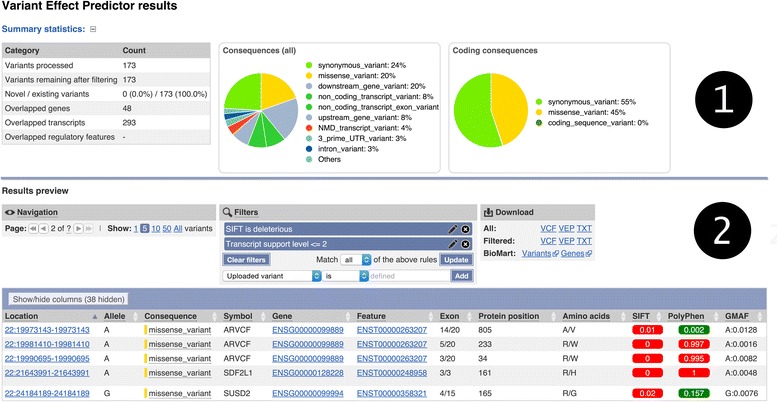
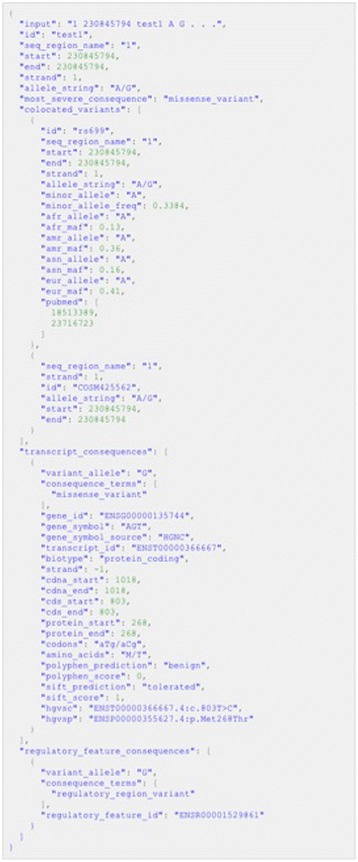
Verification
Claims the paper makes
The claims and statistics of this paper haven’t been checked yet.
Free: it reads the open-access text and checks the first 5 claims that cite a source we can check. Create a free account to check every claim.
Claims other papers make about this one
Each is checked against this paper’s own text: does it say what the citing paper says it does?
The check wasn’t confident either way, so it gives no verdict — never disputed.
In the citing paper
“The ranking of variant types based on the lowest percentile of GPN scores is generally consistent with established notions of deleteriousness (41)*.”
From DNA language models are powerful predictors of genome-wide variant effects (2023) · cites this paper as [41]
Experimental — accuracy not yet measured
Self-check
Percentages, sums and reported differences re-computed from the paper’s own numbers.
The self-check needs the paper’s full text.
Citations
Cites
An integrated encyclopedia of DNA elements in the human genome
The ENCODE Project Consortium (2012) · Nature · doi:10.1038/nature11247 · Cited by 18,072
Self-citationANNOVAR: functional annotation of genetic variants from high-throughput sequencing data
Wang, K., Li, M., & Hakonarson, H. (2010) · Nucleic Acids Research · doi:10.1093/nar/gkq603 · Cited by 14,621
A method and server for predicting damaging missense mutations.
Adzhubei, I. A., Schmidt, S., Peshkin, L., Ramensky, V. E., Gerasimova, A., Bork, P., Kondrashov, A. S., & Sunyaev, S. R. (2010) · Nature Methods · doi:10.1038/nmeth0410-248 · Cited by 13,194 · cited 2×
“PolyPhen-2 [41] results are available for human proteins.”
BackgroundCingolani, P., Platts, A., Wang, L. L., Coon, M., Nguyen, T., Wang, L., Land, S. J., Lu, X., & Ruden, D. M. (2012) · Fly · doi:10.4161/fly.19695 · Cited by 11,816 · cited 2×
“The VEP’s VCF output follows a standard agreed with other annotation tool providers (Cingolani et al. 2012) to promote transparent cross-comparison and benchmarking of results.”
An integrated map of genetic variation from 1,092 human genomes
The 1000 Genomes Project Consortium (2012) · Nature · doi:10.1038/nature11632 · Cited by 7,711 · cited 1×
“It has been used for analysis in numerous large-scale projects, including the 1000 Genomes [31] and Exome Aggregation Consortium (ExAC) [32].”
MethodSelf-citationdbSNP: the NCBI database of genetic variation
Sherry, S. T. (2001) · Nucleic Acids Research · doi:10.1093/nar/29.1.308 · Cited by 7,502 · cited 2×
“Ensembl integrates and quality checks variants from dbSNP [56] and other sources for 20 species.”
BackgroundKumar, P., Henikoff, S., & Ng, P. C. (2009) · Nature Protocols · doi:10.1038/nprot.2009.86 · Cited by 6,521 · cited 1×
“Sorting Intolerant From Tolerant (SIFT, Kumar et al. 2009) results are available for the ten species that are most used in Ensembl.”
BackgroundA general framework for estimating the relative pathogenicity of human genetic variants
Kircher, M., Witten, D. M., Jain, P., O'Roak, B. J., Cooper, G. M., & Shendure, J. (2014) · Nature Genetics · doi:10.1038/ng.2892 · Cited by 6,183
A New Initiative on Precision Medicine
Collins, F. S., & Varmus, H. (2015) · New England Journal of Medicine · doi:10.1056/nejmp1500523 · Cited by 5,202
The Genotype-Tissue Expression (GTEx) pilot analysis: Multitissue gene regulation in humans
The GTEx Consortium, Ardlie, K. G., Deluca, D. S., Segrè, A. V., Sullivan, T. J., Young, T. R., Gelfand, E. T., Trowbridge, C. A., Maller, J. B., Tukiainen, T., et al. (2015) · Science · doi:10.1126/science.1262110 · Cited by 5,062 · cited 1×
“Data from large scale efforts such as the Genotype-Tissue Expression project, which aims to systematically characterize the effects of regulatory variants in different tissues [84], will be integrated into the VEP reference data in order to have the most current data available to the VEP for analysis.”
Method
Cited by
Twelve years of SAMtools and BCFtools
Danecek, P., Bonfield, J. K., Liddle, J., Marshall, J., Ohan, V., Pollard, M. O., Whitwham, A., Keane, T., McCarthy, S. A., Davies, R. M., et al. (2021) · GigaScience · doi:10.1093/gigascience/giab008 · Cited by 15,343
“Examples from a large and ever growing collection include: the plugin split-vep for convenient querying and extraction of VEP annotations [14]; trio-dnm for ascertainment of de novo variants and their parental origin (parental-origin), or for collection of statistics (trio-stats) in trio data; gVCF manipulation (gvcfz…”
The Immune Landscape of Cancer
Thorsson, V., Gibbs, D. L., Brown, S. D., Wolf, D., Bortone, D. S., Ou Yang, T.-H., Porta-Pardo, E., Gao, G. F., Plaisier, C. L., Eddy, J. A., et al. (2018) · Immunity · doi:10.1016/j.immuni.2018.03.023 · Cited by 5,870
Functional mapping and annotation of genetic associations with FUMA
Watanabe, K., Taskesen, E., van Bochoven, A., & Posthuma, D. (2017) · Nature Communications · doi:10.1038/s41467-017-01261-5 · Cited by 4,083
CADD: predicting the deleteriousness of variants throughout the human genome
Rentzsch, P., Witten, D., Cooper, G. M., Shendure, J., & Kircher, M. (2019) · Nucleic Acids Research · doi:10.1093/nar/gky1016 · Cited by 3,534
“Annotations are obtained using Ensembl Variant Effect Predictor (VEP (15)), conservation and selection scores (e.”
Alzheimer Disease Genetics Consortium (ADGC), Kunkle, B. W., The European Alzheimer’s Disease Initiative (EADI), Cohorts for Heart and Aging Research in Genomic Epidemiology Consortium (CHARGE), Genetic and Environmental Risk in AD/Defining Genetic, P. A. E. R. F. A. D. C. (., Grenier-Boley, B., Sims, R., Bis, J. C., Damotte, V., Naj, A. C., et al. (2019) · Nature Genetics · doi:10.1038/s41588-019-0358-2 · Cited by 2,946
Predicting splicing from primary sequence with deep learning
Jaganathan, K., Kyriazopoulou Panagiotopoulou, S., McRae, J. F., Darbandi, S. F., Knowles, D., Li, Y. I., Kosmicki, J. A., Arbelaez, J., Cui, W., Schwartz, G. B., et al. (2019) · Cell · doi:10.1016/j.cell.2018.12.015 · Cited by 2,853
“d Nonsense: VEP (McLaren et al., 2016) consequence was ‘stop_gained’ (44,046 singleton and 722 common in ExAC, 20,660 singleton and 970 common in gnomAD).”
BackgroundPiñero, J., Bravo, À., Queralt-Rosinach, N., Gutiérrez-Sacristán, A., Deu-Pons, J., Centeno, E., García-García, J., Sanz, F., & Furlong, L. I. (2017) · Nucleic Acids Research · doi:10.1093/nar/gkw943 · Cited by 2,680
“Finally, the most severe consequence type of each variant is displayed, obtained using the Ensembl Variant Effect Predictor (22).”
MethodThe DisGeNET knowledge platform for disease genomics: 2019 update
Piñero, J., Ramírez-Anguita, J. M., Saüch-Pitarch, J., Ronzano, F., Centeno, E., Sanz, F., & Furlong, L. I. (2019) · Nucleic Acids Research · doi:10.1093/nar/gkz1021 · Cited by 2,639
“Additionally, the variants are classified according to their most severe consequence type assigned by the Variant Effect Pre-dictor (20) based on canonical gene transcripts.”
Zerbino, D. R., Achuthan, P., Akanni, W., Amode, M. R., Barrell, D., Bhai, J., Billis, K., Cummins, C., Gall, A., Girón, C. G., et al. (2018) · Nucleic Acids Research · doi:10.1093/nar/gkx1098 · Cited by 2,605
“Finally, for common data analysis workflows, we support dedicated tools, such as BioMart (18) and the Ensembl Variant Effect Predictor (VEP, (19)).”
MethodSelf-citationSatterstrom, F. K., Kosmicki, J. A., Wang, J., Breen, M. S., De Rubeis, S., An, J.-Y., Peng, M., Collins, R., Grove, J., Klei, L., et al. (2020) · Cell · doi:10.1016/j.cell.2019.12.036 · Cited by 2,321
A cross-population atlas of genetic associations for 220 human phenotypes
Sakaue, S., Kanai, M., Tanigawa, Y., Karjalainen, J., Kurki, M., Koshiba, S., Narita, A., Konuma, T., Yamamoto, K., Akiyama, M., et al. (2021) · Nature Genetics · doi:10.1038/s41588-021-00931-x · Cited by 2,316
Pan-tumor genomic biomarkers for PD-1 checkpoint blockade–based immunotherapy
Cristescu, R., Mogg, R., Ayers, M., Albright, A., Murphy, E., Yearley, J., Sher, X., Liu, X. Q., Lu, H., Nebozhyn, M., et al. (2018) · Science · doi:10.1126/science.aar3593 · Cited by 2,301
“W. McLaren et al., The Ensembl Variant Effect Predictor.”
MethodSequencing of 53,831 diverse genomes from the NHLBI TOPMed Program
Taliun, D., Harris, D. N., Kessler, M. D., Carlson, J., Szpiech, Z. A., Torres, R., Taliun, S. A. G., Corvelo, A., Gogarten, S. M., Kang, H. M., et al. (2021) · Nature · doi:10.1038/s41586-021-03205-y · Cited by 2,213
ADHD Working Group of the Psychiatric Genomics Consortium (PGC), Demontis, D., Early Lifecourse & Genetic Epidemiology (EAGLE) Consortium, 23andMe Research Team, Walters, R. K., Martin, J., Mattheisen, M., Als, T. D., Agerbo, E., Baldursson, G., et al. (2019) · Nature Genetics · doi:10.1038/s41588-018-0269-7 · Cited by 2,203
Discovery of the first genome-wide significant risk loci for ADHD
(2017) · doi:10.1101/145581 · Cited by 2,203
PhenoScanner V2: an expanded tool for searching human genotype–phenotype associations
Kamat, M. A., Blackshaw, J. A., Young, R., Surendran, P., Burgess, S., Danesh, J., Butterworth, A. S., & Staley, J. R. (2019) · Bioinformatics · doi:10.1093/bioinformatics/btz469 · Cited by 2,155
Integrated genomic characterization of pancreatic ductal adenocarcinoma
Raphael, B. J., Hruban, R. H., Aguirre, A. J., Moffitt, R. A., Yeh, J. J., Stewart, C., Robertson, A. G., Cherniack, A. D., Gupta, M., Getz, G., et al. (2017) · Cancer Cell · doi:10.1016/j.ccell.2017.07.007 · Cited by 2,019
Cunningham, F., Allen, J. E., Allen, J., Alvarez-Jarreta, J., Amode, M. R., Armean, I. M., Austine-Orimoloye, O., Azov, A. G., Barnes, I., Bennett, R., et al. (2022) · Nucleic Acids Research · doi:10.1093/nar/gkab1049 · Cited by 1,923
“We detail the extensions and improvements to our VEP annotations, which include predictions from other popular tools.”
InfluentialSelf-citationGenome-wide association studies
Uffelmann, E., Huang, Q. Q., Munung, N. S., de Vries, J., Okada, Y., Martin, A. R., Martin, H. C., Lappalainen, T., & Posthuma, D. (2021) · Nature Reviews Methods Primers · doi:10.1038/s43586-021-00056-9 · Cited by 1,849
Large-scale integration of the plasma proteome with genetics and disease
Ferkingstad, E., Sulem, P., Atlason, B. A., Sveinbjornsson, G., Magnusson, M. I., Styrmisdottir, E. L., Gunnarsdottir, K., Helgason, A., Oddsson, A., Halldorsson, B. V., et al. (2021) · Nature Genetics · doi:10.1038/s41588-021-00978-w · Cited by 1,697
Kim, S. T., Cristescu, R., Bass, A. J., Kim, K.-M., Odegaard, J. I., Kim, K., Liu, X. Q., Sher, X., Jung, H., Lee, M., et al. (2018) · Nature Medicine · doi:10.1038/s41591-018-0101-z · Cited by 1,654
Howe, K. L., Achuthan, P., Allen, J., Allen, J., Alvarez-Jarreta, J., Amode, M. R., Armean, I. M., Azov, A. G., Bennett, R., Bhai, J., et al. (2021) · Nucleic Acids Research · doi:10.1093/nar/gkaa942 · Cited by 1,568
“We are integrating and annotating identified variants in the genome of SARS-Cov-2 using Ensembl VEP.”
MethodInfluentialSelf-citationConserved pan-cancer microenvironment subtypes predict response to immunotherapy
Bagaev, A., Kotlov, N., Nomie, K., Svekolkin, V., Gafurov, A., Isaeva, O., Osokin, N., Kozlov, I., Frenkel, F., Gancharova, O., et al. (2021) · Cancer Cell · doi:10.1016/j.ccell.2021.04.014 · Cited by 1,302
Next-Generation Sequencing Technology: Current Trends and Advancements
Satam, H., Joshi, K., Mangrolia, U., Waghoo, S., Zaidi, G., Rawool, S., Thakare, R. P., Banday, S., Mishra, A. K., Das, G., et al. (2023) · Biology · doi:10.3390/biology12070997 · Cited by 1,299
“Cont.”
McDermott, D. F., Huseni, M. A., Atkins, M. B., Motzer, R. J., Rini, B. I., Escudier, B., Fong, L., Joseph, R. W., Pal, S. K., Reeves, J. A., et al. (2018) · Nature Medicine · doi:10.1038/s41591-018-0053-3 · Cited by 1,260
The Allelic Landscape of Human Blood Cell Trait Variation and Links to Common Complex Disease
Astle, W. J., Elding, H., Jiang, T., Allen, D., Ruklisa, D., Mann, A. L., Mead, D., Bouman, H., Riveros-Mckay, F., Kostadima, M. A., et al. (2016) · Cell · doi:10.1016/j.cell.2016.10.042 · Cited by 1,224
“(D and E) Violin plots showing the distribution of the absolute value of the estimated effect size stratified by VEP impact categories (D) or cell-matched chromatin segmentation states (E). p values correspond to Mann-Whitney-Wilcoxon tests comparing the distributions indicated.”
MethodInfluentialIdentification of unique neoantigen qualities in long-term survivors of pancreatic cancer
Initiative, A. P. C. G., Balachandran, V. P., Łuksza, M., Zhao, J. N., Makarov, V., Moral, J. A., Remark, R., Herbst, B., Askan, G., Bhanot, U., et al. (2017) · Nature · doi:10.1038/nature24462 · Cited by 1,191
Yates, A. D., Achuthan, P., Akanni, W., Allen, J., Allen, J., Alvarez-Jarreta, J., Amode, M. R., Armean, I. M., Azov, A. G., Bennett, R., et al. (2019) · Nucleic Acids Research · doi:10.1093/nar/gkz966 · Cited by 1,152
“Improving variant interpretation and reporting We have continued to enhance Ensembl VEP with a number of extensions.”
BackgroundInfluentialSelf-citationByrska-Bishop, M., Evani, U. S., Zhao, X., Basile, A. O., Abel, H. J., Regier, A. A., Corvelo, A., Clarke, W. E., Musunuri, R., Nagulapalli, K., et al. (2022) · Cell · doi:10.1016/j.cell.2022.08.004 · Cited by 1,094
Self-citationMartin, F. J., Amode, M. R., Aneja, A., Austine-Orimoloye, O., Azov, A. G., Barnes, I., Becker, A., Bennett, R., Berry, A., Bhai, J., et al. (2023) · Nucleic Acids Research · doi:10.1093/nar/gkac958 · Cited by 1,023
“Ensembl and Ensembl VEP are registered trademarks of EMBL.”
MethodInfluentialSelf-citationWightman, D. P., Jansen, I. E., Savage, J. E., Shadrin, A. A., Bahrami, S., Holland, D., Rongve, A., Børte, S., Winsvold, B. S., Drange, O. K., et al. (2021) · Nature Genetics · doi:10.1038/s41588-021-00921-z · Cited by 1,011
Mapping the human genetic architecture of COVID-19
Initiative, C.-1. H. G., InitiativeLeadership, C.-1. H. G., Niemi, M. E. K., Karjalainen, J., Liao, R. G., Neale, B. M., Daly, M., Ganna, A., Writing group, Writing group leaders, et al. (2021) · Nature · doi:10.1038/s41586-021-03767-x · Cited by 983
The power of genetic diversity in genome-wide association studies of lipids
Graham, S. E., Clarke, S. L., Wu, K.-H. H., Kanoni, S., Zajac, G. J. M., Ramdas, S., Surakka, I., Ntalla, I., Vedantam, S., Winkler, T. W., et al. (2021) · Nature · doi:10.1038/s41586-021-04064-3 · Cited by 972
“Variants within the credible sets were annotated with SnpEff 52 using WGSA 51 and with VEP 59 .”
MethodRadiotherapy induces responses of lung cancer to CTLA-4 blockade
Formenti, S. C., Rudqvist, N.-P., Golden, E., Cooper, B., Wennerberg, E., Lhuillier, C., Vanpouille-Box, C., Friedman, K., Ferrari de Andrade, L., Wucherpfennig, K. W., et al. (2018) · Nature Medicine · doi:10.1038/s41591-018-0232-2 · Cited by 928
Leveraging Polygenic Functional Enrichment to Improve GWAS Power
Kichaev, G., Bhatia, G., Loh, P.-R., Gazal, S., Burch, K., Freund, M. K., Schoech, A., Pasaniuc, B., & Price, A. L. (2019) · The American Journal of Human Genetics · doi:10.1016/j.ajhg.2018.11.008 · Cited by 926
Cunningham, F., Achuthan, P., Akanni, W., Allen, J., Amode, M. R., Armean, I. M., Bennett, R., Bhai, J., Billis, K., Boddu, S., et al. (2019) · Nucleic Acids Research · doi:10.1093/nar/gky1113 · Cited by 925
“Our Ensembl VEP REST service has been updated to accept a location and alternate allele as minimum input to ease usability.”
MethodInfluentialSelf-citationScalable Open Science Approach for Mutation Calling of Tumor Exomes Using Multiple Genomic Pipelines
Ellrott, K., Bailey, M. H., Saksena, G., Covington, K. R., Kandoth, C., Stewart, C., Hess, J., Ma, S., Chiotti, K. E., McLellan, M., et al. (2018) · Cell Systems · doi:10.1016/j.cels.2018.03.002 · Cited by 852
“Additional annotations were added from COSMIC(Forbes et al., 2015), dbGaP(Sherry et al., 2001), ExAC(Lek et al., 2016), and Ensembl(Aken et al., 2016) using Variant Effect Predictor (VEP)(McLaren et al., 2016) and other custom built annotation tools including the normal depth of coverage filter and strand bias filters.”
Pathogenic Germline Variants in 10,389 Adult Cancers
Huang, K.-L., Mashl, R. J., Wu, Y., Ritter, D. I., Wang, J., Oh, C., Paczkowska, M., Reynolds, S., Wyczalkowski, M. A., Oak, N., et al. (2018) · Cell · doi:10.1016/j.cell.2018.03.039 · Cited by 833
“We used evidence from SIFT (Kumar et al., 2009) and PolyPhen (Adzhubei et al., 2010), as annotated by VEP (McLaren et al., 2016).”
MethodZheng, J., Haberland, V., Baird, D., Walker, V., Haycock, P., Hurle, M., Gutteridge, A., Erola, P., Liu, Y., Luo, S., et al. (2019) · doi:10.1101/627398 · Cited by 812
The ExAC browser: displaying reference data information from over 60 000 exomes
Karczewski, K. J., Weisburd, B., Thomas, B., Solomonson, M., Ruderfer, D. M., Kavanagh, D., Hamamsy, T., Lek, M., Samocha, K. E., Cummings, B. B., et al. (2017) · Nucleic Acids Research · doi:10.1093/nar/gkw971 · Cited by 781
“Variants were annotated using the Variant Effect Predictor (VEP) version 81 (11,12) against the Gencode v19 transcript set.”
MethodAn atlas of genetic influences on osteoporosis in humans and mice
23andMe Research Team, Morris, J. A., Kemp, J. P., Youlten, S. E., Laurent, L., Logan, J. G., Chai, R. C., Vulpescu, N. A., Forgetta, V., Kleinman, A., et al. (2019) · Nature Genetics · doi:10.1038/s41588-018-0302-x · Cited by 773
Nucleotide Transformer: building and evaluating robust foundation models for human genomics
Dalla-Torre, H., Gonzalez, L., Mendoza-Revilla, J., Lopez Carranza, N., Grzywaczewski, A. H., Oteri, F., Dallago, C., Trop, E., de Almeida, B. P., Sirelkhatim, H., et al. (2025) · Nature Methods · doi:10.1038/s41592-024-02523-z · Cited by 772
Multi-ethnic genome-wide association study for atrial fibrillation
Roselli, C., Chaffin, M. D., Weng, L.-C., Aeschbacher, S., Ahlberg, G., Albert, C. M., Almgren, P., Alonso, A., Anderson, C. D., Aragam, K. G., et al. (2018) · Nature Genetics · doi:10.1038/s41588-018-0133-9 · Cited by 771
“7 using RefSeq as gene reference and the option "pick" to identify one consequence per variant with the default pick order.(55) We queried sentinel variants and their proxies to identify tagged variants with HIGH and MODERATE impact including the following”
Zhao, J. H., Stacey, D., Eriksson, N., Macdonald-Dunlop, E., Hedman, Å. K., Kalnapenkis, A., Enroth, S., Cozzetto, D., Digby-Bell, J., Marten, J., et al. (2023) · Nature Immunology · doi:10.1038/s41590-023-01588-w · Cited by 747
WormBase ParaSite − a comprehensive resource for helminth genomics
Howe, K. L., Bolt, B. J., Shafie, M., Kersey, P., & Berriman, M. (2017) · Molecular and Biochemical Parasitology · doi:10.1016/j.molbiopara.2016.11.005 · Cited by 745
Harrison, P. W., Amode, M. R., Austine-Orimoloye, O., Azov, A. G., Barba, M., Barnes, I., Becker, A., Bennett, R., Berry, A., Bhai, J., et al. (2024) · Nucleic Acids Research · doi:10.1093/nar/gkad1049 · Cited by 742
“To help address this, we have further extended Ensembl VEP’s ( 5 ) functionality for the annotation and prioritisation of genomic variants.”
MethodSelf-citationVujkovic, M., Keaton, J. M., Lynch, J. A., Miller, D. R., Zhou, J., Tcheandjieu, C., Huffman, J. E., Assimes, T. L., Lorenz, K., Zhu, X., et al. (2020) · Nature Genetics · doi:10.1038/s41588-020-0637-y · Cited by 741
Aragam, K. G., Jiang, T., Goel, A., Kanoni, S., Wolford, B. N., Atri, D. S., Weeks, E. M., Wang, M., Hindy, G., Zhou, W., et al. (2022) · Nature Genetics · doi:10.1038/s41588-022-01233-6 · Cited by 723
“8 as estimated in the European ancestry subset 810 of UK Biobank, and annotated them using the Ensembl Variant Effect Predictor (VEP).[64] We 811 selected for each sentinel variant any proxies identified as having a ‘high’ (i.”
MethodNeoantigen vaccine: an emerging tumor immunotherapy
Peng, M., Mo, Y., Wang, Y., Wu, P., Zhang, Y., Xiong, F., Guo, C., Wu, X., Li, Y., Li, X., et al. (2019) · Molecular Cancer · doi:10.1186/s12943-019-1055-6 · Cited by 700
The Immune Landscape of Cancer
Thorsson, V., Gibbs, D. L., Brown, S. D., Wolf, D., Bortone, D. S., Ou Yang, T.-H., Porta-Pardo, E., Gao, G. F., Plaisier, C. L., Eddy, J. A., et al. (2019) · Immunity · doi:10.1016/j.immuni.2019.08.004 · Cited by 700
The Nucleotide Transformer: Building and Evaluating Robust Foundation Models for Human Genomics
Dalla-Torre, H., Gonzalez, L., Mendoza Revilla, J., Lopez Carranza, N., Henryk Grywaczewski, A., Oteri, F., Dallago, C., Trop, E., De Almeida, B. P., Sirelkhatim, H., et al. (2023) · doi:10.1101/2023.01.11.523679 · Cited by 680
“First, we downloaded the dataset used by SpliceFinder [30], which was composed of donor, acceptor, and non-splice sites, containing sequences detected in human genes.”
MethodMechanisms and therapeutic implications of hypermutation in gliomas
Touat, M., Li, Y. Y., Boynton, A. N., Spurr, L. F., Iorgulescu, J. B., Bohrson, C. L., Cortes-Ciriano, I., Birzu, C., Geduldig, J. E., Pelton, K., et al. (2020) · Nature · doi:10.1038/s41586-020-2209-9 · Cited by 677
Variant interpretation using population databases: Lessons from gnomAD
Gudmundsson, S., Singer‐Berk, M., Watts, N. A., Phu, W., Goodrich, J. K., Solomonson, M., Genome Aggregation Database Consortium, Rehm, H. L., MacArthur, D. G., & O'Donnell‐Luria, A. (2022) · Human Mutation · doi:10.1002/humu.24309 · Cited by 674
The Polygenic and Monogenic Basis of Blood Traits and Diseases
Vuckovic, D., Bao, E. L., Akbari, P., Lareau, C. A., Mousas, A., Jiang, T., Chen, M.-H., Raffield, L. M., Tardaguila, M., Huffman, J. E., et al. (2020) · Cell · doi:10.1016/j.cell.2020.08.008 · Cited by 671
Genome-wide enhancer maps link risk variants to disease genes
Nasser, J., Bergman, D. T., Fulco, C. P., Guckelberger, P., Doughty, B. R., Patwardhan, T. A., Jones, T. R., Nguyen, T. H., Ulirsch, J. C., Lekschas, F., et al. (2021) · Nature · doi:10.1038/s41586-021-03446-x · Cited by 669
“We used the Variant Effect Predictor 57 to identify protein-truncating variants and damaging missense variants.”
MethodTranscriptome-wide off-target RNA editing induced by CRISPR-guided DNA base editors
Grünewald, J., Zhou, R., Garcia, S. P., Iyer, S., Lareau, C. A., Aryee, M. J., & Joung, J. K. (2019) · Nature · doi:10.1038/s41586-019-1161-z · Cited by 663
Dyer, S. C., Austine-Orimoloye, O., Azov, A. G., Barba, M., Barnes, I., Barrera-Enriquez, V. P., Becker, A., Bennett, R., Beracochea, M., Berry, A., et al. (2025) · Nucleic Acids Research · doi:10.1093/nar/gkae1071 · Cited by 663
Self-citationMapping the proteo-genomic convergence of human diseases
Pietzner, M., Wheeler, E., Carrasco-Zanini, J., Cortes, A., Koprulu, M., Wörheide, M. A., Oerton, E., Cook, J., Stewart, I. D., Kerrison, N. D., et al. (2021) · Science · doi:10.1126/science.abj1541 · Cited by 657
Liu, X., Li, C., Mou, C., Dong, Y., & Tu, Y. (2020) · Genome Medicine · doi:10.1186/s13073-020-00803-9 · Cited by 657
“There have been several annotation tools available for large-scale DNA sequence data, such as UCSC Genome Browser ’ s Variant Annotation Integrator [6], Ensembl ’ s Variant Effect Predictor (VEP) [7], ANNOVAR [8], and SnpEff [9].”
MethodMulti-omic machine learning predictor of breast cancer therapy response
Sammut, S.-J., Crispin-Ortuzar, M., Chin, S.-F., Provenzano, E., Bardwell, H. A., Ma, W., Cope, W., Dariush, A., Dawson, S.-J., Abraham, J. E., et al. (2022) · Nature · doi:10.1038/s41586-021-04278-5 · Cited by 654
Rentzsch, P., Schubach, M., Shendure, J., & Kircher, M. (2021) · Genome Medicine · doi:10.1186/s13073-021-00835-9 · Cited by 640
Fu, J. M., Satterstrom, F. K., Peng, M., Brand, H., Collins, R. L., Dong, S., Wamsley, B., Klei, L., Wang, L., Hao, S. P., et al. (2022) · Nature Genetics · doi:10.1038/s41588-022-01104-0 · Cited by 640
The Translational Landscape of the Human Heart
van Heesch, S., Witte, F., Schneider-Lunitz, V., Schulz, J. F., Adami, E., Faber, A. B., Kirchner, M., Maatz, H., Blachut, S., Sandmann, C.-L., et al. (2019) · Cell · doi:10.1016/j.cell.2019.05.010 · Cited by 626
“To determine the effect of the SNVs and indels on genes and transcripts, we used Ensembl Variant Effect Predictor (VEP) v87 (McLaren et al., 2016).”
Paediatric genomics: diagnosing rare disease in children
Wright, C. F., FitzPatrick, D. R., & Firth, H. V. (2018) · Nature Reviews Genetics · doi:10.1038/nrg.2017.116 · Cited by 618
Ghoussaini, M., Mountjoy, E., Carmona, M., Peat, G., Schmidt, E. M., Hercules, A., Fumis, L., Miranda, A., Carvalho-Silva, D., Buniello, A., et al. (2021) · Nucleic Acids Research · doi:10.1093/nar/gkaa840 · Cited by 615
“This analysis combines four different data types; molecular phenotype quantitative trait loci datasets (eQTLs and pQTLs), chromatin interaction and conformation datasets, in silico functional predictions (using the Variant Effect Predictor or VEP score), and distance from the canonical transcript start site (21).”
MethodMountjoy, E., Schmidt, E. M., Carmona, M., Schwartzentruber, J., Peat, G., Miranda, A., Fumis, L., Hayhurst, J., Buniello, A., Karim, M. A., et al. (2021) · Nature Genetics · doi:10.1038/s41588-021-00945-5 · Cited by 581
A joint NCBI and EMBL-EBI transcript set for clinical genomics and research
Morales, J., Pujar, S., Loveland, J. E., Astashyn, A., Bennett, R., Berry, A., Cox, E., Davidson, C., Ermolaeva, O., Farrell, C. M., et al. (2022) · Nature · doi:10.1038/s41586-022-04558-8 · Cited by 571
Self-citationGenetic drug target validation using Mendelian randomisation
Schmidt, A. F., Finan, C., Gordillo-Marañón, M., Asselbergs, F. W., Freitag, D. F., Patel, R. S., Tyl, B., Chopade, S., Faraway, R., Zwierzyna, M., et al. (2020) · Nature Communications · doi:10.1038/s41467-020-16969-0 · Cited by 567
Common brain disorders are associated with heritable patterns of apparent aging of the brain
Karolinska Schizophrenia Project (KaSP), Kaufmann, T., van der Meer, D., Doan, N. T., Schwarz, E., Lund, M. J., Agartz, I., Alnæs, D., Barch, D. M., Baur-Streubel, R., et al. (2019) · Nature Neuroscience · doi:10.1038/s41593-019-0471-7 · Cited by 563
Foley, C. N., Staley, J. R., Breen, P. G., Sun, B. B., Kirk, P. D. W., Burgess, S., & Howson, J. M. M. (2021) · Nature Communications · doi:10.1038/s41467-020-20885-8 · Cited by 557
Whole-genome sequencing of patients with rare diseases in a national health system
Turro, E., Astle, W. J., Megy, K., Gräf, S., Greene, D., Shamardina, O., Allen, H. L., Sanchis-Juan, A., Frontini, M., Thys, C., et al. (2020) · Nature · doi:10.1038/s41586-020-2434-2 · Cited by 554
Self-citationUncovering hidden variation in polyploid wheat
Krasileva, K. V., Vasquez-Gross, H. A., Howell, T., Bailey, P., Paraiso, F., Clissold, L., Simmonds, J., Ramirez-Gonzalez, R. H., Wang, X., Borrill, P., et al. (2017) · Proceedings of the National Academy of Sciences · doi:10.1073/pnas.1619268114 · Cited by 540
Proteogenomic Landscape of Breast Cancer Tumorigenesis and Targeted Therapy
Krug, K., Jaehnig, E. J., Satpathy, S., Blumenberg, L., Karpova, A., Anurag, M., Miles, G., Mertins, P., Geffen, Y., Tang, L. C., et al. (2020) · Cell · doi:10.1016/j.cell.2020.10.036 · Cited by 537
“Each of these modules consists of multiple additional tools (McLaren et al., 2016; Ramos et al., 2015).”
BackgroundCOSMIC: a curated database of somatic variants and clinical data for cancer
Sondka, Z., Dhir, N. B., Carvalho-Silva, D., Jupe, S., Madhumita, McLaren, K., Starkey, M., Ward, S., Wilding, J., Ahmed, M., et al. (2024) · Nucleic Acids Research · doi:10.1093/nar/gkad986 · Cited by 533
“…ensure standardisation and uniformity in the dataset, all the variants with known genomic coordinates are mapped across transcripts and genes using the Ensembl’s Variant Effect Predictor (VEP) ( 16 ), improving compliance with current HGVS standards ( 12 ) and interoperability with other resources.”
Schwartzentruber, J., Cooper, S., Liu, J. Z., Barrio-Hernandez, I., Bello, E., Kumasaka, N., Young, A. M. H., Franklin, R. J. M., Johnson, T., Estrada, K., et al. (2021) · Nature Genetics · doi:10.1038/s41588-020-00776-w · Cited by 532
Aken, B. L., Achuthan, P., Akanni, W., Amode, M. R., Bernsdorff, F., Bhai, J., Billis, K., Carvalho-Silva, D., Cummins, C., Clapham, P., et al. (2017) · Nucleic Acids Research · doi:10.1093/nar/gkw1104 · Cited by 512
“To better support RefSeq transcripts (47), VEP now reports information on matched regions between Ensembl and RefSeq transcripts and mismatches between RefSeq transcripts and the reference genome assembly (46).”
MethodSelf-citation(2020) · doi:10.1101/2020.01.22.20018424 · Cited by 505
Open Targets: a platform for therapeutic target identification and validation
Koscielny, G., An, P., Carvalho-Silva, D., Cham, J. A., Fumis, L., Gasparyan, R., Hasan, S., Karamanis, N., Maguire, M., Papa, E., et al. (2017) · Nucleic Acids Research · doi:10.1093/nar/gkw1055 · Cited by 504
“Deleterious effects of variants on transcripts were annotated with SO terms using the Ensembl Variant Effect Predictor (VEP) (45).”
MethodFATHMM-XF: accurate prediction of pathogenic point mutations via extended features
Rogers, M. F., Shihab, H. A., Mort, M., Cooper, D. N., Gaunt, T. R., & Campbell, C. (2018) · Bioinformatics · doi:10.1093/bioinformatics/btx536 · Cited by 502
“We construct four additional feature groups from conservation scores, the Variant Effect Predictor (McLaren et al. , 2016); annotated gene models, and the DNA sequence itself (Supplementary Section S3).”
MethodZhang, H., Ahearn, T. U., Lecarpentier, J., Barnes, D., Beesley, J., Qi, G., Jiang, X., O’Mara, T. A., Zhao, N., Bolla, M. K., et al. (2020) · Nature Genetics · doi:10.1038/s41588-020-0609-2 · Cited by 501
The International League Against Epilepsy Consortium on Complex Epilepsies, Abou-Khalil, B., Auce, P., Avbersek, A., Bahlo, M., Balding, D. J., Bast, T., Baum, L., Becker, A. J., Becker, F., et al. (2018) · Nature Communications · doi:10.1038/s41467-018-07524-z · Cited by 482
BCFtools/csq: haplotype-aware variant consequences
Danecek, P., & McCarthy, S. A. (2017) · Bioinformatics · doi:10.1093/bioinformatics/btx100 · Cited by 468
Ensembl Genomes 2020—enabling non-vertebrate genomic research
Howe, K. L., Contreras-Moreira, B., De Silva, N., Maslen, G., Akanni, W., Allen, J., Alvarez-Jarreta, J., Barba, M., Bolser, D. M., Cambell, L., et al. (2020) · Nucleic Acids Research · doi:10.1093/nar/gkz890 · Cited by 466
“We have annotated the effect of these variants using the Ensembl Variant Effect Predictor (21) and added information on the potential damage of missense protein-coding mutations using SIFT (22).”
MethodSelf-citationKemp, J. P., Morris, J. A., Medina-Gomez, C., Forgetta, V., Warrington, N. M., Youlten, S. E., Zheng, J., Gregson, C. L., Grundberg, E., Trajanoska, K., et al. (2017) · Nature Genetics · doi:10.1038/ng.3949 · Cited by 465
Diversity and scale: Genetic architecture of 2068 traits in the VA Million Veteran Program
Verma, A., Huffman, J. E., Rodriguez, A., Conery, M., Liu, M., Ho, Y.-L., Kim, Y., Heise, D. A., Guare, L., Panickan, V. A., et al. (2024) · Science · doi:10.1126/science.adj1182 · Cited by 463
“To validate the observed credible sets, we used VEP ( 54 ) and RegulomeDB ( 55 ) to annotate the fine-mapped variants and detect functional enrichments in precisely mapped signals.”
Inherited and de novo genetic risk for autism impacts shared networks
Ruzzo, E. K., Pérez-Cano, L., Jung, J.-Y., Wang, L.-K., Kashef-Haghighi, D., Hartl, C., Singh, C., Xu, J., Hoekstra, J. N., Leventhal, O., et al. (2019) · Cell · doi:10.1016/j.cell.2019.07.015 · Cited by 457
“This was accomplished by annotating with ANNOVAR (version 20160201) (Wang et al., 2010) and then with Variant Effect Predictor (version VEPv83) (McLaren et al., 2016).”
MethodInfluentialSchubach, M., Maass, T., Nazaretyan, L., Röner, S., & Kircher, M. (2024) · Nucleic Acids Research · doi:10.1093/nar/gkad989 · Cited by 455
“We further updated the Ensembl transcript database as well as the Ensembl VEP tool ( 65 ,66 ) from version 95 to the most recent version 110 and trained a new CADD model (CADD v1.”
MethodGenome-Informed Targeted Therapy for Osteosarcoma
Sayles, L. C., Breese, M. R., Koehne, A. L., Leung, S. G., Lee, A. G., Liu, H.-Y., Spillinger, A., Shah, A. T., Tanasa, B., Straessler, K., et al. (2019) · Cancer Discovery · doi:10.1158/2159-8290.cd-17-1152 · Cited by 452
“SNV and SVs were annotated using VEP (69) and NGSUtils.”
MethodHunt, S. E., McLaren, W., Gil, L., Thormann, A., Schuilenburg, H., Sheppard, D., Parton, A., Armean, I. M., Trevanion, S. J., Flicek, P., et al. (2018) · Database · doi:10.1093/database/bay119 · Cited by 452
“The data assembled in the Ensembl databases can be used to annotate variants and predict their functional impact using the Ensembl Variant Effect Predictor (VEP) tool (13).”
MethodSelf-citationPettitt, S. J., Krastev, D. B., Brandsma, I., Dréan, A., Song, F., Aleksandrov, R., Harrell, M. I., Menon, M., Brough, R., Campbell, J., et al. (2018) · Nature Communications · doi:10.1038/s41467-018-03917-2 · Cited by 449
A clinically applicable integrative molecular classification of meningiomas
Nassiri, F., Liu, J., Patil, V., Mamatjan, Y., Wang, J. Z., Hugh-White, R., Macklin, A. M., Khan, S., Singh, O., Karimi, S., et al. (2021) · Nature · doi:10.1038/s41586-021-03850-3 · Cited by 449
The sequences of 150,119 genomes in the UK Biobank
Halldorsson, B. V., Eggertsson, H. P., Moore, K. H. S., Hauswedell, H., Eiriksson, O., Ulfarsson, M. O., Palsson, G., Hardarson, M. T., Oddsson, A., Jensson, B. O., et al. (2022) · Nature · doi:10.1038/s41586-022-04965-x · Cited by 448
A complete reference genome improves analysis of human genetic variation
Aganezov, S., Yan, S. M., Soto, D. C., Kirsche, M., Zarate, S., Avdeyev, P., Taylor, D. J., Shafin, K., Shumate, A., Xiao, C., et al. (2022) · Science · doi:10.1126/science.abl3533 · Cited by 441
Global Biobank Meta-analysis Initiative: Powering genetic discovery across human disease
Zhou, W., Kanai, M., Wu, K.-H. H., Rasheed, H., Tsuo, K., Hirbo, J. B., Wang, Y., Bhattacharya, A., Zhao, H., Namba, S., et al. (2022) · Cell Genomics · doi:10.1016/j.xgen.2022.100192 · Cited by 432
Genetic insights into biological mechanisms governing human ovarian ageing
Ruth, K. S., Day, F. R., Hussain, J., Martínez-Marchal, A., Aiken, C. E., Azad, A., Thompson, D. J., Knoblochova, L., Abe, H., Tarry-Adkins, J. L., et al. (2021) · Nature · doi:10.1038/s41586-021-03779-7 · Cited by 428
Ensembl Genomes 2022: an expanding genome resource for non-vertebrates
Yates, A. D., Allen, J., Amode, R. M., Azov, A. G., Barba, M., Becerra, A., Bhai, J., Campbell, L. I., Carbajo Martinez, M., Chakiachvili, M., et al. (2022) · Nucleic Acids Research · doi:10.1093/nar/gkab1007 · Cited by 424
“All variation imports have their consequences pre-computed by Ensembl VEP.”
InfluentialSelf-citationSingle-nucleus profiling of human dilated and hypertrophic cardiomyopathy
Chaffin, M., Papangeli, I., Simonson, B., Akkad, A.-D., Hill, M. C., Arduini, A., Fleming, S. J., Melanson, M., Hayat, S., Kost-Alimova, M., et al. (2022) · Nature · doi:10.1038/s41586-022-04817-8 · Cited by 418
Guillen, K. P., Fujita, M., Butterfield, A. J., Scherer, S. D., Bailey, M. H., Chu, Z., DeRose, Y. S., Zhao, L., Cortes-Sanchez, E., Yang, C.-H., et al. (2022) · Nature Cancer · doi:10.1038/s43018-022-00337-6 · Cited by 416
FlyBase: updates to the Drosophila genes and genomes database
Öztürk-Çolak, A., Marygold, S. J., Antonazzo, G., Attrill, H., Goutte-Gattat, D., Jenkins, V. K., Matthews, B. B., Millburn, G., dos Santos, G., Tabone, C. J., et al. (2024) · GENETICS · doi:10.1093/genetics/iyad211 · Cited by 412
“4; McLaren et al .”
LFMM 2: Fast and Accurate Inference of Gene-Environment Associations in Genome-Wide Studies
Caye, K., Jumentier, B., Lepeule, J., & François, O. (2019) · Molecular Biology and Evolution · doi:10.1093/molbev/msz008 · Cited by 404
“The results obtained from clumps with an expected FDR level of 1% were analyzed using the variant effect predictor (VEP) program (McLaren et al. 2016).”
Method
Metadata
- Authors
- McLaren, W., Gil, L., Hunt, S. E., Riat, H. S., Ritchie, G. R. S., Thormann, A., Flicek, P., & Cunningham, F.
- Affiliations
- European Bioinformatics Institute (GB)
- Corresponding author
- McLaren, William
- Cunningham, Fiona
- ORCID
- Venue
- Genome Biology
- Published
- 2016-06-06
- Volume
- 17
- Issue
- 1
- Pages
- 122-122
- ISSN
- 1465-6906 (ISSN-L)
- 1474-760X
- PMC
- PMC4893825
- OpenAlex
- W2417483443
- Semantic Scholar
- 54ec58ccaf8b33bc7593d3413e1dbd58d6c8ca18
- Cited by
- 8,099
- References
- 77
- Citations by year
- 2026: 858 · 2025: 1154 · 2024: 1277 · 2023: 1092 · 2022: 961 · 2021: 939 · 2020: 722 · 2019: 510 · 2018: 381 · 2017: 174 · 2016: 22
- FWCI
- 294.55
- Type
- journal article
- Language
- en
- Open access
- gold
- doi.org
- Licence
- cc-by
- Locations
- Genome biology (publishedVersion, cc-by)
- bioRxiv (Cold Spring Harbor Laboratory) (acceptedVersion, cc-by)
- Europe PMC (PubMed Central) (publishedVersion, cc-by)
- PubMed Central (publishedVersion, cc-by)
- PubMed (publishedVersion)
- Funders
- Wellcome Trust (GB) (WT095908 and WT098051)
- European Molecular Biology Laboratory
- Seventh Framework Programme (BE) (200754 (GEN2PHEN), 222664 (Quantomics))
- European Union’s Horizon 2020 research and innovation programme (634143 (MedBioinformatics))
- Topics
- Life Sciences › Biochemistry, Genetics and Molecular Biology › Genetics › Genomics and Rare Diseases
- Life Sciences › Biochemistry, Genetics and Molecular Biology › Molecular Biology › Genomics and Phylogenetic Studies
- Life Sciences › Biochemistry, Genetics and Molecular Biology › Genetics › Genetic Associations and Epidemiology
- Keywords
- genomic variant annotation, variant prioritization, variant interpretation, genome annotation, open source software, reproducibility
- MeSH terms
- Humans, Software, Genetic Variation, Computational Biology, Internet, Genomics, Databases, Nucleic Acid, Molecular Sequence Annotation
About these checks
Registry, retraction, Cites and statistics results are computed, not judged, with one exception: a printed reference that no index lists is read once by a model before it counts as a citation error. Claims are extracted by a model and kept only when their quote appears verbatim in the text; each cited source is then checked, with a model’s help, for whether it says what the claim relies on. Those verdicts can be wrong — read the claim’s quote and the cited source before relying on one.
Statistics and arithmetic are recomputed, not judged.
Confidence bands are shown only for fields calibrated on our annotated test set. None is calibrated yet, so no band is shown.
What counts as a claim ›How we measure confidence ›How we check this ›
Are you an author, or do you see a problem with this page? Request a review
Data sources
Bibliographic data: Semantic Scholar, OpenAlex, Crossref.
Contains information from the Semantic Scholar Academic Graph Datasets, made available under the ODC Attribution License (ODC-BY 1.0).
Semantic Scholar’s data is described in: Kinney, R., et al. (2023). The Semantic Scholar Open Data Platform. arXiv:2301.10140.
