

Multi-tissue DNA methylation age predictor in mouse
Open accessPublished version of a preprint
The DOI matches its Crossref record; 43 of the 43 references it cites were found in a registry or an index.
Abstract
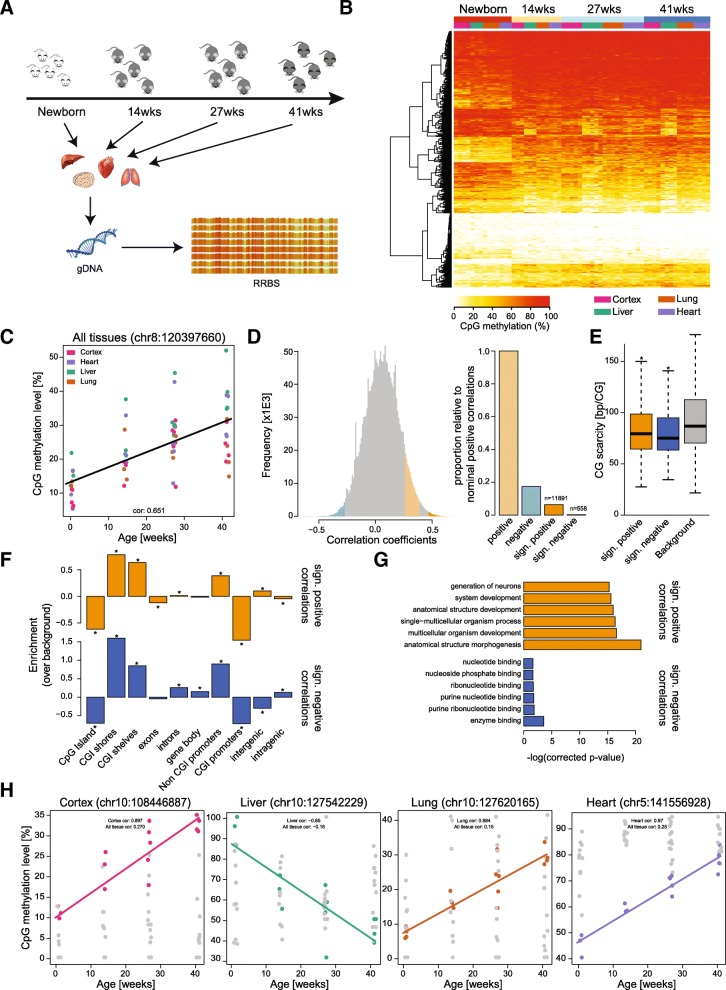
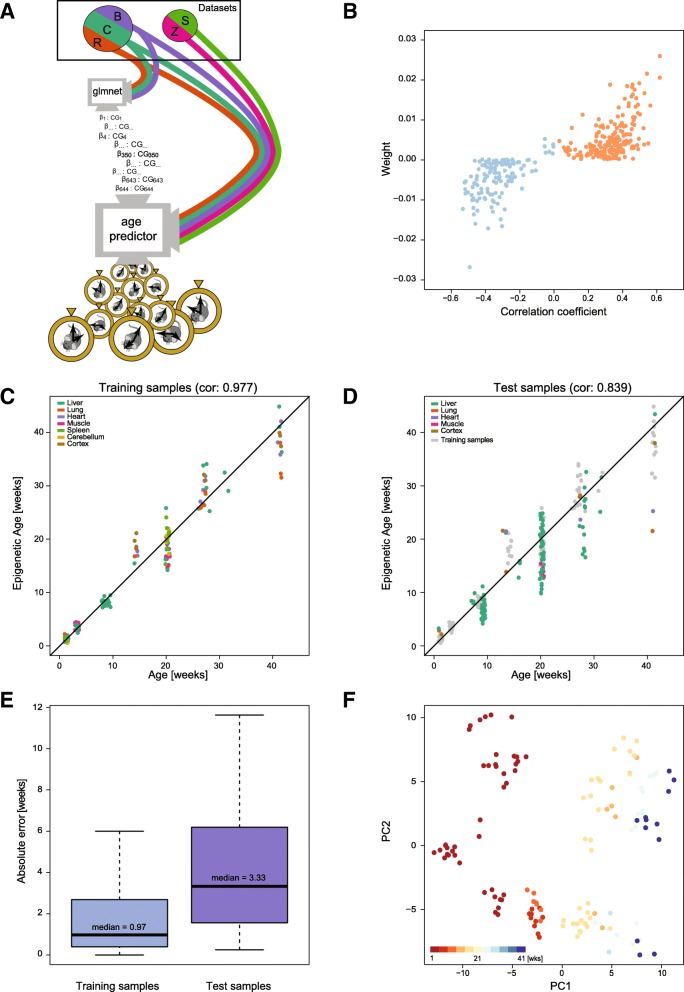
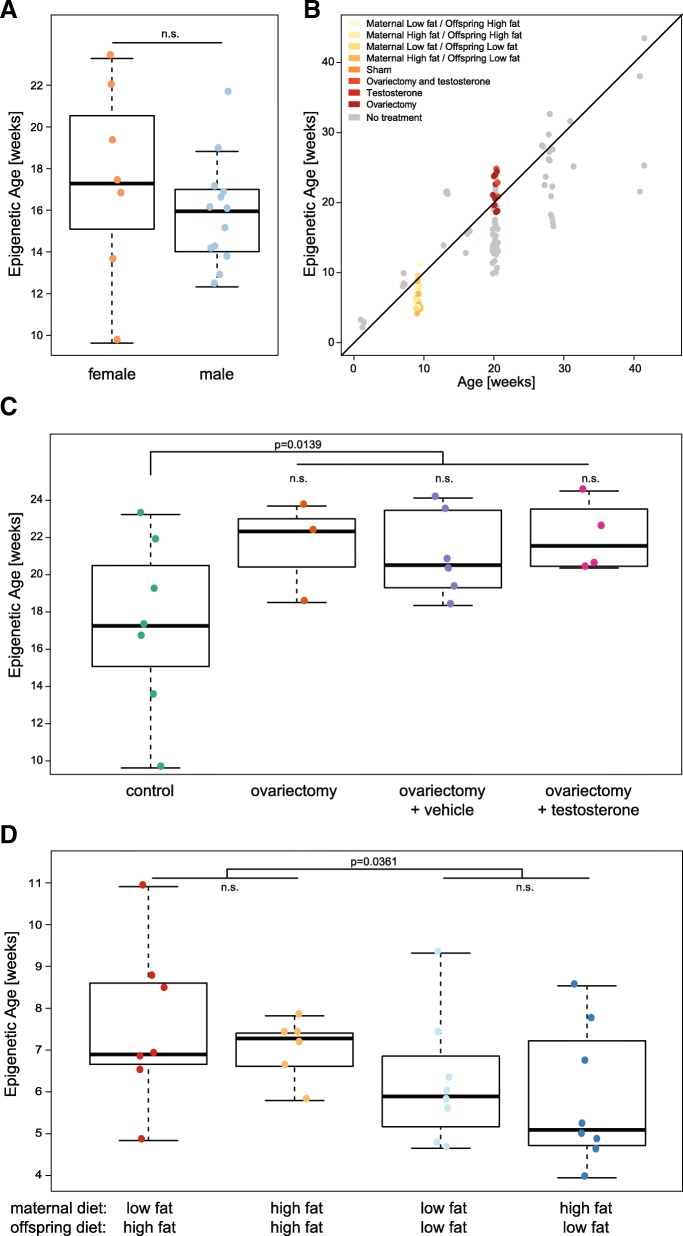
BACKGROUND: DNA methylation changes at a discrete set of sites in the human genome are predictive of chronological and biological age. However, it is not known whether these changes are causative or a consequence of an underlying ageing process. It has also not been shown whether this epigenetic clock is unique to humans or conserved in the more experimentally tractable mouse. RESULTS: We have generated a comprehensive set of genome-scale base-resolution methylation maps from multiple mouse tissues spanning a wide range of ages. Many CpG sites show significant tissue-independent correlations with age which allowed us to develop a multi-tissue predictor of age in the mouse. Our model, which estimates age based on DNA methylation at 329 unique CpG sites, has a median absolute error of 3.33 weeks and has similar properties to the recently described human epigenetic clock. Using publicly available datasets, we find that the mouse clock is accurate enough to measure effects on biological age, including in the context of interventions. While females and males show no significant differences in predicted DNA methylation age, ovariectomy results in significant age acceleration in females. Furthermore, we identify significant differences in age-acceleration dependent on the lipid content of the diet. CONCLUSIONS: Here we identify and characterise an epigenetic predictor of age in mice, the mouse epigenetic clock. This clock will be instrumental for understanding the biology of ageing and will allow modulation of its ticking rate and resetting the clock in vivo to study the impact on biological age.
Overview
The claims and statistics of this paper haven’t been checked yet.
Free: it reads the open-access text and checks the first 5 claims that cite a source we can check. Create a free account to check every claim.
Integrity signals
Registry
Cites
Statistics
Figures
Verification
Claims the paper makes
The claims and statistics of this paper haven’t been checked yet.
Free: it reads the open-access text and checks the first 5 claims that cite a source we can check. Create a free account to check every claim.
Claims other papers make about this one
Each is checked against this paper’s own text: does it say what the citing paper says it does?
The cited source says what the claim attributes to it.
In the citing paper
“Based on four different mouse clocks, the DNAme age of ICE cells was reversed by up to 57% (Figure 7G) (Meer et al., 2018; Petkovich et al., 2017; Stubbs et al., 2017; Thompson et al., 2018).”
From Loss of epigenetic information as a cause of mammalian aging (2023) · cites this paper as Stubbs et al., 2017
In the citing paper
“In addition, tissues within human and mouse individuals show unique DNA methylation rates.34,25.”
From Asynchronous, contagious and digital aging (2021) · cites this paper as [25]
Self-check
Percentages, sums and reported differences re-computed from the paper’s own numbers.
The self-check needs the paper’s full text.
Citations
Cites
Regularization and Variable Selection Via the Elastic Net
Zou, H., & Hastie, T. (2005) · Journal of the Royal Statistical Society Series B: Statistical Methodology · doi:10.1111/j.1467-9868.2005.00503.x · Cited by 20,957
Regularization Paths for Generalized Linear Models via Coordinate Descent
Friedman, J., Hastie, T., & Tibshirani, R. (2010) · Journal of Statistical Software · doi:10.18637/jss.v033.i01 · Cited by 19,927 · cited 2×
“The model selects the most informative sites but allows for some redundancy to increase robustness and it infers weights for each individual site [33].”
BackgroundMethodLópez-Otín, C., Blasco, M. A., Partridge, L., Serrano, M., & Kroemer, G. (2013) · Cell · doi:10.1016/j.cell.2013.05.039 · Cited by 14,982
pROC: an open-source package for R and S+ to analyze and compare ROC curves
Robin, X., Turck, N., Hainard, A., Tiberti, N., Lisacek, F., Sanchez, J.-C., & Müller, M. (2011) · BMC Bioinformatics · doi:10.1186/1471-2105-12-77 · Cited by 13,697 · cited 1×
“To do so, we used CpG density as a linear predictor using multiple thresholds to predict if a methylation age relation would be significant or not using the AUC function for the pROC library [39].”
MethodDNA methylation age of human tissues and cell types
Horvath, S. (2013) · Genome Biology · doi:10.1186/gb-2013-14-10-r115 · Cited by 7,075 · cited 11×
“our mouse epigenetic clock; similarly in humans, breast tissue is found to have accelerated epigenetic ageing [6].”
BackgroundMethodInfluentialA Direct Approach to False Discovery Rates
Storey, J. D. (2002) · Journal of the Royal Statistical Society Series B: Statistical Methodology · doi:10.1111/1467-9868.00346 · Cited by 5,603 · cited 1×
“Ages in days were used when computing the Spearman correlation for each site using the R implementation of the Spearman correlation and multiple testing correction was performed using the Q-value package [38].”
MethodBismark: a flexible aligner and methylation caller for Bisulfite-Seq applications
Krueger, F., & Andrews, S. R. (2011) · Bioinformatics · doi:10.1093/bioinformatics/btr167 · Cited by 5,297
Self-citationGenome-wide methylation profiles reveal quantitative views of human aging rates
Hannum, G., Guinney, J., Zhao, L., Zhang, L., Hughes, G., Sadda, S., Klotzle, B., Bibikova, M., Fan, J.-B., Gao, Y., et al. (2013) · Molecular Cell · doi:10.1016/j.molcel.2012.10.016 · Cited by 4,270
Global epigenomic reconfiguration during mammalian brain development
Lister, R., Mukamel, E. A., Nery, J. R., Urich, M., Puddifoot, C. A., Johnson, N. D., Lucero, J., Huang, Y., Dwork, A. J., Schultz, M. D., et al. (2013) · Science · doi:10.1126/science.1237905 · Cited by 1,830 · cited 1×
“In agreement with the notion that de novo methylation activity in non-dividing cells results in accumulation of CHH methylation, we found that adult cortex samples had higher CHH methylation levels than newborn cortex samples [27].”
Backgroundg:Profiler—a web-based toolset for functional profiling of gene lists from large-scale experiments
Reimand, J., Kull, M., Peterson, H., Hansen, J., & Vilo, J. (2007) · Nucleic Acids Research · doi:10.1093/nar/gkm226 · Cited by 1,545 · cited 1×
“using the gprofiler online software [40].”
Cited by
Items 101–200 of 414
Reversibility of irreversible aging
Galkin, F., Zhang, B., Dmitriev, S. E., & Gladyshev, V. N. (2019) · Ageing Research Reviews · doi:10.1016/j.arr.2018.11.008 · Cited by 51
Epigenetic Drift Is a Determinant of Mammalian Lifespan
Mendelsohn, A. R., & Larrick, J. W. (2017) · Rejuvenation Research · doi:10.1089/rej.2017.2024 · Cited by 58
“13 18 Correlations of increased epigenetic drift in DNA methylation patterns have been reported for cognitive and physical functioning, 14 obesity, 19 menopause, 20 osteoarthritis, 21 neurodegenerative diseases including Alzheimer’s disease, 22 Huntington’s disease, 23 and Parkinson’s disease 24…”
The methylation landscape of giga-genome and the epigenetic timer of age in Chinese pine
Li, J., Han, F.-X., Yuan, T., Li, W., Li, Y., Wu, H. X., Wei, H., & Niu, S. (2023) · Nature Communications · doi:10.1038/s41467-023-37684-6 · Cited by 58
Decreased ovarian function and autophagy gene methylation in aging rats
Li, Q., Cai, M., Wang, J., Gao, Q., Guo, X., Jia, X., Xu, S., & Zhu, H. F. (2020) · Journal of Ovarian Research · doi:10.1186/s13048-020-0615-0 · Cited by 54
Epigenetic clock and methylation studies in cats
Raj, K., Szladovits, B., Haghani, A., Zoller, J. A., Li, C. Z., Black, P., Maddox, D., Robeck, T. R., & Horvath, S. (2021) · GeroScience · doi:10.1007/s11357-021-00445-8 · Cited by 51
Epigenetic Aging Clocks in Ecology and Evolution
Parrott, B. B., & Bertucci, E. M. (2019) · Trends in Ecology & Evolution · doi:10.1016/j.tree.2019.06.008 · Cited by 54
Epigenetic clock and methylation studies in the rhesus macaque
Horvath, S., Zoller, J. A., Haghani, A., Jasinska, A. J., Raj, K., Breeze, C. E., Ernst, J., Vaughan, K. L., & Mattison, J. A. (2021) · GeroScience · doi:10.1007/s11357-021-00429-8 · Cited by 52
A rat epigenetic clock recapitulates phenotypic aging and co-localizes with heterochromatin
Levine, M., McDevitt, R. A., Meer, M., Perdue, K., Di Francesco, A., Meade, T., Farrell, C., Thrush, K., Wang, M., Dunn, C., et al. (2020) · eLife · doi:10.7554/elife.59201 · Cited by 52
Geroprotectors: A role in the treatment of frailty
Trendelenburg, A., Scheuren, A. C., Potter, P. K., Müller, R., & Bellantuono, I. (2019) · Mechanisms of Ageing and Development · doi:10.1016/j.mad.2019.03.002 · Cited by 55
Epigenetic clocks in the pediatric population: when and why they tick?
Wang, J., & Zhou, W. (2021) · Chinese Medical Journal · doi:10.1097/cm9.0000000000001723 · Cited by 58
“Second, although animal epigenetic clocks have been established in various models, these clocks are mainly intended for aging models.([51,87-89]) To further uncover critical issues in the pediatric population, pediatric animal models are in need, especially in mice.”
BackgroundOptimal sample size for calibrating DNA methylation age estimators
Mayne, B. T., Berry, O., & Jarman, S. (2021) · Molecular Ecology Resources · doi:10.1111/1755-0998.13437 · Cited by 52
Tet1 Deficiency Leads to Premature Ovarian Failure
Liu, L., Wang, H., Xu, G. L., & Liu, L. (2021) · Frontiers in Cell and Developmental Biology · doi:10.3389/fcell.2021.644135 · Cited by 52
DNA methylation aging and transcriptomic studies in horses
Horvath, S., Haghani, A., Peng, S., Hales, E. N., Zoller, J. A., Raj, K., Larison, B., Robeck, T. R., Petersen, J. L., Bellone, R. R., et al. (2022) · Nature Communications · doi:10.1038/s41467-021-27754-y · Cited by 52
DNA Methylation in Cancer: Epigenetic View of Dietary and Lifestyle Factors
Maleknia, M., Ahmadirad, N., Golab, F., Katebi, Y., & Ketabforoush, A. H. M. E. (2023) · Epigenetics Insights · doi:10.1177/25168657231199893 · Cited by 51
Tracking single-cell evolution using clock-like chromatin accessibility loci
Xiao, Y., Jin, W., Ju, L., Fu, J., Wang, G., Yu, M., Chen, F., Qian, K., Wang, X., & Zhang, Y. (2024) · Nature Biotechnology · doi:10.1038/s41587-024-02241-z · Cited by 52
Wylde, Z., Spagopoulou, F., Hooper, A. K., Maklakov, A. A., & Bonduriansky, R. (2019) · PLoS Biology · doi:10.1371/journal.pbio.3000556 · Cited by 55
“In mice, a fat-restricted maternal diet did not influence maternal age effects [16], but maternal age effects were mitigated by rapamycin [43].”
BackgroundHuang, G., Liu, L., Wang, H., Gou, M., Gong, P., Tian, C., Deng, W., Yang, J., Zhou, T.-T., Xu, G.-L., et al. (2020) · iScience · doi:10.1016/j.isci.2020.100908 · Cited by 52
Ogrodnik, M. B., & Gladyshev, V. N. (2023) · Nature Aging · doi:10.1038/s43587-023-00447-5 · Cited by 50
“There are now multiple types of clocks designed to predict the age of tissues such as the blood 37 , liver 38 or any tissue (multi-tissue) 39,40 of mice and humans.”
DNA methylation age analysis of rapamycin in common marmosets
Horvath, S., Zoller, J. A., Haghani, A., Lu, A. T., Raj, K., Jasinska, A. J., Mattison, J. A., & Salmon, A. B. (2021) · GeroScience · doi:10.1007/s11357-021-00438-7 · Cited by 44
Vellame, D. S., Castanho, I., Dahir, A., Mill, J. S., & Hannon, E. J. (2021) · BMC Genomics · doi:10.1186/s12864-021-07721-z · Cited by 48
Vogt, G. (2018) · Journal of Biosciences · doi:10.1007/s12038-018-9741-x · Cited by 48
“This concept suggests using the cumulative alterations of DNA methylation and histone acetylation with progressing age as a novel biological age determinant that may be of general value in developmental biology, ageing and cancer research (Horvath 2013; Schuhmacher 2017; Stubbs et al. 2017).”
Coninx, E., Chew, Y. C., Yang, X., Guo, W., Coolkens, A., Baatout, S., Moons, L., Verslegers, M., & Quintens, R. (2020) · Aging · doi:10.18632/aging.104056 · Cited by 47
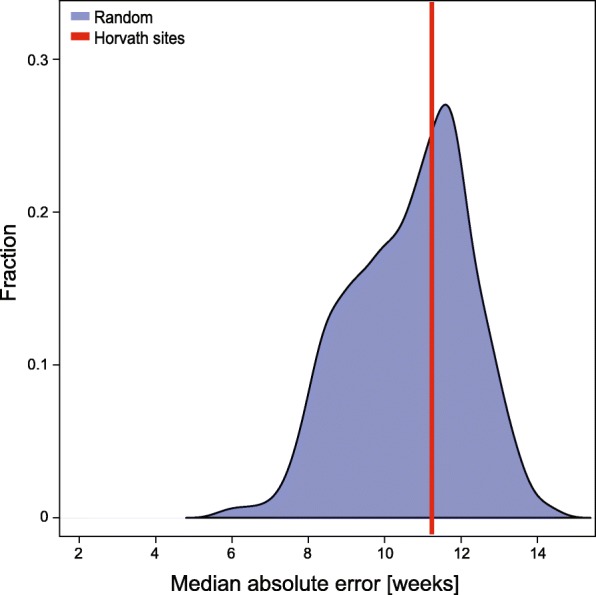
“A few years after the development of Horvath’s human epigenetic clock, a multi-tissue epigenetic age predictor in mice was published containing 329 age-associated CpG-sites [13] different from the ones selected by Horvath.”
BackgroundMethodResultInfluentialBaribault, C., Ehrlich, K. C., Ponnaluri, V. K. C., Pradhan, S., Lacey, M. R., & Ehrlich, M. (2018) · Epigenetics · doi:10.1080/15592294.2018.1445900 · Cited by 46
“We noticed that the RRBS profiles of SkM often displayed lower DNA methylation at Mb DM sites compared to BS-seq profiles of SkM from the same sites, which is probably attributable to the effects of aging on DNA methylation [79].”
BackgroundReversing age: dual species measurement of epigenetic age with a single clock
Horvath, S., Singh, K., Raj, K., Khairnar, S., Sanghavi, A., Shrivastava, A., Zoller, J. A., Li, C. Z., Herenu, C. B., Canatelli-Mallat, M., et al. (2020) · bioRxiv (Cold Spring Harbor Laboratory) · doi:10.1101/2020.05.07.082917 · Cited by 41
Hanson, B. M., Tao, X., Zhan, Y., Jenkins, T. G., Morin, S. J., Scott, R. T. W., & Seli, E. U. (2020) · Human Reproduction · doi:10.1093/humrep/deaa206 · Cited by 45
Zhang, Z., Wang, H., Wang, Y., Xi, F., Wang, H., Kohnen, M. V., Gao, P., Wei, W., Chen, K., Liu, X., et al. (2021) · The Plant Journal · doi:10.1111/tpj.15174 · Cited by 46
“For instance, a study in mice revealed that age could be predicted with an absolute error of 3.33 weeks based on 329 CG sites (Stubbs et al., 2017).”
BackgroundInfluentialTargeted methods for epigenetic age predictions in mice
Han, Y., Nikolić, M., Gobs, M., Franzen, J., de Haan, G., Geiger, H., & Wagner, W. (2020) · Scientific Reports · doi:10.1038/s41598-020-79509-2 · Cited by 42
DNA methylation drives a new path in gastric cancer early detection: Current impact and prospects
Wang, X., Dong, Y., Zhang, H., Zhao, Y., Miao, T., Mohseni, G., Du, L., & Wang, C. (2023) · Genes & Diseases · doi:10.1016/j.gendis.2023.02.038 · Cited by 47
Biological clocks as age estimation markers in animals: a systematic review and meta‐analysis
Clercq, L. L., Kotzé, A., Grobler, J. P., & Dalton, D. L. (2023) · Biological reviews/Biological reviews of the Cambridge Philosophical Society · doi:10.1111/brv.12992 · Cited by 44
Zha, A., Qi, M., Deng, Y., Li, H., Wang, N., Wang, C., Liao, S., Wan, D., Xiong, X., Liao, P., et al. (2024) · iMeta · doi:10.1002/imt2.261 · Cited by 42
DNA Methylation, Aging, and Cancer Risk: A Mini-Review
Chen, L., Ganz, P. A., & Sehl, M. E. (2022) · Frontiers in Bioinformatics · doi:10.3389/fbinf.2022.847629 · Cited by 44
LncRNAs regulating stemness in aging
Sousa‐Franco, A., Rebelo, K., da Rocha, S. T., & de Jesus, B. B. (2018) · Aging Cell · doi:10.1111/acel.12870 · Cited by 43
Epigenetic Clock: Just a Convenient Marker or an Active Driver of Aging?
Ashapkin, V. V., Kutueva, L. I., & Vanyushin, B. F. (2019) · Advances in experimental medicine and biology · doi:10.1007/978-3-030-25650-0_10 · Cited by 42
The Gene-Regulatory Footprint of Aging Highlights Conserved Central Regulators
Sleiman, M. S. B., Jha, P., Houtkooper, R. H., Williams, R. W., Wang, X., & Auwerx, J. H. (2020) · Cell Reports · doi:10.1016/j.celrep.2020.108203 · Cited by 41
Male-specific age estimation based on Y-chromosomal DNA methylation
Vidaki, A., González, D. M., Jiménez, B. P., & Kayser, M. (2021) · Aging · doi:10.18632/aging.202775 · Cited by 44
“chimpanzees [8] and mice [9], as well as utilizing multiple statistical approaches [10] and targeted laboratory methods, e.”
MethodThe use of DNA methylation clock in aging research
He, X., Liu, J., Liu, B., & Shi, J. (2020) · Experimental Biology and Medicine · doi:10.1177/1535370220968802 · Cited by 42
Variably methylated retrotransposons are refractory to a range of environmental perturbations
Bertozzi, T. M., Becker, J. L., Blake, G. E. T., Bansal, A., Nguyen, D. K., Fernandez‐Twinn, D. S., Ozanne, S. E., Bartolomei, M. S., Simmons, R. A., Watson, E. D., et al. (2021) · Nature Genetics · doi:10.1038/s41588-021-00898-9 · Cited by 41
Emerging Omics Approaches in Aging Research
Lorusso, J. S., Sviderskiy, O., & Labunskyy, V. M. (2018) · Antioxidants and Redox Signaling · doi:10.1089/ars.2017.7163 · Cited by 41
“Importantly, the mouse DNA methylation clocks can robustly predict modulation of lifespan by different dietary and genetic interventions, for example, DR, rapamycin and gene knockouts known to extend lifespan (147, 180) as well as high fat diet and ovariectomy leading to shortened lifespan (166).”
BackgroundAnalysis of DNA modifications in aging research
Masser, D. R., Hadad, N., Porter, H. L., Stout, M. B., Unnikrishnan, A., Stanford, D. R., & Freeman, W. M. (2018) · GeroScience · doi:10.1007/s11357-018-0005-3 · Cited by 43
Sandoval‐Sierra, J. V., Helbing, A. H. B., Williams, E. G., Ashbrook, D. G., Roy, S., Williams, R. W., & Mozhui, K. (2020) · Aging Cell · doi:10.1111/acel.13207 · Cited by 37
“National Institute on Aging, Grant/Award Number: R01AG043930 and R21AG055841 K E Y W O R D S age acceleration, DNA methylation clock, life span, longevity et al., 2018; Petkovich et al., 2017; Stubbs et al., 2017; Thompson et al., 2018; Wang et al., 2017).”
BackgroundMethodInfluentialErosion of the Epigenetic Landscape and Loss of Cellular Identity as a Cause of Aging in Mammals
Yang, J.-H., Griffin, P. T., Vera, D. L., Apostolides, J. K., Hayano, M., Meer, M. V., Salfati, E. L., Su, Q., Munding, E. M., Blanchette, M., et al. (2019) · doi:10.1101/808642 · Cited by 38
“Site-specific DNA methylation changes also occur over time, forming the basis of "epigenetic clocks" (Hannum et al., 2013; Horvath, 2013; Meer et al., 2018; Petkovich et al., 2017; Stubbs et al., 2017; Wang et al., 2017).”
BackgroundAging and nutrition induce tissue-specific changes on global DNA methylation status in rats
Guarasci, F., D’Aquila, P., Mandalà, M., Garasto, S., Lattanzio, F., Corsonello, A., Passarino, G., & Bellizzi, D. (2018) · Mechanisms of Ageing and Development · doi:10.1016/j.mad.2018.02.001 · Cited by 40
DNA Methylation as a Biomarker of Aging in Epidemiologic Studies
Lim, U., & Song, M. (2018) · Methods in molecular biology · doi:10.1007/978-1-4939-8751-1_12 · Cited by 43
RETRACTED: Age prediction of green turtles with an epigenetic clock
Mayne, B. T., Mustin, W., Baboolal, V., Casella, F., Ballorain, K., Barret, M., Vanderklift, M. A., Tucker, A. D., Korbie, D. J., Jarman, S., et al. (2022) · Molecular Ecology Resources · doi:10.1111/1755-0998.13621 · Cited by 37
RetractedYu, T., Slone, J. D., Liu, W., Barnes, R. P., Opresko, P. L., Wark, L., Mai, S., Horvath, S., & Huang, T. (2022) · Aging Cell · doi:10.1111/acel.13669 · Cited by 39
“To test whether the Polgmut/mut mutation also effects the epigenetic age of these mice, the DNA methylation age of blood samples from Polgmut/mut mice were analyzed using established methods in mice (Coninx et al., 2020; Stubbs et al., 2017).”
BackgroundMethodEpigenetic clock and methylation studies in vervet monkeys
Jasinska, A. J., Haghani, A., Zoller, J. A., Li, C. Z., Arneson, A., Ernst, J., Kavanagh, K., Jorgensen, M. J., Mattison, J. A., Wojta, K. J., et al. (2021) · GeroScience · doi:10.1007/s11357-021-00466-3 · Cited by 36
“This instigated development of similar clocks for mammals such as mice (Petkovich et al. 2017; Cole et al. 2017; Wang et al. 2017; Stubbs et al. 2017; Thompson et al. 2018; Meer et al. 2018).”
BackgroundDNA methylation‐based biomarkers for ageing long‐lived cetaceans
Parsons, K. M., Haghani, A., Zoller, J. A., Lu, A. T.-H., Fei, Z., Ferguson, S. H., Garde, E., Hanson, M. B., Emmons, C. K., Matkin, C. O., et al. (2023) · Molecular Ecology Resources · doi:10.1111/1755-0998.13791 · Cited by 41
The evolution of CpG density and lifespan in conserved primate and mammalian promoters
McLain, A. T., & Faulk, C. D. (2018) · Aging · doi:10.18632/aging.101413 · Cited by 37
The many lives of Myc in the pancreatic β-cell
Rosselot, C., Baumel-Alterzon, S., Li, Y., Brill, G., Lambertini, L., Katz, L. S., Lu, G., García-Ocaña, A., & Scott, D. K. (2020) · Journal of Biological Chemistry · doi:10.1074/jbc.rev120.011149 · Cited by 37
Local CpG density affects the trajectory and variance of age-associated DNA methylation changes
Higham, J., Kerr, L., Zhang, Q., Walker, R. M., Harris, S. E., Howard, D. M., Hawkins, E. L., Sandu, A., Steele, J. D., Waiter, G. D., et al. (2022) · Genome biology · doi:10.1186/s13059-022-02787-8 · Cited by 34
Genetic cartography of longevity in humans and mice: Current landscape and horizons
Hook, M., Roy, S., Williams, E. G., Sleiman, M. S. B., Mozhui, K., Nelson, J. F., Lu, L., Auwerx, J. H., & Williams, R. W. (2018) · Biochimica et Biophysica Acta (BBA) - Molecular Basis of Disease · doi:10.1016/j.bbadis.2018.01.026 · Cited by 38
Development of DNA methylation‐based epigenetic age predictors in loblolly pine ( Pinus taeda )
Gardner, S. T., Bertucci, E. M., Sutton, R., Horcher, A., Aubrey, D. P., & Parrott, B. B. (2022) · Molecular Ecology Resources · doi:10.1111/1755-0998.13698 · Cited by 33
Aging mechanisms—A perspective mostly from Drosophila
Tsurumi, A., & Li, W. X. (2020) · Advanced Genetics · doi:10.1002/ggn2.10026 · Cited by 39
Epigenetic models developed for plains zebras predict age in domestic horses and endangered equids
Larison, B., de Pinho, G. M., Haghani, A., Zoller, J. A., Li, C. Z., Finno, C. J., Farrell, C. P., Kaelin, C. B., Barsh, G. S., Wooding, B., et al. (2021) · Communications Biology · doi:10.1038/s42003-021-02935-z · Cited by 35
Zhao, B., van Bodegom, P. M., & Trimbos, K. B. (2022) · Molecular Ecology Resources · doi:10.1111/1755-0998.13691 · Cited by 33
pyaging : a Python-based compendium of GPU-optimized aging clocks
Camillo, L. P. D. L. (2024) · Bioinformatics · doi:10.1093/bioinformatics/btae200 · Cited by 34
Early-life DNA methylation profiles are indicative of age-related transcriptome changes
Hadad, N., Masser, D. R., Blanco-Berdugo, L., Stanford, D. R., & Freeman, W. M. (2019) · Epigenetics & Chromatin · doi:10.1186/s13072-019-0306-5 · Cited by 32
“DNA methylation has been widely studied in geroscience research as methylation at specific loci tracks with chronological aging [19-22] and can potentially be an indicator of ‘biological’ aging [23,24].”
BackgroundTransposable element 5mC methylation state of blood cells predicts age and disease
Morandini, F., Lu, J. Y., Rechsteiner, C., Shadyab, A. H., Casanova, R., Snively, B. M., Seluanov, A., & Gorbunova, V. A. (2024) · Nature Aging · doi:10.1038/s43587-024-00757-2 · Cited by 34
Fairfield, E. A., Richardson, D. S., Daniels, C. L., Butler, C. L., Bell, E., & Taylor, M. I. (2021) · Evolutionary Applications · doi:10.1111/eva.13296 · Cited by 32
“…melanogaster: Lyko et al., 2000), whereas other invertebrates have intermediate levels of DNA methylation (e.g. Ciona F I G U R E 4 Predicted European lobster age using the 46 locus Elastic Net model in males and females of the 25- and 51- month cohorts intestinalis: Suzuki et al., 2007).”
MethodAging: therapeutics for a healthy future
Hodgson, R. A., Kennedy, B. K., Masliah, E., Scearce-Levie, K. A., Tate, B. A., Venkateswaran, A., & Braithwaite, S. P. (2019) · Neuroscience & Biobehavioral Reviews · doi:10.1016/j.neubiorev.2019.11.021 · Cited by 32
Genome-wide DNA methylation predicts environmentally driven life history variation in a marine fish
Venney, C. J., Cayuela, H., Rougeux, C., Laporte, M., Mérot, C., Normandeau, É., Leitwein, M., Dorant, Y., Præbel, K., Kenchington, E., et al. (2022) · Evolution · doi:10.1093/evolut/qpac028 · Cited by 31
Nwanaji‐Enwerem, J. C., Weisskopf, M. G., & Baccarelli, A. (2018) · Ageing Research Reviews · doi:10.1016/j.arr.2018.04.005 · Cited by 31
Translational geroscience: From invertebrate models to companion animal and human interventions
Lee, M. B., & Kaeberlein, M. R. (2018) · Translational Medicine of Aging · doi:10.1016/j.tma.2018.08.002 · Cited by 36
Exposure to ionizing radiation disrupts normal epigenetic aging in Japanese medaka
Bertucci, E. M., Mason, M. W., Rhodes, O. E., & Parrott, B. B. (2021) · Aging · doi:10.18632/aging.203624 · Cited by 30
“Similar to findings in other species [10, 15], age-associated changes appear to be widespread with age-associated cytosines (n = 207) present on all 24 chromosomes (Figure 1C).”
An Epigenetic Aging Clock for Cattle Using Portable Sequencing Technology
Hayes, B. J., Nguyen, L. T., Forutan, M., Engle, B. N., Lamb, H. J., Copley, J. P., Randhawa, I. A. S., & Ross, E. M. (2021) · Frontiers in Genetics · doi:10.3389/fgene.2021.760450 · Cited by 30
“The mean absolute deviation (MAD) of predicted age using linear regression models are species and sample size dependent, and likely related to the species lifespan (Yi et al., 2014; ZbiećPiekarska et al., 2015; Stubbs et al., 2017; Li et al., 2018).”
MethodAge estimation based on blood DNA methylation levels in brown bears
Nakamura, S., Yamazaki, J., Matsumoto, N., Inoue‐Murayama, M., Qi, H., Yamanaka, M., Nakanishi, M., Yanagawa, Y., Sashika, M., Tsubota, T., et al. (2023) · Molecular Ecology Resources · doi:10.1111/1755-0998.13788 · Cited by 28
“Subsequently, similar techniques have been established for laboratory animals such as mice (Wang et al., 2017; Petkovich et al., 2017; Stubbs et al., 2017) and naked mole rats ( Heterocephalus glaber ; Lowe et al. 2020), companion animals such as dogs and cats (Thompson et al. 2017; Qi et al. 2021;…”
MethodZipple, M. N., Vogt, C. C., & Sheehan, M. J. (2023) · Neuroscience & Biobehavioral Reviews · doi:10.1016/j.neubiorev.2023.105238 · Cited by 29
Lung transcriptomic clock predicts premature aging in cigarette smoke-exposed mice
Choukrallah, M.-A., Hoeng, J., Peitsch, M. C., & Martin, F. (2020) · BMC Genomics · doi:10.1186/s12864-020-6712-z · Cited by 27
Fan, Y., Vilgalys, T. P., Sun, S., Peng, Q., Tung, J., & Zhou, X. (2019) · Genome biology · doi:10.1186/s13059-019-1813-1 · Cited by 27
“Further, unlike arrays, which are largely limited to studies in humans, sequencing-based approaches can be applied to any species [45-48].”
BackgroundEstimage: a webserver hub for the computation of methylation age
Lena, P. D., Sala, C., & Nardini, C. (2021) · Nucleic Acids Research · doi:10.1093/nar/gkab426 · Cited by 27
“blupred Tissues; D014024 lifespan HM450, HMEPIC (13)”
Greve, S., Kuhn, G. A., Saenz-de-Juano, M. D., Ghosh, A., von Meyenn, F., & Giller, K. (2022) · Scientific Reports · doi:10.1038/s41598-022-17195-y · Cited by 27
A Review of the Epigenetic Clock: Emerging Biomarkers for Asthma and Allergic Disease
Daley, D., Vasileva, D., & Greenwood, C. M. T. (2023) · Genes · doi:10.3390/genes14091724 · Cited by 28
“Animal studies have shown that [129] castration (i.e., loss of testosterone) slows epigenetic age acceleration while loss of estrogen accelerates it [131].”
BackgroundMammalMethylClock R package: software for DNA methylation-based epigenetic clocks in mammals
Zoller, J. A., & Horvath, S. (2024) · Bioinformatics · doi:10.1093/bioinformatics/btae280 · Cited by 27
“This was followed by the advent of mouse DNA methylation clocks, developed using different sequencing-based approaches (Cole et al. 2017, Petkovich et al. 2017, Stubbs et al. 2017).”
MethodscEpiAge: an age predictor highlighting single-cell ageing heterogeneity in mouse blood
Bonder, M. J., Clark, S. J., Krueger, F., Luo, S., de Sousa, J. A., Hashtroud, A. M., Stubbs, T. M., Stark, A., Rulands, S., Stegle, O., et al. (2024) · Nature Communications · doi:10.1038/s41467-024-51833-5 · Cited by 27
“RRBS and WGBS datasets were processed as described previously 5,57 , aligning reads to the bisul fi te-converted GRCm38 mouse genome using Bismark v0.”
InfluentialSelf-citationRETRACTED: Impaired lipid metabolism by age-dependent DNA methylation alterations accelerates aging
Li, X., Wang, J., Wang, L., Feng, G., Li, G., Yu, M., Li, Y., Liu, C., Yuan, X., Zang, G., et al. (2020) · Proceedings of the National Academy of Sciences · doi:10.1073/pnas.1919403117 · Cited by 28
RetractedZupkovitz, G., Kabiljo, J., Kothmayer, M., Schlick, K., Schöfer, C., Lagger, S., & Pusch, O. (2021) · Frontiers in Molecular Biosciences · doi:10.3389/fmolb.2021.627143 · Cited by 27
“, 2014) they have since been replicated in mice (Petkovich et al., 2017; Stubbs et al., 2017; Wang et al., 2017) and to some degree in dogs, wolves (Thompson et al.”
BackgroundDNA methylation clocks for clawed frogs reveal evolutionary conservation of epigenetic aging
Zoller, J. A., Parasyraki, E., Lu, A. T.-H., Haghani, A., Niehrs, C., & Horvath, S. (2023) · GeroScience · doi:10.1007/s11357-023-00840-3 · Cited by 26
Impact of DNA methylation programming on normal and pre-leukemic hematopoiesis
Langstein, J., Milsom, M. D., & Lipka, D. B. (2017) · Seminars in Cancer Biology · doi:10.1016/j.semcancer.2017.09.008 · Cited by 26
Social Environment and Epigenetics
Merrill, S. M., Gladish, N., & Kobor, M. S. (2019) · Current topics in behavioral neurosciences · doi:10.1007/7854_2019_114 · Cited by 25
Bertucci, E. M., Shealy, E. P., & Parrott, B. B. (2024) · Aging · doi:10.18632/aging.205503 · Cited by 28
“Over the last decade, dozens of epigenetic clocks have been developed for a range of taxonomic groups including humans [6], rodents [7], fish [8], birds [9], and trees [10].”
BackgroundMethodResultInfluentialGujar, H., Liang, J. W., Wong, N. C., & Mozhui, K. (2018) · PLoS ONE · doi:10.1371/journal.pone.0193496 · Cited by 25
“the Illumina BeadChips, a similar effort in mice required a more extensive sequencing of 63 the mouse methylome [15].”
MethodTargeting Epigenetic Mechanisms in Vascular Aging
Lin, Z., Ding, Q., Li, X., Feng, Y., He, H., Huang, C., & Zhu, Y. Z. (2022) · Frontiers in Cardiovascular Medicine · doi:10.3389/fcvm.2021.806988 · Cited by 24
“In each of these scenarios, epigenetic changes have been reported to play important roles in these processes (6).”
BackgroundPerez-Correa, J.-F., Tharmapalan, V., Geiger, H., & Wagner, W. (2022) · Frontiers in Cell and Developmental Biology · doi:10.3389/fcell.2022.902857 · Cited by 23
“We did not observe a significant effect of gender on our pyrosequencing based epigenetic clock in B6 mice, which is in line with previous studies (Stubbs et al., 2017; Han et al., 2018).”
MethodResultG-quadruplexes Mark Sites of Methylation Instability Associated with Ageing and Cancer
Rauchhaus, J., Robinson, J., Monti, L., & Antonio, M. D. (2022) · Genes · doi:10.3390/genes13091665 · Cited by 26
“The same analysis of enrichment was thus conducted using murine G4-seq data [8] and coordinates from three murine chronological ageing clocks published by Stubbs [22], Petkovich [24], and Meer et al. [23].”
BackgroundMethodInfluentialImpact of Environmental and Epigenetic Changes on Mesenchymal Stem Cells during Aging
Smith, N., Shirazi, S., Cakouros, D., & Gronthos, S. (2023) · International Journal of Molecular Sciences · doi:10.3390/ijms24076499 · Cited by 26
No Time to Age: Uncoupling Aging from Chronological Time
Larocca, D., Lee, J., West, M. D., Labat, I., & Sternberg, H. (2021) · Genes · doi:10.3390/genes12050611 · Cited by 25
“Many other DNAm clocks have been developed since the initial multi-tissue clock, including a clock for mouse tissues [59] as well as for cells in culture [60].”
BackgroundFennell, L., Kane, A. M., Liu, C., McKeone, D., Härtel, G., Su, C., Bond, C., Bettington, M. L., Leggett, B., & Whitehall, V. (2021) · Gut · doi:10.1136/gutjnl-2020-322166 · Cited by 22
Elixir of Life: Thwarting Aging With Regenerative Reprogramming
Beyret, E., Martínez‐Redondo, P., Platero-Luengo, A., & Belmonte, J. C. I. (2018) · Circulation Research · doi:10.1161/circresaha.117.311866 · Cited by 23
Qi, H., Kinoshita, K., Mori, T., Matsumoto, K., Matsui, Y., & Inoue‐Murayama, M. (2021) · Scientific Reports · doi:10.1038/s41598-021-99424-4 · Cited by 22
CancerClock: A DNA Methylation Age Predictor to Identify and Characterize Aging Clock in Pan-Cancer
Zhu, T., Gao, Y., Wang, J., Li, X., Shang, S., Wang, Y., Guo, S., Zhou, H., Liu, H., Sun, D., et al. (2019) · Frontiers in Bioengineering and Biotechnology · doi:10.3389/fbioe.2019.00388 · Cited by 21
“Identification of Age-Associated Methylation Sites To identify age-associated methylation sites, Spearman correlation coefficients (SCCs) were calculated based on age and methylation levels based on all the normal samples (Stubbs et al., 2017).”
BackgroundMethodEpigenetic changes occur at decidualisation genes as a function of reproductive ageing in mice
Woods, L. M., Morgan, N. P., Zhao, X., Dean, W., Pérez-García, V., & Hemberger, M. (2020) · Development · doi:10.1242/dev.185629 · Cited by 21
Is CpG Density the Link between Epigenetic Aging and Lifespan?
Bertucci, E. M., & Parrott, B. B. (2020) · Trends in Genetics · doi:10.1016/j.tig.2020.06.003 · Cited by 23
Contextual modifiers of healthspan, lifespan, and epigenome in mice under chronic social stress
Razzoli, M., Nyuyki, K. D., Chen, B. H., & Bartolomucci, A. (2023) · Proceedings of the National Academy of Sciences · doi:10.1073/pnas.2211755120 · Cited by 22
Weng, M., Hu, H., Graus, M. S., Tan, D. S., Gao, Y., Ren, S., Ho, D. H. H., Langer, J., Holzner, M., Huang, Y., et al. (2023) · Science Advances · doi:10.1126/sciadv.adh2501 · Cited by 21
DNA methylation age is not affected in psoriatic skin tissue
Shen, C., Wen, L., Ko, R., Gao, J., Shen, X., Zuo, X., Sun, L., Hsu, Y., Zhang, X., Cui, Y., et al. (2018) · Clinical Epigenetics · doi:10.1186/s13148-018-0584-y · Cited by 20
“These DNAm clocks have been proven competent in predicting age in various cell/tissue types with reasonable accuracy [18, 22, 23].”
Harris, C. J., Davis, B. A., Zweig, J. A., Nevonen, K. A., Quinn, J. F., Carbone, L., & Gray, N. E. (2020) · Frontiers in Genetics · doi:10.3389/fgene.2020.00111 · Cited by 20
IMPLICON: an ultra-deep sequencing method to uncover DNA methylation at imprinted regions
Klobučar, T., Kreibich, E., Krueger, F., Arez, M., Pólvora-Brandão, D., von Meyenn, F., da Rocha, S. T., & Eckersley-Maslin, M. A. (2020) · Nucleic Acids Research · doi:10.1093/nar/gkaa567 · Cited by 20
“Inbred mouse genomic DNA samples were obtained from the Babraham Institute C57BL/6 (BL6) J/Babr Ageing Mouse Colony as previously described (35).”
MethodSelf-citationDesigning Epigenetic Clocks for Wildlife Research
Newediuk, L., Richardson, E. S., Bohart, A. M., Roberto‐Charron, A., Garroway, C. J., & Jones, M. J. (2025) · Molecular Ecology Resources · doi:10.1111/1755-0998.14120 · Cited by 20
“To prevent these differences from impacting accuracy, clocks designed for humans and model organisms often exclude markers present on the sex chromosomes (Hannum et al. 2013; Stubbs et al. 2017).”
Lin28a maintains a subset of adult muscle stem cells in an embryonic-like state
Wang, P., Liu, X., Jun‐Hao, E. T., Min‐Wen, J. C., Chua, Y. B., Luo, L., Ma, S., Cao, W., Ma, W., Yao, Z., et al. (2023) · Cell Research · doi:10.1038/s41422-023-00818-y · Cited by 19
Biological Embedding of Psychosocial Stress Over the Life Course
Eachus, H., & Cunliffe, V. T. (2017) · Elsevier eBooks · doi:10.1016/b978-0-12-811060-7.00012-7 · Cited by 22
Metadata
- Authors
- BI Ageing Clock Team, Stubbs, T. M., Bonder, M. J., Stark, A.-K., Krueger, F., von Meyenn, F., Stegle, O., & Reik, W.
- Affiliations
- Babraham Institute (GB)
- European Bioinformatics Institute (GB)
- Corresponding author
- Stegle, Oliver
- Reik, Wolf
- Venue
- Genome Biology
- Published
- 2017-04-11
- Volume
- 18
- Issue
- 1
- Pages
- 68-68
- ISSN
- 1465-6906 (ISSN-L)
- 1474-760X
- PMC
- PMC5389178
- OpenAlex
- W2606865793
- Semantic Scholar
- 91aad3a56e1b5fb5b641b31e7e801948d5b267af
- Cited by
- 384
- References
- 43
- Citations by year
- 2026: 17 · 2025: 29 · 2024: 35 · 2023: 48 · 2022: 39 · 2021: 71 · 2020: 41 · 2019: 38 · 2018: 49 · 2017: 15
- FWCI
- 15.96
- Type
- journal article
- Language
- en
- Open access
- gold
- doi.org
- Licence
- cc-by
- Locations
- Genome biology (publishedVersion, cc-by)
- bioRxiv (Cold Spring Harbor Laboratory) (acceptedVersion, cc-by-nc)
- PubMed Central (publishedVersion, cc-by)
- PubMed (publishedVersion)
- University of Groningen research database (University of Groningen / Centre for Information Technology) (publishedVersion, cc-by)
- Minerva Access (University of Melbourne) (submittedVersion, cc-by)
- DOAJ (DOAJ: Directory of Open Access Journals) (submittedVersion, cc-by-sa)
- Research Portal (King's College London) (submittedVersion, cc-by)
- Edinburgh Research Explorer (University of Edinburgh) (submittedVersion, cc-by)
- Apollo (University of Cambridge) (submittedVersion, cc-by)
- Repository for Publications and Research Data (ETH Zurich) (submittedVersion, cc-by)
- Apollo (cc-by)
- ETH Zürich Research Collection (cc-by)
- Funders
- Biotechnology and Biological Sciences Research Council (BB/K010867/1, DTP studentship)
- Wellcome Trust (095645/Z/11/Z)
- EU BLUEPRINT
- EpiGeneSys
- Schweizerischer Nationalfonds zur Förderung der Wissenschaftlichen Forschung
- Topics
- Life Sciences › Biochemistry, Genetics and Molecular Biology › Molecular Biology › Epigenetics and DNA Methylation
- Life Sciences › Biochemistry, Genetics and Molecular Biology › Aging › Genetics, Aging, and Longevity in Model Organisms
- Life Sciences › Biochemistry, Genetics and Molecular Biology › Cell Biology › Telomeres, Telomerase, and Senescence
- Keywords
- DNA methylation, epigenetic clocks, biological age, CpG sites, aging, ovariectomy, accelerated aging, dietary lipid level, sex differences, epigenetic reprogramming
- MeSH terms
- Aging, Animals, Female, Humans, Male, Organ Specificity, Cluster Analysis, CpG Islands, DNA Methylation, Gene Expression Profiling, Epigenesis, Genetic, Mice, Epigenomics
About these checks
Registry, retraction, Cites and statistics results are computed, not judged, with one exception: a printed reference that no index lists is read once by a model before it counts as a citation error. Claims are extracted by a model and kept only when their quote appears verbatim in the text; each cited source is then checked, with a model’s help, for whether it says what the claim relies on. Those verdicts can be wrong — read the claim’s quote and the cited source before relying on one.
Statistics and arithmetic are recomputed, not judged.
Confidence bands are shown only for fields calibrated on our annotated test set. None is calibrated yet, so no band is shown.
What counts as a claim ›How we measure confidence ›How we check this ›
Are you an author, or do you see a problem with this page? Request a review
Data sources
Bibliographic data: Semantic Scholar, OpenAlex, Crossref.
Contains information from the Semantic Scholar Academic Graph Datasets, made available under the ODC Attribution License (ODC-BY 1.0).
Semantic Scholar’s data is described in: Kinney, R., et al. (2023). The Semantic Scholar Open Data Platform. arXiv:2301.10140.
