

Multi-tissue DNA methylation age predictor in mouse
Open accessPublished version of a preprint
The DOI matches its Crossref record; 43 of the 43 references it cites were found in a registry or an index.
Abstract
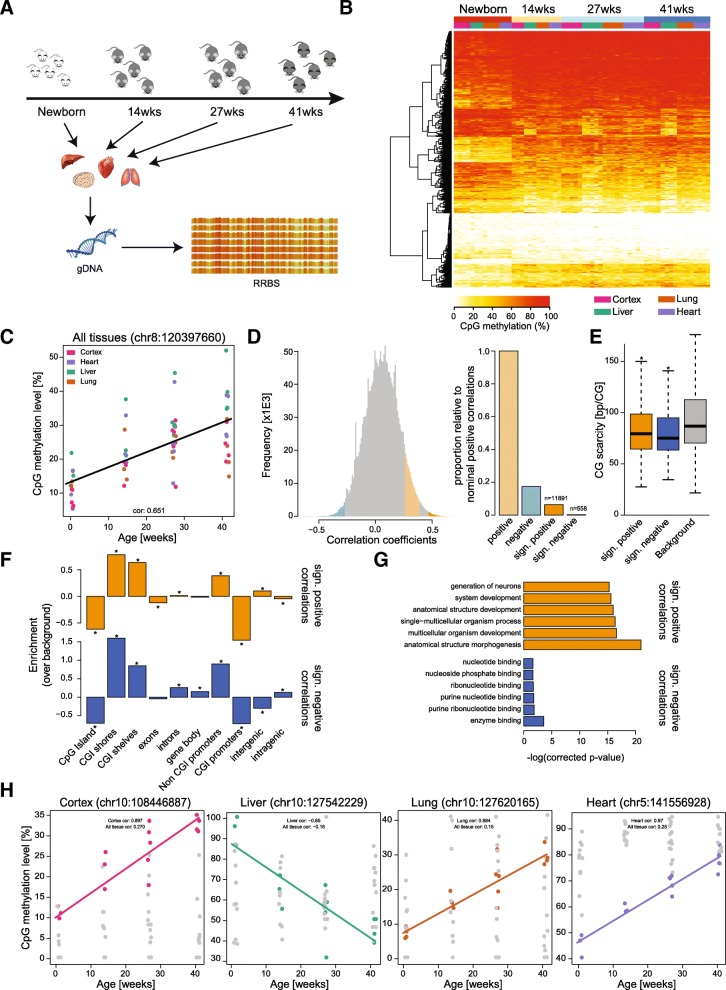
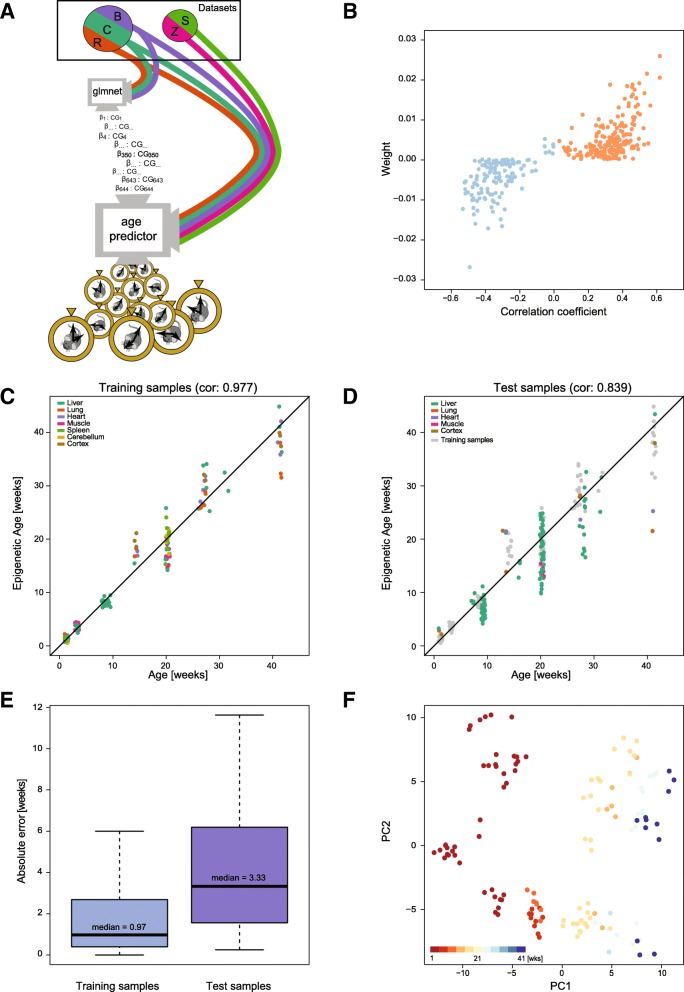
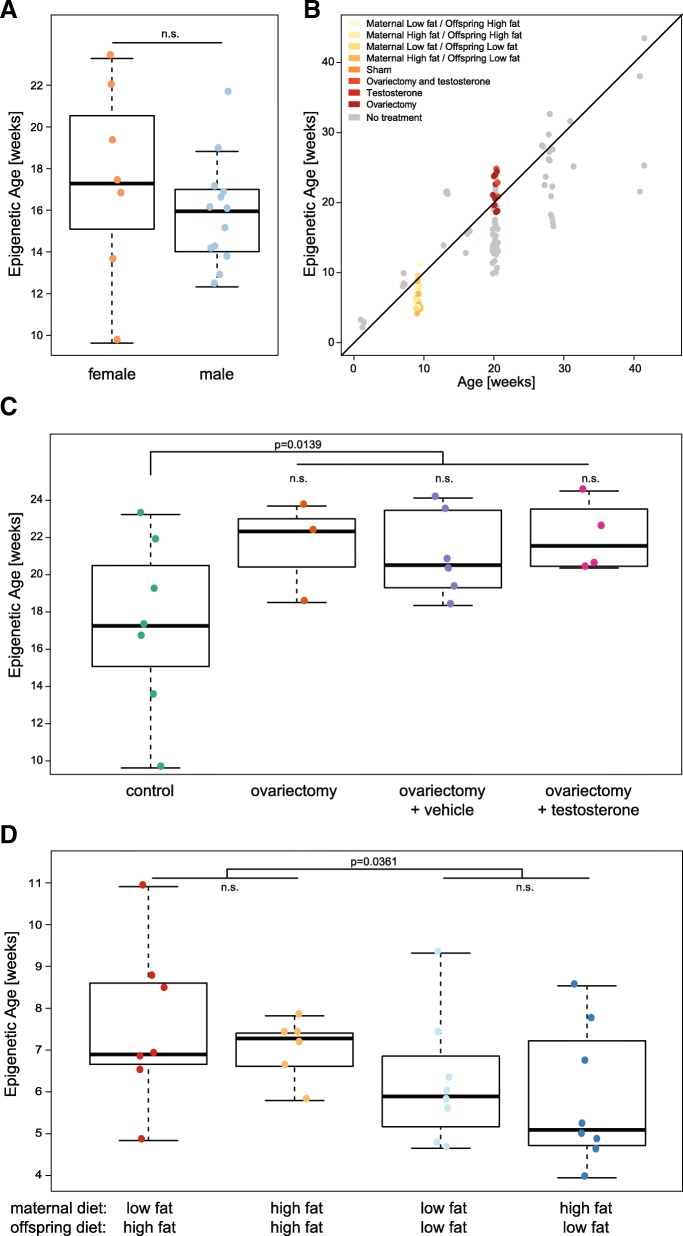
BACKGROUND: DNA methylation changes at a discrete set of sites in the human genome are predictive of chronological and biological age. However, it is not known whether these changes are causative or a consequence of an underlying ageing process. It has also not been shown whether this epigenetic clock is unique to humans or conserved in the more experimentally tractable mouse. RESULTS: We have generated a comprehensive set of genome-scale base-resolution methylation maps from multiple mouse tissues spanning a wide range of ages. Many CpG sites show significant tissue-independent correlations with age which allowed us to develop a multi-tissue predictor of age in the mouse. Our model, which estimates age based on DNA methylation at 329 unique CpG sites, has a median absolute error of 3.33 weeks and has similar properties to the recently described human epigenetic clock. Using publicly available datasets, we find that the mouse clock is accurate enough to measure effects on biological age, including in the context of interventions. While females and males show no significant differences in predicted DNA methylation age, ovariectomy results in significant age acceleration in females. Furthermore, we identify significant differences in age-acceleration dependent on the lipid content of the diet. CONCLUSIONS: Here we identify and characterise an epigenetic predictor of age in mice, the mouse epigenetic clock. This clock will be instrumental for understanding the biology of ageing and will allow modulation of its ticking rate and resetting the clock in vivo to study the impact on biological age.
Overview
The claims and statistics of this paper haven’t been checked yet.
Free: it reads the open-access text and checks the first 5 claims that cite a source we can check. Create a free account to check every claim.
Integrity signals
Registry
Cites
Statistics
Figures
Verification
Claims the paper makes
The claims and statistics of this paper haven’t been checked yet.
Free: it reads the open-access text and checks the first 5 claims that cite a source we can check. Create a free account to check every claim.
Claims other papers make about this one
Each is checked against this paper’s own text: does it say what the citing paper says it does?
The cited source says what the claim attributes to it.
In the citing paper
“Based on four different mouse clocks, the DNAme age of ICE cells was reversed by up to 57% (Figure 7G) (Meer et al., 2018; Petkovich et al., 2017; Stubbs et al., 2017; Thompson et al., 2018).”
From Loss of epigenetic information as a cause of mammalian aging (2023) · cites this paper as Stubbs et al., 2017
In the citing paper
“In addition, tissues within human and mouse individuals show unique DNA methylation rates.34,25.”
From Asynchronous, contagious and digital aging (2021) · cites this paper as [25]
Self-check
Percentages, sums and reported differences re-computed from the paper’s own numbers.
The self-check needs the paper’s full text.
Citations
Cites
Regularization and Variable Selection Via the Elastic Net
Zou, H., & Hastie, T. (2005) · Journal of the Royal Statistical Society Series B: Statistical Methodology · doi:10.1111/j.1467-9868.2005.00503.x · Cited by 20,957
Regularization Paths for Generalized Linear Models via Coordinate Descent
Friedman, J., Hastie, T., & Tibshirani, R. (2010) · Journal of Statistical Software · doi:10.18637/jss.v033.i01 · Cited by 19,927 · cited 2×
“The model selects the most informative sites but allows for some redundancy to increase robustness and it infers weights for each individual site [33].”
BackgroundMethodLópez-Otín, C., Blasco, M. A., Partridge, L., Serrano, M., & Kroemer, G. (2013) · Cell · doi:10.1016/j.cell.2013.05.039 · Cited by 14,982
pROC: an open-source package for R and S+ to analyze and compare ROC curves
Robin, X., Turck, N., Hainard, A., Tiberti, N., Lisacek, F., Sanchez, J.-C., & Müller, M. (2011) · BMC Bioinformatics · doi:10.1186/1471-2105-12-77 · Cited by 13,697 · cited 1×
“To do so, we used CpG density as a linear predictor using multiple thresholds to predict if a methylation age relation would be significant or not using the AUC function for the pROC library [39].”
MethodDNA methylation age of human tissues and cell types
Horvath, S. (2013) · Genome Biology · doi:10.1186/gb-2013-14-10-r115 · Cited by 7,075 · cited 11×
“our mouse epigenetic clock; similarly in humans, breast tissue is found to have accelerated epigenetic ageing [6].”
BackgroundMethodInfluentialA Direct Approach to False Discovery Rates
Storey, J. D. (2002) · Journal of the Royal Statistical Society Series B: Statistical Methodology · doi:10.1111/1467-9868.00346 · Cited by 5,603 · cited 1×
“Ages in days were used when computing the Spearman correlation for each site using the R implementation of the Spearman correlation and multiple testing correction was performed using the Q-value package [38].”
MethodBismark: a flexible aligner and methylation caller for Bisulfite-Seq applications
Krueger, F., & Andrews, S. R. (2011) · Bioinformatics · doi:10.1093/bioinformatics/btr167 · Cited by 5,297
Self-citationGenome-wide methylation profiles reveal quantitative views of human aging rates
Hannum, G., Guinney, J., Zhao, L., Zhang, L., Hughes, G., Sadda, S., Klotzle, B., Bibikova, M., Fan, J.-B., Gao, Y., et al. (2013) · Molecular Cell · doi:10.1016/j.molcel.2012.10.016 · Cited by 4,270
Global epigenomic reconfiguration during mammalian brain development
Lister, R., Mukamel, E. A., Nery, J. R., Urich, M., Puddifoot, C. A., Johnson, N. D., Lucero, J., Huang, Y., Dwork, A. J., Schultz, M. D., et al. (2013) · Science · doi:10.1126/science.1237905 · Cited by 1,830 · cited 1×
“In agreement with the notion that de novo methylation activity in non-dividing cells results in accumulation of CHH methylation, we found that adult cortex samples had higher CHH methylation levels than newborn cortex samples [27].”
Backgroundg:Profiler—a web-based toolset for functional profiling of gene lists from large-scale experiments
Reimand, J., Kull, M., Peterson, H., Hansen, J., & Vilo, J. (2007) · Nucleic Acids Research · doi:10.1093/nar/gkm226 · Cited by 1,545 · cited 1×
“using the gprofiler online software [40].”
Cited by
DNA methylation-based biomarkers and the epigenetic clock theory of ageing
Horvath, S., & Raj, K. (2018) · Nature Reviews Genetics · doi:10.1038/s41576-018-0004-3 · Cited by 3,095
DNA methylation aging clocks: challenges and recommendations
Bell, C. G., Lowe, R., Adams, P. D., Baccarelli, A. A., Beck, S., Bell, J. T., Christensen, B. C., Gladyshev, V. N., Heijmans, B. T., Horvath, S., et al. (2019) · Genome Biology · doi:10.1186/s13059-019-1824-y · Cited by 1,025
“For example, a multi-tissue clock was accelerated by high-fat diet [196], and the liver clock reported the effects of caloric restriction, dietary rapamycin, and Prop1 dwarfism [199].”
Self-citationDiet and depression: Exploring the biological mechanisms of action
Marx, W., Lane, M., Hockey, M., Aslam, H., Berk, M., Walder, K., Borsini, A., Firth, J., Pariante, C. M., Berding, K., et al. (2021) · Molecular Psychiatry · doi:10.1038/s41380-020-00925-x · Cited by 685
Loss of epigenetic information as a cause of mammalian aging
Yang, J.-H., Hayano, M., Griffin, P. T., Amorim, J. A., Bonkowski, M. S., Apostolides, J. K., Salfati, E. L., Blanchette, M., Munding, E. M., Bhakta, M., et al. (2023) · Cell · doi:10.1016/j.cell.2022.12.027 · Cited by 643
Principles of DNA methylation and their implications for biology and medicine
Dor, Y., & Cedar, H. (2018) · The Lancet · doi:10.1016/s0140-6736(18)31268-6 · Cited by 640
DNA Methylation Clocks in Aging: Categories, Causes, and Consequences
Field, A. E., Robertson, N. A., Wang, T., Havas, A., Ideker, T., & Adams, P. D. (2018) · Molecular Cell · doi:10.1016/j.molcel.2018.08.008 · Cited by 621
Zhang, Q., Vallerga, C. L., Walker, R. M., Lin, T., Henders, A. K., Montgomery, G. W., He, J., Fan, D., Fowdar, J., Kennedy, M., et al. (2019) · Genome Medicine · doi:10.1186/s13073-019-0667-1 · Cited by 487
Single-cell epigenomics: Recording the past and predicting the future
Kelsey, G., Stegle, O., & Reik, W. (2017) · Science · doi:10.1126/science.aan6826 · Cited by 415
Self-citationUniversal DNA methylation age across mammalian tissues
Lu, A. T., Fei, Z., Haghani, A., Robeck, T. R., Zoller, J. A., Li, C. Z., Lowe, R., Yan, Q., Zhang, J., Vu, H., et al. (2023) · Nature Aging · doi:10.1038/s43587-023-00462-6 · Cited by 386
“(6) In the function f(x;m), x denotes RelativeAdultAge, m represents a parameter and f represents the log-linear transformation.”
BackgroundMethodAging Biomarker Consortium, Bao, H., Cao, J., Chen, M., Chen, M., Chen, W., Chen, X., Chen, Y., Chen, Y., Chen, Y., et al. (2023) · Science China Life Sciences · doi:10.1007/s11427-023-2305-0 · Cited by 376
The role of DNA methylation in epigenetics of aging
Unnikrishnan, A., Freeman, W. M., Jackson, J., Wren, J. D., Porter, H., & Richardson, A. (2019) · Pharmacology & Therapeutics · doi:10.1016/j.pharmthera.2018.11.001 · Cited by 366
“The three clocks used the following number of CpG sites: 90 (Petkovich et al., 2017), 329 (Stubbs et al., 2017), and 148 (Wang et al., 2017).”
BackgroundBenayoun, B. A., Pollina, E. A., Singh, P. P., Mahmoudi, S., Harel, I., Casey, K. M., Dulken, B. W., Kundaje, A., & Brunet, A. (2019) · Genome Research · doi:10.1101/gr.240093.118 · Cited by 360
Epigenetic clock: A promising biomarker and practical tool in aging
Duan, R., Fu, Q., Sun, Y., & Li, Q. (2022) · Ageing Research Reviews · doi:10.1016/j.arr.2022.101743 · Cited by 342
DNA Methylation Biomarkers in Aging and Age-Related Diseases
Salameh, Y., Bejaoui, Y., & El Hajj, N. (2020) · Frontiers in Genetics · doi:10.3389/fgene.2020.00171 · Cited by 317
Epigenetic changes during aging and their reprogramming potential
Kane, A. E., & Sinclair, D. A. (2019) · Critical Reviews in Biochemistry and Molecular Biology · doi:10.1080/10409238.2019.1570075 · Cited by 283
“The methylation clock concept has also been recently applied to mice (Cole et al. 2017; Petkovich et al. 2017; Stubbs et al. 2017; Wang et al. 2017) and even dogs and wolves (Thompson et al. 2017).”
BackgroundInfluentialCellular and epigenetic drivers of stem cell ageing
Ermolaeva, M., Neri, F., Ori, A., & Rudolph, K. L. (2018) · Nature Reviews Molecular Cell Biology · doi:10.1038/s41580-018-0020-3 · Cited by 272
The Genetics of Aging: A Vertebrate Perspective
Singh, P. P., Demmitt, B. A., Nath, R. D., & Brunet, A. (2019) · Cell · doi:10.1016/j.cell.2019.02.038 · Cited by 259
“In mice, similar epigenetic clocks have been identified (Stubbs et al., 2017; Thompson et al., 2018).”
BackgroundDNA methylation in mammalian development and disease
Smith, Z. D., Hetzel, S., & Meissner, A. (2025) · Nature Reviews Genetics · doi:10.1038/s41576-024-00760-8 · Cited by 249
“This phenomenon is highly conserved across mammals according to their unique lifespans 225–228 .”
Biological age is increased by stress and restored upon recovery
Poganik, J. R., Zhang, B., Baht, G. S., Tyshkovskiy, A., Deik, A., Kerepesi, C., Yim, S. H., Lu, A. T., Haghani, A., Gong, T., et al. (2023) · Cell Metabolism · doi:10.1016/j.cmet.2023.03.015 · Cited by 246
Hernando-Herraez, I., Evano, B., Stubbs, T., Commere, P.-H., Jan Bonder, M., Clark, S., Andrews, S., Tajbakhsh, S., & Reik, W. (2019) · Nature Communications · doi:10.1038/s41467-019-12293-4 · Cited by 236
Self-citationThe relationship between epigenetic age and the hallmarks of aging in human cells.
Kabacik, S., Lowe, D., Fransen, L., Leonard, M., Ang, S.-L., Whiteman, C., Corsi, S., Cohen, H., Felton, S., Bali, R., et al. (2022) · Nature Aging · doi:10.1038/s43587-022-00220-0 · Cited by 207
Slieker, R. C., Relton, C. L., Gaunt, T. R., Slagboom, P. E., & Heijmans, B. T. (2018) · Epigenetics & Chromatin · doi:10.1186/s13072-018-0191-3 · Cited by 207
“Mouse Liver (15), heart (15), lung (16), cortex (16) 1,230,000 (RRBS) + – – (GO terms) [46]”
A multi-tissue full lifespan epigenetic clock for mice
Thompson, M. J., Chwiałkowska, K., Rubbi, L., Lusis, A. J., Davis, R. C., Srivastava, A., Korstanje, R., Churchill, G. A., Horvath, S., & Pellegrini, M. (2018) · Aging · doi:10.18632/aging.101590 · Cited by 203
Gladyshev, V. N., Kritchevsky, S. B., Clarke, S. G., Cuervo, A. M., Fiehn, O., de Magalhães, J. P., Mau, T., Maes, M., Moritz, R. L., Niedernhofer, L. J., et al. (2021) · Nature Aging · doi:10.1038/s43587-021-00150-3 · Cited by 198
Epigenetic ageing clocks: statistical methods and emerging computational challenges
Teschendorff, A. E., & Horvath, S. (2025) · Nature Reviews Genetics · doi:10.1038/s41576-024-00807-w · Cited by 197
“…especially in animal models such as the mouse, for which scalable genome-wide and highly accurate DNAm bead arrays 27,175–177 and epigenetic clocks 161,162,178 are now available, it will be paramount to build high-quality pan-tissue DNAm reference atlases at cell-type resolution 132,175 as well…”
Biohorology and biomarkers of aging: Current state-of-the-art, challenges and opportunities
Galkin, F., Mamoshina, P., Aliper, A., de Magalhães, J. P., Gladyshev, V. N., & Zhavoronkov, A. (2020) · Ageing Research Reviews · doi:10.1016/j.arr.2020.101050 · Cited by 189
“Most recent development in DNAm-based tools of age prediction include a variety of mouse aging clocks (Meer et al., 2018; Petkovich et al., 2017; Stubbs et al., 2017; Wang et al., 2017).”
BackgroundBuckley, M. T., Sun, E. D., George, B. M., Liu, L., Schaum, N., Xu, L., Reyes, J. M., Goodell, M. A., Weissman, I. L., Wyss-Coray, T., et al. (2022) · Nature Aging · doi:10.1038/s43587-022-00335-4 · Cited by 188
Multi-omic rejuvenation of human cells by maturation phase transient reprogramming
Gill, D., Parry, A., Santos, F., Okkenhaug, H., Todd, C. D., Hernando-Herraez, I., Stubbs, T. M., Milagre, I., & Reik, W. (2022) · eLife · doi:10.7554/elife.71624 · Cited by 185
“We found typical regions that change during reprogramming returned to fibroblast-like states (Takahashi et al., 2007), such as the promoter of OCT4 being hypermethylated and the promoter of FSP1 being hypomethylated in our transiently reprogrammed cells (Figure 1G).”
BackgroundSelf-citationDNA methylation dynamics in aging: how far are we from understanding the mechanisms?
Ciccarone, F., Tagliatesta, S., Caiafa, P., & Zampieri, M. (2018) · Mechanisms of Ageing and Development · doi:10.1016/j.mad.2017.12.002 · Cited by 183
Gene expression hallmarks of cellular ageing
Frenk, S., & Houseley, J. (2018) · Biogerontology · doi:10.1007/s10522-018-9750-z · Cited by 181
Simpson, D. J., & Chandra, T. (2021) · Aging Cell · doi:10.1111/acel.13452 · Cited by 181
“The first mouse multi- tissue age predictor was constructed based on 329 unique CpGs with a median absolute error of 3.33 weeks, mainly trained on young- and middle- aged mice (0.2– 9.5 months) (Stubbs et al., 2017).”
MethodInfluentialA whole lifespan mouse multi-tissue DNA methylation clock
Meer, M. V., Podolskiy, D. I., Tyshkovskiy, A., & Gladyshev, V. N. (2018) · eLife · doi:10.7554/elife.40675 · Cited by 176
Senescence in Wound Repair: Emerging Strategies to Target Chronic Healing Wounds
Wilkinson, H. N., & Hardman, M. J. (2020) · Frontiers in Cell and Developmental Biology · doi:10.3389/fcell.2020.00773 · Cited by 173
DNA methylation predicts age and provides insight into exceptional longevity of bats
Wilkinson, G. S., Adams, D. M., Haghani, A., Lu, A. T., Zoller, J., Breeze, C. E., Arnold, B. D., Ball, H. C., Carter, G. G., Cooper, L. N., et al. (2021) · Nature Communications · doi:10.1038/s41467-021-21900-2 · Cited by 168
BiT age: A transcriptome‐based aging clock near the theoretical limit of accuracy
Meyer, D. H., & Schumacher, B. (2021) · Aging Cell · doi:10.1111/acel.13320 · Cited by 165
Profiling epigenetic age in single cells
Trapp, A., Kerepesi, C., & Gladyshev, V. N. (2021) · Nature Aging · doi:10.1038/s43587-021-00134-3 · Cited by 168
High social status males experience accelerated epigenetic aging in wild baboons
Anderson, J. A., Johnston, R. A., Lea, A. J., Campos, F. A., Voyles, T. N., Akinyi, M. Y., Alberts, S. C., Archie, E. A., & Tung, J. (2021) · eLife · doi:10.7554/elife.66128 · Cited by 161
A comprehensive epigenome atlas reveals DNA methylation regulating skeletal muscle development
Yang, Y., Fan, X., Yan, J., Chen, M., Zhu, M., Tang, Y., Liu, S., & Tang, Z. (2021) · Nucleic Acids Research · doi:10.1093/nar/gkaa1203 · Cited by 158
DNA Methylation Clocks and Their Predictive Capacity for Aging Phenotypes and Healthspan
Bergsma, T., & Rogaeva, E. A. (2020) · Neuroscience Insights · doi:10.1177/2633105520942221 · Cited by 153
Lipid metabolism dysfunction induced by age-dependent DNA methylation accelerates aging
Li, X., Wang, J., Wang, L., Gao, Y., Feng, G., Li, G., Zou, J., Yu, M., Li, Y. F., Liu, C., et al. (2022) · Signal Transduction and Targeted Therapy · doi:10.1038/s41392-022-00964-6 · Cited by 153
“The integral relationship between aging and DNA methylation levels was established in the late 1960s; however, it was only recently that correlation between DNA methylation in several hundred CpG sites and biological age were precisely estabolished.(6,11) We and others have shown that the DNA methylation of specific g…”
BackgroundDNA Methyltransferases, DNA Methylation, and Age-Associated Cognitive Function
Cui, D., & Xu, X. Z. S. (2018) · International Journal of Molecular Sciences · doi:10.3390/ijms19051315 · Cited by 149
Dynamic DNA methylation during aging: A "prophet" of age-related outcomes
Xiao, F.-H., Wang, H.-T., & Kong, Q.-P. (2019) · Frontiers in Genetics · doi:10.3389/fgene.2019.00107 · Cited by 140
Quantitative Translation of Dog-to-Human Aging by Conserved Remodeling of the DNA Methylome
Wang, T., Ma, J., Hogan, A. N., Fong, S. H., Licon, K., Tsui, B., Kreisberg, J. F., Adams, P. D., Carvunis, A., Bannasch, D. L., et al. (2020) · Cell Systems · doi:10.1016/j.cels.2020.06.006 · Cited by 143
“The methylation states of tens of thousands of CpGs have been found to change predictably over time, enabling the construction of mathematical models, known as ‘‘epigenetic clocks,’’ that use these shifting patterns to accurately measure the age of an individual (Hannum et al., 2013; Horvath, 2013; Petkovich et al., 2…”
InfluentialAge and life expectancy clocks based on machine learning analysis of mouse frailty
Schultz, M. B., Kane, A. E., Mitchell, S. J., MacArthur, M. R., Warner, E., Vogel, D. S., Mitchell, J. R., Howlett, S. E., Bonkowski, M. S., & Sinclair, D. A. (2020) · Nature Communications · doi:10.1038/s41467-020-18446-0 · Cited by 132
“Methylation clocks have also been developed for mice, and shown to correlate with chronological age, and respond to lifespan-increasing interventions such as calorie restriction (Meer et al. 2018; Petkovich et al. 2017; Cole et al. 2017; Stubbs et al. 2017), but their association with mortality has not yet been explor…”
BackgroundEpigenetic control of gene regulation during development and disease: A view from the retina
Corso-Díaz, X., Jaeger, C., Chaitankar, V., & Swaroop, A. (2018) · Progress in Retinal and Eye Research · doi:10.1016/j.preteyeres.2018.03.002 · Cited by 131
“The epigenetic age of a cell or tissue is reflected by the level of methylation of discrete CpG sites that constitute an “epigenetic clock” (Horvath, 2013; Stubbs et al., 2017).”
BackgroundKlughammer, J., Romanovskaia, D., Nemc, A., Posautz, A., Seid, C. A., Schuster, L. C., Keinath, M. C., Ramos, J. S. L., Kosack, L., Evankow, A. M., et al. (2023) · Nature Communications · doi:10.1038/s41467-022-34828-y · Cited by 142
Multi‐omic rejuvenation of naturally aged tissues by a single cycle of transient reprogramming
Chondronasiou, D., Gill, D., Mosteiro, L., Urdinguio, R. G., Berenguer‐Llergo, A., Aguilera, M., Durand, S., Aprahamian, F., Nirmalathasan, N., Abad, M., et al. (2022) · Aging Cell · doi:10.1111/acel.13578 · Cited by 133
Self-citationRibosomal DNA harbors an evolutionarily conserved clock of biological aging
Wang, M., & Lemos, B. (2019) · Genome Research · doi:10.1101/gr.241745.118 · Cited by 131
“The Stubbs data set (Stubbs et al. 2017) includes 62 RRBS samples from four tissues (cortex, heart, liver, and lung) of C57BL/6-BABR mice at four age stages (1, 14, 27, and 41 wk).”
BackgroundMethodInfluentialSpatial transcriptomic clocks reveal cell proximity effects in brain ageing
Sun, E., Zhou, O. Y., Hauptschein, M., Rappoport, N., Xu, L., Negredo, P. N., Liu, L. A., Rando, T. A., Zou, J., & Brunet, A. (2024) · Nature · doi:10.1038/s41586-024-08334-8 · Cited by 132
Epigenetic clocks reveal a rejuvenation event during embryogenesis followed by aging
Kerepesi, C., Zhang, B., Lee, S.-G., Trapp, A., & Gladyshev, V. N. (2021) · Science Advances · doi:10.1126/sciadv.abg6082 · Cited by 130
Asynchronous, contagious and digital aging
Rando, T. A., & Wyss-Coray, T. (2021) · Nature Aging · doi:10.1038/s43587-020-00015-1 · Cited by 121
DNA methylation clocks tick in naked mole rats but queens age more slowly than nonbreeders
Horvath, S., Haghani, A., Macoretta, N., Ablaeva, J., Zoller, J. A., Li, C. Z., Zhang, J., Takasugi, M., Zhao, Y., Rydkina, E., et al. (2021) · Nature Aging · doi:10.1038/s43587-021-00152-1 · Cited by 106
DNA methylation dynamics and dysregulation delineated by high-throughput profiling in the mouse
Zhou, W., Hinoue, T., Barnes, B., Mitchell, O. D., Iqbal, W., Lee, S. M., Foy, K. K., Lee, K., Moyer, E. J., VanderArk, A., et al. (2022) · Cell Genomics · doi:10.1016/j.xgen.2022.100144 · Cited by 124
Revisiting the genomic hypomethylation hypothesis of aging
Unnikrishnan, A., Hadad, N., Masser, D. R., Jackson, J., Freeman, W. M., & Richardson, A. (2018) · Annals of the New York Academy of Sciences · doi:10.1111/nyas.13533 · Cited by 113
Back to the future: Epigenetic clock plasticity towards healthy aging
Declerck, K., & Vanden Berghe, W. (2018) · Mechanisms of Ageing and Development · doi:10.1016/j.mad.2018.01.002 · Cited by 104
Martin-Herranz, D. E., Aref-Eshghi, E., Bonder, M. J., Stubbs, T. M., Choufani, S., Weksberg, R., Stegle, O., Sadikovic, B., Reik, W., & Thornton, J. M. (2019) · Genome Biology · doi:10.1186/s13059-019-1753-9 · Cited by 104
“In mice, the epigenetic clock is slowed down by dwarfism and calorie restriction [11–14, 24] and is accelerated by ovariectomy and high fat diet [10, 13].”
BackgroundSelf-citationThe Impact of Caloric Restriction on the Epigenetic Signatures of Aging
Gensous, N., Franceschi, C., Santoro, A., Milazzo, M., Garagnani, P., & Bacalini, M. G. (2019) · International Journal of Molecular Sciences · doi:10.3390/ijms20082022 · Cited by 102
“2017 [100] Male mice (C57BL/6J) RRBS Low-fat–high-carbohydrate diet or high-fat–low carbohydrate diet Multi-tissue predictor applied to liver samples [107] 329 Animals on high-fat diet showed accelerated epigenetic aging.”
BackgroundMethodMeasuring Animal Age with DNA Methylation: From Humans to Wild Animals
Paoli‐Iseppi, R. D., Deagle, B. E., McMahon, C. R., Hindell, M. A., Dickinson, J. L., & Jarman, S. (2017) · Frontiers in Genetics · doi:10.3389/fgene.2017.00106 · Cited by 106
“In mice, a multitissue age predictor has been developed using 329CpG sites, giving amedian absolute error of±3.3 weeks (Stubbs et al., 2017).”
BackgroundMethodInfluentialTraumatic Stress and Accelerated Cellular Aging: From Epigenetics to Cardiometabolic Disease
Wolf, E. J., & Morrison, F. G. (2017) · Current Psychiatry Reports · doi:10.1007/s11920-017-0823-5 · Cited by 105
The NAD+/PARP1/SIRT1 Axis in Aging
Mendelsohn, A. R., & Larrick, J. W. (2017) · Rejuvenation Research · doi:10.1089/rej.2017.1980 · Cited by 101
Reproduction predicts shorter telomeres and epigenetic age acceleration among young adult women
Ryan, C. P., Hayes, M. G., Lee, N. R., McDade, T. W., Jones, M. J., Kobor, M. S., Kuzawa, C. W., & Eisenberg, D. T. A. (2018) · Scientific Reports · doi:10.1038/s41598-018-29486-4 · Cited by 102
Lowe, R., Barton, C., Jenkins, C. A., Ernst, C., Forman, O., Fernandez-Twinn, D. S., Bock, C., Rossiter, S. J., Faulkes, C. G., Ozanne, S. E., et al. (2018) · Genome Biology · doi:10.1186/s13059-018-1397-1 · Cited by 96
Mandibuloacral dysplasia: A premature ageing disease with aspects of physiological ageing
Cenni, V., D’Apice, M. R., Garagnani, P., Columbaro, M., Novelli, G., Franceschi, C., & Lattanzi, G. (2018) · Ageing Research Reviews · doi:10.1016/j.arr.2017.12.001 · Cited by 90
“The age related DNA methylation changes are among the most promising sources of biological ageing biomarkers (Stubbs et al., 2017).”
The epigenetic alterations of endogenous retroelements in aging
Cardelli, M. (2018) · Mechanisms of Ageing and Development · doi:10.1016/j.mad.2018.02.002 · Cited by 91
Deep Aging Clocks: The Emergence of AI-Based Biomarkers of Aging and Longevity
Zhavoronkov, A. A., & Mamoshina, P. (2019) · Trends in Pharmacological Sciences · doi:10.1016/j.tips.2019.05.004 · Cited by 94
DNA methylation clocks for dogs and humans
Horvath, S., Lu, A. T.-H., Haghani, A., Zoller, J. A., Li, C. Z., Lim, A. R., Brooke, R. T., Raj, K., Armero, A. S., Dreger, D. L., et al. (2022) · Proceedings of the National Academy of Sciences · doi:10.1073/pnas.2120887119 · Cited by 91
Nutrition and Inflammation: Are Centenarians Similar to Individuals on Calorie-Restricted Diets?
Franceschi, C., Ostan, R., & Santoro, A. (2018) · Annual Review of Nutrition · doi:10.1146/annurev-nutr-082117-051637 · Cited by 81
DNA methylation profile is a quantitative measure of biological aging in children
Wu, X., Chen, W., Lin, F., Huang, Q., Zhong, J., Gao, H., Song, Y., & Liang, H. (2019) · Aging · doi:10.18632/aging.102399 · Cited by 77
A genomic predictor of lifespan in vertebrates
Mayne, B. T., Berry, O., Davies, C. R., Farley, J. H., & Jarman, S. (2019) · Scientific Reports · doi:10.1038/s41598-019-54447-w · Cited by 87
The Ground Zero of Organismal Life and Aging
Gladyshev, V. N. (2021) · Trends in Molecular Medicine · doi:10.1016/j.molmed.2020.08.012 · Cited by 70
Patrick, R., Naval-Sánchez, M., Deshpande, N., Huang, Y., Zhang, J., Chen, X., Yang, Y., Tiwari, K., Esmaeili, M., Tran, M., et al. (2024) · Cell Metabolism · doi:10.1016/j.cmet.2024.06.006 · Cited by 82
Current perspectives on the cellular and molecular features of epigenetic ageing
Raj, K., & Horvath, S. (2020) · Experimental Biology and Medicine · doi:10.1177/1535370220918329 · Cited by 77
“Menopause in women is accompanied by increased epigenetic age, which is also the outcome of removal of ovaries of mice.(80,115) Clearly, what we know at this stage does not allow the formation of general principles regarding the impact of hormones on epigenetic age, but their involvement in development and maintenance…”
BackgroundMethodCastration delays epigenetic aging and feminizes DNA methylation at androgen-regulated loci
Sugrue, V. J., Zoller, J. A., Narayan, P., Lu, A. T., Ortega-Recalde, O. J., Grant, M. J., Bawden, C. S., Rudiger, S. R., Haghani, A., Bond, D. M., et al. (2021) · eLife · doi:10.7554/elife.64932 · Cited by 75
“…clock is 3.5–4.2% of the lifespan – comparable to the human skin and blood clock at ~ 3.5% ( Horvath et al., 2018 ) and the mouse multi-tissue clock at ~ 5% of expected lifespan ( Meer et al., 2018 ; Petkovich et al., 2017 ; Stubbs et al., 2017 ; Thompson et al., 2018 ; Wang et al., 2017 ).”
BackgroundInfluentialLyons, C. E., Razzoli, M., & Bartolomucci, A. (2023) · Neuroscience & Biobehavioral Reviews · doi:10.1016/j.neubiorev.2023.105359 · Cited by 81
Multi-species and multi-tissue methylation clocks for age estimation in toothed whales and dolphins
Robeck, T. R., Fei, Z., Lu, A. T., Haghani, A., Jourdain, E., Zoller, J. A., Li, C. Z., Steinman, K. J., DiRocco, S., Schmitt, T., et al. (2021) · Communications Biology · doi:10.1038/s42003-021-02179-x · Cited by 66
Treviño, L. S., Dong, J., Kaushal, A., Katz, T. A., Jangid, R. K., Robertson, M. J., Grimm, S. L., Ambati, C. R., Putluri, V., Cox, A. R., et al. (2020) · Nature Communications · doi:10.1038/s41467-020-15847-z · Cited by 77
A DNA methylation age predictor for zebrafish
Mayne, B. T., Korbie, D. J., Kenchington, L. M., Ezzy, B. J., Berry, O., & Jarman, S. (2020) · Aging · doi:10.18632/aging.202400 · Cited by 75
“Our study took an approach that has previously been used to identify age biomarkers in mice and dogs [15, 16] and that is less dependent on prior knowledge.”
BackgroundMethodResultInfluentialSexually divergent DNA methylation patterns with hippocampal aging
Masser, D. R., Hadad, N., Porter, H. L., Mangold, C. A., Unnikrishnan, A., Ford, M. M., Giles, C. B., Georgescu, C., Dozmorov, M. G., Wren, J. D., et al. (2017) · Aging Cell · doi:10.1111/acel.12681 · Cited by 73
“…mouse studies in liver and other tissues examining age-related methylation changes find limited agreement in the types of genomic regions (e.g., introns, exons, promoters) where differences are likely or unlikely to occur (Cole et al., 2017; Hahn et al., 2017; Stubbs et al., ª 2017 The Authors.”
BackgroundEnvironmental enrichment preserves a young DNA methylation landscape in the aged mouse hippocampus
Zocher, S., Overall, R. W., Lesche, M., Dahl, A., & Kempermann, G. (2021) · Nature Communications · doi:10.1038/s41467-021-23993-1 · Cited by 75
Epigenetic clock and methylation studies in elephants
Prado, N. A., Brown, J. L., Zoller, J. A., Haghani, A., Yao, M., Bagryanova, L. R., Campana, M. G., E. Maldonado, J., Raj, K., Schmitt, D., et al. (2021) · Aging Cell · doi:10.1111/acel.13414 · Cited by 67
Mayne, B. T., Espinoza, T., Roberts, D. T., Butler, G. L., Brooks, S. G., Korbie, D. J., & Jarman, S. (2021) · Molecular Ecology Resources · doi:10.1111/1755-0998.13440 · Cited by 67
“The de novo identification of informative methylation mark - ers for a new species typically involves a significant investment in DNA sequencing on known-age specimens (Mayne et al., 2020; Stubbs et al., 2017; Thompson et al., 2017).”
BackgroundMethodResultInfluentialRetractedEpigenetic age-predictor for mice based on three CpG sites
Han, Y., Eipel, M., Franzen, J., Sakk, V., Dethmers-Ausema, B., Yndriago, L., Izeta, A., de Haan, G., Geiger, H., & Wagner, W. (2018) · eLife · doi:10.7554/elife.37462 · Cited by 60
Alle, Q., Le Borgne, E., Bensadoun, P., Lemey, C., Béchir, N., Gabanou, M., Estermann, F., Bertrand‐Gaday, C., Pessemesse, L., Toupet, K., et al. (2022) · Aging Cell · doi:10.1111/acel.13714 · Cited by 66
Hibernation slows epigenetic ageing in yellow-bellied marmots
de Pinho, G. M., Martin, J. G. A., Farrell, C. P., Haghani, A., Zoller, J. A., Zhang, J., Snir, S., Pellegrini, M. A., Wayne, R. K., Blumstein, D. T., et al. (2022) · Nature Ecology & Evolution · doi:10.1038/s41559-022-01679-1 · Cited by 70
ATAC-clock: An aging clock based on chromatin accessibility
Morandini, F., Rechsteiner, C., Pérez, K., Praz, V., Garcia, G. L., Hinte, L. C., von Meyenn, F., & Ocampo, A. (2023) · GeroScience · doi:10.1007/s11357-023-00986-0 · Cited by 68
“In particular, the development of DNA-methylation-based aging clocks has shown that changes in methylation occur throughout life and can be used to accurately predict age [4–9].”
Deep biomarkers of aging and longevity: from research to applications
Zhavoronkov, A., Li, R., Ma, C., & Mamoshina, P. (2019) · Aging · doi:10.18632/aging.102475 · Cited by 59
“Similar methylation aging clocks were developed for mice [23, 24].”
BackgroundOrigin and evolution of the triploid cultivated banana genome
Li, X., Sheng, Y., Cheng, Z., Chang, X., Yun, Y., Jiang, M., Chen, X., Wen, X., Li, H., Zhu, W., et al. (2023) · Nature Genetics · doi:10.1038/s41588-023-01589-3 · Cited by 65
“These two cultivars are and were widely cultivated worldwide and show distinct resistance to F. oxysporum f.sp. cubense race 1.”
Verschoor, C. P., & Tamim, H. (2018) · The Journals of Gerontology Series A · doi:10.1093/gerona/gly092 · Cited by 66
Unravelling the role of epigenetics in reproductive adaptations to early-life environment
Bar-Sadeh, B., Rudnizky, S., Pnueli, L., Bentley, G. R., Stöger, R. J., Kaplan, A., & Melamed, P. (2020) · Nature Reviews Endocrinology · doi:10.1038/s41574-020-0370-8 · Cited by 65
An epigenetic clock to estimate the age of living beluga whales
Bors, E. K., Baker, C. S., Wade, P. R., O'Neill, K. B., Shelden, K. E. W., Thompson, M. J., Fei, Z., Jarman, S., & Horvath, S. (2021) · Evolutionary Applications · doi:10.1111/eva.13195 · Cited by 64
“Epigenetic clocks have also been developed for other species including the mouse (Stubbs et al., 2017; Petkovich et al., 2017; Thompson et al., 2018; Meer et al., 2018), chimpanzee (Ito et al., 2018), bat (Wright et al., 2018), canid (Ito et al., 2017; Thompson et al., 2017), humpback whale…”
BackgroundGenetic loci and metabolic states associated with murine epigenetic aging
Mozhui, K., Lu, A. T., Li, C. Z., Haghani, A., Sandoval-Sierra, J. V., Wu, Y., Williams, R. W., & Horvath, S. (2022) · eLife · doi:10.7554/elife.75244 · Cited by 58
Emerging Role of C/EBPβ and Epigenetic DNA Methylation in Ageing
Niehrs, C., & Calkhoven, C. F. (2020) · Trends in Genetics · doi:10.1016/j.tig.2019.11.005 · Cited by 54
Emerging rejuvenation strategies—Reducing the biological age
Zhang, B., Trapp, A., Kerepesi, C., & Gladyshev, V. N. (2022) · Aging Cell · doi:10.1111/acel.13538 · Cited by 51
“…approaches), type of DNA sequences (genomic or ribosomal DNA), and model species (such as humans, mice, and rats) (Horvath et al., 2020; Li et al., 2021; Lu et al., 2021; Meer et al., 2018; Petkovich et al., 2017; Stubbs et al., 2017; Trapp et al., 2021; Wang & Lemos, 2019; Wang et al., 2017).”
BackgroundEpigenetic aging of the demographically non-aging naked mole-rat
Kerepesi, C., Meer, M. V., Ablaeva, J., Amoroso, V. G., Lee, S., Zhang, B., Gerashchenko, M. V., Trapp, A., Yim, S. H., Lu, A. T.-H., et al. (2022) · Nature Communications · doi:10.1038/s41467-022-27959-9 · Cited by 61
Epigenetic aging clocks in mice and men
Wagner, W. (2017) · Genome Biology · doi:10.1186/s13059-017-1245-8 · Cited by 55
“There may even be some relevant differences in the epigenetic clocks of different mouse strains, although so far this was not evident [5, 7].”
InfluentialKinzina, E., Podolskiy, D. I., Dmitriev, S. E., & Gladyshev, V. N. (2019) · Cell Reports · doi:10.1016/j.celrep.2019.11.091 · Cited by 59
Application of a novel molecular method to age free‐living wild Bechstein's bats
Wright, P. G. R., Mathews, F., Schofield, H., Morris, C., Burrage, J., Smith, A. R., Dempster, E. L., & Hamilton, P. B. (2018) · Molecular Ecology Resources · doi:10.1111/1755-0998.12925 · Cited by 60
Corso‐Díaz, X., Gentry, J., Rebernick, R. J., Jaeger, C., Brooks, M. J., van Asten, F., Kooragayala, K., Gieser, L. M., Nellissery, J. K., Covián, R., et al. (2020) · Cell Reports · doi:10.1016/j.celrep.2020.107525 · Cited by 57
Epigenetic Clocks: Beyond Biological Age, Using the Past to Predict the Present and Future
Liang, R., Tang, Q., Chen, J., & Zhu, L. (2024) · Aging and Disease · doi:10.14336/ad.2024.1495 · Cited by 58
“Regional blood clocks (RegBCs), trained on RRBS data, have already demonstrated robust performance across blood and multiple tissues [98, 129, 135, 172].”
Chromatin modifications in metabolic disease: Potential mediators of long‐term disease risk
Costello, K. R., & Schones, D. E. (2018) · WIREs Systems Biology and Medicine · doi:10.1002/wsbm.1416 · Cited by 59
“Epigenetic alterations associated with aging have been found to be accelerated or slowed as a result of high fat diet and caloric restriction, respectively (Cole et al., 2017; Stubbs et al., 2017; Wang et al., 2017).”
BackgroundMethod
Metadata
- Authors
- BI Ageing Clock Team, Stubbs, T. M., Bonder, M. J., Stark, A.-K., Krueger, F., von Meyenn, F., Stegle, O., & Reik, W.
- Affiliations
- Babraham Institute (GB)
- European Bioinformatics Institute (GB)
- Corresponding author
- Stegle, Oliver
- Reik, Wolf
- Venue
- Genome Biology
- Published
- 2017-04-11
- Volume
- 18
- Issue
- 1
- Pages
- 68-68
- ISSN
- 1465-6906 (ISSN-L)
- 1474-760X
- PMC
- PMC5389178
- OpenAlex
- W2606865793
- Semantic Scholar
- 91aad3a56e1b5fb5b641b31e7e801948d5b267af
- Cited by
- 384
- References
- 43
- Citations by year
- 2026: 17 · 2025: 29 · 2024: 35 · 2023: 48 · 2022: 39 · 2021: 71 · 2020: 41 · 2019: 38 · 2018: 49 · 2017: 15
- FWCI
- 15.96
- Type
- journal article
- Language
- en
- Open access
- gold
- doi.org
- Licence
- cc-by
- Locations
- Genome biology (publishedVersion, cc-by)
- bioRxiv (Cold Spring Harbor Laboratory) (acceptedVersion, cc-by-nc)
- PubMed Central (publishedVersion, cc-by)
- PubMed (publishedVersion)
- University of Groningen research database (University of Groningen / Centre for Information Technology) (publishedVersion, cc-by)
- Minerva Access (University of Melbourne) (submittedVersion, cc-by)
- DOAJ (DOAJ: Directory of Open Access Journals) (submittedVersion, cc-by-sa)
- Research Portal (King's College London) (submittedVersion, cc-by)
- Edinburgh Research Explorer (University of Edinburgh) (submittedVersion, cc-by)
- Apollo (University of Cambridge) (submittedVersion, cc-by)
- Repository for Publications and Research Data (ETH Zurich) (submittedVersion, cc-by)
- Apollo (cc-by)
- ETH Zürich Research Collection (cc-by)
- Funders
- Biotechnology and Biological Sciences Research Council (BB/K010867/1, DTP studentship)
- Wellcome Trust (095645/Z/11/Z)
- EU BLUEPRINT
- EpiGeneSys
- Schweizerischer Nationalfonds zur Förderung der Wissenschaftlichen Forschung
- Topics
- Life Sciences › Biochemistry, Genetics and Molecular Biology › Molecular Biology › Epigenetics and DNA Methylation
- Life Sciences › Biochemistry, Genetics and Molecular Biology › Aging › Genetics, Aging, and Longevity in Model Organisms
- Life Sciences › Biochemistry, Genetics and Molecular Biology › Cell Biology › Telomeres, Telomerase, and Senescence
- Keywords
- DNA methylation, epigenetic clocks, biological age, CpG sites, aging, ovariectomy, accelerated aging, dietary lipid level, sex differences, epigenetic reprogramming
- MeSH terms
- Aging, Animals, Female, Humans, Male, Organ Specificity, Cluster Analysis, CpG Islands, DNA Methylation, Gene Expression Profiling, Epigenesis, Genetic, Mice, Epigenomics
About these checks
Registry, retraction, Cites and statistics results are computed, not judged, with one exception: a printed reference that no index lists is read once by a model before it counts as a citation error. Claims are extracted by a model and kept only when their quote appears verbatim in the text; each cited source is then checked, with a model’s help, for whether it says what the claim relies on. Those verdicts can be wrong — read the claim’s quote and the cited source before relying on one.
Statistics and arithmetic are recomputed, not judged.
Confidence bands are shown only for fields calibrated on our annotated test set. None is calibrated yet, so no band is shown.
What counts as a claim ›How we measure confidence ›How we check this ›
Are you an author, or do you see a problem with this page? Request a review
Data sources
Bibliographic data: Semantic Scholar, OpenAlex, Crossref.
Contains information from the Semantic Scholar Academic Graph Datasets, made available under the ODC Attribution License (ODC-BY 1.0).
Semantic Scholar’s data is described in: Kinney, R., et al. (2023). The Semantic Scholar Open Data Platform. arXiv:2301.10140.
