

Multi-tissue DNA methylation age predictor in mouse
Open accessPublished version of a preprint
The DOI matches its Crossref record; 43 of the 43 references it cites were found in a registry or an index.
Abstract
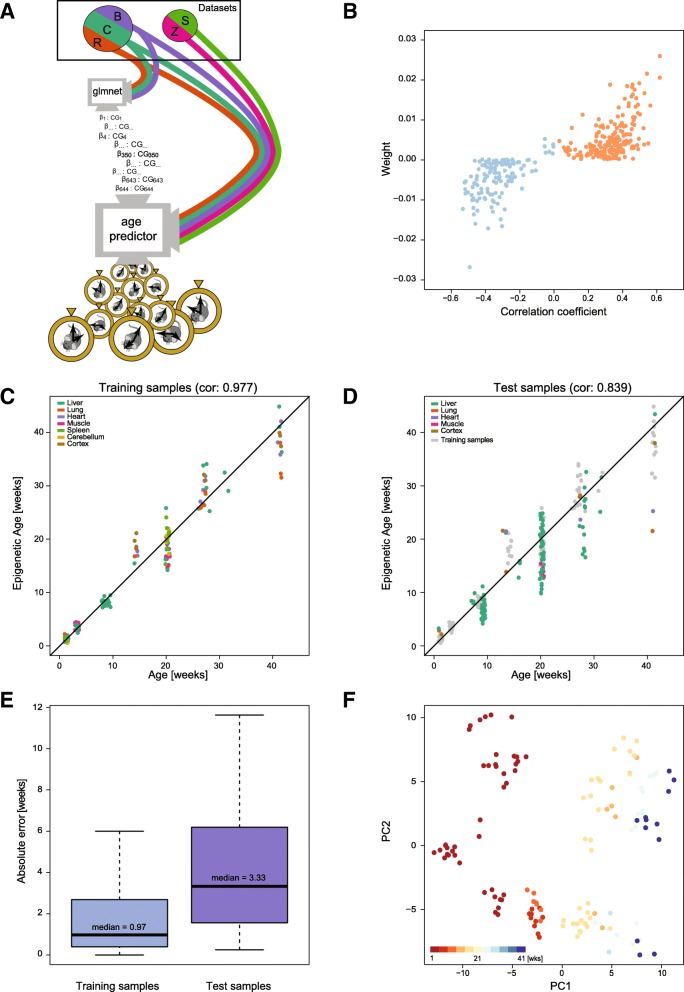
BACKGROUND: DNA methylation changes at a discrete set of sites in the human genome are predictive of chronological and biological age. However, it is not known whether these changes are causative or a consequence of an underlying ageing process. It has also not been shown whether this epigenetic clock is unique to humans or conserved in the more experimentally tractable mouse. RESULTS: We have generated a comprehensive set of genome-scale base-resolution methylation maps from multiple mouse tissues spanning a wide range of ages. Many CpG sites show significant tissue-independent correlations with age which allowed us to develop a multi-tissue predictor of age in the mouse. Our model, which estimates age based on DNA methylation at 329 unique CpG sites, has a median absolute error of 3.33 weeks and has similar properties to the recently described human epigenetic clock. Using publicly available datasets, we find that the mouse clock is accurate enough to measure effects on biological age, including in the context of interventions. While females and males show no significant differences in predicted DNA methylation age, ovariectomy results in significant age acceleration in females. Furthermore, we identify significant differences in age-acceleration dependent on the lipid content of the diet. CONCLUSIONS: Here we identify and characterise an epigenetic predictor of age in mice, the mouse epigenetic clock. This clock will be instrumental for understanding the biology of ageing and will allow modulation of its ticking rate and resetting the clock in vivo to study the impact on biological age.
Overview
The claims and statistics of this paper haven’t been checked yet.
Free: it reads the open-access text and checks the first 5 claims that cite a source we can check. Create a free account to check every claim.
Integrity signals
Registry
Cites
Statistics
Figures
Verification
Claims the paper makes
The claims and statistics of this paper haven’t been checked yet.
Free: it reads the open-access text and checks the first 5 claims that cite a source we can check. Create a free account to check every claim.
Claims other papers make about this one
Each is checked against this paper’s own text: does it say what the citing paper says it does?
The cited source says what the claim attributes to it.
In the citing paper
“Based on four different mouse clocks, the DNAme age of ICE cells was reversed by up to 57% (Figure 7G) (Meer et al., 2018; Petkovich et al., 2017; Stubbs et al., 2017; Thompson et al., 2018).”
From Loss of epigenetic information as a cause of mammalian aging (2023) · cites this paper as Stubbs et al., 2017
In the citing paper
“In addition, tissues within human and mouse individuals show unique DNA methylation rates.34,25.”
From Asynchronous, contagious and digital aging (2021) · cites this paper as [25]
Self-check
Percentages, sums and reported differences re-computed from the paper’s own numbers.
The self-check needs the paper’s full text.
Citations
Cites
Regularization and Variable Selection Via the Elastic Net
Zou, H., & Hastie, T. (2005) · Journal of the Royal Statistical Society Series B: Statistical Methodology · doi:10.1111/j.1467-9868.2005.00503.x · Cited by 20,957
Regularization Paths for Generalized Linear Models via Coordinate Descent
Friedman, J., Hastie, T., & Tibshirani, R. (2010) · Journal of Statistical Software · doi:10.18637/jss.v033.i01 · Cited by 19,927 · cited 2×
“The model selects the most informative sites but allows for some redundancy to increase robustness and it infers weights for each individual site [33].”
BackgroundMethodLópez-Otín, C., Blasco, M. A., Partridge, L., Serrano, M., & Kroemer, G. (2013) · Cell · doi:10.1016/j.cell.2013.05.039 · Cited by 14,982
pROC: an open-source package for R and S+ to analyze and compare ROC curves
Robin, X., Turck, N., Hainard, A., Tiberti, N., Lisacek, F., Sanchez, J.-C., & Müller, M. (2011) · BMC Bioinformatics · doi:10.1186/1471-2105-12-77 · Cited by 13,697 · cited 1×
“To do so, we used CpG density as a linear predictor using multiple thresholds to predict if a methylation age relation would be significant or not using the AUC function for the pROC library [39].”
MethodDNA methylation age of human tissues and cell types
Horvath, S. (2013) · Genome Biology · doi:10.1186/gb-2013-14-10-r115 · Cited by 7,075 · cited 11×
“our mouse epigenetic clock; similarly in humans, breast tissue is found to have accelerated epigenetic ageing [6].”
BackgroundMethodInfluentialA Direct Approach to False Discovery Rates
Storey, J. D. (2002) · Journal of the Royal Statistical Society Series B: Statistical Methodology · doi:10.1111/1467-9868.00346 · Cited by 5,603 · cited 1×
“Ages in days were used when computing the Spearman correlation for each site using the R implementation of the Spearman correlation and multiple testing correction was performed using the Q-value package [38].”
MethodBismark: a flexible aligner and methylation caller for Bisulfite-Seq applications
Krueger, F., & Andrews, S. R. (2011) · Bioinformatics · doi:10.1093/bioinformatics/btr167 · Cited by 5,297
Self-citationGenome-wide methylation profiles reveal quantitative views of human aging rates
Hannum, G., Guinney, J., Zhao, L., Zhang, L., Hughes, G., Sadda, S., Klotzle, B., Bibikova, M., Fan, J.-B., Gao, Y., et al. (2013) · Molecular Cell · doi:10.1016/j.molcel.2012.10.016 · Cited by 4,270
Global epigenomic reconfiguration during mammalian brain development
Lister, R., Mukamel, E. A., Nery, J. R., Urich, M., Puddifoot, C. A., Johnson, N. D., Lucero, J., Huang, Y., Dwork, A. J., Schultz, M. D., et al. (2013) · Science · doi:10.1126/science.1237905 · Cited by 1,830 · cited 1×
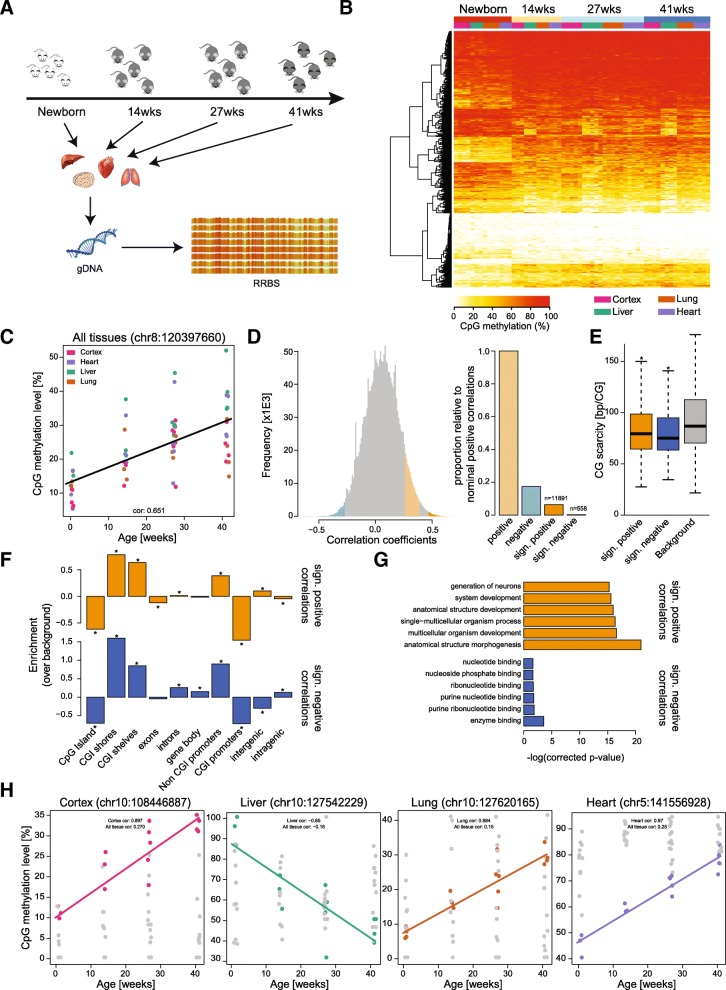
“In agreement with the notion that de novo methylation activity in non-dividing cells results in accumulation of CHH methylation, we found that adult cortex samples had higher CHH methylation levels than newborn cortex samples [27].”
Backgroundg:Profiler—a web-based toolset for functional profiling of gene lists from large-scale experiments
Reimand, J., Kull, M., Peterson, H., Hansen, J., & Vilo, J. (2007) · Nucleic Acids Research · doi:10.1093/nar/gkm226 · Cited by 1,545 · cited 1×
“using the gprofiler online software [40].”
DNA methylation age of blood predicts all-cause mortality in later life
Marioni, R. E., Shah, S., McRae, A. F., Chen, B. H., Colicino, E., Harris, S. E., Gibson, J., Henders, A. K., Redmond, P., Cox, S. R., et al. (2015) · Genome Biology · doi:10.1186/s13059-015-0584-6 · Cited by 1,261 · cited 1×
“These ‘epigenetic clocks’ can estimate the DNA methylation age in specific tissues [5] or tissue-independently [6] and can predict mortality [8] and time to death [9].”
BackgroundReduced representation bisulfite sequencing for comparative high-resolution DNA methylation analysis
Meissner, A. (2005) · Nucleic Acids Research · doi:10.1093/nar/gki901 · Cited by 1,217 · cited 2×
“To improve the quantification results, we optimised the standard RRBS library preparation protocol [26] and were able to achieve very low duplication rates and high genomic coverage.”
BackgroundMethodDNA methylation-based measures of biological age: meta-analysis predicting time to death
Chen, B. H., Marioni, R. E., Colicino, E., Peters, M. J., Ward-Caviness, C. K., Tsai, P.-C., Roetker, N. S., Just, A. C., Demerath, E. W., Guan, W., et al. (2016) · Aging · doi:10.18632/aging.101020 · Cited by 1,126 · cited 1×
“These ‘epigenetic clocks’ can estimate the DNA methylation age in specific tissues [5] or tissue-independently [6] and can predict mortality [8] and time to death [9].”
BackgroundChristensen, B. C., Houseman, E. A., Marsit, C. J., Zheng, S., Wrensch, M. R., Wiemels, J. L., Nelson, H. H., Karagas, M. R., Padbury, J. F., Bueno, R., et al. (2009) · PLoS Genetics · doi:10.1371/journal.pgen.1000602 · Cited by 1,075 · cited 1×
“Importantly, a hierarchical clustering analysis using Manhattan distances (Additional file 2C) clearly separated the samples by tissue (with the exception of newborn lung samples which clustered together with adult heart samples), highlighting key tissue-specific methylation signatures [28].”
MethodIn Vivo Amelioration of Age-Associated Hallmarks by Partial Reprogramming.
Ocampo, A., Reddy, P., Martinez-Redondo, P., Platero-Luengo, A., Hatanaka, F., Hishida, T., Li, M., Lam, D., Kurita, M., Beyret, E., et al. (2016) · Cell · doi:10.1016/j.cell.2016.11.052 · Cited by 988
Aging of blood can be tracked by DNA methylation changes at just three CpG sites
Weidner, C. I., Lin, Q., Koch, C. M., Eisele, L., Beier, F., Ziegler, P., Bauerschlag, D. O., Jöckel, K.-H., Erbel, R., Mühleisen, T. W., et al. (2014) · Genome Biology · doi:10.1186/gb-2014-15-2-r24 · Cited by 837 · cited 1×
“Recently, age-correlated DNA methylation changes at discrete sets of CpGs in the human genome have been identified and used to predict age [5-7].”
BackgroundObesity accelerates epigenetic aging of human liver
Horvath, S., Erhart, W., Brosch, M., Ammerpohl, O., von Schönfels, W., Ahrens, M., Heits, N., Bell, J. T., Tsai, P.-C., Spector, T. D., et al. (2014) · Proceedings of the National Academy of Sciences · doi:10.1073/pnas.1412759111 · Cited by 766 · cited 1×
“Interestingly, while initially designed to predict chronological age, there is evidence that the epigenetic age also reflects biological age and is predictive of functional decline [10-22].”
BackgroundAn epigenetic clock analysis of race/ethnicity, sex, and coronary heart disease
Horvath, S., Gurven, M., Levine, M. E., Trumble, B. C., Kaplan, H., Allayee, H., Ritz, B. R., Chen, B., Lu, A. T., Rickabaugh, T. M., et al. (2016) · Genome Biology · doi:10.1186/s13059-016-1030-0 · Cited by 733 · cited 1×
“Interestingly, while initially designed to predict chronological age, there is evidence that the epigenetic age also reflects biological age and is predictive of functional decline [10-22].”
BackgroundDynamic CpG island methylation landscape in oocytes and preimplantation embryos
Smallwood, S. A., Tomizawa, S.-I., Krueger, F., Ruf, N., Carli, N., Segonds-Pichon, A., Sato, S., Hata, K., Andrews, S. R., & Kelsey, G. (2011) · Nature Genetics · doi:10.1038/ng.864 · Cited by 699 · cited 1×
“RRBS libraries were prepared from isolated DNA following published protocols [36].”
MethodSelf-citationEpigenetic regulation of ageing: linking environmental inputs to genomic stability
Benayoun, B. A., Pollina, E. A., & Brunet, A. (2015) · Nature Reviews Molecular Cell Biology · doi:10.1038/nrm4048 · Cited by 610 · cited 1×
“At present, it is not clear which epigenetic changes are causative or correlative, but these mechanisms are of particular interest due to their reversibility, suggesting that rejuvenation might be possible, at least in principle [3, 4].”
BackgroundMarioni, R. E., Shah, S., McRae, A. F., Ritchie, S. J., Muniz-Terrera, G., Harris, S. E., Gibson, J., Redmond, P., Cox, S. R., Pattie, A., et al. (2015) · International Journal of Epidemiology · doi:10.1093/ije/dyu277 · Cited by 560 · cited 1×
“Interestingly, while initially designed to predict chronological age, there is evidence that the epigenetic age also reflects biological age and is predictive of functional decline [10-22].”
HIV-1 infection accelerates age according to the epigenetic clock
Horvath, S., & Levine, A. J. (2015) · Journal of Infectious Diseases · doi:10.1093/infdis/jiv277 · Cited by 556 · cited 1×
“Interestingly, while initially designed to predict chronological age, there is evidence that the epigenetic age also reflects biological age and is predictive of functional decline [10-22].”
BackgroundBooth, L. N., & Brunet, A. (2016) · Molecular Cell · doi:10.1016/j.molcel.2016.05.013 · Cited by 499 · cited 1×
“From a biological perspective, ageing is associated with numerous changes at the cellular and molecular level [2], including epigenetic changes, that is modifications of DNA or chromatin that do not change the primary nucleotide sequence.”
BackgroundAccelerated epigenetic aging in Down syndrome
Horvath, S., Garagnani, P., Bacalini, M. G., Pirazzini, C., Salvioli, S., Gentilini, D., Di Blasio, A. M., Giuliani, C., Tung, S., Vinters, H. V., et al. (2015) · Aging Cell · doi:10.1111/acel.12325 · Cited by 488 · cited 1×
“Interestingly, while initially designed to predict chronological age, there is evidence that the epigenetic age also reflects biological age and is predictive of functional decline [10-22].”
BackgroundLevine, M. E., Lu, A. T., Bennett, D. A., & Horvath, S. (2015) · Aging · doi:10.18632/aging.100864 · Cited by 455 · cited 1×
“Interestingly, while initially designed to predict chronological age, there is evidence that the epigenetic age also reflects biological age and is predictive of functional decline [10-22].”
BackgroundIncreased epigenetic age and granulocyte counts in the blood of Parkinson's disease patients
Horvath, S., & Ritz, B. R. (2015) · Aging · doi:10.18632/aging.100859 · Cited by 436 · cited 1×
“Interestingly, while initially designed to predict chronological age, there is evidence that the epigenetic age also reflects biological age and is predictive of functional decline [10-22].”
BackgroundDecreased epigenetic age of PBMCs from Italian semi-supercentenarians and their offspring
Horvath, S., Pirazzini, C., Bacalini, M. G., Gentilini, D., Di Blasio, A. M., Delledonne, M., Mari, D., Arosio, B., Monti, D., Passarino, G., et al. (2015) · Aging · doi:10.18632/aging.100861 · Cited by 316 · cited 1×
“Interestingly, while initially designed to predict chronological age, there is evidence that the epigenetic age also reflects biological age and is predictive of functional decline [10-22].”
BackgroundDNA methylation age of blood predicts future onset of lung cancer in the women's health initiative
Levine, M. E., Hosgood, H. D., Chen, B., Absher, D., Assimes, T., & Horvath, S. (2015) · Aging · doi:10.18632/aging.100809 · Cited by 311
Huntington's disease accelerates epigenetic aging of human brain and disrupts DNA methylation levels
Horvath, S., Langfelder, P., Kwak, S., Aaronson, J., Rosinski, J., Vogt, T. F., Eszes, M., Faull, R. L. M., Curtis, M. A., Waldvogel, H. J., et al. (2016) · Aging · doi:10.18632/aging.101005 · Cited by 239 · cited 1×
“Interestingly, while initially designed to predict chronological age, there is evidence that the epigenetic age also reflects biological age and is predictive of functional decline [10-22].”
Backgroundvon Meyenn, F., Iurlaro, M., Habibi, E., Liu, N. Q., Salehzadeh-Yazdi, A., Santos, F., Petrini, E., Milagre, I., Yu, M., Xie, Z., et al. (2016) · Molecular Cell · doi:10.1016/j.molcel.2016.04.025 · Cited by 230
Self-citationCarroll, J. E., Irwin, M. R., Levine, M., Seeman, T. E., Absher, D., Assimes, T., & Horvath, S. (2017) · Biological Psychiatry · doi:10.1016/j.biopsych.2016.07.008 · Cited by 173 · cited 1×
“Interestingly, while initially designed to predict chronological age, there is evidence that the epigenetic age also reflects biological age and is predictive of functional decline [10-22].”
BackgroundDNA methylation homeostasis in human and mouse development
Iurlaro, M., von Meyenn, F., & Reik, W. (2017) · Current Opinion in Genetics & Development · doi:10.1016/j.gde.2017.02.003 · Cited by 134 · cited 1×
“effect of an epigenetic maintenance system’ [6], a system that is of critical importance and regulated at multiple levels [23, 24].”
BackgroundSelf-citationGravina, S., Dong, X., Yu, B., & Vijg, J. (2016) · Genome Biology · doi:10.1186/s13059-016-1011-3 · Cited by 108 · cited 1×
“We also attempted to include publicly available WGBS datasets, including samples from 24-month-old animals [34], to test our age predictor at older ages.”
Gender-specific postnatal demethylation and establishment of epigenetic memory
Reizel, Y., Spiro, A., Sabag, O., Skversky, Y., Hecht, M., Keshet, I., Berman, B. P., & Cedar, H. (2015) · Genes & Development · doi:10.1101/gad.259309.115 · Cited by 92 · cited 8×
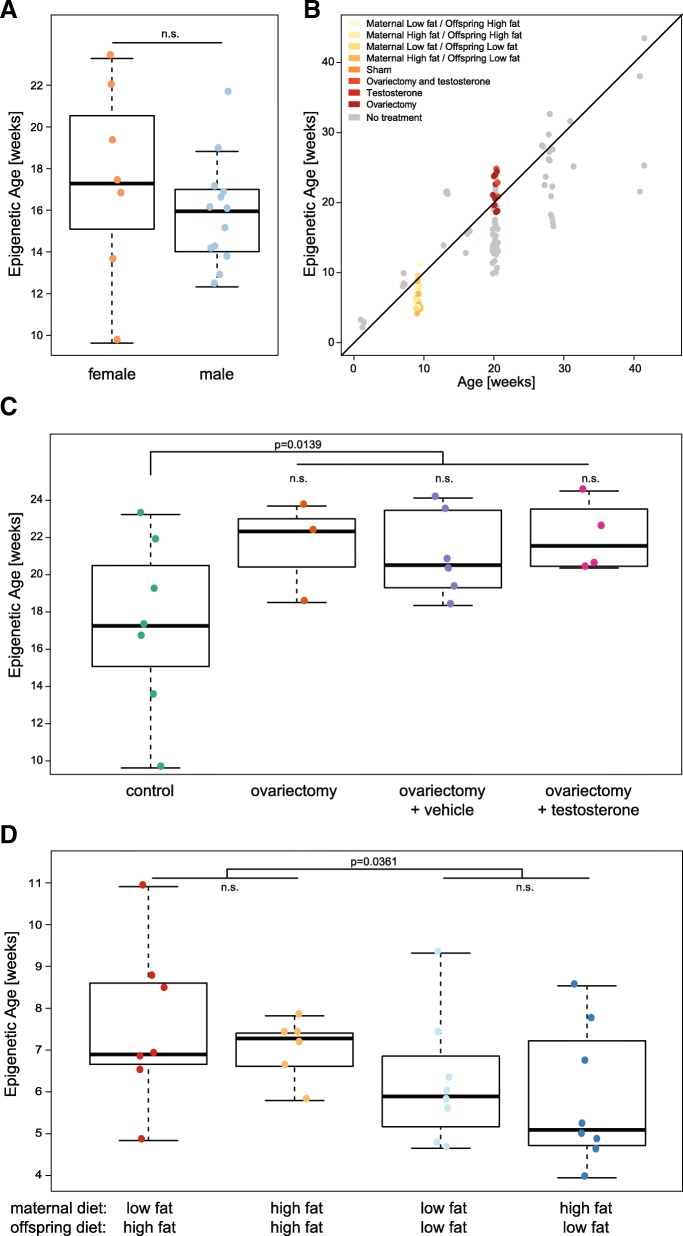
“(C) Age prediction in normal female liver samples and samples which underwent an ovariectomy and were administered with either vehicle alone or testosterone [30].”
BackgroundMethodInfluentialGenetic variants near MLST8 and DHX57 affect the epigenetic age of the cerebellum
Lu, A. T., Hannon, E., Levine, M. E., Hao, K., Crimmins, E. M., Lunnon, K., Kozlenkov, A., Mill, J., Dracheva, S., & Horvath, S. (2016) · Nature Communications · doi:10.1038/ncomms10561 · Cited by 71 · cited 1×
“Interestingly, while initially designed to predict chronological age, there is evidence that the epigenetic age also reflects biological age and is predictive of functional decline [10-22].”
BackgroundZhang, C., Hoshida, Y., & Sadler, K. C. (2016) · Frontiers in Genetics · doi:10.3389/fgene.2016.00110 · Cited by 56 · cited 3×
“[31] The Zhang study consists of four samples all originating from liver at the age between six and eight weeks.”
BackgroundMethodInfluentialSpecific premature epigenetic aging of cartilage in osteoarthritis
Vidal-Bralo, L., Lopez-Golan, Y., Mera-Varela, A., Rego-Perez, I., Horvath, S., Zhang, Y., del Real, Á., Zhai, G., Blanco, F. J., Riancho, J. A., et al. (2016) · Aging · doi:10.18632/aging.101053 · Cited by 48 · cited 1×
“Interestingly, while initially designed to predict chronological age, there is evidence that the epigenetic age also reflects biological age and is predictive of functional decline [10-22].”
BackgroundTHE EFFECTS OF SEX STEROID HORMONES UPON LONGEVITY IN RATS
ASDELL, S. A., DOORNENBAL, H., JOSHI, S. R., & SPERLING, G. A. (1967) · Reproduction · doi:10.1530/jrf.0.0140113 · Cited by 47 · cited 2×
“Ovariectomy decreases average lifespan in female rats [35] and indeed we found that ovariectomy increased epigenetic age significantly in mice (Fig.”
BackgroundCannon, M. V., Buchner, D. A., Hester, J., Miller, H., Sehayek, E., Nadeau, J. H., & Serre, D. (2014) · PLoS ONE · doi:10.1371/journal.pone.0090335 · Cited by 45 · cited 4×
“We next analysed publicly available RRBS datasets of samples with various biological interventions [29, 30].”
BackgroundMethodInfluentialSchillebeeckx, M., Schrade, A., Löbs, A.-K., Pihlajoki, M., Wilson, D. B., & Mitra, R. D. (2013) · Nucleic Acids Research · doi:10.1093/nar/gkt230 · Cited by 43 · cited 3×
“6 datasets comprised of RRBS libraries from liver, lung, muscle, spleen, and cerebellum samples from male and female C57BL/6 mice aged newborn to 31 weeks [29-32].”
BackgroundMethodAge-associated changes in DNA methylation across multiple tissues in an inbred mouse model
Spiers, H., Hannon, E., Wells, S., Williams, B., Fernandes, C., & Mill, J. (2016) · Mechanisms of Ageing and Development · doi:10.1016/j.mad.2016.02.001 · Cited by 43 · cited 1×
“Importantly, while a very small number of agecorrelated methylation changes at selected sites in the mouse genome have been reported [25], it is not known whether such an epigenetic ageing clock is conserved between species or a unique property of humans and some closely related primates [6].”
Backgroundde Ronde, J. J., Bonder, M. J., Lips, E. H., Rodenhuis, S., & Wessels, L. F. A. (2014) · PLoS ONE · doi:10.1371/journal.pone.0088551 · Cited by 7
Self-citationEpigenomeClock/MouseEpigeneticClock: MouseEpigeneticClock
Stubbs, T. M., & Bonder, M. J. (2017) · Zenodo (CERN European Organization for Nuclear Research) · doi:10.5281/zenodo.438976 · Cited by 1
Self-citation
Cited by
DNA methylation-based biomarkers and the epigenetic clock theory of ageing
Horvath, S., & Raj, K. (2018) · Nature Reviews Genetics · doi:10.1038/s41576-018-0004-3 · Cited by 3,095
DNA methylation aging clocks: challenges and recommendations
Bell, C. G., Lowe, R., Adams, P. D., Baccarelli, A. A., Beck, S., Bell, J. T., Christensen, B. C., Gladyshev, V. N., Heijmans, B. T., Horvath, S., et al. (2019) · Genome Biology · doi:10.1186/s13059-019-1824-y · Cited by 1,025
“For example, a multi-tissue clock was accelerated by high-fat diet [196], and the liver clock reported the effects of caloric restriction, dietary rapamycin, and Prop1 dwarfism [199].”
Self-citationDiet and depression: Exploring the biological mechanisms of action
Marx, W., Lane, M., Hockey, M., Aslam, H., Berk, M., Walder, K., Borsini, A., Firth, J., Pariante, C. M., Berding, K., et al. (2021) · Molecular Psychiatry · doi:10.1038/s41380-020-00925-x · Cited by 685
Loss of epigenetic information as a cause of mammalian aging
Yang, J.-H., Hayano, M., Griffin, P. T., Amorim, J. A., Bonkowski, M. S., Apostolides, J. K., Salfati, E. L., Blanchette, M., Munding, E. M., Bhakta, M., et al. (2023) · Cell · doi:10.1016/j.cell.2022.12.027 · Cited by 643
Principles of DNA methylation and their implications for biology and medicine
Dor, Y., & Cedar, H. (2018) · The Lancet · doi:10.1016/s0140-6736(18)31268-6 · Cited by 640
Metadata
- Authors
- BI Ageing Clock Team, Stubbs, T. M., Bonder, M. J., Stark, A.-K., Krueger, F., von Meyenn, F., Stegle, O., & Reik, W.
- Affiliations
- Babraham Institute (GB)
- European Bioinformatics Institute (GB)
- Corresponding author
- Stegle, Oliver
- Reik, Wolf
- Venue
- Genome Biology
- Published
- 2017-04-11
- Volume
- 18
- Issue
- 1
- Pages
- 68-68
- ISSN
- 1465-6906 (ISSN-L)
- 1474-760X
- PMC
- PMC5389178
- OpenAlex
- W2606865793
- Cited by
- 384
- References
- 43
- Citations by year
- 2026: 17 · 2025: 29 · 2024: 35 · 2023: 48 · 2022: 39 · 2021: 71 · 2020: 41 · 2019: 38 · 2018: 49 · 2017: 15
- FWCI
- 15.96
- Type
- journal article
- Language
- en
- Open access
- gold
- doi.org
- Licence
- cc-by
- Locations
- Genome biology (publishedVersion, cc-by)
- bioRxiv (Cold Spring Harbor Laboratory) (acceptedVersion, cc-by-nc)
- PubMed Central (publishedVersion, cc-by)
- PubMed (publishedVersion)
- University of Groningen research database (University of Groningen / Centre for Information Technology) (publishedVersion, cc-by)
- Minerva Access (University of Melbourne) (submittedVersion, cc-by)
- DOAJ (DOAJ: Directory of Open Access Journals) (submittedVersion, cc-by-sa)
- Research Portal (King's College London) (submittedVersion, cc-by)
- Edinburgh Research Explorer (University of Edinburgh) (submittedVersion, cc-by)
- Apollo (University of Cambridge) (submittedVersion, cc-by)
- Repository for Publications and Research Data (ETH Zurich) (submittedVersion, cc-by)
- Apollo (cc-by)
- ETH Zürich Research Collection (cc-by)
- Funders
- Biotechnology and Biological Sciences Research Council (BB/K010867/1, DTP studentship)
- Wellcome Trust (095645/Z/11/Z)
- EU BLUEPRINT
- EpiGeneSys
- Schweizerischer Nationalfonds zur Förderung der Wissenschaftlichen Forschung
- Topics
- Life Sciences › Biochemistry, Genetics and Molecular Biology › Molecular Biology › Epigenetics and DNA Methylation
- Life Sciences › Biochemistry, Genetics and Molecular Biology › Aging › Genetics, Aging, and Longevity in Model Organisms
- Life Sciences › Biochemistry, Genetics and Molecular Biology › Cell Biology › Telomeres, Telomerase, and Senescence
- Keywords
- DNA methylation, epigenetic clocks, biological age, CpG sites, aging, ovariectomy, accelerated aging, dietary lipid level, sex differences, epigenetic reprogramming
- MeSH terms
- Aging, Animals, Female, Humans, Male, Organ Specificity, Cluster Analysis, CpG Islands, DNA Methylation, Gene Expression Profiling, Epigenesis, Genetic, Mice, Epigenomics
About these checks
Registry, retraction, Cites and statistics results are computed, not judged, with one exception: a printed reference that no index lists is read once by a model before it counts as a citation error. Claims are extracted by a model and kept only when their quote appears verbatim in the text; each cited source is then checked, with a model’s help, for whether it says what the claim relies on. Those verdicts can be wrong — read the claim’s quote and the cited source before relying on one.
Statistics and arithmetic are recomputed, not judged.
Confidence bands are shown only for fields calibrated on our annotated test set. None is calibrated yet, so no band is shown.
What counts as a claim ›How we measure confidence ›How we check this ›
Are you an author, or do you see a problem with this page? Request a review
Data sources
Bibliographic data: Semantic Scholar, OpenAlex, Crossref.
Contains information from the Semantic Scholar Academic Graph Datasets, made available under the ODC Attribution License (ODC-BY 1.0).
Semantic Scholar’s data is described in: Kinney, R., et al. (2023). The Semantic Scholar Open Data Platform. arXiv:2301.10140.
