

Multi-tissue DNA methylation age predictor in mouse
Open accessPublished version of a preprint
The DOI matches its Crossref record; 43 of the 43 references it cites were found in a registry or an index.
Abstract
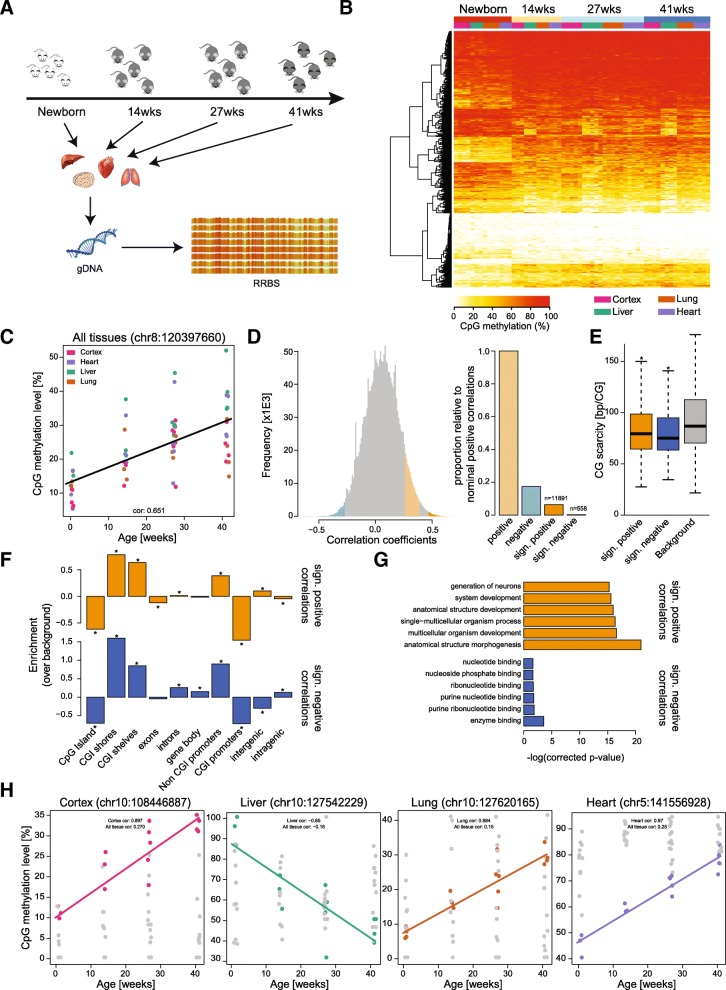
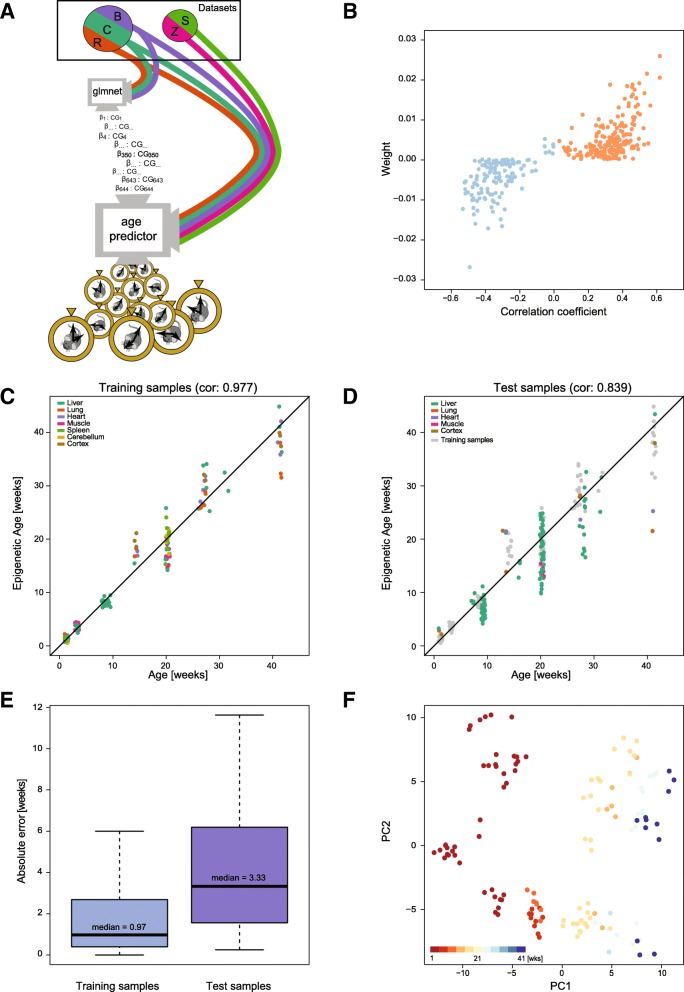
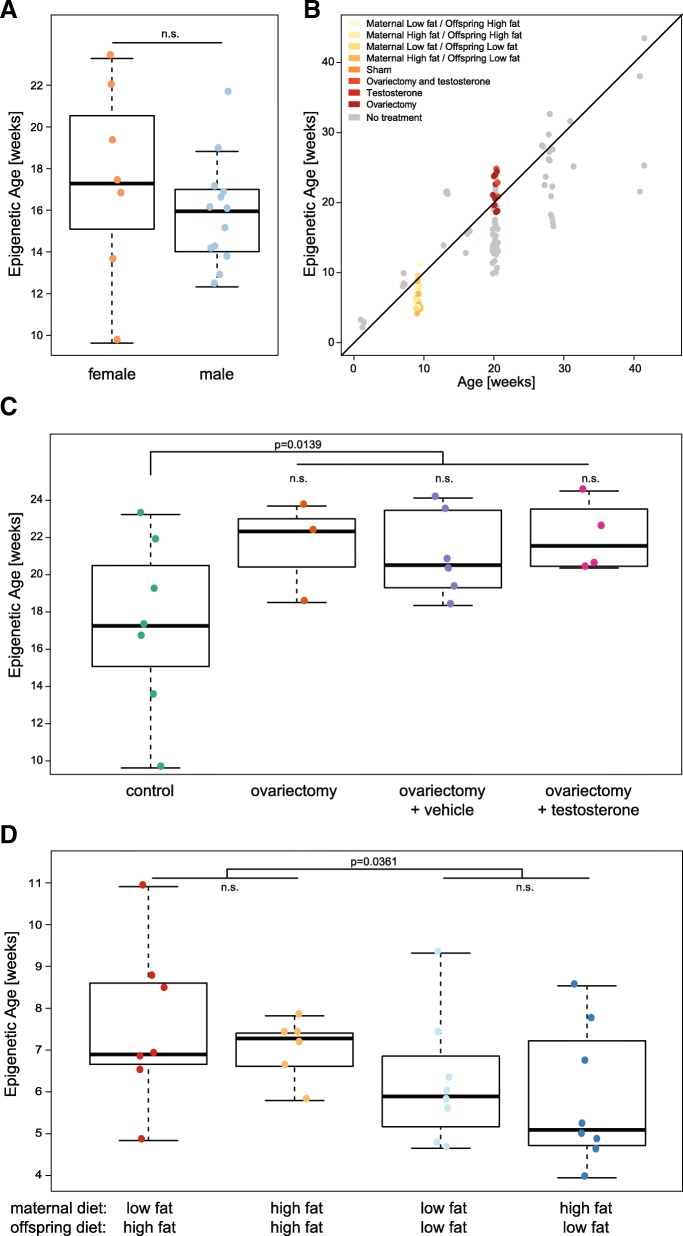
BACKGROUND: DNA methylation changes at a discrete set of sites in the human genome are predictive of chronological and biological age. However, it is not known whether these changes are causative or a consequence of an underlying ageing process. It has also not been shown whether this epigenetic clock is unique to humans or conserved in the more experimentally tractable mouse. RESULTS: We have generated a comprehensive set of genome-scale base-resolution methylation maps from multiple mouse tissues spanning a wide range of ages. Many CpG sites show significant tissue-independent correlations with age which allowed us to develop a multi-tissue predictor of age in the mouse. Our model, which estimates age based on DNA methylation at 329 unique CpG sites, has a median absolute error of 3.33 weeks and has similar properties to the recently described human epigenetic clock. Using publicly available datasets, we find that the mouse clock is accurate enough to measure effects on biological age, including in the context of interventions. While females and males show no significant differences in predicted DNA methylation age, ovariectomy results in significant age acceleration in females. Furthermore, we identify significant differences in age-acceleration dependent on the lipid content of the diet. CONCLUSIONS: Here we identify and characterise an epigenetic predictor of age in mice, the mouse epigenetic clock. This clock will be instrumental for understanding the biology of ageing and will allow modulation of its ticking rate and resetting the clock in vivo to study the impact on biological age.
Overview
The claims and statistics of this paper haven’t been checked yet.
Free: it reads the open-access text and checks the first 5 claims that cite a source we can check. Create a free account to check every claim.
Integrity signals
Registry
Cites
Statistics
Figures
Verification
Claims the paper makes
The claims and statistics of this paper haven’t been checked yet.
Free: it reads the open-access text and checks the first 5 claims that cite a source we can check. Create a free account to check every claim.
Claims other papers make about this one
Each is checked against this paper’s own text: does it say what the citing paper says it does?
The cited source says what the claim attributes to it.
In the citing paper
“Based on four different mouse clocks, the DNAme age of ICE cells was reversed by up to 57% (Figure 7G) (Meer et al., 2018; Petkovich et al., 2017; Stubbs et al., 2017; Thompson et al., 2018).”
From Loss of epigenetic information as a cause of mammalian aging (2023) · cites this paper as Stubbs et al., 2017
In the citing paper
“In addition, tissues within human and mouse individuals show unique DNA methylation rates.34,25.”
From Asynchronous, contagious and digital aging (2021) · cites this paper as [25]
Self-check
Percentages, sums and reported differences re-computed from the paper’s own numbers.
The self-check needs the paper’s full text.
Citations
Cites
Regularization and Variable Selection Via the Elastic Net
Zou, H., & Hastie, T. (2005) · Journal of the Royal Statistical Society Series B: Statistical Methodology · doi:10.1111/j.1467-9868.2005.00503.x · Cited by 20,957
Regularization Paths for Generalized Linear Models via Coordinate Descent
Friedman, J., Hastie, T., & Tibshirani, R. (2010) · Journal of Statistical Software · doi:10.18637/jss.v033.i01 · Cited by 19,927 · cited 2×
“The model selects the most informative sites but allows for some redundancy to increase robustness and it infers weights for each individual site [33].”
BackgroundMethodLópez-Otín, C., Blasco, M. A., Partridge, L., Serrano, M., & Kroemer, G. (2013) · Cell · doi:10.1016/j.cell.2013.05.039 · Cited by 14,982
pROC: an open-source package for R and S+ to analyze and compare ROC curves
Robin, X., Turck, N., Hainard, A., Tiberti, N., Lisacek, F., Sanchez, J.-C., & Müller, M. (2011) · BMC Bioinformatics · doi:10.1186/1471-2105-12-77 · Cited by 13,697 · cited 1×
“To do so, we used CpG density as a linear predictor using multiple thresholds to predict if a methylation age relation would be significant or not using the AUC function for the pROC library [39].”
MethodDNA methylation age of human tissues and cell types
Horvath, S. (2013) · Genome Biology · doi:10.1186/gb-2013-14-10-r115 · Cited by 7,075 · cited 11×
“our mouse epigenetic clock; similarly in humans, breast tissue is found to have accelerated epigenetic ageing [6].”
BackgroundMethodInfluentialA Direct Approach to False Discovery Rates
Storey, J. D. (2002) · Journal of the Royal Statistical Society Series B: Statistical Methodology · doi:10.1111/1467-9868.00346 · Cited by 5,603 · cited 1×
“Ages in days were used when computing the Spearman correlation for each site using the R implementation of the Spearman correlation and multiple testing correction was performed using the Q-value package [38].”
MethodBismark: a flexible aligner and methylation caller for Bisulfite-Seq applications
Krueger, F., & Andrews, S. R. (2011) · Bioinformatics · doi:10.1093/bioinformatics/btr167 · Cited by 5,297
Self-citationGenome-wide methylation profiles reveal quantitative views of human aging rates
Hannum, G., Guinney, J., Zhao, L., Zhang, L., Hughes, G., Sadda, S., Klotzle, B., Bibikova, M., Fan, J.-B., Gao, Y., et al. (2013) · Molecular Cell · doi:10.1016/j.molcel.2012.10.016 · Cited by 4,270
Global epigenomic reconfiguration during mammalian brain development
Lister, R., Mukamel, E. A., Nery, J. R., Urich, M., Puddifoot, C. A., Johnson, N. D., Lucero, J., Huang, Y., Dwork, A. J., Schultz, M. D., et al. (2013) · Science · doi:10.1126/science.1237905 · Cited by 1,830 · cited 1×
“In agreement with the notion that de novo methylation activity in non-dividing cells results in accumulation of CHH methylation, we found that adult cortex samples had higher CHH methylation levels than newborn cortex samples [27].”
Backgroundg:Profiler—a web-based toolset for functional profiling of gene lists from large-scale experiments
Reimand, J., Kull, M., Peterson, H., Hansen, J., & Vilo, J. (2007) · Nucleic Acids Research · doi:10.1093/nar/gkm226 · Cited by 1,545 · cited 1×
“using the gprofiler online software [40].”
Cited by
Items 201–300 of 414
Chen, Z., Stanbouly, S., Nishiyama, N. C., Chen, X., Delp, M. D., Qiu, H., Mao, X. W., & Wang, C. (2021) · Precision Clinical Medicine · doi:10.1093/pcmedi/pbab012 · Cited by 21
Fleyshman, D. I., Wakshlag, J. J., Huson, H. J., Loftus, J. P., Olby, N. J., Brodsky, L., Gudkov, A. V., & Andrianova, E. L. (2021) · Aging · doi:10.18632/aging.203600 · Cited by 19
The Epigenetic Clock and Aging
Raj, K. (2017) · Elsevier eBooks · doi:10.1016/b978-0-12-811060-7.00004-8 · Cited by 21
Region‐based epigenetic clock design improves RRBS‐based age prediction
Simpson, D. J., Zhao, Q., Olova, N. N., Dabrowski, J., Xie, X., Crespo, E. L., & Chandra, T. (2023) · Aging Cell · doi:10.1111/acel.13866 · Cited by 18
“…mouse RRBS datasets were downloaded from the NCBI Gene Expression Omnibus (GEO); GSE80672 (141 C57 and 20 calorie-restricted C57 mouse; Petkovich et al., 2017), GSE120137 ( n = 548; Thompson et al., 2018), GSE93957 ( n = 62; Stubbs et al., 2017), and GSE121141 ( n = 81; Meer et al., 2018).”
InfluentialAge-Related Epigenetic Derangement upon Reprogramming and Differentiation of Cells from the Elderly
Ravaioli, F., Bacalini, M. G., Franceschi, C., & Garagnani, P. (2018) · Genes · doi:10.3390/genes9010039 · Cited by 19
“Among all of the epigenetics mechanisms, DNAm is the one that in both human and mice [37] showed the best performance as a biomarker of chronological age and in many cases with features of biological age such as age-related diseases and mortality among others.”
BackgroundDNA methylation in Schwann cells and in oligodendrocytes
Arthur‐Farraj, P., & Moyon, S. (2020) · Glia · doi:10.1002/glia.23784 · Cited by 18
“16 change with aging, but DNA methylation, especially, has been identified as the prominent epigenetic clock or age predictor (Bell et al., 2012; Hernandez et al., 2011; Horvath, 2013; Horvath & Raj, 2018; Masser et al., 2018; Shen et al., 2008; Stubbs et al., 2017; Szulwach, Li, Li, Song, Wu, et al., 2011; Unnikrishn…”
BackgroundRoudbar, M. A., Mousavi, S. F., Ardestani, S. S., Lopes, F. B., Momen, M. M., Gianola, D., & Khatib, H. (2021) · G3 Genes Genomes Genetics · doi:10.1093/g3journal/jkab112 · Cited by 18
“Recent studies have applied elastic net regression models and artificial neural networks to predict chronological age using methylation clock sites (Hannum et al. 2013; Horvath 2013; Petkovich et al. 2017; Stubbs et al. 2017; Vidaki et al. 2017).”
MethodEpigenome-wide analysis of aging effects on liver regeneration
Wang, J., Zhang, W., Liu, X., Kim, M., Zhang, K., & Tsai, R. Y. L. (2023) · BMC Biology · doi:10.1186/s12915-023-01533-1 · Cited by 17
Epigenetic age estimation of wild mice using faecal samples
Hanski, E., Joseph, S., Raulo, A., Wanelik, K. M., O’Toole, Á., Knowles, S. C. L., & Little, T. J. (2024) · Molecular Ecology · doi:10.1111/mec.17330 · Cited by 17
DNA Methylation in Prostate Cancer: Clinical Implications and Potential Applications
Muletier, R., Bourgne, C., Guy, L., & Dougé, A. (2025) · Cancer Medicine · doi:10.1002/cam4.70528 · Cited by 18
“Methylation patterns evolve with age and appear to reflect biological aging [24, 25].”
Fetal origin of sex‐bias brain aging
Islam, M., Strawn, M., & Behura, S. K. (2022) · The FASEB Journal · doi:10.1096/fj.202200255rr · Cited by 18
“Epigenetic clock analysis (81) identified CpGs (n=275) that were methylated higher in females than males.”
BackgroundZhou, J. X., Li, L. X., Zhang, H., Agborbesong, E., Harris, P. C., Calvet, J. P., & Li, X. (2024) · Kidney International · doi:10.1016/j.kint.2024.04.017 · Cited by 16
Mo, J., Liang, Z., Lü, M., & Wang, H. (2020) · Analytical Chemistry · doi:10.1021/acs.analchem.0c00962 · Cited by 16
Espinal, R. B. A., de Santana, S. F., Santos, V. C., Ramos-Lizardo, G. N., Silva, R. J. S., Corrêa, R. X., Loguercio, L. L., Goés‐Neto, A., Pirovani, C. P., Fonseca, P. L. C., et al. (2023) · Pathogens · doi:10.3390/pathogens12020287 · Cited by 16
DNA Methylation–Based Measures of Biological Aging
Dugué, P., Li, S., Hopper, J. L., & Milne, R. L. (2018) · Elsevier eBooks · doi:10.1016/b978-0-12-812215-0.00003-0 · Cited by 17
The role of ribosomal DNA methylation in embryonic development, aging and diseases
Yang, F., Guo, X., Bào, Y., & Li, R. (2024) · Epigenetics & Chromatin · doi:10.1186/s13072-024-00548-4 · Cited by 15
Regulation of Age-related Decline by Transcription Factors and Their Crosstalk with the Epigenome
Zhou, X., Sen, I., Lin, X.-X., & Riedel, C. G. (2018) · Current Genomics · doi:10.2174/1389202919666180503125850 · Cited by 15
“Although it remains undetermined whether DNA methylation changes are a cause or consequence of the aging processes, they at least have been highly predictive of chronological and biological age in mammals [202-204].”
BackgroundMethylation studies in Peromyscus: aging, altitude adaptation, and monogamy
Horvath, S., Haghani, A., Zoller, J. A., Naderi, A., Soltanmohammadi, E., Farmaki, E., Kaza, V., Chatzistamou, I., & Kiaris, H. (2021) · GeroScience · doi:10.1007/s11357-021-00472-5 · Cited by 16
Epigenetic clock in the aorta and age-related endothelial dysfunction in mice
Pośpiech, E., Bar, A., Pisarek, A., Karaś, A., Branicki, W., & Chłopicki, S. (2024) · GeroScience · doi:10.1007/s11357-024-01086-3 · Cited by 15
“In particular, given that various dietary or pharmacological treatments can regulate the rate of epigenetic ageing and susceptibility to age-related diseases [17, 20, 28], this novel tool may be useful for studies aimed at rejuvenat-ing ageing vasculature in mice.”
BackgroundVerschoor, C. P., & Tamim, H. (2019) · The Journals of Gerontology Series A · doi:10.1093/gerona/gly286 · Cited by 14
Ageing-associated phenotypes in mice
Xie, K., & Ehninger, D. (2023) · Mechanisms of Ageing and Development · doi:10.1016/j.mad.2023.111852 · Cited by 14
Fundamental equations linking methylation dynamics to maximum lifespan in mammals
Horvath, S., Zhang, J., Haghani, A., Lu, A. T.-H., & Fei, Z. (2024) · Nature Communications · doi:10.1038/s41467-024-51855-z · Cited by 18
Epigenetic aging of human hematopoietic cells is not accelerated upon transplantation into mice
Frobel, J., Rahmig, S., Franzen, J., Waskow, C., & Wagner, W. (2018) · Clinical Epigenetics · doi:10.1186/s13148-018-0499-7 · Cited by 14
“In fact, age-associated DNAm changes are acquired faster in short-lived mice than men [5, 13].”
BackgroundShealy, E. P., Schwartz, T. S., Cox, R. M., Reedy, A. M., & Parrott, B. B. (2025) · Science Advances · doi:10.1126/sciadv.adq3589 · Cited by 13
“…derive approach a median error of ~ 5% of the A. sagrei total life span, which is in line with epigenetic clocks developed for other species ( 2 , 21 , 58 – 60 ), and error is typically much lower when assessing individuals who have not reached their maximum expected life span outside of captivity.”
m6A methylation potentiates cytosolic dsDNA recognition in a sequence-specific manner
Balzarolo, M., Engels, S., de Jong, A. J., Franke, K., van den Berg, T. K., Gulen, M. F., Ablasser, A., Janssen, E. M., van Steensel, B., & Wolkers, M. C. (2021) · Open Biology · doi:10.1098/rsob.210030 · Cited by 13
Advances in Ophthalmic Epigenetics and Implications for Epigenetic Therapies: A Review
Moore, S. M., & Christoforidis, J. B. (2023) · Genes · doi:10.3390/genes14020417 · Cited by 13
“A similar epigenetic clock is available for mouse tissues [26].”
BackgroundGlial reactivity and cognitive decline follow chronic heterochromatin loss in neurons
Newman, A. G., Sharif, J., Bessa, P., Zaqout, S., Brown, J., Richter, D., Dannenberg, R., Nakayama, M., Mueller, S. G., Schaub, T., et al. (2025) · Nature Communications · doi:10.1038/s41467-025-61319-7 · Cited by 12
Hacking Aging: A Strategy to Use Big Data From Medical Studies to Extend Human Life
Fedichev, P. O. (2018) · Frontiers in Genetics · doi:10.3389/fgene.2018.00483 · Cited by 13
“…with lifespan and functional state of the organism, such as Physiological Frailty Index (Antoch et al., 2017), Frailty Indices (Rockwood et al., 2017), or DNA methylation age (Petkovich et al., 2017; Stubbs et al., 2017) measurements in aging animals in response to anti-aging interventions.”
BackgroundMartínez-Romero, J., Fernández, M. E., Bernier, M., Price, N. L., Mueller, W., Candia, J., Camandola, S., Meirelles, O., Hu, Y., Li, Z., et al. (2024) · Nature Aging · doi:10.1038/s43587-024-00728-7 · Cited by 12
cuRRBS: simple and robust evaluation of enzyme combinations for reduced representation approaches
Martin-Herranz, D. E., Ribeiro, A. J. M., Krueger, F., Thornton, J. M., Reik, W., & Stubbs, T. M. (2017) · Nucleic Acids Research · doi:10.1093/nar/gkx814 · Cited by 13
Self-citationRzechorzek, N. M., Saunders, O. M., Hiscox, L. V., Schwarz, T., Marioni‐Henry, K., Argyle, D. J., Schoenebeck, J. J., & Freeman, T. C. (2019) · Scientific Reports · doi:10.1038/s41598-019-48446-0 · Cited by 12
Epigenetics and Phenotypic Plasticity in Animals
Vogt, G. (2022) · Springer eBooks · doi:10.1007/978-3-031-13771-6_3 · Cited by 14
Can accelerated ageing models inform us on age‐related tauopathies?
Han, Z. Z., Fleet, A., & Larrieu, D. (2023) · Aging Cell · doi:10.1111/acel.13830 · Cited by 11
Epigenetic Modifiers as Game Changers for Healthy Aging
Sharma, S., & Bhonde, R. R. (2023) · Rejuvenation Research · doi:10.1089/rej.2022.0059 · Cited by 11
An evolutionary perspective of lifespan and epigenetic inheritance
Auley, M. T. M. (2023) · Experimental Gerontology · doi:10.1016/j.exger.2023.112256 · Cited by 13
“Moreover, methylation clocks are incredibly precise at statistically correlating DNAm levels with chronological age in a wide variety of species (Duan et al., 2022; Horvath, 2013; Horvath et al., 2022; Prado et al., 2021; Stubbs et al., 2017).”
Calibrating epigenetic clocks with training data error
Mayne, B. T., Berry, O., & Jarman, S. (2023) · Evolutionary Applications · doi:10.1111/eva.13582 · Cited by 11
“The models produced similar performance to other epigenetic clocks on the same species (Horvath, 2013; Mayne et al., 2022; Mayne, Korbie, et al., 2020; Stubbs et al., 2017).”
BackgroundMethodInfluentialRuden, D. M., Singh, A., & Rappolee, D. A. (2023) · Epigenomics · doi:10.2217/epi-2023-0224 · Cited by 11
Age-associated bimodal transcriptional drift reduces intergenic disparities in transcription
Min, B., Park, M., Jeon, K., Park, J. S., Seo, H., Jeong, S., & Kang, Y. (2018) · Aging · doi:10.18632/aging.101428 · Cited by 11
Annapragada, A. V., Brook, C. E., Luskin, M. S., RAHARINIAINA, R. P., Helin, M., Razafinarivo, O., Ralaiarison, R. A., Randriamady, H. J., Olson, L. E., Goodman, S. M., et al. (2021) · Animal Conservation · doi:10.1111/acv.12714 · Cited by 11
“Morphological approaches to estimating age from eye-lens weight (Augusteyn, 2014) and molecular approaches to quantifying age from DNA methylation (Stubbs et al., 2017) are gaining traction in the wildlife literature.”
BackgroundHepatic gene body hypermethylation is a shared epigenetic signature of murine longevity
Hahn, O., Stubbs, T. M., Reik, W., Grönke, S., Beyer, A., & Partridge, L. (2018) · PLoS Genetics · doi:10.1371/journal.pgen.1007766 · Cited by 11
Self-citationEdillor, C. R., Parks, B. W., Mehrabian, M., Lusis, A. J., & Pellegrini, M. A. (2019) · Frontiers in Endocrinology · doi:10.3389/fendo.2019.00882 · Cited by 12
Age-associated DNA methylation changes in Xenopus frogs
Morselli, M., Bennett, R., Shaidani, N.-I., Horb, M., Peshkin, L., & Pellegrini, M. (2023) · Epigenetics · doi:10.1080/15592294.2023.2201517 · Cited by 10
Wang, K., Li, M., Sartor, M. A., Colacino, J. A., Dolinoy, D. C., & Svoboda, L. K. (2025) · Environmental Health Perspectives · doi:10.1289/ehp15503 · Cited by 11
“108 This study is therefore impactful, as we examined how age a ff ects the epigenome and gene expression in the heart in both males and females at baseline and in response to two toxicants of high relevance to humans.”
Xie, S., Choudhari, S., Wu, C., Abramson, K., Corcoran, D. L., Gregory, S. G., Thimmapuram, J., Guilak, F., & Little, D. (2023) · The FASEB Journal · doi:10.1096/fj.202201413r · Cited by 10
“These previous studies have found maternal and offspring high-fat diet increases epigenetic ‘age’ in the mouse liver.(6) Additionally, diabetic and obese phenotypes and clinical traits have identified characteristic differential methylation patterns in both mouse and human adipocytes, in adipose tissue, and in liver.”
BackgroundGeroprotectors and Skeletal Health: Beyond the Headlines
Rayson, A., Boudiffa, M., Naveed, M., Griffin, J., Dall’Ara, E., & Bellantuono, I. (2022) · Frontiers in Cell and Developmental Biology · doi:10.3389/fcell.2022.682045 · Cited by 10
Role of caveolin-1 in metabolic programming of fetal brain
Islam, M., & Behura, S. K. (2023) · iScience · doi:10.1016/j.isci.2023.107710 · Cited by 10
“The RNA-seq data identified several DE genes that were associated with mouse epigenetic clock.(57) By profiling the methylation level of”
MethodKochmanski, J. J., Marchlewicz, E. H., & Dolinoy, D. C. (2018) · Environmental Epigenetics · doi:10.1093/eep/dvy017 · Cited by 9
Sinha, P., Rani, A., Kumar, A., Riva, A., Brant, J. O., & Foster, T. C. (2021) · Frontiers in Aging Neuroscience · doi:10.3389/fnagi.2021.717032 · Cited by 9
Reappraisal of the Concept of Accelerated Aging in Neurodegeneration and Beyond
Statsenko, Y. A., Kuznetsov, N. V., Morozova, D., Liaonchyk, K., Simiyu, G. L., Smetanina, D., Kashapov, A., Meribout, S., Gorkom, K., Hamoudi, R., et al. (2023) · Cells · doi:10.3390/cells12202451 · Cited by 11
“For example, acceleration of the epigenetic clock by a high-fat diet, and the effects of caloric restriction and rapamycin were demonstrated in mice models [255,257].”
BackgroundBiomarkers for aging of blood – how transferable are they between mice and humans?
Tharmapalan, V., & Wagner, W. (2024) · Experimental Hematology · doi:10.1016/j.exphem.2024.104600 · Cited by 10
Insights into the Molecular Basis of Genome Stability and Pristine Proteostasis in Naked Mole-Rats
Narayan, V., McMahon, M. E., O’Brien, J. J., McAllister, F. E., & Buffenstein, R. (2021) · Advances in experimental medicine and biology · doi:10.1007/978-3-030-65943-1_11 · Cited by 9
Beal, A. P., Hackerott, S., Feldheim, K. A., Gruber, S. H., & Eirin-Lopez, J. M. (2022) · Ecology and Evolution · doi:10.1002/ece3.9226 · Cited by 10
Ye, L., Huang, J., Xiang, X., Song, S., Huang, G., Ruan, Y., & Wu, S. (2021) · Steroids · doi:10.1016/j.steroids.2021.108829 · Cited by 9
Evolution, Functions and Dynamics of Epigenetic Mechanisms in Animals
Vogt, G. (2022) · Elsevier eBooks · doi:10.1016/b978-0-323-91909-8.00006-2 · Cited by 13
Epigenetic clock and lifespan prediction in the short-lived killifish Nothobranchius furzeriPreprint
Giannuzzi, C., Baumgart, M., Neri, F., & Cellerino, A. (2024) · bioRxiv (Cold Spring Harbor Laboratory) · doi:10.1101/2024.08.07.606986 · Cited by 10
“…contrast, recent methylation studies in other organisms relied on high-throughput bisulphite sequencing (BS-seq) approaches (e.g. Chatterjee et al., 2013; Chen et al., 2015; Hahn et al., 2017; Pegoraro et al., 2016; Platt et al., 2015; Stubbs et al., 2017; Wang et al., 2017b), for two main reasons.”
BackgroundZhao, H., Liao, M., Huo, R., He, T., Tian, H., Li, Z., Chen, C., Yu, Z., Chai, J., Song, X., et al. (2026) · Cell · doi:10.1016/j.cell.2026.01.016 · Cited by 8
Modern Molecular Genetic Methods for Age Estimation in Forensics
Золотаренко, А. Д., Chekalin, E., & Bruskin, S. A. (2019) · Russian Journal of Genetics · doi:10.1134/s1022795419120147 · Cited by 8
“Then the authors demonstrated that the methylation level of ribosomal DNA is a rather robust index, and its changes are in good agreement with age under the influence of genetic factors and environmental factors affecting the life span [69].”
BackgroundTarpada, S. P., Heid, J., Sun, S., Lee, M., Maslov, A. Y., Vijg, J., & Sen, M. (2024) · Journal of Bone and Joint Surgery · doi:10.2106/jbjs.23.01468 · Cited by 8
“Finally, computational algorithms previously described were used to build a regression model for accurate evaluation of biological age via methylClock (version 1.0.1; on Bioconductor) and SeSAMe 24-27 .”
InfluentialDNA Methylation Dynamics Reflect Sex and Status Differences in Mortality Rates in a Polygynous Bat
Adams, D. M., Rayner, J. G., Hex, S. B. S. W., & Wilkinson, G. S. (2025) · Molecular Ecology · doi:10.1111/mec.17745 · Cited by 9
Organ Specificity and Commonality of Epigenetic Aging in Low‐ and High‐Running Capacity Rats
Kawamura, T., Kerepesi, C., Sarkar, J. P., Torma, F., Bori, Z., Zhou, L., Bakonyi, P., Kolonics, A., Balogh, L., Higuchi, M., et al. (2025) · Aging Cell · doi:10.1111/acel.70110 · Cited by 9
“Epigenetic clocks have also been developed in rodents such as mice (Meer et al. 2018; Petkovich et al. 2017; Stubbs et al. 2017; Thompson et al. 2018; Wang and Lemos 2019) and rats (Kerepesi et al. 2022; Levine et al. 2020) and pan-species clocks have been proposed, including the human-rat…”
Decoding the life story of our epigenome
Zannas, A. S. (2019) · Epigenomics · doi:10.2217/epi-2019-0155 · Cited by 8
Pair bonding slows epigenetic aging and alters methylation in brains of prairie volesPreprint
Sailer, L. L., Haghani, A., Zoller, J. A., Li, C. Z., Ophir, A. G., & Horvath, S. (2020) · bioRxiv (Cold Spring Harbor Laboratory) · doi:10.1101/2020.09.25.313775 · Cited by 8
MethAgingDB: a comprehensive DNA methylation database for aging biology
Li, S., Tang, S., Ma, H., Wang, H., & Chen, S. (2025) · Scientific Data · doi:10.1038/s41597-025-05538-z · Cited by 8
Alterations in the hepatocyte epigenetic landscape in steatosis
Maji, R. K., Czepukojc, B., Scherer, M., Tierling, S., Cadenas, C., Gianmoena, K., Gasparoni, N., Nordström, K. J. V., Gasparoni, G., Laggai, S., et al. (2023) · Epigenetics & Chromatin · doi:10.1186/s13072-023-00504-8 · Cited by 7
“for murine tissues [14], could be observed in these isolated cells.”
BackgroundInfluentialInfluencing factors and mechanism of hepatocyte regeneration
Zhang, X., Li, S., Hao, L., Jia, F., Yu, F., & Hu, X. (2025) · Journal of Translational Medicine · doi:10.1186/s12967-025-06278-9 · Cited by 7
“At the same time, aging can also lead to the silent expression of some cyclins, which makes the methylation ability of many tissues lose [47], thus affecting gene expression and ultimately reducing their ability to cope with exter-nal damage.”
Ecological Realism Accelerates Epigenetic Aging in Mice
Zipple, M. N., Zhao, I., Kuo, D. C., Lee, S. M., Sheehan, M. J., & Zhou, W. (2025) · Aging Cell · doi:10.1111/acel.70098 · Cited by 8
“Epigenetic clocks are predictive models for chronological and phenotypic age based on methylation levels (Meer et al. 2018; Thompson et al. 2018; Stubbs et al. 2017; Petkovich et al. 2017; Wang et al. 2017) or other molecular markers (Simpson and Chandra 2021; Jylhävä et al. 2017).”
Qi, H., Lim, Q. L., Kinoshita, K., Nakajima, N., & Inoue‐Murayama, M. (2024) · Molecular Ecology Resources · doi:10.1111/1755-0998.13928 · Cited by 7
“DNA methylation is one of the most accurate age markers (Horvath, 2013; Li et al., 2018; Paoli-Iseppi et al., 2017; Stubbs et al., 2017).”
BackgroundEpigenetic aging studies of pair bonding in prairie voles
Sailer, L. L., Haghani, A., Zoller, J. A., Li, C. Z., Ophir, A. G., & Horvath, S. (2024) · Scientific Reports · doi:10.1038/s41598-024-67641-2 · Cited by 7
Liu, Y.-W., Zou, J., Gong, J.-S., Jin, L., Cao, J., Ze-hui, H., Qian, Y., Wang, X., Wan, M.-D., Hu, X.-Y., et al. (2026) · Experimental & Molecular Medicine · doi:10.1038/s12276-026-01662-x · Cited by 6
“Collectively, these results demonstrate that Tet2 is critical for OSK-mediated protection and anabolic remodeling in DMM-induced OA.”
Bock, S. L., Lyons, K., Yang, L., Wyffels, J. T., Adams, L., Klerks, N., Jeskie, A., Leever, E. M., Hartl, T., Almunia, J., et al. (2026) · Molecular Ecology · doi:10.1111/mec.70326 · Cited by 6
“…developed for a wide range of mammals (Anderson et al. 2021; Bors et al. 2021; Horvath et al. 2022; Lu, Fei, et al. 2023; Polanowski et al. 2014; Stubbs et al. 2017; Thompson et al. 2017; Wilkinson et al. 2021; Zoller et al. 2024), a few birds (de Paoli-Iseppi et al. 2019; Haller et al. 2025;…”
Epigenetics of Stress in Farmed Fish
Guinand, B., & Σαμαράς, Α. (2023) · Wiley eBooks · doi:10.1002/9781119821946.ch12 · Cited by 6
Roman, L., Mayne, B. T., Anderson, C., Kim, Y., O’Dwyer, T. W., & Carlile, N. (2024) · Molecular Ecology Resources · doi:10.1111/1755-0998.14003 · Cited by 6
“RRBS has been used previously in other species to develop epigenetic clocks (Mayne et al., 2020; Mayne et al., 2022; Stubbs et al., 2017; Thompson et al., 2017 ).”
An Update on Neuroaging on Earth and in Spaceflight
Kuznetsov, N. V., Statsenko, Y. A., & Ljubisavljević, M. (2025) · International Journal of Molecular Sciences · doi:10.3390/ijms26041738 · Cited by 7
“Mouse models demonstrated epigenetic clock acceleration by a high-fat diet, the effects of rapamycin, and caloric restriction [322,324].”
Geroprotective applications of oleuropein and hydroxytyrosol through the hallmarks of ageing
Calabrò, A., Aiello, A., Silva, P., Caruso, C., Candore, G., & Accardi, G. (2025) · GeroScience · doi:10.1007/s11357-025-01697-4 · Cited by 6
Epigenetic clock and methylation studies in dogsPreprint
Horvath, S., Lu, A. T.-H., Haghani, A., Zoller, J. A., Brooke, R. T., Raj, K., Plassais, J., Hogan, A. N., & Ostrander, E. A. (2021) · bioRxiv (Cold Spring Harbor Laboratory) · doi:10.1101/2021.03.30.437604 · Cited by 6
Climate change, age acceleration, and the erosion of fitness in polar bearsPreprint
Newediuk, L., Richardson, E. S., Biddlecombe, B. A., Kassim, H. B., Kathan, L., Lunn, N. J., Rivkin, L. R., Salama, O. E., Schmidt, C., Jones, M. J., et al. (2024) · bioRxiv (Cold Spring Harbor Laboratory) · doi:10.1101/2024.01.05.574416 · Cited by 7
“This methodological advance provided a lens with which we could view changes in the lifetime accumulation of lifetime stress in polar bears sampled across 40 years, starting before the onset of significant climate warming through to the recent period of rapid warming.”
BackgroundSchmid, H., Vetter, V. M., Homann, J., Bahr, V., Lill, C. M., Regitz‐Zagrosek, V., Bertram, L., & Demuth, I. (2025) · The Journals of Gerontology Series A · doi:10.1093/gerona/glaf106 · Cited by 6
EnsembleAge: enhancing epigenetic age assessment with a multi-clock framework
Haghani, A., Lu, A. T.-H., Yan, Q. J., Belmonte, J. C. I., Reddy, P., Cheng, V., Yang, X. W., Wang, N., Mozhui, K., Murach, K. A., et al. (2025) · GeroScience · doi:10.1007/s11357-025-01808-1 · Cited by 5
Kuribayashi, W., Tanaka-Yano, M., Park, B., Yanai, H., Tekinturhan, F., & Beerman, I. (2026) · Aging Cell · doi:10.1111/acel.70453 · Cited by 5
“…of the HSCs from the GADD45B-KO and control mice was calculated using multiple DNAm clocks (Lu et al. 2023; Meer et al. 2018; Petkovich et al. 2017; Stubbs et al. 2017; Thompson et al. 2018), and the biological age of the KO HSCs appeared largely unaffected by these methylation alterations driven…”
Cell–cell coupling and DNA methylation abnormal phenotypes in the after-hours mice
Tinarelli, F., Ivanova, E., Colombi, I., Barini, E., Balzani, E., Garcia, C. G., Gasparini, L., Chiappalone, M., Kelsey, G., & Tucci, V. (2021) · Epigenetics & Chromatin · doi:10.1186/s13072-020-00373-5 · Cited by 5
“65) in +/+ mice, confirming coverage levels previously reported at CpG dinucleotides in the mammalian genome [25, 26, 70, 71].”
BackgroundQiu, H., Li, H., Fan, R., Song, Y., Pan, X., Zhang, C., & Li, J. (2022) · International Journal of Molecular Sciences · doi:10.3390/ijms232314984 · Cited by 5
“Gene Annotation and Multi-Species Synteny We downloaded about 11,700 age–methylation clock CpG sites and 137 age-related DMRs from multiple mammals, including humans [51,53,79–81], rhesus macaques [32], mice [54,55,57,59] and dogs [58].”
How is Big Data reshaping preclinical aging research?
Fernández, M. E., Martínez-Romero, J., Aon, M. A., Bernier, M., Price, N. L., & de Cabo, R. (2023) · Lab Animal · doi:10.1038/s41684-023-01286-y · Cited by 5
Islam, M., Samal, A., Davis, D. J., & Behura, S. K. (2023) · The FASEB Journal · doi:10.1096/fj.202301344r · Cited by 5
“We 87–89 While hypomethylation of CpG sites was found in the brain of adult offspring of both sexes, hypermethylation occurred in a significantly sex-biased manner due to the ablation of placental REST.”
BackgroundResnetAge: A Resnet-Based DNA Methylation Age Prediction Method
Shi, L., Hai, B., Kuang, Z., Wang, H., & Zhao, J. G. (2023) · Bioengineering · doi:10.3390/bioengineering11010034 · Cited by 9
“In contrast, DNA methylationage cannot only measure whether an individual’s body function is in line with their actual age but also predict biological age and reveal the functional status of various body systems [7–9].”
BackgroundHibernation slows epigenetic aging in yellow-bellied marmotsPreprint
de Pinho, G. M., Martin, J. G. A., Farrell, C. P., Haghani, A., Zoller, J. A., Zhang, J., Snir, S., Pellegrini, M. A., Wayne, R. K., Blumstein, D. T., et al. (2021) · bioRxiv (Cold Spring Harbor Laboratory) · doi:10.1101/2021.03.07.434299 · Cited by 6
A generalizable epigenetic clock captures aging in two nonhuman primatesPreprint
Goldman, E. A., Chiou, K. L., Watowich, M. M., Mercer, A., Sams, S. N., Horvath, J. E., Anderson, J. A., Tung, J., Higham, J. P., Brent, L. J. N., et al. (2022) · bioRxiv (Cold Spring Harbor Laboratory) · doi:10.1101/2022.11.01.514719 · Cited by 5
“CpG sites that exhibit age-dependent changes in methylation are often found in evolutionarily conserved regions of the genome (Mozhui & Pandey, 2017), and certain age-dependent patterns of methylation change are conserved between humans and mice (Spiers et al., 2016; Stubbs et al., 2017).”
BackgroundA Measure of Transcriptional Dyscoordination for Quantifying Aging in Single CellsPreprint
Zhang, N., Yang, Y., Hess, P., Chen, X. E., Huang, S., Teneche, M. G., Wang, H., Miller, K. N., Davis, A. E., Miciano, C., et al. (2026) · Research Square · doi:10.64898/2026.01.24.701460 · Cited by 7
Reversible and causal epigenetic information loss in liver aging and disease
Shtark, R. B., Sagy, N., Korenfeld, N., Gal, M., Goldstein, I., & Bar, D. Z. (2026) · PNAS Nexus · doi:10.1093/pnasnexus/pgag109 · Cited by 4
Arai, K., & Inoue‐Murayama, M. (2026) · Evolutionary Applications · doi:10.1111/eva.70236 · Cited by 4
“…(Horvath 2013), epigenetic clocks have since been extended to a growing range of species, including mice ( Mus musculus ) (Petkovich et al. 2017; Stubbs et al. 2017), naked mole rats ( Heterocephalus glaber ) (Horvath et al. 2022; Kerepesi et al. 2022), felids (Qi et al. 2024), chimpanzees (…”
InfluentialHow Old Is a Turtle? Challenges in Interpreting Age Information in Sea Turtles
Morales-Mérida, B. A., Pilcher, N. J., & Girondot, M. (2024) · Ecologies · doi:10.3390/ecologies5040031 · Cited by 4
Lapborisuth, K., Farrell, C. P., & Pellegrini, M. A. (2022) · Cells · doi:10.3390/cells11050767 · Cited by 5
Improve-RRBS: a novel tool to correct the 3′ trimming of reduced representation sequencing reads
Fóthi, Á., Liu, H., Suszták, K., & Arányi, T. (2024) · Bioinformatics Advances · doi:10.1093/bioadv/vbae076 · Cited by 4
“However, during library preparation Stubbs et al. (2017) selected fragments � 100 bp and longer explaining the low percentages of biased reads (Supplementary Table 1, available at Bioinformatics Advances online) and the absence of the second peak on Fig.”
Duran, I., & Tsurumi, A. (2025) · Biogerontology · doi:10.1007/s10522-025-10216-z · Cited by 4
“Various clocks have also been developed for other mammals, including mice (Stubbs et al. 2017; Thompson et al. 2018), canines (Thompson et al. 2017; Horvath et al. 2022), elephants (Prado et al. 2021), bears (Naka-mura et al. 2023) and pinnipeds (Robeck et al. 2023), as well as a universal one…”
Orjuela, S., Parker, H. R., Sajibu, S., Cereatti, F., Sauter, M. M., Buffoli, F., Robinson, M. D., & Marra, G. (2021) · Epigenetics · doi:10.1080/15592294.2021.1952375 · Cited by 4
Longevity as a Complex Genetic Trait
Sutphin, G. L., & Korstanje, R. (2015) · Elsevier eBooks · doi:10.1016/b978-0-12-411596-5.00001-0 · Cited by 5
Implications of DNA Methylation in Toxicology
Faulk, C. D. (2018) · Elsevier eBooks · doi:10.1016/b978-0-12-812433-8.00006-x · Cited by 5
Sandoval-Sierra, J. V., Helbing, A. H. B., Williams, E. G., Ashbrook, D. G., Roy, S., Williams, R. W., & Mozhui, K. (2019) · bioRxiv (Cold Spring Harbor Laboratory) · doi:10.1101/791582 · Cited by 4
Regulation of the brain-placental axis, and its relevance to the health and disease of the offspring
Behura, S. K. (2025) · Systems Biology in Reproductive Medicine · doi:10.1080/19396368.2025.2567543 · Cited by 4
“Methylation at discrete sets of CpGs (cytosine-guanine) sites, often referred to as ‘epigenetic clock’, have been used not only to determine the biological age of organs but also to predict the life span of mice and humans (Horvath 2013; Stubbs et al. 2017; Meer et al. 2018).”
The potential of methylation signal detection in eDNA toward functional ecological monitoring
Liu, C., Fei, X., Hirayama, I. T., Yagi, G., & Ushio, M. (2026) · Communications Biology · doi:10.1038/s42003-026-10496-2 · Cited by 3
“Previous research has shown methylation landscapes exhibit high cell-type speci fi city and tissue dependence 53,54 .”
Finesso, G., McDevitt, R. A., Roy, R., Brinster, L., Francesco, A. D., Meade, T., de Cabo, R., Ferrucci, L., & Perdue, K. A. (2021) · The Journals of Gerontology Series A · doi:10.1093/gerona/glab328 · Cited by 3
“architectures of these clocks has provided insight into mechanisms underlying the aging process (9, 18, 20).”
Background
Metadata
- Authors
- BI Ageing Clock Team, Stubbs, T. M., Bonder, M. J., Stark, A.-K., Krueger, F., von Meyenn, F., Stegle, O., & Reik, W.
- Affiliations
- Babraham Institute (GB)
- European Bioinformatics Institute (GB)
- Corresponding author
- Stegle, Oliver
- Reik, Wolf
- Venue
- Genome Biology
- Published
- 2017-04-11
- Volume
- 18
- Issue
- 1
- Pages
- 68-68
- ISSN
- 1465-6906 (ISSN-L)
- 1474-760X
- PMC
- PMC5389178
- OpenAlex
- W2606865793
- Semantic Scholar
- 91aad3a56e1b5fb5b641b31e7e801948d5b267af
- Cited by
- 384
- References
- 43
- Citations by year
- 2026: 17 · 2025: 29 · 2024: 35 · 2023: 48 · 2022: 39 · 2021: 71 · 2020: 41 · 2019: 38 · 2018: 49 · 2017: 15
- FWCI
- 15.96
- Type
- journal article
- Language
- en
- Open access
- gold
- doi.org
- Licence
- cc-by
- Locations
- Genome biology (publishedVersion, cc-by)
- bioRxiv (Cold Spring Harbor Laboratory) (acceptedVersion, cc-by-nc)
- PubMed Central (publishedVersion, cc-by)
- PubMed (publishedVersion)
- University of Groningen research database (University of Groningen / Centre for Information Technology) (publishedVersion, cc-by)
- Minerva Access (University of Melbourne) (submittedVersion, cc-by)
- DOAJ (DOAJ: Directory of Open Access Journals) (submittedVersion, cc-by-sa)
- Research Portal (King's College London) (submittedVersion, cc-by)
- Edinburgh Research Explorer (University of Edinburgh) (submittedVersion, cc-by)
- Apollo (University of Cambridge) (submittedVersion, cc-by)
- Repository for Publications and Research Data (ETH Zurich) (submittedVersion, cc-by)
- Apollo (cc-by)
- ETH Zürich Research Collection (cc-by)
- Funders
- Biotechnology and Biological Sciences Research Council (BB/K010867/1, DTP studentship)
- Wellcome Trust (095645/Z/11/Z)
- EU BLUEPRINT
- EpiGeneSys
- Schweizerischer Nationalfonds zur Förderung der Wissenschaftlichen Forschung
- Topics
- Life Sciences › Biochemistry, Genetics and Molecular Biology › Molecular Biology › Epigenetics and DNA Methylation
- Life Sciences › Biochemistry, Genetics and Molecular Biology › Aging › Genetics, Aging, and Longevity in Model Organisms
- Life Sciences › Biochemistry, Genetics and Molecular Biology › Cell Biology › Telomeres, Telomerase, and Senescence
- Keywords
- DNA methylation, epigenetic clocks, biological age, CpG sites, aging, ovariectomy, accelerated aging, dietary lipid level, sex differences, epigenetic reprogramming
- MeSH terms
- Aging, Animals, Female, Humans, Male, Organ Specificity, Cluster Analysis, CpG Islands, DNA Methylation, Gene Expression Profiling, Epigenesis, Genetic, Mice, Epigenomics
About these checks
Registry, retraction, Cites and statistics results are computed, not judged, with one exception: a printed reference that no index lists is read once by a model before it counts as a citation error. Claims are extracted by a model and kept only when their quote appears verbatim in the text; each cited source is then checked, with a model’s help, for whether it says what the claim relies on. Those verdicts can be wrong — read the claim’s quote and the cited source before relying on one.
Statistics and arithmetic are recomputed, not judged.
Confidence bands are shown only for fields calibrated on our annotated test set. None is calibrated yet, so no band is shown.
What counts as a claim ›How we measure confidence ›How we check this ›
Are you an author, or do you see a problem with this page? Request a review
Data sources
Bibliographic data: Semantic Scholar, OpenAlex, Crossref.
Contains information from the Semantic Scholar Academic Graph Datasets, made available under the ODC Attribution License (ODC-BY 1.0).
Semantic Scholar’s data is described in: Kinney, R., et al. (2023). The Semantic Scholar Open Data Platform. arXiv:2301.10140.
